Tag: 2022

  • Bob Seely – 2022 Speech on Moles and Skin Tags – Testing for Cancer

    Bob Seely – 2022 Speech on Moles and Skin Tags – Testing for Cancer

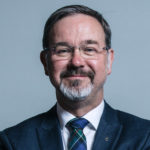
    The speech made by Bob Seely, the Conservative MP for the Isle of Wight, in the House of Commons on 12 December 2022.

    I am delighted to initiate this debate on melanoma in memory of my constituent Zoe Panayi, after whom “Zoe’s law” is named.

    Zoe died of skin cancer in May 2020 at the age of just 26, after having an unusual mole removed at a private beauty clinic. She had trained to become a carer before finding a rewarding role as an assistant to the radiography and CT department at St Mary’s Hospital in Newport, in my constituency. She was the mother of two boys, Theo-Jay and Tobias.

    On the night of 3 April 2020, Zoe went home from work feeling poorly. By 11.30 pm she had been admitted back to St Mary’s hospital, where she worked, and it was then discovered that she was in the late stages of cancer. Biopsy results four days later found that the melanoma, which had started in a mole on her back, had spread to her lymph nodes, liver, bone marrow, pelvis, and spleen. Very sadly, after the biopsy Zoe survived for just 55 days.

    Over the course of the two years prior to her death, Zoe had raised numerous concerns with GPs about the unusual mole on her back. She had been told on multiple occasions that there was nothing to be concerned about, and after being advised to see a beauty clinic to have the mole removed, staff again raised no concerns about the removal of the mole. Tragically, it was later found that the act of removing the mole probably caused the cancer to grow and spread more rapidly. Zoe’s family, and especially her mum, Eileen Punter, to whom I pay tribute in this debate, have campaigned tirelessly since then to raise awareness of melanoma cancer and to ensure that others do not have to go through the same pain. I will make two suggestions to the Minister in the course of this speech.

    By way of background, malignant melanoma is the fifth most commonly diagnosed cancer in the UK, and there are thought to be some 111,000 people living with malignant melanomas in this country. Approximately 16,700 cases are diagnosed every year, and about 2,300 people die every year from this cancer. This should not be the case, because the good news is that since the 1970s, the five-year survival rate for cancers of this type has increased from 52% to about 90%—nine out of 10— especially if they are caught early.

    Chris Bryant (Rhondda) (Lab)

    I congratulate the hon. Gentleman on raising this subject. As he knows, I had a stage 3 melanoma and I was told that I would have a 40% chance of living a year, but the science has moved on dramatically in the nearly four years since then. My biggest anxiety is that we do not have enough histopathologists and pathologists, and that people are getting their results slowly. There are also not enough dermatologists in the country, and lots of GPs are simply not trained in recognising potentially malignant melanomas fast enough. Do we not need to do far more to ensure that this cancer is fully understood, because it can kill, and to ensure that we have enough staff in the NHS to be able to treat it?

    Bob Seely

    I thank the hon. Gentleman for his intervention. I am going to follow up on several of those points, but I am delighted to see that he is one of the many people who have survived a malignant melanoma.

    If Zoe’s mole had been diagnosed early—especially at stage 1 or 2, and possibly even at stage 3—she may have well survived. Just before I come to some of those suggestions, I must point out that these melanomas are a specific concern on the Isle of Wight, because we have one of the highest rates of skin cancer.

    Jim Shannon (Strangford) (DUP)

    I commend the hon. Gentleman for his assiduous attention to his constituents and to the family who have been bereaved. By his words today, we all recognise that he is deeply concerned and compassionate, and we thank him for that.

    May I gently tell the hon. Gentleman—perhaps the Minister might take note of this as well—that in Northern Ireland a new mole mapping and melanoma service has been introduced in my local South Eastern Health and Social Care Trust? It is a nurse-led, two-year pilot project that offers an advanced mole mapping technique for specific patients identified by the clinical team as being at higher risk of developing melanoma skin cancer. I suggest that that should be a standard for everyone not just in my trust area but everywhere else, so that we do not have a postcode lottery. Would the hon. Gentleman be interested in that pilot scheme? If so, maybe the Minister will take note.

    Bob Seely

    I thank the hon. Gentleman for yet another excellent intervention, and I completely agree. In fact, I will come to those points now.

    The Isle of Wight is a specific hotspot for skin cancer. I think it has the worst skin cancer rates in the United Kingdom, primarily as a result of certain factors. First, we still have a very white population, and the paler your skin, the more likely you are to develop melanomas. Secondly, we have an ageing population, and melanomas are cumulative. Thirdly, we have a very outdoors lifestyle on the Island, with golf, sailing, a lot of community activity and a lot of gardening. For the Isle of Wight’s retirement community especially, to be out in the sun aged 60 or 70 doing activities such as sailing, which is very harsh on the skin because of the interaction of sun and water, encourages melanomas. Fortunately, we have one of the best dermatology centres in Britain at Newport’s Lighthouse clinic, and I thank its doctors and staff for doing an excellent job. I have been there myself in the past couple of years, and I know what a great job they do.

    In the NHS long-term plan, the Government committed that the proportion of cancers diagnosed at stages 1 or 2 will rise from about half to three quarters of all cancer patients, meaning that some 55,000 more people a year should survive cancer for at least five years after diagnosis.

    Pilot schemes in various parts of the country are trying to improve the diagnosis of skin cancers and melanomas. One option to improve this still further is what, on the Island, we call Zoe’s law, but it would effectively be a change of practice within the NHS. Eileen, Zoe’s mum, and her family are doing it in memory of Zoe, and it would require all moles and skin tags removed from the body to be tested for melanoma. I am not expecting an off-the-cuff answer from the Minister on this point, but I would very much like her to write to me so that I can pass on her comments to Eileen and the rest of Zoe’s family. If that cannot be done now, I would like to know why not.

    I would also like to know what more could be done in future, because thousands of people are needlessly dying every year. Skin cancers kill more slowly than many other cancers and are certainly more treatable than cancers such as lung cancer and pancreatic cancer. Eileen said Zoe thought of everyone before herself. When Zoe was dying, she said, “The most important thing is that other people do not have to go through this”—she left two young kids.

    The idea of testing all removed moles and skin tags is potentially very popular, and a petition started by the family has now reached some 35,000 signatures. Tanya Bleiker, the previous president of the British Association of Dermatologists, recommended that all skin lesions, even if removed for cosmetic reasons, as Zoe’s was, should be sent for histopathological testing to confirm that they are benign—the hon. Member for Rhondda (Chris Bryant) also made that recommendation—because they might be deep rooted in the skin. Mr Ashton, one of our consultant dermatologists on the Isle of Wight, explained to me on Friday that innocent-looking moles can sometimes be the most deadly. They might look benign on the surface, but underneath they are malignant and hide melanoma.

    I urge the Government to set out further plans on raising awareness of moles, as this is relatively easy to do. If I understand correctly, including this in nurse training and general practitioner training, especially in sunnier parts of the country along the south coast—places like Cornwall, Devon, the Isle of Wight and Hampshire—could be exceptionally valuable.

    Chris Bryant

    No one can see the back of their own head, but their hairdresser can, and quite often they are the person who can spot a melanoma.

    Bob Seely

    The hon. Gentleman reminds me of what Mr Ashton was telling me on Friday, because it is not only hairdressers but dentists. Dentists spend a lot of time looking at people’s faces, so they could potentially help to spot these things, too. Eileen, Zoe’s mum, spends a lot of her time trying to get this education process going, as she does not want other families to suffer as her family have.

    At stage 1, a small and localised melanoma has a 97% five-year survival rate, which is extraordinarily high. By contrast, the five-year survival rate for a stage 2 melanoma is 76%, and it is 58% for a stage 3 melanoma, as the hon. Member for Rhondda had. By the time a cancer has spread from the skin to the lymph nodes, the bone marrow and other parts of the body, the five-year survival rate is only 15%. Sadly, Zoe was one of those who did not survive, because despite her worry, her visits to the GP and the fact that she had it removed, that cancer had been spreading all the time in her body.

    I respectfully ask the Minister to write to me on the potential for 100% testing of moles for melanoma, cancer and whether they require further treatment. If there were such testing, some of the 2,341 people who died of the disease last year might have survived, including my constituent Zoe.

    I pay tribute again to Zoe’s family, especially her mum for all the great work that she is doing. I ask the Minister to respond not only on the issue of testing for melanomas but on broader education for GPs, hairdressers, dentists and nurses, so that they are better able to spot cancerous moles before they spread.


  • Penny Mordaunt – 2022 Speech on Code of Conduct and Guide to the Rules (Response)

    Penny Mordaunt – 2022 Speech on Code of Conduct and Guide to the Rules (Response)

    The speech made by Penny Mordaunt, the Leader of the House of Commons, in the House on 12 December 2022.

    I will try to respond to all the points made by hon. Members. I appreciate everyone being in the Chamber at this late hour and listening as well as contributing to the debate. I turn to the points made by the shadow Leader of the House, the hon. Member for Bristol West (Thangam Debbonaire). She was disappointed that it has taken this long to get to the motion. If we had debated it earlier this year, we would have had not two points of disagreement but five. I hope she recognises that we have not been idle and that we have spent our time well. It has been my mission to try to find consensus on all these issues; that is the best thing for the House.

    The hon. Lady made comparisons to the situation involving Owen Paterson. I would dispute that and point to the fact that the votes that we will have are free votes. It is controversial, but people can make up their own minds and decide what they think is the right thing to do. The Government clearly need to have a view, and that is what I set out. I also point out that we accepted the serious wrong issue put forward by the Standards Committee.

    If the hon. Lady is to support amendments, I hope that she will be consistent in her party’s policy. The Labour Welsh Government’s hospitality threshold is higher than that for this House, and certainly that of ministerial thresholds. The Welsh Government also publish an annual list of gifts. So if she, as I do, wants us to move to monthly reporting, I hope that that Government will follow. I will also give her this quote from page 130 of Gordon Brown’s report, “A New Britain”, in which he says:

    “The Ethics and Integrity Commission dealing with Ministers should be…separate from the system which investigates ethical breaches by MPs and members of the second chamber, comprised of the Committee on Standards, the Parliamentary Commissioner on Standards, and the Independent Grievance and Complaints System.”

    That is a sensible approach.

    It is difficult for us to conflate the two systems. I have tried to eradicate the word “soon” from my vocabulary—although I hope that the hon. Lady appreciates that, when I have said “soon”, I have delivered—so I did not say “soon”. I have said, “summer”. Looking at these issues, I think that is a reasonable timeframe—[Interruption.] That is to move to monthly reporting.

    With regard to the point made by the hon. Member for Rhondda (Chris Bryant) about bringing forward guidance and publishing it, the motion originally would have come into effect on 1 January. He suggested that we push it out until March so that everyone can be brought up to speed and know where they are. That is a sensible approach. I will do my utmost to ensure that the civil service meets that deadline of when the motion comes into effect, which I think is reasonable. If hon. Members want this to work well and orderly, that is the timetable that we must work to.

    The hon. Member for Livingston (Hannah Bardell) pointed out that it is incredibly important that we take care of hon. Members’ wellbeing. It is in our interests to remind anyone who might be listening to the debate that whatever motion is voted on tonight—amended or unamended—it will improve and strengthen the standards of this place. That is an important point.

    My hon. Friend the Member for Harwich and North Essex (Sir Bernard Jenkin), who is also a Member of the Standards Committee, was pleased that we had acted swiftly on the appeals process. We have a different view from him on the Nolan principles, but, as I explained to him earlier, people can vote on it. This is House business. Hon. Members can listen to different viewpoints and vote on that. That is how we should be doing things, and that is how we will do things tonight.

    The hon. Member for Edinburgh North and Leith (Deidre Brock) also supports amendment (b), which would move us immediately to monthly 28-day reporting. That came as a surprise to me, because my understanding is that the Scottish Parliament reports on a quarterly basis. I look forward to the Scottish Parliament moving in line with amendment (b). Maybe we could have a race and see who gets there first.

    My right hon. Friend the Member for South Northamptonshire (Dame Andrea Leadsom) spoke about many issues, some directly related to the motion, and she was supported by my right hon. Friend the Member for Basingstoke (Dame Maria Miller). She is right that we have to build trust in Parliament. We want to be the best legislature in the world. We have to continually address those issues, and I have heard what she has said.

    Turning to the hon. Member for Rhondda, the Chairman of the Committee on Standards, I will not repeat the arguments I have made before, but I will just touch on a few points. First, I agree with him when he says it is important that justice is served swiftly. I have shared some concerns with him on how quickly we carry out investigations, and we want to do better on that. I was grateful to him for outlining the many positives that I hope the House will support tonight. We still disagree on the Nolan principles issue. I looked into the police issue he raised; I do not think the police have done as he outlined. What they have done is produce a code of ethics, which was signed off by the Home Secretary, but that is different to what is being proposed for Ministers.

    On ministerial declarations, I completely agree with the three principles that the hon. Gentleman set out. What I am interested in doing is getting there in an orderly way, to ensure parity with the House’s reporting system. I am telling hon. Members, having looked at this in detail and probably more than any other Leader of the House, that if they wish this measure to come into effect in March, they will have a problem. It will be a problem not just for Ministers, but for anyone undertaking an envoy role, including Labour Members. The hon. Gentleman also helpfully proposed a manuscript amendment earlier this evening, which chimed with the sentiments of the shadow Leader of the House, the hon. Member for Bristol West, with regard to having “scale and source”. Again, I think Members want clarity. They want an amount, a threshold. They want clarity on the rules. I do not know whether it would be means-tested. Is something that is materially important to me materially important to someone else?

    Chris Bryant

    I am sorry, but it seems to me that the clearest outcome for all right hon. and hon. Members is a single rule of £300 registration for everybody within 28 days, with the full value shown. Everything else is muddying the waters.

    Penny Mordaunt

    I completely agree with the hon. Gentleman. I am just addressing the point that he and the shadow Leader of the House raised earlier. The bottom line is that the Government agree that the system has to improve. We agree entirely with the principles that the hon. Gentleman set out. If amendment (b) goes through, he will be requiring Members who are also Ministers, or envoys of some description and trade envoys, to report in March at a pace that he knows the Whitehall machine will not currently be able to deliver on. In a few months after that point, it will. I suggest that we wait until Whitehall can deliver, which will not be far away—I did not say soon; I said summer—and we can move towards that in an orderly way.

    Sir Peter Bottomley

    When the Chairman of the Committee on Standards, the hon. Member for Rhondda (Chris Bryant), talks about his fallibility, he reminds me of article XXVI of the articles of religion. My right hon. Friend the Leader of the House has convinced me that amendment (b) is too soon and too rushed. Will she consider having a button or a link on both registers, so that people can find other information about a Member who is also a Minister?

    Penny Mordaunt

    On that point, which has also been made by the Committee Chairman, who accuses me of using the argument of saying “not yet”, we have already started this work. I have already been working with the propriety and ethics team, and we have audited every Government Department, which is why I can bore Members senseless about why there are some problems. We have already started to look at how we might have a system that everyone in Whitehall could report into, instead of doing it in a million different ways, but also at our goal being that transparency. For example, if someone is looking at their MP, they want to have a comprehensive picture, so we have already started looking at that, and I hear what hon. Members have said.

    Ronnie Cowan

    Can the Minister assure me that we are not trying to delay beyond March because it falls during the current financial year?

    Penny Mordaunt

    No, I can assure the hon. Member on that point. We have moved the date in the motion from January to March, at the request of the Committee Chair, because we want everyone to know what the new standards rules are that we are voting on today, and we felt that was right.

    From the hon. Member for North East Fife (Wendy Chamberlain), we had a different view, but I thank her for her contribution. I would ask the hon. Member for Leeds East (Richard Burgon)—I am just trying to read my own handwriting—to read the report we have been discussing, because it does not come to the same conclusions that he does. I thank the hon. Member for Inverclyde (Ronnie Cowan) for his remarks. I do not think that colleagues are a bunch of rotters; I am sure he was not suggesting that.

    Finally, I will end, rightly, on the very salient point that the hon. Member for Batley and Spen (Kim Leadbeater) raised, and she is absolutely right. Although we focused on the areas of disagreement, one of the areas where there is huge consensus is about the duty of care we have to each other. She is very genuine, for reasons we all understand, in her remarks.

    I would conclude by saying that this is a huge step forward. I thank the Committee for its work. It made 20 recommendations, and the Government want 18 of them brought in. We want, particularly on ministerial interests, for us to move to the position the Committee wants, but in a way that is doable and orderly. This is a free vote. All Members will have heard the arguments and listened, and they will be voting and deciding what the best thing they think is to do. I do not expect, particularly given the subject matter we are debating, any party or Member to criticise the decision that hon. Members will have taken this evening in good faith, me included.

    With that, I urge all Members to support the Government motion unamended. This is a big step forward. We do want to move to clarity and parity for both systems, but both systems of reporting should remain distinct.

  • Kim Leadbeater – 2022 Speech on Code of Conduct and Guide to the Rules

    Kim Leadbeater – 2022 Speech on Code of Conduct and Guide to the Rules

    The speech made by Kim Leadbeater, the Labour MP for Batley and Spen, in the House of Commons on 12 December 2022.

    Despite the late hour, it is a pleasure to speak in this important debate. I rise to speak briefly on the motion today and to speak in favour of amendments (a) and (b).

    Members from across the House will understand my personal interest in ensuring our politics and our political discourse are conducted with transparency, respect and civility and are free from the dangerous toxicity we have seen in recent years. I believe we all have a responsibility in this regard, but, sadly, we have seen behaviour in this Chamber and outside that is clearly unacceptable, and we must raise the bar. That is why I am pleased to see us acting to strengthen the code of conduct, which I wholeheartedly support.

    We in this House have a sincere duty and obligation to adhere to the highest standards of public life and to set an example of what robust, passionate, healthy debate and discussion in our country looks like. If we cannot demonstrate appropriate values, attitudes and behaviours and find a way to behave with civility and to show respect despite our many differences of opinion and perspective, how can we expect others to do so, and how can we expect them to respect us?

    We have seen multiple examples of how the language, tone and behaviour of Members in this House trickles down to wider society both online and offline. It trickles down and creates an unhealthy and dangerous climate and a culture of abuse and intimidation. It trickles down and it puts good people off entering public life, whatever their political persuasion, when we should be working to open politics up to people from every background, creating a welcoming, tolerant and safe environment—one that strengthens our democracy, not damages it.

    But this has to start with all of us. Stamping out the type of unacceptable behaviour we have seen in recent times and increasing transparency will undoubtedly help to reduce the toxicity that has spread across our public discourse and help to stop the unfortunate narrative that we in this place are “all the same” or “all in it for ourselves” with little regard for the public interest.

    We in here know that the vast majority of Members are in this place to make a difference to their community and their country, with the public interest at heart. But if the public do not see that unacceptable behaviour in public life is effectively and rapidly stamped out, they will be disengaged, breeding suspicion and, at worst, driving people to the extremes.

    I believe we have a clear responsibility to stop this happening. I am therefore pleased that we are strengthening our code of conduct today. I believe we can and should go further and therefore also support the amendment tabled by my hon. Friend the Member for Rhondda (Chris Bryant), which I believe will bring much-needed further transparency and higher standards in public life.

  • PRESS RELEASE : RSH publishes regulatory judgement for Christian Action (Enfield) Housing Association [December 2022]

    PRESS RELEASE : RSH publishes regulatory judgement for Christian Action (Enfield) Housing Association [December 2022]

    The press release issued by the Regulator of Social Housing on 14 December 2022.

    In a regulatory judgement published today (14 December 2022), the Regulator of Social Housing has concluded that Christian Action (Enfield) Housing Association Limited is non-compliant with the governance element of the economic standards, and has downgraded it to G3 status.

    CAHA has been unable to provide assurance to the regulator that it is managing its risks and business planning in an effective way. Weaknesses in its financial governance, as well as a lack of effective board oversight and scrutiny, meant that CAHA failed to identify the potential crystallisation of a serious risk in sufficient time. CAHA also failed to inform the regulator of these risks in a timely way, and its communication has fallen below the standard expected by RSH.

    In response to the regulator’s reactive investigation, CAHA has started to review its approach to governance and risk management. It is also implementing controls to improve the management of its repairs and maintenance service.

    Harold Brown, RSH’s Senior Assistant Director for Investigations and Enforcement, said:

    We have found significant weaknesses in Christian Action Housing Association’s governance, which has exposed it to financial risks. We will monitor the provider closely as it works to resolve these failings and return to compliance with our standards.

  • Ronnie Cowan – 2022 Speech on Code of Conduct and Guide to the Rules

    Ronnie Cowan – 2022 Speech on Code of Conduct and Guide to the Rules

    The speech made by Ronnie Cowan, the SNP MP for Inverclyde, in the House of Commons on 12 December 2022.

    I shall be extremely brief. I will support both amendments but do not believe either of them goes far enough. In an ideal world we would all conduct ourselves in public and private by principles conducive not just to our own benefit and wellbeing, but to the benefit of the wider community, but we do not, so we have laws that enable the prosecution of lawbreakers.

    In Parliament we like to think we adhere to standards and principles, and we primarily refer to the code of conduct for those in public life; as we all know, the seven principles of public life are the Nolan principles, but like all guidelines, memorandums of understanding and conventions, the Nolan principles only work if individuals have the self-discipline and moral compass to adhere to them. When they do not, the abuse of their position is often clear for everyone to see, but rather than hold them to account, this place too often turns a blind eye or gently reprimands them with a rap on the knuckles.

    Unfortunately, past behaviour leads me to believe that we could extend the Nolan principles to 107 principles and those who currently adhere to them would, but those who think they are above and beyond such practices as self-control would ignore them all because they feel entitled to do so. In ministerial and Members’ registers of financial interest, transparency is crucial and that information must be provided in a timely fashion. Why would it not be? Why is it not already? As many MPs have shown time and again during covid, it is one set of standards for them and one set for everybody else.

    In summary, while we rely on principles and guidelines and conventions, some MPs will walk right through them, and the time for navel gazing is over.

  • Richard Burgon – 2022 Speech on Code of Conduct and Guide to the Rules

    Richard Burgon – 2022 Speech on Code of Conduct and Guide to the Rules

    The speech made by Richard Burgon, the Labour MP for Leeds East, in the House of Commons on 12 December 2022.

    I have listened carefully to all the contributions in the debate. I congratulate in particular my hon. Friend the Member for Rhondda (Chris Bryant) on the assiduous way in which he has approach this matter as Chair of the Committee.

    I will address the Committee’s third recommendation, on the matter of an outright ban on MPs providing paid parliamentary advice, consultancy or strategy services. I welcome that report as a genuine advance. I was given the opportunity to provide oral evidence to the Committee about a Bill that I drafted and introduced last year, which would have banned MPs’ second jobs, with a few exceptions, for example, for those working on the frontline in public services. [Hon. Members: “Why?”] It is interesting that Conservative Members shout out, “Why?” when I talk about the proposal to ban second jobs for MPs, with an exception for, for example, nurses, firefighters, people in the armed forces and doctors. I do not understand why that proposal was met with such incredulity and such a loud chant of, “Why?” from Conservative Members.

    When we debated the issue previously, I almost lost count of the Conservative Members who said, “What about nurses? What about doctors?” Yet when those exceptions are mentioned now, they ask why. When Conservative Members said, “What about nurses? What about doctors? You can’t ban second jobs for MPs”, I felt that they were using exceptions as a way of keeping the rotten status quo.

    The public do not object to MPs spending their spare time working on an A&E ward as a nurse or a doctor, working as firefighter, or being in the Territorial Army. They rightly object if a Member is paid £1,500 an hour to advise a US investment bank. [Hon. Members: “Why?”] Again, there is a call of, “Why?” That is good evidence for why people outside all too often think that this place and MPs are out of touch with them.

    Sir Peter Bottomley (Worthing West) (Con)

    I do not want to be too partisan about this, but were I a writer like Michael Foot, could I go on writing and get my royalties? Were I a farmer like Jim Callaghan, could I keep my farm? Should we say to people like my former colleague, Peter Thurnham, who built up an engineering business, “Don’t come into Parliament. You’ll have to give away your business while you’re here”?

    Richard Burgon

    I did not expect the Chamber to come to life, but when it comes to attempting to ban MPs’ second jobs, everybody gets energetic. I thank the hon. Member for his intervention. I did not want to speak about my Bill at such length, but it deals with his point. Members who write books, for example, could continue to do that, but could not keep the proceeds. That may seem unfair to many, and some people would perhaps be treated harshly under my proposal, but that is because people have found ways of exploiting loopholes. One could imagine a situation whereby, if one could keep the profits from writing, an MP would write a book about the oil industry, get paid a lot of money for it and work for an oil company for free on the side. However, I digress. I understand that MPs are annoyed at any suggestion that second jobs should be banned, but they are out of touch with the public when they get so angry about it.

    I welcome the advances that have been made on an outright ban on MPs providing paid parliamentary advice, consultancy or strategy services. I also welcome the advance in requiring MPs to have a written contract. That is a step in the right direction. However, the House must recognise that the public are rightly angry because when MPs chase corporate cash, they short-change the public. The public are also outraged because, a year after the Owen Paterson scandal, MPs are making more money from second jobs than they were a year ago—£5.3 million, the highest figure ever. That is the problem: this place and MPs end up being out of step with what the public want. The public rightly believe that we get paid enough and that being a Member of Parliament is a full-time job.

    I am not surprised that my contribution has annoyed Conservative Members so much, but I will support the motion and the amendments. They are certainly a step in the right direction. On second jobs, we need to go further in future. They should be banned with a small number of exceptions. I introduced a Bill on that and the Government repeatedly blocked it. It is still there if the Government want to do the right thing and take it forward. I am glad that Labour Front Benchers support a ban on second jobs for MPs with a small number of exceptions. I hope that we get in at the next election, introduce that proposal, and help to clean up our politics and restore public trust.

  • Wendy Chamberlain – 2022 Speech on Code of Conduct and Guide to the Rules

    Wendy Chamberlain – 2022 Speech on Code of Conduct and Guide to the Rules

    The speech made by Wendy Chamberlain, the Liberal Democrat MP for North East Fife, in the House of Commons on 12 December 2022.

    I thought I would start by reflecting on something the Prime Minister said back in his days as a junior Minister in the then Department for Housing, Communities and Local Government:

    “The conduct of local councils and their councillors has a direct impact on the reputation of an area and of their fellow members. Their ability to lead a community and impact the lives of all those they serve is significant, and it is only right that they are held to a high standard.”—[Official Report, 25 January 2018; Vol. 635, c. 521.]

    He was speaking in his role relating to local government, but as we again debate how we carry our duties, those words are incredibly relevant to why this issue is important. We could equally say that the conduct of parliamentary parties and their MPs has a direct impact on the reputation of a country and their fellow members—or even the conduct of the Government and its Ministers.

    The Prime Minister said it himself: how elected officials behave matters immensely for their institution and for the people they serve. That is why I am pleased that we have consensus on some much-needed improvements to our code of conduct, which will come in as a result of this motion, but it is also why I am disappointed that the Government are failing to implement the code of conduct as recommended by the Committee in its entirety. I hope the Prime Minister has not changed his mind on the importance of integrity in public life since taking senior Government office.

    I place on record my good wishes to the Commissioner for Standards, Kathryn Stone, as she departs her role at the end of the year, and thank her and her team for their efforts to date. Several hon. Members have brought up the Owen Paterson vote in November last year. Part of my own compunction to table the application under Standing Order No. 24 after that debate was driven by the importance of understanding—given that we all make decisions here as individual Members about what we hear during debates—that what we do and say in this House can have a direct impact on those outwith it. I know the abuse the Commissioner for Standards experienced following that debate.

    I will start with the first of the two amendments tabled by the hon. Member for Rhondda (Chris Bryant), amendment (a)—I, too, thank the Standards Committee. I have put my name to both amendments, because it seems frankly ridiculous that in this place of a million minute rules the Government would push back on something so sensible as tailored descriptors for the Nolan principles.

    That makes me think of my own time in HR. I worked for multinationals and in the public sector, and in many of those organisations there were behaviours or soft skills that all people within an organisation would be assessed against in their appraisals. We provided guidance so that the chief executive of an organisation and somebody on the shop floor were assessed in relation to those behaviours at the level that was appropriate to them, and that is exactly what these descriptors are setting out to do.

    The argument that the Government are making is that we do not need any guidance, but basic logic tells us that broad principles such as openness and leadership will mean different things to people carrying out different functions. As the hon. Member for Rhondda said, the Committee on Standards in Public Life acknowledged that in its 2015 report looking into how regulators embody those principles. For example, in the case of a regulator, selflessness—it is funny that we all seem to have touched on selflessness in this debate—means putting aside their own views and opinions, something that we as MPs we definitely do not do. For us, I believe it means ensuring that we cannot be compromised through any outside interests. I would argue that those two ways of interpreting the first Nolan principle for those in different sorts of public office are entirely compatible, and I can see no problem in giving specific guidance to Members, to regulators or, indeed, to any other office holder. In fact, I would argue that additional guidance benefits Members.

    It is 12 December 2022. I think we were all up to something else exactly three years ago today. When I came to this place the following Monday, it was pretty overwhelming. There are lots of rules, customs and corridors to get lost in, and constituents instantly need help. But I can also imagine that for someone who has been here a few years, it might feel easy to feel too comfortable and simply to let things slide when we should, arguably, know better. We should never allow a lack of knowledge, or complacency, to be a barrier to how we conduct ourselves in this place. Guidance is arguably a way to help us in that. It sets expectations both for those following the rules and for those making the judgments on whether those rules have been adhered to.

    Turning to amendment (b), I would like to hear from the Leader of the House why she does not support bringing the process for Ministers to declare gifts, hospitality and so on in line with that for other Members. Perhaps she will try again to argue that it is justified on the basis of the separation of powers, as she did when we debated this in October, but I simply do not buy that. Separation of powers takes place when the Government and the legislature are, well, separate. But in case the Government have forgotten, they too are Members of this legislature. This is a combined system—that has its pros and cons—but it is not separate. Even if it were, I just do not find it acceptable to argue that being in Government rather than on the Back Benches means being subject to less scrutiny, and I am pretty sure that my North East Fife constituents do not think so either. I would think that is the case for many Members in this House.

    Perhaps I will be told that Ministers should be trusted to do the right thing, but we know that they get things wrong, as recent reports of Ministers using their personal emails for Government work, in breach of security, tell us. Clearly, it is easier for everyone when there is one straightforward system to be used so that mistakes cannot be made.

    Furthermore, as colleagues have pointed out, Back-Bench MPs, and even Opposition spokespeople, have 28 days to register financial interests, which are then published every two weeks. We have had two Prime Ministers and countless Secretaries of State and junior Ministers—many of whom now sit on the Government Back Benches—since the last ministerial report was published in June 2022. That is simply not an equal system.

    I am here representing my constituents, as is every single Member in this place. I remember the first Monday I was here. I saw the right hon. Member for—oh, I cannot remember where he represents, but I remember seeing him as he was getting coffee and thinking, “Oh my goodness! That’s such and such.” And a little voice in my head said, “No, at this moment in time, he is in exactly the same job as you: he is here to represent his constituents.”

    What the Government are proposing is not an equal system. This country rightly has high standards for politicians to meet, and I believe that the vast majority of Members want to put procedures in place so that we meet those standards. We will fail without this change. Ministers are Ministers because they are elected as MPs in the first place. Their constituents should be able to find information about them in one place.

    I could go into further changes we need to improve standards in this place and the trust that the country places in us, about which we have heard from other Members, but, in focusing on the two amendments, I will keep it simple: vote for amendment (a) to make it easier for Members to keep to the high standards that we all want in this place. Vote for amendment (b) to make it easier for Ministers to demonstrate the integrity that we rightly demand. If the Government fail to do that, it will not just be them explaining why not; it will be all of us in this place. This Government decision impacts on us all in how we conduct ourselves here.

  • Chris Bryant – 2022 Speech on Code of Conduct and Guide to the Rules

    Chris Bryant – 2022 Speech on Code of Conduct and Guide to the Rules

    The speech made by Chris Bryant, the Labour MP for Rhondda, in the House of Commons on 12 December 2022.

    The right hon. Member for South Northamptonshire (Dame Andrea Leadsom) knows that I agree with nearly everything that she has said, and in particular what she said about the Commission. Indeed, further to the point that was made earlier by my fellow member of the Committee, the hon. Member for Warrington South (Andy Carter), I think we on the Standards Committee would like to look more at the independent complaints and grievance scheme. We were conscious that when she set it up, part of the rationale was that MPs should not get their sticky fingers on this area of the work, so I feel as if I have been charged by her to carry on looking at this area of work. She and I have had quite a few conversations about this and, as she knows, I have some concerns of my own. It is important that we get this absolutely right.

    Sir Bernard Jenkin

    We need to remember that the ICGS came into being because Members of Parliament were not trusted to adjudicate on these matters. If the Committee is going to look at this, will the hon. Gentleman join me in making an undertaking that in no respect are we going to interfere with the process or the adjudication of cases, but that we are possibly going to look at the governance of the process and the governance of the scheme as a whole?

    Chris Bryant

    Absolutely; I completely concur with every single word that the hon. Gentleman has said, not only just now but in his speech earlier. He and the right hon. Member for South Northamptonshire have made the point that we are in the business not only of setting up rules but of trying to change the culture. That is normally a more difficult process, and I will come on to that.

    If I might irritate the House briefly, a constituent has asked me to remind everyone that we pronounce “Rhondda” as “Rhontha”, with the “dd” sounding like a “th”. I apologise to everybody.

    Advent is, as we know, a penitential season, and it was the 35th anniversary of my ordination as a priest last week, so let me start with my traditional confession that I am no better than any other Member in the House, with not just feet of clay but ankles, calves and thighs. I have to say that, as I look round the Chamber every day, I see colleagues of different stripes and from different parties who have made considerable contributions, often way beyond the call of duty, to our national life. Politics really is an honourable profession, but it is also true that the public want us to do better.

    I am painfully aware that 18 Members of this House have been suspended or have withdrawn for a day or more during this Parliament. That is quite a significant number. That may in part be because we are getting our act together, and that things that were formerly swept under the Pugin carpet are now dealt with not secretly and behind closed doors but through a proper process. I am also conscious that on top of that we have 15 Members in the independent group who have been suspended from their political parties, and justice sometimes comes through these processes very slowly. That is not fair to complainants, and it is not fair to the Members either. I want to make sure that Members are entitled to fairness. That is why I want us to have a set of rules that is clear, simple and unambiguous, and it genuinely worries me, as I know it does the whole Committee, that we now have 12 separate bodies that regulate Members of Parliament, and that we are now even considering creating a 13th. Whether that is right, I hate to think. I am sightly conscious, however, that other countries have it even worse. The House ethics manual in the United States of America consists of 456 pages, so I think we have been remarkably concise.

    I am grateful to the Committee, and especially to its lay members: Mehmuda Mian, Tammy Banks, Rita Dexter, Michael Maguire, Paul Thorogood and Victoria Smith, plus the former members who played a part in getting us to this point, Arun Midha and Jane Burgess. This has been a long, iterative process, and the hon. Member for Harwich and North Essex (Sir Bernard Jenkin)—who I sort of think of as the deputy Chair of the Committee—is absolutely right to suggest that the lay members often bring an insight, as we bring an insight to them, that results in a creative mix that is in the interests of the whole House.

    Let me deal briefly with a few important changes that we are making as a result of today’s motion, because it is important that Members understand them. First, we are completely banning MPs from providing paid parliamentary advice, including providing or agreeing to provide services as a parliamentary adviser, consultant or strategist. I believe that that always was, effectively, selling the title of MP on the open market.

    Secondly, we are requiring a Member who takes on an outside role to obtain a written contract or a written statement of particulars detailing their duties. The contract, or a separate letter of undertaking, must specify that the Member’s duties will not include lobbying Ministers, MPs or public officials on behalf of the employer, or providing paid parliamentary advice, and that the employer may not ask them to do so. I think that is a very good defence for a Member who takes on outside earnings.

    Thirdly, we are significantly tightening the rules on conflicts of interest resulting from outside interests by extending, from six months to 12 months, the period during which an MP cannot engage in lobbying on a matter in which they have a financial interest.

    Fourthly, we are closing the “serious wrong” loophole that Owen Paterson sought to exploit. From now on, if a Member wants to claim this exemption when approaching a Minister or official, they must show that any benefit to their client is merely incidental to the resolution of the wrong or injustice. They must state at the outset that they are providing evidence of a serious wrong, and they may not make repeated approaches, otherwise it just becomes a loophole through which they can drive a coach and horses. I am glad the Government now agree with us on that.

    We are also ending the false distinction between a Member initiating and participating in a proceeding and an approach to a Minister or official where they have an outside financial interest. It is not enough simply to register and declare an outside interest. It is surely axiomatic that a Member who is in receipt of outside reward or consideration should not seek to confer a benefit through parliamentary or political means on the person or organisation providing that outside reward or consideration. That is paid advocacy and, as my hon. Friend the Member for Bristol West (Thangam Debbonaire) said, it has been banned in some shape or form since 1695.

    I now turn to the matters on which the Government disagree with the Committee. First, like the other members of the Committee, I simply do not understand the Government’s argument on the Nolan principles. They have got it wrong, and it is not in the interests of the House or of individual Members to stick with the Government’s position. Acting on the advice of the Committee on Standards in Public Life, which originated the Nolan principles, the Standards Committee drafted and consulted on more detailed descriptions of the individual words—selflessness, integrity, objectivity, accountability, openness, honesty and leadership—as they apply specifically to Members of Parliament. Lord Evans, the chair of the Committee on Standards in Public Life, told us:

    “We strongly support the idea that although the seven principles remain central and important for standards issues right across the public realm, they need to be interpreted for particular institutions and organisations.”

    That is why, for instance, the police have gone down precisely this route and produced their own set of descriptions.

    More importantly, the Nolan principles need fleshing out in a parliamentary situation. What does “selflessness” mean in the context of Parliament? I would argue that a Member cannot be entirely selfless, unless they renounce any form of payment, unless they travel to London every single day from their constituency, wherever it is in the land, and unless they eschew any ambition whatsoever. But if they have no ambition, would they want to come to Parliament in the first place?

    We have written descriptions to help explain not only to us but to our constituents and to members of the public, who might be the people complaining about our behaviour, precisely how those principles apply to how we do our business. Put simply, I think the Standards Committee’s version is more helpful to MPs and the public than the Government’s version.

    Secondly, I think ministerial declarations are a no-brainer. I understand the arguments, but I do not think they particularly wash with the public. I start from three basic principles. First, Ministers in the House of Commons owe their position to their membership of the House, and they are answerable to the House. Secondly, all MPs should be treated equally under the rules. And thirdly, the public have a right to know, as close to real time as possible, of any financial interests that might reasonably be thought to influence an MP’s speeches, actions, decisions or votes. As Ministers actually make decisions, whereas most of us in the Chamber just talk about other people’s decisions, transparency is even more important for them, not less important.

    Following those principles, as my hon. Friend the Member for Bristol West said, the 1993 Select Committee on Members’ Interests—at around the time of cash for questions—concluded that

    “Ministers are and should be subject to the House’s rules for the registration of financial interests in exactly the same way and to the same extent as all other Members of the House.”

    That was the House rule under the Major Government. On the back of that, the new ministerial code in 1997, under Major and then under Blair, said that Ministers should register hospitality received in their capacity as a Minister in the House if it was

    “on a scale or from a source which might reasonably be thought likely to influence Ministerial action.”

    The 2007 ministerial code provided that ministers should register hospitality both with their permanent secretary and the House.

    It was only in 2015—really quite late in the day—without any announcement, discussion or debate in the House, or any comment in a Select Committee report, that the rule was changed to grant Ministers in the code of conduct of this House an exemption from registering anything that they considered they had received in a ministerial capacity. The theory is, as the Leader of the House helpfully explained, that in exchange for that exemption, Ministers register through their Department any gifts, hospitality and travel that they have received in their ministerial capacity. That is published somewhere between three and nine months later, but without the value, which is a key point. That means that a member of the public cannot judge whether the hospitality was on a scale that might reasonably be thought likely to influence ministerial decisions.

    The Committee, Transparency International, the Institute for Government, the Parliamentary Commissioner for Standards, the 1922 committee, the Labour Front Bench, the Scottish National party Front Bench, a substantial number of Ministers and I think that the system is manifestly unfair for the ordinary Back-Bench MP. They declare it all within 28 days and can be investigated and sanctioned if they fail to declare it correctly. However, the Minister’s declaration, without details, appears months later and cannot be investigated. It is not uncommon for a group of MPs—some of whom are Ministers and some are not—to go to the same event, which might cost more than £300. The Back-Bench MPs all declare it and the Daily Mail writes a story about it, but the Minister’s attendance is recorded nine months later and nobody notices. That seems somewhat unfair to me.

    Incidentally, in answer to a point that the Leader of the House made, the Committee has said that the Government could set a lower threshold for further ministerial registrations if they wanted to—lower than £300 threshold in the House of Commons. However, it is worth pointing out that, though the ministerial threshold at the moment is said to be £140, since the Government do not publish the value of what is received, we have no idea whether that threshold is being met. I have been to events with Ministers that I have registered, but which the Minister has never subsequently registered anywhere.

    I am not convinced that the system is working. I have a great deal of time for the Leader of the House. I love ministerial promises, especially when they come before Christmas and they talk about spring, but previous Leaders of the House have said to me that this would be sorted out by spring—a different spring. That spring has now sprung, and now we are into the winter. It seems extraordinary that Government Ministers will not be able to work out for themselves—not the Department —whether they have been to an event or received hospitality worth more than £300, and to register it in two minutes by sending a quick email to the registrar of interests in the House. I simply do not understand the logistical argument from the Leader of the House.

    I urge colleagues to support my amendment, first, because the public expect full transparency and openness, and wonder what Ministers are trying to hide. Secondly, Ministers, in effect, now choose whether to register with the House or the Department. That does not make any sense at all. Thirdly, even if the Leader gets her way, the information will not all be in one place.

    Fourthly, nobody presently or in future, so far as I can see, is expected to regulate or monitor the ministerial declarations. Fifthly, there are bizarre anomalies such as the previous Foreign Secretary, the right hon. Member for South West Norfolk (Elizabeth Truss), and the previous Home Secretary, the right hon. Member for Witham (Priti Patel), going to a Bond premiere, supposedly in their ministerial capacity because, as another Minister explained, James Bond exercises Executive functions. That argument simply undermines the whole system. I am not making that up, incidentally.

    My next point is that this is the bare minimum that the public expect of us. I have had many emails, texts and helpful pieces of advice on Twitter saying that we should not be taking any hospitality or gifts whatsoever. If a person was working in local government or in most of the private sector today, they would have to declare everything. I do worry that sometimes our belief in our own exceptionalism, and Ministers’ belief in their own exceptionalism, grows with every extra day that we are an MP or a Minister.

    Ministers have a habit of becoming ex-Ministers, but under the present rules, their registered interests do not come with them to the Register of Members’ Financial Interests. So if we stick with the Government’s proposals, they could easily and inadvertently fall foul of the new paid lobbying rules, which now apply for 12 months after the interest is accrued. They might have accrued the interest when a Minister, but then end up not being a Minister any more and wanting to lobby Ministers. They would be precluded from doing that, but then they would not have registered the interest with the House. That is yet another reason why it is simpler—far, far simpler—to return to the system that we had from 1997 to 2015, instituted by both Conservative and Labour Governments on the back of the cash for questions crisis, of treating all MPs equally.

    Tim Loughton (East Worthing and Shoreham) (Con)

    Will the hon. Gentleman give way?

    Chris Bryant

    I am very near the end, the hon. Gentleman will be glad to know, but of course I will give way.

    Tim Loughton

    I have been listening very carefully, but I am undecided on this subject. When I was a Minister, the difference was that I had a permanent secretary who was on my case to make any declarations that I needed to make on outside interests, shareholdings and so on. An ordinary Back Bencher does not have that. A Back Bencher may take hospitality because it is quite a fun thing to do, but a Minister may have to attend something that could be seen as hospitality but is actually part of their brief. He or she might not enjoy having to do that, but that comes along with the job. The hon. Gentleman is trying to group everything together as if it were the same, but, actually, receiving hospitality is different case for a Minister and a Back Bencher.

    Chris Bryant

    I have heard the argument, “Oh, we go to lots of events that we don’t really enjoy”, but let me put this case to the hon. Member—it is not a real case, but it is a perfectly possible case. Let us say that Formula 1 invited three MPs: the shadow Digital, Culture, Media and Sport Minister; the Minister; and the Chair of the Digital, Culture, Media and Sport Committee. The event was at the weekend and the value of the hospitality was about £2,000. The shadow Minister would have to declare it. They might not particularly like Formula 1— They might be going because it is part of their work in that role. I personally cannot imagine anything worse than going to a Formula 1 event—[Interruption.] I can see that the hon. Gentleman agrees.

    The Chair of the Select Committee would also have to register the Formula 1 weekend. They would have to register who had paid for it and how much it was worth, which is an important part of judging whether it might be of such a scale that it could influence a person’s decision making. Furthermore, those two people would not then subsequently be able to lobby on behalf of Formula 1. That is a really important part of the rules of the House. However, the Minister merely tells the permanent secretary that they have been on this weekend and does not register the value, and it appears many months later, even though the Minister might be the person who is making executive decisions that affect Formula 1. That is our fundamental problem.

    What we have at the moment is a lesser degree of transparency and openness for Ministers who make decisions than for Back Benchers who do not make decisions. The Leader of the House has been very helpful on many of these issues and I do not have a big beef with her, although she is still yet to visit the Rhondda tunnel, but if I am honest, her arguments sounded a bit like Augustine of Hippo saying, “Make me chaste and continent, but not yet.”

    There is no reason why we cannot do this. I have heard Ministers promise many things over the years—indeed, I might have promised a couple of things that never came to pass myself when I was a Minister. The easiest way for the House and for Parliament to deal with this is to go back now to the system that we used to have, then if the Government come back to us in six months’ time having sorted out ministerial transparency, they can have the exemption back. All MPs should be treated equally under the rules, just as every member of our society should be treated equally under the law, and that is why I urge all right hon. and hon. Members to support the two amendments I have tabled.

  • Andrea Leadsom – 2022 Speech on Code of Conduct and Guide to the Rules

    Andrea Leadsom – 2022 Speech on Code of Conduct and Guide to the Rules

    The speech made by Andrea Leadsom, the Conservative MP for South Northamptonshire, in the House of Commons on 12 December 2022.

    I am really pleased that this debate has returned to the House. I refer to my submission to the Committee on Standards’ review of the code of conduct in February 2022; I had asked if I could give oral evidence to the Committee, but sadly that did not happen. I will refer to some of the points that I made, because I think they are important and I do not think that anyone else has mentioned them yet.

    In short, we need a review far broader than the one before us tonight of how the standards processes work in Parliament. All our constituents want to be able to hold us all to account. Most importantly, we want to hold ourselves to account. Members across all parties have said that almost all of us are doing our best at all times, working with honour and integrity and doing the best job we can, yet somehow the drip, drip, drip of bad behaviour is destroying the reputation of this place on a constant and ongoing basis. The measures before the House this evening, which with one notable exception are frankly trivial, are just not going to change that.

    As colleagues will know, I was closely involved in a cross-party attempt to create an Independent Complaints and Grievance Scheme. There are no other colleagues present who were closely involved, but all seven political parties in this place were represented. It was intended to create a change in the culture. What we always see when we come to this place is people pointing fingers—“The Government have done this, the Standards Committee has done that, the Opposition have done this”—and all we do is make it worse.

    The ICGS was designed to change the culture by doing things like proper induction for new members of staff, so that people know what to expect; proper exit interviews, so that when a Member has a group of staffers leave every three months, something can be done about it; and proper training programmes for staff and Members. Sometimes people laugh and say, “I don’t need to do unconscious bias training.” Well, my challenge to them is: “Okay, define it, then. If you don’t need to do that training, you define it. Show me how good you are at that.”

    The Independent Complaints and Grievance Scheme was set up to tackle those issues, but what we have now is a scheme that has sucked in every single complaint—“So-and-so won’t let me go for lunch on time,” or, “My holiday was cancelled.” Those frankly more trivial workplace grievances, which have nothing to do with the serious challenges, overload the system, so that when there is a serious complaint of serious bullying, sexual harassment or even worse, there is not time for it. The system is too slow. It delivers neither the confidentiality that it was supposed to deliver nor the speed of justice.

    I am afraid that, in coming up with this review, the Committee on Standards is looking thoroughly only at non-ICGS complaints, although it has certainly indicated its interest in the ICGS. Since 2018, the ICGS, which is independent—the clue’s in the title—and non-ICGS complaints, which are presided over by the Parliamentary Commissioner for Standards, have got sucked into one amorphous blob. It has become a punishment routine that embarrasses us all, drags us all down and is destroying our reputation.

    Andy Carter

    May I clarify a point that my right hon. Friend has just made? I think she said that the Standards Committee had not looked at the independent complaints system. That is because, as she probably knows, the Standards Committee has no remit to look at it.

    Dame Andrea Leadsom

    As a matter of fact, the Standards Committee can look at whatever it wants. It was not established to look at the Independent Complaints and Grievance Scheme. In a sense, however, my hon. Friend has made my point for me: the fact that the Standards Committee is looking at how we can improve the conduct and the reputation of Parliament without looking at the Independent Complaints and Grievance Scheme is a nonsense, and that is my thesis this evening. We need a much broader review.

    I am sorry to say this, because I am extremely fond of the Speaker and all the Deputy Speakers, but the Committee concluded that the behaviour of the Speakers and the Deputy Speaker was untouchable. The fact that behaviour in the Chamber is a matter for the Chair and should be above investigation by the Standards Committee is extraordinary. In very recent history, someone in the Chair was the person who wound up the Chamber the most, making people miserable and bringing the whole House into disrepute, yet for some reason the Committee will not consider the behaviour of those in the Chair. Nor will it consider what is going badly or well in respect of the Independent Complaints and Grievance Scheme. If the hon. Member for Rhondda (Chris Bryant) wants to intervene, he is welcome to do so.

    Now, under the Independent Complaints and Grievance Scheme, the Parliamentary Commissioner for Standards has some sort of authority over that. It was intended that the investigation would be carried out independently and confidentially, but we are finding that investigations are now being presided over by the commissioner, who is requiring Members to stand up in the Chamber and apologise. That is outside the remit of the Independent Complaints and Grievance Scheme. Some may say, “Fine: if you have been rude to someone, you should stand here and apologise.” My response would be: “You try saying that to someone who works at John Lewis or McDonald’s. Are you seriously going to make them apologise to the entire firm, so that that will be on the record forever?”

    There are serious issues involving the mental health of MPs and the way in which we behave in this place—the way in which we protect colleagues from the problems that occur and bring us all down. So many people say to me that they are sick and tired of the fact that we are all tarred with the same brush. It is very easy for people to be tribal and say, “It’s you”, “No it’s not, it’s you”, but actually it is all of us. We are all held in incredibly low esteem, and it is because we have not sorted this out.

    While I am on the subject of big subjects, let me say that in my opinion—this is open to discussion and challenge; does anyone want to intervene?—it is all about the House of Commons Commission. Talk about a totally opaque organisation! It is chaired by the Speaker, it has appointments, and it is simply extraordinary. It is not accountable, and it makes financial decisions with very little transparency. Ultimately, all the authority in this place to establish Committees, to appoint Committees and so on, comes from the House of Commons Commission. In my opinion, we should have a fundamental review of that and then take it from there. The Standards Committee should look again at the Independent Complaints and Grievance Scheme and make sure it is doing what it was set up to do.

    Dame Maria Miller (Basingstoke) (Con)

    My right hon. Friend is making some very good and important points, and I hope that those who are listening to the debate may come up with a mechanism whereby we can review some of these issues. We are always told that they are issues for the House to decide, but what is never obvious to me is the process we can undertake to effect the discussions to which my right hon. Friend is referring.

    Dame Andrea Leadsom

    That—I say this slightly tongue in cheek—was the point of the amendment that was tabled last year, but nevertheless that did not happen during the debate on standards that took place then. It seems to me that we need something like the Straw Committee, which, back in the day, reviewed the way in which the processes of the House worked much more fundamentally than this review.

    The one development that I genuinely think has been brilliant is the new appeals process. It was essential and has been a long time coming, and I hope it will get the balance right between just punishing MPs and trying to change the culture in this place and give people fairness.

  • Deidre Brock – 2022 Speech on Code of Conduct and Guide to the Rules

    Deidre Brock – 2022 Speech on Code of Conduct and Guide to the Rules

    The speech made by Deidre Brock, the SNP MP for Edinburgh North and Leith, in the House of Commons on 12 December 2022.

    I will make a brief contribution. It has been very interesting to listen to everything that has been said so far and I look forward to hearing the take of the hon. Member for Rhondda (Chris Bryant) on all of this.

    The Scottish National party welcomes any proposals that ensure that standards in this Parliament are strengthened and that MPs fully represent their constituents, uninhibited by external vested interests. Lobbying is an important part of the democratic process, but only when it is carried out ethically and transparently. As we live in a representative democracy, the responsibility of an MP, first and foremost, is to represent their constituents who voted to elect them to Parliament. Being a Member of Parliament is a full-time role—many of us realise that it is more than a full-time role—and must fundamentally be treated as such. Elected officials should not abuse their power as an MP to earn significant incomes in a second job. The increased transparency of MPs and their interests, financial records, and activities carried out behind closed doors merits and deserves public attention.

    We therefore very much welcome the ban on providing paid parliamentary advice, consultancy or strategy services. Second jobs must be limited and regulated, although of course a formal contract enabling MPs to work in public service as doctors or nurses, or in the legal profession is a reasonable proposal.

    We are also completely committed to the reform of practices that enable MPs to abuse in any way their positions of power for private gain at the expense of their constituents. It is wrong that influence can be bought in our politics, and we have to make every effort as responsible MPs to stamp that out.

    There has been a rise in the reporting of abuses of the system in recent years. That has highlighted its various loopholes and shaken our constituents’ faith in their MPs. It is good to see at least some of those being closed down through the Government’s acceptance of most of the Standards Committee’s recommendations. I pay tribute to the work of the Committee and its hard-working Chair, the hon. Member for Rhondda, and I commend its excellent inquiries and reports.

    We welcome the addition to the code of conduct of a new rule prohibiting a Member from subjecting anyone to unreasonable and excessive personal attack. However, I, too, am disappointed that although the Committee recommended a set of descriptors based on the Nolan principles of conduct in public life—which other public bodies have adopted and which form the basis of the Scottish ministerial code—the Government replaced them with a much more generic version, and I think “generic” is being a little kind.

    I therefore support the cross-party amendment (a) from the hon. Member, which backs the Committee’s position on that. I again express real disappointment that the Government will not accept those descriptors for Members of Parliament. They are principles that none should object to if they want to stand for public service. As the hon. Member for Harwich and North Essex (Sir Bernard Jenkin) said, they are designed to help Members, so why would we not welcome them?

    Improving the transparency and searchability of the House of Commons Register of Members’ Financial Interests is essential. The public deserve to know what is in it. We therefore also support amendment (b), which would end the ministerial exemption that has been in place since 2015.

    Many people listening to this debate may not realise that MPs are required to declare any financial interests, including travel, gifts and hospitality worth more than £300 within 28 days. I just cannot see why Ministers should not have to register benefits received in their ministerial capacity in the same way. I listened carefully to the Leader of the House, but I just do not understand the justification. Such benefits are supposed to be published in the Government’s transparency returns, but those returns do not include details and appear only sporadically.

    The alternative proposals that the Leader of the House has outlined are certainly a welcome shift from the Government; I look forward to hearing the hon. Member for Rhondda give his views on them. He said that he thinks that some Government Members agree with his Committee’s recommendations as they stand and may support the amendment. I hope they do. It is obviously for Members to decide on these matters, as the Leader of the House says, but personally I think the time for delay is over. I certainly hope that Members across the House will support these amendments.