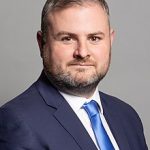
Tag: 2022

  • Rosie Duffield – 2022 Speech on Transport

    Rosie Duffield – 2022 Speech on Transport

    The speech made by Rosie Duffield, the Labour MP for Canterbury, in the House of Commons on 19 May 2022.

    The Environment, Food and Rural Affairs Committee, on which I serve, is currently considering the evidence for its report on rural mental health. Time and again, the expert witnesses mentioned isolation, loneliness and the problems of basic connectivity as factors leading to poor mental health in rural communities. Combined with the many current financial pressures, plus Brexit uncertainty and added bureaucracy, this is sadly all part of a deeply worrying pattern.

    Rural communities are especially dependent on reliable, regular and affordable transport links. When local bus services are cut, the effect is immediate and has catastrophic consequences. For example, if a single parent’s routine involves setting off for work knowing that their teenage child will leave for the bus 20 minutes later and arrive safely in time for registration, what exactly are they supposed to do if they are told one day that the bus route will no longer exist? What exactly is anyone who regularly uses a route for medical appointments or social reasons, or to go to college or work, supposed to do if the route is gone overnight? School and work are essential activities, so the buses are essential, too.

    Far too many cars already clog up the few main routes into and out of my constituency, contributing to increasingly dangerous levels of air pollution and growing rates of childhood asthma, but what choice do people have when their buses simply disappear? We are building more and more houses, thereby inviting in more and more cars, and we are even building more roads to accommodate those cars and threatening much-loved and historical green spaces, such as the Old Park area in Canterbury. Does this sound like a recognition of the climate emergency? It is hardly progressive.

    People in Canterbury, Whitstable and our villages simply want to be able to move from A to B and to get to school without damaging the planet and everyone’s lungs, but we will not achieve that if local bus services constantly disappear. What about cuts to school bus services, such as the one serving Spires Academy in Herne Bay, which is attended by many pupils who live around Canterbury? How is it more efficient for Kent County Council to have to source other modes of transport, particularly for otherwise stranded children with special educational needs and additional needs?

    The cost of a school travel pass is now almost £400. There is no way that a single parent, possibly with two or more children, can magic up money like that. Several years ago, I had to borrow the money to pay for my two children’s bus passes when they cost half that amount.

    It is easy to forget how dependent people are on public transport while we in this place go around Westminster. Everywhere we look we see affordable buses on every corner. When my constituents visit London, they can jump on a bus and go anywhere for £1.65, but they have to pay more than £7 to travel for around 20 minutes from Canterbury to Whitstable and back.

    The fact that the 27 bus route through Rough Common, one of my local villages, is about to be cut is causing so many problems. My constituents depend on it. There are also cuts to routes 922, 925 and 7.

    Despite being one of the largest local authorities, Kent County Council does not have an endless supply of money. Our county has to deal with the horrors of Operation Brock—one of the many so-called benefits of Brexit—and the recent collapse of P&O Ferries, which was a disaster for our area and about which I am sure we will hear more later from the hon. Member for Dover (Mrs Elphicke). The pause of Eurostar services from Ashford and Ebbsfleet has also had a catastrophic effect. Our local authorities urgently need direct financial assistance and help to tackle such huge issues.

    Canterbury City Council has committed to building far too many new homes without the basic infrastructure that is needed. Will the Government help the county to update our outlook and aims so that we do not simply choke our children as a result of outdated car dependency? We need help with a cleaner, greener, more people-focused overview of transport. We need to keep our rural communities moving and maintain east Kent as an inviting and buzzing tourist destination.

    Let us perhaps model ourselves a bit more on our European neighbours and have more pedestrian-friendly town centres and cheaper and more environmentally friendly and reliable transport. Let us help our local authorities and big bus companies to work together, in consultation with national Government, and adequately fund the active travel scheme, so that we can achieve a more ambitious, greener vision for local transport throughout the country.

  • Sara Britcliffe – 2022 Speech on Transport

    Sara Britcliffe – 2022 Speech on Transport

    The speech made by Sara Britcliffe, the Conservative MP for Hyndburn, in the House of Commons on 19 May 2022.

    To truly level up, we need to make sure that we provide suitable connections for our constituents to get to the opportunities that exist, whether that be by road or rail. That is one of my key focuses for the residents of Hyndburn and Haslingden, but we have some serious issues with transport and connectivity, one example being that a journey to Manchester by road, which is about 26 miles away, can easily take more than an hour. By train it takes just under that. I have worked with colleagues in Westminster, just after being elected, to save the vital X41 bus service, which goes from my patch to Manchester. We did that because bus routes are key, especially when we are encouraging people to use more public transport, but they routes have to exist, be reliable and affordable. That is why I welcome more than £34 million of funding from the Government for Lancashire’s bus service improvement plan, and I will push for much of the investment to go into Hyndburn and Haslingden.

    Reliable services by train are vital, but our stations also have to be accessible. That is why I am pleased to see investment in Accrington train station, through Government funding. We are already seeing £300,000-worth of work being done on a compliant ramp on the Burnley-bound platform side, which came from the Department for Transport mid-tier funding. I have also lobbied for other stations to become accessible for all, such as Church & Oswaldtwistle and Rishton, and for further measures for Accrington. I am pleased that option selection reports and diversity impact assessments have been submitted to the Department for all those stations by Northern, which I have worked closely with. I really press that those be looked at favourably by the Department, as this investment would make a transformational difference.

    Let me turn to some more of the schemes I have been lobbying the Government on, along with colleagues, the first of which is the Skipton to Colne railway line. I need to thank the campaign group SELRAP—Skipton East Lancashire Rail Action Partnership—for its hard work and dedication to the campaign. The reinstatement of just 13 miles of track removed during the Beeching cuts would be a huge benefit to our area and finally link up Yorkshire and Lancashire by rail. I would sincerely welcome a meeting with the Minister and other colleagues involved to discuss that further. As the Haslingden MP, my full backing is also behind the Rawtenstall to Manchester line bid under the restoring your railway fund. I was pleased that the Government granted £50,000 to Rossendale Borough Council for the feasibility study. Along with the local authorities, the local enterprise partnership, business leaders and East Lancashire chamber of commerce, we have been working together to get a freight terminal in Huncoat, which will be hugely beneficial for Lancashire and beyond, bringing jobs, investment and economic growth. I want the Government to be aware of that.

    I want to talk about some key issues with our roads across Hyndburn and Haslingden, the first of which is speeding. Roads such as Hud Hey Road, Blackburn Road, Burnley Road, Manchester Road and Fielding Lane are just a few where we have severe problems with nuisance and ignorant drivers, who use our roads as racetracks, putting innocent lives at risk and creating excessive noise. I have been working with our local police and the county on the issue, and with them I am putting together our application to be one of the areas to trial the noise cameras that the Government have put forward. I hope our application will also be looked upon favourably.

    We have a big issue in Lancashire and beyond. One thing we have been talking about a lot is the use of speed cameras. I have been told by authorities that the cost of just a single speed camera is quite significant, so I wonder whether there is a pot of funding that could go to local authorities from the Government so that these cameras could be put into the communities that need them, such as mine in Hyndburn and Haslingden.

    I come to the issue of congestion in areas such as Clayton, and specifically around the Whalley Road at peak times. That is one of the main routes linking the Ribble Valley to Hyndburn. The congestion is causing huge problems during rush hour and significant air pollution. Something like a relief road might be needed to solve the congestion. I would welcome further discussions on what we could do in Hyndburn to create something suitable for the area.

    Finally, I hope the Government will carefully consider Lancashire’s bid to make Preston the home of the Great British Railways HQ, because it is just the kind of investment we need in lovely Lancashire.

  • Laura Farris – 2022 Speech on Transport

    Laura Farris – 2022 Speech on Transport

    The speech made by Laura Farris, the Conservative MP for Newbury, in the House of Commons on 19 May 2022.

    Last week I had the pleasure of joining the all-party parliamentary group on Crossrail for my first Crossrail trip across London’s city centre, and it is a triumph of engineering and creativity. From the cloud atlas ceiling as I descended into Paddington station to the pinstripes that inspired the entire construction of Liverpool Street station, the design tells the story of our city.

    Crossrail’s construction also revealed more of the city’s history. Some of the construction workers told me of discovering more than 3,000 victims of the black death, buried at haste and without dignity, beneath the old Bethlem Hospital when they excavated the tunnel at Liverpool Street. Of course, Crossrail also plants a flagpole in our national story, having been unveiled in the year of the Queen’s platinum jubilee and been christened in her name.

    Crossrail has not all been plain sailing. It is overbudget and overdue, and it would not have made it without significant Government intervention. I have repeatedly cursed it over the years for the chaos it caused at Reading station and, as I crawled through on the bus, for the way it carved up Tottenham Court Road. Despite that, I have had a Damascene conversion. Crossrail is an extraordinary new piece of infrastructure.

    It is incredible that we can travel from Paddington to Liverpool Street in 10 minutes, and even more incredible that we can get from Newbury station in my constituency to Canary Wharf, in the heart of the London docklands, in exactly one hour. Everyone who worked on Crossrail should feel proud. It will change our city and transform rail transport across much of the south-east.

    Crossrail comes at a bittersweet moment for west Berkshire, because it is only two months since we learned that Great Western Railway is withdrawing three intercity express trains between Bedwyn and Paddington, about which my hon. Friend the Member for Devizes (Danny Kruger), who is not in his place, and I have been talking to Ministers ever since it was decided.

    I thank the Minister of State, Department for Transport, my hon. Friend the Member for Aldridge-Brownhills (Wendy Morton), who is also not in her place, for her help in reinstating the 19.07 route from Paddington to Bedwyn, which is popular with commuters. She will understand that my predecessor, who now sits in the other place, worked very hard on the route’s introduction, and it meant people moved to villages such as Kintbury and Hungerford because they believed those places were commutable from London. GWR is doing a great job of trying to improve connection times, and it has said its ambition is to reinstate the intercity express trains. I hope Ministers will understand if I keep up that conversation and keep knocking on their door in the months ahead.

    Finally, and I will be brief, I strongly differ from the hon. Member for Ilford South (Sam Tarry) on Bus Back Better, as we have had generous indicative funding. It has perhaps not enabled us to realise all our plans—we have lots of creative ideas in west Berkshire—but it has enabled us to realise some of them. Bus funding is often siloed in individual counties, and it is rare for counties to correspond on securing bus routes that travel between them, so Ministers will understand why I raise it.

    For close to 18 months, I have been campaigning for a bus that links Newbury to Oxford, with stops along the way, not just because these two great metropolises ought to be joined, although they should, but because I think it meets the Department’s BSIP criteria to maximise passenger growth. The A34 route between west Berkshire and south Oxfordshire is home to some of the most exciting technology and science enterprises in the country, if not the world.

    The Harwell science park, just north of my constituency border, is creating 10,000 jobs over the next five years and is already heavily recruiting talented apprentices from Newbury College. The same can be said of the science parks at Culham and Oxford, and of the business park at Milton. They are all on the same route, but the only way one of my constituents can access these places, if they get a job, is by taking two trains and a bus, with a journey time of about an hour and a half for a distance of less than 20 miles. Of course, most of them get in their car, which is something we want to limit.

    I am grateful for the energy and enthusiasm that Oxfordshire County Council, West Berkshire Council, the Thames Valley local enterprise partnership and many others have shown for my proposed direct bus route, recognising that we need to give people a cheaper, greener and faster way of getting to work in these important growth destinations. West Berks and Oxfordshire both made this request of the DFT in their BSIP proposals, but the decision ultimately rests with Ministers, and I strongly encourage them to approve it.

  • Ian Paisley – 2022 Speech on Transport

    Ian Paisley – 2022 Speech on Transport

    The speech made by Ian Paisley, the DUP MP for North Antrim, in the House of Commons on 19 May 2022.

    Five minutes is usually about clearing my throat, Madam Deputy Speaker, but I will do my best in this debate, and I hope there will be no hot air from me today. I welcome the comments made by the previous Minister, the hon. Member for Harrogate and Knaresborough (Andrew Jones). Both Ministers on the Front Bench know of my commitment to Wrightbus in my constituency. It is a company that was about to go into the doldrums, starting with about 55 people, less than two and a half years ago, and it now employs almost 1,000 people. I remember the Under-Secretary of State for Transport, the hon. Member for Copeland (Trudy Harrison) visiting the plant with me and sitting in a new hydrogen development bus and wanting to steer it around the streets of Ballymena. I know that those visits are incredibly important. In the last few weeks, I have had the opportunity to meet the Secretary of State for Transport, and I have encouraged him to make his next big visit to Northern Ireland to visit the bus plant at Wrightbus and see for himself the great, pioneering work that is being done by the workforce there. They are immensely proud of the fact that they have produced the only workable hydrogen buses to scale across the UK. Indeed, they have produced over 1 million miles of bus activity on the UK’s roads. This is the future of public transport, and I hope the Government grasp it with both arms, give it a bearhug and take it forward, as is required for our industry to be successful.

    I am also delighted that, in recent days, we have had a new export deal between Wrightbus and Volgren in Australia. Indeed, a deal with a European country for more hydrogen bus sales into Europe will be announced later this week, which is a very positive development. A small, 75-year-old company in Northern Ireland is now a world leader in hydrogen and other low-emission bus technologies. The job creation is significant and adds to our Union connectivity. Remember that 1,000 people employed in Northern Ireland is the equivalent of about 30,000 jobs across the United Kingdom. It is very significant for a small place like Northern Ireland to have such an impact. I encourage the Secretary of State and other Ministers to visit, because Wrightbus shows the importance of bus development.

    Another aspect of Union connectivity as it relates to transport is the Heathrow hub link to Northern Ireland. A number of hon. Members have mentioned the interim price cap, which is disastrous for connectivity to Northern Ireland. If I wanted to fly to Northern Ireland right now and made an emergency booking with British Airways, a single flight would cost £375. I could probably fly to anywhere else in Europe for that. The price cap will cripple connectivity, and I encourage the Government to step in.

    I heard what the Minister said, but it is not good enough to say that this is a matter for the Civil Aviation Authority. Government intervention is required because of the strategic and security interests at stake with Union connectivity. I know it is difficult for him to step in, and that he would be treading on all sorts of toes, but he should do the Northern Ireland thing and get his retaliation in first. He should put on his hobnail boots, tread on those toes and make the point that this is damaging trade and investment in Northern Ireland, damaging connectivity and damaging the Union. It is important that we address that issue.

    I congratulate Translink on its significant work on our railways across Northern Ireland. It is improving the links between the villages of Cullybackey and Dunloy in my constituency and Ballymoney. These are significant transport links for connectivity and businesses across Northern Ireland.

    I also thank the road surfacers who are trying to improve, with a very limited budget, what I can only describe as the Swiss cheese-like roads on which some of our people drive in Northern Ireland. Again, the Government here should be encouraging our Government in Northern Ireland to get on with developing those roads.

    The Minister mentioned the levelling-up agenda, which is a significant opportunity to change the UK for good, if it is applied correctly. If we can get levelling-up funding into new air routes and new airlines operating across Northern Ireland and into the rest of the world, it will make a significant difference for trade and for my constituents.

    Finally, I chair the all-party parliamentary group on motorcycling, and I encourage the Minister to meet us soon to discuss the point raised by the hon. Member for Bexhill and Battle (Huw Merriman), the Chair of the Transport Committee, on the regulation of e-scooters and other e-vehicles. This is an important development, and we need to get ahead of the curve.

  • Andrew Jones – 2022 Speech on Transport

    Andrew Jones – 2022 Speech on Transport

    The speech made by Andrew Jones, the Conservative MP for Harrogate and Knaresborough, in the House of Commons on 19 May 2022.

    I will make a few points, but I will be particularly aware of the time and make sure that I do not overrun, so that other colleagues can get in. First, I agree strongly with the point made by the Minister of State, Department for Transport, my hon. Friend the Member for Pendle (Andrew Stephenson), that Government support for the transport sector during the pandemic was very strong. It was necessary in the emergency that we faced. However, the message to people to avoid public transport, while I understood its point, undid some of the progress that had been made in getting people back on to public transport in the first place. Our task now is to encourage people to resume using public transport and to ensure that the Government investment programme surges ahead, although I recognise fully that these are tough times in transport planning, given all the uncertainties. We are still facing problems from the pandemic, when things like train driver training were cut back, but it is a bad mistake to think that the current level of passenger demand has stabilised and is somehow fixed and that service levels can be cut back accordingly.

    We have seen some of the implications of this locally on the Leeds-Harrogate-Knaresborough-York line. The services that have been cut back are the early morning services to Leeds, although many people from Harrogate commute to Leeds for work. Some will now find it impossible to be in work on time. For other service users, it is now impossible to connect with the Leeds to London services that get into our capital before 10 am. That is not good enough for business people, and Harrogate has significant conference business at its convention centre, with many people travelling to it from across the country. Other rail cuts have created long gaps in the evening services and an earlier finish on the Knaresborough service. These cuts are obviously bad for our night-time economy.

    It is not great to see these things because we had been making such great progress after all of the years of Labour’s no-growth northern franchise. We have got rid of the Pacers, we have much better rolling stock and we have more services, especially the six direct London services per day using the new Azuma trains. I have taken this matter up locally, specifically with the chair of Northern Rail, Robin Gisby, with whom I had a very positive meeting. It was clear that he recognised the significance of the services that have been cut, and he is working on reinstatement for later this year. Getting more drivers through training is a necessary ingredient for progress.

    I recognise the challenges in resuming full pre-pandemic levels of operation. We have lower demand at the moment, as well as operational issues. We can see comparable issues in other sectors of the economy and in our public services, but lots of people have worked hard to secure the rail improvements we have enjoyed over the last 10 years and lots of people need the services that have been lost. Those services have a disproportionate economic impact, which is why we need them back at the earliest opportunity. May I ask the Minister to focus on ensuring that the operational side of the catch-up is delivered as fast as possible? I recognise that this is the industry’s responsibility, but pressure from the Minister can help.

    I would like to switch modes and talk about buses. We have many electric buses in Harrogate already. There was a step change in 2018 when a fleet of eight electric buses went into service. That funding came from a green bus fund initiative, which ran for many years. Before anybody intervenes, I acknowledge that I am indeed marking my own homework here, as a former bus Minister, but the point is that we are now seeing comparable initiatives all across the country. Indeed, only in the last few weeks the Harrogate Bus Company and North Yorkshire County Council, under the excellent leadership of Councillor Don Mackenzie, have won approval for their bid to the Government’s zero emission bus regional areas—ZEBRA—scheme. The county council has secured £8 million and the Harrogate Bus Company is investing £12 million to create a scheme that will bring 39 electric buses to Harrogate and, especially, to Knaresborough.

    I would like to share the experience we have had in Harrogate. The bottom line is that the new electric buses are very popular, and the customer response has been excellent. I have checked this with the bus company and with passengers. People like the ride quality and the quietness, alongside the fact that the vehicles are bright, airy and pleasant to be in. They are obviously also emission free, which is highly popular. When the new buses arrive, I know that they will be popular too. The point of mentioning this is to encourage the Government to put as much pace as possible into the Bus Back Better campaign. The 4,000 zero-emission buses that will come from it will be popular. They will drive passenger usage, they will help to deliver our net zero objectives and as the buses will be built across the UK, including in Northern Ireland, they will help to deliver on the levelling up agenda. There are not many policy areas that can tick that many boxes, so please can we look at how the zero emission schemes have been implemented? There are lessons to be learned there, and those lessons will speed deployment. More wins, more quickly.

    I have a moment left, and I have one further ask of Ministers. Will they keep the House informed of progress in the single leg pricing rail fare reform trial? Again, I must be up front about the fact that my fingerprints are on this issue. This trial is about simplifying fares on the London to Leeds, Newcastle and Edinburgh routes so that passengers can mix and match to get more flexibility and therefore better deals. Initial feedback from LNER has been positive. I am not surprised by that, because we have seen passenger benefits. If Ministers could keep the House informed, that would be great. If the trail remains successful, perhaps it could be rolled out into other areas of the country so that more passengers can get better deals.

    Lastly, there has been an enormous amount of hot air today from the Opposition Benches. The Labour Government did nothing to invest in rail during their time in office. We have listened to Labour Members suggesting that they would spend billions of pounds without identifying where the money would come from. Their track record is woeful. I ask them to consider how many miles of electrified railway the Labour Government delivered during the course of their term in office. It was woeful. They should not try to hide from their record. They should recognise that things have changed under this Government.

  • Gavin Newlands – 2022 Speech on Transport

    Gavin Newlands – 2022 Speech on Transport

    The speech made by Gavin Newlands, the SNP MP for Paisley and Renfrewshire North, in the House of Commons on 19 May 2022.

    It is a pleasure to follow the Chair of the Select Committee on which I serve. I agreed with almost everything he said up until the last line of his speech.

    Today’s debate is timely. As it is currently outlined, the Government’s transport Bill is a missed opportunity to drive forward a transformational change and set an agenda for the years and decades ahead. At a time when transport initiatives are at the heart of the green industrial revolution, whether that be zero-emission buses on our streets, electrifying our railways, new hydrogen and battery-driven trains, e-bikes and e-scooters fundamentally changing horizons for urban travel or the moves towards 20-minute neighbourhoods to rebalance our economy and promote active travel, the paucity of ambition shown in the Government’s programme is frankly embarrassing. They make no mention of properly ramping up the transition from diesel buses to zero-emission vehicles in our towns and cities, no mention of real high-level investment in active travel that matches the leadership shown by the Scottish Government, and no mention of fully decarbonising the rail network south of the border. A net zero future is also a future less reliant on energy supplies tied up in geopolitics or hostage to the whims of dictators and rogue states.

    Europe and the United States are beginning the move away from Russian oil and gas; the UK could be taking the lead and accelerating the move away from oil and gas completely. They could be working with colleagues in Scotland and across these isles and across the continent to decarbonise our transport networks. But that simply is not going to happen any time soon with the limited horizons shown in the planned transport measures. We are in a climate emergency, but the Government’s plans simply do not meet the needs of our times.

    On a positive note, I welcome the Government’s move to reform and improve the regulations relating to electric vehicle charging infrastructure and to enforce things like interoperability and minimum service standards. I hope that we will see those regulations promised by the Government in March on the statute book sooner rather than later.

    We are just eight years away, as I think the Chair of the Select Committee said, from the Government’s deadline of 2030 for ending sales of new petrol and diesel cars. Electric vehicle infrastructure needs a huge jump-start across these isles, but instead the Department seems intent on continuing its abysmal record in England outside London.

    Ian Paisley (North Antrim) (DUP)

    Does the hon. Gentleman agree that it is difficult to encourage bus operators to move away from diesel transport when their diesel receives direct subsidy? Reducing or removing that subsidy would encourage the purchase of hydrogen or other vehicles.

    Gavin Newlands

    That may well be the case, but the bus operators to whom I speak would not welcome any decline in the subsidy—far from it. I am lucky in that Renfrewshire has more electric buses or zero-emission buses than anywhere in the UK outside London, but it still has diesel buses as well. I am not convinced that bus operators would welcome the removal of that subsidy at a time when fuel prices are high. When fuel prices come down, the hon. Gentleman’s idea will not be without merit.

    As has become the norm in the Department for Transport, we have a glossy booklet for the Secretary of State to plonk on the shelf behind him while he is on camera—at least when he is not flying to New York for location filming in yet another cinematic masterpiece. I hope the folk at BAFTA are taking note of his current videos on Twitter. Behind the gloss, however, the electric vehicle strategy is thin gruel. While the Scottish Government plan to maintain our record as the UK nation with the highest per capita number of public charging points by doubling their numbers by the end of this Parliament, the UK Government are letting England fall even further behind. Already England, outside London, has been left in the slow lane as charging infrastructure is rolled out. That gap will only grow over the coming years, and as always it will be the poorer and more rural areas that will lose out as private investment focuses on high-density, high-capacity locations while intervention from the state is minimal. That ideological direction has to change, and change soon.

    The fact that home charging attracts the standard VAT rate for domestic electricity supplies of 5% while public charging points are still subject to the full 20% is not just a disincentive to people thinking of making the switch; it also penalises electric vehicle users who do not have the benefit of a driveway or a space to park a car. I own an electric car, which I can charge at home, making use of the cheaper rates, but people not in that position are having to pay the 20% rate. Anyone living in a flat or shared space is paying a great deal more to charge their car than those with front-door properties. That is essentially a tax on the less well-off. There is no word in the programme for government of any action to tackle this inconsistency. I hope that the Minister will be lobbying her colleagues in the Treasury to address the anomaly and ensure that all those making the switch to electric vehicles are on a level playing field.

    The DFT is also miles behind on zero-emission buses. Scotland has ordered nearly three times as many per capita, and since the start of the year those aged 21 and under, as well as those over 60, travel on them free of charge.

    Active travel seems not to merit a single mention in the outline of the transport Bill. After two years of low traffic neighbourhoods, Spaces for People, a continued increase in cycling, the move towards 20-minute neighbourhoods and the exponential growth of e-bikes and e-scooters, I find that staggering. Within three years Scotland will be spending 10% of our entire transport budget on active travel, an unprecedented amount across these isles and a genuinely transformational level of spending. The potential waiting to be unlocked in our towns and cities through this spending is huge. Down south, however, the DFT is still stuck in same mindset: a funding scheme here and a bidding process there, dripping out relative crumbs of funding to local government.

    By 2024-25, Scotland’s active travel spend will amount to £60 per person per year, adding up to £320 million every year. That is transformational spending, not just because it will reduce emissions and offer alternatives to cars, but because it will give a huge boost to our town and city centres and local neighbourhoods. In England, the DFT plans to spend barely that annual amount over the next five years, which works out at just over £7 per person. That is not simply a lack of ambition; it shows the lack of any kind of lessons learned from the pandemic. I give the UK Government credit for at least having the good sense to put Chris Boardman in charge of Active Travel England. He is backed by a cross-section of stakeholders. However, in the absence of real resources behind his plans and real political commitment from the Government, this is like expecting him to win the Tour de France on a bike with no pedals.

    I hope that Ministers are noting the Scottish Government’s spending plans, because our interests in Scotland are England’s interests too. There is little point in putting out the fire in your house if your neighbours are dousing petrol on theirs. We need the policy makers here, and the Treasury, to understand the importance of active travel in the context of transitioning to zero carbon and boosting local economies to the benefit of both people and small businesses.

    On rail, we are promised the establishment of Great British Railways. It has been clear for decades that the fragmented and illogical mess left behind by the Secretary of State’s predecessors back in the Major Government and continued by their successors, both Labour and Tory, must be radically transformed. Reintegration is to be welcomed, and having heard in the Select Committee from the transition team’s lead, Andrew Haines, I know that the will and the experience are there at the operational level, but the hard fact is that building a better railway system across these isles needs political will and ambition. Notwithstanding what the Minister of State said in his opening remarks, one look at the Government’s track record since 2010 would lead anyone to conclude that ambition barely exists. Umpteen electrification schemes have been dumped or hugely scaled down, key parts of HS2 serving the north of England have been scrapped, and Crossrail is £4 billion over budget.

    Everyone concerned with transport in the UK isles wants to see Great British Railways succeed, and begin to put an end to the wasted years that have seen the UK left in the sidings while other European countries have quietly got on with bringing their networks into the 21st century. However, if the DFT and the Treasury cannot match that good will with cold hard cash and a change in attitudes, I fear that we will be having these same debates in five, 10 or 20 years’ time. If GBR is established without changes to the way in which rail infrastructure is governed, that will constitute yet another missed opportunity to put full control of our railways where it belongs, with the Scottish Parliament.

    Chris Loder (West Dorset) (Con)

    Will the hon. Gentleman give way?

    Gavin Newlands

    I had a feeling that my colleague on the Select Committee might pipe up at this point, and I am happy to give way to him.

    Chris Loder

    I thank the hon. Gentleman.

    Rail operations in Scotland are, of course, delegated to the Scottish Government. The hon. Gentleman will know full well that there are great difficulties with the Scottish operations at present, not least because of copious strikes. It is clear that the Scottish Government have allowed the unions to run the railways in Scotland, hence the difficulties, particularly at weekends. Given this Government’s commitment to the Union connectivity review and to ensuring that we have excellent connectivity throughout the UK that benefits the economy of the whole UK, does the hon. Gentleman not think that before calling for too much more of what he would like—independence and delegating things away from Westminster—the Scottish Government ought to get their own house in order?

    Gavin Newlands

    I do not recognise the picture that my colleague paints. The fact is that with its integrated approach to track and train in Scotland, ScotRail provides the rest of the UK with an exemplar of how to run a rail system. As for the union connectivity review, we had backed HS2 to come all the way to the Scottish border and provide high-speed rail in the central belt of Scotland and beyond. I hope that when the Under-Secretary of State winds up the debate, she will be able to tell us when HS2 will actually reach the Scottish border and we can marry up that high-speech connection with Scotland. I should be very interested to hear about that, because the Scottish and UK Governments agreed to it a number of years ago.

    As my colleague has pointed out, ScotRail is now in full public ownership, so now is the time to transfer full responsibility, permanently, for the infrastructure currently in the hands of Network Rail to the Scottish Government so that we have a truly integrated rail network. That will also allow for reform of the current track access charge regime, which is sucking resources from Scotland’s railways to be mixed into the Network Rail pot, rather than their being invested directly in Scotland’s track and infrastructure. ScotRail is forking out twice the access charges of Northern, despite a broadly comparable passenger network. West Midlands Trains, with almost exactly the same number of passenger kilometres as ScotRail, pays only one third of the charges paid by our publicly owned train operator. If the transport Bill is going to be mainly about implementing the Williams rail review, it must fundamentally alter the structure and framework of track access charges and provide a level playing field for publicly owned companies such as ScotRail, as opposed to the private concessions that will continue to operate in England under the auspices of GBR.

    I welcome any action by any Government who try to put a stop to the shameful behaviour of P&O Ferries. It is still shocking to recollect that the chief executive not only admitted that his company flagrantly broke the law in treating 800 loyal and hard-working staff with the contempt that was shown by him and his colleagues, but said that he would do the same again. However, it is the Government who should be acting, rather than subcontracting their role to others. Palming off responsibility for employment law to port authorities—most of which are now privately owned—is not what workers in our maritime sector need. They need real protections from the likes of P&O, enforced by Government rather than subject to the decision making of port owners.

    Privatising employment law must be the ultimate in Tory ideology. Who needs Governments to enforce the laws that they make when private enterprise is there to do their job for them? It also beggars belief that they are happy to transfer responsibility for employment law to the private sector, but still resist transferring it to a democratically elected Parliament in Edinburgh. The Scottish Government have made it clear that they want pernicious employment practices such as fire and rehire to be banned, but Scotland’s workers are still trapped under the current antiquated system. If it is good enough for companies such as Associated British Ports or Peel Ports, it is good enough for our democratically elected Government in Edinburgh.

    We know the important role our transport sectors play in our society and our economy. Since the last Queen’s Speech, we have seen chaos at our ports caused by Brexit, huge cutbacks in funding for public transport in England and the continuing evidence from here and elsewhere in the world of the existential threat that climate change poses to us and the rest of humanity. Those threats need radical action to tackle not only the global challenges but those closer to home. Sadly, the Government’s programme on transport falls well short.

    No country can provide all the answers or claim perfection, but at least the Scottish Government are putting up a fight and trying to make the necessary changes, some of which are tough and, dare I say it, unpopular. If the UK Government do not want to make those changes, that is regrettable for all of us, but that should not allow them to continue putting up barriers around Scotland’s response. We cannot be hindered by inertia and a lack of ambition any longer. On transport policy, like so much else, it is for the UK to try to show why Scotland should continue to be part of the Union. On the evidence so far, it has an impossible task.

  • Huw Merriman – 2022 Speech on Transport

    Huw Merriman – 2022 Speech on Transport

    The speech made by Huw Merriman, the Conservative MP for Bexhill and Battle, in the House of Commons on 19 May 2022.

    It is with great excitement that I rise to speak in this transport debate. I could go on all day, but I am well aware of your time limit requirements, Madam Deputy Speaker.

    I thank the Prime Minister for giving us time to hold this debate; he has a great passion for transport, as we saw in his time as Mayor of London. I place on record my thanks to the members of the Transport Committee, some of whom are here today, and to the Department and its Ministers, who always engage proactively with us. They have accepted many of our recommendations, and we look forward to continuing to scrutinise them and to coming up with policy ideas that we think can make transport better. Transport matters because it is the one policy area that has an impact on pretty much every single person in this country, every single day. That is why I am so excited to speak about some of these measures.

    I want to take hon. Members on a quick canter through some of the modes, and then talk a little about decarbonisation in each sector. This week, we heard from local government representatives. As has been said, 31 of the 79 bids under the bus service improvement plan were successful. I know that there has been some criticism on the grounds that all local transport authorities should have funds, but I believe that there needs to be a competitive process in which only the best ideas are funded. The best can then be taken on board by other local transport authorities, which may not be given the money, but can learn how it can be well spent. The lesson is that local transport authorities and indeed county halls across the country need to be aware that these bidding processes will continue, and not just for transport. Authorities need to have not just specialists, but bidding departments that can successfully bid.

    On rail, I really welcome the forthcoming legislation on Great British Railways. The Transport Committee has been concerned that those with the train set in the Department for Transport do not particularly want to give it away to the mix of the public and private sector that will be taking these things on board on an arm’s length basis. I would like the private side of the rail sector to be given the opportunity to remain involved: it is the private side of the rail sector that has doubled rail passenger numbers over the past 20 years. We need that attitude now more than ever, given the issues from the pandemic.

    I recognise and welcome the £96 billion of integrated rail plan funding. It must always be frustrating for the Minister to hear someone say that and then demand more, but I would like us to look in particular at the station opportunities at Manchester, Bradford and certainly Leeds, which seems to be at full capacity. Also, as the Mayor of the West Midlands has made clear, the midlands rail hub will allow the new grade of track to be shared across the wider region. I welcome the Minister’s commitment to continue to listen and be involved in that project.

    On aviation, we must learn lessons from the pandemic. We must have future-proofing so that if there is another variant of concern, we know how to react without another disproportionate impact on the aviation sector. We also need help for the sector to recover. That means more flexibility on staffing, especially security staff, so that they can be vetted and perhaps do some of their training as they go. We also need airspace modernisation to deliver both decarbonisation and more planes. I hear the Minister when he says that Heathrow landing charges are a matter for the independent regulator, but can Ministers test the numbers? The aviation industry says that the numbers will be much greater than Heathrow is saying. The lower the numbers for Heathrow, the higher the cost and the more justification for increasing the landing charges, which would hold us all back.

    As we have left the European Union, we can surely do more on slot allocation reform. And can we please have the airline insolvency review? I have stood here so many times calling for it. We keep talking about it, but we do not deliver it. The Civil Aviation Authority should not be the body that repatriates customers who are stranded.

    Daniel Kawczynski

    My hon. Friend does an excellent job of chairing the Transport Committee. What is he doing to ensure that the road building projects that we secure for our constituencies—we have secured more than £50 million for the completion of the north-west relief road in Shrewsbury—do not get stuck in the planning process? Some of us are finding the planning process very laborious and complex. Is the Select Committee interacting with the Government to ensure that planning processes for the construction of roads are speeded up?

    Huw Merriman

    My hon. Friend makes an excellent point. We are halfway through the £24.5 billion road investment strategy 2 programme. My call—I think it probably aligns with his—is that that is closely monitored and that in place of those projects that are going to be held up, shovel-ready projects that might have been in RIS3 can be put in RIS2. I think that there are issues on that front in relation to the A303. The Committee pledges to look at that.

    My hon. Friend takes me on to roads. I am keen that we continue with the audit of smart motorways to ensure that roads are safer, with some of the retrospective fittings that should perhaps have been made in the first place. I recognise the Department’s commitment on that front.

    In the Bill, can we prohibit pavement parking outside London? That approach has worked in London since the early 1970s, and it is time to take it elsewhere.

    In urban centres, 50% of all journeys will need to be active by 2030 if we are to hit our target. Can we embrace change, technology and innovation? I know that some will speak about e-scooters and say that more needs to be done to tackle them. At the moment they are illegal, but they are out there and nothing seems to stop them. It is better to regulate and control them and make them better than to pretend that they do not exist. How is it that I can buy a bike or a car, but only hire an e-scooter? Surely it is time to catch up with science.

    On decarbonisation, I welcome the commitment to 4,000 zero-emission buses. I know that 2,000 have been funded, but not enough are on the road right now. We need to do more to get them delivered, not least because it helps our manufacturing sector, as they are unique to this country.

    Although 37% of our rail track is electrified, there are another 6,100 miles to go. We need to look at hydrogen and bio mode, but electrification is the only game in town at the moment. If we had a rolling programme in place, perhaps we would be able to deliver it more cheaply than the £2.5 million per mile that it currently costs. Germany has a rolling programme that costs £500,000 per mile. The more we do, the cheaper it becomes.

    On aviation, we need to back a winner, and sustainable aviation fuel is that winner. It needs a mandate and a contracts for difference market, which is delivered for electricity. The Government can really do more on that front.

    On maritime, as well as protecting seafarers—we need to look at insolvency legislation all over again with regard to employment rights—we know that moves are afoot in the European Union on biometric testing, which will hammer our ports and our short supply chain routes if we do not do more.

    Finally, on road, I welcome the 2030 target, but it will be incredibly difficult to meet if we do not get more people buying electric vehicles. The zero-emission vehicle mandate is a great idea, but it comes into force only in 2025. Only 6.6% of new cars sold are electric. In the second-hand car market it is only 0.3%, although those may be a previous year’s figures. We are doing a lot more. Range anxiety will reduce as the Government invest more in smart charging and develop interoperability, but I am worried about delivering for people, especially the third of all households that do not have charging at home.

    Once we all have electric vehicles, there will be a hole in the Exchequer because 4% of all tax receipts come from fuel duty or vehicle excise duty. That is £35 billion of funds. Only about 20% of that goes on to the road, so if we want to continue to invest in roads as well as schools and hospitals, we will have to find a way of replacing those taxes. It is time for road pricing. It will work; we have the technology to allow it to work. The beauty of it is that it is similar to the current system: the more you drive and the bigger your vehicle, the more you pay. It is time for bold decisions on such matters. We must not wait until it is too late. I know that the Government are all about bold decisions, and we will work very closely in that regard.

  • Sam Tarry – 2022 Speech on Transport

    Sam Tarry – 2022 Speech on Transport

    The speech made by Sam Tarry, the Labour MP for Ilford South, in the House of Commons on 19 May 2022.

    Sorry to surprise you, Madam Deputy Speaker. We swapped the buses issue.

    Words matter. Days after the Prime Minister came to power, he said something crystal clear to communities across the north and the midlands:

    “I want to be the Prime Minister who does with Northern Powerhouse Rail what we did for Crossrail in London, and today I am going to deliver on my commitment…with a pledge to fund the Leeds to Manchester route.”

    Some 60 times—60 times—the Conservative Government committed to delivering Northern Powerhouse Rail in full. Conservative Members stood on a manifesto pledge to deliver it and the eastern leg of HS2 on three—three—separate occasions. Just last year at the Conservative party conference the Prime Minister said it all again. This was a once-in-a-generation chance to transform opportunities across the whole country, rebalancing the economy and making it work for working people. These schemes would have created more than 150,000 new jobs and connected 13 million people in major towns and cities in our industrial heartlands. But last year, those promises were torn up and the Government do not even have the decency to admit it. They promised HS2 to Leeds. They promised Northern Powerhouse Rail in full and a new line from Leeds to Manchester. They promised the north that it would not be forgotten. But the one thing we know is that we cannot believe a single word the Prime Minister says.

    This week, across the north, that is being repeated once again. On Monday, thousands and thousands of passengers saw their services cut back, and towns and cities across the north are paying the price. Let us take Wakefield: three services to the nearby cities of Leeds and Wakefield have been removed altogether; the hourly Huddersfield to Wakefield train has been replaced with a bus service that takes twice as long; and services from Keighley, Dewsbury, Halifax and Hull have all been cut back. Just six months ago, the Prime Minister’s Government said that they would

    “protect and improve services on existing lines”

    and

    “not neglect shorter distance journeys”,

    saying

    “levelling-up cannot wait.”

    They are brazenly breaking the promises that they made to communities time and time again. These towns and cities deserve so much better.

    What has the Transport Secretary said about those cuts? Absolutely nothing, to date—he is missing in action. Perhaps he is still waiting for the missing Wakefield to Huddersfield train that is never going to come. He is probably flying on his private little plane. In the middle of a climate and a cost of living crisis, it is senseless to force people off public transport and cut them off from jobs and opportunities. It is time for him to step in and stand up for local communities with a commitment to get services to above and beyond pre-pandemic levels.

    The story on buses is no different.

    Sara Britcliffe (Hyndburn) (Con)

    I am sure the hon. Gentleman will welcome the £34 million being given to Lancashire County Council to improve bus services. That is exactly what the Government are doing for areas like mine.

    Sam Tarry

    Any investment is clearly welcome, but the problem is that the amount of money that transport authorities across the country were asked to bid for came to a total of £9 billion. The hon. Lady’s authority was one of the lucky ones to have received funding, because the actual total amount of money dished out was only £1.3 billion. The reality is that dozens and dozens of transport authorities have been completely let down on the funding of buses.

    Since the Government took power, 134 million miles of bus routes have been lost, and bus coverage in Britain is currently at its lowest level in more than 30 years. According to the Campaign to Protect Rural England—hardly a left-wing think-tank—that has led to the creation of transport deserts in communities up and down the nation. In response to the challenge laid down before us, the Prime Minister announced a national bus strategy, which he painted as the biggest sector shake-up in a generation. More than a year on from its release, the Government’s ambition, which was limited from the outset, has declined even further. The cash—this speaks to the hon. Lady’s point—went to fewer than half the 79 English areas that were eligible and told to apply. Many areas, from Hull to rural North Yorkshire, from Plymouth to Swindon, will not see the lower fares and much-needed improvements to bus services that the Government promised. This is not me saying this; these are facts. The strategy offered nothing for those looking for a bold vision to reverse the loss of millions of miles of bus routes across the country since the Government have been in power. It was a missed opportunity to revolutionise the bus industry and ensure that funds were properly directed to deliver the transition to clean, green vehicles they promised.

    Daniel Kawczynski

    Bearing in mind we are now spending over £63 billion a year on debt interest payments, where would the hon. Gentleman get the additional money to pay for all of this?

    Sam Tarry

    The Government said we should be ambitious and local transport authorities therefore said the investment should be £9 billion. My view is that investment grows the economy and creates jobs. HS2 could have guaranteed jobs for hundreds of thousands of rail workers for decades to come. Not investing now is clearly short-sighted.

    Robert Largan (High Peak) (Con)

    I had the pleasure of serving on the Transport Committee with the hon. Gentleman. The leader of his party, the right hon. and learned Member for Holborn and St Pancras (Keir Starmer), voted to block HS2. Was he letting down the north?

    Sam Tarry

    We stood at the past two elections on a very clear manifesto, which the current leader of the Labour party backed. Our current strategy, which the leader of the Labour party backs, states very clearly that we back it. It is not us who have proposed that HS2 should be cut; it is the Government who have implemented that cut to the eastern leg.

    The hon. Gentleman does not have to take my word for it. Tory councils have joined the backlash against what the Prime Minister has done over his pathetic bus funding plan. Conservative Don Mackenzie of North Yorkshire County Council said:

    “We knew the Bus Back Better budget had been severely curtailed, but I expected to get some money, not nothing at all, so I’m very disappointed.”

    In Shropshire, the Conservative cabinet member for transport said she was “devastated”, adding:

    “We are at a complete loss as to why we have been completely overlooked.”

    It is a sad and sorry tale that so many Conservative councils across the country are being let down by their own Government.

    The sad truth is that, for too long the Tory party has overlooked buses. Some 5,000 services have been lost since they came to power—a staggering quarter of all bus routes in the entire United Kingdom. Far from a bus transformation, many will continue to see a managed decline. The underfunding by the Government has become so severe that a recent report by the former UN special rapporteur Professor Philip Alston highlighted a broken and fragmented system, with skyrocketing fares, plummeting service standards and disappearing routes depriving bus users of an essential public service. The report even went as far as to say that we are failing in our fundamental human rights obligations by allowing this essential service to deteriorate so severely.

    Chris Loder (West Dorset) (Con)

    I thank the hon. Gentleman very much for giving way—I do appreciate it. Does he agree that some of the issues he highlights, which are affecting councils across the country, are the result of continual multibillion-pound settlements having to be directed to Transport for London to bail it out because of the Labour Mayor’s previous poor decision making?

    Sam Tarry

    My former colleague on the Transport Committee knows that that is a very scurrilous question. The money spent in London supports tens of thousands—and as many as 50,000—jobs outside the capital. For every pound spent in London, over 50p is then spent outside London, so every time money is spent in London, it benefits the wider economy.

    Chris Loder

    Even during the pandemic, over 18 months —this was even on the TfL website—there was an “extraordinary” funding settlement of £4 billion to bail out TfL because of some of the poor decisions made by the Mayor of London, so I hope the hon. Gentleman will recognise that things are not necessarily as clear as he suggests.

    Sam Tarry

    The reality is that the problematic, poor decisions were made by the chap who is now in Downing Street: the former Mayor of London. He is the chap who cut £1 billion off the budget that was given to TfL every year. TfL was the only major, and probably the biggest, transit system in the western world without any direct Government subsidy until the pandemic. If we ask a transport system to wash its own face—to pay for things only through fares—and 90% of that fare revenue disappears, how on earth can we expect that system to survive? Let us have some serious economics here, not the economics of jokesters.

    As I said, the underfunding by this Government has become so severe that the UN special rapporteur has highlighted that it is hitting our poorest communities—communities such as those in Dorset. The report even went as far as to say that the Government were failing the fundamental human rights of people in rural communities. I know that the hon. Member for West Dorset (Chris Loder) is passionate about badgers, but he needs to be more passionate about buses and speak to the Prime Minister. The worst part of all this is that the same working people who have such shockingly bad services are bearing the brunt of the Conservatives’ cost of living crisis.

    Many people are paying 50% more on rail and bus fares to get to work than a decade ago. In March, the Government announced that they would go further still, with a brutal 3.8% rail fare hike for millions of passengers, and with bus fares rising nationwide. As the Minister said, it is great that there is a sale, but as he well knows, £7 million of tickets is a drop in the ocean of fare revenues.

    Mr Richard Holden (North West Durham) (Con)

    A lot of people have some sympathy with the idea of spending more on transport infrastructure, but the hon. Gentleman has not outlined any concrete proposals. Does he actually have any plans to spend more money, or is this just hot air from the Opposition Front Bench?

    Sam Tarry

    Actually, the last Labour manifesto probably had the most comprehensive plan ever put forward at an election for running our rail and other transport networks. It is interesting that a lot of the ideas now being implemented by the Government are watered-down versions of what we put forward then. Instead of having weak lemonade, is it not about time that we had the full pint and something serious?

    Incredibly, the Rail Minister had the cheek to say that the eye-watering rail fare hike would make rail more attractive. Many will wonder what planet Ministers are living on if they think people can afford that. Up and down the country, families are really paying the price for decisions made in Downing Street.

    While the Conservative party punishes local communities with sky-high fares and substandard services, Labour is fighting across the country for better, cheaper and more affordable transport. In towns and cities nationwide, our leaders in power have a plan to turn the page on a decade of decline, putting communities back at the heart of public transport and transforming it for good. The vision of these Labour leaders is simple: to build buses quicker, cheaper, greener and more reliably. Last year, Andy Burnham decided to move to franchising, with a clear vision that talked of

    “a world-class, integrated transport network which can unlock opportunity for all; providing access to jobs and education, reducing pollution, attracting investment and reducing isolation.”

    Similarly, Tracy Brabin in West Yorkshire has promised to put “people before profit” by introducing

    “simpler fares, contactless ticketing, and greener buses.”

    In addition to investing millions of pounds in new routes and services, both Mayors are set to cap bus fares at £2, saving passengers up to £1.50 in West Yorkshire and, in some cases, more than £2 in Greater Manchester. That is the difference that Labour in power is making.

    Chris Loder

    It is important that the House notes that the Labour Mayor of London required continual multibillion-pound bail-outs from this Conservative Government—funds that would otherwise be invested in other parts of the nation. The Labour party is advocating making the same mistake again in Manchester, the west midlands and other places. The hon. Gentleman is advocating a fixed fare, with costs being completely unmanaged and the Government therefore being required to bail out the cost deficit again.

    Sam Tarry

    I had the misfortune of catching a bus in Manchester about a decade ago, when we had a variety of competing transport companies charging more than £5 a fare. That is clearly not right. All around the world, progressive administrations are making transport affordable. If we are serious about climate change, we need to get people on public transport, whether that is buses, trains or trams. As the hon. Gentleman well knows, finances in London are all to do with the crash in ridership on the tube and the wider TfL system. I am happy to see passenger levels start to rise again, and to do so very quickly, because of the work of our Labour Mayor.

    What communities up and down this country need is a Government who match their ambition, not a Government who tell them to be ambitious and then give them hardly any money. We need a transport system that is fit to tackle the climate catastrophe unfolding before our eyes, and that works for the passengers and communities who rely on it. Labour would wrest our rail networks back in full from inefficient private operators. We would put into public hands the parts of the railways that the Government have not. We would give communities across the country London-style powers to reform bus networks, keep fares down and improve services. We would invest in our vital transport infrastructure to boost economic growth and rebalance the economy, which will create thousands of good, green, long-term, unionised jobs. Unfortunately, unless the Government match their communities’ ambition on local transport, they will have failed millions across the country, and their hotchpotch agenda on levelling up will not be delivered. Instead, it will lie in tatters.


  • Andrew Stephenson – 2022 Speech on Transport

    Andrew Stephenson – 2022 Speech on Transport

    The speech made by Andrew Stephenson, the Minister of State at the Department for Transport, in the House of Commons on 19 May 2022.

    I beg to move,

    That this House has considered transport.

    It gives me great pleasure to open this debate on what the Government are doing to build a world-class transport network. I do not need to remind the House of the vital economic and social role transport plays in our day-to-day lives. The pandemic revealed as much, with rail staff, bus drivers, seafarers and road engineers—to name but a few—continuing to work throughout so that the country could keep moving. It is why this Government have spent billions supporting our transport industry over the past two years, ensuring key workers and essential goods could get to where they needed to be.

    While our transport network helped to keep this country going throughout the pandemic, it now, with covid firmly in the rear-view mirror, must help the UK thrive, helping us rise to new challenges such as rebuilding our economy in a way that is fairer and greener, and helping us to level up our cities, towns and villages by giving people the means to get on and improve their lives and livelihoods.

    Matt Vickers (Stockton South) (Con)

    I am sure my hon. Friend is only too aware of the story of Teesside airport, how it was saved by Ben Houchen and how it has gone from strength to strength. Executives at Heathrow have recently whacked up landing fees by 37%, showing complete disregard for regional connectivity and killing the viability of the Teesside flight. Will he look again at what can be done about that issue?

    Andrew Stephenson

    I thank my hon. Friend for that question. Of course, I join him in paying tribute to the phenomenal work of Ben Houchen and others in supporting that local airport. I am aware of local concerns on this and I hear what my hon. Friend says. Sadly, as he will know, this is very much a matter for the independent regulator, the Civil Aviation Authority, but I am sure it is something that it will want to take a close look at.

    Before I speak to the legislation the Government introduced in last week’s Queen’s Speech, I want to outline just some of the measures that we are already taking to improve transport links across the country. Our levelling-up fund gives local authorities the means to invest in infrastructure that improves the everyday lives of people across the UK, including upgrading local transport. The first round of funding will see 105 projects across the four UK nations benefit from £1.7 billion in funding.

    Chi Onwurah (Newcastle upon Tyne Central) (Lab)

    Newcastle Tyne bridge is a critical part of our transport infrastructure as well as being an icon of the north-east. It is now peeling and rusting, and my constituents are also facing closures as the council assesses just how much money is needed to repair it. Can the Minister give assurances that all that disruption will not be in vain and that the Government will support the restoration of this icon of our engineering?

    Andrew Stephenson

    The hon. Lady is a dedicated champion of that bridge, having raised it with me before during Transport oral questions. It is something on which the Government continue to be keen to work with local stakeholders to enable local aspiration to be supported. I know she will continue to champion this at every opportunity, but I am keen to continue to work with her and others on the issue.

    Daniel Kawczynski (Shrewsbury and Atcham) (Con)

    I am sure my hon. Friend will agree that, as we build transport links, they have to be sustainable and green. I have certainly promised the young electorate in Shrewsbury to campaign to reduce carbon dioxide emissions. We are working very hard to try to secure the electrification of the line between our regional capital of Birmingham and Shrewsbury. Will he please take an interest in the project? It is very important that Shrewsbury is served by trains that are not diesel and that we reduce CO2 emissions.

    Andrew Stephenson

    My hon. Friend makes a powerful case on behalf of his local rail line. I know that the rail Minister, my hon. Friend the Member for Aldridge-Brownhills (Wendy Morton), is looking at that. Of course, we have a programme to increase the amount of lines that are electrified across the UK. We have a good record on electrification over the past 11 years, but we want to go further and faster as we decarbonise the railways across the UK.

    We do not underestimate the scale of the challenge that families currently face as part of the cost of living challenges. That is why we recently launched the Great British rail sale, which saw over 1 million tickets sold and saved the public about £7 million. We are taking action on fares, too. Not only did we delay this year’s fare rise, but we kept it far below the current rate of inflation. We are taking action on rail fares, ensuring a fair deal for taxpayers, and ensuring that we can continue to invest in our railways. It is worth reminding the House that rail fares rose on average faster under the last Labour Government than they have under the Conservatives since 2010.

    Similarly, we are improving local bus services, spending £2.5 billion on bus priority lanes and cutting fares across 34 local transport authorities in England. Work has started on transforming rail journeys as part of our record £96 billion integrated rail plan. That will deliver 110 miles of new high-speed line, 180 miles of new electrified lines and increased capacity. It means more passengers across the midlands and the north will benefit from faster trains more quickly, and to more places.

    Members will soon have the opportunity to scrutinise the first piece of legislation that we intend to deliver—the High Speed Rail (Crewe-Manchester) Bill—which will create the transport spine that will serve towns and cities across the north-west as well as helping trains travel further to Scotland.

    John Spellar (Warley) (Lab)

    Prior to introducing that Bill, will the Minister assure the House that the Department has examined the change in working patterns with more people working from home, the impact that that has had and is likely to have on demand for inter-city travel, whether that has impacted the core case for High Speed 2 and whether, even with several billion already spent, there is a case for spending another £100 billion in the light of those changes?

    Andrew Stephenson

    The right hon. Gentleman and I will have to continue to disagree on HS2. I, and people across the House, see it as a long-term investment in the future of our country. Undoubtedly, passenger demand has been impacted by the covid pandemic, but we are confident that it will rebound. Part of the strategic outline business case, which we published when we deposited the Bill in the House, sets out our view that there is still a value-for-money business case behind getting on with investing in HS2, and not just phase 1, which is currently under construction—22,000 people are employed and 340 active construction sites are under way at the moment—but phase 2a to Crewe, taking those trains further and, with the new Bill, from Crewe all the way into Manchester.

    John Spellar

    I thank the Minister for giving away again. Can I bring him back to the point about whether there has been a long-term sectoral shift in demand for peak hour inter-city travel as a result of working from home and Zoom conferences. Has the Department analysed whether and why it thinks that demand will return to previous levels?

    Andrew Stephenson

    I thank the right hon. Gentleman for his further point. We have done and continue to do the analysis and look at all the evidence. If we look at parts of the world that have been through pandemics before, we have still seen growth in the cities in those countries. We have still seen a desire for people increasingly to live in cities and to commute between those cities. HS2 is an investment in the long term, bringing the cities of this country closer together and, with phase 1 due to open at the earliest between 2029 to 2033, there is sufficient time for passenger demand to recover.

    As a country, we have come very late to high-speed rail. Many other countries around the world—France and Italy in particular, along with Japan—have helped to pioneer high-speed rail services. It is long overdue that a Government in this country get on and invest for the long term. That is why I am proud that HS2 continues to have cross-party support in the House. I appreciate that the right hon. Gentleman and I will continue to disagree, but many other Members do see the benefits of us getting on and investing for the long term.

    John Spellar

    Will the Minister publish that analysis?

    Andrew Stephenson

    We published a strategic outline business case updating the business case for HS2 when we deposited the Bill. We will continue to publish further analysis whenever investment decisions are made.

    I need to make some progress. While there will be differences of opinions across the House on many issues—hopefully not too much on HS2—I hope that the transport Bill announced in the Queen’s Speech last week will receive broad support. After all, I hope that we can all agree that we want a rail service that delivers day in, day out for passengers: one that provides comfortable, affordable services that run on time. I am sure we all agree that the current model is not working. I therefore hope that hon. Members will support our plans to fundamentally reform the rail sector. We will create a new body, Great British Railways, which will act as a single guiding mind for the entire network, get a grip on spiralling costs, replace franchising with passenger service contracts, improve the passenger experience and simplify the ticketing offer.

    The Bill also paves the way for the transport of the future, putting the UK at the forefront of new low-carbon technology. It will help the transition to electric vehicles by installing 300,000 public and private charge points across the country by 2030. It will set new safety standards and assign legal responsibilities to introduce self-driving vehicles on to our roads. That market, which is worth tens of billions of pounds and set to create 38,000 jobs, is a matter of when, not if, and UK consumers need to be reassured that the legal protections are in place. Similarly, rules are needed to improve the safe, legal use of smaller, lighter zero-emission vehicles such as e-scooters, which are only growing in popularity.

    I hope that hon. Members will recognise that the Government are finally correcting the historic wrong that has long denied seafarers the same rights and protections as workers on land. That was ruthlessly and shamefully exploited by P&O Ferries earlier this year. My right hon. Friend the Secretary for Transport pledged swift action at the Dispatch Box, and I recall that his plans received support from both sides of the House. The harbours seafarers’ renumeration bill will make it a condition of entry for ferry services to pay the equivalent of the national minimum wage to seafarers while in UK waters. It is not right that workers plying their trade in and out of British ports, carrying passengers or vital freight, are denied the rights that the rest of us enjoy.

    Fleur Anderson (Putney) (Lab)

    I may be pre-empting the Minister in raising the subject of Hammersmith bridge, which has been closed for three years, but Putney residents will really want to know that urgent action is being taken. Will he give a date by which Hammersmith bridge will be reopened for vehicles, freeing up the roads in Putney from the congestion and pollution that they suffer?

    Andrew Stephenson

    The Government continue to work on that issue with the local authority. Obviously, we have committed funding towards supporting the repairs of the bridge, and I am pleased that the work is under way. I would suggest that the timescale for those works is a matter for the local authority, and I cannot answer that today, but the Government continue to support swiftly bringing that bridge back into use. We have been critical of some of the delays in getting the work under way, but I am pleased to say that it is now happening.

    Rachael Maskell (York Central) (Lab/Co-op)

    York’s rail supercluster is taking rail into the future. I would like to know whether the transport Bill will see investment in research and development to ensure that we can really build on the success of what has been created in York and go further, faster.

    Andrew Stephenson

    I am pleased to say that it will. We are keen to support innovation in our railways across the UK—not just in York I should say, before I get criticised. We have great clusters of small and medium-sized enterprises working in the rail sector to drive forward innovation. I thank the hon. Lady for not making a pitch for York to be the headquarters of GBR; I thought that her question was inevitably going there. I am sure that will follow later in the debate.

    I want to leave plenty of time for the debate, so I will close by urging hon. Members to recognise that, far from holding back, the Government are fully backing our transport industry to help us build back better, decarbonise our economy, level up this country and give everyone, wherever they live, the tools to realise their talent.

    Jim Shannon (Strangford) (DUP)

    On air connectivity, yesterday at a Hospitality Ulster event it became very clear that there is a problem with connectivity between Belfast City Airport and Heathrow, not because the flights are not there but because the staffing is not there. It is trying to recruit, but is unable to do so. Will the Minister have discussions with Heathrow on solving that problem, and therefore increasing and improving air connectivity?

    Andrew Stephenson

    I thank the hon. Gentleman for his question. That issue is close to my heart, as someone who frequently flies to Northern Ireland and passes through City airport. Reducing delays at all airports across the UK is something that the aviation Minister, the Under-Secretary of State for Transport, my hon. Friend the Member for Witney (Robert Courts), is working on. I will ensure that the hon. Gentleman’s remarks are brought to his attention and we will see what more we can do to ensure that passengers are not unduly inconvenienced when passing through that airport.

    We are getting on with investing more money in our railway infrastructure than any Government have invested since they were built and that is why we are making funds available to local decision makers to restore railway lines, introduce cycle lanes and fix potholes. It is why we are carrying out reforms to make our trains and buses deliver consistent value for passengers. And it is why, from self-driving vehicles to micro-mobility to zero-emissions aviation and shipping, we are laying the groundwork and preparing today for the jobs and travel habits of tomorrow.

  • Kwasi Kwarteng – 2022 Comments on Tim Pick and the Offshore Wind Scheme

    Kwasi Kwarteng – 2022 Comments on Tim Pick and the Offshore Wind Scheme

    The comments made by Kwasi Kwarteng, the Business and Energy Secretary, on 20 May 2022.

    We are delighted to appoint Tim Pick as the UK’s first Offshore Wind Champion and begin the process of supporting British jobs and offshore wind manufacturers with £160 million of government funding.

    Our announcement today represents another important step in our ambitious plans to accelerate offshore wind as a source of affordable, homegrown energy for the UK and drive down bills for households.