Tag: 2022

  • Trudy Harrison – 2022 Statement on the Government’s Future of Freight Strategy

    Trudy Harrison – 2022 Statement on the Government’s Future of Freight Strategy

    The statement made by Trudy Harrison, the Parliamentary Under-Secretary of State for Transport, in the House of Commons on 15 June 2022.

    As a proud, free-trading nation, moving goods domestically and abroad has always been the backbone of the United Kingdom’s economy. Throughout the pandemic and in our work to deliver Brexit and a global Britain we have been reminded of the vital role that the freight and logistics sector has supporting the supply chains that maintain our economic wellbeing. Across Government we have worked collectively, and collaboratively with industry to mitigate disruption to our supply chains. We have delivered unprecedented action with 33 measures to help the sector tackle the shortage of HGV drivers. This included making more driving test slots available than needed and introducing bootcamps, which has seen the number of available HGV drivers stabilise. We also provided vital support to ferry and freight operators to weather the start of the pandemic. This, alongside other actions, has led to sector reports of pressures easing following global challenges on the supply chain, and supported this highly effective and adaptable sector to maintain the smooth flow of goods into, out of and across the country.

    It is now important that we look to ensure that the sector is ready to grasp opportunities in the medium and long-term. The future of freight is the first time that the UK Government has developed a long-term cross-modal plan for the freight and logistics sector. The plan is a collaboration with industry and we have engaged stakeholders extensively in its development, including through the freight council. It sets out how the UK Government and industry have agreed to work more closely together, and with the devolved Administrations, to deliver a world-class, seamless flow of freight across our roads, railways, seas, skies and waterways.

    The vision set out in the plan is for a freight and logistics sector that is cost-efficient, reliable, resilient, environmentally sustainable and valued by society for its role in supporting our way of life. The plan is also clear on the importance of the sector to achieving some of the Government’s strategic priorities. The sector is ideally placed to support levelling up, driving economic activity across all corners of the UK and providing secure employment, for example in ports and distribution centres sited in levelling up priority areas, and opportunities in all our communities. The plan also supports our efforts to strengthen the Union improving connectivity across the United Kingdom.

    The plan focuses on five priority areas of challenge identified with industry. It is the start of a long-term collaboration which will raise the status of freight within Government. It sets out Government and industry commitment to collaborate on a number of actions:

    The National Freight Network: We will identify a National Freight Network (NFN) across road, rail, maritime, aviation, inland waterway and warehouse infrastructure. Our long-term aim will be to remove the barriers which prevent the seamless flow of freight.

    Transition to Net Zero: We want to support the entire sector in its transition to net zero. We will launch the freight energy forum with industry, focused on collaborating with industry to assess future energy and fuel needs and paths to providing the requisite infrastructure.

    Planning: We will further embed freight in planning, transport and design policy and guidance, and ensure freight is represented in planning reform. We will publish a call for evidence with industry to support this work.

    People & Skills: We will expand awareness of the sector and freight careers amongst the public, particularly through the industry-led and Government-backed generation logistics communication campaign. This will maximise the impact of cross-Government employment and skills programmes for the freight sector.

    Data & Technology: We will maximise opportunities for uptake of innovative technology and digitalisation, including through delivery of a dedicated cross-modal £7 million freight innovation fund.

    Moving goods efficiently has underpinned Britain’s historical growth, prosperity and global influence. In today’s increasingly interconnected and competitive global economy, we require a world beating freight and logistics sector that will deliver the greener, fairer, and stronger economy we need. A sector that will help build a truly global Britain.

    I will place a copy of “Future of freight: a long-term plan” in the Libraries of both Houses.

  • Kit Malthouse – 2022 Statement on Drugs Strategy Guidance

    Kit Malthouse – 2022 Statement on Drugs Strategy Guidance

    The statement made by Kit Malthouse, the Minister for Crime and Policing, in the House of Commons on 15 June 2022.

    As the cross-Government Minister with responsibility for combating drugs, I am pleased to announce today the publication of guidance for local partners helping to deliver the commitments and ambitions laid out in the 10-year drugs strategy by this Government in December.

    This is an important next step in the ambitious whole-of-Government plan to cut crime and save lives, and sets out a framework to help local partners reduce drug-related harm and monitor their progress.

    Drugs can have devastating effects on individuals, families and neighbourhoods, and the cost to society is nearly £20 billion a year in England alone. Drug-related deaths are at the highest levels recorded, and drug use is associated with nearly half of all homicides and acquisitive crimes such as robberies, burglaries, and thefts. The drivers behind drug-related harm are clearly complex and cut across the responsibilities of a range of different organisations.

    As a result, dedicated funding of nearly £90 million was announced with the strategy in December, taking the investment in combating drugs to £3 billion over three years across enforcement, treatment and recovery, and demand reduction.

    Now, as the focus turns to implementation and delivery, local partners such as local authorities, public health services, police forces, prisons, and probation services are being asked to step up and fulfil their collective role as the engine room of this drugs strategy. It is these local delivery partners that are best placed to address the needs of their local communities.

    The new guidance provides an important framework for how local partners in England should work together to reduce drug-related harm and drive join-up across sectors and a framework for Combating Drugs Partnerships. A single senior responsible owner (SRO) in each locality will chair these partnerships and be responsible for reporting to central government on local cross-cutting delivery against the national combating drugs outcomes framework, alongside their own specific organisational objectives.

    The outcomes and metrics included in the framework aim to provide a clear line of sight between action and the impact experienced by individuals, families, and neighbourhoods across the country and in local areas. This is how delivery of the commitments and ambitions of the 10-year drugs strategy to level up the country will be most effectively monitored. The potential benefits are significant and wide-ranging, including improving people’s safety, productivity and wider health and well-being.

    I look forward to confirmation of the partnerships and working with the local SROs.

    While this guidance is aimed primarily at partners in England, we have referenced Wales where it touches on reserved matters. More broadly we will continue to work with the devolved Administrations to embed collaboration on these issues.

    The guidance will be available on gov.uk and placed in the Libraries of both Houses.

  • Jeremy Quin – 2022 Statement on Defence AI

    Jeremy Quin – 2022 Statement on Defence AI

    The statement made by Jeremy Quin, the Minister for Defence Procurement, in the House of Commons on 15 June 2022.

    Today I am pleased to publish the Defence Artificial Intelligence (AI) strategy. This strategy sets out our ambitious plans to harness responsibly the game-changing potential of these ubiquitous, enabling technologies to rapidly modernise the UK’s armed forces and secure our military edge. Our vision is that, in terms of AI, the Ministry of Defence (MOD) will be the world’s most effective, efficient, trusted and influential defence organisation for our size.

    The strategy articulates how we will transform the culture of defence to become truly “AI ready”, developing the skills, technical enablers and research and development programmes to dramatically accelerate the adoption of AI-enabled systems and capabilities. In doing so we will champion and strengthen the UK’s industrial and academic base to secure national strategic advantage in AI technologies, supporting the Government’s wider ambitions for the UK to become a science and technology superpower by 2030. The strategy also sets out how we will address the global security policy challenges associated with the use of AI in a defence context, from geostrategic technological competition to counter proliferation and strategic deterrence.

    We recognise that getting right the ethics of military AI is a particularly important requirement. That is why, alongside the strategy, we are also publishing a policy document: “Ambitious, Safe and Responsible – Our approach to the delivery of AI-enabled capability in Defence”. This document sets out the robust controls framework that will be applied for all AI-enabled military capabilities, throughout system lifecycles, providing assurance to the public and our partners that our use of these systems will always be in line with UK values, standards and legal obligations.

    We have engaged extensively with partners across Government, civil society and our allies in developing these approaches, and will continue to do so over the coming months.

    I am placing copies of both documents in the Library of the House.

    Attachments can be viewed online at: https://questions-statements.parliament.uk/written-statements/detail/2022-06-15/HCWS101

  • Amanda Milling – 2022 Speech on Syria

    Amanda Milling – 2022 Speech on Syria

    The speech made by Amanda Milling, the Minister for Asia and the Middle East, in the House of Commons on 15 June 2022.

    Can I say how grateful I am to the hon. Member for Wirral South (Alison McGovern) for securing this very timely debate? I pay tribute to her for her work as chair of the all-party parliamentary friends of Syria group, and for her passion for Syria, as evidenced in her speech.

    I also want to pay tribute to the legacy of Jo Cox and her commitment to the people of Syria, noting, as the hon. Member mentioned, that it is the anniversary of her horrific murder tomorrow and the fact that Sir David Amess chaired the last debate on this subject. As she said, they are both sorely missed by this House.

    Bashar al-Assad and his allies, including Russia, have inflicted terrible suffering on Syrians for over 11 years now. Children born in Syria in the last decade have been subjected to terrible violence, hunger and deprivation. The UK Government continue to call for an end to this suffering through full implementation of United Nations Security Council resolution 2254, a nationwide ceasefire and progress towards an inclusive, representative political process.

    Much of what we have seen play out in Syria, such as the crushing of dissent, attacks on civilian targets and a brutal conflict that has displaced millions, is now being replayed in Ukraine. Peace is a necessity for Syria, its people and us all.

    Syria’s conflict has killed more than half a million people, displaced 60% of the population, and collapsed the Syrian economy. Under Assad’s regime people have faced arbitrary detention, brutal torture and indiscriminate attacks. There is clear evidence that Assad has used chemical weapons against his own people on at least eight occasions, and has the capability to conduct further attacks. Russia continues to shield Assad from accountability for his crimes, through disinformation and false narratives. Along with Iran, Russia has provided significant military support to the Syrian regime. The conflict has also created space for Daesh and other extreme groups to operate in, which continues to pose one of the most significant global terrorist threats, including to UK citizens.

    The UK has responded to the situation in Syria by delivering our largest ever commitment to a single humanitarian crisis to date. We have committed a total of £3.8 billion since 2012, including up to £150 million pledged this year. Even so, aid is struggling to keep pace with the growing need in the region as the conflict continues. Today more than 14 million people are in need of assistance. Access issues and politicisation are complicating delivery, putting those in need at further risk. As the hon. Lady said, in July the UN Security Council will hold a crucial vote to renew the UN’s mandate to deliver aid cross-border into Syria. Russian cruelty in the past three years has blocked that in the Security Council, and reduced UN access to a single border crossing. I visited Turkey last week to see first hand the importance of that issue, and to raise awareness. We are calling on all Security Council members to renew resolution 2585 and to provide cross-border aid at next month’s vote. We thank our allies and partners for their continued support.

    The UK also supports efforts to maintain the current ceasefire in north-west Syria, including Turkey’s efforts to protect civilians. We will continue to support Syria’s neighbours, so that they can meet the needs of Syrians seeking refuge. As they are so often, women and girls are the worst affected by the conflict. They also face horrific gender-based violence, including sexual violence. Support for women and girls is at the heart of UK foreign and development policy, through three innovation pilots that seek to prevent violence by targeting the widespread inequality that denies women ownership of land and access to economic resources and opportunities. We continue to push for a more robust global response to gender-based violence. The conflict is also denying Syria’s children their basic human right to education, impacting a whole generation of young people. Since 2018, the UK-funded Syria education programme has reached more than half a million children, supporting 85% of children in lower primary school to be enrolled in schools in the north-west.

    Just as we are consistent with aid, so will we continue to hold Assad’s regime and its backers to account, including by sanctioning those close to him, and through our support for international law. There can be no impunity for violations of international, humanitarian and human rights law. Since 2012 the Government have contributed more than £40 million to gather evidence and help victims of human rights abuses and violations, including through the UN. We welcome the release of any detainees, but the regime has denied independent verification of its recent amnesty on prisoners, and there are still 130,000 who remain unaccounted for.

    Our position on the regime’s abhorrent use of chemical weapons during this conflict is well known. The UK has full confidence in the Organisation for the Prohibition of Chemical Weapons and its investigations, which have attributed multiple attacks to the Assad regime. We will continue to push Assad to comply with the Chemical Weapons Convention.

    On the point raised by my right hon. Friend the Member for Clwyd West (Mr Jones) about Daesh, threats from terrorist and extremist groups rooted in Syria remain. The UK is a leading member of the global coalition against Daesh. We remain committed to ensuring it cannot resurge in the region, working with the coalition and our regional allies.

    I also want to pick up on the hon. Lady’s comment about civil society. We recognise the contribution of Syrians in the UK. The Government support and work closely with Syrian civilian society, especially in terms of upholding human rights.

    In conclusion, the UK is committed to supporting the people of Syria. They have not been forgotten. We are clear that the UN-led political process, led by special envoy Pederson, is the only pathway to bring the peace that Syrians need and deserve. The Assad regime craves legitimacy, but continues to bring suffering and oppression to its people, and to stall the political process as it pursues self-preservation over genuine political reform. Until the regime participates in that process in good faith, we will not engage with Assad and will discourage others from doing so. Meanwhile, the UK will continue to deliver lifesaving and life-sustaining humanitarian assistance to protect women and girls, and to hold the regime and its backers to account.

  • Alison McGovern – 2022 Speech on Syria

    Alison McGovern – 2022 Speech on Syria

    The speech made by Alison McGovern, the Labour MP for Wirral South, in the House of Commons on 15 June 2022.

    Madam Deputy Speaker, I begin my contribution this evening by, through you, thanking Mr Speaker for allowing me the time for this debate. It is more than poignant to rise in this House this evening, the night before the sixth anniversary of the murder of Jo Cox MP. Having requested a debate on Syria, which I did for a little while, it must have been fated that a slot would be available this week, given Jo’s incredible contribution to raising the alarm in this House and beyond about the terrible events occurring in Syria. She warned that if we did not stand for our principles in the face of those who would trash the rights of civilians in wartime, it would change our world, and not for the better, and she was right.

    To compound the distress, the last time I led a debate on Syria in Westminster Hall, it was chaired expertly by Sir David Amess. Words simply cannot express how much we all miss them both and how indebted we are to their families for the great contribution and sacrifice Sir David and Jo both made. We think of their families tonight and wish them strength and love.

    The argument I wish to make to the Minister this evening is that by turning away from conflicts such as that in Syria, we allow the world to be a more dangerous place. It should be obvious to everyone in this House that the situation that Syrian civilians have faced over the past decade—with human rights utterly obliterated at the hands of the Syrian regime, aided by Russia—is now echoed in the brutality that the Ukrainians have seen at the hands of the Russians.

    The Minister’s fellow Foreign, Commonwealth and Development Office Minister, the right hon. Member for Braintree (James Cleverly), said:

    “Russia’s actions in Ukraine will be familiar to millions of Syrians who have suffered at the hands of the Assad regime, with Moscow’s backing. In both countries, Russia has been responsible for violations of international humanitarian and international human rights law.”

    A person could be forgiven for wondering whether those words mean anything any more. When Bashar al-Assad’s regime, shielded by Russia, is responsible for chemical weapons use, arbitrary detention, torture and indiscriminate attacks on civilians, what do those words really mean? When Ukrainians see cities destroyed and siege tactics used yet again to starve people into submission, what do those words mean?

    Our country has been central to the crafting of international humanitarian and human rights laws. The rights of non-combatants in the face of aggression are meant to mean something, as are the right to be treated in a hospital without bombs falling on the very doctors trying to help and the rights of refugees. Demonstrating that our words—whether articulated through the UN declaration of human rights, or the promises rightly made in the sustainable development goals by a Conservative Government and supported in every corner of this House—are not empty, but full of meaning for starving Syrians or starving people anywhere shows that we care for others in this world, but also that we are always prepared to stand up for our beliefs in the face of aggression.

    Jim Shannon (Strangford) (DUP)

    I commend the hon. Lady for securing this debate; I spoke to her earlier. I understand that 9.3 million Syrians have become food insecure since 2020 and more than 80% of Syrians are living below the poverty line. Does she agree that we have a duty of care to do more to help those victims of war and terror? Our Government have met their obligations in the past, and hopefully they will do so even more in future.

    Alison McGovern

    The hon. Gentleman pre-empts what I am about to say and makes the point well. It would be good if the Minister could update the House on the diplomatic approach that we will take. If we in this House turn away from our principles, we lose sight not just of the Syrian people, but of ourselves. We honour our history, our culture and our interests by standing up for our values and their implementation. As I mentioned, the then Minister for the Middle East and North Africa, the right hon. Member for Braintree, said:

    “The best thing for the UK to do is to ensure that the violence stops”.—[Official Report, 24 February 2020; Vol. 672, c. 28.]

    As I said, it would helpful if the Minister could use this opportunity to update the House on the current strategy.

    Mr David Jones (Clwyd West) (Con)

    I congratulate the hon. Lady on securing the debate. She will probably be aware that there has been a resurgence of Daesh activity in northern and eastern Syria. In relation to the point that she has just made, does that not also underline the need for the United Kingdom and its allies to pay close attention to what is happening today in Syria?

    Alison McGovern

    The right hon. Gentleman is exactly right. Where we take away our focus and shift our eyes, we leave a vacuum. Whether it is Daesh or any other form of terrorism around the world, if we are not involved in the world—not that we can do everything, but if we are not doing all we can to prevent the rise of terrorism—in the end, the House will have to pay attention to it. It is far better to have a plan and a strategy for dealing with it.

    As the hon. Member for Strangford (Jim Shannon) mentioned, we know that many millions of people—in fact, most of the Syrian population; I think it is even worse than he said—are facing acute food insecurity. The number is 51% higher than in 2019. Record numbers of people need humanitarian assistance, and food prices have risen by more than 800%. That is mainly attributed to ongoing fuel shortages, increasing global food prices, inflation, and, of course, the Ukraine crisis. Against that backdrop, the World Food Programme has been forced to reduce food rations in all areas of Syria due to funding constraints. We face the perfect storm. If the Minister can, will she touch on the steps that the UK Government are taking, as a permanent member of the UN Security Council, to ensure the renewal of resolution 2585 before it expires shortly on 10 July 2022 and ensure that the crucial crossing point at Bab al-Hawa remains open for the delivery of humanitarian assistance?

    As well as there being a huge number of internally displaced people, many of whom are suffering in the most dreadful humanitarian conditions, the Syrian refugee population is now the largest in the world at 6.8 million. I appreciate that some of this is the Home Office’s responsibility, but will the Minister update the House on international discussions about support for that population and on the UK’s view of the future for Syrian refugees in the world?

    It is ludicrous to expect the burden of supporting that number of people to continually fall on just a few countries. In response to a public outcry, the Conservative Government previously created a specific scheme to help to support Syrian refugees, but that is over now and in the past. We need to learn the lessons of the Homes for Ukraine scheme and our response in that case, so I would be grateful if the Minister could indicate the direction that we might be taking.

    Speaking personally, I am inspired by the Syrians I meet in the United Kingdom. I think of the Syrians who work in the NHS in Merseyside as doctors. My hon. Friend the Member for Batley and Spen (Kim Leadbeater) also mentioned to me Razan Alsous, a Syrian refugee she knows who has created a great business with Yorkshire squeaky cheese, and a fellow Syrian restaurateur, Khaled Deakin, who is creating a mobile restaurant in Exeter. Refugees bring their contribution, and they make our country strong, not weak.

    I want to finish by asking the Minister about Syrian civil society here in the UK, because the route to peace and democracy in Syria will be very long. While at times it will seem that the British Government can do very little to bring about change in Syria, we do now have so many British Syrians and Syrian civilians here in the UK who will be an indispensable asset in building the first steps on the long path towards a different future for Syria. Could the Minister say what work the Foreign Office is currently undertaking to engage with Syrians in the UK and British Syrians? There are many issues where the perspective of our fellow community members in the UK who have a deep connection to Syria may well be of huge benefit and insight. I am sure the Minister will herself have learned a great deal from speaking with them and understanding their priorities, not least in working towards justice and putting down a path for prosecution for the horrific crimes committed against civilians in Syria.

    Finally, I want to say something about this House, because we are often reactive when it comes to such crises. When an emergency happens in the case of Syria or of Ukraine, we all want our say, and that is only right in a democracy, but these crises and conflicts have a sustained impact on the world around us, be it in Syria or any other conflict that has seen such abysmal treatment of our fellow human beings. We in this House must have the persistence and seriousness of purpose to give effect to our values and to defend our interests, and the moral discipline to see things through to the end. News cycles can move on; we must not.

    Jo described Syria as “our generation’s test”, but when you fail a test, you learn your lesson, and we must do that not just for the Syrians, who deserve better from us all, but for every victim of every conflict wherever they may be, so that we may see them not as a victim of some foreign war, but very much as the business of this House.

  • Hélène Rossiter – 2022 Statement on National Highways Breaking Planning Law

    Hélène Rossiter – 2022 Statement on National Highways Breaking Planning Law

    The statement made by Hélène Rossiter on behalf of National Highways on 16 June 2022 following the infilling of a railway bridge at Great Musgrave without planning permission.

    We respect Eden district council’s decision regarding our planning application to retain the works at Great Musgrave, and will not be appealing.

    We have listened to the feedback on this issue and earlier this year amended our processes to ensure full planning permission is sought before carrying out work like this in the future.

    We will also no longer consider the infilling of any structures as part of our future plans, unless there is absolutely no alternative.

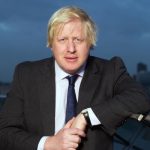
  • Boris Johnson – 2022 Letter to Lord Geidt Following Resignation

    Boris Johnson – 2022 Letter to Lord Geidt Following Resignation

    The letter sent by Boris Johnson, the Prime Minister, to Lord Geidt on 16 June 2022, in response to his letter of resignation.

    Letter (in .pdf format)

  • Lord Geidt – 2022 Resignation Letter to the Prime Minister

    Lord Geidt – 2022 Resignation Letter to the Prime Minister

    The letter sent by Lord Geidt to Boris Johnson, the Prime Minister, on 16 June 2022.

    Text of letter (in .pdf format)

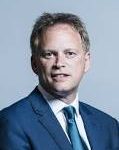
  • Grant Shapps – 2022 Statement on June Rail Strikes

    Grant Shapps – 2022 Statement on June Rail Strikes

    The statement made by Grant Shapps, the Secretary of State for Transport, in the House of Commons on 15 June 2022.

    I beg to move,

    That this House recognises the vital role of the railways in supporting people and businesses across the UK every day; condemns the decision of the rail unions to hold three days of strikes; believes those strikes will adversely affect students taking examinations, have an unacceptable effect on working people and a negative effect on the economy; and calls on the rail unions to reconsider their strike action and continue discussions with the industry.

    The railway is one of the nation’s greatest legacies. The industrial revolution was forged upon it, and for two centuries it has been the means by which we have connected north and south, east and west. It is a proud part of our history, but the truth is that the railways in this country have fallen behind the times. When I became Transport Secretary three years ago, it was clear that our railways were expensive, inefficient, fragmented, unaccountable and desperately in need of modernising and reform. There were delays to upgrades, collapsing franchises and busy lines operating at the very peak of, and sometimes beyond, their capacity, suffering overcrowding and delays. Some working practices had not changed for decades. As a result, we have a railway today that is struggling to keep pace with modern living, particularly in the wake of the pandemic. Our railways need a new direction.

    Office workers are working from home more often and the railway has lost around a fifth of its passengers, and also a fifth of its income. The Government kept the railway running when most passengers stayed at home. We kept trains available for key workers and protected the brilliant railway workers who managed the track and ran the trains. So this Government have stepped in. We put our money where our mouth is and we committed £16 billion to support the railways through covid. That is taxpayers’ money, and it is the equivalent of £600 for every household in this country. Put another way, it is the equivalent to £160,000 per rail worker in this country. As a result, the trains continued to operate, the industry survived and not a single railway worker had to be furloughed or lost their job—not one. We stepped up, but the honest truth is that this level of subsidy—which, let us not forget, is not the Government’s money but the taxpayer’s—simply cannot continue forever. If our railways are to thrive, things must change.

    As I see it, there are four ways to bring about that change. First, we could continue to attempt to pump billions of pounds of taxpayers’ money into the system in the same unsustainable way we have been doing for the last two years, but that would take money away from the NHS and schools. Secondly, we could ramp up fares, but that would price working people off our railways completely. Thirdly, we could cut services and lines, emulating those sweeping cuts made by Dr Beeching in the 1960s, making it harder for people to access our railways. I do not support any of those options, which leaves us with the fourth option: modernise the railways, making them more productive and getting the industry off taxpayer-funded life support.

    Make no mistake, as a Government we profoundly believe in our railways, which is why we have reopened abandoned routes and electrified thousands of miles of lines—not just the 63 miles that Labour managed to electrify over 13 years. It is why we have got behind projects such as High Speed 2, the Elizabeth line and Northern Powerhouse Rail, and rolled out contactless to 900 more stations and digital signalling across the network. And it is why we are transforming the industry through Great British Railways, ending the fragmentation and putting passengers first, but we need the industry to help with that transformation.

    Jeremy Corbyn (Islington North) (Ind)

    The Secretary of State rightly says that billions were pumped into the railways during the covid pandemic. That money kept the system going, and a lot of people worked very hard to keep it going. The train operating companies were preserved and supported, and they did very well during that period, as did many others in the private sector. Why is he now punishing the people who kept the railway system working, and who do all the difficult jobs on the railways, with job losses, inadequate pay and a loss of morale? Should he not talk to their representative unions about the real situation on the railways and work with them to ensure we have an effective, efficient and secure rail system for the future?

    Grant Shapps

    I pay tribute to the workers on the railway who kept things running, with a lot of taxpayers’ cash, during the pandemic. The right hon. Gentleman is absolutely right about that, but he talks about inadequate pay. I remind him and the House that the median salary for a train driver is £59,000, compared with £31,000 for a nurse and £21,000 for a care worker. [Hon. Members: “That’s the train drivers!”] The median salary for the rail sector is £44,000, which is significantly above the median salary in the country. What is more, salaries in the rail sector went up much faster over the last 10 years than in the rest of the country—a 39% increase for train drivers, compared with 7% for police officers and 16% for nurses. It is a good package, and we need to get the railways functioning for everybody in this country.

    Stephen Hammond (Wimbledon) (Con)

    My right hon. Friend is absolutely right that, coming out of the pandemic, the railways need to be modernised. Is it not extraordinary that, just as we are seeing confidence return, it will be destroyed by these strikes? Does he agree that this is exactly the wrong time, for both our economy and our railways, for these strikes to be happening?

    Grant Shapps

    My hon. Friend is absolutely right. These discussions were under way when, suddenly, the union decided to ballot its members, incorrectly telling them that a strike would get them off the pay freeze. Nearly every part of the public sector experienced a pay freeze and, in any case, it is coming to an end. These pointless, counterproductive strikes should never have been called, and the Labour party should recognise that fact.

    Lilian Greenwood (Nottingham South) (Lab)

    Precisely because of the potential disruption, and instead of calling today’s debate, should the Secretary of State not be taking action to try to resolve these disputes? When did he last meet industry leaders and trade unions to try to get that resolution? Has he had a discussion about bringing in ACAS to resolve this dispute? If he has not, will he commit to doing so now?

    Grant Shapps

    I hear what the hon. Lady says. The Leader of the Opposition claims to care deeply about this issue, yet he is not with us today. [Hon. Members: “Where is the Prime Minister?”] The Prime Minister has already said exactly where he is on this issue, but the Leader of the Opposition cannot find his way to the Front Bench when it really matters and when it comes to standing up for working people, Where is he?

    The leader of the RMT, Mick Lynch, said only last month, “I do not negotiate with a Tory Government.” He does not want to meet us. That is the reality of the situation.

    Felicity Buchan (Kensington) (Con)

    There have been 52 days of tube strikes since Sadiq Khan was elected Mayor of London, even though he was elected on a promise of zero strikes. He has also said:

    “Strikes are ultimately a sign of failure.”

    Does the Secretary of State agree that Londoners deserve better? Does he agree that any Opposition Member who backs these strikes is punishing my constituents and my constituents’ businesses? [Interruption.]

    Madam Deputy Speaker (Dame Rosie Winterton)

    Order. It will become impossible to hear what people are saying if this becomes a shouting match. Perhaps we could take the temperature down a little.

    Grant Shapps

    My hon. Friend the Member for Kensington (Felicity Buchan) is absolutely right. We provided £5 billion to Transport for London, and we have not seen the required level of savings. TfL is behind on providing those savings. There has to be a fair balance between taxpayers nationwide and what happens in London, but that has not stopped the RMT striking in London, which will stop Londoners getting to work. We are locked into an atmosphere in which, before the RMT even talks, negotiates or listens to an offer, it goes for a strike ballot.

    Several hon. Members rose—

    Grant Shapps

    I will make a little progress before taking further interventions.

    We need the industry to help with this transformation. We cannot ignore working practices that are stuck 50 or even 100 years in the past. A modern railway needs to run seven days a week. Right now, too many operators are left short at the weekend, which leaves passengers with substandard services. We cannot continue increasing pay on the railways far above the pay for nurses, teachers, police officers and care workers. We cannot continue with the absurd situation where workers can restart their 20-minute break if a manager dares to say “Good morning” at minute 19. That is insane. We have to change the system, as we cannot continue to fund such practices from the public purse.

    Chris Loder (West Dorset) (Con)

    My right hon. Friend is making a very profound speech—[Interruption.] The Opposition might not like it, but he is.

    Does my right hon. Friend agree that the reason there is no chorus from the Opposition condemning these strikes is that the RMT is pouring hundreds of thousands of pounds, if not millions, into the Labour party? [Interruption.]

    Madam Deputy Speaker (Dame Rosie Winterton)

    Order. We need to be very careful not to descend into insults.

    Grant Shapps

    I think my hon. Friend the Member for West Dorset (Chris Loder) is a former union member, possibly even a former RMT member. He worked on the railways, so he knows what he is talking about. Madam Deputy Speaker has asked us to stick to the facts, so let us do that.

    My hon. Friend is right to say that the RMT has donated almost £250,000 to the Labour party and constituency Labour parties over the last 10 years. For the fullness of the record, it is also worth pointing out that the Electoral Commission registered more than £100 million of trade union donations to the Labour party and CLPs over the same 10-year period. Those are the facts of the matter.

    Chris Stephens (Glasgow South West) (SNP)

    My understanding is that the RMT is not affiliated with the Labour party, and I say that as an SNP Member.

    We have the strictest trade union laws in Europe, and the thresholds have been easily surpassed in this particular ballot. What discussions is the Secretary of State facilitating between the RMT and the employers to resolve this issue?

    Grant Shapps

    First, it will interest the House to know—this is in direct answer to the question—that the negotiations and talks are going on almost every day.

    Louise Haigh (Sheffield, Heeley) (Lab)

    Without you!

    Grant Shapps

    This is Labour’s level of understanding. There is a Network Rail company that runs the infrastructure—[Interruption.]

    Madam Deputy Speaker (Dame Rosie Winterton)

    Order. We need to hear the answer.

    Grant Shapps

    Network Rail runs the infrastructure and 14 train operating companies are the employers, and they are meeting on a daily basis. But that has not prevented the unions from striking. That has not stopped the leader of the RMT saying that he would refuse to meet us. So we cannot have this every way.

    Alec Shelbrooke (Elmet and Rothwell) (Con)

    As my right hon. Friend said, billions of pounds of taxpayers’ money was put into the railway industry and it kept almost everybody in employment. In my constituency, many businesses survive by servicing the footfall through the stations. Because these businesses employed staff and they were people’s own companies, they were not capable of getting the loans and grants that were in place, because they had to keep the company alive and keep the people they employed. So what does he think their reaction is to hearing about more public money spent on the railways, on top of the £16 billion, when they are struggling to get their businesses back on track? This strike will make it even worse for them.

    Grant Shapps

    My right hon. Friend is absolutely right to point that out. Just as the railways and the country are recovering—after two years of being locked down, with many of our constituents having lost their jobs and businesses while coronavirus was going on, without the kind of £16 billion of protection that the railways have enjoyed—now is not the time to strike.

    Several hon. Members rose—

    Grant Shapps

    I will make a little more progress and then I will take a couple more interventions.

    That brings me to the motion. Instead of having proper negotiations with the train companies and Network Rail, the RMT and other railway unions have leapt straight for the lever marked “strikes and mass disruption”. Just as the industry is beginning to recover from the pandemic and people were starting to be able to travel once again, the last thing we need now is to alienate passengers who are returning to the network. The unions do not seem to recognise that many commuters who before covid had no option but to take the train now have the option not to travel at all. Say goodbye to them and we really will be in danger of losing the jobs of thousands of rail workers.

    Several hon. Members rose—

    Grant Shapps

    Again, I will make a little progress. Of course for others who have no option but to travel, the strikes will mean huge disruption. They will mean thousands of people not being able to get to work, some of whom might lose their jobs and be added to the list of those who did during covid. These strikes will mean families losing money; the economy being dented by tens of millions of pounds every day, as businesses lose customers; children unable to get to their exams; and patients unable to get to hospitals.

    John McDonnell (Hayes and Harlington) (Lab)

    The question was raised as to whether the Secretary of State or the Government had met the RMT, and he basically said, “Let the negotiations go”. I cannot recall the exact phrase he used. Mick Lynch, the general secretary of the RMT, has written to him today, “I am writing to seek an urgent meeting with the Government, without any preconditions, to discuss the national rail disputes prior to the planned strike action next week, and I would be grateful if this could be arranged without delay.” Will he respond—[Interruption.] We are trying to resolve this matter. Will he respond immediately to Mick Lynch, positively, that he will meet the union now?

    Grant Shapps

    I thank the right hon. Gentleman for his intervention. I know that it is probably on his record, but for the clarity of this debate let me note that he has £25,000 from the RMT. I say that merely in order to have this conversation with all that information being before the public. If this is a change of heart from Mick Lynch, I welcome it. As I said, just a month ago he said that he would not meet “a Tory Government”. Ministers have and do have meetings with him, but these negotiations are a matter between the employer and the union. The employer is meeting the union every single day, and that is the best way to get this resolved.

    Jacob Young (Redcar) (Con)

    Before the previous intervention, my right hon. Friend was touching on the fact that many workers will not be able to get to work because of these strikes. Does he recognise that someone on the minimum wage will lose £160 over the course of these three days of strikes? Should that not be the cause for the Labour party to condemn the strikes today?

    Grant Shapps

    My hon. Friend is absolutely right. It is inexplicable how those in the party who style themselves as the workers’ party do not seem to care about the fact that anyone who is trying to get anywhere will lose pay. It is not just about them; it is about people trying to get to the 17 public examinations that will be disrupted. Kids doing A-levels and GCSEs will not be able to get to them. People will not be able to get to their hospital appointments. This is a reckless, unnecessary strike and it should be called off right now.

    Dame Maria Miller (Basingstoke) (Con)

    I thank my right hon. Friend for the excellent speech he is making. He talked about the people who are going to be affected by this strike, and in my constituency that will be contract workers who cannot work at home and young people who are having to use the trains to get to college to take their A-levels. Is it not irresponsible of the unions to be timing strikes in the middle of A-level exams, when so many of our young people rely on trains to get to college?

    Grant Shapps

    My right hon. Friend is absolutely right. Thousands of children are taking those 17 public exams, including my daughter, whose transport to get to the exams will be complicated by this strike. It is surprising that there seems, from the noises from Members opposite, to be so little care and compassion about this issue. It is absolutely extraordinary. [Interruption.] This red herring that the unions have not had anybody to talk to is complete and utter nonsense. They are talking to the employers and they did not care about those discussions—they just called the strikes instead. That is what they did.

    This is why the Government’s motion calls on the House to condemn the unions for their unnecessary actions. It is why we demand that they get to the negotiating table and work in good faith with the train companies to find the solutions that secure the future of the industry. I hope that these common-sense principles will prevail today. I hope that everybody can agree with that, but I am not sure, given the performance so far, that we are going to see it.

    James Sunderland (Bracknell) (Con)

    Given that the Mayor of London, Sadiq Khan, appears not to have publicly condemned these strikes, does my right hon. Friend appreciate that Sadiq Khan might be encouraged to waive the ULEZ—ultra low emissions zone—and the congestion charge for motorists who are now having to come into London? Many of my constituents rely on the trains, and this is just another cost on hard-working families.

    Grant Shapps

    Every possible alleviation that can be made should be made. I have not seen that particular proposal, but obviously the Mayor will need to look at it. It is extraordinary that this whole House would not want to stand up for hard-working people everywhere and would not want to ensure that people are able to get to their work and job, and that their livelihoods are not damaged.

    Dean Russell (Watford) (Con)

    Schoolchildren taking their GCSEs and A-levels have been mentioned. For the past two years, children have had to go through unprecedented times. They are in the process of going through exams that have been more stressful than those for any other generation, because of the pandemic. It is absolutely cruel that everybody in this House is not condemning the timing of these strikes and the strikes happening, because those poor children have gone through enough in the past two years and now they are having to suffer in the last weeks of their GCSEs.

    Grant Shapps

    My hon. Friend has nailed it. It is completely unfair, it is totally the wrong timing. It should not be happening and the whole House would appreciate Labour Members saying more about it, but they cannot say more about it, because they are divided on the subject. The shadow Levelling Up Secretary says that Labour stands united with those who bring the chaos upon our communities. The shadow Health Secretary, supposedly a rising star, although he is not on the Front Bench today because he does not want to be associated with this, even goes so far as to say that if he was given a chance, he would join the strikes. The shadow Transport Secretary, styling herself today as the shadow Secretary of State for strikes, refuses to condemn the RMT’s plan, which is going to cripple our railways.

    What has happened to the Leader of the Opposition? He is not here. What is he saying about this? The Prime Minister has set out his position very clearly; I have not heard the Leader of the Opposition set out his position yet. I do not know whether anyone else has spotted him. He is not here today. Presumably, he has been standing up to his shadow Cabinet and defending the people whose lives will be disrupted by the strike. That is where one would expect him to be, but no. He has been playing a game of real-life Twister—his position hopelessly contorted, with one foot in the RMT camp and the other goodness knows where, stretching credibility. Perhaps it is a position that he thinks will appear boring to the shadow Cabinet. In fact, what he is doing is stretching the patience of the British public by not saying where he stands.

    Marsha De Cordova (Battersea) (Lab)

    I have been trying persistently to get the Secretary of State’s attention so that he would give way, but he wants to play politics throughout. He talks about wanting to protect hard-working people like those in London, so why will he not commit to meeting the Mayor of London to get a proper sustainable funding plan for Transport for London so that people can use the transport network and get to work?

    Grant Shapps

    I am pleased that I have now taken the hon. Lady’s intervention. This is a debate about the national strikes, rather than the future funding of TfL, but since she asks, we have already spent £5 billion supporting TfL. If we had done what the Mayor had asked me to do two years ago, which was to come up with a long-term settlement then, he would have been out of money a long time ago. He should be pleased we did not settle for that.

    As I say, this debate is about the strikes that will take place next week. Labour Members should get behind the rest of the country and convince their union friends, who I know give them millions of pounds, that the strike is not in the interests of the British public. Although the Labour party is bankrolled by the unions, we want it to stand up to the union barons, rather than bringing the railways to their knees. The Labour leader might claim to be different, but if you scratch the surface, it is the same old Labour.

    Today, the Labour party needs to join the Government and vote for the motion. It needs to put people above its party coffers. It needs to vote to condemn the unions for their irresponsible actions. It needs to stand with hard-working people everywhere, who just want to get on with their lives after two years of considerable disruption.

    James Daly (Bury North) (Con)

    Thousands upon thousands of self-employed people throughout the country will not be able to earn a penny over the period of the strike. It will cripple the economy and the pockets of our constituents throughout the country. Will my right hon. Friend say how much the general secretary of the RMT will lose of his £124,000 in pay and benefits for crippling the economy of this country?

    Grant Shapps

    My hon. Friend is right to point that out. If I am honest, I am more worried about the rail card that the general secretary gets with his job than about his salary, because he will not be able to use it during the strike. I imagine that will be a problem for him.

    Chris Clarkson (Heywood and Middleton) (Con)

    Prior to coming here, I was a rail commuter. I stood on platform 14 of Manchester Piccadilly every day, Monday to Friday. That is why I am so frustrated that our Mayor has said absolutely nothing about the strikes and that a fellow Greater Manchester MP is enthusiastically backing them. Has my right hon. Friend consulted any of the Labour of MPs who have taken donations from the RMT about whether they will donate to their constituents on low incomes who will not be able to afford to get to work?

    Grant Shapps

    My rail commuting friend makes an excellent point. Every person in this country will want to know and understand how MPs have voted in this place tonight. It matters to them and their families, and it matters for their jobs.

    Wera Hobhouse (Bath) (LD)

    Is it not the reality that the person who most wants this strike to go ahead is the Prime Minister?

    Grant Shapps

    No.

    The choice is clear: we can stick with the same old failed model, which makes the railways uncompetitive and jeopardises thousands of jobs as people abandon the rail network, perhaps forever, or we can come together to overhaul our railway industry, build a service that people want to use and give the railways a bright future. It is time for the unions to call off these absurd strikes. Strikes should be the last resort, not the first resort. If the unions will not stop, we as Members of Parliament, whose constituents rely on the railways for their work, to see their families, to get on and to use public services, must speak with one voice. People throughout the land will look to this House today to see how their Members of Parliament vote.

    Rachael Maskell (York Central) (Lab/Co-op)

    I am grateful to the Secretary of State for giving way. It is unfortunate that he has misjudged the tone of this dispute. We are talking about—[Interruption.] Shh. We are talking about the livelihoods of public servants and about their job security. If he was serious about resolving this dispute, not only would he insist on coming to the table; he would be open to listening to what the unions have to say. Why won’t he?

    Grant Shapps

    I would welcome guidance on a very serious point, Madam Deputy Speaker. I thought that Members had to point to the Register of Members’ Financial Interests when they speak in this House. I believe that the hon. Member for York Central (Rachael Maskell) has received a £3,000 donation from the RMT. Today’s vote is specifically about the RMT and its strike, so I would welcome any guidance on that matter.

    I do not agree with the hon. Lady about the tone of all this. It is incredibly important that people are getting around the table and talking. Talks have been going on. Unfortunately, even though talks were going on, the unions sold a strike to their members on false pretences: on the basis that there would be no pay rise, when in fact there was always going to be a pay rise because the public pay freeze had come to an end.

    I think that now is the time for this House to come together to show that we support hard-working commuters, key workers, the public and the pupils we have spoken about who are taking their A-levels and GCSEs, each of whom will be unable to go about their business. Or will Labour Members vote with their union baron friends, as we were just hearing, in favour of these reckless, unnecessary, self-defeating, premature strikes? Tonight, the voting record of each and every one of us will be on display. The record will show that those on the Government Benches stood united in favour of the people we represent. The question is, where do that lot stand? I commend the motion to the House.

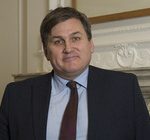
  • Stuart McDonald – 2022 Speech on Sending Asylum Seekers to Rwanda

    Stuart McDonald – 2022 Speech on Sending Asylum Seekers to Rwanda

    The speech made by Stuart McDonald, the SNP MP for Cumbernauld, Kilsyth and Kirkintilloch East, in the House of Commons on 15 June 2022.

    My party continues to deplore this unworkable, illegal and immoral policy. It does nothing to stop smugglers and it inflicts serious harm on victims, despite the Home Secretary’s cloud cuckoo land description of it. We wholeheartedly welcome the cancellation of this flight, and we condemn the reckless approach that the Home Secretary has taken to taxpayers’ money and, more importantly, to the rule of law.

    May I take a moment to commend the lawyers involved for their incredible work in the face of some utterly inappropriate commentary from the top of Government? Will the Home Secretary tell her colleagues to heed the call from the Law Society and the Bar Council, and stop attacks on legal professionals who are simply doing their job?

    It is not the lawyers who caused this flight to be cancelled nor any court; this flight was stopped because of the stench of yet more Government illegality. [Interruption.] It was. Even the most ardent supporters of this dreadful policy must recognise that there is, to put it mildly, massive dubiety over its lawfulness. The UNHCR, the guardian of the refugee convention, is clear that this is in breach of it. To seek to press ahead before the courts have concluded that issue either way was a reckless waste of taxpayers’ money and shows again this Government’s total disregard for the rule of law.

    The Home Secretary should call this off now, and wait for that Court ruling. That is all we are asking for in the meantime. She should start answering the basic questions that we did not get answers to on Monday, such as about oversight, age assessments, and screening for torture survivors and trafficking victims. This is a dreadful mess.

    Inevitably, this pitiful policy failure will now, wrongly, be blamed by the usual suspects on the European convention on human rights, so will the Home Secretary recognise what the Prime Minister previously said about the convention being a “great thing”? Will she recognise its importance for devolution, for the Good Friday agreement and for the trade and co-operation agreement, and call off the agitators in her party who want the UK to follow Russia and Belarus through the exit door and on to pariah state status?