Tag: 2022

  • Chris Stephens – 2022 Speech on Benefit Sanctions

    Chris Stephens – 2022 Speech on Benefit Sanctions

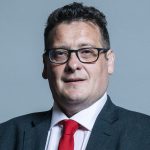
    The speech made by Chris Stephens, the SNP MP for Glasgow South West, in Westminster Hall, the House of Commons, on 13 December 2022.

    I beg to move,

    That this House has considered DWP’s policy on benefit sanctions.

    It is a pleasure to see you in the Chair, Mr Pritchard. I refer colleagues to my entry in the Register of Members’ Financial Interests, particularly my position as chair of the PCS parliamentary group as I will be mentioning some issues that appertain to staff who work in the Department for Work and Pensions. There are three components to what I want to raise this afternoon: the latest figures on sanctions, the policy itself and some of the challenges, and the pressures facing DWP staff.

    The latest figures on sanctions are shocking. In my written question 88916, I asked,

    “how many benefit claims were subject to sanctions in the last three months for which data is available by constituency; and how much was the (a) total and (b) average sum of benefit income lost by claimants due to sanctions in each constituency.”

    Members can refer to that particular written question and answer. In June 2022, just over £34 million was clawed back by the DWP in Great Britain. In July, it was £34.9 million and, in August, it was over £36 million, so the figures are increasing month on month. In Scotland, the August figure was £2.3 million, and in Glasgow South West the figure was £57,000. The average deduction in August was £262 a month, which is a considerable sum of money to deduct from someone’s social security. The figures suggest that the aggressive attitude we saw between 2013 and 2015 is back among us. The raising of the administrative earnings threshold means that 600,000 more claimants could be subject to a sanction, and that will include raising the number of people responsible for delivering the benefits being sanctioned, as I will come on to.

    We know the history of benefit sanctions. The coalition Government said their Welfare Reform Act 2012 would

    “lay the foundation for a clearer and stronger sanctions system that will act as a more effective deterrent to non-compliance.”

    They made changes in three main areas. First, they extended the scope of conditionality and sanctions within the same claimant groups. Secondly, they increased the length of sanctions for certain groups. Thirdly, they introduced the concept of escalating sanctions, with longer sanction periods for second and third sanctionable failures within a 12-month period.

    However, the then Secretary of State for Work and Pensions, Amber Rudd, had concluded that three-year sanctions were rarely used and were counterproductive, and ultimately undermined the goal of supporting people into work. The Work and Pensions Committee report in 2018 found that some claimant groups, such as single parents, care leavers and people with health conditions or disabilities, were disproportionately vulnerable to and affected by sanctions.

    Margaret Ferrier (Rutherglen and Hamilton West) (Ind)

    A few months ago, a vulnerable constituent contacted me after she had been sanctioned for missing an appointment, despite being assured that she did not need to attend it for very good and sensitive reasons. She was an older woman who had been through extreme trauma and who had no access to the internet and no mobile phone credit. Does my hon. Friend agree that a more humanised approach must be taken by the DWP?

    Chris Stephens

    I thank my good and hon. Friend for that intervention. I will mention similar specific case studies, and there are clear questions for the Department to answer on this matter.

    Going back to the Work and Pensions Committee 2018 report, it criticised the fact that a sanction incurred under one conditionality regime continues to apply even if the claimant’s circumstances change and they are no longer able or required to look for work. The report said that the sanction serves no purpose in such circumstances, and the Work and Pensions Committee recommended that it be cancelled. It further criticised the fact that the decision to impose a sanction is made by an independent decision maker

    “who has never met the claimant and who cannot be expected to understand fully the circumstances that led to them to fail to comply.”

    It therefore recommended that work coaches should be able to recommend

    “whether a sanction should be imposed”.

    The Government responded to the report and each of the Work and Pensions Committee’s recommendations in January 2019. They agreed to evaluate the effectiveness of reforms to welfare conditionality and sanctions, and said that it would be focused on whether sanctions within the universal credit regime are effective at supporting claimants to search for work. The Government said they would look to publish the results in spring 2019, but that did not happen, and DWP Ministers were still saying in July 2020 that the Department was committed to conducting an evaluation and that it would look to so by the end of 2020. In January 2022, however, The Guardian reported that the Department for Work and Pensions had refused a freedom of information request from Dr David Webster to release a copy of the evaluation.

    In February, it was reported to the Lords that the Department had not published its evaluation of the effectiveness of universal credit sanctions because it lacked robust legacy data. The former Secretary of State told the Work and Pensions Committee—in fact, it was in answer to the Chair, the right hon. Member for East Ham (Sir Stephen Timms), who is present—that she had noted that the evaluation had been commissioned by a previous Administration, and she explained that the notion of a sanction acts not only through its imposition on a claimant but, importantly, through its effect as a deterrent. That raises a couple of questions.

    Sir Stephen Timms (East Ham) (Lab)

    I am grateful to the hon. Gentleman for his points about the Select Committee’s report, and I pay tribute to him for his work on this subject. I understand that his membership on the Committee will shortly come to an end, but I thank him very much for all his work.

    The hon. Gentleman will have heard the new Secretary of State say that he will want to have a fresh look at whether some of the things that the Department has refused to publish in the past should have been published. Does the hon. Gentleman agree that this particular report should be high on that list of priorities?

    Chris Stephens

    It should be among the highest. I thank the Chair of the Select Committee for his very kind words, which I appreciate. I have enjoyed working with him, and he chairs the Committee very effectively indeed. He is absolutely correct to say there is a real question about reports that are currently unpublished but should be published, and I will come to some of them in my remarks.

    I would argue that the dugs in the street—or the dogs in the street, for those not from Scotland—could give us a comprehensive picture of sanctions and their effects on people. When I secured the debate, Feeding Britain and the Independent Food Aid Network asked for case studies and examples. I raised one with the Secretary of State at the Select Committee hearing about a Glasgow South West constituent who has been diagnosed with Asperger’s syndrome and severe anxiety, and who has extreme difficulty communicating with others. The local jobcentre applied a sanction after she failed to attend in-person appointments, despite the fact that, as part of a claim for employment and support allowance, it was agreed three years ago that reasonable adjustments would have to be made and that telephone meetings would be arranged for her. It raises the issue of the financial losses that occur, but the Department for Work and Pensions argued that there was no change of circumstances and that no sick notes were handed in.

    We also have the example of an individual in Motherwell. A young mother who had escaped domestic violence was sanctioned for failing to attend an appointment, despite the fact that she had advised the Department for Work and Pensions that she needed to care for her autistic child on that particular day.

    In the city of Liverpool, clients have commented that DWP job coach appointments have come through to their phone journals at times when they had no credit for data or access to wi-fi. By the time that each was able to afford to that phone data, they had missed the appointment and been sanctioned. Digital exclusion will increasingly affect clients who are unable to afford a basic smartphone and/or a contract for data access. They then face longer journeys to their jobcentre as a result of one of the busiest jobcentres in that city, Toxteth, being due to relocate, making access harder for local people.

    In Coventry, we are advised that the vast majority of sanctions are due to people not attending an appointment, but many are now told of their appointments through an online journal so, again, people with no access to internet are being told that they are going to be sanctioned.

    In Somerset, we hear of the case of someone with severe mental health issues and anxiety, whose job coach assured her that any correspondence would go to the principal carer. Ordinarily, she was informed of her appointments via a journal entry. The job coach cancelled a planned appointment and arranged a new one, but put it on that job coach’s to-do list, not through the online journal. This is an area that has to be looked at, because that person was subject to a sanction.

    Debbie Abrahams (Oldham East and Saddleworth) (Lab)

    Will the hon. Member give way?

    Chris Stephens

    I give way to my fellow Select Committee member.

    Debbie Abrahams

    I congratulate the hon. Member on securing this debate, and on all his work on the Select Committee. Is he as worried as I am that this is just a further iteration of the DWP sanctions issues going back to 2012? I particularly remember David Clapson, who was the first case that I came across—a former soldier who was sanctioned. He could not afford to keep his refrigerator on, his insulin went off, and he died as a consequence. Is the hon. Member as concerned as I am about sanctions potentially resulting in deaths?

    Chris Stephens

    I thank the hon. Lady, who is a good friend, for her intervention. She has done fantastic work in this area, which I very much support. I am concerned about the effects that sanctions have, and that the whole deductions policy has. The effect that taking money away from people has on cost of living payments is another real issue, which I will come on to.

    I would also add that, based on exchanges I have had with Ministers past and present, people can be sanctioned if they refuse a zero-hours contract job. Someone could be in a position where they have secure work, but less hours. The Department is encouraging people to increase their earnings, so if that person refuses a zero-hours contract and insecure work, they will be subject to a sanction.

    Then, we have the position of the DWP staff themselves. Some have received letters saying that they need to increase their earnings. It is no wonder that they are going on strike, is it? There is an anomaly here: many thousands of DWP staff are paid so poorly that they are claiming the same benefits they deliver, while sharing an office with someone who could then sanction them because they have not increased their earnings or their hours. I find that completely and utterly bizarre, and I hope that Ministers will look at PCS’s concerns and maybe treat the situation of DWP staff separately. It seems to me that the Department that is delivering social security should not be taking social security away from the people who are delivering it.

    Food banks across the Independent Food Aid Network see a newly hungry person referred as the result of a sanction every three days on average, so I have a number of questions for the Minister. Does he agree that the current sanctions policy is forcing people to use food banks if they are not to go hungry? To that end, will the Minister undertake to publish the Department’s evidence review on the drivers of the need for food aid, which was promised two years ago, yet remains under wraps? As the Chair of the Select Committee, the right hon. Member for East Ham, has outlined, that is one of the reports that remains unpublished, and it is something that we want to see.

    The Department’s own serious case panel agreed at its October meeting that

    “there should be further collaborative work undertaken through the appropriate governance routes to explore strengthening the mechanisms which protect our most vulnerable customers in respect of sanctions.”

    Will the Minister explain to us what that collaborative work will look like, and when it will take place? Will he also undertake to commission a study into any correlation that exists between the distance someone lives from their nearest Jobcentre Plus and the likelihood of them being sanctioned; the prevalence of poor mental health and vulnerability within households on universal credit and the likelihood of them being sanctioned; and the prevalence of digital exclusion within households on universal credit and the likelihood of them being sanctioned? We know that the Department has closed jobcentres; we also know that has made it more difficult for people to attend jobcentres and that they may be sanctioned for not attending a jobcentre.

    Will the Minister also provide an update on the Department’s most recent trials of the yellow card early warning system in two areas, including any plans to roll out that system further afield? I do not accept that there should be conditionality in the system, but if we are going to have conditionality it seems sensible to me that there should be a yellow card system, or some sort of warning system, in place before the decision is made to issue a sanction. Given that the present system seems to rely heavily on individual discretion, which is resulting in people becoming destitute, does he agree that a fully national roll-out of a yellow card system is needed sooner rather than later?

    As I have indicated, people being subject to a sanction could mean—indeed, has meant—that they do not receive their cost of living payment, but that decision could be reversed if they appeal and win their appeal. However, it seems to me that if there are 6,600 universal credit claimants who have missed out on that first cost of living payment because of sanctions, the Department for Work and Pensions should look at that situation. It seems to be a double punishment. The cost of living payment is in place so that people can meet their basic living needs and if they are sanctioned, it appears that there is something very wrong.

    Anne McLaughlin (Glasgow North East) (SNP)

    I agree with my hon. Friend that sanctioning people on the lowest of incomes at any time is grossly unfair, but at this time, when even many people in well-paid work are struggling to pay their bills, it is obscene. I had not been aware, so I thank him for highlighting it, that some people are not getting the cost of living payment that the Government say we need to survive.

    I congratulate my hon. Friend not only on securing this debate, but on asking the questions that led me to discover that this summer £153,000 was taken from my constituents by DWP sanctions. Will he join me in saying to his constituents, as I am now saying to my constituents in Glasgow North East, “If you have your benefits sanctioned, do not take it lying down. Contact me and I will fight this for you, because this is wrong and nobody should have to live on less than the minimum income”?

    Chris Stephens

    I thank my hon. Friend for that intervention and she is absolutely right. We are in a cost of living crisis. During the pandemic, the Department rightly took the view not to sanction people. We are now in a cost of living crisis, and if we did not sanction people during the pandemic, we should not sanction them during a cost of living crisis either. That seems to me to be a sensible approach.

    My hon. Friend is also correct in highlighting the great work that constituency office staff do in helping the most vulnerable to see off these attacks. We have all dealt with cases of people being sanctioned; I think that every single constituency office across these islands has had to deal with that.

    In closing, I will mention some of the staff concerns. There are concerns that jobcentres have been told by senior managers and Ministers to “up their game” when it comes to sanctions. There are very real concerns about the culture and certainly there is a view that there needs to be a mind-shift towards supporting people in what is important and that punishment has not achieved anything. There is very limited and patchy evidence that sanctions actually work.

    There is inter-office competition, whereby different offices’ statistics are compared, pushing for higher sanction and deferral rates, and labour market decision makers are using box-ticking exercises. Pressure is put on the work coaches themselves, through tighter timescales and pushing people to physically attend the jobcentre, with the harms that causes the long-term employed. There are also real effects on disabled claimants who are thrown into a group of those most likely to get a sanction, and the relative rate of sanctions for claimants with disabilities—all of that really needs to be explored further.

    Sanctions appear to be back with a vengeance, and that shift of approach requires parliamentary scrutiny. As someone who believes that conditionality has not worked, I think we need a change in approach to put the claimant and their needs at the heart of the social security system. The Department must accept the Select Committee’s recommendations to introduce either a yellow card system or another warning system, because failure to do so would mean the Department going back on its word in how it responded to previous Select Committee reports. I look forward to hearing whether colleagues have to say, including whether they accept—as I do—the need for change and reform.

  • PRESS RELEASE : International agreement to support Vietnam’s ambitious climate and energy goals [December 2022]

    PRESS RELEASE : International agreement to support Vietnam’s ambitious climate and energy goals [December 2022]

    The press release issued by the Foreign Office on 14 December 2022.

    Leaders from Viet Nam, the United Kingdom and the European Union have today announced an ambitious new Just Energy Transition Partnership.

    Leaders from Viet Nam and the International Partners Group, including the European Union, the United Kingdom, France, Germany, the United States, Italy, Canada, Japan, Norway and Denmark have today (14 December) agreed a bold Just Energy Transition Partnership (JETP).

    The Partnership will support Viet Nam to deliver on its ambitious Net Zero 2050 goal, accelerate the peaking of its greenhouse gas emissions and transition away from fossil fuels to clean energy.

    The JETP will mobilise an initial $15.5 billion of public and private finance over the next three to five years to support Viet Nam’s green transition.

    The Partnership will support Viet Nam in working towards a number of ambitious new targets:

    • Bringing forward the projected peaking date for all greenhouse gas emissions in Viet Nam from 2035 to 2030.
    • Reducing peak annual power sector emissions by up to 30 percent, from 240 megatons to 170 megatons, and bringing forward the peaking date by five years to 2030.
    • Limiting Viet Nam’s peak coal capacity to 30.2 gigawatts down from a current planning figure of 37 gigawatts.
    • Accelerating the adoption of renewables so that renewable energy accounts for at least 47 percent of electricity generation by 2030, up from the current planned generation share of 36 per cent.

    The successful delivery of these ambitious targets will result in around 500 megatons (0.5 billion tonnes) of emissions saved by 2035.

    Initial contributions to the Viet Nam JETP include $7.75 billion in pledges from the IPG together with the Asian Development Bank and the International Finance Corporation. This is supported by a commitment to work to mobilise and facilitate a matching $7.75 billion in private investment from an initial set of private financial institutions coordinated by the Glasgow Financial Alliance for Net Zero (GFANZ), including Bank of America, Citi, Deutsche Bank, HSBC, Macquarie Group, Mizuho Financial Group, MUFG, Prudential PLC, Shinhan Financial Group, SMBC Group, Standard Chartered.

    Over the next 12 months, Viet Nam will work with the support of partner countries to develop and adopt the Viet Nam JETP Resource Mobilisation Plan, which will enable the implementation of the JETP funding and strategy.

    Viet Nam is the third country to launch a JETP, following the successful launch of the South Africa JETP at COP26 and the Indonesia JETP at this year’s G20 Leaders’ summit. As a rapidly growing economy, Viet Nam’s JETP will demonstrate that economic growth can be decoupled from fossil fuel energy consumption.

    The Viet Nam JETP builds on the UK-launched G7 Partnership for Global Infrastructure and Investment (PGII), which aims to narrow the infrastructure investment gap in developing countries. G7 leaders agreed in June 2022 to move forward in negotiations with several countries on JETPs, which are a core delivery mechanism of the PGII.

    Ensuring the transition away from fossil fuels is ‘just’ lies at the centre of the JETP. A just transition will not only help Viet Nam meet climate goals but also secure a resilient and prosperous future for its people, reducing the impacts of pollution and supporting economic growth and new jobs. It is vital that the whole civil society is involved in the green transition at all stages and no one is left behind.

    UK Prime Minister Rishi Sunak said:

    The JETP model is a game changer in the fight against climate change – using international aid to unlock billions of dollars of private finance.

    Viet Nam is a dynamic, emerging economy at the heart of South East Asia. The investment we are making today means the country can cut its emissions while simultaneously creating new jobs and growth.

    Together we will deliver a cleaner, greener future for Viet Nam and our planet.

    President of the European Commission, Ursula von der Leyen said:

    I am delighted that we have sealed a new Just Energy Transition Partnership with Viet Nam during this important week for EU-ASEAN relations. With investments from international partners, Viet Nam can boost renewable energies and enhance its energy security and autonomy. We will help Viet Nam to start reducing its greenhouse gas emissions five years earlier than planned, and dramatically reduce its coal power use. This Partnership will help Viet Nam to build a 21st century power sector, energising its economic growth and bringing environmental and health benefits to its citizens.

    Canada’s Prime Minister Justin Trudeau said:

    Just Energy Transition Partnerships are a model for how contributors can work together with partners like Viet Nam to take action towards cleaner sources of energy. Canada will continue to be a committed partner for the clean energy transition and coal phase-out in Viet Nam, which is in all our best interest for an inclusive, clean energy future in the Indo-Pacific region”.

    French President Emmanuel Macron said:

    France and the European Union are pursuing their strong commitment to climate change mitigation by supporting the acceleration of a just energy transition in Vietnam. France’s contribution, which is part of a long-standing bilateral cooperation, will support energy planning, capacity building and grid development, in parallel with the development of renewable energy. Our collective contribution must support Vietnam’s commitment to a sustainable development trajectory, phasing out coal, in order to limit global warming to 1.5°C. This partnership must implement a just transition that involves and benefits civil society.

    German Chancellor Olaf Scholz said:

    The JETP with Viet Nam will support ambitious climate targets and a substantial increase of renewable energies by 2030 as a joint effort to keep 1.5 °C in reach. The Partnership is about working hand in hand with Viet Nam to make sure that the necessary transition will be just and inclusive. Germany will actively support Viet Nam in achieving the newly set goals.

    Japan’s Prime Minister Fumio Kishida Fumio said:

    Japan has been supporting Viet Nam‘s decarbonization through renewable energy-related projects and welcomes Viet Nam‘s ambition to further accelerate just energy transition towards net zero by 2050. Japan is proud to be a member of the Just Energy Transition Partnership, which will promote support for low emission and climate resilient development in Viet Nam, in coordination with partner countries, and with further private sector engagement.

    Norway’s Prime Minister Jonas Gahr Støre said:

    Norway is proud to be part of the Just Energy Transition Partnership and support Viet Nam’s effort to speed up the energy transition. We believe this can mobilize much needed private capital to accelerate the ambitious transition from coal to renewable energy.

    President of the United States, Joe Biden said:

    Today, Viet Nam has demonstrated leadership in charting an ambitious clean energy transition that will deliver long-term energy security. The United States is proud to be a partner in this effort. Viet Nam’s historic commitment will catalyze investment and economic growth and create tremendous opportunity for the Vietnamese people, while advancing the fight against the global climate crisis.

    UN Secretary-General António Guterres said:

    With today’s agreement, Viet Nam is pioneering a new framework of collaboration to deliver a fair, inclusive energy transition towards renewables. These Partnerships are a crucial tool to unlock the emissions cuts our world needs in the 2020s.

    We need all hands on deck to realize an energy transition that is global, sustainable, just, inclusive and equitable. The United Nations stands ready to continue supporting these Partnerships and all other cooperative efforts.

  • PRESS RELEASE : World Trade Organisation’s USA Trade Policy Review, December 2022 – UK statement [December 2022]

    PRESS RELEASE : World Trade Organisation’s USA Trade Policy Review, December 2022 – UK statement [December 2022]

    The press release issued by the Foreign Office on 14 December 2022.

    The UK’s Permanent Representative to the WTO in Geneva, Ambassador Simon Manley, gave a statement during the USA’s 15th WTO Trade Policy Review.

    1. Muchas gracias, Señor Presidente. May I join others in warmly welcoming the United States’ delegation, led by our distinguished colleague Ambassador María Pagán, and her colleagues both from here and in DC to this, their 15th Trade Policy Review. Thank you very much also to our distinguished Discussant Ambassador Spencer. I’m glad to see that they both got the memo about the dress code for this morning, President. There is still time to pick up your Santa suit so that this afternoon you can all be colour-coordinated.
    2. Let me start with a word about the ties that bind the UK and the United States of America. Normally, we don’t just sit next to each other – and I realise we are a bit further apart this morning. Our nations have a deep and unique relationship grounded in shared history, values, and ambitions. We do more together than any other two countries in the world, with exceptional cooperation at every level of society, culture, defence, intelligence, and the economy.
    3. Our Heads of Government have made clear their commitment to open societies and open markets as the best way to deliver tangible benefits to ordinary citizens. And of course, picking up the Ambassador’s comments, we have stood side by side once again over these last nine months in support of our Ukrainian friends in their fight for their freedom – and ours.
    4. We have worked together to support our businesses to trade and ensure our consumers enjoy a greater variety and range of products and services. In parallel, the UK is also strengthening ties with individual states to deepen our overall trade and investment relationship.
    5. Chair, the US is at the heart of this Organisation and its leadership is paramount to the survival and the success of the WTO. As the former US Trade Rep and World Bank President Bob Zoellick said, “It is in the self-interest of the major developed states – and in the global interest – to be, with others, architects of the future.” Since the creation of the GATT 75 years ago this year, the US has always had a crucial role in shaping the global trading system.
    6. We welcome the US recognition that trade can, and indeed should, be a force for good. We support President Biden’s emphasis on democracy and open societies, and we believe that free and fair trade lies close to the heart of these. So today I want to say to our US friends that the WTO needs the US, more than ever. US leadership – visible leadership – is crucial to global prosperity and to the effective functioning of this Organization. So I urge the US to join us in setting out ambition and engagement across all the WTO dossiers.
    7. And we don’t have to look so far back to see that an engaged United States is beneficial to this organisation. The US played a critical role during MC12 in reaching the conclusion of that historic first stage of the fisheries subsidies’ negotiations, for which we should all be thankful. We also appreciate the constructive role it played in helping to secure agreement on the Ministerial Declaration on the Emergency Response to Food Insecurity – such a crucial issue to members across this Organization.
    8. One area where the United Kingdom – like, I suspect, others here this morning – believes we need to make more progress is the dispute settlement system. Without a fully-functioning dispute settlement system we are all left unable to fully realise the benefits of the agreements we have negotiated. We welcome the US’ initiative to convene an informal process on Dispute Settlement reform.
    9. But we must now deliver on our mandate given by our Ministers to achieve a fully and well-functioning system as soon as possible, and by 2024. To get there, it’s incumbent upon all of us to come together with focus, with urgency, and with pragmatism, in order to reach an agreement on meaningful reform. Needless to say, the United States of America has a key role to play to help find a solution that can command the support of all Members of this Organization.
    10. Chair, since their last TPR in 2018, the world has faced some of the biggest challenges of our time. We are all still grappling with the economic and health impacts of the pandemic which highlights just how important it is to keep trade flowing and supply chains open. And our future is more than ever endangered by climate change.
    11. COP 27 in Sharm el-Sheikh has given us all more to do. We all face the challenge of transitioning to a greener economy and ensuring the sustainability of our supply chains. I want to salute the Biden Administration, on behalf of our Government for its ground-breaking Inflation Reduction Act this past August, and its far-sighted environmental provisions. At the same time, our US colleagues will know that my Government, like others here, have serious concerns about some of the policies in the Act which will inadvertently harm British businesses and impact global supply chains in batteries, electric vehicles and wider renewables.
    12. It is in all our interests to ensure that we don’t disrupt trading links in key industries that are essential for us all if we want to reach net zero. We are in touch with the US Administration about our concerns and I fervently hope a way through can be found. We should all work together to ensure we can achieve our shared ambitions for a greener and more sustainable future in a way that preserves the multilateral trading system and respects WTO rules.
    13. Let me also emphasise that in our advance written questions, we paid particular attention to asking the United States about procurement barriers, including Made in America initiatives and Buy American policies. We look forward to continuing to work with the US Administration to ensure fair and transparent government procurement, through the WTO Government Procurement Agreement and in our bilateral engagement.
    14. Chair, let me just highlight just one of the many examples of the recent successes in our bilateral relationship supporting businesses, consumers and workers on both sides of what we call ‘the pond.’
    15. In early October we saw British lamb shipped to the US for the first time in 25 years after we worked together to lift the long-standing US ban on imports of British lamb. This means that over 300 million lucky US consumers will now be able to enjoy the UK’s succulent world-renowned lamb for the first time in a generation – washed down, I hope with a glass of fine Californian Zinfandel.
    16. And we were pleased to see our US-UK Dialogues on the Future of Atlantic Trade mentioned in the United States’ Government Report. The dialogues in Baltimore and Aberdeen earlier this year identified a range of collaboration opportunities including digital trade, support for SMEs and protecting labour and environmental standards. We look forward to future engagement with the United States on our shared priorities.
    17. Chair, more than 80 years ago, our two great nations issued the Atlantic Charter, outlining our joint vision for the future of the world amidst the chaos of the Second World War. In that Charter, President Roosevelt and Prime Minister Churchill promised to respect their existing obligations and advance the enjoyment by all States, no matter how big or small, of access to the trade on equal terms. Today, this promise needs to be upheld more than ever, not just by the US and UK, but by all of us who care about our common future. Thank you very much.
  • Helen Whately – 2022 Speech on Government Funding for Research into Motor Neurone Disease

    Helen Whately – 2022 Speech on Government Funding for Research into Motor Neurone Disease

    The speech made by Helen Whately, the Minister of State at the Department of Health and Social Care, in Westminster Hall, the House of Commons on 13 December 2022.

    It is a pleasure to serve under your chairmanship, Mr Mundell. I begin by thanking the hon. Member for Kingston upon Hull East (Karl Turner) for securing this debate. I too pay tribute to Doddie Weir, an incredible man who sadly passed away at the end of November. My thoughts are with his wife Kathy, and their sons, Hamish, Angus and Ben.

    I had the good fortune to meet Doddie during an online roundtable—online because it was during the pandemic—and I was inspired by his campaign for a brighter future for people living with MND. His charity, the My Name’5 Doddie Foundation, works tirelessly to raise funds for research and provide grants to people living with this cruel condition.

    During the pandemic, and again since, I also met with my Mid-Kent MNDA branch as a constituency MP. Those meetings are vivid in my mind. The first call I had with them had literally everybody on the call in tears, as we talked about the experiences of those suffering with MND and their carers—usually family members—and how they were seeing their loved ones losing a bit of themselves day by day to MND. It is such a cruel disease, as the hon. Gentleman said. I am thankful to him and to several other Members of Parliament who have campaigned for research funding and actively lobbied me and other Ministers on that point.

    Chris Evans (Islwyn) (Lab/Co-op)

    I refer Members to my entry in the Register of Members’ Financial Interests, and I am a biographer of Don Revie. This is an important debate, because Don, who played for Hull City during his playing career, passed away from motor neurone disease in 1989. Like Doddie Weir and Rob Burrow, he played sport at a high level. If the Government are going to invest in research, will they look at the fact that sportsmen seem to be more likely than the rest of the population to develop motor neurone disease?

    Secondly, I urge the Minister to tell GPs to ensure that people are tested for motor neurone disease early in their journey, because the problem is that it is one of the last things people test for. In the case of Don, he believed that the pain in his back was caused by slipped discs—tragically, it was motor neurone disease. I ask the Minister to look into those two asks.

    Helen Whately

    The hon. Member makes two really important points. As he says, several prominent sportsmen who have been effective campaigners have sadly been affected by the disease, and there is a potential relationship with head injuries. He also made a point about the challenge of diagnosis, which I will take away.

    The hon. Member for Kingston upon Hull East rightly talked about the tenacity of campaigners such as Rob Burrow and how effective their visible campaigning has been at raising awareness of MND. The disease affects a significant number of people, with around 5,000 suffering from it right now. Sadly, we know that people do not live very long with MND, so a really significant number of people across the country are being affected over time. It is incredibly cruel for the individuals who suffer.

    I heard the request of the hon. Member for Kingston upon Hull East for a meeting, and I will come to some of the plans to address his calls in a moment. As I said, MND has a huge impact on those who have been diagnosed, and it is devastating for them and their families. We have made real progress in research, but we are yet to learn why motor neurones die off. There is still no cure for the disease and only one drug is licensed in the UK to treat MND, which is why the Government committed back in November 2021 to make at least £50 million available for MND research over the next five years.

    Before I go into more about research, I want to say something about how we are supporting people living with MND, which is a degenerative condition—often rapidly so—that requires complex and anticipatory care. For that reason, the majority of services for people with MND are specialised and commissioned nationally in the 25 neurological treatment centres across England. In the absence of a cure, we want to make sure that people with MND have access to the best health and care support available to meet their complex needs. It is really important for people suffering from MND and their carers to have specialised and targeted support, including devices to help people with MND to be able to continue to communicate effectively for as long as possible, as well as other types of care.

    Since November 2021, we have invested £790 million in the National Institute for Health and Care Research biomedical research centres, which bring together experts to translate scientific breakthroughs into treatments for patients. At the Sheffield centre, researchers have already pioneered evidence-based interventions to manage the symptoms of MND. In September, the Sheffield researchers published promising clinical trial results for the drug tofersen. Professor Dame Pamela Shaw, the director of the NIHR Sheffield BRC, said:

    “I have conducted more than 25 MND clinical trials and the tofersen trial is the first trial in which patients have reported an improvement in their motor function.”

    I want to emphasise that because, until now, it has been very hard to be optimistic about developing a cure for MND or even effective treatment. The trial is, in fact, grounds for optimism against this cruel disease.

    In June, the Government and charity partners invested in a £4.25 million collaborative partnership on MND, which includes LifeArc, the MND Association, the My Name’5 Doddie Foundation and MND Scotland. The Government are supporting groundbreaking research undertaken by the UK Dementia Research Institute. Seven of its 50 research programmes are dedicated specifically to MND, with world experts undertaking discovery science, translational and clinical research to drive medical progress.

    There has already been work going on to invest in MND research, but I heard the impatience of the hon. Member for Kingston upon Hull East and have heard from other hon. Members. Indeed, my hon. Friend the Member for Northampton South (Andrew Lewer), who is here today, has also lobbied me and other Ministers on the desire for greater pace and so that money goes towards research quicker and then translates more quickly into treatments.

    To that point, yesterday, we announced at the Department of Health and Social Care, together with the Secretary of State for BEIS, how we will deliver the full £50 million research commitment, which will build on our existing investments and successes to more rapidly fund MND research. In that regard, £30 million of Government funding will be invested immediately through specialist research centres and partnerships with leading researchers. That will include £12.5 million to the UK Dementia Research Institute to support groundbreaking research specifically into MND, a further £8 million investment into early-phase clinical research for MND via the NIHR biomedical research centres and £6 million for a translational accelerator that connects the DRI capabilities with those of the Francis Crick Institute, the Laboratory of Molecular Biology and the new MND collaborative partnership. We are investing a further £2 million in the MND collaborative partnership, which will specifically focus on data for MND research.

    Andrew Lewer (Northampton South) (Con)

    I am triggered by the reference to Francis Crick, who was also from Northampton, so there is quite a connection here, also given my great privilege to be the chairman of the all-party parliamentary group on motor neurone disease. I am grateful to the hon. Member for Kingston upon Hull East (Karl Turner) for having this debate, but particularly grateful to the Government for listening, making some really important announcements and pushing this forward. It has been received with great pleasure by the research community and MND sufferers. I hope the Minister will accept my thanks for that. I look forward to working further with her in taking this forward, now that we have the new announcements.

    Helen Whately

    It is good to hear from my hon. Friend. Credit goes to him for his campaigning, both personally and as chair of the APPG on motor neurone disease, together with that of other Members of Parliament, to push for investment to get out to the frontline on research. I look forward to working with him further so we can ensure this investment in research makes a difference for people suffering from MND and their carers, and for those in the future.

    I have just mentioned the MND collaborative partnership, which is a mechanism by which the many initiatives that I just described will come together. The first meeting of this virtual institute took place at the end of November, and I am looking forward to hearing about further progress now that the funding is in place. The remainder of the committed £50 million of MND funding is available for researchers to access via the NIHR and the Medical Research Council. Government will support researchers in coming forward with ideas for new research via a joint highlight notice between NIHR and the Medical Research Council on MND. That will allow our funding to be responsive to progress in science and ensure breakthroughs reach patients in the quickest possible time. Further to that, the Secretary of State will shortly host leading researchers and patient groups at a roundtable to discuss MND research and help researchers make the best bids as quickly as possible. That addresses the call for a meeting from the hon. Member for Kingston upon Hull East.

    Karl Turner

    I am grateful to the Minister and I welcome everything that she has helpfully just announced. However, my researcher spoke yesterday to the association and it still requests that meeting. It is the only ask. I accept what she says about roundtables and all sorts of other things going on behind the scenes, but the association wants a meeting with the Secretary of State for Health and Social Care and the Secretary of State for Business, Energy and Industrial Strategy. Perhaps it is difficult to get them together, so there could be separate meetings. That is the only thing the association has asked me to ask for today, so it would be remiss of me if I did not push her to request that meeting after she leaves here.

    Helen Whately

    The hon. Member’s request is very clear. As I said to him a moment ago, the Secretary of State for Health and Social Care will meet researchers and patient groups at a roundtable about this issue. If that is not the same meeting as the one he wants, I am very happy to take that point away and find out exactly what meeting he wants and how we can make sure that it takes place as well as the planned meeting.

    I have heard from my hon. Friend the Member for Northampton South over the past few weeks about red tape getting in the way of research, which we clearly do not want to be the case. To help cut red tape, research funders from NIHR and the Medical Research Council are working together so that MND proposals will go to the right scheme at the early idea stage and so that applications can be considered before they even have full sign-off from their universities and institutions.

    We are also building on our recent announcement of £790 million for the NIHR biomedical research centres by putting in MND funding, so that it gets quickly to the most promising researchers already working on MND.

    To sum up and return to where we started, there is no doubt that MND is a cruel disease that takes people before their time and, as it does so, takes them bit by bit from their loved ones. As yet, there is no cure. However, I say “as yet” because I have hope, and we have real grounds for optimism with the clinical trials. We also have £50 million going into MND research. I have outlined today how we are accelerating that funding to go to the frontline of research and to develop the treatments that will make a difference to MND sufferers, whether here and now or in the future.

    In no small part, that is thanks to the late Doddie Weir and his family, Rob Burrows, Ed Slater, Kevin Sinfield, and all the other MND campaigners and carers who have worked so hard to raise awareness of MND and push for more action on MND research. I can assure them that their efforts are not in vain. I personally take inspiration from all their tireless work, which reinforces the Government’s commitment to fund and support research into MND. We owe it to people with MND, future sufferers, and all the campaigners and researchers to push ahead with the groundbreaking research that will help to develop effective treatments and, indeed, cures for this cruel disease.

  • Karl Turner – 2022 Speech on Government Funding for Research into Motor Neurone Disease

    Karl Turner – 2022 Speech on Government Funding for Research into Motor Neurone Disease

    The speech made by Karl Turner, the Labour MP for Kingston upon Hull East, in Westminster Hall, the House of Commons, on 13 December 2022.

    I beg to move,

    That this House has considered Government funding for research into motor neurone disease.

    It is an absolute pleasure to serve under your chairship, Mr Mundell. MND is a devastating, debilitating and untimely life-limiting disease. We saw that just two weeks ago with the tragic loss of Doddie Weir, to which you have referred. Doddie was a giant of a man, both on and off the field, but the MND Association estimates that in the UK six people a day die of MND. A third of them die within 12 months of diagnosis, but it is now more than a year since the Government pledged—in response to the tireless efforts of campaigners and following meetings between me and the then Business Secretary, the right hon. Member for Spelthorne (Kwasi Kwarteng)—to invest £50 million. We met the Secretary of State that day with campaigners, and he gave an assurance to us all that immediate action, meaning immediate money, would be forthcoming. It was not.

    Jim Shannon (Strangford) (DUP)

    I thank the hon. Gentleman for bringing forward this important issue. I have a close working relationship with MND campaigners back home, and ahead of the debate they got in touch to point out the lack of adequate care and provision in Northern Ireland. The Department of Health back home needs help to improve the standard for accessing clinical trials, and the same applies for people across the UK. Does the hon. Gentleman agree that it is imperative that people in all parts of this great United Kingdom of Great Britain and Northern Ireland are able to gain from research and be involved in clinical trials? We all stand to gain from that.

    Karl Turner

    I agree with the hon. Gentleman, who is an incredibly impressive campaigner on the issue. I pay tribute to him. He is knowledgeable on the subject, and he raises it both publicly in debate and privately with Ministers when given the opportunity. I commend him for that.

    I very much welcome the Secretary of State for Health and Social Care commenting at the weekend that the money will be fast-tracked into the hands of researchers, but I am sorry to say that it feels as though the Government have dragged their feet. They have been dragged kicking and screaming to this point by the impressive dedication of MND campaigners—not least Rob Burrow, who is a rugby league legend—and it is disappointing that we have had to wait 12 months for anything. This debate was secured, then there was talk in the media that there would be funding available, but campaigners are entitled to be a little concerned and a little nervous about where and when that money will be forthcoming.

    I pay tribute to the campaigners. I have briefly mentioned Rob Burrow; for all his brilliance on the pitch, the whole rugby league community has been blown away by his determination to raise awareness of MND. It is his tenacity that has brought us to where we are today. I have to be honest that I knew very little about MND. I am a rugby league fanatic; I support both of the rugby league teams in Hull. I am bound to say, being the Member for east Hull, that I support the red and whites a bit more than the black and whites on occasion. Rob is the person who brought this to my attention. Special mention should also be given to Rob’s former teammate and best pal, Kevin Sinfield, who has completed seven ultra-marathons in seven days to raise about £1.5 million for MND charities. That is an incredible effort from an incredible campaigner and man.

    This debate was secured before the Secretary of State announced the money at the weekend. I want to mention that I have spoken with the MND Association at length, and my office has spoken with it in preparation for this debate. It has one single ask. It desperately needs a meeting with the Secretary of State for Health and Social Care and the Secretary of State for BEIS, so that it can get a timeline and some understanding of when the money will be made physically available. It is no good promising money and then not delivering it. The promise was made more than 12 months ago—nothing has been forthcoming.

    I am quite annoyed at the fact that the debate was secured, and all of a sudden there is discussion in the media that the money is coming. People are asking me whether it means 50 million quid last year and 50 million again this year. The reality is that it is 50 million quid, which is much needed—the association and campaigners are grateful for it—but they need to know when and how the money is going to be made available.

    I am going to rest there; I do not think I have anything further to add. It is a simple ask: will the Minister agree to speak to the Secretaries of State concerned and put the meeting together as quickly as possible, so that we can move forward?

  • PRESS RELEASE : Training for Ukrainian judges begins under UK legal supervision [December 2022]

    PRESS RELEASE : Training for Ukrainian judges begins under UK legal supervision [December 2022]

    The press release issued by the Attorney General’s Office on 14 December 2022.

    A training programme for Ukrainian judges set to conduct trials for war crimes has begun as part of UK efforts to secure justice for the country’s citizens.

    A training programme for Ukrainian judges set to conduct trials for war crimes has begun as part of UK efforts to secure justice for the country’s citizens.

    More than 90 judges will undergo the UK funded sessions, which are being held in the region under the supervision of Sir Howard Morrison KC, a former Judge at the International Criminal Court. Sir Howard was appointed by the former Attorney General in March to act as an independent advisor to the Prosecutor General of Ukraine, now Andriy Kostin, as part of a wider package of support for the war-torn country.

    Attorney General Victoria Prentis KC said:

    Ukraine is navigating a horrifying catalogue of war crimes, with 50,000 cases recorded so far – the UK is committed to helping them secure justice.

    The training for judges is an important step in making sure those who are committing unthinkable atrocities against innocent civilians are held to account.

    We are throwing the full force of our support – including some of the UK’s finest legal minds – to make sure that happens.

    The training is just one part of a £2.5m justice and accountability package of UK assistance directly to Ukraine. In May, the UK, the US and EU, established the Atrocity Crimes Advisory Group to directly support the War Crimes Units of the Office of the Prosecutor General of Ukraine – to assist in streamlining coordination, avoiding duplication, and providing advice and practical assistance.

    The package also includes the deployment of Mobile Justice Teams to the scene of potential war crimes, forensic evidence gathering and support from UK experts in sexual violence in conflict.

    A further £1million was pledged in funding for the International Criminal Court, whose work includes an investigation into the brutalities being committed by Russian forces as the ongoing conflict continues.

    Sir Howard Morrison KC said:

    The first sessions have now taken place, they had a focus on international and humanitarian law with an emphasis on trying war crimes cases and producing a full judgment in an international court of law.

    The judges are of course very experienced in Ukrainian domestic law, but many have never tried war crimes before, and it is specialised business.

    Andriy Kostin is doing an excellent job and faces a task almost unparalleled in modern history as he prepares to take the Russian forces responsible for these abhorrent crimes to trial during a live conflict.

    At the G7 justice ministers meeting in Germany this month, the UK co-signed the Berlin declaration in a pledge of ‘unwavering solidarity to Ukraine”.

  • PRESS RELEASE : New over £650m support package for Ukrainians sees increased ‘thank you’ payments for longer-term hosts [December 2022]

    PRESS RELEASE : New over £650m support package for Ukrainians sees increased ‘thank you’ payments for longer-term hosts [December 2022]

    The press release issued by the Department for Levelling Up, Housing and Communities on 14 December 2022.

    Thousands of families who opened their homes to Ukrainians fleeing Putin’s illegal war will now receive a package of further support.

    • Homes for Ukraine hosts to receive £500 a month as a ‘thank you’ for ongoing support after Ukrainian’s first year of sponsorship
    • £150m additional funding for local authorities across the UK to help support Ukrainian guests move into their own homes and reduce the risk of homelessness
    • Councils in England to get new £500m fund to acquire housing stock for those fleeing conflict (including from Ukraine and Afghanistan) and reduce homelessness
    • New potential hosts urged to come forward and apply to re-match existing guests through the scheme

    Thousands of families who opened their homes to Ukrainians fleeing Putin’s illegal war will now receive a package of further support, as government urges new potential hosts to come forward and apply for re-matching.

    Over 100,000 Ukrainians have sought sanctuary in the UK through the Homes for Ukraine scheme, one of the fastest, biggest and most generous visa programmes in British history.

    Now, in recognition of their ongoing support amidst the rising cost-of-living, all sponsors will receive an increased ‘thank you’ payment of £500 a month for guests who have been in the country for over a year.

    ‘Thank you’ payments will also be extended from 12 months to two years, so that guests who may not yet be ready to move into independent accommodation can stay in sponsorship for longer where sponsors are willing to extend arrangements.

    In cases where sponsorships can no longer continue, councils in all parts of the UK will receive help to house Ukrainians through a one-off pot of government funding worth £150 million, as well as a new £500m Local Authority Housing Fund in England. Local Authorities are best placed to understand the support needed for local communities and, as is typically the case for various local authority funding, they will also be able to use this £150 million of funding to support other people at risk of homelessness.

    This housing £500m fund will be reserved for councils in England to obtain housing for those fleeing conflicts (including in Ukraine and Afghanistan) and is expected to provide up to 4,000 homes by 2024, reducing the impact of new arrivals on existing housing pressures and eventually providing a new and permanent supply of accommodation for local communities.

    Secretary of State, Michael Gove said:

    “I am immensely proud of this country’s dynamic and heart-warming response to the aggression of Putin’s war.

    “We have stood firm with Ukraine but we owe special thanks to the tens of thousands of families across the UK who opened their homes and their hearts to Ukrainians fleeing war.

    “In recognition of their ongoing support, I’m pleased to confirm that they will see their ‘thank you’ payments uplifted for their second year of sponsorship”

    Minister for Housing and Homelessness, Felicity Buchan said:

    “I am proud that the people of Britain continue to stand by our Ukrainian friends. Our brilliant sponsors and our local councils are at the very heart of this country’s response to Putin’s appalling war in Ukraine.

    “Hosting a Ukrainian family is a massive commitment and from the amazing sponsors I’ve met, I also know that the rising cost of living is putting additional pressures on both household and local finances. That is why we are increasing ‘thank you’ payments to keep this incredibly successful programme going.

    “But our work is not done yet. The crisis in Ukraine continues and I urge anyone who is able to, to come forward and volunteer as a sponsor.”

    The Association of Ukrainians in Great Britain said:

    ‘Ukrainians everywhere are grateful to the government and the British people for opening their homes and hearts to Ukrainians fleeing their homes as a result of Russia’s illegal invasion of Ukraine. We welcome today’s announcement, which recognises the commitment of sponsors during difficult economic times, and will provide additional support and reassurance to Ukrainian families as they rebuild their lives and seek to overcome the trauma of war.’

    So far over 100,000 visas have been issued through the Homes for Ukraine scheme, and 22,000 Ukrainian guests have arrived in Scotland, 6,000 in Wales, and 700 in Northern Ireland, including those sponsored directly by the Scottish and Welsh Governments.

    In some cases, where guests ‘rematch’ with new sponsors – these sponsors will be eligible for the increased payment if the guest is in their second year here in the UK.

    In light of wider pressures on the public finances and to reflect the fact that a fraction of Ukrainian arrivals return to Ukraine, after arriving in the UK, the Government is having to take tough decisions including to reduce the council tariff to £5,900 per person for arrivals entering the UK from 1 January 2023.

    Councils will continue to receive the previous year one amount for any Ukrainian already in the UK. Local Authorities will continue to receive separate funding in 2022-23 for the Ukraine education tariff under the rates and terms previously set out (a per child tariff of £3,000 for early years, £6,580 for primary and £8,755 for secondary and payments calculated on a pro-rata basis); and the Ukrainians families will also continue to receive government support on skills training, job centre access and welfare payments.

    The £500m Local Authority Housing Fund can be used by councils in England to buy housing stock, build new homes, convert existing non-residential properties, and refurbish delipidated housing or empty homes into accommodation for families. Due to the unique challenges presented by the different groups this money will be used to target the specific needs of each cohort in a particular area.

    We always anticipated that a proportion of sponsorships would fail, or would come to an end due to changing circumstances. Our wider package, together with the £2bn funding provided for homelessness and rough sleeping at the 2021 Spending Review and the £50m top-up to the Homelessness Prevention Grant this year, are designed to help prevent potential homelessness numbers rising as rapidly as they otherwise could have done. The UK Government will continue to work with the Ukrainian government, the devolved administrations, local authorities and charities and voluntary groups to support guests and sponsors under the Scheme.

    All arrivals in the UK have the right to work, and to receive benefits and access public services from day one. According to the latest figures from the ONS, 56% of Ukrainian adults surveyed who had arrived in or before June were in work. 66% of those out of work are intending to look for work in the next month and 17% were already in the private rented sector. The Government is keen to ensure that Ukraine guests receive the support they are entitled to while they are in the UK, and in particular are helped into employment and suitable accommodation, as soon as possible.

  • PRESS RELEASE : Welsh community groups receive over £1m in UK Government Funding [December 2022]

    PRESS RELEASE : Welsh community groups receive over £1m in UK Government Funding [December 2022]

    The press release issued by the Department for Levelling Up, Housing and Communities on 14 December 2022.

    Projects in Denbighshire, Pembrokeshire and Ceredigion will receive a share of £150 million in the latest round of the UK Government’s Community Ownership Fund.

    The UK Government has supported community venues across Wales that were at risk of being lost forever with £1.1 million of levelling up funding from The Community Ownership Fund.

    The UK Government’s £150 million Community Ownership Fund helps community groups take ownership of local institutions falling into disrepair and give them a new lease of life so they can continue to provide vital services, create more opportunities for local people and boost local economies

    The five projects celebrating newly-successful bids in Wales include a social enterprise in Pembrokeshire, a 180 year old village shop in Llandyrnog and a group that has taken over a former hotel to offer vital support to people with chronic and life limiting conditions.

    Levelling Up Minister Dehenna Davison said:

    I want to see the places that local communities cherish survive and thrive for future generations – that is levelling up in action.

    Whether it’s town halls or the village shops that mean so much to rural communities, the Community Ownership Fund is breathing new life into Welsh institutions by putting them into the hands of local people.

    Welsh Secretary David TC Davies said:

    Last year we launched three new funds – the Levelling Up, Community Renewal and Community Ownership funds – which have so far seen more than 175 projects right across Wales given more than £165m for schemes ranging from improvements to road infrastructure in the Rhondda to money for Gwynedd locals to help buy their community pub.

    These five latest Welsh recipients of the Community Ownership Fund are fantastic projects that will make a huge difference to their local areas.

    Levelling up is at the centre of the UK Government’s ambitions and communities across Wales will be transformed over the coming years as this funding continues.

    Dr Alan Axford OBE, HAHAV’s Chair of Trustees said:

    We are amazed and delighted to have been awarded such a substantial grant from COF. This investment will be transformational, enabling us to protect, Plas Antron – our ‘Living Well Centre’. The building makes such a difference to the quality of life for hundreds of people across Ceredigion each year, many of whom are isolated and vulnerable.

    Without the COF grant, Plas Antaron was at risk of being lost with time rapidly running out for us to secure the funding required to finalise the purchase.

    We would like express our sincerest thanks to the UK Government, The Welsh Government, and everyone locally who has assisted in fundraising towards this vital project, for their life-changing support.

    Successful projects confirmed include:

    • The ‘Haverhub’ in Pembrokeshire, a social enterprise nestled in the heart of the historic Quay Street and Riverside Quarter, will take ownership of their building so they can provide a variety of educational courses for local people.
    • Over £170,000 will help dedicated volunteers at the Aberystwyth and District Hospice provide vital support to people with chronic and life limiting conditions and their carers. The grant will give the local community the funds they need to buy their premises outright.
    • The doors of an 180-year old village shop in Llandyrnog will fly open once again to warmly welcome local people. The shop will act as a community hub for the village and support people’s mental health with £200,000 in funding
    • In Ceredigion, the Aberporth Village Hall will be rebuilt brick by brick into an environmentally friendly community hub to act as a one-stop-shop for tourists and local business.

    The move forms part of the government’s drive to level up local communities across the country, create more opportunities for local people and boosting local economies as a result.

    Combined with Round 1 projects, this additional funding takes the overall total to £16.74m for 70 Community Ownership Fund projects, with £1.6m so far allocated to Wales.

  • Mark Harper – 2022 Comments on Migrant Deaths in Channel

    Mark Harper – 2022 Comments on Migrant Deaths in Channel

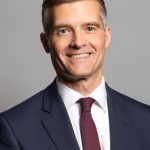
    The comments made by Mark Harper, the Secretary of State for Transport, on Twitter on 14 December 2022.

    My thoughts are with those involved in the distressing incident in the Channel this morning.

    I thank HM Coastguard for coordinating a huge search and rescue operation with the Royal Navy, the Home Office, Kent Police and others.

  • Keir Starmer – 2022 Comments on Migrant Deaths in Channel

    Keir Starmer – 2022 Comments on Migrant Deaths in Channel

    The comments made by Sir Keir Starmer, the Leader of the Opposition, on Twitter on 14 December 2022.

    Heartbreaking that more lives have been lost in the Channel.

    Thanks to the emergency services for everything they do.