Tag: 2022

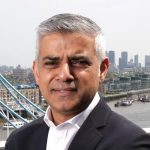
  • Sadiq Khan – 2022 Statement on Appointment of Mark Rowley as Commissioner of the Metropolitan Police

    Sadiq Khan – 2022 Statement on Appointment of Mark Rowley as Commissioner of the Metropolitan Police

    The statement made by Sadiq Khan, the Mayor of London, on 8 July 2022.

    The Home Secretary and I have agreed that Sir Mark Rowley is the best person to lead the Metropolitan Police as the new Commissioner at this extremely challenging time.

    A series of appalling scandals have not only exposed deep cultural problems within the Met but have contributed to a crisis of confidence in London’s police service. Sir Mark has made clear to me that he is determined to be a reforming Commissioner, committed to implementing a robust plan to rebuild trust and confidence in the police and to drive through the urgent reforms and step change in culture and performance Londoners deserve. As Mayor, I will support and hold him to these promises as I continue to hold the Met to account.

    Sir Mark has demonstrated to me that he is the outstanding candidate for this role. He brings a wealth of great experience to the position, including exceptional leadership during the 2017 terror attacks and a genuine commitment to increasing engagement with diverse communities across our city. The experience he has gained outside policing over the last 4 years will also bring a valuable new perspective to the Met. Above all, he is committed to policing by consent and shares my ambition to get to a place where all Londoners feel protected and served, and where we have a police force that everyone – including the many brave and dedicated officers in our city – can be proud of.

    I look forward to supporting Sir Mark Rowley and working closely with the Home Secretary as we work to restore trust and confidence in the police, ensure that the Met gets the basics of policing right, and build on the significant success we have made in driving down violence and crime in our city.

  • Mark Rowley – 2022 Comments on His Appointment as the Commissioner of the Metropolitan Police

    Mark Rowley – 2022 Comments on His Appointment as the Commissioner of the Metropolitan Police

    The comments made by Mark Rowley on 9 July 2022, following the announcement of his appointment as the next Commissioner of the Metropolitan Police.

    I feel deeply honoured to be appointed to be the next Metropolitan Police Commissioner. Our mission is to lead the renewal of policing by consent which has been so heavily dented in recent years as trust and confidence have fallen.

    I am grateful that the Home Secretary and Mayor are both determined to support the urgent reforms we need to deliver successful community crimefighting in today’s fast-moving world. These reforms include our use of technology and data, our culture and our policing approach. We will fight crime with communities – not unilaterally dispense tactics.

    I also know that the majority of officers and staff retain an extraordinary sense of vocation and determination and want us to do better. It is my job to help them do that, whilst also being ruthless in removing those who are corrupting our integrity.

    We will deliver more trust, less crime and high standards for London and beyond and we will work with London’s diverse communities as we together renew the uniquely British invention of ‘policing by consent’.

  • Priti Patel – 2022 Statement on Appointment of Mark Rowley as Commissioner of the Metropolitan Police

    Priti Patel – 2022 Statement on Appointment of Mark Rowley as Commissioner of the Metropolitan Police

    The statement made by Priti Patel, the Home Secretary, on 8 July 2022.

    Sir Mark Rowley is a distinguished and exceptionally experienced police officer, having served the people of the West Midlands and Surrey before guiding the capital through some of its most challenging moments in the wake of the 2017 terror attacks, as the Met’s then head of counter-terrorism.

    He now takes on one of the most important and demanding jobs in policing, leading the country’s largest force at a time when public trust in the Metropolitan Police has been severely undermined by a number of significant failings. Rebuilding public trust and delivering on crime reduction must be his priority.

    This will be a challenging period, but with a focus on tackling neighbourhood crime and delivering the basics of policing, Sir Mark is committed to tackling the significant challenges confronting the force and to making London’s streets safer by driving down crime and bringing more criminals to justice.

    As the largest police force in the country, we have supported the Met to recruit 2,599 extra police officers and increased their annual policing budget to £3.24 billion in 2022 to 2023. I look forward to working closely with Sir Mark to ensure this investment drives essential change to ensure the force delivers for the people of London.

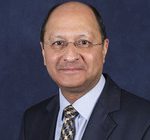
  • Shailesh Vara – 2022 Comments on First Visit as Northern Ireland Secretary

    Shailesh Vara – 2022 Comments on First Visit as Northern Ireland Secretary

    The comments made by Shailesh Vara, the Secretary of State for Northern Ireland, on 8 July 2022.

    It was fantastic to visit the Prince’s Trust on my first visit to Northern Ireland as Secretary of State today and learn more about how the charity supports young people by developing their confidence and the skills needed to succeed through education, training and employment.

    As we build a fairer, more equal, and tolerant society in Northern Ireland, the Government remains committed to increasing respect, understanding and reconciliation between communities in Northern Ireland, and helping to build a better environment for future generations.

  • Rishi Sunak – 2022 Statement on Wanting to Become Prime Minister

    Rishi Sunak – 2022 Statement on Wanting to Become Prime Minister

    The statement made by Rishi Sunak, the former Chancellor of the Exchequer, on 8 July 2022.

    I got into politics because I want everyone in this country to have the opportunity to be able to give their children a better future.

    Our country faces huge challenges, the most serious for a generation. Someone has to grip this moment and make the right decisions. Because the choices we make today will decide whether the next generation of British people will have more opportunities than the last.

    We need to restore trust in our politics. We need to rebuild our economy. And we need to reunite the country.

    That’s why I’m standing to be the next leader of the Conservative Party and your Prime Minister.

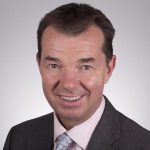
  • Guy Opperman – 2022 Statement on the Mid-Life MOT Offer

    Guy Opperman – 2022 Statement on the Mid-Life MOT Offer

    The statement made by Guy Opperman, the Parliamentary Under-Secretary of State for Work and Pensions, in the House of Commons on 6 July 2022.

    The mid-life MOT is a policy intervention designed to assist participants’ wealth, work and wellbeing. It provides access to tailored information to allow older people to return to or remain in work.

    Through the face-to-face programme, the mid-life MOT will provide a holistic assessment of an individual’s health, by making sure they are able to access the necessary services; skills, by helping older people access upskilling and retraining opportunities; and finance, by empowering individuals to take control of their retirement planning.

    In the winter 2021 budget, the DWP secured more than £5 million to develop and deliver more extensive pilots and development of the mid-life MOT. This follows private sector success led by the likes of Aviva, and the developing of an online version and 10 local enterprise partnership small pilots in 2021. I believe the mid-life MOT will improve participants’ wealth, work and wellbeing.

    The DWP has been committed to growing the mid-life MOT since its introduction in 2019. In 2021, 10 local enterprise partnerships received grants of up to £40,000 to develop and deliver local mid-life MOTs in partnership with local business. In these tests, the local enterprise partnerships worked with MOT content delivery partners, voluntary organisations, and community-based organisations to deliver support on health, skills and finances tailored to the needs of each region.

    We will build on this work to develop and deliver mid-life MOTs for people aged 45 to 55 across three new workstreams. This forms part of the wider autumn Budget and spending review 2021 announcement to develop a new, enhanced offer for older people to ensure they receive the support they need to return to or remain in work:

    The Department will develop and enhance the Government’s digital MOT offering. We are working in partnership with the Money and Pensions Service to deliver an online digital mid-life MOT over the course of the spending review period. This is match funded by both organisations and building on previous online iterations.

    We will deliver mid-life MOTs through our UK network of Jobcentre Plus offices, utilising the expertise and networks of our 50-plus champions to help older jobseekers address barriers to work associated with common challenges related to health, skills, and finance. Delivery in jobcentres will start in the summer and run across Great Britain.

    The Department has launched a market engagement exercise to identify providers for a holistic, face-to-face mid-life MOT programme delivered through employers and direct to employees in three pilot areas—the North East of England; Cornwall and Devon; and East Anglia. Providers will be identified via a commercial tender process. More information can be obtained by emailing: 50PLUS.Choices@dwp.gov.uk.

    These new measures are part of DWP’s £22 million package to help over-50s find new careers and earn more money, including by boosting time with work coaches and bringing in specialist support.

    This increased support will be furthered by 37 50-plus champions covering every district across England, Wales and Scotland who will work with local employers to help them fully utilise the talent of older workers.

  • Trudy Harrison – 2022 Statement on the Second Cycling and Walking Investment Strategy

    Trudy Harrison – 2022 Statement on the Second Cycling and Walking Investment Strategy

    The statement made by Trudy Harrison, the Parliamentary Under-Secretary of State for Transport, in the House of Commons on 6 July 2022.

    In 2017, the Government published the first ever statutory cycling and walking investment strategy, which covered the period between 2016 and 2021.

    The first report to Parliament on the delivery of the strategy and on the progress made towards meeting its objectives was published in February 2020. Much has changed since then, including the publication of “Gear Change: a bold vision for cycling and walking” in summer 2020, and the new commitment to £2 billion of additional funding over this Parliament—the largest amount of dedicated spending ever committed to increasing walking and cycling in England. To date we have created Active Travel England, led by Chris Boardman, and are providing local authorities with funding to deliver 134 first-rate schemes to develop new footways, cycle lanes and pedestrian crossings across England.

    Today, I am publishing the second statutory cycling and walking investment strategy—CWIS2—which covers the period between 2021 and 2025. The strategy includes new and updated objectives, including doubling cycling, increasing levels of walking across the community, and walking to school, while also setting out the funding in place to achieve these. It includes the projection that a total of nearly £4 billion will be invested in walking and cycling over the CWIS2 period, delivering new and improved walking and cycling routes across England and behaviour change programmes.

    Alongside this, I am laying before Parliament the second report to Parliament on the progress made in delivering CWIS1. This shows that good progress was made in delivering the 26 actions outlined in CWIS1, including the delivery of the Cycle Ambition Cities programme and a range of behaviour change programmes. It also highlights that more than twice as much funding was invested into walking and cycling schemes over the CWIS1 period than was originally anticipated when CWIS1 was published in 2017. It also outlines the progress we have made on other measures, including those set out in the Gear Change plan. Both CWIS2 and the report to Parliament are publicly accessible online through the www.gov.uk website. A copy of CWIS2 will be placed in the Libraries of both Houses.

  • Chris Philp – 2022 Statement on the Foreign Interference Offence

    Chris Philp – 2022 Statement on the Foreign Interference Offence

    The statement made by Chris Philp, the Parliamentary Under-Secretary of State for Digital, Culture, Media and Sport, in the House of Commons on 6 July 2022.

    This is a joint statement with the Home Office.

    Some states seek to further their strategic interests by going beyond overt political influence towards more covert influencing activity. These ‘interference’ activities are typically not conducted transparently and are outside the norms of diplomacy. Some hostile actors from foreign states use covert and malign political interference activities to undermine the UK’s interests, such as using disinformation to manipulate our political debate or weaken the integrity of our democratic institutions.

    The UK has a strong record of responding robustly to state threats, in collaboration with our international partners. Alongside our existing operational response and the current disinformation provisions in the Online Safety Bill, the Government have also introduced the National Security Bill to Parliament. This Bill brings together vital new measures to protect the British public, modernise counter-espionage laws and address the evolving threat to our national security, including by introducing a new foreign interference offence which will capture a number of state-sponsored disinformation efforts.

    This offence will target malign activity carried out for, on behalf of, or with the intention to benefit, a foreign power. This includes foreign interference intended to manipulate public discourse, discredit the political system, and undermine the safety or interests of the UK, with state-sponsored disinformation being a prime technique for attempting this kind of interference.

    While the National Security Bill will seek to disrupt and deter foreign actors engaging in disinformation campaigns against the UK, it is important that our information environment is also protected from those who would seek to interfere in UK society by exploiting social media platforms and manipulating online spaces towards the objectives of state actors. That is why the Government are going further to address concerns about the threat posed by state-sponsored disinformation by linking the offence of foreign interference in the National Security Bill to duties in the Online Safety Bill. The Security Minister, Damian Hinds MP, has tabled an amendment to the National Security Bill which, if passed, will designate the offence of foreign interference as a “priority offence” in Schedule 7 to the Online Safety Bill.

    This amendment will mean that online platforms need to act against foreign interference in line with their safety duties on illegal content, where it meets all three limbs of the foreign interference offence. These are as follows:

    a person engages in conduct for, on behalf of, or with intent to benefit a foreign power;

    the conduct is intended to interfere in the exercise of rights, manipulate the way people use public services or participate in political and legal processes in the UK, or prejudice the UK’s safety or interests;

    the conduct constitutes an offence, involves coercion of any kind, or involves making a misrepresentation for example, is a representation that a reasonable person would consider false or misleading. This includes information which is true but presented in a way which is misleading.

    These three tests will capture state-sponsored disinformation that is of most concern: covert attempts by foreign state actors to manipulate our information environment to interfere in UK society and undermine our democratic, political and legal processes. For example, material spread by foreign state entities via fake accounts pretending to be real UK users to influence discussions about the future of the Union. Other examples of online content and activity that would be covered by the new offence, and for which platforms in scope of the Bill would have illegal content duties, could include:

    Russian attempts to use disinformation to interfere in future UK elections.

    Attempts by state actors to use disinformation to manipulate the legal processes of the UK, such as court proceedings.

    The use of false profiles by state actors to spread hacked information online to undermine UK democratic institutions.

    This amendment will force companies to take action on a wider range of state-sponsored disinformation and state-linked platform manipulation than they would have to under the Online Safety Bill as it is currently drafted. Should the amendment pass, the offence will be listed as a priority offence, meaning companies will be required proactively to put in place proportionate systems and processes to prevent individuals from encountering content that amounts to this offence, minimising the length of time it is on their service and removing any illegal content on user-to-user services once they become aware of it. They will also need to consider how their design, functionality and algorithms might impact these efforts.

    In the context of the foreign interference offence, this could include measures to ensure that platform manipulation—such as misleading users about the ownership of an account, or artificially co-ordinated messaging campaigns—is more difficult, thus mitigating the risk of platform manipulation and disinformation more broadly. We have seen a number of successful efforts by service providers to disrupt state-linked disinformation and hostile influence operations relating to Ukraine on their platforms. We see this amendment building on platforms’ existing work to ensure systems and processes are in place so that these safeguards can be applied more widely and consistently when it comes to online interference aimed at the UK.

    Like other offences in scope of the Bill, companies would have to assess whether content amounts to foreign interference. Assessment of foreign interference activity could include judgements based on patterns of behaviours and tactics used, and contextual judgments about the intended effect of the content, which may be aided by relevant knowledge of the political and geopolitical context. In particular, we would expect platforms to consider whether repeated and persistent conduct from particular users or accounts might meet the offence. To help platforms in carrying out this duty, companies will also be able to draw on Ofcom’s codes of practice and any supplementary guidance.

    Our approach is a proportionate and effective way to address the threat posed by state-sponsored disinformation while still protecting freedom of expression in the UK. Both Ofcom and in-scope companies will have duties relating to freedom of expression, for which they can be held to account. There are already journalistic protections in the Online Safety Bill which address concerns about media freedom. News publishers’ content on their own sites is not in scope of the Bill and recognised news publishers’ content shared on these platforms will also be exempt from companies’ safety duties. There will also be duties on category 1 companies to protect journalistic content and content of democratic importance.

    It is incumbent on us to safeguard our democracy and society from manipulation by state actors online while also retaining the rightful protections for freedom of expression and media freedoms. The proportionate approach I have set out here tackles the most concerning state-sponsored disinformation activity while striking a balance with freedom of expression.

  • Kwasi Kwarteng – 2022 Statement on the Energy Security Bill

    Kwasi Kwarteng – 2022 Statement on the Energy Security Bill

    The statement made by Kwasi Kwarteng, the Secretary of State for Business, Energy and Industrial Strategy, in the House of Commons on 6 July 2022.

    As the world has emerged from the covid-19 pandemic, global demand for energy has risen significantly—this has been exacerbated by Putin’s malign invasion of Ukraine. As a result, the wholesale price of gas has reached historically high levels.

    That is why we are taking measures to support families.

    We are acting now with a £37 billion package of financial support this year. Millions of the most vulnerable households will also receive £1,200 of one-off support in total this year.

    Making changes to the National Insurance Contribution threshold which take effect from today, with a typical employee saving over £330 a year.

    Cutting bills by investing in energy efficiency. We are also making huge progress on the energy efficiency of UK homes making them more comfortable and affordable to run, backed by £6 billion of funding over this Parliament. In 2008, 9% of UK homes had an Energy Performance Certificate of C or above—it is now 46%.

    But secure, clean and affordable energy for the long term depends on the transformation of our energy system. This means more home-grown energy from more diverse sources which reduce our dependency on imported fossil fuels and our exposure to volatile and high prices in international markets. And we will reform our energy markets so consumers benefit from lower-cost, home-grown renewables and other low- carbon technologies. Our agenda will catalyse investment, reversing lost decades of under-investment, and boosting jobs and new industries in a world-leading, low-carbon economy.

    That is why we are bringing forward a landmark Energy Security Bill. This Bill will deliver a cleaner, more affordable and more secure energy system for the long term. It builds on the ambitious commitments in the Prime Minister’s 10-point plan and the British energy security strategy to invest in homegrown energy and maintain the diversity and resilience of the UK’s energy supply.

    We will do this by:

    Leveraging private investment in clean technologies and building a homegrown energy system.

    Over the last decade the UK has built one of the most diverse energy systems in the world but previous Governments have historically failed to make these investments which has left us in the current situation. The Bill will deliver key commitments from the British energy security strategy, the Prime Minister’s 10-point plan and net zero strategy to drive an unprecedented £100 billion of private sector investment by 2030 into new British industries and supporting around 480,000 clean jobs by the end of the decade.

    Accelerate the growth of low carbon technologies. We will introduce state of the art business models for carbon capture usage and storage (CCUS) and hydrogen, attracting private investment by providing long-term revenue certainty. Together with the measures on CO2 transport and storage, this will put the country on a path to seize market share and grow the economy.

    Enable the set up and scale up of the first of a kind CO2 transport and storage networks. The Bill will establish the economic regulation and licensing framework to ensure successful deployment.

    Taking further steps to explore the role for hydrogen to heat our homes and workplaces. We will enable the delivery of a large village hydrogen heating trial by 2025, providing crucial evidence to inform strategic decisions in 2026 on the role of hydrogen in heat decarbonisation.

    Scale up heat pump manufacturing and installation, and a new white goods industry in the UK. We will establish a market-based mechanism for the low-carbon heat industry to step up investment and lower the cost of electric heat pumps, through economies of scale and innovation.

    Take the next big leap on the technology of the future with fusion regulation. We will make the UK the first country to legislate for fusion, providing clarity on the regulatory regime for fusion energy facilities.

    Reforming our energy system to protect consumers from unfair pricing.

    The last piece of primary energy legislation of this scale was the Energy Act 2013. Almost 10 years later we need to ensure that this Bill accounts for the current global context.

    Enabling the extension of the energy price cap, protecting families. The energy price cap is the best safety net for 22 million households, preventing suppliers from overcharging consumers. The Bill will enable the extension of the price cap beyond 2023.

    Enhancing our network security with a new system operator, which will boost energy resilience. We will establish a future system operator, an independent body with responsibilities in both the electricity and gas systems, ensuring efficient energy planning, enhancing energy security, minimising cost to consumers and promoting innovation.

    Creating more competition in our electricity networks to deliver bill savings. We will enable competition in onshore electricity networks, delivering up to £1 billion savings for projects tendered over the next 10 years.

    Protect consumers from increasing network prices in the event of energy network company mergers. We will enable the Competition and Markets Authority to review any relevant energy network company mergers under the Energy Network Special Merger Regime. We estimate this could save energy consumers up to £420 million over 10 years.

    Protecting consumers from cyber threats with new protections for smart appliances. We are taking powers to deliver appropriate protections for consumers and the grid by placing requirements on energy smart appliances.

    Helping consumers manage their energy use and cut their bills to help with the cost of living. We are continuing to drive industry progress on the smart meter rollout which is set to deliver a £6 billion net benefit to society.

    Enabling innovation and gearing our system toward net zero. We will reform energy codes, overhauling the way that the technical and commercial rules of the energy system are governed.

    Reducing the number of cabling, landing points, and substations. We will introduce multipurpose interconnectors as a licensable activity, we are providing certainty to investors and developers, enabling them to make decisions regarding future multi-purpose interconnector projects.

    Removing obstacles to innovative batteries and pumped hydro storage. We will facilitate the deployment of electricity storage, such as batteries and pumped hydro storage, by clarifying it as a distinct subset of electricity generation.

    Creating a more equal and fair energy market. We will enable the Government to establish a buy-out mechanism under the ECO scheme for suppliers.

    Ensure families living on heat networks are better protected. By appointing Ofgem as the new regulator for heat networks in Great Britain, we will ensure consumers get a fair price and a reliable supply of heat.

    Kick-starting the development of heat networks. By enabling heat network zoning in England, we will overcome barriers to deployment by identifying areas where they provide the lowest cost solution to heating buildings.

    Taking back control of powers given to the EU on the energy performance of buildings. The Bill will provide a replacement power to enable the UK Government to amend the EU-derived Energy Performance of Buildings regime going forward.

    Ensuring the safety, security and resilience of the UK’s energy system.

    The responsible operation of the UK energy system is crucial for our safety and security. That is why the Bill will bring forward measures relating to core fuel resilience, nuclear and the offshore oil and gas sectors.

    Protect our fuel resilience from malicious action. We will bring forward measures for downstream oil security—oil terminals, filing stations etc—to prevent fuel supply disruption, such as from industrial action, malicious protest and for reasons of national security.

    Boost British nuclear by removing barriers to investment. The British Energy Security Strategy is clear that nuclear is an important part of the UK’s energy mix. The Bill will remove potential barriers to future investment by enhancing our nuclear third party liability regime.

    Prepare for our nuclear future and clean up the past. The Bill will also facilitate the safe, and cost-effective clean-up of the UK’s nuclear sites, ensuring the UK is a responsible nuclear state by clarifying that a geological disposal facility located deep below the seabed will be licensed.

    Making our oil and gas sector fit for the future to ensure high standards. Our oil and gas sector will continue to play an important role in ensuring security of supply. This Bill will enable existing legislation to be updated ensuring that the offshore oil and gas environmental regulatory regime maintains high standards in respect to habitats protection and pollution response.

    Ensure responsible ownership of our UK assets. The Bill will ensure that the UK’s oil and gas and carbon storage infrastructure remains in the hands of companies with the best ability to operate it.

    Protecting taxpayers by maximising cost recovery. In line with the polluter pays principle, the Government will be able to more fully recover the costs associated with regulating offshore oil and gas decommissioning activities from the industry.

    Simplifying regulatory frameworks. This Bill will bring forward the final delicensing and re-use of nuclear sites. It will allow more proportionate clean-up of these sites, resulting in estimated savings of around £490 million (NPV) over the first 20 years, with similar savings up to 2080.

    Strengthen the Civil Nuclear Police’s powers to help keep Britain safe. This Bill will introduce legislation to enable the Civil Nuclear Constabulary to utilise their expertise in deterrence and armed response to support the security of other critical infrastructure sites.

  • Chris Law – 2022 Speech on a Strategy for International Development

    Chris Law – 2022 Speech on a Strategy for International Development

    The speech made by Chris Law, the SNP MP for Dundee West, in the House of Commons on 6 July 2022.

    It is always a pleasure to follow the hon. Member for Strangford (Jim Shannon). I also congratulate the hon. Member for Tiverton and Honiton (Richard Foord), because I watched him during his speech and his hand did not shake once. That impressed me, as it is certainly not how I experienced making my maiden speech—although perhaps it is because today Operation Big Dog might finally be going to the vet for one last time. I also thank my trusted friend and colleague, and Chair of the International Development Committee the hon. Member for Rotherham (Sarah Champion), for securing the debate. I look forward to hearing her conclusions.

    This debate has gone on for more than a couple of hours and what has been striking is that we are all saying one thing: this strategy is not an international development strategy. Not one Member has stood up and supported it this afternoon. That should be the most striking feature of the debate. Rather, it is almost entirely a business and trade-focused strategy, with only one mention of the UN sustainable development goals, which are the very backbone of development and aid, and just nine mentions of poverty. Instead there is a relentless focus on business, trade, enterprise, exports, global supply chains and the private sector. As a serial entrepreneur, I get that, but that is not the first priority in the minds of those who are absolutely on their haunches and who have nothing on a day-to-day basis. Frankly, we have abandoned what an international development strategy is all about: to alleviate the most fundamental issues of starvation, persecution and all the other problems in some of the least developed and most vulnerable countries.

    The Secretary of State previously held office in the Department for International Trade, so it comes as no surprise that this document could easily have originated from that Department. I have been thinking about a new title for her: the Secretary of State for Enterprise—the SS Enterprise, so she could be Captain Truss. What underpins this strategy is not poverty alleviation but trade with UK businesses. Indeed the strategy states:

    “Our financing model…will deliver for people here in the UK—investments abroad will generate export opportunities in the UK, creating jobs right across the country.”

    The UK Government clearly view international development as an investment and profit venture, in their own narrow nationalist interests.

    The international development sector has been scathing of the plan, with Bond stating that the strategy

    “seems largely driven by short-term political and economic interests rather than the attempt to tackle the root causes of global crises such as inequality, conflict and climate change, which impact us all.”

    Similarly, Oxfam has said that

    “this strategy prioritises aid for trade and the financialisation of development. It is clearly motivated more by tackling China than tackling poverty…By gutting its aid budget—and now putting geopolitics above poverty—the UK has fallen short of the challenge.”

    Perhaps that is why no one so far has stood up and supported the strategy.

    The SNP is of the firm opinion that international development should not be viewed as a business and profit venture. It should be focused on protecting and safeguarding those in the most acute need around the world. Anything else is, frankly, a complete dereliction of both moral duty and a duty as one of the world’s wealthiest countries. Therefore, it is shameful that poverty is rarely mentioned in the strategy. The only mention of UN sustainable development goals is as follows—even the framing of it is appalling:

    “The UK brings powerful economic and political tools to our development partnerships:”—

    I agree—

    “aid, diplomacy, trade, investment, expertise and influence. We will use those to meet the evolving needs of our partners, and support achieving the UN Sustainable Development Goals…in line with the Integrated Review.”

    I ask the Minister here today: how can a strategy that claims to be wide-ranging and holistic possibly address the UN sustainable development goals in a co-ordinated and clear manner when there is only one mention of the SDGs in the entire strategy?

    By focusing heavily on trade and investment opportunities, the UK Government are implicitly prioritising economic opportunities with middle-income countries that have immediate domestic business potential, rather than with countries in dire humanitarian need whose national and economic infrastructures have been crippled by crisis. A key question therefore arises: who is the intended beneficiary of this new international development strategy? Is it aid recipients, or wealthy UK-based donors?

    At the International Development Committee in May—I am glad to see a number of my colleagues from the Committee here in the Chamber—I asked the Foreign Secretary why the first case study within the international development strategy was that of Liquid Telecom, a company established in the UK, building fibre broadband in the Democratic Republic of the Congo. What sustainable goals does that achieve and how exactly does it reduce poverty? It has been estimated that 73% of the Congolese population live on less than $1.90 a day, yet UK aid to the DRC has been cut by around 60%.

    Last year, 19 aid agencies appealed to the FCDO, stating that 27.3 million people in the DRC—[Interruption.] I do hope the Minister is listening while she is on the phone. Some 27.3 million people in the DRC are experiencing acute food insecurity. Action Against Hunger stated that the UK aid cut to the Democratic Republic of the Congo—I hope the Minister is listening at this point—would kill 50,000 children who would otherwise have survived.

    There is no mention of any uplift in ODA food and nutrition programmes within the strategy, despite the current global food crisis—it is bonkers—and despite its being one of the key goals of the SDGs. However, the strategy says:

    “We will make more targeted investments of our resources and our efforts in fragile states or where there are compelling trade and investment opportunities.”

    This strategy should be in the bin. Why is the broadband provision being highlighted in this strategy, instead of its addressing acute food insecurity? Can the Minister answer the question that the Foreign Secretary could not answer: at what point does a trade or investment opportunity become more compelling than saving starving children’s lives?

    The strategy is rhetoric-heavy and spending-light and fails to make any explicit funding references to health, education, food, or women and girls’ programmes. For example, the strategy commits to: increasing access to vaccines, therapeutics and diagnostics; building stronger health systems; ending preventable deaths; and investing in research and innovation. However, it does not mention how those aims will be achieved, or how much funding has been earmarked for these efforts. [Interruption.] I am trying to deliver a speech! The Minister needs to hear what I have to say. Similarly, there are commitments to education, empowerment and ending violence for women and girls, but no detailed funding commitments, and no references to wider educational targets for boys and young men.

    The Foreign Secretary has also said that she would restore the budget for women and girls to £745 million, which sounds honourable, but CARE International estimates that the FCDO would have to provide £1.9 billion to restore spending levels for gender equality to 2020 levels, so that money is a fraction, and what is being claimed is not true. There is lots of rhetoric, but little, if anything, of the detail.

    Crucially, the International Development strategy provides no concrete roadmap to reinstating the 0.7% aid budget, and boy what timing! As we heard earlier, the G7 was coming to UK, and all of its members stepped up to the plate as we stepped down.

    The Government’s approach is also bonkers at a time when the planet is facing multiple crises. Let me list just a few. The UK Government have cut health and medical funding during a global pandemic. They have cut food programmes during a looming global food security crisis. They have cut environmental projects in the midst of a climate crisis. And—you couldnae make this up—they have cut conflict-resolution projects at a time of renewed war. Those cuts cost lives. Analysis has shown that over 7 million children have lost access to education, 12 million babies will not receive nutritional support and over 100,000 unvaccinated children will die. Yes, that is death as a result of the UK’s callous decision to cut the aid budget—I hope I am clear. These death-sentence cuts are as miserable and rotten as the core of this Government today. It is morally and pragmatically indefensible that this UK Government continue actively to jeopardise the lives and wellbeing of the world’s poorest and most vulnerable.

    Let us put this issue in the current political context. Ever since he came into office, the Prime Minister has been intent on dismantling and reversing the UK’s leadership on international development—his ideologically driven departmental merger, savage budget cuts and now this aid-for-trade strategy have put that beyond doubt. He has aligned policy more closely with the manifesto commitments made by Nigel Farage when he was leader of the Brexit party and UKIP; he has dismissed cross-party consensus in this Chamber; and he has U-turned on his own party’s manifesto and the Government’s legally binding commitments. With his time in No. 10 coming—rapidly—to an end, I hope those irresponsible actions and callous attitudes towards the world’s poorest and most vulnerable are reversed as swiftly as possible.

    I also live in hope that those on the Government Benches who have defied their leadership and their party Whips make the case for a return to 0.7% of GNI, with that money focused on poverty alleviation more loudly than ever before. I even dream that those who voted for these destructive policies for narrow, short-term reasons or for their own personal political advancement will reflect on the damage they have done to the UK’s reputation, to the UK’s national interest and, most importantly, to the millions of people who have lost out on life-saving support which was destroyed at the stroke of a pen and without a tinge of regret.

    Over the past three years we on the SNP Benches have been resolute in our opposition to the Government’s international development policies and in our support for a fully funded aid budget targeting those in acute need. We will continue to push the UK Government into adopting an international development framework akin to the good global citizen policy proposed in the Scottish Government’s recently published “Global Affairs Framework”. We are committed to prioritising the furthest behind first, instead of politicising aid. We will amplify marginalised voices on global issues such as migration, human rights, biodiversity and the climate crisis. We have committed to listening and acting in response to often unheard voices, especially those of women and young people and those from the global south. We will always aim to be a good global citizen, no matter what challenges may emerge and irrespective of the behaviour of others. That is fundamental to everything we do internationally, and it is at the core of why we in the SNP are true internationalists and put our money where our mouth is.

    The Scottish Government, with the Scottish Parliament’s meagre devolved powers in the field of international development, have already taken wide-ranging positive action. Scotland was the world’s first nation to set up a dedicated climate justice fund, which will double to £24 million over the next four years. At COP26 we were also the world’s first nation to commit to a loss and damage fund. Rather than cut aid, the Scottish Government will increase their international development fund from £10 million to £15 million during this Parliament. Scotland is already demonstrating that it sees international development very differently from the UK Government and is stepping up to make its global contribution, rather than retreating inwards and focusing on self-interest.

    With the referendum on Scottish independence coming in October 2023, it is time to set out our hopes and ambitions for what Scotland could and should do differently as a good global citizen in the international community. Scotland can and wants to do better. I envisage an entirely different, more progressive and more humane way of delivering on our international development commitments.

    For example, I would like an independent Scotland to make helping the furthest behind first, and alleviating poverty, the basis for all international development policy within a separate department for international development. I want an independent Scotland to commit in law to spending the UN target of 0.7% of GNI on official development assistance and fully embed the UN’s sustainable development goals and grand bargain commitments into its international development strategy. Scotland has an opportunity to lead the way in decolonising development, ensuring that development projects are partner rather than donor led, and promoting the establishment of a decolonisation officer within Scotland’s department for international development.

    I will finish on this. I believe without doubt that as a progressive, outward-looking and truly internationalist nation, focusing on core themes such as conflict, health, climate and gender equality, an independent Scotland will not only have profound potential for positive change but will be a key partner, leader and influencer, committed to the most vulnerable peoples across the world, to do more, to do better and to deliver a fairer and more just global future.