Tag: 2022

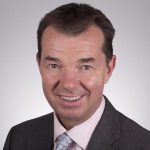
  • Guy Opperman – 2022 Speech on Benefit Sanctions

    Guy Opperman – 2022 Speech on Benefit Sanctions

    The speech made by Guy Opperman, the Minister for Employment, in Westminster Hall, the House of Commons, on 13 December 2022.

    It is a pleasure to serve under your chairmanship, Mr Pritchard. In the limited time that I have, I will endeavour to answer the various points raised. I start by briefly addressing the point made by the hon. Member for Westminster North (Ms Buck)—that there is a reduction in the value of benefits. She will be acutely aware that UK Government welfare spending has increased from £151 billion in 2010 to £245 billion in 2022-23, and that there have been significant increases in Scotland, which I will come to. I wholeheartedly reject the suggestion that there has been a reduction in the value of benefits, not least given the fact that this Government increased welfare support for the most vulnerable by 10.1% at the autumn statement.

    Let me address the original points raised by my hon. Friend, the hon. Member for Glasgow South West (Chris Stephens). I hesitate to call him an hon. Friend, because I realise that he will receive an SNP pile-on as a result. I was not aware that he is standing down from the Work and Pensions Committee after many years of distinguished service, and I congratulate him on that. As always with promotions, one never knows whether to congratulate or commiserate. I also welcome back the hon. Member for Glasgow East (David Linden) to his Front-Bench position. I believe I have held my position for 47 days, after my personal sacking over the summer and the sabbatical that I enjoyed on the Back Benches courtesy of the previous Prime Minister.

    David Linden

    Plus one.

    Guy Opperman

    Plus one. The long and short of it is that, in that time, I have engaged at length with multiple employers, Jobcentre Plus and individual work coaches at the Department for Work and Pensions.

    I will endeavour particularly to address the points raised by the hon. Member for Glasgow South West, given that this is very much his debate. He has engaged with the Department on a number of individual cases, and I will endeavour to write to him on the specifics of the particular case that he raised most recently. I am advised that we have responded to the case that he raised today, but I undertake to write to him with more detail before Christmas. Given the circumstances that we face, the letter will obviously have to be communicated by email as well as post.

    I turn to the second point. With no disrespect to the hon. Member and other colleagues who have raised this issue, I do not recognise the comments against individual DWP members of staff. Where there are particular examples of named individuals who people genuinely feel have transgressed and behaved in an inappropriate way, clearly there is a process that must be entered into.

    It is certainly not the case, in any way whatsoever, that there has been a change of policy by individual Ministers—either by myself in the 47 days that I have held this post, or by previous Ministers. I cannot speak for colleagues who have held these positions.

    Grahame Morris

    I am sure the Minister gives that assurance in good faith, but how does he explain the rapid increase in the level of sanctions in recent months? Can he rebut the allegation that there is a sanctions regime that incentivises DWP staff to apply sanctions?

    Guy Opperman

    On the second point, I am not aware of any such policy or any such incentivisation in any way whatsoever. If the hon. Gentleman has any evidence of such incentivisation, he should publish it and name it individually, because there is no such evidence as far as I am aware.

    The hon. Gentleman also asked about the rise in the numbers. It is right to have a legitimate discussion about what is a fair and effective welfare system that supports people into work and provides value for money for taxpayers. Our work coaches support claimants by setting out the activities to move them into work or to progress in work and work more. Activities are set out in the claimant commitment, which is surely the start or base of all the discussions. They are tailored to reflect individual circumstances and take into account health conditions, caring responsibilities, current work and opportunities for training.

    The hon. Gentleman asked specifically about the rise in the number of sanctions. Some 98.2% of sanctions are for missing a meeting with a work coach. Such sanctions can be quickly and simply resolved by attending another appointment. The evidence is that approximately 50% of such sanctions are resolved with mandatory reconsideration.

    I wish to address in particular the issue in relation to the most vulnerable. It is right that the most vulnerable in society receive extra support. The Government have clearly shown a commitment to that by adding a further £26 billion in the cost of living support in the autumn statement, on top of the £37 billion for 2022-23 that we announced earlier this year, in May.

    Where benefit claimants have vulnerabilities, safeguards exist to ensure that they are not sanctioned inappropriately. Those with severe health and mental health conditions, those with full-time caring responsibilities and those with children under the age of one are not required to look for work and cannot be sanctioned. Many of the most vulnerable receive other elements of universal credit in payment, such as housing, child or disability support. Those payments are not affected by a sanction.

    Finally, when people experience particular challenges, such as childcare difficulties, accommodation issues or bereavement, work coaches have the discretion to switch off work-related activities for a period of time. Such measures enable us to support vulnerable claimants and provide tailored support. To answer the follow-on question, we have a well-established system of hardship payments, which are available as a safeguard if a claimant demonstrates that they cannot meet their immediate and most essential needs—including for accommodation, heating, food and hygiene—as a result of sanctions. I am advised that the relevant percentage is 1.987%.

    Various colleagues made specific points. The hon. Member for East Lothian (Kenny MacAskill) and the hon. Member for Slough made the point that work is hard to find. I will address that point in two particular ways. First, the evidence from the labour market statistics shows that the employment rate is up 0.2 percentage points on the quarter; the number of payroll employees is up on pre-covid levels by 932,000 to a record high; and the inactivity rate has fallen. On the vacancies rate, which surely relates to the point that work is hard to find, there were 1.2 million vacancies. Although obviously it remains high, the rate has fallen for the fifth consecutive month, to 1.187 million. Inactivity, which is a long-term issue, has fallen by 0.2 percentage points on the quarter, to 21.5%.

    Scotland was raised specifically, so let me give the Scottish figures. The number of people employed is at 2.725 million, up 22,000 on the quarter and up 61,000 on the year. The employment rate is at 75.9%, up 0.7 percentage points on the quarter and 1.4 percentage points on the year. Unemployment is at 93,000, down 21,000 on the year and 12,000 against February to December 2020. The number of people in workless households has fallen by 113,000 since April to June 2010.

    John McDonnell

    I do not want to stop the Minister’s flow, other than to correct him: there is no Member here from Slough. I may have missed his answer to this question, but why has there been an increase in the number of sanctions on such a scale, even compared with pre-pandemic levels? Could he answer the question that we have all asked?

    Guy Opperman

    The answer has already been given to the hon. Member for Easington (Grahame Morris). The figure in respect of persons failing to attend an individual appointment is at approximately 98%. That 98% is for failing to attend a specific appointment.

    John McDonnell

    Will the Minister give way?

    Mark Pritchard (in the Chair)

    Order. Is the Minister giving way?

    Guy Opperman

    No. I have one minute left to address this debate. In November 2018 the Work and Pensions Committee specifically said that the Committee agreed with the Government that the principles of conditionality and sanctions were an important part of the welfare system.

    I congratulate the hon. Member for Glasgow South West on securing the debate. The Government have been utterly clear that we are fully supportive of all people who are on benefits.

    John McDonnell

    Just answer the question!

    Mark Pritchard (in the Chair)

    Order. The right hon. Gentleman is very experienced in this place and should know better. If the Minister is not giving way, he should not be speaking.

    John McDonnell

    I can tell the Minister—

    Mark Pritchard (in the Chair)

    Order. We are running out of time. Minister, I think the hon. Member for Glasgow South West would like to hear replies to his questions at least.

    Guy Opperman

    I welcome the opportunity to respond to the hon. Gentleman’s debate and set out how the Government are helping to get people into work. We have intensified our support for jobseekers. We have made great efforts on in-work progression. Employment figures are up. There is more to do, and I will write to the hon. Gentleman with specifics.

  • Karen Buck – 2022 Speech on Benefit Sanctions

    Karen Buck – 2022 Speech on Benefit Sanctions

    The speech made by Karen Buck, the Labour MP for Westminster North, in Westminster Hall, the House of Commons, on 13 December 2022.

    It is a pleasure to respond for the Opposition to this short and important debate under your chairmanship, Mr Pritchard. I, too, congratulate the hon. Member for Glasgow South West (Chris Stephens) on introducing the debate and making a powerful speech. We have heard powerful contributions, and many who spoke drew on their own experiences of cases as well as cases brought to them by advice agencies in their constituencies.

    Before the debate, I asked my local citizens advice bureau about the changes it had experienced in terms of clients with concerns about sanctions. It told me that there has been an increase in calls for help, including appeals from clients who were bedbound when the sanction was imposed because they had covid and were quarantining. I was told about someone who was sanctioned for attending a funeral and about a young woman who was forced to leave her home because she became pregnant outside marriage and feared for her safety. She was sanctioned for not wishing to return to a jobcentre near her family home in order to attend an appointment.

    What has come through all of the speeches is the strong theme—it is a theme that has come up time and again whenever we have debated social security issues over recent months and years—of the impact on mental health. So many of the clients who come to us asking for help with sanctions and other aspects of social security problems are highly vulnerable and sometimes chaotic in their vulnerability, as my right hon. Friend the Member for Hayes and Harlington (John McDonnell) stated. Sometimes they have significant mental health concerns that should have been a red flag.

    As we have heard, this debate is well timed because over the last few months it has become increasingly clear that the DWP’s approach to sanctions has changed in ways that Ministers have so far been unwilling to explain or justify. The evidence lies in the sheer volume of sanctions that the Department has been handing out. Let us not be distracted by the suspension of most forms of conditionality during the pandemic. That was, of course, the right thing to do, and obviously that meant there was bound to be some degree of a resurgence in sanctions once things opened up again. But that does not explain—and this point has been made several times this afternoon—why sanction levels and rates are so much higher now than they were before the pandemic.

    Several Members have referred to the work of Dr David Webster, whose regular briefings on sanctions for the Child Poverty Action Group have served to bring the issue to the fore. He finds that the number of sanctions handed out per month in May to July of this year was on average 45,000, equivalent to 2.5% of people on universal credit subject to conditionality, compared with 1.4% in the three months before the pandemic. That increase in the number of adverse sanction decisions is reflected in the cumulative number of people on universal credit serving a sanction at any point in time. Dr Webster writes:

    “The number of universal credit claimants who were serving a sanction in August was 115,274…more than three times the pre-pandemic peak of 36,771 in October 2019.”

    Of course, there were more people on universal credit in August 2022 than in October 2019, but as Dr Webster shows, the percentage of universal credit claimants subject to conditionality serving a sanction was 6.4% in August, more than double the pre-pandemic peak of 3.1% in October 2019. And for unemployed people—those in the searching for work group—Dr Webster estimates that nearly 8% were under sanction in August 2022. My first question to the Minister is: how have we arrived at a situation where one in 13 unemployed universal credit claimants are currently under sanction?

    We should be under no illusion that sanctions are just a slap on the wrist for claimants. Typically, sanctions involve the withdrawal of 100% of the universal credit standard allowance, and even the reduced rate for the lowest level of sanction is 40% of the standard allowance. And except for the lowest level sanctions, the penalties continue after the person sanctioned has complied with the rules—for seven days rising to 28 days for low level sanctions, while higher level sanctions apply for 28 days and 91 days rising to 182 days, depending on whether there have been previous failures to comply in the same year.

    An increase in the sanction rate is not just a technical matter. People on universal credit do not have a margin of income that they can fall back on to weather an interruption to benefit payments—all the less as the four-year benefit freeze has permanently eroded the real-term value of benefits.

    There is an urgent need to understand what lies behind the increase. Has there been a revolution in people’s behaviour or attitudes since 2019? If so, what is the evidence for that? Has the level of non-compliance with conditionality really doubled since the pandemic? Have there been operational changes leading to more sanctions being issued without any change in the level of compliance? Has there been a change in the Department’s policy on sanctions? Or is the increase an unintended consequence of other factors? in other words, is the sanctions regime out of control?

    The purpose of sanctions has been well described by Professor Paul Gregg as a backstop to the system of benefit conditionality. The point is that while sanctions set at a reasonable level serve an important function, they are not an end in themselves. A sudden increase in the number of sanctions such as we have seen should be seen by any responsible Government as a cause for concern rather than for self-congratulation. It raises the fear that the sanctions tail is wagging the conditionality dog, that the Government are more concerned with signalling toughness than with improving employment outcomes, and that the purpose of conditionality has been twisted towards catching people out rather than maintaining contact with the labour market. Or, no less worryingly, it raises the fear that the number of sanctions has shot up because the Government have lost control of the sanctions regime and no longer know what they are doing.

    The fact that the Government have suppressed their own research into the effectiveness of the universal credit sanctions regime is hardly reassuring. In 2018, in response to a Work and Pensions Committee report, the Department agreed to

    “evaluate the effectiveness of reforms to welfare conditionality and sanctions,”

    and said that this would focus

    “on whether the sanctions regime within Universal Credit (UC) is effective at supporting claimants to search for work.”

    It said that it would publish the results in spring 2019, but we know what happened. The research was undertaken, but earlier this year the last Secretary of State but one—the right hon. Member for Suffolk Coastal (Dr Coffey)— reneged on the commitment to publish the results. That is the behaviour of a Government who are uninterested in learning lessons, and evasive of public scrutiny.

    Chris Stephens

    I thank the shadow Minister for making that important point. The same applies to the drivers of food bank use, which include sanctions.

    Ms Buck

    Sanctions are indeed an important driver of the increase in food banks, which is another symptom of widespread structural failure in the system.

    It would be refreshing if the new Secretary of State took a different view of the matter. A doubling in the rate of sanctions in the context of a cost of living crisis and permanent reductions in the value of benefits is a serious matter. I hope that the Minister can give a suitably serious response.

  • David Linden – 2022 Speech on Benefit Sanctions

    David Linden – 2022 Speech on Benefit Sanctions

    The speech made by David Linden, the SNP MP for Glasgow East, in Westminster Hall, the House of Commons, on 13 December 2022.

    It is, as ever, a pleasure to serve under your chairmanship, Mr Pritchard. I congratulate my hon. Friend the Member for Glasgow South West (Chris Stephens) on securing the debate, and I pay tribute to him for all the work he does in fighting poverty and in his role as a trustee of Feeding Britain. I am very much looking forward to joining the Work and Pensions Committee in the new year, and I sincerely thank him for the work that he has done on the Committee. I wish him well as he takes on his new Front-Bench responsibilities.

    This has been a good, albeit one sided, debate. I often find myself questioning the point of having such debates, because while Opposition Members have showed up to talk about what happens in our constituency surgeries, the only reason the two Conservative Members are present is that they are compelled to be here. The Conservative party has some new red wall MPs. Surely people visit their surgeries to discuss the punitive sanctions regime. It ill behoves any of those Members intending to stand for re-election that they do not bother their backside to turn up and talk about the very thing that we know has an impact on many of our constituents.

    This debate is certainly timely, not least because recent data produced by the Scottish Parliament Information Centre shows that benefit sanctions for young Scots have nearly doubled since 2019, which is the last comparable year for such statistics. The British Government certainly like to talk ad nauseum about their rather underwhelming kickstart programme. However, those statistics show that the DWP is only seeking to kick young people when they are down. I shall return to that slightly later when I discuss the wider context of the debate.

    My hon. Friend has already referred to the figures that he has uncovered via parliamentary questions. In my constituency of Glasgow East, £55,000 was deducted from universal credit payments in August alone, simply as a result of benefit sanctions. At a time when businesses are struggling and we have all just celebrated small business Saturday over the last week or two, I remind the House that that cash could have been spent at small businesses in the likes of Parkhead, Barrowfield and Lilybank. If the Conservative party does not get that from a compassionate point of view, it should consider it purely from the point of view of economics. Instead, the DWP has pressed ahead with a regime of conditionality that pushes people into destitution. To be frank, that is something for which the state ultimately bears the cost anyway, so it is also short sighted in that respect.

    The Scotland-wide figure for deductions from UC deductions by way of sanctions is even more eye-watering, at £2.3 million in August this year. Destitution is not cost-free for the state, and there is already a rich body of evidence out there from the likes of the Joseph Rowntree Foundation that shows the true cost of, for example, homelessness as people are pushed into destitution by a failing social security system. While 85% of welfare spending in Scotland is reserved to this institution, the Scottish Government are doing their level best to mitigate the very worst effects of Westminster’s assault on benefits.

    Whether hon. Members are Unionists or nationalists, surely we can all agree that devolution, be it in Wales, Northern Ireland or Scotland, cannot simply be a sticking plaster for inadequate social security policies designed in Whitehall. For example, the Government in Edinburgh spend £80 million a year of their devolved budget on discretionary housing payments, purely to nullify Westminster’s bedroom tax. To be blunt, that is £80 million that could be spent on health and education, but the Scottish Government are having to spend it trying to clean up the mess that has been caused by Westminster. Indeed, using our limited social security powers, next year the Scottish Government will spend an extra £311 million on the game-changing Scottish child payment of £25 a week. That is in stark contrast to the British Government’s outrageous two-child policy and associated rape clause.

    We can begin to see a pattern emerging. In essence, DWP policy means that devolved Peter is being robbed to pay the price of reserved Paul. The same is true with the sanctions regime that my hon. Friend has highlighted today. Sanctions combined with deductions from universal credit mean that almost £2 billion per annum is snatched away from the very poorest people on these islands. As they face going hungry, that is when the third sector, which is already close to breaking point, needs to step in and pick up the pieces. To illustrate that, I will provide an example from my constituency.

    The Halliday Foundation helps people in poverty with free meals and furniture as they seek to rebuild their lives. It is funded by local government, which, in turn, is funded by central Government. So all that happens is that central Government sanction a constituent and then the Halliday Foundation has to step in to support them with the financial resources that have been provided by local government. Put simply, that is a total mess and a complete waste of taxpayers’ money, and it shows that moving people into destitution is something that the Government bears the cost of anyway.

    There is also an additional negative dimension to sanctions, which is very relevant just now and which I want to highlight to the Minister, backing up the point made by my hon. Friend the Member for Glasgow South West. Data shows that almost 700 Scottish households were denied the first £326 cost of living payment in September, simply as a result of sanctions. Let me make clear to the Minister that the freezing temperatures we are experiencing do not bypass houses and say, “Oh well, we’ll not go to minus 7° because that house has been sanctioned.” The decision to exempt sanctioned individuals from the cost of living payment is wrong and should be put right without delay.

    In my five years as a Member of this House, it has become clear that Whitehall does not know best when it comes to designing a strong, robust and compassionate social security net. Indeed, Ministers and senior officials who preside over this disastrous sanctions regime clearly do not understand what it is like to sit in a cold library in Glasgow’s east end on a Friday morning speaking to constituents who literally have nothing to live on. On Friday, I met a constituent from Greenfield who is a kinship carer for his grandson. We have had debates in this Chamber about the importance of kinship carers and the vast amounts of money they save the Government. However, our failing social security means that state support is so low that my constituent told me that he has rationed his primary school-age grandson to just two baths a week because he cannot afford the energy bills.

    The very fact that my constituent told me it costs 70p to run a hot bath shows just how close to the breadline that man is living and how much our social security system is failing the people who need it most. Indeed, he told me that he cannot afford to turn on the Christmas tree lights for fear of running up an energy bill that he simply cannot afford, not least because he is on a prepayment meter. These are the sorts of people who are impacted by the actions of a Department for Work and Pensions that day after day plunges the most vulnerable people in our constituencies into abject poverty—something that should shame the fifth richest economy in the world. This Government have the absolute temerity to prance around the world in their Brit-branded ministerial plane preaching about global Britain, when all the while my constituent cannot afford to run a hot bath the night before sending his grandson to school. It is utterly shameful.

    My hon. Friend the Member for Glasgow South West outlined a better way of doing things, perhaps via the yellow card warning system, and Ministers would do well to engage with us on ameliorating a system that is currently doing so much harm. Indeed, it is no wonder that the Glasgow Centre for Population Health has attributed over 330,000 excess deaths in the UK to austerity since 2010. It has long been the case that Governments of both colours in this House have talked a tough game on welfare—I certainly prefer to call it social security—but the cat is now well and truly out of the bag. For too many people who had no understanding or experience of benefits, the pandemic lifted a veil on a social security system that has been found to be utterly inadequate. We know from polling that the public will no longer buy into the lazy picture painted by politicians in London of this being a fight of strivers versus skivers; this is now firmly the fight of abject poverty versus fairness and decency.

    The only way to ensure that fairness and decency win is to end the punitive benefit sanctions regime and build a proper, robust social security system, underpinned by dignity, human rights and respect. In Scotland, we have already started that journey, but in truth most Scots know that it can only be completed with the full powers of independence. Nothing I have heard in this debate or, indeed, in my time in this House has convinced me that, with Westminster, the sanctions regime would end. That is why Scotland can, should and must make its own decisions on all social security, as with other policies, because Westminster is not working for us, and we all know that that is why Labour and the Conservatives are petrified of Scottish democracy prevailing.

  • PRESS RELEASE : Ofqual to introduce vocational qualifications results deadline [December 2022]

    PRESS RELEASE : Ofqual to introduce vocational qualifications results deadline [December 2022]

    The press release issued by the Department for Education on 15 December 2022.

    Reports on 2022 assessments reflect on unique year and present actions to secure timely vocational and technical qualification results for students in 2023.

    Reports published today by regulator Ofqual provide a wide-ranging overview of exams and assessments in 2022. Ofqual also publishes an action plan which sets clear expectations for awarding organisations to help make sure all students receive their results when they expect to in 2023.

    Today’s publications, GCSE, AS and A level summer report 2022 and Delivery and award of vocational and technical qualifications in 2022 include reports on regulatory activity to protect students and apprentices.

    The reports cover Ofqual’s regulation of 14,000 vocational and technical qualifications (VTQs), 475 apprenticeship end-point assessments (EPAs) and 385 GCSE, AS and A levels.

    Summer 2022 marked a welcome step towards normality, with the first GCSE, AS and A level exams and full series of VTQ assessments since 2019. In recognition of the pandemic disruption, students were supported by a raft of measures.

    More than 6 million qualification results were issued to 1.2 million students who took GCSEs, AS and A levels. Between March and August 2022, awarding organisations issued approximately 725,000 results across 410 Level 1/Level 2, Level 2 and Level 3 VTQs in performance tables.

    This was despite the risks to delivery presented by 2 years without a main summer series of exams or formal assessments, and the impact of the pandemic.

    Overall, awarding organisations managed a similar number of incidents in summer 2022 compared to 2019. Some of these 2022 incidents were in relation to arrangements not present in 2019, such as advance information of some of the topics on exam papers.

    Just over 20,500 students taking VTQs did not receive their results from awarding organisations when they expected. This included 12,346 Level 3 results and 8,573 Level 2 results, across 1,550 schools, colleges and other centre types. Ofqual publishes further data about this unacceptable event and the actions we are taking to minimise the risk of this occurring again in 2023.

    Ofqual is putting in place:

    • a hard results deadline, by which point all eligible students will get their VTQ results from awarding organisations, underpinned by a term-time data checkpoint with schools and colleges
    • a dedicated 2023 VTQ Results Taskforce, chaired by the Chief Regulator, to monitor and coordinate the implementation of Ofqual’s new requirements

    Ofqual will:

    • require awarding organisations to communicate more clearly with schools and colleges
    • promote better data sharing across the sector
    • host a new VTQ information hub that will be a single point of reference for key information for schools and colleges

    Awarding organisations will:

    • provide new training and better support for the exams officer role

    The 2023 VTQ Results Taskforce will be made up of senior leaders from key organisations from across the sector to support the safe delivery of results.

    Ofqual Chief Regulator Dr Jo Saxton said:

    “Our focus in 2022 was on taking an important step towards normality and providing an unprecedented package of support to students. The interests of students and apprentices are what always drive Ofqual’s decisions.

    “Looking to 2023, I am taking action to protect students from the uncertainty and anxiety caused in 2022 by late vocational results. Today we are announcing an action plan as a step towards parity of treatment between vocational and technical qualification and general qualification students.

    “The implementation of this action plan will be overseen by a new taskforce, which I will chair, which will comprise leaders from across the sector.

    “Effective delivery of qualifications was only possible in summer 2022 because of the substantial efforts of teachers, school and college leaders, exams officers, exam boards and, above all, students, who showed remarkable resilience despite pandemic disruption to their learning.

    “Where necessary, we took swift and decisive action to protect students and we will continue to do so. It is unacceptable for any student not to get their results when they expect and Ofqual will take action to prevent it happening again.

    “Having worked in schools, I know how intensive the work in respect of vocational and technical qualifications can be. Today’s announcements are intended as the critical first steps in streamlining the process for schools and colleges.”

    Further details are in the reports linked above. Ofqual is also publishing today official statistics on malpractice, the number of students requesting reviews of marking and moderation, and special consideration in GCSE, AS and A levels.

    Ofqual’s analysis of the root causes of the results delays in 2022, as well as any recommendations for wider system changes to secure parity of treatment between vocational and technical qualifications and general qualifications, will be published in 2023.

    Ofqual’s formal consultation on the implementation of the new results deadline will launch in the new year.

  • PRESS RELEASE : Regulator of Social Housing takes action against Rochdale Boroughwide Housing after investigation finds widespread failings on damp and mould [December 2022]

    PRESS RELEASE : Regulator of Social Housing takes action against Rochdale Boroughwide Housing after investigation finds widespread failings on damp and mould [December 2022]

    The press release issued by the Regulator of Social Housing on 15 December 2022.

    The Regulator of Social Housing has found significant failings in the way that Rochdale Boroughwide Housing deals with damp and mould across the organisation.

    Following an investigation into Rochdale Boroughwide Housing, the Regulator of Social Housing has found significant failings in the way that RBH deals with damp and mould across the organisation, beyond the specific findings in the coroner’s verdict on the tragic death of Awaab Ishak. As a result, RBH has breached the regulator’s consumer and governance standards. The regulator is taking action to make sure RBH addresses these failings and puts things right for its tenants. The regulator expects all social landlords to learn lessons from the case.

    The regulator has found that:

    • RBH waited nearly two years after Awaab Ishak’s death to check for damp and mould in other homes on the estate. When they did eventually check, they found hundreds of tenants living with damp and mould. Awaab Ishak’s death should have alerted RBH to the safety risks for its tenants, but it failed to act quickly and protect more tenants from potential harm.
    • Wider failings within RBH meant that it gave the regulator inadequate information about damp and mould shortly after Awaab Ishak’s death. The widespread issues in its homes which it later found severely undermine RBH’s credibility and exposes significant failings in the way it treats damp and mould.
    • RBH has weaknesses in its IT and internal communications, which led to vital information being missed. The repairs team were unaware of the concerns raised by Awaab Ishak’s healthcare worker, which may have enabled them to identify the risks earlier.
    • RBH made incorrect assumptions about the cause of damp and mould in Awaab Ishak’s home and failed to act to resolve the issues. RBH did not treat Awaab Ishak’s family with fairness and respect, and the regulator does not have confidence that RBH is treating other tenants with fairness and respect.

    The regulator expects RBH to take urgent action to address these failings and will take enforcement action if necessary. In particular, the regulator is pushing RBH to improve the way it is run and to fix its approach to managing damp and mould in tenants’ homes.

    The regulator’s findings send a clear message to all social landlords that:

    • Housing associations and councils need to ensure their homes are well maintained and of a decent standard.
    • Landlords need to have systems in place to ensure their homes are free from hazardous levels of damp and mould, and deal with issues promptly and effectively.
    • Social landlords need to listen to their tenants’ concerns, understand their needs, remove barriers to accessing services and respond promptly when they need to put things right.

    The regulator wrote to every social landlord on 22 November 2022 to highlight landlords’ responsibility to protect tenants from hazardous damp and mould. Landlords need to submit evidence to the regulator by 19 December to show they are dealing with damp and mould appropriately. If this evidence isn’t provided, the regulator will take appropriate action.

    Fiona MacGregor, RSH’s Chief Executive, said:

    Our investigation reveals significant failures in the way RBH manages damp and mould in its homes, resulting in harm to tenants. The tragic death of Awaab Ishak should have led to action to establish wider risks, but RBH failed to respond quickly or effectively. This is unacceptable. RBH needs to address the issues we have found and we will take further action if it fails to do so.

    Our judgement sends a clear message to social landlords that they must deal with damp and mould as the serious hazards that they are, treat tenants with respect, and take their concerns seriously.

  • PRESS RELEASE : UK commits further £13m to the Lebanese Army [December 2022]

    PRESS RELEASE : UK commits further £13m to the Lebanese Army [December 2022]

    The press release issued by the Foreign Office on 15 December 2022.

    The joint border project has reinforced the authority of the Lebanese state along its land border with Syria where Four Land Border Regiments are deployed.

    The British Ambassador to Lebanon, Hamish Cowell, announced a £13 million commitment to support the Lebanese Armed Forces’ (LAF) resilience from 2022 till 2025 in a Memorandum of Understanding signed with LAF Commander in Chief General Joseph Aoun.

    Ambassador Cowell, with the US Ambassador, Dorothy Shea, and the Canadian Ambassador, Stephanie McCollum, met General Aoun during the High Level Steering Committee to discuss security on the Lebanese-Syrian border.

    The joint border project has reinforced the authority of the Lebanese state along its land border with Syria where Four Land Border Regiments have been deployed from the North in Arida to the south in Jebel Al Sheikh.

    Following the meeting, Ambassador Cowell said:

    This MOU demonstrates our commitment to continuing our support to and cooperation with the Lebanese Armed Forces.

    Since 2009, the UK has committed over £87 million allowing the LAF to optimise its capabilities, develop and modernise. We are proud of our contribution to building the LAF’s reputation as a respected, professional armed forces able to defend Lebanon and provide security along its border with Syria.

    It was a privilege to meet the Commander of the Lebanese Armed Forces, General Joseph Aoun, and attend my first High Level Steering Committee. The Lebanese Armed Forces play a pivotal role in safeguarding Lebanon and its people.

    I am hugely impressed by the courage that the men and women of the Lebanese Armed Forces show.

  • PRESS RELEASE : Passengers to benefit from biggest shake-up of airport security rules in decades [December 2022]

    PRESS RELEASE : Passengers to benefit from biggest shake-up of airport security rules in decades [December 2022]

    The press release issued by the Department for Transport on 15 December 2022.

    • government sets June 2024 deadline for airports to install new security technology, spelling the eventual end to 100ml rule on liquids at large airports
    • in future, passengers will be able to leave liquids and large electrical items in cabin luggage as they go through security, reducing hassle for passengers
    • as changes will be gradual over the next 2 years, current rules will continue to apply and passengers should check with airports and airlines before travelling

    The rules around taking liquids and large electrical items through airport security are set to change by 2024 with the installation of new technology at major airports across the UK.

    Over the next 2 years, most major airports will introduce cutting-edge systems into their security checkpoints, ushering in a new era of improved security and passenger experience when going through departures.

    Not only will it mean greater convenience for travellers – as people will no longer need to spend time taking items out of their bags – but it will also enhance passenger safety, as security staff will have more detailed images of what people are carrying.

    The government is laying new legislation today (15 December 2022) which will make it easier to streamline the processes that apply to UK airports in the future. By allowing us to take advantage of the latest advancements, such as developments in screening technology, it will help us to further improve the already high-security standards in the UK.

    Transport Secretary Mark Harper said:

    The tiny toiletry has become a staple of airport security checkpoints, but that’s all set to change. I’m streamlining cabin bag rules at airports while enhancing security.

    By 2024, major airports across the UK will have the latest security tech installed, reducing queuing times, improving the passenger experience, and most importantly detecting potential threats.

    Of course, this won’t happen straight away – this is going to take 2 years to be fully implemented. Until then, passengers must continue following the existing rules and check before travelling.

    Passengers are currently required to remove tablets, laptops and liquids from their cabin baggage, while liquids have been limited to 100ml and must be in a clear plastic bag. This requirement will eventually be lifted, and the 100ml liquid container limit will be extended to 2 litres.

    Airports now have until June 2024 to upgrade their screening equipment and processes. Until then, passengers must follow the same rules as now until further notice or unless told otherwise. Crucially, they should check with their specific airport before travelling to see which rules are in place.

    They should also check the rules for carrying liquids at any airport through which they may transfer during their journey and at their return airport, as many destinations may not have implemented this new technology.

    Christopher Snelling, Policy Director at The Airport Operators Association (AOA), said:

    This investment in next-generation security by the UK’s airport operators will provide a great step forward for UK air travel, matching the best in class around the world.

    It will make the journey through the UK’s airports easier and air travel itself more pleasant.

    The new deadline follows several trials conducted at some airports since 2018, which have demonstrated the effectiveness of this new screening equipment – which uses CT X-ray technology to essentially provide a 3D image of what’s in passengers’ bags, as well as deploying highly advanced threat detection algorithms. Similar technology is taking place in many countries globally, with airports such as Schiphol and in the US now also making use of the technology.

    It will further enhance our airports’ ability to detect prohibited items but with greater convenience for passengers. The current liquids rules, which were introduced in 2006 following a terrorist threat, have been designed to stop those with hostile intent carrying liquid explosives onto planes.

  • PRESS RELEASE : Rape response overhaul delivers progress [December 2022]

    PRESS RELEASE : Rape response overhaul delivers progress [December 2022]

    The press release issued by the Ministry of Justice on 15 December 2022.

    Victims are seeing significant improvements in the criminal justice system’s response to rape, a new report has revealed today.

    • Rape Review update reveals improvements across the criminal justice system
    • Number of adult rape cases reaching court up 91% from 2019
    • Government on track to hit Rape Review target
    • Draft national model for police investigations into this horrific crime published for first time

    18 months on from the government’s pivotal Rape Review Action plan – which sought to increase the volumes of trials being heard and ensure more rapists face justice – significant progress is being made according to the latest progress summary.

    In the most recent data for 2022, the number of cases referred by the police to the Crown Prosecution Service (CPS) was up 95 percent; the volume of cases charged was up by two-thirds; and the number of cases reaching the Crown Court was up 91 percent, compared to 2019 averages.

    These figures come a week after the announcement of the first national 24/7 rape support line – the latest way in which the system is being drastically improved to better serve victims and justice.

    From this enhanced initial support, victims are also benefitting from better collaboration between the police and prosecutors and less intrusive investigations, along with greater support through the court process.

    These cross-system improvements mean that while there is much more to be done, the government is on track to meet its Rape Review target – to more than double the number of adult rape cases reaching court by the end of this parliament.

    Deputy Prime Minister, Lord Chancellor and Secretary of State for Justice, Dominic Raab said:

    Rape convictions are up two thirds since last year and the number of CPS charges is also up by nearly two thirds from 2019.

    But I want to make sure victims are properly supported throughout the criminal justice process. That is why we introduced a 24/7 rape and sexual abuse helpline, pre-recording of evidence in court to spare them the trauma of testifying during a live trial, and a new approach to police investigations that focuses on the behaviour of the suspect rather than the victim.

    This progress is set out in an update on the reforms to the response to rape, published by the government today. Since the publication of the Rape Review Action plan in June 2021, the government has:

    • Rolled out pre-recorded evidence for rape victims to every Crown Court in England and Wales, sparing them the trauma of testifying during live trial
    • Launched a 24/7 rape support line to provide victims access to vital help and information whenever they need it.
    • Expanded Operation Soteria to a further 14 police forces and to 3 new Crown Prosecution Service (CPS) areas.
    • Passed new laws via the Police, Crime, Sentencing and Courts Act (2022) to stop unnecessary and intrusive requests for victims’ phones, with the majority of forces in position to ensure no victim should be without their devices for more than 24hrs by the end of March 2023.
    • Consulted on further reducing requests for personal information, such as medical or social services records, with next steps being published shortly.
    • Launched a specialist sexual violence support pilot at three Crown Courts – Leeds Newcastle, and Snaresbrook in London. It seeks to provide victims with enhanced at-court support and help increase throughput of cases. It includes the introduction of trauma-informed training for court staff, maximising the use of technology, and access to ISVAs at court.
    • Quadrupled funding for victim support services to £192 million a year by 2025, this includes investment for the recruitment of 1000 Independent Sexual Violence Advisors.
    • Amended the Online Safety Bill to better protect victims from abusers who share intimate images without consent.

    This work is starting to deliver results. In 2021, the number of rape convictions increased by 67 percent compared to 2020, and the CPS is making charging decisions on average 29 days quicker according to the latest data available

    Today’s update comes as the Home Office publishes an independent report outlining the findings on Operation Soteria, which brings together academics and police to improve rape case outcomes and aims to radically transform the way police and the CPS deal with rape – shifting the focus onto the suspect, rather than the victim.

    Home Secretary Suella Braverman said:

    We need radical improvement in the way police handle rape cases. As a society, too often, we have failed the victims of sexual violence and that cannot continue.

    This independent report shows that there are big obstacles to overcome and the whole of the criminal justice system needs to work together.

    But there are also early signs of improvement and I’m determined to build on these to deliver a sustainable shift in the way rape is investigated.

    Academics were brought into 5 ‘pathfinder’ police forces to work alongside frontline police officers and develop new tools for improvement – Avon and Somerset, the Metropolitan Police Service, Durham Constabulary, West Midlands Police and South Wales Police. Early indicators of change can already be seen, including stronger collaboration with prosecutors, improved organisational capability and more specialist knowledge of sexual offending being applied to investigations. A further 14 forces are now participating in the programme.

    The national operating model will be tested and refined before being made available to all police forces nationwide from June 2023.

    Emily Hunt, survivor and independent advisor to the government on the Rape Review, said:

    This is only the start of the step change we need to make to truly tackle sexual violence.

    While important progress is being made, we cannot rest on our laurels and must continue to ensure victims of rape aren’t just heard, believed and supported, but also have a better chance to see justice done.

    Chief Constable Sarah Crew, National Police Chiefs’ Council Lead for Adult Sexual Offences said:

    Uncovering deep rooted and systemic issues within policing is the first big milestone in achieving the transformational change required to improve the policing response to rape. Everyone in policing recognises that we must do better and this programme has been met with a genuine willingness and openness to change.

    The evidence tells as that building specialist knowledge, supported by critical thinking and a problem-solving mindset are among the most important changes we can make to tighten our grip on offenders and address falling conviction rates. Officers must target rapists by focusing on suspects – not the credibility of victims – and using their legal and policing powers to disrupt offenders and further harm.

    We are seeing green shoots of change in pathfinder forces and after 18 months, Avon and Somerset have increasing their adult rape charge rate from 3% to over 10%. Improvements are being made at pace in pathfinder forces and I am confident this work will lead to the sustainable progress victims so desperately deserve.

    Strategic Advisor for Operation Soteria Bluestone Professor Betsy Stanko (OBE), and Joint Academic Lead Professor Katrin Hohl said:

    This genuine collaboration has provided unprecedented data access, enabling the academic team to form a holistic, nuanced picture of how pathfinder forces tackle rape and other sexual offending. Some of our research highlights issues raised by campaign groups and replicate findings of earlier work, including those of the end-to-end rape review, while others are new.

    Our evidence informed and research grounded approach forms a robust evidence base, which sits at the heart of Operation Soteria Bluestone. The police-academic co-created solutions are starting to have traction, but our findings make clear the need for transformational change, there is lots of work to do.

  • PRESS RELEASE : UK launches programmes for ecosystem restoration in Africa and Asia [December 2022]

    PRESS RELEASE : UK launches programmes for ecosystem restoration in Africa and Asia [December 2022]

    The press release issued by the Foreign Office on 14 December 2022.

    • The UK will fund research grants for locally-led research, innovation and action, to help people and nature thrive.
    • A new Nature Facility will enable the UK to deliver on commitments to ‘nature-proof’ aid.

    The UK has launched the implementation of a programme to fund research and innovation to develop bottom-up and locally-led approaches to protecting and restoring natural environments.

    The Reversing Environmental Degradation in Africa and Asia (REDAA) programme will tackle the destruction of nature and biodiversity across sub-Saharan Africa, South-East Asia and South Asia. Through in-country research and people-driven action, the programme will support work to improve the condition of natural landscapes and bolster local communities’ resilience.

    Institutions based across Africa and Asia can apply for research grants, to research local ecosystems and their links to livelihoods, and develop innovative and appropriate technical approaches for environmental management, conservation and restoration.

    The UK has also launched a new Nature Facility, to implement the UK’s commitment to take steps to ensure all new UK bilateral aid spending becomes nature positive. The new Facility will use expert insight to support the FCDO’s development activity to ensure that bilateral aid also supports the protection and restoration of nature.

    This builds on the 10 Point Plan on Financing Biodiversity, co-launched by the UK at the UN General Assembly in September, which calls on donor countries to ensure ODA delivers nature-positive outcomes.

    Speaking at COP15, FCDO Minister for Climate and Environment, Lord Zac Goldsmith, said:

    Through REDAA and the Nature Facility, we are using our ODA as a catalyst to unlock more public and private finance for nature.

    We are beginning to see the commitments made at COP26 translate into actions. Countries, businesses, and financial institutions have begun the journey towards a nature positive economy. The UK is playing our part too.

    Lord Goldsmith’s speech comes as REDAA-supported research has found that nature-based solutions, implemented at the local level, are vital for addressing inequality. Effective action to restore nature helps create jobs and enhance income for the poor and vulnerable, with estimations that over 20 million jobs could be generated around the globe by increasing investment in nature-based solutions.

    This programme is part of the UK’s commitment to spend £11.6 billion on international climate finance, to tackle the urgent impacts of climate change and support a just transition to environmentally sustainable economies and societies.

    The UK’s COP26 Presidency last year emphasised the critical role of nature to achieve goals on both climate change and sustainable development. In 2021, the UK committed £3billion of its international climate finance to support nature and biodiversity.

  • Admiral Sir Tony Radakin – 2022 Speech at the RUSI Lecture

    Admiral Sir Tony Radakin – 2022 Speech at the RUSI Lecture

    The speech made by Admiral Sir Tony Radakin, the Chief of the Defence Staff, in London on 14 December 2022.

    Firstly, thank you Jonathan for welcoming me back to RUSI.

    It’s a warm welcome and somewhat stands in stark contrast to my recent blacklisting by Iran. Sadly, I’ve had to cancel the family holiday in Tehran.

    And thank you Ritula for your overview of an extraordinary year that will forever be remembered for 2 monarchs, 3 prime ministers and the return of war in Europe.

    But let me start by paying tribute to those men and women from all three services who are on duty over Christmas, both at home and overseas.

    And we’ve seen today the Armed Forces are once more key to responding to tragic events, this time in the Channel. And the next few weeks we will be stepping in to fill vital public sector roles due to industrial action.

    Whether it’s the splendid ceremonial events that we saw earlier this year, or the critical work of driving ambulances, we serve the nation.

    So, a big thank you from me to those who will be away from home this Christmas, and especially to their families.

    Last year I steered away from focusing on the geopolitical outlook, and instead concentrated my remarks on my priorities for Defence, the need to transform the Armed Forces, and to better support and empower our people.

    That agenda has not changed.

    We’ve made lots of progress. In other areas we’ve not moved fast enough, and I could easily devote the next 25 minutes to unpacking all of this, and I’m happy to answer your questions.

    But rarely in our recent history has our purpose in Defence been in sharper focus. We protect the nation and help it to prosper. And given all that has happened over the past 12 months it would be remiss of me not to devote most of my time this evening to the situation we find ourselves in.

    My premise is three-fold:

    • First, that these are extraordinarily dangerous times.
    • Second, that extraordinary times call for an extraordinary response. This explains why Russia is losing. And the free world is winning.
    • And third – what comes next, the link between our security and prosperity and the need to stay global.

    Last year, in the margins of this event, I said that our worst-case intelligence assessments suggested a Russian invasion of Ukraine would unleash fighting on a scale not seen in Europe since the Second World War.

    In the headlines the following morning it seemed alarmist at the time, but they don’t now.

    What we have seen unfold is tragic and dangerous.

    An illegal and unjustified invasion. Naked aggression and territorial expansion. Extraordinary vilification and hatred. Ethnic scourges. Sub-human labelling. Thousands of missiles and armoured vehicles. Millions. I say again, millions of artillery rounds. Hundreds of thousands of troops. Millions of people displaced. Millions without electricity and water. Deliberate attacking of civilians and civilian facilities. IEDs in children’s toys.

    War crimes. Sham referendums. Faux annexations. Arbitrary detentions. Show trials. Summary executions. Populations being bussed to ‘camps’ in another country. Millions put at risk of famine. Hundreds of millions suffering the pressure of increased energy prices, inflation, job losses, and the consequences that follow, whether mentally or physically.

    Nuclear threats. Nuclear anxiety. Crazy nuclear debates about whether ‘tactical nuclear weapons’ can be distinguished from ‘strategic nuclear weapons’.

    So, a war in Europe that challenges Euro Atlantic security and impacts the world.

    But it gets worse. Because the other challengers to the world order do not stand still. They support, take advantage and fuel the aggression, with war crimes and hideous justifications.

    And these other challengers to the world order are creating their own threat streams and initiating violence. Iran and its supply of missile drones – a captured one which I saw on my last visit to Kyiv with the Prime Minister.

    Or Iran and its nuclear programme.

    Or ask the United Arab Emirates and the Kingdom of Saudi Arabia about the missiles fired at their territory by Iranian-backed Houthi forces this year.

    Head further East and we have another Putin ally, North Korea, seeking to smuggle artillery shells to Russia. This should not come as a surprise. This is nuclear North Korea. Pouring bile and anger on its neighbour and mixing rhetoric with over 60 ballistic missile launches this year. 23 of these were on a single day. In a ‘normal year’ that would astonish the world.

    And then there is China.

    Not a threat in the same vein as Russia or Iran or North Korea. But a tacit supporter of Russia, whether at the United Nations or taking advantage of cheap energy.

    Another nation that determines advantage from increasing substantially its nuclear arsenal, its missile inventory, its Army, Navy and Air Force.

    And doing so, accompanied by the language of threat and implication, whether in the Indo Pacific and the brazen claims of 80% of the South China Sea, the plundering of fishing grounds and the denial of protein to neighbouring states. Or the protests in Hong Kong. Or the aggression shown toward Taiwan.

    All of this combined with the use of economic and institutional power and hence, the label of ‘systemic competitor’, to quote the Prime Minister.

    So, as 2022 draws to a close, we have a world in which four separate geo-political crises are unfolding in parallel.

    Whether it’s Putin’s sense of impunity, Iran’s meddlesome and destabilising behaviour, North Korea’s outright belligerence, or an increasingly authoritarian China.

    None of these challenges exist in isolation.

    Each is connected. Each represents a test of the rules which have guaranteed global security and enabled the spread of prosperity and opportunity throughout our lifetimes. And in aggregate, are extraordinary and profound.

    If that all sounds gloomy – and it is – we can take confidence from the response, which is my second point.

    Because the response is affirming the perilous nature of using violence and the military instrument as the means to achieve political goals. That is profound. It has resonance around the globe. And it makes us all safer.

    At its heart is the will of one country to fight for its survival.

    The ingenuity, courage and determination of Ukraine. And the paradox and dilemmas that that has created for the Russian leadership. The brutality of Putin begets resolve. Resolve begets support. Support begets victory.

    Despite Putin’s best efforts to divide, he has unintentionally assembled an extraordinary coalition of democracies against him. It’s as if he has illuminated what our beliefs really mean and entail. The importance of aggression being defeated. The need to abide by international rules. The hideous thought of the nuclear taboo being broken.

    Governments have sought to examine and overturn long held policy positions. Be it German defence spending or Finland and Sweden joining NATO. Or Japan’s evolving defence posture. And the economic response to Russia’s invasion was far greater than has ever been seen and Russia was ill prepared.

    Of course, Putin will look for ways to get around sanctions.

    But the loss of capital, thousands of international companies fleeing, the brain drain as talent flees tyranny, the reductions in investment, the absence of critical technologies, all of these increase in impact over time.

    And the diplomatic response was unequivocal. At the UN 141 nations voted to condemn Russia’s invasion, with just five opposing. We can quibble that the world is not so bound together as at the shock in February. But come October it was 143 nations that declared Russia’s annexation to be invalid and illegal.

    And observe Putin’s non-attendance at the G20. Matched by the awkwardness of China, Turkey and India at the Shanghai Cooperation Organisation. And, even if much more privately, the strength of messaging that Russia had to endure from the United States, China, India, Saudi Arabia and others when anxiety surfaced about the prospect of nuclear avenues being considered. Thank you to those nations for being responsible.

    So now let us examine Russia’s predicament.

    NATO is stronger. Not just in the response on its eastern flank and in the Atlantic and the hard power amassed. But in its sense of purpose. And that purpose is backed by money. 20 nations have already agreed to increase their defence budgets since 24 February. And this is on top of an extra £320 billion of additional spending pledged by European members and Canada since the NATO Summit in Wales in 2014.

    This is all in contrast to the horror of the Russian army. About hundred thousand soldiers dead, injured or deserted. Whole battalion tactical groups destroyed. Some 4,500 armoured vehicles and 600 artillery systems destroyed or captured. And it extends to the sea with 12 ships, including a capital ship, lost either at sea or alongside in a supposed safe port. And in the air more than 70 helicopters, 60 aircraft and 150 drones destroyed. These are losses that will be felt for at least a decade.

    That is not to say that the coming year won’t be difficult. It will be incredibly demanding of Ukraine, and for all of us. But just look at the maths. Russia seeks solace with Iran, North Korea and China. Ukraine turns to the extraordinary might of America and the world.

    I attend the monthly contact group chaired by the US Secretary of Defense. It is usually 50 nations in the room and with others joining remotely from across the globe. Political resolve is public, backed by cash, ammunition, armaments, humanitarian aid and, most recently, winter clothing.

    We have to hand our phones in before entering the room. It’s a shame. It must be terrifying to be a Russian spy and to see what you are really up against.

    This, backed by that central will to fight, explains why Ukraine – a modest military power by any calculation – has recaptured already over 50% of the territory it lost.

    And it will only get worse for Russia.

    Putin’s generals were cussed for explaining the need to give ground to preserve their Army. Now they have a far more difficult conversation emerging.

    So let me tell Putin tonight what his own generals and ministers are probably too afraid to say: that Russia faces a critical shortage of artillery munitions.

    This means that their ability to conduct successful offensive ground operations is rapidly diminishing.

    There is no mystery as to why this is the case. Putin planned for a 30-day war, but the Russian guns have now been firing for almost 300 days. The cupboard is bare. Morally, conceptually and physically, Putin’s forces are running low.

    What about our place in this?

    I want to be radical and deeply unfashionable by talking up a few things. We should be proud of the UK’s response.

    I am grateful for bold action by ministers, a united parliament and responsible opposition politicians who have accepted briefings under Privy Council rules and abided by them.

    The sense of unity and cohesion across the political spectrum is a source of strength at a time when our democratic values are being tested internationally.

    The Government has made Ukraine a priority, in funds but also through National Security Council meetings, through Prime Ministerial time – with all three of them – and even some four or five dedicated Cabinet meetings at the outset.

    That attitude has been matched by our media: brave people going to the front line in the best traditions to tell astonishing stories. And we have all benefitted from the thoughtfulness of commentators, speed of analysis and the ubiquitous access to these views. Thank you, and especially to many of you here.

    That backdrop has been further supplemented by our magnificent intelligence community. Defence Intelligence and GCHQ, alongside American NSA colleagues, cued us at the very beginning and provided remarkably accurate windows into plans and psyche all the way through.

    People ask does it make a difference? Absolutely. And we have been able to spike guns, prepare plans and galvanise allies. Similarly, MI5 have been essential in keeping the home base safe at a point of tension. And, yes, MI6 do provide an astonishing array of insights and opportunities. Thank you to all in the UK Intelligence Community.

    We should also be proud we were the first European country to supply lethal aid. We have gifted almost 200 armoured vehicles and more than 10,000 anti-tank missiles to Ukraine. Over a hundred thousand rounds of artillery ammunition.

    Now, as the year ends, nearly 10,000 Ukrainian troops have been trained on British soil in an effort that includes Sweden, Finland, Denmark, Norway, Lithuania, the Netherlands, Canada, New Zealand and, from next month, Australia.

    This is significant. Ukraine’s fight is our fight. We support Ukraine because we share their belief in the rule of law and the simple conviction that aggression must not pay.

    The result is Russia is losing. And the world is winning. Russia has failed – and will continue to fail – in all its war aims. Russia is diminished on the world stage. Its claimed ‘near abroad’ is weakened. NATO is strengthened. And if President Putin acts now and withdraws his forces, he would also be able to save Russian and Ukrainian lives.

    And providing we maintain our cohesion and resolve, the real victory within our grasp is much more significant. The message to despots and authoritarians attracted to using violence is both classical and modern.

    Classical in the sense that violence and outcomes are hard to predict and control.

    And modern because we have a world where the leading powers and economies might be prepared to act. Extraordinary collective power that, when harnessed, puts an aggressor’s economy, authority and regime at risk.

    So, this really has been an extraordinary response for extraordinary times.

    My final point is what next? These are difficult times. And we have the opportunity to refresh last year’s Integrated Review.

    Last year’s Review proved remarkably prescient and stands up well when measured against previous strategies.

    It was correct to identify Russia as the most acute threat and was the first to begin to grapple with the scale of the challenge of China.

    It was correct to emphasise the importance of continued collective security, nuclear deterrence and defence modernisation.

    And it was correct to view the Armed Forces as part of the wider machinery of government, and to advocate the role we play to support the national interest in its very broadest sense.

    We have made significant progress over the past year to implement the accompanying Defence Command Paper and modernise the Armed Forces in a way that will further strengthen NATO over the coming years.

    All nine P8 Poseidon Maritime Patrol Aircraft have entered service. The A400M aircraft is replacing the C130. E7 Wedgetail is on the way and the Lightning Force is growing. We’ve established Space Command.

    We’re sorting out Ajax. Boxer production is underway, with UK production now ramping up. We’re investing in Apache and Challenger 3 and recapitalising our deep fires.

    We’ve placed the contract for the second batch of Type 26 frigates, and for the Naval Strike Missile. The Fleet Solid Support Ship programme is moving forward, and we’ve purchased a new Multi-Role Ocean Survey Ship to protect our critical underwater infrastructure.

    This has been matched by more support for our people: a pay rise of nearly 4%; capping of food and accommodation costs; and providing Wraparound Childcare and Forces Help to Buy Scheme.

    But what has happened is that events of the past year have trended towards the most negative scenarios we envisaged in the IR. And we have seen all too clear the far-reaching consequences this has for our domestic wellbeing. So, it’s important to recognise what the IR got right while also having the humility to recognise what has changed.

    And this poses a series of questions which the IR Refresh will seek to answer:

    • How do we manage a weaker but more vindictive Russia over the long term?
    • Are we going to remain committed to a global outlook?
    • And if so, how much do we invest?

    These are serious questions. And I welcome the Government’s willingness and seriousness to undertake the answers.

    One view for the IR Refresh is that we will draw on the tenets of our traditional way of warfare:

    • The belief that Britain is an expeditionary rather than a continental power.
    • That our interests are best served through the indirect application of power by, with, and through our partners.
    • That our operational advantage comes not from the mass but through disproportionate effect.
    • And that we do not shy away from our status as a permanent member of the UN Security Council, a nuclear power with global responsibilities and the 6th largest economy in the world.

    There is something very British about our approach to having the bomb: almost mild embarrassment. And yet perhaps one of the starkest lessons of the past year has been our extended nuclear deterrence. It has protected us and our Allies, allowing us to resist coercion and continue to do what is right. A reminder that nuclear and conventional deterrence are linked.

    And in the same way, the notion that you can separate security in Europe from security in the Pacific seems difficult – especially if you happen to be a global trading nation with a permanent seat on the UN Security Council.

    There is not some easy option of focusing on our own backyard while leaving the US and others to deal with the rest of the world. The two are inextricably linked. And once again, Europe is the beneficiary of American generosity.

    Were the US to contemplate a more radical pivot to the Indo-Pacific, it would cost NATO’s European nations more than $300 billion over 10 years to match US current investment in our security.

    We also need to consider the melting of the ice caps in the coming decades, which will unleash a difficult new competition for minerals and resources; halve the time it takes for shipping to travel between Europe and Asia, and surely China’s military forces will start to reach into the Atlantic.

    But when we get it right, our spend on defence invests in our security and prosperity.

    We invest in people and places, and we invest in our nation’s future.

    And this will be at the heart of our approach as we work to update the Integrated Review, just as it was in the original Review. To protect the nation and help it prosper. Opportunity and not just threat.

    In this regard, AUKUS is totemic on so many levels. On one level it’s an opportunity to join with our closest allies to offer a technological and strategic response to the challenges of the Indo-Pacific.

    But if we have the courage to do this properly then it’s also the means to strengthen the resilience of our own nuclear enterprise and grow our submarine numbers in the decades to come. This will benefit our contribution to NATO as well as our presence in the Indo-Pacific.

    The same is true for FCAS, now called the Global Combat Air Programme or GCAP.

    A project that looks both west and east. To Italy and the proven strength of our traditional European industrial and military cooperation. And to Japan, a new partner that reflects the post-Brexit opportunity and ambition that is bound up with our domestic prosperity.

    More than 2,500 people are already working on GCAP, sustaining an industry that employs 40-50,000 people in the UK.

    The submarine programme currently supports almost 30,000 jobs across the UK.

    And the Land Industrial Strategy supports 10,000 jobs directly and another 10,000 indirectly, but more importantly reflecting a capital budget that is prioritising the need to strengthen our Army.

    So, if the costs of Defence may be high, and the timescales lengthy, the value we derive is every bit as large:

    • £320 billion to GDP annually.
    • £6.6 billion of R&D.
    • £8 billion of exports annually – and our position as the second largest defence exporter in the world.
    • 410,000 jobs.
    • 22,000 apprenticeships.

    The IR update will reflect the lessons of Ukraine because it is vital to learn in real time: rebuilding and enhancing stockpiles, filling the gaps in our inventory. Unlocking the potential of our people so we can be more agile and inventive, particularly in our approach to technology.

    But it’s also about thinking big: accelerating the transformation of the Armed Forces to become even more lethal and integrated. Maximising the capabilities that offer a decisive advantage. Being even more global in our outlook.

    Might that mean an Army equipped with anti-ship or hypersonic missiles capable of striking the enemy thousands of kilometres away?

    Might it mean a British carrier regularly deployed in the Indo-Pacific at the heart of an allied strike group?

    Or an ambition to embrace drones on a far greater scale than previously envisaged – perhaps in the order of 10,000 by 2030?

    And do we tackle our productivity, with fresh ambitions to double our outputs – such as deployability and lethality – between 2020 to 2030?

    Some of these ideas will fly, others won’t. But they are all worthy of scrutiny.

    Because the biggest lesson from the past year is to recognise that we are part of a generational struggle for the future of the global order.

    And the alternative to thinking big, and to thinking on a global scale, is that we become an introspective, cautious nation, that looks the other way.

    And we’ve seen what happens when countries look away. Authoritarians are emboldened. Rules get broken, economic turmoil and global insecurity follow. And we all pay the price.

    So, to conclude. These are worrying times. But I remain optimistic and confident about our security.

    We should take succour in the way we and international partners have responded to the challenges.

    And we should heed the catastrophe that the Russian leadership has landed itself in.

    Let me end by reiterating how incredibly proud I am of our response to the events of the last year: from our servicemen and women, regular and reserve, but also our civil servants our diplomats, our industry partners, and our allies.

    This is how we will succeed.

    By being confident in our values.

    By staying strong at home and in the world.

    And by leveraging the extraordinary strengths and opportunities this presents. Thank you.