Tag: 2022

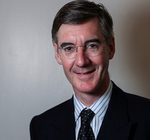
  • Jacob Rees-Mogg – 2022 Comments on the New Public Sector Fraud Authority

    Jacob Rees-Mogg – 2022 Comments on the New Public Sector Fraud Authority

    The speech made by Jacob Rees-Mogg, the Minister for Government Efficiency, on 3 August 2022.

    Public sector fraud is not an attack on a single person, and so to many the pain feels less sharp than when directed at individuals. But fraud attacks on government are attacks on money earned by much put-upon taxpayers.

    They are an attack on the emergency services whose funding they deplete, similarly they steal money from infrastructure projects.

    As criminals develop more sophisticated tools, we too must adapt and modernise.

    So we’re attracting the brightest minds and equipping them with tools to detect, prevent and deter those who seek to steal money intended to fund vital public services.

  • Conor Murphy – 2022 Comments on Cost of Living Crisis in Northern Ireland

    Conor Murphy – 2022 Comments on Cost of Living Crisis in Northern Ireland

    The comments made by Conor Murphy, the Finance Minister in Northern Ireland, on 1 August 2022.

    We have repeatedly told the British government that they must act to support workers and families through the cost-of-living crisis as they struggle to pay their bills.

    They should start by calling time on big energy companies – whose profits are through the roof – and ensure they pay their way and aren’t ripping off ordinary people.

    Executive departments need more money to deal with the rise in inflation and the huge spike in living costs. The British government must step up and provide more money to ensure that can happen.

    They have failed to help businesses under pressure with rising costs, they need action now to keep their doors open and protect jobs.

    This is the big challenge facing workers and families this winter. We need an Executive up and running immediately so we can start putting money in people’s pockets.

    The DUP should end its boycott, rejoin the Executive and work with the rest of us to put the interests of workers and families first.

  • John Swinney – 2022 Comments on Liz Truss Claiming Scottish First Minister Should be Ignored

    John Swinney – 2022 Comments on Liz Truss Claiming Scottish First Minister Should be Ignored

    The comments made by John Swinney, the Deputy First Minister in Scotland, on 1 August 2022.

    People in Scotland, whatever their politics, will be absolutely horrified by the obnoxious remarks that Liz Truss has made tonight.

    The unionist campaigners suggest Scotland should be at the heart of the United Kingdom and how Scotland can be expected to be at the heart of the UK when the democratically elected leader of our country is, in the view of the person most likely to be the next prime minister of the UK, somebody that should be ignored is completely and utterly unacceptable.

    I think Liz Truss has fundamentally with one, silly, intemperate intervention, fundamentally undermined the argument she tries to put forward: that Scotland, somehow, can be fairly and well treated at the heart of the United Kingdom.

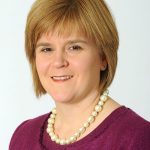
  • Nicola Sturgeon – 2022 Speech on the Conservative Leadership Contest

    Nicola Sturgeon – 2022 Speech on the Conservative Leadership Contest

    The speech made by Nicola Sturgeon, the Scottish First Minister, on 20 July 2022.

    It was brilliant to see Glasgow voted 4th best city to visit in the world last week in an influential survey which helps people explore and experience the best places around the world.

    As well as 4th overall (Edinburgh was number 1), Time Out’s ‘World’s Best City’ Guide also ranked Glasgow as the friendliest city in the world – a fact which comes as absolutely no surprise to those who of us live here or visit regularly.

    It is a reminder that Scotland has so much to offer anyone who wants to visit. This is true, not just of Glasgow and Edinburgh, but all parts of our beautiful country – as proven by the immensely successful hosting of the 150th Open Championship in St Andrews over the weekend.

    I was glad to have the opportunity to visit the ‘Home of Golf’ on Friday, to acknowledge such a huge and welcome boost to our tourism and hospitality industries, especially after more than two years of disruption caused by the pandemic.

    It was great to see so many visitors from across the world once again enjoying Scotland’s beautiful scenery and top-class food and drink.

    Much has happened in UK politics in the past weeks, including the resignation of Boris Johnson as Prime Minister. It won’t come as a surprise to anyone to hear my view that this did not come a moment too soon.

    Although many in Scotland will have felt a sense of relief that the chaos of Boris Johnson’s tenure as Prime Minister is coming to an end, the fact remains that one Prime Minister Scotland did not vote for is about to be replaced by yet another.

    It is also extremely concerning that the change of Tory leader seems certain to be accompanied by a shift even further to the right.

    And, of course, a shift to the right from the Tories means a shift even further away from the mainstream of Scottish opinion and values.

    So far, we have seen the candidates for Prime Minister promise tax cuts for the rich, cuts to public spending and public services. They have also launched blatant attacks on devolution and the powers of the Scottish Parliament.

    While families and households across the country are trying navigate a severe cost of living crisis, caused by rising inflation and stagnant wages, we have heard next to nothing from any of these potential Prime Ministers on what they will do to alleviate these pressures.

    Every minute the Tories spend squabbling over who gets to 10 Downing Street comes at the cost of support and investment to help people across the country who are struggling now.

    It’s not good enough for UK Government Ministers to promise an update in due course – energy bills are sky-high and rising now, and with every day that passes, people become more anxious about how to pay these bills and feed their kids.

    Action is needed – and it must be both significant and immediate.

    The fact is that this cost of living crisis, which is the worst in living memory, has been made worse by decisions of Boris Johnson’s government, not least Brexit and its many damaging consequences.

    No changing of the Westminster guard will reverse those decisions, nor will it set the UK on a better track.

    The problems Scotland faces as a result of Westminster control run far deeper than any one individual, and the latest Tory leadership pantomime has brought into focus the significant and increasing democratic deficit that Scotland suffers as part of the UK.

    No matter who becomes the next Prime Minister, it will be someone Scotland did not vote for, and they will impose policies we don’t support.

    The issues that people here are focused on – tackling child poverty, supporting the recovery of our NHS, building a fairer economy, and making a just transition to net zero – will be hindered, not helped, by whoever becomes Prime Minister in the weeks ahead.

    All of that underlines the necessity, in my view, of Scotland moving from Westminster control to independence.

    Finally, a word about COVID. Cases have been rising over the last six weeks, and while vaccines are helping reduce the risk of serious illness, the sheer volume of cases is putting a strain on our NHS and the economy.

    If you haven’t yet been vaccinated with your first, second or booster dose – for whatever reason – you can still visit drop-in clinics across the country.

    A further booster vaccination will also be offered from September to those at highest risk of severe disease. This will include residents in care homes, frontline health and social care workers, adults over 50 and pregnant women.

    The key message though is this – if you are eligible for any dose of vaccine, make sure you get it. It could save your life, and it will help protect those around you.

    Controlling Covid will be key to alleviating pressure on our NHS as we move back into a busy winter period, so please continue taking care when in busy public spaces, and stay at home if you have symptoms.

  • Greg Clark – 2022 Comments on Yorkshire Day

    Greg Clark – 2022 Comments on Yorkshire Day

    The comments made by Greg Clark, the Levelling Up Secretary, on 1 August 2022.

    Yorkshire Day 2022 is an historic one. It marks the return of powers and resources from London to much of the historic North Riding.

    Levelling up – driving prosperity and opportunity in all parts of Britain – is done best when people locally can forge the future of their area. This deal is a big step in that direction.

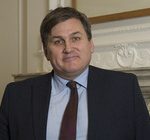
  • Kit Malthouse – 2022 Comments on Travel Disruption

    Kit Malthouse – 2022 Comments on Travel Disruption

    The comments made by Kit Malthouse, the Chancellor of the Duchy of Lancaster, on 29 July 2022.

    I know that travel disruption can affect all of us, whether you need to commute to work, travel to visit your friends, family or loved ones, get away on your well earned Summer break or even attend an event like our fantastic Commonwealth Games. I am working with ministers and officials right across government, as well as our partners and industry, to assess and mitigate any disruption, including any knock on effects from the rail strikes.

    We have already taken action, and continue to work with the Port of Dover, Eurotunnel, and the French Government, National Highways, local police and the Kent Resilience Forum on minimising traffic disruption, and also with our airport operators to avoid last minute cancellations, and we will continue to take all the necessary steps to help people travel easily.

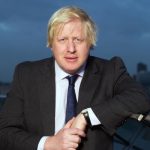
  • Boris Johnson – 2022 Letter to England’s Women’s Football Team

    Boris Johnson – 2022 Letter to England’s Women’s Football Team

    The letter sent by Boris Johnson, the Prime Minister, to the England Women’s Football Team ahead of the World Cup final on 31 July 2022.

    Text of letter (in .pdf format)

  • Liz Truss – 2012 Interview with Nursery World Magazine

    Liz Truss – 2012 Interview with Nursery World Magazine

    Selections from the interview with Liz Truss, the then Education Minister, and Nursery World Magazine, on 12 November 2012.

    On her impressions of the sector

    I obviously met quite a lot of people before I got the job, and it’s an area I’m interested in. I’ve got young children myself.

    I think that quality has improved. We’ve seen a growing professionalism in the childcare sector as a whole. A lot of the discussions that I’ve had with providers have been that there is an issue with sustainability. Feedback that I get from parliamentary colleagues is that some providers are struggling.

    We know there is also an issue with the extent to which parents can afford childcare. My broad feeling is that it is an industry that has changed, but there are a lot of issues. One of the things I’ve been doing is visiting other countries … we’re all facing similar issues. There’s a growing recognition of the real importance of early years both from the point of view of child development and from women’s/parents’ participation in the labour market.

    We know we’re in a more competitive world where the quality of our education is really important to our future prospects as a country and I think that early years is rightly being recognised as a really important part of that.

    What I want to do is learn from the successes and failures of others and also look at what’s best in our system. There are some very strong aspects to our system – for example, the Ofsted inspection regime.

    I think there’s a lot to work with. I think there’s a great deal of interest in new ideas and innovations. It’s a very interesting time to be doing the job.

    On the tensions between the needs of the child and the need to get parents into work

    The reality is that parents want what is best for their children. People don’t want to go out to work not being happy that their child is being well looked after and being prepared for the future, and they want to know that the child has the best possible quality care. I think that (the two things) are completely compatible and I think they have to be because we don’t want parents to go out to work at the expense of their child’s development and education at all.

    What I want to do is make sure that our system focuses on the really important things, which are the safety of the child and the quality of care that the child is receiving so that our regulatory system and our professional qualifications are focused on those two things rather than other things which don’t contribute.

    I want to make things simpler and focus on what is important to parents and what is important to our country as a whole. It’s really important that children receive the best possible early education.

    On working mothers

    The Resolution Foundation has rightly in my view raised the issue of middle income families and second earners who face a particular squeeze in this country, and I am concerned that we have fewer mothers going out to work now than they do in France and Germany, and, if you look at the 1980s and 1990s, we had more mothers as a proportion.

    That’s not to say that I want to force mothers back to work. The Department for Education has done a survey that shows that roughly 50% of mothers have chosen to stay at home and 50% would like to go out to work but the circumstances make it difficult, and one of the main issues is the cost of childcare and the availability.

    On funding streams

    There’s a confusing number of funding streams. The funding isn’t transparent. [That doesn’t] contribute to those two objectives of quality and safety.

    At the moment in our system not enough of the £6bn spent by the government is reaching the frontline. We want as much of that money as possible to be going on high-quality provision. We want providers to have an incentive to make sure that their provision is as high quality as possible.

    We’re leaking out funding. Quality costs, but we’re also spending money on things that don’t contribute to quality and that is simply a question of getting better value for the money we spend. We’ve got a problem in that some providers are struggling to stay afloat and at the same time we’re pumping quite a lot of money into the system. So the question for me is, how do we make that work better?

    On the free entitlement for 2-, 3- and 4-year-olds

    I think simplicity and transparency are really important – to say to providers you are going to be rewarded for hiring high-quality staff, for putting on good staff training and development, for making sure that you are following best possible child development practice. We are going to be judging, or the system is going to be judging, the quality of outcomes and the quality of engagement with the child.

    On the forthcoming response to the Nutbrown review of early years and childcare education

    We need to make sure that it’s not just the people in the nursery and childcare system who understand what’s happening, but also that parents understand what qualifications mean. It’s back to this point about simplicity and transparency.

    I want the early years profession to be a really attractive occupation for people leaving school and for graduates. I want it to be something that people want to go into. I think it’s really important that the profession is as outward-facing as possible, and that people understand what the qualifications are and what they mean.

    There [need to be] new expectations around salary levels. There is an issue with pay in particular parts of the sector. I think all these things are linked, so I want to give quite a comprehensive response about the regulatory system, and about what we’re going to do about qualifications as well.

    I want to build on the Early Years Professional Status (EYPS). It’s been a positive move and I want to build on it. We’ll also be looking at Ofsted and the way Ofsted measures outcomes. That will all be addressed under our response to the Nutbrown Review.

    The other aspect is increasing the level of professional discretion and professionalisation, and that means allowing, where there are not issues of quality and safety, providers more say in how they operate.

    I think it’s really important that if we say to people you are a graduate leader, that we allow people to exercise that professional judgement, and that’s what parents want – high quality, trusted people who are properly regulated by Ofsted, making decisions about how they run their nursery, their childminding practice.

    On lessons from abroad

    If you look at countries such as France and Germany, they are managing to get very high quality. If you speak to French parents about the quality of their 0-3s care, it’s very well regarded. They are managing to get high quality and high affordability and the government funding is more evenly spread across providers. So they are managing to use that government funding better, they allow more discretion, they’ve got very strong quality measures. So my question is, how do we get to that kind of system?

    I don’t think we should be defensive. Yes, a lot has been achieved, but in order to get to a new level, and we need to get to a new level both for the sake of children and their development and for the sake of parents who are struggling, we need to be flexible.

  • Nadhim Zahawi – 2022 Comments on £400 Discount off Energy Bills

    Nadhim Zahawi – 2022 Comments on £400 Discount off Energy Bills

    The comments made by Nadhim Zahawi, the Chancellor of the Exchequer, on 29 July 2022.

    We know that people are struggling with rising energy prices which is why we have taken action with support over the winter months to help ease the pressure on household budgets.

    This £400 off energy bills is part of our £37 billion of help for households, including 8 million of the most vulnerable households receiving £1,200 of direct support to help with the cost of living.

    We know there are tough times ahead and we will continue to do everything in our power to help people.

  • Rachel Reeves – 2022 Speech at The Economy 2030 Inquiry Conference

    Rachel Reeves – 2022 Speech at The Economy 2030 Inquiry Conference

    The speech made by Rachel Reeves, the Shadow Chancellor of the Exchequer, on 13 July 2022.

    Thank you.

    I want to pay tribute to the work of the Economy 2030 Inquiry.

    Today’s report strikes not just at the truth that our economic problems are deep-rooted but that they are far more than an abstract question of lines on a chart.

    That it is questions of growth, productivity and inequality which underlie the sense that Britain isn’t working for far too many people.

    As many of you will know, I’m an economist by trade, spending the best part of a decade at the Bank of England.

    But I’m also a politician, so let me spend a few moments on the political situation we find ourselves in.

    Because the tables have turned.

    On the day the Prime Minister finally announced his intention to stand down, I was in Leeds, meeting business leaders.

    What I heard from them was what I have heard repeatedly over recent weeks:

    That political instability at the top is a major drag on market confidence – and the last week has shown us something else about this government.

    Because any lingering sense that the Conservatives are the party of economic responsibility has been shredded to pieces over the past few days.

    Instead of setting out serious plans to help people with the cost of living crisis, just as we hear terrifying estimates of how much energy bills will go up again in October, we are presented with the extraordinary spectacle of a Tory tombola of tax cuts – with no explanation of what public services will be cut, or how else they’d be paid for.

    Honesty and integrity matter in politics, not just when it comes to parties and rule breaking but also when it comes to economic policymaking.

    The level of unfunded tax cuts being bandied about this week would blow a massive hole in the public finances.

    Every single Conservative leadership candidate supported the government’s fiscal rules when they were passed into law in January, but now they are prepared to take a flamethrower to them.

    I’ve set out the fiscal rules which will bind the next Labour government.

    Rules which I will stick to with iron clad discipline.

    Because responsible management of our public finances is the only route to providing the strong foundations we need to reboot our economy, revitalise our public services and re-energise our communities.

    They will be paired with an absolute commitment to ending the shocking levels of waste and fraud we’ve seen under this government strengthened by the creation of a new Office of Value for Money, .to make sure every pound of taxpayers’ money is treated with the respect it deserves.

    Back in September I said that I am more than happy to take on the Tories when it comes to economic competence because I know we can win. If didn’t know then that they wouldn’t even bother putting up a fight.

    It is important that we put this moment in wider context.

    Because we face a succession of long-term economic challenges – low growth, flatlining productivity, stagnant wages, and now soaring inflation.

    Under the last Labour government, the UK economy grew at an average of 2.1 percent a year, allowing us to deliver the biggest boost to investment in public services in our lifetimes.

    But since then, growth has averaged just 1.5 percent a year.

    We shouldn’t kid ourselves that this is solely a product of global trends.

    The UK had the second lowest productivity growth in the G7 in the 2010s and, as today’s report shows, the UK’s productivity gap with France and Germany has almost trebled since 2008 – equivalent to an extra £3,700 in lost output per person.

    Stagnation isn’t inevitable.

    Our capacity for innovation, enterprise and old-fashioned hard work remains undiminished.

    Britain has huge opportunities if only we have a government that can bring the country together in a spirit of national purpose.

    But the only alternative to a high-tax, low-growth, high-inflation economy is a serious plan.

    Let me tell you what that involves.

    It means addressing our deep-rooted supply-side problems which have contributed to low growth and stalling productivity and are a major factor in the spiralling inflation rates we’re seeing.

    In America, Treasury Secretary Janet Yellen has called this approach “modern supply side” economics.

    It’s based on the knowledge that government plays a crucial role in bringing about economic growth and tackling the structural challenges that have held us back

    My vision for a modern supply side economics for the UK involves three key things.

    First, we need to make sure people can realise their potential and play an active role in a growing economy.

    For all ministers’ talk of a jobs miracle the reality is we have a hidden worklessness crisis with employment lower than before the pandemic at a time of record vacancies, and a million people missing from the workforce relative to pre-pandemic trends.

    That is why my colleague Jonathan Ashworth this week outlined plans from better links between employment and health services, to flexible working, and reforming how our job centres operate to help people return to work where they can.

    Fundamental to strengthening our supply of labour is supporting parents to work.

    That means urgently addressing the cost and availability of high-quality, affordable and flexible childcare.

    Second, we need to support British businesses to thrive – working in partnership to get the economy growing again and provide the good jobs we need.

    That will rest on a modern industrial strategy on our plan to use all the tools at government’s disposal to buy, make and sell more in Britain, and on our Climate Investment Pledge – which will help create new markets and leverage in private investment, and drive carbon emissions down.

    Today’s Resolution Foundation report argues forcefully – and rightly – that we must play to Britain’s strengths.

    We are the second largest exporter of services in the world and pioneers in creative industries.

    We should be proud of those strengths.

    That is why it is beyond belief that the Tories delivered a Brexit deal that hurts our creative and service industries.

    So we will address these flaws building on the deal, ensuring at a minimum we agree the mutual recognition of professional qualifications and negotiate an EU-wide cultural touring arrangement.

    And third… we need to support great British entrepreneurs.

    Which is why, last month, I announced the launch of a new review, led by a panel including Lord Jim O’Neill to map out how we can build the institutional ecosystem that ensure new and growing businesses have what they need to flourish here in the UK.

    This approach – a new, ‘modern supply side’ economics – comprises an ambitious plan for growth grounded in the realities of the world in the 2020s, not in Tory Party fantasy which would result in higher borrowing, increased mortgage rates, and cuts to our schools, hospitals and police.

    Labour’s alternative is based on partnership between government and business – working for sustainable growth felt in every part of the country with a serious plan and the determination to deliver it, built on the strong foundations provided by our fiscal rules.

    Committed to honesty and integrity, because they are important virtues in public life, and because they are essential to a growing economy with stronger public services and higher living standards for all.

    Thank you.