Tag: 2022

  • Volodymyr Zelenskyy – 2022 Statement on the Situation in Ukraine (19/08/2022) – 177 days

    Volodymyr Zelenskyy – 2022 Statement on the Situation in Ukraine (19/08/2022) – 177 days

    The statement made by Volodymyr Zelenskyy, the President of Ukraine, on 19 August 2022.

    Ukrainians!

    All Europeans!

    For 177 days already, the report on the events in Ukraine is important for the entire continent.

    Ukrainian diplomats, our partners, representatives of the UN and the IAEA are working out the specific details of the mission to be sent to the Zaporizhzhia nuclear power plant. With this mission, the restoration of full security at the ZNPP and in Enerhodar can begin. And I am grateful to everyone who joined this work and initiative.

    If Russian blackmail with radiation continues, this summer may go down in the history of various European countries as one of the most tragic of all time. Because not a single instruction at any nuclear power plant in the world envisages a procedure in case a terrorist state turns a nuclear power plant into a target.

    Of course, today it is worth paying attention to another aspect of Russian blackmail in the field of energy. Gas supplies to Germany via the first Nord Stream are again being restricted and absurd statements are being made again that it is allegedly possible to compensate for something via Nord Stream 2. These “streams” are needed by Russia exclusively to supply problems to Europe, not to help someone there with gas. Now it is absolutely obvious.

    The longer the terrorist state remains on the European and world energy market, the longer it will not be stable. And the sooner everyone in Europe prepares their energy systems to exist without any supply of energy carriers from Russia, the sooner they will be able to calmly go through any winter.

    Today there was a very important visit to Ukraine by Eurocities representatives led by the mayor of Florence. This Association unites the mayors of more than 150 European cities, as well as representatives of dozens of other partner cities.

    We will cooperate with them directly – Ukrainian cities and communities with European cities and communities.

    The key issue is, of course, the rebuilding of our cities. The relevant memorandum was signed today. But not only this will be the subject of our important cooperation.

    The modern development of any country is primarily the development of cities, the creation of new opportunities and institutions in cities, the exchange of experience between cities and urban institutions. And therefore, these are new jobs, greater social capital and higher level of security for people.

    On the Ukrainian side, the subject of relations with the Association of European Cities will be our Congress of Local and Regional Authorities. I want to assure that every city of our state will benefit from this. We are interested in sustainable development throughout the territory of Ukraine – and it will be so. Without any exceptions.

    And today I want to address separately the residents of all our cities of Ukraine, which are subjected to constant brutal shelling by Russia. Kharkiv, Mykolaiv, all the cities of Donbas, the Dnipropetrovsk region, the Zaporizhzhia region… All those who experience this constant horror of the destruction of life and the destruction of everything that gives life normality. We will not leave any of these strikes unanswered. We will establish the identity of every occupier who gives orders and executes these strikes at cities. And we will bring them all to justice in one way or another. No murderer will hide.

    And we will certainly restore everything that the terrorists try to leave in ruins. The word “ruins” will never be a word about Ukraine, will never be a word about our cities. Russia will definitely not succeed in this.

    Eternal glory to all who bring our victory closer!

    Eternal glory to all who fight for our beautiful, strong Ukraine, for our people!

    Glory to Ukraine!

  • Volodymyr Zelenskyy – 2022 Statement on the Situation in Ukraine (18/08/2022) – 176 days

    Volodymyr Zelenskyy – 2022 Statement on the Situation in Ukraine (18/08/2022) – 176 days

    The statement made by Volodymyr Zelenskyy, the President of Ukraine, on 18 August 2022.

    Good health to you, fellow Ukrainians!

    Today we are in Lviv, the Potocki Palace, now. At the end of this very busy day, here’s my report on events, meetings, negotiations and decisions.

    We have been here since the morning. And once again I want to thank the city of Lviv, all Lviv residents for the attention, comfort and emotional support felt throughout the day.

    First of all, I paid a visit to our defenders – those who are being treated after injuries in the hospital. Very brave guys, strong. I thanked the doctors who are doing everything to restore the health of our warriors as soon as possible.

    I was very happy to see the boys and girls studying at the Petro Sahaidachnyi National Ground Forces Academy. It was extremely pleasant to hear that more and more people want to become officers of the Ukrainian army. The competition for one place in the academy is of such a scale that used to be only in civilian universities before. And this really gives a reason to be proud not just of the patriotism of our youth, but of the fact that people believe in Ukraine, in our Armed Forces, in our victory. I presented awards to the best warriors.

    During a special ceremony on the Field of Mars of the Lychakiv Cemetery, we honored the memory of all those who gave their lives for Ukraine and for the independence of our country in this brutal war.

    There is no other alternative – we must return everything of ours and guarantee security for all future generations of Ukraine.

    I held talks with UN Secretary-General Guterres and President of Türkiye Erdoğan.

    Most of the points discussed are already in the news. I want to say a few main things now.

    First. There are no objective obstacles to prevent the IAEA mission from reaching the Zaporizhzhia NPP. Today, Mr. Guterres and I discussed the parameters of this mission and the fact that it can get to the plant very quickly and quite safely in a legal way through the free territory of our state. And just like that.

    The one who organized nuclear blackmail certainly cannot be the “transporter” of any such missions. Russia must immediately and unconditionally allow IAEA representatives to the plant and also immediately and unconditionally withdraw its troops from the territory of the plant. The world has the power to ensure this.

    If it does not ensure this, we can simply throw the entire body of international documents on nuclear and radiation safety into the trash. Russia is destroying this international order.

    The second extremely important point of the negotiations is Ukrainian prisoners of war held by the Russian Federation.

    I called on Mr. Secretary-General to use all the capabilities of the UN to ensure Russia’s compliance with all norms of international law regarding prisoners of war. And we discussed sending a fact-finding mission to Olenivka. The full truth about this Russian terrorist attack must and will be established.

    Of course, we talked about the grain export initiative. The result is there – and not only for Ukraine, but also for the world, as it is felt that the severity of the global food crisis is decreasing.

    Therefore, there is a great need for more security, a greater volume of exports, more ships that can deliver Ukrainian food from our ports.

    I held very substantive negotiations on many topics today with President of Türkiye Erdoğan. I am grateful to him for his unwavering support for the sovereignty and territorial integrity of our state. We discussed defense, economic and energy cooperation.

    I am grateful to Türkiye for its willingness to take under patronage the reconstruction of Kharkiv and the Kharkiv region. This is a mission for a truly powerful country. Today, the first step was taken – an agreement on infrastructure was signed.

    I called on both Mr. President and Mr. Secretary-General to voice the strictest possible position regarding Russia’s planned pseudo-referendums in the occupied territory. Any pseudo-referendum will be a slap in the face of the international community.

    And I want to mention one more thing today.

    It was an extremely hard night in Kharkiv – more than ten people died. Mykolaiv and Zaporizhzhia were again shelled. The Russian army is spending enormous resources to capture at least one more kilometer in Donbas. Russian officials reiterate threats to Odesa and other cities of Ukraine. We see what is happening at the Zaporizhzhia NPP. We see what happened in Olenivka.

    We can and should think only about how to win. To win on the battlefield, on the political front, in the information confrontation, in the economic plane, everywhere…

    Let’s believe in ourselves, help each other, protect the interests of Ukraine and know that there will be peace.

    He who fights and fights wisely wins.

    Eternal glory to all our warriors! Eternal memory to all those whose lives were taken away by the occupiers.

    Glory to Ukraine!

  • Volodymyr Zelenskyy – 2022 Statement on the Situation in Ukraine (17/08/2022) – 175 days

    Volodymyr Zelenskyy – 2022 Statement on the Situation in Ukraine (17/08/2022) – 175 days

    The statement made by Volodymyr Zelenskyy, the President of Ukraine, on 17 August 2022.

    Dear Ukrainians!

    Diplomacy in the interests of our country is very active these days. First of all, today a ceremony of presenting credentials to the new ambassadors of foreign countries who arrived to work in our capital was held in the Sophia of Kyiv. The work of embassies in full capacity, the presence of ambassadors in Kyiv is one of the important indicators of the strength of our state, the Ukrainian ability to fight and win. Already 55 diplomatic missions have resumed their work. And today, the new ambassadors of Belgium, Spain, Kyrgyzstan and Romania presented their credentials.

    Secondly, UN Secretary General António Guterres has already arrived in Ukraine. We will work to get the necessary results for Ukraine.

    Thirdly, Ukrainian diplomats, our nuclear scientists and the IAEA are in constant touch, now they are working on sending the IAEA mission to the Zaporizhzhia nuclear power plant. Only absolute transparency and controlled situation at and around the ZNPP can guarantee a gradual return to normal nuclear safety for the Ukrainian state, for the international community, and for the IAEA.

    The Russian army must withdraw from the territory of the nuclear power plant and all neighboring areas, and take away its military equipment from the plant. This must happen without any conditions and as soon as possible. Ukraine is ready to ensure proper control of the IAEA, and the relevant mission can be sent to the Zaporizhzhia plant in a legal way, very fast and as efficiently as possible.

    Today, I made a very important address to the university communities, journalists and political circles of Chile and Latin America in general. This is not an easy direction of foreign policy – we are doing many things there now practically from scratch. We are working not only at the political level, but also establishing relations directly with the societies of the countries of this region. I called on Chileans and all freedom-loving people in Latin America to spread the truth about Russia’s war against our country and to support the sanctions policy aimed at making the terrorist state pay the highest possible price for terror.

    In the evening, I signed new decrees on awarding our soldiers. 230 servicemen of the Armed Forces of Ukraine were given state awards, 43 of them posthumously. Also, 24 employees of the Main Intelligence Directorate of the Ministry of Defense of Ukraine were awarded state awards.

    All our soldiers – our army, our intelligence, border guards, the National Guard, the SBU and everyone involved in defending our state and people are doing everything possible to fight Russian terrorists and push them out of Ukrainian land.

    The Avdiyivka area, Bakhmut area, Kharkiv region, and some other regions are the regions where the most difficult fighting is going on right now. I am grateful to everyone who withstands this pressure, who defends positions and helps our soldiers. In Zaporizhzhia region, in some areas of the south of the country, the occupiers are trying to improve their situation, but strategically it is hopeless for them. Ukrainian soldiers will destroy the potential of the occupiers step by step, and the day will come when the enemy will die in Zaporizhzhia, in the south, in the east of the country, and in Crimea. The invaders will die like dew on the sun, and our defense is and will be this sun.

    Eternal glory to all who defend Ukraine!

    Eternal gratitude to all those who focused on helping our people in a true Ukrainian unity!

    Glory to Ukraine!

  • Liam Fox – 2004 Speech to Politeia on the Case for Conservatism

    Liam Fox – 2004 Speech to Politeia on the Case for Conservatism

    The speech made by Liam Fox on 4 March 2004.

    The last ten years have not been the easiest time to be a Conservative. Yet even in the most difficult times in politics comes the comforting knowledge that there may be a change in political thought and fashion which will bring about the opportunity for recovery.

    I believe we are at such a time and that recent events inside the Conservative Party have hugely improved our ability to take advantage of it.

    A renaissance of political thought has occurred.
    It has become permissible, once again, to state openly the philosophical case for conservatism.
    We are rediscovering our ideological self-confidence – and not a day too soon, given the damage which Labour is inflicting on our way of life.

    We Conservatives must not fight our political battles on the ground of Labour’s choosing.

    We must reaffirm our own identity.

    We cannot get by with just explaining how we will change things – we have to explain why we say what we say.

    The mechanics of public policy will never reach into the soul of a voter. And it is on that level that we must regain the initiative. Because Labour is transforming the society we live in, and transforming it for the worse – taking control of our lives, and depriving us of our freedoms.

    The political battle in Britain today is still a battle for hearts as well as minds.

    Throughout the last century the Conservative Party quietly, but resolutely, set itself against the utopian promises of the collectivists or the left who put their trust not in the people, but the state. As a result they were elected to govern by a people who shared their scepticisms and supported the party through bad times and good: in 1924 when they returned them to power, having rejected the false promises of ‘a new heaven on earth emanating from Whitehall’; in the 1940s when they closed ranks behind Churchill’s promise of ‘blood, toil, sweat and tears’; and, most recently of all, in the 1980s behind Margaret Thatcher’s resolution to set the economy and the people free.

    Along with Sir Keith Joseph and others she battled to redefine the terms of debate. Her triumph was to persuade voters that they should no longer accept the ‘lowest common denominator’ that the state was prepared to offer. Her legacy was the proof that there truly was another way. This is a battle to be fought once more, but this time for keeps.

    The Pocket Money Society

    Twenty-five years ago, Sir Keith Joseph warned that Britain was becoming a ‘Pocket Money Society’.

    It was a lucid insight into 1970s Britain.

    First, the Labour Government was appropriating more and more of people’s take home pay. It was turning adults’ earnings into little more than children’s allowances.

    Second, as well as leaving people with less and less of their own money, Labour was taking out of their hands the important decisions that affected them and their families. From the education of their children to saving for retirement, the big decisions increasingly became the function of a so-called benevolent state. Like pocket money, people’s earnings were there to be spent on the trivialities of life; not the serious stuff.

    Keith Joseph’s perception of the ‘Pocket Money Society’ was largely descriptive of the economic facts, but it also contained a moral insight.

    Only when people are trusted with responsibility are they likely to act responsibly.

    Anyone who looks at Britain today can see that we are drifting back to the ‘Pocket Money Society’ that Keith Joseph warned of.

    After two decades in which successive Conservative governments first halted, and then reversed, the growing reach of government, it is expanding again.

    In 1979, the Labour Government spent 45 per cent of our national income. By the time the Conservatives left office in 1997 it was down to 39 per cent, and falling. Six years on, under Labour, it’s back up to 42 per cent, and climbing.

    But, of course, people don’t sense expanding government in headline numbers. They experience it in their everyday lives, for instance as taxpayers who found last April that their take-home pay had gone down for the first time in years, because the Government had raised their taxes.

    They experience it as small businessmen and women who, since Labour took office, have to work an extra six hours a week just to stay on top of the increase in official paperwork.

    Those who work in the NHS experience it in growing red tape, and being obliged to put targets from Whitehall above the needs of their patients.

    Even the pensioners who have worked hard all their lives and steered well clear of the social security state, now find they are drawn into a Kafkaesque world of forms and officials. They must now lay their lives bare on an official form and go cap in hand for welfare in retirement, as 60 per cent of them now do.

    As we have become a wealthier nation, we should have extricated ourselves from the grasp of the State.

    But the opposite has happened – the Government’s intrusion into people’s lives has not diminished. It has become all-pervasive.

    It’s not just that the government is taxing more, with taxes appearing in every nook and cranny of life – new taxes on pensions, new taxes on business, new taxes on homeowners.

    On top of that, working life is regulated, so that a nursing home manager with 30 years professional experience must now go to night school to get an NVQ if she is to be allowed to keep her job.

    It gets worse. Safety regulations now threaten to make it compulsory for every new bath manufactured to come with a thermostat. The final insult is speed cameras which mushroom, not around accident black-spots, but on clear stretches of road – there not to improve our safety but to lighten our pockets.

    Even circuses must now get an entertainment licence costing £500 for every new venue where they pitch their big top. From Post-war collectivism when the left rationed bread, we have now reached their new millennium madness, when they now tax circuses.

    Labour’s Muddled Morality

    None of these developments are coincidental. They are an objective of Labour’s policy. As New Labour’s intellectual guru, Anthony Giddens, wrote in his Blairite text ‘The Third Way’:

    “There will never be a common morality of the citizenship until a majority of the population benefit from the welfare state.”

    To them, expanding the State is a moral imperative. They believe it ‘re-moralises’ the people, no less.

    In fact, what we are suffering under New Labour is no moral crusade, whatever the impression created through the language favoured by Saint Tony.

    The truth is that greater freedom for the individual from the state is profoundly threatening to a party whose “project” is to gain control through the State apparatus.

    It is threatening to New Labour to contemplate a future in which widening and shared prosperity gives people the chance to become more and more independent from government.

    So to ensure their continued political viability it becomes imperative for New Labour to find ways – as many ways as possible – in which to leash people to Government. This explains why much of Gordon Brown’s agenda has been about finding ways to ensnare the middle classes in the welfare state – whether, for example, through tax credits for those earning £55,000 a year, or baby bonds.

    And with their project for a bigger state comes their moral case for a bigger state.

    Under the New Labour third way citizens are made to feel ashamed of their most virtuous aspirations

    The successful are punished for their affluence.

    Those who wish to stand on their own two feet are scorned for wanting independence.

    There is a sinister, destructive and punitive attitude to those individuals whose self reliance threatens the socialist craving for control.

    Like political drug pushers, the Third Way politicians peddle dependency through means testing, tax credits and handouts, so that, step by step, a free society becomes entangled in the dealer’s controlling web.

    The Battle of Language

    One of the Conservative Party’s most serious mistakes over recent years has been to lose the battle over language. We have to take back ownership of words and phrases which are the rightful property of those who believe in the freedom of the individual and the unacceptability of intrusive government – words and phrases which Labour has had the audacity to claim as its own.

    Earlier this year, the Culture Secretary wrote an article for a newspaper under a headline “In your own interest, learn to love the nanny state.”

    In the article, Tessa Jowell put forward words like ‘empowerment’, ‘enabling’ and ‘opportunity’ and sought to persuade the reader that these were the product of a bigger State.

    It reminds me of George Orwell, in his essay Politics and the English Language, warning of how:

    “a mass of words falls upon the facts like soft snow, blurring the outline and covering up all the details.”

    In Orwell, we recognise New Labour.

    The headline writer for Tessa Jowell’s article was being mischievous. Tessa Jowell did not herself use the expression ‘nanny state’. But the headline writer understood her meaning – and so do we. She meant the big State, which takes decisions on people’s behalf which it does not trust them to take for themselves. And he saw that her words – empowerment, enabling, and the rest – were attempts to cloak this reality in an attractive language.

    Yet Tessa Jowell illustrates a point that we Conservatives must learn. It is not enough for us to have the right answers to the problems Britain faces. We must also set out the philosophical case – a genuine moral case – for our approach, not just its technical advantages.

    At a Conference to celebrate the 90th birthday of that clear-sighted Conservative, Milton Friedman, fellow economist Martin Feldstein said how surprised he was that in Friedman’s Capitalism and Freedom there was no mention of the adverse impact of social security on national savings.

    The explanation, he discovered, was that for Friedman, “giving individuals the freedom to choose for themselves might also increase economic efficiency, but freedom was the primary goal, and the resulting economic efficiency was a happy by-product.”

    We should be no less forthright about the validity of the moral case for our reforms.

    In advancing the moral case for Conservatism, we should start by recapturing words like ‘fairness’, ‘opportunity’, ‘enabling’, and ‘community’. Without a fight, we have allowed them to be wrested from us by the Left, and given an association with big government that they were never meant to have.

    Fairness is one of the words most often abused by New Labour. Yet what’s fair about the patients in Bristol who went blind because pursuit of Government targets led to their follow-up appointments being delayed? What’s fair when law abiding citizens are afraid to go out at night because of the fear of street crime? What’s fair when those who have always paid their taxes find themselves pushed down the queue for public services by those who have contributed nothing. It is the opposite of fairness.

    We must also take back ownership of words like competition, markets, and responsibility which we have allowed to be seen as somehow ethically suspect.

    We must be ruthlessly clear about language, because clarity of language defines what is distinctive about our approach.

    The Intruder State

    That distinctiveness starts with being clear in our description of the problem we intend to solve.

    This problem is not, as the headline writer on The Times’ would have it, that of a ‘nanny state’. That characterisation actually sounds quite benevolent, if a little suffocating.

    New Labour’s enthusiasm for regulation, which it regards as the rightful successor to state ownership, means that this Government is becoming intrusive to a degree undreamt of even by Old Labour.

    It is less the Nanny State than the Intruder State.

    The State that has intruded into places where it has no right to be.

    No longer does the Government call on you to pay your share, and having done so leave you in peace.

    You now discover – to your horror – that the Government is in your home, with views on how you should bring up your children and in your workplace, with instructions as to how many hours you can work. Even your life savings are not beyond the reach of a Government which respects no boundaries in where it will go and what it will do to tax and to regulate.

    The Intruder State has entered deep into lives of British citizens – and wherever it does, it robs them of control over their lives.

    By stripping people of control, New Labour is creating a Britain of supplicant taxpayers, suffocated professionals and powerless citizens.

    Supplicant taxpayers

    As well as being taxed more by Labour, people feel they have less and less control over the taxes they have handed over.

    In two recent ICM polls for Reform, it was found that 82% agreed with the statement “taxes have gone up but services haven’t improved much and there is a lot of waste”. Another showed that 88% said that the way we provide healthcare in the UK is in need of fundamental review. 74% said the way we run state education in the UK is in need of fundamental review, while 84% said the way we tackle crime is in need of fundamental review.

    This is not surprising because it is true. More and more people feel that they are accountable to the Government, rather than the Government being accountable to them.

    More and more people feel that they are accountable to the government, rather than the government being accountable to them.

    Take the example of means testing and the rapid expansion of means tests. The means tested, rightly identified by Sir William Beveridge, as hated by the British people, has come back to stay. Means Testing, was, he said unfair; but even worse, it undermined the basic freedom as he put it ‘to save pennies for the rainy day’: because it penalised incentive, hard work, saving and enterprise. The lesson is as true today as it was when Beveridge was drawing up his famous report on Social Insurance.

    People who never expected to be on social security, who have been self-sufficient and have paid their way throughout their working life, now find that they pay their taxes and immediately have to apply to the Government for welfare benefits to have a decent income. The more taxes rise, the more is handed out by the government to supplicant taxpayers. Sixty per cent of pensioners are now trapped by the means test – some twenty per cent more than in 1997.

    It is madness to take more from people in taxes only to make the same people apply to have it back in social security benefits, the evil of ‘churning’, which Maurice Saatchi has put to the forefront of political debate, just as the economists have put in the economic debate. By making it impossible for people to look to their own earnings to keep themselves and their families, a government denies people control over their lives. By making people rely on the government for income, the state creates a nation of supplicant taxpayers.

    It is not only the spread of the means-test that strips people of control. In Britain today, the people who pay for our public services have no say in how their taxes are spent on providing those services. Once their money is handed over to the Government, it is, to all intents and purposes, lost.

    People sometimes talk of having a right to make the vital decisions over education or healthcare. But the reality today is that taxpayers have no rights, beyond the right to be allocated by the Government to a place on the waiting list of the Government’s convenience. Or the right for children to be sent to a school of the local authority’s discretion, irrespective of whether it is the school that the parents of a child want him or her to attend. Each year there is less and less pretence that such a right exists. The pretence to a ‘preference’ to be expressed by parents over the school best for their child is being abolished under the Stalinist procedures of the new Schools’ Admissions code. No the taxpayer must pay for the public services, but the taxpayer must then become a supplicant to the ever bossier government.

    The frustration that taxpayers feel over this lack of control is clear from the appeals statistics for schools in our biggest cities. In some of the most deprived communities in Britain, one parent in every five goes through the ordeal of pleading with the Local Authority to be allowed to send their child to a better school than the one they have been allocated to. They put themselves through this Soviet-era nightmare even though more than four in five of these appeals will fail. The rest are forced to go to the Council’s choice of school, irrespective of their own wishes.

    Suffocated professionals

    If growing Government is creating supplicant taxpayers, it is also suffocating the professionals who are the people who truly run those services on which the public depends.

    If you are a doctor or a nurse you know that your first responsibility must always be to your patients, not to the Government. Likewise, if you are a teacher, it is to your children, not to a distant Minister in Whitehall. You can never serve two masters.

    Yet during the last seven years, the Government has made itself the master. It has, in effect, set about nationalising professionalism. NHS hospital targets – set in Whitehall – now compete with the doctor’s clinical judgment for primacy. A maximum waiting time of 4 hours in Accident and Emergency led to patients being forced to wait in ambulances outside the casualty unit for fear of starting the clock ticking.

    In a single year, teachers in our schools were issued with 3,840 pages of Whitehall directives telling them what to teach, how to teach it, and requiring a similar quantity of paperwork in return reporting how it was taught.

    Labour’s view of what motivates professionals is simply wrong. It is not money – which is why doctors find it insulting to find that bonus payments come tied to the achievement of Government targets. Still less is it a desire to comply with administrative priorities that make the Minister look good. The motivation of the people who care for the sick and teach the young is fulfilling a vocation, being able freely to exercise professional judgment – not about fitting in with the system.

    So it is not surprising that the single biggest reason for teachers, leaving the profession is the sheer volume of paperwork which now stands between them and teaching.

    It is not surprising, because these things follow inevitably from the suffocation of professionalism by big Government.

    The Dilution of Parliament

    It is not only taxpayers and the professionals who find control slipping away. We are all becoming disempowered in a democratic sense. Almost every week Parliament is forced by the Government’s majority to pass laws that curtail rights that many of us thought were a defining part of being British. The right to trial by jury. The right not to be detained without trial.

    We see the House of Commons downgraded to Downing Street in Parliament. Reform of the House of Lords is mired in the PM’s crony-ist agenda. Constitutional changes on the hoof are destroying well tested conventions. Historic precedents are set aside to satisfy ministerial histrionics. Our judges have ever greater powers to make law.

    And then we have the transfer of powers from Parliament to the European Union, over which we have no control and which we cannot hold to account. As a result of a steady flow of EU Directives, Europe is now the source of over 40 per cent of regulations affecting British businesses. The proposed European Constitution would further reduce our control over vital decisions such as those over foreign and defence policy. To crown it all, European law will take precedence over British law. And the Prime Minister has the cheek to dismiss the whole exercise as some ‘tidying-up’ affair?

    These are developments which reduce still further our ability to control our own future. The intruder state is not only active at home but increasingly encroaching from across the Channel.

    Liberation Conservatism

    Just as Conservative Governments from 1979 reversed the growth of the Pocket Money Society, so the next Conservative Government must turn back the Intruder State.

    That can’t be done by simply running the Government a little better than Labour, by introducing fewer new taxes, employing fewer bureaucrats and resisting a few more regulations from Europe.

    That would slow the spread of the Intruder State. And it would certainly be better than the Labour alternative. But it would not live up to our responsibility to change the course on which Britain is heading.

    That requires reform, not mere containment.

    Conservatives once again have the appetite for serious reform.

    I want to be part of a Government which will, at every opportunity give people back control over their lives.

    It will give taxpayers control over the money that they hand over to the Government and restore to professionals control over their work, so that they can truly follow their vocation, rather than orders from Ministers.

    The next Conservative Government will give people control over how they are governed.

    This goes to the heart of why I am a Conservative. De Tocqueville, writing in 1848, expresses succinctly the difference between my conception of control and that of the Left:

    “Democracy and socialism have nothing in common but one word: equality. But notice the difference: while democracy seeks equality in liberty, socialism seeks equality in restraint and servitude.”

    Two particular principles guided me in my work as Shadow Health Secretary over the last two and a half years. These principles will guide the policy of the next Conservative Government.

    Although rooted in Conservative philosophy – and, indeed, in plain good sense – they represent radical new departures for public policy in this country.

    More Power to the Taxpayer

    The first principle is this – when you pay your taxes, you should retain some control over how and where the money is spent.

    It’s a simple principle. But it’s also a revolutionary one.

    When we pay our taxes, the money generally goes to one of two purposes. The first is to pay for those things that can only be provided collectively: defence, for instance, or the cost of central Government itself. The other purpose is to make sure that every citizen receives what could be termed personal services which, while supplied to them as individuals, are nevertheless thought of as universally necessary: for example, health or education.

    Over recent years, the British people have lost sight of the distinction between the two.

    For that portion of our taxes which is paid towards providing a personal service, it is only right that the taxpayer should have some say over what they’re getting in return.

    I believe it is imperative that taxpayers should have control, wherever possible of the spending made on their behalf.

    The Conservative Party’s ‘passports’ for education and health will begin a process which will ensure that individual citizens are liberated from the suffocation of state monopoly decision-making. Instead of being offered choices designed for the State’s convenience, they will take control in the way which they judge best suits them. For too long, pupils and patients have been made to serve the system. The system must be made to serve them.

    An End to Public Good, Private Bad

    The second principle is related to the first. I believe that we should break down the artificial barriers that have been set up between the different providers of public services. There should be no distinction in practice, as there is no distinction in morality, between what is state-owned, what is owned by a charity or voluntary group, and what is owned by a company.

    If a school provides an excellent education for children, it shouldn’t matter a jot whether that school is run by the Local Authority, or whether it operates as a City Academy not subject to LEA control, or whether it has been created by a group of parents, or by a philanthropist – or indeed by a company.

    This is a moral argument as much as a practical one – but more importantly, it addresses the issue in terms of real human beings, not as abstract theory.

    A carer in a nursing home is no better or worse as a professional whether that care home is owned by a specialist company or a Local Authority. A patient who has an operation in a not-for-profit hospital should not be a pariah because they didn’t go to the local NHS-owned hospital.

    What matters is providing for the needs of the patient or the pupil. The Government should be prepared to fund what works, whatever its ownership.

    Standards in our public services will rise significantly only when we give the people who provide those services real and meaningful independence.

    A key element of breaking down these artificial barriers is therefore to dismantle the regulatory, legislative and cultural obstacles to professionals realising their vocation.

    Implications for Policy

    These two principles come together in a set of policy prescriptions.

    First, as I have already described, taxpayers should keep control of the taxes they pay towards their health and education. They should receive an entitlement, which we have called a ‘passport’, which enables them to be treated in any hospital in the country, not at the one to which they are directed by the State. They should be able to send their child to the school that best suits that child.

    Second, there must be freedom to supply. Hospitals which can treat patients well in return for the standard tariff should be free to expand to do so. Schools which can give children a good education should be free to expand, or indeed be set up, if they can do so for what the State is prepared to spend to educate a child.

    Third, we must make sure that professionals in the public sector have the same independence as their counterparts in the voluntary and private sectors. That means sweeping away the culture of targets from central government, directives, form-filling and bureaucratic inspection.

    Fourth, we need to make the Government accountable to Parliament once again, and make local democracy meaningful by creating a fairer balance between what is spent locally and what is raised locally. And we must continue to oppose the adoption of the European Constitution, which would transfer more control away from the British people to institutions that are remote and unaccountable.

    Conclusion

    There needs to be a new agenda. And it is defined in exactly the opposite terms from those which Giddens proposes.

    Society can prosper only when individuals are set free from state dependency. Only when we are free to maximise our own talents do we have any chance of maximising the potential of the society in which we live.

    Hand in hand with the empowerment of individual citizens must come the disempowerment of the political classes. Politicians must wean themselves away from their interventionist habits, whether legislative or fiscal. We must celebrate the concept of the market, representing as it does the combined wisdom of millions of people, and place it before the poor quality decision making by the Government machine.

    We must welcome the very concept of competition. It is the means by which, in a free society, we relate our talents to one another without the interference of Government or law.

    However, above all we need to create a new climate of aspiration. In some cases, that will entail rekindling the concept of aspiration, since it has been snuffed out in so many parts of our society by the false belief that the State can manage your choices for you.

    For too many politics has become like the weather – something that happens to you, not something which you can affect.

    And there is another duty we have. We must never forget where we have come from as a nation. Too many of the third way politicians seek not only to manipulate the present but to rewrite the past.

    As a country, and as a Party, we should not be afraid to look back on, and learn from, our history. Britain’s centuries long and benign impact around the World did not happen by accident, but because visionary people chose to broaden their horizons, and in doing so introduced British values and institutions to all points of the globe.

    And for those politically correct apologists who will inevitably throw up their arms in disgust at this characterisation of our history, I proudly assert this – for every so-called blot on our copybook, I’ll show you a hundred achievements, not something which your political role models could come within light years of matching.

    So we have a clear and proud view of who we are and will clearly set out the principles behind the programme which we will be presenting to the country at the next election. It is a bold task, replacing the Intruder State with control for taxpayer professionals and citizens.

    Our task is important because the issue is not only an economic one but a moral one. The Third Way socialism is trap which encourages people to surrender their personal freedom incrementally to the State. It results in the abdication of personal responsibility. It nationalises self reliance and strangles both individual aspiration and altruism.

    The Conservative Party must be bold in making the case for conservatism. Our intellectual renaissance will be the foundation of our political recovery.

    Let no-one accuse us, the Conservatives, of backing away from the problems that face our country. Let no one accuse us of ducking a fight. We will be honest with the public about our plans and the implications of our plans.

    For I believe that if we explain those principles clearly, honestly and loudly enough in the coming months, we can convince people of what, in their hearts, they know to be right: that Conservatives, once again, have the answers.
  • PRESS RELEASE : Home Secretary praises ‘true’ football fans and urges respect at games

    PRESS RELEASE : Home Secretary praises ‘true’ football fans and urges respect at games

    The press release issued by the Home Office on 20 August 2022.

    The Home Secretary Priti Patel has visited Brentford’s Gtech Community Stadium to see the valuable work that football clubs, the police and sport bodies are doing to prevent antisocial behaviour and increase fans’ enjoyment of the game after disorder at matches last season.

    The Home Office is working closely with the police and football bodies to ensure the matchday enjoyment of the majority of fans and families is not ruined by the selfishness of a few who invaded football pitches, threw flares, and abused players and fans at matches in England and Wales last season.

    The Home Secretary met officials from the Premier League and Brentford Football Club, which came top of a recent Premier League survey for matchday fan experience, and saw the new safe standing areas within the Gtech Community Stadium for fans, toured the control room and spoke with the security team about the valuable work they do to ensure match days are positive experiences for spectators.

    She also spoke with staff members who work on programmes such as Premier League Kicks, which has been working in local communities to inspire thousands of young people. Premier League Kicks started in 2006 – with Brentford one of 4 pilot clubs – and has a long history of using the power of football and the value of sports participation to help youngsters in some of the country’s most high-need areas.

    The Home Secretary urged football fans across England and Wales to respect others’ enjoyment of the game, and the law, or risk receiving a football banning order (FBO) preventing them from attending home and away matches, including potentially the World Cup in Qatar, if they attack or abuse other fans, staff, players or managers.

    Home Secretary, Priti Patel, said:

    “There is no place for the ugly scenes we saw at some matches in England and Wales last season and it is good to see the positive work being done by clubs like Brentford to ensure our stadia are safe places for families and children to enjoy the beautiful game.

    I am determined not to let a small minority ruin matches for true fans as the football season gets under way and we are working closely with the police and the football authorities to tackle antisocial and criminal behaviour.

    I wholeheartedly support the extra measures all football bodies and clubs are bringing to keep fans safe and would encourage police and the courts to make full use of Football Banning Order legislation which we have recently extended to online abuse and will be shortly bringing in to root out class A drugs at matches.”

    FBOs are a preventative behavioural order designed to prevent violence, disorder and harm and are imposed by a court, following an application or on conviction for a football-related offence.

    Nearly 1,400 troublemakers have already been targeted by FBOs and banned by the courts.

    In the last 12 months the government has significantly expanded the scope of FBOs in order to crack down on disorder by:

    – adding football-related online hate crime to the list of offences for which a FBO can be imposed on conviction so that those who are convicted of online racism and other hate crimes connected to football can be banned from stadia, in the same way that violent offenders are barred from grounds

    – committing to add football-related class A drugs crimes to the list of offences for which a FBO can be imposed on conviction, sending a strong signal to those who use class A drugs in and around football matches that their behaviour will not be tolerated and that they will no longer be able to attend games

    In addition, FBOs have recently been extended to the women’s domestic game, showing that regardless of which games fans are attending, violence and hate will not be tolerated.

    Recently the Football Association (FA), Premier League and English Football League (EFL) announced they were introducing new measures and stronger sanctions across the game to tackle the increased antisocial and criminal behaviours seen at football grounds last season and to underline the importance of a safe matchday environment. The football bodies are making it clear such acts are dangerous, illegal and have severe consequences.

    From the start of season 2022 to 2023, all offenders will be reported by clubs to the police and prosecution could result in a permanent criminal record, which may affect their employment and education, and could result in a prison sentence. The FA will also be enforcing a tougher charging and sanctioning policy for clubs, which will reinforce these measures.

    Furthermore, anyone who enters the pitch, and those carrying or using pyrotechnics or smoke bombs, will now receive an automatic club ban. These bans could also be extended to accompanying parents or guardians of children who take part in these activities.

    Premier League Chief Executive, Richard Masters, said:

    “Everyone should feel safe and able to enjoy a football match. In coming together with clubs and partners across football, we are making clear the type of incidents we saw last season must stop. If we don’t take collective and sustained action, it may only be a matter of time before someone is seriously injured, or worse.

    The new measures introduced at the start of this season are a strong response to a significant increase in fan behaviour issues, but we know it is the minority who have behaved unacceptably and unlawfully.”

    Premier League football should be a fantastic experience for everyone and we don’t want matches to be marred by these sorts of events.

    Culture Secretary, Nadine Dorries, said:

    “We are on the side of football fans and understand the passion and emotion that comes with supporting a team.

    As the new season gets into full swing we want to remind people we will not tolerate antisocial behaviour and have strengthened the powers under our football banning order legislation to tackle drug use and hate crimes.

    Together with the work being done by the football authorities, we are helping root out those who seek to disrupt match days so proper fans can enjoy a fantastic football experience.”

  • Priti Patel – 2022 Comments on Football Fans

    Priti Patel – 2022 Comments on Football Fans

    The comments made by Priti Patel, the Home Secretary, on 20 August 2022.

    There is no place for the ugly scenes we saw at some matches in England and Wales last season and it is good to see the positive work being done by clubs like Brentford to ensure our stadia are safe places for families and children to enjoy the beautiful game.

    I am determined not to let a small minority ruin matches for true fans as the football season gets under way and we are working closely with the police and the football authorities to tackle antisocial and criminal behaviour.

    I wholeheartedly support the extra measures all football bodies and clubs are bringing to keep fans safe and would encourage police and the courts to make full use of Football Banning Order legislation which we have recently extended to online abuse and will be shortly bringing in to root out class A drugs at matches.

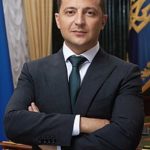
  • Volodymyr Zelenskyy – 2022 Address to University Community of Chile

    Volodymyr Zelenskyy – 2022 Address to University Community of Chile

    The address made by Volodymyr Zelenskyy, the President of Ukraine, on 17 August 2022.

    Dear Mr. Rector!

    Dear students and university teachers who joined our conversation today!

    Dear journalists and everyone present!

    I am grateful for the opportunity to address you and tell you what is happening in Ukraine and why the Russian war against our country is still going on. Why there is no peace.

    A full-scale war, a full-scale Russian invasion of the territory of Ukraine has been going on for 175 days. For 175 days, millions of Ukrainians have defended the independence of our state.

    But not only independence. This is a struggle not only for the state and not only for the opportunity of our people to independently decide their future.

    Indeed, the primary motive of Russian aggression against Ukrainians is purely colonialist – the Russian leadership wants its domination over Ukrainian land and over our resources. And for a long time it was heard in Moscow that they would not restore the Russian empire without seizing the territory of Ukraine.

    However, it became a much deeper struggle than any imperial or geopolitical intentions. Russia is literally waging a war against the lives of our people, against the very right to life of Ukrainians.

    And this war started not 175 days ago. On February 24 of this year, Russia switched to massive aggression – to attacks from the north, from the east, and from the south at once; all our ports on the Black Sea and the Sea of Azov were blocked; massive missile strikes were launched throughout the territory of Ukraine.

    But it was a continuation of the war. The war that began in 2014. It began when Russia occupied the Crimean peninsula, ignited the confrontation in Donbas, which claimed thousands of lives. They were thousands.

    Therefore, when we talk about Russia’s war against Ukraine, we are talking about eight years and 175 days. And when we talk about the victims of this war, about Ukrainian losses, we do not start the story from February 2022. We start it in 2014, when Ukrainians began to be killed simply because they were Ukrainians.

    For the Ukrainian flag. For a pro-Ukrainian position. For defending the Ukrainian territory. Even simply for the suspicion that a person supports the Ukrainian state.

    Today I want to tell you about one such person. About a guy who would have turned 25 this fall, and he would probably be a lot like you right now.

    His name was Stepan Chubenko. He was from the city of Kramatorsk in Donbas. Bright young man. He was remembered as kind and very active – if he had entered a university similar to yours, he would probably have become one of the student leaders. Perhaps he would not have betrayed his dream and chosen the path of a sports career – and he would have been able to become the goalkeeper of one of the teams you know.

    I ask you to look at these photos now – that’s the kind of guy he was.

    He was killed on July 27, 2014. He was killed by militants – one of those whose hands Russia used to wage a hybrid war in Donbas and whom it is now using in the full-scale war.

    They detained Stepan when he was returning home. They saw a yellow and blue ribbon on his backpack – the colors of our flag. And that was reason enough for them to grab the boy. He was beaten for several days, tortured, and shot.

    Only in the middle of August of that year, weeks after the murder, Stepan’s mother managed to find out what happened to her son. But she was not given his body.

    Only in November 2014 it was possible to bury him.

    Stepan’s mother has the last text message from him: “I’ll call you later, I love you.”

    His killers hid in the territory of Russia and Crimea occupied by Russia. They received sentences from the Ukrainian court. But the terrorist state Russia protects them from being prosecuted.

    Them and thousands of other such murderers.

    Those who shot people simply because they were Ukrainians. Simply because they were Ukrainians in Ukraine.

    Those who shot men and women in the back of the head for the mere suspicion that the person was defending our state.

    Those who shot at residential buildings, at schools and hospitals point blank from tanks.

    Those who used artillery to bombard peaceful cities.

    It started back then – in 2014, and 175 days ago it reached the maximum scale that the Russian army, Russian mercenaries from the so-called military companies, which are de facto part of the secret services of the terrorist state, are capable of.

    Russia really wants to seize the territory of Ukraine. And it needs this territory without Ukrainians.

    The destroyed Mariupol and dozens of other cities and villages of Ukraine, the Bucha massacre and other cities in the occupied territory are not exceptions to the general Russian strategy, this is what it is – the Russian strategy towards Ukraine and Ukrainians.

    Tens of thousands of our people are kept for months in the so-called “filtration camps” set up by the Russian military.

    Thousands of Ukrainian children were deported from the territory entered by the Russian army. They are taken to Russia, and Russian officials are trying to do everything so that these children lose all contact with their families and simply forget who they are.

    Monuments and museums that simply remind of Ukraine are being destroyed on the occupied territory. They destroy books. They do everything so that people are forced to give up their national identity, their aspirations, dreams, and obey violence and robbery or die.

    Ukraine has already lost the lives of tens of thousands of its people in this war. Very small children – one-month-old babies, who were killed by Russian missiles, shells and bullets. Teenagers. Men and women. Elderly people.

    Russia does not care who to kill and who to abuse. Everyone is equally its target. And these are not excesses of war. This is its conscious policy.

    Therefore, we have no other choice but to fight for the lives of Ukrainians, so that in Ukraine they are not killed for a yellow-blue ribbon on a teenager’s backpack. And this struggle can last only until victory.

    I can’t count how many times before February 24 I suggested to Russia to end the war and negotiate peace. In different formats, through different mediation.

    It took many years to negotiate.

    But the leadership of Russia chose terror, not an agreement. They chose what they did in Mariupol, in Bucha, not peace. And when Moscow saw that the world would not turn a blind eye to Russian atrocities, they wanted to bring the whole world to its knees.

    That is why the food crisis has become so acute. That is why Russia is deliberately destabilizing the energy markets. That is why Russian policy is deepening the crisis of the cost of living in many countries for mercenary motives. And this is why we must jointly resist Russian aggression.

    When a state turns energy poverty or hunger into a weapon, it is a blow to everyone in the world. When a state tries to conquer another because it wants to be a colonizer, it is a threat to all who value their independence. And when people are killed simply because they are, because they belong to their people, because they do not give up their homeland, it is a threat to humanity as such.

    Can you stay away? Can you stay indifferent? I don’t believe that.

    That is why you are here today, because you value the truth.

    And I’m not asking too much of you. I ask you to spread only the truth – spread the truth about this war in your country and in your region. It is necessary to oppose Russian propaganda.

    Demand full accountability for Russian murderers and executioners. Every war crime must receive its verdict by a competent and honest court.

    Support sanctions against Russia – because the aggressor must pay the highest price for aggression.

    And most importantly, value peace, value life, value your freedom and always, when you have such an opportunity, help defend peace, life and freedom by protecting those from whom they want to take it.

    I am very grateful to each of you, thank you for your attention!

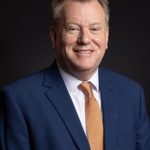
  • David Frost – 2022 Article on Devolution and Nationalism in Scotland

    David Frost – 2022 Article on Devolution and Nationalism in Scotland

    Part of the article on devolution and nationalism in Scotland, written by David Frost and published in the Daily Telegraph on 19 August 2022.

    In 1995, the then shadow Scottish secretary, George (now Lord) Robertson, made one of the worst political predictions of all time when he said that “devolution will kill nationalism stone dead”. We saw the result of this terrible misjudgment in the hate-filled mob outside the Tory leadership hustings on Tuesday night. Many people in England will have watched those television images and thought, “Why would I ever go to Scotland if that is what they think of us?” That is, of course, what the SNP wants. Those of us who believe in our country need to start fighting back.

    To be fair, Robertson was not alone in his opinion. It was the conventional wisdom in 1999 when the Scottish Parliament was established. We now know, of course, that one of the doubters, in private, was Tony Blair. Showing, as so often, that he was a more far-sighted politician than most of his critics, he described devolution in his memoirs as a “dangerous game … you can never be sure where nationalist sentiment ends and separatist sentiment begins”. He was right.

  • PRESS RELEASE : £130 million to protect bus services across the country

    PRESS RELEASE : £130 million to protect bus services across the country

    The press release issued by the Department for Transport on 19 August 2022.

    Buses across England will benefit from up to £130 million of government support, ensuring services keep running and millions of passengers can continue using affordable transport.

    The funding package announced today (19 August 2022) will cover 6 months from October 2022 to March 2023, and builds on almost 2 years’ worth of unprecedented government support to keep bus networks running. Today’s funding means almost £2 billion has been made available to over 160 bus operators during the pandemic.

    The additional funding will help to protect bus services and routes, which are particularly important to people facing pressures due to the rising cost of living. The government is using every tool at its disposal to help people, from ensuring they can access affordable travel, to providing £37 billion of support for the most vulnerable households.

    Transport Secretary Grant Shapps said:

    “This funding will ensure millions across the country can continue to use vital bus services, and brings the total we’ve provided to the sector throughout the pandemic to almost £2 billion.

    At a time when people are worried about rising costs, it’s more important than ever we save these bus routes for the millions who rely on them for work, school and shopping.”

    The government is also investing £3 billion in bus services by 2025, including over £1 billion to improve fares, services and infrastructure, and a further £525 million for zero emission buses.

  • PRESS RELEASE : Role of Defence Training Estate recognised in commando memorial unveiling

    PRESS RELEASE : Role of Defence Training Estate recognised in commando memorial unveiling

    The press release issued by the Ministry of Defence on 19 August 2022.

    The plaque has been installed at Worbarrow Bay, which is part of the Defence Infrastructure Organisation (DIO)-managed military training estate. The land provided a vital training area for the commando unit, which carried out the ‘splinter’ operation, known as Operation Cauldron, to immobilise German heavy artillery that posed a threat to the beach landing areas in France during WW2.

    Following specialist training in Scotland, 4 Commando returned to Worbarrow to carry out crucial cliff scaling exercises in preparation for their task. On 19 August 1942, the commandos launched their raid alongside a Canadian unit, which came ashore under fire from mortars and machine guns. There were 5,000 casualties that day.

    There is already a commemorative plaque at West Bay to remember the Canadian troops involved, but up until now, there has been no memorial to acknowledge the role of 4 Commando. Further to the memorial on the Defence Training Estate, a duplicate memorial, unveiled on the same day, will sit in the Weymouth memorial garden, which is used for local remembrance services.

    DIO Regional Commander Colonel Tim Jalland, who unveiled the Worbarrow Bay memorial, said:

    “These Ranges, one of only two sites available for Armoured Fighting Vehicle Fire and Movement Exercises, remain one of the busiest Range complexes in the UK. In addition to their operational importance, the Ranges are located in a beautiful, historically significant and environmentally diverse part of the landscape, which the MOD takes pride in sustaining and maintaining for the Armed Forces and general public alike.”

    Naval historian and former Chairman of the Weymouth and Portland Residents Association, Alvin Hopper, is the inspiration behind the plaque, which he said will serve as an important reminder of the coastline’s history as well as acknowledge the vital role played by the unit.

    Mr Hopper said:

    “We should educate the younger people about their history. They don’t get taught this at school, there’s a lot that’s missed out, especially the local history. Lots of visitors to the area will now be aware of the history. Hopefully, when they see the plaque, they will go and look it up. With the use of modern-day technology, they can get on-the-spot information.”

    In his naval role, Mr Hopper served in the mine warfare service, which became the Royal Naval Auxiliary Service, and he knows the Dorset coastline very well. He added that military training areas are as vital for troops today as they were then.

    He said:

    “To have somewhere to train is vitally important. These dedicated training areas give our forces the edge, somewhere to hone their skills. Worbarrow Bay was crucial for 4 Commando because the terrain almost identically matched the terrain they would be facing on the raid.”

    The duplicate memorial plaque in Weymouth was unveiled by the Mayor of Weymouth, Councillor Ann Weaving and Her Majesty’s Lord-Lieutenant of Dorset Angus Campbell.

    The Lulworth Ranges have provided armoured and dismounted live fire and manoeuvre training facilities for the UK Armed Forces since WW1. The land is part of the Defence Training Estate, which covers around one per cent of land in the UK and plays a vital role in preparing UK and visiting troops for operations across the globe. The UK training area covers 157,000 hectares and includes 9,000 buildings, 21m trees, 3,500km of tracks and more than 70 Sites of Special Scientific Interest.

    The estate supports training scenarios that include practising fighting in built-up areas, firing artillery, amphibious landings and assaults, driving tanks and firing from naval vessels and aircraft.