
The letter sent by Slough Borough Council on 11 August 2022.
Tag: 2022
-
PRESS RELEASE : More than 16 million households receive cost of living council tax rebate
The press release issued by the Department for Levelling Up, Housing and Communities on 1 September 2022.
- Around 9 out of 10 of eligible households have received £150 cost of living rebate
- Anyone yet to receive the rebate can make a claim to local authority
- Rebate part of £37 billion of government support to tackle cost of living crisis
Around 90% of eligible households have received the government’s £150 council tax rebate to help with the cost of living.
Figures published today show 16.6 million households in England, 86% of those eligible, were handed payments by the end of July – meaning the actual number of those who have received the rebate by now will be even higher as councils continue to pay it out.
Today’s figures show a total of £2.5 billion has gone to households in council tax bands A to D under the scheme, an increase of more than £500 million on the previous month.
All councils in England have begun making these payments and have payment processes in place for people who do not pay by direct debit. DLUHC will continue to drive progress with councils to pay households as soon as possible where they have not already done so.
Households have until the end of September to claim the £150 payment, which does not have to be paid back. Anyone who is yet to receive their rebate is urged to check their local council website for more information and make a claim.
However, recognising the importance of the rebate in helping those most in need with rising costs, the government urges councils to do everything they can to encourage the remaining households to claim their rebate to ensure as many eligible households as possible get the money that they are owed.
An extra £144 million has also be given to councils to provide discretionary support to any household in financial need due to rising energy bills, including transient groups and people on low incomes in council tax bands E to H.
Levelling Up Secretary Greg Clark said:
I’m pleased to see further progress in paying the council tax rebate out to the millions of households who are eligible to receive it.
We want to make sure that those most in need receive the support that they are entitled to help households with the cost of living. This is why I am urging everyone to check their eligibility to receive the rebate and contact their councils if they have not.
The rebate is part of £37 billion of government support being targeted at those most in need to help with the cost of living. This includes at least £1,200 of extra support for millions of the most vulnerable households this year, with all domestic electricity customers receiving at least £400 towards their bills.
The rebate is available to most households living in council tax bands A to D on 1 April. This includes those who receive Local Council Tax Support, even if their council tax bill for the year is less than £150.
Anyone who thinks they are eligible but does not have a direct debit and has not received a payment or details of how to make a claim, should visit their local council’s website for more information.
Since announcing the rebate in April, the government has provided £28 million for councils to set up software and recruit staff and will top this up as necessary to cover all reasonable delivery costs. Councils have been given a host of options to make payments quickly and securely including bank account transfers, council tax account credits or a voucher-based system.
Local authorities must also make arrangements for those who cannot access the internet.
If households do not know who their local council is, they can find their website through entering their postcode.
See more information about government support on the cost of living.
-

PRESS RELEASE : New government partnership directors at NATS – Greg Bagwell and David Smith
The press release issued by the Department for Transport on 1 September 2022.
Greg Bagwell and David Smith have been appointed as Non-Executive Partnership Directors to the board, where they will work alongside existing Partnership Director Maria Antoniou. Their appointment begins at the end of this month and will last for the next 3 years.
Aviation Minister Robert Courts said:
The next few years are going to be crucial for the aviation industry as it continues its recovery from the pandemic and air traffic management will continue to play a key role in keeping our skies safe and flights running smoothly as demand rebounds.
That’s why it’s excellent we’ve secured such experienced individuals to sit on the NATS Board. While they will have big shoes to fill, both Greg and David’s breadth and depth of experience will be indispensable assets over the coming years.
NATS Chair, Dr Paul Golby CBE said:
I am delighted to be welcoming Greg and David to the NATS Board bringing their collective experience on safety and finance issues to support NATS going forwards.
I would like to express my gratitude to Richard and Iain for all their work and support over the last 9 years which has been invaluable to myself as Chair, the NATS Board and NATS more widely.
Greg Bagwell previously served for 36 years in the Royal Air Force, as an Air Marshal, Deputy Commander and a member of the Air Force Board, while David Smith has held a number of senior executive and finance positions in large multinational companies, including Jaguar Land Rover and Rolls Royce. He most recently was the CFO and Director of QinetiQ and has also served on the board of Motability for 10 years.
They will take over from Iain McNicoll CB CBE and Richard Keys, who have both served 9 years on the board and have made significant contributions, particularly as the industry faced up to the pandemic.
-
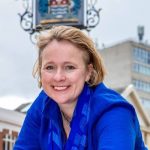
Vicky Ford – 2022 Statement on the Situation in Ethiopia
The statement made by Vicky Ford, the Minister for Africa, on 1 September 2022.
The return to conflict between the Tigray People’s Liberation Front (TPLF) and the Ethiopian Government is catastrophic for the people of Ethiopia. This development risks tens of thousands of deaths – both directly through fighting, and indirectly through a further deepening of the already dire humanitarian situation. 22 months since fighting first began, it is clear that there is no military solution.
The cessation of hostilities agreed in March 2022 created an opportunity to resolve this conflict politically and enable Ethiopia to return to sustained development and economic growth. The resumption of fighting makes the path to peace much more difficult. Tigrayan forces should immediately cease fighting in Amhara region and return to Tigray. Eritrean forces should leave Tigray. We remain confident that progress towards peace can be made if talks begin.
The conflict in northern Ethiopia has contributed to one of the world’s worst humanitarian crises, leaving 13 million people in Tigray, Amhara and Afar requiring humanitarian assistance. Conflict, and the TPLF’s seizure of fuel from the World Food Programme, makes the work of humanitarian agencies more difficult. The UK urges all parties to the conflict to guarantee unfettered humanitarian access by immediately ceasing hostilities. The UK calls on the Ethiopian Government to urgently restore services to Tigray and the TPLF to enable the seized fuel to be used for aid distribution and critical services.
Previous phases of the conflict were marked by terrible violations and abuses of human rights, including sexual violence. The UK will strongly support all efforts to ensure accountability for violations and abuses, including by the Ethiopian Human Rights Commission and the International Commission of Human Rights Experts on Ethiopia. There have already been reports of airstrikes on Tigray by the Ethiopian Government resulting in civilian casualties, and of ethnically targeted arrests. It is the responsibility of all parties to the conflict to prioritise the protection of civilians, respect human rights and uphold International Humanitarian Law.
The only way to resolve this conflict is to reinstate the cessation of hostilities and immediately begin political negotiations. We support the African Union’s mediation efforts to this end, and urge a redoubling of these efforts to avert further escalation.
-
PRESS RELEASE : Millions invested to support female offenders
The press release issued by the Ministry of Justice on 1 September 2022.
- Female offenders to be diverted from life of crime with targeted support
- Women helped to get off drugs, off the streets into work
Women whose crimes have been fuelled by addiction, mental health issues and domestic violence will be better supported to stop reoffending thanks to new government funding.
With over 60 per cent of women in prison having experienced domestic abuse and 50 per cent having drug addictions almost £21 million will be invested in women’s services to tackle the causes of female offending and cut crime.
Organisations such as Working Chance, the UK’s only charity dedicated to getting women with convictions into work, support offenders who are serving a community sentence or have recently been released from prison and may be at risk of reoffending.
This tailored support, which can range from help to find a job or support with drug and alcohol abuse, can provide stability in getting their lives back on track – ultimately helping to keep the public safe.
Without specialist support in the community, statistics show that half of women who have been in prison will go on to reoffend, contributing towards the £18 billion cost of reoffending to the taxpayer.
A further £3.6 million will be allocated to help local services, such as mental health support and drug experts, work more closely together to support female offenders. This will include funding local coordinator roles, who would help to bring government and third sector organisations together to provide a better service.
Prisons Minister Stuart Andrew said:
Female offenders are often driven into crime by poor mental health, drug addiction or abuse.
This investment will make sure we support women facing these problems away from crime and into the help they need to get their lives back on track.
Tackling the root causes of female offending and providing vulnerable women with early support is a key part of the Female Offender Strategy, with many women who commit low-level crimes being driven by underlying factors such as substance abuse, trauma or difficulty in getting a job.
Katie, 39, who spent 6 months in prison and has been helped back into employment through Working Chance, said:
Mounting debt and mental health issues all contributed towards my offending, but I was determined to take responsibility and start getting my life back on track.
Working Chance gave me the support needed to rewrite my CV, prepare for interviews and the confidence to disclose my convictions to potential employers.
While women who commit the most serious crimes will always be sent to prison, custody should always be a last resort. On top of the £24 million funding, the government is also piloting a £10 million Residential Women’s Centre in Swansea, to reduce the number of women sent to prison.
Female offenders at the centre will receive one-to-one mental health therapy and counselling to address their trauma from previous abuse and support to overcome substance misuse.
This is alongside plans to pilot a new Problem-Solving Court targeted at women with complex needs, including drug and alcohol abuse.
Female offenders sentenced at the court will see the same judge or bench of magistrates for regular reviews, receive intensive support and supervision from the Probation Service and have access to services for drug and alcohol abuse, and support with housing, training and employment.
Since 2018, almost £55 million has been invested to support female offenders. New specialist staff have been recruited to support pregnant women and mothers in prison, and charities and community organisations have also received funding to keep services running.
-
PRESS RELEASE : Reappointment of 11 lay panel members of the Judicial Conduct and Investigations Office
The press release issued by the Ministry of Justice on 1 September 2022.
The Lord Chancellor has announced the reappointment of 11 lay panel members of the Judicial Conduct and Investigations Office for a third term of 9 months.
The Lord Chancellor, in consultation with the Lord Chief Justice, has announced the reappointment of 11 lay panel members of the Judicial Conduct and Investigations Office. The members are:
Clive Chalk
Bronwen Curtis CBE
Paul Curtis
Jenni Douglas-Todd
Victor Marshall OBE
Patrick Stayt
Lynne Vernon
Suzy Walton
Judith Webb MBE
Peter Wrench
Wendy Yeadon
The reappointments will run from 1 July 2022 to 31 March 2023.The Judicial Conduct and Investigations Office is an independent office which supports the Lord Chancellor and Lord Chief Justice in considering complaints about the personal conduct of judicial office-holders.
Appointments and reappointments are made by the Lord Chancellor and are regulated by the Commissioner for Public Appointments. The reappointments have been made in line with the Governance Code on Public Appointments.
Biographies
Clive Chalk is a retired Chief Superintendent with the Metropolitan Police Service. He is a Lay Member of the Governing Board for Hounslow Clinical Commissioning Group and Lay Chair of the General Dental Council’s Investigating Committee.Bronwen Curtis CBE has held leadership positions in both the private and public sector and most recently as Director, Human Resources and Organisational Development, Northampton General Hospital NHS Trust. Bronwen is a lay member of the Speakers Committee for IPSA and a member of the regulatory appointments panel for the Institute of Chartered Accountants in England and Wales. She is a former UK Board member of a global corporation and previously named Midlands Businesswoman of the Year. Bronwen was appointed CBE in 2007.
Paul Curtis is Tribunal Chair of the Medical Practitioner Tribunal Service. He is a panel Lay Member at the General Optical Council. He is also Lay Chair at the School Admission Appeals Panel and Lay Chair Independent Review Panel (School Exclusions) at the East Sussex County Council
Jenni Douglas-Todd is a Director of Equality and Inclusion at NHS England, Southampton. She is currently Deputy Chairman and Senior Independent Director with University Hospital Southampton NHS Foundation Trust. Jenni is a former chief executive of Hampshire Police Authority and the Office of the Hampshire Police and Crime Commissioner. She is Independent Chairman of the Dorset Integrated Care System. Jenni is a member of the English Cricket Board’s Regulatory Committee; Non-Executive Director with Hampshire Cricket Board and a Trustee with the National Association for the Care and Resettlement of Offenders.
Victor Marshall OBE is the professional standards co-ordinator for the Police Superintendents’ Association. Victor joined Sussex Police in 1979 and served in a variety of roles including firearms, public order, uniform, CID and professional standards retiring as a detective superintendent. He was appointed OBE, in 2010, and holds two Royal Humane Society awards for saving lives.
Patrick Stayt: undertakes a number of voluntary roles and was formerly a member of the Police Remuneration Review Body and National Crime Agency Remuneration Review Body. Patrick was previously National Secretary of the Police Superintendents’ Association for England and Wales. He retired from the Police Service, in 2010, after a 30-year career and was awarded the Queen’s Police Medal for Distinguished Service.
Mrs Lynn Vernon is a retired Detective Chief Inspector. During her 30 years’ service with Greater Manchester Police she managed public protection, counter corruption and homicide investigation units. She now undertakes various roles as a lay member of the General Chiropractic Council Investigating Committee, Social Work England and the Royal college of Obstetricians and Gynaecologists. She is a Medical Education Partner at Manchester University, involved in the admissions for the Medical and Dental schools and the student Health and Conduct panel. She is a former chair of the GDC Investigating Committee.
Dr Suzy Walton is a Chartered Director, Chartered Occupational Psychologist and a Chartered Scientist who has sat on over a dozen boards of large organisations both in the UK and internationally. She is a member of the board of the Institute of Directors and Vice President at the Royal Society of Medicine. Suzy is a regulatory Board member and Chairman at Association of Chartered Certified Accountants. She was a former member of the State Honours Committee which makes recommendations for awards to the Prime Minister and The Queen.
Ms Judith Webb MBE is a board member of the Cairngorms National Park Authority and a member of the Independent Agricultural Appeals Panel. Her previous appointments include: Chair of Defra’s Rural Development Service during its transition into Natural England; Deputy Chair of the Joint Nature Conservation Committee; and Commissioner for Forestry Commission in Wales.
Mr Peter Wrench is an independent adjudicator of student finance appeals and complaints for DfE and Welsh Government. He is also: a member of the Code Adjudication Panel of the Phone-paid Services Authority; a member of Disciplinary Tribunal of the CILEx Regulation; a member of Fitness to Practise Committee at the Nursing and Midwifery Council. He was formerly a member of Audit and Risk Assurance Committee of the Office of the Immigration Services Commissioner.
Ms Wendy Yeadon is an Independent Chair at Social Work England. She is also Chair of Discipline, Appeals and Licensing Hearings at the ACCA. Wendy is: a Lay Adjudicator at the Solicitors Regulation Authority; a Chair of Fitness to Practice Panels at the Nursing and Midwifery Council and; a selection panel member at the Judicial Appointments Commission. Wendy was formerly a Lay Member of Professional Conduct Panels, Chartered Institute of Legal Executives.
-

PRESS RELEASE : Ukraine Independence Day (Joint Statement from Namibia)
The press release issued by the Foreign Office on 1 September 2022.
What should have been a time of celebration was this year marked by tragedy – 24 August also marked 6 months since Russia invaded the sovereign nation of Ukraine.
Since Ukraine’s independence in 1991, a proud, internationally engaged country, and one committed to freedom and the principles of the UN Charter, has emerged. Ukraine has become a global exporter of grain – feeding hundreds of millions of people around the world.
But now the country and all it has achieved is under threat. Over the last 6 months, the scale of atrocities against Ukraine’s citizens is certain, with extensive violations of international humanitarian and human rights law. Officially there have been 12,800 civilian casualties so far, with the expectation that real figures are considerably higher. At least 366 healthcare centres have been attacked, and over 2,200 schools. More than 12.8 million Ukrainians have been forced from their homes – displaced – with 6.2 million people now living as refugees.
The UK, EU and US, and many other countries, have stood by Ukraine in its darkest hour. We will continue to do so. We are committed to championing fundamental human rights, sovereignty, international humanitarian law and democratic values internationally, to help build a fairer, freer world.
Many Namibians will be able to relate to the grave situation in Ukraine, having fought so hard and so long for independence, and freedom from oppression, to become a proud, stable, democratic and peaceful nation.
The war in Ukraine continues to have a huge impact globally, affecting the most vulnerable people living in the world’s poorest countries. Since the beginning of the year, we have seen a rise in the cost of living around the world, including here in Namibia. Global food insecurity and the risk of famine is at an all-time high, driven by conflict, climate change and the COVID-19 pandemic.
At present, at least 1.6 billion people worldwide are directly affected by the surge in food and energy prices. In East Africa, millions of people are faced with the worst drought and food shortages in decades. Four consecutive years have seen insufficient rain for harvests. Livestock is dying, and the price of staple foods keeps rising.
Ukraine’s grain exports collapsed after the invasion, which has exacerbated food insecurity around the world. African countries import more than 12% of their wheat from Ukraine.
This war is also affecting the trade of fertilisers. The African Development Bank (AfDB) estimates that, due to the conflict, Africa faces a fertiliser shortfall of 4 million metric tonnes this year – 33-40% of supply in 2020. Without sufficient supply of fertiliser, Africa could lose $14-19 billion – one-fifth – worth of food production in the next 2 harvesting seasons, with significant knock-on consequences to food availability.
Recognising the global food crisis, international sanctions on Russia have deliberately not included food or fertiliser exports from Russia to third world countries. The UN-brokered deal to unblock Ukraine’s grain exports across the Black Sea is a vital step, and news of a shipment by the World Food Programme transporting grain from Ukraine to the drought-hit Horn of Africa region is a positive sign of progress.
However, to enable a lasting return to global security and economic stability, there must be peace. No country deserves war. But in war time, there are rules: there is international humanitarian law and there is the commitment we made to uphold this through the UN Charter and the important role played by the ICRC. The world needs a free and a safe Ukraine so it can securely return to supplying the world with its food.
Our commitment to a better world, one that is fairer and strives for freedom for all – especially in the aftermath of the pandemic – is a challenge that we all must face together. Ukraine is our friend in this global reconstruction effort, and it is our partner in food security.
As we commemorate Ukraine’s anniversary of independence, our respective countries and institutions stand together with Ukraine, both supporting Ukraine to help protect its own people, but also around the world in partnership with those nations who share these same goals.
Strength to you, Independent Ukraine.
Signed by:HE Charles Moore, British High Commissioner
HE Sinikka Antila, Ambassador of the European Union
HE Herbert Beck, Ambassador of the Federal Republic of Germany
HE Sébastien Minot, Ambassador of the Republic of France
HE Alberto de la Calle, Ambassador of Spain
HE Luis Gaspar Da Silva, Ambassador of Portugal
Jessica Long, Chargée d’Affaires a.i, United States of America
Matti Karvanen, Chargé d’Affaires a.i., Embassy of Finland
-

PRESS RELEASE : 7 new community diagnostic centres to offer more patients life-saving checks
The press release issued by the Department of Health and Social Care on 1 September 2022.
- 7 new community diagnostic centres will open to provide quicker diagnoses to patients – a step forward in the government’s plan to roll out 160 by 2025
- More than 1.7 million tests, checks and scans have already been delivered by the 92 existing community diagnostic centres
- GP referrals to community diagnostic centres speed up diagnosis times by offering tests closer to home, eliminating unnecessary hospital trips
7 new community diagnostic centres (CDCs) will open to help bust the Covid backlogs, diagnose patients more quickly and meet future demands on the NHS, the Health and Social Care Secretary has today confirmed.
The one-stop-shops offer a range of diagnostic checks, scans and tests closer to home. Following a GP referral, patients can get their symptoms checked and receive a potentially life-saving diagnosis for a range of conditions such as cancer, heart and lung disease more quickly. The new facilities will also relieve pressure on NHS staff ahead of a potentially challenging winter.
So far, 92 have already opened in a variety of settings from football stadiums to shopping centres – carrying out over 1.7 million tests. This forms part of the government’s ambition to roll out 160 community diagnostic centres across the country by 2025 to deliver nine million tests, checks and scans a year, with the programme backed by £2.3 billion of diagnostics investment.
CDCs reduce the number of hospital visits and reduce waiting times for patients by diverting people away from hospitals – so hospitals can focus on treating urgent patients while the diagnostic centres focus on tackling the backlog for tests and checks. They are more convenient for patients and more efficient, with patients less likely to have their tests cancelled.
The new CDCs will be rolled out in Willesden and Wembley in north west London, Leigh in Greater Manchester, St Albans, Lancashire, and Eltham in south east London.
Health and Social Care Secretary Steve Barclay said:
Since taking on the role of Health and Social Care Secretary, I have been focussed on clearing the Covid backlog and waiting times. Community diagnostic centres are a vital part of our plan to transform the way we deliver tests, scans and x-rays and ultimately reduce waiting times for patients.
Along with speeding up diagnosis times, they will also help tackle health disparities – ensuring that people get treated as quickly as possible no matter where they live, with new centres opening from Essex to Manchester.
NHS national director of elective recovery, Sir James Mackey, said:
These seven ‘one stop shops’ are the next step in our elective recovery plan and a welcome addition to the 92 existing community diagnostic centres, which have already delivered more than 1.7 million tests and checks in just over a year.
Our elective recovery plan set out how the NHS will deliver nine million more tests and checks a year by 2025 and the work of these diagnostic centres, some in convenient spots including shopping centres, are excellent examples of the innovative work being done across the health service to ensure patients get the tests and checks they need as quickly as possible.
GPs refer patients to CDCs where staff use CT scanners, MRI scanners, and other new diagnostic equipment to diagnose people as quickly as possible.
More than 1.7 million tests, checks and scans have already been delivered in the following regions across the country:
- 173,000 in East of England
- 222,000 in London
- 303,000 in the Midlands
- 173,000 in North East Yorkshire
- 260,000 in the North West
- 329,000 in the South East
- 245,000 in the South West
The Finchley Memorial Hospital CDC opened in north London in August 2021 and now offers patients two MRI scanners along with two obstetric ultrasound machines. Staff carry out a range of scans, blood tests, and other cardiology and respiratory services – with more than 50,000 tests so far delivered.
In Dorset, a CDC was constructed on the top floor of Beales Department Store in Poole to tackle waiting lists in the region, with the first patients walking through its doors in December. The space was once used to sell furniture, and now boasts an eye testing centre, a breast screening unit, and 16 clinical rooms that can be adapted for different needs.
In Barnsley, a CDC has been constructed in the Glass Works shopping centre as part of the town’s Urban Regeneration Project. Thanks to its public transport links, patients from more disadvantaged areas have improved access to diagnostic services – including breast screening.
As part of the selection process, the government worked closely with the NHS and invited bids from various regions. Analysis was carried out to determine where they would be most beneficial in reducing waiting lists and tackling health inequalities.
A range of measures have been adopted to bring down waiting lists and address the lasting impact of the pandemic. Last week, the Health and Social Care Secretary announced that over 50 new surgical hubs will be opening to offer hundreds of thousands more patients quicker access to procedures.
Backed by £1.5 billion in government funding, they will provide at least 100 more operating theatres and over 1,000 beds – delivering almost two million extra routine operations over the next three years.
These innovative ways of working will help the NHS carry out the biggest catch-up programme in its history and offer patients the care they need, when they need it.
-
PRESS RELEASE : Prime Minister’s call with German Chancellor Olaf Scholz
The press release issued by 10 Downing Street on 31 August 2022.
The Prime Minister spoke to German Chancellor Olaf Scholz this afternoon.
The leaders thanked one another for their friendship and cooperation for the past few months. The Prime Minister pointed to the staunch opposition to Putin’s actions and the historic support for Ukraine galvanised through Germany’s Presidency of the G7 as evidence of the strong UK-German partnership. He paid tribute to Chancellor Scholz’s leadership on this issue and encouraged him to stay the course in his political, military and economic support for Ukraine.
The Prime Minister noted the extreme pressure, particularly in terms of energy prices, the people of the UK, Germany and elsewhere have come under as a result of Putin’s barbarism. Chancellor Scholz thanked the Prime Minister for everything he has done for Ukraine in his role.
The Prime Minister expressed his confidence that the UK and Germany will continue to be close partners on a huge range of issues. He pointed to climate change and defence as areas where our countries are working together to make the world a better and safer place.
The Prime Minister and Chancellor Scholz concluded by wishing one another all the best for the future.
-

Boris Johnson – 2022 Speech at the Commissioning of HMS Anson
The speech made by Boris Johnson, the Prime Minister, at Barrow-in-Furness on 31 August 2022.
Thank you very much Captain Bing.
Deputy Prime Minister, ladies and gentlemen, it is fantastic to be here in Barrow, which is the crucible of British marine engineering, of course, and the historic vast maternity ward of these steel leviathans.
And when you look at HMS Anson ladies and gentlemen you are looking at the climax of eleven years of high precision effort by 10,500, brilliant shipwrights, and sonar experts, and weapons engineers – a concentration of talent and expertise that can be mustered by only two or three other countries in the world, at the most.
And on this special day, we give them our thanks.
And you’re looking, by the way, at a vessel that is five times as long as the chamber of the House of Commons and I think you will agree is an international argument considerably more persuasive than some of the things that are deployed in the chamber.
And this is also as the lady sponsor, as the wonderful lady sponsor pointed out this is the home, the place of work, play and rest for one hundred and ten brave submariners at sea, week in week out in the service of our country and to them in anticipation I think we should give our thanks.
When you’re looking at HMS Anson, you are also looking at a vast UK industrial project that represents all that we mean or certainly all that I mean by levelling up, that’s driving jobs and growth and the acquisition of skills up and down the country, sonar built in Somerset torpedoes built in Portsmouth, propulsion system, I think I might even say from Derby, Rolls Royce in Derby.
And you will know that those Rolls Royce reactors were, which are shortly going to be fired up, I think for the first time, they are the basis of the small modular reactor programme that this government has commissioned as part of our strategy to ensure that the people of this country get reliable supplies from the UK of the energy, affordable energy, that we need.
And I’ve just been informed by the by the brilliant people in BAE that these engines run so quietly, that the most important feature of this machine is that for all its enormous bulk.
And by the way, it’s I think it’s smaller than the dreadnought, but it’s still colossal.
All its bulk, you cannot hear it coming.
And I can tell you that I’ve just been out with the Metropolitan Police this morning on a dawn raid.
Coincidentally, in Lewisham, I think maybe South Norwood.
And I can tell you how important, is the element of surprise.
And we arrested a drug dealer, ladies and gentlemen that he was suddenly surprised to see me at the foot of his bed at 530 in the morning, he seemed remarkably pleased actually.
The element of surprise is crucial. And that is why HMS Anson is so vital for our defence, by leave of the Ministry of Defence and my great friends. The Secretary of State for Defence, I can tell you roughly what this boat does, it doesn’t actually carry the nuclear deterrent itself though it does carry as you know, plenty of other lethal stuff, but it does protect our nuclear deterrent.
And therefore today, ladies and gentlemen, what we are looking at is the policemen of the world, gathering intelligence protecting our sea lanes cruising up behind you silently you do not even know it’s there and invisibly helping to create that forcefield around us that is warding off attack on NATO countries for 80 years or getting on for 80 years keeping safe, a billion people around the world.
That is what this machine does.
And that’s why I’m so pleased, by the way, but under the AUKUS agreements with Australia and with the United States, the technology we hope in the submarine will be used to help keep people safe across the whole of the Pacific region as well.
Now, some people will continue to insist that this is a weapon of war.
I tell you that she is a guarantor of peace.
And in this uncertain world, we need that guarantee more than ever.
I congratulate all those who designed her. All those who built her. And I know that in the decades to come, all those who are going to set to sea in her.
And I know that in decades to come, when she’s out at sea, unseen beneath the surface of the water, keeping us safe, we will all remember the day that we were here in Barrow to see HMS Anson commission.
Thank you, God bless this wonderful submarine and all those who sail in her.