Tag: 2022

  • PRESS RELEASE : Ministry of Defence confirms the death of Sapper Connor Morrison [September 2022]

    PRESS RELEASE : Ministry of Defence confirms the death of Sapper Connor Morrison [September 2022]

    The press release issued by the Ministry of Defence on 26 September 2022.

    Connor Morrison of 23 Parachute Engineer Regiment died during a non-operational incident in Ipswich on 23rd July 2022.

    Commanding Officer 23 Parachute Engineer Regiment, Lieutenant Colonel Jack Crossley said:

    Sapper Connor Morrison joined the British Army on the 3rd of January 2021 aged 19.  He completed his basic training at the Army Training Centre, Pirbright before moving to 3 Royal School of Military Engineering Regiment to commence his specialist Combat Engineer training.

    Sapper Morrison was a professional soldier with much promise. Keen and enthusiastic, he worked hard to achieve his goals at every stage of his training and impressed his instructors with his knowledge and skills.  More importantly, he was a loyal friend and a genuine team player.  In typical Army fashion, those closest to Sapper Morrison knew him as “Tesco” or “Sainsburys” in cheeky reference to Morrisons the supermarket chain.

    Sapper Morrison was quietly confident and sociable. He enjoyed chatting with friends whether it be whilst playing PlayStation or pool, on trips to Wetherspoons, or at the infamous Jackson Club Cafe in Gibraltar Barracks – so much so that he would invite his course mates to congregate in his room which was directly opposite the entrance to the cafe, so that they could all be first in the queue at opening time.

    Sapper Morrison was an avid supporter of Scottish football with a great sense of humour.  He would cheerfully join his friends in the pub to watch England games, but when they got overexcited about their teams’ prospects, he enjoyed reminding them that England drew with Scotland in Euro 2020, and therefore that “England, can’t even beat Scotland”.

    A selfless team player, Sapper Morrison put others above himself and generously volunteered to cover weekend duties when he was not returning home to Scotland, to enable others to travel home themselves. Similarly, when a colleague woke up late for parade and realised that their boots were soaking wet and muddy from the day before, Sapper Morrison generously gave them a pair of his boots for the day.  This was much to the amusement of his troop as his friend wore a size 8 and Sapper Morrison was a size 12!

    Sapper Morrison qualified as a Class 2 Combat Engineer on 4th of February 2022, earning his Corps of Royal Engineers stable belt.  After gaining his driving licence, he began his specialist trade training at the Defence College of Logistics, Policing and Administration in Worthy Down, where he went on to qualify as a Class 2 Logistical Specialist.

    Following this, having volunteered for service with Airborne Forces, Sapper Morrison reported for duty at 23 Parachute Engineer Regiment, and donned the coveted maroon beret.  He arrived at the Regiment alongside friends from his course and was re-united with others from training.

    Sapper Morrison was clearly happy to be part of the Regiment after spending a long time on training courses.  He was popular and well respected amongst his peers and had a positive influence on all those he worked with.  Utterly committed, Sapper Morrison put himself forward for every task.  His positive attitude kept himself and others going through good times and bad. Everyone enjoyed spending time with Connor whether working together, chatting about the day or just having a laugh.

    Sapper Morrison was a truly selfless and kind-hearted professional soldier who made friends wherever he went.  He proved himself to be a proud and loyal member of the Corps of Royal Engineers and will always be part of the Sapper family.  Sapper Morrison will be sorely missed by the Regiment and all those he served alongside.  We will remember him.

    Minister for the Armed Forces James Heappey said:

    It is with deep sadness that I heard of the death of Sapper Connor Liam Morrison of 23 Parachute Engineer Regiment.  It’s clear from his colleagues that he had a passion for the British Army, made an instant positive impact on all those he served with, and always put the needs of his fellow soldiers above his own; a role model to all. Our thoughts and prayers are with his family and loved ones at this terrible time.

  • PRESS RELEASE : Chris Skidmore launches net zero review [September 2022]

    PRESS RELEASE : Chris Skidmore launches net zero review [September 2022]

    The press release issued by the Department for Business, Energy and Industrial Strategy on 26 September 2022.

    • Independent review of net zero delivery by 2050 aims to ensure delivery of legally-binding climate goals are pro-growth and pro-business
    • review will scrutinise green transition to make sure investment continues to boost economic growth and create jobs as well as increase energy security
    • former Energy Minister Chris Skidmore promises thorough appraisal so that world-leading climate commitment is met in an economically-efficient way

    The government’s independent review into the delivery of net zero climate commitments is launched today (Monday 26 September), with a focus on ensuring the UK’s fight against climate change maximises economic growth, while increasing energy security and affordability for consumers and businesses.

    The UK’s target to reach net zero by 2050 remains in place. Former Energy Minister Chris Skidmore MP will lead the rapid review of the government’s approach to delivering its net zero target, after being commissioned by the Business and Energy Secretary Jacob Rees-Mogg.

    It comes a year after the government published its Net Zero Strategy, setting out an overarching approach to carbon neutrality. Since then, there have been major changes to the economic and political landscape: Russia’s illegal invasion of Ukraine, historically high global energy prices and high inflation. These changes have placed huge pressures on British households and businesses and make it vital that the UK reaches Net Zero in a way that avoids exporting industry and emissions overseas.

    This new review aims to identify new ways to deliver the legally binding target by 2050 in a way that is pro-business and pro-growth. The review will examine:

    • what the most pro-business, pro-growth and economically efficient path to reaching net zero is
    • how to maximise the economic opportunities that the target presents as well as increase innovation, investment, exports and jobs
    • what the economic costs and benefits are associated with new and emerging policies and technologies

    To do this, Mr Skidmore’s review will consider a range of evidence, consulting widely with consumers, investors, industrial leaders and experts in various fields including energy, land use and transport. He will report to the government with a set of recommendations by the end of this year to help turbocharge our transition to net zero by identifying key economic opportunities.

    He will also be holding a series of roundtables across the country, seeking as many views as possible to ensure that people not only reap the environmental benefits of tackling climate change, but the economic benefits too.

    Chair of the Net Zero Review Chris Skidmore said:

    The UK continues to lead the world on tackling climate change, having been the first G7 country to commit in law to net zero carbon dioxide emissions by 2050.

    This review seeks to ‘double down’ on how we can ensure that our energy transition happens at the same time as maximising the economic opportunity for businesses and households across the country, providing huge opportunities for innovation, investment, exports and jobs. I want to ensure that net zero isn’t just viewed as the right thing to do for our environment- but becomes an essential driver of economic growth.

    I’m kicking off a 3-month review today to find the best ways of making this happen – speaking to as many people in as many sectors and regions as possible, to ensure the review generates fresh policy ideas that can ensure we deliver a ‘big bang’ moment for net zero.

    Secretary of State for Business and Energy, Jacob Rees Mogg, said:

    The government remains committed to reaching our net zero emissions targets, but with Russia weaponising energy across Europe we must make sure we do so in a way that increases energy security and does not place undue burdens on businesses or consumers.

    Chris Skidmore’s rapid review will help us identify how best to make that happen, while also ensuring all parts of the UK reap the economic benefits of tackling climate change that I have no doubt will be on offer.

    The UK has already managed to grow its economy by 76%, while cutting its emissions by over 44% since 1990 – decarbonising faster than any other G7 country.  Official statistics also show there are already around 400,000 jobs in low-carbon businesses and their supply chains across the UK, with turnover estimated at £41.2 billion in 2020. Both the British Energy Security Strategy and Net Zero Strategy aim to leverage an additional and unprecedented £100 billion of private investment, while supporting an additional 480,000 British jobs by 2030.

    Over the past year, a range of companies have sought to invest in the UK’s green infrastructure, creating jobs across the country, including:

    • JDR Cable Systems in Hartlepool, who are on track with construction of a £130 million subsea cable facility in Blyth, creating 171 high quality local jobs on completion
    • Siemens Gamesa, who are investing £186 million into expanding its offshore wind blade factory in Hull
    • Rolls Royce, who have secured £490 million for its small modular reactors programme
    • ScottishPower, who are investing £150 million into a 100MW green hydrogen plant in Felixstowe to power trains, trucks and ships

    All this comes as there is clear support for climate action in the UK, but in a way that benefits the economy as well as the environment.

    Jonathan Geldart, Director General of the Institute of Directors, said:

    We welcome the government’s commitment to working closely with business to make its world-leading net zero by 2050 target a reality.

    The UK business community recognises the importance of building a sustainable economy and the transition to net zero is more important than ever, given the imperative of reducing business dependence on expensive fossil fuels. Business needs an evidence-based, long-term vision from government so that they can build net zero into their planning and maximise its economic potential.

    We look forward to working with the government independent review in the coming months to ensure that the UK can deliver net zero in a way that maximises the opportunities for UK businesses.

    Dan McGrail, Chief Executive at RenewableUK, said:

    This review gives us the chance to ensure that the UK makes the most of cheap renewable power to deliver net zero at lowest cost and boost competitiveness across the economy.

    Cheap, clean energy is fundamental to growing new high-value technologies, decarbonising the UK’s industrial base and boosting exports.

    Whether it’s building up the supply chain for the £175 billion of planned investment in wind energy or developing a globally competitive green hydrogen sector, there are huge opportunities to further grow the UK’s economy as we cut our dependence on fossil fuels.

  • PRESS RELEASE : Administrative Earnings Threshold to rise for Universal Credit Jobseekers [September 2022]

    PRESS RELEASE : Administrative Earnings Threshold to rise for Universal Credit Jobseekers [September 2022]

    The press release issued by the Department for Work and Pensions on 26 September 2022.

    • Around 114,000 people on Universal Credit will be supported to increase their pay while getting access to more one-on-one time with a Work Coach.
    • Workers on low incomes will be able to earn more and still receive intensive support.

    The changes will bring tens of thousands of claimants of all ages across Great Britain into closer contact with a dedicated Work Coach focused on guiding them to increase their hours, progress in their chosen field, or pursue other opportunities – all aimed at helping jobseekers to earn more money.

    For people that are fit to work, the Department for Work and Pensions (DWP) places Universal Credit claimants on low incomes into groups known as ‘Light Touch’ and ‘Intensive Work Search’. The Administrative Earnings Threshold or AET determines which group a person is placed in based on how much they earn, and therefore how much support they receive to find work and develop a career.

    Changes which come into force today (26 September), mean that people will remain in the Intensive Work Search Group until their earnings reach the new higher threshold. This will mean they continue to benefit from weekly or fortnightly meetings one on one with a dedicated Work Coach, for longer. A single claimant earning below £494 per calendar month and couples with combined earnings below £782 per calendar month will be eligible for the support.

    The increased support will ensure claimants who are already in work but earn low pay will continue to receive support from a Work Coach until they are earning a secure income and forging a sustainable career, helping grow the economy.

    Existing claimants affected by these changes will receive a message in their journal and can talk to their Work Coach to understand what it means for them and help available. Claimants will receive this journal message at the end of their first full assessment period after 26 September.

    The Chancellor announced plans last week to take this measure even further, as part of reforms to the welfare system, with the ambition to raise the AET higher in the coming months. This means more benefit claimants will benefit from the additional support on offer.

    Further Information

    • The Administrative Earnings Threshold, which is set at an individual or household level, separates the ‘Intensive Work Search’ group and the ‘Light Touch’ group on Universal Credit.
    • The current Administrative Earnings Threshold level for an individual claimant is £355 per calendar month and £567 per calendar month for couples. This is equivalent to a single claimant earning the National Living Wage working 8.62 hours per week and couples working 13.77 hours per week between them.
    • Regulations which come into force today, Monday 26 September, will raise the Administrative Earnings Threshold level on Monday 26 September to £494 per calendar month for single claimants and £782 per calendar month for couples. In raising it, people will have to earn over the new higher level in order to enter into the Light Touch group.
    • A claimant in the Light Touch group still has a claimant commitment but they are not tailored or reviewed regularly. They can also volunteer for Work Coach support.
  • Rachel Reeves – 2022 Speech to Labour Party Conference

    Rachel Reeves – 2022 Speech to Labour Party Conference

    The speech made by Rachel Reeves, the Shadow Chancellor of the Exchequer, on 26 September 2022.

    Thank you, Conference.

    It is a privilege to stand here as your Shadow Chancellor, under Keir Starmer’s leadership. But I know what a responsibility this is too. We are facing a national emergency.

    Energy prices, up. The cost of the weekly food shop, up.

    People’s wages not keeping up.

    On Friday, the Chancellor had an opportunity to set out a serious response to the cost-of-living crisis.

    And he failed.

    What did we get instead? A tax cut for the wealthiest one percent. Increased bankers’ bonuses.

    And more than £50 billion piled onto the national debt every single year, because of their reckless decision to put all the costs onto borrowing.

    They didn’t just break their own fiscal rules for the tenth time in twelve years. In one go, they borrowed more than in any budget since 1972, with inflation already high, and interest rates already rising.

    The message from financial markets was clear on Friday and this morning that message is even more stark: Sterling is down. That means higher prices as the costs of imports rise.

    The cost of government borrowing is up, that means more taxpayers’ money will go into paying the interest on government debt.

    And in turn, that means the cost of borrowing for working people will now go up too, with higher mortgage repayments for families.

    And all for what?

    Not to invest in the industries of the future. Not for our NHS. Not for our schools. But for tax cuts for the wealthiest. A return to a trickle-down idea that has been tried, has been tested, and has failed.

    Why should my constituents in Leeds West pay for tax cuts for those who are already the wealthiest? It’s not what anyone voted for. It’s putting our economy in danger.

    And Labour will fight it every step of the way.

    Let me tell you what I believe: I believe that hard work should be met with fair reward. I believe that strong public services are the backbone of any decent society. I believe that inequality divides and holds us back as a country. I believe that the task of building a fairer society is a moral responsibility.

    And more than that: it is the route to a stronger economy. That truth is at the heart of Labour’s plans for growth.

    Today, I want to tell you why.


    Last April, on a cold spring evening, I knocked on the door of a pensioner in my constituency.

    When I reached out to shake her hand, it was purple and freezing cold.

    Already back then, she was afraid to put the heating on, struggling to get by on the small pension that she had built up through a lifetime of work.

    As energy bills and inflation rise even higher, I often think of her.

    That is the stark reality facing people all around our country today.

    While the Prime Minister spent months denying the need for action on energy prices, Labour was calling for a freeze on the energy price cap. Labour was calling for an end to the indefensible premium paid by families with pre-payment meters. And crucially, Labour was calling for a windfall tax on the unimaginable profits being made by oil and gas companies, so that working people didn’t have to foot the bill.

    But the Prime Minister is content to let energy giants pocket the cash, and leave your children and your grandchildren to pick up the tab.

    Under these Tories, those with the broadest shoulders carry the lightest load. And not by accident, but by choice.

    It is time for a government that is on your side, and that government is a Labour government.


    The effects of Putin’s war have reverberated around the world, and we will not waver in our support for Ukraine.

    The causes of this crisis are global. But our unique exposure to rising energy prices is a result of the choices of Conservative governments.

    Inaction on insulating homes. Inaction on nuclear and renewable energy. And the sheer irresponsibility of closing our gas storage facilities.

    We are feeling the consequences of a twelve-year Tory experiment, in unilateral energy disarmament. And what’s their answer?

    Lifting the ban on fracking.

    Fracking is dangerous. It is bad for the planet. It won’t even reduce our bills.

    And with Labour it will not happen.

    Here is our alternative. Our Green Prosperity Plan, to provide the only sustainable solution to the energy crisis. To free ourselves from dependence on Russia. To invest in solar, in wind, in tidal, in hydrogen, and in nuclear power. And to pass onto our children a fairer and a greener country.

    This is a moral responsibility. And it’s an economic necessity.

    On climate change, the costs of inaction today will mean far greater costs tomorrow. I refuse to leave our children to pick up the pieces of our failure.

    I will be a responsible Chancellor. I will be Britain’s first green Chancellor.

    Ed Miliband has just set out how the next Labour government will cut energy bills for good by generating all of our electricity from clean sources by 2030.

    But our Green Prosperity Plan is about something else too: it is about economic growth. Because British businesses are falling behind in a global race for new industries.

    And that matters.

    It matters that the largest offshore wind farm in Scotland has its blades made not in Scotland but thousands of miles away.

    It matters that the rest of Europe is powering ahead with electric battery factories, and we are stuck in the slow lane.

    It matters that Germany, France, and the US are making the running with green hydrogen but we are not.

    We have the ability. But we want the jobs here. We want the factories here. And we want British businesses to take the lead.

    Here is the deal:

    The next Labour Government will create a National Wealth Fund, so that when we invest in new industries.

    In partnership with business, the British people will own a share of that wealth, and the taxpayer will get a return on that investment.

    Wealth flowing from jobs in electric battery factories, in the West Midlands, the North East, the North West, and the South West.

    Offshore wind driving investment in our ports: from the Humber to Southampton, East Anglia to Belfast.

    Clean steel with jobs in Rotherham, Sheffield, Scunthorpe, Cardiff, and Port Talbot.

    And carbon capture and storage in our industrial heartlands, in Grangemouth and in South Wales, in Humber and in Teesside, and here in Merseyside too.

    Because when I say I want to buy, make, and sell more in Britain, I mean it.

    What you will see in your town, in your city, with Labour is a sight we have not seen often enough in our country.

    Cranes going up, shovels in the ground. The sounds and the sights of the future arriving.

    Secure, skilled jobs, for plumbers, electricians, and joiners, for designers, scientists, and engineers.

    Wealth that will flow back into your community and onto your high street. Wealth that the British people will own a stake in.

    Wealth that is invested in our country’s future. That is a real plan for the climate. That is a real plan for growth.

    And that is a real plan for levelling up. A zero-carbon economy – made right here. Made in Britain.

    It is time for a government that is on your side, and that government is a Labour government.


    And what about the Tories? Six different plans for growth in twelve years, each announced to great fanfare. Each making no difference.

    A library of failure. They’ve had twelve years.

    Have they got growth up? No.

    Have they got inflation down? No.

    Have they got child poverty down? No.

    Have they got NHS waiting lists down? No.

    Have they even got the debt and deficit down? No.

    It’s twelve years of failure.

    And now?

    They have replaced ‘levelling up’ with ‘trickle down’. An economic philosophy inadequate to a modern world, and a moral philosophy inadequate to a decent society.

    Trickle-down economics is a very simple idea. That if we just slash taxes and regulation, we will ‘unleash’ business investment and growth. That how wealth is shared doesn’t matter.

    That vast gaps between people and places are of no importance. That workers’ rights, consumer protections and strong public services are all worth sacrificing.

    That wealth is only created by a few people and a few businesses. It is why at the same time that ministers lecture low-paid workers about showing restraint, they can’t restrain themselves from removing the cap on bankers’ bonuses.

    I dare any Tory MP to tell a nurse or a care worker to their face, that what our country really needs right now is bigger bonuses for bankers.

    Trickle down is a very simple idea – and a very wrong one. Not just wrong because it isn’t fair. Wrong too because it doesn’t work.

    Trickle down is wrong because how wealth is shared does matter to growth. High inequality strangles the spending power of working people, it piles its social costs onto our public services, and it suffocates potential.

    Trickle down is wrong because, in a turbulent world, businesses need government as a partner. Trickle down is wrong because strong institutions and robust public finances provide the foundations for a strong economy.

    And trickle down is wrong, because a strong economy needs strong public services.

    We will defeat the failed ideas of the past, with the focus, the ambition, and the ideas for the future.


    Here’s the truth:

    Wealth doesn’t trickle from the top down. It comes from the bottom up, and the middle out.

    From the talent and the effort of tens of millions of ordinary people, and from thousands of businesses. Our economy needs the most productive, most high-tech businesses to thrive in Britain.

    And we all rely on what I call the everyday economy, on transport workers and delivery drivers, our supermarket and retail workers, our NHS and care workers. Don’t let anyone tell you that they are not wealth creators too.

    They are key to our security as a society. And yet too many of them are among the most insecure.

    Overworked. Underpaid. Undervalued.

    The Tories’ trickle-down ideology has nothing to offer them, beyond longer hours, lower pay, and less respect.

    Earlier this year, I met a young family in Worthing. A mum and dad, working five jobs between them, struggling to make ends meet, constantly juggling work and childcare.

    As a family, they only get half a day a week together. They felt that any hope of buying their own home had evaporated. Good people, working hard.

    And do you know what the mum said to me? She said: ‘you just wonder if you’re doing something wrong.’

    Something is profoundly wrong.

    And let’s be clear, Liz Truss: we’ve not fallen behind our neighbours, on growth, on productivity, and on pay, because British workers lack ‘graft’.

    It’s not working people that are the problem. It’s this government that is the problem.

    I’ll tell you what a growing economy needs. Rising wages, so that money flows back into vibrant high streets.

    Parents with the time to thrive at work and spend time with their children.

    Families with enough savings to weather a storm.

    And people feeling the confidence to take risks, to change career, to learn new skills, or to start a business.

    So, with Labour, there will be no bonfire of workers’ rights as the Tories intend. As Angela Rayner announced, we will introduce a new deal for working people, with strengthened rights fit for the times we are in.

    And that’s not all.

    On day one as Chancellor, I will write to the Low Pay Commission, with a simple instruction:

    that the minimum wage will be set at a level that reflects the real cost of living.

    The last Labour government delivered Britain’s first national minimum wage.

    The next Labour government will introduce a genuine Living Wage. That’s how we will give working people respect. That’s how we will give working people security.

    And that’s how we will grow our economy too. It is time for a government that is on your side. And that government is a Labour government.


    Here’s another thing about growing a 21st century economy:

    It is no longer enough – if it ever was – for government to simply get out of the way. The challenges of global instability, of pandemics, wars and climate crisis, demand that government works in partnership with business.

    If I were Chancellor right now, I would bring together a National Economic Council that will bring together industry and trade unions, so working people and businesses were at the heart of economic decision-making.

    I have been privileged to visit businesses across our country. From Rolls Royce in Derby – pioneering research into carbon neutral aviation, to Oxford Nanopore – leading work on DNA and RNA sequencing.

    Right through to local businesses, like Castleton Mill – once a key part of West Yorkshire’s textiles industry, and now a collaborative space for freelancers, remote workers and start-ups.

    The world is changing fast but the British capacity for enterprise, for innovation, and for hard work remains undimmed. When I talk to businesses, they don’t tell me that their priority is corporation tax.

    They tell me about the need for properly targeted investment allowances, the need for workers equipped with the right skills, the need for certainty and a sense of direction from government, and yes – the need for a sensible working relationship with our European neighbours.

    So we will take those issues head on. Starting with the biggest tax problem facing British businesses. Our unfair, outdated system of business rates punishes high street businesses to the advantage of online giants.

    So Labour will level the playing field. We will abolish business rates, and replace them with a fairer system fit for the 21st century.

    That new system will mean that businesses would get revaluation discounts straight away, rather than waiting years for their money back.

    And here’s more.

    Today, Jonathan Reynolds launched our modern industrial strategy, that recognises the importance of businesses at the high-tech frontier and of our everyday economy.

    It sets out a mission to make our economy more secure. We will use all powers at government’s disposal to buy, make and sell more here in Britain.

    We will make Britain the best place to start and to grow a business, guided by the work of our start-up review, headed by Lord Jim O’Neill.

    And we will give our nations and regions, mayors and local leaders, right across Britain, the tools to shape their own future.

    In Labour-run Wales, under Mark Drakeford, in our city regions, and all around the country, we are seeing the difference that Labour can make in power.

    And Steve Rotheram thank you for the leadership you show here in Merseyside.

    If you are remotely serious about growth, then you have got to make Brexit work. Our agriculture and our food industries rely on trade right across Europe, but we have a deal which doesn’t even include a veterinary agreement.

    We are pioneers in creative industries, but we have a deal which ties them in knots over visas. We are the second largest exporter of services in the world, but we have a deal that doesn’t include the mutual recognition of professional qualifications.

    So we will fix the holes in the government’s patchwork Brexit deal. And instead of picking needless fights with our largest trading partner, we will work together with our neighbours and allies, in our national interest.

    That is Labour’s approach: proudly pro-worker and proudly pro-business.

    Supporting innovation. Sharing opportunity. Reviving our high streets.

    It is time for a government that is on your side, and that government is a Labour government.


    I am proud to have started my career as an economist at the Bank of England.

    Its operational independence is an enduring contribution by the last Labour government to Britain’s financial stability.

    Growth and social justice must be built on the firmest of foundations. Yet this government has undermined the Bank’s independence, sacked the respected Permanent Secretary to the Treasury, and gagged the Office for Budget Responsibility.

    The Chancellor and the Prime Minister, meanwhile, resemble two desperate gamblers in a casino, chasing a losing run. But they’re not gambling with their money, they’re gambling with yours.

    They’ve lost credibility they’re losing confidence, they’re out of control.

    I have said this before, and be in no doubt: there can be no return to austerity.

    It has left our country poorer, our public services at breaking point, and our public finances in tatters.

    I make this promise to you: Labour will not waver in our commitment to fiscal responsibility.

    That is why I set out the fiscal rules for the next Labour government a year ago. Every policy that Labour announces – and every line in our manifesto – will be carefully costed and fully funded.

    Last year, I told this conference that I was more than happy to take on the Tories on economic competence, because I know we can win.

    I’m now wondering if they even plan to turn up for the fight. It is becoming clearer by the day that Labour is the party of economic responsibility and the party of social justice.

    It is time for a government that is on your side, and that government is a Labour government.


    We need a growing economy to pay for modern, sustainable public services.

    But a growing economy needs strong public services too. This is personal to me.

    My mum and dad were primary school teachers. I’m really proud of that.

    My sister Ellie and I used to play for hours in my dad’s classroom, while he worked late into the evening, because he wanted to give the kids he taught the best start in life.

    All in the face of Conservative governments hostile to the very idea of public service. I went to school under those governments. I remember what that was like.

    It is why I joined this party. And it is why I am here today. Strong public services are the foundation of a strong society.

    And we owe everything to those who work in our NHS. But we also know, that our health service today is on its knees.

    It is a social priority. And it is an economic priority.

    In the last three years, half a million people have left the labour market, more than half of those due to long-term illness.

    So – as Keir Starmer announced a year ago, we will guarantee access to mental health treatment within a month to anyone who needs it.

    Here’s more. We need strong, sustainable public finances alongside strong, sustainable public services, so our priority is not tax cuts for the wealthiest few.

    It is securing our public finances and investing in public services.

    I can tell you: with a Labour government, those at the top will pay their fair share. The 45p top rate of income tax is coming back. Here’s what we will do with that money.

    The next Labour government will double the number of district nurses qualifying every year, train more than 5,000 new health visitors, and create an additional 10,000 nursing and midwife placements every year.

    More than that we will implement the biggest expansion of medical school places in British history, doubling the number of medical students, so our NHS has the doctors it needs.

    It will fall to us to fix the damage the Tories have done. We have done it before, we will do it again.


    Know that these are Labour’s priorities. Strong public services, to support people, and grow our economy.

    A greener, fairer Britain, with jobs for people in Britain, industries owned by the people of Britain, profits shared by the people of Britain.

    Pro-business and pro-worker for a stronger economy, where you do well. Because when you do well, Britain does well.

    Hope and opportunity, whoever you are, wherever you live. That is Labour’s vision for Britain. That is what we are fighting for.

    It’s time for a government that is on your side.

    That government is a Labour government.

    And be in no doubt, that government is on its way.

  • Jonathan Reynolds – 2022 Speech to Labour Party Conference

    Jonathan Reynolds – 2022 Speech to Labour Party Conference

    The speech made by Jonathan Reynolds on 26 September 2022.

    Conference, thank you for the chance to address you today.

    We meet at a time when the challenges facing our country feel very grave indeed. When you’re worried about how your communities and your families will get through the months ahead.

    I know it is hard to feel optimistic when things are so tough. But serving in this role has given me cause for hope.

    I believe a fresh start with Labour can rebuild this country.

    I’m thinking of the steelworkers I met in Port Talbot who are ready to make the green steel customers want.

    The automotive workers in my hometown of Sunderland who have the skills to make the electric cars we need.

    The scientists I met at Imperial College who have the ideas to solve some of our greatest challenges.

    We’ve got some brilliant people in this country. But what we don’t have is a government committed to a domestic steel sector or to building the battery factories we need.

    We don’t have a government who values the collaboration of scientists across Europe.

    We simply don’t have a government on people’s side.

    That is what we must change.

    There was a time when the Tories believed they were ‘the party of business’. Now they are just in the business of parties.

    After twelve years of misrule, they have failed British business. On their watch business investment is the lowest in the G7, economic growth is set to be the lowest in the G7. We’ve had the worst squeeze to real wages of any country in the G7.

    Don’t just take make my word for it. Ask them. They admit it.

    The new Chancellor said they have presided over a ‘vicious circle of stagnation’. The new Prime Minister said our public services are in a state.

    Frankly, when the Tories find out whose been running this country for the last 12 years, they are going to be furious!

    This is now the big choice in British politics. Everyone agrees the last 12 years have been awful.
    The difference is we choose to look to the future while the Conservatives are dusting off the failed policies of the past.

    In the face of an energy crisis, a business investment crisis, a climate crisis who do they pick to meet these challenges? Jacob Rees-Mogg!

    One newspaper said he was better suited to running a museum than the business department. Frankly, museums are far too important for that.

    Now the Tories want to claim they’ve got the answer to the problems they created – higher bankers bonuses, cuts to corporation tax, ‘deregulation’, picking fights and divisive politics. It won’t work.

    George Osbourne’s cuts to corporation tax didn’t increase business investment and we all know what ‘deregulation’ is code for. Cuts to working people’s rights, cuts to environmental standards so more sewage ends up in our rivers and a race to the bottom which good businesses and working people never win.

    Now I agree with the Tories on one thing – the last 12 years have been a disaster. But while they want to double down on their mistakes we’ve got a real plan to make it better.

    Conference I am pleased to announce today that we are launching Labour’s industrial strategy and it’s a real industrial strategy – with ambition and the means to achieve it.

    Our Industrial Strategy will deliver clean power by 2030, taking the action needed on the climate emergency and keeping good jobs in Britain for decades to come.

    We will harness data for the public good ensuring it isn’t just held by corporate gatekeepers but used to benefit us all.

    We will bolster our national resilience ensuring our supply chains and working people are never again left so exposed to global shocks.

    Finally we will value the care sector for what it is – an essential part of our economy, ending the job insecurity too often associated with this vital work.

    Policies like fair pay agreements will be to the next Labour government what the National Minimum Wage was to the last one.

    And Conference I pledge to you now, there will never, ever be a scandal like P&O Ferries, under a Labour Government.

    Because a proper Industrial strategy, our new deal for working people, our reform of business rates, our targets for greater spending on research and science. These provide the real alternative the country needs.

    Labour knows that is how you grow the economy. Not on the backs of working people or rewarding bad practice. But through vision, leadership and real partnership to make economic success a reality.

    No-one can deny Britain faces significant challenges. But rather than shrink from these challenges, the role of government is to meet them head on.

    Many of you lived through the 80s when Tory Governments left people on their own in the face of massive industrial change.

    We cannot – and we must not – allow this generation of Tories to do the same in response to the challenges we face today.

    Good work, good wages, a fairer, greener future. That is what we can deliver.

    And I ask for your support, to make it happen.

    Thank you, Conference.

  • Ed Miliband – 2022 Speech to Labour Party Conference

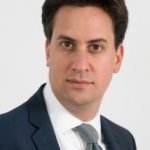
    Ed Miliband – 2022 Speech to Labour Party Conference

    The speech made by Ed Miliband on 26 September 2022.

    Friends, I want to start by thanking my ministerial team Kerry McCarthy and Alan Whitehead and I congratulate all the delegates who have spoken in this economic debate.

    What we have heard is one guiding idea – Labour’s mission of an economy built by the many for the many.

    What a contrast with that extreme, trickle-down Tory Budget last week – for bankers and millionaires, a vision of an economy built by the few for the few.

    We owe it to the country to defeat this lot at the next general election.
    Now we meet here amidst three emergencies.

    A cost of living and energy bills crisis affecting millions of families and businesses.

    An energy security crisis borne of a decade of Tory neglect and exposed by Putin’s invasion of Ukraine.

    And the climate crisis which came to Britain this summer with our first ever 40-degree day.

    These emergencies demand the boldest of leadership.

    These emergencies demand an energy policy for the people and the planet.

    I say these emergencies demand a Labour government.

    Let’s start with energy bills.

    Labour led the way in January with the call for a windfall tax.

    Labour led the way in August with the call for an energy price freeze.

    Now Liz Truss said she won’t have a windfall tax because she says it is a “Labour idea”.

    For the first time in recorded history, Liz Truss has got something exactly right.

    The windfall tax is a Labour idea.

    Standing up to the big vested interests, the rich and powerful, so we can help the people of Britain in their moment of need.

    An energy policy for the people and the planet, not the oil and gas companies.

    Labour ideas, Labour values, Labour principles.

    Now the crises we face might seem very different but they all come from one source:
    The climate and nature crisis is caused by our burning of fossil fuels.

    The energy bills crisis is caused by the fact we are exposed to the rollercoaster of fossil fuel prices wherever we get our gas from.

    And the crisis of energy security comes from the scramble for gas triggered by global events.

    So all these crises have the same ultimate cause: our dependence on fossil fuels.

    And all of them have the same solution.

    Low-cost, homegrown zero carbon power.

    The price of solar and wind energy is nine times less than that of gas.

    This is the defining truth of our age.

    This is the undeniable truth of our age.

    It is cheaper to save the planet than destroy it.

    That’s why for bills, for security and for climate, I am proud to announce a Labour government will make Britain the first major country in the world to set and achieve the target of zero-carbon power by 2030.

    The essential foundation of the drive to net zero.

    Britain a clean energy superpower.

    Saving £93 billion off bills.

    And we will do it by sweeping away Tory dogma that is holding our country back. It is within our grasp. Isn’t it? Let’s hear it for doubling onshore wind, trebling solar power, quadrupling offshore wind, tidal power, nuclear, hydrogen power and all underpinned by the best investment we can make – £60 billion over a decade to insulate 19 million cold, draughty homes, saving £1000 off bills, cutting carbon emissions, and led by our brilliant Labour local authorities.

    That is what I mean by an energy policy for the people and the planet.

    Now can the Tories deliver it? Of course not.

    They tell us that after 12 years in power, after all their promises, after all their hot air, after four Tory Prime Ministers.

    They say and I’m not making this up “the energy system is broken”.

    Friends, who broke the energy system?
    They did.
    Who banned onshore wind in England leading to higher gas imports and more expensive energy?
    They did.
    Who said cut the green crap and drove up bills?
    They did.
    Who cut home insulation to twenty times less than under Labour?
    They did.
    Who deregulated the energy market leaving 32 companies to go bust?
    They did.

    If you want to mend the broken energy system, I’ve got an idea: let’s start by getting rid of the Tories who broke it.

    And it gets worse.

    Under Liz Truss, fracking is back.

    The Tories banned fracking in 2019 because they said it was dangerous.

    Now they’ve moved the goalposts: moderate earthquakes are just fine.

    Let every Tory MP and candidate be asked: where do you stand on dangerous, expensive fracking?
    On breaking your manifesto promise?
    On the safety of your constituents?

    Let them try and sell their charter for earthquakes to the people of Lancashire, Yorkshire, the Midlands, and communities across our country.

    We will hold them to account on behalf of the people of Britain.

    And who do they solemnly say should be entrusted to look after the future of our planet, entrusted with the fates of your children and grandchildren?
    Jacob Rees-Mogg
    19th Century Mogg.

    A man who says we must extract “every last drop” of oil and gas, even though it would mean 3 degrees of global warming.

    A man who says, “Trying to forecast the climate is unrealistic. The cost is probably unaffordable.”

    Let’s say it like it is: this is dangerous, climate denial.

    If you want an energy policy for the 1820s, Jacob Rees-Mogg sure is your man.

    If you want one for the 2020s, we need a Labour government.

    And I tell you this, our plans are not just about transforming our energy system, they’re about transforming our economy too.

    There is a global race for the jobs of the future and Britain under the Tories is losing it.
    Let me tell you about ITM Power in Sheffield.

    It is one of the world leaders in the hydrogen industry.

    They have plans to build a new factory.

    They were looking at the UK, but seeing the lack of support from this government, they now plan to go overseas.

    I say it must and it will be different under a Labour government.

    It’s time to invest and build the wealth of this country.

    Invest and ensure good jobs at good wages with strong trade unions.

    It’s time to invest in Britain again.

    That’s why Rachel Reeves and I are today announcing a new institution that will take back control of Britain’s economic destiny.

    Working with business, government as partner, investor and, yes shareholder.

    A new National Wealth Fund for Britain to lead the world in hydrogen.
    Lead the world in the EV revolution from the North East to the West Midlands.
    Lead the world in green steel from Port Talbot to Scunthorpe.
    Lead the world in decarbonising industry from here on Merseyside to Grangemouth.
    Lead the world in jobs in wind energy from the South West to Scotland.

    That’s what I mean by the green industrial revolution.
    That’s what I mean by a green new deal.
    That’s what I mean by an energy policy for the people and the planet.

    And it cuts to a deeper truth: the goal of the next Labour government won’t just be to tinker round the edges.

    The hour is too late, the moment is too serious.

    The next Labour government will deliver fundamental reform to the institutions of our economy.

    An economy built by the working people for working people.

    As it says on the party card: wealth, power and opportunity in the hands of the many not the few.

    So here is the election choice.

    Lower energy bills with Labour, higher bills under the Tories.

    Energy security with Labour, energy insecurity under the Tories.

    Millions of green jobs with Labour, the opportunities squandered under the Tories.

    Leading the world again in tackling the climate crisis with Labour, climate delay, denial and destruction under the Tories.

    These are the stakes.

    So don’t let anyone tell you all parties are the same.

    Don’t let anyone tell you politics doesn’t matter.

    Don’t let anyone tell you nothing will change whoever you vote for.

    This is our mission.

    This is our chance.

    Let’s protect the people and the planet.

    Let’s rise to this moment, let’s lead and together transform our country.

  • Louise Haigh – 2022 Speech to Labour Party Conference

    Louise Haigh – 2022 Speech to Labour Party Conference

    The speech made by Louise Haigh, the Shadow Secretary of State for Transport, on 26 September 2022.

    Thank you, Conference  .

    It’s great to be together again and I have to say, it’s little short of a miracle so many of you managed to get here over the weekend given the current state of our public transport.

    Record delays, overcrowding, routes and services slashed week on week.

    We have a system where the public have come last for too long.

    And we know there is too much at stake for the country and the climate to carry on with this shambles.

    Where broken promises on public transport hold our country back.

    Where services connecting our major cities are slashed without warning by unaccountable private operators.

    And where the public pay ever more for less.

    Because if many millions - let down by services they can no longer rely on – cannot or will not use public transport then – quite simply – there is no path to net zero.

    And we will never build the fairer, greener future our country demands.

    That’s why my number one priority as your Secretary of State will be ending this spiral of decline on our public transport system.

    When the Victorians laid the foundations for our modern railway, it was a vote of confidence in Britain’s future.

    Today there are new challenges that demand the same ambition.

    No less than sixty times the Conservatives promised to connect our great Northern towns and cities and deliver Northern Powerhouse Rail.

    A once-in-a-century chance to invest in public transport - to transform opportunity across the whole country, rebalance our economy, and take millions of cars off the roads.

    And they flunked it.

    But while the Tories fail our country, Labour will seize this opportunity, and lay the foundations for the century to come.

    We will build an Elizabeth Line for the North and deliver Northern Powerhouse Rail and HS2 in full.

    But we know – we can only build a fairer, greener future by taking power from failing private operators and putting it back in the hands of the public.

    Avanti West Coast has become just the latest poster boy of the failing status quo.

    The worst performing operator in the country – half of all trains late, 60,000 complaints, and what have the Tories done in response?

    They handed them £19m including – and you couldn’t make this up – £4m in performance bonuses.

    Out of the pockets of the public, and directly into the hands of shareholders.

    Instead of holding those responsible to account for this fiasco – the Tories played their tired, old tune.

    They blamed the workers who keep our rail network going.

    But we know the truth conference.

    The workers aren’t failing the British public – the Tories and their disastrous rail system have catastrophically failed us all.

    Under the Conservatives, British railways have become a cash machine for companies and foreign governments.

    No matter the performance, failure will always be rewarded.

    The truth is, the Conservatives still worship the dogma that has let this country down.

    They will always give the operators one more chance.

    And shareholders one more pay-day.

    They will do whatever it takes to prop up a failed system.

    Because to do anything else would be to admit their ideology is wrong.

    Right across our transport system, we see the same failed dogma.

    No other country in the developed world allows private bus operators the power they enjoy here – to pick what routes they want and charge passengers whatever they wish.

    Entire communities cut off by decisions taken far away from the people they affect.

    5,000 bus services slashed nationwide since the Conservatives came to power.

    Fares have risen twice as fast as wages.

    And who relies on buses more than anyone else – the poorest in society.

    This cannot go on, things must change.

    And Labour in government will make sure they will.

    We will put the public back in control of the essential public transport they depend upon.

    We will give those communities that want it the power to set bus routes and fares, following the path set by our brilliant Mayors in Greater Manchester, West Yorkshire and here in Liverpool City Region.

    And we will end the ideological ban on communities establishing their own municipal bus companies.

    Conference, the days of tinkering around the edges of a system that has so clearly failed the public are over.

    That’s why an incoming Labour government will end this farce.

    We will end this failed experiment.

    We will cast aside the tired dogma that has failed passengers.

    We will improve services and lower fares.

    And yes conference, Labour in power will bring our railways back into public ownership as contracts expire.

    Because we believe in a public transport system where power is in the hands of the public.

    A system that serves– above all else – the public interest.

    Where lower fares, and more reliable services help reverse the spiral of decline.

    A system that can deliver economic, social and climate justice.

    Together, we can build it.

    So, now, let’s get out there, win power and make it happen!

  • Jonathan Ashworth – 2022 Speech to Labour Party Conference

    Jonathan Ashworth – 2022 Speech to Labour Party Conference

    The speech made by Jonathan Ashworth, the Shadow Secretary of State for Work and Pensions, on 26 September 2022.

    Last Friday’s Tory budget was the most unfair, the most unjust, the most unequal and the most divisive budget we’ve seen in our lifetimes.

    I ask you, what kind of a government is it who, when pensioners shiver in the cold, hands tax breaks to the wealthy that no ordinary person could ever dream of?

    What type of government is it, who when parents queue at foodbanks, tells mothers there is no help to feed their hungry children but there’s money to lavish tax cuts on bankers and billionaires?

    That budget was proof, if ever it was needed, that we speak for Britain in saying a new government is needed and we need a Labour government now.

    When workers see their pay packets cut, disabled people live in fear, when women working part time face sanctions, these Tories protect the gas and oil profits, instead of protecting the poor.

    I tell you we speak for Britain in saying we need Keir Starmer as Prime Minister now.

    These Tories tell us that after 12 years of their own stagnation they now have a plan for growth but all they’ve given us is a plan to grow more poverty, hunger and despair.

    They tell us they are ripping up the orthodoxy but it’s the same old Tory orthodoxy back – that wealth will trickle down and a rising tide lifts all.

    We’ve seen that story before. It means more sinking beneath the waves. It sees pay and conditions worsen. It leads to the offensive, grotesque fiction of Ministers telling us that to make bankers work harder, pay them more but to make working people work harder, pay them less.

    Friends, doesn’t that tell you it’s time for change, time for fairness. Friedns, it’s time for Labour.

    And it renders social security so threadbare, that food banks are now the safety net and churches turn their halls into ‘warm banks’.

    I thank those running them. But we seek government to create a society where foodbanks are no longer needed. Because we shouldn’t have to rely on charities to feed children and keep pensioners warm.

    This isn’t the way, as Rachel Reeves says, to secure growth in our economy. Because you can’t build sustainable growth when so many are left behind.

    What we need is an economy of all talents with full and fulfilling employment. Worklessness is such a waste.

    I remember queuing with my dad at the dole in the 80s, I remember the desperate look on faces.

    So for young people not in work or training and the thousands of over 50s now not in jobs but want one, we will reform Jobcentres and employment services to help more people into work as we target our ambition of the highest employment in the G7.

    We’ll do it, not through Tory threats or sanctions. But through active help with training, coaching and support for those who need it.

    We’ll do it not by wasting money on big outsourcing corporations but instead delivered on the ground, in partnership with community groups, local authorities and services like the NHS.

    And we’ll insist these jobs adhere to a very simple principle that when people work for a living, they should be paid a decent living wage as we tackle in-work poverty too.

    And we’ll reform, overhaul and replace the Tory Universal Credit system. We’ll treat people with dignity, not burden them with impossible debts, support children not punish them and we’ll reinstate a principle Labour has championed since the days of Barbara Castle but ditched by the Tories, the financial independence of women should be protected in our social security system too.

    A few weeks ago, I received this letter from a mother:

    “Sorry, it took so long to post after writing: I struggled to justify the price of the stamp.

    “My babies are sound asleep but I cannot sleep: I sit awake terrified for their future.

    “I am stressing about what to feed my kids tomorrow.

    “What is going to be done, Mr Ashworth?”

    What is to be done, Mr Ashworth?

    What sort of a government ignores pleas like that? I’ve known hardship and how it seeps through every aspect of your being. Consumes every decision.

    How it excludes from the necessaries, comforts and pleasures of society and haunts for the rest of your life. Children never forget going to school hungry and ill clad.

    We’re one the biggest economies in the world yet 4 million children live in poverty and tonight, thousands of children hungry, cold and have no bed to sleep in at all. It doesn’t have to be like this.

    Social inequality need not be etched into the landscape of this nation. Defeating child poverty is the obligation our generation owes to the next.

    Never forget Labour in government lifted millions of children out of poverty before and that’s the change we can make again.

    So, friends, this is our mission:

    Full employment and decent pay;

    Security in retirement;

    A better world for our children;

    Because as Nelson Mandela said:

    “Overcoming poverty is not a gesture of charity but an act of justice.”

    Let us rise to that cause and build a future of opportunity, fairness and justice for all.

  • PRESS RELEASE : Joint Communiqué of the U.S.-Europe Group on Afghanistan [September 2022]

    PRESS RELEASE : Joint Communiqué of the U.S.-Europe Group on Afghanistan [September 2022]

    The press release issued by the Foreign Office on 25 September 2022.

    Special Envoys and Representatives for Afghanistan of the European Union, France, Germany, Italy, Norway, the United Kingdom and the United States met in Washington D.C. on September 15, 2022, to discuss the situation in Afghanistan. Other officials from Japan, Qatar, Switzerland and UNAMA also participated in the meeting as observers, which included technical sessions with the World Bank and the Asian Development Bank.

    The Special Envoys and Representatives for Afghanistan:

    1. Expressed grave concerns with the continued undermining of human rights and fundamental freedoms of Afghans; welcomed the recent report by the UN Special Rapporteur on the Situation of Human Rights in Afghanistan to the UN Human Rights Council; denounced violations of international humanitarian law and abuses of rights protected under international human rights treaties and conventions to which Afghanistan is a State Party, including abuses of the rights of members of ethnic and religious minority groups or other marginalized groups; condemned, in particular, abuses of the rights of Afghan women and girls throughout the country, including restrictions on freedom of movement, as well as their exclusion from political, economic, educational and social spaces; noted the issuance of no fewer than 16 Taliban announcements and policies since August 2021 that have restricted women’s and girls’ enjoyment of their rights; and called for the immediate reversal of the Taliban’s ban on girls’ attendance in schools in grades 7 to 12, noting girls have not attended school at these levels for the last year throughout most of the country.
    2. Denounced increasing restrictions on freedom of opinion and expression, notably through media repression, including of female reporters, and condemned the detentions of both Afghan and foreign journalists.
    3. Stressed the urgency in continuing to address the grave humanitarian crisis in the country, including through steps to prepare the Afghan population for the upcoming winter; highlighted the substantial humanitarian assistance provided for Afghanistan since August 2021 from their respective governments and organizations; affirmed the need for all relevant actors to adhere to applicable international law and to ensure the independence of humanitarian organizations; emphasized the importance of all humanitarian staff – men and women – having unimpeded access to any areas of the country necessary to performing their jobs effectively; called for adherence to humanitarian principles and for the removal of any restrictions and obstacles to the provision of humanitarian assistance; and emphasized the importance of equitable and direct access to humanitarian aid, as well as to aid intended to address basic human needs, with appropriate consideration for vulnerable populations, including women and women-led households, children and ethnic and religious communities.
    4. Expressed grave concern about the continued presence and operations of terrorists and terrorist groups in Afghanistan, including al-Qa’ida and other groups with a stated aim to target countries in the region and beyond; and specifically condemned the recent presence of al-Qa’ida leader Ayman al-Zawahiri in Afghanistan and emphasized that Zawahiri’s presence in Kabul was a clear example of the Taliban’s failure to meet their counter-terrorism commitments.
    5. Highlighted the need for the Taliban to take sustained and verifiable steps, consistent with their commitments and applicable international law, including international humanitarian law, against all terrorist groups and activity occurring in Afghanistan; condemned recent ISIS-K attacks against civilians, the diplomatic community and areas where civilians gather, including mosques; acknowledged active operations by the Taliban against ISIS-K; and called on the Taliban to protect at-risk ethnic and religious communities from attacks by members of ISIS-K and other terrorists, as well as to take all possible steps to ensure perpetrators of such attacks are held accountable.
    6. Emphasized that enduring peace and stability in Afghanistan requires a credible and inclusive national dialogue leading to a constitutional order with a representative political system; noted that the risk of armed conflict is likely to increase significantly without a broadly representative and accountable government chosen through a credible process in which all adult Afghan women and men can participate; and called on the Taliban to fulfill their commitment made in the February 2020 Doha Agreement to participate in intra-Afghan dialogue and negotiations over a political roadmap that leads to a new Afghan Islamic government.
    7. Underscored the importance of the Taliban fulfilling their commitments to counter drug production and trafficking.
    8. Noted that the Taliban have committed to allow safe and orderly passage to and from Afghanistan of foreign nationals and Afghans – both women and men – who are properly documented.
    9. Discussed the recent lapse of the exceptions to the UN travel ban on certain Taliban leaders and called on all countries to act responsibly in implementing their UN obligations.
    10. Emphasized that foreign assistance to Afghanistan is for the benefit of the Afghan people and not a sign of progress toward normalization of relations with the Taliban; and noted that engagement by members of the international community with the Taliban should not be interpreted as progress toward normalization.
    11. Highlighted the need for the Taliban to focus on the country’s economic crisis and to create an enabling environment for greater investment through, among other things, adherence to fair and transparent rule of law; stressed that humanitarian assistance and assistance for basic human needs are not sufficient to prevent further deterioration of the country’s economy; discussed other ways to help sustain Afghan livelihoods through economic stabilization and by increasing liquidity in the country; emphasized the importance of reviving Afghanistan’s banking and financial sector and to facilitating licit cross-border money flows; raised the need to expand the capability, transparency and professionalism of the Afghan central bank as part of efforts to increase liquidity and to stabilize the economy; noted the recent establishment of the Afghan Fund in Switzerland that aims to preserve and protect Afghan central bank reserves and to make targeted disbursements from those reserves for the benefit of the people of Afghanistan; and emphasized the need for the Afghan central bank to (1) demonstrate its independence from political influence and interference; (2) demonstrate it has instituted adequate anti-money laundering and countering-the-financing-of-terrorism (AML/CFT) controls; and (3) complete a third-party needs assessment and onboard a reputable third-party monitor.
    12. Welcomed the appointment by UN Secretary General Antonio Guterres of Ms. Roza Otunbayeva as the new Special Representative for Afghanistan and head of UNAMA; and called on the Taliban, other Afghans and members of the international community to cooperate with SRSG Otunbayeva as she implements UNAMA’s mandate, including on the promotion of dialogue among all relevant Afghan stakeholders aimed at achieving inclusive, responsive, representative and participatory governance at national and subnational levels and on the monitoring of the human rights situation; and expressed support for the renewal by the UN Human Rights Council of the mandate of the UN Special Rapporteur on the Situation of Human Rights in Afghanistan, called for the strengthening of its role on gender rights and an increase in the position’s financial resources, and welcomed the work done to date in this role by Mr. Richard Bennett.
    13. Welcomed UNAMA’s mandate to promote transitional justice and called on the Taliban and other Afghans to work in good faith toward addressing the country’s legacy of war crimes and other violence; acknowledged that grievances exist on all sides of the conflict and noted that sustainable peace is unlikely without a reconciliation process that emphasizes healing and restorative justice over retribution; and noted the importance of adherence to the Taliban’s policy of amnesty for former Islamic Republic officials and to upholding accountability for those who violate this policy.
    14. Highlighted the need for all members of the international community, particularly Afghanistan’s neighbors, other partners in the region and Muslim-majority countries, to cooperate in Afghanistan with the interest of the Afghan people in mind.
    15. Expressed their appreciation to the United States for organizing these consultations and hosting the meeting.
  • PRESS RELEASE : Foreign Secretary James Cleverly makes first visit to East Asia [September 2022]

    PRESS RELEASE : Foreign Secretary James Cleverly makes first visit to East Asia [September 2022]

    The press release issued by the Foreign Office on 25 September 2022.

    • James Cleverly begins a three-day visit this week (26 September), to Japan, Republic of Korea and Singapore.
    • He will demonstrate the growing importance of the Indo-Pacific Tilt, and the UK’s ambition to become the European partner of choice with the greatest presence in the region.
    • The Foreign Secretary will meet President Yoon Suk-yeol of the Republic of South Korea, Prime Minister Lee Hsien Loong of Singapore and deliver a keynote speech at the Milken Asia Summit.

    Focused on strengthening bilateral ties and enhancing trade and security links, Foreign Secretary James Cleverly will begin a three-day visit to Japan, Republic of Korea and Singapore this week (26 September).

    It is one of his first international visits as Foreign Secretary – following the United Nations General Assembly in New York – demonstrating the growing importance of the Indo-Pacific Tilt, and the UK’s ambition to become the European partner of choice with the greatest presence in the region.

    The UK and Japan are the closest of friends and partners. Cleverly’s visit comes after Prime Minister Liz Truss met Japanese Prime Minister Fumio Kishida at the UN General Assembly in New York, where the leaders looked forward to expanding the UK-Japan relationship. Both countries are working together to further shared goals on security, defence and trade through programmes like the Future Combat Air System (FCAS) and the UK’s application to join the Trans-Pacific Partnership (CPTPP).

    During the visit in Japan, Cleverly will attend the State Funeral of former Prime Minister Shinzo Abe and meet Foreign Minister Yoshimasa Hayashi. While in the Republic of Korea he will meet President Yoon Suk-yeol and visit the Joint Security Area of the Demilitarised Zone (DMZ). Finally in Singapore, Cleverly will meet Deputy Prime Minister Lawrence Wong and deliver a keynote speech at the Milken Asia Summit.

    Speaking ahead of the visit, Foreign Secretary, James Cleverly, said:

    As I start my visit to the region in Japan, my thoughts are with the Japanese people as we remember the legacy of former Prime Minister Abe – their longest serving prime minister who brought our two countries closer together.

    The UK has a long-term commitment to the Indo-Pacific region, as we look to establish a greater and more persistent presence than any other European country.  This in turn will boost economic development, strengthen trade ties and enhance security.

    While in Japan, the Foreign Secretary will offer condolences at the State Funeral of former Prime Minister Shinzo Abe. In a meeting with Foreign Minister Hayashi, Cleverly will reaffirm the UK’s ongoing commitment to its relationship with Japan, its closest security partner in Asia, and the two countries’ strong people-to-people links.

    Cleverly will then travel to the Republic of Korea to highlight closer cooperation on security, trade and energy and meet President Yoon Suk-yeol. He will visit the Joint Security Area of the Demilitarised Zone with the United Nations Command. With Foreign Minister Park Jin, he will discuss UK-RoK cooperation on global security and economic issues including Ukraine, Russia and China as part of the existing bilateral framework.

    The visit will conclude in Singapore, with meetings with Prime Minister Lee Hsien Loong and Minister for Foreign Affairs Dr Vivian Balakrishnan to discuss driving forward the bilateral relationship, regional security and trade. He will deliver a keynote speech at the Milken Asia Summit setting out his foreign policy vision for the Indo-Pacific region.

    In recognition of Singapore’s role as an important regional finance centre, he will launch the new British Investment International Office, establishing a significant hub that will boost investment in green, renewable infrastructure.