Tag: 2022

  • PRESS RELEASE : Joint statement from the International Coordination and Response Group for the victims of Flight PS752 [October 2022]

    PRESS RELEASE : Joint statement from the International Coordination and Response Group for the victims of Flight PS752 [October 2022]

    The press release issued by the Foreign Office on 4 October 2022.

    The International Coordination and Response Group for the victims of Flight PS752 today issued the following joint statement:

    October 4, 2022, marks 1,000 days since the unlawful downing of Ukraine International Airlines Flight 752 (PS752) by Iran that resulted in the deaths of 176 innocent civilians.

    We, Ministers representing Canada, Sweden, Ukraine and the United Kingdom, stand with the grieving families on this solemn occasion and honour the memories of the victims killed on board Flight PS752. We renew our demand that Iran fulfills its international legal obligations and ensures transparency and justice for its actions.

    As we continue to advance our efforts to hold Iran accountable in accordance with international law, the Coordination Group is thankful for the contribution of four highly recognized legal experts: Professor Payam Akhavan, Professor Harold Hongju Koh, Ms. Jessica Wells and Sir Michael Wood.

    They have brought their extensive expertise to our legal teams, who continue their diligent work in response to Iran’s unlawful and egregious downing of Flight PS752.

    We continue to stand in solidarity with the families and loved ones of the victims of the downing of Flight PS752.

  • PRESS RELEASE : Statement to the 101st Session of the Executive Council of the OPCW [October 2022]

    PRESS RELEASE : Statement to the 101st Session of the Executive Council of the OPCW [October 2022]

    The press release issued by the Foreign Office on 4 October 2022.

    Statement to the 101st Session of the Executive Council of the Organisation for the Prohibition of Chemical Weapons by Her Excellency Joanna Roper, Permanent Representative of the United Kingdom of Great Britain and Northern Ireland.

    Mr Chair, Director-General, Colleagues,

    The Executive Council of the OPCW was created in order to promote the effective implementation of, and compliance with, the Chemical Weapons Convention. The United Kingdom takes that responsibility seriously.

    As Council members we are obliged to ensure that the Organisation has an adequate budget. We are mindful that the world faces economic headwinds following the global pandemic and Russia’s illegal invasion of Ukraine. Many national budgets are under pressure. Looking ahead the OPCW must continue to exercise budgetary restraint. That said, the United Kingdom supports the proposed budget revision for 2023. It puts to good use the 2020 cash surplus, which arose primarily due to late contributions from States Parties. We urge all OPCW members to pay their Assessed Contributions on time and in full.

    We must continue to respond to evolving circumstances. It is high time for the Council to move forward with sensible measures, such as those proposed on business continuity and appointing the External Auditor.

    In a similar vein, the Review Conference process enables us to take stock of implementation of the Convention. We welcome the constructive discussions in the Open-Ended Working Group and look forward to the next six months to come.

    Like other states, we are planning to provide national papers and look forward to further discussions on practical proposals to strengthen implementation of the Convention. Hearing from industry and civil society will be of great value, particularly in relation to future activities at the Centre for Chemistry and Technology. We also have much to learn from others about enhancing diversity and gender equality. Mainstreaming gender considerations is key to delivering successfully. A diverse Technical Secretariat that represents the world it serves and attracts the best talent from all backgrounds is a stronger Secretariat.

    Mr Chair, the central responsibility we share on this Council is to challenge all uses of chemical weapons. If we do not respond we are not promoting compliance with the Convention. The Syrian regime has been found responsible for eight uses of chemical weapons and the Council acted. It is very straightforward. Syria has used chemical weapons before and still refuses to acknowledge this fact.

    We remain concerned about the future too. Syria’s declaration of its chemical weapons programme is incomplete. It is obstructing the Technical Secretariat in its efforts to deliver on the instructions of OPCW States Parties. If Syria had nothing to hide they would not behave in this way. We cannot and will not ignore this. The Syrian chemical weapons programme should remain a top priority for this Council until it comes into compliance with its legal obligations.

    A member of this Council, the Russian Federation, used chemical weapons on the streets of my own country, and then again on Russian territory. Russia must account for the poisoning of Alexey Navalny in 2020 and answer the questions posted by 45 States Parties under Article IX of the Convention.

    Russia must stop spreading disinformation about this Organisation and making baseless allegations against other States Parties. We continue to watch very closely for any signs of chemical weapons use by Russia during its ongoing brutal war in Ukraine. Any use would have grave consequences.

    Thank you Mr Chair.

  • Simon Clarke – 2022 Speech to Conservative Party Conference

    Simon Clarke – 2022 Speech to Conservative Party Conference

    The speech made by Simon Clarke, the Secretary of State for Levelling up, Housing and Communities, in Birmingham on 4 October 2022.

    Hello conference, I’m delighted to be with you virtually today in my new role as Secretary of State for Levelling Up, Housing, and Communities.

    I’m sorry I cannot be there in person as I would like, but I hope over the coming weeks and months I will get a chance to meet and talk to as many of you as possible as we work to deliver for our country, and earn the chance to do so again at the next general election.

    I want to start with a single, core proposition.

    Levelling up matters.

    It matters economically.

    It matters politically.

    It matters morally.

    This spring I visited St Pius X Catholic Primary in Park End in my constituency.

    Park End is a ward in Middlesbrough, not far from where I grew up.

    It is one of the most deprived communities not just on Teesside, but in the whole of the UK.

    But it is also home to people who are determined, resilient and proud of their community, their town and their country.

    I had lunch with the pupils at St Pius’. You could not find and a nicer, more thoughtful, polite and friendly group of children.

    They were an absolute credit to their headteacher Mrs Walker, their parents and each other.

    And it was a visit that has stayed with me.

    Because delivering on levelling up is about transforming the life chances of those children and children across the country.

    For too long, Middlesbrough has been one of the scores of places across this country that have been associated with economic decline, and all the social ills that come with that…

    High unemployment…

    Higher crime, and lives blighted by the fear of it…

    And lower life expectancy.

    I’ll return to the Teesside story in a moment.

    But it has much wider applicability.

    For Middlesbrough read Blackpool, or Burnley, or other northern towns.

    And not just to towns and cities in the North.

    I could equally well be speaking of parts of Glasgow, or the Welsh Valleys, or Jaywick in Essex, or Hastings on the south coast.

    Levelling up matters to all these places and more.

    The task of delivering it is the work of a generation.

    The prize of delivering it is enormous.

    If the performance of the bottom-performing quarter of places by productivity were to be “levelled up” to the median, the boost to productivity would be equivalent to a pay rise of around £2,300 for individuals in the poorest areas.

    Levelling up is about kickstarting growth in the areas where it is hardest, the areas of our country that have been left behind in previous pushes for growth.

    We want to turbocharge success, but to do that we must recognise that we are not working on a level playing field.

    It is my job and that of this Government and our Party to address this.

    And here I would say one thing above all else: we have no lessons to learn here from the Labour Party.

    The legacy of the last Labour government on these questions was one of failure.

    Their solution to a lack of jobs was an unsustainable expansion of the public sector, that did nothing to deliver economic opportunity or resilience.

    They squandered the opportunities of a time of global stability and affluence on gimmickry, ducking the hard challenges of public service reform.

    Labour ignored the Midlands and the North when they were in power. For every ten private sector jobs created in the London and the South between 1998 and 2008, only one was created in the Midlands and the North.

    And they patronised and ignored the voices of Britain’s left behind communities in a way that reached its logical nadir in their arrogant response to the people’s decision to leave the European Union, that was embodied by no one more than Sir Keir Starmer.

    Labour is no longer trusted by the places that need levelling up the most.

    Instead, we have been given the chance to deliver for them – and so far, our Conservative government and Conservative local leaders across the UK have made excellent strides in this direction.

    The work done by my predecessors to get the levelling up mission off the ground means that we are already seeing tangible change, from Stoke to Teesside.

    And I am absolutely determined that we should continue in this fashion. But we must also go further, be bolder, and more ambitious.

    We must continue to help rejuvenate our local areas, support our high streets, and re-instil a sense of community.

    But we must also take more fundamental action, to unleash our local economies, drive growth and boost opportunity too.

    In delivering this agenda, I am fortunate to have the support of a truly brilliant ministerial team…

    Paul Scully as Local Government Minister and Minister for London…

    Andrew Stephenson taking the lead on vital issues like homelessness and supporting Ukrainian refugees…

    Lee Rowley as Housing Minister, working tirelessly to unlock the homes we need…

    Dehenna Davison, my near neighbour in the North East, as Levelling Up Minister…

    Baroness Jane Scott, our champion in the House of Lords…

    As well as our whips Nigel Huddleston and Olivia Bloomfield, and our excellent PPSs Jason McCartney and Simon Jupp.

    I could not be more glad to have their support and advice, and I could not be more grateful to our Prime Minister for making it so clear how much of a personal priority this work is for her.

    Recent weeks should have quelled any doubts about this Government’s appetite for bold action.

    Last month’s fiscal statement was defined by its ambition and scope and at DLUHC, we really are hitting the ground running.

    I am proud that our work on Investment Zones holds its place among so many exciting announcements that fire the starting gun on our mission to grow our economy.

    Investment Zones represent an amazing opportunity for every corner of our country, and illustrate perfectly how this government intends to go further on levelling up.

    A truly exciting and meaningful offer to help accelerate homes, development and enterprise across the UK.

    They will bring jobs and opportunities to the areas that need them most, boosting growth on local people’s terms.

    They will roll back the bureaucracy that shackles our local economies to bring homes and jobs to families across the UK.

    We remain committed to the same outcomes we always have been clear on, on the environment and beyond, but are determined to speed up processes to get growth going.

    Investment Zones are ultimately defined by three things.

    The first is consent. We are absolutely clear that these zones must be led by the people who know best what their area needs and what it does not.

    There will be no top-down imposition of these arrangements on anywhere that does not want them.

    Don’t get me wrong, I am passionate about the benefits that these zones can bring and will advocate for them wherever I can.

    But ultimately if local people decide an investment zone isn’t for them – then that will be the final word.

    The second principle is of targeted and precise action.

    Investment Zones will target specific and effective sites that would benefit from accelerated development and a tax structure that incentivises investment.

    This is a practical proposal for change.

    Which brings me to the third principle – of pragmatic acceleration. This is an outcomes-focused policy that seeks to accelerate investment, development and growth.

    That means finding where things can be sped up and doing it, not revisiting already shovel-ready projects, slowing them down.

    I am delighted that we have already got the portal open for local areas to submit their applications to get an investment zone in their area…

    And let me give you a sneak preview conference – the reception from MPs, councils and Mayors alike has been fantastic.

    Investment Zones are the first major step that we have taken in this new look government to deliver on our promise to level up in a Conservative way.

    This conservatism will guide our agenda across the department’s portfolio. Which is why I am also steadfastly committed to increasing home ownership.

    Getting more people on the housing ladder, to give people security, a stake in society, and somewhere to call their own, is a fundamentally conservative goal.

    Investment Zones will help deliver many of the homes that we need, but we must go further.

    I want to reassure those hoping to get on the housing ladder, that you remain at the heart of our agenda for Government.

    In the coming weeks I will be fleshing out how we intend to get more homes on the market, and improve access to those homes.

    This will build on the work of both this government’s recent measures to lift the worst of the Stamp Duty burden, and of previous Conservative administrations, which is paying dividends in the form of record numbers of homes being built today.

    I want, like the Prime Minister, to build more houses, and to do so in the right way.

    Accelerating development of brownfield sites is of the upmost importance, as is building beautifully. We want to grow organic communities, not impose cardboard boxes across our shires. As with investment zones, local consent will sit at the heart of our plans.

    Because it is not the case that either home ownership, investment zones, or the wider challenge of levelling up, can be addressed from Whitehall.

    We know as Conservatives that decisions are best taken as close as possible to the people that they affect.

    I am proud and passionate about what devolution has brought to many of our regions and want to build on those successes.

    The people of Birmingham don’t need me to tell them that.

    Andy Street has truly led the way here in the West Midlands and we meet in a city and a region transformed by his leadership.

    His leadership and championing of this region are a fine example of the good that mayors can do.

    I want to create many more mayors, in areas like the East Midlands where Ben Bradley is leading the way, but also in the south of our country – where even if the title may differ, the principle of strong, directly-elected leadership is central to enabling the highest level of devolved government.

    I also want to strengthen and deepen the powers of our existing mayors, so that they can crack on with the work of delivery.

    People like Tees Valley’s Ben Houchen.

    I want to return for a moment to what has been happening on Teesside.

    I talked earlier in my speech about the challenges that my home area faces.

    But there are also huge opportunities, which Ben is helping to unlock.

    In so doing, he is showing just why elected Mayors can make such an extraordinary difference.

    Whether it be in saving Teesside Airport from closure…

    Securing thousands of new jobs in clean energy on sites like Teesworks, right next to our new Freeport…

    Ben champions our area both to central Government and to investors at home and abroad…

    Delivering opportunities that until recently, few would have dreamed of.

    He has shown what Conservatives can do locally when we are empowered to.

    And as we deliver, so we unlock pride and purpose.

    Teesside is becoming somewhere that successful people are moving to, rather than move from.

    And somewhere where a child studying today at a school like St Pius Primary can realise a bright future.

    So there is so much we can enable through devolution – and this is why I care so much about it.

    The flipside of devolving and empowering local government is that strengthening accountability is vital.

    I intend to support the Local Authority sector and be an advocate for it, but I will also crack down on mismanagement wherever I find it, such as in Thurrock, Nottingham or Croydon.

    I believe in local government because I believe that it delivers for our people, the taxpayers.

    Where it does not, there must be effective scrutiny, turnaround programmes and consequences – and I will say more about this in the weeks ahead.

    Conference, there is so much else that I am charged with delivering, and on which I will expand over the months ahead.

    When it comes to building safety, I want to finish what my predecessors started to fix our system for the long term, to protect leaseholders and ensure the industry fixes the problems it created.

    I will push on with pragmatic, common-sense reform that protects leaseholders…

    Facilitates an operable insurance industry…

    And ensures we never have to face a tragedy like Grenfell again.

    The legacy of Grenfell must be better standards and safer homes for everyone.

    That is why I am resolved to fix the cladding issue as soon as possible.

    As we enter into Autumn and Winter, the Government also remains focused on protecting the most vulnerable from rising energy costs and the wider cost of living in a world turned upside down by Putin’s aggression.

    Our measures to protect households during the pandemic worked, and to help those facing cost of living pressures now we are delivering thousands of pounds worth of support to households and businesses – as well as our new energy price guarantee.

    We remain committed as a Department, and I as a Secretary of State, to doing all that we can to limit homelessness and rough sleeping.

    I will be working closely with my new colleague Andrew Stephenson on this.

    Together, we will work to ensure that we build upon the fantastic support and dedication that this Government has already given to tackle the scourge of homelessness.

    I know I will have the support of you all in delivering on this work.

    And that is why I want to end this speech by saying thank you.

    I know the importance of the grassroots of our party to what we are trying to achieve.

    You, the boots on the ground, the activists and volunteers, the canvassers, the candidates and the Councillors, are the backbone of our great party.

    It is because of your delivery – of leaflets through doors, local services from our Conservative Councils, and our message of optimism and patriotism to every corner of the country, that we have the platform and ability to deliver for the country in Government.

    And as Secretary of State responsible for levelling up, for local government, and for communities, I want to ensure I am always working with and for you to deliver on the extraordinary opportunities that lie ahead.

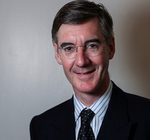
  • Jacob Rees-Mogg – 2022 Speech to Conservative Party Conference

    Jacob Rees-Mogg – 2022 Speech to Conservative Party Conference

    The speech made by Jacob Rees-Mogg, the Business Secretary, in Birmingham on 3 October 2022.

    Well, Ladies and gentlemen. Thank you.

    Congratulations on arriving at the conference.

    In spite of the best efforts of Mick Lynch, who seemed to wish to get in the way.

    But thank you for being here, because you are the beating heart of the Conservative Party, you’re the stalwarts who do all the work for us and ensure people like me get elected.

    So, I thank you for all you do for conservatism, and supporting us so much. And you make it work, you ensure we have Conservative governments, and your getting here is proof of that.

    I must say, I think the unions need some of my little calling cards saying “I look forward to seeing you back at work soon”.

    Because actually, we have a tireless quest for productivity in this country, and we need to make sure that everyone is working efficiently, and we obviously want them to be working in their proper places of work.

    Also, thank you for giving me almost as warm a welcome as I got outside the hall.

    I think that’s rather marvellous. I happen to think that having a democracy where you can actually walk through the streets and people can exercise their right to peacefully protest, shows the strength of our society.

    And if people want to call me “Tory scum”, I don’t mind!

    And it has to be said, walking through the beautiful streets of Birmingham, turned blue once again- or turning blue once again- thanks to the great efforts of Andy Street; is a great privilege, and it’s lovely to be here, and to be here with this fantastic audience, and to be speaking to you as Business Secretary.

    I’m going to reintroduce a great tradition that Secretaries of State used to have when they came to the Conference, by introducing my brilliant ministerial team.

    So, my fellow Cabinet member Graham Stuart, Minister for Climate; Jackie Doyle-Price, who is here as Minister for Industry; Nusrat Ghani, Minister for Science and Investment Security; Dean Russell, Minister for Enterprise and Markets; and Lord Callanan, who I can’t actually see here but is nonetheless a great man, is Minister for Business, Energy and Corporate Responsibility.

    I am so lucky to be supported by what I think is the ‘A-Team’ of ministers, and you can tell that to all the other departments who only have ‘B-Teams’. So, let’s be clear that I have the ‘A-Team’ supporting me.

    It’s also quite fun to be speaking, for the first time in all the years I’ve been a Member of Parliament, from the main stage. I did once in the old days, when I was the candidate in Wrekin, get up to the main stage, but that was only for about three minutes, and I’ve got a bit longer now.

    It makes a change, I used to do the rounds of the fringes. Sometimes, I wasn’t entirely in line with what the Government was doing, and leaving the fringes to certain other Right Honourable Friends of mine, who seem to be having a jolly time.

    Instead, I am here in full support, and honoured to serve a first-class Prime Minister.

    And the Prime Minister, since she took office, has completed about a years’ Government business in a fortnight. And I’m glad to say I think the Prime Minister- and I say this as the Minister for Energy- is a genuine dynamo and is producing electric fields that are making sure things get done.

    And she knows how urgent the challenges we face are.

    Energy

    And the challenges are particularly in energy: first, affordability this winter; second, securing energy supplies; and third, what I would like to call Intelligent Net Zero.

    And how we are tackling those challenges? Rapidly is the answer.

    While the Opposition sniped, and cat-called, and did what it usually does, we got on with it.

    We worked properly, night and day. And actually, the Civil Servants in BEIS worked incredibly hard to create the Energy Price Guarantee for households and the Energy Bill Relief Scheme for businesses.

    We have ensured that the British people – families and businesses
    – will get help now, form the First of October with the energy price support that took effect on Saturday, regardless of where they live in the United Kingdom and however they get their energy.

    His Majesty’s Government has acted with speed and foresight to deliver this protection for households throughout the entire Kingdom.

    Thank you, somebody agrees with me! You’ve all been here a very long time so the fact that one person is paying attention is a great relief.

    The same is true for businesses, and we have averted genuine economic disaster by protecting businesses, charities and public services including schools and hospitals, and particularly care homes, from catastrophic rises in their energy costs.

    We did this because of Putin’s monstrous invasion of Ukraine. He seems to want to make Ivan the Terrible look like Padre Pio.

    His wicked acts forced up the price of gas to an extent that would have ruined almost every business and left virtually every family unable to afford their energy. I actually said a journalist from the Sun, the only person who could have afforded an energy bill this winter would’ve been the proprietor of the Sun, and everybody else would’ve been in penury.

    And that’s why, ladies and gentlemen, we have done what we have done, not some blunt instrument that our socialist counterparts would have used.

    But a well-designed, and effective way, of getting support to all. And a support that will decline as the energy price normalises.

    Now, you are proper conservatives, aren’t you? You are the bluest of the blue.

    And there may be some of you who think it’s not conservative to intervene in this way.

    But I would say that there was no question that we had to come to the British people’s aid. We could not let the people face this winter alone.

    This is actually what the state fundamentally is there for: to do things that people cannot do themselves.

    Some burdens are too great for individuals and families to bear and these must be borne by the nation herself – these are the burdens of security, of policing, of defence.

    This intervention is an act of defence for our people, every bit as much as making munitions or tanks.

    And our great hero, and I’m sure this man is a great hero of many of you: Adam Smith himself, the father of free marketeers, the pater familias of economic theory, put the defence of the nation above all else.

    He told that the Navigation Acts, which you’ll all recall from your O-Level history, against the Dutch.

    It’s quite interesting, you know all those things we say about ‘Dutch courage’ and so on all come from the 17th century wars we fought against the Dutch.

    But he said the Navigation Acts were “wisest of all the commercial regulations of England” because they stopped a then-hostile nation – and just for the record, we are now very friendly with the Dutch- harming Britain.

    Defence

    “Defence”, Adam Smith said, was “of much more importance than opulence”. He meant it was worth the short-term cost to defend Britain from “national animosity”.

    And as so often what was true in the 18th century is true today.

    The war may not be on our shores, but we will defend the United Kingdom against Mr Putin’s evil.

    Our decisive action will save millions of families and businesses from penury.

    And do you know what, imitation is the greatest form of flattery– we’re being imitated by our German friends who have rolled out almost a carbon copy scheme.

    So, this intervention helping families across the country from falling into debt and misery through crippling energy costs imposed on them by a tyrant in Moscow, has averted a disaster for Britain’s small businesses this winter, salvaging the livelihoods that would have been destroyed.

    So this winter, we are once again standing together with the British people.

    But there is more to do, because we have to make sure that this does not occur again.

    We must act to provide energy security, and to use our energy better.

    But the more we produce, the more affordable our scheme will become.

    Energy supply, cheap energy, is the foundation of our prosperity.

    Our reserves of coal and the pursuit of new technologies to dig it out,

    I’m going back to history; I’m not advocating going back to coal now,

    Digging it out of the ground spurred the Industrial Revolution.

    The discovery of North Sea oil and gas, combined with Mrs Thatcher’s visionary leadership, turbocharged the British economy in the 1980s.

    Now our future prosperity depends on our ability to secure affordable energy in abundance.

    High energy costs have made our industries uncompetitive and increased the cost of building roads and railways.

    They have often meant the difference between businesses choosing to invest in the UK or turning their backs.

    So the Energy Supply Taskforce, led by the esteemed Maddie McTernan, who delivered the vaccines that rescued us from the Covid pandemic, and she is moving to secure our energy supply in the coming months.

    Our aim is to secure cheap and plentiful supplies of energy, the veritable engine of economic growth.

    Now that may lead Socialist commentators to paint me as a fossil fuel junky.

    But I am neither a fossil fuel junky, nor a junky of any other variety.

    Let me reassure you. I am committed to Net Zero by 2050.

    But the green agenda does not mean an agenda of poverty. It does not contradict the growth agenda.

    We will go green in a way that makes the British people better off not worse off, drives growth instead of hindering it, and levels-up, by boosting industries in our regions instead of imposing costs that drive them to the brink of ruin.

    The faddish, Islingtonian Labour Party was happy to destroy industries like steel by imposing needless costs on their energy: this wasn’t just unfair, it was un-green, and simply forced manufacturing overseas, making us import more polluting products.

    We need intelligent greenery not religious zealotry.

    As for the socialist ideas of a nationalised energy dream:

    it will lead to nothing but shortages, rationing and intermittency.

    Ladies and Gentlemen, I’m sure you’ve heard me called the Right Honourable Member for the Eighteenth Century. But it’s not an insult to me.

    The Georgians were pioneers, innovators, inventors of the power loom and the spinning jenny, the fathers of the industrial revolution.

    Think of Jethro Tull, whose seed drill transformed agriculture – some of you thought I was talking about a pop star but actually I was talking about agricultural innovation.

    Or of Matthew Boulton of this great city, who with James Watt developed the steam engine that powered the Industrial Revolution.

    It is that same spirit of progress this government must capture.

    That is why we are moving full steam ahead with carbon capture and storage, expanding the world’s biggest windfarm at Dogger Bank, developing hydrogen and nuclear, including modular nuclear reactors.

    But perhaps the most exciting is fusion.

    Now, bear in mind, Isaac Newton believed in the Philosophers Stone and thought you could turn base metals into gold, so fusion is a great hope, a potential ace up our sleeve, but it would be silly of me to pretend it’s not difficult.

    It offers unparalleled potential for clean power production, promising a future of inexhaustible energy that could unshackle us from hydrocarbons,

    and make us truly self-sufficient and secure.

    The technological hurdles are big –

    fusion reactors must sustain a temperature 10 times hotter than our sun,

    Which whether you use Centigrade or like me use Fahrenheit is nonetheless very hot,

    the containment of which requires magnets so strong they could lift an aircraft carrier clean out of the ocean.

    We could get one of those and make Mr. Putin’s life rather difficult.

    But over decades we have established ourselves as pioneers in fusion science,

    and as a country, our capability to surmount these obstacles is unparalleled.

    I am delighted to make an announcement on the next step in that mission.

    We will build the UK’s first prototype fusion energy plant in Nottinghamshire,

    replacing the West Burton coal-fired power station with a beacon of bountiful green energy.

    This plant will be the first of its kind, built by 2040 and capable of putting energy on the grid,

    and in doing so, proving the commercial viability of fusion energy to the world.

    It will create thousands of high-skilled jobs throughout its lifetime,

    it will underpin an industry expected to be worth billions to the UK economy,

    and position the UK to design, manufacture and export the first fleet of fusion plants,

    placing us at the vanguard of a market with the potential to be worth trillions of pounds a year.

    But never fear, in the meantime, we got enough hot air from the Socialist conference to keep the turbines spinning for decades to come.

    From this year, the future of environmentalism will be about prosperity, about opportunity, not lectures.

    Now, we’ve been having a discussion about shale gas, and I know not everybody is keen on it and we have to get community support.

    Lord Deben wrote to my predecessor, saying that shale gas can provide 2 to 63 grams per kilowatt hour of carbon dioxide equivalent less, than from LNG being imported.

    This is what I mean about intelligent net zero. It’s about making decisions that reduce carbon but make us more prosperous. It doesn’t mean that everything I say will happen tomorrow,

    But it’s about having a programme that makes sure we don’t harm our industry, so we go green in a way that create, rather than destroy, prosperity.

    Cheap energy is essential to a flourishing economy, but this is only one part of our supply side reforms that go much further.

    At this conference we have announced that the definition of small and medium sized enterprises will expand from 250 employees to 500, extricating them from a host of regulatory burdens, including costly non-financial reporting requirements which are simply paper shuffling.

    Which in my case is not so much paper as parchment.

    The structural reforms we are about to deliver include the Brexit Freedoms Bill, a fantastic piece of legislation, a defining constitutional piece of legislation,

    … which is going to prize the dead hand of the EU from our statute book once and for all.

    As we review, repeal or amend the 2,400 pieces of European law on our books, any EU regulation which remains will no longer apply to these SMEs of up to 500 employees.

    And thanks to this Prime Minister, we will get it done by the end of 2023.

    This will take even more businesses out of the clutches of overbearing regulation,

    freeing the British economy still further.

    And while we’re talking about getting Britain moving, we will deal with strikes.

    We’ve got to keep Britain moving.

    In her campaign, the Prime Minister was clear that we would legislate for minimum service levels for essential services to ensure the modernisation of our economy is not held to ransom by union militancy.

    And bear in mind, Owen Jones came up to me today and had a go about the funders of the Tory Party.

    But the funders of the Tory Party don’t buy the right to have a say in the leadership. But in the socialist party they hold the leadership to ransom.

    Minimum service levels will make that reality harder, and we will be introducing that bill soon.

    And if I may use a rude word, it is a great modernisation.

    My department spends billions on research and development each year.

    And that must be a focus for value for money and turning our innovations into inventions.

    We wouldn’t have our nuclear technologies without this.

    But we need to make sure that every pound spent delivers.

    I’m delighted that Aria has such strong leadership, ensuring we can turn seed capital in R&D to real investment capital for the nation.

    Ladies and gentlemen, we know these are difficult times.

    And historic mistakes in energy policy have led us to where we are, but it’s always the Conservatives who are always best at dealing with difficult situations,

    And make us take those tough decisions that aren’t necessarily initially popular.

    This doesn’t matter whether its in nuclear, or shale, or deregulation.

    It is cheap energy and supply side reforms will provide us with economic growth – and the pressure of difficult times is forcing us in the direction we need to go.

    You, ladies and gentlemen, are so fundamental as advocates and ambassadors for that, because you are the Toriest of the Tory, and you know how the country should be governed,

    And it’s why we need your support.

    We have a nation-defining mission to complete, and I hope you will all join us in completing it.

  • PRESS RELEASE : Mayor of London reveals economic impact of July’s heatwave [October 2022]

    PRESS RELEASE : Mayor of London reveals economic impact of July’s heatwave [October 2022]

    The press release issued by the Mayor of London on 3 October 2022.

    Record July temperatures saw number of visitors and workers in central London plummet to only 74 per cent of previous month

    Mayor outlines to business leaders and investors how he is tackling climate change and scale of the challenge ahead

    The Mayor of London, Sadiq Khan will today expose the economic impact of July’s record-breaking heatwave, revealing that it led to a significant reduction in the number of visitors and workers to central London.

    Sadiq will reveal that the drop in visitors and workers in central London during the heatwave was comparable to the announcement of Plan B Covid restrictions in December 2021 when office workers were encouraged to work from home.

    Sadiq will highlight the findings as he warns that failure to tackle climate change will not only lead to more extreme weather events but will also significantly impact the capital’s economy.

    July’s heatwave saw temperatures surpass 40 degrees Celsius for the first time in London and the UK’s history. This saw devastating fires rage across the capital prompting London Fire Brigade (LFB) to declare a major incident. Today, the Mayor will for the first time reveal the economic impact of the searing heat.

    Speaking at the Reuters IMPACT Conference alongside business leaders and innovators, the Mayor will reveal that on Monday, July 18, when temperatures in London exceeded 35 degrees, there were 385,640 daytime workers in central London, when 518,000 workers would usually be expected. This equates to just 74 per cent of footfall compared to June 2022.

    On the same day, there were 275,000 daytime visitors to central London, when a normal day would expect to see more than 361,000 people. This equates to just 76 per cent of June 2022 footfall.

    Speaking about the impact of climate change at Reuters today, Sadiq is expected to say:

    “For decades, we’ve known this train has been hurtling in our direction. But it’s only now that it’s finally caught up with us that the sense of crisis is at its most acute.

    “On the 19th of July temperatures in our city soared to 40 degrees. For the first time ever, London overheated.

    “Vicious wildfires overwhelmed emergency services. Destroyed homes. And infrastructure was crippled by extreme heat.

    “We also saw a dramatic drop in footfall across central London to the detriment of our businesses.”

    “When we look back at this period of history no one will be able claim with any credibility that we were not given fair warning – that we could not see disaster bearing down on us.

    “That’s why, as Mayor I’ve refused to stand idly.”

    Since becoming Mayor, Sadiq has been doing all he can to tackle climate changes.

    He has made record investments in green jobs, skills and infrastructure – as part of his Green New Deal and moved London’s target for Net Zero forward from 2050 to 2030.

    He has also delivered a fivefold increase in protected cycling lanes, put more electric and hydrogen powered buses on London’s roads, cleaned up the taxi fleet and delivered hundreds of new electric vehicle charging points.

    He has also taken some of the boldest and most ambitious action of any city in the world to clean up London’s air and bring down emissions by introducing the Ultra-Low Emission Zone and is now consulting on expanding the ULEZ London-wide next year.

    On the scale of the challenge ahead, Sadiq is expected to say:

    “Crises do often take an age to arrive. But we can be in no doubt – this one – the climate crisis – is now upon us.

    “Humanity has been too slow off the mark, but momentum is with now with us – with the people here who believe in our capacity for change and in our ability to adapt.

    “The challenge is daunting, but we should take hope from the scale of our ambition and the strength of our resolve.”

    On working with business to tackle climate change, Sadiq is expected to say:

    “Our success rests on collaboration – on all of us working in unison for a better tomorrow.

    “And it’s in this spirit I’ve sought to engage with London’s business community.

    “But to meet our 2030 Net Zero target, London will need to go much further, much faster. Our estimate puts the figure in excess of £75 billion worth of investment.

    “And we simply can’t deliver that without the private sector, without you.

    “I know you’re all dealing with inflationary pressures right now, but there are huge opportunities – and rewards – to be seized by accelerating our efforts to achieve Net Zero by 2030.

    “London’s ambition for a sustainable economy is within reach. And with your help, it can – and will – be achieved.

    “Delivering not just profits for our businesses, but security and prosperity for all.”

  • PRESS RELEASE : Water companies face new penalties up to £250million [October 2022]

    PRESS RELEASE : Water companies face new penalties up to £250million [October 2022]

    The press release issued by the Department for Environment, Food and Rural Affairs on 3 October 2022.

    The Environment Secretary has today (3 October) announced that he will bring forward proposals to raise the civil penalty for water companies who pollute the environment by 1,000-fold – from £250,000 to up to £250 million.

    The move comes as part of the government’s ongoing action to push for water companies to invest more in infrastructure that will minimise pollution incidents and secure our water supply for future generations. Last year there were 62 serious pollution incidents by water companies – up from 44 in 2020.

    At present, if water companies fail to uphold the law or cause environmental harm, the Environment Agency (EA) can pursue both criminal and civil prosecutions as part of their enforcement regime.

    Whilst fines handed out by the courts through criminal prosecutions are unlimited, these can be a lengthy and costly process. Using civil sanctions – Variable Monetary Penalties (VMPs) – which can be imposed directly by the EA rather than the courts can offer a quicker method of enforcement.

    VMPs can be issued for more serious offences, including when there is evidence of negligence or mismanagement or when there is an environmental impact.

    However, the current limit for VMPs handed out by the EA for individual breaches of the rules is £250,000. Increasing the cap for fines up to £250 million will simplify and speed up the process of enforcement by allowing the EA to directly hand out penalties to water companies.

    Last month the Environment Secretary asked water companies to write to him, setting out their plans for improving environmental performance and infrastructure. Responses have been received from all water companies and are currently being scrutinised as part of the ongoing work by the government, the Environment Agency and the regulator Ofwat to drive up water companies’ performance and increase accountability. We are clear that water companies should urgently look at opportunities to accelerate infrastructure delivery.

    Environment Secretary Ranil Jayawardena said:

    I have been clear that if water companies don’t do what is expected, there will be consequences. Bigger financial penalties will act as a greater deterrent and push water companies to do more, and faster, when it comes to investing in infrastructure and improving the quality of our water.

    This 1,000-fold increase sends a clear signal that we want clean rivers and coastlines, and that the duty falls to the water companies to deliver – the polluter must pay.

    Environment Agency Chief Executive Sir James Bevan said:

    Since 2015 the Environment Agency’s criminal prosecutions against water companies have secured fines of over £138 million – with a record £90 million fine handed out to Southern Water for corporate environmental crime.

    However, criminal prosecutions can be lengthy and costly, so we welcome today’s proposals which will make it easier for us to hold water companies to account for environmental crimes.

    We will now work closely with government to put this plan into action.

    Today’s proposal will be subject to consultation.

    It builds on the Storm Overflows Discharge Reduction Plan, published at the end of August, which brought in the strictest targets on sewage pollution and requires water companies to deliver their largest ever infrastructure investment – £56 billion capital investment over 25 years.

  • PRESS RELEASE : Joint statement by Ministers of the Joint Expeditionary Force [October 2022]

    PRESS RELEASE : Joint statement by Ministers of the Joint Expeditionary Force [October 2022]

    The press release issued by the Ministry of Defence on 3 October 2022.

    Following the deliberate damage caused to the Nord Stream pipelines in the Baltic Sea, today Defence Ministers of the Joint Expeditionary Force (JEF) met virtually to share assessments of the blatant and irresponsible attacks against critical civilian infrastructure.

    The JEF condemns in the strongest terms the reckless sabotage in the Baltic Sea. It is discussing security responses, including increased maritime presence and Intelligence Surveillance and Reconnaissance activities. It will seek to deter further such acts, reassure allies and demonstrate collective commitment to the security and stability of the region. Ministers discussed increasing shared intelligence assessments to ensure common situational awareness, as well as cooperation to secure critical infrastructure. The JEF will ensure complementarity, alignment and transparency with NATO as well as the investigation led by Danish, Swedish and German authorities.

    The JEF is a group of like-minded nations – Denmark, Estonia, Finland, Iceland, Latvia, Lithuania, Netherlands, Norway, Sweden, United Kingdom. The nations share the same purpose, values and a common focus on security and stability in the JEF core regions of the High North, North Atlantic and Baltic Sea region. The JEF provides a responsive, capable, and ready military force that undertakes integrated activities at sea, on land and in the air, across northern Europe. These activities are preventative and proportionate and demonstrate solidarity, capability, and resolve to stand together for security and stability in the JEF core regions.

    Defence Secretary Ben Wallace added:

    In this period of heightened concern for all like-minded partner nations, it is right that we act with speed, agility and collective resolve to actively demonstrate our shared commitment to mutual security.

  • PRESS RELEASE : Site of UK’s first fusion energy plant selected [October 2022]

    PRESS RELEASE : Site of UK’s first fusion energy plant selected [October 2022]

    The press release issued by the Department for Business, Energy and Industrial Strategy on 3 October 2022.

    Today (3 October 2022), the government announced that the West Burton power station site in Nottinghamshire has been selected as the home for ‘STEP’ (Spherical Tokamak for Energy Production), the UK’s prototype fusion energy plant which aims to be built by 2040.

    Fusion is based on the same physical reactions that power the sun and stars, and is the process by which 2 light atomic nuclei combine while releasing large amounts of energy. This technology has significant potential to deliver safe, sustainable, low carbon energy for future generations.

    The government-backed STEP programme will create thousands of highly skilled jobs during construction and operations, as well as attracting other high tech industries to the region, and furthering the development of science and technology capabilities nationally.

    The ambitious programme will also commit immediately to the development of apprenticeship schemes in the region, building on the success of the UK Atomic Energy Authority’s (UKAEA) Oxfordshire Advanced Skills centre in Culham. Conversations with local providers and employers have already begun, with schemes to start as soon as possible.

    The UK government is providing £220 million of funding for the first phase of STEP, which will see the UK Atomic Energy Authority produce a concept design by 2024.

  • PRESS RELEASE : UK summons Iranian Chargé d’Affaires following worsening crackdowns on protests [October 2022]

    PRESS RELEASE : UK summons Iranian Chargé d’Affaires following worsening crackdowns on protests [October 2022]

    The press release issued by the Foreign Office on 3 October 2022.

    The Foreign Secretary instructed the FCDO to summon Mehdi Hosseini Matin, Iran’s most senior diplomat in the UK, over the Iranian authorities’ violent crackdown on protests following the death of Mahsa Amini.

    Foreign Secretary James Cleverly said:

    The violence levelled at protestors in Iran by the security forces is truly shocking.

    Today we have made our view clear to the Iranian authorities – instead of blaming external actors for the unrest, they should take responsibility for their actions and listen to the concerns of their people.

    We will continue to work with our partners to hold the Iranian authorities to account for their flagrant human rights violations.

    Vijay Rangarajan, Director General for the Middle East, held the meeting with Matin and reiterated the UK’s call for a full and transparent investigation into death of Mahsa Amini.

    He urged the Iranian authorities to respect the right to peaceful assembly, exercise restraint and release unfairly detained protesters, and outlined the UK’s concern at reports of live ammunition being used at Sharif University.

  • PRESS RELEASE : Over eight million households to receive second Cost of Living Payment from 8 November [October 2022]

    PRESS RELEASE : Over eight million households to receive second Cost of Living Payment from 8 November [October 2022]

    The press release issued by the Treasury on 3 October 2022.

    • The £324 Cost of Living Payment, which follows on from a £326 payment made from July, is part of £1,200 support package for millions this year
    • The £150 Disability Cost of Living Payment was provided in September, with a £300 additional pensioner payment to come in the Winter

    Millions of households across the UK will receive a £324 cost of living cash boost by the 23 of November.

    The government has today announced that households receiving DWP benefits will receive the second part of the £650 Cost of Living Payment from 8 November and continuing through to the 23 November.

    Over 8 million families have already received the first Cost of Living Payment, worth £326, which was sent out from 14 July this year.

    The second payment will automatically be paid into the bank accounts of those eligible in England, Scotland, Wales and Northern Ireland who receive a qualifying benefit, meaning they will not need to do anything to receive the money.

    Work and Pensions Secretary, Chloe Smith said:

    Millions of families will soon see a £324 cash boost as part of our extensive £1,200 support package, helping to raise incomes and manage the rising cost of living.

    We understand that people are struggling which is why and we’re committed to supporting the most vulnerable households. That’s also why we are focused on driving growth and delivering quality public services so we can continue to support those in need through these challenging times while boosting opportunity for all.

    Chancellor of the Exchequer, Kwasi Kwarteng added:

    We know that people have been worried about their bills ahead of this winter, which is why we’ve taken decisive action to hold down energy bills, saving the average household around £1,000 a year, and provided £1,200 of targeted support to the most vulnerable.

    Without our intervention, analysts were predicting that the average annual energy bill could have reached £6,500 next year. We were never going to let this happen.

    Our Growth Plan will also leave more money in people’s pockets and, over the longer term, help drive economic growth – the only way to permanently boost everyone’s living standards.

    The DWP will pay a small number of payments on the 8 November, with numbers increasing significantly from the 9 November. Even if you are not on a qualifying DWP benefit you may still be eligible for the £324 payment as HMRC are also making payments to those who receive tax credits and no other eligible benefits. These will be paid shortly after DWP payments and customers do not need to contact the government or apply for the payment at any stage.

    This payment comes on top of extensive government support with the cost of living this winter, including around 6 million disabled people having been paid a separate £150 Disability Cost of Living Payment, whilst over 8 million pensioner households will receive an extra one-off £300 Winter Fuel Payment this year. This is in addition to an extension to the Household Support Fund, which is providing an extra £421 million for use between October and March to help vulnerable people with the essentials.

    As well as this, a £150 Council Tax rebate was sent earlier this year to those in Council Tax bands A to D in England, creating a total of at least £1,200 in direct support for millions. A £400 reduction on energy bills is also being given to all domestic electricity customers over the coming months, and a new ‘Energy Price Guarantee’, which means from 1 October the average UK household will save at least £1,000 a year based on current energy prices.