Tag: 2022

  • PRESS RELEASE : Change to storage of radioactive waste granted for Hinkley Point C [October 2022]

    PRESS RELEASE : Change to storage of radioactive waste granted for Hinkley Point C [October 2022]

    The press release issued by the Department for Business, Energy and Industrial Strategy on 6 October 2022.

    The Environment Agency has today agreed to changes to the environmental permit for Hinkley Point C nuclear power station near Bridgwater.

    This results from a change to the way radioactive waste will be stored at the site.

    Pressurised water reactors at Hinkley Point C will use uranium fuel to create heat and generate electricity when operating. Once used within the reactor, nuclear fuel will undergo a period of cooling in a fuel pool. It will then be stored on-site before being sent off-site to a Geological Disposal Facility (GDF).

    NNB Generation Company (HPC) Limited was originally issued a radioactive substances environmental permit in 2013. In the original design radioactive spent fuel was to be stored on-site in ‘wet storage’ – a method of submerging and storing in water.

    The operator earlier this year applied to the Environment Agency for a variation to its permit. This was to reflect the change in the technology by which it will store spent nuclear fuel, from wet storage to ‘dry storage’. Dry storage will see used nuclear fuel stored in sealed containers within a facility before it is sent to the GDF. The permit covers the associated discharges, not the storage of waste. However, a change to the permit was required to remove or amend specific conditions related to the previous wet storage technology that are no longer relevant.

    The operator has said altering the storage method will not change the expected radiation dose from discharges to the general public or the wider environment. Such doses will remain extremely small.

    Following a 4-week public consultation over the proposed change, the Environment Agency has today agreed to amend the permit. More than 40 organisations and members of the public responded to the consultation.

    A spokesperson for the Environment Agency said:

    We agree with the applicant’s demonstration that the proposed change to spent nuclear fuel storage represents Best Available Technique (BAT) for Hinkley Point C. We are satisfied that the change will not lead to an increase in radioactive discharges and will not cause adverse radiological impact on people and the environment.

    The changes will not impact our ability to effectively regulate the site and activities. We will continue to assess spent fuel storage and its impact at Hinkley Point C to ensure that discharges are minimised and that BAT is applied.

    Separately, NNB Generation Company (HPC) Limited will be seeking the necessary changes to its Development Consent Order for Hinkley Point C later this year.

  • PRESS RELEASE : Humanitarian situation in Ukraine – UK statement to the OSCE [October 2022]

    PRESS RELEASE : Humanitarian situation in Ukraine – UK statement to the OSCE [October 2022]

    The press release issued by the Foreign Office on 6 October 2022.

    Deputy Ambassador Brown stresses at Warsaw Human Dimension Conference that Russia’s actions have had terrible consequences for the humanitarian situation in Ukraine.

    Thank you, Madam Ambassador.

    Over seven months since its invasion of Ukraine, Russia’s actions have had terrible consequences for the humanitarian situation in Ukraine. Over 14,000 civilian casualties have been reported to date. Within Ukraine, 17.7 million are in humanitarian need. Approximately 7 million are displaced and 7.4 million have registered as refugees across Europe. Schools, hospitals and other medical facilities in Ukraine have been attacked. The sheer level of destruction means that humanitarian need will increase as winter approaches.

    The second Moscow Mechanism report was an important step in attempting to establish the scale of the suffering resulting from Russia’s illegal and unprovoked invasion of Ukraine so far. It noted concern over “clear patterns of serious violations of international humanitarian law attributable mostly to the Russian armed forces”, including the magnitude and frequency of the indiscriminate attacks carried out against civilians and civilian objects. The report detailed horrifying accounts of civilians reporting torture, rape, unlawful detention, enforced disappearances and the targeting of critical civilian infrastructure.

    Last week’s sham referenda conducted under considerable fear and harassment were neither free nor fair. The UK will never recognize the supposed results. And we will never recognize Russian attempts to illegally annex Ukrainian sovereign territory.

    And it is not only civilians suffering. There is mounting evidence that Russia has failed to abide by its obligations under the third Geneva Convention – that all prisoners of war should be treated humanely, afforded appropriate medical treatment and basic necessities, and be protected from humiliating and degrading treatment. As we have already heard this morning, wars have rules and these prohibit a detaining power from prosecuting prisoners of war for having participated in hostilities, or for lawful acts of war committed in the course of armed conflict. The sham trials – including of foreign nationals serving in the Ukrainian Armed Forces – by an unrecognised court was a clear violation of international humanitarian law (IHL). We will hold Russia accountable for these violations.

    Every day since the 24 February, we have seen the tragic consequences in Ukraine of Russia’s aggression, but every day we have also been reminded of the courage and resilience of the Ukrainian people. The United Kingdom will continue to do everything we can to support Ukraine, including though economic, diplomatic and humanitarian measures. And we will continue to call on Russia to withdraw from the territory of Ukraine, and put an end to the suffering. Ukraine deserves peace.

  • Liz Truss – 2022 Keynote Article on the Future of Europe

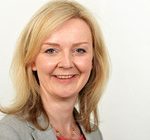
    Liz Truss – 2022 Keynote Article on the Future of Europe

    The article written by Liz Truss, the Prime Minister, published in The Times on 6 October 2022 and released as a press release by 10 Downing Street.

    Security, energy and migration are three of the most urgent priorities for the British people, so they are top of my agenda too. That’s why I am travelling to Prague for today’s European leaders’ meeting.

    These vital issues affect the whole of our continent, so it is right that we find common cause with our European friends and allies. It’s also why we want to see a strong voice for non-EU countries like Ukraine, Norway and Switzerland.

    Today’s meeting is not an EU construct or an EU alternative. I am very clear about that. It brings together governments from across Europe, around a third of whom are outside the EU. A post-Brexit Britain, as an independent country outside the EU, should be involved in discussions that affect the entire continent and all of us here at home. We are taking part as an independent sovereign nation, and we will act as one.

    Brexit was never about the UK stepping away from our proud and historic role as a leading nation in the region and beyond. We always believed we would find new ways of working that reflected our shared values and interests.

    Our actions in Ukraine have shown this to be true. No European country has done more than the UK to arm the Ukrainians in their fight for freedom and to lead the imposition of economic sanctions on Russia. Yet our actions are all the stronger because of the way that we collaborated with our European friends.

    We have worked with the EU through the G7 and helped Sweden and Finland with their accession to Nato, which remains the bedrock of our collective defence. We have co-operated militarily with European allies through the Joint Expeditionary Force. We are training Ukrainian soldiers together. And we are strengthening partnerships with other European friends, including Norway on energy security and Switzerland on science and research.

    So I welcome the opportunity to work with leaders from across the continent in this new forum. But this must not cut across the G7 and Nato, and it must not be a talking shop. I want to see concrete action and delivery on three key priorities.

    First, we must ensure that Putin is defeated. His attempts at mobilisation and annexation are a show of weakness. Ukraine’s counter offensive is succeeding, and Russia’s will is fracturing. This is the moment to redouble our resolve. The UK is sending £2.3 billion of military support to Ukraine this year — and we will match or exceed that next year.

    I will urge my European friends to continue to work with us in providing more weapons, imposing more sanctions, and backing Ukraine in pushing Russian forces out.

    Second, we must end our addiction to Russian hydrocarbons. Yesterday at the Conservative Party conference, I set out our plan for growth and the vital importance of becoming less reliant on authoritarians for our energy. It is right that we talk with our European allies about how we do that collectively. Putin is hoping he can divide us in a scramble for energy supplies. We must show him that he is wrong.

    The UK sends and receives both gas and electricity through the undersea cables and pipelines that link us with neighbours like France, Belgium and the Netherlands. Today we must all commit to keeping those connections open this winter so we keep the lights on across the continent.

    The UK will also play a leading role in protecting critical energy infrastructure. This week the Royal Navy deployed HMS Enterprise and HMS Somerset to work with Norway and our allies in the North and Norwegian Seas.

    Together, we will deter any threat to underwater pipelines.

    We must also act now to make sure we are never in this position again. We must usher in a new era of European energy independence, dramatically accelerating our own energy production. Today I will be discussing deeper bilateral nuclear co-operation with President Macron, including progress on Sizewell C. We are ready to work with our European friends to develop next-generation interconnectors in the North Sea. And I hope to make progress towards new partnerships on offshore wind, all of which will help to make the UK a net energy exporter by 2040.

    Third, we must use the opportunity of this forum to focus on migration. We are proud of the way that we have opened our homes to 130,000 Ukrainian refugees. But we need a stronger response to the crime gangs that exploit desperate people. Today we will be deepening our joint working with France, the Netherlands and other countries along the migration route to step up our collective response to this trans-national tragedy.

    I believe that with authoritarian states undermining stability and security around the world, democratic nations need to be bolder and more innovative in how they collaborate to ensure that our shared values prevail.

    It is in this spirit that I will join my fellow European leaders today and ensure that this new forum delivers for the British people.

  • PRESS RELEASE : With 8 years left until 2030, we must leave no one behind – UK statement at UN Second Committee [October 2022]

    PRESS RELEASE : With 8 years left until 2030, we must leave no one behind – UK statement at UN Second Committee [October 2022]

    The press release issued by the Foreign Office on 5 October 2022.

    Ambassador James Kariuki delivered the UK’s national statement at the General Debate of the UN’s Second Committee which opened in New York this week.

    Madam Chair,

    The United Kingdom congratulates you on your appointment. We look forward to working with you and the Second Committee bureau.

    As we approach the midpoint of the Sustainable Development Goals, we must all renew our commitment to achieving Agenda 2030.

    Development is at the heart of the UK’s foreign policy. We remain a committed and substantial development partner, through our range of funding and expertise. The UK spends 0.5% of gross national income on ODA, and is committed to returning to 0.7% when out fiscal situation allows.

    We are channelling most of our ODA towards low-income countries. We support the global goal of providing at least 0.2% of our GNI to Least Developed Countries.

    The tight fiscal situation and debt distress faced by many developing countries is concerning. Scaled up and more effective financing and investment – which doesn’t increase debt – is desperately needed, from a range of sources.

    Through “British Investment Partnerships”, we are working with governments and private sector to mobilise up to £8 billion annually of UK-backed financing. This will support economic growth, sustainable infrastructure, and a green and just energy transition.

    During our G7 Presidency, we launched the “Partnership for Global Infrastructure and Investment”, which also aims to mobilise $600 billion over the next 5 years.

    Countries need better access to international trade, which is why we launched the “Developing Countries Trading Scheme” to enable duty-free, quota-free trade.

    The international financing system isn’t working for many countries. The UK has signed up to the G20 ambition of channelling $100 billion Special Drawing Rights to climate-vulnerable countries. We have committed to channel $4 billion of SDRs via the IMF’s new Resilience & Sustainability Trust.

    Madam Chair,

    The UK is proud of our COP26 Presidency and the historic Glasgow Climate Pact.

    As we approach COP27 in Sharm el-Sheik and the CBD COP15 in Montreal, we will work with Egypt, China, Canada and others to maintain focus on the goals of the Paris Agreement and Glasgow Climate Pact. These agreements must be the starting point for all climate discussions, including in Second Committee. We will resist any attempt to row back from these agreements.

    The UK was the first major economy to commit to bringing all greenhouse gas emissions to net zero by 2050. We are committed to ‘No New Coal’.

    We have promised to double our International Climate Finance to at least £11.6 billion to 2026. We will ensure a balance between mitigation and adaptation finance.

    At UNGA High-Level Week, we launched a 10 Point Plan for Financing Biodiversity, with Ecuador, Gabon and the Maldives. This reinforces the need for all domestic financing and ODA to be nature-positive and eliminate harmful subsidies.

    We are also hopeful about a new Global Biodiversity Framework with targets to protect 30% of land and oceans by 2030.

    The UK has been a strong supporter of multilateralism as the core of how to support global health in our interconnected world.

    Madam Chair

    Since the outbreak of COVID-19, the UK has committed $2.37 billion to help low and middle-income countries to manage impacts on the most vulnerable.

    Through COVAX, the UK supported distribution of 1.5 billion COVID-19 vaccines to 87 developing countries. The UK is prioritising equitable access to vaccinations, therapeutics and diagnostics to support the ‘One Health Approach’.

    We look forward to discussing how to better prepare for future pandemics, at the upcoming UN High-Level meetings on PPPR and Antimicrobial Resistance.

    We are acutely aware of how interlinked economic, social and environmental challenges affect countries in special situations such as SIDS, LDCs and LLDCs.

    Last year, the UK co-authored the ‘SIDS Call to Action’ with Belize, Fiji and AOSIS, pressing for vulnerability to guide financial allocations, as set out in Glasgow.

    We welcome publication of the interim report on development of a Multidimensional Vulnerability Index, and look forward to the final report. We encourage Second Committee’s support and consideration of SIDS and LDCs across discussions.

    Gender equality must be at the heart of our efforts, and a cross-cutting focus in Second Committee.

    We commend the Secretary General for the Transforming Education Summit, and action to advance gender equality and girls’ and women’s empowerment in and through education.

    With 8 years left until 2030, we still have time left to muster our hope, commitment and courage, and work together to realize the SDGs. We must leave no one behind.

    Thank you.


  • PRESS RELEASE: Prime Minister urges Europe to ‘stand firm’ against Russian aggression ahead of regional summit [October 2022]

    PRESS RELEASE: Prime Minister urges Europe to ‘stand firm’ against Russian aggression ahead of regional summit [October 2022]

    The press release issued by 10 Downing Street on 6 October 2022.

    • Prime Minister to attend European leaders’ meeting in Prague to galvanise the response to Putin’s invasion of Ukraine
    • Liz Truss will hold talks on securing UK energy supply and tackling migration, and will encourage allies to end energy dependence on Russia
    • UK will play a leading role in the summit to drive international action on national priorities

    The Prime Minister will urge leaders to stand united in the face of Russian aggression as Europe faces “its biggest crisis since the Second World War”, when she addresses a regional summit in the Czech Republic today [6th October].

    Liz Truss will attend the meeting of leaders from across Europe to shore up support for Ukraine and galvanise collective action on energy security and migration, delivering on UK priorities.

    In a series of bilateral meetings and plenary sessions in Prague, the Prime Minister will encourage countries to go further and faster to end Europe’s reliance on Russian hydrocarbons and “usher in a new era of resilience and independence.”

    She will call on leaders to commit at the summit to keeping gas and electricity interconnectors open this winter and is expected to hold talks on joint projects to develop new nuclear and offshore wind capacity.

    The Prime Minister will also meet key countries on the migration route, including the leaders of France and the Netherlands, to drive progress on joint operations to disrupt criminal gangs profiting from illegal migration.

    Prime Minister Liz Truss will tell the opening plenary session in Prague:

    Europe is facing its biggest crisis since the Second World War. And we have faced it together with unity and resolve.

    We must continue to stand firm – to ensure that Ukraine wins this war, but also to deal with the strategic challenges that it has exposed.

    The Prime Minister is expected to set out that the UK has continued to play a leading role in Europe outside the European Union, demonstrated by the response to the invasion of Ukraine.

    The UK has forged new defensive alliances through the Joint Expeditionary Force and bolstered regional security as the largest European contributor to NATO. This week, the UK deployed Royal Navy frigate HMS Enterprise to the North Sea to work with Norway on protecting critical national energy infrastructure, following the shocking sabotage on the Nordstream 1 & 2 pipelines.

    Speaking at the opening of the summit, the Prime Minister will say we need to:

    …learn the lessons of the war. The threat was left to fester for far too long. Now, at last, we are tackling Putin’s aggression head on.

    And we should take the same approach with other challenges before us – including longstanding regional issues like energy and migration.

    Instead of the old approach which merely dealt with the symptoms, it’s time to address the fundamental causes.

    The European Political Community meeting in Prague is an opportunity for leaders from across the continent, including EU and non-EU states, to work together to address urgent shared challenges.

    The Prime Minister is expected address the opening plenary session and attend a working group on energy security, as well as holding a series of bilateral talks and informal meetings with leaders.

  • PRESS RELEASE : Diplomacy is the only route to sustained peace on the Korean peninsula – UK statement at the UN Security Council [October 2022]

    PRESS RELEASE : Diplomacy is the only route to sustained peace on the Korean peninsula – UK statement at the UN Security Council [October 2022]

    The press release issued by the Foreign Office on 5 October 2022.

    Statement by Ambassador Barbara Woodward at the UN Security Council briefing on North Korea

    Thank you President and I also thank ASG Khiari for his informative briefing.

    President, as we’ve heard, at around half-past seven on Tuesday morning, as commuters in Northern Japan were making their way to work, evacuation alerts sent people rushing to shelters. Public transport came to a halt as a ballistic missile, launched without warning by North Korea, flew overhead.

    The threat to international peace and security presented by North Korea’s reckless and illegal ballistic missile tests could not be clearer. North Korea’s latest launch of an Intermediate-range ballistic missile violates multiple UNSCRs. We stand in solidarity with the people of Japan, and of states in the region threatened by this unacceptable behaviour.

    This latest test is a serious escalation, but the broader trend is just as concerning. This year alone North Korea has launched 39 ballistic missiles; seven of which were launched in the last ten days.

    We urge Council members to meet these violations with a firm and united response. North Korea has been emboldened by the Council’s inaction, and the use of the veto by two Council members. Diplomacy is the only route to sustained peace on the peninsula, but it is right that this Council continues to take appropriate, targeted measures to slow the pace of proliferation.

    We again call on all member states to implement in full existing Security Council resolutions on North Korea. They are an essential part of efforts to counter the continued development of North Korea’s prohibited programmes.

    Let me be clear too that Council sanctions are not targeted at the North Korean people. We fully support the delivery of humanitarian support to the most vulnerable and therefore call on North Korea to allow an independent assessment of the humanitarian situation, and to allow aid to flow freely into the country.

    Joint statement by Security Council members condemning the DPRK’s long-range ballistic missile launch
    Joint statement to the press delivered by Ambassador Linda Thomas-Greenfield, Permanent Representative at the United States Mission to the United Nations on behalf of Albania, Brazil, France, India, Ireland, Japan, Norway, the Republic of Korea, the United Arab Emirates, and the United Kingdom
    The United States, Albania, Brazil, France, India, Ireland, Japan, Norway, the Republic of Korea, the United Arab Emirates and the United Kingdom, strongly condemn the DPRK’s long-range ballistic missile launch which overflew Japan on October 4 and its seven other ballistic missile launches conducted since September 25. The DPRK has now launched over 35 ballistic missiles this year alone.

    These launches violate multiple Security Council resolutions and pose a threat to not only the region, but to the entire international community.

    The United States, and those who have joined me at the podium today remain committed to diplomacy and continue to call on the DPRK to return to dialogue. But we will not stay silent as the DPRK works to undermine the global nonproliferation regime and threaten the international community.

    The DPRK made its intentions clear in April and September when its leader signaled an effort to accelerate the DPRK’s nuclear and ballistic missile programs and even alluded to pre-emptive use of nuclear forces. We are witnessing the DPRK’s pursuit of this objective.

    We call on all UN Member States, especially Council members, to join us in condemning this reckless behavior and in urging the DPRK to abandon in a complete, verifiable, and irreversible manner its unlawful weapons programs and engage in diplomacy toward denuclearization. We also recall the Council’s decision in resolution 2397 referring to further significant measures.

    We call on Member States to fully implement the relevant Security Council resolutions. Let us reaffirm that full implementation of the 1718 Committee mandate is necessary to effectively slow down and restrict the DPRK’s weapons advancements.

    Following the DPRK’s provocations and escalatory behavior in 2017, the Council came together and unanimously took action to hold the DPRK accountable for its unlawful actions.

    Now again the DPRK is testing the Council’s resolve and we must act accordingly.


  • PRESS RELEASE : Alok Sharma, COP26 President, to return to Kenya to advance African climate leadership ahead of COP27 [October 2022]

    PRESS RELEASE : Alok Sharma, COP26 President, to return to Kenya to advance African climate leadership ahead of COP27 [October 2022]

    The press release issued by the Cabinet Office on 5 October 2022.

    COP26 President Alok Sharma will travel to Kenya from 5-7 October, following his attendance at Pre-COP in the DRC.

    Mr Sharma will meet newly-elected President Ruto and cabinet ministers to discuss Kenya’s continued climate leadership ahead of COP27

    The COP President will visit wind and geothermal sites contributing to Kenya’s clean energy transition

    Mr Sharma will also meet with youth, civil society and private finance representatives to discuss local implementation of policies that honour the Glasgow Climate Pact

    COP26 President Alok Sharma will travel to Kenya from 5-7 October, following his attendance at Pre-COP in the DRC. The visit is an opportunity to engage with the new Kenyan administration on its commitment to maintain global climate leadership, and make a final call ahead of COP27 for countries to honour the Glasgow Climate Pact by accelerating their own clean energy transitions.

    On his third visit to the country, Mr Sharma will spotlight key progress being made in this sector towards limiting global temperature rises to below 1.5 degrees. He will encourage President Ruto and his senior ministers to help build momentum for further change ahead of COP27 in the face of challenging global circumstances.

    The COP President will travel to several renewable energy generation sites around Nairobi including Ngong Hills Wind Farm and Olkaria Geothermal Power Station, which has grown to the largest geothermal facility in Africa since being seed funded

    by the UK Government in 1981. He will highlight this infrastructure as a model of how other countries can deploy renewables.

    While in Nairobi, Mr Sharma will attend a roundtable with youth climate leaders and members of civil society to hear about how climate policy can be transformed into impactful local action.

    The COP President will also engage with key figures in Kenyan finance at a climate finance event to understand how private capital is being mobilised in the country to combat climate change through green bonds, carbon credits, and climate-related financial disclosures.

    Alok Sharma, COP26 President, said:

    “Kenya continues to set an example to the rest of the African continent and the world, demonstrating an appetite to pursue green economic growth and achieve a just, renewable energy transition.

    “I am pleased to see President Ruto reaffirm Kenya’s commitment to transition to 100% clean energy by 2030, and look forward to the positive impact this will have on growth, jobs and access to energy.

    “But the drought currently afflicting this country is a stark reminder that, in order to save and safeguard lives from the devastating impacts of climate change, we must all redouble our efforts to go further and faster in delivering on the promises of the Glasgow Climate Pact.”

    After his visit to Kenya, the COP26 President will travel to Washington DC to attend the 2022 Annual Meetings of the International Monetary Fund (IMF) and the World Bank Group (WBG) from 14-16 October.


  • Ursula von der Leyen – 2022 Speech on Russia’s Escalation of its War of Aggression Against Ukraine

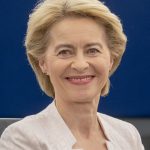
    Ursula von der Leyen – 2022 Speech on Russia’s Escalation of its War of Aggression Against Ukraine

    The speech made by Ursula von der Leyen, the President of the European Commission, on 5 October 2022.

    Dear President Metsola, dear Roberta,

    Honourable Members,

    Since we last met to discuss the state of our Union, the Kremlin has escalated its aggression to a new level. Putin has launched Russia’s first mobilisation since World War II, treating hundreds of thousands of young Russians as cannon fodder. He uses sham referenda in an illegal attempt to change international borders by force. And since many months, he is using energy as a weapon. The Russian war causes economic and social hardship. It places a heavy burden on our citizens and on the economy in our Single Market. Rising energy costs in particular are leading to reduced purchasing power for citizens and loss of competitiveness for companies.

    Over the course of the last seven months, together with our Member States, we have already taken important steps. We have diminished our gas consumption by around 10%. Russian gas supplies have decreased from 40% to now down to 7.5% of pipeline gas. We have compensated this reduction by increased imports of LNG and pipeline gas, mainly from our reliable suppliers like the US and Norway. Gas storage in the EU is now at 90%. This is 15% higher than on the same day last year. In addition, three weeks ago in this hemicycle, I announced that we will skim the exceptional profits made by energy companies and use them to support vulnerable citizens and businesses. Last week, this has been enshrined in EU law. We achieved this in lightning speed, also thanks to the outstanding work of the Czech Presidency. And yesterday, the Council reached agreement on REPowerEU.

    So we have key instruments in place to make it through the winter – storage and savings; to jointly purchase gas – Platform; to get us out of the Russian grip ­­– agreement with US; to redistribute the windfall profits to support those in need – electricity emergency intervention; and to invest in the future – REPowerEU.

    The measures we have put in place provide us with a first buffer of protection. Thanks to these, we can and will now step up to the next level. I will lay out a roadmap in a letter to Leaders in view of our meeting in Prague later this week. It includes the following key components: We will step up our negotiations with trusted partners – for example with Norway – to dampen the price we pay for gas imports. As European Union, we have considerable market power. And many of our suppliers want to conclude deals with us, which are beneficial for both sides. We will also strengthen our Energy Platform. This is in our collective interest. We have to avoid a scenario where Member States are again outbidding each other on world markets and driving prices up for Europe.

    My next point is on gas prices. We use gas in three domains: industry, heating and electricity. Let me start with electricity. High gas prices are driving electricity prices. We have to limit this inflationary impact of gas on electricity – everywhere in Europe. This is why we are ready to discuss a cap on the price of gas that is used to generate electricity. This cap would also be a first step on the way to a structural reform of the electricity market.

    But we also have to look at gas prices beyond the electricity market. We will also work together with Member States to reduce gas prices and limit volatility and the impact of price manipulation by Russia. In March, we have already offered this as an option. We have said that it can give an important signal that the EU will not pay any price for gas. We qualified such a price cap as having an immediate impact on price levels. But that it entails drawbacks, in terms of security of supply of gas. The situation has critically evolved since then.

    Today, compared to March, more Member States are open for it and we are better prepared. Such a cap on gas prices must be designed properly to ensure security of supply. And it is a temporary solution to cater for the fact that the TTF – our main price benchmark – is no longer representative of our market that includes more LNG today. It is a temporary solution until a new EU price index ensuring a better functioning of the market is developed. The Commission has kick-started work on this.

    Honourable Members,

    These are far-reaching measures. I wholeheartedly agree with you when you say in the resolution you will adopt today that exceptional times require exceptional emergency measures, where the Union needs to act as jointly and united as ever. So, in pursuing our action, two things remain paramount: acting in unity and acting in solidarity. We need to protect the fundamentals of our economy, and in particular our Single Market. This is the strength of the European Union. That is where the wealth of the European Union comes from. Without a common European solution, we risk fragmentation. So it is paramount that we preserve a level playing field for all in the European Union.

    With REPowerEU, we have developed a crucial instrument to accelerate the transition to energy independence. It will allow to invest in infrastructure, like pipelines, interconnectors or renewables. And it allows to support businesses and households to invest in energy efficiency – like insulating houses or installing heat pumps. So I think we should further boost REPowerEU with additional funding. This way all European states can accelerate the necessary investments. We modernise the energy infrastructure. And we preserve the level playing field. And we secure our European competitiveness on global markets. And we have to do it as Europeans, together and jointly.

    Honourable Members,

    There is another pressing issue, which we have to address today. The acts of sabotage against Nord Stream pipelines have shown how vulnerable our energy infrastructure is. For the first time in recent history, it has become a target. Pipelines and underwater cables connect European citizens and companies to the world. They are the lifelines of data and energy. It is in the interest of all Europeans to better protect this critical infrastructure.

    For this, we will present a five-point plan. First, we must be better prepared. We have very recently agreed new legislation which will strengthen the resilience of critical EU entities. The responsible Parliament committee will be voting on it next week. And we can and should already now be working on this basis.

    Second, we need to stress test our infrastructure. We need to identify its weak points and prepare our reaction to sudden disruptions. We will work with Member States to ensure effective stress tests in the energy sector. This then should be followed by other high-risk sectors, such as offshore digital and electricity infrastructure.

    Third, we will increase our capacity to respond through our Union Civil Protection Mechanism already in place. With this, we can support Member States in addressing the disruption of critical infrastructure – for example, with fuel, generators or shelter capacity.

    Fourth, we will make best use of our satellite surveillance capacity to detect potential threats.

    And finally, we will strengthen cooperation with NATO and key partners like the US on this critical issue.

    Honourable Members,

    This war has entered a new phase. The Ukrainian army keeps reporting impressive successes in its fight against the aggressor. We all saw the images of deeply relieved people welcoming Ukrainian soldiers. And I could see with my own eyes, three weeks ago, that life has returned to Kyiv. Of course, it is the bravery of the Ukrainian people that made it possible. But Europe’s contribution has also made a huge difference. Our backing has helped Ukraine face down the invader. Only a strong and steadfast Europe will stop Putin. This is the moment to stay the course and support Ukraine as long as it takes.

    Long live Europe.

  • Colum Eastwood – 2022 Comments on the Conservative Party Conference

    Colum Eastwood – 2022 Comments on the Conservative Party Conference

    The comments made by Colum Eastwood, the SDLP MP for Foyle, on Twitter on 5 October 2022.

    Listening to arrogant Tory ministers defending this mess this morning is infuriating. I’d love them to spend one day in my constituency office in Derry listening to the devastation their policies are causing for families here.

  • John Sentamu – 2022 Tribute to HM Queen Elizabeth II (Baron Sentamu)

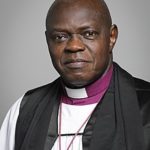
    John Sentamu – 2022 Tribute to HM Queen Elizabeth II (Baron Sentamu)

    The tribute made by John Sentamu, the former Archbishop of York, in the House of Lords on 10 September 2022.

    My Lords, I was three years old when, in a little village in Uganda called Masooli, we all gathered round a very small transistor radio and listened to the broadcast from the abbey of the Coronation of Queen Elizabeth. From then on in every school in Uganda on Empire Day we sang “God save the Queen”. We continue to do it; some still do it now. I stand here as somebody who is quite surprised that this little boy out in Uganda would today be part of the Accession Council and the confirmation of King Charles III. I have mixed emotions.

    I want first to echo the words of the most reverend Primate the Archbishop of York, because on Thursday, as soon as we heard the news that Her Majesty had died, I put on Twitter this message:

    “Today Churches Celebrate the Birthday of the Blessed Virgin Mary. The Death of Her Majesty Queen Elizabeth II on this day is a great shock & Mary’s Magnificat should be our response: MY SOUL DOTH MAGNIFY THE LORD: & MY SPIRIT HATH REJOICED IN GOD MY SAVIOUR; REGARDED & MAGNIFIED HER”.

    I have stood, on a number of occasions, near Her Majesty Queen Elizabeth as she sang the Magnificat. She did not need the words; she knew them. In a real sense, that was her song too. She sang it from the heart because it expressed who she was. Her true greatness was her deep humility in knowing that the Lord in many ways “regarded” her “lowliness” and, by divine providence, made her Queen. For her, being Queen was an act of nobody but God.

    Humbleness was, for her, born out of having Jesus Christ at the centre of her living, her thinking and all her goals, her rejoicing and even in moments of sadness. She knew the holy scriptures well and sang many hymns without needing to look at the words. She really imbibed the whole tradition. Therefore, it was also comforting to hear our new King say the same thing about the services that shaped him.

    When in her presence, you were the person who mattered when you spoke to her. She never looked around. It was as if you were the only person in the room, and until that conversation ended her eyes were fixed on you and your smile.

    Forgive this testimony. I had an audience with her to ask for her permission to step down from my role after an extra year. Her response was, “The decision is yours and yours alone—not me, not anyone else. Give me the date and so it shall be.” I took that to be a command. There was a matter that was causing me great heartache. I told her, and I asked for her prayers. I knelt down and put my hands together. She put hers outside mine. There was this deep moment of silence. I think it lasted about two to three minutes. It was ended by Her Majesty saying, “Amen.” I got up and, friends, whatever burdens I had come with were lifted. It was as if I was with my grandmother, who had a similar effect on me. If you want to know more, you have to wait until my autobiography is published next year. You will get a bit more story because permission has been given to me to write some of those words down.

    Her hospitality was amazing. I stayed at Sandringham and at Windsor. I will tell your Lordships a bit about Windsor. At Windsor on her birthday, after dinner she and Prince Philip guided us to the library. They had already arranged with the archivist the section on Uganda. The books were opened and copies were made so that we could take some of this material with us. The thing that most surprised me was to see writing dictated by King Muteesa I requesting Queen Victoria to send missionaries to Uganda, and subsequently a request that Uganda became a protectorate. Those documents are there. I was speechless, really. We ended up in the restored chapel at Windsor. Again, there were silent prayers. I cannot remember how long.

    The death of Queen Elizabeth has left all of us with mixed emotions. I want to end with the experience of our eight year-old granddaughter, Abigail. When she saw the news that the Queen had died she cried, uncontrollably and inconsolably. When she calmed down, she said, “I will never see a queen in my lifetime”. She then said, “Long live the King”. Queen Elizabeth rests in glory. Long live King Charles III.