Tag: 2022

  • PRESS RELEASE : Extra winter cash for low income families in Scotland [October 2022]

    PRESS RELEASE : Extra winter cash for low income families in Scotland [October 2022]

    The press release issued by the Scottish Government on 10 October 2022.

    First Minister announces doubling of December Bridging Payment to £260.

    Families of an estimated 145,000 children will benefit from extra support this winter to help with cost of living pressures – backed by Scottish Government investment of £18.9 million.

    Bridging Payments were introduced in 2021 ahead of the extension of the Scottish Child Payment to 6-15 year olds. The final quarterly Bridging Payment, due in December, will now be doubled to £260, meaning families will receive up to £650 per eligible child this year.

    All children registered to receive free school meals on the basis of family low income are eligible and will receive this payment automatically.

    Total Scottish Government funding for the Bridging Payments will increase to an estimated £169 million across 2021 and 2022.

    This is in addition to the Scottish Child Payment which will be extended to all eligible under-16s from 14 November and will rise to £25 per child per week on the same date – a 150% increase in the benefit within eight months.

    First Minister Nicola Sturgeon said:

    “I am proud of the work the Scottish Government is doing to tackle child poverty. The Scottish Child Payment is paid to eligible families and is unique in the United Kingdom. It started for under-6s at £10 per week per eligible child. In April we doubled it to £20. Five weeks from today we will increase it again, to £25 and will also extend it to families with children up to age 16.

    “That is vital financial help for well over 100,000 children, delivered in time for Christmas. That is the sign of a government with the right priorities.

    “But we need to do more because we know this winter is going to be really tough. Rather than looking forward to Christmas, too many families will be dreading it because they don’t know if they can afford to heat their homes or even pay for food.

    “As part of our help to the poorest families over last year and this, ahead of rolling out the Scottish Child Payment to under 16s, we have made quarterly bridging payments of £130 to children and young people in receipt of free school meals.

    “I am delighted that the Scottish Government will double the December Payment from £130 to £260.

    “That will help put food on the Christmas table for families of 145,000 children and young people. I don’t pretend it will make all of their worries go away – no government with our limited powers can ever do that. But I hope this investment of almost £20 million will bring a bit of Christmas cheer to those who need it most.”

    Background

    Bridging Payments were introduced in 2021 ahead of the roll out of the Scottish Child Payment to under 16s. The £130 payments are paid quarterly by councils on behalf of the Scottish Government. Families received up to £520 per eligible child in 2021 and will receive up to £650 in 2022. Bridging Payments support around 145,000 school age children.

    The Scottish Government will make available additional funds to double the December payment. Delivery is subject to approval by COSLA Leaders.

    Scotland is the only nation in the UK offering the Scottish Child Payment, one of five family benefits delivered by the Scottish Government to support low income parents with the costs of raising a child. Scottish Child Payment is currently available to families of eligible children under 6 years old and will open to applications for under 16s from 14 November.

    Information on support for households is available at gov.scot/costoflivingsupport
  • PRESS RELEASE : Patient Safety Commissioner Bill published in Scotland [October 2022]

    PRESS RELEASE : Patient Safety Commissioner Bill published in Scotland [October 2022]

    The press release issued by the Scottish Government on 7 October 2022.

    Promoting the safety of patients.

    Legislation to champion the welfare of people receiving healthcare, with the creation of a Patient Safety Commissioner, has been published.

    The Commissioner’s remit, set out in the Bill, will cover all healthcare providers operating in Scotland, including the NHS and NHS-contracted and independent healthcare providers.

    This will include bringing together patient feedback and safety data shared by NHS boards and Healthcare Improvement Scotland, to identify concerns and recommend actions.

    The Patient Safety Commissioner will be an independent champion for everyone receiving healthcare, working alongside healthcare providers and organisations involved in patient safety and complaints. They will hold healthcare providers to account in their responsibility to listen to patients and support them to make improvements.

    The Commissioner will also, when necessary, lead formal investigations into potential systemic safety issues, with powers to require information be shared to make sure every investigation is fully informed.

    Cabinet Secretary for Health, Humza Yousaf, said:

    “We have made great progress in patient safety in Scotland’s health service in recent years, but when it comes to this issue it’s crucial that we are not complacent, and that we work together to continually drive up standards. That is why we have introduced this legislation, which aims to make sure the voices of people using health services are heard and their concerns acted on with the creation a champion, independent of the NHS or government, who will look out for the safety of people getting healthcare in Scotland.

    “It is vitally important that patients have a voice and a place to turn to if they have concerns about the safety of their care, and this Bill will help to ensure that continues to be the case.”

  • PRESS RELEASE : Scottish Veterans Fund opens [October 2022]

    PRESS RELEASE : Scottish Veterans Fund opens [October 2022]

    The press release issued by the Scottish Government on 7 October 2022.

    £500,000 to help former Armed Forces personnel.

    A veterans support fund is now open to help improve the lives of former service personnel and their families.

    A key priority for this year’s Scottish Veterans Fund is to make sure veterans and their families are supported in response to the ongoing cost of living crisis.

    The fund will also target support for veterans who have left the Services early, as well as promoting collaboration between both veterans charities and non-veterans organisations.

    Since the Scottish Government created the fund in 2008 almost 200 individual projects have been supported, receiving more than £2.3 million. In 2021, the annual funding provided was more than doubled to £500,000, with individual projects now able to bid for up to £50,000 a year.

    Cabinet Secretary for Justice and Veterans, Keith Brown said:

    “Scotland’s veterans community has given a great deal to society and it is right that we do all we can to provide the best possible care and support when they return to civilian life.

    “It is important that the fund responds to issues that veterans are currently facing and this year we are looking to support projects that will help veterans and their families through the cost of living crisis.

    “We will continue to target projects that provide new and innovative approaches to aiding our veterans community. In particular, bids that promote collaboration within and between the veterans charity sector and other non-veterans organisations, as well as support for early service leavers, are being prioritised.”

    Scottish Veterans Commissioner Susie Hamilton, who chairs the independent panel that assesses bids for the Fund, said:

    “I am delighted to see the continuation of this support to those leaving the Service, veterans and their families. The priorities of supporting vulnerable early service leavers and those most affected by the current cost crisis are particularly welcome and important in the current difficult circumstances. Organisations working together can produce a powerful impact, so I hope to see collaboration and partnerships feature in this year’s applications.

    “We all benefit when veterans and their families are able to prosper after military service and I look forward to seeing the range of bids that will be put forward to help make that happen.”

  • PRESS RELEASE : Tenant protection Bill passed in Scotland [October 2022]

    PRESS RELEASE : Tenant protection Bill passed in Scotland [October 2022]

    The press release issued by the Scottish Government on 6 October 2022.

    Emergency legislation approved by MSPs.

    Tenants will have increased protection from rent increases and evictions during the cost of living crisis under temporary legislation passed by the Scottish Parliament.

    The Cost of Living (Tenant Protection) Bill gives Ministers temporary power to cap rents for private and social tenants, as well as for student accommodation. The Bill also introduces a moratorium on evictions.

    This cap, which applies to in-tenancy rent increases, has initially been set at 0% from 6 September 2022 until at least 31 March 2023. Ministers have the power to vary the rent cap while it is in force. The measures can be extended over two further six-month periods.

    Enforcement of eviction actions resulting from the cost crisis are prevented over the same period except in a number of specified circumstances, and damages for unlawful evictions have been increased to a maximum of 36 months’ worth of rent.

    The temporary legislation balances the protections that are needed for tenants with some safeguards for those landlords who may also be impacted by the cost crisis.

    Tenants’ Rights Minister Patrick Harvie said:

    “I am pleased that Parliament has passed this Bill to support tenants through the current cost of living crisis. People who rent their home are more likely to live in poverty or be on low incomes than other people, and many will be anxious about keeping up payments on their homes as their everyday expenses rise.

    “With this Bill now set to become law, tenants in the social or private rented sector, or in student accommodation, will have stability in their homes and housing costs.

    “I’m hugely grateful to MSPs for scrutinising and agreeing this legislation this week, ensuring these protections can be brought in with the urgency that this crisis demands.”

  • PRESS RELEASE : Providing homes for displaced people from Ukraine [October 2022]

    PRESS RELEASE : Providing homes for displaced people from Ukraine [October 2022]

    The press release issued by the Scottish Government on 6 October 2022.

    Funding allocation to increase housing supply.

    North Ayrshire Council has been awarded funding through the Scottish Government’s Ukraine Longer-Term Resettlement Fund to refurbish properties to be used on an interim basis by people who have fled the conflict in Ukraine.

    Through the fund, up to £50 million has been made available to Councils and Registered Social Landlords to bring properties back into use that would otherwise not be available to let.

    Minister with Special Responsibility for Refugees from Ukraine Neil Gray said:

    “Scotland continues to stand with the rest of the UK, Europe and the world, in condemnation of Russia’s unprovoked invasion of Ukraine. Since the conflict began, more than 20,000 people with a Scottish sponsor have arrived, representing 20% of all UK arrivals – the most per head of any of the four nations. More than three quarters of these arrivals have come through our Super Sponsor Scheme.

    “This fund is going to help us meet the housing needs of displaced people from Ukraine by providing them with longer-term, sustainable accommodation. I want to thank North Ayrshire Council for their creativity in finding local solutions that boost the overall supply of homes at a time when they are needed most.

    “This week, I have written to local authorities and social landlord representatives across the country to encourage them to look at their current housing supply and identify unused accommodation so that we can increase the supply of available accommodation and provide people from Ukraine with safe and secure homes for their time here.”

    The award of £486,000 will allow five blocks of three-storey flats at Glebe Place, Saltcoats, – previously earmarked for demolition – to be upgraded and brought back into use for a period of 3 years after which they will be reassessed as part of the council’s new build housing programme.  This enables the council to retain their commitment of 1,625 new homes by 31 March 2027.

    North Ayrshire Council Leader Marie Burns said:

    “We have welcomed more than 200 Ukrainians to North Ayrshire and are ready to welcome more in the coming weeks and months.

    “With funding now secured from the Scottish Government’s Ukraine Longer-Term Resettlement Fund, we are looking to begin improvement works within the next few weeks.

    “While there is understandable uncertainty for anyone arriving here from Ukraine, it’s important that they feel secure and supported – having that secure tenancy will help. We want them to feel like North Ayrshire is a home away from home.”

    Background

    The grant offer from the Ukraine Longer-Term Resettlement Fund is for up to £486,081 to improve up to 30 flats at Glebe Place, Saltcoats.

    The five blocks of six one-bedroom flats at Glebe Place, Saltcoats were identified as a Council housing regeneration project in the Estate Based Regeneration Plan January 2019. The 30 flats were scheduled for demolition following the successful rehousing of tenants to alternative accommodation, with plans for the vacated site to be redeveloped through the Strategic Housing Investment Plan (SHIP) in 2024-25.

    The proposed demolition/ redevelopment project will reprofiled within the SHIP to 2026/27, therefore maintaining the overall commitment of 1,625 new homes by 31 March 2027.

    The project works will be undertaken by North Ayrshire Council’s Building Services team, with the works due to commence on site in mid-late October and be completed by the end of January 2023.

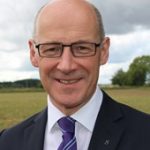
  • John Swinney – 2022 Comments on Scottish Budget Date Being 15 December

    John Swinney – 2022 Comments on Scottish Budget Date Being 15 December

    The comments made by John Swinney, the Deputy First Minister in Scotland, on 6 October 2022.

    There is no doubt that the challenges and obstacles of recent times have heavily impacted the way we live. Our continued recovery from the pandemic, the current cost of living crisis, the ongoing turmoil and uncertainty regarding the UK Government’s plans for its Autumn budget and Russia’s illegal war in Ukraine all have implications on the people of Scotland and our economy.

    We are not privy to discussions surrounding the UK Government’s ever changing Autumn budget plans, despite the clear and obvious impact this has on our ability to plan our 2023-24 Budget. The Scottish Budget will be informed by voices across Scotland to ensure we continue to deliver to build a fairer, greener and more prosperous country.

    I look forward to working with stakeholders and the Committee to ensure a Budget is delivered which puts the priorities of the Scottish people at the forefront and continues to strengthen our economy.

  • PRESS RELEASE : Date set for 2023-24 Scottish Budget [October 2022]

    PRESS RELEASE : Date set for 2023-24 Scottish Budget [October 2022]

    The press release issued by the Scottish Government on 6 October 2022.

    Tax and spending plans to be published on 15 December.

    The 2023-24 Scottish Budget will be published on 15 December 2022, the Deputy First Minister John Swinney has confirmed following agreement between the Scottish Government and the Scottish Parliament’s Finance and Public Administration Committee (FPAC).

    The agreed date provides certainty of Scotland’s plans and supports the Scottish Parliament to scrutinise the Scottish Government’s spending plans for the next financial year.

    In a letter to FPAC, Mr Swinney highlighted that the Scottish Fiscal Commission requires at least 10 weeks to prepare spending forecasts and said the “uncertainty and volatility of UK Government’s plans” means the Budget may need to be revisited if there are implications for this period.

    Mr Swinney said:

    “There is no doubt that the challenges and obstacles of recent times have heavily impacted the way we live. Our continued recovery from the pandemic, the current cost of living crisis, the ongoing turmoil and uncertainty regarding the UK Government’s plans for its Autumn budget and Russia’s illegal war in Ukraine all have implications on the people of Scotland and our economy.

    “We are not privy to discussions surrounding the UK Government’s ever changing Autumn budget plans, despite the clear and obvious impact this has on our ability to plan our 2023-24 Budget. The Scottish Budget will be informed by voices across Scotland to ensure we continue to deliver to build a fairer, greener and more prosperous country.

    “I look forward to working with stakeholders and the Committee to ensure a Budget is delivered which puts the priorities of the Scottish people at the forefront and continues to strengthen our economy.”

  • PRESS RELEASE : Task Force meets on transboundary challenges of air pollution [October 2022]

    PRESS RELEASE : Task Force meets on transboundary challenges of air pollution [October 2022]

    The press release issued by the Department for Environment, Food and Rural Affairs, on 11 October 2022.

    Air quality experts and delegates from around the world are meeting today (11 October) to discuss international collaboration towards preventing and reducing air pollution and improving global air quality.

    Hosted in Bristol by the United Kingdom, and jointly organised with co-chair Sweden, the inaugural meeting of the Task Force for the Forum for International Cooperation on Air Pollution (FICAP) will act as a steering committee to plan the first global Forum event, taking place in Sweden in 2023. Over two days, the Task Force is meeting to plan a programme for next year’s event.

    Air pollution continues to be the greatest environmental risk to human health. It causes a range of life-shortening diseases, drives down productivity, and costs our economies billions every year. In 2018 Public Health England estimated that the costs of air pollution (PM2.5 and NO2) in England to health and social care services could reach between £5.3 and £18.6 billion between 2018 and 2035. Whilst action on emissions in the United Kingdom is vital, pollution from other countries can also have significant effects on domestic air quality.

    The Task Force meeting is taking place under the UNECE Convention on Long Range Transboundary Air Pollution (CLRTAP), established in 1979 to address air pollution and its impacts on the environment and health at an international level.

    The forum event in Sweden next year will be the first opportunity for international experts and delegates from Parties to the Convention, non-governmental organisations, and key countries from all regions of the world to come together to share science and policy expertise on global air pollution. While progress on the Forum was paused during the Covid-19 pandemic, the United Kingdom and Sweden are now seeking to reinvigorate international cooperation on improving air quality.

    Minister Harrison opened today’s session to welcome delegates and set out the importance of working together to tackle air pollution.

    Speaking at today’s Task Force meeting, Air Quality Minister Trudy Harrison said:

    “Air pollution is a transboundary challenge and we need transboundary solutions, by co-operating at an international level.

    “If we are to continue achieving the emissions reductions we know are needed to protect our people’s health, our economies and our environments, we must find new and innovative solutions on a global scale.

    “The United Kingdom is proud to co-chair this new forum for sharing science and policy expertise internationally, which will help more regions to take steps to tackle air pollution. With hard work and determination, the Forum for International Cooperation on Air Pollution will be a beacon of global environmental leadership and innovation, and I look forward to seeing it go from success to success.”

    Members of the Task Force will agree a clear set of areas for greater regional cooperation and a clear design for the full Forum meeting taking place in Sweden in March 2023.

    As a founding member of the UNECE Convention, the United Kingdom is at the forefront of international action to tackle transboundary air pollution and has played a leading role in supporting international programmes to drive forward scientific understanding of emissions and their impacts.

    The United Kingdom has engaged constructively with the Convention to agree ambitious standards and emission reduction commitments since 1999. The Convention has played an instrumental role in reducing harmful pollutants in both Europe and North America, with sulphur dioxide reducing 70% in Europe between 1990 and 2006 and nitrogen oxide falling 35%.

    Air pollution at a national level continues to reduce significantly, with nitrogen oxide levels down by 44% and PM2.5 down 18% since 2010, but we know there is more to do. We have committed nearly £900 million to tackle air pollution and improve public health, and recently consulted on stretching new targets for air quality to be set through the Environment Act.

  • PRESS RELEASE : Strengthening the partnership between the UN, the AU, and African Member States remains indispensable as we strive towards more prosperous continent [October 2022]

    PRESS RELEASE : Strengthening the partnership between the UN, the AU, and African Member States remains indispensable as we strive towards more prosperous continent [October 2022]

    The press release issued by the Foreign Office on 11 October 2022.

    Statement by Ambassador Barbara Woodward at the UN Security Council Debate on UN-AU Cooperation.

    Thank you President and thank you for convening this debate during your Security Council Presidency, and I thank the Secretary-General and the AU Chair for their briefings.

    On this, the 20th anniversary of the African Union, strengthening the partnership between the UN, the AU, and African Member States remains indispensable as we strive towards a freer, safer, and more prosperous continent.

    That is why the UK supports permanent African representation on the Security Council.

    That is why the Annual Consultations later this week between the UN Security Council and the African Union Peace and Security Council are so important.

    President, I want to emphasise three points about this important partnership.

    First, coordination between the AU, UN and other international partners is vital for finding political solutions to conflicts including in northern Ethiopia, Sudan, and Somalia.

    We therefore welcome the planned, AU-facilitated talks concerning northern Ethiopia and urge the Ethiopian Government and TPLF to engage in the process.

    In Sudan, we welcome cooperation between the UN, AU, and IGAD to help facilitate a political solution following last October’s military coup. As a Council we must continue to support the tripartite mechanism’s efforts to deliver the freedom, peace, and justice which the Sudanese people have called for.

    And in Somalia, AMISOM and its successor the AU Transition Mission in Somalia demonstrate the value of UN-AU cooperation. The UK has long supported this critical cooperation, including contributing £25 million towards ATMIS stipends this year alone.

    Secondly, President, the UN-AU partnership is important for tackling trans-regional challenges to stability such as terrorism, disease, climate, and food insecurity.

    At least 130 million people in Africa are experiencing crisis levels of food insecurity. The UK is working with African partners to address the heightened food, economic and wider humanitarian risks in the region that have been exacerbated by the war in Ukraine.

    Finally, President, I note today is International Day of the Girl Child. We welcome AU efforts on Children and Armed Conflict, as well as recent AUPSC meetings on Women, Peace, and Security, and gender-based violence. The AU-UN partnership is important for making progress on these issues. We look forward to working closely to implement the Transforming Education Summit in support of 12 years of quality education for girls, and to strengthening cooperation on Preventing Sexual Violence in Conflict. We hope the AU will participate in the International Conference the UK is hosting next month – focusing on prevention, justice, and supporting survivors.

    And I thank you, Mr. President.

  • PRESS RELEASE : Teen becomes First Minister for the day as girls take over [October 2022]

    PRESS RELEASE : Teen becomes First Minister for the day as girls take over [October 2022]

    The press release issued by the Welsh Government on 11 October 2022.

    A 16-year-old girl from Barry has become First Minister of Wales for the day as girls across the world take over to mark the UN’s International Day of the Girl.

    Jaime has stepped into First Minister Mark Drakeford’s shoes to celebrate the power of girls and to call for action to tear down the barriers they continue to face in today’s world.

    In countries around the world, girls are taking over key roles in media, business and Government today to demand equal power, freedom and representation for girls and young women.

    A level student Jaime has been working with youth group in the Vale of Glamorgan to run a project, Her Voice Wales, which empowers young people to become champions of equality in their community. The group are tackling street safety and catcalling and campaigning to provide young people with more safe spaces.

    As well as meeting ministers and lawmakers, during her day as First Minister, Jaime will open the Welsh Government’s weekly press conference and participate in a meeting about hate crime alongside Minister for Social Justice Jane Hutt.

    Jaime will also watch First Minister’s Questions in the Senedd before taking part in an event to celebrate Wales’ participation in the World Cup, ahead of the tournament next month.

    Jaime said:

    I can’t wait to be First Minister for International Day of the Girl! I look forward to taking part in the Girl’s Takeover to show the importance of seeing girls in powerful leadership roles, which I think is so important if we are going to achieve true gender equality.

    Mark Drakeford said:

    I’m sure I’ll learn a lot from First Minister Jaime as she steps into my shoes for the day.

    Women and girls have the power to change the world but, all too often, they are not given the opportunity to do so.

    While I’m proud more than half of the roles in my Cabinet are filled by women, this isn’t a picture which is replicated across Wales, so we have much more work to do.

    I hope girls across Wales see what Jaime does today and are inspired to become our leaders of the future.

    Rose Caldwell, Chief Executive of Plan International UK, says:

    It is truly inspiring to see Jaime take over the role of First Minister for Wales today, on the tenth anniversary of International Day of the Girl, and exciting to see such a strong signal from the First Minister of his commitment to equal power and gender equality.

    Girls tell us they want a seat at the table, and to participate in political conversations in a meaningful way. But all too often they are undervalued, undermined, and underestimated. It’s high time that changed.

    Alongside Jaime, we call on leaders of all types to consider what they can do to recognise and value the power of girls’ voices – a crucial step if we are to achieve gender equality in Wales and beyond.

    The Welsh Government has committed to being a Feminist Government and, as part of this effort, has started to introduce Gender Budgeting. Gender Budgeting is an analysis of how Welsh Government policies and budgets impact different genders and identifies how Government spending effects gender equality with the intention of making better funding decisions.