Tag: 2022

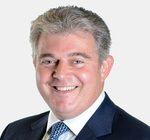
  • Brandon Lewis – 2022 Statement on Electronic Monitoring of Criminals

    Brandon Lewis – 2022 Statement on Electronic Monitoring of Criminals

    The statement made by Brandon Lewis, the Secretary of State for Justice, in the House of Commons on 11 October 2022.

    We set out in our beating crime plan how we will improve public protection and increase public confidence in the justice system. We are determined to empower the police and probation to keep us safe; through providing them with the technology and resources they need, we will crack down on the repeat offenders who are blighting our neighbourhoods.

    Since April 2021 our acquisitive crime project has been using GPS electronic location monitoring to track the movements of burglars, robbers and thieves released on licence and serving a standard determinate sentence of 12 months or more across 19 police force areas. I have now laid a statutory instrument to expand this world-first project to include offenders serving shorter sentences of 90 days or more. This will come into force on 26 October.

    Electronic monitoring will be a compulsory condition on the offender’s licence for the remainder of their sentence up to a maximum of 12 months, other than in exceptional circumstances where probation assess that an offender’s health or personal situation make the use of a tag inappropriate.

    Through this measure we aim to deter further offending and reduce crime; expanding the project to offenders serving shorter sentences will increase the number of offenders captured by the legislation by around 2,000 by March 2025.

    This expansion will be subject to robust evaluation, including of impact on reoffending and cost-effectiveness. The evaluation will be conducted by the Ministry of Justice data and analysis directorate; the final evaluation conclusions report will be peer reviewed by independent academics before publication. It will allow us to better assess the most effective period for electronic monitoring of acquisitive offenders, helping to identify what is necessary and proportionate use and therefore influencing future decisions on how electronic monitoring can be used to reduce reoffending.

    The location monitoring data is used to support the work of probation and the police. Using “crime mapping” technology we overlay police acquisitive crime data with tagging data to identify if any tagged offenders were in the vicinity of a given crime, to better equip the police to investigate offences, apprehend or rule out suspects and to support prosecutions. Alongside this, probation practitioners are provided with summaries of an offender’s movements and compliance behaviour and, to further enhance supervision, they can investigate an offender’s movements in closer detail using a self-service portal.

    Throughout this joint endeavour between the Ministry of Justice and the Home Office, feedback from policing and probation has been positive, and expansion is supported by them.

    A copy of this statement has also been laid in the House of Lords by my colleague, the Lord Bellamy.

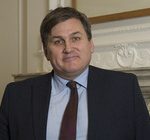
  • Kit Malthouse – 2022 Statement on Examinations in 2023

    Kit Malthouse – 2022 Statement on Examinations in 2023

    The statement made by Kit Malthouse, the Secretary of State for Education, in the House of Commons on 11 October 2022.

    The Department of Education welcomed the successful return of summer exams and other formal assessments in 2022. Alongside Ofqual, we put in place a package of support to recognise disruption faced by the 2022 exam cohort while being clear of our intention to return to exams as normal in 2023.

    In May, the Department and Ofqual confirmed that for exams and formal assessments in 2022-23 there would be usual arrangements for non-exam assessment and there would be full subject content coverage for all subjects.

    On 29 September, the Department and Ofqual confirmed exams will largely return to well-established, pre-pandemic arrangements in summer 2023. In making these decisions, the Department considers the level of disruption experienced by the 2023 cohort over the course of their qualifications has not been as significant as that experienced by those who received qualifications in 2022 as they will have had more time to cover their curriculum, practise assessments, and access education recovery programmes and interventions. There have been no national school closures in the 2023 cohort’s GCSE/A-level teaching years, which are designed as two-year courses. The 2023 cohort had less overall absence, including all covid absences, in their year 10 autumn term than the 2022 cohort did. Furthermore, the Department believes it is important to return to pre-pandemic arrangements to build confidence in the credibility and validity of qualifications.

    In that context, the Department confirms that advance information will not be provided for any exams taken in summer 2023. However, acknowledging students may still have experienced a level of disruption due to the pandemic, the Department has decided that formulae and equation sheets for GCSE mathematics, physics and combined sciences exams should be provided in summer 2023, as was the case for exams in 2022. As most students take at least one of these subjects at GCSE, this will provide broad support for all GCSE students. We have asked Ofqual to put this into place and they have launched a consultation on this.

    On grading, Ofqual have confirmed the position they set out in September 2021, to return to pre-pandemic grading in 2023.

    Looking back over the past three years, the Department and Ofqual are keen to build resilience in the exam system and learn lessons from the alternative arrangements that have been put in place. Jointly with Ofqual, we have launched a consultation that seeks views on how centres should gather and retain evidence from students so that it can be used both to support students’ revision and exam preparedness and could be used as a basis to determine students’ grades in the unlikely event that formal exams and assessments do not go ahead as planned. It invites views on whether the guidance proposed will minimise the burden on centres and students, and if it will support centres in providing the best possible preparation for students for their exams.

  • Jonathan Gullis – 2022 Statement on Initial Teacher Training

    Jonathan Gullis – 2022 Statement on Initial Teacher Training

    The statement made by Jonathan Gullis, the Parliamentary Under-Secretary of State for Education, in the House of Commons on 11 October 2022.

    Today, my Department is informing applicants of the outcomes of the final round of the application process to gain accreditation as a provider of initial teacher training from September 2024. This forms part of the ongoing initial teacher training reform announced on 1 December 2021.

    The key aim of the reforms, which centre around the introduction of a new set of clear quality requirements, is to ensure high-quality teacher training is available in all areas of the country. Following the development of the early career framework and National Professional Qualifications, the reforms to ITT are the next step in realising our ambition to create a golden thread of evidence-based training, support and professional development, which will run through every phase of a teacher’s career. We know that the quality of teaching is the single most important in-school factor in improving outcomes for children, especially for those from disadvantaged backgrounds. Being taught by a high-quality teacher can add almost half a GCSE grade per subject to a given pupil’s results.

    As part of the provider accreditation process, both existing and prospective ITT providers were invited to apply for accreditation to deliver courses from September 2024, when the new quality requirements will come into effect. The process was designed to be proportionate but rigorous, with questions that reflected vital components of the ITT market review’s recommendations.

    One hundred and seventy-nine providers have been awarded accreditation in total across the two rounds, and I am pleased to see the high quality of provision that has been accredited.

    The Department will now work the accredited providers as part of the next stage of the reform process to ensure that all ITT courses are developed in line with the new criteria and are ready for delivery from September 2024. The Department will also work with these providers to ensure that they have strong partnerships in place to provide sufficient training places in the subjects, phases and areas where they are needed.

    I would like to thank all ITT providers for engaging in the process and for their ongoing support as we implement the ITT market review. We understand that providers who have not received accreditation will be disappointed. My Department will work closely with these providers to support their next steps and look to facilitate partnership with accredited providers for those who want to continue to provide ITT from September 2024.

    The Department’s priority will be ensuring that the new standards and expectations will continue to be met at all institutions delivering ITT, both accredited and through the formation of partnerships. As the market develops over the next two years, officials will continue to work closely with a range of sector experts to monitor the availability of provision across all regions. We will be encouraging providers who did not achieve accreditation to consider forming a partnership with an accredited provider in the areas where this is needed.

    This is a significant step in the delivery of our ambitious programme to create a world-class teacher development system and transform the support teachers receive at every stage of their career—all the way from ITT and early career support, to specialisations and school leadership. The number of teachers in England remains high, with over 465,500—full-time equivalent—working in state-funded schools across the country, which is over 24,000 more than in 2010. I am confident that from 2024 the accredited providers will deliver high-quality, evidence-based, training in a reformed ITT market that prepares trainees to thrive in the classroom, wherever they are in the country.

  • Kwasi Kwarteng – 2022 Statement on the Timing of Medium-Term Fiscal Plan

    Kwasi Kwarteng – 2022 Statement on the Timing of Medium-Term Fiscal Plan

    The statement made by Kwasi Kwarteng, the Chancellor of the Exchequer, in the House of Commons on 11 October 2022.

    Today I can inform the House that I have asked the Office for Budget Responsibility to bring forward the date of its next forecast to 31 October.

    Strong growth and sustainable public finances go hand in hand. Alongside the publication of the economic and fiscal outlook, I will set out the Government’s medium-term fiscal plan. This will set out further details on the Government’s fiscal rules, including ensuring that debt falls as a share of GDP in the medium term.

    This forecast, in addition to the forecast that will be commissioned in spring, will fulfil the obligation for the OBR to produce at least two forecasts in a financial year, as is required by legislation.

  • Alison Thewliss – 2022 Speech on the Economic Situation

    Alison Thewliss – 2022 Speech on the Economic Situation

    The speech made by Alison Thewliss, the SNP’s Economic Spokesperson, in the House of Commons on 12 October 2022.

    The Minister talks about the IMF, but not about its criticism yesterday or the pathetic growth it has projected for next year of just 0.3%—funny that.

    The Treasury Committee took evidence this morning from a range of economists, all of whom echoed the concerns of the public about the chaos that this shambolic UK Tory Government have created. I am not sure whether the Minister considers Deutsche Bank as part of his anti-growth coalition, but its chief economist, Sanjay Raja, was very clear this morning that the UK has particular characteristics that are making this crisis worse. He said, “you’ve got a sidelined fiscal watchdog, you’ve got the lack of a medium-term fiscal plan, one of the largest unfunded tax cuts and package of measures since the early 1970s, and it’s sort of the straw that broke the camel’s back.”

    This is chaos that the Minister and his colleagues have deliberately created, and it is impacting people and businesses across these islands, so I ask him: will he bring more money to the devolved institutions to help them tackle the chaos that he and his colleagues have created? Will he commit to uprating benefits by inflation and giving more support to those in the asylum system and those on “no recourse to public funds”? Will he bring certainty to businesses that do not yet know what will happen at the end of the six-month reprieve, because those bills have not gone away?

    The Glasgow Centre for Population Health published some research that attributed about 330,000 excess deaths since 2010 to austerity—the Tory austerity by the Minister and his colleagues over the past 12 years—so will he cancel any further cuts, because they cost Scotland and our neighbours far more than we can ever afford? Scotland did not want this, did not vote for this and cannot trust in the financial stability of the UK, never mind this Tory Government.

    Mr Speaker

    Order. I have the greatest respect for the hon. Lady, but can I just say that she knows the rules give her one minute, not one minute and 45 seconds or two minutes? Please, let us stick to the rules of the House.

    Chris Philp

    The Scottish Government are of course receiving record levels of funding, and that will continue. The hon. Member asked about excess deaths. Well, I think the drug death record of the nationalist Government is, frankly, pretty terrible. She asked about the uprating to welfare. There is a statutory process that happens every year—every autumn—and that decision has not been taken. It will happen in the normal way, as it has been done for every year.

    The hon. Member referenced the IMF’s growth forecast for next year. I have already pointed out that last year we had the highest growth in the G7 and this year we have the highest growth in the G7. If we take the three years together—last year, this year and next year—we will find that the UK, at 11.7% over those three years, still has the highest growth of any G7 country.

    The hon. Member asked about institutions. The Chancellor and the Prime Minister have the highest regard for the OBR and the Bank of England. They are meeting both of those institutions regularly. She referenced the growth plan. Having a competitive tax system, supply-side reforms to unleash the productive potential of our economy and making our energy market function properly once again are essential prerequisites for growth, and I am proud that it is this Government who are promoting them.

  • Rachel Reeves – 2022 Speech on the Economic Situation

    Rachel Reeves – 2022 Speech on the Economic Situation

    The speech made by Rachel Reeves, the Shadow Chancellor of the Exchequer, in the House of Commons on 12 October 2022.

    People are facing insecurity, instability and deep anxiety and they deserve answers. Conservative economic policy has caused mayhem with financial markets, pushed up mortgage costs and put pension funds in peril, and it has wiped £300 billion off the UK’s stock and bond markets—all directly caused by the choices of this Government. The mini-Budget, just 19 days ago, was a bonfire made up of unfunded tax cuts, excessive borrowing and repeated undermining of economic institutions. It was built and then set ablaze by a Conservative party totally out of control—not “disrupters” but pyromaniacs. And that fire has now spread. Yet Government deny all responsibility.

    So will the Minister tell the House, what guarantees will the Government give that the currency slide will stop, and that people’s pensions are safe? How do they expect people to pay £500 more a month, on average, on their mortgages? How many more repossessions of family homes will there be if the Government do not change course? How much more are the Government spending on debt interest because of higher borrowing costs?

    While Ministers desperately try to blame global conditions, why is it that no other central bank in the world has had to step in three times in less than three weeks to protect financial stability?

    The country now faces a very serious situation. Ahead of the ending of the Bank of England’s emergency operations this Friday, what action will the Government take to ensure that their Budget does not have further consequences for financial stability, or for people’s pensions?

    This is a Tory crisis made in Downing Street, but it is ordinary working people who are paying the price. It can be resolved only when the Conservatives put aside their pride and reverse this catastrophic mini-Budget, and they must do so now.

    Chris Philp

    The shadow Chancellor calls for a reversal of the growth plan, yet at the first opportunity—last night—the Labour party voted for it. She asks about mortgage rates, so let me point out to her that mortgage rates around the world have been on an upward trajectory all year. In fact, if we compare base rates in the United Kingdom with those in the United States, we see that in both countries, as she will be aware, the base rate started this year at 0.25%. In the UK the base rate is currently 2.25%, and in the US it is 3.25%, a full percentage point higher.

    The shadow Chancellor referenced borrowing costs. I am sure she is aware that two-year Government bond yields are about the same in the US as they are in the UK—US bond yields have been going up over the course of this year as well. She referenced the currency: the dollar has shown strength against a basket of currencies throughout this calendar year. If she looks at the dollar strengthening against the euro, she will see that it strengthened about 15% this calendar year, and strengthened about 15% against sterling—very similar figures.

    The shadow Chancellor also asked about the cost of living. We are very mindful of that, which is why we have introduced a £37 billion package to help people, disproportionately targeted at those on lower incomes, so that people on the lowest third of incomes receive £1,200. It is why we introduced the energy price guarantee on our second or third day in office, ensuring that people do not pay, on average, more than £2,500, instead of facing bills of £5,000 or £6,000—and not for six months, as the Labour party offered, but for two years. It is why the national minimum wage was increased by a large amount last April. It is why the national insurance threshold was increased to £12,500 in July, so people on lower incomes now pay virtually no national insurance or income tax. That is the package of measures that this Government have introduced, because we stand on the side of working people and have taken the steps needed to support them.

  • Chris Philp – 2022 Statement on the Economic Situation

    Chris Philp – 2022 Statement on the Economic Situation

    The statement made by Chris Philp, the Chief Secretary to the Treasury, in the House of Commons on 12 October 2022.

    The Chancellor of the Exchequer is in Washington, having meetings with the IMF, and is—[Interruption.]—which have been—[Interruption.]—routine meetings, which have been long scheduled.

    Mr Speaker

    Order. I know it is the first Wednesday back; we are all excitable. Let us have a little calm, so that I can hear the Minister. Come on, Minister.

    Chris Philp

    Thank you, Mr Speaker. They are routine meetings that have been long scheduled, and are certainly not a cause for exuberance or over-excitement from the Opposition.

    As we know, the world has faced surging energy prices since Putin’s illegal invasion of Ukraine. We have seen very high inflation across the western world, and we have seen a cycle of increasing interest rates across western economies as well—across many western economies. But let me reassure the House that the fundamentals of the United Kingdom’s economy remain resilient. Unemployment, at 3.5%, is the lowest it has been in my lifetime—and for the record, I was born in 1976. Economic growth last year, the calendar year 2021, was the highest of any G7 country—7.5%. Just yesterday the IMF forecast that economic growth—GDP growth—this current year in the UK would be at 3.6%—once again, for the second consecutive year, the highest of any G7 country. So our economy is in resilient condition.

    But I know that many families are worried about the challenges we face, and that is why, just a few weeks ago—two or three weeks ago—we introduced the energy price guarantee. Families were genuinely fearful that they might face this winter energy bills of three, four, five, six or even seven thousand pounds per year, but that energy price guarantee will ensure that the average household sees energy prices no higher than £2,500 on average—not for six months, like the Labour plan, but for two years.

    We also introduced a growth plan to get our economy growing, to see wages sustainably rising, to see good jobs created and to create a sustainable tax base to fund our public services. This Government have a growth plan; the Opposition have no plan.

    We intend to do this in a way that is fiscally responsible, and that is why—[Interruption.]—and that is why, on 31 October, in less than three weeks’ time, the Chancellor of the Exchequer will set out the medium-term fiscal plan, explaining to the House exactly how he will do that, and how we will continue the UK’s track record of having the highest growth in the G7, not just last year but this year as well.

  • PRESS RELEASE : Over £800m to boost innovation, growth and improve patient safety [October 2022]

    PRESS RELEASE : Over £800m to boost innovation, growth and improve patient safety [October 2022]

    The press release issued by the Department for Health and Social Care on 14 October 2022.

    • £790 million to support breakthroughs in new treatments, diagnostics and medical technology to improve patients’ lives and bolster the economy
    • £25 million for research on patient safety to improve the safe delivery of health and care and better address health challenges, such as cancer treatment and reducing medication error
    • Exceeds funding commitments to boost research across all areas of the country, levelling up innovation and addressing health inequalities

    Patients up and down the country are set to benefit from innovative new treatments and improved delivery of health and care services following significant funding to support ground-breaking experimental medicine research and advance the UK’s response to patient safety challenges.

    Today (Friday 14 October) the government has announced that over £800 million of funding, to be allocated by the National Institute for Health and Care Research (NIHR), will go to support specialist research facilities bringing together scientists to create an environment where experimental medicine and patient safety research can thrive.

    This boost to the country’s research infrastructure will see further investment in scientific expertise which supports access to innovative technology and novel research projects. As well as this, it will improve regional economic growth through employment opportunities, giving private sector organisations confidence to continue to invest in research across the country.

    Nearly £790 million has been awarded to 20 NIHR Biomedical Research Centres (BRCs) across England – including a new centre in Exeter – over the next five years to drive innovation in the diagnosis and treatment of illness across a variety of high-priority disease areas including cancer, mental health and dementia.

    In addition, £25 million over the next five years has been awarded to six NIHR Patient Safety Research Centres (PSRCs) to help improve understanding and resolution of patient safety challenges. The funding will support research to improve incident reporting and investigations, digital innovations to improve patient safety and harness learning from service adaptation during the Covid pandemic.

    Funding will be distributed across the country, with over £260 million being invested outside of London, Oxford and Cambridge. This will increase the coverage of experimental medicine across England and exceed the government’s previous commitments in the Levelling Up White Paper. Not only will this enable more areas to benefit from innovation and facilitate faster uptake where research takes place, it will help to improve health and care services across the country and reduce health inequalities by better understanding and treating illness and improving the delivery of care.

    Health and Social Care Secretary and Deputy Prime Minister Thérèse Coffey said:

    The pandemic has highlighted the importance of our booming research sector and the potential it has to not only strengthen health and care services, but lead to lifesaving developments.

    This additional funding will harness the UK’s world-leading innovation and allow research centres up and down the country to attract experts in their field and conduct research that saves lives.

    From helping develop the Covid vaccine to discovering world-first treatments, these centres have already delivered ground-breaking research and will continue to help us tackle some of the biggest health challenges we face, including cancer, to ensure the NHS continues to deliver world-class care.

    Over the past nine years, the NIHR BRCs have supported almost 60,000 experimental medicine research studies. These have resulted in direct health benefits for patients, including progressing innovative and faster diagnosis, as well as:

    • The development of the Oxford AstraZeneca (AZ) vaccine – the world’s first approved vaccine – and support for the RECOVERY Trial – the world’s largest trial of potential treatments for Covid.
    • A promising new treatment for motor neurone disease which has been shown to be safe, well tolerated and could help slow the progression of symptoms in people with a genetic form of this disease.
    • Novel gene therapy which has the potential to be a ground-breaking cure for patients with haemophilia – a genetic defect that affects their body’s ability to stop bleeding.
    • A study that supports lower exposure to radiotherapy for women with breast cancer which reduces the damage to healthy tissue in the body and minimises subsequent side effects.

    Over the last nine years, the current NIHR PSRCs have supported over 800 patient safety research studies. They have driven improvements in the safety of health and care services, for example:

    • Use of artificial intelligence in detecting breast cancer from mammogram images.
    • Reducing medication errors in primary care settings.
    • Development of patient safety culture improvement programmes in NHS hospitals.
    • Development of guidance for the involvement of patients and families in serious incident investigations.

    Minister of State for Health, Robert Jenrick, said:

    Clinical research has been vital in our fight against Covid and the UK’s innovation is enabling us to transform our health service and ensure it is firmly at the cutting edge of health and care.

    Our NIHR clinical research infrastructure provides crucial access to expertise in designing and delivering high quality, innovative research for the life sciences industry. This supports companies to conduct their clinical studies of new treatments in the UK for patient and public benefit and grows the UK’s share of the global market.

    We’re continuing to build on our world-leading advances to find new treatments and better diagnose illness as well as better understand how we can improve patient safety.

    Professor Lucy Chappell, Chief Executive of the NIHR said:

    This huge investment into early stage health and care research and patient safety innovation recognises the strength of expertise in these areas across the country, and gives our best researchers more opportunities to improve care and treatment for patients nationwide.

    These investments showcase our scientific excellence, ensuring that the UK benefits from the latest innovations and advancements in research and enables a strong and competitive research workforce to be further developed. They are crucial to ensuring that patients receive the highest quality, safest care.

    Investing in the NIHR Biomedical Research Centres and Patient Safety Research Collaborations will contribute to increased economic growth and build a healthier, more resilient nation.

    More broadly, these centres will strengthen the resources and facilities for research across the NHS through access to experts at the forefront of their fields. A key feature of the centres is the collaboration between academics, clinicians, patients and life sciences industry.

    The Patient Safety Research Collaborations will support the NHS to improve patient safety and reduce health inequalities, while the Biomedical Research Centres will help boost advancements in medical treatments and technology and advance our ability to diagnose and treat illness.
  • PRESS RELEASE : Additional £10 million of UK aid for flood relief efforts in Pakistan [October 2022]

    PRESS RELEASE : Additional £10 million of UK aid for flood relief efforts in Pakistan [October 2022]

    The press release issued by the Foreign Office on 13 October 2022.

    • the UK will provide an additional £10 million of life-saving humanitarian support for Pakistan’s flood relief efforts
    • Lord (Tariq) Ahmad of Wimbledon, UK Minister of State for South Asia (FCDO), arrives in Pakistan today [Friday 14 October]
    • the Minister will meet with key government counterparts, community leaders, and aid agencies to discuss the response to the humanitarian crisis and long-term recovery for the country

    The UK is providing further humanitarian support to Pakistan following the devastating floods that have killed over a thousand people and affected more than 33 million.

    As part of a visit to the country, FCDO Minister Lord (Tariq) Ahmad of Wimbledon has today announced a further £10 million of humanitarian aid, bringing the UK Government’s total contribution to £26.5 million.

    The extra support will be spent on urgent life-saving needs such as providing shelter, water and sanitation to prevent waterborne diseases. It will focus on supporting people who are still displaced and those that are returning to their land, by helping re-establish communal water supplies.

    During his visit to Pakistan, Lord Ahmad will meet the Prime Minister, Foreign Minister and other government counterparts to discuss the impact of the floods, visit the areas most affected and speak with key UK-funded aid agencies on the ground in Sindh.

    UK Minister of State for South Asia, FCDO, Lord (Tariq) Ahmad of Wimbledon said:

    The UK continues to help the people of Pakistan recover from the recent devastating floods.

    Our support will help to tackle the spread of waterborne diseases and to improve access to clean water, sanitation, medical care and shelter across the country.

    We are working night and day with Pakistan and our international partners to ensure that UK aid reaches the hardest hit areas.

    As well as helping with urgent life-saving needs, the UK is supporting Pakistan’s economic recovery and resilience against future climate disasters.

    The UK’s new Developing Countries Trading Scheme will help grow trade by giving duty-free access to 94% of goods exported from Pakistan to the UK.

    In addition to the UK’s £26.5 million donation in humanitarian funding, a UK Royal Air Force flight recently delivered eight boats and ten portable generators for use in flood relief operations.

    As well as discussing the floods, the Minister will also use this visit to raise the need for strong international support for Ukraine following Russia’s illegal annexation of sovereign territory, and reaffirm the strong people-to-people links between the UK and Pakistan in the context of the 75 year anniversary of Pakistan’s independence.

  • PRESS RELEASE : COP26 President Alok Sharma calls for shake up of the international system to confront urgent climate challenges [October 2022]

    PRESS RELEASE : COP26 President Alok Sharma calls for shake up of the international system to confront urgent climate challenges [October 2022]

    The press release issued by the Cabinet Office on 13 October 2022.

    • Alok Sharma to address audience at Wilson Center in Washington, D.C. on Friday 14 October, with last keynote speech before COP27
    • Mr Sharma will urge global institutions to urgently adapt and ensure tackling the climate crisis is a fundamental part of their overall purpose
    • Address follows Mr Sharma’s engagements at the World Bank and International Monetary Fund (IMF) Annual Meetings this week

    COP26 President Alok Sharma will today (Friday 14 October, 2022) deliver a major keynote address at the Wilson Center think-tank in Washington, D.C., outlining key climate finance priorities ahead of COP27 next month.

    Mr Sharma is expected to address how the international system – including multilateral development banks, businesses, central banks, finance ministries and regulators – must reform to support faster climate action in line with the Paris Agreement and the Glasgow Climate Pact, which was agreed by nearly 200 countries at COP26 last year.

    Mr Sharma is expected to say: “The world is recognising that we cannot tackle the defining challenge of this century, with institutions defined by the last.

    “We have to incentivise every aspect of the international system to recognise the systemic risk of climate change, and to make managing it effectively its central task,” he will add.

    The COP26 President is also expected to echo a “compelling call for an overhaul of our global financial architecture” as set out in the Bridgetown Agenda by the Prime Minister of Barbados, Mia Mottley.

    Mr. Sharma will say that multilateral institutions of today were not set up with the purpose of tackling an existential climate crisis and that “climate must be at the very heart of what they do, and they must do more to lead on this agenda.

    “The world cannot afford for such institutions to be cautious in how their considerable climate resources are deployed. That, I think, is a matter of social justice as well as environmental security.”

    Speaking to an audience of policy, finance and business representatives, with just three weeks remaining until the start of COP27, Mr Sharma will also reflect on the legacy of COP26 and the UK’s Presidency.

    “It will soon be time for Egypt to pick up the baton. I want COP27 to build on the success of COP26, just as COP26 built on COP25, and COP24 before that,” he will say.

    Mr. Sharma will say that this momentum has been challenged by competing priorities governments have faced this year, but will also emphasise these priorities cannot be tackled in isolation or distract from the net zero transition. The COP President will also recognise that despite progress during the UK Presidency year, including 24 new Nationally Determined Contributions, countries are not on track to deliver the full promise of the Glasgow Climate Pact.

    He will conclude by urging all Parties to arrive in Egypt with the same spirit of urgency, collaboration and compromise that underpinned the success of COP26 in Glasgow. As the impacts of climate change become more extreme and spiral, this will include addressing core issues like loss and damage.

    Mr. Sharma will call on countries to tackle loss and damage by building “on our collective progress at COP26” but “go further still.” He will also confirm that the UK believes it is right that there is a new agenda item on this issue.

    The event is hosted by the Wilson Center, in partnership with the British Embassy, Washington D.C.