Tag: 2022

  • Fleur Anderson – 2022 Speech on an Early General Election

    Fleur Anderson – 2022 Speech on an Early General Election

    The speech made by Fleur Anderson, the Labour MP for Putney, in Westminster Hall, the House of Commons, on 17 October 2022.

    It is a pleasure to serve under your chairship in this momentous debate, Mr Mundell. I thank the Chair of the Petitions Committee, my hon. Friend the Member for Newcastle upon Tyne North (Catherine McKinnell), for fast-tracking this debate and putting the case for a general election so well. She speaks for so many people across this country.

    I also offer a huge thank you and congratulations to the more than 633,000 members of the public who have supported the e-petition that secured today’s debate. Over 500,000 people have signed it in the past two weeks alone, and at the moment, over 1,000 are signing it every hour. I believe that today’s debate is being watched by an unusual number of people for a Westminster Hall debate. A staggering number of people have signed the petition since 28 July, and I have had confirmation that it is the first e-petition calling for a general election to be debated in this House. I was proud to see that over 1,100 of my constituents in Putney have signed it; I think all of us here today, and many other Members, can say that an unusual number of their constituents have signed this petition. It really is very significant.

    I congratulate Darrin Charlesworth on launching the petition back in July. Back then, he said that

    “The chaos engulfing the UK government is unprecedented. Over 40 ministers resigned leaving departments without leadership during cost of living, energy and climate crises. War rages in Ukraine; the Northern Ireland Protocol has further damaged our relationship with Europe; recession looms; the UK itself may cease to exist as Scotland seeks independence. This is the greatest set of challenges we have seen in our lifetimes. Let the people decide who leads us through this turmoil.”

    That is how the petitioner, and the thousands of people who signed the petition, felt back in July. But look at what has happened since. We have had a Prime Minister voted in by the very few. She has launched a new economic strategy with no mandate, prioritising VAT-free shopping for tourists, of all things, and tax cuts for the super-rich. She has tanked the pound, causing the Bank of England to have to step in. She jeopardised pensions and sent mortgage costs soaring, before U-turning on the 45p rate of tax and then on corporation tax. She ditched her Chancellor after 38 days. This morning she ditched the two-year energy price cap, the income tax cut, the freeze on alcohol duties, VAT-free shopping for tourists—fair enough—and the dividend and freelance reforms. Who knows what else is changing as we speak, because the Chancellor of the Exchequer is giving a statement in the main Chamber. I am sure that, as my hon. Friend the Member for Newcastle upon Tyne North said, many more Members would be present if that were not happening right now.

    My hon. Friend the Member for Newcastle upon Tyne North reiterated that there is no mandate and that people have lost patience with the Government. No one wants to sign the petition and ask for a general election unless it is absolutely essential, and we seem to have no other option. She also said that the polls show that the number of people who want a general election is even higher than the number of people who have signed the petition. The damage being done by not raising benefits, and the damage being done to child poverty levels, surely should be uppermost in our minds.

    My hon. Friend the Member for Pontypridd (Alex Davies-Jones) outlined the incompetence that we have seen in the last few months and put it into the context of 12 years of Tory rule, local government underfunding and the failure to stimulate growth, which is the biggest threat to families’ financial security.

    My hon. Friend the Member for Newport West (Ruth Jones) said that she is stopped in the street by people who are worried and afraid. She is not alone; I, too, am often stopped in the street. Just this morning, I went to visit a food bank in my constituency, and so many people told me about their fear. That is why they are talking about calling a general election. We are in unprecedented times.

    My hon. Friend the Member for Hornsey and Wood Green (Catherine West) gave a whole list of reasons why we need a general election, and she started by calling out the failed philosophy of trickle-down economics, which has been laid bare over the last few weeks. The loss of trust of businesses and unions alike, and the issues of benefits, mortgages, food banks and energy provision—the list goes on. There are many reasons why people have signed the petition and are calling for a general election.

    I often say that debates in the House are timely, but this is certainly a timely debate—more than most. The petition is highly significant, and I hope that the Minister’s response will reflect that significance, rather than brushing the issue aside and saying that it would be too disruptive to have a general election at this time. People who have signed the petition feel that the disruptive thing to do is to stick with what we have now. We in this House are entrusted with making decisions on behalf of everyone in the country only on the basis of a democratic mandate from those who have elected us to be here.

    A pact has arisen with the British people from hundreds of years of history: parties share in their manifestos what they will do, and they are elected on the basis of their manifestos. From the party with the biggest number of elected Members, the Prime Minister is chosen to deliver the manifesto mandate. We are very close to losing the trust of the nation, because that mandate is being broken with every statement and every press conference. It is not just a matter of communication, and it is not just because the new leader was chosen without a clear majority of even her own MPs supporting her. This is a loss of faith with the policies of the Conservative Government, because they are not the ones that were in the manifesto. There is a loss of faith that these policies are in the best interest of people across the country, rather than in the best interest of only the Conservative party.

    The markets lost faith in Conservative policies—the pound tanked and mortgage prices soared—but the petition shows that the people have lost faith as well. No one voted for the biggest raft of tax cuts since 1972. No one voted for £45 billion of tax cuts with no fiscal strategy. No one voted for bankers’ bonuses. No one voted for trickle-down economics, with no evidence that it will actually trickle down. No one voted for U-turns on banning no-fault evictions. No one voted for the economy to be plunged into chaos. No one voted to ditch the green homes grant after just a few weeks. No one voting for lifting the moratorium on fracking. No one voted to scrap crucial environmental protection laws, to attack nature or even to turn on the Royal Society for the Protection of Birds, the National Trust, the Wildlife Trusts and the Ramblers.

    No one voted to reduce workers’ rights. No one voted to pull out of the European convention on human rights. No one voted for Brexit chaos to continue. No one voted to jeopardise the trade deal with India or to shelve a trade deal with the US. No one voted to trash our institutions or to bury reports from the Office for Budget Responsibility. No one voted for soaring mortgages and the follow-on that will inevitably result in rent costs increasing at the same time as a cost of living crisis.

    No one voted to damage further our international reputation, and no one voted to damage our Union. The fact that the Prime Minister has not even called the First Ministers of Scotland or Wales yet is a scandal. Our Union is precious. It is shocking that the Prime Minister has not even telephoned the two First Ministers. Perhaps the Minister will confirm when those phone calls will take place.

    What next? A general election may be a short-term disruption, but the damage to our economy, people’s lives and the Union could be far longer reaching. This Prime Minister is no different from her predecessor, and so it is no wonder that people’s patience has run out. She seems to now be interested only in saving her skin at all costs. The public will not forgive and they will not forget. This is a Tory crisis, made in Downing Street but paid for by working people up and down my constituency and those of every Member present and all other Members.

    It is important to put this petition in the context of the last three years. These problems did not start in July, when the petition started, or in September. There have been three years of scandal, sleaze and sloppy governance. Will the Minister confirm when the new ethics adviser will be appointed? We need to win back the trust of the British people. How can we do that if there is no ethics adviser even in place?

    Since the last election—not even three years ago—we have had two Prime Ministers, five Chancellors, a slew of scandals, endless errors, and a pile of broken promises. The Conservatives have lost the right to govern. As the petition says loud and clear, the public have lost patience. A change of Chancellor is not enough. The Tories have tried a change in Prime Minister, and it is worse than ever. We do not need, as has been rumoured, a trumped up coronation of a new Tory leader either. We need a change in Government. As the chairman of Tesco said yesterday, there is just one team on the pitch now: Labour has a plan for growth, while the Conservatives do not.

    Labour’s approach will be based on working together, with businesses, workers and public bodies all pulling together in a national endeavour to rebuild Britain and seize the opportunities of the future. Labour’s plan to buy, make and sell more in Britain is all about using all the tools at the Government’s disposal to support businesses in this country, bringing jobs back to Britain, sorting out the Government’s supply chain chaos, and last but not least, cleaning up the Tories’ Brexit mess, taking action on the climate and nature emergencies, and getting our economy firing on all cylinders.

    If there is a general election and the people choose Labour’s plan for growth over the Conservative anti-growth coalition, we will invest in people, skills and our public services. We will rebalance the books based on fairness and tackling the climate emergency, not on the backs of working people and not by rewarding bankers. No wonder the people who signed this petition want that vision of stability over the current chaos, even if that means calling for a general election. For the good of the nation, we need a general election. Labour is election ready. We are ready for Government. Only Labour offers the leadership and ideas that Britain needs to secure the economy and get us out of this Tory-created mess.

  • PRESS RELEASE : Foreign Influence Registration Scheme to make clandestine political activity illegal [October 2022]

    PRESS RELEASE : Foreign Influence Registration Scheme to make clandestine political activity illegal [October 2022]

    The press release issued by the Home Office on 18 October 2022.

    For the first time, new legislation will compel those acting for a foreign power or entity to declare political influencing activity – and criminalise those who do not.

    This change is being brought about by the Foreign Influence Registration Scheme (FIRS), which has been introduced to the UK Parliament via an amendment to the National Security Bill.

    The bill brings in vital new measures to protect our national security and modernise existing counter-espionage laws to tackle covert influence.

    The new scheme will increase the transparency of political influencing activity being carried out for a foreign power or entity; help safeguard UK democratic institutions from covert influence; and better inform us as to the nature, scale, and extent of foreign influence in our political affairs.

    The public register will exist on a government website for political influence activities.

    Tom Tugendhat, Security Minister, said:

    Unfortunately, there are people working in secret to undermine the UK’s democracy and cause harm to our citizens.

    For years I have advocated for the establishment of a foreign influence registration scheme to deter foreign powers from pursuing their pernicious aims through the covert use of agents and proxies.

    I am delighted that the scheme we are introducing will help ensure our political affairs are protected, whilst embracing open and transparent engagement with foreign governments and entities which we continue to welcome.

    Ken McCallum, Director General of the Security Service (MI5), said:

    The UK is in strategic contest with states that seek to undermine our national security, democratic institutions and commercial advantage at an unprecedented scale. We need new, modern tools and powers to defend ourselves, proportionately but firmly.

    Alongside the other vital measures introduced in the National Security Bill, the new Foreign Influence Registration Scheme will make it harder – and riskier – to operate covertly in the UK at the behest of a foreign power. It will also increase openness and transparency around the scale of foreign influence in our political affairs and make it harder for our adversaries to undermine our democracy. The Foreign Influence Registration Scheme is a modern power designed to tackle a modern threat, and I welcome its inclusion in the National Security Bill.

    The scheme will be 2-tiered.

    The primary tier will require the registration of political influence activities within the UK at the direction of a foreign power or entity. The person would need to declare who they are in an arrangement with, what activity they have been directed to undertake, and when the arrangement was made. They must do this within 10 days of the direction, or in any case, before the activity is carried out. Foreign entities will also be required to register their own political influence activities before carrying them out.

    Notable exceptions to those who would need to register include those working for a foreign power in their official capacity, those with diplomatic immunity, those who provide legal services, those working for domestic and foreign news publishers and those in an arrangement to which the UK government, or someone acting for or on behalf of the Crown is party.

    The penalty for failing to register, carrying out activities that aren’t registered, providing false or misleading information or any other foreign influence offence is a maximum of 2 years’ imprisonment, a fine or both.

    The enhanced tier allows the Home Secretary to specify a foreign power or foreign power-controlled entity where necessary to protect the safety or interests of the UK, and with parliamentary approval, make it an offence for anyone to carry out any activity in the UK at their direction without it being registered. There is no restriction on which states could be named, to enable the UK to respond to emerging threats from any foreign power. The penalty for these offences is up to 5 years’ imprisonment, a fine or both.

    Further powers added to the bill include those to protect UK interests from corrupt financial influence, covered by ‘Powers of arrest and detention.’ This will give investigators powers to monitor a suspect’s account in real-time; identify accounts held by suspects in UK financial institutions; and compel individuals or organisations to provide relevant information, produce documents and/or answer questions in relation to an investigation into foreign power threat activity. Obtaining a material benefit from a foreign intelligence service will also be made an offence.

    The National Security Bill is currently passing through Parliament.

  • PRESS RELEASE : ‘Noise camera’ trials to detect rowdy drivers coming to Bradford, Bristol, Great Yarmouth and Birmingham [October 2022]

    PRESS RELEASE : ‘Noise camera’ trials to detect rowdy drivers coming to Bradford, Bristol, Great Yarmouth and Birmingham [October 2022]

    The press release issued by the Department for Transport on 18 October 2022.

    • new noise-detecting traffic cameras deployed in 4 trial areas to crack down on ‘boy racers’ revving engines and using illegal exhausts
    • trials backed by £300,000 government investment as annual social cost of road noise pollution estimated at £10 billion
    • Bradford, South Gloucestershire, near Bristol, Great Yarmouth and Birmingham declared winners of a nationwide competition host cameras

    A new-age road camera designed to identify and track drivers who break the law by revving engines and using modified exhausts will be installed in Bradford today (18 October 2022), before travelling to South Gloucestershire, Great Yarmouth and Birmingham as part of a trial to clampdown on antisocial driving.

    The Transport Secretary has confirmed these 4 locations will host the new ‘noise camera’ following a government-backed competition to tackle noise pollution on some of the loudest streets in Britain.

    The new technology uses a video camera in conjunction with a number of microphones to accurately pinpoint excessively noisy vehicles as they pass by. This means that if drivers break the law by revving their engines unnecessarily or using illegal exhausts, they will be automatically detected. The camera takes a picture of the vehicle and records the noise level to create a digital package of evidence which can be used by local police to fine drivers.

    Road noise is known to contribute to health problems, such as heart attacks, strokes and dementia, and the annual social cost of urban road noise, including lost productivity from sleep disturbance and health costs is estimated to be up to £10 billion.

    The trials, backed by £300,000, start with the camera in Keighley, Bradford from today and will then be placed in the other 3 locations over the next 2 months.

    Transport Secretary Anne-Marie Trevelyan said:

    Rowdy road drivers beware – these new cameras will help the police clampdown on those who break the legal noise limits or use illegal modified exhausts to make excessive noise in our communities.

    We’ll be working closely with the local authorities and police to share any findings, and I hope that this technology paves the way for quieter, peaceful streets across the country.

    The department launched a competition to identify the areas to host the cameras in April and extensive testing at a private test track facility took place to perfect the technology. Now in the next phase, the locations for these roadside trials have been decided based on the impact to local residents of illegal noisy vehicles, after MPs across the country applied for the camera to be set up in their local area. If successful, the cameras could be rolled out nationwide.

    Noise Abatement Society chief executive Gloria Elliott OBE said:

    Excessively noisy vehicles and anti-social driving causes disturbance, stress, anxiety and pain to many. It is unsafe and disrupts the environment and people’s peaceful enjoyment of their homes and public places.

    Communities across the UK are increasingly suffering from this entirely avoidable blight. The Noise Abatement Society applauds rigorous, effective, evidence-based solutions to address this issue and protect the public.

    Atkins-Jacobs Joint Venture is acting as a technical consultant for the trials, providing acoustics expertise, design, modelling and asset management. The noise camera is designed and developed by MicrodB.

    Atkins Jacobs Joint Venture Practice Director Andrew Pearce said:

    The real-world trials of the technology solution the Atkins Jacobs JV has developed and tested on the track is an important step for the scheme towards solving a problem that affects many communities across the UK.

    We are fully expecting the trial in these four chosen locations to confirm what we have seen in testing, which is a highly targeted use of technology to ensure only those motorists making excessive noise will be subject to enforcement.

    The trials will continue for 2 months across the country. The department continues to work closely with all local authorities and MPs to tackle rowdy, illegal noise disruption from traffic.

  • PRESS RELEASE : Restoring security and stability for the Haitian people [October 2022]

    PRESS RELEASE : Restoring security and stability for the Haitian people [October 2022]

    The press release issued by the Foreign Office on 17 October 2022.

    Statement by UK Ambassador James Kariuki at the UN Security Council briefing on Haiti.

    Thank you, President. And thank you to SRSG La Lime for her sobering briefing this afternoon. I recognise the presence of the representatives of Haiti, the Dominican Republic, Belize, and the Francophonie at the Council. Let me make three points today on behalf of the United Kingdom.

    First, we remain deeply concerned with the deterioration of the humanitarian situation within Haiti. Armed gangs are blockading roads and restricting the transport of fuel throughout the country. As a result medical services are unable to reach those people most in need, including those affected by the outbreaks of cholera which have exacerbated the misery of the Haitian people. Fuel must be able to reach hospitals, and routes into hospitals must be cleared so those affected can reach them. Perpetrators of gang violence must be held to account and denied the capacity to spread further instability and suffering. In this regard, we welcome the sanctions resolution proposed by the US and Mexico as a positive contribution for the security and stability of Haiti.

    Second, Mr. President, we acknowledge the Haitian Government’s urgent request for international support in tackling the current security situation. We welcome further Council discussion on the authorisation of an international security assistance mission as proposed by the Secretary-General. Led by Haitian needs, the international community should help restore effective governance and combat endemic gang violence. International efforts should also support an environment in which free and fair elections can be held as soon as possible.

    Third, the United Kingdom offers its full support to the UN Integrated Office in Haiti, who continue to operate in deeply challenging circumstances. BINUH has provided invaluable assistance to the Haitian government over the course of its mandate. It will play a key role in creating the space for political stakeholders to agree a solution that restores security and stability for the Haitian people.

    Thank you.


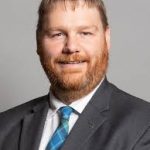
  • Owen Thompson – 2022 Speech on an Early General Election

    Owen Thompson – 2022 Speech on an Early General Election

    The speech made by Owen Thompson, the SNP MP for Midlothian, in Westminster Hall, the House of Commons on 17 October 2022.

    It is a pleasure to serve under you in the Chair, Mr Mundell. It is a bit of a challenge to prepare for a debate like this, because we are living through the most unprecedented series of political earthquakes, with the ground constantly shifting beneath our feet. It is almost as though we are living in a time when the longevity of a Prime Minister or Chancellor of the Exchequer is measured in hours rather than months or years, so please forgive me if I keep an eye on my phone to ensure that Ministers and policies remain the same as they were when I rose to speak. It is good to see this Minister in his place. He is certainly not hiding under any desks, as it may have been suggested that others were.

    This short-lived Government have pivoted so many times already—there have been so many U-turns—that we have absolutely no idea what direction we are travelling in, but we are lurching speedily towards a cliff edge. In effect, all the promises and pledges so firmly given by the Prime Minister during the long and tedious leadership campaign and reinforced several times over the last couple of weeks have been abandoned. We have been left wondering whether the notorious mini-Budget was a mere mirage to our collective consciences. The tax cut for the wealthiest, the basic rate cut, the dividend tax cut and the corporation tax cut are all gone—along with the former Chancellor himself. The only positive bit, I guess, was the two-year energy cap, which provided some much-needed certainty to struggling households, but it is also gone; even it is not there now. So what next? Who knows? The Prime Minister might even have gone by the time I finish speaking and sit down, although who would take the poisoned chalice is another matter.

    Even for an Opposition Member, it is at times almost too painful to watch this embarrassing farce of a Government limping on. It feels like a particularly shambolic episode of “The Apprentice”, and at this stage I do not think I would be surprised if Lord Sugar suddenly appeared and fired the lot of them. It is certainly beyond any parody that could be imagined in “The Thick of It”. I am sure that a few of us could imagine, or begin to imagine, what might be coming out of the mouth of Malcolm Tucker if he were having to deal with such a situation.

    We know that it has gone too far when we can no longer tell the satire from the ridiculous reality, but the gross economic incompetence of it all has deadly serious consequences for millions of people across the UK. There are people who are working 40 hours or more a week and are still unable to make ends meet. Established businesses are at risk of going under because they cannot afford to pay soaring energy bills. Families are going hungry or are afraid of losing their homes.

    I held a cost of living event in Gorebridge in my constituency just on Friday past. I had invited the Prime Minister to attend so that she might be able to answer constituents’ concerns directly. However, despite watching out for her, I regret to inform the House that she did not attend—a bit like earlier today. I was hearing harrowing stories from many people struggling simply to make ends meet. They did not know where to turn. We have a fantastic sense of community in Midlothian and we had a great range of partners in attendance, so we were able to point people to some of the right places. But what can people do when the Government fail so spectacularly the people they are meant to serve?

    I therefore completely understand where the petition has come from and why it has gathered such a high number of signatures. It is now 633,000 and continuing to rise—I am watching the petition clock up signatures as I stand here. That number includes more than 1,000 people in my own constituency of Midlothian. People are absolutely scunnered by what they have witnessed. At a time of crisis, they want a competent Government of their own choosing, not a Prime Minister chosen by a few.

    In response to the petition, the Government argued that the UK’s is not a presidential system. I am glad that they finally acknowledge that, because the Prime Minister and her predecessor—whose paw prints are all over the mess that we are in—do not seem to have much truck with collective decision making. They blatantly disregard evidence and seem reluctant to inform Cabinet colleagues of their latest back-of-a-fag-packet policy. For some time, there has been an unhealthy trend in the UK towards more personality-based politics—something that perhaps needs to be reflected on in calmer times.

    Of course, having a Government we did not vote for is not something new for those of us in Scotland; it is the normal state over the last number of years. I am very grateful that we at least have a clear exit route in front of us to escape from this bourach: we have a modern, proportional parliamentary system working well at Holyrood already and a Scottish Government ready with an alternative plan for our future should the people choose it. Independence for Scotland is not a threat to the rest of the UK or the social bonds that we cherish. It is an opportunity for a more equal partnership, whereby Scotland could demonstrate to the rest of these isles the genuine alternative to the status quo.

    We could protect the fabric of our communities, look after vulnerable citizens and protect our landscapes and nature. We could build a new, greener industrial base, becoming the renewable powerhouse of Europe and rejoining our European partners in free trade and travel across the continent. We could value everyone, no matter where they come from, and create a fairer, wealthier and more equal society. That will create sustainable, shared prosperity far better than any trickle-down economics—relying on scraps from a rich man’s table—ever could.

    In Scotland, we have a cast-iron mandate for a referendum on our future, yet this discredited Government and—disappointingly, I have to say—the official Opposition still seem to block all democratic paths to achieve it. Choice is the key issue here, and that is something that seems to have been forgotten in the corridors of power in this place. The right to self-determination is a fundamental and inalienable right of all people. It is enshrined in international law, the UN charter and the international covenant on civil and political rights. The UK Government support that principle for other countries, but not, it seems, for Scotland. For this chaotic and unpopular Government to continue to say no to a referendum is more like the actions of a dictatorship than those of a democracy, and I hope the next Prime Minister will reconsider that position, whoever they are and whenever they come along.

    While I agree with the growing call for a general election, it is not a long-term solution for our broken system. I urge all democrats, whether or not they support independence, to get behind Scotland’s right to choose. Democracy is not a one-time event—the Prime Minister has been able to change her mind on her policies in the space of a matter of days, so why should the people of Scotland not be able to change their mind after eight years of broken promises? The ground has shifted many times. All the big claims from Better Together have been spectacularly wrong: staying in the UK did not keep us in the European Union, it did not protect energy prices, and it most certainly did not keep the economy on a steady course. The future of Scots’ mortgages and pensions has never been more uncertain than it is today. When circumstances change, the people have a right to change their mind, as the current Prime Minister demonstrates again and again with U-turn after U-turn.

    Whatever the party of government chooses to do next, we have to remember that the crisis we face did not begin with the current Prime Minister—the one who was Prime Minister at the time of writing, at least—and it will not end when she goes, if indeed she is still in post. We have had 12 years of Conservative mismanagement. We have energy policies that are unfit for purpose, and austerity policies bringing public services to their knees. We have no solution to the continued chaos from Brexit, which has been a disaster for our businesses, public sector, education and research, holidaymakers, travel and cultural life. Sadly, Labour has no answer to that point. Another general election might put a plaster on some of those wounds, but it will not heal the UK’s chronic problems. Independence for Scotland is an idea whose time has come, and it cannot come soon enough.

  • Catherine West – 2022 Speech on an Early General Election

    Catherine West – 2022 Speech on an Early General Election

    The speech made by Catherine West, the Labour MP for Hornsey and Wood Green, in Westminster Hall, the House of Commons, on 17 October 2022.

    Thank you for calling me to speak, Mr Mundell. It is a pleasure to contribute to this debate under your chairmanship.

    This is a Tory crisis, made in Downing Street but paid for by working people, as my hon. Friend the Member for Newport West (Ruth Jones) has said. Changing the Chancellor over the weekend or making a partial U-turn does not undo the damage that has been done by the Prime Minister and the Conservative party, who selfishly used the whole summer for their infighting, rather than focusing on the needs of working families, such as their energy bills. Now look where they have landed us; they have undermined our institutions and trashed our standing on the world stage, damaging the country’s credibility as a place to invest. They need to get on with reversing this Budget in order to reassure the markets. However, the statement that is being delivered in the main Chamber as we speak here in Westminster Hall does not give me much cause for pleasure, because I believe that it will lead to more hardship for working people. Basically, it is balancing the books on the backs of working people, who have played no role in crashing the economy.

    The problem is the philosophy of trickle-down economics, which the Prime Minister seemed to promote when she was first elected to the post by Tory party members. However, the confusing thing—for members of the public, the markets and for us as MPs—is that the new Chancellor appears to have turned all that on its head.

    The Conservatives crashed the economy for unfunded tax cuts for the wealthiest, causing mortgages to skyrocket and making people worried sick about their pensions. When the Prime Minister was asked to come to Parliament to explain, somehow she sent someone else and was not even able to turn up to apologise for what she had done to wreck our standing in the world and to wreck the economy.

    I would be very happy with a general election. I hope that some fresh faces might improve the situation somewhat. The important thing is that, as a representative from Tesco said yesterday on the BBC, the Labour party has a plan. It has the confidence of large groups such as Tesco and others. When Tesco, or another large company like it, agrees with the trade unions that the Government have wrecked the economy, we know it is time for some fresh faces.

    We are ready. We have been watching for 12 years. We have been watching as child poverty has skyrocketed. We have been watching as the promise of levelling up—which was a good Tory pledge and a good idea—has utterly failed. We will see that as the Chancellor now announces the cutting back of capital and revenue spend in the poorest corners of the UK.

    With the Office for Budget Responsibility not having laid out its view, it is difficult for us to say exactly, in pounds and pennies, what Labour would do. However, we have enough of an outline; we have something that is much more convincing than what the Government will take to the general election. It may not come today and it may not come tomorrow, but we all know that the general election is not far off.

    Let us talk briefly about the mortgage situation. We will need a plan for people’s mortgages. The eye-watering mortgage increases will cause homeowners across the country sleepless nights. In the area I represent, where there are very expensive mortgages because the cost of housing is so high in London, those who can buy their own homes are very stretched indeed. One mum told me that she had sleepless nights, saying, “How am I going to come up with £800 as of next spring? I don’t know where that’s going to come from.” Her job is quite well paid, but it does not pay another £800 a month. Those are the sorts of conversations that families are having up and down the country. Mortgage increases will lead to more families breaking up, too. It is a fact that the more financial worries people have, the more that families tend to break up under their weight.

    Another thing that is very much on our minds as Labour MPs is the question of benefits, and what will happen to the poorest in our society. The events that we are most often invited to attend in our constituencies are food bank openings. I have been involved in both local and national politics since 2001, and I have never gone to so many food banks. Bounds Green food bank tells me that it used to open at 10 in the morning and close at 1 pm, but it now closes at 11 am, because in one hour all the food is gone, and there are fewer and fewer people who are able to donate. This crisis is doubly unfair on those who need to use food banks.

    Working parents, disabled people and the poorest pensioners must have the knowledge that, when we get in, our Government will ensure that they can pay for the cost of living. In fact, once we get in, and there are fresh faces and fresh energy, I believe that the economy will improve a bit—just on the basis that we have more energy and some ideas. In a democracy, any Government tend to run out of ideas. After 12 years, this is a genuine fact: the Government have run out of ideas. We saw that in the summer, when Tory candidates said some nonsensical things and were completely out of touch with what the average person is deeply worried about.

    I have another couple of points to make. I am very worried about the treatment of the civil service during the last month. It was not just the fact that the Office for Budget Responsibility was not permitted to give an outline to MPs, journalists, markets and citizens; pushing out the head of the civil service and the Treasury on day one sent a very bad message to all those parties. Over the years, civil servants in our system have held up a non-partisan approach to what the right thing is for the country. That is not to say that there cannot be conflicts or debates between a politician and a civil servant, but sacking the most senior civil servant in the Treasury was one of the most troubling things I have seen since being in this House.

    The OBR was not allowed to make its statement, institutions such as think-tanks and the Institute for Fiscal Studies were publicly trashed over the summer, and very negative language was used about the Governor of the Bank of England, when his job is to provide financial stability for the country. Time and again during the leadership election there were subliminal and quite outspoken criticisms of the Governor. The scene was being set for trashing the institutions that basically, through a gentleman’s agreement, hold together our standing domestically and internationally. That was completely detonated when the current incumbent in Downing Street—I assume she is still there—got into power. The judgment of that individual has come into our sight.

    Something else has been really bothering me in the last couple of weeks. As we have a couple of minutes up our sleeve, may I be indulged, Mr Mundell, in mentioning that I read in The Guardian that when the Prime Minister moved into Downing Street she moved out of the former Prime Minister’s office—Mr Johnson’s office—and allowed her assistant, Mr Mark Fullbrook, to move into it? Mr Fullbrook is based in Mr Johnson’s office, and apparently the current Prime Minister uses the Cabinet room for her discussions. Fair enough, but it worries me deeply that this individual has a very questionable record on two counts. First, there is a question over who he has advised in a Libyan set-up, and whether he has advised correct people there. Secondly, there is the question of his advice in a gubernatorial race in the USA. Money came into his company so that he could work on somebody else’s campaign, and the FBI has been looking at whether the funding has been correctly transferred from one party to another.

    To have somebody who is being investigated by the FBI sitting in Mr Johnson’s former office chills me to the bone, but that is the sort of Government who have finally got into power in this country. Regardless of how many days this Government have left, we urgently need an independent ethics adviser to be appointed. Other Members may be able to clarify this, but my understanding is that the Prime Minister said that that was not urgent, and not particularly necessary. I think it is urgent, but only a new Government can clean up the mess that this Government have got themselves into.

    I will talk briefly about constituents who have written to me about the cost of living crisis. They are not necessarily going to food banks currently, but they are finding life very difficult indeed. They have told me how much food in the supermarket has gone up by—real basics, such as milk, butter and chicken. People should be able to put those basics on the table to feed their families. Energy costs and the cost of petrol to go into someone’s car have been soaring; yet what we have been discussing in the House of Commons often does not reflect the pain that many people are going through. We want to see workers getting decent pay, being respected, and having their rights at work respected—not a Government who seek to roll back further the rights of trade unions, or of people who want to protest against what the Government are doing. We are seeing increasing authoritarianism, which seems to go hand in hand with the financial mistakes that the Government have made.

    We want the question of the national grid and energy shortages to be addressed with some sincerity and honesty. Last week and the week before, when National Grid warned that there would be blackouts, no one really believed the Government when they said, “We’ll be fine”. We have been told that before and then we have had a crisis. It is deeply distressing to see the lack of honesty. We need the Government to be honest and say, “There could well be blackouts, and if there are, this is what you do: one, two, three.” They should not let people live in fear that that will happen without the correct advice on what to do if it does.

    On clean power, which links to the national grid question, the next Labour Government will launch an urgent mission for a fossil fuel-free electricity system by 2030, making the UK a clean energy superpower that will export clean power to the rest of the world. Gas futures price projections show that that would save UK households £93 billion over the rest of this decade, or an average saving of £475 per household every year until 2030. This world-leading commitment would support the creation of more than 200,000 direct jobs and 260,000 to 300,000 indirect jobs.

    That kind of vision, plan and investment in skills and the future, with a proper plan for our regions, is giving the likes of the Tesco boss who said that Labour had a plan confidence that we do. The UK would be the first major economy to make that world-leading commitment, alongside smaller European countries such as Austria, Portugal, Denmark and the Netherlands. It complements Labour’s plans to increase energy efficiency, including through our warm homes plan to insulate 19 million cold, draughty homes over a decade.

    A number of Members have been on local councils. When I was a borough leader in 2010 we had a very good programme for giving away boilers to the private rented sector, and a plan to retrofit draughty Victorian properties. After 2010, it was disappointing to see Mr Osborne decide to trash all spending to councils, including for all the important green programmes to insulate homes. We would have had 30% more warm homes in my constituency if that small amount of funding had been allowed to continue. I am sure that if that had been replicated across the UK, we would spend so much less as a nation on fuel and energy.

    Martin Lewis has made his most recent projection of what our fuel bills will look like next year. I am pleased that we will not be opposing the energy price guarantee legislation this evening, but for goodness’ sake, get the money off the companies. Do not put it on to debt, because that will make the markets go crazy again. The Government must listen to the Opposition and accept that we have sometimes come up with some good ideas.

    Thank you for your patience, Mr Mundell, as I have been on a circuitous route around the question of a general election. I have laid out some of our good ideas. We will have an energy policy for the future. We will have a plan for working people. We will have a vision for no more food banks, for the building of more affordable homes for our residents, and for enhancing our role in the world. I hope we will look at eliminating our huge trade deficit, which is another area that worries many of us on the Labour Benches. I hope that with some fresh faces and energy through the upcoming general election, which I am sure will come, we will end up with a wonderful team of committed Labour Cabinet members and a Labour team that will restore us as the best country in the world.

  • Ruth Jones – 2022 Speech on an Early General Election

    Ruth Jones – 2022 Speech on an Early General Election

    The speech made by Ruth Jones, the Labour MP for Newport West, in Westminster Hall, the House of Commons on 17 October 2022.

    It is a pleasure to serve under your chairmanship this afternoon, Mr Mundell. I am grateful for the opportunity to speak in today’s important debate on e-petition 619781. I pay tribute to my hon. Friend the Member for Newcastle upon Tyne North (Catherine McKinnell) for speaking so well and giving voice to so many concerns felt by me and an increasing number of my Newport West constituents.

    The state of our nation is far from strong, and it is important that we recognise that the challenges and obstacles faced by the people of our United Kingdom have been caused by the Conservative party and our Prime Minister. This is a Tory crisis, made in Downing Street, and being paid for by working people in Newport West and across the country. This 12-year-old Conservative Government have crashed the economy through enormous unfunded tax cuts; they have left people worried as they face higher mortgages and soaring costs, and have done nothing to show they understand how serious the situation is.

    On Friday, the right hon. Member for Spelthorne (Kwasi Kwarteng) was fired by the Prime Minister, who is his ideological bedfellow. They were in lockstep over every key element of Government policy announced since 6 September 2022. We do not simply need a change of Chancellor; we need a change of Government and a general election.

    Of course, Government Members, if they were here, would say that His Majesty’s Opposition have to call for an election—it is what we do; that is our job—but we are beyond simply saying it for the sake of it. Indeed, The Sunday Times editorial yesterday called for a change of Prime Minister and a general election, and I quite agree. I feel sure that the Leader of the Opposition, my right hon. and learned Friend the Member for Holborn and St Pancras (Keir Starmer), stands ready to lead.

    Our nation is in peril. Our people, from Scotland to Wales and from England to Northern Ireland, are having to decide between heating and eating. Now, with rising mortgages, people across the nation face losing their homes. We are in a disgraceful situation, and not one word from any Minister in this Government reassures me that they understand the challenge before them. They also do not understand the scale of the change required, or the fact that if we do not stabilise the markets through sensible policy decisions we will push our people not just to the edge, but over the cliff.

    I was not elected to this place by the people of Newport West to stand by and let this reckless, out of touch and inward looking Tory Government get away with destroying the lives of tens of millions of people. That is the situation we are in, and, as my hon. Friend the Member for Newcastle upon Tyne North made clear, that is why we need a general election. The petition we are considering today has more than half a million signatures; indeed, as my hon. Friend said, there are 630,000 signatures and the number is still increasing. As parliamentarians, we have a responsibility to give voice to people’s fears, worries, concerns and demands.

    I asked one of my constituents, Amanda Bayliss, who lives in Caerleon, for a quote for this debate and she said:

    “Dear Ruth, I am appalled and devastated by the actions of this current government. I’m genuinely worried and afraid for my future and that of my children and grandchildren.”

    She went on to say that this

    “government must be stopped at all costs before there is nothing left of this country, and we reach a point of no return.”

    It is not just Amanda in Caerleon; across Newport West, I am accosted by people in the supermarket or on the street, and yesterday even in church, who say, “For goodness’ sake, Ruth, get rid of this Government”. I have to tell them that I do not have the power to do so.

    This petition shows the strength of feeling across the United Kingdom. Our United Kingdom is living through a moment of profound change. It needs a Government who can deliver an economy that works for everyone, delivering the jobs and growth of the future. In recent days, we have been reminded of how working people have been left counting the cost of 12 years of Tory Government. The Conservative party’s failure to grow the economy has resulted in stagnant wages and broken public services.

    The Labour party has a serious plan for growth and wants to see all our nations and regions benefit from and contribute to the growth and jobs of the future as we deliver net zero. The Chancellor of the Exchequer, the right hon. Member for South West Surrey (Jeremy Hunt), is now the de facto Prime Minister, without a single vote being cast by a single person.

    We know now that the Prime Minister believes in the failed trickle-down ideology of the past, which has locked Britain out of growth and which will never deliver for working people. My party will deliver for working people, as it is already doing in Wales; Labour, under First Minister Mark Drakeford, is delivering for the people of Newport West and for people across Wales.

    Here and in Wales, the Tories are the party of vested interest and their time to go has come. That is why we need a general election, and when it comes Labour will deliver the fairer, greener future that this country deserves.

  • Alex Davies-Jones – 2022 Speech on an Early General Election

    Alex Davies-Jones – 2022 Speech on an Early General Election

    The speech made by Alex Davies-Jones, the Labour MP for Pontypridd, in the House of Commons on 17 October 2022.

    It is an honour to speak with you in the Chair, Mr Mundell. I believe that I was the first Member to call for a general election this side of the summer, in the Chamber during Prime Minister’s questions on 7 September. It is therefore a great privilege to build on that premonition by contributing to today’s debate and fully outlining the reasons why a general election is now the only possible way forward.

    Almost 1,000 of my constituents have signed this petition calling for change. Although it was originally set up before the new Prime Minister was even in post, the astonishing scenes this afternoon, with the Chancellor’s stunning reversal of virtually all the Prime Minister’s economic policies, make the wording of the petition more relevant than ever. It rightly notes:

    “The chaos engulfing the UK government is unprecedented.”

    I don’t know about you, Mr Mundell, but I am sick of living in unprecedented times.

    The petition was written before the disastrous events of the Prime Minister’s mini-Budget had even taken place. Make no mistake: the Government are now in even deeper chaos. We are not yet six weeks into the new leadership and a new Cabinet, and collective responsibility has all but disintegrated. Cabinet members are openly briefing against their own leader’s policies in newspaper op-eds, and today, in perhaps the final nail in the coffin, her new Chancellor has completely demolished the ideology of her economic project. Her flagship cut to the basic rate of income tax—gone. Cuts to the dividend tax—abandoned. VAT-free shopping—scrapped. Shamefully, the Government have also chosen to water down their hugely important scheme to cap skyrocketing energy costs for families, which may have actually done some good for constituents, including mine in Pontypridd.

    The Government are divided and fractured, and talk of changing to a third Tory Prime Minister in a single year would make a laughing stock of our democracy. The damage is already done. All of us in this place know the truth. The British people know the truth. It is only the Government who are turning a blind eye while the economy continues to spiral out of control. Overnight, people’s pension funds vanished, mortgages skyrocketed and our country was pushed even further into an economic and political crisis of the Government’s own making. This is unprecedented Government incompetence.

    Countless residents in Pontypridd and Taff Ely have contacted me to say that they are genuinely worried about surviving the winter because they simply cannot afford to turn on the heating. That is the reality of this crisis: lives are at risk this winter. Is that not a disgraceful indictment of the Government’s failings? It is because of the astonishing fiscal incompetence that I called for a general election during PMQs in September. We need a general election because changing the figurehead at the top of the party is just not enough. As I said in September, I know that residents in my area will never forget that the Prime Minister played a key role in a Government that failed millions.

    The governing party in this country is at absolute war with itself and has lost the respect of the British public. For the new Tory Chancellor—the fourth in as many months—to feel compelled to urgently address this House to fully overhaul the Prime Minister’s disastrous mini-Budget shows just how panicked the Tory party is. The Tories have completely destroyed their own credibility, and they know it.

    However, it is about not just the incompetence we have seen during the energy crisis, but 12 years of failed Tory rule. The historic failure of this Government to invest sufficiently in renewables and nuclear has exacerbated the energy crisis; the historic failure of this Government to wean our financial systems off of Russian oligarch money has left us internationally exposed to Putin’s posturing as he tries to weaken the west’s resolve; the historic failure of this Government to stimulate any kind of real economic growth in the past 12 years has left our economy weaker and more vulnerable than ever before. Make no mistake: the Tory party is currently the biggest threat to the financial security of thousands of families in my constituency and across the whole United Kingdom.

    As the approval ratings of this doomed Prime Minister reach new depths every single day—or hour—I do not think that we have ever had a Government who have failed so spectacularly to command the confidence of their own party, let alone the country. Even worse, the UK Government seem to have forgotten that the decisions made in Westminster have a real impact on local communities across the country. I have genuine concerns that local authorities across the UK, which provide vital services to residents, are feeling the impact of every single U-turn by this Government.

    In my constituency, Rhondda Cynon Taf County Borough Council is doing as much as it can with extremely limited resources, but more devastating tax cuts and shamefully low levels of investment are putting councils like mine under more pressure than ever before. Shamefully, it is our communities’ most vulnerable residents who depend on those services and will suffer the most when the Tories refuse to act. It is not just about their fiscal incompetence; across the board, sectors that have been crying out for Government action for years have been completely disregarded by a Government who have clearly lost interest in governing. Where is the desperately needed gambling review, which we were promised all the way back in December 2020? Where is the long-awaited and long-overdue Online Safety Bill, which this House needs to change lives for the better? Finally, do not get me started on the Government’s complete disregard for the safety of all people in the UK.

    It is clear to me—and increasingly to the Government’s own MPs—that the only way out of this mess is through a general election. Bring it on. Let us have this general election and turn the page on Tory incompetence for good; let the people decide.

  • Catherine McKinnell – 2022 Speech on an Early General Election

    Catherine McKinnell – 2022 Speech on an Early General Election

    The speech made by Catherine McKinnell, the Labour MP for Newcastle upon Tyne North, in Westminster Hall, the House of Commons on 17 October 2022.

    I beg to move,

    That this House has considered e-petition 619781, relating to an early general election.

    The petition calls for an immediate general election to end the chaos of the current Government. It is an honour to serve under your chairmanship, Mr Mundell.

    As we gather in Westminster Hall this afternoon, the drama of the current Government is once again playing out in the Chamber and on the news channels. Many Members are keen to question the Prime Minister, who has failed to come to Parliament to account for events, and a Chancellor who was appointed by the Prime Minister just last week to try to sort out the utter chaos. I am sure many more Members would be here to speak if there were not such an important clash with business in the House.

    I am particularly disappointed that there are no Government Members here to speak for the petitioners, who would like to hear not only Opposition views on the petition but Government Members’ views. It is no wonder that the petition, which is still open, has been signed by more than 632,000 petitioners—the number is going up as we speak, by about 1,000 signatures an hour. The numbers make this one of the most popular petitions considered by the Petitions Committee to date. As its Chair, I am pleased to have the opportunity to speak on behalf of the petitioners and pretty much anyone I have spoken to in the last few days, weeks and months about the state of the country.

    The petition is clear in its demand. It states:

    “Call an immediate general election to end the chaos of the current government…so that the people can decide who should lead us through the unprecedented crises threatening the UK.”

    It goes on to explain:

    “The chaos engulfing the UK government is unprecedented. Over 40 ministers resigned leaving departments without leadership during cost of living, energy and climate crises. War rages in Ukraine; the Northern Ireland Protocol has further damaged our relationship with Europe; recession looms; the UK itself may cease to exist as Scotland seeks independence. This is the greatest set of challenges we have seen in our lifetimes. Let the people decide who leads us through this turmoil.”

    I pay tribute to Darrin Charlesworth, who set up the petition. Little did he know, I suspect, that the chaos that led him to start the petition would develop further into the mini-Budget U-turns, the market turmoil, the sacking of the now ex-Chancellor and the extraordinary scenes we saw this morning of the new Chancellor reversing the entire platform that the Prime Minister stood on. Perhaps he had the foresight to see how much worse it could get. There were plenty of warnings and, sadly, it is not over.

    The scenario facing us when the petition was started was the horror of Russia’s illegal invasion of Ukraine, inflation reaching a 40-year high, unaffordable fuel bills, record backlogs in our NHS and a looming winter of struggle ahead. Unfortunately, weeks on, with a new Prime Minister and now a second Chancellor, things have only got worse.

    Those who signed the petition were expressing their frustration at a governing party spending a summer focused inwards, choosing themselves a new leader, rather than dealing with these multiple crises. Rather than speaking to and engaging with the country and setting out a vision of what they should expect from a new Prime Minister, those of us outside the Conservative party—99.7% of us—were left looking on, with no input into the process and precious little scrutiny, as planned televised interviews on the BBC and Channel 4 were cancelled. It was far removed from the scrutiny of an agenda for government that would happen in a general election campaign. After recent events, particularly this morning, we can see why such scrutiny matters.

    We live in a parliamentary democracy. It is not the first time that a Prime Minister has changed during an election cycle, but we are now on to the fourth Conservative Prime Minister in little over six years. The last three were replaced not by the electorate, but by Conservative MPs and members. That is frustrating for the public, who have no say in who their Prime Minister is or in their programme for government.

    The real boost to the number of signatories to the petition came once the new Prime Minister had been chosen. Concern was heightened by the fact that she received the backing of only 31% of her own MPs in the final ballot. By comparison, in 2019, the right hon. Member for Uxbridge and South Ruislip (Boris Johnson) received 51% of votes in the final ballot, and in 2016, the right hon. Member for Maidenhead (Mrs May) received 60%. It did not end well for them, so is a Prime Minister with less support among her parliamentary party destined to fare any better? In the light of recent events, clearly not.

    Most of the policy proposals that were set out in the Prime Minister’s leadership campaign and hastily enacted in the disastrous mini-Budget had no mandate whatsoever. The 632,000-plus people who signed the petition represent nearly eight times the number who voted for our current Prime Minister. Some may ask, “Why does that matter? The Prime Minister won under rules set by the Conservative party, which is currently the largest party in Parliament.”

    This is not without precedent: in 1976, when Harold Wilson announced his resignation at Prime Minister’s questions, the then Leader of the Opposition asked if there would be an election. She said:

    “In spite of the political battles, we wish the Prime Minister well, personally, in his retirement. His decision has come at a time of great financial difficulty and of unprecedented parliamentary events. Is he aware that the best way to resolve the uncertainty and to give the new Prime Minister the authority re-required would be to put the matter to the people for their vote?”—[Official Report, 16 March 1976; Vol. 907, c. 1123.]

    I do not often find myself agreeing with the late Margaret Thatcher, but on that point I—and the petitioners—do. Lady Thatcher was not wrong about lack of authority; we are seeing its consequences unfolding before our eyes. Weeks into office, any semblance of authority that our Prime Minister may have had has been shattered, along with confidence in her and in this Government’s ability to govern. Over the weekend, one of the Government’s own MPs described her as being like “the chairman” while her new Chancellor would act as “the chief executive”—they were not even trying to hide the fact that she is in office but not in power.

    Then, there is the mini-Budget. The then Chancellor, the right hon. Member for Spelthorne (Kwasi Kwarteng), proclaimed that he wanted to “bet big” on the British economy. We have seen just how reckless that was. The question remains: who gave the then Chancellor and the Prime Minister permission to gamble in such a way with our public finances, bypassing the checks and balances that go with such a fiscal event, including the growth forecasts and spending commitments calculated by the independent Office for Budget Responsibility? How on earth was that allowed to happen? Not even the 81,326 Conservative party members who voted for the Prime Minister gave their permission for it.

    The Institute for Fiscal Studies warned that the mini-Budget contained:

    “the biggest package of tax cuts in 50 years without even a semblance of an effort to make the public finance numbers add up.”

    The National Institute of Economic and Social Research said that the uncertainty caused by the fiscal event was directly pushing up longer-term borrowing costs. The Government lacked the mandate to make those disastrous changes, and they still lack the mandate to try to clean them up. Although the package has now been scrapped, the damage to the UK will be long lasting: higher borrowing costs, higher mortgage rates and damage to our reputation for years to come. This will never be forgotten.

    Many are rightly asking, “What is the point of this Government now that their showpiece policies—all rainbows and unicorns—which they spent the summer waxing lyrical about, landed calamitously and were swiftly withdrawn the moment they met reality?”. When Downing Street cannot govern, it is incapable of stepping up to the significant and pressing challenges our country faces. We desperately need a Government who can.

    What is left of the Government’s programme? Although the Budget has been reversed, we still have fracking. Despite the Conservatives’ own 2019 manifesto pledge that they

    “will not support fracking unless the science shows categorically that it can be done safely”

    and the fact it is a policy that few can support, the Government are seemingly still intent on lifting the ban on fracking licences without any consultation, assurances on safety or local planning considerations.

    Then there is the current debate around benefits uprating. The right hon. Member for Richmond (Yorks) (Rishi Sunak)—three Chancellors ago, remarkably—promised that benefits would be uprated in line with inflation, but the current Prime Minister has not confirmed whether that will be the case. Concerns have been heightened by commitments made on pensions but not on the uprating of benefits. Working parents, disabled people and the poorest pensioners are already being hit by the skyrocketing cost of living. The Government have no mandate for inflicting unconscionable misery on the poorest in our society. I know that many Government Members feel the same.

    Without a mandate, Government MPs will find it even harder to justify the lifting of the cap on bankers’ bonuses at the same time as the poorest are set to be punished. Indeed, the lifting of that cap is one of the only other measures in the mini-Budget that is left.

    Today marks the United Nations International Day for the Eradication of Poverty and the start of Challenge Poverty Week. Some 41% of babies, children and young people are growing up in households in receipt of universal credit or legacy benefits; that figure is 52% in my region of the north-east. The failure to uprate benefits with inflation will have a devastating impact on those households, compounding the already shocking levels of child poverty in the UK.

    Where is the mandate from the public for this Government to preside over the poorest in our country being made poorer and increasing numbers of children growing up in poverty? Where is the democratic accountability for a Government that have no mandate for the policies they seek to pursue? Why should anyone trust this Government to clean up the mess they have made in the past few weeks? Would we ask a person who started a fire in our house to be responsible for putting it out? Of course not.

    Far from a fresh Administration buzzing with new ideas, we have a tired, worn-out and weak Administration, going round in circles and damaging our reputation at home and abroad. The spectacle of our great country being led by Government MPs desperately clinging to power and trying to distance themselves from the past 12 years is embarrassing to watch.

    The petitioners have very clear asks: for there to be an end to the chaos engulfing the Government and our country, and for the people to have the chance to decide who should lead us going forward. Will the Minister say how the public can have confidence in the competence of a Government that just days into office took such a reckless, irresponsible gamble with the public finances? After being forced to abandon her entire policy platform just weeks into office and sack her Chancellor, what authority does the Prime Minister now have? When will people on the lowest incomes have confirmation that benefits will be uprated with inflation, as promised by the Government only weeks ago? How can the country have faith in anything the Government say when, over the past few weeks, they have backtracked on most of their promises and appear set to do so again, after warning of “difficult choices” to be made? Most importantly, when will the public have their say on how they want this country to be governed?

    It is in the Government’s gift to call an election. Failing that, Government Members can join with Opposition Members to put things right. Whatever Government are elected, they will at least have the support of the British people.

    It is not just the 632,000 petitioners who believe that the public deserve a say. In January, the current Business Secretary, the right hon. Member for North East Somerset (Mr Rees-Mogg), stated that

    “the mandate is personal rather than entirely party and…any prime minister would be very well advised to seek a fresh mandate.”

    Earlier this month, the former Culture Secretary, the right hon. Member for Mid Bedfordshire (Ms Dorries), tweeted that

    “No one asked for this”,

    and that if the Prime Minister

    “wants a whole new mandate, she must take to the country.”

    The hon. Member for Wyre Forest (Mark Garnier) has stated that there should be an election soon because

    “we can’t expect people to put up with the psychodrama of the Conservative party indefinitely.”

    I could not agree more, but those Members need to put their money where their mouths are on this matter.

    Darrin Charlesworth, the petition’s creator, said that the Prime Minister has “torn up” the manifesto that saw the Government elected, and the

    “major change in direction and policy requires a general election, regardless of which party happens to be in power.”

    He feels that the current situation is a

    “dangerous distraction from the business of running the country”

    and believes

    “it needs to come to a decisive end with a general election immediately.”

    Aside from the over 632,000 petitioners who agree with Darrin, a poll out today from “Good Morning Britain” found that an astonishing 93% of respondents want a general election. Similarly, Channel 4 found that only 8% believe that the Prime Minister should remain. The situation is completely unacceptable and unsustainable.

    Since 2010, our country has faced monumental changes: a coalition Government, a referendum in Scotland, Brexit, parliamentary gridlock, the illegal proroguing of Parliament and a pandemic. The previous Prime Minister oversaw the complete erosion of standards in public life, before being forced from office as scandal caught up with him. Those seismic changes and the ensuing chaos have tested our constitution—and our patience with the Government—to the limit. After their 12 years in office, the country deserves a chance to have its say on this Government and their programme. Today, as with most days, we all woke up to another chaotic day in politics. It is damaging and exhausting, but it does not have to be this way.

    This is not about party politics. Many who signed the petition will have voted Conservative at the last election and may do so again. What nobody voted for was this chaos, which is caused by the lack of the clear mandate that any Government would need to have the authority to face up to the challenges ahead. MPs have a duty to the public to govern in the national interest. The petition calls on the Government to do the right thing and put an end to the uncertainty and lack of authority by giving the people their say. If the Government have any hope of rebuilding trust with the electorate, they should do exactly that—today.

  • Brandon Lewis – 2022 Comments on Government’s Emergency Statement

    Brandon Lewis – 2022 Comments on Government’s Emergency Statement

    The comments made by Brandon Lewis, the Secretary of State for Justice and Lord Chancellor, on Twitter on 18 October 2022.

    Leadership means taking tough decisions, even when it’s uncomfortable. It means confronting challenges, taking stock and changing course when necessary. The PM and the Chancellor have acted to bolster economic stability and I welcome the statements today.