Tag: 2022

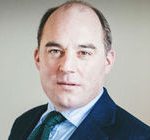
  • Ben Wallace – 2022 Statement on the Situation in Ukraine

    Ben Wallace – 2022 Statement on the Situation in Ukraine

    The statement made by Ben Wallace, the Secretary of State for Defence, in the House of Commons on 20 October 2022.

    With permission, Mr Deputy Speaker, I wish to make a statement on the ongoing conflict in Ukraine.

    We are now 239 days into the operation that President Putin planned to conclude within a month. Active Ukrainian offensive operations continue in the north-east, near Svatove and the Kherson region in the south. If Ukraine successfully advances on Svatove, a key road and rail junction, it will constitute another severe blow to the logistical viability of the northern sector of Russia’s Donbas front. Yesterday, the new Russian commander in Ukraine, General Sergey Surovikin, offered an unusually candid public statement of the difficulty of the Russian position in Kherson, on the right bank of the Dnipro River. Pro-Russian occupation forces have now started to withdraw some categories of civilians east of the river. They claim 7,000 people have already departed, and aim to move another 10,000 a day, although we cannot yet verify those figures. Russia’s limited hold on the bank of the Dnipro looks shaky. It is likely more seriously considering a draw-down of its forces in the area.

    Russia’s ground campaign is being reversed. It is running out of modern long-range missiles and its military hierarchy is floundering. It is struggling to find junior officers to lead the rank and file. Meanwhile, its latest overall commander, Surovikin, has a 30-year record of thuggery marked even by the standards of the Russian army. What will worry President Putin is that the open criticism is inching closer and closer to the political leadership of his country. Russia has strong-armed Belarus into facilitating its disastrous war, but the newly announced Russian-Belarusian “Group of Forces”, supposedly to be deployed in Belarus, is unlikely to be a credible offensive force. It is far more likely that Russia is attempting to divert Ukrainian forces from their successful counter-offensives.

    As Russia’s forces are pushed back, they are resorting to directly striking Ukraine’s critical national infrastructure, especially the power grid. It should be noted that these facilities have no direct military role, but the impact is multiplying the misery of ordinary Ukrainian citizens. Notably, these strikes are partially being conducted by loitering munitions—so-called “kamikaze drones”. Despite Tehran’s denials, these weapons are being provided by Iran. This, in itself, is another sign of the strategic degradation of Russia’s military.

    In the wake of these ongoing and indiscriminate attacks on civilian infrastructure, the UK will continue—and is continuing—to gift air defence missiles to Ukraine. We are proud to be the second largest donor of military equipment, and last week I announced that the UK will provide additional air defence missiles to Ukraine to defend against Russian missile strikes. These include AMRAAMs—advanced medium-range air-to-air missiles —which, used in conjunction with NASAMS—national advanced surface-to-air missile system—air defence, pledged by the United States, are capable of shooting down cruise missiles. We continue to provide sophisticated electronic warfare equipment that gives additional protection against long-range drones and missiles.

    Supporting Ukraine remains the Ministry of Defence’s main effort. We are helping Ukraine to replenish its stocks to keep us fighting. As winter approaches, we are developing a package to support Ukrainians through the winter, including 25,000 sets of winter clothing, so that they are more effective on the battlefield than their poorly trained, badly prepared and ill-equipped Russian counterparts, many of whom have been mobilised at short notice with little training, equipment or preparation.

    As part of Operation Interflex, we are also continuing to train Ukrainian recruits in the United Kingdom alongside our Canadian, Danish, Dutch, Finnish, Lithuanian, New Zealand, Norwegian and Swedish partners. We have so far trained over 7,000 soldiers and are currently on track to train 10,000 by the end of the year, with up to 20,000 to follow in 2023.

    Furthermore, we have worked with allies and partners to establish an international fund, which will ensure the continued supply of essential lethal and non-lethal military support to Ukraine, as well as manufacturing capacity. To date, we have received pledges totalling approximately £600 million and continue to work with international partners to secure further funding. Today, we will launch the first urgent bidding round to identify and procure critical capabilities that can be rapidly deployed to Ukraine.

    I would also like to share with the House details of a recent incident that occurred in international airspace over the Black sea. On 29 September, an unarmed RAF RC-135W Rivet Joint, a civilian ISTAR—intelligence, surveillance, target acquisition and reconnaissance—aircraft on routine patrol over the Black sea was interacted with by two Russian armed Su-27 fighter aircraft. It is not unusual for aircraft to be shadowed and this day was no different. During that interaction, however, it transpired that one of the Su-27 aircraft released a missile in the vicinity of the RAF Rivet Joint aircraft beyond visual range. The total time of the interaction between the Russian aircraft and the Rivet Joint was approximately 90 minutes.

    The patrol completed and the aircraft returned to its base. In the light of this potentially dangerous engagement, I have communicated my concerns directly to my Russian counterpart, Defence Minister Shoigu, and my colleague, the Chief of the Defence Staff, has also communicated his concerns. In my letter, I made it clear that the aircraft was unarmed, in international airspace, and following a pre-notified flight path. I felt that it was prudent to suspend these patrols until a response was received by the Russian state.

    The reply by the Russian Ministry of Defence on 10 October stated that it has conducted an investigation into the circumstances of the incident and that it was a technical malfunction of the Su-27 fighter. It also acknowledged that the incident took place in international airspace. The UK Ministry of Defence has shared this information with allies and, after consultation, I have restarted routine patrols, but this time escorted by fighter aircraft.

    Everything that we do is considered and calibrated with regard to ongoing conflict in the region and in accordance with international law. We welcome Russia’s acknowledgment that the incident was in international airspace. The UK has conducted regular sorties of the RAF Rivet Joint in international airspace over the Black sea since 2019, and we will continue to do so. For security reasons, I will not provide further commentary on the detail of these operations, but I want to assure the House that the incident will not prevent the United Kingdom’s support for Ukraine and resistance to Russia’s illegal invasion.

    The UK Government’s position remains unchanged, with—I am pleased to say—consistent support across the House. We will continue to support the Ukrainian people to defend their homeland. The rules-based system has protected all nations from such naked and unprovoked aggression over the past 75 years; it has also been shaped by Russia in that time. This Government will always defend the rules-based system, because it is fundamental to who we are. It provides peace and security for this country and for our partners and allies. I commend this statement to the House.

  • PRESS RELEASE : Opening remarks by President von der Leyen at the joint press conference with President Michel following the meeting of the European Council of 20 October 2022 [October 2022]

    PRESS RELEASE : Opening remarks by President von der Leyen at the joint press conference with President Michel following the meeting of the European Council of 20 October 2022 [October 2022]

    The press release issued by the European Commission on 21 October 2022.

    Indeed, we had a very good European Council. We do now have a very good and solid roadmap to keep on working on the topic of energy prices. The Leaders have given the strategic guidance we wanted on the proposal that we have put on the table on Tuesday and that will be discussed by Energy Ministers on Tuesday next week. Let me focus on a few topics that we have discussed intensively.

    The first one is the topic of the joint purchasing of gas. Here, Leaders supported very much the idea to allow companies, for the joint purchase, to build consortia and to work together and join forces so to increase our common European Market power for the demand of gas. There is one binding element in it. That is: When, at the beginning, we aggregate the demand, 15% are binding to be aggregated as demand on the market, together as a joint aggregated demand.

    The second topic was the focus on how to limit episodes of excessive gas prices. This is the discussion around the benchmark for gas prices, the so-called TTF. We know that the TTF mainly reflects pipeline gas but as we see that the market is shifting and more LNG is coming to the market, the TTF no longer reflects the true market situation. Therefore, we will develop a complementary new index to better reflect the LNG price situation. In the meantime, we are going to establish a market correction mechanism, exactly to limit excessive episodes of gas prices and to make sure that there is a clear order in the build-up of the market. Here, we will work with Energy Ministers to submit a legal proposal to operationalise this market correction mechanism.

    Of course, Leaders also discussed a second topic, which is a potential mechanism to limit the influence of high gas prices on the cost of electricity. We had a frank discussion which further clarified, on the one hand, the opportunities and, on the other hand, highlighted the challenges. We will analyse the financial impact on those countries with a lot of gas in their electricity production. What does it mean if we cap the price of gas to reduce the influence of gas on the electricity price? And the other topic which has to be analysed is the flows of subsidised electricity to non-EU neighbours. Here too, we will work together with Member States and with the Council formation to find a well-balanced and common approach on these issues.

    The Commission will also come back to the issue of state aid. Next week, the College will adopt a proposal on the prolongation and adaptation of the Temporary Crisis Framework. This will give Member States an improved ability to support their companies in the face of the current crisis, while preserving a level playing field. So common rules for everybody. For example, thanks to the extension of time limits for state support, or new options to support companies reducing their electricity demand. This new revised state aid crisis framework will then be decided on next week in the College.

    Moving on to the topic of funding. I just mentioned the state aid opportunities but there is also a strong look at the possibilities to support vulnerable households and vulnerable businesses. We are aiming to make available up to around EUR 40 billion of funds that are still available from the previous MFF. With that, Member States will be able to help those most affected by the energy crisis, be it the vulnerable households or SMEs. But indeed, more is needed to support small and medium companies but also larger industry to deal with the high energy prices.

    Here, the topic of investment is very important. The investments can be financed through the European level. That is the REPowerEU vehicle that is right now in the process of being decided on in Parliament. It has already been decided on in Council. So we are moving forward to the trilogue, hoping that this instrument will then be finalised as soon as possible. Here is the possibility for all Member States to have common European funding to invest in their companies, in their SMEs, to help them to make the transition away from fossil fuels to, for example, renewables, cheaper sources of energy and thus prepare for the future.

    We had a very good Council on all these topics. I think I will stop here and I will be happy to take questions.


  • Richard Holden – 2022 Comments on Rishi Sunak Becoming Prime Minister

    Richard Holden – 2022 Comments on Rishi Sunak Becoming Prime Minister

    The comments made by Richard Holden, the Conservative MP for North West Durham, on Twitter on 20 October 2022.

    I’m backing Rishi Sunak to be our next PM.

    I’ve already spoken to a good few colleagues who backed Liz Truss who now back Rishi.

    We face a major national challenge & need the best candidate to restore economic credibility.

    That’s the only way to unite the Conservatives and the UK.

  • Iain Duncan Smith – 2022 Comments on Conservative Party Unity

    Iain Duncan Smith – 2022 Comments on Conservative Party Unity

    The comments made by Iain Duncan Smith, the Conservative MP for Chingford, on Twitter on 21 October 2022.

    If we don’t stop fighting, it will be game over for my regicidal party.

    The Conservatives need to relearn the virtues of unity. Without it, the next Prime Minister will soon be in familiar trouble.

  • Tim Loughton – 2022 Comments on Jacob Rees-Mogg Using Phrase “Boris or Bust”

    Tim Loughton – 2022 Comments on Jacob Rees-Mogg Using Phrase “Boris or Bust”

    The comments made by Tim Loughton, the Conservative MP for East Worthing and Shoreham, on Twitter on 21 October 2022.

    Jacob – how on earth can that slogan be remotely helpful to the Party given the strong possibility that the next PM will not be Boris? I would not use the tag line #BorisandBust and you really should think this through properly if you have any interest in party unity.

  • Jacob Rees-Mogg – 2022 Comments on Boris Johnson Returning as Prime Minister

    Jacob Rees-Mogg – 2022 Comments on Boris Johnson Returning as Prime Minister

    The comments made by Jacob Rees-Mogg, the Secretary of State for Business, Energy and Industrial Strategy, on Twitter on 21 October 2022.

    I’m backing Boris [Johnson]. Boris or Bust.

  • PRESS RELEASE : Record funding uplift for UK battery research and development [October 2022]

    PRESS RELEASE : Record funding uplift for UK battery research and development [October 2022]

    The press release issued by the Department for Business, Energy and Industrial Strategy on 21 October 2022.

    • £211 million of government funding confirmed for battery research through the Faraday Battery Challenge
    • battery industry could support 100,000 jobs by 2040 and is central to growth of key industries – such as electric vehicles and renewables
    • Business Secretary visits government-backed UK Battery Industrialisation Centre in Coventry to see how battery research is being brought to market.

    The UK’s world-leading manufacturing industries will be boosted thanks to £211 million in new government funding for battery research and innovation, Business Secretary Jacob Rees-Mogg confirmed today (Friday 21 October).

    The record funding uplift will be delivered through the Faraday Battery Challenge, which began in 2017 and supports world-class scientific technology development and manufacturing scale-up capability for batteries in the UK. It will help to seize on opportunities for private investment and economic growth in industries where powerful, fast charging batteries will be essential – such as domestic energy storage and electric vehicles.

    The funding, from last year’s settlement, will be delivered between 2022 and 2025 by UK Research and Innovation (UKRI) with support from the Faraday Institution, Innovate UK and the UK Battery Industrialisation Centre (UKBIC).

    It will help the sector deliver 100,000 jobs in battery gigafactories and the battery supply chain by 2040. Supporting the scale-up of these technologies and unlocking further private investment supports the sustainable growth of the economy, which will boost tax revenues and put public services on a more secure footing for the longer term, helping improve life for people across the UK.

    Speaking on a visit to the £130 million UKBIC, which is the UK’s centre of excellence in battery manufacturing, Business Secretary Jacob Rees-Mogg said:

    Safe and powerful batteries are central to our plans to grow the industries of the future. From our world leading renewables industry, to our growing electric vehicle sector, secure supplies of batteries are key to delivering jobs and prosperity.

    The Faraday Battery Challenge has brought the UK’s greatest minds and best facilities together to develop the innovations that will help us achieve this goal. The work it has done since 2017 has laid the groundwork for our future economic success and I am pleased to confirm this work will continue, supported by record funding.

    The Faraday Battery Challenge combines:

    • research and capability development to reduce battery weight and cost, increase energy and power, and ensure reliability and recyclability;
    • collaborative business-led innovation in the UK battery sector, development of the wider network and skills needed to manufacture batteries through Innovate UK; and
    • manufacturing scale-up & skills development at the UKBIC the national battery manufacturing development facility.

    The Challenge has supported over 140 organisations working across the UK, attracting over £400 million in further private sector investment. It has enabled the Faraday Institution, the UK’s independent battery research body, to unite 500 researchers across more than 25 universities to improve current and develop future battery technologies.

    Faraday Battery Challenge Director Tony Harper said:

    This new funding allows us to strengthen the foundation we’ve created by consolidating and building on the UK’s position to become a battery science superpower. We now have an opportunity to ensure that our national industrialisation infrastructure remains world leading in this fast-evolving critical net zero technology.

    With the support of the Challenge, the £130 million UKBIC in Coventry opened three years ahead of its nearest European competition. The Centre provides the link between battery research and successful mass production. So far UKBIC has supported over 140 UK battery developers, working on more than 80 research and innovation projects, to successfully scale their products to market.

    Felicity Buchan, Exchequer Secretary to the Treasury, said:

    The battery industry will play a pivotal role in the growth of our future economy. That’s why it’s so important that we are making this record investment in cutting-edge research, supporting businesses to become more innovative and productive, and creating high-skill, high-wage jobs across the UK.

    UKBIC Managing Director Jeff Pratt said:

    I am delighted with this announcement which demonstrates the government’s sustained commitment to supporting the development of advanced battery technologies across the UK. Since the Faraday Battery Challenge was launched in 2017, we have seen rapid change in the battery industry as it develops increased capacity across Europe; and this will continue over the coming decade.

    For UKBIC, this additional funding will ensure that we retain our leading-edge manufacturing capability for the UK and can continue to support our industry in the next few years as novel chemistries and formats scale towards volume production.

    UKRI Chief Executive Professor Dame Ottoline Leyser said:

    Advanced battery technology will play a central role in our lives and the economy, reducing our reliance on fossil fuels, creating new jobs and opening up new opportunities.

    The Faraday Battery Challenge is at the forefront of the clean technology revolution, catalysing collaboration and innovation that will benefit society.

    This exciting work and the further investment announced today underlines the ways in which research and innovation can help to create a sustainable future while driving economic growth.

    Along with the Challenge, the UK government is helping to deliver a world leading electric vehicle industry for the UK through the Automotive Transformation Fund (ATF). Through the ATF the UK has secured major investments in battery production, including Envision AESC expanding their existing plant in Sunderland.

    A further £4 million is also being announced through UKRI’s Driving the Electric Revolution Challenge to support skills, talent and training across Power Electronics, Machines and Drives (PEMD) manufacturing and supply chains. PEMD components are the parts that make things ‘go’, from cars to hairdryers, underpinning a wide range of high-value industries.

  • PRESS RELEASE : It is our responsibility as Member States to unequivocally condemn disinformation, especially when it provokes or encourages threats to peace or acts of aggression [October 2022]

    PRESS RELEASE : It is our responsibility as Member States to unequivocally condemn disinformation, especially when it provokes or encourages threats to peace or acts of aggression [October 2022]

    The press release issued by the Foreign Office on 20 October 2022.

    Statement by Mungo Woodifield, UK Spokesperson to the UN, at the UN Fourth Committee, 12th meeting – General Assembly, 77th Session.

    Thank you Mr Chair, Distinguished colleagues,

    I would like to start by thanking Under-Secretary-General Fleming and the Department of Global Communications for their engagement with Member States, through reports submitted to the Committee on Information, as well as regular updates and exchanges on the work of the Department.

    The United Kingdom welcomes the Department’s work to improve the UN’s strategic communications, news, media and outreach activity as well as its leadership and innovation in response to the complex communications challenges that face us.

    The Department has continued to expand its reach through innovative partnerships and has been successful at mobilising wide and diverse audiences. These efforts are necessary to meet the growing demand around the world for accurate, impartial and comprehensive information on the most pressing global issues, such as Covid-19, the Climate Crisis, or Russia’s war of aggression in Ukraine.

    On these topics and others, people are looking at the UN now more than ever as a source of trusted information and we have to acknowledge that part of the reason why is that disinformation, propaganda and lies are out there in the world like never before. An infodemic carried on vectors of digital technologies and media.

    We also need to be frank that this infodemic has a source and it is important that we focus our attention on “information manipulation, including disinformation, by states” and we recognise, this year in particular, the disinformation dimension of Russia’s aggression against Ukraine.

    Since launching its invasion in February, the Kremlin’s propaganda machine has been in overdrive. The Russian government has lied to the world, lied to Ukrainians, lied to its own people and lied to itself. President Putin wants truth to be a casualty of this war, but we will continue to tell the truth about Russia’s aggression, including the strong evidence of war crimes that we are seeing committed in Ukraine.

    The UN must do the same, guided by the language in resolutions adopted overwhelmingly by the General Assembly and the Secretary-General’s clear statements about Russia’s violations of the UN Charter and its aggression. The entire UN system must be consistent in how it describes this war.

    Because this offensive against truth has global consequences. Russia’s disinformation about its invasion of Ukraine threatens to undermine public trust in the media and also confidence in public and international institutions, including the UN.

    This really matters because if they succeed, then we will all fail. It is our responsibility as Member States to unequivocally condemn disinformation, especially when it provokes or encourages threats to peace or acts of aggression.

    The ideals enshrined in the UN Charter cannot be realised in a world in which truth is obscured by State propaganda and muzzled media freedoms.

    Together through our work in this Committee and in partnership with the UN, we can challenge disinformation and protect the space for impartial and accurate reporting of the threats and challenges that the UN was founded to address.

  • Simon Jupp – 2022 Comments on Rishi Sunak Becoming Prime Minister

    Simon Jupp – 2022 Comments on Rishi Sunak Becoming Prime Minister

    The comments made by Simon Jupp, the Conservative MP for East Devon, on Twitter on 20 October 2022.

    I accepted a position in government because I wanted it to work. Unfortunately, it didn’t.

    Rishi Sunak has already set out his stall to the nation. He’s got the experience needed to lead the nation & the knowledge to restore economic credibility.

    I’m backing Rishi Sunak for PM.

  • Mel Stride – 2022 Comments on Rishi Sunak Becoming Prime Minister

    Mel Stride – 2022 Comments on Rishi Sunak Becoming Prime Minister

    The comments made by Mel Stride, the Conservative MP for Central Devon, on Twitter on 21 October 2022.

    Backing Rishi Sunak for next party leader and PM. He will bring us together by uniting talent from right across the party, heal our economy and bring us back into political contention.