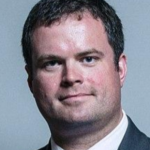
Tag: 2022

  • Seema Malhotra – 2022 Speech on Family Businesses

    Seema Malhotra – 2022 Speech on Family Businesses

    The speech made by Seema Malhotra, the Labour MP for Feltham and Heston, in Westminster Hall, the House of Commons, on 20 December 2022.

    It is a pleasure to serve under your chairship, Mr Robertson. I start by congratulating the hon. Member for Carlisle (John Stevenson) on securing this debate, which is a really excellent one to have on the last day before we break for Christmas. It is clear from the contributions that everybody has a story to tell about family businesses—either their own family business, or those in their constituency. Very strong feelings have come through about the contribution that family businesses make to our local economies and our national economy.

    So many points were raised, which I will draw on, but I also support and thank, as other hon. Members have, the Institute for Family Business, which has made such an important contribution to raising awareness of family businesses over the last couple of years, particularly through Family Business Week.

    The hon. Member for Carlisle was also right to highlight hospitality businesses, so many of which are family-run and family-owned, and so many of which play that very important role of being a home from home—a local place that people can pop out to in order to be with friends and neighbours, and indeed their own family. Family businesses give that “home from home” feeling that really touches our communities in special ways.

    The right hon. Member for Aldridge-Brownhills (Wendy Morton) mentioned showmen, and I was going to mention showmen from my constituency. Feltham has a long tradition of showmen living in the area, and I have continued to support their place in the community and their role in a unique industry that gives a tremendous amount of pleasure, and even joy, to families across the country. I will also mention a couple of businesses in my constituency. Flowers by Eva’s is one. It has been in Hanworth since 1955, and has given the joy of great flowers and bouquets for weddings, as well as providing flowers for funerals and other special occasions. It gives that extra personal touch, because when we go to such businesses, we get to know the people in them.

    I will also highlight businesses run by members from immigrant communities, for whom it has sometimes been hard to find a conventional way into employment. They have started businesses that have allowed them to make a big contribution to the community, and that have grown. One example is the Sanger family, which owns Heston Hyde hotel, Bentley hotel, Washington hotel and now the Courthouse hotel. The business is still run by the family—indeed, multiple generations of the family. That family started with nothing in this country, but they now contribute so much to our prosperity.

    I again pay tribute to the Institute for Family Business for the way that it conducted, ran and brought to Westminster, Family Business Week, which was supported by NatWest Group. I was delighted to speak at the reception in November, having made a virtual contribution to Family Business Week last year. Family Business Week celebrates local family businesses, encouraging them through social media. The family business in my area that I popped into at the weekend was Priyas Tandoori in Cranford, a very homely place to get a takeaway or to eat in with family members.

    I, too, grew up in a family business, above our small shop in Osterley, so I know about the contribution that family businesses make, and about the attitude that my parents had. They saw what they did as almost a public service. We sold school uniforms, jewellery imported from India, clothes—all sorts of useful items that people never knew they needed until they popped into Ramson of Osterley. I find it fascinating that people who went to the shop in the late ’70s and ’80s still remember it. They remember what my parents did and even remember me aged five, six and seven learning how to serve customers and the fun that we had with that.

    Research from the Institute for Family Business has revealed that family businesses are key drivers of regional growth and prosperity, spreading economic prosperity to all corners of the UK. We have heard in the debate what defines a family business, and about some of the more technical points around voting rights, control and ownership, and levels of involvement in administration. We have also heard how family business issues reflect the issues that other businesses face, such as the rising cost of doing business, energy costs and so on.

    I want to emphasise the point that was made about the part that women play in family businesses. It is a subtle point, but although we have heard about one-man bands, there are quite a few one-woman bands. It is important to make sure that we use language that reflects the work of women such as Anita Roddick, who set up the Body Shop, and so many other women entrepreneurs who run a family business.

    The hon. Member for Torbay (Kevin Foster) and others mentioned the 13.9 million people in such businesses, and the proportion of private sector employment that comes from family business employers. We know from the research and the debate that there are many ways that family businesses contribute to their local community. They often have a long-term relationship with a place. It can be where the owners’ kids go to school, as was the case in my family. There can be loyalty, local staff, and the creation of local services. The hon. Member for Strangford (Jim Shannon) was absolutely right to talk about local services—the lawyers, banks and insurance companies. All of those make a difference to a community’s fabric. When we think about support for family businesses, those are important things to emphasise and encourage; we should think about how we actively nurture the family business leaders of tomorrow.

    We have heard many examples of household names, but I might add Cadbury. My hon. Friend the Member for Brentford and Isleworth (Ruth Cadbury) is a member of the Cadbury family. We can see the social contribution made by family businesses that recognise the needs of their workforce and the community around them.

    Although family businesses had a higher decrease in turnover than other businesses during the pandemic, they were less likely to see a decrease in staff. That speaks to the story and the contribution of family businesses, the loyalty of staff to the organisation and its culture, and the loyalty of the owners to their staff. However, family businesses are absolutely up against it. They have raised concerns about business rates, supply chain costs, access to schools, and the need for a stable tax environment.

    A good Government should create an environment for business success. It is a concern to me that this Government and previous Conservative Governments have failed to do that. We have a supply chain crisis, petrol crisis, heavy goods vehicles crisis, CO2 crisis, energy crisis, cost of living crisis, cost of doing business crisis, and an industrial disputes crisis.

    Jamie Stone

    The hon. Member mentions the covid pandemic. It is interesting: during the pandemic, some businesses were really inventive and innovative. For instance, many food outlets offered a delivery service. I am sure my experience was exactly the same as that of many other hon. Members. It might be profitable for civil servants one day to take a look at some of those examples, and have a case study portfolio. We would be foolish to think that British inventiveness is dead.

    Seema Malhotra

    The hon. Member makes a powerful point. Indeed, what he says comes through in the data about how family businesses got through the pandemic. However, a recent survey has suggested that 80% of members of the Institute for Family Business were less confident going into this winter than they were last year, during the pandemic. Rising inflation is a threat, and there are concerns about the cost of living and consumer confidence. Clearly much, more support for businesses is needed. I am concerned that last week the Government slipped out in a written ministerial statement that they will be closing the “Help to Grow: Digital” programme, which was to give businesses support in adopting new technologies. They had all the warnings about the design and the roll-out, but they failed to listen to those important voices. That has cost businesses a year, and the possibility of moving forward in digital.

    What needs to happen if we are to support family businesses at this time? First, we need to deliver macroeconomic stability, and respect our institutions, such as the Office for Budget Responsibility and the Bank of England. A key reason for the failure and devastating impact of the mini-Budget was the sidelining of our economic institutions. We need to make sure that we work with businesses to tackle the crises facing our country. Small Business Saturday has been mentioned; we all celebrated its 10th year this year, and I celebrate it every year.

    We need to make importing and exporting easier; Brexit is not working as the Government promised. We need to address the inheritance challenges for family businesses, which have been mentioned—for instance, there should be clarity around rules, and support when there might be difficulties with succession planning. We should also have a proper industrial strategy, backed by ambitious investment, that makes decisions for the long term. It should be secured by an industrial strategy council that has a statutory footing.

    Family businesses are not just our local small businesses; they are also key in manufacturing and other big sectors across the country. We need a proper plan for skills, which is an area where our growth and skills levy will bring the flexibility that is needed. We also need a plan for reform of business rates, because so many businesses are concerned about the unfairness of business rates. They should be reformed and changed, to level the playing field between bricks and mortar and online businesses.

    This has been a fantastic debate. Labour has a long-term plan for growth, which would bring stability for businesses across the country and give our incredible family businesses the support that they need to grow and prosper. I look forward to the Minster’s response to this important debate, and to his saying how we can work together, across this House, to support our family businesses and the employment and prosperity that they bring.
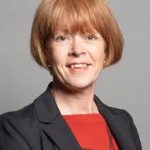

  • Wendy Morton – 2022 Speech on Family Businesses

    Wendy Morton – 2022 Speech on Family Businesses

    The speech made by Wendy Morton, the Conservative MP for Aldridge-Brownhills, in Westminster Hall, the House of Commons, on 20 December 2022.

    I thank my hon. Friend the Member for Carlisle (John Stevenson) for bringing forward this debate. As he recognised in his opening speech, this debate is very timely. It is not often that we have debates on family business, and to do so at this time of year is a reminder of just how critical this time is for so many of those businesses.

    I start by referring to my entry on the Register of Members’ Financial Interests. As many in this room will know, I have a background in family business. Prior to coming into this place—too many years ago to remember—my husband and I started a business with the enterprise allowance, when that was around, at £40 a week. Two things were critical in starting that business: one was the allowance, which, although it did not seem like a lot of money, meant a lot because we felt the Government were prepared to back us and the idea my husband had; the other, touching on the point made by the hon. Member for Strangford (Jim Shannon), was the importance of our relationship with the local bank. The relationship we had with our bank manager was absolutely 100%. If she had not been there, there were some days we would probably have struggled. She helped us to get through and see the light at the end of the tunnel. Although we often discuss banking and the role of banks in the community in this place, it is a reminder that the role of banks to businesses and the presence of a high-street branch and a named person that can be contacted really does make a difference.

    Being back on the Back Benches, as the hon. Member for Strangford alluded to, I see an opportunity to make several points, but also to highlight some of the amazing family businesses across my constituency. Don’t worry, Mr Robertson; I am keeping an eye on the clock, and I will not take all of the time and will leave plenty of time for Front-Bench speakers. I want to mention some of those businesses because I want to further demonstrate the variety of small, family businesses not only in my constituency, but right across the country, and the way that they form the backbone of so many local economies. They make a massive contribution to the Exchequer, but also to our local communities.

    Six years ago, I visited a business called Jennifer Ashe Funeral Directors that had just opened on Brownhills High Street. When I went back there this summer for a visit and tour, it was incredible to see how that business had grown over those six years. It is no longer just in Brownhills, but has many other locations. We talk about generations, and the next generation of the family is now involved as well.

    We also talk a lot about high streets in this place. We talk about Small Business Saturday at the beginning of December, which is an opportunity for many of us to go out on to the high street and highlight local businesses and how important they are. I am reminded of another occasion, which is called Family Business Week; I see the Minister is nodding. Perhaps that is something we need to make more of and highlight in the same way to embrace what we have in our communities.

    Our high streets have faced a difficult and challenging time, which started before covid. High-street businesses were hit throughout the pandemic as well, but many of them are now finding their feet again. In Aldridge, we have a fantastic florist—another family business—called Herbarium, which is run by Mike and Sue Soles. I walked past and popped my head round the door just last week. Christmas is a busy time for them, and it really matters that we go out and support our local businesses. I was equally pleased to see a florist called the Bloom Room open just a couple of weeks ago on Pelsall High Street. It is also run by a local lady who wants to invest in the local community and sees that the time is right to do that. I wish her all the best in her endeavours

    The hospitality industry is another key part of this. As we heard from my hon. Friend the Member for Torbay (Kevin Foster), seaside resorts have lots of hospitality. However, hospitality is a sector with many examples of family-run businesses. The Fairlawns hotel, run by the Pette family—now on their second generation—was actually rated one of the top 25 family-run hotels in the country. I am also told that it was one of only six outside of London to make the Tripadvisor list. Again, that is another example of a fantastic family-run business.

    As my hon. Friend the Member for Torbay started talking about fairgrounds, I thought it would be rather remiss of me not to almost go into competition with him by highlighting the breadth of family businesses across my constituency. Pat Collins Funfairs is a fascinating story because Pat Collins was a Liberal Member of Parliament and mayor of Walsall, but he is actually recognised and remembered more for Pat Collins Funfairs, which was founded in 1899.

    The family business was established remarkably quickly and, within a decade, Pat Collins was a leading showman in the midlands, owning several steam-driven fairground rides. He also went on to be one of a group of showmen who met in Manchester to create the Showmen’s Guild of Great Britain. To this day, the business is still owned within the same family; it is owned by Anthony Harris and his family. Anthony is a Conservative local councillor on Walsall Council, and his father married one of Pat Collins’ granddaughters.

    We can see how family businesses go down the generations. One reason for that is probably the way in which such businesses can focus on flexibility and resilience. They often do not need much support from Government or local councils, but they do need the space and the flexibility to grow and invest, and the right economic landscape for that.

    I know from my own experience that someone with a small family business often does go that extra mile—not just them but their staff as well. People go that extra mile and put in that extra hour, because it is not just about thriving but sometimes just surviving to get through the difficult times and challenges and finding the opportunities and keeping on looking and moving forward.

    My final namecheck for this morning must go to a local family-run business in High Heath. Harjit and Jodie Singh, known locally as H & Jodie, run what many would call a corner store, but it is much more than that. It is the Nisa Local, but they have set up a community hub there and have community days. Many of us will remember that this last summer was incredibly hot. It does not feel like it now—although perhaps it is in Westminster Hall—but if someone needed anything, the best place to go was often H & Jodie’s. If you could not find an electric fan anywhere in the locality, Mr Robertson, you could go to H & Jodie’s, where they would be stacked on the shelves. I give that example because it shows the flexibility and dynamism of small family businesses and how they really do go that extra mile by just getting on with the job.

    I am a firm believer that a strong family-business base can really strengthen our communities. That builds up the local economy and then feeds into the national economy. Let us invest more in them. We talk a lot in this place about research and development, and about innovation. I completely get that. I also get the importance of Silicon Valley. We have manufacturers across Aldridge-Brownhills, including apprentice-supporting companies such as In-Comm, which invest in apprenticeships and developing skills for the future.

    However, we also need the small businesses. Not everybody will be a scientist or a researcher. We need manufacturers and family businesses. Let us recognise their importance, because as my hon. Friend the Member for Carlisle set out, there are 14 million people employed across the sector, and it produces 44% of GDP. We do not talk about it enough; we do not give it 44% of the airtime when we are talking about businesses.

    I would like to see us talk up our family businesses, because they really can play a key part in growing the economy. If we grow the economy, we can invest in our public services; if we grow our family businesses, they can invest in their business and their skills base, and that is what creates the jobs of the future.

  • Jim Shannon – 2022 Speech on Family Businesses

    Jim Shannon – 2022 Speech on Family Businesses

    The speech made by Jim Shannon, the DUP MP for Strangford, in Westminster Hall, the House of Commons, on 20 December 2022.

    It is a real pleasure to speak in the debate because I obviously have a particular interest. I commend the hon. Member for Carlisle (John Stevenson) for leading the debate so knowledgeably and for setting the scene so well. What a pleasure it is to follow my friend and colleague, the hon. Member for Torbay (Kevin Foster). The tag team is back together—I follow him or he follows me—and I thank the hon. Gentleman for his contribution. Unashamedly, I will tell hon. Members about some of the small businesses in my area—not all of them, because that would take me an hour and a half and, Mr Robertson, you would say, “Sit down.” I will pick out some of the smaller ones that I have known over the years. There are many.

    As we approach Christmas, it is important to recognise the important role that local businesses play in our economy, including the family-run businesses that have served our local towns and villages—in some cases, for decades. I do not intend to wax lyrical about how great a place Strangford is—everybody already knows that—but I am more than happy to encourage everyone to make a journey to Strangford at some time in the future, as many in this House have done, including Ministers and other hon. Members, who have enjoyed it. At this time of year, we must take time to reflect and acknowledge that businesses are the backbone of our constituencies—they certainly are for mine. Some 99% of businesses in my constituency are small and medium-sized enterprises, and the pattern is similar across the whole of Northern Ireland.

    There are many benefits that come along with family-run businesses and ultimately contribute to their long line of success, and there are so many success stories that I want to mention. The right hon. Member for Aldridge-Brownhills (Wendy Morton), who will follow this speech, and I have been working together, and she and I were just saying how we will unashamedly tell everyone in this House about our small businesses. I look forward to what she is going to tell us in a few minutes as she namechecks every one of those businesses, and I will probably do the same.

    Strong commitment and common values are some of the successes of small businesses. When an enterprise is built on familial lines, people are more likely to put in extra hours and go the extra mile to ensure success, and the stability of the family structure has been pivotal for long-term family professions. One that always sticks in my mind is N.G. Bell & Son. I am probably the only person present who knows about N.G. Bell & Son, but I will share its success story. It is a family-run business specialising in timber, building, electrical and plumbing supplies, and it has become one of Northern Ireland’s leading building merchants. Norman and Elsie Bell came to Ballywalter from west Ulster in 1950 and bought an existing grocery and hardware business. On the untimely death of Norman Bell in 1973, his son Graham took over the running of the business at the early age of 19. He and the family have built the business, making it a complete success, and their business park in Greyabbey Road is at the centre of that.

    The story of N.G. Bell & Son in Ballywalter resonates with me, because my own parents ran a shop in the same village from ’59 to ’79, and many of the relationships I built through the shop as a child remain strong to this day. I am minded that Margaret Thatcher, who was the daughter of a shopkeeper, said we were a nation of shopkeepers. I am pleased to be the son of a shopkeeper, and I am also proud of my roots. I understand at first hand how central the local shop can be to community life. My mum and dad owned a shop in Clady, south of Strabane. They also owned one in Ardstraw, and then they moved to Ballywalter in 1959. They owned the first V G Store, which was part of a chain of shops that are now run by the SPAR group and owned by the Henderson Group in Northern Ireland. It is an example of how a local business has grown—again, it is good news.

    I am sure that I have mentioned before the importance of family businesses to our high streets. Newtownards is one of the main towns in the Strangford constituency and has many great businesses, most notably Wardens of Newtownards, which has been a presence in the town’s high street since 1910. In 2002, Wardens celebrated its 125th anniversary. As part of the celebrations, the store ran a competition to find the oldest receipt from the shop. A local farmer came forward with a receipt dating back to 1890s—not the 1690s, Mr Robertson, but the 1890s—which is just astonishing. There are still family members who work there today, and hopefully they will do so for many generations to come. For anyone who is curious—many are—Wardens has also had videos go viral on TikTok. I am told that the store has an account—I do not know how to use one—that has gained over 180,000 followers and millions of views. Again, it gives an indication of what a small, family-run store in Newtownards can do when it comes to promoting itself.

    H & J Carnduff butchers in the square in Newtownards employs 55 people and is a local business that has done extremely well. It farms its butchery business out to other shops across the whole district.

    Margaret Ferrier

    Cafés are important businesses for local communities. To name a few in my constituency, we have the Tea Bay, Stacks, Niu Cafe, Vin 18 and Café Gelato, and they provide a place for people to meet, chat and come in out of the cold. Does the hon. Member agree that small, family-run cafés are often the highlight of local towns in providing that atmosphere?

    Jim Shannon

    I certainly do. Again, the hon. Lady says many things in her interventions that I absolutely subscribe to, and I thank her for that. The Regency is such an example of where people come together. I have a fry there every Saturday morning—it is my wee treat for the week as a diabetic as I try to be careful about my eating. Corries meats in Newtownards town is a family business that has grown to own a chain of half a dozen shops, and Knotts Bakery is another family business in the town.

    The people of Strangford love a bargain—who doesn’t? My mother is a 91-year-old who loves going shopping and always wants to tell me about the bargains she has got. One place where bargains are guaranteed is Cotters, which is a family-run business that has been in the town for 20 years. My two youngest staff members have what they call their monthly “Cotters haul” where they get new cleaning supplies, bits and bobs for the office and, most importantly for two young girls, crisps because they are always a special price in Cotters—that is probably the attraction.

    Loyalty and stability are two qualities of successful family businesses. That success allows for “beanstalk” family businesses where often four generations of a family have been involved. The hon. Member for Torbay referred to such a company in his constituency. The director of SME business at Ulster University has indicated that 74% of Northern Ireland companies are classed as family-run, which is amazing in being unique and serving the Northern Ireland economy in a different way.

    The hon. Member for Caithness, Sutherland and Easter Ross (Jamie Stone) referred to bank managers. I have a story about a bank manager, although I am not sure I have the time to tell it as I am conscious that the right hon. Member for Aldridge-Brownhills (Wendy Morton) is following me. When I visited my bank manager for a loan when I was much younger, the discussion we had was not the same that people would have with their bank manager today. I told him I would pay the loan back as quickly as I could, and I paid it back in one year. That probably meant a lot of scrimping and saving, but I did it. Those were things that would not be done with a bank manager today because of the rules.

    When I think of Warren Patton of Patton’s Bakery in Newtownards, which is a family-run business that I have known for nearly all its days, his sense of community spirit is so evident in his charitable donations and discounts for fundraising community events, and that deserves recognition. He employs some 76 people in his business. It is often much easier to get a donation for the local fair from the local bakery than the large supermarkets, and that is another reason why local businesses are a vital cog in the community machine. Warren Patton is fully immersed in everything in Newtownards. He is community-minded. He is the chair of the Ards football club. We are all keen to see them get their new ground, which is at an advanced stage. The land has been identified, the agreement has been done and now we are pushing for some grants to make it all happen. He is also in the Loyal Orders—the Orange Order and the Royal Black Preceptory, which I am in in Newtownards. Those organisations are part of the culture and history of our town. I say that because Warren Patton is one of those local success stories. That business started from nothing and he has it today.

    The support provided by the public to keep these enterprises open is incredibly important, and we do our best to help and support all the businesses that make our economy what it is today. The former Minister—the hon. Member for Rochester and Strood (Kelly Tolhurst)—came to visit the high street in Newtownards. She enjoyed her time there, but more importantly she was able to engage with local businesses in a constructive and helpful way. Newtownards has won the best town centre in the whole of Northern Ireland in the past and was featured heavily last time as well. I say this without fear of being quoted wrong: Newtownards truly is the best trading town for businesses, opportunity, variety and family-owned businesses. Looking at the special nature of family-run businesses and their contributions to my constituency, I can only say to people: if you have any time before Christmas, come shopping in Newtownards in Strangford.

  • Kevin Foster – 2022 Speech on Family Businesses

    Kevin Foster – 2022 Speech on Family Businesses

    The speech made by Kevin Foster, the Conservative MP for Torbay, in Westminster Hall, the House of Commons, on 20 December 2022.

    It is a pleasure to serve under your chairmanship, Mr Robertson, and to follow my good friend, the hon. Member for Caithness, Sutherland and Easter Ross (Jamie Stone) and hear his experiences of business. I congratulate my hon. Friend the Member for Carlisle (John Stevenson) on securing the debate, which is a timely chance to highlight the role that family businesses play in Torbay’s economy.

    As my hon. Friend the Member for Carlisle reflected, family businesses make a major contribution to the UK economy overall. Oxford Economics estimated that there were 4.8 million family businesses in the UK in 2020, making up 85.9% of all private sector businesses. Those businesses employed 13.9 million workers, or 51.5% of all private sector employment, and contributed £575 billion to the UK economy. These are big numbers overall, despite most family businesses actually being small firms—something like three quarters of all family businesses in 2020 were sole traders with no employees. A further 21% have between one and nine employees, although I understand that the estimates were based partly on data collected the previous year.

    It is interesting to note that those numbers represented a decrease. The number of family businesses decreased in 2020 from 5.2 million in 2019, when they employed 14.2 million people and contributed £637 billion to the economy. If the Treasury was here, it would be interested in the fact that such businesses paid £205 billion in tax receipts. Some of that may reflect the impact of the pandemic, not least given that the typical family business many of us think of is a shop or a guest house, both of which were affected by that period.

    Many family businesses are not just sources of economic activity, but mainstays of the local community. A 2021 survey of family businesses conducted by PwC found that the vast majority of UK family businesses also continue to engage in some form of social responsibility activity. Some 74% of family businesses surveyed contributed to their local community, and 47% participated in traditional philanthropy or grant-based giving as a company.

    Dr Cameron

    The hon. Gentleman is making excellent points. Given that family businesses are such a focal component of our communities, does he agree they have a key role in reducing the disability employment gap, and are often the businesses that promote disability inclusion in our communities?

    Kevin Foster

    I completely agree. The type of support a family can provide to someone with disabilities—even in their own family, for example, by extending the care and support offered to their loved one and supporting them in the workplace—can be vital. Many families have rightly shifted their expectations of what a family member with disabilities will be able to do. To be honest, past attitudes might have been, “Could this person work?” or “Perhaps they shouldn’t, perhaps they won’t ever work.” Thankfully, there has now been a big change in many businesses. The hon. Member is right that family businesses can help to lead that charge.

    The economic and social impact of family businesses can be seen clearly in Torbay, and it is important to reflect on this positive aspect. I will start with Rew Hotels. The Rew Hotel Group was founded in 1970 by Mrs Sylvia Rew, and is still family managed. Positioned right on Torquay’s seafront are the two hotels it runs: Livermead House and Livermead Cliff. The family are not just quiet owners but part of the frontline delivery of services to customers. It is a good example of a family business where the family has been able to develop two distinct offers while making the business a family in itself, with several senior staff members having started waiting tables or behind the bar, and then been given opportunities to develop their career within the hotel and the business

    Susan’s Flower Shop has been trading at the heart of Paignton, Devon for over 50 years; the business itself has become a family, given that it has been trading for such a lengthy period. Brian and Susan, who are the leading figures, are involved in many aspects of local community work and supporting the bay as a whole.

    There is also Conroy Couch, which is one of the oldest established businesses in Torquay and one of the oldest jewellers in the UK. It was first opened in 1863 by Mr Conroy Couch, and such was the quality of its initial fitting that the shop front has altered very little since, with the height of the entry doors serving as a reminder of a time when men commonly wore top hats and would be wearing them when they attempted to come through the door. Towards the end of the last century, the shop was taken over by the Rowe family, who are well-known and respected jewellers in Torquay. Today, David and his daughter Michelle still hold the values that the original founder of the business held dear: it is an active part of supporting local Rotary appeals, and works to ensure that Torquay high street has an annual Christmas lights display.

    A larger example of a family business is Beverley Holidays, which operates three holiday parks in Torbay. It has been a family-run business for over 60 years, and during that period its owners have seen some dramatic changes in Torbay’s tourism sector. A caravan holiday might conjure up images from the past of putting coins in meters and sleeping on a sofa, yet many caravans in those parks offer standards equivalent to executive hotel suites, meaning that as a family business Beverley Holidays can compete with the large national chains on both price and quality.

    Family business is not just about retail and tourism—we have heard some examples today. In that context, one company that particularly jumps to my mind is Casting Support Systems, or CSS as it is commonly known. It is a family business that was established by Ted Head, and produces a range of products for the distribution, aerospace and automotive industries. Earlier this year, it won the Queen’s award for enterprise for its export achievements and relocated to a brand new, purpose-built factory in Paignton. To give the scale of the impact of that family business, between 2018 and 2021 its exports rose from £267,000 to £1.7 million.

    Another sector that can be overlooked is one that is often seen in our local communities, and one to which family businesses are integral: travelling fairs. The name Anderton and Rowlands is synonymous with funfairs and bank holidays in Devon and Cornwall. That business started back in 1854, when Albert Haslam, a variety artist, set up on his own, giving magic exhibitions. His tutor was one Professor Anderson, and upon his death, Albert assumed the name of Anderton. In 1903, the show first travelled under the name of Anderton and Rowlands, the name that has been in existence since. Since the 1950s, the firm has continued to expand, and the name Anderton and Rowlands is now in its fifth generation. It is currently owned by the DeVey family. George DeVey—who was born in a showman’s wagon travelling to a maternity hospital back in 1937—Simon DeVey and Simon DeVey Jr are key parts of it, and it is now the biggest fairground operator travelling in Devon and Cornwall.

    Finally, I should mention Bygones in Torquay. Back in the 1980s, Ken Cuming’s obsession with railwayana was starting to outgrow his house; I understand that the final straw for his wife Patricia came in 1986, when he purchased a 27-tonne steam railway engine from Falmouth docks. As fortune would have it, the couple spotted that an old cinema had become available in St Marychurch, and bravely took the plunge of turning their hobby into a family business. Over the next year or so, with the help of an excellent mason and carpenter, and many friends, the family recreated a Victorian street scene, and on 23 May 1987 Bygones was opened to the public by the then mayor of Torbay. Sadly, Ken Cuming passed away in June 2017, but his wife Patricia, son Richard and daughter Amanda are still working daily in Bygones, which is a popular attraction that also supports veterans.

    I could be here all day listing great family businesses in Torbay, and it has been good to recognise some of them in my speech. I am sure that many Members will be thinking of businesses in their own constituencies; we have already heard about some. However, family businesses are not immune to changes in our economy, especially on the high street. Sadly, it has been a long time since Rossiters department store in Paignton was bustling in the week before Christmas. Rossiters was part of Paignton for 150 years. Father Christmas often arrived there in dramatic style—one year on a turntable ladder, and once in the late 1980s even by parachute jump on to Paignton Green—but changing shopping trends and competition from online and out-of-town retail sadly led to it closing its doors in 2009. Even yesterday, we read that the future of a 106-year-old family business, Shaws the Drapers, which has stores across Devon, including one in Torquay, is under threat. Managers of the family-run company have admitted that it must change to survive, and, sadly, signs outside its shops state that all remaining stock is now on sale.

    There are many positives to a strong family business sector, but what might inhibit its future growth? Family businesses are often based in and synonymous with one area. That means that the decisions of local councils can either boost or severely dent their prospects. Take, for example, the recent decisions of the coalition of Lib Dem and independent councillors that runs Torbay Council. Earlier this year, the coalition decided to close Torbay Road in Paignton to traffic as part of a pedestrianisation pilot. Torbay Road is a busy shopping street, and many businesses along that stretch of road and nearby are family owned. They have reported that trade has fallen off dramatically over the last three months. At a meeting last week, Conservative councillors requested that the coalition review the impact, but a review was decided not to be urgent enough. Similarly, the coalition’s decision to sign off a request from a developer to close Brixham Road for three months is unlikely to help many family businesses across our bay.

    We must return to a familiar subject to me: business rates. Take Susan’s Flower Shop, which, as I mentioned earlier, is a family business that has been trading for just over 50 years. There is not a strong incentive to expand or maintain premises where business rates are concerned. Its shops are below the £12,000 rateable value, so no rates would be payable if it traded out of only one shop. As soon as a small family business has a second shop, rates become payable on both. That is a disincentive for family-run small businesses such as those in the floristry trade. Many shop owners would like to open a second shop for a family member to run when they are old enough. There is a reason why we see businesses called “Jacksons” or “Fredericksons” in our areas; that is a nod not just to a past surname, but to a time when a father might have set his son up in business after having taught him—Jack’s son—the trade. I am sure that many more empty shops would be filled by family businesses if that tax disincentive were removed.

    I hope that the Minister will set out his thoughts on the following. First, how will the Government ensure that local councils pay attention to the needs of local family businesses when making decisions? Secondly, what consideration will be given to the position of family-run businesses in the long-awaited business rates review? Thirdly, not all members of a family have the skillsets required to grow a business, so they may need to recruit from outside the family for the first time; how are the Government supporting them to do so? Finally, what is the vision for family-owned businesses, from the Minister’s perspective? How does he see them being encouraged and nurtured by this Government? Knowing his own background and passion in the area, I expect that he will be particularly keen on that.

    Family businesses are not just part of the economic output of our country, but an integral part of the social fabric. Without them, we would all be poorer, not only in the sense of the jobs and economic activity they create, but in the sense of the social responsibility that many show simply by wanting their businesses to be positive parts of the communities they are proud to call home.

  • PRESS RELEASE : Glasgow property director, Brendan Michael Gaughan, given 12 year disqualification for Bounce Back Loan Fraud [December 2022]

    PRESS RELEASE : Glasgow property director, Brendan Michael Gaughan, given 12 year disqualification for Bounce Back Loan Fraud [December 2022]

    The press release issued by HM Treasury on 20 December 2022.

    Brendan Michael Gaughan, 40, from Glasgow has been disqualified as a director for 12 years, after using his companies to take out Bounce Back Loans totalling £135,000 that the companies were not eligible for.

    Gaughan was director of three separate property management companies, Gaughan Group Ltd, Gaughan Property Ltd, and Rentl Property Ltd. They were only incorporated in February 2020 and did no business until April 2020.

    As a result, they were not eligible for funds through the Bounce Back Loan (BBL) scheme, which was available only to firms that had been doing business on 1 March 2020.

    However in May 2020, Gaughan Group received a BBL of £50,000, Gaughan Property received a BBL also of £50,000, and Rentl Property Ltd received a BBL of £35,000.

    Gaughan transferred all the funds into a single account and proceeded to use the money to buy a property on Warden Rd in Glasgow for over £115,000 in August 2020. He then sold the property in March 2021 for just over £120,000, and on the same day transferred £100,000 of the proceeds to his personal account.

    All three companies were put into liquidation on 11 October 2021, which triggered an investigation by the Insolvency Service.

    The Secretary of State accepted disqualification undertakings from Brendan Michael Gaughan, after he did not dispute that none of his companies had been eligible for Bounce Back Loans. He has been banned for 12 years, effective from 27 October 2022. He has separately agreed compensation with the Insolvency Practitioner.

    The disqualification undertakings prevent him from directly, or indirectly, becoming involved in the promotion, formation or management of a company, without the permission of the court.

    Steven McGinty, Investigation Manager at the Insolvency Service said:

    Bounce Back Loans were made available for trading companies adversely affected by the pandemic. Brendan Gaughan should have known his companies weren’t entitled to the loans yet he took them anyway and used the funds for personal gain.

    We will not hesitate to take action against directors who have abused Covid-19 financial support like this.

  • Ben Wallace – 2022 Statement on Situation in Ukraine (20 December 2022]

    Ben Wallace – 2022 Statement on Situation in Ukraine (20 December 2022]

    The statement made by Ben Wallace, the Secretary of State for Defence, in the House of Commons on 20 December 2022.

    Today marks the 300th day of what was supposed to be a “three day” operation. As this calendar year draws to a close, I want to update the House on the illegal, unprovoked invasion of Ukraine by Russia and the brave defence of the Ukrainian people.

    Since it began its offensive on 24 February, Russia has failed to achieve its strategic objectives. Not one single operational commander then in place on 24 February is in charge now. Russia has lost significant numbers of generals and commanding officers. Rumours of General Gerasimov’s dismissal persist as Putin deflects responsibility for continued military failure in Ukraine, high fatality rates and increasing public dissatisfaction with mobilisation is growing. More than 100,000 Russians are dead, injured or have deserted. And Russian capability has been severely hampered by the destruction of more than 4,500 armoured and protected vehicles, as well as more than 140 helicopters and fixed wing aircraft, and hundreds of other artillery pieces.

    The Russian Battalion Tactical Group concept, for a decade the pride of their military doctrine has not stood up to Ukrainian resistance. Russia’s deployed land forces’ combat effectiveness has dropped by more than 50%. The Russian Air Force is conducting tens of missions per day as opposed to 300 per day back in March. And Russia’s much vaunted Black Sea Fleet is little more than a coastal defence flotilla. Kremlin paid mercenaries are faring no better. Hundreds were killed by a recent strike on a headquarters used by the paramilitary Wagner group in the Luhansk region.

    Behind the scenes international sanctions, including independently applied UK sanctions, have handicapped the Kremlin’s defence industry. Russia is running out of stockpiles and has expended a large proportion of its SS-26 Iskander short range ballistic missiles. It is now resorting to stripping jetliners for spare parts. Its inability to operate independently is underscored by its reliance on Iran’s Shahed drones.

    President Putin’s failure to marshal recruits and machinery is translating to battlefield defeat. At the maximum point of its advances in March, Russia occupied around 27 percent of Ukrainian land. Ukraine has since liberated around 54 per cent of the territory taken since February. Russia now controls around 18 per cent of internationally recognised areas of Ukraine. Last Monday the Kremlin cancelled its annual press conference for the first time in a decade.

    Almost a year on and the conflict now resembles the attritional battles of World War I. The Russian army is largely fixed in place not just by Ukrainian fire power but by its own creaking logistics system and barely trained troops. Soldiers occupy networks of waterlogged trenches and a vast frontline stretches for 1200 km – the distance from London to Vienna. Despite intense fighting in Donetsk, Luhansk and Zaporizhzhia regions, Russia can barely generate a fighting force capable of retaking lost areas let alone make significant operational advances. Russian public opinion is starting to turn. Data reportedly collected by Russia’s Federal Protective Service indicated that 55 percent of Russians now favour peace talks with Ukraine, with only 25 percent claiming to support continuing the war. In April that latter figure was around 80 percent.

    Alongside Russia’s litany of failure is an expanding rap sheet of reported war crimes. According to the UN Office of the High Commissioner for Human Rights, since 24 February, some 6,000 Ukrainian civilians have been killed and nearly 10,000 injured. Every day more allegations emerge of rape, arbitrary detentions, torture, ill treatment, deaths in custody and summary executions. Unrecorded group burial sites have been discovered in former occupied area such as Mariupol, Bucha and Izyum. Industrial facilities such as the Azovstal steelworks and the Azot chemical plant have been targeted – risking the release of toxic industrial chemicals. And the Zaporizhzhia Nuclear Power Plant – the largest in Europe – has been indiscriminately shelled.

    At the start of this invasion Russia planned “kill lists” of civic leaders, show trials and sham referenda but the international community has not been fooled by such tricks.

    Russian soldiers have exhumed the bones of Prince Potemkin, the legendary confidant of Catherine the Great. They have looted priceless artefacts from museums. And, according to UNESCO, they have either partially or completely destroyed more than 200 Ukrainian cultural sites. More sinister still they are splitting up families through forced relocation or ‘filtration’ into Temporarily Occupied Territories or Russia itself.

    Numerous open-source reports show this morally bankrupt activity is not the work of rogue units or of corrupt individuals.

    It is systemic.

    Today Russia is weaponizing winter with ongoing and widespread missile strikes targeted at Ukraine’s energy and water infrastructure. More than 40 per cent of Ukraine’s energy infrastructure has been struck. However, Ukraine’s resilience has meant that a significant proportion is back up and running. Such behaviour is a flagrant breach of international humanitarian law and the laws of armed conflict. We are doing everything we can to support the Ukrainian authorities and the International Criminal Court as they investigate.

    At the beginning of this year my aim was to help Ukraine resist and give their citizens hope that the Europe they aspire to be part of would support them in their hour of need. And the International Community has not disappointed.

    As Russia has changed its tactics throughout this conflict, so we have changed the type and level of our support in the UK. For example, it is Britain’s expertise and advice that is helping Ukraine better coordinate and synchronize its air defence. Our advice helps Ukraine target incoming Russian/Iranian kamikaze drones. We always make sure our support is calibrated to avoid escalation. The House should be under no illusion that it is Russia that is escalating its attacks on Ukraine. And I have made this point clear to my counterpart Minister Shoigu in Moscow.

    I wish I could say to the House after 300 days of almost daily defeats Russia would have recognised its folly. Sadly, it has not and there is no let up for the Ukrainians. As we have seen by the weaponization of energy there is no let up for us here in the UK and across Europe from Putin’s war. Therefore, this will require our continued support to Ukraine in 2023 building on our lethal aid, training, humanitarian support and international coordination.

    That’s why, as the mercury drops further in Ukraine the UK is doing what we can to help Ukrainians endure the harsh midwinter. The UK has donated over 900 generators to Ukraine and has sent approximately 15,000 sets of extreme cold weather kits to the Ukrainian Armed Forces including cold weather clothing, heavy duty sleeping bags and insulated tents. We anticipate a further 10,000 cold weather kits will be delivered by Christmas. Across the international community, around 1.23 million winter kit items have been donated.

    Alongside our global partners, we have implemented the most severe package of sanctions ever imposed on a major economy. Simultaneously, we have galvanised efforts to raise funds to support Ukraine. I chaired my first Ukraine donor conference on 25 Feb and have attended three since then. The UK has been instrumental too in bringing our Northern European neighbours together in solidarity under the auspices of our Joint Expeditionary Force – whose unity was apparent in the meeting in Riga yesterday.

    Together this has ensured a steady supply of lethal and non-lethal aid to sustain Ukrainian resistance.

    As the threats to European security rise, the UK has also been leading efforts to shore up regional security deploying a number of units across Europe. President Putin wanted to see a weaker NATO. NATO will be even stronger with Finland and Sweden’s decision to accede to the Alliance and I will do all I can to ensure their swift entry into the alliance.

    Although our populations continue to struggle with the cost-of-living crisis, the global community must hold its course on Ukraine. The price of Putin’s success is one none of us can afford. We must ensure they maintain their commitment to the Black Sea Initiative which has so far transported 14.3 million tonnes of grain from more than 500 outgoing voyages. We must stop their reckless shelling of nuclear facilities. And we must hold their enablers to account. Iran has become one of Russia’s top military backers. In return for having supplied more than 300 kamikaze drones, Russia intends to provide it with advanced military components, undermining both Middle East and international security. We must expose this deal.

    Make no mistake Mr Speaker, the UK’s assistance to Ukraine will remain unwavering and I am grateful to the Prime Minister for his continuing support. We have already committed to match or exceed the £2.3 billion in military aid we will spend this year. We have secured a major deal to keep up the ongoing supply of artillery rounds and will continue refreshing their stocks of air defence and other missiles. Where we have equipment to gift we will replace from our own stocks and where we have no more to gift then we shall purchase alongside our Allies. The UK has been joined by the US in its huge level of support, as well as that of EU members. And, in particular, Poland, Slovakia and the Baltic States.

    We are also determined to maintain and sustain the Ukraine equipment pipeline for the longer term. Our International Fund for Ukraine co-chaired by the UK and Denmark has to-date received pledges worth half a billion pounds and it has just concluded its first round of bids for capabilities we plan to rapidly procure in the new year for Ukraine.

    Our Armed Forces are doing everything possible to develop the battle skills of Ukrainian men and women. Having put almost 10,000 through their paces in the UK in 2022, my ambition is for our Armed Forces – alongside our allies – to at least double the number trained in 2023. I would like to place on record my thanks to Canada, Denmark, Finland, Sweden, Norway, New Zealand, Lithuania, the Netherlands and Australia for their contributions of troops to help train Ukrainians.

    Finally, we must help Ukraine rebuild and the reconstruction conference we host next year will accelerate that process.

    Mr Speaker, throughout this year I have kept-open communication channels with my opposite number, Defence Minister Shoigu, in order to avoid miscalculations and reduce the risk of escalation. Through written correspondence and a phone call on 23 October, I have repeatedly stressed that Russia must stop targeting civilians, end its invasion, and withdraw its forces from Ukraine.

    This year the Ukrainians have been fighting not only for their freedoms but also for ours. We must be clear that three days, or even 300 days, is not the maximum attention span of the West.

    The UK and the international community’s dedication to help Ukraine is solid and enduring, and will not let up through 2023 and beyond.

    We cannot stand-by while Russia sends these waves of drones to escalate its attack on innocent civilians.

    And, just as the UK has evolved our support as the conflict has unfolded; we are doing so again now for this latest phase of Russian brutality, developing options to respond in a calibrated and determined manner should their escalation continue.

    Because if the Kremlin persists in its disregard for human rights and the Geneva Conventions, we must insist on Ukraine’s right to self-defence and the protection of civilians.

    Mr Speaker, the next year will be critical for all of us who believe in standing-up for freedom, international law, and human rights. I commend this statement to the House.

  • Jamie Stone – 2022 Speech on Family Businesses

    Jamie Stone – 2022 Speech on Family Businesses

    The speech made by Jamie Stone, the Liberal Democrat MP for Caithness, Sutherland and Easter Ross, in Westminster Hall, the House of Commons, on 20 December 2022.

    It is a pleasure to serve under your chairmanship, Mr Robertson.

    As a Scot myself, let me say that it is a pleasure to hear a canny Scot—the hon. Member for Carlisle (John Stevenson)—taking us through this important subject; I always think a gentleman from Aberdeen would have a particularly good grasp on the vital need to make ends meet and run a tight ship.

    I ran my family business for eight years, and my brother runs it now. It was a cheesemaking business that grew out of small dairy farm on the shores of the north Firth. For eight years, I had to juggle the profit and loss account and know how to do a VAT return—I had to do all that stuff, and it was invaluable experience. I will not go any further, because I cannot plug a family business too hard, but my brother continues in the same vein and I am very proud of him.

    Let me expand on the points made by the hon. Member for Carlisle. The local contribution of family businesses is crucial. They tend to use the local bank: businesses in my constituency deposit large amounts of money in the local branch and help keep it open. They mostly use a local solicitor, and that equates to jobs in the local area. They use a local estate agent if the need arises, and local shops. They rely on their reputation, as the hon. Gentleman hinted at; local businesses do not want to make a mess of things locally, because it is on their own doorstep. Those are the key things they bring to their areas.

    No local business will survive if it cannot balance the books and get it to work. That expertise, as the hon. Gentleman said, makes a huge local contribution, in terms of the chamber of commerce, local government and so on. As a passing aside—this is as much about my party as any other party in this place—we could do with more local businessmen in the House of Commons. If we go back 100 years, there was a time when many Members of the House of Commons had made their fortune and knew what they were talking about when it came to the big issues. That would be no bad thing. But that criticism is not directed at any one party; it includes mine.

    John Stevenson

    The hon. Gentleman makes a really interesting point about getting people with business experience here. Does he agree that, although traditionally important local businesspeople became members of the council, we do not see that today, and that is a big loss to us all?

    Jamie Stone

    That is a very apt point. I was elected to Ross and Cromarty District Council in 1986, which was a long time ago, and I have seen the sort of people who become members change dramatically in my lifetime. When it comes to local government finance, to have hard heads on the finance committee does not half help things.

    Nurturing local businesses sits within a wider framework, which the hon. Gentleman touched on. He mentioned advice and access to finance as and when needed. Many of us feel that the day of the local bank manager has gone—the man or woman who could talk to the businessman and say, “Okay, that is a good idea. I’m willing to offer the following finance.”

    In my part of the UK—my very far north constituency—a local business will do well and thrive if it has the support to which I alluded. We have an organisation called Highlands and Islands Enterprise, which was conceived by the Wilson Government in the 1960s, and did much good work over the years. I am sad to say that it is not what it was all those years ago. It is weaker, through no fault of its own; it is a small organisation and does not have the ability to offer advice and target finance as and when necessary. A lot of other infrastructure is required in our constituencies—in my own case, an airport, rail links and road links. A hardy perennial is the NHS, and I often raise the issue of maternity services. If any one of those vital key support networks is not up to standard, that sadly makes life harder for local businesses, particularly when it comes to recruitment or expansion.

    I will close with an example. In Caithness we have an engineering firm called JGC Engineering, which is owned by the Campbell family. It is a third-generation firm that grew out of a blacksmith business, and it makes clever stainless steel stuff for the nuclear industry, Dounreay and others. As right hon. and hon. Members know, I have often talked about the potential of a space launch coming to my constituency—and I think it is just around the corner. A company such as JGC Engineering can use that but, if it does not have the infrastructure links, the back-up and so on, it will be harder for the company when the big day comes and it can go for those contracts. It is a basic point, and I make no apology for emphasising it again and again.

    It remains only for me to wish all right hon. and hon. Members the compliments of the season, a very happy Christmas and a prosperous—in the business sense—new year.

  • John Stevenson – 2022 Speech on Family Businesses

    John Stevenson – 2022 Speech on Family Businesses

    The speech made by John Stevenson, the Conservative MP for Carlisle, in Westminster Hall, the House of Commons, on 20 December 2022.

    I beg to move,

    That this House has considered the contribution of family businesses to local communities in the UK.

    It is a pleasure to serve under your chairmanship, Mr Robertson. I am grateful to have the opportunity to debate the importance of family businesses and their contribution to our national economy, our local economy and our communities up and down the country. I appreciate that this might not be the best week for this debate, given that we are approaching Christmas, but this is a really important time of the year for many businesses, particularly in the hospitality industry, and an important time of the year for family businesses to succeed.

    I want to put on the record my thanks to the Institute for Family Business for its support and the research that it has carried out into the success of family businesses and also the challenges that many of them face. The institute is the secretariat to the all-party parliamentary group for family business, which I chair, and it has been very supportive for all the time that I have been chairing that APPG.

    I want to start the debate with a simple question: what exactly is a family business? There are many different definitions and people will have their own interpretations. The Institute for Family Business set out its own definition in its most recent report, but for me it is quite simply the involvement of family in a business. This can be a sole practitioner—an individual who has set up their own business and is effectively a one-man band. It could be a husband and wife team. The wider family and children could be involved. It could involve other members of the family such as cousins, and of course it could involve different generations. But it is also about the level of control.

    When we look at a corporation, we look at the shareholding of that company—how many shares are owned by the family and how many are external. We look at who effectively controls that business. A family business might not always be run by members of the family. It might have independent management or a mixture of family members and outsiders. Each can be equally successful. They all have their own challenges, but that does not detract from the fact that they can be just as successful as a purely family-run business, or as a mixture or with outside control.

    The real challenges come when there is third or fourth generation involvement in a family business. They all present different concerns. There are intergenerational matters, and shareholding or ownership of a business can be widely spread among many members of the same family.

    What about the sector that the business is involved in? It is estimated that there are around 5 million businesses in the United Kingdom, all of varying sizes. Family businesses make up 85% of that 5 million, so effectively our economy is dominated by such businesses both at the national and local level. I will come specifically to the local level in due course.

    The size of the businesses varies enormously. Most are microbusinesses—small one-man bands or small family units. Equally, there are some enormous businesses that have grown from small start-ups. Warburtons is a good example. Historically we could look at Mr Barclay or Sainsbury’s as examples of small businesses many years ago that became huge conglomerates and very large and successful businesses.

    Dr Lisa Cameron (East Kilbride, Strathaven and Lesmahagow) (SNP)

    I thank the hon. Gentleman for securing this extremely important debate, because family businesses are the bedrock of our local economies. In my own constituency, Glencairn Crystal started as a local family business. It won the Queen’s Award and went on to develop the iconic Glencairn Crystal whisky glass, which is now internationally renowned. Does he agree that, with the correct package of support, financial innovation, contribution and development from Government, family businesses can become iconic and international successes?

    John Stevenson

    The hon. Lady is right. It is always lovely to hear Members promoting family businesses and demonstrating their success. She also highlights an issue that I will come to about how we can ensure they get the support that they need to be successful.

    I have talked about family businesses being small or large, but we must also remember that there are some huge international businesses, including Mars and McCain. An interesting general observation is that many large, international family businesses are invariably owned from North America. That indicates that family businesses are not just part of our economy but part of international economies across the world.

    Family businesses are involved in all sectors. The obvious one is transport, with large transport businesses up and down the country displaying their logos. They are also in retail and manufacturing. One particular area that features a lot of family businesses is the food and drink sector. That is a very popular sector in which to set up and grow a family business. That has a knock-on impact on the hospitality industry, which has a large number of small family businesses.

    Margaret Ferrier (Rutherglen and Hamilton West) (Ind)

    Last week I went to the opening of a state-of-the-art factory by Equi’s Ice Cream in my constituency. That business has been around for a century, with its ice cream sold locally as well as in a number of supermarkets such as Morrisons, Co-op and Asda, and even as far away as Texas. Does the hon. Gentleman agree that such family-owned businesses not only contribute to our communities but are great ambassadors for them?

    John Stevenson

    Absolutely. It is always lovely to hear individual businesses being highlighted by Members of Parliament. That demonstrates that family businesses are not just in one constituency but spread across the whole country. We need to be behind them in our local communities as well as nationally.

    From our perspective as Members of Parliament, the importance and contribution of family businesses should not be underestimated. They matter to our national economy. Family businesses employ nearly 14 million people; over 50% of all private sector employment is in family businesses, so the majority of people are employed by a family business. It is estimated that they account for 44% of our GDP. Just think of their contribution to the Treasury, which is vital for our public services.

    Family businesses are clearly the backbone of local economies up and down the country as well as nationally. Think of a small family business and the contribution it makes to the Exchequer. If it employs five people, that means five families supported by that business. The contribution goes beyond that, with the payment of national insurance for those five employees, and of corporation tax. It will probably collect VAT for the Exchequer and pay business rates at the local level. It makes a vast contribution, not just to the local but to the national economy. That is replicated up and down the country.

    Carlisle is a good example as the home of national and international businesses which employ a lot of people and make headlines locally because of the number they employ and their brand names, such as Nestlé and Pirelli. But drilling down, what matters in many respects is the local family businesses. Story Construction is a first-generation business now moving into the second generation, employing in the region of 500 people. It was set up in the last 30 to 40 years and makes a significant contribution to local construction and to the rail construction industry. Pioneer Foods, a food hospitality business, is into its third generation of making a contribution to Carlisle’s economy. Thomas Graham is in its fifth generation of local leadership.

    We have those international brands and companies, but I have just highlighted three individual businesses at the heart of our local economy that employ a lot of people making a vital contribution. They are now into their second, third and fifth generations. The individuals who lead those businesses are also vital to our local communities. They provide leadership. They are often respected, and local people will look up to them and may aspire to be similar to them, and to set up their own businesses in due course.

    Wendy Morton (Aldridge-Brownhills) (Con)

    My hon. Friend mentions the contribution of small businesses to the local community. What I often see is something that is almost invisible. Does my hon. Friend agree that business owners often support community events, such as the recent Christmas tree festival in Aldridge?

    John Stevenson

    My right hon. Friend is getting ahead of me. She is absolutely right, and I will come to the contribution that such businesses make to local communities. There are, of course, similar factors for family businesses at the national and local level: the high employment levels in family businesses, the investment that we want to see, and the tax contribution that they make both locally and nationally, which I have already highlighted. I have set out what I think is a powerful demonstration of the importance of family businesses; however, some people would ask what the difference is between a family business and other corporations. Are they not in many respects just the same? I accept and recognise that they face many similar issues.

    At present, energy costs are obviously affecting many businesses, both those that are family run and those that have other structures. It is a serious issue right now. On taxation rates, what corporation tax is set at matters to both family businesses and others, although dividend tax and capital gains tax can have a particular influence on family businesses, because of the way they structure themselves and the way the families take profits out of the business. Skills matter to any corporation, as does getting the right staff and ensuring that the right training is in place. That also matters to a family business, which needs to recruit in exactly the same way as any other. Regulation affects different sectors in different ways. I have already highlighted the importance of the food and drink sector, on which regulation clearly has a huge impact.

    There are, however, a number of issues that in my view are unique to family businesses. The obvious one is succession. Passing the business on to the next generation, or indeed between families, can be a challenge. Who should inherit? Who takes over? Can the older generation let go and allow the next generation to take the reins of the business? If there are cousins, or two or three generations, involved, how is that dealt with? Those are some of the principal challenges for family businesses, and the Institute for Family Business spends quite a bit of time helping to support family businesses with them.

    There are additional challenges with financing and growing family businesses. How do we ensure that a family business can grow in exactly the same way as other corporations? In my view, family businesses have a real strength, in that they can draw financial support from members of the family, which can help with that growth. It can also be a weakness, because they need to attract external finance to grow. Family businesses must be willing to accept outside help and allow external influences to support the business in its attempt to grow. Families have to accept the risk that they may be taken over, or that their influence in the business will be diluted by external investment from other parties.

    Family businesses also have some key strengths, such as resilience. They often deal with recessions better than most other businesses. They are flexible and more adaptable in terms of hours of work. A person is more likely to want to work longer hours in their family business to ensure that it will cope with any bumps on the road. Family businesses also take the long view. It is not just about the next set of financial figures; it is about the next generation. That can lead to long-term investment, rather than a short-term view about making profits here and now. The stats suggest that often staff are loyal, and remain with such businesses for far longer than they would otherwise. Also, family businesses are invariably very loyal to their staff, who in many cases have worked for them for many years. That creates a real element of stability.

    Kevin Foster (Torbay) (Con)

    Does my hon. Friend agree that family businesses showed that loyalty to staff during the pandemic? For example, a number of tourism businesses in Torbay decided that the family would take no wages to ensure that staff could be paid, which we would not see in many other corporations.

    John Stevenson

    My hon. Friend makes a valid point. We saw that in the pandemic, and we often see it in recessions as well. Family businesses are more resilient and stay loyal to their staff, and that gets them through in a way that many other businesses would not necessarily tolerate. Another interesting aspect of the research from the Institute for Family Business is that there is more female involvement in family businesses than in general in business; we should research more why that is the case.

    Family businesses are often the start of something. They start as very small businesses, then continue within the family, or at least owned or controlled by the family, but with external management; or they dilute and float on the market. I do not think that selling out is a negative, as the business—what the family have created—is successful and can continue to thrive but in a different environment and under a different structure. Life does move on.

    I am a solicitor, and work in a practice that was set up in 1805. Until 1916, three generations of the family were involved. Since then, there has been no family involvement, but the business is still going strong today and it had that family involvement for those three generations.

    Where I think family businesses provide an extra layer of benefit is in terms not of the economy but of the community. Family businesses are often embedded in their community. The children go to local schools. The business employs local people. The families want the local area to succeed because they live in it and socialise in it—they are part of it. They often get involved, as school governors and in charities and other community organisations. If they are brave, they may even get involved in local politics; they may get involved in other things, such as the local enterprise partnership or the chamber of commerce. They are invariably respected leaders in the community—people want to emulate them. That support to their local areas is a real strength of family businesses and the leaders within them; that element does not show up in national statistics, but it is vital to the success of our communities up and down the community.

    I am very conscious of the lack of Government recognition for the importance of family businesses. I think everybody here would recognise that they are the backbone of our economy and a source of strength for our communities. Is there more that the Government could do, on the growing of these businesses, and in understanding their nature, the challenges they face and how we can ensure the investment and finance for them so that they will grow, expand and become the big corporations of tomorrow?

    There is also the skills agenda. Training opportunities can be difficult, as many of these businesses are small or micro businesses that find it challenging to train staff and to get the skills they need. What can the Government do to support them?

    There is also a need for general advice, for not just financial but succession planning. Quite often, family businesses feel they are operating in isolation. That is why organisations such as the Institute for Family Business are so important, because they help with that sort of advice, but many businesses do not get it. I wonder whether the Government could do more to help.

    There is also the issue of profile. Leaders in the community, as I have already said, often come from family businesses. Some, though not many, have a national presence. Sadly, trust in business is at a low ebb right now, but family businesses often have a far better reputation. It may be that the Government should be seeking to exploit that in a positive way. We need businesses to succeed. We should celebrate their successes. I think people often feel more comfortable celebrating the success of a family business than the success of what they perceive as a faceless corporation. Maybe the Government need to associate business more with the family side of things, demonstrating the importance and the vital contribution family businesses make to our society, as well as to our economy.

    In society, families really do matter. In business, family businesses are absolutely vital. Let us celebrate their success, but let us help them more than we do to ensure that they continue to be the backbone of our country and central to our communities.

  • PRESS RELEASE : Deputy Commander Strategic Command speaks at the DSEI 2023 Launch [December 2022]

    PRESS RELEASE : Deputy Commander Strategic Command speaks at the DSEI 2023 Launch [December 2022]

    The press release issued by the Ministry of Defence on 20 December 2022.

    Deputy Commander UK Strategic Command, Lieutenant General Tom Copinger-Symes CBE speaks at the DSEI 2023 Launch.

    At last week’s DSEI 2023 launch event, Lieutenant General Tom Copinger-Symes CBE explained what the overarching theme ‘achieving an integrated force’ meant for UK Defence.

    He described one of Strategic Command’s priorities as driving integration across Defence, learning lessons from our experience of COVID as well as from Russia’s brutal and illegal invasion of Ukraine, to support our operational commanders in their campaigns. He explained how these lessons had convinced the UK and our allies of the need for an integrated response to threats and challenges, so that we can operate and fight as a team-of-teams – building a whole greater than the sum of our parts. He highlighted the impact that data-driven systems were having in Ukraine, and that whilst hardware (tanks, ships, and planes) remains important on the battlefield, it is now the software they run on that gives us a competitive edge in modern warfare.

    The Deputy Commander highlighted the importance of DSEI as a learning platform and a way to bring together people from all over the world to share their experiences and knowledge. He related this to Ukraine’s astonishing success in defending their territory against Russian aggression – the Ukrainians’ ability to learn and adapt, as well as the resilience of their people, were perhaps the greatest lessons we could all take away from the last 10 months.

    Software and technology companies will play a leading role in DSEI 2023, with the event providing a platform for discussions around digitalisation, cyber security, data analytics and AI. As UK Defence’s leader across the cyber and electromagnetic domain, Strategic Command and its people have a vital role to play in these conversations. The Future Tech Hub at DSEI is three times bigger than at the previous event, and with many new non-traditional Defence companies already signed up, the reach DSEI has into these new areas is strong.

    Discussing the importance of the event Lieutenant General Tom Copinger-Symes, CBE, Deputy Commander of Strategic Command said:

    It was a pleasure to speak at the launch of DSEI 2023 and engage with so many Defence media and industry representatives. DSEI is an excellent opportunity for interaction between people with different skillsets and mindsets, all united by the common purpose of protecting our nations and helping them prosper.

    DSEI supports large Defence contractors as well as small and medium-sized enterprises, all of whom have an important role to play in the future of integration. At DSEI the global Defence Industry is brought together alongside stakeholders from across UK Defence and its international allies to better achieve an integrated approach.

    DSEI will take place at ExCeL London 12-15 September 2023.

  • Lee Rowley – 2022 Speech on Child Bed Poverty

    Lee Rowley – 2022 Speech on Child Bed Poverty

    The speech made by Lee Rowley, the Parliamentary Under-Secretary of State for Levelling Up, Housing and Communities, in Westminster Hall, the House of Commons, on 19 December 2022.

    It is a pleasure to respond to the debate under your chairmanship, Mr Paisley. I am grateful to all hon. Members who have spoken. As the hon. Member for Luton North (Sarah Owen) said, we are small in number, but I am grateful for the opportunity to discuss the topic. I am also grateful to the hon. Members for Halifax (Holly Lynch) and for Batley and Spen (Kim Leadbeater) for their contributions, and I thank the hon. Member for Newcastle upon Tyne North (Catherine McKinnell) for introducing the debate.

    As hon. Members already have, I want particularly to thank Bex Wilson, founder of Zarach. The great work her and her colleagues have done in West Yorkshire has been referenced on multiple occasions. She highlights some of the challenges that she has seen on a local level within Leeds and I accept that there are challenges in other parts of the country as well. I pay tribute to her organisation and its brilliant work to provide beds for families who are struggling, especially for those with young children.

    As the hon. Member for Luton North said, we all share the same end, which is not to have families or children who need support, do not have access to beds and do not have the ability to have a good night’s sleep, which we all benefit from and often need to be able to make progress in the next day, week and month as we go forwards in our lives. It is down to all the people who work day in, day out to ensure that children can sleep safely and comfortably in their own home that we have, I hope, made progress over recent decades, whether as part of wider work to educate and support or to ensure welfare is in place.

    We absolutely agree that sleep is important. The hon. Member for Luton North talked about a number of studies from China and research has also been carried out by the University of Maryland in the United States, which found that pre-teens who slept fewer than nine hours a day had noticeable differences in brain structure, mood and thinking compared with their peers who had sufficient sleep each night. Although science will always be developing in these areas, it is recognised that sleep is a hugely important part of ensuring that people are ready for the next day that they need to face.

    We agree on the issue and that it exists—which it does, in certain places. We might take different views on how much it exists, and I accept the point that it is sometimes difficult to understand the level of challenge, but the question is what we do next. We all want to ensure that there is support for those who are in need, and we want to find the best way to ensure that we can cover that need. We want to highlight the amazing work of volunteers from Zarach and wherever else such work is happening in the country. I acknowledge their understandable concerns about why, at times, the system does not work as perfectly or as well as we would ideally like it to.

    No system with hundreds of billions of pounds in it will work perfectly. The job of Government is not to claim that the system is perfect but to recognise that there are challenges, and try to structure that system in a way that works while ensuring that we do not change the way in which people work, operate and are incentivised where they can resolve some of the issues themselves—I recognise that not everybody can.

    All that brings questions: ultimately, what do we do when we see issues such as this; and secondarily, what is it proportionate for the Government to do, and how should they respond when they see such issues? The hon. Member for Newcastle upon Tyne North anticipated some of the points I am likely to make. A substantial amount of work is going on across Government to provide a system of support for vulnerable children and families, which I hope includes the ability to tackle sleep deprivation and the drivers behind it.

    I will spend some time explaining how that work is broken down between the Department for Work and Pensions, the Department for Education and the Department for Levelling Up, Housing and Communities, in which I serve, and why, given the plethora of initiatives across multiple Departments, we do not think that a national sleep strategy is the way to go at this time. A substantial amount of work is already under way that we hope is helping in this difficult and challenging area.

    I will start with the top line, which is about tackling poverty; it is the question with which the hon. Member for Newcastle upon Tyne North ended her speech. We recognise that there are often multiple, complex reasons why families find themselves in poverty. The hon. Lady suggested that the Government are a mere bystander, which is difficult to evidence given what we are doing. This year, we will spend the best part of a quarter of a trillion pounds—£245 billion—through the welfare system to tackle such causes head on, recognise that there are vulnerable people out there and ensure that people have the support they need. That includes about £110 billion of support for people of working age, who are the most likely to have children.

    Catherine McKinnell

    I want to challenge the Minister on his statement. I did not say that the Government were a bystander; I said that they were not a bystander on this issue and they have the power to do something about it. The concern is that, for everything the Government may be doing, they are also the architect of the problem. That is my view and the view of many in this area. I appreciate all the initiatives the Minister is outlining, but they are clearly not solving the problem.

    Lee Rowley

    I am grateful for that clarification, and I apologise if I inadvertently suggested something that I did not intend to. I was merely trying to contextualise. The hon. Lady accepted that a substantial amount of work is going on. That needs to be acknowledged and contextualised within the wider discussion. There is such a substantial amount of work going on—I will go into that in a moment—that the challenge is knowing how best to approach things. I will try to address a number of the suggestions outlined by the hon. Lady and her colleagues.

    It is important to acknowledge that a substantial amount of money is going into the issue. This has been a relatively well-regarded debate and I do not seek to make it particularly political, but, given the multiple references to austerity, I have to highlight that some of the difficult decisions that we have had to take over the last 12 years have been as a direct result of pre-2010 spending. We need to acknowledge that our decisions have trade-offs and consequences, and we are still living with those consequences a decade or so later, despite the fact that in absolute terms we are spending substantially more money than we were a decade or so ago. [Hon. Members: “Such nonsense!”]

    We are going to spend over £245 billion through the welfare system this financial year, and £110 billion to support people of working age. That builds on wider efforts to lift more people out of poverty and to support those who have been highlighted in this debate. There were 1.2 million fewer people living in absolute poverty in 2020-21 than in 2009-10, including 200,000 fewer children, 500,000 fewer working-age adults and 400,000 fewer pensioners. That is not to take away from the challenges we face today, particularly the cost of living, but it is important to contextualise where we are.

    In response to the global challenges we are facing, the Government have provided £37 billion of emergency support this year, and we are putting in place more help over the coming months. In the autumn statement, £26 billion of cost of living support was announced as a taxpayer subsidy for 2023-24, meaning that from next year households on eligible means-tested benefits will receive up to a further £900 in cost of living payments. From April next year, we are also uprating benefits for working-age households and disabled people, as well as the basic and new state pensions, by over 10%. Benefit cap rates will be increased by the same amount.

    Just today, in the local government finance settlement we have announced a further £100 million of support for people who are deemed to be the most vulnerable, including a discretionary element that gives local authorities around the country where there are challenges—whether they are to do with access to beds or something else—additional funds to be able to close those gaps and ensure people have the things they need.

    Crucially, there is also a dedicated household support fund, overseen by the Department for Work and Pensions, that councils in England can use to help families struggling with essential household costs, including the purchase of new beds and mattresses. A further £1 billion is going into that fund over the next financial year. Nearly £850 million will be distributed in England, and the remainder will be distributed in the devolved nations according to the Barnett formula. That will mean we have allocated £2.5 billion of taxpayer subsidies since October 2021.

    Crucially, local authorities will have the freedom to allocate funds according to the needs in their communities. Given the acknowledgement by the Opposition that this issue is difficult to assess or even find, which was one of the points made a moment ago, the best way that we can respond to challenges that are hidden or semi-hidden is to provide both funds, which we have done, and the freedom to allocate those funds in the most proportionate and reasonable way in communities, driven by representatives in communities themselves, including the kind of councils that the hon. Member for Luton North highlighted, which are setting an agenda and making important decisions for their local area.

    Holly Lynch

    Some of the referrals coming through to local charities in Halifax relate to families involved in providing kinship care, which is where family members—often at short notice—take over responsibility for caring for a very young child as a member of their family.

    Will the Minister, as part of his cross-departmental work and the Government’s response to the MacAlister review, which looks at the responsibilities of kinship carers and the support they deserve, specifically look at the support required by kinship carers? Will he look at what else can be done to support families in such situations when financial support is not a part of the package because of a variety of barriers, so that the children in those circumstances do not go without beds?

    Lee Rowley

    I am grateful to the hon. Lady for highlighting the hugely important matter of kinship carers, which I know all Members will have an interest in and experience of; I certainly have, having spoken to constituents at length about these issues. It is an immensely challenging area to know how to get right. Of course, ideally in the first instance there would not be a need for such care, but this is life and there always is such a need. Where there are challenges, we want to keep young children as close as possible to their families and friends, who they know and understand. That will inevitably mean people take over at short notice caring responsibilities that they may not have anticipated. There is a very difficult challenge about knowing how to balance that. I will certainly pass on the hon. Lady’s comments to my colleagues in the Department for Education, who are leading on the MacAlister review and the response to it, and ask them to consider specifically her point about kinship care in that work, where possible.

    I return to the point about freedom. Twenty-three councils have already put on record that they are using their funds to provide beds, bedding and blankets to vulnerable residents. Havering, for example, has already partnered with local retailers to supply beds, white goods and other essential household items to struggling families. At the other end of the country in Blackburn, the council has been working hard on the provision of new high-quality beds for children under the age of seven. Additional discretionary support funds are available where necessary.

    I will touch on the broader point about supporting families. The supporting families programme operates between the Department for Levelling Up, Housing and Communities, which I am a Minister within, and the Department for Education. It seeks to help councils do exactly what I have just mentioned—co-ordinate help for families to overcome multiple and complex problems. Supporting families funding is allocated to authorities based on levels of deprivation and the number of families in the local population; put simply, more deprived areas receive more funding. The programme can help with some of the drivers of financial insecurity and the knock-on effects, such as those we are talking about today. It can help to address mental health, drug or alcohol problems, or issues such as finding work and keeping children in school. There was a 40% cash uplift for this programme in the Budget, which should mean that 300,000 families are covered over the coming period.

    There is a role for schools and the Department for Education, as this is not just about council officers working with individual families; schools play an important role in identifying pupils who may not be getting enough sleep at home. That is why we are here today and why Bex Wilson has set up the charity, after her experience while teaching in Leeds.

    Through the publication of the special educational needs and disabilities and alternative provision Green Paper, the schools White Paper and our response to the MacAlister review, we are creating a system that seeks firmly to work in the interests of vulnerable children and young people. We know that vulnerable children are more absent from school than their peers. In autumn last year, a third of all pupils eligible for free school meals missed more than 10% of school sessions, and nearly one in 10 pupils eligible for free school meals missed more than 10% of possible school sessions for unauthorised other reasons, compared to only 3% of their peers.

    The pupil premium will provide over £2.5 billion in 2022-23 to help schools improve educational outcomes for disadvantaged pupils, which can be used to support social, emotional and behavioural needs, and approaches to improve attendance. Every local authority in England must appoint a virtual school head, who have a statutory duty to promote the educational achievement of children in their care.

    I am grateful to Bex Wilson, Zarach and all those who have raised this important issue, and to the hon. Members who have spoken today. Across the House there is an absolute commitment to, and understanding of, the challenges we have debated. I hope that everybody, even if they disagree with the proposal that I put forward on behalf of the Government, recognises that a substantial amount of work has been done in the area, and there is a substantial amount of funding and taxpayer support. We all want to achieve the same ends and recognise various challenges. We are grateful for the work done by those who have highlighted this issue. I hope we can continue to make progress in the coming years, while continuing to debate the best approach.

    Catherine McKinnell

    I thank hon. Friends who have contributed to the debate, both from the Labour Front Bench and Back Benches. I would thank the Minister for his response, but I expected more. It is very concerning that the Government do not seem to recognise that there is an issue, nor commit to understanding the extent of that issue. All we have heard is a list of actions that they are apparently undertaking, but that are clearly not solving the problem.

    One mother who spoke to me when I was taking evidence for this debate said that, as a child, she had fled with her mother from domestic violence. She remembers how traumatic that was, but when they moved she said she felt cushioned by a state that supported them into a new home. She does not remember not having a bed when she was growing up. She remembers being looked after and supported in what was clearly a traumatic situation. She has faced that again herself—she has fled domestic violence with her children—and she was shocked at how little support there has been; there was nothing for them. They managed to secure a house, but it had no furniture in it. She said they have lived with one lightbulb, which they move from room to room, and no beds for the children.

    It is the charity sector that has helped them, not the Government. That is the case up and down the country. Food, clothing, housing and furniture are being provided by the charitable sector, not by the state. People in the most desperate circumstances no longer have a safety net. As much as the Government and the Minister have set out the support they might be giving, it is clearly not working. It is clearly not reaching the right people.

    I did not intend to say that at the end of this debate. I have been quite moved by the evidence I have heard, but I am left not angry, but I think a bit despondent, by the Minister’s response. I hoped that the Government, of all things, would want to tackle children without beds—would want to know how many children do not have a bed and discuss how we can solve that. Obviously, whatever the Government are doing is not working, because the number is growing not reducing. But that is anecdotal; we do not actually know, because the Government have not found out or even asked the question.

    I would like to see the Government go away and think harder about this issue. It is about not just those individual children but a lifetime cycle of sleep deprivation that results in adult mental health issues, because if someone has not slept well as a child they will have that for the rest of their life. It will affect their education, mental health, development and wellbeing. Surely we want to put a stop to that, and ensure the basics of having a bed and somewhere safe to sleep. I hope the Government go away and think again. I appreciate that it is not all down to the Minister. The fact that we were not quite sure who was going to respond to the debate is telling of the Government’s lack of focus on child poverty as a whole.

    The Department for Education has an interest in children. The Department of Health and Social Care should have an interest in children’s health and wellbeing. The Department for Levelling Up, Housing and Communities, and local government, should have an interest in ensuring that support is delivered at a local level. The Department for Work and Pensions looks after those households that need extra support. None of them appears to be talking to each other to develop a holistic strategy to ensure that more children do not fall into poverty, that they have a bed to sleep in and that we finally turn this around. I really hope the Government listen. If they will not, I really hope this country votes in a different Government who will.