Tag: 2022

  • Ursula von der Leyen – 2022 Speech at the Grand Challenges Annual Meeting

    Ursula von der Leyen – 2022 Speech at the Grand Challenges Annual Meeting

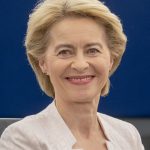
    The speech made by Ursula von der Leyen, the President of the European Commission, on 24 October 2022.

    Dear Prime Minister De Croo,

    Dear Bill Gates,

    Distinguished guests,

    It is so good to see you again Bill, because the last time we met was just a month ago in New York at the Global Goalkeepers event. I was very moved by your foundation’s recognition of Europe’s leadership on global health and the fight against the COVID-19. The award is truly a collective one. It belongs to all Europeans who showed such dedication during the pandemic – from the frontline workers in our hospitals and essential services, to the scientists who developed the life-saving vaccines.

    Today, we are joined by many of you here, from around the world, who are committed to global health and equity. So I would like to use this occasion to reflect on the experience of the pandemic, not from a medical point of view but from the point of view of a policymaker. And I would like to give a sober assessment of what I think went well and where we need to do better in future. I have six lessons that we took.

    The first lesson, not surprisingly, is the utmost importance of solidarity and cooperation. Let me start with the European experience. When the COVID-19 virus made landfall in Europe, things got really tough at the beginning. Some Member States chose to close their borders for life-saving material and equipment. There was painful competition for protective equipment, ventilators and other medical supplies between the different Member States. Vaccine nationalism became the norm around the world. I can tell you – we Europeans had our tough and painful public discussions. But at a certain point, the European Union decided to take a different path – the path of solidarity and openness. We convinced Member States not to close their borders but to share equipment and personnel. We decided to buy vaccines together and not to compete with each other. We started the vaccination campaign on the exact same day in all our 27 Member States – yes, we started with low numbers, and that was heavily criticised, but we had a fair distribution. Regardless whether you are a larger Member State or a small one, a wealthy one or a not so wealthy one. We decided not to close our borders for vaccine exports but to introduce a transparency mechanism. And at this point, many, many thanks to you Prime Minister, dear Alexander De Croo. You have been insisting on staying open for exports because you knew how important that is for the trust of the pharmaceutical industry, depending on where they are located. Today, over 80% of the European Union’s adult population is fully vaccinated. While at the same time, we have exported two-thirds of the vaccines produced in Europe to the rest of the world. Solidarity and openness were the absolute pre-conditions to this success.

    My second lesson: Science does not exist in a vacuum. I believe it was no coincidence that the safest and most effective vaccines were developed and rolled out rapidly in open societies. Science depends on cooperation, it depends on education, on the protection of intellectual property rights, of course on proper data sharing. But it also depends on individual mobility for example, freedom to move, and of course on the regulatory environment and on translating results into products, services and policies. All these factors empower scientists to do their best work, and enable society to reap the benefits. My colleagues and I benefited enormously from the collective wisdom of scientific advice – from you, Professor Peter Piot, you were my personal COVID-19 advisor, the way you gave me guidance and advise on a daily basis was outstanding; from my group of COVID-19 science advisors, handpicked by you, Peter; and also from the platform of 27 Member State government advisors we created. So it is transparency and accountability, our freedom of speech and the freedom of science that enable good policymaking and innovation. These are the values that democratic societies depend on and nurture. So it was democracies that developed the life-saving effective vaccines and that were best able to support their citizens when they needed our help the most.

    My third lesson is about the miracle of vaccines themselves. As a medical doctor by training, the importance of research and development is not news to me. But the pandemic made it very real for all of us. As you know, the outstanding mRNA vaccines did not come out of the blue. Their discovery, like all innovation, relies on long-term investment in scientists and their research. In fact, the European Commission had been investing in mRNA vaccine research since the early 2010s. However, in Europe we did not have a BARDA, like in the United States, which prepares for the case of an emergency. I must say, this was an obvious disadvantage. So we learnt it the rough way. And during the pandemic, we created HERA to anticipate threats and potential health crises. HERA works closely with our Horizon Europe research programme to close the circle from blue sky discovery all the way to scaling up life-saving measures.

    Global cooperation in research and development is crucial for discovery. That is why, for example, HERA and CEPI – the Coalition for Epidemic Preparedness Innovations – have recently signed a letter of intent. They will cooperate on developing next generation vaccines, including for COVID-19, as part of our Vaccines 2.0 Strategy. Horizon Europe is providing on a yearly basis contributions of EUR 35 million. And I am very pleased that our clinical trials partnership for HIV/AIDS, tuberculosis and malaria between European and developing countries has recently agreed to co-run calls for proposals with the Bill & Melinda Gates Foundation.

    Which takes me to lesson four: manufacturing capacity. Having safe and effective vaccines is not enough – we all know that. We badly needed manufacturing capacity, as well as open supply chains. I vividly remember that, at the height of the pandemic, we saw shortages of all kinds across the whole vaccine value chain, from bioreactor bags to vials, from lipids to even syringes. So we set up a Task Force to work with industry, with global partners, to remove these bottlenecks. This helped ramp up the monthly production capacity in the European Union, from 20 million vaccine doses per month at the beginning of 2021 to around 300 million vaccine doses per month by the second half of the year. Having learnt this lesson, we have now set up the EU-FAB, which is an ever-warm network of production capacities to quickly ramp up vaccines production in the future.

    Ladies and Gentlemen,

    So far Europe has sent more than 2.5 billion COVID-19 vaccine doses to 168 countries worldwide. This is our fifth lesson: cooperation and solidarity must be global. At the start of the pandemic, there was no appropriate global framework to allow for fair sharing of vaccines and other medical countermeasures. So we helped set up the ACT-Accelerator and COVAX, which we financed with EUR 3 billion, and we donated half a billion vaccine doses to lower-income countries. But clearly, this was not a sufficient approach, more had to be done and more can be done. This is why we took a different approach now. We are supporting developing countries directly: through financing, through regulatory capacity-building, and technology transfer, to build up their own vaccine manufacturing capacity. We are working with Senegal, Rwanda, South Africa and Ghana to produce mRNA vaccines that are made in Africa, for Africans. And we are taking a similar approach now with Latin America. They have been asking us to do the same. And of course, we responded positively. Because this is the way to go. Regional resilience is the solution that builds global health resilience.

    The sixth and final lesson concerns, indeed, the global health system. Over the years, global health has been consistently underfunded and neglected. Not by the likes of the Bill & Melinda Gates Foundation, which is doing exemplary work, but by the governments. The key is to be prepared, and this means keeping up the investment and keeping the focus in global health, at all times. Even now, in these difficult times, with a completely different focus. I am glad that we finally agreed to create a Pandemic Preparedness and Response Fund. The European Commission, together with the United States, have each committed USD 450 million. And this is just the start. With this reinforced funding, we will step up globally the surveillance of cross-border health threats, the strengthening of health systems, and most importantly the support in training and education.

    Ladies and Gentlemen,

    I know we still have a long way to go, but thanks to all of you and your dedication to global health and equity, I believe we are on the right track. Next month, the European Commission will bring forward the EU Global Health Strategy – it is our proposal to the world on how to work better together in partnership, to advance the common goal of global health. And of course, it will draw on the lessons I have just outlined to you. I look forward to continuing our close work together. And I wish you a rewarding and thoughtful conference.

  • PRESS RELEASE : European Health Union – building a stronger EU health response [October 2022]

    PRESS RELEASE : European Health Union – building a stronger EU health response [October 2022]

    The press release issued by the European Commission on 24 October 2022.

    Today, the Council has adopted the final building blocks of the European Health Union: the Regulation on Serious cross-border health threats, the Regulation on the extended mandate of the European Centre for Disease Prevention and Control (ECDC) and the Emergency Framework Regulation to provide extra powers to the European Health Emergency Preparedness and Response Authority (HERA). These new rules complete the European Health Union, building a powerful legal framework to improve the EU’s capacity in the vital areas of prevention, preparedness, surveillance, risk assessment, early warning, and response.

    Welcoming the adoption, Vice-President for Promoting our European Way of Life, Margaritis Schinas, said: “Today’s adoption by the Council of the three Regulations is a major achievement, and strengthens the EU Health Security Framework. With these new regulations, we have shown that we can move forward together, decisively, and fast. This legislation will work hand in hand with the financial support provided through the EU4Health Programme and the Recovery and Resilience Facility to ensure more resilient health systems across the EU. Collaboration and solidarity are key for the challenges ahead of us.”

    Commissioner for Health and Food Safety, Stella Kyriakides, said: “The central pillars of our European Health Union are now in place. The pandemic has shown the need for more Europe in public health, and a stronger capacity to protect citizens from health threats. With a stronger ECDC, an empowered HERA and a reinforced role for the EU in preventing, preparing for, and managing cross-border health threats, we now have additional tools to quickly react and respond to emerging health crises, decisively and with unity”.

    With the adoption of the Serious cross-border threats to health Regulation, the EU will have:

    • a robust preparedness planning and a more integrated surveillance system;
    • a better capacity for accurate risk assessment and targeted response;
    • solid mechanisms for joint procurement of medical countermeasures;
    • the possibility to adopt common measures at EU level to address future cross-border health threats.

    A stronger ECDC will not only issue recommendations to Member States regarding health threats preparedness, but also host a new excellence network of EU reference laboratories and establish an EU Health Task Force for rapid health interventions in the event of a major outbreak.

    To be effective and operational in times of public health emergencies, the Emergency Framework Regulation will allow the establishment within HERA of a Health Crisis Board. This Board will rapidly coordinate at EU level the supply of and access to medical countermeasures. The Regulation also enables the activation of the EU fab facilities, emergency research and innovation plans and access to emergency funding.

    Next steps

    Following today’s adoption of the three Regulations, they will be published in the Official Journal and will enter into force in November 2022.

  • PRESS RELEASE : Ukraine – International Expert Conference hosted by the Commission and G7 Presidency reaffirms unwavering commitment to support Ukraine’s recovery [October 2022]

    PRESS RELEASE : Ukraine – International Expert Conference hosted by the Commission and G7 Presidency reaffirms unwavering commitment to support Ukraine’s recovery [October 2022]

    The press release issued by the European Commission on 24 October 2022.

    omorrow, European Commission President Ursula von der Leyen and Chancellor Olaf Scholz, in his given capacity as German Presidency of the G7, will co-host the International Expert Conference on the Recovery, Reconstruction and Modernisation of Ukraine in Berlin. This conference is another important step in the series of global events, which demonstrate unwavering support from the Commission and the international community to Ukraine in the face of Russia’s unprovoked and unjustified war of aggression. It also highlights that the Commission and the international community will continue to support Ukraine beyond its immediate needs, and on its path to EU accession.

    Given the scale of the challenge at stake, the recovery efforts need to be an inclusive multi-stakeholder process, involving both public and private sectors, as well as international organizations. That is why the conference will bring together world-renowned experts across various disciplines and backgrounds, international organisations, senior government representatives, think tanks and academics, as well as representatives from civil society and the private sector, together with the Ukrainian government. The participants will discuss key matters for the recovery, reconstruction and modernisation of Ukraine. These discussions will contribute to shaping global efforts on the way ahead for Ukraine’s green, resilient, prosperous and democratic future.

    President Ursula von der Leyen said: “The courageous Ukrainian men and women of Ukraine are fighting for their independence and the rules-based international order.  We will be at Ukraine´s side as long as it takes. The road to reconstruction is at the same time Ukraine’s path towards its vision to become a more modern, democratic and prosperous country. Every euro, every dollar every pound and every yen spent will be an investment in Ukraine and democratic values around the globe. At the same time the broad support for the brave people of Ukraine is a strong statement that the free and democratic nations of this world stand together.”

    Following the opening remarks from President von der Leyen and Chancellor Scholz, President of Ukraine Volodymyr Zelenskyy will deliver a keynote address. During the opening plenary, participants will hear from Ukrainian Prime Minister Denys Shmyhal and other high-level speakers about the international perspectives on Ukraine’s geopolitical and economic outlook and the scale of the recovery and reconstruction needs.

    The morning sessions will cover a range of topics beginning with lessons learned from historical reconstruction efforts like the Marshall Plan in Europe and taking stock of the current situation in Ukraine and the sequencing of recovery and reconstruction needs. Discussions will then focus on the financing of recovery and reconstruction, exploring possible frameworks for governance and emphasising strong Ukrainian ownership in the process of mobilising resources and private sector involvement.

    The afternoon sessions will be devoted to key priorities for Ukraine’s sustainable growth, development, and stability, including with a view to EU accession. These sessions will focus on institutional transformation and good governance, macroeconomic and financial stability, industrial policy and sustainable development, and inclusiveness.

    The event will be live-streamed and will be available here. The press conference will take place at +/- 10:30 CEST and can be followed on EbS.

    Next Steps

    Targeted expert recommendations will be published on the website of the International Expert Conference as an outcome document. These recommendations will feed into bilateral, European, and multilateral discussions with Ukrainian counterparts, as support shapes up. These fora include the annual Ukraine Recovery/Reform Conference, to be hosted by the UK mid-next year.

  • PRESS RELEASE : Zero Pollution – Europeans seriously worried about air quality and call for stronger action [October 2022]

    PRESS RELEASE : Zero Pollution – Europeans seriously worried about air quality and call for stronger action [October 2022]

    The press release issued by the European Commission on 24 October 2022.

    Europeans are worried about the effect of air pollution on health and the environment, according to a special Eurobarometer survey published today. Most also think that industry, public authorities and employers need to do more to improve air quality. Respondents clearly favour an international or European approach to improving air quality and a large majority of the respondents who have heard of EU air quality standards say that they should be strengthened.

    Commissioner for Environment, Oceans and Fisheries Virginijus Sinkevičius said: “People tell us that they want clean air to breathe. People living in cities, asthma sufferers and those living near industrial plants, they are all worried and they are asking us to act. The Commission will lead the way with an ambitious proposal to strengthen EU air quality standards.”

    Key findings of the survey

    Concern about health and environmental impact of air pollution

    Most Europeans think that health conditions such as respiratory diseases (89%), asthma (88%), and cardiovascular diseases are serious problems in their countries resulting from air pollution. Europeans are also worried about the environmental problems caused in water bodies by air pollution such as acidification and eutrophication (both 83%). Acidification (water becoming more acidic) and eutrophication (excessive amount of nutrients in water leading to overgrowth of algae suffocating other organisms) are among the main consequences of worsening water quality.

    Perception that air quality has worsened

    Nearly half of the respondents hold the view that that air quality has deteriorated in the last ten years (47%). This percentage is however an 11-point drop since 2019.

    Support for strengthening EU air quality standards

    The Eurobarometer reveals that citizens lack information about air quality problems in their country. Most of Europeans remain poorly informed about the existing EU air quality standards as only a minority of respondents (27%) have heard of them. Nevertheless, a large majority of the respondents (67%) who are aware of EU air quality standards say that they should be strengthened. This is true in all but five Member States.

    Support for more action to promote air quality, especially at international level

    A large majority of Europeans think air pollution should be addressed at the international level (65%) followed by the European and the national level (both 42%), and finally the regional or local level (32%). A significant proportion of the respondents also believe that actions should be carried out at all levels simultaneously (19%).

    Individual action to reduce harmful emissions

    A majority of Europeans think that large industrial installations, fossil-fuel based energy producers, public authorities, and employers are not doing enough to promote good air quality.

    A majority also thinks that the household sector is doing enough. Respondents are more likely to have taken some action to reduce emissions themselves this year than in 2019. Using public transport, cycling, or walking is the most frequent method Europeans report they use to reduce harmful emissions into the air.

    As announced in the European Green Deal as part of the zero pollution ambition for a toxic-free environment, the Commission is about to propose a revision of the current EU air quality standards. This will align them more closely with the most recent World Health Organization (WHO) recommendations, and will strengthen provisions to help local authorities achieve cleaner air. The revised proposal will also focus on better implementation in order to help reach those standards in practice.

  • PRESS RELEASE : The Princess of Wales becomes Patron of Captain Preet Chandi’s expedition across Antarctica [October 2022]

    PRESS RELEASE : The Princess of Wales becomes Patron of Captain Preet Chandi’s expedition across Antarctica [October 2022]

    The press release issued by Buckingham Palace on 26 October 2022.

    The Princess of Wales has today become Patron of Captain Preet Chandi’s expedition across Antarctica. Captain Chandi MBE is aiming to become the first woman to cross Antarctica solo and unsupported, travelling over 1000 miles.

    Captain Chandi is taking part in the challenge to inspire future generations to believe in themselves, to push their boundaries and show how the outdoors can help them achieve their dreams. The Princess has long been an advocate of the huge impact the outdoors can have on our wellbeing and the life skills it nurtures, such as confidence and resilience.

    She is committed to promoting this to young people, including through her work with organisations such as the Scouts, of which she is joint President. Preet’s historic expedition is the pinnacle of such activity and that is why The Princess is delighted to have been invited to be Patron.

    Captain Preet Chandi MBE said:

    “My aim for this expedition has always been to inspire people to push their boundaries. I want to bring people on this journey with me, to help them believe that nothing is impossible.

    “It is an absolute privilege to have The Princess of Wales as the Patron.”

    In January 2021, Captain Chandi created history by becoming the first woman of colour to reach the South Pole solo and unsupported. She finished the route in 40 days, just short of the female world record of 38 days held by Joanna Davidson of Sweden.

    This time Preet will pull all her kit and supplies on a sledge weighing around 120kg while battling temperatures of -50c and wind speeds of up to 60mph. She is due to begin her trek at the start of November and has 75 days to complete the journey.

    Captain Chandi is a physiotherapist and serving member of the British Army, currently working as a physiotherapist at a Regional Rehabilitation Unit in Buckinghamshire, providing rehabilitation for injured soldiers and officers.

  • James Bethell – 2022 Speech on the Growth Plan (Lord Bethell)

    James Bethell – 2022 Speech on the Growth Plan (Lord Bethell)

    The speech made by James Bethell, Lord Bethell, in the House of Lords on 10 October 2022.

    My Lords, I join many others in welcoming the return of my noble friend the Minister to the Front Bench; I thoroughly support her sentiments, which she put very well, about the critical importance of growth. I put on the record that no one in the UK Government has ever talked of trickle-down economics—I checked and it is just not the case.

    I want to emphasise the significant contribution that public health improvements can make to the wealth of the nation and to achieving the important 2.5% growth goal referred to by my noble friend the Minister. My noble friend Lord Wolfson said that the growth Statement was slightly short of supply-side suggestions, and I agree with him. I am speaking to persuade noble Lords that investment in public health can not only save millions of lives from preventable disease and epidemics but allows us to live longer, accomplish more and contribute more to the economy. Public health also helps reduce inequalities by ensuring that people are not needlessly prevented from fulfilling their potential or contributing to the economy because of illness, disease or premature death.

    However, the public health of the nation is not contributing enough to the wealth of the nation; quite the opposite. There is a great exodus from the workforce due to ill health. In a report published today, the Health Foundation noted that economic inactivity in the UK has increased by 700,000 people since before the pandemic; that includes 300,000 people aged 50 to 69 years who are at greater risk of never returning to work. This increase in poor health and economic inactivity restricts our labour supply and our economic growth. The recent OBR report estimates that this contributes £2.9 billion to welfare bills, and I think it probably undercooks that number.

    The country’s poor health is also driving up costs for the NHS. Even though it consumes 40% of public expenditure, it is overwhelmed with demand and its costs are growing. Late-stage acute healthcare is the wrong part of the economy to be growing. We should be investing in prevention, not cure. That is the way to grow the economy. If we do not, we are failing to take advantage of the technological revolution that can use genomics, big data, artificial intelligence, modern vaccines and the latest diagnostics to help assess health risks, identify disease and get people on the road to recovery more quickly than ever before.

    It was disappointing that the Chancellor did not refer to health in his plan for growth and a shame that my noble friend the Minister did not do so either. I ask the Minister responding to please reflect on the significant link between health and wealth in his comments. In particular, I urge the Treasury to appoint a commission—armed with an economic slide rule rather than a scientist’s microscope—to look at the nation’s health, much as Nick Stern looked at climate change, as an economic threat rather than a scientific phenomenon, so that we can hammer out a plan to get out of the economic cul-de-sac of an increasingly unhealthy population.

  • Edward Razzall – 2022 Speech on the Growth Plan (Lord Razzall)

    Edward Razzall – 2022 Speech on the Growth Plan (Lord Razzall)

    The speech made by Edward Razzall, Lord Razzall, in the House of Lords on 10 October 2022.

    My Lords, I can answer the noble Lord’s question as to why a number of us are questioning this after 12 years of Tory government. After 12 years of Tory government, the UK economy is currently a basket case. First, our growth is forecast to be the worst in the G20 apart from Russia over the next 12 months. Secondly, we are the only G7 country whose economy has not recovered to pre-pandemic levels. Thirdly, our productivity is significantly worse than that of our major competitors. Fourthly, we have the damaging effects of Brexit.

    What are the Government doing about it? We have learned a number of things from their recent announcements and comments from government hangers-on. First, apparently it is all Putin’s fault. If that is so, why are we doing worse than all our major competitors? Secondly, it was apparently perfectly satisfactory to make a significant fiscal statement without the usual verification of numbers by the OBR, so why were the Government surprised by the gilt market reaction? What is worse, we now know that the Chancellor had a draft report from the OBR on his desk on his first day in the office. He refused to publish it, presumably because it did not support his numbers, and now he has been forced to bring forward his fiscal statement and the OBR report, noticeably on Halloween day. Thirdly, apparently the Government will generate growth through tax cuts, as the noble Lord, Lord Howard, indicated. But however you describe it—Reaganomics, the Laffer curve or Donald Trump in 2017—there is no evidence that it works. As the noble and learned Lord, Lord Clarke, who is sadly not in his place, memorably said last week, it is the sort of thing tried by South American banana republics and it does not work.

    I will not spend my time intruding on the private grief of the Government’s incompetence in the handling of the recent announcements—others have and will—but will confine myself to a number of questions to the Minister. First, will he explain why the Government are so set against a windfall tax on oil companies to help fund the extra borrowing necessary to protect householders from energy price rises? These excess profits are entirely a windfall and had no connection with management activity. All that will now happen, presumably, is that huge dividends will be paid to shareholders—mostly institutions resident outside the United Kingdom.

    Secondly, do the Government accept that during the period after 1949, when growth averaged 2.5%, 2% of that came from productivity gains and 0.5% from increasing immigration? If the Government want growth, will they confirm that the latter will be acceptable to the Home Secretary?

    Thirdly, if, as the Prime Minister says, all government policy should be to generate growth, there are a number of things that the Government could do to alleviate the damaging effects of Brexit. Will they take the advice of the noble Lord, Lord Frost, to negotiate improvements with the EU? For example, will they negotiate to help the shellfish producers who can no longer sell into Europe? Will they help the creative industries by helping the musicians who find it impossible to tour in Europe, therefore depriving us of substantial export revenue? Will they negotiate to help the many SMEs who have stopped selling to Europe because of pointless bureaucracy?

    The economy is a disaster. Brexit has proved a disaster. The Government are a shambles. Surely it is time for this Government to go.

  • Greville Howard – 2022 Speech on the Growth Plan (Lord Howard of Rising)

    Greville Howard – 2022 Speech on the Growth Plan (Lord Howard of Rising)

    The speech made by Greville Howard, Lord Howard of Rising, in the House of Lords on 10 October 2022.

    My Lords, I find it difficult to understand the fuss over the Chancellor of the Exchequer’s plan for growth. With the start of money printing in 2008, inflation and the higher interest rates were built into the system before there was a Conservative Government. The 40% rate of tax was in place up until the last days of the previous Labour Government. Most major currencies have fallen against the dollar, with the yen down 50% and the Japanese authorities intervening. The Government can hardly be blamed for the invasion of Ukraine and the resulting fuel crisis. They can take credit for acting promptly to help people.

    Instead of applauding the outstanding plan for growth, which will result in greater prosperity, we hear a cacophony of unjustified abuse from the anti-growth coalition, made up of those who believe that if nothing changes and the handouts are kept going, all will be well. I tell them to face up to reality. You have to create wealth to spend it, and that is what this Budget is about. The other complainers are the metropolitan elites and the bien pensants who believe they can decide better what to do with other people’s money than those people can decide for themselves. That just does not work either morally or economically. People should be entitled to the fruits of their labour and to get what they work for, not have it confiscated for fashionable projects.

    Economically, high taxation and redistribution by government is inherently inefficient and results in massive waste. Everyone wants better roads, a better health service and other essential services. These cannot be achieved by living in the cloud-cuckoo-land of believing that all you have to do is tax more to be able to spend more. You cannot. It does not work; the tax take shrinks. By lowering taxes and removing stultifying regulations, a framework is created that will allow the genius of the people of Great Britain to deliver growth in the economy. This will permit government debt to be repaid and public services to be enhanced. It will inevitably take time, but the reality is that if the top-class public services we would all like to see are to be delivered, there is no other choice.

    Taxes are at their highest level for many years and must be reduced for the economy to grow. Money left in people’s hands grows; they do things with it. Governments consume wealth; they do not create it.

  • John Hendy – 2022 Speech on the Growth Plan (Lord Hendy)

    John Hendy – 2022 Speech on the Growth Plan (Lord Hendy)

    The speech made by John Hendy (Lord Hendy) in the House of Lords on 10 October 2022.

    My Lords, it is a constant theme of Conservative economic policy that the rich are incentivised to be more productive by increasing their incomes whereas the poor are incentivised by threats to reduce theirs. The growth plan is full of examples, such as, at paragraph 3.22, the removal of the higher rate of tax from those earning more than £150,000, which has now of course been abandoned and, at paragraph 4.9, removing the limit on bankers’ bonuses. On the other hand, paragraph 3.24 proposes more conditions on eligibility for universal credit: “intensive conditionality”, the Chancellor calls it. It is specifically aimed at

    “claimants who are in work and on low earnings”.

    We know that most claimants are, in fact, in work. Universal credit is, in fact, a subsidy for employers who pay the lowest wages.

    Average wages are rising by 5.2% per annum, while the consumer prices index rose by 9.9% in the year to August. The value of earnings from wages is therefore falling by an average of nearly 5% per annum. That is a huge hit to the living standards of working people. Consequently, demand in the economy is shrinking. That cannot be redressed by giving a few thousand high earners more money, but, if the incomes of ordinary working people rise, that money will be spent and demand will increase.

    The differential between earnings and prices has another impact. Notwithstanding the Government’s energy price cap at twice last year’s rate, working people are becoming desperate. That is why there is a wave of strikes, with overwhelming ballot mandates. But rather than address the catastrophe facing working-class people this winter, the Government propose further restrictions on the only leverage that working people have to protect their standard of living when persuasion fails—industrial action. Not content with the most restrictive laws on trade unions in the western world, the additional restrictions of the Trade Union Act 2016, raising this year the limit on damages payable by trade unions, and enabling agency strike-breakers, also this year, the Government now propose yet further restrictions on the right to strike in paragraph 3.28 of the Growth Plan: minimum service levels for transport services, and every employer’s offer to be put to a ballot of employees.

    The objection is not just one of principle—these restrictions are in breach of the conventions of the ILO and the European Social Charter, from which the Government undertook not to regress in Article 399 of the trade and co-operation agreement at the end of 2020; there are also problems with practicalities. If the minimum service requirement is, say, 10% of train services, who will select the train services to run and on what basis? How are those who are to staff them to be selected and forced to work? Ten per cent of train services will require near 100% of signallers and most of the station staff. Are they to be denied the right to strike?

    In relation to balloted offers, must there be a ballot for an offer of a penny extra an hour when the members have voted unanimously for an extra £5? If they reject the offer, can the employer then further postpone the strike by offering another penny, and so on until the statutory duration of six months for a strike ballot is exhausted? How are the workers to be balloted? Presumably, as for strike ballots—and unlike the ballot for the Prime Minister—by post only, not online. That takes weeks. Who will pay for it?

    Instead of attacking workers trying to defend their standards of living, I commend to the Government the restoration of the system of sectoral collective bargaining that was a feature of our economy when it was successful. It is a feature of the successful economies of Europe and is currently the subject of legislation in New Zealand and the fast food industry in California. It gained support only last week—

    Baroness Bloomfield of Hinton Waldrist (Con)

    The noble Lord has exceeded the advisory speaking time by some margin.

    Lord Hendy (Lab)

    —in the OECD Employment Outlook 2022. Those are my last words.

  • Simon Wolfson – 2022 Speech on the Growth Plan (Baron Wolfson of Aspley Guise)

    Simon Wolfson – 2022 Speech on the Growth Plan (Baron Wolfson of Aspley Guise)

    The speech made by Simon Wolfson, Baron Wolfson of Aspley Guise, in the House of Lords on 10 October 2022.

    My Lords, I declare my interest as a serving chief executive of a FTSE 100 retail company, a post I have held for 21 years. Understandably, today’s debate has focused on recent government events and the mini-Budget, but it is important to stand back a little from that and reflect on the fact that the pound had devalued from $1.37 in just a year to $1.15 before the Chancellor spoke. Interest rates were rising and were always going to rise.

    Although the Government’s recent actions undoubtedly exacerbated the situation, it is important to remember that the cost of living crisis we are experiencing at the moment is rooted in a chronic shortage of goods, fuel and labour. It is essentially a supply-side problem. The pandemic paralysed the world’s manufacturing and disrupted global freight routes. The war in Ukraine piled energy price rises on top of what was already a fragile global economy. To get us through the pandemic it was quite right that we had borrow-and-spend remedies. They were not only desirable but essential to prevent economic collapse, and today they are essential to prevent people suffering too much from the energy crisis. However, demand measures can only target the symptoms of supply-side inflation: they cannot deliver a cure and there is always a price to pay.

    If we are to solve the cost of living crisis, it will require bold supply-side measures, and while I welcome the Government’s rhetoric on supply-side reform, I share the concerns of the noble Lord, Lord Newby, and many other noble Lords about the lack of detail. The noble Lord, Lord Kerr, and many others are right that tax cuts alone—although they are in my view welcome—are not going to stimulate growth. Fortunately, there are a number of very powerful measures that can make an enormous difference. Contrary to what I have heard some noble Lords say today, businesses are not in the habit of sitting back and relaxing and not bothering to invest. Believe it or not, we do not need a lot of encouragement, incentives or tax breaks to invest. What we really need is for Governments to stop preventing us investing.

    Here, the measures that the Government can adopt are numerous. There is the radical overhaul of our planning system. Here I share the cynicism of the noble Lord, Lord Macpherson, about government’s ability to deliver on this. There is no doubt that the delivery of the homes people want to live in in the places where they want to live and work can do more to stimulate growth in this country than any other measure alone.

    The intelligent relaxation of controls on economic migration, as pointed out by the noble Lords, Lord Shipley and Lord Birt, could do an enormous amount to stimulate the economy, perhaps, as I have suggested elsewhere, through a visa tax that would ensure that UK employers employ overseas workers only where there is really no UK alternative.

    Stemming the flow of new business regulation and quasi-regulation that wastes so much time and so much money for so little good would do an enormous amount to stimulate growth. Here I stress that I hope that the Government understand that it is stemming the flow of new regulation that will really make the difference; not some imaginary bonfire of existing regulation that we have already learned how to cope with. There is also the liberalisation of trade rules and the repeal of needless tariffs that do nothing to protect British industry.

    In addition to these essentially liberating measures, the Government can also save money. The cancellation of HS2 would reduce borrowing and release much-needed materials and skills back into the UK economy. With HS2 costs so much higher than appraised and the benefits so implausible in an online world, surely now it must go.

    Supply-side reforms are the key. They will accelerate long-term growth but will also do something else. A determined, reasonable, carefully thought through plan for supply-side reform will do much to restore market confidence in the United Kingdom. The markets will reward this country for the right steps as quickly as they punished us for the wrong measures that we took a few weeks ago.