Tag: 2022

  • Alyn Smith – 2022 Speech on the Contribution to the UK Made by International Students

    Alyn Smith – 2022 Speech on the Contribution to the UK Made by International Students

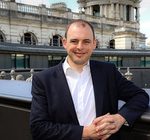
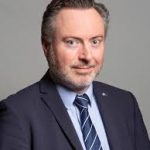
    The speech made by Alyn Smith, the SNP MP for Stirling, in Westminster Hall on 2 November 2022.

    I beg to move,

    That this House has considered the contribution of international students to the UK.

    It is a pleasure to see you in the Chair, Mr Stringer, and to see so many colleagues here today.

    The contribution that international students make to our domestic society and economy is a subject close to my heart. I was an international student and did my Erasmus year at Heidelberg University, and I did a master’s at the College of Europe in Warsaw. Prior to that, I studied in Scotland’s near abroad—Yorkshire—at Leeds University, and at Nottingham Law School. We must not lose sight of the important fact that so many of the world’s best and brightest are willing to come to our countries and work with us towards the light of science.

    I declare an interest as vice-chair of the all-party parliamentary university group. It is a pleasure to see so many good colleagues from the group present, and I look forward to the discussion. I am grateful to a number of organisations for the briefs that we have had prior to the debate, particularly Stirling University in my constituency, Forth Valley College, Universities Scotland, Universities UK, the Russell Group, Imperial College London and UCAS. I refer colleagues to the House of Commons Library brief, which provides a really good state of play on where things are and a very helpful overview of the situation.

    I stress that this is a good news story. Since I came into the House of Commons in 2019, I hope it has been clear that I do not do point scoring. I am here to work towards a common ambition: I want to see the UK do well. Global Britain is not the Scottish National party’s project. I believe that Scotland’s best future is as an independent state back in the European Union, and we will have a referendum about that in due course—it is not for today. In the meantime, it is important for me to say to colleagues that I do not wish global Britain harm. If I were trying to undermine global Britain, I would cut the international aid budget, defund the BBC World Service, shut down British Council organisations worldwide and jeopardise our contacts with the European Union. All those things are happening under the Government right now, and I ask the Minister, whom I do not regard as part of the problem, to urge his colleagues to stop them.

    This is a success story and a good news story. The contribution that international students make to Scotland and the UK is significant, but it is a success story that cannot be taken for granted. Scotland and the UK have a huge interest in this issue, although Scotland’s interest is disproportionate. In 2020-21, 24.1% of university enrolments in Scotland came from outwith the UK, compared with 22.2% in England, 21.3% in Northern Ireland, and 14.9% in Wales. All the home nations have a significant interest in retaining and attracting international students, but Scotland has a disproportionate interest in doing so. We have an interest in the UK Government’s policies, particularly on immigration, that threaten progress on this matter, which is surely in all our interests.

    In 2020-21, we had 5,000 international students based at Stirling University—30% of the campus-based student population. UK-wide, the number is obviously bigger, with 605,100 international students at various higher education institutions across all our constituencies and countries. We are talking about hundreds of thousands of the world’s best and brightest, who have paid us the supreme compliment of coming to our home to work with us. I am conscious that a number are watching, and I say to them, “You are welcome here. You are welcome in our society. You enrich our society by your presence, and you enrich the institution that you are committed to. You are working with us towards a global science.”

    Kate Green (Stretford and Urmston) (Lab)

    I declare an interest as a member of the board of governors at Manchester Metropolitan University. I agree with much of what the hon. Member is saying, except about independence for Scotland. I believe we are stronger together.

    I endorse the hon. Member’s point about the value that is added by international students, particularly in commuter universities such as Manchester Metropolitan. Our students may have less opportunity to travel abroad because of caring and other responsibilities, and being able to mix with international students who come to our country to study gives them an important connection to the global economy into which they will graduate.

    Alyn Smith

    I thank the hon. Lady for her intervention, except for the part about independence, which we will probably come back to at some point. I strongly agree with her, and I pay tribute to her for the power of work she has done in the all-party parliamentary universities group.

    I thank the international students who so enrich our communities and institutions by their presence—and that is before we get on to the economics. It is the dismal science, but the economic impact is considerable. To be clear with colleagues, that is not my starting point; I do not regard universities as money-making widget factories. Universities are seats of learning, seats of exchange and seats of research. They form a globally interconnected network of the exchange of people, ideas and knowledge.

    There are only two things that drive human progress—science and art—and universities have a crucial role to play in that. It was Isaac Asimov who said:

    “There is a single light of science, and to brighten it anywhere is to brighten it everywhere.”

    Science is global. Universities are global by their very nature, and the exchange of students, people and ideas is fundamental to what they do. However, I am Scottish, and the money does not hurt.

    The contribution of international students is significant. We have calculated that international students contribute £66.4 million net to the Stirling economy. For the whole of Scotland, their contribution is £1.94 billion net, and for the UK economy, a single cohort of international students contributes £25.9 billion net. At a time of straitened budgets and economic turbulence, we need to safeguard that progress, not undermine it either deliberately or by accident.

    I am conscious of time, so I will wrap up on two particular points about the Government’s rhetoric, which risks undermining progress, and about EU relations, in which there is huge opportunity that the Government could unlock by changing course.

    The comments by the Home Secretary and various other members of the Government about limiting international students are wrong politically, societally and economically. Limiting international students would be a “hammer blow”. Those are not my words, but those of Vivienne Stern, the chief executive of Universities UK. I will ask the Minister some questions from Universities UK that I think it is worth putting on the record—I appreciate that I am blindsiding him slightly, so I will happily accept a letter after the debate.

    What assessments have the UK Government made of the economic cost—including the loss of tuition-fee income, living cost expenditure and knock-on expenditure —of restricting the number of international students and their dependants entering the UK’s world-leading university sector? Are the Government committed to retaining the graduate visa route established in 2021? That fact that it is under threat is utterly wrongheaded, but it has been called into question by some senior people, so I would be very grateful for reassurance that it is safe. Are the Government committed to the successful international strategy outlined in 2019, including the target to host 600,000 international students, which has since been achieved, and to bring in £35 billion of export income every year by 2030?

    Before turning to EU links, I declare an interest: I was a Member of the European Parliament from 2004 to 2019, and as a member of its Committee on Industry, Research and Energy, I helped draft some of the regulations on Horizon Europe and on student and educational exchanges, so this matter is close to my heart. Scotland and the UK are research-intensive places, and Scottish and UK involvement in the EU frameworks for this stuff is a win-win-win for everybody. I regret deeply that the UK has left the European Union, but I am not here to fight old battles. There are ways of interacting with what is going on in the EU that stop short of EU membership.

    I was in Brussels recently and in Berlin just the other week. There is a real willingness on the part of our European friends to see the UK play a full part in institutions and networks such as Horizon Europe, Erasmus+, Copernicus and Euratom. As I have said, it is a win-win-win to be part of those projects, but a chill is under way: in Erasmus, there has been a huge reduction in the number of EU nationals applying to UK institutions, which is deeply regrettable.

    On 22 July, the EU announced the cancellation of 115 grants for UK-based scientists because they were not part of the reference networks or frameworks. There is a big prize here: Horizon Europe is worth €95.5 billion, and that money could—but does not—work towards not just the EU’s science but our own. The single biggest thing blocking progress on all those fronts, and that holds back our universities and academics, is the lack of trust between the UK Government and the EU.

    That lack of trust has crystallised around the Northern Ireland Protocol Bill. The fact that the UK introduced that Bill, which has been passed by the House of Commons and is now in the other place, calls into question the UK’s good faith on all of this stuff. The EU will not allow us an ad hoc, legally undefined membership when the UK is clearly willing to rip up legal order, as it has done with the Bill.

    Let us scrap the Northern Ireland Protocol Bill. That would unlock progress on all these real-world opportunities and give our university sector and our students an advantage. There is a huge prize to be won. Global Britain is not part of the SNP’s project, but academic exchange is. We very much want to be part of the exchange of ideas and people, and I want to see the UK play a full part in that. I am grateful for the discussion, and I look forward to questions and comments, and, above all, to the Minister’s response.

  • Huw Merriman – 2022 Speech on Airport Parking Charges

    Huw Merriman – 2022 Speech on Airport Parking Charges

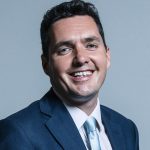
    The speech made by Huw Merriman, the Minister of State at the Department for Transport, in Westminster Hall on 2 November 2022.

    It is a pleasure to serve under your chairmanship, Mr Stringer. I congratulate my hon. Friend the Member for North Herefordshire (Sir Bill Wiggin) on securing the debate on airport parking charges and delivering his asks with his usual robust purposefulness. I recognise that the issue will be of interest to many people who use our airports, in particular those travelling abroad again for the first time to see friends and relatives or go on a much deserved holiday. I have listened to and had the opportunity to speak to my hon. Friend. I have certainly taken into account his comments and will try to address most of them.

    I will say at the outset that, in years gone by, I was involved in many consumer campaigns with Which? on the benefits of free access to airports and other transport modes. I agree that it can be frustrating when we use something that was previously free and then it is charged. As my hon. Friend the Member for Woking (Mr Lord) said, while many of these charges came in during the covid period, many had actually been planned in advance around the sustainability point and decarbonisation. I will touch on that later in my speech.

    Increasingly, we are seeing airports transform into regional transport hubs that support multiple businesses, labour markets and population centres. They provide significant economic benefit to their local areas, and reliable and efficient surface access connections play an important part in achieving that. I am pleased, as I hope we all are, to see an increased demand for aviation and air travel as the sector continues to recover from the covid-19 pandemic, and I certainly recognise the contributions of both my hon. Friends on what they did to make that happen. It is important that we aim to balance the sector’s recovery with the UK’s environmental goals, as I touched on previously. We therefore expect that airports, through their surface access strategies, set targets for sustainable passenger and staff travel to the airport. These targets should, where possible, meet the ambitions set by Government and be monitored by their respective airport transport forums.

    Mr Lord

    I am rather disappointed in the Minister’s opening remarks, which seem to be on the side of the airports on sustainability grounds. When a family is going on holiday, perhaps with a frail elderly person or someone who is disabled, does it make any sense to have to go to the long-stay car park, unload all the baggage and try to get the disabled or frail elderly person on to the bus—only to have to do it all again on the way back? That is not right. I was not aware that the airports were thinking of introducing this pre-covid. The letter that I got from Heathrow when I wrote on behalf of constituents placed the main emphasis on the financial shortfall over covid and said that the airport therefore needed to introduce the measures. I am surprised that the Government might support that.

    Huw Merriman

    I am sorry to be a disappointment to my hon. Friend. The situation we have is that unlike, for example, our rail provision, airports are private organisations and there will be a direct contract between those using the airport and the airport operators—it is down to them. I have indicated my sympathy as regards the requirement to put charging in. Heathrow’s expansion is predicated on its ability to reduce air pollution; that is one of the key issues in allowing Heathrow to expand. What the aviation industry and the airport operators are doing is responding to the need to reduce the carbon emission footprint around the airport. That is one such measure.

    Drop-off and parking arrangements at most airports are subject to contractual agreements between airport operators and car park companies. Those arrangements are covered by consumer laws. Most airport websites contain information on the drop-off and car park options available at the airport, and recommendations on the best options depending on length of stay. I will go on to talk more about signage and information shortly, because that was one of the key requests from my hon. Friend the Member for North Herefordshire.

    Most airports in the UK choose to charge a premium for drop off at their terminals. I understand that Cardiff, Bristol and Birmingham airports, all of which are closer to my hon. Friend’s constituency, charge fees for the use of drop-off zones. I recognise that the introduction of a charge for dropping off passengers, when it might have been free of charge previously, may be frustrating to some motorists. However, the provision and charging of car parking at airports, including drop-off charges—this comes back to the point I made to my hon. Friend the Member for Woking—is a matter solely for the airport operator, as a commercial business, to manage and justify.

    The arrangements for drop-off charges at airports are not a tax on the motorist; they are a contractual arrangement between the airport, the car parking company and the driver. That is the same as the different charges for the use of short and long-stay car parks, which can be located further away from the terminal buildings. It is a choice that the driver can make when planning their trip to the airport, but I recognise that some people have more choices than others because of mobility. I recognise the points that have been made about that.

    Mr Lord

    I have two points. On the point the Minister just made, normally a service provider will provide a service for which they charge. There is no service being provided. We just want an area where we can drop off our passengers. To go back to the earlier point about sustainability and air quality around Heathrow: if that was a main driver, should not electric and low-emission vehicles be able to drop off for free?

    Graham Stringer (in the Chair)

    Order. I remind the hon. Gentleman that interventions should be short and to the point.

    Huw Merriman

    I will go into detail on the second point, but to come back to the point about electric vehicles, that is something that airports are developing. They are slightly hampered by the lack of HGVs, but it is something that they are working on in conjunction with other matters.

    Let me address the point that drop-off zones were supposed to be temporary during covid. Airports have been implementing drop-off zones and charges since before the pandemic, as part of their work on delivering sustainable and affordable travel options. Charging for the use of drop-off zones may encourage airport users to make more journeys to airports by public transport, which will assist with the wider sustainability ambitions of the Government. However, I recognise that at airports such as Bristol, rail options are few and far between. As demand for air travel returns, with people understandably keen to resume their lives, airports have further indicated that drop-off charges will help to avoid a car-led recovery.

    I know that information and signage is important to my hon. Friend the Member for North Herefordshire. Given the choice for drivers, it is even more important that airports are transparent in their parking offer. The Government expect and encourage airports to be clear on the available choices for parking on their websites, along with information on how to access them. I agree with my hon. Friend’s comments on this matter. This information must ensure that there is a clear and visible signage point at the airport to ensure that drivers are well informed and aware of the arrangements and requirements, as well as the other parking options. I have raised this matter with my colleague, the aviation Minister, Baroness Vere, to see whether we can underline the importance of this matter in our communication with airports, and she has confirmed she will do just that on behalf of my hon. Friend the Member for North Herefordshire.

    Sir Bill Wiggin

    I thank my hon. Friend for that. I want to say a huge thank you. What upsets us is that we have paid for a public road and then we are fined for parking, and there has been no opportunity to choose. Choice is the key. I do not mind if we have to pay for environmental things, or if we are being distracted or even being sent places we do not want to go. However, we really do need a choice, because, as taxpayers, we have already paid for the road. I thank the Minister very strongly indeed.

    Huw Merriman

    That is very kind of my hon. Friend. As a constituency MP who has long been frustrated when people are not treated as they should be, I know that information is key, so I completely agree with him.

    Government guidance on the use of signage on public roads can be found in the Traffic Signs Regulations and General Directions 2016, which prescribe the design and conditions of use for traffic signs, including road markings. Parking trade associations such as the British Parking Association provide guidance in their codes of practice to their members on the use of signage, with due regard to the existing regulations. All of that goes alongside the assurance I have given my hon. Friend.

    Earlier, I mentioned that airports are responsible for setting their surface access strategies. I encourage airports to set out their intentions in respect of drop-off charges and parking, and to use specific airport transport forums to develop and oversee the implementation of plans for future surface transport provision. That will help not only to prevent confusion and the risk of drivers inadvertently entering drop-off zones, but to reduce the chances of accidents due to drivers taking evasive action to stop themselves entering such zones. All of this will, I hope, assist in making each stage of the journey to an airport as easy as possible. If drivers feel that signage at airports does not make them aware of the arrangements and requirements for drop-off charges, they can submit an appeal to the Parking on Private Land Appeals Service. We will continue to keep this provision under review as part of the Government’s work on a single code of practice for parking companies.

    On the provision of alternatives, I welcome the consideration my hon. Friend the Member for North Herefordshire has given to alternatives to drop-off zones, including the use of other car parks, both short and long stay, although I hear his point about how far away long stay actually is. While I accept that additional transfers are required, I would make the point that, at the very least, long-stay car parks provide an alternative to paying. Airports including Gatwick, Manchester and Bristol offer free drop-off zones at designated car parks a short walk from the terminal or with the option of a shuttle bus service. I encourage airports to ensure that such options are readily available to drivers so that they can plan their journeys in advance.

    I note the concerns raised by my hon. Friend that motorists may incur additional parking costs through no fault of their own when delays or disruption caused by late flights or industrial action result in a longer than expected stay. I note his example of the charges at Bristol airport, where the drop-off zone charges are £5 for up to 10 minutes, £7 for between 10 and 20 minutes and £10 for between 20 and 40 minutes. I note that Bristol’s short-stay car park is often cheaper for the same amount of time—having done some earlier research, he will be glad to hear—costing £5 for up to 20 minutes or £7 for between 20 and 40 minutes.

    Airports already highlight the potential disruption to passengers and how that might affect their journeys. Again, I would be happy to raise with the aviation Minister what more airports can do to ensure that drivers and passengers are well informed and offered flexibility of provision if there is disruption. I acknowledge that at some airports, such as Bristol, there are no rail links and alternatives to cars are more limited; Civil Aviation Authority figures for 2019 highlight that 68.3% of passengers arrive by car.

    On the regulation of airport parking, if an airport contracts a private parking operator to manage parking on the land, the parking operator must be a member of a trade association and follow its respective codes of practice and appeals procedures. The two trade associations are the British Parking Association and the International Parking Community. Their codes set out the requirements that parking operators must follow, including on signage, if they wish to access the Driver and Vehicle Licensing Agency data to issue parking charges to the owner of a vehicle. Both associations offer, on behalf of their members, an independent appeals service to motorists who receive a parking charge and wish to dispute it. On my hon. Friend’s point about the proposed parking regulations being withdrawn, that has indeed been the case due to judicial review, but I look forward to the regulations coming back, to see how they can be further improved upon.

    I again congratulate my hon. Friend the Member for North Herefordshire on securing this debate. It has been an opportunity for both him and my hon. Friend the Member for Woking to draw attention to expectations for car parks at airports—that they should be managed appropriately and that consumers should be treated fairly. I assure my hon. Friends that the Government are keen to improve the regulation of the parking industry. We continue to consult on changes to parking charge levels and additional fees with the industry, with the aim of reissuing the parking code of practice as soon as possible.

    The charges associated with car parking at airports are solely a matter for the airport operator to manage. Airport users entering into parking arrangements are covered by consumer law. We will all ensure that such arrangements treat the airport user fairly and respectfully, and we will see what more can be done on the points that have been raised.

  • Bill Wiggin – 2022 Speech on Airport Parking Charges

    Bill Wiggin – 2022 Speech on Airport Parking Charges

    The speech made by Sir Bill Wiggin, the Conservative MP for North Herefordshire, in Westminster Hall on 2 November 2022.

    I beg to move,

    That this House has considered airport parking charges.

    Drivers are being forced, tricked or directed to pay extortionate amounts to drop off or collect passengers at airports. To make matters worse, two thirds of the UK’s busiest airports have put their prices up. Of course, airports are entitled to charge when the land is privately owned, but the taxpayer has already paid for the road up to the airport. Yet the signposts do not send the driver to a safe and free place for drop-off or collection. No-stopping zones on the roads leading up to the airport mean that the principles of choice and safety are not obvious. That means that drivers are being deliberately exploited.

    Airports must be required to offer drivers a free and safe place to drop off and collect passengers, and, where they do, that must be clearly signposted on the approach to an airport. Although it may seem that there are craftily many different options for parking at airports, given the pressure of traffic, it is chaotic and stressful for drivers to locate the correct one.

    The increasing number of train strikes mean that many passengers depend on a friend or relative to drop them off at an airport. As a result, those drivers suffer, rather than the actual holidaymaker. In that sense, the drop-off charge is a small tax on generosity. Failure to signpost free options effectively means that drivers are at risk of breaking the law either for stopping on a nearby roundabout or for dropping someone off on a red route leading up to the airport; such routes are rightly enforced for reasons of security. Indeed, drivers caught stopping on those red routes are fined £100.

    In 2019, the Parking (Code of Practice) Act received Royal Assent, promising greater regulation to prevent motorists from being treated unfairly by private parking companies. Airports were considered as part of the code of practice. However, this June, the private parking code of practice was temporarily withdrawn,

    “pending review of the levels of private parking charges and additional fees.”

    It would be welcome if the code of practice brought greater clarity and consistency to airport parking charges to better regulate the industry for both airports and motorists, which I believe the Government have a duty to do.

    Ironically, the Civil Aviation Authority, in its review of market conditions for surface access to airports, claimed that environmental factors played a part in airport parking decisions. The Airport Operators Association, which represents over 50 UK airports, claims that high airport parking charges are there to force consumers to travel to and from airports sustainably. Nice try, but everyone knows that aeroplane journeys emit far more carbon dioxide per passenger than cars over set distances. Who are airports trying to fool by claiming to be going green by charging higher parking fees to deter a few short car journeys while air travel accounts for 2.5% of global CO2 emissions?

    It is right that the Government encourage people to use public transport, which does not incur a drop-off fee. However, with the looming threat of militant unions striking, would you really rely on public transport to get to the airport on time, Mr Stringer?

    Last week, I met Nicholas Lyes, head of roads policy at the RAC, who informed me that in theory, some airports provide free drop-off options. However, Heathrow and Gatwick airports, which used to provide free drop-off points, now charge £5 to enter the drop-off zone by the terminal. Imagine if people knew they had a choice—which they do not. On top of that, at Gatwick, people are then charged £1 for every minute over and above the allocated 10 minutes at the drop-off site. To enter through the barrier—again, with no choice to escape—find a parking space, park, unload baggage, say goodbye, and exit through the barrier all within the allotted 10 minutes seems optimistic for anyone, let alone those who are elderly or families with young children. Most expensive of all is London Stansted, which charges £7 for just 15 minutes’ parking and £25 for more than 15 minutes in drop-off zones. In the case of Exeter airport, there is no free option at all. Do the Government really expect someone to throw their loved one out of the car miles away from the terminal in order to avoid being fined?

    With flight delays becoming increasingly common, those collecting family and friends who must find a place to wait could end up paying through the nose through no fault of their own. The UK Civil Aviation Authority has recorded that in 2022 the average flight delay has increased to 25 minutes per flight, up from 15 minutes in 2019. At Bristol airport, those giving a lift to friends and family are required to pay £5 for just 10 minutes to drop off or collect them. That fee increases to £7 for between 10 and 20 minutes, and £20 for between 20 and 40 minutes. That seems excessive for someone who is merely trying to collect someone whose flight has been delayed for half an hour, yet drivers collecting passengers from delayed flights are left with no viable alternative.

    Recent airport staffing shortages have also led to lengthy delays of several hours at passport control in airports such as Heathrow and Stansted. With delays at airports becoming increasingly commonplace, those collecting passengers are left unsure of how long they will be required to wait—what initially seemed like a 10-minute wait might quickly become an hour. Where are those people supposed to wait that does not charge extortionate prices?

    Additionally, not all taxi drivers are exempt from the charges. In the event of a long delay, a taxi driver on a pre-booked job might see his profit completely slashed because of the waiting times, meaning that through no fault of his own, he would have done better to have stayed at home. Bristol airport is one of the very worst offenders, using vans with cameras to follow drivers and try to levy fines for stopping, irrespective of how confusing that airport’s signage is.

    Airports are exploiting their own regulations just as rogue parking firms used to. Drivers are forced to find the nearest free drop-off zone, which of course is impossible, as those zones are hidden. Where airports provide free options they tend to be far away from the terminal, and a shuttle bus to the terminal is not always provided. As a result, passengers with mobility issues or heavy bags are bound to struggle. Is my hon. Friend the Minister aware that, allegedly, the free option for drop-off at London Heathrow is located far away from the terminal, in the long-stay car park? I suggest that if someone were driving into an airport and looking for a place to park for a short amount of time, the long-stay car park would be the last place they would look. Passengers are then expected to take a shuttle bus to the terminal, only adding to their stress and to the extra time needed to catch a flight. I know that many airports are struggling for money, but do the Government think it is right that they attempt to hoodwink airport visitors to make up for it?

    Mr Jonathan Lord (Woking) (Con)

    I congratulate my hon. Friend on securing the debate, and for his very powerful words on the subject. In Woking, we have both Gatwick and Heathrow within a reasonable distance, and I have had a lot of correspondence from constituents about the removal of free drop-off parking. I am also a great supporter of aviation. During covid times, I helped my hon. Friend the Member for Crawley (Henry Smith) with his excellent efforts to support the aviation industry—both airlines and airports. As my hon. Friend the Member for North Herefordshire (Sir Bill Wiggin) said, airports have had a difficult financial time, but will he look to the Minister and, indeed, to airports to ensure that when we reach a new normal—as things might not go back to where they were before covid—that airports reinstate free drop-off parking, so that this ridiculous removal of any sort of free parking does not continue?

    Sir Bill Wiggin

    I agree with my hon. Friend, who quite naturally has delightful constituents who generously want to take their friends and family to and from the airport. Of course, that may not be an option for people who live further away. He is right to speak up for those people and insist that normality, which we all now enjoy, is returned to on parking as quickly as possible. When I finish this last blast, I know the Minister will do all he can about the theft from these poor, innocent and good people, who are just trying to do the right thing. That is why I believe it is essential that airports provide free and safe drop-off and pick-up points for motorists, as well as clear and helpful signs.

    The Department for Transport must make it clear on approach roads where these free and safe options can be found. The Government need to ensure that the road tax payer has the right to remain on public roads, which we have paid for, rather than be herded onto private land where we are exploited. No amount of hand-wringing is acceptable, otherwise airports will continue to close. The greenwash, fudging and theft are wrong, and I know the Minister will do all he can to correct that as soon as possible.

  • Robert Jenrick – 2022 Speech on Visas for International Doctors

    Robert Jenrick – 2022 Speech on Visas for International Doctors

    The speech made by Robert Jenrick, the Minister for Immigration, in Westminster Hall on 2 November 2022.

    It is a pleasure to serve under your chairmanship, Mr Stringer. I thank my hon. Friend the Member for Boston and Skegness (Matt Warman) for securing this important debate, and all Members who have contributed. The Government recognise the vital contribution that doctors and other health and care professionals make to the United Kingdom and our NHS. Of course, Dr Rachel Warman is my favourite doctor, and she has no doubt helped to inform the quality of my hon. Friend’s remarks.

    By happy coincidence, I am both the Minister for Immigration and formerly the Minister responsible for the NHS and the recruitment of doctors domestically and internationally, so I understand and appreciate the importance of the issues raised. This is clearly a timely debate, because the NHS faces a significant workforce challenge. About 10% of the roles in the NHS are vacant, and a larger number are vacant in social care. We all need to be focused on creative ways to resolve the challenge, including, as has been said, on retaining more of our existing GPs and other health and social care professionals.

    Last month, the former Health Secretary, my right hon. Friend the Member for Suffolk Coastal (Dr Coffey), and I announced changes to the pension provision for doctors to encourage more of them to stay in the NHS for longer, to work longer hours and not to resort to private practice as quickly as some are doing. Those changes will make a difference, although I appreciate that the BMA and a number of organisations wish the Government to go further.

    We are keen to recruit and train more GPs and doctors in the UK. Persuasive arguments have been made for raising the cap on medical school places, including by the hon. Member for Aberavon (Stephen Kinnock). That is an important debate to have, and one that I am sure will find favour with the new Chancellor, who has raised the matter many times in the past. In the interim, it is clear that we will need to rely on more international recruitment of doctors and nurses. That is exactly what the NHS is doing at the moment. For example, as a result of significant retention issues the Government are succeeding in recruiting a large number of nurses internationally. We need to make that process as simple and efficient as possible for the benefit of the NHS and trusts that are undertaking that recruitment exercise, but also for patients.

    Hon. Members will be aware that in 2020 the Government delivered and built on the commitment in our manifesto to introduce a route that made it quicker, easier and cheaper for qualified medical professionals to come and work in the UK. That was the health and care visa, which provides a significantly reduced visa fee and a dedicated Home Office team to process the applications. A number of Members understandably referred to Home Office backlogs, which do exist in some areas; most vividly, in the last week, we have had a national conversation about the backlog of asylum cases.

    Applicants for the health and care visa get a gold-plated service. Health and care visas provide cheaper fees and quicker processing, and the aim is to process applications within three weeks. Understandably, there has been an impact on processing times this year, primarily because the Department chose to redeploy so many of its professionals to work on the Homes for Ukraine scheme and other refugee and resettlement schemes, but it is our intention to get back as swiftly as possible to the service standard. In fact, we have set a target of reaching that by the end of the year and continuing to meet it into next year while continuing to manage the very large number of individuals coming from Afghanistan, Ukraine and other parts of the world that are in distress.

    Jim Shannon

    I recently chaired an event in Portcullis House on a completely different matter. When I came out, the people taking over the room were getting ready to give a presentation about how Ukrainians with medical skills could help the UK. I am not sure who the sponsor was, but I will try to find out, and the Minister’s staff might do the same. It took place at 2 pm in room Q in PCH. I had to go to another event, so I could not stay, but it seems that there are a number of Ukrainians here who have medical skills that could be used in the NHS. That is just a thought.

    Robert Jenrick

    Of course, adults who come to the UK on the Homes for Ukraine scheme have the right to work, and we actively encourage them to do so while they are here. There has also been an exercise across Government, which I have not been personally involved in, to help them to find equivalent professional qualifications while they are here, and to break down any barriers. I would be happy to look into whether there are remaining issues for doctors and nurses from Ukraine while they live here on the three-year visas that we are granting.

    Some 30,700 nurses and 14,900 doctors obtained a health and care visa up to the end of August this year. In total, including care workers and other professionals, 96,000 such visas have been issued—a very significant number, which accounts for 52% of all skilled worker visas that have been issued to people taking up work in the health sector. I would like to think that that innovation has been a success, but we take seriously the legitimate concerns that have been raised in the debate and that we have heard from royal colleges and others. Let me now turn to some of those concerns and what we might be able to do to assist.

    As my hon. Friend the Member for Boston and Skegness said, the Royal College of General Practitioners has made a number of suggestions. We believe that the best way to increase the number of international GPs taking up places in the UK is for GP practices to register as Home Office-approved sponsors. The Government have run a number of engagement events that aim to explain the sponsorship process. Sponsorship is not supposed to be onerous, and the Home Office believes that it is not as onerous as some people clearly perceive it to be. Over 48,000 organisations are licensed sponsors of skilled workers, and many are high-pressure, small organisations, such as GP practices. However, there is clearly an issue—whether in reality or in perception—so I have two proposals to answer the concerns raised by my hon. Friend.

    First, I am prepared to consider other sponsorship arrangements suggested by the sector, provided that they are consistent with the sponsorship system and that the sponsor can continue to discharge the important duties of a sponsor, which enables us to ensure that the overall system is robust and defensible. In principle, the sponsor could be an appropriate national body, such as Health Education England. It has not approached us to ask to be such a body, but I would be open to considering that. As my hon. Friend the Member for Winchester (Steve Brine) suggested, the sponsor could be an integrated care board in England or an appropriate body in Scotland, Wales or Northern Ireland, or it could be a royal college. I will therefore ask my officials to work with the sector to see whether there is a way forward to create umbrella bodies, if there is mutual support on both sides, with the caveat that any umbrella body would need to discharge the required duties in law to ensure the robustness of the system.

    Secondly, in the interim my officials would be happy to run further engagement events with the sector to talk them through how straightforward they believe it is to be a sponsor. I encourage anyone listening to the debate to get in touch with the Home Office if they would like us to host an event in their area or with their part of the health sector. I have asked my officials to organise at least one such event in the weeks ahead. We will take account of any feedback that we receive at these events, and if it is true that the system is simply too complex and burdensome, I have asked them to report back to me with that feedback and we will take it into consideration.

    The shadow Minister—the hon. Member for Aberavon —and others, including my hon. Friend the Member for Boston and Skegness, raised the fundamental question of whether five years is the right length of time to demonstrate an individual’s commitment to the UK. That is a profound question, and it is important that we approach it fairly, rather than hiving out individual sectors, however important they might be for our economy or our public services. Although I am sympathetic to the arguments around granting GPs settlement on completion of their training, my view today is that it is better to stick to five years because that has been, by the long-standing convention of this Government and their predecessors, considered the right length of time for an individual to demonstrate sufficient commitment to the United Kingdom to obtain indefinite leave to remain. We should value indefinite leave to remain, because it is an important and significant moment for anyone committing to life in our country.

    Stephen Kinnock

    I thank the Minister for setting out that clear position, but does he agree that the nature of that kind of commitment—the three years, and the type of work that somebody studying to be a general practitioner is looking into and wants to do—is in itself a demonstration of something extra in terms of commitment to the United Kingdom? It is not as if they are coming here to work for a foreign company. Should such people not be given some kind of exceptional treatment because of the nature of the work? That is an open question.

    Robert Jenrick

    The hon. Gentleman makes a valid point. Of course, one could apply that to a number of other regulated professions, whether that be lawyers, nurses or others making significant contributions to the United Kingdom. It is an important step to obtain indefinite leave to remain, and not one that we should give away lightly. Asking an individual to spend five years here in order to demonstrate that level of commitment to the UK feels to me about the right length of time, but I am open and interested to hear other contributions on that point. At the moment we do not have plans to reduce the length of time that skilled workers would need to complete in the UK in order to apply for settlement.

    The SNP spokesperson, the hon. Member for Cumbernauld, Kilsyth and Kirkintilloch East (Stuart C. McDonald), raised a number of cases that I am aware of from my former role at the Department of Health and Social Care about allegations of the mistreatment of foreign workers—including doctors and nurses—coming to the UK. That is something we take seriously, and the Department of Health and Social Care and NHS England are investigating. If I receive further information from the Ministers in the Department of Health and Social Care, I will be happy to write to the hon. Gentleman.

    On the broader question of the ethics of recruiting healthcare professionals internationally, the NHS takes that responsibility seriously. We have ethical guidelines nationally that are set by NHS England and individual trusts in England—that may well be the case in Scotland as well—and of course we take heed of the red lists, which give a strong indication of countries from which we should not be recruiting healthcare professionals because they clearly need them to satisfy their own healthcare requirements. The NHS proactively works with countries that have an excess of doctors and nurses, or that train individuals specifically for export. In fact, one of the last meetings I had as Health Minister was with the Chief Minister of the state of Kerala, which specifically trains nurses to be exported to other countries around the world.

    That sort of arrangement is sensible and defensible by the UK, although it is not a sustainable answer in the very long term because we live in a globally ageing society; there will be competition from other states to recruit professionals. That is one of the many reasons we should be training more doctors and nurses in the UK and considering measures such as raising the cap on medical school places, if we are able to do so. That, of course, is a matter for the Treasury and the Department of Health and Social Care, not my Department. It is worth saying that it is an extremely expensive measure over time, and that the Opposition’s proposal would cost several billion pounds to deliver. That is not to say that it is not an important step, but it is worth bearing in mind the significant outlay.

    Steve Brine

    The Minister is responding very clearly to the points raised. What we really need is an independent health workforce assessment, supported by the Treasury. He will be aware that that was called for by some Members who are no longer on the Back Benches. Dare I say that he could encourage that through his good offices, because only once we have the answer will we get to a better place. If we ask the NHS what we need it will answer with what we can afford. Those are not the same questions.

    Robert Jenrick

    For a long time I have believed that one of the virtues of a national health service is that it should be able to plan for its workforce needs long into the future. My hon. Friend raises the specific campaign of our right hon. Friend the Member for South West Surrey (Jeremy Hunt), when he was Chair of the Health and Social Care Committee. I am sure that he will consider that carefully now that he has his hands on the controls as Chancellor of the Exchequer.

    Stephen Kinnock

    The Minister rightly mentions value for money. The British taxpayer pays for the training of international medical graduates in this country. Will the Government consider doing a value-for-money assessment of what the British taxpayer pays for people who train to be GPs but end up leaving our system all together because of all the visa issues? Is that not a waste of taxpayers’ money?

    Robert Jenrick

    The hon. Gentleman raises an important point. It really is a matter for the Department of Health and Social Care. I do not want to stray too far into policy questions that are rightly its domain, but clearly the UK benefits from retaining as many doctors who train here as possible. Staying will not always be the intention of those coming to the UK—many clearly want to make use of our world-class medical education and then return to their country of origin, or other countries that, for lifestyle reasons, they want to live in—but we benefit from encouraging more to stay.

    Stuart C. McDonald

    I have one final thought. I appreciate that the Minister will go away and task officials with looking at a possible umbrella sponsor—that is very positive news. The other issue is the length of visa for IMGs. From the Health and Social Care Committee inquiry, it appeared that there is a severe pressure between finishing up and being able to find a job. Extending the grace period a little might allow more people to stay.

    Robert Jenrick

    I will happily add that to the list of homework for my officials after the debate.

    I thank my hon. Friend the Member for Boston and Skegness for securing this important debate, and the many colleagues on both sides of the House who have attended to register their interest in the topic. I assure them all that we will reflect carefully on the points raised, and in particular that I will task my Home Office officials to work with stakeholders in the sector to give greater consideration to the central question of whether there is a simpler way in which GP practices can apply for relevant visas. If that can be delivered by appropriate umbrella bodies, we would be pleased to see whether it can be taken forward.

    Matt Warman

    We are all hugely grateful for the fantastic work that doctors do for us all, as the Minister alluded to. I do not just say that because I am married to one, although it brings it home—literally. In the course of the debate, the Home Office has been accused of intransigence. Within days of his arrival, the Minister has demonstrated more progress on this important issue in the commitment that he has made to us today than we have seen in some years. He is the human embodiment of cross-Government working in the sense that he brings together the Department of Health and the Home Office remits. We could all learn from the value of cross-Government working. I am immensely grateful to all Members who have brought the issue to life, and I look forward to continuing to work with the Minister on the outcome of the review, which will make a real difference to our constituents, and to doctors up and down the country.

  • PRESS RELEASE : Russia “plunging world’s poorest further into despair” – Foreign Secretary to tell G7 partners [November 2022]

    PRESS RELEASE : Russia “plunging world’s poorest further into despair” – Foreign Secretary to tell G7 partners [November 2022]

    The press release issued by the Foreign Office on 3 November 2022.

    • The Foreign Secretary will meet G7 partners in Münster, Germany this week
    • He will use the talks to call out the impact of Russia’s war on civilians in Ukraine and around the world, and the need to sustain Ukraine’s self-defence
    • This follows Russia’s weaponisation of food, water and energy, and its missile and drone strikes against Ukraine’s energy infrastructure

    As Russia’s illegal invasion of Ukraine causes widespread devastation, its global impact continues to generate lasting damage to the world’s most vulnerable – driving up food and energy prices and putting supplies at risk. To discuss the international response, the Foreign Secretary James Cleverly is in Germany today (3 November) for the G7 Foreign Ministers’ Meeting in Münster.

    The Foreign Secretary will say that the G7 must work with partners across the world in the face of Russian aggression and the resulting economic insecurity, building resilience against Putin’s weaponisation of energy, food and water.

    James Cleverly will say that Putin’s exploitation of the Black Sea Grain Initiative shows his willingness to hold the world’s vulnerable hostage.

    On Saturday, Russia said it was suspending its participation in the initiative, which allows food vital to developing countries to be exported safely from Ukraine. On Wednesday, it resumed participation. From the first ship leaving Odesa on 1 August, nearly 10 million tonnes of grain have been exported under the initiative.

    This deliberate uncertainty caused by Russia raises fears around the security of food supply. The UK and its allies continue to urge Russia to agree an extension to the UN-brokered deal beyond its 19 November deadline.

    Foreign Secretary James Cleverly said:

    While we are steadfast in our support for Ukraine, we must not forget that the impacts of Russia’s aggression, interference and hostility extend across the world.

    Putin’s actions are plunging the world’s poorest further into despair, putting global food security on the brink and pushing up energy prices.

    These actions only serve to demonstrate Putin’s true intentions and further unite the international community against his callous plans.

    Germany has also invited Ghana, Kenya and the African Union to join the meeting for discussions on collaboration with the G7 on climate change, infrastructure, defending democracy and addressing conflict and humanitarian crises.

    Also on the agenda for the G7 will be the growing protests in Iran, stability in the Indo-Pacific, and the role of China in the wider world.

    The Foreign Ministers will discuss the situation in Taiwan, particularly following the 20th National Congress of the Chinese Communist Party last month, and how the G7 can strengthen partnerships with countries in the region to build prosperity and protect shared values.

    Before arriving in Münster, the Foreign Secretary will represent the UK at the Berlin Process Summit on the Western Balkans, where he will call for a joint response to Russia’s destabilising actions in the region, including taking steps to reduce the region’s reliance on Russian energy.

  • Stephen Kinnock – 2022 Speech on Visas for International Doctors

    Stephen Kinnock – 2022 Speech on Visas for International Doctors

    The speech made by Stephen Kinnock, the Labour MP for Aberavon, in Westminster Hall on 2 November 2022.

    It is a pleasure to serve under your chairship, Mr Stringer. I thank the hon. Member for Boston and Skegness (Matt Warman) for securing this important debate. His speech was an excellent example of a constructive critique of where his own party is on the issue, and he put forward some practical and thoughtful ideas. I hope the Minister has taken note. I suspect there is more chance he will take note of the hon. Member’s comments than he will of mine, but we never know. This debate is a great example of the cross-party discussion that we can have in this place.

    Let me start by setting out the Labour party’s position on work-based migration in Britain, as it is important to set the context before drilling down into the specifics of the issue we are discussing today. In a nutshell, we support the points-based immigration system for migrant workers; it was of course the Labour Government in 2008 that introduced that system for immigration from outside the European Union. We are clear that there will be no return to the European Union’s freedom of movement. We want to build on and improve the points-based system currently in place. It is a very blunt, one-dimensional instrument that could be significantly improved.

    Our long-term ambition is to make sure that every employer across the private and public sectors is recruiting and training more home-grown talent to fill vacancies before looking overseas, but we recognise that simply turning off the tap of labour from other countries without having the appropriate workforce structures, plans, training, skills and productivity strategies in place, our private sector and our public services will deteriorate, our businesses will struggle to meet the Labour party’s ambitions to make, buy and sell more in Britain, and we potentially risk jobs disappearing overseas.

    We cannot have a situation like the one we have had in the farming sector over the past year, where 30,000 pigs were slaughtered and £60 million-worth of crops were burned. Indeed, we cannot have a situation in the NHS where we are short of doctors, all because our immigration system puts up red tape and barriers that prevent, or at least severely discourage and disincentivise, doctors who have come to the UK from overseas to do their three years of general practitioner training from staying on to fill critical vacancies in the job market. That is utterly counterproductive, not least because 47% of new trainees in England in 2020-21 were international medical graduates. Labour’s shadow Health Secretary, my hon. Friend the Member for Ilford North (Wes Streeting), has been clear that it is madness for the NHS to lose GPs whom the British taxpayer has paid to train.

    Successive Conservative Governments have already cut 4,700 GPs over the last decade, meaning that patients are finding it next to impossible to get an appointment. There is a chronic lack of doctors, nurses and healthcare staff in the NHS. Staff shortages are reaching dangerous levels, when the need for NHS treatment is incredibly high, with huge backlogs and millions of people forced to wait for treatment. Patients are finding it impossible to get a GP appointment in many cases, and GPs are leaving the health service at an alarming rate. Last year, one in six people who tried to speak to a nurse or GP were unable to get an appointment at all. The hurdles placed in front of international medical graduates are a barrier to our NHS filling vacancies and providing the medical care that the British public deserve.

    A survey by the Royal College of General Practitioners found that around 30% of all IMG trainees consider not working as an NHS GP because of all the difficulties and red tape with the visa process. The first of those difficulties is that IMG GPs are not eligible to apply for permission to stay permanently until two years after completing their training. GP training takes three years to complete, and it is only after five years that IMGs can apply for indefinite leave to remain, in line with wider UK visa rules. That problem is unique to general practice: other medical specialty training takes a minimum of five years to complete.

    The second difficulty is that international GPs must find employment with a GP practice with a visa sponsor licence before their existing visa expires in order to be eligible for a visa that allows them to stay and work as a GP after their training, and ultimately apply for permission to stay permanently. However, practical and bureaucratic obstacles can make that extremely difficult, because GP practices may struggle with the costs and bureaucracy associated with obtaining a licence to sponsor a foreign worker. The Royal College of General Practitioners warns that the cumulative effect of visa difficulties on IMGs is that some are

    “feeling forced to take roles elsewhere in the NHS and others considering leaving the NHS, and in some cases the UK, altogether.”

    The Government have so far been utterly intransigent on the issue of IMGs, and on tweaking the visa system to remove the red tape. Labour would look closely at the issue as part of our wider improvements to the points-based system. Those improvements would involve the Government working hand in hand with employers, trade unions and other key stakeholders to ensure that we have a properly planned, sector-by-sector approach, with a proper strategy that works for businesses, workers, the public sector, customers and patients alike. As part of that, we will review the length of work visas, processing times and the existing path to citizenship to ensure that they are all working for our economy and for the public.

    Labour already has a long-term workforce plan for the NHS. That involves doubling the number of medical school places, which in turn will deliver more home-grown GPs. At the heart of the plan is the doubling of medical school places—an increase of 7,500—which means we will double the number of doctors trained in a year. Our shadow Health Secretary will also produce long-term workforce plans for the NHS for the next five, 10 and 15 years, which will ensure that we always have the NHS staff we need to get patients treated on time. The plans will not only provide good jobs for British workers and fill shortages in our NHS, but prevent us from having to do dirty deals, as mentioned earlier, with some of the poorest countries in the world—those on the WHO red list—and from recruiting medical professionals from impoverished communities that desperately need that medical knowledge locally. That is exactly what the British Government have done recently with Nepal.

    In the short term, Labour has consistently pushed for a fix to punitive doctors’ pension rules. The fix would do away with the cap above which NHS workers incur additional tax burdens. That would support short-term recruitment and prevent the exodus of workers. The Government are yet to deliver on that.

    The Labour party is committed to making the points-based system work, and to our NHS workforce plan. The current system is simply not fit for purpose, and at this time of crisis we risk losing newly qualified GPs because of unnecessary red tape. The Conservatives have broken promise after promise on GPs. Their 2019 manifesto promised to deliver 6,000 more GPs by 2024-25. The former Health Secretary, the right hon. Member for Bromsgrove (Sajid Javid), admitted that the Government are not on track to deliver that.

    In contrast, the next Labour Government will put patients first, ensuring that they are able to get a face-to-face appointment when they want one, bringing back the family doctor to deliver continuity of care and implementing our workforce plans. The current Government are out of ideas, and we need practical solutions.

    Steve Brine

    It is interesting that the hon. Gentleman mentioned continuity of care, because he will be aware that that came up yesterday during Health questions. Would the Opposition introduce direct management of lists back into the GP contract from when it is next renegotiated? That is how we achieve continuity of care.

    Stephen Kinnock

    The key piece of our plan is to cancel non-dom status, which is estimated to generate approximately £3.2 billion for the Exchequer, and to use that money to invest in more GPs, doctors and nurses—indeed, doubling the numbers. We can have the best plans and legislation in the world, but we need the resources to deliver them. That is how we will pay for our plans and generate the kind of care that we need for our public. It is time for that Labour Government, so that we can clear the backlogs holding our country back, which we see right across Government, and get Britain’s public services back on track.

  • Stuart McDonald – 2022 Speech on Visas for International Doctors

    Stuart McDonald – 2022 Speech on Visas for International Doctors

    The speech made by Stuart McDonald, the SNP MP for Cumbernauld, Kilsyth and Kirkintilloch East, in Westminster Hall on 2 November 2022.

    It is good to see you in the Chair, Mr Stringer. I also start by welcoming the Minister to his place. I wish him good luck; he probably needs it, as much as any Minister in Government, because his is an incredibly challenging post. We will, of course, have significant political differences on this topic, but it is an important issue, so if there is an opportunity for constructive and positive engagement, I am up for that, wherever possible. I thank the hon. Member for Boston and Skegness (Matt Warman) not just for securing the debate but, as ever, for his expert introduction to the topic and advocacy.

    Moving to the subject at hand, like other Members I will start by recognising the extraordinary contribution of non-UK nationals to all parts of our NHS. I suspect everybody in the room has benefited from that, never more so than in recent times. GP practice is no different, and nationals of other countries will continue to play an important part, both now and in the future. As the hon. Member for Boston and Skegness alluded to, figures suggest that 47% of new GP trainees in England in 2020-21 were international medical graduates.

    Another important context for this debate is the extraordinary pressure that our NHS is under, particularly in the light of covid, but also for all sorts of other reasons, which we could perhaps touch on in another debate. High vacancy rates are among them. As has been mentioned, challenges in recruitment and retention affect GP practices as well as everywhere else.

    Against that background, the hon. Member identified what at first seems to be a technical problem in the operation of the immigration system, but one which, when examined, is significant. A failure to solve it leads to some absurd and harmful consequences. As he pointed out, the pain will ultimately be felt by patients. He explained that the three-year GP training regime for IMGs leaves them, on completion, two years short of being able to apply for settlement. That is unlike other specialisms, which have longer training periods.

    That requires IMGs to find a GP practice that has become a tier 2 sponsor, which is not easy. The hon. Member for Rutherglen and Hamilton West (Margaret Ferrier) alluded to statistics highlighting that, with half of all IMGs having struggled with the visa process, 30% having considered moving away from GP practice and 17% thinking about leaving the United Kingdom.

    The Minister’s predecessors appeared to dig their heels in and say, “We just need more GP practices to become tier 2 sponsors.” I agree with the hon. Member for Boston and Skegness that that prioritises Home Office bureaucracy above the health service. Ultimately, it is the wrong answer for patients who are struggling to access a GP. We are going to lose skilled and dedicated GPs as a result.

    There is one issue where I do have some sympathy for the Minister’s predecessors, and that is the rejection of the idea that a route to settlement should simply be shorter. Settlement is an important and significant thing. There are aspects of that where I am open to persuasion on the case to shorten routes generally and in some specific cases, for example, family members. However, an argument to shorten the route to settlement simply because a training course lasts a certain time is perhaps not the most persuasive. It is not one that I am closed to, but it is not one that I immediately find the most persuasive.

    However, the Home Office should be pragmatic about other possible solutions that have been put forward. Its current insistence that 8,166 GP practices right across the UK should just invest time—and over £4 million—in becoming tier 2 sponsors on the off chance that they might want to recruit an IMG is simply not realistic. The £4 million in fees from those GP practices would go to the Home Office—I wonder if that has something to do with its intransigence at the moment.

    The alternative approach of a practice only becoming a sponsor once it has already had an application for an IMG is also far from ideal. The delay that that causes is bad for all affected, and the pressure on IMGs to find a tier 2 sponsor to satisfy immigration requirements prior to their existing visa expiring means that they cannot wait. As evidence given to the Health and Social Care Committee earlier this year highlighted, newly qualified GPs have received removal letters from the Home Office soon after their qualification. That is absurd, because we not only need them but have spent tens of thousands of pounds on training them to do a job that we urgently need them to do. I hope good sense will prevail over the Home Office’s current intransigence.

    I now turn the other solutions, which I think are perfectly reasonable, that the Royal College of General Practitioners has put forward. The first solution is to create a new post-medical training visa that works in the same way as a graduate visa. The second is to create umbrella bodies that could operate as a sort of super-sponsor. That could be the NHS or whichever training body had already sponsored the first three years of the IMG’s presence here. Who knows—it could be the Royal College of General Practitioners itself. I do not have the answer as to which option would be best, but any of them would clearly be better than the absurd situation we find ourselves in.

    Steve Brine

    I have a suggestion, at least for England: the primary care networks or the new integrated care boards could quite easily act as an umbrella sponsor, thereby taking the bureaucracy away from the practices, which is part of their purpose.

    Stuart C. McDonald

    That is a valid proposition, and we could do the same with health boards in Scotland. If we knock our heads together, we can come up with a way to fix this. It just requires a little bit of pragmatism.

    There is a second issue I wanted to raise—when I saw the motion for this debate, I wondered if the hon. Member for Boston and Skegness would raise it. That issue relates to recent reports from the BBC flagging complaints of poor treatment and conditions for international doctors in private hospitals, as well as highly questionable recruitment practices. I will touch upon it briefly because it has not been raised, although it is important to draw it to the House’s attention and to see if the Minister will investigate and respond. There were reports from 11 October suggesting that doctors from some of the world’s poorest countries were being recruited, by Nuffield Health in particular, to work in private hospitals under conditions prohibited in the NHS. There are reports of doctors being on call 24 hours a day for a week at a time, not being able to leave the hospital grounds and, unsurprisingly, suffering from extreme tiredness, putting both patients and doctors at risk.

    Nuffield Health denies those allegations, but a British Medical Association and Doctors’ Association UK questionnaire of 188 resident medical officers adds some credence to the claims. It shows that 81% of respondents were recruited from Nigeria, and most complained of extreme working hours and unfair salary deductions. The conclusion of the Doctors’ Association UK was that we now have a two-tier system: one for the NHS and one for other international recruits in the private sector. I ask the Minister to look into that.

    That issue highlighted to me another fundamental problem with how the immigration system operates. We have all sorts of checks and regulations that focus on ensuring that people who come to work here abide by their visa conditions, and they include the doctors we have been talking about—the IMGs—where the Home Office is on their case as soon as they have qualified to see what they are doing next. However, little or no checks are done to protect people who come here. That is not just in the NHS and with doctors; I have been firing off parliamentary questions and freedom of information requests in relation to the agricultural sector. That is a sector wide open to exploitation, but as far as I can see there is no concerted effort to protect people from that exploitation.

    As the Minister will appreciate, Nigeria is a red-list country for recruitment. According to both the World Health Organisation and the Government, that is not where we should be finding doctors.

    Jim Shannon

    Does the hon. Member agree that, when it comes to the criteria used, one thing we should perhaps be seeking from the Minister is an assurance that greater weight will be given to the skills that people have, as opposed to the money they could earn?

    Stuart C. McDonald

    That is absolutely fair. The point I am making is that we should also consider—and in fairness, we do—where it is that we are recruiting from. We do not want to leave some of the poorer countries in the world without the skills they need.

    Nigeria is a red-list country, but the report highlighted that both the General Medical Council and the British Council are involved in establishing and overseeing a professional and linguistic assessment board test in Lagos. I encourage the Minister to look into those reports. I appreciate that he might not be able to tell us about them today.

    Various broader issues have been raised, including visa fees, pensions and so on. We could talk about the impact of free movement and how that has mired certain services, including GP practices, in red tape and bureaucracy, but we will keep that discussion for another day.

    I again congratulate the hon. Member for Boston and Skegness on securing the debate. Throwing out skilled and desperately needed GPs in whom we have invested tens of thousands of pounds in training is utterly absurd. The hon. Member for Strangford (Jim Shannon) put it very nicely, as he always does. The question is how we can help them to help us. There are pragmatic solutions available. This is an early test for the Minister on whether he will be a pragmatist or take what I would characterise as the more dogmatic approach of the previous Home Office regime. I very much hope it is the former and that he is a pragmatist.

  • Jim Shannon – 2022 Speech on Visas for International Doctors

    Jim Shannon – 2022 Speech on Visas for International Doctors

    The speech made by Jim Shannon, the DUP MP for Strangford, in Westminster Hall on 2 November 2022.

    I thank you for allowing me to participate in the debate, Mr Stringer. I thank the hon. Member for Boston and Skegness (Matt Warman) for bringing this matter to light. It is good to see the Minister in his place—a return to duty in his ministerial role—and I am confident that, like the rest of us, he will be keen to address the key issues of the debate and why this issue is so important. I wish him well in this new role and look forward to his response to our questions.

    The issue of visas is always a difficult one. I am incredibly aware of the need to protect our country and ensure that only those who have a desire to enjoy British life and to enhance it should be given visas. I understand the system of immigration and agree that it should be rigorously implemented. However, within that, we very much need to have the appropriate systems for the appropriate types of visa. That is why I believe that changes need to be made, as outlined by the hon. Member. Talented and skilled doctors want to come here and contribute to our society but unfortunately, due to the visa system, they are not always able to do so. For me, the issue is: how can we help them to help us in the United Kingdom of Great Britain and Northern Ireland?

    Margaret Ferrier

    As the hon. Member for Boston and Skegness (Matt Warman) said, a difficulty that many international medical graduates face is that many GP practices do not have a visa sponsorship licence in place, making it harder to meet the requirements before the student’s studies end. Does the hon. Member share my concerns about the general level of the Home Office backlog and the associated impact on IMGs?

    Jim Shannon

    I agree with the hon. Lady. I hope that through today’s debate and contributions, this issue can be addressed. Again, we look to the Minister to give us some help, direction or support in how we can go through the vigorous bureaucracy that is clearly there. People with talent and skills want to come here; it is about how we can make that happen.

    I have raised immigration on multiple occasions with Home Office Ministers—in particular, with regard to visas for those working on fishing boats in my constituency and the skilled work done by Filipino fishermen. The previous Minister was most helpful. That work is undoubtedly skilled, but it is under the pay threshold, so visa requirements sometimes restrict that opportunity.

    Junior doctors, nurses and others do work that is not highly paid but highly skilled and necessary. That is why there must be time-sensitive application systems for those vital jobs and staff members. We need flexibility in the system. I say this again because it is important: those highly skilled and highly talented people who wish to come here will add to society and enable us to fill some of the vacancies.

    I cannot speak for the United Kingdom mainland, but I can certainly speak with some knowledge of Northern Ireland. I am my party’s health spokesperson, and the research we did for this debate shows that 6,613 vacancies are listed for the five trusts in Northern Ireland. I know that they are not entirely for medical staff, but it is clear that we are desperately in need of staff, and there are many opportunities for doctors.

    In my constituency and neighbouring constituencies, we are having problems in relation to GPs. I absolutely agree that there is a need for restrictive immigration, but we must not cut off our nose to spite our face. I am sure those numbers are replicated throughout the entire UK; perhaps the Minister will give us some figures for GP vacancies. I know that the Government have set out a strategy for employing and recruiting more GPs—that is good news.

    During the Brexit discussions, we were told that there would be distinct differences between the visa systems. That is as it should be. The hon. Member for Boston and Skegness said that the system needs to be altered to meet the need, and that is what we need to do today.

    The hon. Gentleman mentioned GPs, and we are of the same mindset. In a neighbouring constituency, a GP surgery, which is 10 minutes from my office, is set to close down because there are not enough GPs. In response, the GPs in my area have issued a moratorium on joining or leaving local practices. In other words, they will not take any more patients, and in some cases they are directing patients who live outside the area—that was okay a few years ago—to go elsewhere.

    The trust is hopeful that it will get more GPs to take over the practice, but the fact is that we simply do not have enough GPs. That puts more pressure on the existing ones, which leads to more burnout, and the vicious cycle continues. GPs are under incredible pressure. Patients want to meet their GP; they want face-to-face appointments. That has been lost to them over the past two and a half years due to covid, but they are trying hard to get back in the queue.

    The hon. Gentleman said that 40% of all GP trainees are international medical graduates—the hon. Member for Rutherglen and Hamilton West (Margaret Ferrier) referred to that—but they have difficulties obtaining visas. I do not have the exact numbers for Northern Ireland, but I do know that we cannot afford the loss of any more GPs. I therefore add my voice to those of others in the Chamber requesting that a special dispensation be granted not simply to allow those trainees to stay but to enable us to recruit further.

    If there a block of trainee GPs who have almost completed their degrees and courses and are ready to come here, let us encourage them to do so. The question is not why it cannot happen, but how we can make it happen. The thought of training GPs to understand how we do medicine and run our practices, only for them to leave—not because they want to but because the system is not working for them—is madness. That needs to be addressed through this debate.

    Recently, medical professionals outlined to me that the mental health and self- esteem of our medical community are at an all-time low because the staff are simply burned out. I have met many nurses, GPs and surgeons who are absolutely exhausted with the work they do. For those who are on call and have a duty rota to complete, being sent an SOS text to cover shifts is no longer exceptional; it is standard. That tells us that the GPs need to be employed and some of the pressure taken off.

    We need to change the way that things are done, by giving GPs more admin support and funding for on-site nutritionists, physios and mental health teams, which we need within all health clinics. In my constituency, they are trying to do that regularly, and it should help to diagnose early, whether the problem is diabetes, arthritis or dementia. Whatever the issue, doing that correctly in GP surgeries is the way forward.

    It is impossible to imagine that things can go on much longer the way they have for the past two and a half to three years throughout the United Kingdom of Great Britain and Northern Ireland. We need change, flexibility and help, Minister. We do not want to put all the pressure on the Minister, but in this case there are ways forward. The hon. Member for Boston and Skegness has outlined them, as have I and others. We look forward to a successful conclusion to this debate, with a way forward from which we can all benefit across this great United Kingdom of Great Britain and Northern Ireland.

  • Matt Warman – 2022 Speech on Visas for International Doctors

    Matt Warman – 2022 Speech on Visas for International Doctors

    The speech made by Matt Warman, the Conservative MP for Boston and Skegness, in Westminster Hall on 2 November 2022.

    I beg to move,

    That this House has considered visas for international doctors.

    It is a pleasure to serve under your chairmanship, Mr Stringer.

    This is a debate about doctors, but I want to begin with the story of a hypothetical patient. Let us call her Marjorie and say that she lives in Skegness. She is in her 80s or thereabouts. She is registered with a local GP practice, and she has a trainee doctor as her GP. They have a really good relationship and know each other well. They have the continuity of care that means that Marjorie’s needs are looked after. For a couple of years, Marjorie has gone back and forth to her doctor with little ailments, as people often do. In her final consultation, her doctor mentions that she will be moving on relatively soon.

    Thereafter, Marjorie finds herself with another GP, and the continuity of care is broken. Marjorie struggles to get the type of relationship that she built up over the past few years, and she finds herself bouncing in and out of hospital. She is fine, but not as well as she would be if her care had been provided by a doctor who was able to make sure that they knew each other well. The reason for the break in continuity of care is that the doctor she had in training was an international medical graduate who was being trained at the surgery in Skegness. Unfortunately, for a whole host of reasons, the surgery was not registered to take international medical graduates once they had qualified, and it was not what is called a sponsoring practice—it was not able to say that it would sponsor the visa for that doctor.

    The reason I make that point in such a way is because the people who are suffering as a result of the approach we currently take to visas—on one level, they are doctors who are dealing with the immensely stressful visa process—are ultimately patients, who should be our priority. The doctor I mentioned is one of 40% of trainee GPs who come from abroad. While they are training, their visas are sponsored by Health Education England.

    Margaret Ferrier (Rutherglen and Hamilton West) (Ind)

    A result of the difficulties around trainee GP visas is that many IMGs feel that they have no choice but to take on other roles within the NHS, or they leave the NHS altogether. Many may even return home. Does the hon. Member agree that this is yet another area where the Home Office must look at the bigger picture, rather than trying to plug gaps on an ad hoc basis?

    Matt Warman

    Ultimately, this is where we need joined-up government, whereby the Home Office and the Department of Health and Social Care deliver on the same priorities, and I really do think that they can.

    As I say, 40% of trainee GPs come from abroad. In the final months before they qualify as GPs, the last thing they should be doing is dealing with the stress of a potential visa application and considering whether the practice where they might want to apply for a job is registered on the programme, and whether they can reasonably jump through the Home Office hoops at that precise moment. We are increasing stress for doctors, and we are increasing the risks for patients at the same time.

    The hon. Lady alluded to figures from the Royal College of General Practitioners which show that some 30% of GP trainees are considering not working as GPs when they qualify for these visa-related reasons, and some 17% think they might have to leave the UK either temporarily or, at worst, permanently. That is some 1,200 doctors who are considering not working in the health service as a result of this system. In Lincolnshire alone, a third of practices have thought about registering as a visa-sponsoring practice, but just one in 10 have actually done it. We are really limiting the options for GP trainees and for the health service.

    This is a political choice, and it reveals an inequality between different sorts of doctors. It will probably take a hospital doctor five years to qualify. After those five years, they will qualify for indefinite leave to remain in a much easier way. Because GP trainees take just three years to complete their programme, they need to go through this visa process, because three years is not five years, and the Home Office has decided that five years is what is required.

    There are other associated problems. When it comes to applying for a visa, the GP practice that needs to register will consider whether that process is worth while. It may, in theory, be worth while in advance, and some practices do register in advance, but many do not. They then find themselves confronted with a brilliant candidate, and they try to register, but with the best will in the world, the timescales are very tight for doctors to apply for visas when they have a job offer from a practice that is already registered. There are lots of things to line up, and it is stressful for practices and for doctors. Even if there were no backlog in the Home Office, it would be a very tight timescale.

    Mrs Pauline Latham (Mid Derbyshire) (Con)

    I thank my hon. Friend for giving way and congratulate him on securing this important debate. I have recently returned from an International Development Committee visit to Jordan, where I spoke to a number of highly educated Jordanians, as well as Syrian refugees. Some of the Jordanians were already doctors and nurses, and the Syrian refugees in the camps in Jordan cannot get an education beyond the age of 18 but wish to become doctors, engineers and so on. They speak amazing English and would love to train here in the UK.

    At the moment, Germany is hoovering up a huge number of these doctors and people who would like to study to become doctors, to satisfy the demands of its health service. Does my hon. Friend agree that it would be helpful for the Minister to consider opening up more visa routes for brilliant young medical students from countries such as Jordan that have long been strong international partners of the UK, in order to ease some of the workforce pressures on our NHS? It is important that we increase the numbers, and that would be one way of doing it.

    Matt Warman

    I absolutely agree with my hon. Friend that increasing all those routes is hugely important. Of course, we would all like to see more doctors trained in this country, and the Government have gone some way towards doing that, but where people want to work abroad, Britain should be as attractive a place as we can be. That is why, on the GP point specifically, the Government should be removing every single barrier in that visa process.

    The most straightforward thing we could do, which would remove the need for a practice to register as a visa-sponsoring practice, is simply to say that when a GP qualifies in this country, they get the indefinite leave to remain that other doctors get. These are people in whom the UK has already invested. They are already here; they already have a visa. The extension of that visa into another form seems simply to be a bureaucratic hoop that we are putting in their way as doctors and in the way of GP practices. We are putting extra bureaucracy into a system, while on the other hand the Government say, “We desperately need people to come to this country to work in the NHS, and we will try to do everything we can.” The health service does hugely good work to try to recruit such people and specifically encourages them to train as GPs, but then we put an additional barrier in their way.

    The response from the Government in the past has been, “Actually, the visa process registration is not terribly onerous and GP practices can do it.” They point to the numbers that have and do, which is fine as far as it goes, but it does not answer the question of why we put a barrier in the way in the first place. It should not be a cost of doing business when we say that we really want to make it as easy as possible.

    Equally, it should not be a reasonable thing to put different sorts of doctors on different sorts of levels. It is not reasonable to say to people that, just as they have gone through the most stressful part of qualifying with exams, they should also be thinking about their immigration status. That calls into question their probity when we have things such as the General Medical Council making sure that they are upstanding members of our communities, and many of them have tens of thousands of patients to testify to that.

    I do not think it really washes when the Government say that we need to put barriers in place, and I do not think that the Department of Health, where the Minister was previously a Minister of State, would agree, in an ideal world, with the Home Office stance. We could work together across Government to try to secure a sensible outcome.

    I have talked about GPs, but there are broader issues around visas for doctors, many of which come back to the Home Office backlogs that I know my right hon. Friend the Minister is working really hard to address. There is a good argument for simply scrapping visa fees altogether for people coming to work in the health service. That is an argument for another day, but when it comes to GPs I think that lowering the five-year limit for indefinite leave to remain to three years is the neatest way to address the issue.

    On the broader issues, ultimately this comes back to how many doctors we are training in the UK. We all want, as I said to my hon. Friend the Member for Mid Derbyshire (Mrs Latham), to see more people trained in this country. That is what we are doing and that is what the Government continue to pursue, but until we reach that moment—the NHS has never reached entire self-sufficiency in the UK—we should make it as easy as possible for doctors, dentists, nurses, people working in social care, and all those who work in different parts of the health service, to come to the UK. It is not primarily a question about backlogs; it is a question about process. At the moment there is a degree of bureaucracy that simply does not need to exist.

    Steve Brine (Winchester) (Con)

    It is great to hear my hon. Friend making such an eloquent case, as always—more so than I can. The issue matters for all the reasons he has set out, but would he agree that because of the retention challenge in the health service, the more we pour in at the top is sometimes, in part at least, offset by those who go out at the bottom? There is a wider picture here to do with pension pots—the whole retention piece is part of the wider jigsaw, which I appreciate is not the remit of this Minister, but perhaps was in his previous job.

    Matt Warman

    I thank my hon. Friend for that intervention. It is always tempting to ask the Minister to go and have a word with his former self, but we cannot do that. I think he has read the last couple of points that I want to make.

    There are a number of relatively low-hanging pieces of fruit that the NHS has repeatedly asked for. I want to thank the RCGP, the British Medical Association, the radiologists, the British Dental Association, and also groups such as EveryDoctor, which have helped me with this debate and have identified the fact, as my hon. Friend implied, that there are a small number of things that could and should be sorted as quickly as possible. Busting the barriers around pensions and the bureaucracy around visas are things that would make a real difference to recruitment and retention across the health service. There are plenty of things that are difficult when it comes to addressing the NHS’s challenges, particularly as we approach winter. On the narrow point of GP provision, we have a visa process that puts pressure on, in particular, small GP practices, where the added burden of registering as a visa sponsoring practice is even greater now as they are under such huge pressure. It is also a burden on GPs at what is a particularly stressful point in their careers.

    I know the Minister will make entirely legitimate points around putting a process in place, but the reality is that there is a political choice to be made to ease some of those burdens. There is a powerful, compelling case to be made for doing a small number of easy things that could address the GP crisis in particular, which, as my hon. Friend the Member for Winchester (Steve Brine) alluded to, is acute.

    I appeal to the Minister and the Government to work as closely as they can with the Department of Health and Social Care to understand these challenges and see what can be done, and I urge my right hon. Friend to take seriously the suggestion that if someone qualifies as a medical doctor in this country, and in particular as a GP, they should have indefinite leave to remain. At the moment, it effectively comes with that if they qualify in a hospital but not in general practice. That is an inequality that the Minister can look to fix, and I hope he will do so as soon as is practicable.

  • Steve Baker – 2022 Speech on Derry Addiction Centre

    Steve Baker – 2022 Speech on Derry Addiction Centre

    The speech made by Steve Baker, the Minister of State at the Northern Ireland Office, in Westminster Hall on 2 November 2022.

    It is a real pleasure to reply to this debate, Mr Gray, and I am genuinely very pleased that the hon. Member for Foyle (Colum Eastwood) has secured it; in this, we can make common cause. I am also pleased to see the former Secretary of State, my right hon. Friend the Member for Skipton and Ripon (Julian Smith), in the Chamber today. I pay tribute to all the work he did to get the New Decade, New Approach agreement in place.

    The Government welcome this opportunity to make it clear that we are committed to supporting the Derry/Londonderry addiction centre and providing it with £1 million from unique circumstances funding under the New Decade, New Approach agreement. The hon. Gentleman particularly mentioned Northlands. I will come back to that, but I know it is a very valued service, and it seems to me a very sensible approach to use Northlands to deliver what is required.

    Health is, of course, a devolved matter in Northern Ireland. The issue of a lack of clarity came up, but we are absolutely clear that health is a devolved matter, and we would like it to be governed, and governed well, in Northern Ireland. It is therefore for the relevant Northern Ireland Executive Department—in this case, the Department of Health—to formulate its proposals on how to use the allocated £1 million of unique circumstances funding to support those experiencing addition in Northern Ireland.

    Before I go any further, I want to say that I am personally very committed to this issue, as I know the hon. Member for Foyle and other Members present are. A few years ago, I had the opportunity to participate in an inner-city challenge with the Centre for Social Justice, which saw me spend three days and two nights in rehab with some very serious ex-offenders, including people convicted of murder. It felt like a much longer time. I went through with them, in their counselling sessions, what it means for them to be addicted and how they had come to be in the circumstances they were in. I was particularly moved by the service user’s account that the hon. Gentleman shared.

    Given the social problems that our country faces—indeed, that all countries face—with drugs, we need to get alongside people where they are and lift them up. It is too easy for people to see the tremendous consequences of addictions on our society and rush to condemn, but people in the grip of an addiction need treatment and sympathy. That is one of the things I saw when I was with those people in that centre. Indeed, I have stayed in touch with one of them, and I was in touch with him last night when preparing for this debate. He has completely rebuilt his life, become a good father and got into work. It is an amazing thing to see.

    In thanking the staff of Northlands, and all staff across the UK who deal with addictions, including in Wycombe, I particularly want to acknowledge the point that the hon. Member for Foyle made about the countless people who are grateful. That needs to be understood by everyone. Genuinely, countless people are affected by addictions, because the consequences that spread out as people suffer under addictions are enormous and almost impossible to see. Those consequences spread and spread, generationally as well as geographically, so it is really important that we understand addictions and deal with them. As such, I am personally committed that this money needs to get into Northlands and to deliver against NDNA.

    I stress that the Government stand ready to provide the funding once we have received and approved the Northern Ireland Executive Department of Health’s proposals for the Derry/Londonderry addiction centre. As I said earlier, Northlands seems a particularly sensible way to proceed. The Northern Ireland Office continues to engage with counterparts in the Executive to make that happen.

    We do not have an Executive, and we are moving towards declaring an election, as is our legal duty. We fervently hope that a functioning Executive will be in place as soon as possible. Our officials have been advised by the Northern Ireland Department of Health that, at this stage, it is too early to state what impact, if any, the absence of an Executive will have on the delivery of its proposals. However, NIO officials will keep that aspect under review with the Department of Health.

    The hon. Member for Foyle asked four specific questions. First, what happens if we do not have an Executive? We will have a response plan, and we will take the steps necessary to ensure that public services continue. However, as he knows, we do not wish for direct rule any more than he does; we wish to have a functioning, stable and high-quality devolved Government. We have to proceed with great caution. I know that he will not expect me today to pre-empt announcements that we will make in due course.

    Secondly, the hon. Gentleman asked whether we are still committed. I think I have made it absolutely clear that, personally and as a Government, we are absolutely committed. Thirdly, he raised the impact of instability, which is very real and very much felt in people’s lives. I absolutely appreciate the strength of feeling and the real concern of Unionists, in particular my friends in the Democratic Unionist party. I am a proud Unionist and a proud Brexiteer, and I very much regret that we have the problems we have with the protocol, which are keenly felt by the DUP.

    Let me take this moment to put it on the record that everyone needs to understand that we will be challenged to deliver a devolved Government until the issue of the Northern Ireland protocol is resolved. That, I am afraid, puts things firmly in the hands of the European Union. Until it is willing to negotiate on the basis of regard for the legitimate interests of Unionism—a point I have tried to make clearly, but respectfully so—we will not be able to satisfy the DUP or many Conservative MPs that we have made progress. If we cannot satisfy the DUP, it clearly has the power and the opportunity to prevent a devolved Government from being formed. I wish to be respectful about that, just as I have been respectful—I think famously—to the EU and Ireland about their legitimate interests.

    The hon. Gentleman asked about the impact of instability specifically in relation to the addiction centre. Here we see the impact of political instability, which causes real harm to real lives, not just for those who are addicted, but for their family and the many people who suffer the consequences of addiction.

    Fourthly, the hon. Gentleman asked what we will do. We will of course proceed to govern as best we can in the absence of devolved institutions, within the bounds of not wishing to institute direct rule. We will announce our response plan in due course. I hope that we will be able to satisfy the hon. Gentleman. As he has raised the issue, I will certainly make it my priority to investigate what is happening with the centre.

    This debate is an excellent example of democracy working. We have so many things before us at this time, but this debate secured by the hon. Member for Foyle on behalf of those he represents has raised the matter up my priority list. Working with my officials, I will try to ensure that we drive it forward.

    I have a few words to say about addiction, which is a complex and multifaceted issue that affects the whole of our society. It takes a terrible toll on family and friends. It is therefore vital that people in Northern Ireland and indeed across the UK are able to access the right addiction and support services at the right time. As I said, it is a devolved matter, but the Government are committed to providing the additional funding. That commitment reflects the Government’s strong desire to see improved health outcomes for everyone across Northern Ireland.

    The Government’s commitments under the New Decade, New Approach agreement include making £40 million available for a range of projects focused on addressing Northern Ireland’s unique circumstances. The unique circumstances projects are aimed at supporting community and reconciliation initiatives to remove barriers, to bring the people of Northern Ireland together, and to build a safer and more secure society in Northern Ireland.

    One of the projects identified was the Derry/Londonderry addiction centre. The Government are steadfastly committed to providing £1 million in funding as a non-Barnett addition to the Northern Ireland Executive’s block grant. We of course continue to urge all those involved to form an Executive to deliver the proposals but, as I said, I appreciate why that has not proven possible so far. Funding for unique circumstances projects is an important component of the New Decade, New Approach agreement, and the Government remain focused on ensuring the investment of this funding for the benefit of the local community.

    It may help to say a little more about the context of New Decade, New Approach. The agreement was reached between the UK Government, the Irish Government and Northern Ireland parties in January 2020, and it enabled the restoration of the Northern Ireland Executive after a three-year hiatus. Again, I pay tribute to the former Secretary of State, my right hon. Friend the Member for Skipton and Ripon, for his leading role in that work. The agreement contains commitments for the UK Government, the Irish Government and the Northern Ireland Executive to fulfil. This Government have delivered over half of their commitments under the New Decade, New Approach agreement and we will continue to implement the remainder of the agreement to support a stronger, more prosperous and inclusive Northern Ireland in which everyone can participate and thrive.

    The agreement was accompanied by a £2 billion financial package, consisting of £1 billion of additional funding and a £1 billion Barnett-based investment guarantee. It is the largest deal from a Northern Ireland talks process to restore the Northern Ireland Executive. The UK Government have now honoured the £1 billion Barnett-based investment guarantee, as set out in NDNA. The investment guarantee was that the Executive would get a capital department expenditure limit Barnett consequential of at least £1 billion over a five-year period, from 2021 to 2024-25. That has been honoured as, based on the spending review 2021 settlement, the Northern Ireland Executive will receive over £1 billion by 2024-25 in additional CDEL Barnett consequentials.

    We expect that £769 million from the £1 billion financial package in the agreement will have been spent by the end of the current financial year. The release of funding has been tied to the delivery of reform and transformation of Northern Ireland’s public services, which I will now discuss in a little more detail.

    The agreement reflected the unique challenges faced by Northern Ireland. The aims of the financial package were to provide immediate support to the health service and to address budget pressures, to enable investment to transform public services, to turbocharge infrastructure delivery in Northern Ireland, and to address Northern Ireland’s unique circumstances. The Government’s substantial package played a vital role in supporting the incoming Northern Ireland Executive and in promoting economic growth. Of course, we are deeply disappointed at the continuing lack of a fully functioning Executive, but we will continue to press forward to serve the people of Northern Ireland.

    The £769 million spent so far has been used to bring to an end the nurses’ pay dispute in January 2020, with £200 million used over three years to deliver pay parity with nursing counterparts in England and Wales; to provide a one-off funding settlement to the Northern Ireland Executive of £350 million in 2021-22 to relieve budgetary pressures and deliver effective public services in Northern Ireland; and to drive the transformation of public services by providing £142 million to support the Northern Ireland Executive in its transformation programme. The Executive have so far directed the transformation funding towards improving health outcomes. The NDNA transformation projects are embedded in the Northern Ireland Department of Health’s rebuild framework, “Building Better, Delivering Together,” which progresses health and social care system rebuilding work in Northern Ireland.

    The funding has supported the Northern Ireland Executive in delivering a fleet of low-carbon buses for Belfast and the north-west, with £50 million invested in low-carbon transport. Government funding under NDNA means that 100 zero-emission buses have been produced by Wrightbus in Northern Ireland. The funding also led to the opening of the Northern Ireland graduate medical school in Derry/Londonderry to students in September 2021. So far, we have invested £11.5 million, with another £48.5 million to be invested, to deliver a brand-new facility and investment for the north-west of Northern Ireland. The training of more doctors will also help address the shortage of medical professionals in Northern Ireland in the long term.

    Turning to the unique circumstances money, the Government have committed £140 million to address Northern Ireland’s unique history. That consists of £100 million for legacy implementation and £40 million for those unique circumstances. The £40 million in Government funding has been reserved for the themes set out on page 53 of NDNA, in annex A.

    The funding is to be deployed in areas including mental health, which I am sure will matter to everyone here; tackling paramilitarism; and tackling deprivation and improving opportunity—of course, one of the major factors leading to deprivation is addiction. The funding is also to be deployed on a culture and community fund; support for marking the 2021 centenary and related projects; support for languages and broadcasting; support for the armed forces and veterans; a fund to promote the competitiveness of Northern Ireland’s economy; additional funding to support the Derry/Londonderry addiction centre; and the UK contribution to the international fund for Ireland.

    As I run through those commitments, I think the whole House will appreciate the extraordinary work led by the former Secretary of State, my right hon. Friend the Member for Skipton and Ripon, with all the relevant parties, to deliver so much for Northern Ireland. What we now need to do is press forward.

    The five parties reached the NDNA agreement, leading to the restoration of the Northern Ireland Executive in January 2020. The funding allocations were later agreed by the previous Secretary of State with the First Minister and Deputy First Minister. Good progress continues to be made, and funding has been approved across a range of projects, including on tackling paramilitarism, support for veterans, the Veterans Commissioner, NIO centenary projects, and so on.

    On tackling paramilitarism, the Government’s funding has helped to support the Executive’s Communities in Transition project, which is designed to support and empower those communities that have been most impacted by paramilitarism, criminality and ongoing coercive control. Many Members present will appreciate the interaction between drugs and paramilitarism; I do not wish to get into that in great detail, but the two subjects are closely related. By tackling paramilitarism and criminality, we will help to deal with the problem of addictions.

    The Government’s commitment to veterans under the agreement resulted in the appointment of Mr Danny Kinahan as the first Northern Ireland Veterans Commissioner in September 2020. As with the release of all Government funding, we undertake robust assessments and business case approvals before funding is provided.

    Despite the absence of a Northern Ireland Executive, the Government continue to deliver on their NDNA funding commitments. That includes releasing the remaining £276 million of funding, including £103 million to drive public service transformation; £48.5 million to help fund the graduate medical school at the Magee campus in Derry/Londonderry; £100 million to address the unique history of Northern Ireland, including legacy; and £24.5 million of the £40 million reserved for the 13 themes referred to on page 53 of NDNA, in annex A.

    The Government’s financial package was accompanied by stringent financial conditions to deliver a greater level of accountability for public spending, and to ensure that the Northern Ireland Executive build sustainable public services for people in Northern Ireland. Members will know that that is extremely important at the moment. It included the creation of the independent Northern Ireland Fiscal Council in 2021. That body is an important component in delivering greater accountability for public spending, and it is already playing a valuable role in Northern Ireland.

    Earlier this year, Parliament passed the Northern Ireland (Ministers, Elections and Petitions of Concern) Act 2022 to implement the institutional reforms agreed in NDNA. These reforms have included enabling Northern Ireland Executive Ministers to continue in office for a defined period to allow time for Executive formation—although I lament that in this case that has not worked—reforming the petition of concern mechanism used in the Northern Ireland Assembly, and updating the ministerial code of conduct with regard to the expectations and behaviour of Ministers.

    The Government’s priority continues to be a return to a fully functioning and stable devolved Government as soon as possible, and to ensure the necessary delivery of public services for the people of Northern Ireland. We regret that the parties failed to elect a Speaker and form an Executive before the 28 October deadline. In line with his legal obligation, my right hon. Friend the Secretary of State will soon confirm the date of the next Northern Ireland Assembly election, as required by law. Following that election, and regardless of the result, the Northern Ireland parties really do need to come together to restore the devolved institutions and lead the people of Northern Ireland through the challenging times ahead. I think we all appreciate the significance of that to people in Northern Ireland; the hon. Member for Foyle made very clear the real impact on people of not having an Executive to deliver.

    The significance of NDNA in this context cannot be forgotten. The agreement shows how collaborative working and compromise can create the right conditions for stability—

    James Gray (in the Chair)

    Order. I am sorry to stop the hon. Gentleman, but I must now suspend the sitting until half-past 2 this afternoon.