Tag: 2022

  • Kemi Badenoch – 2022 Statement on the Canada and Gulf Cooperation Council

    Kemi Badenoch – 2022 Statement on the Canada and Gulf Cooperation Council

    The statement made by Kemi Badenoch, the Secretary of State for International Trade, in the House of Commons on 20 December 2022.

    The Department for International Trade has made progress on two key trade negotiations. This statement provides Parliament with an update on the United Kingdom’s trade negotiations with Canada and the Gulf Cooperation Council.

    UK-Canada trade negotiations

    The fourth round of the UK-Canada free trade agreement negotiations commenced on 28 November and concluded on 2 December. The negotiations were hosted in Ottawa and conducted in a hybrid format, with technical discussions held across 32 policy areas over 73 separate sessions.

    This round saw the first full chapter agreed in principle, Transparency, and we provisionally identified candidates for closure in the next rounds. We continued to make steady progress and agree text where there was clear alignment, including in innovation, small and medium-sized enterprises, technical barriers to trade, anti-corruption and financial services.

    Discussions were largely constructive, but key differences remain and there is more work to be done towards acceptable landing zones in important areas such as services, investment and procurement. Both negotiation teams took actions to consider each other’s priorities and identify opportunities to move closer together ahead of the next round.

    As always, we closely monitored the interdependencies between the bilateral and comprehensive and progressive trans-Pacific partnership negotiations, particularly considering that CPTPP members were meeting in London the following week.

    We expect to hold the fifth round of negotiations in London in March 2023.

    UK-Gulf Cooperation Council trade negotiations

    The second round of negotiations for an FTA between the UK and the GCC took place between 5 and 9 December.

    The second round was hosted in London and held in a hybrid fashion. More than 100 GCC officials travelled to London for in-person discussions, with others attending virtually. Technical discussions were held across 29 policy areas over 36 sessions. In total, more than 100 UK negotiators from across Government took part in this round of negotiations.

    During the round, the UK set out its policy positions having exchanged draft chapter text with the GCC across most policy areas before the round. A key objective at this stage was to continue to build a firm understanding of the GCC’s policy positions and priorities. Both negotiation teams took actions to further consider each other’s positions and identify opportunities to move closer together ahead of round 3.

    Both sides remain committed to securing an ambitious, comprehensive and modern agreement fit for the 21st century.

    An FTA will be a substantial economic opportunity, and a significant moment in the UK-GCC relationship. Government analysis shows that, in the long run, a deal with the GCC is expected to increase trade by at least 16%, add at least £1.6 billion a year to the UK economy and contribute an additional £600 million or more to UK workers’ annual wages.

    We expect the third round of negotiations to take place in Riyadh next year.

    His Majesty’s Government remain clear that any deal we sign will be in the best interests of the British people and the United Kingdom economy. We will not compromise on our high environmental, public health, animal welfare and food standards, and we will maintain our right to regulate in the public interest. We are also clear that during these negotiations the national health service and the services it provides are not on the table.

    His Majesty’s Government will keep Parliament updated as these negotiations progress.

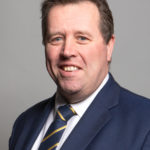
  • Mark Spencer – 2022 Statement on Annual Negotiations for 2023 Fishing Opportunities

    Mark Spencer – 2022 Statement on Annual Negotiations for 2023 Fishing Opportunities

    The statement made by Mark Spencer, the Minister for Food, Farming and Fisheries, in the House of Commons on 20 December 2022.

    Each year, the UK negotiates with the EU, Norway and other coastal states in the north-east Atlantic, and via regional fisheries management organisations, to agree catch opportunities and sustainable management measures for shared stocks, including in international waters.

    Successful annual negotiations for 2023 fishing opportunities

    The UK has now concluded these negotiations and reached agreement with the EU, Norway and other coastal states in the north-east Atlantic on catch opportunities for 2023. Across these negotiations, the UK has secured agreement on 86 TACs—total allowable catches—providing £750 million of potential fishing opportunities.

    The UK has also concluded an agreement with Norway for continued access to each other’s waters for 2023, as well an exchange of fishing quota.

    The UK Government have worked closely with the Scottish Government, the Welsh Government and the Northern Ireland Executive, and the outcomes secured will enable us to improve the sustainable management of our fish stocks and support the whole of the UK fishing industry.

    UK-EU agreement

    As a result of quota share uplifts agreed in the trade and co-operation agreement, the UK has around 30,000 tonnes more quota from these negotiations than it would have received with its previous shares as an EU member state. The UK has agreed 69 TACs and arrangements for non-quota stocks with the EU for 2023, providing fishing opportunities of more than 140,000 tonnes. In total, this is worth around £282 million, based on historical landing prices.

    An initial estimate suggests that the number of TACs that align with scientific advice from ICES—the International Council for the Exploration of the Sea—has increased by 13% compared with last year. This is the largest increase since 2020, when the UK first started using this metric. The Government will publish shortly a full assessment of the number of TACs set consistent with ICES advice across all annual negotiations.

    For 2023, we have also agreed access arrangements on albacore tuna and spurdog in the North sea for the first time through the UK-EU written record.

    For NQS—non-quota stocks—we agreed a roll-over of access arrangements for 2023 to ensure continued access for the UK fleet to fish NQS worth around £25 million per year in EU waters. This is alongside further flexibility for seabass management measures within the ICES advice.

    UK-EU-Norway trilateral negotiations

    The UK has also reached agreement with Norway and the EU on catch limits for 2023 for six stocks, worth over £202 million to the UK fishing industry in the North sea and a further £11 million in other waters around the UK, based on historical landing prices.

    The parties have agreed increases in TACs for five of the six stocks, including North sea cod. They have agreed to a cut in North sea herring. All TACs are at or below the level advised by ICES. For two stocks—haddock and whiting—the parties have agreed to take a more precautionary approach than the scientific advice to avoid risks to the recovery of North sea cod, given the close interactions between the stocks, and set a 30% increase on each.

    The parties renewed their commitment to deliver long-term management plans for their shared stocks, and have agreed to develop new and more effective management measures for the North sea herring fishery, focusing on stability for industry and sustainability.

    The parties have also agreed to continue building on the work undertaken this year on monitoring, control and surveillance of their shared stocks.

    UK-Norway bilateral negotiations

    The UK has agreed with Norway on continuing to allow vessels to access our respective waters for demersal fisheries, as well as exchanges of quota worth around £5 million to the UK fleet. UK vessels will be able to fish their North sea whitefish quotas, such as hake and cod, in Norwegian waters, up to a total of 30,000 tonnes. We have also agreed to reciprocal access for herring, up to 20,000 tonnes. On exchanges, we secured around £3 million worth of North sea quota from Norway—including valuable stocks such as monkfish—together with around £2 million-worth of stocks in Arctic waters. This complements over 5,200 tonnes of cod in waters around Svalbard, worth an estimated £10 million, that Norway has allocated to the UK under a separate arrangement.

    The mutual access will also allow respective fleets more flexibility to target the stocks in the best condition throughout the fishing year, supporting a more sustainable and economically viable fishing industry.

    Multilateral “coastal state” negotiations

    The UK has agreed TACs at the level advised by ICES on the three stocks we share with other coastal states in the north-east Atlantic: mackerel, blue whiting and Atlanto-Scandian herring—ASH. The opportunities will be worth over £250 million to the UK fleet in 2023.

    The UK has also chaired negotiations throughout 2022 on a new quota-sharing arrangement for mackerel. These negotiations are making steady progress, and the UK remains committed to securing a fair, sustainable and comprehensive sharing arrangement. Negotiations will resume in early 2023, with an aim of concluding them by 31 March, alongside parallel discussions to agree new quota-sharing arrangements for blue whiting and ASH.

  • James Cartlidge – 2022 Statement on UK Electricity Generators and Tax on Extraordinary Returns

    James Cartlidge – 2022 Statement on UK Electricity Generators and Tax on Extraordinary Returns

    The statement made by James Cartlidge, the Exchequer Secretary to the Treasury, in the House of Commons on 20 December 2022.

    Along with resurgent demand for energy following the pandemic, Russia’s invasion of Ukraine and weaponisation of gas supplies has driven UK wholesale gas prices to record highs. Due to the composition and structure of the UK electricity market, higher wholesale gas prices are in turn driving higher wholesale electricity prices and leading to exceptional returns arising to some electricity generators in the UK.

    Consistent with action taken in other countries, from 1 January 2023 the Government are introducing a temporary 45% tax on extraordinary returns made by some UK electricity generators. HM Treasury will today publish on www.gov.uk draft legislation, along with an updated technical note explaining the policy in detail. The levy will be applied to a measure of extraordinary revenues, defined as revenues from selling periodic output at an average price above £75/MWh. That is approximately 1.5 times the average price of electricity over the last decade. It will apply to revenues from electricity generation in the UK from renewable—including biomass—nuclear, and energy from waste sources and will be focused on the largest generators through a generation threshold of 50GWH of annual output and a £10 million allowance.

    This temporary measure is not designed to penalise electricity generators. It is instead a response to the fact that, as a result of exceptional and unforeseen geopolitical events, some electricity generators are realising extraordinary returns from higher electricity prices—higher prices that have imposed substantial costs on households and business energy users and necessitated the Government to take unprecedented action with £55 billion to directly help households and businesses with their energy bills. The Government have previously considered a price cap in response to the current crisis. We have instead adopted this levy as a more proportionate approach. It leaves generators—whose continued investment in the industry is vital to our long-term energy security—with a share of the upside they receive at times of high wholesale prices.

    The levy will end on 31 March 2028. This reflects the possibility that wholesale electricity prices remain elevated for a number of years and the need for businesses to have certainty around the measures the UK is taking in response. However, should the crisis abate and prices fall below the benchmark price, the revenue forecast from the levy will not materialise and consideration would be given to the tax’s ongoing application.

    Furthermore, responding to concerns that have been raised around the tax’s duration and its impact on investment, the £75/MWh the benchmark price will be indexed to CPI inflation from April 2024, and relief will be provided for certain exceptional costs that are reducing the degree to which generators are benefiting from higher electricity prices.

    Support for investment in renewables

    The Government are committed to decarbonising power systems by 2035 and reaching net zero emissions by 2050. Britain is a global leader in renewable energy. Last year, nearly 40% of our electricity came from offshore wind, solar and other renewables. Since 2010, our renewable energy production has grown faster than any other large country in Europe. We are committed to ensuring that the UK remains one of the best places in the world to invest in clean energy and have set stretching deployment ambitions, including up to 50GW of offshore wind by 2030 and a fivefold increase in solar by 2035. As we move towards these ambitious goals, the Government will seize the opportunities for growth through the transition, creating the right framework to crowd-in billions of pounds of new investment into the UK’s economy. That includes:

    Our highly successful Contracts for Difference scheme continues to bring more and more generation online, with our most recent auction delivering a record capacity of almost 11 GW. A consultation for the sixth Contracts for Difference round was published last week.

    The Offshore Co-ordination Support Scheme, which will provide up to £100 million of grants to energy projects to develop co-ordinated options for offshore transmission infrastructure, was launched earlier this month.

    Government also continue to work with the Offshore Wind Acceleration Taskforce and other developers to identify and address barriers to deployment. This includes reforming the planning system, where Government are acting to ensure that consents are secured faster, and the risk of delays are reduced.

    We have heard calls for the tax system to provide strengthened incentives for—long-term—investment in the low-carbon electricity generation sector, including investment in new capacity as well as investment needed to maintain and upgrade existing capacity. The Government continue to recognise the value of capital allowances for supporting investment within a sustainable fiscal strategy, and any further changes will be set out at a future fiscal event in the usual way.

    Government are undertaking the Review of Electricity Market Arrangements (REMA) which will assess how our power markets can best deliver a low-cost, low-carbon and secure electricity system, whilst reducing our exposure to international oil and gas prices.

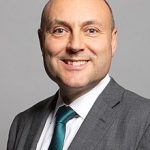
  • Andrew Griffith – 2022 Statement on the Mortgage Guarantee Scheme Extension

    Andrew Griffith – 2022 Statement on the Mortgage Guarantee Scheme Extension

    The statement made by Andrew Griffith, the Economic Secretary to the Treasury, in the House of Commons on 20 December 2022.

    Today I can inform the House that the mortgage guarantee scheme will be extended by an additional year to continue to support homebuyers and movers with smaller deposits. The scheme will now close to new accounts on 31 December 2023.

    HM Treasury launched the mortgage guarantee scheme in April 2021, which provides a guarantee to participating lenders across the UK who offer mortgages to first-time buyers and existing homeowners with a deposit as small as 5% on homes with a value of up to £600,000. Since its launch last year, the scheme has successfully restored the availability of 91 to 95% loan-to-value mortgage products, directly supporting over 24,000 households to buy their homes—85% of which were by first-time buyers. Since 2010, more than 687,000 households have been helped into home ownership through Government schemes.

    While the mortgage guarantee scheme was originally planned to close to new mortgage applications on 31 December 2022, HM Treasury has decided to extend the scheme by an additional year to continue to provide lenders with the confidence to offer low-deposit mortgages to consumers.

    Guarantees issued under the scheme are valid for up to seven years after the mortgage is originated. Participating lenders pay HM Treasury a fee for each mortgage entered into the scheme. This is set so that expected claims against the guarantee should be covered by revenue from the fee.

    In order to ensure products remain available, HM Treasury will therefore be extending the duration of the Government’s contingent liability for an additional year beyond its planned closing date of 31 December 2022. The Department is also reducing the maximum contingent liability cap from £3.9 billion to £3.2 billion, which remains set at a level so as not to constrain the ability of lenders to access the scheme. This liability would only materialise if the sum of commercial fees paid by lenders would not be sufficient to cover calls on the guarantee.

    Authority for any expenditure required under this liability will be sought through the normal procedure. HM Treasury has approved this proposal.

  • Darren Henry – 2022 Speech on Shared Parental Leave and Pay (Bereavement)

    Darren Henry – 2022 Speech on Shared Parental Leave and Pay (Bereavement)

    The speech made by Darren Henry, the Conservative MP for Broxtowe, in the House of Commons on 20 December 2022.

    I beg to move,

    That leave be given to bring in a Bill to make provision about shared parental leave and pay in certain cases where one or both of a child’s parents has died; and for connected purposes.

    I want to start by telling the House Aaron’s story. I was visited at a constituency surgery in February by my constituent Aaron Horsey, who is in the Gallery today with his family. Aaron had his three-week-old son Tim in his arms. His wife Bernadette had sadly passed away in childbirth. Bernadette would no doubt have been the most loving, dedicated mother, and had ambitious plans for continuing a long career in the NHS. She is missed tremendously by her loved ones.

    While grieving the passing of his wife and looking after his new-born son Tim, Aaron discovered that he was not entitled to shared parental leave. That put the plan that Aaron had put in place with his wife Bernadette into jeopardy. Luckily, in Aaron’s case, he worked for an incredibly understanding employer, which gave him the leave he needed to look after Tim, but others are not so lucky. This Bill attempts to ensure that there is a right to leave and pay for individuals such as Aaron in the case of a spouse passing away. That right would be there regardless of the length of time that a person had been with their employer. This Bill would help not only employees in such circumstances but businesses that wish to give leave.

    During the process of securing this ten-minute rule Bill, I have been contacted by other individuals around the UK with similar stories to Aaron. It is my belief that we must work to close the gap and ensure that leave and pay are made available for those in circumstances such as Aaron’s. It is important to state that this issue does not affect thousands of people across the country, but for those it does affect, the consequences are huge. Changing the law to ensure that leave and pay are available to those who find themselves in situations such as Aaron’s will ensure that no parent is faced with the devastating position of raising a child and grieving in the shadow of avoidable job insecurity.

    Parental leave in the UK is something we should be proud of. Since the Employment Rights Act 1996 and the Maternity and Parental Leave Regulations 1999, entitlement and access to maternity leave and pay have been very straightforward. On a similar note, entitlement and access to paternity leave or shared parental leave, although more limited, are also fairly straightforward. When shared parental leave was introduced in 2015, the Government stated that they wished to

    “move away from the current old-fashioned and inflexible arrangements and create a new, more equal system which allows both parents to keep a strong link to their workplace.”

    Shared parental leave was established to allow parents access to their workplace and their family. That is precisely what is being prevented in cases such as Aaron’s. It seems that in such cases the people whom shared parental leave was created to help are often the ones missing out. When faced with this life-altering set of circumstances, Aaron was confronted with having to cope with the challenges of being a new parent and the prospect of new job insecurity, all while in the midst of extraordinary grief. That is more than many of us could handle.

    This Bill is not contentious. It simply seeks to allow individuals the right, under circumstances beyond their control, to take leave and be with their child. As I have mentioned, it would affect not a vast amount of our population, but a small number in our society who need the help of the Government and their employers.

    Aaron brought it to my attention that there are circumstances, in the event of the death of a child’s parent during childbirth, in which the surviving partner is not entitled to parental leave. To be eligible for shared parental leave and statutory shared parental pay, both parents must share responsibility for the child at birth and meet work and pay criteria. As the law stands, for the mother’s partner to take shared parental leave and shared parental pay, the mother must have been working for at least 26 weeks of the 66 weeks before the baby is due, and must have earned at least £390 in total across any 30 of the 66 weeks. The mother’s partner must have been employed continuously by the same employer for at least 26 weeks by the end of the 15th week before the due date. They must also stay with the same employer until they start their shared parental leave.

    Practically speaking, a surviving partner could be entitled to take shared parental leave but they would not meet the criteria I have just mentioned. Aaron did not. That means that, under this requirement, many will not qualify for shared parental leave and pay. This Bill seeks to correct that. It seeks a day-one right for a parent to access both leave and pay. It seeks to ensure that employees who have to raise a child following the death of their partner will not be left without support. As a father, I know that being a parent to a newborn is a huge undertaking at the best of times. I cannot imagine being in that position while facing the fact your partner has died during birth. I want to ensure that people such as Aaron are never in the position of being without support.

    I now come to why this Bill is needed. I truly hope that no one finds themself in the position that Aaron found himself in, unable to share the beginning of Tim’s life with his loving wife. The aim of this Bill is to ensure that people facing that situation do not find themselves without the law behind them.

    I thank all hon. Members who have supported the Bill. I have received overwhelming cross-party support on the issue. The Bill is not party political; it seeks to make a real impact to those in our society who find themselves in tragic circumstances through no fault of their own. As well as receiving support from colleagues, I have received a statement of concern from the Prime Minister. I have also had meetings with the Department for Business, Energy and Industrial Strategy, including with the Under-Secretary of State—my hon. Friend the Member for Thirsk and Malton (Kevin Hollinrake), who is in his place on the Front Bench—to discuss these much-needed changes.

    My last thanks go to Aaron. While he was dealing with all the hardship that I have set out, he was thinking not about himself, but about how to ensure that no one else finds themselves in his position. He is a truly selfless individual. I put on record my awe at the bravery and resilience that he has shown and continues to show.

    There is a gap in our law that means that parents and guardians face impossible circumstances. That gap must be closed. It is the responsibility of all of us to ensure that the tragic circumstances of losing a loved one and raising a child alone are made that tiny bit easier, and that employment is one thing that need not cause further turmoil. I ask, with much hope, that due consideration be given to passing the Bill. The change it would make may seem small, but its impact on the life of an individual could be incalculable.

    Question put and agreed to.

    Ordered,

    That Darren Henry, Jim Shannon, Tracey Crouch, Sally-Ann Hart, Brendan Clarke-Smith, Philip Dunne, Wera Hobhouse, Mrs Pauline Latham, Tom Randall, Stella Creasy, Dr Philippa Whitford and Sarah Champion present the Bill.

    Darren Henry accordingly presented the Bill.

  • Richard Holden – 2022 Speech on Bus Route Consultation

    Richard Holden – 2022 Speech on Bus Route Consultation

    The speech made by Richard Holden, the Parliamentary Under-Secretary of State for Transport, in the House of Commons on 20 December 2022.

    It is a pleasure to take the last Adjournment debate before Christmas. In addition to thanking my hon. Friend the Member for Watford (Dean Russell), I would like to thank the hon. Members for Strangford (Jim Shannon) and for East Kilbride, Strathaven and Lesmahagow (Dr Cameron), my hon. Friend the Member for Warrington South (Andy Carter) and my right hon. Friend the Member for Beckenham (Bob Stewart) for their contributions today. I congratulate my hon. Friend the Member for Watford on securing another opportunity to speak on the behalf of his constituents in Watford. I know he works relentlessly to champion the issues that matter to them, and local bus services are part of the suite of issues that he regularly brings to the House and to Ministers.

    I was fortunate enough to be able to visit Hertfordshire a couple of weeks ago, when I met Councillor Phil Bibby, the executive member for highways and transport, and experienced at first hand some of the great work that is going on within the county to improve bus services. I was delighted to see Arriva’s new depot in Stevenage, which will house its new zero-emission bus fleet just up the road, and to learn more about the HertsLynx demand-responsive transport service, providing vital connectivity for rural villages in the north of the county, although those are admittedly not so close to my hon. Friend’s constituency. These are things that could make a huge and positive difference in Hertfordshire and elsewhere.

    The Government are clear that bus services are vital to ensuring that people can access work and education, as well as crucial services such as healthcare, as my hon. Friend said. We also recognise the fundamental importance of ensuring that people can stay connected to their local communities. I would like to address one of the issues around late cancellations and poor communications from bus companies. I am supportive of the general public being better informed about changes to local bus services, and my Department is working with local authorities and operators to seek improvements in that area. We recognise that the sector is facing challenges at the moment, but we expect operators to provide the services that they have advertised. It is unacceptable when they do not do so, especially when they do not give proper notice of those changes. That is one reason why I am so keen to welcome this debate. Ensuring that passengers who rely solely on local bus services are easily able to provide their views to bus operators and local transport authorities when changes to services are due to be made is a key aspect of the reforms to bus services in England that we set out in the national bus strategy, one of a plethora of measures we are bringing forward.

    Crucially, we want local authorities to have greater oversight of bus service provision so that they can work more closely with bus operators to ensure the provision of bus networks that meet the needs of local people. That includes having an element of flexibility in respect of bus service plans. When things change, we need the operators to be able to change with them.

    My Department is ready and willing to work with local transport authorities and operators as they work together as part of their bus service improvement plans. I know that Hertfordshire County Council is looking forward to establishing an enhanced partnership with local operators. I am pleased that my hon. Friend the Member for Watford mentioned the £29.7 million that has already been allocated to the council.

    The issue of consultation is particularly important. I really do hope that through the enhanced partnership we will see the operators working more closely with the service providers. That will really help provision. I urge my hon. Friend to keep pressing the council and his local operators on that.

    In its guidance on enhanced partnerships and BSIPs, the Department has highlighted the importance of councils and operators working with bus-user groups and local groups when they consider how to improve services and make sure that passengers are well informed about changes to local bus routes. There will always be changes and, hopefully, improvements—that is what the plans are there to deliver.

    We have provided a capacity support grant to all local transport authorities to develop and deliver their enhanced partnerships. In addition, we are providing capacity funding to those areas that did not receive funding through the BSIP process, to ensure that they have better enhanced partnerships. Whether or not they have received the full large grant or have that working relationship, we are there for them in my hon. Friend’s constituency and in the constituencies of other Members. The Department will also provide guidance and training for teams through the planned new bus centre of excellence.

    The national bus strategy sets out a requirement for local transport authorities to create a new passenger charter—I think my hon. Friend will be interested in this —as part of developing their BSIPs. The charters are intended to give bus users the rights to receive certain standards of service, including in respect of punctuality, the proportion of services operated, information and, crucially, redress, an issue that many Members from all parties have raised with me since I took over this brief. I hope that other councils, as well as my hon. Friend’s, hear the call for better communication.

    One of the issues we face is the recovery from covid. In August, we confirmed that we would continue providing funding under the bus services recovery grant to help to protect bus services until the end of March 2023. We have also taken additional steps to prevent significant reductions to bus services. As a condition of receiving funding, bus operators are required to maintain a minimum service floor of 80% compared with pre-covid service levels. We are also working to get services and, crucially, ridership back up to provide the longer-term stability that people need.

    We know that driver shortages have been a major issue and we are working with transport industry bodies such as the Confederation of Passenger Transport. We recently held a summit on the issue that I was delighted to attend. Things like that are important. We must work to really drive home things such as the “Thank You Driver” campaign. We must encourage people to take up really important opportunities. I am really keen to continue to support such work. My hon. Friend mentioned the DVSA; I have already prioritised tests for bus drivers to help to speed up the process and provide us with valuable assistance in tackling some of the serious issues around driver shortages. I continue to ensure that that is prioritised, even as we face difficulties and strike action.

    I know that in Hertfordshire more broadly the enhanced partnership process is slightly different. The council has responsibility for the registration of bus services rather than the Office of the Traffic Commissioner. However, the statutory 42-day notice period is particularly important. I hope that those involved can look into more enhanced ways to communicate with local people.

    In closing, I congratulate my hon. Friend again. The BSIP is a major step forward, as is the £2 single fare that we are set to introduce throughout the country before the House returns in January. I look forward to that. There are undoubtedly challenges facing the sector, but we are committed to working with it to address them. I look forward to engaging with colleagues from all parties going forward.

    Finally, ahead of the Christmas break I thank my team in the Department, my team in Parliament, my team in North West Durham, the House staff, Members from all sides and you, Mr Deputy Speaker. I wish all Members a very merry Christmas and a happy new year.

  • Dean Russell – 2022 Speech on Bus Route Consultation

    Dean Russell – 2022 Speech on Bus Route Consultation

    The speech made by Dean Russell, the Conservative MP for Watford, in the House of Commons on 20 December 2022.

    Dean Russell (Watford) (Con)

    I rise today for the final Adjournment debate of the year. The topic I am discussing is buses, specifically cancellations and timetables. I am very conscious that I am keeping everyone late, just like some buses for my constituents. More specifically, recent changes to timetables in Watford have caused serious issues for my constituents in their daily lives, whether they are trying to get to work, hospital appointments, GP appointments, or visiting friends and family. My request for a debate follows engagement and correspondence with my local community, including two bus community meetings with constituents. They were held with Arriva, the prominent bus service provider I will be talking about today, but there are other providers and the issues are not limited to Arriva.

    Dr Lisa Cameron (East Kilbride, Strathaven and Lesmahagow) (SNP)

    I thank the hon. Gentleman for securing this extremely important and timely debate. Does he agree that bus services are perhaps even more vital in rural areas? I think about my own constituency and Lesmahagow, which has an extremely poor service. One of the new estates in East Kilbride does not have a regular service at all. Surely it is incumbent on us all to work together, across party and across Governments, to ensure that people have vital services, particularly the most vulnerable?

    Dean Russell

    I thank the hon. Lady for her comments. That is absolutely true in rural areas, but also in urban areas. Bus services provide a really important role for our communities. That role is not political. We do not catch a blue bus or a red bus or a yellow bus—we catch a bus. The reality is that we must all work together. We must find ways to ensure we serve our community in the best way we can.

    Jim Shannon (Strangford) (DUP)

    I congratulate the hon. Member on securing the debate. I did text him before he came in to ask if it would be okay to make an intervention. When I saw the title of the debate I immediately thought of my constituency of Strangford, which is similar to his constituency of Watford. Speaking as an active representative of the rural constituency of Strangford, I have attempted to fight many battles for those who are the victims of reduced services, often without prior warning. They are often cancelled without any consultation. Does he not agree that the duty of care to isolated communities should demand at least some consultation and that if bus companies are not prepared to do that voluntarily, then this place must be the place to take action legally?

    Dean Russell

    I thank the hon. Member for his comments. To be fair, he did not need to text me. I was hoping he would join the Adjournment debate—it would be very odd if he did not. I appreciate his comments and agree wholeheartedly. Surely the point of a timetable is to ensure that people know what time buses are coming. If that timetable changes, the people who use the bus should be consulted and asked about how it will impact them, not just seen as numbers on a spreadsheet. Having spoken to local residents, I was surprised to learn that there is not a Government or local government edict that bus users must be consulted before a change to the timetable, which would seem an obvious thing to do, so I wholeheartedly agree with his comments.

    I have been actively engaging, talking and corresponding with organisations, whether Arriva or local government, so none of them will be surprised about the concerns I raise today in the Chamber. This is a constructive opportunity to say that I will not give up on raising these issues, but will work with them to ensure they are resolved in the best way possible for my constituents.

    Andy Carter (Warrington South) (Con)

    I am delighted that my hon. Friend has secured this debate today. Warrington has recently seen about £42 million investment in its bus services. When I post on social media and talk about these issues, the overwhelming response is that it is all very well investing in the future, but if buses are cancelled and do not run that causes significant problems. Does he agree that there is a fundamental need to ensure local consultation is in place? People make decisions on where they buy their houses based on bus routes and timings for getting into work. If that all falls down, people’s lives are significantly impacted by decisions taken in a bus company office somewhere. Is consultation not fundamental when things change?

    Dean Russell

    I truly thank my hon. Friend for his intervention, because he allowed me to intervene in his debate about buses in Warrington. I recall, Mr Deputy Speaker, that you were in the Chair at the time and commented on the clear similarities between Warrington and Watford. My hon. Friend is absolutely right that timetables cannot just be looked at on a spreadsheet or on Google Maps, as they can have a detrimental impact on individuals. Bus routes can also have a really positive impact on opportunities to travel, whether for work or for leisure.

    I want to raise three key points. First, there are the timetable challenges, which are the common thread throughout this debate. Secondly, there is poor service—a real challenge—with timetable problems and buses not turning up making things infinitely worse for local residents. Thirdly, there are poor communications.

    It is worth noting that buses are used for twice as many journeys as trains, and stop at thousands of places across the country. Often, the transport debate is dominated by trains. My very first Prime Minister’s question after being elected was about the trains in Watford. Thankfully, those issues were resolved at the time but, unfortunately, the pandemic hit and the service changed again. The reality is that buses are used more. They have much more of an impact and are very important in rural and urban areas for what might be seen as shorter journeys but are harder when just walking, especially for those who might be infirm.

    Bob Stewart (Beckenham) (Con)

    In my area of south-east London, the buses are a godsend. More than that, the system allows us to check on the internet when buses are coming, with very accurate times at some bus stops. The more that happens, the more effective buses will be. I thank the local buses in my area because they hardly ever go on strike—I cannot remember a strike of the buses—but the trains do. We rely on the buses when the trains do not work.

    Dean Russell

    I thank my hon. Friend for his point on communications, which is one that I will raise near the end of my speech. Technology allows us to see where Ubers, taxis or online orders are, but that is not common across the board for buses, which makes it even harder if the timetables change and the service is not running on time.

    I have gained an understanding of the challenges with timetables by chatting to local residents. When I asked them how long they had known about the changes, they said no one had got on the bus and told them or left a leaflet. Bus users—the people who get on the bus and rely on the buses every day—are not being directly engaged when timetables are changed, but they should be asked whether the changes will have an impact on them.

    At the heart of this issue are people, not just numbers. People have the stresses of their daily lives: finishing a shift at work and needing to travel home; getting up in the morning to go to a hospital appointment; there are knock-on effects on all those things. As I will mention a bit later, I have had constituents almost in tears, telling me, “I can’t ask my boss again if I can come in late.” They say, “I’m having to cancel GP or hospital appointments or let them know that I’m going to be late, which might mean that it moves back a week or longer.”

    Bus timetables are not just about numbers; we need not just a quantitative review, but a qualitative review that asks people about the potential impact, the challenges and the importance of the route. Even if only a few people use the bus, there might be another way to support them. There are new services such as ArrivaClick that people can order for short journeys, but how can they plan for that if they do not know what sort of journeys they need to take?

    For registrations, variations and cancellations of community bus services in England, bus operators are required to give statutory notice of 70 days—28 days’ notice to the local authority and 42 days’ notice to the traffic commissioner—but there is no legal requirement for bus operators to inform passengers of the changes until the cancellation registration has been processed. That is absurd. How on earth can a service be cancelled without asking people? How can they be told only after the decision is made, even though other organisations in the process will have been told weeks or potentially months earlier? It seems very strange.

    I have made a request for the county council to review the cancelled service according to value for money criteria when it looks at bus services; I have asked it to look at how that can be supported through its own funding. However, it is not just about the funding of services, but about communications. I am aware that Hertfordshire has a website called Intalink that people can visit to see changes, but that is available after the services have been changed.

    As I understand it, Arriva reorganised its network in Hemel and Watford in April, which has resulted in a number of routes being combined. Again, it did not tell bus users or my constituents that that was happening. The Abbots Langley to Watford services were changed: they no longer service St Albans Road and now go via Newhouse Crescent on Woodside. That has meant a loss of access to St Albans Road, with longer journey times. From April, Arriva abandoned the northern section of the 8 service from Watford to Mount Vernon Hospital, meaning a loss of service for the Harebreaks and Maude Crescent areas of Watford. It was replaced and funded at a lower frequency by Hertfordshire County Council’s contract route 9 from Watford town centre to Leavesden Park. Leavesden Park also lost its daytime services into Watford on the 10 and 20 route, which were replaced by the 9 service. Those were major changes for people in my constituency, and they have been a challenge.

    I turn to poor service. A big issue in Watford has been the punctuality and reliability of bus services, which have been disappointing for the past year. The Minister may raise the fact that driver shortages have been a major issue; I will have some questions about that subject later. I believe that in this instance the services are about 20 drivers short. Such a large shortage has led to regular cancellations, with resultant overcrowding on the buses that do run.

    In my engagement with Hertfordshire County Council, it has been made aware that the Driver and Vehicle Standards Agency has contacted Arriva about its services and is working with it to improve punctuality and reliability. Following community engagement, I have written to the council and to Arriva about the matter. I understand that Arriva has given several contracted services outside Watford back to Hertfordshire County Council to free up some bus drivers for the west, which will benefit my constituents. I welcome that measure, which I understand should happen in January, helping the reliability of the services: I believe that it will free up 12 drivers.

    I appreciate that Arriva recognises the issues that have been caused by unreliable service and has been engaging with Hertfordshire County Council, but we need to ensure that we keep up the pressure on bus companies. We have had many debates in this Chamber about train services that have caused major issues for local residents. Issues with buses may not be as prominent in people’s minds, because they are very local, but when we are looking at the bigger picture across the country we have to ensure that they are addressed.

    Poor communication, which my right hon. Friend the Member for Beckenham (Bob Stewart) raised, is an issue that needs to be fixed much sooner.

    Sadly, as I said earlier, I have seen bus users at community meetings almost in tears because they simply cannot fathom how a service could be so bad—a service on which they rely so much just to get to work, or to get home at night. They may know that their kids, on the way home from school, are stuck at some bus stop in the dark, in poor weather, and may not be sure whether they will get home on time or whether they should try to leave work early and find a way of going to fetch them.

    This is an awful experience, and I have to say that it is not alien to me. I grew up not in Watford but in the west midlands, and many years ago I worked at Birmingham airport. I worked all sorts of shifts: 6 am to 2 pm, 2 pm to 10 pm, and, often, the night shift. This probably would not be allowed now, but back in the 1990s I worked 24-hour shifts. I have stood at bus stops at 9 pm, or 10 pm, or when a shift has finished early, in the dark, waiting for a bus that does not come, not knowing when the next one will arrive, and not knowing what decision to make. Have all the buses been cancelled, or will the bus arrive but drive on past the stop because it is too full to let any more people on?

    Anyone who has been a bus user understands that this is not a simple issue. It affects how people feel, it affects their trust in the system and the network, and it leads them to ask themselves, “Should I continue using the bus?” Every time there is an issue, bus use declines, which is why buses are not popular and why routes are not changed. This, as I have said, is not an isolated data-related point; it is about the people who are actually involved.

    In the modern era, by means of technology such as apps, websites and indicator screens at bus stops, it is possible to have much better information, via GPS, about where vehicles are. We see it all the time with taxis nowadays: we can physically see where a taxi is after it has been ordered. If we are at a bus stop and we know that there will not be a bus for an hour, at least we can plan around that, but standing for minute after minute wondering whether the bus is going to come and what is going to happen is a massive issue. The bus companies have an excellent opportunity to look at how they use their apps and other technology, and how they can ensure that timetables are better indicated.

    Dr Cameron

    This reminds me of a point that was raised with me just the other week by representatives of East Kilbride Visually Impaired Bowling Club, which relies on communications on buses as well as indications of when buses will arrive. They described the progress being made on “talking buses”, enabling visually impaired people to know which stop to get off at and where they are in their journey. Does the hon. Gentleman, who is making a fantastic point about communications, agree that progress on these vital issues is extremely important to inclusion in public transport?

    Dean Russell

    Absolutely, and it is important for accessibility as well. People with disabilities have spoken to me about their own concerns. All the buses are accessible, but if a bus does not turn up or stops in a place that is not itself accessible, the problems are exacerbated.

    I am conscious of the time and I want to hear the Minister’s response, so I will try to speed up and make sure that we arrive at our destination—the end of the Adjournment debate—before Christmas. I know that the Government are investing a lot in transport, and I am not trying to be political or to do nothing but criticise.

    Hertfordshire County Council has been given £29.7 million for the bus service improvement plan as part of the £3 billion bus back better strategy, which is great news. The allocation of funding has been broken up for the next three years across five towns including Watford, and I am very grateful for that. Half of it is capital to invest in the buses themselves, and the other half is revenue to invest in ticketing. I understand that funding can also be used for new services or to enhance current successful services, but I think we should look at the less successful services, and ask why they are less successful and whether we need to support them further. I realise that funding cannot be used to subsidise services that are non-commercially viable or withdrawn, but, again, if we know the reasons why they are not working, perhaps we can find ways to support them.

    We have had some other recent successes. The W19 bus route, which is mostly run commercially by Red Rose Buses, was set to be withdrawn on 26 December. but that was opposed by Carpenders Park’s Conservative county councillors Reena Ranger and Chris Alley and district councillors Rue Grewal, Shanti Mara and David Coltman, working with me. After listening to the views of residents, they submitted some great evidence to Hertfordshire County Council, asking it to save the W19 bus. I am pleased to say that they agreed to increase the funding fivefold to save the W19. The revised timetable is to be registered imminently and the details will appear as soon as possible on the Intalink website. For any residents who might be listening, the service will be renumbered as the 346 and 346A to denote the clockwise and anti-clockwise routings. The key point is that when we have engagement, we can have successes, and it is important that people are listened to.

    I will start to round up, as I am conscious of giving the Minister time to respond. When organisations change timetables, it has a major impact on bus users. What might be low user numbers on a spreadsheet could mean the loss of important routes for working people, hospital visits being missed, people being late, careers being impacted and people not being able to pick up their kids on time. There are so many impacts.

    I have several asks for the Minister. Will he consider implementing a legal requirement for all companies, commercial or public, that provide a public transport service to ensure local engagement before services are changed or cancelled? Will he highlight the importance of communication and reliability of service? Overall, residents would be happy in some instances with a reduced but reliable service rather than regular cancellations and unannounced diversions. Will he consider supporting the Driver and Vehicle Standards Agency to increase the availability of testing appointments for essential services such as the bus service and ambulance drivers, to address the driver shortages, as we saw with the HGV driver shortages? I know about that because my father was an HGV driver, and it is a noble profession.

    I am conscious that this is a debate for all areas, even though there can be local issues. I am grateful to the Minister staying late for this final Adjournment debate before Christmas. As I am the last Back-Bench MP to speak before Christmas, may I also take a moment to say thank you to all the staff, to all Members across the House, to the Speaker’s team, to my own team—Victoria, Abigail, Michelle and Jayne—to all the activists who work all year round to help to put us in this place, to my amazing constituents for putting me into this place and finally to my family and friends in what has been a challenging year for many. Hopefully we will have a much more successful new year.

  • PRESS RELEASE : HM Treasury and the Ministry of Finance of the Kingdom of Saudi Arabia sign new MoU on Financial Services [December 2022]

    PRESS RELEASE : HM Treasury and the Ministry of Finance of the Kingdom of Saudi Arabia sign new MoU on Financial Services [December 2022]

    The press release issued by HM Treasury on 21 December 2022.

    The Chancellor of the Exchequer and the Minister of Finance of the Kingdom of Saudi Arabia signed a Memorandum of Understanding (MoU) on financial services cooperation on 20 December 2022.

    • The Chancellor of the Exchequer, Jeremy Hunt MP, and the Minister of Finance of the Kingdom of Saudi Arabia, Mohammed Al-Jadaan, met yesterday, 20 December 2022, in London to sign a Memorandum of Understanding (MoU) on financial services cooperation, and to discuss issues of mutual interest.
    • This MoU reiterates our joint ambition to strengthen bilateral financial services cooperation and aims to enhance cross-border trade in financial services, promote financial stability, and foster greater cooperation on priority issues, such as green finance, in support of Saudi Arabia’s Vision 2030.
  • Chris Bryant – 2022 Comments on Ukraine

    Chris Bryant – 2022 Comments on Ukraine

    The comments made by Chris Bryant, the Labour MP for Rhondda, in the House of Commons on 20 December 2022.

    Chris Bryant (Rhondda) (Lab)

    Of course Putin has got to be defeated, but that means not just going down a military set of avenues but ensuring that every part of British society is doing whatever it can to bring Putin to his knees. Will the Secretary of State—he is the fixed point in an ever turning world with this Government—explain why Unilever is still selling Cornettos and Magnums in Russia, why Infosys is still functioning in Russia, and why many months after Abramovich’s Chelsea was sold, the charity is still not in place to be able to deliver £2.5 billion of that money into the rebuilding of Ukraine?

    Mr Wallace

    On the latter point, I am happy to write to the sports Minister to find out that detail, as I am not across that part of the process.

    The hon. Gentleman is right about brands. If I was running any one of those international companies I would not want my brand to be associated with what is going on in Russia and the Russian regime. As I said in my statement, what is going on in Ukraine is not a few isolated units but part of the system, as is Russia’s treatment of its own people who disagree with the policy, which includes people being locked up for long periods simply for criticising the special military operation. I urge those international brands to think very carefully about continuing to trade in Russia.

    On what more we can do, I think—I am happy to be corrected, perhaps by the Leader of the House, who is sitting next to me—that the next steps of the Economic Crime and Corporate Transparency Bill will make it harder for people to keep and launder money in the United Kingdom. That has got to be the right thing. When I was Security Minister I did a considerable amount on that, and there is still more to do.

  • Alicia Kearns – 2022 Comments on Ukraine

    Alicia Kearns – 2022 Comments on Ukraine

    The comments made by Alicia Kearns, the Chair of the Foreign Affairs Committee, in the House of Commons on 20 December 2022.

    Alicia Kearns (Rutland and Melton) (Con)

    Will my right hon. Friend share his assessment of likely Russian military doctrinal changes as we go into next year? Does he believe that Gerasimov has indeed been fired? Will he reassure us that he has been having strong conversations with his Belarusian counterparts following Putin’s visit yesterday, to deter them from becoming combatants in this illegal renewed war?

    Mr Wallace

    I am always happy to speak to my Belarusian counterpart. I have not engaged directly with Belarus—perhaps I should try, and I will. The open source commentary around Gerasimov’s future is matched by open source commentary about the future of other generals, but we can say for sure that the generals around Putin are not in agreement about the success or failure rate of the special operation, and that is causing significant frictions. We will see what the outcome is, but we should be under no illusion that President Putin is still in charge of Russia, and as long as he is, he is determined to drive the special operation along, and we in Europe must stand and resist.