Tag: 2022

  • Keir Starmer – 2022 Comments on Higher Interest Rates

    Keir Starmer – 2022 Comments on Higher Interest Rates

    The comments made by Keir Starmer, the Leader of the Opposition, on Twitter on 3 November 2022.

    Higher interest rates mean:

    Increased mortgage rates.
    More financial pressure on families.
    Increased anxiety for millions of people.

    The Conservatives crashed our economy and working people are paying the price.

    It’s time for economic stability with Labour.

  • PRESS RELEASE : Foreign Secretary visits Glasgow a year after COP26 to meet Scottish experts behind “the revolutionary new batteries of the future” [November 2022]

    PRESS RELEASE : Foreign Secretary visits Glasgow a year after COP26 to meet Scottish experts behind “the revolutionary new batteries of the future” [November 2022]

    The press release issued by the Foreign Office on 3 November 2022.

    • Foreign Secretary James Cleverly visited Scotland one year on from COP26 in Glasgow. He went to the University of Strathclyde to meet scientists and engineers developing lower cost, recyclable battery tech
    • UK Government funded research aims to improve clean energy access for 25 million of world’s poorest people and save nearly 2.5million tonnes of carbon emissions
    • Foreign Secretary also visited the Foreign, Commonwealth & Development Office’s joint HQ in East Kilbride, which employs almost 1,000 staff in Scotland

    Foreign Secretary James Cleverly met with scientists and engineers developing revolutionary battery technologies in Glasgow – a year on from world leaders gathering in the city for the COP26 climate summit.

    The Foreign, Commonwealth & Development Office (FCDO) is supporting the Faraday Institution and researchers from the University of Strathclyde and the University of St Andrews, through its Transforming Energy Access (TEA) programme to help offer lower cost, more recyclable battery technology to developing countries.

    The UK Government announced £126million of new scale-up funding for TEA during Energy Day at COP26 – focused on reducing carbon emissions by 2.5 million tonnes and securing better access to clean energy for 25 million people.

    Since TEA was launched in 2015, it has provided 16 million of the world’s poorest people with improved access to clean energy and generated 96,000 green jobs.

    The Foreign Secretary also visited the FCDO’s joint HQ at Abercrombie House, in East Kilbride, where almost 1,000 staff are at the heart of shaping and delivering UK foreign policy on issues such as climate change, including through the TEA programme.

    Foreign Secretary James Cleverly said:

    Today’s visit is hugely important for me, to see first-hand how people in Scotland are building on the legacy of the UK’s COP Presidency in Glasgow to make progress in the fight against climate change.

    Scotland is famous as an innovation superpower. It has given the world the television, telephone and penicillin, so it was wonderful to learn how Scottish scientists are continuing this rich tradition to develop the revolutionary new batteries of the future fuelled by cleaner energy.

    The UK Government is proud to support vital work at the universities of Strathclyde and St Andrews which will help developing countries to access battery technologies to drive green growth and give millions a ladder out of poverty.

    Nearly a tenth of the world’s population – 733 million people – do not have access to the electricity they need to light their homes, refrigerate their food, or keep cool in rising temperatures. Around 2.4billion people rely on dirty biomass fuels such as charcoal, firewood, or animal waste for cooking.

    The Foreign Secretary used his COP26 anniversary visit to witness the start of refurbishment work at the FCDO’s joint HQ in East Kilbride.

    The Foreign Secretary was shown a research project led by the University of Strathclyde, which is developing a low-cost battery which is expected to last longer and be more easily recycled.

    St Andrews demonstrated battery technology made from common salt, which could enable a move away from materials such as lithium and cobalt which are more expensive, rarer and harder on the environment to source.

    Both technologies are expected to be ready to test this year.

  • PRESS RELEASE : Report by OSCE’s Representative on Freedom of the Media – UK response [November 2022]

    PRESS RELEASE : Report by OSCE’s Representative on Freedom of the Media – UK response [November 2022]

    The press release issued by the Foreign Office on 3 November 2022.

    Ambassador Neil Bush laments the deterioration of media freedom in the OSCE region, including in Russia and following Russia’s illegal war in Ukraine.

    Thank you Mr Chair and thank you Ms Ribeiro for your report and for yesterday’s event marking 25 years of your important institution.

    Media freedom is an essential part of a healthy information ecosystem. The free flow of independently generated and evidence based information is the scaffolding for building democracy. We agree with you that media literacy is essential. People must be able to understand the role media plays in supporting democracy and security and be able to critically assess and use information. Disinformation leads to the polarisation of society and makes societies more insecure.

    Your report, rightly focused on the impact of Russia’s illegal and unprovoked invasion of Ukraine – your second report this year delivered against the backdrop of this war. In Ukraine, in those areas under temporary Russian control, journalists continue to be targeted, with at least eight killed and 18 kidnapped for reporting the facts of the continuing invasion.

    We will never recognise Russia’s illegal attempted annexation of Ukrainian territory, nor the imposition of Russian legislation that seeks to deny the rights to freedom of opinion and expression. The rights of the people living and working in those regions under temporary Russian control remain protected under international human rights law. Independent journalists in those regions now face even greater challenges, yet their work remains as vital as ever, including efforts to ensure accountability.

    Mr Chair, the report by the OSCE’s Representative on Freedom of the Media (RFoM) today also highlights in the Russian Federation the most severe deterioration of media freedom in the OSCE region in the past 25 years. An internal war of repression accompanying, and enabling, the external war of aggression in Ukraine. The Moscow Mechanism report on Russia outlines censorship, closure of independent media and websites, banning of foreign media, treason and extremism charges against Russian journalists for doing their legitimate work.

    The actions of the Russian Government are not compatible with their obligations under international law and their OSCE commitments. They are not compatible with a proper functioning democracy. We support your call on Russia to fulfil its OSCE principles and commitments and ensure an enabling environment for media to freely report on matters of public interest without undue interference, threats and intimidation.

    Belarus too remains in a downward spiral. The report found a clear pattern of systematic repression against independent journalism: judicial reprisals, arrests, convictions behind closed doors on trumped up charges, and lengthy imprisonments. Ms Ribeiro, we echo your call on Belarus “to stop prosecuting media workers as a deliberate way of sowing fear and silencing free voices.”

    We greatly value your important work across the whole OSCE region, including in the Western Balkans and Central Asia, and on key topics such as the safety of journalists, on restrictive measures at the national level that limit media freedom, and on the dangers of misinformation and disinformation.

    Yesterday we marked the International Day to End Impunity for Crimes against Journalists, yet, Ms Ribeiro; you describe the situation in our region as bleak. We cannot afford to be indifferent when journalists and media workers are killed, attacked, threatened or harassed. We must be relentless and determined to stamp this out.

    We point to the 2018 OSCE Ministerial Council Decision on Safety of Journalists. This Decision has authority. Adopted by consensus. It is a road map for us all to provide a safe and enabling environment for journalists, and to ensure our laws, policy and practice fully comply with international human rights law and OSCE Commitments.

    I would like to thank all those who contributed to the success of this year’s Human Dimension Conference in Warsaw. We heard from journalists and civil society actors fighting for improved media freedom across the OSCE region. The UK remains committed to continuing this dialogue and working with your office to implement some of the recommendations from the conference to ensure media freedom is protected and journalists are able to operate safely across the OSCE region.

    Ms Ribeiro – we thank you for all the many activities that you are carrying out to fulfil your mandate. We all share the responsibility to respond and end impunity for crimes against journalists. The UK is committed to this.

    Thank you Mr Chair.

  • Deidre Brock – 2022 Speech on Scottish Independence and the Scottish Economy

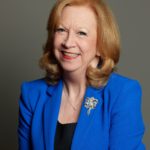
    Deidre Brock – 2022 Speech on Scottish Independence and the Scottish Economy

    The speech made by Deidre Brock, the SNP MP for Edinburgh North and Leith, in the House of Commons on 2 November 2022.

    We spend a lot of time in this place talking about the many faults of Westminster Governments and the constitutional arrangements that we and so many of our constituents object to. Indeed, I will be touching on some of those later, but I want to start by talking about the possibilities, the opportunities, that we can explore in an independent Scotland. It is the possibilities suggested by a fully independent Scotland that I find so exciting. It is not something to be viewed with dread but something to be welcomed as a new start, away from the crumbling ultra-conservative ways of this place. Imagine our small nation not being strapped to the disintegrating dreams of an imperial past, but as a country making its own way in the world, deciding what best suits the needs of its people and being able to act on that, looking outwards to the international community and playing its part in world affairs.

    Today, for example, the Scottish Government published their findings from interviews on establishing a feminist approach to foreign policy. This approach to international affairs not only seeks to improve women’s material positions around the world but embraces a reorientation of foreign policy based on cosmopolitan ideals of justice, peace and pragmatic security. With reserved matters returned to us and the powers of a normal, independent country at our disposal, we would be able to fully pursue innovative ideas and build on our reputation as a trusted and valued global citizen. We would no longer be held back by the dead hand of this place clamping down on change, or held back by successive Governments we have not voted for. We would be free from being at the mercy of Westminster Government decisions so often made against our best interests by a Government full of Ministers who just do not get Scotland, its needs or its people. We would be freed from investments made without our say-so on obscenities such as Trident, successive disastrous Ministry of Defence decisions on weapons that waste billions of pounds, and nuclear power with its toxic legacy. We could shift to life-affirming investments in our people, our renewables potential, our health and education systems, our social security, our infrastructure, our research and development, and so much more.

    The country I grew up in has flourished since it threw off, for the most part, the influences of mother Britain, although there is still unfinished business, and it has not looked back. If we asked Australians whether they want to creep back to the comfort of the UK’s arms, they would laugh at us, because nothing beats being free to make their own decisions for themselves, to suit their own needs. That is as true for countries as it is for individuals, and it goes for the many countries that have extracted themselves from Westminster’s grip. I do not recall any of them being incapable of deciding what currency to use, to the point that it stopped them wanting independence.

    Hannah Bardell

    My hon. Friend might have answered this question, but is she aware of any nation that has become independent from the UK and then gone back?

    Deidre Brock

    No, and many of the arguments around this are completely fatuous.

    The Tories seem to have forgotten the promises made during the last independence referendum to greatly strengthen devolution and Scotland’s powers, but many of us in Scotland have not forgotten. Those promises were as hollow as the promises made to the fishing communities before the EU referendum. We, like them, have been badly let down.

    I understand some of the fears we have heard expressed today by hon. Members from other parties about Scotland leaving the Union and regaining its independence. Surely they would welcome the example of a good neighbour to raise all our standards. We could set an example to the world in how we do such things. Should we not all be aiming to move away from the bad example of failed states and their disempowered Parliaments? There must be no more centralising of power in the hands of a very few Government Ministers without parliamentary say-so, and without the say-so of the people of Scotland.

    I have spoken before of the bizarre hankering for uniformity across these islands, which is seemingly at odds with traditional Tory thinking. I thought that lot were all for rugged individualism, but I guess this centralising instinct is the kind of thinking we might expect from a team who crushed dissent, removed or sidelined what was left of their talent and somehow still gaslighted the public into thinking the ship of Government sails on serenely.

    The United Kingdom Internal Market Act 2020, for example, was pushed through this place with indecent haste and has sunk its claws into devolved responsibilities, despite objections from the devolved Parliaments. The Act made it clear that this Government seek to bring down Scotland’s standards rather than improving England’s standards. That poverty of ambition should haunt England for decades, but it must not be allowed to hold back the rest of us.

    Under the myth of removing barriers to trade, the UKIM Act ignored those objections and sought to force Scotland and, of course, Wales into a lockstep Union of diminishing standards and lessening protections, with a Government determined to rip away what they call red tape and the rest of us call sensible precautions. That is not respectful co-decision making. [Interruption.] It is interesting to hear the Minister getting a bit irate about these points.

    Despite all the many ministerial assurances otherwise, the UKIM Act was not introduced with the intention of aiming for higher standards. I have been told time and again in this place that legislation that appears completely disadvantageous to Scotland’s interests is not, in fact, disadvantageous and that we should simply trust in Ministers’ good intentions, and I was right not to believe it.

    After Brexit removed us from the protections offered by the EU, this Government began chipping away at even the limited powers of devolution. The UKIM Act, among many others, changed our constitutional arrangements without asking the people for their approval in a referendum, although they withheld their approval in the most recent Scottish parliamentary elections when, once again, the Tories lost.

    Surely higher standards, not lower standards, should be the goal. An independent Scotland could take back control of that, in consultation with our sister countries upon our return to the EU. We could go back to respecting higher standards, and protecting consumers, the environment, brand reputations, our farming and fishing communities, the business and investment sectors, our exporters and jobs.

    Following on from my question in Prime Minister’s questions today, another area that we would be able to look at once independent is the influence of organisations with opaque funding sources that have wormed their way into our politics. We have seen the recent spectacular crash of libertarian, ultra-right-wing ideas espoused by some of those organisations to gullible politicians just a few weeks ago. For a long time, UK politics has been dominated by a variety of so-called think-tanks, which are set up as a front, opaquely funded and which refuse to declare their financial sources. It is suspected that much of their funding could come from individuals and organisations based overseas, but it is very difficult to prove. Some may have been involved in the Cambridge Analytica scandal which may have contributed to the success of the Vote Leave campaign in the EU referendum. These are the kind of shadowy organisations we would have the powers to take action against in an independent Scotland—not to stop their voices, as the principle of free speech is something I would like to think we can all agree on in this place, but to make clear to the public the funding sources and possible vested interests at play, so that the Scottish public are fully informed and not played for fools.

    To ensure that, of course, we would need a genuinely independent body to regulate elections. In February, the Electoral Commission took the highly unusual step of writing a public letter to the Tory Government to say that the provisions in the Elections Bill were

    “inconsistent with the role that an independent electoral commission plays in a healthy democracy.”

    The Elections Bill, we might recall, sailed through this place regardless. That is extremely worrying and it is contrary to international norms, and I think we would do much better.

    We could take a much larger role in addressing the climate crisis and in fully exploiting our renewables potential. Clearly the existential threat of the climate emergency lies low on the new Prime Minister’s list of priorities. Even now, in the year the UK hands over the COP presidency, he demotes both the Climate Minister and the COP26 President from the Cabinet. In the meantime, new oil and gas licences are being issued, even as the Government must now come up with a new net zero strategy by March, after the High Court ruled that their previous plan was unlawful. The equivalent of almost 100% of Scotland’s gross electricity consumption is now generated from renewable sources, yet we remain locked in an energy market in which the price of electricity is tied to the price of gas.

    Our contribution to the international fight against climate change gives a further glimpse of what might be possible with independence. That is true in terms of not just our action to cut emissions at home, but our proactive role in convening efforts on the world stage. Many of the worst consequences of the climate crisis are being felt in some of the poorest regions of the world, by people least responsible for its causes. So it is very pleasing that young people and women from countries in the global south are being given the opportunity to attend COP27 in Egypt as part of Scottish Government-funded programmes. Scotland was among the first nations to put fairness and justice at the heart of our international climate action. The Scottish Government have trebled the climate justice fund, to £36 million, which includes a financial commitment of £2 million to address loss and damage—we are the first country in the world to do so. That will help to meet the costs that would otherwise be borne by island nations and low-lying developing states. The SNP Scottish Government have also led an international coalition resulting in the Edinburgh declaration, urging increased action to tackle biodiversity loss. It now has 244 signatories from Governments, cities and local authorities representing every continent.

    That ambition, innovation and pursuit of justice, which have characterised Scotland’s climate policy and international engagement, show us the potential and hope offered by independence. Hope—that is what this place finds so hard to crush in all of us who have that dream of a better Scotland. All we lack now is the final crucial faith in ourselves and our abilities to get there. I so look forward to shaking the dust of this place off our shoes and embarking on that fresh new path, with that wealth of talented people, resources, rich history and culture behind us, granting us fair winds and grasping the opportunities that await us very soon.

  • Eleanor Laing – 2022 Statement on the Result of the Chair of the Health and Social Care Committee Election

    Eleanor Laing – 2022 Statement on the Result of the Chair of the Health and Social Care Committee Election

    The statement made by Eleanor Laing, the Madam Deputy Speaker, in the House of Commons on 2 November 2022.

    Members will have noticed that there is something else going on today, and that various Members have suddenly appeared in the Chamber. The reason is that I am now about to announce the result of the ballot held today for the election of a new Chair of the Health and Social Care Committee. I can announce that 436 votes were cast, four of which were invalid. The counting went to four rounds. There were 401 active votes in the final round, excluding those ballot papers whose preferences had been exhausted. The quota to be reached was therefore 201 votes. Steve Brine was elected Chair with 253 votes. He will take up his post immediately and I congratulate him on his election. I know that he is unavoidably detained elsewhere and cannot be in the Chamber at this moment. The results of the count under the alternative vote system will be made available as soon as possible in the Vote Office and published on the internet. We will now proceed.

  • Toby Perkins – 2022 Speech on Scottish Independence and the Scottish Economy

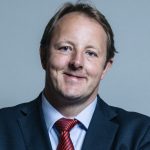
    Toby Perkins – 2022 Speech on Scottish Independence and the Scottish Economy

    The speech made by Toby Perkins, the Labour MP for Chesterfield, in the House of Commons on 2 November 2022.

    I am pleased that the Scottish National party has decided to bring this debate to the Chamber. It is important that the case for an independent Scotland is re-examined. The points made by my hon. Friend the Member for Edinburgh South (Ian Murray) will have been heard loudly both in Scotland and across the United Kingdom.

    This is a matter of great interest to my constituents in Chesterfield. It is a fact that people across England feel very passionately and strongly that the United Kingdom is better together, and that the success of Scotland and the success of England is assured by our being together in the United Kingdom. We gratefully remember the many contributions made by Scots to the United Kingdom in a whole variety of different ways. The successful Union we have had over hundreds of years has led to Britain being the successful country that it is.

    It was precisely because it matters to me and my constituents that, during 2014, I went up to Scotland and spent a considerable amount of time campaigning in the independence referendum, speaking to people in an array of constituencies.

    Angus Brendan MacNeil

    I hear the hon. Gentleman’s confession that he went up to Scotland for the 2014 referendum. Did he, on any doorsteps in Scotland, say to the people that voting to stay in the UK would guarantee their place in the European Union, or was he a Brexiteer by that point?

    Mr Perkins

    Clearly, I went up there to make the case for Scotland to remain in the United Kingdom. I absolutely recognised that that was a choice for the people of Scotland, but it was a choice that was going to affect England. The fact that we were to have a referendum on our relationship with the EU was already known in 2014, because the Conservative party had already committed to that and the people of Scotland voted to remain on that basis. Clearly, I was hopeful that the people of Britain would vote to stay in the European Union. In fact, I only wish that the hon. Gentleman’s party had put the same effort into that referendum as the Labour party. If it had, we might have seen a different outcome.

    Several hon. Members rose—

    Mr Perkins

    A number of people want to intervene. I will accept interventions, but I will not accept one from the hon. Member for East Renfrewshire (Kirsten Oswald), because she misrepresented me previously. She said that I had said that I had apologised for the Government’s record. I have not; I have done the opposite. [Interruption.] I will check the record very carefully. She misrepresented me and if she wants to correct the record I will let her, but if she does not want to correct the record I will hear from the right hon. Member for Dundee East (Stewart Hosie).

    Stewart Hosie (Dundee East) (SNP)

    The hon. Gentleman is perfectly entitled to make the case he is making, but given that in Scotland we voted to stay in the European Union and given that in his constituency 34,000 voted to leave and only 22,900 voted to remain, would it not have been better, instead of wasting his time in Scotland, if he had done his job in Chesterfield, instead of having that act of economic self-harm that is Brexit?

    Several hon. Members rose—

    Mr Perkins

    May I respond to the point that has just been made? I worked very hard during the Brexit referendum to make a case, but I accept that people across the coalfield voted in a different way. I return to the statistic that I put to the right hon. Gentleman’s leader, the right hon. Member for Ross, Skye and Lochaber (Ian Blackford). The Scottish National party spent a paltry £91,000 on the EU referendum. During the Scottish independence referendum, it spent £1,344,000. The truth is that the people committed to Scottish independence believed that the outcome they got was exactly the one they wanted. They wanted the rest of the UK to vote out while Scotland voted to stay in and that is why they did not lift a finger to get a result. Because of the limp effort it put in, the turnout in the Brexit referendum was lower in Scotland than in any other region or nation of the United Kingdom. That is the reality. The Scottish National party made it very clear to its voters that it was happy with that outcome. It knew there was a likelihood that that outcome would strengthen its case for Scottish independence.

    Kirsten Oswald rose—

    Mr Perkins

    If the hon. Lady is willing to withdraw the comment she made, I will give way to her.

    Kirsten Oswald

    I am grateful to the hon. Member. I am somewhat perplexed. I pointed out that his colleagues had made comments that clearly apologised for the UK Government’s economic mismanagement. I do not know why the UK Labour party would support that, but that is its problem, not mine. I absolutely stand by my concerns about the Labour party’s position on Brexit. It is unclear to me why Labour Members are so supportive of Brexit, considering the damage that it has done to Scotland, or why the hon. Gentleman continues to suggest that people such as me, with a 73% remain vote in my constituency, somehow were not marching the streets, as all my colleagues were. Scotland did not want to leave the EU and we want to be back in it. The hon. Gentleman might not like that, but he does not get to misrepresent it.

    Mr Perkins

    I hear what the hon. Lady says, and I repeat what I said: if the SNP was desperate to stay in the European Union, it had a funny way of showing it. Why is it—[Interruption.] I will respond to the points that have been made. Why is it—let SNP Members answer this—that the SNP spent just 7% of the amount of money on the Brexit referendum that it spent on the Scottish independence referendum? The only conclusion that I can come to is that the SNP did not care nearly as much about that.

    I accept that the people of Scotland—the majority of people who voted in that referendum—voted to remain in the EU. However, the turnout in Scotland was also very low and I believe that the SNP’s lack of effort was a major factor.

    Several hon. Members rose—

    Mr Perkins

    I will return to the subject—[Interruption.]

    Madam Deputy Speaker (Dame Eleanor Laing)

    Order. I have to protect the hon. Gentleman. He has as much of a right to speak as anyone else. Let us give him a chance.

    Mr Perkins

    Thank you, Madam Deputy Speaker. During that Scottish referendum, I was in Edinburgh, Cumbernauld, West Dunbartonshire, Airdrie and Falkirk, and I spoke to people about the issues and about how much I hoped that they would choose to stay in the United Kingdom. The people I spoke to on the doorsteps were pleased to debate the subject. Lots of them voted to stay in the UK and lots voted otherwise. Virtually all those constituencies ended up voting overall to stay in the UK, but they recognised that not only was this a matter on which the people of Scotland would decide, but that the matter was of interest to people across the United Kingdom.

    The basic assertion that the Scottish National party made—that an independent Scotland would be part of the EU but that it would take the pound and, at some point in future, have a Scottish pound—has been absolutely blown to pieces by my hon. Friend the Member for Edinburgh South. That was clear for everyone to see, and the momentary quiet that descended among those on the SNP Benches when he was making his case spoke volumes.

    We have heard from SNP Members—

    Kirsty Blackman

    Will the hon. Member give way?

    Mr Perkins

    I will, because I was about to refer to the hon. Lady’s speech, so that is perfect timing.

    Kirsty Blackman

    I am very pleased that the hon. Member has given way. Is he aware that if all the 1 million people in Scotland who voted to leave the EU had voted to remain in the EU—if we had had a remain vote of 100%—we would still have lost the referendum?

    Mr Perkins

    That is an important point. I could make the same point about the response in Chesterfield. Of course, this was a vote for the entire United Kingdom. However, I want to respond to something else that the hon. Lady said; although I disagree with her conclusions, I thought that she made an excellent speech. On her point about the independence referendum, when I was up in Scotland for that, it was said very clearly by Alex Salmond, and it was very clearly understood by the people of Scotland, that that was a once-in-a-generation referendum. That was said strongly.

    The hon. Lady has spoken powerfully about the mandate that the SNP has won by getting Members of Parliament elected to this place. Is she making the case that we should have had another referendum after the 2015 election, another after the 2017 election and yet another after the 2019 election? Every time the SNP has a majority of MPs in Scotland, should we have another referendum? If not, how often should we have these referendums?

    We all know that if the 2014 referendum had had a different result and people had voted for independence, there would have been no second referendum. There might have been a 0.1% majority, but it would not have mattered: that would have been enough to say, “We have heard the voice of the people.” But the referendum was lost by more than 10%, and there was an immediate demand for a second one. How often do we have to have these referendums? If the independence campaign wins the next one, does the hon. Lady want the best of three?

    Kirsty Blackman

    I was talking about the different ways in which Scotland has given us a mandate for an independence referendum. When SNP candidates stood for the Scottish Parliament in 2021, the SNP committed explicitly in our manifesto to a referendum on independence. The Scottish people have chosen to have that referendum by voting for independence-supporting parties. If that is not the route for the Scottish people to have an independence referendum, what does the hon. Gentleman think their route to choosing a referendum should be?

    Mr Perkins

    I notice that the hon. Lady has answered my question with a question. My question was a very specific one: how often will we have this referendum? It is not for me to set the terms of a referendum, but I do think that things would be very different if opinion polls showed that the view of the Scottish people had massively changed since 2014. I could not ignore that, because this is a question for the Scottish people.

    When the opinion polls turned in 2020, showing more Scottish people in favour of independence, we heard about them all the time. Everyone was always saying, “Oh, the latest polls say this.” Then I thought to myself, “Everyone seems to have gone a bit quiet about the polls. Why aren’t they mentioning them?” I had a little look on my phone. Of the last 19 opinion polls, including the most recent one paid for by the Alba party, only one showed majority support for independence. Of the last 44 opinion polls, only four have shown a majority for independence. If there had clearly been an overwhelming shift in opinion that had not been reflected, things would be different, but there has not. The truth is that opinion polls suggest that we are broadly in a similar place.

    It is a shame that the hon. Lady did not respond to my question. If 2014 was not once in a generation, as the people of Scotland were clearly told at the time, when will be? When will enough be enough?

    Deidre Brock (Edinburgh North and Leith) (SNP) rose—

    Mr Perkins

    Perhaps the hon. Lady would like to answer that.

    Deidre Brock

    I am grateful for the opportunity to respond to the hon. Gentleman. Will he accept the words of Ciaran Martin, the former constitution director at the Cabinet Office, who prepared the legal documents for the Edinburgh agreement? He said:

    “‘Once in a generation’ was not a legal commitment, believe me…It’s just a slogan.”

    Mr Perkins

    I accept that it was not a legal commitment. I am not suggesting that it was; I am not saying that there is not a legal right for the UK Government to decide that it is time for another referendum. However, we are talking not about the legal right, but about whether there is an electoral argument for another referendum. The question that I have asked three times now, but that no one has been willing to answer, is when the question will be settled. If losing the referendum in 2014 was not enough, let us say that we have another referendum next year: if SNP Members lose that, when will the next be?

    Hannah Bardell (Livingston) (SNP)

    I have some breaking news for the hon. Gentleman: democracy is not a one-time event. As we are talking about timescales, I would be interested to know something. If his party were to win the next general election on a manifesto commitment to have a referendum on taking the UK back into the European Union, would it not be within its rights to hold that referendum?

    Mr Perkins

    That is a great “gotcha”, but my point is that there is a question here: for people in Scotland, when is enough enough? No one has been able to answer that. Let me return to the point that I made a minute ago. If the referendum in 2014 had had a different result, there would not have been a second referendum; that would have been it. The SNP cannot consistently say, “Every time we lose, that is not the end of it, but the one time we win, that is the end of it”, but those are the rules that they want to play to.

    Several hon. Members rose—

    Mr Perkins

    Many of my hon. Friends are waiting to speak, and I want to make sure that they have that opportunity.

    I am glad that my hon. Friend the Member for Edinburgh South raised the subject of the SNP’s record on education, because it is a compelling one. For much of my lifetime the Scottish education system has been the envy of us in England, but that is not the case now; in fact, it has gone backwards. It is very noticeable that the SNP seems constantly to want debates about things that are not the responsibility of the Scottish Parliament, but runs away from the subject of its actual record.

    The hon. Member for Motherwell and Wishaw (Marion Fellows) suggested that the Scottish people were entitled to money from the UK Government and should not be expected to be grateful, and I entirely agree with her. I recognise that we are in a Union to which we all make contributions. It is the case that more money is spent per head in Scotland than in Chesterfield, as an SNP Member mentioned earlier; it is also the case that Scotland makes contributions to the United Kingdom, to defence through Faslane and through oil receipts, and that there are other respects in which its contribution is significant. That is why I think we are better together. I reject it when people in my constituency say that they resent the fact that Scotland does well out of the UK, and I also reject it when SNP Members suddenly say that they want to isolate oil revenues as if that were the only game in town.

    When the people of Scotland voted in that referendum in 2014, they clearly understood that there would be about 60 Scottish MPs in a Parliament of 650. To consistently suggest that somehow this is news to the people of Scotland who voted in that referendum is nonsense. Only once in the last 47 years have people in Chesterfield voted for an MP who was a member of the party represented by the Government. Quite often in their contrary way, they have voted in a different way from the country as a whole. That is how democracy works.

    I do think there is a real bit of cakeism among the members of the Scottish National party. The hon. Member for Angus (Dave Doogan) said bairns in Scotland were better off than bairns in Chesterfield and that was all about the Scottish Government, while the hon. Member for Glasgow East (David Linden) said there was a lot of poverty in Scotland and that was the fault of the UK Government. When it is good it is to do with Holyrood and when it is bad it is to do with Westminster, and I do not think that that is either helpful or sensible.

    The hon. Member for Perth and North Perthshire (Pete Wishart) posed the question, “Can Scotland be a successful nation?” He refused to define a successful nation, but he told us that every nation that was independent was successful, having signed a motion which said that the UK was failing. It is clear that, in the SNP’s eyes, the UK is failing. Every single country that is independent, in the SNP’s terms, is successful, and we are asked to say whether Scotland would be successful without any description of what that success would look like.

    I do not think that those who believe Scotland is better inside the United Kingdom have any less confidence in the people of Scotland, or any less confidence in the contribution of Scotland, the economy of Scotland, the business of Scotland, the geography and geology of Scotland, or the challenges facing Scotland. We recognise all of those just the same, but we also recognise that it is the strengths of Scotland and of the other countries of the United Kingdom that collectively make us as strong as we are.

    That is the case that we make, and it cheapens politics for people on the independence side to suggest that they somehow have a greater patriotism than people on this side. I have to say, having watched my hon. Friend the Member for Edinburgh South when Scotland are playing football, that there is no greater Scottish patriot than him—and no more deluded Scottish football fan than him either. People on all sides in Scotland are passionate about Scotland and proud of being Scottish, but many of them also believe that Scotland’s contribution to the United Kingdom and to being part of one of the major nations of the world should continue. I am glad that this debate has taken place and I thank my hon. Friend the Member for Edinburgh South for the compelling case that he has made today. I look forward to listening to the other contributions.
  • Amy Callaghan – 2022 Speech on Scottish Independence and the Scottish Economy

    Amy Callaghan – 2022 Speech on Scottish Independence and the Scottish Economy

    The speech made by Amy Callaghan, the SNP MP for East Dunbartonshire, in the House of Commons on 2 November 2022.

    While we hold this debate, a cost of living crisis continues to hit people the length and breadth of these four nations. Scotland has a chance to shelter our people from facing the brunt of Tory mismanagement of fiscal responsibility, and from the Tories’ disregard for people. I say that with confidence, because Scotland does not and will not vote Tory.

    I need not lay bare the many merits of independence for our nation in this speech. Successive Governments in this place have been covering that for us more than adequately, and my right hon. Friend the Member for Ross, Skye and Lochaber (Ian Blackford) covered a number of those merits in his usual fashion—at great length. I will, however, outline a vision—my vision for an independent Scotland. I see our role in this as being to win over the hearts and minds of those who are still undecided, but that happens on doorsteps and in our communities, not through a speech from these Benches.

    Like, I am sure, many of my colleagues, I am often asked why an independent Scotland will be better, fairer, and why it will make us happier. A straightforward answer is: we will get what we vote for—so, not the Tories. We have not chosen market upheaval; to close our borders; to ask women whether they have been raped before they can access welfare; to cut energy support; to crash the pound with unexpected borrowing; or to ship people—our people—off to Rwanda without considering the ramifications. It was mere days ago that the Home Secretary referred to groups of refugees who have come to our coast in search of a better life as an “invasion”.

    Anne McLaughlin (Glasgow North East) (SNP)

    I do not whether my hon. Friend, like me, has been contacted by many constituents about that. If she has, she will know that it is not just us, and that the people of Scotland are utterly horrified and ashamed about words such as “invasion” and “scourge” being used to describe vulnerable human beings who are fleeing conflict in other parts of the world. Does she agree that independence would give us a massive benefit as we would no longer have to be even partly responsible for shameful policies that treat human beings like they were worse than the dirt on the bottom of our shoe and that, once we are free of the UK, we can treat them like the human beings that they are?

    Amy Callaghan

    I welcome that intervention and agree that the language used by the Home Secretary is shameful. I think that my constituents agree as well.

    Every single one of those wounds has been inflicted on us by Tory leadership—leadership that the people of Scotland did not choose. We have a chance to be a much bigger player on the world stage. We have a chance yet again to stand shoulder to shoulder with a multitude of our closest allies at a time when the world has rarely seemed so unstable. But as usual, it is ordinary people who pay the price for decisions made by a Tory Government we did not vote for.

    The cost of living crisis continues to spiral out of control. The Trussell Trust handed out 2.1 million food parcels across the UK in 2021-22, yet the SNP must continue to call on the UK Government to develop comprehensive child poverty targets. The Government would clearly rather spend their efforts on protecting bankers’ bonuses than on investing in people.

    We can think about austerity no longer being imposed, poverty being no longer a political choice forced on our communities and Scotland having a Government—its only Government—elected by its people, for its people. Every child in an independent Scotland should go to school with food in their tummy because their family could afford that from a true living wage, not at the expense of their parent or guardian not eating—and definitely not from accessing a food bank. There should be no need for food banks in an independent Scotland. We are endlessly grateful for the service that they provide in our communities, but they are a by-product of the first round of austerity, not a long-term, sustainable solution to ending poverty. I dread to think what is coming with the Prime Minister’s and Chancellor’s austerity 2.0. That is why our vision for a better, different Scotland is so crucial at this time.

    We need only take one look at the legislation coming out of this place—the single market Bill, the Public Order Bill and the Nationality and Borders Act 2022—to see why people across the political spectrum are talking about another independence referendum. The majority of Scotland’s MPs are outvoted at every turn while the Government make up legislation as casually as if it were a shopping list. With an independent Scotland, we will get the Governments that we vote for and we will be rid of the economically irresponsible Tories for good. We have a bright future. We have the opportunity to gain powers that will allow us to rescue many Scottish children from a life of poverty. Very soon, I know that Scotland will grasp that opportunity.

  • Kirsty Blackman – 2022 Speech on Scottish Independence and the Scottish Economy

    Kirsty Blackman – 2022 Speech on Scottish Independence and the Scottish Economy

    The speech made by Kirsty Blackman, the SNP MP for Aberdeen North, in the House of Commons on 2 November 2022.

    When I joined the SNP more than 20 years ago, I did so because I wanted Scotland to become an independent country. I believe that the people of Scotland should be able to make the important decisions on the issues that matter to us. It was not all that long after the reopening of the Scottish Parliament, and devolution was still finding its feet. It was also not that long after we had managed to extricate ourselves from 18 years of Tory rule—18 years of Tory Governments, who Scotland had not voted for since 1955.

    In the time since I joined the party, we have had another 12 years of Conservative government Scotland has not voted for. I honestly thought that it could not get more damaging, and that we could not have a more damaging Government and a more damaging Prime Minister, than what we experienced during the Margaret Thatcher era. Then David Cameron said “Hold my beer”, and had the Brexit referendum. Then the right hon. Member for Maidenhead (Mrs May) said “Hold my beer”, demonised immigrants and put in motion the hardest possible Brexit. Then the right hon. Member for Uxbridge and South Ruislip (Boris Johnson) said “Hold my beer”, and destroyed what little faith the public had left in politicians being honest. Then the right hon. Member for South West Norfolk (Elizabeth Truss) said “Hold my beer”, and crashed the economy. If the current Prime Minister asks someone to hold his drink, I recommend running a mile. Scotland has not voted for any of this chaos. We did not vote for a Brexit referendum, we did not vote for Brexit, we welcome immigrants—and we do not vote Tory.

    Our Scottish Government are consistently having to mitigate Tory-inflicted hardships in order to offer some measure of protection for our constituents, and I will make no apology for making the wellbeing of the people of Scotland my ideological mission. Because of the decisions of the UK Government we did not vote for, four out of 10 on those on universal credit skipped meals this summer. Mortgage rates have soared £6,700 a year on average. Since last year, energy costs have gone up £1,200, while pasta costs 60% more and bread costs 40% more. The UK Government have capped benefits and reneged on the pensions triple lock—and we did not vote for this. The people of Scotland and the country of Scotland cannot afford to be part of this Union.

    Mhairi Black

    As my hon. Friend will be aware, during the last referendum campaign we were continually told that we were in a Union of equal partnership. As she has touched on, even if every single seat in Scotland—all 59 seats—was SNP, the city of London, for instance, has 73 MPs. Is that not ridiculous, and how can this ever be a Union of equals if the second largest nation of that Union can be outvoted by one city?

    Kirsty Blackman

    My hon. Friend is absolutely correct, and she lays out very clearly the democratic deficit facing Scotland.

    We cannot afford to continue having our resources squandered by Westminster. We cannot afford to go without energy market reform. We cannot afford trickle-down economics. We cannot afford the UK’s xenophobic immigration policy. We cannot afford to keep people having no recourse to public funds, which is making some of the poorest people in the UK even poorer still. We cannot afford a UK Government who refuse to increase the minimum wage. We cannot afford to keep having our workers’ rights stripped. We cannot afford locally—the hon. Member for Banff and Buchan (David Duguid), who has just stepped out, mentioned this—to have a UK Government who refuse to match Scotland’s funding for our £500 million just transition fund.

    This UK Government are failing to tackle the issues that are facing our constituents. It is a joke that they keep mentioning the £37 billion support package. It is a joke that they keep mentioning people being £1,000 better off. For some unknown reason, the UK Government have included a freeze on alcohol duty in their £37 billion calculation. On what planet does that help people to pay their fuel bills or feed their children? People are not £1,000 better off as a result of the energy support provided. The average household is still paying double what it was paying last year. Where does the Prime Minister expect people to find the extra money?

    A quarter of people across these islands have got no savings. With borrowing costs rocketing, people are spiralling quickly into unmanageable levels of debt, and that is only set to get worse as the cold weather kicks in. We have consistently voted against that, yet the larger size of England means that we are consistently burdened with Westminster Governments who do not care. Owen Jones published a video that he made during the Tory party conference. He pointed out that mortgage rates are going to go up as a result of the mini-Budget. The Tory party member he was interviewing replied, “I don’t have a mortgage.” That is the attitude we are faced with in the Conservative party. Many Tory party members and donors are doing all right, Jack, so why bother taking action? Our constituents are scared, and the UK Government are refusing to provide adequate help or certainty. The Prime Minister will not even commit to the triple lock or to uprating benefits in line with inflation.

    My colleagues have spoken about Scotland’s potential. We have so many resources. We can lead the world in the deployment of renewables, and we can reach our economic potential. We have the best educated population in Europe. We have the talent and the potential, and we are not, as my hon. Friend the Member for Perth and North Perthshire (Pete Wishart) said earlier, singularly unable to flourish as an independent country. An independent Scotland would use its potential to ensure minimum living standards. How is it that in 2022 we are having to say that? Why are we being approached by constituents who have nothing, and who are experiencing poverty that has not happened in this widespread way during my lifetime? Before this cost of living crisis, some people were living below the destitution line, despite being in receipt of social security. Other European countries have stepped up and provided far higher levels of support to ensure that people can live through this crisis.

    What are the people of Scotland doing about this? We are consistently exercising the democratic rights that we have to vote for the SNP. We have a majority of independence-supporting MSPs in the Scottish Parliament, and we had our best ever council elections this year. We have been the third largest party in Westminster for seven years, despite standing in less than one tenth of the seats. Yet the Westminster Government suggest that we have no mandate. I will say who has no mandate—the Tories. They have no mandate to inflict Tory economic policies on our population. They have no mandate for xenophobic immigration policies, and no mandate for cutting social security. If this is a voluntary Union of nations, why are the UK Government not respecting the mandate given by the people of Scotland to the Scottish Parliament to hold a referendum? Why have we had to go to the Supreme Court to assert our right to hold the referendum, and how can the UK Government justify arguing against that? This is not about identity; this is about democracy. Scotland has voted for the right to choose our own future, and we will do everything possible to ensure that happens.

  • Martin Docherty-Hughes – 2022 Speech on Scottish Independence and the Scottish Economy

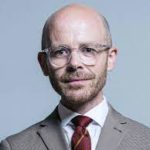
    Martin Docherty-Hughes – 2022 Speech on Scottish Independence and the Scottish Economy

    The speech made by Martin Docherty-Hughes, the SNP MP for West Dunbartonshire, in the House of Commons on 2 November 2022.

    I was actually glad to the hear the hon. Member for Banff and Buchan (David Duguid) speak up on behalf of the Union. We might not agree, but at least a Conservative and Unionist party Back Bencher from Scotland is here to do the job they are paid to do by their constituents. I know that the Secretary of State was here earlier and that the Under-Secretary of State for Scotland, the hon. Member for Berwickshire, Roxburgh and Selkirk (John Lamont), is here now, but it is commendable to see the hon. Member for Banff and Buchan here doing his job. That is what we are all here for: to speak up on behalf of our constituents. I just thought it was important to say that.

    On the constitutional debate that we are having—there is an element relating to the constitutional position—the hon. Member for Aberconwy (Robin Millar) talked about a covenant. The treaty of Union is not a covenant; it is a piece of international law, into which two independent—

    Robin Millar indicated dissent.

    Martin Docherty-Hughes

    Well, the hon. Gentleman can shake his head, but he perhaps needs to read up on English, Welsh and, separately, Scottish history and about the pre-treaty parliamentary positions.

    Let us go back to the debate at hand. In 2017, in the aftermath of the Brexit referendum, the now Prime Minister was clear—

    Robin Millar rose—

    Martin Docherty-Hughes

    No, I have just started, so I hope the hon. Gentleman will let me go on for a wee bit.

    In 2017, the Prime Minister said that

    “it seems hard to block”

    a second independence referendum for Scotland. Let me also repeat the words of another Tory Prime Minister, whom I repeat time and time again for the historical record. The former right hon. Member for Finchley said that if the Tory party

    “sometimes seems English to some Scots that is because the Union is inevitably dominated by England by reason of its greater population.”

    Now, that is just a simple fact, and the former right hon. Member for Finchley was correct.

    They then went on to say:

    “The Scots, being a historic nation”—

    I am sure that you and I agree at least on that, Madam Deputy Speaker, although I will not ask your opinion from the Chair—

    “with a proud past, will inevitably resent some expressions of this fact from time to time. As a nation, they have an undoubted right to national self-determination.”

    We are a nation. We are not a region. We are not some subsection of some great state in the Soviet Union. We are a nation of historic lineage going back into time immemorial that people all over the world call home. They continued by saying that

    “thus far, they have exercised that right by joining and remaining in the Union.”

    They go on to say, and this is worth repeating time and again:

    “Should they determine on independence, no English party or politician would stand in their way, however much we might regret their departure.”

    That, I think, is a clear constitutional position.

    Members will be relieved that I do not intend to go over many of the excellent points already made by my colleagues—[Interruption.] My hon. Friend the Member for Na h-Eileanan an Iar (Angus Brendan MacNeil) is welcome to interject at some point if he wishes. Let us go to the economic case for independence, because that is the crux of the matter. This may go back to some of the questions raised by Government Members, because I cannot help but feel that things are often framed very much in the wrong way. If things were perfect for the Scottish economy, or for the UK economy—I mean the United Kingdom of Great Britain and also Northern Ireland, which does not get much mention from some on the Government Benches—there would not be so many SNP MPs here making the case for independence today. Our aim is not to tweak the economy here or there or hope for some marginal improvements for Scotland; Scottish independence is a political project—a political choice for the people of Scotland, should they make it—that seeks to change the underlying economic conditions in order to improve the lives of everyone not only in my constituency but across the length and breadth of Scotland.

    While at one time that idea may have seemed utopian, the events of the last few weeks and months—actually, the last few years—have turned the chronic problems of the UK economy into an acute polycrisis of stagnant wages and productivity and plummeting competitiveness precipitated by the disastrous consequences of a Brexit that Scotland did not vote for.

    Angus Brendan MacNeil

    My hon. Friend is right: this is not about utopia; it is based in reality, because we have an example in front of us. One hundred years ago, the poorest part of the United Kingdom was Ireland. It became independent and shed the six counties that had the majority of the industry. One hundred years later, Ireland’s GDP per capita is well ahead of the UK’s. Such a thing can happen only when a country can make its own political choices, rather than them being abdicated to people for whom that country does not vote and who do not care about that country.

    Martin Docherty-Hughes

    I totally agree with my hon. Friend. That is the premise for independence. An independent country would seek trade deals and agreements with those countries with which it seeks to boost trade. It would seek to boost productivity, improve competitiveness, and get rid of the idea of stagnant wages, because that is the basis of the UK economy.

    Turning again to Brexit, in the past year alone—not since 2016, but in the past year—my constituents in West Dunbartonshire, which is one local authority area, have lost £32.5 million in exports because of Brexit. On top of the cost of living crisis, that comes to £869.97 per household. In my part of the world, that is a lot of money when people are trying to pay their electricity or gas bill, even though Scotland produces more gas than we need. It is an absolutely failed economic model.

    Our current economic model is quite simple: we get a fiscal transfer every year from the Treasury, and in exchange we accept—and have accepted—that macro-economic policy will continue to be made with London and the south-east of England in mind. My constituents receive—this may go back to some of the questions from Government Members—slightly higher per capita public spending in return for what is essentially a guarantee that their wages and the Scottish economy will grow at a slower rate than they do here in London and the south-east of England.

    In the past, that felt like a fair exchange. We were told that the engine of the UK economy would power up more quickly after recessions and recover more quickly from blows than the peripheral areas. That meant that the fiscal transfer could continue. No one seemed to notice the divergence over time, which led to the situation that was memorably compared by the economist Duncan Weldon: the UK economy basically consisted of the Republic of Singapore surrounded by a series of Portugals —no disrespect; I love Portugal—with a high-wage, high-productivity engine that could support the sluggish economies of its hinterland.

    That divergence has led to the incredible reality of northern English regions and constituencies now being poorer than the former communist parts of east Germany, with other states that did not have an open economy until 30 years ago, such as Poland, Slovenia and Estonia, not far behind. The change of the economic crisis from chronic to acute can be put down to Brexit and 12 years of Tory misrule, but I have to say to my friends on the Labour Benches that the seeds for two decades of stagnant productivity and wage growth were sown during their period in office with their total inability to challenge the UK’s macroeconomic orthodoxy.

    I am mindful of the comments of my former colleague, Andrew Wilson, who was a Member of the Scottish Parliament and has written a lot on these issues. He calls the UK an “aeroplane with one engine”. In good times, we are unlikely to notice any turbulence, but that cannot be guaranteed forever. When the engine begins to run more slowly than its competitors, as we are seeing now, there is a knock-on effect for everyone, including those in Scotland.

    Simply, people across these islands are getting poorer, while those across the Sheuch in Ireland are getting wealthier all the time, as my hon. Friend the Member for Na h-Eileanan an Iar said. Let us not forget that Ireland, as an independent sovereign state, used the pound from 1922 to 1928 and was then pegged to the pound for 50 years. People should not just say that the fiscal position cannot happen; we need to be conscious about history and the reality on the ground. The people of Scotland recognise that.

    Angus Brendan MacNeil

    My hon. Friend raises an interesting and important point. Ireland was pegged to the pound for all those years, which probably held it back and was a mistake. It was unpegged when the UK went cap in hand to the International Monetary Fund for a bailout in the 1970s, and Ireland then—combined with joining the European Union, incidentally on the same day that Scotland joined—took off.

    Martin Docherty-Hughes

    Indeed. The underlying economic case for this Union, the British Union—not the United Kingdom of Great Britain and Northern Ireland—that we get slightly higher public spending in exchange for worse wages and growth begins to fall apart when average incomes in the UK decline relative to those of its neighbours.

    As it is appropriate to ask Scottish National party Members to lay out the economic case for independence, it is also appropriate to ask questions of the Conservative Government and of the Labour Opposition, who seem unwilling to diverge from the Government on matters of macroeconomics. I would love to hear from the Front-Bench teams what they would say to people from West Dunbartonshire when they ask what the cost is to them over a working life of having lower wages than their peers in similar parts of northern Europe. Similarly, they ask about the economic value attributed to combining those lower wages with fewer years of healthy working life lived.

    Ian Blackford

    I commend my hon. Friend on his excellent speech. In essence, there are three components of growth: population, productivity and participation. One thing that has been ascribed to the Union since 1850 is the relative decline of the Scottish population, because there has been a lack of economic opportunity to drive up wages and productivity. We are being held back by the migration policies of this Government, which are, sadly, supported by the Labour party. That is why we need independence, because we will need migration to drive up the opportunities in Scotland and to deliver economic growth.

    Martin Docherty-Hughes

    I am grateful for that intervention from my right hon. Friend, and I fundamentally agree. As the grandchild of migrants, I hope they brought something at least to the United Kingdom of Great Britain and Northern Ireland, as I hope many future migrants will bring to an independent Scotland.

    Ultimately—and, again, I come back to the Government —we can put a price on the fact that people in Clydebank, Dumbarton and the Vale of Leven die younger than comparable cohorts in Denmark, Ireland and even the south-east of England. In 2014, my constituents were among the four council areas in Scotland that voted to change the dismal economic calculus of Britain, because it never has worked for them and it never will work for them. I cannot help but feel that unless both the main Unionist parties in this Parliament—the Conservative party and the Labour party—find answers to these simple questions, there are going to be a lot more of my constituents voting for independence next time.

  • PRESS RELEASE : Call for Evidence – An inspection of the Home Office’s Afghan resettlement schemes [November 2022]

    PRESS RELEASE : Call for Evidence – An inspection of the Home Office’s Afghan resettlement schemes [November 2022]

    The press release issued by the Home Office on 3 November 2022.

    In line with his 2022-23 inspection plan, the Independent Chief Inspector of Borders and Immigration has commenced an inspection of the Home Office’s Afghan resettlement schemes

    This inspection will examine the effectiveness, efficiency and consistency of the Home Office’s processing of applications to Afghan resettlement schemes.

    The Independent Chief Inspector invites anyone with knowledge or experience of applying to the schemes to submit evidence to inform this inspection and welcomes views on what is working well and what could be improved. He would be particularly interested to hear from those with first-hand experience of applying to the schemes.

    The ICIBI is trialling a new system which will allow responses to be submitted securely via a simple online form. Please click here to submit your response.

    This call for evidence will remain open for three weeks until 27 November 2022.

    Please note: The ICIBI’s statutory remit does not extend to investigating or making decisions about individual applications. This remains a Home Office responsibility. However, the Chief Inspector can take an interest in individual cases to the extent that they illustrate or point to systemic problems.

    David Neal, Independent Chief Inspector of Borders and Immigration, November 2022.