Tag: 2022

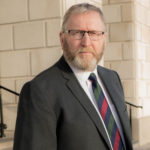
  • Doug Beattie – 2022 Comments on the Northern Ireland Protocol

    Doug Beattie – 2022 Comments on the Northern Ireland Protocol

    The comments made by Doug Beattie, the Leader of the Ulster Unionists, on 3 November 2022.

    We are entering a pivotal period.  As negotiations are once again underway between the United Kingdom and European Union, we have the opportunity to finally deal with the problems caused by the Northern Ireland Protocol and see devolution restored.

    But any progress potentially stands to be put at risk by needlessly calling an Assembly election that will change nothing but stands to further undermine the return of devolution and cost the taxpayer £6.5million.

    Something needs to change.  The opportunity exists to pause the calling of an election and allow negotiations between to the United Kingdom and European Union to continue in earnest.  We believe that the time is right for the UK to trigger Article 16 of the Northern Ireland Protocol to facilitate this.

    Article 16 states that either party in the negotiations may act unilaterally “If the application of this Protocol leads to serious economic, societal or environmental difficulties that are liable to persist…”.  I think it is unquestionable that we are experiencing societal difficulties that are liable to persist.

    A negotiated outcome which removes the Irish Sea Border will be the remedy, not rerunning an election we had six months ago.  It is clear that the atmosphere and willingness to address the problems created by the Protocol are currently in a much different place than they have been.  They should be given time and space to continue as long as progress is being made.  After all this time I think it would be madness for the UK Government to jeopardise that because they have got themselves on a hook over the election that they are too embarrassed to be seen to climb down from.

  • PRESS RELEASE : Until Syria gives proper assurances to the international community, we must assume it continues to hold chemical weapons [November 2022]

    PRESS RELEASE : Until Syria gives proper assurances to the international community, we must assume it continues to hold chemical weapons [November 2022]

    Statement by Fergus Eckersley, UK Political Coordinator at the UN, at the Security Council briefing on Syrian chemical weapons.

    Thank you President, and thank you to the High Representative for the very helpful briefing.

    President, Syria has had nine years to come into compliance with the Chemical Weapons Convention. But since its accession, it has repeatedly and categorically failed to provide the OPCW with a complete account of its chemical weapons programme. And as we know, the Syrian regime has been independently found responsible for at least 8 chemical weapons attacks by UN and OPCW independent investigations – attacks on its own people.

    Syria has failed to assure the OPCW, or this Council, that it is today abiding by its commitments under resolution 2118 and as a state party to the Chemical Weapons Convention

    There is understandable frustration in the Council about the lack of progress, but we must see this for what it is. The problem here is not how many meetings this Council has. The problem is the behaviour of the Syrian regime in breach of core international laws, including resolutions of this Council. And the problem is systematic disinformation from Syria and Russia in an effort to obscure this behaviour and to avoid accountability. Including deeply irresponsible attempts to attack the OPCW.

    We heard from the High Representative today the risks of the erosion of the taboo against using chemical weapons. The OPCW is responsible for preventing the spread of chemical weapons. It is an expert and highly professional organisation, and it is in all of our interests to prevent it from being degraded by disinformation.

    President, until Syria gives proper assurances to the international community, we must assume that Syria continues to hold chemical weapons. And given its track record, we must assume that the regime remains willing to use them.

    So, it is up to members of this Council to maintain the pressure to resolve this ongoing threat to international peace and security.

    Thank you.

  • PRESS RELEASE : World Leaders Launch Forests and Climate Leaders’ Partnership to accelerate momentum to halt and reverse forest loss and land degradation by 2030 [November 2022]

    PRESS RELEASE : World Leaders Launch Forests and Climate Leaders’ Partnership to accelerate momentum to halt and reverse forest loss and land degradation by 2030 [November 2022]

    The press release issued by the Cabinet Office on 7 November 2022.

    • 26 countries and the European Union – which together account for over 33% of the world’s forests and nearly 60% of the world’s GDP – will launch the Forest and Climate Leaders’ Partnership (FCLP).
    • This high ambition partnership of countries will build on the Glasgow Leaders Declaration for Forests and Land Use made by 140+ countries to halt and reverse forest loss and land degradation by 2030 while delivering sustainable development and promoting an inclusive rural transformation.
    • These 26 countries, including some of the most highly forested countries, have volunteered to lead high ambition efforts to drive delivery and accountability  through annual high-level events; during the FCLP’s first public meeting at COP27, an alliance of government leaders, companies, financial actors and Indigenous peoples’ will report on progress.
    • It will be announced that public donors have already spent $2.67 billion of the $12 billion committed last year to protect and restore forests. At COP27 a further $4.5 billion from public and private donors will be committed.
    • The UK Prime Minister and leaders of Colombia, Congo, Ghana, France and Germany will address the Forest and Climate Leaders’ Summit.

    Today at COP27 world leaders will launch the Forests and Climate Leaders’ Partnership (FCLP), committing to halt and reverse forest loss and land degradation by 2030 in the fight against climate change and as promised in the Glasgow Climate Pact.

    The FCLP, launched at the inaugural Forest and Climate Leaders’ Summit, is a voluntary partnership of 26 countries committed to delivery, accountability and innovation following the Glasgow Leaders’ Declaration on Forests and Land Use, which was endorsed by more than 140 world leaders at COP26 last year to halt and reverse forest loss and land degradation this decade. If achieved, this would deliver 10% of the climate mitigation action needed by 2030 to deliver on the Paris Agreement.

    Chaired by the United States and Ghana, FCLP members represent a range of regions, major forest areas, and centres of commerce and finance. 60% of global GDP and over  33% the world’s forests are covered in this partnership.

    All members of the FCLP are united by a common goal; each member must be committed to leading on at least one of the FCLP’s action areas. Through the FCLP, countries will lead the initiatives which will scale and drive delivery. The goal is to identify strategic areas where the FCLP can help implement or scale up both new and existing solutions, working closely with the private sector, civil society and community leaders.

    As part of this, the United Kingdom has committed £1.5 billion finance for forests over 2021-25, as part of a wider £3bn ring fence for nature. As part of this, the UK is announcing a further £65m for the nature pillar of the Climate Investment Fund, which will place Indigenous people and local communities, who shoulder the burden of climate change, at the heart of forest protection across rainforests, cloud forests and island forests. The UK is also today announcing that we are working on a new programme of £90 million towards the protection of the Congo Basin as part of our promise to support this region. The Congo Basin is the world’s most efficient carbon sink, supports the livelihoods of over 80 million people, and is home to 10,000 species of tropical plants – as well as endangered species like forest elephants, chimpanzees and mountain gorillas.

    Prime Minister, Rishi Sunak said:

    For too long the world’s forests have been undervalued and underestimated. They are one of the great natural wonders of our world, and with the loss of our forests accounting for more than 10% of global emissions, protecting them is one of the best ways of getting us back on track to 1.5 degrees.

    That’s why the UK put nature at the heart of COP26, and countries home to 90 per cent of the world’s forests committed not just to halting but reversing forest loss and land degradation by 2030.

    Let’s build on what we have achieved and together secure this incredible legacy for our children and the many generations to come.

    H. E Nana Addo Dankwa Akufo-Addo, President of Ghana, said:

    Forest loss can be averted. There is, however, the need for a dedicated space, globally, to provide the needed support and accountability checks to countries that are committed to delivering the Glasgow Leaders Declaration. The FCLP is a first and key step towards this goal, and Ghana supports and endorses, fully, the FCLP.

    Olaf Scholz, Chancellor of Germany, said:

    Our joint global commitment to halt deforestation and restore forests needs to be translated into concrete and scaled action on the ground that will benefit people, biodiversity and the climate. Germany has joined the Forests and Climate Leaders’ Partnership today since we are convinced that it provides a strong forum for international collaboration to progress on this front. To underpin our commitment, Germany will support the establishment of the partnership’s secretariat and is doubling its initial contribution to the Global Forest Finance Pledge to a total of 2 billion EUR.

    At the inaugural Forest and Climate Leaders’ Summit, an alliance of government leaders, companies, financial actors and Indigenous peoples’ will report on progress. This includes:

    • Contributing countries demonstrating unparalleled levels of accountability and transparency. 12 countries will report a combined spend of $2.67 billion to support activities in developing countries, including restoring degraded land, tackling wildfires and supporting the rights of indigenous communities.
    • At least $4.5bn of newly-mobilised public and private sector funding will be announced.
    • Leading financial institutions from Japan to Norway to Brazil, all signatories to the Financial Sector Commitment on Eliminating Commodity-driven Deforestation have been moving forward with implementation through the Finance Sector Deforestation Action (FSDA) initiative. FSDA members have published shared investor expectations for companies, are stepping up engagement activity and are working with policymakers and data providers. New members joining in 2022 include SouthBridge Group, the first African financial institution to join the initiative, Banco Estado de Chile, London CIV and GAM Investments.
    • In their call to action, the GFANZ co-chairs and vice chair, including Mark Carney, are calling on all financial institutions to embed deforestation into their net zero transition plans.

    The FCLP will hold annual meetings to encourage accountability, including leader-level events at climate COPs. Starting in 2023, the FCLP will also publish an annual Global Progress Report that includes independent assessments of global progress toward the 2030 goal, as well as summarising progress made by the FCLP itself, including in its action areas and initiatives.

    At the Summit, those who spoke alongside Prime Minister Rishi Sunak included: President Emmanuel Macron of France, President Akufo-Addo of Ghana, President Denis Sassou Nguesso of Congo, President Petro of Colombia, Chancellor Scholz of Germany, and EU Commission President Ursula von der Leyen.

  • PRESS RELEASE : Flood Action Week – Households urged to prepare in 2022 year of extremes [November 2022]

    PRESS RELEASE : Flood Action Week – Households urged to prepare in 2022 year of extremes [November 2022]

    The press release issued by the Environment Agency on 7 November 2022.

    Communities are being urged to prepare for flooding this winter with the Environment Agency warning of “ignoring the danger at your own peril”.

    Amid increased extreme weather events brought on by the climate emergency, the Environment Agency is launching an awareness campaign – Flood Action Week – to encourage those who live in areas at risk of flooding to act now to protect their home, possessions and family.

    This year alone, the UK experienced its highest ever recorded temperatures, as the Met Office confirmed that England had its joint hottest summer on record with much of the country still struggling with drought.

    Looking ahead to this winter, although the Met Office says the chance of wet and windy weather increases as we go through the season, unexpected flooding could occur at any time and communities are being warned not to be complacent following this summer’s dry weather.

    Since 1998 we have seen six of the ten wettest years on record and this year for the first time ever saw three named storms in one week.

    One of the key messages coming from COP27, which gets underway in Egypt this week, is that we must plan and prepare for increasingly extreme events.

    As we have seen across the globe, the effects of climate change are becoming clearer, with wildfires raging across Europe; China experiencing its worst heatwave in decades; and devastating floods in Pakistan ripping through communities killing more than 1500 people and displacing millions.

    This Flood Action Week (7 November – 13 November) the Environment Agency is urging people to take three simple steps:

    Caroline Douglass, Executive Director of Flooding at the Environment Agency, said:

    Climate change is happening now. We’re seeing more extreme weather – in this year alone with three named storms in a week, record-breaking temperatures and drought declared across large parts of the country.

    “That is why it is vital that people take the necessary preparations as early as possible to prepare for the worst. Our recent investment programme has better protected 314,000 homes from flooding and we’re investing millions into keeping communities safe, but we can’t stop all flooding.

    The message is clear – households risk ignoring the danger of flooding at their own peril. Anyone can go online to check if they are at risk, sign up for Environment Agency warnings, and, most importantly, know what you need to do if flooding hits.

    Floods Minister Rebecca Pow said:

    I know how devastating flooding can be – the loss of your home, the financial stress, and the destruction of irreplaceable, sentimental belongings all place unbelievable strain on those affected.

    Simple steps such as checking your flood risk online and signing up for flood warnings can make all the difference in terms of preparing yourself for what may come.

    We are committed to pressing ahead with our record £5.2 billion investment in flood and coastal defences between 2021 and 2027 to ensure more communities are even better prepared for future flooding events.

    This year’s Flood Action Week comes as the Environment Agency has now expanded its flood warning service to reach almost 50,000 new properties at risk of flooding and hopes to exceed its target to provide new warning capability for 62,000 properties at risk of flooding by this winter. It brings the number of properties registered with the service to 1.6 million.

    With over 250 mobile pumps and 5,000 trained staff across the country, the Environment Agency is ready to take action wherever it is needed this winter. The construction and repair of flood defences has also continued throughout the year as part of the record £5.2 billion government investment in flood and coastal defences.

    These preparations have already helped to protect communities from flooding. During the storms earlier this year, despite some 400 properties sadly flooding, around 35,000 were protected by Environment Agency schemes.

    Will Lang from the Met Office said:

    Winters in the UK usually include a wide variety of weather, and this winter looks to be no exception.

    Although we expect to see high pressure dominating our weather through much of the early winter, which increases the potential for cold spells, we could still see wet and windy weather at times.

    The risk of unsettled weather increases as we head into 2023 with wet, windy, and mild spells a real possibility.

    At least one in six people in England are at risk from flooding from rivers and the sea, with many more at risk from surface water flooding.

    However nearly two in three households at risk of flooding don’t believe it will happen to them, according to analysis produced by the Environment Agency earlier this year.

    And despite the research showing that almost two thirds of people (60%) have taken at least one action to prepare for flooding, as many as 1.5 million households, who are at risk, are yet to prepare.

    Those at risk are encouraged to follow the advice to ‘Prepare. Act. Survive’, specifically:

    • If there is an initial flood alert – prepare by packing medicines and insurance and other important documents and visit the flood warning information service
    • If there is a subsequent confirmed flood warning – act by moving family, pets and belongings to safety. Turn off gas, water and electricity
    • If there is a severe flood warning – survive immediate danger by following the advice of emergency services or calling 999 if needed

    With just 30cm of flowing water being enough to float a car, drivers are also being warned not to attempt to drive through flood water and take extra precautions in wet weather.

    Tony Rich, from The AA said:

    It’s vital for drivers to be aware of the risks of driving in floodwater and during heavy rain. Roads can quickly become flooded, making your intended route impassable, so allow plenty of time for journeys. It’s also important to leave more space than normal between you and the car in front to allow for greater stopping distances.

    Drivers should take extra care where roads dip, especially under bridges as these are most likely to flood first. Flood water can be deceptively deep and can easily cause damage to your vehicle’s bodywork or worse – the engine, often resulting in hefty repair bills.

    Flood water can also mask other hazards in the road, such as displaced drain covers and potholes, so if in doubt turn around and find another route. Doing this may add time to your journey, but as it only takes 30cm of flowing water to float a car – it’s better to be safe than sorry.

  • PRESS RELEASE : Outstanding collection of Joseph Wolf animal drawings at risk of leaving the UK [November 2022]

    PRESS RELEASE : Outstanding collection of Joseph Wolf animal drawings at risk of leaving the UK [November 2022]

    The press release issued by the Department for Digital, Culture, Media and Sport on 7 November 2022.

    – Export bar is to allow time for a UK gallery or institution to acquire the collection

    A set of 120 drawings of animals worth £119,700 is at risk of leaving the UK unless a buyer can be found to save the collection for the nation.

    Joseph Wolf was a 19th century artist who specialised in natural history illustrations. He produced works for the British Museum and the Zoological Society of London and was well known for depicting animals in accurate, lifelike postures.

    The norm of painting an animal in its natural habitat was established by Wolf and this set of 120 original drawings of animals demonstrates his outstanding skills and artistry for depiction of animal behaviour.

    Arts Minister Lord Parkinson said:

    Joseph Wolf’s magnificent drawings of animals in their natural habitats are a joy to behold as well as a fascinating insight into natural history illustration in the 19th century. I sincerely hope a buyer comes forward to save these for the nation.

    The Minister’s decision follows the advice of the Reviewing Committee on the Export of Works of Art and Objects of Cultural Interest. The committee noted that the collection of drawings held enormous research potential, particularly as they sit at the intersection of visual arts and intellectual inquiry.

    Committee member Christopher Baker said:

    Joseph Wolf (1820–1899) played a key role in the development of natural history illustration in Britain by animating and contextualising his subjects and indicating the habitats and behaviours of animals – which was a quite different approach to earlier, more static representations. His fascinating and accomplished work was highly regarded by Victorian naturalists, explorers and artists, and appeared in scientific journals, luxury books with colour plates and more popular, accessible publications. This substantial group of drawings is of particular interest as it allows an intimate view of his working processes and observational skills and has great potential for research on his pioneering practice and its legacy. Securing the drawings for a public U.K. collection would be highly desirable.

    The RCEWA made its recommendation on the grounds that the collection was of outstanding significance to the study of natural history art and illustration.

    The decision on the export licence application for the painting will be deferred for a period ending on 6 February 2023 inclusive. At the end of the first deferral period owners will have a consideration period of 15 business days to consider any offer(s) to purchase the painting at the recommended price of £119,700 (plus £4,940 VAT). The second deferral period will commence following the signing of an Option Agreement and will last for three months.

  • PRESS RELEASE : Rishi Sunak meeting with Prime Minister Meloni of Italy [November 2022]

    PRESS RELEASE : Rishi Sunak meeting with Prime Minister Meloni of Italy [November 2022]

    The press release issued by 10 Downing Street on 7 November 2022.

    Prime Minister Rishi Sunak met Giorgia Meloni, Prime Minister of Italy, at COP27 in Sharm el-Sheikh today.

    The leaders had a positive discussion on a range of shared issues and priorities, including tackling illegal migration and people smuggling gangs.

    Reflecting on the UN climate summit, they noted the importance of addressing climate change for our long-term security and prosperity.

    The Prime Minister highlighted the shock to global energy and food prices caused by Russia’s invasion of Ukraine, and the leaders agreed to continue to take strong action to support Ukraine and hold Russia to account for its actions.

    The Prime Minister and Prime Minister Meloni welcomed the opportunity to meet at the start of their respective premierships and looked forward to working closely together, building on the strong partnership between the UK and Italy.

  • PRESS RELEASE : Rishi Sunak meeting with High Highness Sheikh Mohammed bin Zayed al-Nahyan of the UAE [November 2022]

    PRESS RELEASE : Rishi Sunak meeting with High Highness Sheikh Mohammed bin Zayed al-Nahyan of the UAE [November 2022]

    The press release issued by 10 Downing Street on 7 November 2022.

    The Prime Minister met the President of the United Arab Emirates, High Highness Sheikh Mohammed bin Zayed al-Nahyan, at the COP27 climate summit.

    The leaders discussed regional security, in particular the situation in Iran and Tehran’s destabilising behaviour in the region, as well as the negotiations around the JCPoA nuclear deal.

    The Prime Minister and Sheikh bin Zayed agreed to continue working closely together on defence, security and trade, including progressing the UK-GCC trade deal next year.

    They also welcomed cooperation on energy transition and green technology, and looked forward to COP28 in the Emirates next year.

  • PRESS RELEASE : Rishi Sunak meeting with European Commission President Ursula Von Der Leyen [November 2022]

    PRESS RELEASE : Rishi Sunak meeting with European Commission President Ursula Von Der Leyen [November 2022]

    The press release issued by 10 Downing Street on 7 November 2022.

    Prime Minister Rishi Sunak spoke to European Commission President Ursula Von Der Leyen at COP27 in Egypt today.

    They reflected on the progress and challenges since COP26 in Glasgow, committing to work together to speed up the transition to renewables and mobilise finance for developing countries.

    The Prime Minister noted that Russia’s invasion of Ukraine and manipulation of energy prices had only strengthened the argument for ending our reliance on fossil fuels.

    The leaders agreed the UK and European Union would remain steadfast in our military, economic and diplomatic support for Ukraine, and in countering Russian aggression.

    On the Northern Ireland Protocol, the Prime Minister reiterated the need to find solutions to the very real problems it had created on the ground in Northern Ireland. They agreed on the importance of working together to agree a resolution.

  • PRESS RELEASE : Egypt Foreign Minister Sameh Shoukry elected as COP27 President COP27 places loss and damage funding on its agenda [November 2022]

    PRESS RELEASE : Egypt Foreign Minister Sameh Shoukry elected as COP27 President COP27 places loss and damage funding on its agenda [November 2022]

    The press release issued by COP27 on 6 November 2022.

    • Nations must move from pledges and promises to meaningful action

    • Equitable and just energy transition essential with funding overdue

    • Current geopolitical challenges must not derail or delay action to meet climate targets

    • Loss and Damage finance is part of the COP Agenda for the first time ever

    Sharm El-Sheikh, Egypt, 6 November 2022 – Egypt Foreign Minister H.E. Sameh Shoukry was formally elected as the COP27 President by the Parties during the opening plenary, following which he called on countries to show faith in multilateralism over the next two weeks as they negotiate to deliver on the goals of the Climate Convention and the Paris Agreement.

    Addressing climate envoys and delegates at what is considered to be one of the largest COPs ever in terms of attendance, COP President HE Sameh Shoukry said: “It comes as no surprise to anyone that the COP is being held this year in a world which is witnessing political turmoil that cast a long shadow on all our nations and has resulted in energy and food crises; however these challenges should be no reason for delaying our collective effort to fight climate change. It is inherent on us all in Sharm El Sheikh to demonstrate our recognition of the magnitude of the challenges we face and our steadfast resolve to overcome it.”

    Minister Shoukry highlighted that Egypt made sure that COP27 will provide the optimum setting to align and converge multiple views, and facilitate transparent, inclusive, and fruitful discussion to ensure the most positive outcome achievable. He stressed that albeit the challenging economic and geopolitical factors, external circumstances should not be allowed to negatively affect the negotiating process, adding that as a COP hosted in Africa, it must consider the needs of the developing countries and ensure climate justice through availing the appropriate finance and other means of implementation, as countries that are the least responsible for emissions are the most affected by climate change.

    The new COP President, HE Shoukry acknowledged the tireless efforts of his predecessor, COP26 President Alok Sharma, and thanked Mr. Sharma and his team for their effort and dedication with everything they achieved in hosting COP26 and commended the outcomes and agreements their work helped to secure, reiterating the commitment of the Egyptian Presidency to deliver on an impactful and inclusive COP.

    The conference of the parties adopted its agenda, and for the first time since the adoption of the UN climate convention, parties agreed to introduce loss and damage funding as an agenda item at the climate conference, after a yearlong work culminating in 48 hours of continuous informal consultations led by the Egyptian COP Presidency on the eve of the COP. Shoukry lauded the sense of responsibility and commitment that parties showed, as well as the collective keenness on preserving the credibility and relevance of the climate process by making the right decision that responds to the suffering of millions of climate calamities’ victims around the world.

    More than 50,000 attendees are registered and expected to participate at COP27’s Blue Zone and thousands of others at the Green Zone. The Egyptian Presidency has designated several key thematic days that will include pledging opportunities, discussions, roundtables, and side events. The thematic days are part of efforts to advance climate action that can address existing implementation bottlenecks and gaps and deepen engagement with youth, women, civil society and indigenous people.

    The Sharm El-Sheikh Climate Implementation Summit will start tomorrow and runs for two days, bringing all participating heads of state and government. Following the summit’s inauguration, several roundtables led and attended by tens of world leaders will be held to focus on six key topics: Just Transitions, Food Security, Innovative Finance for Climate and Development, Investing in the Future of Energy, Water Security, and Climate Change and The Sustainability of Vulnerable Communities.

  • Jacob Rees-Mogg – 2021 Appearance at the Committee of Privileges

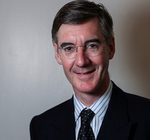
    Jacob Rees-Mogg – 2021 Appearance at the Committee of Privileges

    The appearance of Jacob Rees-Mogg, the then Leader of the House of Commons, at the Committee of Privileges on 30 November 2021. The meeting was chaired by Chris Bryant.

    Chair: Welcome, Leader of the House. It is very good to have you with us on an issue that has been vexing and troubling the House for many years through many processes. We are keen, if we possibly can, to help the House get to a settled position on all of this without undermining our historic powers. Do you think that the House presently has the powers that it needs?

    Mr Rees-Mogg: In a way, this is the work that you are doing to try and establish whether the powers that are currently there, even if they are more theoretical than actual, achieve the objective of getting witnesses to come before Select Committees. We have discussed privately the reality of the powers—whether they could be used and whether they would survive challenge—but what would be interesting to see from your final report is not the anecdotal experiences of Select Committees, which tend to focus on a very small number of high-profile cases, but whether, year in, year out, most witnesses who were summoned actually attend, including the low-profile ones, or whether there is a real problem for Committee after Committee of not getting the people that they want. That statistical analysis would be incredibly useful.

    Q229       Chair: All the evidence we have had so far is that the vast majority of witnesses come without any bother, and it is a pretty simple, straightforward, relatively informal process. The problem is that a theoretical power, to use your words, is quite difficult to enforce, and that leaves us with the hard cases. I know that makes it look anecdotal, but it is none the less a series of hard cases. In fact, the two cases that we just heard about were both people who said, “I’m not coming to that Select Committee,” and then a while later decided that they were going to another Select Committee, so they are picking and choosing which inquiry they will participate in.

    Mr Rees-Mogg: Again, an important part of what you are doing is to understand both the scale of the problem and also whether changing things would make it better. By getting the one difficult person, do you make it a different atmosphere for the others who have come willingly? Would a formalisation undermine the informal system that is working very well in most cases? Or would it simply work in the cases that need it? Again, I think that is something that your report needs to work out because that will be essential to deciding whether legislation helps or hinders.

    Q230       Chair: I think I would be right in characterising the evidence we have had from everybody today as pretty much that there might be a risk that having a more formalised system, because otherwise there is no sanction, might do two things: it might invite the courts to enter into questioning elements of proceedings in Parliament, and it might make for a more formalised setting for all questioning. There are ways of mitigating both of those risks in terms of the way we draft the legislation and the way we make sure that it is not just a decision of individual Committee, on a whim, whether or not to have an individual come along, but a decision of the whole House. Then, as Lord Judge put it to us, that is a deliberate contempt of Parliament, and the question for the House is, do we really want to put up with deliberate contempts of Parliament without sanction?

    Mr Rees-Mogg: Then sanction becomes very important, because the sanctions that do exist—theoretically—have not really been used since Sir John Junor’s case because the sanction made the House look more ridiculous than powerful. In the Dominic Cummings case, a very mild sanction was applied because of the risk of appearing ridiculous with a different sanction. I think that the draft legislation, with the prospect of two years’ imprisonment, risks going to the other end of the scale. It is hard to see what level of contempt would warrant two years in prison.

    Q231       Chair: What sanctions do you think are available now?

    Mr Rees-Mogg: I am sure you have discussed this with the Clerks, but Parliament has never formally given up its ability to imprison during the Session of Parliament. It is not, I believe, a power that has been used since the 17th century.

    Q232       Chair: Do you think we still have that power?

    Mr Rees-Mogg: I think the power still exists. Would it be subject to challenge? Almost certainly. Would the challenge succeed?

    Chair: Would you ever advocate using it?

    Mr Rees-Mogg: Do we have the power to fine? I think the power to fine is more debatable. I cannot remember when it was last used, if ever—you will know from your Clerks. The House of Lords made a very interesting argument in relation to fining its own Members, which you will remember. Whether that argument would apply in relation to the Commons and recalcitrant witnesses, I do not know. I think the reality of our powers is that we do not know whether they are there until they are used. Then you might find that they are upheld by the courts, or you might find that they are not. This is an argument where learned lawyers disagree.

    Q233       Chair: I am not sure many learned lawyers disagree, do they? The last time there was a fine was 1665, and I think imprisonment was 1891—

    Mr Rees-Mogg: So sorry, I was wrong on the last imprisonment, which if it was 1891 is only just beyond living memory.

    Q234       Chair: I think the last imprisonment was 1880, which was Charles Grissell. You are saying you think that, if the House were to come to you, as Leader of the House, you would table a motion that would say, “We are now going to imprison such and such for refusing to attend.”

    Mr Rees-Mogg: I could not predict whether that motion would get through, and I could not predict whether the courts would maintain it. This is all very theoretical.

    Q235       Chair: But you think that that power still exists.

    Mr Rees-Mogg: The power has not been formally abandoned by Parliament.

    Q236       Chair: I am going to try again. So you think that it is still a power that we hold. Do you think it would be morally okay for Parliament to imprison somebody?

    Mr Rees-Mogg: I repeat what I said: Parliament has not formally abandoned this power. But I am not saying with any degree of confidence that the power, if used, would not be challenged. Is it an effective power? I do not know. But has it formally been abandoned by Parliament? No, as you know.

    Q237       Chair: I think nearly every Committee that has investigated fining has said that we no longer have the power to fine, and I think that is written in “Erskine May”. You can argue about the legal status of “Erskine May” if you want to.

    You have used the word “theoretical” several times, but I am not sure whether you are advocating that we should reassert our historic powers and say, “We now have the power to imprison,” so that is the sanction that would be appropriate for somebody refusing to give evidence.

    Mr Rees-Mogg: But I have just said that, in the draft Bill, the potential of two years in prison is entirely disproportionate to failing to appear as a witness. It is very hard to see the circumstances where two years in prison would be a suitable penalty.

    Q238       Sir Bernard Jenkin: First, I apologise for missing your opening remarks. How theoretical does something need to be and how long ago does it need to be, before we start using a term I learned during the consideration of this matter in the 2013 Joint Committee—“desuetude”?

    Mr Rees-Mogg: I was just thinking of the word “desuetude”. Is there an option of desuetude in terms of the powers of Parliament? That is a question for the Committee.

    Q239       Sir Bernard Jenkin: You yourself say the powers are theoretical. When you say that, what do you mean?

    Mr Rees-Mogg: What I mean is that if the powers had been used, when they were used, in the 19th century, there was no question that they would be challenged in a court. We live in a very different era in terms of courts’ exercise of their powers, and we have the European Court of Human Rights, which is currently considering a case relating to Sir Philip Green. Therefore courts are able to go where they would not have dreamed of going in the 19th century, and that is why I think it is a theoretical power and that you do not know whether it would survive challenge until tested.

    Q240       Sir Bernard Jenkin: Is it your view, in that case, that we need to test this before we resort to statute?

    Mr Rees-Mogg: I think this is an important part of your Committee’s report, as to whether you think that is a course worth using. But you may come to the conclusion that it is not. You may come to the conclusion that desuetude is the right answer in this case.

    Q241       Sir Bernard Jenkin: And if the powers have fallen into desuetude, what should we do about it?

    Mr Rees-Mogg: I think the next stage in that is to consider whether the current situation is in fact working. That’s the bit I was saying earlier: if this is just a very small number of very high-profile cases—

    Q242       Sir Bernard Jenkin: I heard that bit. I think we accept that it is a very small number of very high-profile cases, but the question is to what extent that discredits Parliament as a whole. If there was a statutory process, to which the Speaker would only give access if we had been through a series of hoops, so it clearly was not a vexatious summons, over-political or designed to bully the witness, but to get on public record evidence that is legitimately required for a legitimate inquiry, and if all those hoops had been gone through and the person is still refusing, do you not think the additional persuasive power of embroiling a potential person in a statutory process might act as an encouragement for them to attend?

    Mr Rees-Mogg: Possibly. There are obvious risks—the risks that we discussed briefly—of formalising it with other witnesses, who feel that this is a more intimidating experience than it currently is, and I think, for many witnesses, it is already quite an intimidating experience. And there is always the issue of exclusive cognisance of our proceedings, and how we lock in with the courts, which I do have a nervousness about, because once you let the courts in, how far are they able to go? Our ability to run our own affairs is fundamental to how Parliament works, both Lords and Commons.

    Q243       Sir Bernard Jenkin: The courts might do that if we try to fine a witness for non-attendance anyway.

    Mr Rees-Mogg: They might. That bit is untried, and you may come to the conclusion that you think it is so unrealistic as not to be worth trying. You may think that the untested nature of it actually in and of itself provides an incentive to attend, because people are not entirely sure whether it would be effective or not.

    Q244       Sir Bernard Jenkin: To be clear, if the Committee proposes that the House adopts a report that supports legislation, are the Government predisposed to resist that?

    Mr Rees-Mogg: No, I am not saying that at all. What I have been trying to set out is what I think is necessary to make the case for legislation. There are three points: first, the legislation would not affect the exclusive cognisance of the House; secondly, that it would be more effective than the current system in terms of witness attendance and the information that they were willing to give—it needs to be actively better than the current system. And that leads to the third point: I think we need a statistical analysis of who has not been appearing and who has been appearing. It is quite hard to make the case to legislate for a very small percentage of cases if most people are in fact turning up and the system is working well.

    Q245       Chair: In which case you are saying no to legislation? We have said it, and every report has always said it: it is a very small number, but they are hard cases that make a mockery of our theoretical powers.

    Mr Rees-Mogg: I think your report needs the numbers, so that we have the context. Is it that 1,000 have come and there is one who refused? Is it that 100 have come and one has refused? What is the proportionality? I don’t think legislating on one or two high-profile cases is a sufficient case.

    Q246       Chair: In which case you are saying no to legislation. Incidentally, I am still in a bit of shock at your belief that Parliament has the power to arrest and imprison, because I think that certainly went with the Human Rights Act 1998 and arguably went with the European convention on human rights.

    Mr Rees-Mogg: But I note you use the word “arguably”, and that is exactly what I have been saying.

    Q247       Chair: I don’t think anybody is arguing it—you are quite unusual in that position.

    Mr Rees-Mogg: I have not been saying that I think these powers would survive test; I am simply saying they have not been tested and they have not been abandoned by the House.

    Q248       Chair: But do you think they should stand the test?

    Mr Rees-Mogg: I would not want to imprison for non-attendance, as I have already said. Could the House have a system where it had some penal mechanism for people who failed to attend that was entirely a House matter? I don’t personally think that would be unreasonable, but it is a matter for your Committee to work out how that could be done in a way that was fair.

    Q249       Chair: Do you think it would be reasonable for the House to arrest?

    Mr Rees-Mogg: I am not advocating arrest. I think imprisonment for non-attendance would be an extreme procedure. I am not advocating going back to the days of Peter Wentworth.

    Q250       Chair: What penal power would you suggest?

    Mr Rees-Mogg: I think it is not unreasonable for the House to fine people for failing to attend.

    Q251       Chair: Wow! That is pretty extraordinary.

    Mr Rees-Mogg: I don’t think it is. I would much rather the House did it and maintained its exclusive cognisance than that the courts did it. But that may in itself need legislation because, if the powers have fallen by the wayside, they cannot just be magicked up.

    Q252       Sir Bernard Jenkin: But if the offence being committed was not failure to attend, but first of all contempt of Parliament, it would secondly be contempt of court, because the court would order the person to attend.

    Mr Rees-Mogg: That gets very difficult. If courts start ordering people to attend Parliament, we are getting the courts directly involved in our proceedings, which I would be very nervous about.

    Q253       Chair: I am still in a bit of shock, I’m afraid.

    Mr Rees-Mogg: I think the high court of Parliament should exercise its powers as a general principle. We are a sovereign Parliament: we are higher than any court in the land, and we should not be mealy-mouthed about being a Parliament.

    Q254       Chair: I think that is very difficult, but—

    Mr Rees-Mogg: I may be less committed to the niceties of human rights law, but I think a supreme sovereign Parliament with a democratic mandate is the greatest protection of human rights in this country.

    Q255       Chair: Okay. If we were to go down the route of the proposal we have come up with, I accept your point that two years may be excessive and that may need to be looked at. Indeed, Lord Judge made a sensible suggestion.

    My assumption is that this law would never be used; I think it would make it easier to get the difficult people to come, because the advice they would then be given by their lawyers would be that there is more reputational and financial risk and risk of criminal sanction if they do not turn up than if they do. I think it would improve things, and there is no reason why that would necessarily have an effect on all the other people with whom, in the normal course of things, it just happens very simply and informally.

    One of the things we have suggested to mitigate the problems and some of the risks that you and others have referred to is ensuring that there is a proper gatekeeper role, so it is not just one Committee deciding on a whim to summon somebody, but there would be a gatekeeper to go through before you get to the Speaker’s certificate, and then it is a deliberate contempt of Parliament. Does that process, if we were to go down that route, seem sensible to you?

    Mr Rees-Mogg: I have a couple of things to say. First of all, if you are creating a power that you think would never be used, you are in much the same position as we are already, and then you get into the question—the Scottish Parliament has the power to fine, which I understand it has never used on a witness—of whether powers that you intend never to use are any better than the powers that you may or may not have that you never use. That is a matter for you.

    On the gatekeeper Committee, it depends on how it would interrelate with the court.

    Chair: Go on.

    Mr Rees-Mogg: Well, looking at the legislation, it doesn’t interrelate with the court; the court just looks at the fairness of the summons. So how does the court determine that and how do the two fit in together? That I am not clear on.

    Q256       Chair: So the bit for the court would be whether there is a reasonable excuse—something courts decide all the time is whether somebody turns up to court. Was it the 1948 contempt of court Act that basically formalised a set of agreements that had existed for a long time?

    Mr Rees-Mogg: Would the court be looking at the gatekeeper Committee having decided the summons? How would that be formalised? Would that be formalised in Standing Orders? It’s the question of how these two relate, because that is obviously where you get to the exclusive cognisance issue.

    Q257       Chair: Our working assumption has been—I think I am right, unless anybody corrects me—that if we were going down this legislative route, we would have to do some Standing Order changes so that there was a new process that got you to the Speaker’s certificate.

    We use the Speaker’s certificate because that has been an accepted system for some time and it limits the engagement of the court in the background to the decision. But it is undoubtedly true, as Lord Judge said earlier, that the defendant in a case might want to say, “Well, my reasonable excuse is that I think you’re all just engaged in a party political ding-dong and I don’t want to get involved in that.” Whether that would count as an excuse would be a matter for the court.

    Mr Rees-Mogg: Yes, and you would hope that the Speaker’s certificate, like the Speaker’s certificate under the Parliament Act or to money Bills, would not be challenged. This may be a more litigious area than money Bills if you have somebody who is very determined not to come. I think one has to be quite cautious about extending the remit of Speaker’s certificates. Just because they have not been challenged in a very specific area does not mean that they could not be challenged in another area. As I have said throughout, exclusive cognisance is very important.

    Q258       Sir Bernard Jenkin: You are setting some very important hurdles for legislation, but I think they are hurdles we may have to jump. I agree with you that Parliament is sovereign; Parliament is, in fact, the greatest guarantor of human rights in this country. After all, the only reason we have the Human Rights Act is that Parliament passed an Act. But doesn’t that also demonstrate that actually the only way Parliament can assert its sovereignty is through statute? While history may be littered with examples of how Parliament used to assert its sovereignty in different ways, statute has become the habit.

    Mr Rees-Mogg: Well, even article IX is statute.

    Q259       Sir Bernard Jenkin: Indeed, but article IX has a peculiar constitutional status, which also hitherto observed a self-restraining ordinance in respect of exclusive cognisance.

    Mr Rees-Mogg: Even the Act on tallage is statute. You go all the way back, and statute is of course how powers within the different arms of the state are exercised. That is absolutely right.

    Q260       Sir Bernard Jenkin: But there are all kinds of non-statutory powers that Parliament used to exercise that we don’t exercise anymore. I think if we sent a posse into the street to arrest somebody, the posse would not have any statutory authority and would not be regarded as a legitimate force. But that used not to be the case.

    Mr Rees-Mogg: This is the argument about Sessional Orders.

    Q261       Sir Bernard Jenkin: Which I hope you will restore.

    Mr Rees-Mogg: I am very interested in that.

    Sir Bernard Jenkin: Not because they have any statutory force, but because they would inform the police outside the Palace that whatever statutory rules remain in force, they also have a public obligation to Parliament to secure the passages and so on—within the law, within statute law.

    Mr Rees-Mogg: The moral authority of Parliament should not be underestimated, even when the powers are not codified. That is an essential part of this investigation.

    Sir Bernard Jenkin: I look forward to your implementing the 2013 recommendation to restore Sessional Orders.

    Q262       Chair: That rather makes the point that we have been going around this track for a very long time—longer than I have been in the House and much longer than you have been in the House. I have an anxiety about that—that we will just be doing this again in 10 years’ time, 20 years’ time and 30 years’ time, by which time desuetude itself will have fallen into desuetude.

    On Scotland, the Scottish Parliament is of course set up by statute, so it is somewhat different. There is a reasonable excuse provision in that as well. It is all justiciable. It feels to me that we have three routes: one is that we can just accept desuetude and live with it, which I think is sort of where you are at, because you are reluctant to legislate unless it is absolutely necessary. Basically, you are saying to us, we have to prove to you that it is absolutely necessary.

    Mr Rees-Mogg: I do not think that that was an unreasonable challenge.

    Chair: I am not objecting to that—

    Sir Bernard Jenkin: For the record, Chair, I do not think it is a no, but you are taking it as a no. I do not think it is a no.

    Q263       Chair: We will do our best to persuade, if that is the route that we want to go down. But you have reinvigorated a bit the argument that we could just reassert our powers today, which was considered in previous versions of this inquiry. It is just that when we have said we would reassert them, we have never done anything about reasserting them and, personally, I am very sceptical that that really meets—it feels a bit like an Act of Attainder.

    Mr Rees-Mogg: If all court judgments always went the way one thought in advance they would go, one would never go to court. Therefore, until you do this, you do not know whether it would work. We all have our views, and mine may not be that dissimilar from yours, but you do not know, and it has not been tested. Whether it is worth testing is a different question, because Parliament always has to make sure that it does not look ridiculous. That is why we have to be so careful about this. Whatever powers we have, if we use them aggressively or arbitrarily, we look ridiculous. We remain scarred—it is a long time ago now, but the John Junor case has scarred Parliament’s use of its powers ever since.

    We always face that problem, as we would with legislation. What would we actually want to do when someone refused to come—who was it, which Committee was it, and so on? I doubt it would be as simple as someone not coming, therefore we automatically go through this process and take them to court. There would be many political considerations we would want to take into account about the reputation of Parliament.

    Chair: You know how this ended up with us, which is basically that people worried that the dragon has no teeth and no flame-throwing ability, so it ends up being just a rather limp dragon.

    Mr Rees-Mogg: That is why I think it needs to be shown statistically what the real level of the problem is.

    Q264       Chair: I will ask you a completely different question, unless anyone has anything else they want to ask. As you know, the Committee of Privileges may only consider things that have been referred to it. There have been various suggestions that we should have a bigger power, so that, like most other Select Committees, we are able to consider things that interest us. Would you welcome that, or do you think that that is unnecessary?

    Mr Rees-Mogg: I think that the Privileges Committee is a particularly and singularly important Committee because it has that very narrow remit to do things specifically charged to it by the House. I think that is a good thing for the Committee and strengthens your reports.

    Chair: Anyone else? No. In which case, we are done. Thank you very much, Leader of the House.