Tag: 2022

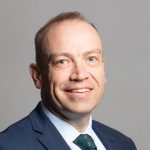
  • Chris Heaton-Harris – 2022 Statement on Formation of the Northern Ireland Executive

    Chris Heaton-Harris – 2022 Statement on Formation of the Northern Ireland Executive

    The statement made by Chris Heaton-Harris, the Secretary of State for Northern Ireland, in the House of Commons on 9 November 2022.

    Thank you Mr Deputy Speaker, with permission I would like to make a statement on the issues arising from the failure of the devolved government of Northern Ireland – the Northern Ireland Executive – to form.

    Mr Deputy Speaker, the overriding priority of this Government is to implement, maintain and protect the Belfast (Good Friday) Agreement.

    Northern Ireland is governed best when governed locally.

    Since May, that has not been possible. But our commitment remains absolutely clear: this Government believes that this is the moment for the restoration of the devolved institutions and will work to that end as a matter of the utmost priority.

    My predecessors have all referred to critical times for Northern Ireland. And there have been many. But this year is indeed a critical one.

    Mr Deputy Speaker, I can see you are thinking that you might have heard that last section of my statement before. And that’s because you have – those words were spoken by a former Secretary of State, the former Member for Neath, at this dispatch box back in 2006.

    And whilst these times are different with different issues affecting Northern Ireland, I and this Government believe strongly that people in Northern Ireland deserve a functioning Assembly and Executive, where locally elected representatives can address issues that matter most to the people that elect them.

    That is why, back in May, people cast their votes in Northern Ireland – to give their communities a voice in Stormont.

    However, for six months the Parties have not come together and, on the 28th October, the deadline to form an Executive, set down in law passed. That was the Northern Ireland Ministers, Elections and Petitions of Concern Act 2022. This is hugely disappointing.

    As a result, Mr Speaker, I am bound by law to call new elections for the Northern Ireland Assembly, as set out in the New Decade, New Approach agreement, that have to take place within 12 weeks of the 28th October.

    Since 28th October I have been engaging widely in Northern Ireland, with the Parties, businesses, community representatives and members of the public. And I’ve also  spoken with other international interlocutors.

    I think it would be fair to say, Mr Speaker, that the vast majority of those I have spoken to think that an election at this time would be most unwelcome.

    What people would welcome is having their devolved institutions up and running – because they are worried when they see a massive £660m black hole in this year’s public finances at the same time as their public services are deteriorating.

    They are worried that almost 187,000 people in Northern Ireland have been waiting for over a year for their first outpatient appointment.

    And they are worried that there is a higher share of working age adults in Northern Ireland with no formal qualifications than anywhere else in the United Kingdom.

    There is also, Mr Speaker, a legitimate and deep concern about the functioning of the Northern Ireland Protocol. This is felt across Northern Ireland and very strongly indeed in the Unionist community.

    The one thing that everyone agrees on is that we must try and find a way through this current impasse – where I have a legal duty to call an election that few want and everyone tells me will change nothing.

    Thus, I will be introducing legislation to provide a short, straightforward extension to the period for Executive formation – extending the current period by 6 weeks to 8th December, with the potential of a further six week extension to 19th January if necessary.

    This aims to create the time and space needed for talks between the UK Government and the EU Commission to develop and for the Northern Ireland Parties to work together to restore the devolved institutions as soon as possible.

    As I stand here, Mr Deputy Speaker, the Northern Ireland Executive has no Ministers in post.

    This means no Ministers to make choices that deliver the public services people rely on; to react to the budgetary pressures facing schools, hospitals and other key services; to deliver the energy support payments that have been made available by this Government to people across the rest of the United Kingdom.

    Before leaving his post, the Northern Ireland Finance Minister highlighted a £660 million in-year budget black hole, but there are no longer Ministers in the Executive to address this.

    As civil servants do not have the legal authority to tackle these issues in the absence of an Executive, I must take limited but necessary steps to protect Northern Ireland’s public finances and the delivery of public services.

    So, as has been done before, the legislation I introduce will also enable Northern Ireland Departments to support public service delivery; make a small number of vital public appointments, like to the Northern Ireland Policing Board; and address the serious budgetary concerns I’ve already mentioned.

    And, when so many are concerned about the cost of living in Northern Ireland, I know the public there will welcome a further measure I intend to address – another matter addressed by the former Secretary of State who I quoted earlier.

    People across Northern Ireland are frustrated that their Members of the Legislative Assembly continue to draw a full salary whilst not performing all of the duties they were elected to do. I will thus be asking for this House’s support to enable me to reduce MLAs’ salaries appropriately.

    Mr Speaker, let me end by repeating that the overriding priority of this Government is to implement, maintain and protect the Belfast (Good Friday) Agreement.

    This has been the bedrock of so much of the progress in Northern Ireland over the last quarter century.

    There are some, Mr Speaker, who have called for “joint authority” of Northern Ireland in recent days and let me just say: this will not be considered. The UK Government is absolutely clear that the consent principle governs the constitutional position of Northern Ireland, under which Northern Ireland is an integral part of the United Kingdom. We will not support any arrangements that are inconsistent with that principle. In addition, we remain fully committed to the long established three stranded approach to Northern Ireland Affairs.

    As we approach the 25th Anniversary of the Belfast (Good Friday) Agreement, I’ve found myself reflecting on the fact that political progress in Northern Ireland has so often required courage, understanding and compromise.

    I hope the measures I have announced in my statement today allow some extra time for these qualities to be displayed once again, and I commend it to the House.
  • Rishi Sunak – 2022 Statement to the House of Commons on COP27

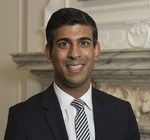
    Rishi Sunak – 2022 Statement to the House of Commons on COP27

    The statement made by Rishi Sunak, the Prime Minister, in the House of Commons on 9 November 2022.

    With permission, Mr Speaker, I will make a statement on COP27 which I attended in Sharm El Sheikh on Monday.

    When the UK took on the UK Presidency of COP just one third of the global economy was committed to net zero.

    Today that figure is 90 percent.

    And the reduction in global emissions pledged during our Presidency is now equivalent to the entire annual emissions of America.

    There is still a long way to go to limit global temperature rises to 1.5 degrees.

    But the historic Glasgow Climate Pact kept that goal within reach.

    And the whole House, I know, will want to join me in paying tribute to My Rt Hon Friend the Member for Reading West for his inspirational leadership as COP President.

    The question at this Summit, Mr Speaker, was whether countries would deliver on their promises.

    I’m pleased to say that our nation will.

    We have already cut our carbon emissions faster than anyone else in the G7.

    And we will fulfil our ambitious commitment to reduce emissions by at least 68 per cent by the end of the decade.

    Now, I know that some have feared Putin’s abhorrent war in Ukraine could distract from global efforts from tackling climate change.

    But I believe it should catalyse them.

    Climate security and energy security go hand in hand.

    Putin’s contemptible manipulation of energy prices has only reinforced the importance of ending our dependence on fossil fuels.

    So we will make this country a clean energy superpower.

    We will accelerate our transition to renewables which have already grown four-fold as a proportion of our electricity supply over the last decade.

    We will invest in building new nuclear power stations for the first time since the 1990s.

    And by committing £30 billion to support our green industrial revolution we will leverage up to £100 billion of private investment to support almost half a million high wage, high skilled green jobs.

    Mr Speaker, there is also no solution to climate change without protecting and restoring nature.

    So at COP27, the UK committed £90 million to the Congo Basin as part of £1.5 billion we are investing in protecting the world’s forests.

    And I co-hosted the first meeting of our Forests and Climate Leaders’ partnership which will deliver on the historic commitment to halt and reverse forest loss and land degradation by 2030.

    Now, central to all our efforts, is keeping our promises on climate finance.

    So the UK is delivering on our commitment of £11.6 billion.

    And to support the most vulnerable who are experiencing the worst impacts of climate change we will triple our funding on adaptation to reach £1.5 billion a year in 2025.

    In Glasgow, the UK pioneered a new global approach using aid funding to unlock billions of pounds of private finance for new green infrastructure.

    So I was delighted to join President Ramaphosa to mark the publication of his investment plan which delivers on this new model.

    South Africa will benefit from cheaper, cleaner power cutting emissions while simultaneously creating new green jobs for his people.

    And we will look to support other international partners in taking a similar approach.

    We also made further commitments to support clean power in developing countries.

    This included investing a further £65 million in commercialising innovative clean technologies and working with the private sector to deliver a raft of green investment projects in Kenya.

    Now Mr Speaker, the Summit allowed me to meet many of my counterparts for the first time.

    With the Egyptian President, I raised the case of the British-Egyptian citizen Alaa Abd el-Fattah.

    And I know the whole House will share my deep concern about his case, which grows more urgent by the day.

    And we will continue to press the Egyptian government to resolve the situation.

    We want to see Alaa freed and reunited with his family as soon as possible.

    With President Macron, we discussed our shared determination to crack down on criminal smuggling gangs.

    And I also discussed illegal migration with other European leaders too.

    We are all facing the same shared challenge – and we agreed to solve it together.

    And finally, I had good first meetings with the new Prime Minister of Italy, the German Chancellor, the President of the EU, the President of Israel, and the leaders of UAE, Kenya and Norway, as well as the UN Secretary General.

    In all of these discussions, the UK is acting with our friends to stand up for our values around the world and to deliver stability and security at home.

    Tackling climate change and securing our energy independence is central to these objectives.

    So even though we may now have handed over the Presidency of COP, the United Kingdom will proudly continue to lead the global effort to deliver net zero.

    Because this is the way to ensure the security and prosperity of our country for today and for generations to come.

    And I commend this statement to the House.

  • PRESS RELEASE : New National Cyber Advisory Board meets to protect UK’s interests [November 2022]

    PRESS RELEASE : New National Cyber Advisory Board meets to protect UK’s interests [November 2022]

    The press release issued by the Cabinet Office on 9 November 2022.

    Co-chaired by the Chancellor of the Duchy of Lancaster, Oliver Dowden, and Chief Information Officer at Lloyds Banking Group, Sharon Barber, the Board, which met yesterday (Tuesday, 8 November), ensures that senior leaders from the private and third sectors challenge, support and inform the UK’s strategic approach to cyber.

    This includes making the UK a more secure and resilient nation better prepared for evolving threats and risks and using cyber capabilities to protect the public against crime, fraud and hostile state threats.

    The meeting comes in the wake of new official figures which reveal that in the 12 months to March 2022 there have been 2.7m cyber-related frauds to individuals and businesses. The UK is now the third most targeted nation for cyber attacks, behind the USA and Ukraine.

    The Board champions a ‘whole of society’ approach to building the UK’s cyber future established as part of the UK’s National Cyber Strategy – which is backed by £2.6bn of funding and aims to make the UK a leading and democratic cyber power by 2030.

    Chair of the Board and Chancellor of the Duchy of Lancaster, Oliver Dowden, said:

    Protecting and promoting the UK’s interests in cyberspace cannot be achieved in isolation, it must be a shared endeavour between government and all parts of the economy and society. We have seen how cyber attacks are increasing, putting the UK and our businesses and services on the frontline of global threats.

    That’s why this new National Cyber Advisory Board is so important, bringing leaders from across industry, the third sector and academia to share information and expertise on how to build and protect our digital economy and services.

    Co-chair and Chief Information Officer at Lloyds Banking Group, Sharon Barber, commented:

    The digital world is ever changing and businesses and the Government must continue to adapt, innovate and invest in order to protect ourselves, the public, and our data – that’s why we need everyone around the table through the Board working together to help keep individuals and businesses safe online.

    Only if we ensure everyone plays their part in the UK’s cyber future will we prosper from the opportunities that the online world brings.

    The new Board will work closely with the Government’s National Cyber Security Centre, which is already running campaigns and training for business, Government and consumers to build cyber resilience.

    This month the NCSC and the City of London Police will be launching a new ‘Cyber Aware’ campaign to help people reduce the risk of cyber fraud in the run-up to Christmas by helping shoppers to reduce their vulnerability to fraud.

    The National Cyber Advisory Board will meet every quarter, with the next meeting expected to take place in the first quarter of 2023.

  • PRESS RELEASE : Nearly 350 foreign criminals and immigration offenders removed in October [November 2022]

    PRESS RELEASE : Nearly 350 foreign criminals and immigration offenders removed in October [November 2022]

    The press release issued by the Home Office on 9 November 2022.

    The regular schedule of returns flights is an important strand of the government’s work to keep the public safe and tackle illegal migration, by speeding up the return of foreign criminals and illegal migrants with no right to be in the UK.

    Last month’s removals include 22 people who were directly removed to their home country from Manston, the migrant processing centre in Kent.

    Home Secretary Suella Braverman said:

    The number of people reaching the UK illegally in small boats is at an all-time high and is putting our asylum system under intense strain.

    By returning hundreds of people coming here illegally and dangerous foreign criminals in this way, we are sending a clear message that those with no right to be in the UK are not welcome here.

    I have been clear that I am exploring every avenue at my disposal to accelerate their removal.

    A total of 347 people were removed on five charter and multiple scheduled flights last month.

    This included 230 foreign national offenders who were convicted of serious crimes including rape, assault, drug offences, possession of an offensive weapon and illegal entry.

    The Home Office also returned 117 immigration offenders in October, including two people who arrived via small boats and were removed within 24 days, and another person who was removed within 27 days.

    Of the 347 people returned, 118 were to Albania, 39 to Brazil, 38 to Romania, 26 to Poland, 20 to Lithuania, among returns to over 40 other countries.

    To date this year, the UK has removed over 10,400 individuals via enforced and voluntary returns, including over 2,500 foreign national offenders. Within that time, the French authorities have prevented over 29,000 crossings and destroyed over 1,000 small boats.

    The Home Office has arrested 244 people since the Nationality and Borders Act became law in June. A total of 175 people have been charged, and 94 have received convictions amounting to total combined sentences of 53 years. Of the 244 arrests, 72 have been for facilitation of small boats crossings.

    As part of government’s wider work to tackle illegal migration, the Home Office announced on Sunday that it was rolling out a successful pilot which doubled the number of asylum cases progressed per week by streamlining and digitising the system to speed up processes. This resulted in faster decisions, in turn helping to save money, and the pilot will now be rolled out across the UK to help tackle the backlog of people awaiting a decision on their claim.

    Figures for recent returns totals are sourced from provisional operational data. Comprehensive statistics on returns are published in the Home Office quarterly immigration statistics and migration transparency data, and the latest available data was published on 25 August.

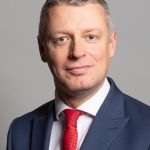
  • Luke Pollard – 2022 Question on the Safety of LGBTQ+ Football Fans at the Qatar World Cup

    Luke Pollard – 2022 Question on the Safety of LGBTQ+ Football Fans at the Qatar World Cup

    The question asked by Luke Pollard, the Labour MP for Plymouth Sutton and Devonport, in the House of Commons on 8 November 2022.

    What assessment his Department has made of the safety of LGBTQ+ football fans attending the World cup in Qatar.

    The Parliamentary Under-Secretary of State for Foreign, Commonwealth and Development Affairs (David Rutley)

    Ministers and senior officials have raised the concerns of LGBT+ visitors with Qatari authorities at all levels, and will continue to engage on this issue ahead of, and during, the World cup. Qatar has repeatedly committed that everybody is welcome to the tournament, and we will continue to encourage equal treatment and the respect of individual rights, and to identify what action the Qatari authorities are taking to match their commitment.

    Luke Pollard

    I declare an interest as a massive gay. As an England-supporting homosexual, it is not safe for someone like me to watch the World cup in Qatar. Because of the human rights abuses of migrant workers and of Qatar’s LGBT population, I personally do not think Qatar should ever have been awarded a major sporting competition. Will the Minister back the home nations captains in wearing a rainbow armband when they play at the World cup? Will he also apologise for the Foreign Secretary’s remark that LGBT fans should somehow show compromise, because it is never acceptable for a Government Minister to force LGBT people back into the closet?

    David Rutley

    I respect the hon. Gentleman’s comments. He and I have worked together on many issues in the past, and I understand his campaign on this issue. Our priority is, of course, the safety of all British nationals who travel to the World cup. The UK prioritises the issue of LGBT+ rights internationally, and we continue to engage with the Qatari authorities on this issue. Many sportsmen and women use their platforms to do important work across a range of issues, which is their personal choice. The UK Government stand by our values, and our team stands by the values of our home nations.

  • PRESS RELEASE : Skills Bootcamps will help plug skills gaps, but improvements are needed [October 2022]

    PRESS RELEASE : Skills Bootcamps will help plug skills gaps, but improvements are needed [October 2022]

    The press release issued by Ofsted on 9 November 2022.

    Ofsted has today published findings from a thematic survey of the quality of education provided in Skills Bootcamps.

    Ofsted’s survey found that, while learners value the opportunity to develop their skills and knowledge on Skills Bootcamps, there are a number of areas that need to improve.

    Skills Bootcamp courses run for up to 16 weeks and form part of the government’s commitment to helping adults learn the necessary knowledge and skills for new jobs in expanding sectors, such as digital, engineering, construction, manufacturing and green technologies.

    Ofsted’s report finds that, overall, leaders have developed a wide range of digital and technical Skills Bootcamps to help people move into sectors where there are skills shortages. In most cases, they are responsive to meeting employers’ skill needs.

    Most providers organised the curriculum appropriately and used learning resources and materials of a high quality. They included opportunities for learners to develop their personal and professional behaviours and gain a range of skills, in addition to learning the vocational content of the course.

    However, we found that the quality of teaching was not consistently high and assessment practice was often weak. Too many providers did not carry out rigorous initial assessments, meaning leaders and managers cannot fully or accurately measure learners’ progress.

    Among the other concerns identified, there were a minority of providers that were planning courses that do not allow learners enough time or opportunity to master skills or develop their understanding to a suitable level. Some leaders had not made sure that each learner was guaranteed a job interview. At a few providers, the overall purpose of the programmes was unclear.

    Today’s report was commissioned by the Department for Education (DfE) to help understand how well Skills Bootcamps are delivering a good-quality education. The report draws on findings from visits to 14 providers that were delivering the accelerated skills programme. The survey visits took place between January 2022 and March 2022.

    We have agreed with the DfE to inspect Skills Bootcamps as part of our regular inspection of further education and skills providers, from April 2023.

    His Majesty’s Chief Inspector, Amanda Spielman, said:

    These courses provide good opportunities for adults to learn new skills in sectors vital to our economy, but it is important that all courses are of high quality and that they lead to jobs.

    I welcome the DfE’s agreement for Ofsted to inspect Skills Bootcamps as part of our regular inspections. This will support the government’s approach to tackling skills shortages in England by ensuring that learners and employers benefit from well-planned and effective programmes.

  • PRESS RELEASE : COP27 Finance Day – Building resilience for countries hit by natural disasters [November 2022]

    PRESS RELEASE : COP27 Finance Day – Building resilience for countries hit by natural disasters [November 2022]

    The press release issued by HM Treasury on 9 November 2022.

    • UK Export Finance will be the world’s first export credit agency to pause debt service payments for low-income countries and small island developing states when they are hit by climate catastrophes, such as hurricanes and floods
    • The Minister will also welcome the next step towards companies demonstrating how they will align their business with net zero, as UK’s Transition Plan Taskforce’s Disclosure Framework is published

    Vulnerable countries hit by hurricanes and other climate catastrophes are set to be able to defer debt repayments, freeing up resources to fund disaster relief, as part of new UK-led initiatives unveiled at COP27 and in response to growing demands from developing countries for such innovations.

    And today, UK Export Finance has become the first export credit agency in the world to offer this in its own direct lending to low-income countries and small island developing states.

    In a speech in Egypt at COP27 Finance Day, Treasury Minister James Cartlidge announced publication of key design principles which will underpin Climate Resilient Debt Clauses (CRDCs) for use in private sector lending, and called for all creditors – including private banks, other bilateral lenders and the international financial institutions – to explore adopting these clauses.

    This follows work spearheaded by the UK in recent months in collaboration with private sector institutions. A ‘model term sheet’ for private lending including CRDCs has been developed and is published today on the International Capital Markets Association website.

    This is part of the UK’s wider commitment at COP26 to support developing countries adapt to the impacts of climate change and for the UK to be the world’s first net zero-aligned financial centre.

    The UK continues deliver on our key funding commitments, spending £11.6 billion on international climate finance. At COP27, the Prime Minister announced that the Government will commit to triple funding for climate adaptation as part of that budget, from £500 million in 2019 to £1.5 billion in 2025.

    This builds on the success of COP26 in Glasgow, which brought together nearly 200 countries and over 120 world leaders and saw nations adopt the Glasgow Climate Pact – the blueprint for accelerating climate action during this critical decade.

    Exchequer Secretary to the Treasury, James Cartlidge, said:

    Climate shocks are increasing in frequency and severity which is why we are supporting countries hit hardest. In the wake of a disaster, they face painful trade-offs between rebuilding their communities and making debt repayments.

    Today is a significant milestone in our work to find innovative solutions to these global challenges, and I am proud that UK Export Finance is the first export credit agency in the world to offer loans which suspend debt service payments for countries hit by climate catastrophes and natural disasters.

    Building on our COP26 legacy, we are committed to climate-resilient development, as the UK continues to play a leading role in reducing carbon emissions to net zero by 2050.

    Speaking at COP27 Finance Day, Tim Reid, UK Export Finance’s Director of Business Group will say:

    Some countries are now facing tough choices between protecting their citizens as they respond to climate shocks or paying down their debts. UKEF can play an important role in helping governments navigate these decisions. By suspending the debt service payments, UKEF will enable borrowing countries to focus on responding to and recovering from a crisis.

    We encourage other official creditors to consider including similar provisions in their own lending to countries most vulnerable to climate change.

    Avinash Persaud, Special Envoy to Barbados Prime Minister Mottley on Climate Finance, said:

    Adopting Natural Disaster and Pandemic clauses in debt instruments is the single most impactful way of making the international financial system fitter for the new world of shocks and for international development. And they don’t cost borrowers or creditors a penny. We have them in our bonds. They can free up fiscal space for borrowers just when they need it most without hurting creditors on a net present value basis. I cannot welcome and commend this initiative by the UK Government enough.

    On top of this, Multilateral Development Banks (MDBs) have agreed to collaborate through an informal working group to further explore CRDCs and other approaches, building on the Inter-American Development Bank’s leadership in this area. The UK is calling on all other lenders to explore adopting these flexibilities in loan contracts.

    Earlier in the day, the Treasury Minister also welcomed the next step towards companies demonstrating how they will align their business with net zero. The publication of the UK Transition Plan Taskforce’s Disclosure Framework and Implementation Guidance for consultation sets out how companies can show consumers, investors and the public what steps they are taking to align their business with net zero. These documents set out clear recommendations for how firms can prepare and disclose their plans in the short-medium term.

    The Government launched the Transition Plan Taskforce (TPT) in May to create the gold standard for transition plans. This comes after the Government committed at COP26 to move towards mandatory transition plan disclosures, with the FCA already introducing initial disclosure rules for transition plans from January.

    The Government has taken world-leading action to green the global financial system, with London having ranked first in the world for a third consecutive year as a leading hub globally for sustainable finance, according to the Global Green Finance Index 10.

    On top of this, the UK has raised over £20 billion from green gilts and NS&I’s Green Savings Bonds since September 2021 to finance projects in the UK and across the world to tackle climate change and other environmental challenges. Transactions in May and September contributed over £4 billion towards this.

  • PRESS RELEASE : Further 16 activists arrested as police tackle unacceptable motorway disruption [November 2022]

    PRESS RELEASE : Further 16 activists arrested as police tackle unacceptable motorway disruption [November 2022]

    The press release issued by the Met Police on 8 November 2022.

    Officers from the Met and neighbouring forces have arrested 16 activists as part of an ongoing proactive operation to tackle efforts to seriously disrupt the M25.

    At 08:00hrs on Tuesday, a man climbed onto the overhead gantry at junction 14 of the M25. This reckless action led to the road being closed, interrupting traffic and causing significant disruption around Heathrow.

    Officers responded quickly, arriving on the scene at 08:10hrs.

    By 08:30hrs, the man was removed and arrested. He was taken into custody at a south London police station. By 08:46hrs, the road was reopened and traffic was moving.

    A total of 16 activists were arrested on Tuesday as part of the joint operation with neighbouring forces including Essex Police, Surrey Police and Kent Police.

    Assistant Commissioner Matt Twist said: “The Met, in a joint operation with neighbouring police forces, has again responded swiftly and robustly to today’s attempts by Just Stop Oil activists to disrupt the M25.

    “We are all absolutely committed to providing a quick and effective response to those activists who continue to significantly disrupt people’s daily lives.

    “Operations like these come at a cost. Since the start of October we have used more than 11,000 officer shifts to police Just Stop Oil protests. These are officers who would otherwise be dealing with issues that matter to local communities such as knife crime, safeguarding and responding to burglaries.

    “We are determined to bring to justice all those who conspire to cause significant and unreasonable disruption to London and the motorway network and we’ll work closely with the Crown Prosecution Service and the courts to make sure this happens.”

    22 people have already been charged as part of this ongoing operation.

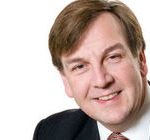
  • John Whittingdale – 2022 Question on Government Funding for the BBC World Service

    John Whittingdale – 2022 Question on Government Funding for the BBC World Service

    The question made by Sir John Whittingdale, the Conservative MP for Maldon, in the House of Commons on 8 November 2022.

    What funding his Department provides to the BBC World Service.

    The Parliamentary Under-Secretary of State for Foreign, Commonwealth and Development Affairs (David Rutley)

    The Foreign, Commonwealth and Development Office is providing the BBC World Service with a flat cash three-year settlement of £94.4 million annually. Since 2016, the FCDO has provided over £468 million to the World Service via the World2020 programme, funding 12 language services and enhancements to BBC Arabic, Russian and English.

    Sir John Whittingdale

    Does my hon. Friend agree that the BBC World Service plays an ever more important role in countering disinformation, particularly from Russia and elsewhere? Will he therefore look to increase the amount of support that his Department gives to the World Service, and does he share my concern that the BBC is proposing to reduce funding by £28 million with the loss of 10 radio services?

    David Rutley

    I recognise my right hon. Friend’s long-standing interest in this issue. The FCDO greatly values the World Service’s role in countering disinformation, particularly President Putin’s harmful narratives, and it has provided an additional £1.44 million this year to support this work on top of our annual £94 million funding. The changes reflect the BBC’s ambition to become a digital-first organisation and, as a result, audiences will still retain access to all 42 language services.

  • Elliot Colburn – 2022 Question on Human Rights in Sri Lanka

    Elliot Colburn – 2022 Question on Human Rights in Sri Lanka

    The question asked by Elliot Colburn, the Conservative MP for Carshalton and Wallington, in the House of Commons on 8 November 2022.