Tag: 2022

  • Rishi Sunak – 2017 Parliamentary Question on Reducing Protectionism

    Rishi Sunak – 2017 Parliamentary Question on Reducing Protectionism

    The parliamentary question asked by Rishi Sunak, the Conservative MP for Richmond, in the House of Commons on 6 July 2017.

    I thank my right hon. Friend for giving way and for his powerful and optimistic speech on free trade. On reducing protectionism, does he agree that leaving the customs union will give us the ability to reduce import tariffs on many goods that we do not produce here at home, which will reduce costs for ordinary working families and benefit many developing countries by helping them trade into prosperity?

    Dr Fox

    That is an important point. At this morning’s International Trade questions, we made the argument that being outside the common external tariff will give us freedoms to help many developing countries in a way that we are currently unable to. I hope that that will act as a spur to others taking similar measures, because we will encourage poorer countries to trade their way out of poverty and become less dependent on international aid programmes. I do not think that that is a party political issue, but the question is how best to achieve it in practice.

    On the progress that has been made, we have reduced poverty levels to their lowest in history. As the world’s emerging economies have liberalised trade practices, prosperity has spread across the globe, bringing industry, jobs and wealth where once there was only deprivation. According to the World Bank, the three decades between 1981 and 2011 witnessed the single greatest decrease in material deprivation in human history. It was a truly remarkable achievement.

    The Leader of the Opposition has accused the Prime Minister of following “free trade dogma”. He went on to say that this has often been pursued at the expense of the world’s most fragile economies. In fact, any economist worth their salt can see that free trade has been one of the most potent liberators of the world’s poor. Let us take India as a specific example. In 1993, about 45% of India’s population sat below the poverty line as defined by the World Bank. By 2011, it was 22%—too many, but a phenomenal achievement. It is no coincidence that, in the intervening period, India had embraced globalisation and started to liberalise its economy. It is hard to imagine an international aid programme—even one as generous as our own—that would or could have been so effective on its own.

    Sadly, it is also easy to find examples of where a lack of free trade has harmed the most vulnerable. If we want to see the contrasting results of open and closed economies, we should look across from China to the Korean peninsula, where so much attention is focused today. In 1945, both North and South Korea began from a very similar base, but while South Korea was more embracing of open trade and free markets, despite any shortcomings, Pyongyang turned inwards, with the tragic consequences for its citizens that we see to this day. [Interruption.] I am happy to give way to the hon. Member for Bishop Auckland (Helen Goodman) if she thinks that North and South Korea enjoy the same living standards today.

  • Rishi Sunak – 2017 Speech on Universal Credit Roll-Out

    Rishi Sunak – 2017 Speech on Universal Credit Roll-Out

    The speech made by Rishi Sunak, the Conservative MP for Richmond, in the House of Commons on 18 October 2017.

    I believe our welfare system should do three simple things. It must be compassionate to those who need our help, it must be effective in getting them the help they need, and it needs to be fair to those who pay for it. Simply put, universal credit is a rare example of a policy that delivers on all three counts.

    To start with compassion, rather than recipients having to make calls to up to three different agencies when something in their life changes, universal credit simplifies the system and ensures that nobody misses out on a benefit that they are entitled to because of a bureaucracy that is simply too complicated to navigate.

    Dr Philippa Whitford (Central Ayrshire) (SNP)

    Is the hon. Gentleman aware that people trying to claim universal credit have reported being on the phone for an hour trying to get their case dealt with? At 55p a minute, that cost is astronomical.

    Rishi Sunak

    I am sure that the hon. Lady was here and heard the Secretary of State make the point that the calls that have been made were all to local rate numbers. It is not right to say that they were premium rate numbers. As of today, those calls have been made free for all claimants, although they were offered the opportunity to be called back for free if the call charge was difficult. I am aware that the average wait time is two minutes, and of course a wait time of an hour is unacceptable. I am sure Ministers have heard that and will be doing everything they can to ensure that everyone across the country benefits from a prompt and cheap response.

    At the same time as simplifying the system, universal credit humanises our bureaucracy by recognising that those who need our help do not have exactly the same needs. Instead of a faceless homogeneity, for the first time personalised work coaches can compassionately take into account the specific needs of each individual and their specific circumstances, tailoring the approach to them and ensuring that they get the specific help that they need.

    Neil Coyle

    How simplified, fair and supportive does the hon. Gentleman think it is for the 116,000 working disabled parents who are set to lose £40 a week from the disability income guarantee?

    Rishi Sunak

    I cannot say that I recognise that figure, because £700 million more was made available in the last set of universal credit reforms, all of which was directed at the most vulnerable in our society.

    Neil Coyle

    Will the hon. Gentleman give way again?

    Rishi Sunak

    No, I will carry on, given the number of people who want to speak.

    Compassion alone is not enough. The effectiveness of our welfare system should be properly judged by the number of lives that it transforms, and that transformation comes from well-paid work. Universal credit ends the well-documented problem of single parents effectively working for free if they want to work for more than 16 hours. Universal credit ensures that all work truly pays, and it is working. Compared with the system that it replaces, claimants spend twice as much time actively looking for work and, for every 100 claimants who found employment under the old system, 113 will find employment under universal credit. In reality, the lives of more than 250,000 people will be transformed over the course of the roll-out through having a decent job and the opportunity to build a stake in our society.

    Finally, universal credit is fair to the people who pay for it. In Britain today, we spend around twice as much on working-age welfare as we do on education. To put it another way, for every £1 that the taxpayer sends to the NHS, they also send £1 to the working-age welfare bill. Given the sums involved, I make no apology for speaking up for those who ask me, “Is this money well spent?”

    Sarah Jones (Croydon Central) (Lab)

    The hon. Gentleman talks of the transformational impact of universal credit, so will he please comment on the transformation for my constituents? In Croydon, two thirds of families in local authority housing are now in rent arrears and face eviction, compared with less than a third before universal credit was introduced.

    Rishi Sunak

    I obviously cannot comment specifically on what is going on in Croydon, but the reasons for rent arrears are complicated. The evidence shows that the level of rent arrears after three months of universal credit is exactly the same, if not lower, than under the old system.

    Returning to the sums involved, universal credit ensures a responsible and sustainable system by putting in place a sensible regime of conditionality. That gives hard-working taxpayers the confidence that when they contribute to the system, not only will that help somebody to get back on their feet, but that the person will also have a responsibility to do their bit. That is fair.

    Universal credit is not perfect—no system so large and complex can be—and we should make improvements where we can, but it is significantly better than what it replaces, and the fundamentals of what it is trying to achieve are sound. It has been implemented slowly and methodically. It is insane to argue that it has been rushed when the full roll-out will have taken almost a decade from start to finish. This is welfare reform in action: making things simpler, ensuring work pays, and transforming lives. I urge the Government to carry on with their plan.

  • Rishi Sunak – 2017 Speech on Transport in the North

    Rishi Sunak – 2017 Speech on Transport in the North

    The speech made by Rishi Sunak, the Conservative MP for Richmond, in the House of Commons on 6 November 2017.

    My hon. Friend has done excellent work analysing these numbers, and I completely agree with his point that it is multigenerational. The point is that, from now on, that gap needs to start closing.

    Secondly, London has Crossrail, the midlands is getting HS2, and now we in the north need the Government to back Northern Powerhouse Rail. The Government’s £300 million down-payment is certainly welcome, but we will need a lot more to show the people of the north that the Government mean business.

    Thirdly, in my own area, the new Tees Valley Mayor has campaigned to upgrade Darlington station, to vastly improve its capacity and connectivity. It is an excellent proposal and the Government should get behind it.

    Fourthly, from Teesside to Merseyside, and from Tyneside to the Humber, one of the north’s many strengths are its great ports. As I set out last year, after we leave the EU we should create a new generation of US-style free ports to turbocharge manufacturing, trade and employment in our great northern port cities.

    Finally, we must make sure that the rural north is not left behind. Advances like autonomous vehicles will have their biggest impact in sparsely populated rural areas like mine—for example, by allowing elderly constituents to access distant health services more easily, or stimulating our local economies by allowing people to head to the pub without worrying about who will drive home.

    It might seem strange to hear all this from a boy born in Southampton, but I am deeply proud to now call the north my home. So as long as I have a voice in this House, I will speak up loudly and forcefully for my home’s bright future, and for an economy that, with the right investment, can be the powerhouse not just of Britain but of the world.

  • Rishi Sunak – 2017 Parliamentary Question on Transport Funding for the North

    Rishi Sunak – 2017 Parliamentary Question on Transport Funding for the North

    The speech made by Rishi Sunak, the Conservative MP for Richmond, in the House of Commons on 6 November 2017.

    Does my hon. Friend agree with the point made by the hon. Member for Bradford South (Judith Cummins) that the Treasury and the Department for Transport need to consider economic development and the rebalancing of the economy as criteria for the allocation of new money, so that it does not go only to the places that are already economically vibrant?

    Kevin Hollinrake

    I absolutely agree. I have looked at the figures in detail and, as my hon. Friend said in his speech, the distribution of central Government spending is much more level before other factors are added in. In London, the money allocated by central Government per person per year is about £40 per person, but if other investment is added in—from the European Investment Bank, local authorities and private finance—that is when the disparity occurs. We have to find mechanisms to make sure that the north gets a fair deal. It is not just about central Government distributing money unfairly; other factors are at work, which is why we need to work across party lines to make sure we can deliver a solution.

    As I said earlier, the way things are now is how they have been for decades—for generations—so we all need to work together. It is not just north versus south; it is principally London versus the rest of the country. We have a big constituency of MPs and businesses right across the country who have a stake in making sure that we get a fair deal, but we need to look behind the broad, headline figures, because it is simply not right that the Chancellor is allocating lots of money to London and not to the rest of the country. Other factors are at work that we need to take into account and find solutions for.

    Once we have found those solutions, there are so many projects that we need to support. It is absolutely right that we should look at northern powerhouse rail or HS3. As my hon. Friend the Member for Cleethorpes (Martin Vickers) said, we need to look at extending the M11 up to the Humber bridge. We need a tunnel across the Pennines. We also need to look at the small regional roads, such as the A59 and the A1079 in my constituency, and particularly the A64, on which a journey of around 40 miles from York to Scarborough can take two hours. We need more funding for the smaller, less high-profile projects that are so critical to our local economies. If we can get the money—if the people holding the purse strings will give us the tools—we can do the job.

  • Richard Drax – 2022 Speech on Levelling Up Rural Britain

    Richard Drax – 2022 Speech on Levelling Up Rural Britain

    The speech made by Richard Drax, the Conservative MP for South Dorset, in 9 November 2022.

    It is a genuine pleasure to follow my hon. Friend the Member for Penistone and Stocksbridge (Miriam Cates) and to listen to her excellent speech—all the speeches have been excellent, I must say—and I thank my hon. Friend the Member for North Devon (Selaine Saxby) for securing this debate.

    I see that two of my colleagues from Dorset are here and longing to speak, so no doubt they will have a similar message to give the Minister. It is nice to see him in his place; I will target my seven minutes at him specifically and the Treasury even more so regarding the levelling-up bid that we have done once and we are now hoping to do again.

    I would like to conjure up the picture of a cake—a chocolate cake, because that is my favourite. At school, when we had birthdays, a cake used to arrive and the teacher used to cut up the cake into the appropriate slices. My eye always fell on the slice that was slightly bigger because the teacher got it slightly wrong when he or she tried to divide the cake. We always hoped that we would get that slightly bigger slice, but of course we got the smaller one.

    The point I am trying to make is that cutting up the cake is incredibly difficult, and the Government face all kinds of financial problems right now, but on behalf of South Dorset I ask for at least a slice of the cake. I do not want all of it, I do not want half of it but, for my constituents, can we please at last have a fair share of the cake? We have lost out again and again.

    While it is true that Dorset as a whole is relatively prosperous, that perception masks significant pockets of deprivation. Weymouth, its largest urban area, hosts some of the most deprived neighbourhoods in the county. My South Dorset parliamentary constituency, the vast majority of whose constituents are residents of Weymouth and Portland, is ranked as having the lowest level of social mobility in the country. Huge efforts are going in to try and improve that. We are trying to attract more businesses to raise the incomes, salaries, expectations, aspirations and education. We have heard about buses, broadband and all the other things with which I entirely agree. I am asking the Minister for just a little bit of money, so that the private sector can invest on the back of the investment by the Government. We know that the Government cannot give us all the money we want—that would just be impossible, and the country would be even worse off than it is now. What we want is enough money to try to attract the private sector into places such as Weymouth, Portland and Swanage, and other rural constituencies, so that the private sector can do all the hard work. However, it cannot do it unless the Government create the infrastructure so that the private sector is attracted.

    I will give the House an example. In Weymouth, we have the most attractive harbour, a peninsula and a marina. The walls of those facilities have not been touched for 50 or 60 years and they are in poor repair. The Environment Agency will not allow us to regenerate around those areas until the walls have been repaired, which will cost millions of pounds. A large part of our bid for the second round of the levelling-up fund will go towards repairing those walls. Once they have been repaired, we can regenerate. Once we regenerate, the private sector will come in and do all of this, and then we will get the jobs and the investment that we desperately need.

    I am not asking the Government on behalf of my constituents for multi-millions of pounds, nice though that would be; I am asking for targeted money at Weymouth—a seaside resort that like so many seaside resorts is struggling to cope. It is struggling because so many people now go abroad for holidays. Flying abroad is so cheap and fewer people are going to resorts such as ours, beautiful though they are. We have lost the naval base, the Royal Naval air station, the ferry terminal and local government offices, so we need to replace those with other investments from private business.

    I thank the Government for the Dorset enterprise zone, which is in Winfrith, not far from Wool. That has been a huge success. With the help of Government funding, we have now attracted some very big companies, including Atlas Elektronik, which is a huge company that deals with submarine warfare. The new BattleLab, which the Army has put in there, is generating huge amounts of business. Local small businesses work together with the Ministry of Defence to come up with solutions to problems, and it is proving a huge success.

    We are asking for some targeted money, please, from the Government so that private enterprise will come and invest in South Dorset. My final point, in addition to the Government money, is to please not forget us. I think we have heard that from every speaker in the debate so far. Rural constituencies are so easy to forget because such a small number of people, in effect, live in them compared with all the urban and major metropolitan areas in this country. The Government tend to forget that the rural constituencies and rural areas are just as important and significant.

    Rurality, as I am sure we will hear from my two Dorset colleagues, is not taken into account. Buses, if they exist, take longer. People are trapped in their homes. I think we heard from one Member about someone imprisoned in their home, because the bus came only once a week. That is not uncommon in Dorset or South Dorset. More connectivity and, as we heard from another Member, more joined-up thinking for rural communities are exactly what are needed.

    I conclude on this point. I am aiming my comments in the main at the bid for the second round of the levelling-up fund. We were category 3, and we have now gone to category 2. I urge that, in the Government’s mind, we need to be category 1. For all the reasons I have explained, we would be most grateful if when round 2 is announced we are definitely in it.

  • Miriam Cates – 2022 Speech on Levelling Up Rural Britain

    Miriam Cates – 2022 Speech on Levelling Up Rural Britain

    The speech made by Miriam Cates, the Conservative MP for Penistone and Stocksbridge, in the House of Commons on 9 November 2022.

    On the Conservative Benches at least, there has been some competition over who has the biggest constituency. I cannot compete on size, but I believe that I have the most beautiful constituency. From the rugged splendour of the Midhope Moors, to the picturesque village of Cawthorne, the classical setting of Wentworth castle and the stunning landscapes of the Derwent valley, my Penistone and Stocksbridge constituency is a wonderful place in which to live.

    Rural life has many advantages. It retains a sense of community that is often absent in big cities, and a connection with the physical realm—the seasons, the nature, the weather—that remind us of important realities and natural limits that can sometimes be forgotten in an increasingly virtual world. However, for many people, rural life is not an idyllic existence. My constituents share many of the challenges of urban areas, such as the rising cost of living and access to affordable family housing, but we also face some unique disadvantages that highlight the pressing need to include rural Britain in the levelling-up agenda. To state the obvious, and as other Members have said, the lower population density of rural places means that service models that work in urban areas are much less viable in our communities. My right hon. Friend the Member for Ludlow (Philip Dunne) and the hon. Member for Westmorland and Lonsdale (Tim Farron) put this eloquently. The metrics that are used to describe the viability of urban services just do not work in rural areas; they have to have special cases.

    I want to speak particularly about bus services, which over recent months have declined significantly in my constituency. Residents of Stocksbridge, Grenoside, Chapeltown, High Green, Ecclesfield, Wharncliffe Side, Oughtibridge and other villages have seen services reduced or even disappearing altogether, cutting people off from jobs, education, training, healthcare and leisure.

    The impact on everyday life cannot be overstated. The old are left stranded at bus stops, the young arrive late for school and workers are forced to pay for taxis to get to work. Local employers offering good jobs have told me of their difficulty in recruiting because their premises are no longer served by bus. The vision of levelling up is to spread opportunity evenly around the country, but it really does not matter how much opportunity there is if people cannot get to it.

    What has gone wrong in South Yorkshire, particularly rural South Yorkshire, and how can we fix it? Services were struggling even before covid, but the post-pandemic environment has been a perfect storm for rural bus services in South Yorkshire. From my meetings with Stagecoach and First Bus, it is clear that patronage has fallen sharply at the same time as fuel costs have increased.

    I was pleased to be successful over the summer in persuading the Government to release a third round of the covid bus recovery grant. But, crucially, the South Yorkshire Mayoral Combined Authority’s bus service improvement plan bid failed completely, which resulted in our region’s receiving not a single penny while neighbouring authorities in Manchester, Derbyshire and Nottinghamshire received tens of millions of pounds.

    I am grateful to the Bus Minister, my hon. Friend the Member for North West Durham (Mr Holden), for meeting me this morning to discuss the issue, but I urge the Minister responding to this debate, my hon. Friend the Member for North East Derbyshire (Lee Rowley), to press this matter with his Government colleagues. My constituents pay the same taxes as everybody else. It is not their fault that our combined authority’s bid did not meet an acceptable standard.

    Things may look bleak, but I believe there are some glimmers of hope. We have had local successes with the new No. 25 and No. 26 routes around Penistone and a new service connecting Northern College with Barnsley. Those services have reconnected isolated villages and are based on an innovative small bus model pioneered by the excellent South Pennine Community Transport.

    In Stocksbridge and Deepcar, we have plans to use our towns fund to commission new buses to help residents to travel around our towns—for anyone who has not been there, Stocksbridge is incredibly steep and people absolutely need a bus to get back up the hill. We are also progressing with plans to restore a passenger rail service along the Upper Don valley and we have a levelling-up fund bid to improve the Penistone line.

    However, we need to accept that a one-size-fits-all approach to public transport just does not work. Rural services will never be as profitable as urban routes, but, if they are designed sensibly around what communities actually want, if they are regular and reliable with easy-to-understand timetables, they can be self-sustaining, as we have seen with our new routes. Ultimately, levelling up rural transport requires a localism agenda, putting commissioning in the hands of local people—our town, parish and local councils—and with a funding model that recognises the unique challenges of rural life.

  • David Mundell – 2022 Speech on Levelling Up Rural Britain

    David Mundell – 2022 Speech on Levelling Up Rural Britain

    The speech made by David Mundell, the Conservative MP for Dumfriesshire, Clydesdale and Tweeddale, in the House of Commons on 9 November 2022.

    As the Member with the largest rural constituency outside the highlands—it is larger than any in England or Wales—I am pleased to be called to speak. I will not take up the eight minutes by reading out the more than 100 communities that make up that large and diverse constituency, but I am grateful to my hon. Friend the Member for North Devon (Selaine Saxby) for bringing to the Floor of the House a debate on rural issues across Britain. In my experience, this House debates rural issues too rarely and has become far too metropolitan and urban-focused, which is a facet of our society generally. Sadly, I find things little different in our Scottish Parliament.

    It is important that Members across Britain can debate these issues. The ones my right hon. Friend the Member for Ludlow (Philip Dunne) raised are equally applicable in Leadhills in my constituency. My hon. Friend the Member for Harwich and North Essex (Sir Bernard Jenkin) set out the right prognosis: we need to have a strategic approach if we are to maintain rural communities and a rural way of life. The one thing I did not think either really touched on—although they did in relation to funding—is that the most important Department we could have had represented here today is the Treasury. My experience is that the Treasury is the greatest impediment to investment in the rural parts of the UK. That flows into the welcome levelling-up initiatives that are being taken by the Department for Levelling Up, Housing and Communities, and I will touch on those in my constituency.

    I have raised this before, but many smaller rural local authorities are ill placed to put forward complex bids. The Treasury came forward with an initiative to put certain moneys into certain local authorities to allow them to take that forward, but their capacity is limited, as is their experience of doing so and their direct contact with Whitehall. If we are to go through these processes, it is important that rural and small local authorities are supported.

    It is difficult to spend £20 million on a single project in a rural area, when we come to do the analysis. On levelling up and other proposals, there has been a lack of flexibility. Ultimately, I was able to negotiate, partly because my constituency, unusually, covers three county areas, for the project that was put forward to be in three separate parts, but there was a lot of resistance to that type of project.

    Even when projects go forward, the usual suspects tend to be favoured. Although I welcome the community renewal funding that came to the south of Scotland, the organisations that ultimately received that funding had the capacity to make professional bids for it. I say to the Minister that they would not have been the choice of my constituents for that funding. If we are going to say that we have community renewal funding, we have to listen more to communities and what they want to do. Ultimately, that needs a loosening of the Green Book rules. Various announcements have been made at various times that the Green Book rules from the Treasury were to be loosened. They need to be if we are successfully to invest in rural areas.

    I was struck by what the hon. Member for Westmorland and Lonsdale (Tim Farron) had to say, because his constituency in Cumbria is similar to mine in the south of Scotland, which is why I very much welcome the Borderlands initiative, which has brought the south of Scotland, Cumbria and Northumberland together to try to create capacity to take forward important rural projects. For example, Carlisle, although in the north of England, is very economically important to my constituency, so the initiative is important.

    I recognise many of the problems that have been mentioned. Although I am sure that we will hear from the hon. Member for Perth and North Perthshire (Pete Wishart) that there is some sort of Utopia in Scotland, I can confirm that a resident in Dumfries and Galloway has no access to an NHS dentist. Indeed, 10 days ago, NHS Dumfries and Galloway was so overwhelmed by patients that it could not manage the situation. Many of the issues are very much the same in Scotland and need the same innovative approaches that my hon. Friend the Member for Harwich and North Essex spoke about. If we want to sustain rural communities, we have to think innovatively about how to do that.

    Madam Deputy Speaker, you would expect me to mention the three projects in my constituency that are going forward as part of the Dumfriesshire, Clydesdale and Tweeddale levelling-up bid. They include the rejuvenation of Annan Harbour. I congratulate the Annan Harbour action group on its innovative work over a long period. It will see the rejuvenation of the Ministers’ Merse and the creation of a bunk house and café. It will revitalise that part of Annan. There is the rejuvenation of the Chambers Institute, the equivalent of the town hall, in the heart of Peebles, and the Clydesdale walkway, which will look to bring together various existing walking and cycling trails in the south of Scotland to create the possibility for people to walk from Stranraer to Eyemouth, which I am sure appeals, Madam Deputy Speaker, and to take advantage of the rural tourism opportunities in the area. I also commend the Dumfries and Galloway transport bid, which is to bring electric buses to the area for those who perhaps find the walking a little too much.

    In summary, the important point is that, across Britain, we need to take a new and more urgent approach to tackling rural issues. It is not just about single, one-off bids and funding. They are welcome, but if we are to sustain rural communities the length and breadth of the United Kingdom, we need a different approach, and the Treasury and changing its attitudes is central to that.

  • Bernard Jenkin – 2022 Speech on Levelling Up Rural Britain

    Bernard Jenkin – 2022 Speech on Levelling Up Rural Britain

    The speech made by Sir Bernard Jenkin, the Conservative MP for Harwich and North Essex, in the House of Commons on 9 November 2022.

    As a Member of Parliament for a very rural constituency, albeit one in the home counties, I see all too clearly how our system of government tends to focus on the problems and needs of urban society in the UK and tends to neglect rural communities, which are so important to sustaining those urban environments. I therefore welcome the debate, and congratulate my hon. Friend the Member for North Devon (Selaine Saxby) on securing it.

    Rather than issuing a shopping list on behalf of my constituents, I am going to say something a bit more general about how we design, or do not design, rural policy in this country that will affect levelling up. We have had too many changes of DEFRA Ministers. I mean no offence to the new incumbent who will reply to this debate, but those Ministers have had differing priorities, and have experienced difficulty in holding other Departments to account for the effects of their decisions on rural areas. Local stakeholders are left feeling disengaged, and there is confusion among those who look after our rural areas, who tend to be the people who work there. Levelling up will not succeed unless this changes.

    The House might be aware that I have long taken an interest in the need for Whitehall to develop a greater capability for strategic thinking in order to address the huge challenges that we face as a country, in domestic and environmental policy as well as foreign and security policy. I was Chair of the Public Administration Committee and then the Public Administration and Constitutional Affairs Committee, and we did three inquiries on this topic over a period of nine years. I continue to take in interest in the subject with an informal group that held a conference at Ditchley Park recently, attended by the Cabinet Secretary.

    Rural policy is crying out for a long-term strategic approach that will be sustained on a cross-party basis and so remain stable. It is slightly unfortunate—well, it is nice for us that there are not many Labour MPs cluttering up this debate, but it is unfortunate that there is not more engagement from them—[Interruption.] There is one Front-Bench spokesman, and I hope he will rise to the—

    Sir Oliver Heald

    There’s a Whip there, look!

    Sir Bernard Jenkin

    I think this counts as an intervention, Madam Deputy Speaker. It should be added to my time. I hope that the hon. Member for Nottingham North (Alex Norris) will rise to the occasion.

    The Ukraine war has exposed how vulnerable the global food supply system is to disruption. We cannot rely on our ability to buy food cheaply on the global market. Given today’s labour shortage in agriculture and the impact of natural problems such as avian flu, we must expect more serious shortages and even more acute price rises this winter. Food security is fundamental, but it is frequently neglected and should now be addressed by the Government. In passing, I would add that the Rural Services Network recently reported that the cost of living crisis is worst in rural areas. Food and energy price increases are already putting rural food banks under huge strain. Brightlingsea food bank in my constituency is extremely well led and co-ordinated by Win Pomroy and offers incredible support to the most vulnerable people, but let us be clear that this is a fire engine dealing with a crisis on behalf of our constituents. I am sure that every Member will want to support their local food banks.

    The main point, however, is that the changing nature of life in rural communities is outpacing the ability of our relevant institutions and policy processes to adapt and stay fit for purpose. Rural areas need a responsive, adaptable policy making and strategy process to handle the complexity caused by a combination of the increasingly rapid and profound changes in the wider world and the competing demands that we place on our countryside. These include the need to optimise food production, improve food security, reduce emissions of greenhouse gases, increase carbon sequestration, adapt to cope with climate change threats such as drought and flooding, enhance the wellbeing of the whole UK population by improving leisure and supporting access to the countryside, and improve conditions for wildlife and biodiversity, leaving a better natural environment and landscape for future generations.

    In coastal constituencies such as mine and that of my hon. Friend the Member for North Devon, who opened the debate, there is also a need to rewild our coastal waters, revive fish stocks and restore saltings and seagrass and kelp forests to revive their massive capacity for carbon sequestration. I recommend a book by my constituent Charles Clover of the Blue Marine Foundation entitled “Rewilding the Sea”, which was launched in the House of Commons yesterday. It is incredibly ambitious, but it is important for the whole country to reconcile these often competing demands. It is not only essential but well within our grasp to achieve it. Governments must, however, take the trouble to work with rural communities across the UK rather than prescribing for them, which is how most rural inhabitants see their situation today. Rural communities, in their turn, need better processes to make their voices heard in Whitehall, and to ensure that Whitehall draws on their unique local knowledge and expertise in formulating and delivering policy.

    DEFRA’s forthcoming environmental land management scheme—ELMS—replaces payments from the EU common agricultural policy, and it is due to be fully implemented in 2024. Its success is crucial to the effective functioning of rural policy and levelling up. I am afraid that the handouts from the Government for levelling up are a sticking plaster. What we need is a compressive approach to the rural economy. During its current trial phase, ELMS has been taken up by only a tiny percentage of farmers because what it offers is not very attractive to farmers. DEFRA needs to work closely with individual farm businesses to ensure that ELMS becomes fit for purpose.

    Sir Robert Goodwill (Scarborough and Whitby) (Con)

    That is precisely why the Environment, Food and Rural Affairs Committee is starting a report on the implementation of ELMS and how it could be delivered more effectively.

    Sir Bernard Jenkin

    I am delighted, and I will recommend that a friend of mine submits evidence to the Committee. I will refer to his work later.

    The Government need to empower and support farmers to undertake a wide range of practical routine tasks that are currently the responsibility of national agencies but that those agencies are unable to deliver because they do not have local expertise and knowledge. For example, the Environment Agency used to clear watercourses annually on lowland floodplains, but it has now abandoned the practice, resulting in disastrous flooding on what is often the most productive agricultural land in the UK. Farmers could be paid to do the work, subject to effective regulation.

    Local groups should also be encouraged to take charge and work in collaboration with each other, and with the appropriate central and regional authorities. For example, the encouragement of wildlife is frequently focused on transforming, flooding or wilding separate individual locations. It would be far more effective to recruit farmers and landowners across an area to collaborate on creating wildlife oases linked by wooded, hedged or specially planted corridors, for which they could be appropriately reimbursed.

    Now is the time to improve the policy delivery process by harnessing local knowledge and ability in conjunction with scientific expertise, bringing them together with the responsible Government bodies. The top of the civil service should work on enhancing cross-departmental governance processes in Whitehall, including by repairing Whitehall’s broken policy and strategy-making mechanisms. I can vouch that permanent secretaries are keen on this.

    From the bottom up, we need to encourage pilot projects that, if successful, can be scaled up and applied nationwide, appropriately amended to local conditions. One such pilot is being developed in south Cumbria, in the constituency of the hon. Member for Westmorland and Lonsdale (Tim Farron), by local farmer and businessman John Geldard, whom the hon. Gentleman is giving appropriate support. Mr Geldard is best known for championing the sale of high-quality local produce in supermarkets. Spurred on by the damage done by Storm Desmond, by the pandemic and by the current inflationary economic threat, Mr Geldard has built a multiskilled team that is now addressing a range of challenges with increasing success. As part of this project, for example, he has a senior policeman improving local policing.

    Tim Farron

    I thank the hon. Gentleman for raising this point. The area Mr Geldard farms in the Lyth valley is often subject to flooding, which is a reminder that sometimes we need to invest in infrastructure to allow good-quality agricultural land to operate as good-quality agricultural land, otherwise we will not be able to feed ourselves as a country or to do the good work that is needed on biodiversity, of which Mr Geldard is such a good example.

    Sir Bernard Jenkin

    I am most grateful to the hon. Gentleman.

    The policing initiative is being led by a retired local police officer, and it is transforming the countryside’s ability to police itself and to deal with rural crime more effectively. I have been trialling such initiatives in my constituency, too.

    We are not scrapping all the regulations. Of course, there has to be regulation. Some of the rhetoric has been overtaken by politics. Our population may be overwhelmingly urban, but England and the whole UK sees its countryside as its shire, embodying an ideal of harmony between humankind and nature. This national feeling is a force to be reckoned with, and Governments who trifle with it do so at their peril.

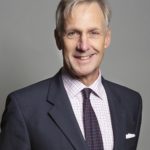
  • Philip Dunne – 2022 Speech on Levelling Up Rural Britain

    Philip Dunne – 2022 Speech on Levelling Up Rural Britain

    The speech made by Philip Dunne, the Conservative MP for Ludlow, in the House of Commons on 9 November 2022.

    It is a great pleasure to follow my hon. Friend the Member for Witney (Robert Courts). He has been such a powerful campaigner for improvements to the quality of water in our rivers and in his West Oxfordshire constituency, so it is great to hear him speak about the subject. My constituency neighbour, the hon. Member for North Shropshire (Helen Morgan), also made a powerful speech.

    I congratulate my hon. Friend the Member for North Devon (Selaine Saxby), who is a member of the all-party parliamentary group on rural services, which I chair, on securing the debate. It will not surprise the House that I will focus my brief remarks on the role that the Government have to play in improving the allocation of funding to rural areas.

    The metrics for measuring rural deprivation in the funding formula are regrettably flawed, as the Prime Minister recognised when he toured the country this summer. He was roundly criticised for pointing out that even in seemingly more affluent areas of the countryside, there is real rural deprivation. Our political opponents tried to make fun of him for being out of touch, but he represents one of the largest rural constituencies in England and what he said revealed that he is completely in touch with what is going on in real rural Britain. At present, the indices used to measure multiple deprivation do not adequately take his point into account. The Rural Services Network, which supports the all-party group I chair, has provided a useful briefing on this debate for colleagues. It has found that rural areas receive 37%—£105—less per head in Government funding than their urban counterparts.

    Rural communities not only receive poorer services, as my hon. Friend the Member for North Devon pointed out, but suffer as a result of lower wages—£2,500 less per head, on average—and face significantly higher costs. Rural residents pay 21%, or some £104, more per head in council tax bills than their urban counterparts because the Government grant is distributed in favour of urban areas. Weekly transport costs are about £40 higher; rural families spend 4% more of their disposable income on transport each week. In many larger rural areas, and particularly in Shropshire, public transport is very thin on the ground, so people have to rely on cars. The way energy prices have been going, the £40 figure, which predates the energy crisis, will be an underestimate.

    Nowhere are these issues more apparent than in my constituency. Ludlow is geographically the sixth largest constituency in England; following the proposals announced yesterday by the Boundary Commission, it will become the fifth largest by gaining 100 square miles from my hon. Friend the Member for Shrewsbury and Atcham (Daniel Kawczynski), whom I am pleased to see supporting the debate. Rural areas have their own inherent beauty, and the lack of people—the sparsity of population—is one of the reasons why they are pleasant places to live and why people choose to live there. However, population density is a fundamental problem because the allocation of funding from central Government is based on people. With just 56 people per square kilometre, Ludlow has one of the lowest population densities of any constituency in England.

    Daniel Kawczynski

    The size of Shropshire’s elderly population is disproportionate, and our social care costs are going through the roof. Our council spends 83p in each pound of its budget on adult social care costs. Does my right hon. Friend agree that as well as levelling up, the Government need to do more to support our councils in this regard?

    Philip Dunne

    The pressures of social care costs in areas whose demographics make them particularly acute are reaching crisis level. We notice that in Shrewsbury in particular, and the same point was made by the hon. Member for North Shropshire.

    As others have pointed out, we also suffer from poor broadband provision speeds. Although broadband accessibility may be there as a result of the Government’s gigabit programme, the speeds in rural areas are about a third slower than those in urban areas. We also have problems with access to public transport, as I have already mentioned. Fewer than 50% of rural residents have access to a further education site within 30 minutes of their homes via public transport. Access to both employment and education is a challenge. Rural residents are now more reliant on off-grid energy generation; many face huge rises in the cost of domestic heating oil this winter as about a third of Shropshire households are not connected to the gas grid.

    It is therefore critical that the Government continue to connect rural homes to superfast broadband, support rural transport provision, and, as a matter of urgency, clarify the way in which those in off-grid homes—including residents of park homes and others who do not pay their own electricity bills—can gain access to help with their energy bills.

    I strongly encourage the Minister to look again at the funding formula. Although Shropshire is an objectively affluent county, two of its lower-layer super output areas fall within the 10% most deprived in the country, including one in Ludlow. However, they are unlikely to be highlighted by any of the national indices of deprivation that the Minister’s officials will draw to his attention.

    The Rural Services Network is offering some suggestions to encourage closer alignment of funding formulas with the reality of rural living, and to ensure that they reflect the increased cost of delivery in rural areas. I should be happy to discuss these issues with the Minister, through the all-party parliamentary group. In addition to the metrics already included in the White Paper, metrics such as the proportion of those in fuel poverty, the frequency of public transport services, the percentage of premises with superfast broadband and the distance to further education providers would all supply a more accurate snapshot of inequality in rural areas.

    Finally, let me add to the comments of my neighbour, my hon. Friend the Member for Shrewsbury and Atcham, and encourage the Minister to look favourably on the levelling-up bids from Shropshire Council, including the Craven Arms “gateway to growth” bid, which I have been pleased to support. The bid would deliver a major transport infrastructure project in the heart of south Shropshire, and would unlock undeveloped employment land. This would provide up to 50,000 square metres of space for jobs, and a further 500 residential dwellings in a future phase. Unlocking new jobs, and opportunities for training and skills, ticks many of the boxes in the Minister’s criteria. I urge him to consider accepting some of the bids in rural areas, so that those areas are not left behind in the levelling-up round that falls under his careful stewardship.

  • Robert Courts – 2022 Speech on Levelling Up Rural Britain

    Robert Courts – 2022 Speech on Levelling Up Rural Britain

    The speech made by Robert Courts, the Conservative MP for Witney, in the House of Commons on 9 November 2022.

    I congratulate my hon. Friend the Member for North Devon (Selaine Saxby) on securing the debate.

    Whether we come from the north of England, the Lakes, Shropshire, Devon or Oxfordshire, many of the issues being discussed are common to all of us. Rural areas may not get the focus from Governments that they feel they ought to have because only 17% of the population of England live in rural areas. Alternatively, it may be because of the phenomenon many of us have alluded to: rural areas are the places where we go on holiday; they look beautiful and the countryside is fantastic. My part of the world—I am sure that my hon. Friend the Member for Wantage (David Johnston) will agree with many of the things I say about Oxfordshire—might have fantastic countryside and Cotswold stone houses, but that can mask some real challenges. The house might be beautiful, but the person who lives in it might be suffering from rural isolation; they might be suffering because they heat their home with heating oil, the price of which has gone up. It is important that we start to look at the particular challenges that areas face.

    I will make only one point that I would like the Minister to address in his response. We could debate many things—housing, connectivity, health services, education—but I want to concentrate on levelling up. We all agree that levelling up must mean not just the north and the south, but rural areas as well as urban areas. It must mean, essentially, that wherever someone live or comes from, they can have their fair crack of the whip and make the most of their opportunities, and that their area has a chance to grow. I will focus on the incredible economic opportunities in some rural areas.

    According to the House of Commons Library, first, productivity tends to be lower in rural areas—we need to consider in detail why—and secondly, some of the differences in productivity are ones where there should not necessarily be any difference between a rural and an urban area. The Library states that

    “for example, financial and insurance activities make up 6% of output in predominantly urban areas outside London, but just 2% of output in predominantly rural areas. Information and communication businesses show a similar difference (7% in urban areas, 3% in rural areas).”

    There is an incredible untapped resource, which the Government need to look into. We need to ensure that the people living in those areas who show incredible innovation—those who have come up with an idea, become an entrepreneur, taken a chance and grown a business—can make absolutely everything of it. That is what we should look at. All of us will say that funding must be given fairly to rural areas, much as it is to urban areas, but I want to start looking at what we can do to ensure that we unlock those businesses.

    One or two things would be transformative in unlocking those economic opportunities. The first is rural transport. In West Oxfordshire, someone in one of the areas a bit further away from Witney—perhaps in the Wychwoods or out past Burford—might rely on a car to go to a doctor’s appointment, for example. But as my hon. Friend the Member for Redditch (Rachel Maclean) said, it is possible to have demand-responsive rural transport, and we should see more of that. Let us start acting in a smarter way so that people can help the environment and travel more cost-effectively, but not by having one policy that appertains to an urban area and another that appertains to a rural area. Let us make sure that people in these incredible, beautiful villages, which are home to some of the most innovative, imaginative, daring, bold and creative people in the world, can get to our market towns and into our cities.

    Secondly, communication of the non-physical kind is also key. Thankfully, due to some of the policies that the Government have rolled out over the past few years, West Oxfordshire is much better connected by broadband than it was when I was first elected, so there has been huge progress. However, we must have real connectivity for mobile phones—those small devices that all of us carry in our pockets, and which are utterly essential to the way we live our lives—to ensure that wherever people are, they can make contact with the people they are working with, can connect with others and can grow their areas.

    There are challenges in rural areas, and areas where we need to make sure that people are not left behind. Wherever someone lives—in a relatively remote Oxfordshire village or further afield in a much more remote part of the United Kingdom—they should be able to get all the benefits of living in the UK. More than that, there is enormous untapped economic potential in these villages that can be unlocked, if we are strategic and smart about the policies that we as central Government have. It seems to me that connectivity of both the digital and physical kinds is key to making sure that our rural areas—

    Sir Oliver Heald (North East Hertfordshire) (Con)

    Will the hon. Gentleman give way?

    Robert Courts

    I was on my last couple of words before finishing, but I would be delighted to give way.

    Sir Oliver Heald

    Does my hon. Friend agree that light rail also has a part to play in many rural areas? In Hertfordshire, we are looking at putting in a light railway between Welwyn Garden City and Harlow, and I am arguing that, in north Hertfordshire, we should eventually have a link between Buntingford and Stevenage. Those are not as expensive in a rural context as they would be in a city.

    Robert Courts

    My right hon. and learned Friend makes a very good point. Rail of all kinds can have real importance in connecting rural areas. It depends; the point of being smart about what we do is that each area is different, so what may be right for his area may not be right for mine or another Member’s.

    In my area, I am keen to see a further redoubling of the Cotswold line, which hon. Members have heard me speak about before. If we ensure that Hanborough, my local station, has faster and more frequent services to Oxford and London, we could use it as a hub for West Oxfordshire’s transport, with regular bus services in the area and cycle paths to the station. What will work in the area is faster transport to Oxford, the nearest major city, and then through to London. My right hon. and learned Friend is absolutely right. Flexibility and smart policy will ensure that our rural areas have all the many economic and social benefits of being part of modern Britain.