
Tag: 2022

  • Siobhan Baillie – 2022 Speech on Early Years Childcare and Staff-Child Ratios

    Siobhan Baillie – 2022 Speech on Early Years Childcare and Staff-Child Ratios

    The speech made by Siobhan Baillie, the Conservative MP for Stroud, in Westminster Hall, the House of Commons on 14 November 2022.

    It is a pleasure to serve under your chairmanship, Ms Harris. I congratulate the hon. Member for Newcastle upon Tyne North (Catherine McKinnell) on her great speech about a fantastic petition. My notes say, “Don’t cry,” but I might. Lewis, I watched your BBC interview; I know your aim is to enshrine Oliver’s memory, and his name will be recorded in Hansard repeatedly today. The fact that you are able to find strength from your grief to try to help others is incredibly inspiring.

    I have been campaigning on childcare for as long as I have been an MP. I have now bothered three Prime Ministers and four Chancellors, one of whom is now the Prime Minister, and I know they all care deeply about this issue. I want to see action and I do not think it is right to criticise the Government for looking into the issue of childcare ratios, which I will come to in a moment. We are right to reform the childcare system. We are spending £5 billion to £6 billion of taxpayers’ money on various different schemes that work for some families but are perceived to be failing for many others.

    I am doing some work on the childcare element of universal credit. That needs reform because parents say that they cannot go to work or that it is not worth them going to work. Brilliant mums and dads are really feeling the pinch on the cost of childcare. Parents in the UK currently spend 26% of their entire household budget on childcare, and the proportion is 20% for single parents. The OECD average is 10%, but the UK figure is 26%, whereas in the USA it is 14% and in Canada it is 12%. As I said to my right hon. Friend the Prime Minister at Prime Minister’s questions last week, we have to make the system work and ensure that providers do not go belly up. There are some fantastic childcare providers in Stroud who are incredibly worried at the moment, so it is great to have this debate.

    If we are going to change childcare ratios, I want to hear from the Government about the impact on safety. We may not be able to hear about that in full today, not least because it is the debut response to a debate by the Minister, my hon. Friend the Member for East Surrey (Claire Coutinho), but what is the safety impact? Show us the evidence. I know she is looking carefully at all the evidence and safety impacts, but will she tell us whether a change to the childcare ratio will reduce fees for parents? Will it increase salaries for early years staff, which is something we desperately need? Will it offer flexibility to providers? We have heard from many providers that they do not want to take up any change to childcare ratios, but is more flexibility good for the sector?

    I am concerned about changing ratios now because of the issues we face in the workforce. I want the issue flushed out. It is has been going around in circles since at least 2013, when my right hon. Friend the Member for South West Norfolk (Elizabeth Truss) held the position now held by my hon. Friend the Minister, and we know that my right hon. Friend the Member for Uxbridge and South Ruislip (Boris Johnson) wanted to look at the issue when he was Prime Minister. On the surface, my right hon. Friends are right that England has stricter ratios in comparison to other countries. For children aged two in France and Canada, the ratio is one trained adult to eight children. In Australia, that ratio is one trained adult to five children, and in Japan it is one trained adult to six children. There are no limits at all in Denmark, Germany or Sweden.

    As we have heard from other Members, the question is whether other countries have more relaxed ratios partly because their workforce is more qualified. The parents present today have set the challenge of putting safety first. It is wrong to assume that if ratios are relaxed, nurseries in England will suddenly be able to take in more toddlers without employing more staff, because our current workforce do not feel able or qualified to a high enough standard to look after those children.

    Also, child-to-staff ratios could not be changed without adjusting the space ratios, as we have heard from a number of Members. Many providers are at capacity with the amount of children they have in the space, so relaxing child-to-staff ratios would not result automatically in providers being able to care for more children. Nurseries would have to look at other premises, and we know the costs they would face to change them.

    I have briefings on this coming out of my ears. People really care, and I thank the NDNA, Pregnant Then Screwed, Coram, Mumsnet and all who have been speaking to parents and providers throughout the country for an extremely long time. Gloucestershire PATA, with which I had a Zoom conversation about the concerns for Gloucestershire providers, wrote:

    “Having one practitioner looking after four 2-year-olds is already challenging, especially in small settings (which many are in Gloucestershire). This may mean that there are only two practitioners looking after 8 children in a room. The minute that a child within that group needs 1:1 care, one practitioner is occupied and the other required to supervise the remaining 7 children. In the course of a day this may happen many times, with for example a child who misses the potty and needs changing, along with the cleaning of the area where the accident happened, or a child who…needs reassurance…This is in addition to routine nappy changing, preparation of snack and the myriad other tasks which need to happen for the day to run smoothly.”

    Earlier, I was preparing to go on the BBC and I was so stressed that my daughter was still in a Hallowe’en costume when I was trying to get out of the house. My hon. Friend the Member for Winchester (Steve Brine) talked about the ability to man-mark of the parent of two children, or even one, and I take my hat off to the early years educators who deal with multiple children.

    I want to focus on childcare ratios, because that is the issue of the day. I know the Minister is completely seized of the issue as we have had many conversations, and I constantly take it to Cabinet—to anyone who will listen to me. We need wider reform. My message to parents and everyone present is that the Government’s suggestion to look at childcare ratios was just one part of a wider review of childcare; it was never going to be the only thing. I also think it is right that it is investigated fully, so that we can flush out and understand the evidence, with safety absolutely at the top of the agenda.

    Improving childcare is future-building for our society and our country. It is crucial to the economy to get more parents into work, if that is what they want to do, in order to improve the productivity of this great country. We must stop suggesting that childcare and early years are an add-on to education. The Minister is in the Department for Education, and we are talking about year-zero educators in our early years settings. We have to value, pay and champion them as much as we possibly can. I look forward to hearing from the Minister.
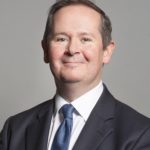

  • David Simmonds – 2022 Speech on Early Years Childcare and Staff-Child Ratios

    David Simmonds – 2022 Speech on Early Years Childcare and Staff-Child Ratios

    The speech made by David Simmonds, the Conservative MP for Ruislip, Northwood and Pinner, in Westminster Hall, the House of Commons, on 14 November 2022.

    It is a pleasure to serve with you in the Chair, Ms Harris. I offer my condolences to Mr and Mrs Steeper. I hope that one of the messages from today’s debate will be a recognition that there are many Members of Parliament, including myself, who are parents of very young children and recognise that story as the ultimate nightmare for any parent, and who are therefore committed to helping the Government find a way to address the issue constructively.

    I will set out a bit of the context that I learned about during my time in local government as the lead member for children’s services. I hope to offer the Minister some constructive suggestions about how the Government might take forward some of the issues raised in the consultation, in the petition and in today’s debate.

    The guidance on staff-to-child ratios stems from the Children Act. The primary purpose of that legislation and that guidance is managing risk. We need to be cautious about the idea that a ratio of 1:4 equals safe, but 1:5 equals dangerous. Research from the Thomas Coram Research Institute at the Institute of Education highlights that the way in which the ratio is calculated varies quite a lot. Some nurseries do it by dividing the total number of full-time equivalent staff by the number of children on roll; others by the number of staff on shift at a given time, divided by the number of children in attendance at that time; and others based on inspection of how many staff members are visible in a particular space compared with the number of children at a given moment. They are all valid ways of calculating the ratio, but give significantly different variations in the numbers of adults and children who are physically present.

    There is a world of difference between some of the staff I met at my children’s nursery—which was provided by the London Borough of Hillingdon—who had 30 or 40 years’ experience in childcare and had been on every conceivable training course from paediatric resuscitation and emergency treatment to handling various complex medical conditions, and those who may be doing their first day on the job as a child carer; and many Members have highlighted that point today. Ministers from all parties have been under pressure for many years to make the money go further, but it is right that they consider that context as they look at the issue. This is not as exact a science as some would like to think. Our key approach must be to manage the risks that occur in these kinds of settings, so that children are as safe as possible.

    The hon. Member for Newcastle upon Tyne North (Catherine McKinnell) clearly made the point—it is borne out well by the research—that the money that we spend on the early years has the most impact on a child’s outcomes of the money that we spend at any stage of education. When we look at how the funding formula is distributed nationally, it is the opposite way around. We spend most money on the GCSE years, when it has comparatively less impact and benefit for a child; and, relatively speaking, less is spent on support for early years. The data held by the Children’s Commissioner—produced by data expert Leon Feinstein—highlights that we can predict a child’s A-level results based on their attainment in the early years foundation stage. We have good evidence that this is not merely a matter of supposition, but that there is a direct correlation between the impact of early education and a child’s outcomes when they start adulthood.

    As we consider possible solutions, the Government must be commended for the fact that, for the first time, we have a comprehensive early years national funding formula, which was introduced in 2017. It seeks to bridge the gap between the day-to-day realities of nursery life in a complex sector—we have private, voluntary and independent providers, as well as the statutory sector in the form of school nurseries—and the desire to ensure that parents generally, but especially women, are able to return to the workforce because affordable childcare is available.

    Three elements make up the national funding formula. There is the universal base rate, which is a figure that is determined nationally; that will be challenging, because it is the biggest part of the formula for the Government to look at. There is also an additional needs factor, which reflects the requirements of children with special educational needs and disabilities, and the area cost adjustment, which is designed to take into account the differential cost of providing nursery care in different parts of the country.

    As a Member of Parliament representing an outer London constituency, I hear daily from businesses generally, and from nursery providers in particular, that the remarkably high costs of employment make it difficult to recruit and retain the qualified staff they require. Although I recognise the financial challenges facing the Government, if they have an opportunity to look at doing something with the area cost adjustment, I suspect it would make the lives of all Members of Parliament easier when it comes to ensuring that their local nursery and childminder sectors are properly supported. That would be enormously helpful.

    It is clear that the way in which the funding is distributed—in particular, the role of early years representatives at schools forums where decisions are made about dividing up that funding—could be strengthened. The fragmentation of a sector with large numbers of quite small providers means that compared to big secondary schools, for example, it is hard to get people at the table who are real experts in the way that the funding can be distributed. If we can do that much more effectively, the flexibility that exists in the remit of those schools forums would enable a greater degree of support and local nuance to reflect the particular challenges that a community faces in the distribution of funding, especially when it comes to the creation of new provision in response to emerging needs.

    The Government have done a great deal with policies such as tax-free childcare and the early years pupil premium to put additional resource into the sector to reflect the complexity of children’s needs, although there are more opportunities that are about not just additional resources—strong though the case for them is—but the way in which the money is distributed. Rather than having to consider easing childcare ratios as a way of making the budget go further, we can ensure that the money that is already contained in the early years national funding formula finds its way more effectively and flexibly through the system to support the sector to do the outstanding job we all want to see it do for all our children.

  • Justin Tomlinson – 2022 Speech on Early Years Childcare and Staff-Child Ratios

    Justin Tomlinson – 2022 Speech on Early Years Childcare and Staff-Child Ratios

    The speech made by Justin Tomlinson, the Conservative MP for North Swindon, in Westminster Hall, the House of Commons, on 14 November 2022.

    It is a pleasure to serve under your chairmanship, Ms Harris.

    As a parent myself, my heart breaks for the unimaginable loss suffered by Oliver Steeper’s parents. It is every parent’s worst nightmare. I pay tribute to the hon. Member for Newcastle upon Tyne North (Catherine McKinnell), who was passionate in advocating the serious points that drove 109,000 people—a huge number—to sign the petition, which is why so many of us are here.

    I believe it is the Minister’s debut. There is nothing worse in such circumstances as being asked direct questions, so I thought I would help her by answering one of the key questions put by the hon. Member for Newcastle upon Tyne North. Would I want my daughters in a setting with a changed ratio? Absolutely not. I very much hope we can get clarity on that point.

    I pay tribute to the new Minister, who was kind enough to visit my constituency on Thursday. She came to the fantastic Imagination Childcare nursery in Moredon. The owner, Becky Cruise, and her wonderful team were incredibly proud, because the Minister not only took time to tour all the rooms, and to engage and interact with the children—including decorating biscuits with my daughter Margot, who was very excited to meet one of my London office friends; she also took the time to have a roundtable with Becky and Councillor Jo Morris, who owns the Playsteps Day Nursery in my constituency. Believe me, Jo is a resident expert on all things nursery related. I do not think I have ever been lobbied as hard as I have by her.

    The visit was a real opportunity. I have hosted countless ministerial and shadow ministerial visits over the years, but the Minister was genuinely willing to listen, to be challenged and to take points on board. Even though she is so new to her brief, she has complete oversight of the issues, so I am excited to hear her response to the debate—no pressure.

    On the visit, we covered challenges and opportunities, including the key matter that we are discussing today: ratios. I echo the comments of the hon. Member for Newcastle upon Tyne North on the subject; we are in complete agreement. We should simply rule out the changes. Scotland is sometimes held up as some sort of brilliant panacea, but where are the Scottish MPs to advocate how well the change has gone there? That is telling.

    I pay tribute to the National Day Nurseries Association. It did some detailed research, which is pretty black and white: 90% of providers find it hard to recruit level 3 staff, and of the staff who are unhappy and thinking of leaving, 52% are thinking of leaving because of the workload. Clearly, if we change the ratios, the workload goes up.

    My hon. Friend the Member for Winchester (Steve Brine) was on the money when he talked about how hard it is when two parents are caring for two children. How on earth will nurseries do it day in, day out if we change the ratios? On the nursery visit, we saw that the big challenge comes particularly with those children who are toilet training, which requires them to be taken out of the room. That means that those eyes on the prize are not in the room, and children do not necessarily have set toilet breaks—believe me, I know. It is all about quality, and I cannot see a single argument that changing ratios would improve quality. We all visit our local schools. Primary schools in particular emphasise that the early years are so important for children’s expected levels and it is incredibly difficult to catch up further down the line.

    The Government have been trying to make a significant positive difference in this area. They have spent more than £20 billion over the last five years, rapidly expanded the 15 and 30-hour term-time free childcare and made crucial changes to universal credit that allow people to claim up to 85% of childcare costs. Those measures have been a real game changer in helping more working parents back into work and providing greater flexibility.

    There is still a funding challenge around the fact that, predominantly, nursery jobs are relatively low paid. Therefore, as we have rightly increased the national living wage above inflation year in, year out, it has exceeded the increases in funding that the Government have provided. That has put real pressure on nurseries, and the rules on how they can secure additional income to balance the books are very strict. That all puts pressure on capacity.

    The hon. Member for Newcastle upon Tyne North and my hon. Friend the Member for Winchester highlighted fears of nurseries leaving the sector. I represent a constituency that has a transient population. People tend to move to my constituency, so they do not necessarily have a network of older generations who can step in. Their ability to work and contribute to a growing economy is predicated on access to childcare, which can be difficult. There are waiting lists, and it is not a given that people can secure a place. People can always secure a school place, but that is not the case for nurseries.

    We therefore have to get a grip on the funding. The Minister could do some digging in some cupboards, because in 2017 there was an independent review of the cost of childcare and the impact on providers, which was meant to be published but has not yet been seen. That would be helpful in identifying what funding is needed to ensure that nurseries are on a sustainable and positive footing, so that they can remain and, crucially, expand.

    We can help on issues around Ofsted. It was highlighted, not unreasonably, that that is a real fear factor for staff. One day every four or five years, the nursery will be reviewed. Not all children perform the tasks that they are presented with on the days when the inspectors come, and that puts big pressure on nurseries. They could have had 364 other days in the year when all those tasks went well and would have looked good to an inspector. The day that the inspectors come can make a crucial difference. In our roundtable discussion, there was a feeling that there needs to be greater consistency, so that when inspectors come everybody knows what is expected and they will be reviewed on that. There needs to be a greater emphasis, or perhaps a sole emphasis, on safeguarding, so that it is the priority. We need to give the whole system confidence that it is consistent and fair, and that those nurseries that are doing an amazing and wonderful job are recognised for that.

    We also need to play fair between school-based nurseries and nurseries in independent settings. In questions in the main Chamber, I have raised the fact that standalone nurseries have to pay business rates, yet nurseries based in school settings do not. A standalone nursery is surely an educational setting; it is Ofsted rated. The current situation is inconsistent and unfair. In one nursery I visited, the business rates equated to about £100 per child, which could make a big difference if it went towards providing additional support. It is also a limit on some nurseries’ ability to expand, because if someone runs multiple nurseries, the business rates are caught all together and it affects whether they can apply for the discount. Some nurseries seek not to expand to avoid that situation.

    Another big ask—I know the Minister is passionate about this point—relates to providing the support that nurseries need. Nurseries are fantastic at childcare provision, but increasingly, with a greater awareness of special educational needs provision and additional support—I say this as a former Minister for Disabled People—they are crying out for advice so they can do it right. The guidebooks do not necessarily give definitive information on every unique set of circumstances. At the roundtable we held, we heard one example of a delay of six months to get training on the use of EpiPens. In reality, a nursery would either have to take the risk, or say to that child—and crucially, their parents—that they could not take them on for six months because of the potential consequences.

    Too often there are backlogs in accessing diagnoses. It is frustrating for nurseries, which, because they work with the children day in, day out, are often the first to identify the additional support that is needed, but are not given greater weight in the process. There should be a two-track process so they could directly feed in and populate much of the evidence required. That would take some of the pressure off the system that is trying to deal with the backlogs.

    Finally, both Becky and Jo highlighted that if there were better support, greater consistency, some movement on the funding and we did not go down the ratios path, they would be desperate to expand, because their respective nurseries are full. I return to the powerful point made by my hon. Friend the Member for Winchester: if we are to support a growing economy, we need to make provision for an increasingly flexible workforce. We need people like Becky and Jo, who have amazing nurseries, to be able to expand; we would all benefit from that.

  • Steve Brine – 2022 Speech on Early Years Childcare and Staff-Child Ratios

    Steve Brine – 2022 Speech on Early Years Childcare and Staff-Child Ratios

    The speech made by Steve Brine, the Conservative MP for Winchester, in Westminster Hall, the House of Commons, on 14 November 2022.

    It is a pleasure to see you and your pink hair in the Chair, Ms Harris. It is not often that is said in this Chamber. I thank the petitioners, including a number of my constituents, for signing the e-petition. I thank those in the Public Gallery who have come to watch, and, of course, Zoe and Lewis for being here today. They are very brave.

    I speak as constituency MP for Winchester, and in my capacity as chair of the all-party parliamentary group for childcare and early education. I will start with what I always say in these debates: early years education should be thought of and seen in terms of quality, not in terms of quantity. Investment early in a child’s life pays dividends later on as they move through the system. The impact upon a child’s future is priceless. Internationally, the UK has the second lowest level of Government investment in the early years, but the highest level of investment from parents. Thus, parents have every right to ask for the very best. I know that is what the early education professionals, whom I speak to all the time, seek to provide. I declare my interest in that I am married to an early years worker—so I had better be good.

    My view is that increasing ratios would have an adverse effect on that quality. Seeing as the ratios are where they are now, it is incumbent on those who propose to change them to explain why I am wrong in that thesis. The stated intention of the last Prime Minister and the Prime Minister before last to change the ratios—potentially abolishing them altogether—would not, as hoped for, improve flexibility or reduce the cost of childcare. Research from Coram suggests that a full-time nursery for children under the age of two costs almost 66%—two thirds—of a parent’s weekly take-home pay in England.

    As the hon. Member for Newcastle upon Tyne North (Catherine McKinnell) set out in her excellent opening remarks, if the proposed reforms are to save money for parents in the cost of living crisis—a perfectly sensible and laudable aim—the evidence to back that up has to be laid before us and the Government have to show their workings out. I am not deaf to those arguments; I am perfectly willing to hear them and happy to see those figures—but see those figures, I must.

    Early years settings have expressed concerns to me, and to those of us on the all-party group, that the relaxation of staffing ratios raises the risk of accidents for young children due to fewer staff needing to provide the same quality of care to a greater number of children.

    Vicky Ford (Chelmsford) (Con)

    I thank my hon. Friend for everything he does for the early years sector. I also give my condolences to Zoe and Lewis for their tragic loss. In my constituency of Chelmsford, people want to have outstanding childcare, and, like others across the country, they care about the safety of their children. As a mother who once had three under four, I know what tight ratios mean. But people are also concerned about the affordability of childcare. Does my hon. Friend agree with me that when looking at the issue of international comparisons on ratios, one should try to compare apples with apples? We have to look at not just the staffing numbers but the investment in qualifications. Does he agree with me that the Minister is right to look at rations, but needs to ensure that those comparisons are done on a level playing field, taking into account those other considerations too?

    Steve Brine

    I absolutely agree with my right hon. Friend, the former Minister. As set out in the opening speech, the situation is very different in Scotland; there are different qualification levels. Also, in Scotland practitioners have to register with the Scottish Social Services Council in order to work in early years, and they have to commit to continuing professional development qualification levels to do that. The hourly rate is also higher. I do think it is different. My right hon. Friend referred to having had three children—I only have two. Yes, it is about the qualification, but it is also simply a numbers game and about having eyes on the child. Our two children are 12 and 15 next week—it is a busy month—but when they were small, my wife and I would divide and rule. We had a 1:1 ratio. When we were looking after their cousins, the ratio went up and it was more challenging. Clearly, I am not suggesting a 1:1 ratio in early years education, but why on earth would we want to go the other way in a setting where children potentially spend seven or eight hours a day for five days a week? I question it but, as I say, show me the money. Show me the evidence, show me the workings out and show me the savings, and then we can make an informed judgment.

    There are concerns among providers and parents about settings having the capacity to support children with any additional needs, such as children with SEND, who may need more, rather than less, time with educators. I know the Minister will touch on this issue in her remarks. My fear, and that of providers and parents, is that a further ratio reduction would reduce the capacity and parental confidence even further, potentially driving more exclusion in early years education.

    Another point is that current staffing ratios reflect the requirements for facilities and space set out in the Ofsted framework, which is very clear. It would therefore be troubling if the Department contradicted the guidance of the official regulator. If we were to proceed with reducing staff to child ratios, do Ministers intend to consult on changing the Ofsted framework? Of course, that would require a statutory consultation.

    I have said that good early years education is vital to supporting our young people to develop, and Ofsted has identified children aged two to three as needing a particular focus on speech and language in order to build necessary communication skills for later in life. More children per staff member can only mean less time per child. Why is that particularly acute right now? Because of the pandemic, young children who started nursery in September do not have the socialisation skills that my children had in the years before they started in early years education, so I would suggest that that is even more important than ever right now.

    Let me give some figures. Some 52% of early years staff say their workload and a lack of work-life balance are a cause of stress or unhappiness for them. With the existing ratios, staff are under pressure—I hear that every night at home—and they tell me they are worried about the time they are able to give each child in their care. We face a staffing challenge in the early years sector, and staff are leaving the sector, with many choosing careers in retail with fewer hours but similar, or even greater, levels of pay. Data from the University of Leeds shows a post-pandemic net loss of workers from the sector above and beyond the usual churn of staff, and I often make the point that dog-sitters in my area are often paid more than the people who look after our most precious asset. Dogs are precious too, but they are not our children.

    On Saturday I was out in my constituency, talking to constituents. I spoke to a lady in Winchester who said that she was very worried about the nursery round the corner—I will not identify it, for obvious reasons—because it is losing the key worker who looks after her young daughter. It is really disruptive for her young daughter, and she is very worried about it. The nursery is losing that key worker because she is going to work in an office job, as she can get paid better and probably have a lot less stress. This is the reality of life. As the new Minister—obviously, she is a constituency MP as well—gets out and about, I dare to say that she will hear that more and more from the people she meets in the sector.

    I would suggest that increasing the number of children each member of staff is working with or responsible for will only increase the pressure and stress within the workforce, and more of these vital workers will leave the sector, which already faces a recruitment and retention crisis. That will drive up costs for parents and exacerbate the financial problems in the sector, with over 84% of providers telling the APPG on childcare and early education that they expect to operate at a loss or merely break even this year—up from just over half in 2018. Nursery and early education providers said it is more difficult to recruit, and some 20% of childminders told us that they did not think they would be working in the sector in six months’ time. Many of those people are concerned about working with new ratios, in what they regard as potentially unsafe conditions.

    One nursery worker wrote to me to say that the changes to ratios gave her “nightmares”; she said that the situation was like an episode of “Crimewatch”. Another said that she was “extremely concerned” about the additional pressure on staff, “both physically and emotionally”. I have seen figures that suggest that almost two thirds of practitioners could leave the sector if ratios went in the wrong direction. That is not just a figure; parents across the country will be unable to find good childcare and early education for their children to enable them to go to work and feed the workforce—a challenge in many other parts of the economy. This is not just a childcare story. Childcare is to the economy what social care is to the NHS. If we do not get this right, the economy will slow down, and heaven knows that right now we need the economy to speed up. We need growth.

    Staff are referencing workload, stress and burnout as key concerns. I am not defending the current way of working as being perfect—far from it. The all-party group that I chair has for a while been calling for a wholesale review of childcare and early education, and we will write to the new Chair of the Education Committee when they are elected on Wednesday to request that review. I have already spoken to some of those standing for that position, two of whom are in this room.

    In conclusion, we do not need a change in ratios. We need a wholesale, fact-based review of childcare and early education that focuses on the workforce, parents and, ultimately—the most important stakeholder—children. Our children deserve nothing less. I have already spoken to the new Minister, the Under-Secretary of State for Education, my hon. Friend the Member for East Surrey (Claire Coutinho), about the issue. I congratulate her on her position. She is a thinker and a serious person, and I really look forward to working with her. I respectfully ask her to meet my all-party group as soon as possible; we look forward to that conversation.

  • PRESS RELEASE : More than 401,300 families saved on childcare costs in September [November 2022]

    PRESS RELEASE : More than 401,300 families saved on childcare costs in September [November 2022]

    The press release issued by HM Treasury on 16 November 2022.

    More than 401,300 families benefitted from £44.4 million in government funding towards childcare costs in September 2022, HM Revenue and Customs (HMRC) has revealed.

    Compared to September 2021, the latest Tax-Free Childcare statistics show the number of families who are using Tax-Free Childcare has increased by 85,475. But thousands of families are still missing out on the top-up which could save them up to £2,000 a year per child towards the cost of their childcare.

    Tax-Free Childcare provides working families, earning up to £100,000 a year, with financial help towards childcare. For every £8 paid into a Tax-Free Childcare online account, families will automatically receive an additional £2 from the government. This means they can receive up to £500 every three months (£2,000 a year), or £1,000 (£4,000 a year) if their child is disabled.

    The top up payments can be used to pay for any approved childcare for children aged 11 or under, or up to 17 if the child has a disability whether your child goes to nursery, a child minder, has term-time wraparound care or goes to a holiday club.

    Families can check their eligibility and see the options for childcare support at Childcare Choices.

    Myrtle Lloyd, HMRC’s Director General for Customer Services, said:

    We know childcare can be expensive so using Tax-Free Childcare can make a huge difference to household finances. To find out more, search ‘Tax-Free Childcare’ on GOV.UK.

    Families could be eligible for Tax-Free Childcare if they:

    • have a child or children aged 11 or under. They stop being eligible on 1 September after their 11th birthday. If their child has a disability, they may get up to £4,000 a year until they are 17
    • earn, or expect to earn, at least the National Minimum Wage or Living Wage for 16 hours a week, on average
    • each earn no more than £100,000 per annum
    • do not receive tax credits, Universal Credit or childcare vouchers

    A full list of the eligibility criteria is available on GOV.UK.

    Opening an online Tax-Free Childcare account is straightforward and can take around 20 minutes to sign up. Accounts can be opened at any time, money can be deposited and used straight away or when it’s needed. Unused money in the account can be withdrawn at any time. Go to GOV.UK to register to get started.

    The government has launched an awareness raising advertising campaign to ensure families get the childcare support they are entitled to. Visit Childcare Choices to learn about the options and find out the best childcare offer for families.

    The government is offering help for households. Check GOV.UK to find out what cost of living support, including help with childcare costs, families could be eligible for.

  • Rishi Sunak – 2022 Opening Statement at G20 Conference in Indonesia

    Rishi Sunak – 2022 Opening Statement at G20 Conference in Indonesia

    The opening statement made by Rishi Sunak, the Prime Minister, in Bali, Indonesia, on 16 November 2022.

    Yesterday at the G20, my fellow leaders and I directly confronted the Russian Foreign Minister with the illegality and brutality of his country’s war in Ukraine.

    Barely twelve hours later, more than 80 Russian missiles rained down on western Ukraine, killing civilians and destroying civilian infrastructure.

    While other world leaders were working together to tackle the greatest challenges our people face, Putin was launching indiscriminate attacks on civilians in Ukraine.

    In the wake of these attacks today we held an urgent meeting of G7 and NATO leaders to underscore our solidarity with Poland and Indonesia.

    I also spoke to Polish President Duda this morning to offer my wholehearted support and assurance that the UK stands steadfastly behind him and his people at this worrying time.

    We should all be clear – none of this would be happening if it weren’t for Russia’s invasion of Ukraine.

    This is the cruel and unrelenting reality of Putin’s war.

    As long as it goes on it poses a threat to our security and that of our allies.

    And as long as it goes on, it will continue to devastate the global economy.

    Two-thirds of G20 members are currently experiencing inflation rates over 7% and the IMF predicts a third of the world’s economy will be in recession this year or next.

    At a time when countries are tentatively emerging from the ravages of the Covid-19 pandemic, households across the world have been hit by punishing price rises and are facing an uncertain future.

    When the G20 was established, it was with the acknowledgement that economic shocks are inherently global.

    Responding to them requires coordination and cooperation between the world’s largest economies.

    We have come together over the years, despite our political differences, in recognition of the economic importance of this forum.

    But this year in particular – as last night’s events laid bare – the challenges we face are utterly political.

    The persistent threat to our security and global economic asphyxiation has been driven by the actions of the one man unwilling to be at this summit – Vladimir Putin.

    There is not a single person in the world who hasn’t felt the impact of Putin’s war.

    Global food markets have been severely disrupted by his attempts to choke off Ukrainian grain supply…

    there has been an eightfold increase in global energy prices thanks to Russia turning off their gas taps…

    and the economic aftershocks of Putin’s casual disregard for human life will ripple around the world for years to come.

    But in Indonesia this week the rest of the G20 have refused to let Russia’s grandstanding and hollow excuse-making undermine this important opportunity to make life easier for our people.

    Economic stability and confidence are at the heart of the government’s agenda.

    That means being a constructive and reliable member to the international community, using our influence to keep global prices down and create the conditions that will help the UK – and other global economies – return to growth.

    At this summit G20 partners have come together to strengthen our international economic foundations, making ambitious commitments to

    help the most vulnerable,

    reduce global reliance on Russian fossil fuels in favour of greener, more secure alternatives,

    and drive a better future where no country has the power to devastate the global economy.

    I’d like to thank the Indonesian President Jokowi for the role he has played in hosting these discussions and leading the G20 at this challenging time.

    Tomorrow, the Chancellor will build on these international foundations when he makes the Autumn Statement, outlining his plan to get the country on a positive trajectory, put the public finances on the right footing and get debt falling.

    By promoting free markets, forging strong international relationships, and prioritising our stability and security, we will build a global platform for the United Kingdom to thrive – giving the people of our country the certainty that they need.

  • Stuart Andrew – 2022 Speech at the Association of Charitable Foundations conference

    Stuart Andrew – 2022 Speech at the Association of Charitable Foundations conference

    The speech made by Stuart Andrew, the Minister for Civil Society, on 15 November 2022.

    Thank you for the introduction, Jessica.

    It’s a pleasure to be here. I think you may have been expecting someone else a couple of weeks ago, but I am absolutely thrilled to have taken on the Civil Society portfolio and to be here today.

    Thank you Carol and Jessica for inviting me. I know this is a big event in the ACF calendar, as well as being your first ‘in person’ conference in the last three years.

    It is also my first engagement as Minister for Civil Society, and I am delighted to be in the presence of so many inspiring leaders of such a vital part of our sector.

    Trusts and foundations are lifelines to so many civil society organisations – providing crucial independent funding to enable them to carry out their work and support communities across the country.

    I’d like to extend my thanks and appreciation to you, the leaders of trusts and foundations, for the resilience you’ve shown over the past few challenging years. And the determination you’ve displayed in tackling our current economic challenges.

    Your wealth of experience is a clear asset to be harnessed in promoting innovation in philanthropy, empowering the sector, and supporting trusts and foundations to thrive.

    As you might know, my early career was in the charitable sector. As a fundraiser, I understood the generosity of the British public as well as the importance of philanthropy.

    At Hope House Children’s Hospice, I experienced first hand the challenges that crises can have on giving – I was there at a time where donations dropped 50% during the Kosovo crisis.

    We had to come up with solutions at a fast pace. And I’m aware of how – amidst the current pressures – funders have had to quickly adapt to a changing environment.

    Throughout my career – in charities, and in politics – I have witnessed the impact that valuable funds can have for those who need it most – from vital health services for children and their families, to tackling homelessness, and levelling up our communities.

    I know you have been focussing today on courageous leadership, and what it means over the next 10 years.

    To me, courageous leadership is about three things: resilience, collaboration and humility.

    We are facing unprecedented times – the global pandemic, climate change, Putin’s war on Ukraine, and the cost of living have created significant impacts across our society.

    And it is the civil society organisations who are on the front line – helping individuals and families.

    We have seen the resilience of great leaders and trustees who are able to adapt, pivot and flex against these challenges.

    I’ve been inspired by the work and innovation in the civil society sector to make precious resources go further to reach those most in need.

    I also believe that resilience means drawing on support.

    I’m aware that trusts and foundations are seeing increased demand, and organisations – from small to large – are facing higher energy prices.

    And I know that many of you are looking at the grants you have in place with vital civil society organisations – and are now providing flexibility, or additional funding to help them through the challenges they are facing.

    In Government, we are also taking action to support these organisations by helping them with their bills over the winter, as part of our Energy Bill Relief Scheme.

    And my department will continue to engage constructively across the civil society sector to monitor the impact of rising costs and pressures.

    In order to be resilient, to be truly resilient in a way that allows us to ‘spring back’, we also need strong foundations to ensure our impact is sustainable.

    ACF’s Stronger Foundations initiative does just that – bringing foundations together to share best practice – from strategy to investment – with the aim of understanding and promoting what works best.

    At a time of huge global change, collaboration is more important than ever.

    I was impressed to see that your Stronger Foundations format is a world leader, with influence outside the UK.

    And finally, courageous leadership is about humility. As leaders, we don’t know it all, and never will. Acknowledging that is courageous.

    We must continually listen to those around us – to those whose views resonate with ours – and just as importantly – those which challenge them.

    As Minister for Sport, Tourism and Civil Society, including Minister for Equalities, there are – quite literally – countless opportunities to connect across my portfolio and the intersections of this amazing sector.

    I am committed to listening to your views, championing the fantastic achievements of civil society, and building a strong relationship together.

    Thank you again for inviting me here today. I look forward to meeting with some of you this evening, and to working with you in the months and years ahead.

  • PRESS RELEASE : Suspended prison sentence for Bounce Back Loan fraudster Ben Hamilton from Middlesbrough [November 2022]

    PRESS RELEASE : Suspended prison sentence for Bounce Back Loan fraudster Ben Hamilton from Middlesbrough [November 2022]

    The press release issued by HM Treasury on 16 November 2022.

    Ben Hamilton, 34, from Middlesbrough, has been sentenced to 15 months imprisonment, suspended for 18 months, after being convicted under the Companies Act following abuse of the Bounce Back Loan financial support scheme in 2020.

    Hamilton was director of Netelco Ltd, a telecommunications design and installation business based in Bishop Auckland.

    The company had been incorporated in 2018 and in May 2020 Hamilton applied for a £25,000 Bounce Back Loan from his bank on behalf of his business. Under the Bounce Back Loan scheme, genuine businesses impacted by the pandemic could take out interest-free taxpayer-backed loans of up to £50,000.

    The loan was paid into the company bank account on 14 May 2020 and the following day Hamilton filed paperwork with Companies House to have the business dissolved.

    The striking-off application to dissolve the company was explicit that interested parties and creditors, such as a bank with an outstanding loan, must be notified within seven days of making an application to dissolve a company. The form also highlighted that failure to notify interested parties is a criminal offence, however Hamilton did not follow these rules.

    The company was dissolved in December 2020, and was subsequently identified as likely Bounce Back Loan fraud as part of the government’s forensic counter-fraud work.

    Hamilton did not co-operate with the Insolvency Service criminal investigation team, nor attend an interview when given the opportunity. Only when the Insolvency Service obtained a Proceeds of Crime Act restraining order on his bank accounts did he engage with the investigation, at which point he repaid the Bounce Back Loan in full.

    He pleaded guilty to charges under the Companies Act 2006 at Teeside Magistrate’s Court on 14 October. He was sentenced on 15 November at Teeside Magistrate’s Court.

    In addition to the suspended sentence, Hamilton was ordered to pay £2,500 in costs.

    Julie Barnes, Chief Investigator at the Insolvency Service said:

    This was a clear case of attempted fraud by a company director who thought he could abuse the Covid-19 financial support schemes and get away with it.

    Even though Ben Hamilton has now repaid the loan, this sentence sends a clear warning to others that attempting to defraud taxpayers is not acceptable, and when prosecuting the Insolvency Service will use all of the tools in its armoury, including the Proceeds of Crime Act, to prevent criminals from retaining their benefit from crime”.

    Ben Hamilton is of Middlesbrough and his date of birth is August 1988.

    Netelco Ltd (company reg no. 11266825).

    The sentence result was announced at Teeside Magistrate’s Court by judge Recorder Anthony Hawks.

  • PRESS RELEASE : Rishi Sunak call with Prime Minister Justin Trudeau and President Zelenskyy [November 2022]

    PRESS RELEASE : Rishi Sunak call with Prime Minister Justin Trudeau and President Zelenskyy [November 2022]

    The press release issued by 10 Downing Street on 16 November 2022.

    The Prime Minister and Canadian Prime Minister Justin Trudeau spoke to Ukrainian President Zelenskyy from the G20 in Indonesia today.

    The Prime Minister and Prime Minister Trudeau expressed their condolences for the terrible loss of life as a result of Russian attacks on Ukraine overnight.

    They underscored their enduring support for Ukraine’s resistance and updated President Zelenskyy on their discussions at the G20 on this issue.

    The Prime Minister and Prime Minister Trudeau emphasised the importance of a full investigation into the circumstances behind missiles falling in Poland yesterday. They stressed that, whatever the outcome of that investigation, Putin’s invasion of Ukraine is squarely to blame for the ongoing violence.

    President Zelenskyy thanked the Prime Minister and Prime Minister Trudeau for their support.

  • PRESS RELEASE : Rishi Sunak meeting with President Biden of the United States [November 2022]

    PRESS RELEASE : Rishi Sunak meeting with President Biden of the United States [November 2022]

    The press release issued by 10 Downing Street on 16 November 2022.

    The Prime Minister met US President Biden today at the G20 Summit in Indonesia.

    The leaders agreed on the national and international importance of the strong UK-US relationship, particularly given the challenging economic times the world is currently facing.

    The Prime Minister and President Biden underscored that the actions of President Putin and his regime are directly responsible for precipitating global economic issues including rising inflation. Maintaining international pressure to ensure Putin fails in Ukraine is in everyone’s interest.

    The leaders agreed to work together, and with allies, to address the economic consequences of Putin’s brutality. This includes action to protect the most vulnerable in our countries and around the world, and efforts to secure our long-term energy supply.

    They stressed the importance of likeminded allies providing a counterpoint to authoritarian regimes, including ensuring developing countries can grow in a sustainable way.

    The Prime Minister and President Biden both agreed on the importance of sustained engagement in the Indo-Pacific region and pointed to the AUKUS pact as an example of that. The Prime Minister outlined the UK’s Indo-Pacific priorities, including joining the CPTPP trade bloc.

    The leaders looked forward to working together to take forward cooperation between the UK and the US on areas including trade, defence and upholding the Belfast (Good Friday) Agreement.