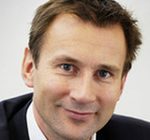
The full economic statement issued by HM Treasury on 17 November 2022.
Tag: 2022
-

Simon Clarke – 2022 Comments on Jeremy Hunt’s Financial Statement
The comments made by Simon Clarke, the Conservative MP for Middlesbrough South and East Cleveland, on Twitter on 17 November 2022.
The Chancellor rightly commits to more renewable energy, which is economically rational, environmentally responsible and good for our national security. But to those ends, we should also press ahead with ending the ban on new *onshore* wind.
-
![PRESS RELEASE : Electric Vehicles to be Liable for Road Tax [November 2022]](https://www.ukpol.co.uk/wp-content/uploads/2022/08/hmtreasury-150x150.png)
PRESS RELEASE : Electric Vehicles to be Liable for Road Tax [November 2022]
The press release issued by HM Treasury on 17 November 2022.
The shift to Electric Vehicles is continuing at pace as the UK moves to net zero. Therefore from 2025, road tax will be introduced for EVs so all motorists begin to pay a fair share. Support for charging infrastructure is continuing.
-
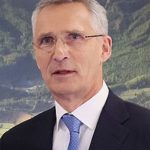
Jens Stoltenberg – 2022 Statement on the Attack on Poland
The statement made by Jens Stoltenberg, the NATO Secretary General, on 16 November 2022.
Good afternoon.
We have just finished a meeting of the North Atlantic Council.
We addressed yesterday’s explosion in the east of Poland, on the border with Ukraine.Our top military commander General Cavoli briefed Allies.
And the Polish ambassador updated us on the incident, and the ongoing investigation.Yesterday’s explosion took place as Russia launched a massive wave of rocket attacks across Ukraine.
Since the start of Russia’s illegal war in Ukraine, NATO has increased vigilance across our eastern flank.
And we are monitoring the situation on a continuous basis.An investigation into this incident is ongoing, and we need to await its outcome.
But we have no indication that this was the result of a deliberate attack.
And we have no indication that Russia is preparing offensive military actions against NATO.Our preliminary analysis suggests that the incident was likely caused by a Ukrainian air defence missile fired to defend Ukrainian territory against Russian cruise missile attacks.
But let me be clear.
This is not Ukraine’s fault.
Russia bears ultimate responsibility, as it continues its illegal war against Ukraine.In the meeting today, NATO Allies offered their deepest condolences on the tragic loss of life.
They expressed their strong solidarity with our valued Ally Poland.
And made clear that we will continue to support Ukraine in its right to self-defence.Russia must stop this senseless war.
Last night, I spoke with the Polish President Andrzej Duda and with US President Joe Biden.
We agreed that we need to stay vigilant, calm and closely coordinated.We will continue to consult.
And monitor the situation very closely.NATO stands united.
And we will always do what is necessary to protect and defend all Allies.NATO Secretary General Jens Stoltenberg:
And with that I’m ready to take your questions.NATO Spokesperson Oana Lungescu: Polish radio [indaudible]
Polish Radio:
Thank you. Polish radio public broadcaster [inaudible]. Secretary General what could be the outcome, concrete, in concrete terms of today’s meeting? Can we expect enhancing the Europe’s air defence; especially in the countries bordering Ukraine because as long as the war continues there will be Russian rockets striking Ukrainian citizen. There is a risk that such situation can happen again, thank you very much.NATO Secretary General Jens Stoltenberg:
In the meeting today, NATO Allies expressed their strong support and solidarity with our Ally, Poland. They also expressed their deepest condolences for the tragic loss of life. And NATO has significantly increased its presence in the eastern part of the Alliance, in particular since the invasion of Ukraine in February. With more troops on land, ground troops, but also with significant substantial air and naval power. And this has of course, both increased our air defence capabilities, but also our capabilities to monitor, to have a full picture of what’s going on, on the border between NATO Allies like Poland and Ukraine, and we are constantly assessing what more we need to do. We also have made important decisions at our Summit in Madrid to further strengthen our presence in the eastern part of the Alliance.NATO Spokesperson: BBC.
BBC:
Thank you, Jessica Parker for BBC News. I just wanted to ask, given the incident that happened last night, do you think this was perhaps the most tense moment for NATO? In this conflict so far? Thank you.NATO Secretary General:
I’m always careful to rank different incidents and situations. It demonstrates that the war in Ukraine, which is President Putin’s responsibility, continues to create dangerous situations. At the same time you have to remember that this happened at the same time as Russia launched a wave of new indiscriminate missile and air attacks on Ukrainian cities. Attacking critical civilian infrastructure, hitting civilian targets. Then it’s nothing strange, then, of course, that is in itself a very dangerous situation. And then, that we then also see that there may be also consequences on NATO territory is a consequence of the war that Russia wages against Ukraine
NATO Spokesperson: Then we go to the Ukrainian News Agency in the middle.Ukrainian News Agency:
Thank you for the floor, [inaudible] national News Agency of Ukraine. I just want to mention that Ukrainians do understand the pain now of the Polish people and have the greatest sympathy with them. My question is how that incident will be reflected on the assistance that Allies provided for Ukraine in air defence. Where will be some kind of new systems to cover the Ukrainian sky? Thanks.NATO Secretary General:
There will be a meeting today in the Contact Group for Ukraine to coordinate the support that NATO Allies and partners and others are providing to Ukraine. And the main focus of all our efforts over the last month has been on air defence. Especially since Russia started to launch these indiscriminate attacks on Ukrainian cities a few weeks ago. And I welcome that more and more Allies and partners are providing advanced air defence systems to Ukraine. NASAMS, HAWK batteries from Spain and others and I also know that Sweden has made the new announcement of additional support also with air defences to Ukraine. So we are mobilising additional support, especially when it comes to different types of air defences. NATO is also providing counter drones systems. We need many different systems to protect against cruise missiles, ballistic missiles, but also drones. We need a layered defence of Ukraine. That’s exactly what Allies are providing in different ways.NATO Spokesperson: Bloomberg.
Bloomberg:
Does this incident, will this for more air defence for Allies on the eastern border, I mean you said, there has been a step up since beginning of the war, but does more need to be done? Thank you.NATO Secretary General:
We’re constantly assessing our presence in the eastern part of the Alliance. We have significantly increased our presence on land, at sea and in the air, and that has significantly increased our air defence capabilities, especially in the eastern part of the Alliance. At the same time, we have no indication that this incident was a result of a deliberate attack on NATO territory. And we have no indications that Russia is planning offensive military actions against NATO Allies. I think this demonstrates the dangers connected to the ongoing war in Ukraine. But it hasn’t changed our fundamental assessment of the threat against that NATO Allies. It shows the importance of monitoring, of being vigilant, of the presence, and we made decisions for long term adaptation or NATO’s deterrence and defence at the Summit in Madrid in June, and that includes partly more presence in the east, partly more pre-positioned equipment, in particular in the eastern part of the Alliance and partly earmarked forces, so we can quickly scale up the battle groups we have in the eastern part of the Alliance. And of course all of this will also further strengthen our air defence capabilities. Then air defence is partly land based but air defence is also very often air-based, also aircraft and naval-based, based on our ships, and of course, Air Forces and Naval Forces is something we very quickly move in. SACEUR, Supreme Allied Commander in Europe has already authorities to move in additional forces, including air and naval forces to augment our air defences quickly if needed.NATO Spokesperson: Frankfurter Allgemeine.
FAZ:
Secretary General, a few factual questions if I may. First of all, the debris found near the border of Poland and Ukraine. Is this debris only from an Ukrainian rocket launched to intercept Russian missile? Or is there also debris of a Russian missile? Secondly, what is what was the likely trajectory of the Russian missile that was meant to intercept by Ukraine? And thirdly, did NATO forces present at the eastern flank, activate their air defence systems yesterday? Because they saw an incoming, potentially incoming, missile? Thank you.NATO Secretary General:
We have air defence systems in place, that are active 24/7, all the time. We have AWACS planes, we have aircraft, we have land based systems and we have naval-based systems. So we have air defences, which operate constantly throughout the Alliance. Then of course, we have a significant focus and in particular increased our presence in the eastern part of the Alliance and this also includes Poland. Then on the details of the findings and the ongoing investigation, it will not be right if I go into those details, but as I said, our preliminary findings are that this is likely caused by a Ukrainian air defence missile, and we have no indication that it wasn’t a deliberate attack on NATO.NATO Spokesperson: Politico.
Thank you very much. Just a brief question. Has there been any communication between NATO and the Russian authorities, even on a technical level over the past 24 hours regarding Russian activity close to NATO’s border? Thank you.NATO Secretary General:
We have major lines of communication, so we’re able to communicate with Russia in different ways as NATO and as Allies, but I cannot go into the details of exactly what kind of a contact there has been over the last 24 hours.NATO Spokesperson: Deutsche Welle.
Deutsche Welle:
I thank you. Does the fact that the Polish government, even after hours of assessing what had happened was still ready as of this morning, as I understand it, to possibly ask for Article 4 consultations. Does that indicate to you that they do not feel reassured despite all of these measures that have already been taken? And you said that you’re constantly assessing and you’ve got things on tap. Are military planners making any additional plans at this very moment? To send more to Poland to reassure them? Because obviously this is a credible scenario since they had an article four teed up, even after investigations were underway. Thanks.
NATO Secretary General:
So I spoke to President Duda last night, we agreed on the importance of waiting the outcome of the investigation. We don’t have the final outcome of the ongoing investigation, but all Allies agree on the assessment I just shared, That we have no indication that this was a deliberate attack and of course that has consequences for what kind of responses that we need to take. Since we have no indication of this was a deliberate attack or that Russia is planning any offensive military actions against NATO Allies. But we’ve also agreed that Russia bears the ultimate responsibility. They are responsible for the war in Ukraine that has caused this situation. And if it hadn’t been for the war, of course, we wouldn’t have been in this situation with the two casualties and the incident we saw in Poland yesterday, But Allies agree on the approach. There’s been no call for an Article 4 meeting. That’s based on the findings, based on the analysis and based on the results so far of the ongoing investigation.
NATO Spokesperson: Ok, Spiegel.Der Spiegel:
Secretary General, as you said that everything would be done to protect the allies. Now, the village where the missile hit yesterday was very close to the Ukrainian border. So in order to effectively protect Poland, from incidents like these in the future, would it not be conceivable or make sense from your point of view to extend the NATO air defense umbrella into Ukrainian territory in order to intercept missiles, which might be headed to potential targets near the Ukrainian-Poland border.NATO Secretary General:
NATO allies are not part to the conflict in Ukraine. NATO and NATO Allies provide support to Ukraine. We help Ukraine to uphold the rights for self defense. That is a right, which is enshrined in the UN Charter. And of course, Ukraine has the right to defend itself against Russia’s illegal war of aggression against Ukraine. And our main priority now, or one of the top priority now is to provide more air defense systems for Ukraine. Our air defense systems are set up to defend against attacks around the clock. But we have no indication this was the result of a deliberate attack and this incident does not have the characteristics of an attack. And that also explains why the reactions were as they were last night because this was not a deliberate attack and didn’t have the characteristics of a deliberate attack against NATO territory.NATO Spokesperson: ARD
ARD:
[inaudible] Two questions if I may. The first one is a more personal one. Everybody was very scared. I think yesterday evening everybody understood that could be potentially a very dangerous situation. How was your personal reaction when you first heard about it? And the second one is about, you said that debris that was found is probably from a Ukrainian air defense missile. The Ukrainian foreign minister said this is a Russian conspiracy theory and it’s not true. How do you judge that, that he made this judgement on the origin? Thank you.NATO Secretary General:
Last question?ARD:
Kuleba said is it is the Russian conspiracy theory that it is Ukrainian air defense missile, but your preliminary findings are apparently very different. Thank you.NATO Secretary General:
Well, the investigations are not finally concluded. But based on what is so far now, this is most likely Ukrainian air defense systems or missiles. But again, this is not Ukraine’s fault. Russia bears responsibility for what happened in Poland yesterday because this is a direct result of the ongoing war and the wave of attacks from Russia against Ukraine yesterday. And of course Ukraine has the right to shoot down those missiles that are targeting Ukrainian citizens and critical Ukrainian infrastructure. NATO is prepared for situations like this. We are exercising, we are preparing, for instance for accidents like this to first and foremost to prevent them from happening. But if they happen, to ensure that they don’t spiral out of control. So yes, of course we were concerned when we got reports yesterday, and especially, we were saddened by the fact that there were two casualties but at the same time, we are monitoring we are following very closely. And therefore we are prepared to handle situations like this in a firm, calm, resolute way, but also in a way that prevent further escalation.NATO Spokesperson: Agence France-Presse
AFP:
Thank you very much. Secretary General, you’ve said repeatedly that NATO has all the capabilities along the eastern front and that you’re ready for these sorts of incidents at any moment. So what’s this a failure of NATO’s defenses that this missile was able to hit Polish territory?NATO Secretary General:
Well the air defense systems, they are set up to defend us against attacks and attack missiles, cruise missiles, ballistic missiles, they have special characteristics, which we then follow up and we monitor and then we make a judgement whether it’s an attack or whether it is something else. As I said this was most likely a Ukrainian air defense missile [inaudible] and of course, that missile doesn’t have the characteristics of an attack. And therefore that explains also why the actions were as they were. And that doesn’t say anything about our ability to defend against deliberate attacks against the NATO territory.NATO Spokesperson: Wall Street Journal
Wall Street Journal:
Dan Michaels, Wall Street Journal. Just a couple more factual questions, if possible, if the analysis yet shows this. Do you know if there was a Russian missile in the immediate area that the Ukrainians were specifically trying to target? And do you know, if the Ukrainian missile exploded on the ground, if it exploded potentially in the air and in contact with the Russian missile and if what was on the ground was just shrapnel or debris from that? Thank you very much.NATO Secretary General:
Although there are relevant questions, I will not go into details, partly because there is an ongoing investigation. And, we had to decide later on how many details we can reveal. But anyway, there are ongoing investigations. So it’s an ongoing investigation that will look into those issues.NATO Spokesperson: TV2, lady over there.
TV2 Norway:
[inaudible] from TV2 Norway. Mr. Secretary General, the France president, Emmanuel Macron, he urged China to play a greater mediation role during this conflict. Do you see a greater role for you for China? And second question, do you see any possibilities for peace negotiations in the near future?NATO Secretary General:
First and foremost, I believe that China should clearly condemn the invasion of Ukraine, which is a blatant violation of international law and the sovereignty and territorial integrity of Ukraine and, for instance, in the different votes in the UN, China has not voted in favor of those resolutions clearly condemning the invasion. Actually, China is also sharing much of the Russian narrative about the war and that’s a narrative which is not correct. It is Russia and President Putin that are responsible for the war and they can also end the war. We have to remember this is this is a war of aggression, where one country, Russia, invades another country and tried to control and take territory from that country. And of course, Ukraine has right to defend itself against the invasion, against the Russian aggression. If President Zelensky and Ukrainians stop the fight, of course, then then then Russia will win and they will achieve their military goals. So the reality is that if President Putin and Russia stops fighting, then we will have peace. But if President Zelensky and Ukrainians stop fighting then Ukraine will cease to exist as an independent sovereign nation. They have the right to defend themselves as an independent nation. Most likely this war, whether that’s on stage and at the negotiating table. At the same time, we know that the outcome of those negotiations is closely and fundamentally linked to the strength on the battlefield. So the best way we can ensure, maximize, the likelihood for a peaceful negotiated solution is to support Ukrainians on the battlefield, because that will maximize the probability for them achieving an acceptable negotiated solution on the negotiating table. So yes, we all want peace. We all want this war to end. That’s the best way we can contribute to a peace which ensures that Ukraine remains a independent sovereign nation, is deployed the military support Ukraine, so there can be an acceptable negotiated solution at the end of this war.NATO Spokesperson: Ok one final question, TVN24 Poland.
TVN24 Poland:
Thank you, Secretary General, as you said, it’s too early to assess whether it was an accident or not. But for sure it was a stress test for the whole NATO. Could you assess that and the first reaction of the Polish government the channel of communications, and the reaction of the NATO. Any room for improvement and any lesson learned for future?NATO Secretary General:
NATO allies and Poland reacted in a calm and measured and well-coordinated way. We coordinate our responses. So we, we spoke together of course, during the evening yesterday, and also our military commanders informed. I spoke with the Supreme Allied Commander, both yesterday and this morning. And he also came to NATO Allies to the North Atlantic Council here in the NATO Headquarters this morning and briefed the Allies. So the coordination, the exchange of information, and then measured responses and also the message that we need to establish the facts before we draw any final conclusions on the incident in Poland, that shows that NATO Allies reacted in a prudent and responsible way. I think we have to understand that to manage this kind of incidence is partly about being firm and reacting quickly. But it’s also about being calm and preventing unnecessary escalation. And we always need to find that balance. Therefore it’s also important to have the best possible picture of actually what happened. Therefore, we actually said yesterday that we need some time to look into the incident. We did that over the course of the night. And then we have a clearer picture today. A picture that also stated that we have no indication that this was a deliberate attack and no indication that this was something that was targeted on NATO territory, and no indication that Russia is planning any aggressive military actions… but what we do know is that is that the whole incident is caused by Russia’s brutal war in Ukraine. So the best way of preventing anything like this from happening again, is for Russia to stop this war. -
![PRESS RELEASE : Details of NHS £500million discharge fund [November 2022]](https://www.ukpol.co.uk/wp-content/uploads/2020/01/healthsocialcare-150x140.png)
PRESS RELEASE : Details of NHS £500million discharge fund [November 2022]
The press release issued by the Department of Health and Social Care on 17 November 2022.
- Funding to speed up patient discharge, freeing up hospital beds to reduce ambulance handover times and improving capacity in social care
- Health and Social Care Secretary Steve Barclay addressed NHS workforce at NHS Providers’ annual conference
- He set out his key priorities including a focus on what matters most to patients, as well as putting the NHS on a more sustainable footing
Patients will benefit from faster access to emergency treatment following an injection of £500 million to free up hospital beds through quicker discharge, which will also help reduce ambulance handover times.
£300 million will be given to Integrated Care Boards to improve bed capacity and £200 million for local authorities to bolster the social care workforce, increasing capacity to take on more patients from hospitals.
Local authorities and Integrated Care Boards – organisations that bring the NHS together locally to improve health in the community – will work together to agree on spending across their regions, introducing tailored solutions which speed up discharge and benefit patients in their area.
Allocations will be published in due course with payments to be made in the coming weeks, following the announcement of the fund earlier this year. A second tranche of funding will be distributed in January 2023 delivering support across winter.
Speaking at the NHS Providers’ annual conference in Liverpool the Health and Social Care Secretary said:
I am pleased to announce details of the fund which will be provided to ICBs and local authorities to free up beds, at a time when bed occupancy is at 94%.
In line with our devolved and data-driven approach we will be allowing local areas to determine how we can speed up the discharge of patients from hospital.
This might be through purchasing supportive technology boosting domiciliary care capacity or physiotherapists and occupational therapists to support recovery at home.
We will also be looking closely at the impact of how funding is used and using this data to inform future decisions around funding”.
Local areas will be free to spend this money on initiatives which will have the greatest impact in their area on reducing discharges into social care, which in most areas will mean prioritising home care. Funding may also be used to boost adult social care workforce capacity, through staff recruitment and retention, where that will help reduce delayed discharges.
Addressing the workforce for the first time since returning to the role, the Health and Social Care Secretary set out his priorities today (Wednesday 16 November) for the coming months to ensure the health and care system continues to deliver for patients.
Key areas of focus for the months ahead will be:
- Supporting the workforce including through more staff for NHS 111 and 999.
- Focusing on recovery plans across electives, urgent and emergency care.
- Tackling the issue of delayed hospital discharge.
- Improving access to primary care.
- Ensuring a stronger future for health including maintaining momentum on the New Hospital. Programme and investing in technology to improve patient outcomes.
Minister of State for Care Helen Whately said:
People should be cared for in the best place for them, but discharge delays mean patients are spending too long in hospital.
Our discharge fund will get more people cared for in the right place at the right time. We’re asking hospitals and the social care system to work together to help patients and carers too, who often take on a lot of the burden of caring when someone leaves hospital.
The discharge fund will boost the social care workforce and in turn reduce pressures on the NHS and hospital staff, as it frees up beds and helps improve ambulance handover delays.
On tackling the Covid backlogs, the Health and Social Care Secretary emphasised the importance of close working between the Department of Health and Social Care and NHS England to reduce variation and tackle wider recovery challenges.
Looking beyond the immediate challenges of this winter, he reiterated the need to ensure a stronger future for health and care including investment in NHS buildings.
He set out his commitment to prioritise hospitals built using reinforced autoclaved aerated concrete (RAAC) as part of transformation plans as well as the need to modernise the way NHS buildings are constructed, moving away from bespoke designs by individual trusts and towards standardised designs that can streamline the approvals process and reduce construction time. This will help deliver new hospitals more quickly with better value for money, as part of the government’s commitment to deliver 40 new hospitals by 2030.
He also set out the need to harness the opportunities of new ways of working shown by the pandemic including use of the NHS app to reduce pressures in primary care. From the end of the month patients will be able to book their Covid vaccine via the NHS app, reducing the burden on GP providers.
Closing his speech, he acknowledged the size of the collective challenge the system as a whole faces heading into winter and his commitment to working with the sector to build a more resilient, healthier NHS for the long-term.
-
![PRESS RELEASE : Russia continues to commit atrocities in Ukraine: UK statement to the OSCE [November 2022]](https://www.ukpol.co.uk/wp-content/uploads/2020/01/fco-150x150.png)
PRESS RELEASE : Russia continues to commit atrocities in Ukraine: UK statement to the OSCE [November 2022]
The press release issued by the Foreign Office on 17 November 2022.
Ambassador Bush says that a clear pattern has emerged of repeated, systematic and brutal actions of Russia’s military and government against Ukrainian civilians.
Thank you, Mr Chair. I would like to start by offering my condolences to those who lost their lives and those injured by the bombing in Istanbul – terrorism in all guises is abhorrent.
Turning to Ukraine, the UK also expresses condolences for the victims of the missiles which landed in Poland this Tuesday. We stand in solidarity with our ally, Poland. As my Foreign Secretary stated in our Parliament yesterday – the only reason missiles are flying through European skies, and landing in European villages, is because of Russia’s aggression. We commend Poland’s decisive, determined, but calm and professional response to the situation.
Over the past few weeks, we have highlighted the dire humanitarian impact of Russia’s intensified attacks against civilians and civilian infrastructure across Ukraine, ahead of winter. Russia’s continued, callous targeting of Ukrainian cities this week shows only Putin’s weakness. These were the heaviest Russian missile strikes since the start of the war. Up to 10 million households were left without electricity, showing the cruelty of the approach by the Russian government and military.
Mr Chair, I would like to focus my statement today on life in the Ukrainian territories under temporary Russian control. This started in 2014, not in 2022. A clear pattern has emerged of the repeated, systematic and brutal actions of the Russian military and government against the civilian Ukrainian population. A clear pattern of violations of international law, including international humanitarian law. Horror after horror after horror.
In March 2014, Reshat Ametov was abducted while protesting outside a local government building in Simferopol, Crimea, in protest against the illegal takeover of Crimea by Russian troops. Two weeks later, his body was found with signs of torture. Since then, Russia has continued to persecute and restrict the fundamental freedoms of ethnic and religious groups, including Crimean Tatars like Reshat, with arbitrary arrests, torture and intimidation.
Since Russia’s invasion of Ukraine this year, two Moscow Mechanism Reports, and our weekly statements at this Council, have highlighted further Russian atrocities in Ukraine. The Moscow Mechanism Reports document grave human rights abuses and violations, including torture, executions of civilians, unlawful detention, enforced disappearances, rape of women and of children, and much more. We have condemned Russia’s “filtration centres” which subject Ukrainian civilians to interrogations, humiliating body searches and illegal deportations. We have condemned Russia’s sham, illegal referenda conducted down the barrel of a gun.
And today, we condemn the latest horrifying accounts coming from Kherson. Yevhenia Virlych, a journalist, stayed in Kherson for five months before escaping. Working in secret for her own safety, she documented how seven thousand people initially protested against Russia’s temporary control in March. Protests stopped by April – because Russian troops were shooting at civilian crowds. Another resident of Kherson, Ludmilla, is 76 years old. Ludmilla wept when she was handed a bag of food by an NGO in newly-liberated Kherson – and described her “months of hell” living under temporary Russian control. Ludmilla’s son was killed by shelling in May. Ludmilla’s daughter-in-law and grandchildren evacuated to Poland soon after. Like many others, they faced long and dangerous journeys, involving Russian check points and “filtration camps”. Ludmilla decided to stay at her family home and survived without running water, electricity or gas and with dwindling food supplies. Allegations of breaches of international humanitarian law, including the use of torture in Kherson are coming to light.
But there is hope. The Ukrainian flag has been raised again over Kherson only weeks after Putin declared that the city would be part of Russia “forever”. As Kherson and countless liberated settlements have demonstrated, Russia’s crimes are systematic and sustained. The Ukrainian people are fighting to take back what is rightfully and legally theirs and escape this living nightmare. In doing so, they are standing up for the fundamental OSCE principles that matter to all of us – of sovereignty, territorial integrity and the non-use of force.
We welcome the news that the Black Sea Grain initiative will be renewed until March. Over 11 million tonnes of grain and other food have already been delivered since July. It is vital this continues.
Mr Chair, the way out of these horrors remains simple. President Putin must withdraw all Russian troops from Ukraine unreservedly and unconditionally. Russia must pay for the damage it has inflicted in Ukraine – as voted for by 94 countries at the UN this week. And those individuals responsible must be held to account for actions which are in clear violation of international law. As my Prime Minister said at the G20 this week, the UK will never back down when it comes to supporting the Ukrainian people in the face of this brutality. We will stand by Ukraine now and until Ukraine prevails. As long as it takes.
-
PRESS RELEASE : Russia is knowingly trying to gain military advantage by creating desperation – UK statement at the Security Council [November 2022]
The press release issued by the Foreign Office on 17 November 2022.
Statement by Ambassador Barbara Woodward at the Security Council briefing on Ukraine.
Thank you President. And thank you to USG DiCarlo for your briefing.
I would like to start by offering our sympathies and condolences to the Polish people and the families of those injured and killed in yesterday’s incident.
While we await the outcome of the investigation, we should be clear that this is a tragedy that indisputably stems from Russia’s illegal and unjustified invasion, and its inhumane assault on civilians across Ukraine.
Yesterday, as President Zelenskyy set out to the G20 his 10 point plan for peace in Ukraine, Ukrainian civilians were facing the largest barrage of Russian missile and drone strikes since the first week of the war. We extend our condolences to the Ukrainian people and families of those injured in these attacks.
Russia’s systematic attacks on Ukraine’s critical national infrastructure have left millions without electricity, heating, water, medicine and food as temperatures start to drop below zero.
And more than that, we’ve heard today from the UN detailed reports of civilian deaths, sexual violence, and forced deportation of children. Russia is knowingly trying to gain military advantage by creating desperation. Attacks of this kind may violate International Humanitarian Law and are in any event, deeply inhumane.
President, on Monday the General Assembly adopted a resolution on an international mechanism for reparations for damage, loss and injury arising from Russia’s internationally wrongful acts against Ukraine. This was an important first step towards justice for Ukraine.
President, we are in no doubt that Ukraine will prevail in the face of Russia’s aggression. The liberation of Kherson shows the strength, courage and determination of the Ukrainian people to defend their right to sovereign equality and territorial integrity guaranteed under the UN Charter.
The UK will continue to stand by the Ukrainian people.
While the war is ongoing, we must continue also to manage its wider effects as best we can. That is why we strongly support the Black Sea Green Initiative. It has been vital in helping alleviate the serious risks of food insecurity in the world, and we strongly support the UN in the efforts to renew it.
President, fundamentally, this war is the result of unilateral action on the part of the Russian Federation. The path forward is therefore simple: Russia needs to cease hostilities, withdraw from within Ukraine’s internationally recognised borders, and commit to a path of dialogue.
Thank you.
-
PRESS RELEASE : UK and partners launch new measures at COP27 Solutions Day to drive progress on transition to Zero Emission Vehicles [November 2022]
The press release issued by the Foreign Office on 16 November 2022.
Today at COP27 on Solutions Day, the UK COP26 Presidency will convene Ministers and senior representatives to accelerate the transition to Zero Emission Vehicles by:
Launching the new Accelerating To Zero Coalition – a platform for leading initiatives to work together to deliver a Paris-aligned Zero Emission Vehicle (ZEV) transition globally.
Announcing a total of 214 ZEV Declaration signatories, committing them to a global all-ZEV sales target by 2040, and 2035 in leading markets, including new signatories France and Spain.
Launching a support package for emerging markets and developing economy (EMDE) countries, backed through a Global Commitment by donor countries including the UK, US, Germany and Japan.
At COP26 the UK and partners launched a “Zero Emission Vehicles Declaration” to accelerate the transition to all new cars and vans being zero emission by 2035 at the latest in leading markets, and 2040 globally, in line with Paris Agreement climate goals. The Declaration now has over 210 signatories (up from 130 at COP26) – from national and sub-national governments, to manufacturers, businesses and fleet owners. New signatories include France, Spain, Abou Ghaly Motors, and Vikram Solar.
The impact of the ZEV Declaration is already being realised. BloombergNEF’s newly published ZEV Factbook shows that 2022 is set to be a record year for ZEV sales, with electric vehicles comprising 13.2% of all new vehicles sold in the first half of 2022. This will speed up the move away from fossil fuels, with the expected adoption of electric vehicles and fuel cell vehicles avoiding almost 1.7 million barrels of oil use per day in 2022, about 3.8% of total demand.
As a further sign of momentum for the growing ZEV transition, today the Accelerating to Zero Coalition (A2Z) will be launched, which will host the ZEV declaration from COP27 onwards. The A2Z Coalition is a partnership between the UK, the UN High Level Action Champions team, the Climate Group, the International Council on Clean Transportation and the Drive Electric Campaign, who will work together to promote a faster global ZEV transition and help signatories implement those commitments by providing bespoke workshops, assistance and access to a international community of best practice.
Alok Sharma, COP26 President, said:
“The ZEV declaration signed at COP26 was a major milestone bringing together leading actors to accelerate the transition to 100 percent new car sales being zero emission by 2040, and 2035 in leading markets.”
“There are still huge opportunities in emerging markets and developing economies which is why I’m pleased to formally launch the Accelerating To Zero Coalition today. This coalition provides the platform for countries to go further and faster and to ensure that no country is left behind.”
Together with partner countries and organisations, the UK COP26 Presidency will today launch a new support package for EMDE countries – part of international efforts to ensure a truly global transition to ZEVs. This support package includes:
A Global Commitment – signed by the US, Germany, Japan, the Netherlands, South Korea, Sweden and the UK – outlining collective ambition to mobilise more assistance and align existing funds to support ZEV transitions in EMDE countries this decade.
A ZEV Country Partnership with India – signed with the UK and US – to provide tailored and impactful support that helps India deliver their ambitious ZEV commitments.
A scalable ZEV Rapid Response Facility (ZEV-RRF) to address the short-term, urgent technical assistance needs of EMDE governments, helping unlock larger scale projects and funding for their ZEV transitions.
A US-led ZEV Emerging Markets Initiative – in partnership with the UK Government and World Business Council for Sustainable Development – to foster dialogues between EMDE governments and major international companies to help scale up investment for countries’ transitions.
The first tranche of the World Bank’s Global Facility to Decarbonise Transport projects will also launch at COP27, facilitated by UK funding announced at COP26. This includes projects to support electrification of transport in countries, such as India and Ghana, as well as wider regions through its new Regional Financing Facility to Decarbonise Transport in Sub-Saharan Africa.
Also on Solutions Day, the UK-USA-co-chaired Zero Emission Vehicles Transition Council (ZEVTC) will launch its new yearly Action Plan, setting out its priorities for 2023. This includes infrastructure, the role of fleets in the ZEV transition, fair consumer access and supporting a more equitable transition as priority areas of discussion and collaboration between members in the coming year.
-
PRESS RELEASE : Urging the Syrian regime to improve its appalling human rights record – UK statement at UN [November 2022]
The press release issued by the Foreign Office on 16 November 2022.
Statement delivered at the UN Third Committee adoption of a resolution on human rights in Syria.
Thank you very much Mr Chair.
The United Kingdom strongly reiterates its support for this resolution and welcomes other co-sponsors. This language sets out the international community’s shared concerns and urges Syria to improve its appalling human rights record.
15 March 2022 saw the 11th anniversary of the conflict in Syria, marking over a decade of atrocities in Syria. The UK condemns these acts and strongly supports efforts to hold perpetrators of war crimes and crimes against humanity to account.
The UK remains deeply concerned by the situation over the past 12 months. The Syrian regime continues to commit crimes against humanity, war crimes, and human rights violations against the Syrian people, including the use of sexual violence, arbitrary detention, ill-treatment, and torture.
Tens of thousands of Syrians have been forcibly disappeared and detained during the conflict. Thousands of families wait to hear about loved ones. It is crucial that Syrians receive information about these disappeared persons, and that efforts are increased to deliver answers and accountability for victims of the regime. The regime must provide answers.
The humanitarian situation has worsened dramatically since cross-border access was reduced. An estimated 14.6 million people need humanitarian assistance and approximately 12 million people face acute food insecurity. It is vital that life-saving cross-border access continues, particularly in the harsh winter months, and with a Cholera outbreak spreading in the region.
The UK also defends the use of country-specific resolutions in the Third Committee. The Committee’s remit focuses on the examination of “human rights issues that affect people all over the world”. Such resolutions are only tabled for the most serious or prevalent violators.
The Syrian people must not be forgotten and must not be left to resolve this crisis alone. Through the adoption of this resolution, the international community can hold the Syrian regime to account and help ensure it fully complies with its international legal and human rights obligations. Therefore, we would urge all states to vote for this resolution.
Thank you.
-
PRESS RELEASE : The Iranian people have suffered enough – UK statement at UN [November 2022]
The press release issued by Foreign Office on 16 November 2022.
Statement delivered at the UN Third Committee adoption of a resolution on human rights in Iran.
Thank you Mr Chair.
The United Kingdom wishes to thank Canada for bringing forward this timely resolution.
In recent months, the human rights situation in Iran has continued to deteriorate. Two months ago, we witnessed the tragic death of Mahsa Amini: a shocking reminder of the repression faced by women in Iran. We deplore the violent suppression of women’s rights, and enforcement of the mandatory hijab and chastity law by Iran’s so-called Morality Police.
We also find Iran’s response to the protests movement that followed Mahsa’s death truly abhorrent. Over 326 Iranians have lost their lives and over 14,000 have been arrested. The death sentence announced last week, for a protestor, signifies a shocking worsening of the situation.
It is for these reasons that we welcome Germany and Iceland’s efforts to call a Special Session of the Human Rights Council on 24 November, which we hope will mandate a robust investigation into protest-related human rights violations in Iran.
Sadly, such repression remains systematic in Iran. In the first six months of 2022, Iran executed at least 251 people. The UN also called out Iran for executing a juvenile offender in November 2021.
The UK supports the essential work of the Special Rapporteur in shining a spotlight on Iran’s human rights violations. We welcome his efforts to expose the systematic repression of minority groups, as well as continued restrictions on media freedom and internet access.
Mr Chair, the Iranian people have suffered enough. It is time their fundamental freedoms were upheld, including the rights to peaceful assembly, freedom of expression and speech both online and offline. Iran’s leaders must choose another path. Now is the time to stop blaming external actors, to hold up the mirror and start listening to the voices of their people. Yet Iran continues to suppress the voices of civil society, and report of Member States attempting to block NGO access to the room today are a further concern. The UK encourages all Member States to now join us in voting yes on this resolution.
Thank you.