Tag: 2022

  • Leo Docherty – 2022 Speech Made to the Moldova Support Platform

    Leo Docherty – 2022 Speech Made to the Moldova Support Platform

    The speech made by Leo Docherty, the Parliamentary Under Secretary of State at the Foreign Office, in Paris on 21 November 2022.

    Thank you to the co-chairs for bringing us together again – in particular, our host, Foreign Minister Colonna and also to Minister Baerbock and Foreign Minister Aurescu. Thank you Deputy Prime Minister Popescu.

    I am very pleased to represent the United Kingdom today at this third Moldova Support Platform conference.

    As we witness unrelenting Russian aggression in Ukraine, and its devastating impact on the people of Ukraine, we also see the harrowing consequences it is having beyond Ukraine’s borders, in particular on Moldova. The resilience and solidarity demonstrated by the people of Moldova, under President Sandu’s leadership, are truly inspiring. For the UK, it is an irrefutable duty to join with our allies and partners in helping Moldova to overcome some of the worst impacts of Russia’s war. As winter arrives, we must continue to demonstrate our unity in standing with Moldova, its democratically-elected government and its people, and their right to choose their own future.

    In October I was honoured to visit Moldova. I saw and heard for myself how this small country with a big heart had welcomed hundreds of thousands of Ukrainian refugees, many of whom continue to be supported by the Moldovan people and their government. President Sandu, Foreign Minister Popescu and their colleagues explained the difficulties their country was facing, including energy insecurity caused by Russia’s deliberate disruption of the gas supply, soaring inflation and security threats, vividly illustrated by Russian missiles violating Moldovan air space with utter disregard for civilians and their safety.

    Your Excellencies, ladies and gentlemen, since the launch of this process in April, the UK has been pleased to co-chair, with Romania, the anti-corruption working group. Our coordination with the Moldovan Ministry of Justice and other key agencies in Moldova has been exceptionally valuable. We will present the working group’s latest report, focused on concrete results, this afternoon.

    I am pleased to report that the UK’s own contribution to anti-corruption and transparency work – an additional £12m over three years – is taking shape, providing support where it is needed the most and complementing the efforts of the Moldovan government and our partners.

    We also seek to assist Moldova in other sectors, including direct support for its humanitarian efforts. Our humanitarian contribution this year – including £29.45 million regionally and £10.8 million directly to Moldova – is helping crisis-affected refugees and their Moldovan host families, and has helped ease the pressure on the Moldovan government.

    Under the auspices of NATO’s Tailored Support Package we are delivering support that includes the NATO-sponsored Professional Development Programme, English Language Training, Strategic Communications and Military Engineering along with providing a range of training courses. Our other programmes are tailored to support Moldova in its hour of need, by helping increase energy efficiency, and by working alongside partners to support reforms and capacity-building that will help build Moldovan resilience.

    At his meeting with Foreign Minister Popescu in London a few weeks ago, the British Foreign Secretary James Cleverly reiterated the UK’s commitment to stand by Moldova. We will continue to take every opportunity we see to reinforce our support.

    We must clearly show that we are resolute and united in resisting Russian aggression and its efforts to defeat democracy.

    Finally, Your Excellencies, ladies and gentlemen, through the Moldova Support Platform and other fora, we will continue to play our part in a collective and coordinated response, both to bring about concrete short-term support and to identify long-term solutions to ensure Moldova’s stability and promote greater European integration. The people of Moldova deserve no less.

  • PRESS RELEASE : Nuclear test veterans to receive medal as event remembers their service 70 years on [November 2022]

    PRESS RELEASE : Nuclear test veterans to receive medal as event remembers their service 70 years on [November 2022]

    The press release issued by the Cabinet Office on 21 November 2022.

    • Prime Minister announces new medal to honour the service of veterans of Britain’s nuclear tests on ‘plutonium anniversary’
    • 22,000 veterans are expected to be eligible for the new honour, marking their service and contribution to the United Kingdom’s nuclear test programme.
    • Comes as veterans and their families gather at the National Memorial Arboretum today to pay tribute to nuclear heroes, who have kept the country safe for 70 years

    A new medal is to honour the significant contribution of veterans and civilian staff from across the Commonwealth, who participated in Britain’s nuclear testing programme, the Prime Minister will announce today.

    The award comes as the country pays tribute to the veterans of the United Kingdom’s nuclear test programme at the National Memorial Arboretum in Staffordshire this morning.

    The event, which takes place 70 years after the first British test of a nuclear weapon, will be attended by the Prime Minister, the Defence Secretary and Veterans’ Affairs Minister Johnny Mercer.

    Service personnel, veterans and their families, and representatives from military charities will also attend.

    Prime Minister Rishi Sunak said:

    I am incredibly proud that we are able to mark the service and dedication of our nuclear test veterans with this new medal. Their commitment and service has preserved peace for the past 70 years, and it is only right their contribution to our safety, freedom and way of life is appropriately recognised with this honour.

    This medal is an enduring symbol of our country’s gratitude to each and every person who played a part in this effort and their loved ones who supported them.

    The veterans and civilians who participated in the United Kingdom’s nuclear test programme, the first of which was known as Op Hurricane, made the UK the third nuclear power. This work contributed to achieving the nuclear deterrent – the ultimate guarantee of UK sovereignty which continues to keep us safe today, and helps guarantee international security.

    Minister for Veterans’ Affairs Johnny Mercer said:

    This medal honours those who served far from home, at a crucial time in our nation’s history.

    To this day the nuclear deterrent remains the cornerstone of our defence, and that is only because of the service and contribution of the brilliant veterans and civilian personnel.

    It’s right that we mark this contribution today, 70 years on from Britain’s first nuclear test.

    Defence Secretary Ben Wallace said:

    I am delighted that a commemorative medal can be given to our Nuclear Test Veterans, who have made an invaluable contribution to the safety and security of the UK, and who we recognise and value for their enduring service to our nation.

    The Nuclear Test Medal will be a commemorative medal that can be worn by recipients.

    The medal also recognises the contribution made by veterans and civilians from across Australia, New Zealand, Fiji and Kiribati. All service personnel and civilians under UK command, including close partners from the Commonwealth and Pacific region, who participated in, or were present at, the British or American nuclear tests at the Montebello Islands, Christmas Island, Malden Island and Maralinga & Emu Field, South Australia between 1952 and 1967 will be eligible for the medal. This also includes scientists and local employees..

    It is estimated that around 22,000 veterans will be eligible for medallic recognition.

    The medal can be awarded posthumously. Veterans, their families and next of kin will need to apply for the medal, which will be free of charge. It is expected that the first awards of the medals will be made in 2023.

    To further recognise the contribution of veterans of Britain’s nuclear tests, the government is investing £450,000 into projects which will commemorate and build further understanding of the experiences of veterans who were deployed to Australia and the Pacific.

    As part of that funding, the Office for Veterans’ Affairs is launching an oral history project to chronicle the voices and experiences of those who supported the UK’s effort to develop a nuclear deterrent.

    Due to start in April 2023 the project will run for two years, giving nuclear test veterans the opportunity to be interviewed, and contribute to an accessible digital archive of testimonies about their time working on the tests.

  • PRESS RELEASE : Hebburn engineering boss Michael Hansen banned for Bounce Back Loan abuse [November 2022]

    PRESS RELEASE : Hebburn engineering boss Michael Hansen banned for Bounce Back Loan abuse [November 2022]

    The press release issued by The Treasury on 21 November 2022.

    Michael Hansen, 42, from Hebburn has been disqualified as a director for 10 years after overstating the turnover of his engineering firm to claim a £40,000 Bounce Back Loan to which his business was not entitled.

    Hansen was the sole director of MH Property & Engineering Services Limited, which was incorporated in 2019 and traded as a property and engineering firm from Monkton Lane in Hebburn until it went into liquidation in November 2021.

    When the company’s turnover decreased during the pandemic, Hansen applied for a Bounce Back Loan to help support his business, stating the company’s turnover to be £160,000.

    Bounce Back Loans were a government scheme to help businesses to stay afloat during the Covid pandemic. Companies could apply for a loan of between £2,000 and £50,000, up to a maximum of 25% of their turnover. The money was to be used for the economic benefit of the company, under the rules of the scheme.

    MH Property and Engineering Limited struggled to recover the custom it lost during the pandemic and went into liquidation, owing more than £42,000 and triggering an investigation by the Insolvency Service.

    Investigators discovered that during the company’s first year of trading, up to June 2020, MH Property and Engineering Limited’s turnover was £8,294 and the company had therefore received nearly £38,000 more than it had been entitled to through the Bounce Back Loan scheme.

    They also found that around £14,000 had later been withdrawn or paid out of the company’s bank account, followed by a transfer of around £24,600 to Hansen himself between November 2020 and August 2021.

    Hansen was unable to show investigators that the money had been used for the economic benefit of the company.

    The Secretary of State for Business, Energy and Industrial Strategy accepted a disqualification undertaking from Michael Hansen after he did not dispute that he had overstated the turnover of MH Property and Engineering Services Limited to gain more than £37,900 to which it was not entitled, and had failed to make sure the money was used for the economic benefit of the company.

    His disqualification started on 11 November 2022 and lasts for 10 years. The ban prevents Hansen from directly or indirectly becoming involved in the promotion, formation or management of a company, without the permission of the court.

    Mike Smith, Chief Investigator of the Insolvency Service said,

    Covid Support Schemes were a lifeline to businesses across the UK protecting jobs and preserving businesses.

    We will not hesitate to take action against directors who have abused Covid-19 financial support like this, and Hansen’s lengthy ban should serve as a warning to others.

    Notes To Editors

    Michael Hansen is of Hebburn and his date of birth is November 1980.

    MH Property and Engineering Limited company number 12061331.

  • Alok Sharma – 2022 Speech at the COP27 Closing Plenary

    Alok Sharma – 2022 Speech at the COP27 Closing Plenary

    The speech made by Alok Sharma, the outgoing COP26 President, at Sharm El-Sheikh, Egypt on 20 November 2022.

    Thank you Mr President to you and your team for all your work. And I also want to thank the secretariat and the Chairs of the subsidiary bodies.

    It hasn’t been easy. But I want to begin by recognising the progress on loss and damage. This is historic.

    The decision that we have taken here has the potential to support and increase that support for the most vulnerable.

    And I very much welcome that.

    And the scale and the range of needs will require contributions from the widest range of sources and parties.

    Of course the critical work now lies ahead to ensure that potential is realised.

    But friends, and I have to say this, this is not a moment of unqualified celebration.

    Many of us came here to safeguard the outcomes that we secured in Glasgow, and to go further still.

    In our attempts to do that, we have had a series of very challenging conversations over the past few days.

    Indeed those of us who came to Egypt to keep 1.5 degrees alive,

    and to respect what every single one of us agreed to in Glasgow,

    have had to fight relentlessly to hold the line.

    We have had to battle to build on one of the key achievements of Glasgow.

    The call on all Parties to revisit and strengthen their Nationally Determined Contributions.

    We have ultimately reiterated that call here.

    And it is critical that commitment is delivered by all of us, including by the major emitters in this room who did not come forward this year.

    But we also wanted to take a definitive step forward.

    We joined with many Parties to propose a number of measures that would have contributed to this.

    Emissions peaking before 2025, as the science tells us is necessary.

    Not in this text.

    Clear follow-through on the phase down of coal.

    Not in this text.

    A clear commitment to phase out all fossil fuels.

    Not in this text.

    And the energy text, weakend, in the final minutes.

    Friends, I said in Glasgow that the pulse of 1.5 degrees was weak.

    Unfortunately, it remains on life support.

    And all of us need to look ourselves in the mirror, and consider if we have fully risen to that challenge over the past two weeks.

    Colleagues, I will not be in this chair at COP28, when our ambition, and our implementation, is tested in the Global Stocktake year.

    But I assure you, indeed I promise you, that if we do not step up soon,

    and rise above these minute-to-midnight battles to hold the line,

    we will all be found wanting.

    Each of us will have to explain that, to our citizens, to the world’s most vulnerable countries and communities,

    and ultimately to the children and grandchildren to whom many of us now go home.

    Thank you.

  • PRESS RELEASE : Change of His Majesty’s Ambassador to Romania – Giles Portman [November 2022]

    PRESS RELEASE : Change of His Majesty’s Ambassador to Romania – Giles Portman [November 2022]

    The press release issued by the Foreign Office on 21 November 2022.

    Mr Giles Portman has been appointed His Majesty’s Ambassador to Romania in succession to Mr Andrew Noble LVO. Mr Portman will take up his appointment during October 2023.

    Curriculum vitae

    Full name: Giles Matthew Portman

    Married to: Lucie Portman

    Children: 2

    Dates Role
    2021 to 2022 FCDO, Director Europe, Europe Directorate
    2020 to 2021 FCDO, Director EU Exit, Europe Directorate
    2019 to 2020 FCO, Deputy Director EU Foreign and Security Policy, Europe Directorate
    2015 to 2019  European External Action Service, Brussels, Head of East Stratcom Task Force
    2011 to 2015 European External Action Service, Brussels, Adviser to the High Representative/Vice President
    2007 to 2011 Ankara, Deputy Head of Mission
    2003 to 2006 United Kingdom Permanent Representation to the European Union, Brussels, First Secretary
    2002 to 2003 FCO, Head, EU Public Diplomacy, Europe Directorate
    1998 to 2001 Prague, Second Secretary
    1996 to 1997 United Kingdom Permanent Representation to the United Nations, New York, Adviser
    1995 to 1996 FCO, New Entrant, European Union Department (Fast Stream)
    1994 to 1995 Depart of Transport, New Entrant, British Rail Privatisation (Fast Stream)
  • PRESS RELEASE : Retailers David Okot and Jason Meads disqualified after abusing covid loans [November 2022]

    PRESS RELEASE : Retailers David Okot and Jason Meads disqualified after abusing covid loans [November 2022]

    The press release issued by HM Treasury on 21 November 2022.

    David Okot from Deptford, South-East London, received an 11-year disqualification, while Southsea’s Jason Meads has been banned for 10 years.

    The retailers are now prevented from directly, or indirectly, becoming involved in the promotion, formation or management of a company, without the permission of the court.

    David Ocaya Okot (40) was sole director of B&S News Ltd, which traded as a newsagent and convenience shop, B&S Newsagents, on Manor Lane in Lewisham, London.

    David Okot purchased the shop in 2014 and ran it successfully until 2020 when increased competition in the area and rising costs meant that the business was no longer viable. The shop closed in January 2020 after failing to find a buyer.

    Investigators, however, uncovered that David Okot successfully applied for a £50,000 Bounce Back Loan for B&S News Ltd in July 2020, despite being ineligible as the government-backed loan was only available for businesses trading during pandemic. This was after the company had stopped trading.

    Further enquiries found that David Okot caused B&S News Ltd to transfer close to £50,000 from the company bank account into his personal account. The former convenience store owner said he was looking to relocate the business with the money but investigators found no evidence to support this claim.

    And Jason Meads, from Southsea, Portsmouth, was the sole director of Hodl Clothing Limited. The company was incorporated in April 2018 and operated as an online clothing retailer.

    The company, however, went into liquidation in October 2021 before the Insolvency Service uncovered Jason Meads had received government loans Hodl Clothing Limited wasn’t entitled to.

    Investigators discovered that Hodl Clothing Limited applied for 2 Bounce Back Loans and received £37,500 after Jason Meads falsely claimed turnover was £150,000 when turnover was £0.

    Further enquiries uncovered that Jason Meads transferred more than £36,000 from the Bounce Back Loan to a personal account but could not provide any evidence that the funds were used for the economic benefit of Hodl Clothing Limited.

    Tom Phillips, Assistant Director at the Insolvency Service, said:

    Bounce Back Loans were offered to financially support viable businesses through the pandemic. The directors of these two retail companies have abused the Bounce Back Loans support scheme. David Okot applied for a loan despite having closed down his business before the pandemic, while Jason Meads used vastly exaggerated turnover figures to obtain more funding than his company would otherwise have been entitled to.

    Thanks to the work of our diligent investigators, we have removed these rogue directors from the corporate arena. Both David Okot and Jason Meads have received top-bracket disqualifications, which should serve as a stark warning to other directors that there are serious consequences to those who have abused Bounce Back Loans.

    Notes to editors

    David Okot

    David Ocaya Okot is from Deptford and his date of birth is May 1972.

    B&S News Ltd (Company number 09141191).

    On 31 October 2022, the Secretary of State accepted a disqualification undertaking from David Ocaya Okot for 11 years, after he did not dispute that B&S News Ltd obtained a Bounce Back Loan and failed to used it in its entirety for the economic benefit of the company. Nor did B&S News Ltd did not meet the criteria to apply for the loan.

    Jason Meads

    Jason Richard Meads is from Southsea and his date of birth is March 1989

    Hodl Clothing Limited (Company number 11314684)

    On 10 October 2022, the Secretary of State accepted a disqualification undertaking from Jason Richard Meads, after he did not dispute that he caused the Company to apply for 2 BBLs totalling £37,500 using overstated turnover figures in the application form and consequently Hodl received £37,500 more monies that it was entitled to from the BBL scheme. Furthermore, he did not dispute that he failed to ensure that the BBL funds were used for the economic benefit of the Company. Mr Mead’s ban is effective from 31 October 2022 and lasts for 10 years.

  • PRESS RELEASE : UK services industry welcomes extension of Swiss visa agreement [November 2022]

    PRESS RELEASE : UK services industry welcomes extension of Swiss visa agreement [November 2022]

    The press release issued by the Department for International Trade on 21 November 2022.

    • UK and Switzerland agree three-year extension to the Services Mobility Agreement (SMA), enabling UK professionals to work in Switzerland for up to 90 days a year permit free
    • Extension welcomed by UK services industry, which accounts for around 80% of the UK’s GDP and workforce
    • News comes ahead of negotiations on an ambitious new trade deal between the two services superpowers in 2023

    Following intensive discussions, the UK and Switzerland have today agreed to extend the Services Mobility Agreement. The deal, which has been in operation since the start of 2021, has had a transformative effect on companies’ ability to provide services in each other’s countries by allowing employees to easily work in both states.

    The extension of the agreement means UK professionals – from accountants and lawyers to advertising creatives – can continue to travel and operate freely in Switzerland for up to 90 days a year without needing a permit.

    Switzerland is the UK’s sixth largest export market for services, worth over £12 billion in exports last year. ‘Other business services’, including accountancy, architectural, and legal services made up the majority of these, worth £6.5 billion, while financial services accounted for £1.9 billion.

    The SMA will be rolled over for a further three years, providing UK and Swiss companies with welcome certainty. Moving skilled people between countries is vital to services exports, facilitating the delivery of projects and face to face conversations that help to win new clients and get deals done.

    The two countries have also agreed to launch negotiations next year on a new free trade agreement, which will establish long-term arrangements for services mobility and boost trade between the UK and Switzerland even further, in 2023.

    Trade Secretary, Kemi Badenoch, said:

    The UK and Swiss economies are both services powerhouses and closely aligned. Today’s agreement is a win-win for both sides. From financial services in Edinburgh to cyber security in Wales, the deal ensures UK businesses capitalise on the huge opportunities on offer.

    This is just the beginning. I am excited to launch negotiations on an ambitious, future-facing trade deal with Switzerland that will boost our already incredibly strong trading relationship, worth £39 billion last year.

    Switzerland is a world leader in innovation and has placed top of the Global Innovation Index for twelve consecutive years. It offers huge opportunities for companies across the UK, who already export billions in services there every year. Scotland, home to Edinburgh’s thriving financial services scene, exported over £700 million in services to Switzerland in 2020 while Wales, with its cyber security hub, exported £175 million.

    Rain Newton-Smith, Chief Economist at the Confederation of British Industry said:

    Businesses across the UK will welcome today’s extension of the Services Mobility Agreement, as called for by the Trade in Services Council. With four in five UK jobs located in the services sector, the ability to work in Switzerland is hugely beneficial for firms trading with the UK’s 7th largest export market. Business will hope this injects crucial momentum as the UK and Switzerland prepare to negotiate an enhanced FTA.

    The CBI’s co-chairing of the UK-Switzerland Bilateral Trade and Investment Council will provide an important forum for firms to discuss ways to further unlock new and exciting trade opportunities with Switzerland.

    Policy Chairman of the City of London Corporation, Chris Hayward, said:

    The extension of the Service Mobility Agreement is hugely welcome. Access to the world’s best talent, and a capacity to move highly skilled labour between the UK and Switzerland is of paramount importance to the financial and professional service sector.

    The UK and Switzerland are the two largest financial centres in Europe which means strengthening our services trade relationship is a top priority for the sector. Looking ahead, we hope to see the mobility agreement expanded, incorporated and future proofed within a comprehensive Free Trade Agreement.

  • Bill Esterson – 2022 Speech on the Terminal Illness Bill

    Bill Esterson – 2022 Speech on the Terminal Illness Bill

    The speech made by Bill Esterson, the Labour MP for Sefton Central, in the House of Commons on 18 November 2022.

    I start by congratulating my hon. Friend the Member for Stockton North (Alex Cunningham) on bringing forward an important and heartfelt piece of legislation. I hope, as the Minister said, that he is successful more quickly this time than he was with his private Member’s Bill on smoking in cars with children present, which he introduced some years ago. I remember it well, because I sat on the Children and Families Bill Committee and moved one of the amendments in his name, as he was not on the Committee. I spoke on it again on Report, and I was with him on the Delegated Legislation Committee where the legislation was implemented in the Smoke-free (Private Vehicles) Regulations 2015. I hope he is successful far more quickly, and I think the spirit of what the Minister said suggests that my hon. Friend can make enormous progress quickly.

    I add my thanks to Marie Curie and the TUC for the work they have done and the way they have informed this debate and for the evidence they have presented to my hon. Friend and the Minister. As my hon. Friend and the Minister said, the fact that 90,000 people die in poverty each year and that people of working age are dying, the effect that has on children and families and the challenges presented to people who are terminally ill mean that this issue must have our attention. I hope the Minister can convene other Ministers in the way that he said in short order and put in place some of the measures that he suggested can be done relatively quickly.

    In my hon. Friend’s Bill, he has proposed a series of pragmatic financial measures. The measures on the warm home discount and the energy company obligations speak for themselves in how the Bill is set out. He has told us about the high energy needs of people who are terminally ill, and clearly any help that can be given should be given. That brings me briefly to clause 3. The TUC’s Dying to Work campaign highlighted, as the Minister rightly said, that employers who do not act in the best interest of their workers need to be brought to account. I am grateful for his acknowledgement that the remedy of a tribunal is not an appropriate or practical way of addressing these problems. I am pleased that he said the objective should be for workers with a terminal diagnosis to be able to continue as long as possible, and that we will have that in Hansard, because it will form the basis of the discussions he mentioned.

    I welcome the Minister’s commitment, and I congratulate my hon. Friend the Member for Stockton North on bringing forward an incredibly important and powerful piece of legislation. I hope with all sincerity that he is successful in short order, and that the Minister is able to fulfil his promises.

    I welcome the Minister to his role as Science Minister, which he assured us earlier in the week he definitely is, and I believe it has now been confirmed.

  • George Freeman – 2022 Speech on the Terminal Illness Bill

    George Freeman – 2022 Speech on the Terminal Illness Bill

    The speech made by George Freeman, the Minister of State at the Department for Business, Energy and Industrial Strategy, in the House of Commons on 18 November 2022.

    Thank you, Madam Deputy Speaker, for the opportunity to respond immediately to the hon. Member for Stockton North (Alex Cunningham). I congratulate him, and thank him for bringing this important issue to the House’s attention. He has a distinguished record of bringing private Members’ Bills before the House and getting them put on the statute book, albeit on the slow wheels of this place. I, like all colleagues present, feel very strongly that private Members’ Bills days are not just for fun and games; they are a chance for Members to bring issues before the House, and for Governments and Oppositions to listen and see whether we can achieve some progress together. It is very much in that spirit that I come to the Dispatch Box today. I put on record my apologies to the Wymondham Access Group, which I was supposed to be meeting in my constituency today. I am sure its members will understand that this issue goes to the heart of many of the challenges they face.

    The hon. Member’s Bill seeks to tackle some very important issues faced by those suffering from terminal illnesses, many of whom experience real difficulties and really want to have as fulfilling and purposeful lives in the workplace for as long as they possibly can. I join him in paying tribute to Jacci Woodcock, whose story and campaign has been so inspiring.

    To put on record my experience, my dear childhood friend, Charlie Williams, died of a brain tumour a few years ago. I watched this incredibly fit young man cut down in the prime of his life, and I saw through him many of the issues highlighted by this campaign. I join the hon. Member in paying tribute to Mark, Cheryl and the others. Their work is genuinely inspiring and humbling. I look forward to going through the Bill and seeing how best we can deal with the issues that the hon. Member raises.

    As the Minister responsible for research, I am in some sense standing in today for the Under-Secretary of State for Business, Energy and Industrial Strategy, my hon. Friend the Member for Thirsk and Malton (Kevin Hollinrake), who has responsibility for small business. However, research by Marie Curie—it has done great work—clearly shows that people with terminal illness often face a loss of income and increased pressure on their finances, adding to serious anxiety for them and their loved ones. Nobody wants that and we must do everything we can to try to avoid it.

    One in four people each year who need palliative care miss out on their entitlements, because their needs are not properly recognised and they are not referred to the right services. To tackle that issue, the Marie Curie campaign calls for a change in the way those care services are provided. Colleagues in the Department of Health and Social Care are very aware of that and are working on it, albeit along with the wider pressures on the health system, particularly this winter, post-pandemic.

    The Bill essentially seeks to do two things. It seeks to require utility companies to provide financial support to customers with a terminal illness and to make provision about the employment rights of people with a terminal illness and for various connected purposes. The Bill is heavily supported by the TUC’s Dying to Work campaign, which has helpfully highlighted a lot of these issues on behalf of members. It seeks to change the law to provide additional employment protection for terminally ill workers.

    Dying to Work was set up following, and inspired by, the terrible case of Jacci Woodcock, a sales manager from Derbyshire who was forced out of her job after being diagnosed with terminal breast cancer. The truth is that many excellent employers around the country do everything they possibly can, rightly, in the best spirit of best business, to employ well and be flexible and look after those who are suffering. However, there are also bad employers who do not fulfil their responsibilities properly, as we heard in the previous debate. The Government face the classic problem of how to identify good practice and clamp down on bad practice, and how to identify the difference. Interestingly, in preparing for this debate, when I asked for the data—I am Minister for research, so it will be no surprise that I was keen to see the data—I found that there is, as ever, a lack of hard data on how many people are suffering, where, when and where the real gaps and problems are.

    Let me be clear that everyone in the Government, and I think in the House, absolutely agrees that we all must fulfil our duties of care to the most vulnerable in our society. That is precisely what the Bill seeks to do. My duty as Minister is to ensure that the measures in it are implementable and to work with the hon. Member for Stockton North to get that right. He is very aware of that, having done this before with his excellent ban on smoking in cars with children.

    I will deal with the points on energy and then on employment. The Government recognise that this is a hugely difficult time for people all across the country, particularly for energy customers facing hugely higher bills as a result of the shutdown and restart of the economy after the pandemic, as well as, particularly, the Ukraine war and the appalling invasion of Ukraine by Russia. That is why, even prior to the energy price guarantee, the Government announced £37 billion-worth of additional support last spring to help consumers with the impact of the unprecedented global gas price increase. Eight million of the most vulnerable households will see up to £1,200 of extra support in instalments across this autumn and winter, on top of the £400 energy support scheme that households are already benefiting from between October and March. The Government’s energy price guarantee will save the typical British household around £900 this winter.

    Turning to the warm home discount, which the hon. Member for Stockton North particularly focused on, it has been in place since 2011 and has provided more than £3.3 billion of total assistance to low-income and vulnerable households across Great Britain. We have extended that scheme until 2026 and expanded the spending envelope from around £350 million to £523 million per year. That figure will rise with inflation and, as a result, an extra 800,000 low-income households will receive rebates of £150 off their energy bills. Indeed, households have already started receiving those rebates from their energy suppliers.

    As before, we will provide rebates to about 1 million households where someone is in receipt of pension credit guarantee. Those households are likely to spend more time inside their homes, require higher temperatures and be more vulnerable to cold. Furthermore, under reforms we have introduced in England and Wales to improve targeting, around 560,000 more households in fuel poverty will receive rebates and around 160,000 more households with a long-term illness or disability will benefit each winter. I can see the hon. Gentleman nodding—he knows we are trying to get the right money to the right people.

    Incidentally, the reforms in England and Wales have resulted from use of innovative data matching between the Government and the obligated energy suppliers—data matching enabled by powers in the Digital Economy Act 2017 to help people in fuel poverty. That is an example of good legislation working. We have identified eligible households based on two key criteria: those on means-tested benefits or tax credits below a specific income, and those who live in a home with a high energy cost threshold. We have used the age, size and type of property to estimate its relative heating costs.

    As a result of those reforms, most eligible households will not have to take any action to receive the rebate. They will receive a Government letter explaining the scheme and will have their accounts automatically credited by their energy supplier.

    Paul Holmes (Eastleigh) (Con)

    The Minister is rightly outlining the support the Government have given to people, as well as acknowledging, as the hon. Member for Stockton North (Alex Cunningham) has done, that not all people who are terminally ill are getting the right services at the right time. Does he agree that the hospice sector, in particular the Mountbatten hospice in my constituency, but also hospices that provide services across all of the United Kingdom, are not only a key player in ensuring that people receive the services they need, but can be part of the solution in directing them to some of the support they need because of the cost of living crisis?

    George Freeman

    My hon. Friend makes an excellent point on behalf of the hospice sector, and Mountbatten hospice in particular. The hospice sector is key through its provision of not only care, but support to citizens at the most vulnerable time in their life. I join him in paying tribute to hospices, and I will come on to talk about some of the ways they contribute. Macmillan Cancer Care has done some interesting work on energy in particular.

    Customers on prepayment meters may receive a top-up voucher, and all payment types benefit as long as they have an account with a participating energy supplier. For eligible households where there is no data or we are unable to match, they receive a Government letter by mid-January, asking them to call a helpline and verify their eligibility. We are doing everything we can to try to reach out. That helpline opened on 14 November and has already started processing customers.

    The warm home discount provides further help beyond that £150 rebate. Under the industry initiatives element of the scheme, worth more than £40 million this year, several hundred thousand households receive help such as debt write-off, energy efficiency measures, financial assistance and benefit entitlement checks. All households helped under that element of the warm home discount also receive energy saving advice. Charities and businesses offering those services can provide genuinely life-changing packages, and we encourage everyone to pursue them.

    Low-income and vulnerable households, including those with a terminal illness, may be able to benefit under industry initiatives even if they are not eligible for the £150 rebate. Indeed, under those industry initiatives energy suppliers have worked with charities, including Macmillan Cancer Support, to provide particular help to people diagnosed with cancer.

    On energy efficiency, which was the second point raised by the hon. Member for Stockton North, while the Government, Ofgem and energy suppliers offer direct help with energy bills, we know that the best long-term solution is to improve the efficiency of people’s homes. That is why yesterday the Government announced a major new commitment to drive improvements in energy efficiency to bring down bills for households, businesses and the public sector with a clear ambition to reduce the UK’s total energy consumption from buildings and industry by at least 15% by 2030 against 2021 levels.

    To achieve that, a new energy efficiency taskforce will be charged with accelerating the delivery of energy efficiency across the economy, and new Government funding worth £6 billion will be made available from 2025 to 2028. That is in addition to the £6.6 billion committed to over this Parliament, of which just over half has already been allocated to significantly improve the least energy-efficient homes through our social housing decarbonation fund, the home upgrade grant and the local authority delivery scheme. I hope that he can see that we are trying again to focus that money on that most vulnerable cohort whom he has spoken for. Homes receiving energy efficiency measures under those schemes will benefit from average bill savings of between £300 and £700 a year based on an average energy bill of £2,500.

    I turn to the energy company obligation, which is a specific part of the hon. Member’s Bill. ECO, as it is known, is a regulation on larger energy suppliers to deliver energy bill savings through the installation of energy efficiency measures. Since the scheme started in 2013, about 3.5 million energy efficiency measures have been installed in about 2.4 million homes across Great Britain. Therefore, just under 10% of British households have lower energy bills as a direct result of ECO. This year, the Government extended the scheme until March 2026 and increased the spending envelope from about £640 million to £1 billion a year. That is focused on low-income and vulnerable households living in the least energy-efficient homes.

    Households can benefit either through means-tested benefits or if they are social housing tenants or identified as low-income and vulnerable by the local authority or energy supplier. That last element is known as ECO Flex. Energy suppliers can meet up to half their overall obligation through ECO Flex, which is focused on private tenure housing. Under the current iteration, we have introduced a route intended specifically to help households experiencing severe health issues—both mental health and physical disability—including terminal illness-related disabilities. Households who receive energy-efficiency measures under ECO will typically save about £600 a year. There are organisations helping low-income households who offer help under ECO Flex and warm home discount, and the Government recently announced a further expansion of that support with a supplementary ECO Plus scheme, which is worth a total of £1 billion from 2023 to March 2026 and will allow a broader set of households to benefit. We plan to publish a consultation on the detailed proposals later this month.

    I turn finally to employment rights, which is the final substantive clause of the Bill. Let me take the opportunity at the Dispatch Box, as a Minister in the Department for Business, Energy and Industrial Strategy, to make it clear that the Government strongly expect and encourage all employers to treat people in such a situation with the care, sensitivity and compassion that we would all expect people we know to be treated with. Being a good employer and a good business means exactly that. People suffering from a terminal illness should not have to face any additional burdens as a result of their employment—not least fearing for their job—at a time when they are dealing with the very hardest illnesses and having to make plans for the end of their life.

    The Government fully support the objective of enabling employees with life-threatening conditions to continue working for as long as possible. One of the things that many people feel most strongly about on diagnosis is wanting to be able to carry on living their life for as long as they possibly can, and we owe it to them to make that possible. The hon. Member has been a great champion of that. The Equality Act 2010 provides that workers who are disabled due to chronic diseases or conditions are fully protected from any discriminatory treatment by their employers. In the overwhelming majority of cases, someone with a terminal illness will meet the definition for being disabled under the Act. I say, “the overwhelming majority”, but one thing that we might want to look at offline, as it were, is trying to ensure that that is everybody. Any kind of cancer, for example, is automatically regarded as a disability.

    Under employment law, a qualifying employee who is unfairly dismissed or forced to resign from a job because of a terminal illness may bring a claim of unfair dismissal against their employer. However—before the hon. Member for Stockton North asks me, as I suspect he will—I would be the first to accept that if one is in the late stages of a terminal disease, bringing a case to the employment tribunal is not for the faint-hearted. It is not, in many cases, a reasonable remedy, and given that, we need to think about how we can ensure that people are not being asked to rely on a remedy that, in practice, they will struggle to call on. Depending on the nature of the illness and its impact on them, they may also be able to bring a claim of disability discrimination under the Equality Act, but again, the same condition applies.

    The Equality Act goes further in relation to those whose illness renders them disabled: it places a clear statutory duty on employers to make reasonable adjustments for those with disabilities, quite rightly, so that they can access or remain in work. Reasonable adjustments can include making changes to the workplace, changing someone’s working arrangements, finding a different way to do something or providing reasonable equipment, services or support. Crucially, reasonable adjustments are specific to an individual employee, and making a reasonable adjustment is not a one-off requirement; it requires review, adaptation and ongoing support as people’s needs change and develop. Equally, it is not a limitless requirement; it has to be reasonable in all circumstances, taking a variety of factors into consideration.

    More generally, where an adjustment is not directly required because of a disability, for many people an additional bit of flexibility in the workplace is crucial to allowing them to deliver their job. Employees with 26 weeks’ service already benefit from the right to request flexible working, which allows them to ask for a change in their hours or location of work. Most employers rightly and honourably go further than their minimum statutory duties. It is the bad employers that we need to get on top of. I was pleased that the Government were able to support the Employment Relations (Flexible Working) Bill, which deals with that issue, on Second Reading on 28 October. If that Bill successfully gets through Parliament, it will update the existing right to request flexible working to encourage more effective dialogue between employers and employees, allow more statutory requests in a year and require that they are administered more speedily. The Government believe that that will benefit employees generally but also those who are working with a life-threatening condition. We look forward to working with the hon. Member for Bolton South East (Yasmin Qureshi) to take that Bill forward.

    The Government are absolutely committed to improving the lives of people with disabilities, terminal illnesses and related conditions. We believe it is imperative that all employers fulfil their obligations to their employees. There is a lot of guidance and support available to them, and the House has heard the considerable package of support the Government have put in place, including through the ACAS website, which I encourage anyone listening to or watching the debate to look at. We encourage all employers to make use of those resources and ensure that employees with terminal illnesses are given the help and support they need to stay in work if that is what they wish to do, which many do.

    Having gone through the Bill carefully with officials in the Department, we now need to go through it with officials in the Department for Work and Pensions and the Department of Health and Social Care. While I am aware that the lead on this is the Small Business Minister, in my Department, I suggest to the hon. Member for Stockton North that we convene a group of key Ministers in the Department for Business, Energy and Industrial Strategy, the DWP and the DHSC, to look at the specific groups who are not able to receive their entitlements—that is the hon. Gentleman’s point: many people have entitlements but are not getting them—and to ensure that good employers who are trying to do the right thing can provide a mixture of private employer support and universal credit support.

    Everyone here today has heard the extensive support the Government are providing, but it is not just a question of announcing lots of pots of money. For the people who are living in this very difficult situation, we must ensure that we make it easy for them to apply for and secure that help. I would happily undertake to request that Ministers in those two Departments and the Small Business Minister, my hon. Friend the Member for Thirsk and Malton (Kevin Hollinrake) sit down to look in particular at how we can ensure that eligible people get what they are eligible for and how we can promote best practice and make sure that these people who have the tragedy of a terminal illness are able to fulfil their lives properly in the workplace.

    Alex Cunningham

    I just place on record my thanks to the Minister for the constructive way in which he is responding to my speech and my Bill. I hope we will be able to work on it sometime in the future.

    George Freeman

    I am grateful, and in return I thank the hon. Gentleman for raising this matter. I look forward to our being able to make some progress, whether or not in the form of this Bill. I think he understands that we need to try to focus on solving the problem, and he probably does not want to wait three years to get his Bill on to the statute book—he would rather get something done more quickly.

    In conclusion, I will sign off where I started, and pay tribute to the work of the Marie Curie team and all the hospices that Members have mentioned around the country, which do so much for this most vulnerable group. I hope that Members across the House can hear how seriously the Government take this matter. We are putting significant funding out there. The real challenge is to make sure that the people on the frontline who are eligible and dealing with the very hardest situation in life can get the help they need.

    On the employment side of the hon. Gentleman’s Bill in particular, everyone can see that there is a problem when people do not have the most enlightened employers. Asking those people to take recourse through the courts when they are in the situation they are in is hard, and we need to sit down and see whether there is something we can do to ensure that happens less and less, and that people suffering from disabilities and terminal illnesses can live and work as they want, with dignity right through to the end of their working lives. I think all of us in the House would support that.
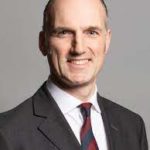
  • Alex Cunningham – 2022 Speech on the Terminal Illness Bill

    Alex Cunningham – 2022 Speech on the Terminal Illness Bill

    The speech made by Alex Cunningham, the Labour MP for Stockton North, in the House of Commons on 18 November 2022.

    I beg to move, That the Bill be now read a Second time.

    May I be the first to congratulate the hon. Member for Harrow East (Bob Blackman) on achieving a Second Reading for his Bill? Perhaps we could persuade him to organise a masterclass on how to achieve Government support for proposed legislation.

    I am grateful to the Public Bill Office and, in particular, to Anne-Marie Griffiths, for their tremendous support in preparing this Bill and to the Minister who has taken the time to talk to me about what I am proposing today.

    As I begin, I wish to thank the teams at both Marie Curie and the Trades Union Congress for all the vital work that they do in supporting those living with terminal illnesses. I also pay tribute to the many inspiring campaigners who work with these organisations, particularly Jacci Woodcock MBE who founded the TUC’s Dying to Work campaign, which I will talk about when I get to clause 3. I would also like to recognise the work of Mark and Cheryl whom I had the privilege of meeting a couple of months ago when I hosted Marie Curie’s Dying in Poverty parliamentary event. These campaigners and their families have been through one of the most difficult experiences that we can imagine—a terminal diagnosis—and yet they continue to use their voices to advocate to improve support for all people with terminal illnesses. Their work should inspire and humble us all—it certainly does me.

    The first time I promoted a private Member’s Bill, to ban smoking in cars with children present, I am proud to say that the Government eventually implemented the measures, albeit three and a half years later. I am hoping they will make quicker progress this time. As the cost of living crisis deepens, people living with terminal illnesses will be disproportionately impacted. Indeed, they are already facing increasing financial precariousness. Between April and September of this year, almost one in five calls to Marie Curie’s support line were from people affected by terminal illness who were concerned about their finances—an increase of 38% on the same period last year. Therefore, I hope the Government take up the measures in my Bill quickly, and provide those living with terminal illnesses with much-needed additional financial support, without costing the Exchequer a penny.

    Nobody should die in poverty, but, tragically, many of our constituents who should be able to spend the last stage of their lives enjoying the company of the people they love, are instead worrying about their finances, struggling to pay bills and incurring debts that will be passed on to their loved ones when they are gone. In 2021, Marie Curie commissioned Loughborough University to examine the number of people who die in poverty in the UK each year. The findings of the research are stark and horrifying: 90,000 people die in poverty every year in the UK, one in four people who die in working age are in poverty in their last year of life, and two in three working-age parents who die experience poverty in the last five years of life.

    Being diagnosed with a terminal illness can lead to a number of additional costs, including travel to appointments, medication costs and higher energy bills, which I will come on to a little later. These costs all land on the doorstep just as people’s income is reduced, as they may be forced to stop work or at least reduce their working hours. As Marie Curie noted in its briefing ahead of the autumn statement:

    “For many, this ‘double squeeze’ on household finances directly leads to a fall below the poverty line. Working age people living with a terminal illness are a third more likely to be in poverty than other working age people.

    For those who die in working age the risks are even higher. Without the fixed income provided by the State Pension and other lifetime savings to rely on, people who die in working age are more than twice as likely to experience poverty at the end of life as those who die in pension age.

    Working age families with children are particularly vulnerable to falling into poverty when hit by terminal illness. Childcare costs cannot be avoided and the impact of one or both parents leaving the workforce means that these families are more likely than any other group to fall below the poverty line when one parent is terminally ill.”

    These statistics underline the urgent need for additional financial support for those living with a terminal illness, particularly those who are of working age.

    There is a range of possible practical and impactful interventions that Marie Curie has worked up, such as placing elements of the National Institute for Health and Care Excellence guideline NG6, “Excess winter deaths and illness and the health risks associated with cold homes”, on a statutory footing and including people with terminal illnesses on the priority services register. That obliges providers to prioritise vulnerable customers for additional support, such as advance notice of planned power cuts or priority support in emergencies. It has also been energetically campaigning to give all dying people access to their state pension, no matter their age; to protect dying people from soaring energy bills, including by extending eligibility for the winter fuel payment; and to support dying parents with childcare costs. I urge the Minister to consider Marie Curie’s proposals that are wider than we are discussing today, and to meet it to discuss the full range of policies it has developed. For my part, the scope of this Bill is much narrower, so I hope she will be able to commit to advancing these limited but important proposals.

    If implemented, my Bill would require utility companies to provide certain financial supports to customers with a terminal illness, and it would strengthen the employment rights of people with a terminal illness. Clauses 1 and 2 will enable people who are terminally ill to access financial support from their energy provider via the warm home discount and the energy company obligation. The measures will amend the eligibility criteria for these schemes in existing legislation, to give energy providers an obligation to provide such forms of support to customers who are thought to be in their last year of life.

    In a 2021 report, “No place like home?”, the all-party parliamentary group for terminal illness concluded that the added costs of heating homes could drive many terminally ill people and their families into poverty and have a negative impact on their physical and mental health and wellbeing. That finding was confirmed by Marie Curie in the 2022 report “Dying in poverty”, which said that the energy bills of terminally ill people could increase significantly after their diagnosis. For example, some terminally ill people may need to heat their homes for longer than before, or to a higher temperature, as a result of their condition, while others will need to power medical equipment in the home, such as ventilators, respirators or monitors. Those higher energy needs can push households affected by terminal illness into fuel poverty.

    The UK’s energy providers are required to make certain forms of support available to customers who may struggle to afford the cost of their bills, or who may be vulnerable and need support. They include the warm home discount—a £140 discount on electricity and gas bills over the winter period—and the energy company obligation, which obliges providers to deliver energy efficiency measures to homes in order to help households cut their heating bills. In some cases, eligibility for these schemes is set nationally: for example, low-income pensioners are automatically eligible for the warm home discount under the “core group” system, while customers in receipt of certain benefits are automatically eligible for support under the energy company obligation’s help to heat group. In other cases, energy providers set their own eligibility criteria—such as those for the warm home discount wider group—which are often based on receipt of certain means-tested benefits or other criteria.

    Terminally ill people, especially those of working age, are not automatically eligible for support via these schemes despite their vulnerability to fuel poverty. They may be eligible to apply for support based on other criteria—for example, disability or receipt of means-tested benefits—but they will not necessarily be successful. Both the warm home discount and the energy company obligation require energy companies to make a limited pot of money available to support customers, and a provider’s criteria do not necessarily prioritise those who are terminally ill for support.

    Legislation places obligations on UK energy providers to make support available to customers via the warm home discount and energy company obligation on the basis of eligibility criteria set out in legislation. Regulation 8(5)(c) of the Warm Home Discount (England and Wales) Regulations 2022 sets out the eligibility criteria for the core group, who are automatically eligible for the payment. At present, people are considered eligible for support under the core group system if they are in receipt of the “guarantee credit” element of pension credit. Article 2 of the Electricity and Gas (Energy Company Obligation) Order 2022 sets out the eligibility criteria under the energy company obligation for the help to heat group, who are eligible for interventions to improve the energy efficiency of their homes to help reduce their bills. At present, people are considered eligible for support under the help to heat group if they are in receipt of certain benefits outlined in schedule 1 to the order.

    My Bill amends each of those items of legislation to introduce a new eligibility criterion based on the Social Security (Special Rules for End of Life) Act 2022, extending automatic eligibility for the warm home discount and energy company obligation to people who are thought to be in the last year of their lives. The Government have already demonstrated some commitment to improving financial support for those with terminal illnesses by amending the legal definition of terminal illness in benefits law to enable anyone who is thought to be in the last year of life to claim certain benefits on a fast-track basis. I welcome that, but I also hope that the Government can take this further step and provide necessary additional support for some of those who will need heating the most this winter as their energy bills climb.

    The third and final clause of my Bill aims to put the demands of the TUC’s Dying to Work campaign on a statutory footing, ensuring that terminal illness is recognised as a protected characteristic, so that an employee with a terminal illness would enjoy a protected period during which they could not be dismissed as a result of their condition. This protection will provide those who have received a terminal diagnosis and are still of working age with the choice of how to spend their final months, and the peace of mind of knowing their job is protected and the future financial security of their family is supported. Losing one’s job following a terminal diagnosis can lead to reduced income, further exacerbating the issues with financial security that I have discussed. Sometimes, it leads to a deeply stressful and upsetting HR procedure, which should not have to be a concern for those in the final stages of their life. If a worker with a terminal illness loses their job, they may also lose any death-in-service payments that they have earned through a lifetime of work but which are payable only to those who die while still in employment.

    Clause 3 provides that employers must take into account an employee’s terminal illness when deciding whether it is a reasonable adjustment to retain in employment those who have terminal illnesses, rather than dismiss them in accordance with a sickness absence policy. This will provide people with a terminal illness who are still of working age and who wish to continue working with additional security at the end of their life, and remove some of the stress and fear that they face. Although in some cases the individual may wish to stop working and spend their remaining time outside of work, some workers decide to continue working as long as they can, either because they need the financial security or because they find that their work can be a helpful distraction from their illness. Those who decide to stay in work should not be having to stress about dismissal or salary reductions after any periods of sickness associated with their illness. The clause ensures that whatever choice a person makes, they can expect the appropriate help and support from their employer, because when a person receives a terminal diagnosis, their job should not be on their list of worries.

    Thanks to the efforts of the TUC, over half a million workers in the UK are already covered by the Dying to Work charter. I hope that today the Government can commit to extending that to all workers. I desperately want these proposals to succeed, and would be more than happy to work with the Minister to amend the Bill if necessary ahead of implementation; I know that Marie Curie and the TUC would be pleased to meet officials in order to help in any way they can, too. I reiterate that these changes will not cost the Exchequer a penny, and the cost to energy companies is also very limited, especially when compared with their huge profits. The change to the warm home discount in clause 1 will not necessarily require additional funds, as all it does is widen the criteria of the core group who automatically receive it to include terminally ill people.

    The cost per person of the energy company obligation will depend heavily on what steps are needed to make that person’s home more energy efficient: for example, they may need a new boiler, insulation or a smart meter, among other things. However, again, I am sure the Minister can recognise that those costs would be extremely modest. While these clauses will not be able to ensure that no one dies in poverty—which is what this House should be striving for—I believe they could have a significant impact on the lives of terminally ill people, particularly those of working age, when they are at their most vulnerable. I hope the Minister will support the Bill’s Second Reading today, and work with me in Committee to make it law.