Tag: 2022

  • Thangam Debbonaire – 2022 Statement on John Nicolson

    Thangam Debbonaire – 2022 Statement on John Nicolson

    The statement made by Thangam Debbonaire, the Labour MP for Bristol West, in the House of Commons on 29 November 2022.

    The upholding of conventions is essential to the smooth running of this House and to the foundation of political order in this country. “Erskine May” is clear—there is a search function, and I checked this morning—about the procedure for raising a complaint about a breach of privilege. The rules are there to find for a Member who seeks to raise such a complaint. “Erskine May” says that Members need the permission of the Speaker and must request it in writing. There is a long-standing convention that, when Members write to the Speaker, they do so on the basis that the correspondence in both directions will remain confidential. This is especially the case on matters of privilege. Paragraph 15.32, footnote 6, is explicit:

    “It is not the practice for such letters to be made public… Members should not challenge the Speaker’s decision in the House.”

    As Members of this House we all hold parliamentary privilege, but that comes with responsibility. We have a duty not to misuse it, and we have a duty to respect the Chair’s rulings. Our conduct must live up to the high expectations that the public should have a right to expect of us.

    I therefore believe the conduct of the hon. Member for Ochil and South Perthshire (John Nicolson) warrants an investigation by the Committee of Privileges, as requested by the right hon. Member for Haltemprice and Howden (Mr Davis), so I will support the motion today, and I urge others to do so.

  • Deidre Brock – 2022 Comments on John Nicolson

    Deidre Brock – 2022 Comments on John Nicolson

    The comments made by Deidre Brock, the SNP parliamentary spokesperson at Westminster, in the House of Commons on 29 November 2022.

    It is extremely unfortunate that matters have come to this, but I understand the conventions of the House that brought us here. The Scottish National party respects the need for a transparent and open process.

    The Leader of the House has previously spoken of the importance of parliamentary modernisation, and of how the House operates unlike any normal administrative centre in the public or private sector, and I agree with her. The procedures of the Houses of Parliament need updating, and this situation perhaps provides us with an example of where some reform could take place.

    I am confident, having spoken to my hon. Friend the Member for Ochil and South Perthshire (John Nicolson), that he was completely unaware of the conventions of the House at the heart of this issue. He sought clarity on proper procedure and was caught out. He has already spoken at length, with his customary eloquence, outlining his position and how there was no malicious intent.

    In closing, I repeat that the SNP respects the need for transparency and openness.

  • John Nicolson – 2022 Statement on Privilege Debate Concerning His Behaviour

    John Nicolson – 2022 Statement on Privilege Debate Concerning His Behaviour

    The statement made by John Nicolson, the SNP MP for Ochil and South Perthshire, in the House of Commons on 29 November 2022.

    At the heart of this issue, I believe, is accountability. What should happen to Members who break the rules, and how open should our procedures be? What should the public be allowed to know?

    Let me say at the outset that I am very sorry that the Speaker feels that my revealing his decision not to have a debate in the House about our Committee’s report has put him in a bad light with the public. That was never my intention. My intention—[Interruption.] If Members allow me to develop my speech, they will hear my points. My intention was merely to let the public know what had been decided.

    I am accused of breaking a rule myself, and I would like to explain the circumstances to the House. I am a member of the Digital, Culture, Media and Sport Committee. We held a hearing with the then Culture Secretary, the right hon. Member for Mid Bedfordshire (Ms Dorries), at which she claimed that a Channel 4 reality series in which she had appeared some years ago had used actors pretending to be members of the public. She claimed that they had confessed this to her. A member of the production team who lived on the estate concerned—

    Madam Deputy Speaker (Dame Rosie Winterton)

    Order. I am sorry that the hon. Gentleman missed my opening remarks, but it is quite clear that this is not about the actions of any other Member. It is not about what happened in the Committee with any other right hon. Member. It is about the motion before us.

    John Nicolson

    Thank you, Madam Deputy Speaker. Let me say that there was considerable press interest in our Committee’s work, and I decided that we should send a copy of the report to the Speaker. I thought that time might be set aside for a debate about referring it to the Committee of Privileges. However, the Speaker wrote back to me saying that he did not believe the case met the threshold for a debate. I recorded a video summarising the Speaker’s decision, and I tweeted it. I offered no comment about the Speaker, nor did I criticise him. There was considerable public interest, and I soon discovered that the Speaker was angry. He believed that I should not have reported his decision. Last Wednesday, he told me in the House that he thought I had not summarised him accurately, and that I should not have reported him at all. It was not my intention in any way to summarise him inaccurately.

    Before I was elected to the House, I was a journalist—a reporter for “Newsnight”, among other current affairs shows. I believe in open democracy, but I also believe in maintaining agreed confidentiality. It did not cross my mind that revealing the Speaker’s decision on this was a breach of privilege. After all, what was I to say if journalists asked me whether I had written to the Speaker? Was I to say, “Yes”? If they asked me, “Has the Speaker responded? Has the Speaker given a ruling?”, was I then to say, “I’m afraid I can’t tell you”? I did not consider that I had broken any confidence or betrayed any trust. I did not imagine that the Speaker’s decision on a matter of importance to my constituents could not be revealed. Moreover, I believe that I summarised the Speaker fairly, but I am in the unfortunate position of finding myself unable to prove that, because in order to do so I would have to release the Speaker’s letter to me in its entirety—something which, as we have established, the Speaker does not believe I should do.

    There has been a suggestion that I printed only half the letter. That is not the case. The Speaker’s letter to me came as a letter through the post. There was no need for me to print it, nor did I publish it, nor did I show its contents to the camera, nor did I leak it to others. I was very open in the way I talked about it, which I hope shows that I did not think I was behaving improperly. There has also been some suggestion that the Select Committee did not wish to see this matter proceed to a privileges debate. That, too, is not the case. The Committee decided not to refer the Member concerned because she was no longer a Cabinet Minister, but the Committee left open the option for others to do so. Indeed, some Committee members expected that to happen. I agreed with the findings of the Committee, which were unanimous and cross-party.

    The right hon. Member for Haltemprice and Howden (Mr Davis), who wrote to the Speaker asking for this debate, has just spoken again. I have never met the right hon. Member or spoken to him here, although I may have interviewed him in the past. He is not a member of the Select Committee, and he has previously championed free speech.

    Madam Deputy Speaker

    Order. We really are not here to discuss the matters surrounding the Committee itself. The hon. Gentleman needs to stick to what is in the motion.

    John Nicolson

    May I just say this, Madam Deputy Speaker? I spoke to the Chair and the Clerk of the Committee today. I gave them exactly the words that I intended to use, and obtained their permission to use the words that I have just repeated.

    Madam Deputy Speaker

    Order. It is up to me to make the final decision. [Hon. Members: “Hear, hear.”] Those people do not give the hon. Gentleman permission; I do.

    John Nicolson

    The right hon. Member for Haltemprice and Howden spoke last Wednesday following the Speaker’s remarks from the Chair, and he laid into me with some vigour, using what appeared to be a pre-prepared speech. He was especially exercised by what he saw as my breach of parliamentary etiquette. It is worth me pointing out in that context that he did not contact me to inform me that he planned to speak about me, which as we all know is the convention. I was not afforded the opportunity to reply last Wednesday, but before moving on to other business the Speaker concluded:

    “I am going to leave it there for today”.—[Official Report, 23 November 2022; Vol. 723, c. 292.]

    I therefore assumed that the matter had been laid to rest. However, the right hon. Member then took to Twitter to pursue his criticism of me, complete with a video of his speech.

    Madam Deputy Speaker

    Order. It is not for the hon. Gentleman to be criticising the right hon. Gentleman who moved the motion. He can speak to the motion, not outside it, so can we just stick to the matter in hand?

    John Nicolson

    Thank you, Madam Deputy Speaker—

    Simon Hoare (North Dorset) (Con) rose—

    John Nicolson

    I will give way to the hon. Gentleman.

    Simon Hoare

    I am grateful to the hon. Gentleman, who on a personal level I like. Can I just give him some friendly advice? Put the spade down.

    John Nicolson

    People are watching this, and I am pleased that they are. I think they will draw conclusions, having heard both sides of the argument.

    Pete Wishart

    I have been in this House for 21 years, and as you know, Madam Deputy Speaker, I have been a member of the House of Commons Commission for something like four years. I had absolutely no idea that we could not reveal that we had had correspondence with the Speaker or summarise what it was. How on earth was my hon. Friend supposed to know that, when I, with my 21 years in this House and my service on the Commission, did not know it? All of this seems to be, at best, some sort of means for retribution and, at worst, institutional bullying, because that is what it is starting to feel like right now.

    Madam Deputy Speaker

    Order. Interventions can be made, but they should be brief. I would also remind hon. and right hon. Members that if the House decides to refer this matter to the Committee of Privileges, these sorts of arguments can be made there. This debate is on the simple matter of the motion. Other arguments can be made to the Committee if the House decides it wants the matter to go to the Committee.

    John Nicolson

    I know that the Speaker has been on the receiving end of often unpleasant comments from the public since I revealed his decision. That was never my intention. I did not use his name, I did not link to him and I did not post contacts for him. I am very sorry that a pile-on has ensued. I have friends across the House, and I believe in vigorous but fair debate. I have no time for abusive behaviour; I do not engage in it and I deplore it.

    I am advised that I breached a parliamentary rule by referring to the Speaker’s letter, but as I have explained, I did not knowingly do so. I would never reveal a confidence. I did not believe that the Speaker’s decision on a parliamentary matter was a secret. Indeed—this is perhaps not a matter for today—should there not be a distinction between correspondence containing confidences and correspondence on policy decisions? Has every Member who has revealed a Speaker’s decision by letter found themselves the subject of a parliamentary privilege debate, as I am today? Although this convention appears to exist, is it not the very antithesis of open democracy? Many Members on both sides of the House have told me privately that they did not know this rule existed.

    Tim Loughton (East Worthing and Shoreham) (Con)

    I should declare an interest as another Member who appeared in the very same reality show that the hon. Gentleman’s Committee discussed. He has not apologised to the Speaker. Does he not think that, having betrayed what was marked as private correspondence, which clearly and rightly aggrieved the Speaker, if he had given an apology at the time when it was raised by the Chair last week, he would not be in this position now? Why did he not do that? Would he not like to bring back at least some decorum by apologising profusely to the Speaker and the House now for the offence he has caused?

    John Nicolson

    The hon. Gentleman says the letter was marked “private”. I do not know how he knows what was on the letter. I have shown the letter to absolutely nobody. But since he challenges me, the letter was not marked “private”. If it had been, I would not have talked about it. It is a core belief of people in my former profession that we hold confidences and that we will go to prison rather than reveal our sources. The letter was not marked “private”. It was about a matter of policy on whether or not a debate could be held, and I did not think that it was confidential.

    Wera Hobhouse (Bath) (LD)

    The hon. Member has said that he was aware that the Speaker had become very angry. As the Speaker serves all of us, and as this is all about decorum, is it not time that he apologised to the Speaker? Maybe that would resolve a lot of things.

    John Nicolson

    I want to answer that question honestly. I am slightly torn because, on the one hand, I am deeply sorry that the Speaker is upset. Those who know me will know that I do not ever conduct politics in a way that aims to be offensive, and I am truly sorry that the Speaker is upset. I am truly sorry that I have upset the Speaker, but it would be disingenuous of me to say that I knowingly revealed this. I could not have been more open by going on camera and discussing this. I clearly was not trying to hide it. If people in my profession—my former profession and this profession—want to pass things into the public domain in a sleekit or surreptitious way, they give them to journalists. I did not do that. I stood up and talked about the letter, not revealing its contents in detail but summarising it.

    This place often seems hard to understand for the general public, and its procedures can appear opaque. I suspect that most people will find it curious that the Member who misled the Select Committee was subject to no consequences but the Member who revealed that—

    Madam Deputy Speaker (Dame Rosie Winterton)

    Order. The hon. Gentleman absolutely needs to withdraw that remark.

    John Nicolson

    I withdraw that remark. I, however, am subject to the current debate. I note that, over the years, these debates have been confined to people who have committed or been accused of committing some of the most egregious offences, but I have yet to meet a Member who thinks this falls into that category.

    I want to conclude by saying again that it was never my intention to insult the Speaker. I do not know him well but we have only ever had friendly exchanges when meeting. I bear him absolutely no ill will. I deplore any and all online abuse that he has suffered. Nobody, I imagine, is enjoying this debate—least of all me. I find interpersonal conflict stressful and unpleasant. I hope the House concludes that there was no malicious intent in anything that I did, and I apologise to the Speaker for breaching a House rule, but given the all-party nature of the Committee report I sought no party political advantage and I hope that Members here today will seek no party political advantage. My only motivation was to do what I always try to do, and that is to engage with the debate and to communicate my work here with constituents and with journalists as openly and fairly as I can.


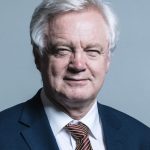
  • David Davis – 2022 Statement on John Nicolson

    David Davis – 2022 Statement on John Nicolson

    The statement made by David Davis, the Conservative MP for Haltemprice and Howden, in the House of Commons on 29 November 2022.

    I beg to move,

    That the matter of the actions and subsequent conduct of the hon Member for Ochil and South Perthshire in relation to correspondence from the Speaker on a matter of privilege be referred to the Committee of Privileges.

    I have been advised by the Clerks that this is a very narrow motion, so I will stick strictly and exclusively to the matter at hand. Before I come to the substantive motion, however, I want to say something to those members of the public who may think that this is an arcane or even abstruse issue.

    Ever since Speaker Lenthall told King Charles I that

    “I have neither eyes to see, nor tongue to speak in this place, but as the House is pleased to direct me,”

    the Speaker has been the spokesman, champion and protector of the Members and institutions of this place, as well as being the impartial arbiter of our proceedings. If hon. Members think that that is just a piece of ancient history, they ought to consider more recent times. Mr Speaker’s more recent predecessors have been criticised on issues of impartiality or for failing to protect Members: for example, Mr Speaker Martin’s failure to protect my right hon. Friend the Member for Ashford (Damian Green) was highly controversial at the time and very important.

    As for upholding the rights of Back Benchers and Opposition Members, we need only look at Mr Speaker’s fierce criticism of the Government during the statement yesterday, when he upheld our rights. It is therefore vital for Members to protect the integrity, impartiality and apolitical nature of the Speaker’s office. That point is clearly recognised in “Erskine May”—hardly a polemical document—at paragraph 15.14, which states that

    “reflections on the character of the Speaker or accusations of partiality in the discharge of their duties”

    are a punishable offence. “Erskine May” also recognises that a Member’s behaviour and conduct outside this House count towards that.

    I turn to the substantive motion. Following an appearance by my right hon. Friend the Member for Mid Bedfordshire (Ms Dorries) before the Select Committee on Digital, Culture, Media and Sport while she was Secretary of State, the Committee opened an investigation into several claims that she made, but ultimately it decided against any action. The Committee as a whole published a special report—[Interruption.] [Hon. Members: “He’s turned up.”] Oh, right.

    The Committee as a whole published a special report, which said:

    “we may have sought a referral to the Privileges Committee but, as her claims have not inhibited the work of the Committee and she no longer has a position of power over the future of Channel 4, we are, instead, publishing this Report to enable the House, and its Members, to draw their own conclusions.”

    It is crucial in this matter to remember that the hon. Member for Ochil and South Perthshire (John Nicolson) sits on that Committee. He did not ask for a Division before the report was published; he did not vote against it; he did not publish a dissenting opinion on that report. Instead, he wrote to Mr Speaker asking him to give precedence to matters reported on by the Committee, even though the Committee itself was not seeking such precedence. As would be expected, Mr Speaker did the usual thing, and—in his own words—decided to

    “respect the Committee’s assessment of the situation.”—[Official Report, 23 November 2022; Vol. 723, c. 291.]

    After Mr Speaker had replied to the hon. Member privately, as is the convention with privilege issues, the hon. Member took to Twitter. He brandished a copy of Mr Speaker’s letter in his video. He broke all the conventions on the privacy of Speakers’ correspondence on privilege, and disclosed a partial and partisan account of Mr Speaker’s letter. He said on Twitter:

    “He’s considered my letter, but he’s decided to take no further action.”

    In doing so, he implied that it was Mr Speaker’s unfettered decision not to refer the matter to the Privileges Committee. Nowhere in his filmed statement did he tell his followers that Mr Speaker was following normal procedure by accepting the will of the DCMS Committee—I imagine that is why Mr Speaker described his action last week as giving a “partial and biased account” of the correspondence—and nowhere in his statement did he tell his followers that it was he himself who sat on that Committee and signed off the conclusions.

    All of us in this House have a duty to uphold its rules and institutions, but by knowingly breaching the confidentiality of the Speaker’s correspondence, the hon. Member has done the opposite. This is a clear breach of our rules. The proper response after Mr Speaker’s censure of him for his behaviour last week was for the hon. Member to accept the seriousness of his actions, apologise properly to the House, and delete the offending tweets. If he had done so, I imagine that would have been the end of the matter; indeed, I would not have made my point of order on the day. However, he failed to apologise, and instead compounded his misdemeanour. Taking to Twitter once again, he claimed that he

    “offered no apology as there was no misrepresentation.”

    Pete Wishart (Perth and North Perthshire) (SNP)

    Will the right hon. Gentleman give way?

    Mr Davis

    He claimed that he

    “didn’t ‘release’ the Speaker’s letter. I summarised it entirely fairly.”

    That is untrue. He misled the country by deliberately withholding the way in which this decision had been arrived at and his part in it. He also retweeted an account that was directly critical of Mr Speaker, saying that Mr Speaker’s statement had been merely “Ermine pursuing theatrics” and that Mr Speaker was placing his

    “integrity above that of parliament”.

    Pete Wishart

    Will the right hon. Gentleman give way?

    Mr Davis

    The hon. Member for Ochil and South Perthshire had again compounded his misdemeanour by deliberately attempting to undermine the impartiality and integrity of the Speaker’s office. It is the role of the Speaker of this House to protect Members and stand up for its Back Benchers, and it is the Members’ duty, on our part, to uphold the dignity of the Speaker’s office.

    Pete Wishart

    Will the right hon. Gentleman give way?

    Mr Davis

    I do not believe any of this conduct to be appropriate for a Member of this House. However, that is not for me to judge, as a single, ordinary Member, which is why this is not a motion to condemn, but a motion to pass the matter to the Privileges Committee of the House of Commons.

  • Tom Hunt – 2022 Parliamentary Question on Employment Opportunities from Sizewell

    Tom Hunt – 2022 Parliamentary Question on Employment Opportunities from Sizewell

    The parliamentary question asked by Tom Hunt, the Conservative MP for Ipswich, in the House of Commons on 29 November 2022.

    Tom Hunt

    What assessment the Government have made of the potential impact of Sizewell C on employment in the local area. (902462)

    The Secretary of State for Business, Energy and Industrial Strategy (Grant Shapps)

    I visited the site yesterday and was delighted to confirm the nearly £700 million investment in Sizewell C pledged in the autumn statement.

    Tom Hunt

    There are clearly significant national benefits to Sizewell C in terms of national security, but as a Suffolk MP I am particularly interested in potential jobs creation. I understand that about 10,000 new jobs could be created. I previously worked closely with EDF and Suffolk New College to see how we can ensure that as many local people—and my constituents in Ipswich—benefit from Sizewell C as possible. Will the Secretary of State, in his own time—when he has a little availability—meet me, the principal of Suffolk New College, other education sector leaders and EDF to see how Ipswich people can benefit in a real, tangible way from Sizewell C?

    Grant Shapps

    My hon. Friend will be interested and happy to learn that I met two apprentices at Sizewell yesterday, who have two of what we expect to be 1,500 new apprentice jobs. He is right to mention 10,000 jobs in the immediate area—perhaps there will be 20,000 across the country—and we expect more than 70% of investment in the project to come to the UK. I will gladly meet him and his colleagues to discuss that further.

  • Alan Brown – 2022 Speech on Energy Security

    Alan Brown – 2022 Speech on Energy Security

    The speech made by Alan Brown, SNP MP for Kilmarnock and Loudoun, in the House of Commons on 29 November 2022.

    The reality is that this statement is just a padding out of the press release that BEIS put out earlier. I do welcome the energy company obligation funding for energy efficiency, but I think we need to be clear that this is not Government money; it is money funded from our energy bills and paid for by all bill payers. One issue with ECO4 is that it cannot be combined with other grants, whereas ECO3 did allow that money to be combined with other grants to bring down the costs of external insulation, for example. That is something the Secretary of State could consider to make schemes more affordable for people. The reality with EPC bandings is that there are more homes currently rated D to G than A to C, so much more direct investment is needed in energy efficiency to rectify that.

    The Secretary of State talked about energy security, so does that mean that the Government have finally bought out China General Nuclear from the Sizewell C consortium? Talking about sovereignty, will he confirm that uranium imports are going to be needed to keep Sizewell C going? Is it still the intention to take a 20% stake, and does that mean funding capital of £6 billion or £7 billion towards Sizewell C, because there is still no clarity in today’s statement? On the myth about nuclear baseload, by the time Hinkley Point C comes on stream, seven of the eight existing nuclear power stations will have stopped operating, which proves there is no need for nuclear baseload whatsoever.

    On wider energy policy, the Scottish carbon capture and storage cluster was the most advanced project, but it was still only classed as a reserve. Will the Government urgently review this classification, and make the Scottish CCS cluster a track 1 cluster to allow that investment to be released and for that project to go ahead? Pump storage hydro, as I have raised several times, could deliver about 3 GW of power by 2030. All that is needed is an electricity pricing mechanism—a cap and floor mechanism—so will the Government urgently review that and start these discussions?

    Finally, we know about the oil and gas investment allowance. If we are going to have continued record investment in renewables, there should be a renewables investment allowance to encourage that, particularly for green hydrogen.

    Grant Shapps

    Yes, I can confirm that China has now been bought out of the deal on Sizewell. The money yesterday ensured that it is no longer involved in the development.

    The hon. Gentleman asked about the future funding for Sizewell. He may be familiar with the new “regulatory asset base” approach to funding, which is built along similar lines to the contracts for difference that have been used so successfully for offshore wind power. That is how we will look to bring income to the project. I should also say that CfDs will now take place on an annualised basis, which will give those including Scottish clusters the opportunity to bid in as well.

    I am always curious about the SNP’s approach to energy. As far as I can work out, it does not like the oil and gas industry—even though the industry employs thousands of its constituents—and it absolutely hates nuclear. I am not quite sure what it wants to do on non-windy days.

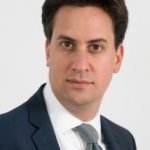
  • Ed Miliband – 2022 Speech on Energy Security

    Ed Miliband – 2022 Speech on Energy Security

    The speech made by Ed Miliband, the Shadow Business and Energy Secretary, in the House of Commons on 29 November 2022.

    I thank the Secretary of State for his statement, and can I take the opportunity to welcome him to his new role? We support new nuclear, and I welcome the announcement on Sizewell. The Climate Change Committee tells us that nuclear should play a role as part of the balanced pathway to net zero. In his reply, could he tell us the timetable for Sizewell’s final investment decision and when we expect it to be up and running? I also welcome the return of the delayed Energy Bill, which should never have been paused by the Government.

    As for the rest of the statement, I am bound to ask: is that it? Alongside nuclear, we need a sprint for cheap, clean, home-grown renewables, and I have to say to the Secretary of State that, given the chaos, confusion and embarrassment of the Government on onshore wind, I find it extraordinary that he did not clear that up in the House today. Let me remind the House of some facts. The ban on onshore wind in England that they put in place in 2015 has raised bills for every family in this country by £150 each, and keeping the ban in place up to 2030 would mean customers paying £16 billion more on bills compared with a target of doubling onshore wind. Let us be clear: opposing onshore wind waves the white flag on our energy security and raises bills for families.

    The only reason we are debating this issue is not that the public do not support onshore wind—they do, by 78%, according to the Department’s own polling—but that dinosaurs on the Government Benches oppose clean energy, and David Cameron and every leader since has indulged them. The problem is that the Secretary of State, who prides himself on being a truly modern man, is part of the fossilised tendency. He was part of the lobbying effort against lifting the ban in April. He said onshore wind was an “eyesore” and created “problems of noise”, and he urged the then Prime Minister to “largely” reject it. I may have had some issues with his predecessor, the right hon. Member for North East Somerset (Mr Rees-Mogg), but the Secretary of State’s position is making the Victorian of the Tory party look positively on trend, because the right hon. Member for North East Somerset after all called for the consenting regime for onshore wind to be brought into line with other infrastructure. Can the Secretary of State clear up once and for all what his position is on onshore wind? Will he now act in the national interest, properly end the ban and finally bring the consenting regime in line with other infrastructure?

    On solar, it is the same problem. The Prime Minister spent the summer saying he wanted to block solar, echoed by the Environment Secretary in the last couple of weeks. Blocking solar risks preventing the equivalent of 10 nuclear power stations-worth of power being built, so will the Secretary of State rule out the plans of the previous Environment Secretary to further block solar power on land?

    On energy efficiency, frankly this Government should be ashamed of their record, with the green deal fiasco, the green homes grant fiasco and energy efficiency installations running 20 times lower than under the previous Labour Government. Can the Secretary of State tell us from his announcement, which I am afraid contains no new resources, in what year the 19 million cold, draughty homes below energy performance certificate band C would be brought up to that level of decency under his plan? We would do it in a decade. Can he confirm that, at the current rates of installation, under this Government it would not happen till the next century?

    We have seen five Energy Secretaries since 2019. To overcome the bills crisis we face and to tackle the climate crisis, we need ambition, consistency and going all in on the green energy sprint. I am afraid we have not had these things from this Government. All we have had is inconsistency, dithering and a Government looking over their shoulder at their own Back Benchers. The Secretary of State has a lot of work to do to convince the country that that is going to change, and if he does not, it means that this Government will land us with higher bills and more energy insecurity, and will fail to take the leadership we need in tackling the climate crisis.

    Grant Shapps

    I do not think the right hon. Gentleman was in the Chamber earlier for Business, Energy and Industrial Strategy questions, but I did point to a quote from him back in 2010, when he said it was “pie in the sky” that the then new Conservative Government would get to 40% renewables by 2020. What happened? By 2020 we had got to 43.1% renewables. That is our record of delivery when it comes to renewables, so I do not think we need to take too many lectures from the Labour party, or from the party that five minutes ago did not support new nuclear power. It failed to commission any of it during its time in office—13 years, was it?—but now that we are getting on with it, all of a sudden it seems to have swapped sides.

    On wind power, both offshore and onshore, I do not think the right hon. Gentleman recognises the fact that the strike prices in the contracts for difference are now lower for any version of power production at all when it comes to offshore wind. These turbines are now so large that they cannot even be constructed onshore. They are so big that the turbines cannot be carried by road; they have to put offshore.

    Edward Miliband

    How big are they?

    Grant Shapps

    How big are they? It is convenient that the World cup is on because the right hon. Gentleman will be able to envisage this. Single turbines are seven football pitches in scope, as they turn. They are not buildable onshore, which is one of the reasons why the cheapest way to build them offshore to produce energy offshore is to build these mammoth turbines, which go together in groups of 200 or even up to 300. However, I am sure he knows all of this and that, rather than discussing the actual solutions, he likes to throw up the chaff.

    Since the right hon. Gentleman has mentioned onshore, I just want to note that the energy White Paper and the net zero strategy have both said exactly the same as we have been saying this week, which is that onshore can happen where it has local consent. I do not know why this local consent principle is so difficult for him to understand. There it is: we are delivering on the renewables, on the nuclear, on the energy independence and sovereignty that this country needs, and there is nothing from the Labour party.

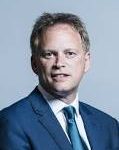
  • Grant Shapps – 2022 Statement on Energy Security

    Grant Shapps – 2022 Statement on Energy Security

    The statement made by Grant Shapps, the Secretary of State for Business, Energy and Industrial Strategy, in the House of Commons on 29 November 2022.

    With permission, Mr Speaker, I will make a statement on energy security.

    Over half the gas we use in this country is imported. A third of all our energy comes from other countries. Each click of the thermostat and every flick of the kettle sends our money abroad. We are lucky that we have access to secure supplies and strong alliances, but while the price of energy is dictated by the whims of international energy markets, it will be hard to release ourselves from the grip of high bills ushered in by Putin’s brutal invasion of Ukraine.

    The solution is energy sovereignty. We have the ability to generate our own energy here in the UK. We need only look at our renewables to know we are already doing this rather well, but it is time for us to do more: to bring energy home; to clean it up; to reduce our reliance on dirty, expensive fossil fuels; and to create a thriving, secure and affordable energy network. We will use the might of our many brilliant engineers, experts and innovators to build a system fit for the future.

    As I mentioned in questions earlier, yesterday I was in Suffolk where, thanks to Government investment, the development of the Sizewell C nuclear plant has been given the green light. It will generate not only cleaner, cheaper, low-carbon electricity for the equivalent of 6 million homes, but 10,000 jobs during construction and thousands more in the supply chain. This is the first direct stake a Government have taken in a nuclear project since 1987, and it is the first step on the ladder to long-term energy independence. This has been long awaited, and to boost the nuclear industry further we will work fast to scope and set up Great British Nuclear. With GBN we are aiming to build a pipeline of new nuclear projects beyond Sizewell C where they offer clear value for money, and we will make announcements on this early in the new year.

    It is not just nuclear of course: in order to strengthen our energy sovereignty we must look to our natural resources. This island is, as students of Shakespeare will know, a “fortress built by Nature”, and we are utilising that which nature has bestowed upon us—the howling winds of our coastlines, the crashing waves of our sea, and the radiant sun across our land—to create green, clean, cheap energy at home for us.

    Those industries are booming, providing jobs and growth up and down the country. In fact, earlier this month, the country hit a truly historic moment, when our onshore and offshore wind farms provided more than half the UK’s electricity. Furthermore, the National Grid reported that on that day all our renewable energy combined provided 70% of the country’s overall electricity needs. However, we need low-carbon back-up for those days when the wind is not blowing and the sun is dimmed, which is why I have put the Energy Bill back on track. It will fire up our nascent hydrogen and carbon capture industries by providing new business models and liberating private investment. The Bill will hammer into place the high-tech solutions we need to produce our own energy.

    Even after record Government support for household and business bills, the British people need us to take bold action, and the war in Ukraine, combined with sky-high energy prices, has put a spotlight on the importance of energy efficiency. Our ambition is to reduce energy demand by 15% by 2030. That will be backed by £6 billion in cash between ’25 and ’28, coming on top of the £6.6 billion we have already spent during this Parliament.

    The majority of British houses are, thanks to their Victorian builds, rather draughty. Our energy performance certificates did not really bother the estate builders of the 19th century, which is why our ECO+ scheme will help households install insulation, saving them hundreds of pounds off their bills each year—money they can spend elsewhere to grow the economy.

    Energy sovereignty is now within our grasp. Clean, affordable energy for households and businesses is not a pipe dream; it is a project we have now embarked upon. Building new energy networks will create jobs; producing our own renewable energy will keep bills low; and as businesses and households are relieved of the pressure of crippling bills, the economy can flourish and grow. Energy is coming home.

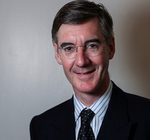
  • Jacob Rees-Mogg – 2022 Parliamentary Question on the “Communist Running Dogs”

    Jacob Rees-Mogg – 2022 Parliamentary Question on the “Communist Running Dogs”

    The parliamentary question asked by Jacob Rees-Mogg, the Conservative MP for North East Somerset, in the House of Commons on 29 November 2022.

    Mr Jacob Rees-Mogg (North East Somerset) (Con)

    May I add my congratulations to the hon. Member for Strangford (Jim Shannon) on securing this crucial urgent question?

    The Government must always do all they can to protect the safety of His Majesty’s subjects abroad; that is a fundamental duty. I wonder what effect calling in the ambassador will have and whether more does not need to be done urgently that actually has an effect on the Chinese operation in the UK. Should we not be looking to expel diplomats; to take tougher actions in international forums where Chinese interests are at stake; or to do things that the Chinese would not want us to do, such as improving our relationship with Taiwan or inviting the Dalai Lama on a formal visit by the British Government to show that we are not a pushover and will not support the communist running dogs?

    David Rutley

    At the calling in today, those issues will be raised in a robust manner. Of course, the safety of our citizens is absolutely key across the world and in China, so we will raise those issues. In terms of providing a robust, muscular approach, as we have seen, given the concerns that have been raised in the House about Uyghur minorities, sanctions and trade guidelines have been put in place. We will continue to take the appropriate action to counter what we believe are incorrect practices.

  • Alyn Smith – 2022 Parliamentary Question on Threat to UK Nationals in China

    Alyn Smith – 2022 Parliamentary Question on Threat to UK Nationals in China

    The parliamentary question asked by Alyn Smith, the SNP MP for Stirling, in the House of Commons on 29 November 2022.

    Alyn Smith (Stirling) (SNP)

    I warmly congratulate the hon. Member for Strangford (Jim Shannon) on securing this urgent question and I thank you, Mr Speaker, for granting it. It is important for the House to take account of the issue. Journalists deserve a special status anywhere: they tell the truth, they shed a light and they do a public service. They need support, so we express our support for Edward Lawrence. I am glad to hear that the ambassador will be summoned to the FCDO, but, frankly, I would like to hear about more consequences. Bluntly, the Manchester investigation also seems to be taking longer than it needs to; I think the House would support consequences on that.

    There is a wider issue at play. I am deeply concerned about the pressure that is building within China. The Communist party has boxed itself into a zero covid strategy that has been coupled with a terrifyingly low vaccine uptake, particularly among the elderly. That huge pressure could tend towards greater authoritarianism and a more violent crackdown. What assessment has the FCDO made of the risk to UK nationals in China? Does the advice need to change? On a humanitarian level, is there scope for assisting the Chinese state, for all its faults, with a catch-up vaccine roll-out? That might go some way to alleviating the humanitarian pressure that could tend towards worse consequences for the people of China.

    David Rutley

    As I have highlighted, consequences have been put in train in relation to other situations, particularly in Xinjiang, and we will be having a robust conversation with the ambassador today. The hon. Member talks about Manchester; I have already highlighted that we are awaiting the details of the police investigation. It is absolutely right that we get that done properly so that we can then take informed action, which was clearly not the case with what happened to our BBC journalist.

    On what is happening more broadly with the Chinese Government and their approach to covid, that is for them to decide. We have scientific co-operation and, if and when appropriate, that dialogue can take place. Ultimately, they need to make a decision about how they tackle covid within their borders.