Tag: 2022

  • PRESS RELEASE : Increased prison sentence for Jamie Hardman who committed sexual assault [November 2022]

    PRESS RELEASE : Increased prison sentence for Jamie Hardman who committed sexual assault [November 2022]

    The press release issued by the Attorney General on 1 December 2022.

    A man who sexually assaulted a woman in her flat has been ordered to spend longer in prison after his sentence was referred to the Court of Appeal under the Unduly Lenient Sentence scheme.

    After entering the flat of the victim, Jamie Hardman, 33, went into her bedroom and got into her bed. The victim was unwell and had her back to Hardman and thought it was her partner who just got into the bed with her.

    Hardman then carried out the assault which caused the victim to run and lock herself in the bathroom. Hardman then left the flat.

    On 31 August 2022 at Inner London Crown Court, Hardman was sentenced to 3 years and 4 months’ imprisonment for assault by penetration.

    His sentence was then referred to the Court of Appeal for being too low.

    On 01 December 2022, the Court ruled that Hardman’s original sentence was unduly lenient and handed down a new sentence of 4 years and nine months’ imprisonment.

    Speaking after the hearing, the Solicitor General Michael Tomlinson MP said:

    “Jamie Hardman demonstrated shocking predatory behaviour and put the victim of this crime through a terrifying ordeal. I welcome the decision to increase his sentence and hope that this ruling sends the message that crimes of sexual violence will never be tolerated.”

  • Therese Coffey – 2022 Speech to the CLA Business Conference

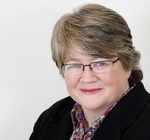
    Therese Coffey – 2022 Speech to the CLA Business Conference

    The speech made by Therese Coffey, the Secretary of State for Environment, Food and Rural Affairs, at the Oval cricket ground in London on 1 December 2022.

    It is a great pleasure to be to here with you today making my first public outing outside of Parliament since returning to Defra.

    I’ve always found the CLA to be a sensible voice at local and national level, and it’s had the great judgement to hiring Sarah Hendry as your director general, who was one of my best civil servants I ever worked with, during my first time at Defra when I spent 3 years there. It’s good to be back.

    The CLA have been at the forefront of thinking imaginatively, ambitiously, and practically about the future of farming for well over a hundred years now never mind since the British people voted to leave the European Union. You’re right Mark to reference your Rural Powerhouse Report. And it’s important that we continue to use documents like that with potential policy ideas and long may it continue.

    I thought it might be worth turning straight away to some of the comments made by Mark Tufnell and Professor Sally Shortall now. Some may not know this, when I was first in the role at Defra as Environment Minister, I asked to do more about rural life, and so I actually created the extra bit of rural life opportunities, and it is important that we have that focus in our department. Lord Benyon is our Rural Affairs Minister but I can assure that we all represent rural areas, we’re very conscious of the points that you’ve laid out. In Cumbria I think is the situation with the 16 plus bought instead of the daily trips to and from the college, recognising the opportunities to have. And indeed, some of the work I did at DWP, when we were in the framing of the levelling up framework that Michael Gove of course, pioneered, former Defra Secretary of State, and is leading once again in Government. One of the things I pointed out to my colleagues is that quite often you see a map of where people are considered to have really low income, and are not very well off and not particularly productive, and it really surprised them to hear that the district council areas with lowest median salary, were all rural, including the Prime Ministers own constituency, his council, was the third lowest median salary in the country. And that recognises quite a lot of the fact that the predominant sectors there are agricultural and tourism. And if you’re working in there rather than perhaps being the owner of one of the enterprises then the salaries are not as high as we’d like I’m sure.

    I want to stress that I will be having this important focus, and I know that all our Ministers are similarly engaged, recognising that we want to make sure that the prism of rural life is reflected and considered, particularly in things like levelling up, and the shared prosperity fund as we move forward.

    Turning to what Mark said, as he’s pointed out, overcoming barriers to business success is the main theme of this conference today, and while most of my comments will be about the farming side of your members interests, I think it’s a reflection that it’s absolutely critical that we get growth going again in this country and I do see the rural economy as a part of that. And I like to think that what we have done in the last 12 years, it may not be all complete I get that, but extending internet and broadband access that’s largely done; we still need to improve the mobile phone connection; I know that for farmers they welcome the fact that we’re adjusting taxes so that we can spread over 5 years instead of the annual tax return. And I thought that would be useful towards the cash flow challenges that sometimes come, as we see different outcomes every season.

    But indeed also, we have rightly kept the inheritance tax exemption under agricultural. But I think we’ve also tried to strive to help businesses find more sector diversify. I know that we’ve already changed planning rules and guidance to allow more use of our buildings, and I do want to point out that primarily it is the local government and local councils that make decisions on individual local planning applications, and to some extent the national planning policy framework will of course help guide that, but it is their decision on exactly where and how through their local plans they support the rural economy to thrive.

    And as I say, Lord Benyon is the rural affairs Minister, and I can assure you my time in 12 years as being a member if Parliament for Suffolk coastal where I’ve seen Grade 4 land – I’m not quite sure if Grade 5 land has been used – but Grade 4 land is used for very productive production of much of the food that gets eaten in this country, and indeed extending the seasons to get through crops of potatoes every year I think is particularly special. I continue to learn and I do see the CLA, pretty much every year at the Suffolk Show, and I’m very delighted to go and meet them as well as other my constituents.

    Now turning to the more broad substance, I know that there are many pressures that are coalescing right now that impact your businesses, whether that’s flooding and droughts that we’ve seen, outbreaks of pests and diseases, or indeed the global challenges affecting prices, energy and supply chains and we should be very clear the aftershock of covid I’m afraid will still be with us for some time and I cannot give you any timeline exactly on how long the illegal invasion of Ukraine will carry on but we know there will be consequences and there are consequences right now and that’s why the Government is making changes to its energy strategy to try and mitigate.. Those things will not come straight away apart from some of the support schemes that are already in place.

    But it is why we have set out urgent new measures and change on how we’ve dealt with avian influenza.

    It’s why we hope that the support we’re trying to give to farmers, recognising the rising input costs for feed and energy through a range of measures, whether that’s continuing the mini budget last year reinstated, the fuel duty and VAT cuts, and in terms of action to reduce business rates and indeed the businesses energy support scheme.

    So, knowing cashflow is probably the critical thing that we will help an enterprise keep going or not, it’s why to support farmers’ cashflows we changed BPS payment to twice a year, for the first time ever, and that’s only thanks to leaving the EU that we’ve been able to make those changes.

    We paid out £677 million out to you earlier this year. And a further £620 million will be paid from today. And I want to assure you that the Farming Minister, Mark Spencer, is meeting retailers and processors regularly, to encourage them to recognise that the burden of higher input costs is falling heavily on farmers.

    Thinking of these global impacts, I don’t think anywhere in the world has felt these more keenly than in Ukraine, traditionally the breadbasket of Europe.

    Amidst the turmoil of war, it is truly extraordinary that the farmers of Ukraine have managed to get so much of the harvest in. And at time when Ukrainians themselves are suffering so much I was really pleased that we were able to support this initiative to get grain from Ukraine to some of the poorest and most vulnerable people in the world. And I genuinely think that what they’ve done is an act of global humanity at its very best.

    That’s why at the weekend I was proud to join the conference and to send a contribution of £5m to Ukraine to support this initiative on behalf of the Government, the British people, and indeed particularly on behalf of farmers.

    Now I’m less than 2 months into the role, there is still a lot that I’m still working through at Defra. And while having spent 3 years in the department before I’m now the Secretary of State and have a much wider range of issues to tackle.

    But I felt it was important for me to be clear about our intentions for the future. So, I’ll cut to the chase.

    As we made clear in our manifesto, one of the biggest bonuses of leaving the EU, was the opportunity to free our farmers from the bureaucratic Common Agricultural Policy and move to a system as we set out in our manifesto based on spending public money in a way that helps us to secure the public good.

    I like to think we have already started cutting back the red tape that has held you and us back, scrapping the three-crop rule and greening requirements that really did so little for nature, because that actually caused real headaches for you without really much outcome.

    We certainly have guaranteed the annual farming budget over this Parliament but in return we want to support you to farm in a way that safeguards high standards of animal welfare and protects and enhances our natural environment. So we make timely progress towards meeting our vital targets to halt the decline of nature in our country during this decade and ultimately to reach net zero by 2050 – making progress with every carbon budget, securing the clean and plentiful water that we need to build the resilience of our businesses, our food system, and our whole country to the impacts of a changing climate, so that we can secure the strong foundation of our whole economy – and the engine of our rural economy as well.

    Farming is the backbone of our second largest manufacturing sector, it bring jobs to every county, and does play a vital role in rural communities across our country.

    That is why we decided, in good faith, to review our plans, to make sure that we achieve the greatest possible impact for our environment, that we would secure the biggest bang for our buck in the way we spend tax payer’s money, and so that it is easy and attractive for farmers get involved.

    I know you need certainty, you need to plan ahead for future investment cycles. But I also want to be clear we recognise the needs that we may need to be agile and retain the dynamism that we have set in motion so we make sure that we are funding schemes that work in terms of the outcomes and in terms of take up.

    That is why we will continue to work together to iterate and improve our approach over time.

    And I think back to when I was in the role before and I was told how HLS was the best designed scheme in Europe, and the problem was hardly anyone took it up, and that’s something we really need to avoid.

    So turning to the next steps, where decades, even generations of hard-won experience have given us a strong sense of what already works. I’m very clear we don’t need to reinvent the wheel.

    It’s important that we support your stewardship of our shared stock of natural capital across our brilliant landscapes and reflect the immense contribution you make to your communities and also respect the way of life that you cherish.

    I am pleased to tell you that the review is now complete and that we are moving ahead with the transition, on the same timescale and with three schemes.

    All the funding that we are taking out through reductions in BPS over time will continue to be made available to farmers through a combination of one-off grants and ongoing schemes and the advice you need to get your business on the right footing for the future.

    As we make those planned, steady reductions to BPS payments, we will offer payment to you to take action through our three environmental land management schemes.

    And our aim, across those schemes, is not ‘one size fits all’ but a range of options so everyone can find a combination that works for them.

    So whether you’re a commoner, upland farmer, or small family farm, and whether you’re a landowner or a tenant farmer recognising elements of the Rock review.

    As your president said, the choice is not producing food or doing environmental schemes, it’s about making space for nature and that must go alongside sustainable food production.

    They are not mutually exclusive. They can be symbiotic.

    And we need to embrace the complexity that holds the key to getting the critical decisions right on how we can make the most of our land to achieve all the things we want to do from planting forests and protecting peatlands to producing food.

    We can bolster sustainable, resilient food production and protect our shared natural heritage and our rural heritage. We need to build more of the homes that people need while we also get on with tackling the causes and the impacts of climate change as well as improving the state of nature.

    And we will have those honest conversations with you about how we maximise those multiple benefits for land.

    So, turning to our three schemes.

    As we reduce the amount being spent on BPS we will be adding options to our current offer so that by 2024, farmers will have access to the full range of actions they can be paid to take on their land.

    For our Sustainable Farming Incentive – our aim is to get as many of you as possible signed up.

    The initial phase is now live – and is focused specifically on securing the health of our soil that is critical to food production and to reducing inputs so that we support the natural world from the ground up.

    And we will build on that with more standards each year so you can choose more options for your business.

    I’m really pleased that over 30,000 farmers are now involved in our simplified, streamlined, and I hope overall, enhanced Countryside Stewardship scheme – that’s a 94% increase in three years. Something must be working.

    We have listened to your concerns, we’ve learned from your experiences and I hope we’ve made a lot of improvements – but we know there’s a lot more to do.

    I want to build on that success, by developing Countryside Stewardship, so we achieve the same ambitious outcomes that we intended to deliver through Local Nature Recovery but instead to have an enhanced version of the Countryside Stewardship scheme that is already part of thousands of farm businesses rather than introducing a whole new process.

    That is the right thing to do and the smart thing to do with public money as we develop the markets that will draw in finance from all sources.

    With the first 22 Landscape Recovery pilot projects up and running for our third scheme that holds true at scale as well.

    And it seems to me to be common sense that when communities come together locally or businesses come together to create the sort of wildlife corridors that are critical to the connectivity as well as the diversity and abundance of species and to the health of our waterways, the impact that they achieve together will be greater than the sum of its parts and as a consequence you will be rewarded accordingly.

    My priority is to make sure that we make it as simple and straightforward as possible for us succeed and, let’s be straight forward about this, in my view, farmers are the original friends of the earth. You are the stewards; you are the custodians of our countryside.

    I will tell anyone that will listen that our British farmers are outstanding in their field. We produce high quality food that is well-known around the world and working with nature – not against it is the natural instinct of every farmer I have ever had the pleasure of meeting.

    You look after more than 70% of our land. We cannot make these changes to improve the environment or get to net zero without you

    That’s why we want to work with you to tackle this together so we help the environment, backing the frontrunners and helping everyone to bring up their baseline.

    Sadly, there will still be and still are polluters who let the side down and end up threatening these collective efforts.

    And frankly if they don’t accept our support, we will tackle them head on, but we want to focus on all of you and help you take your businesses into the future.

    So, we are getting you the cutting-edge kit and the expert advice you need to improve productivity, health and welfare.

    We are investing in your connectivity, with new trials confirmed today to beam broadband into the hardest to reach rural areas directly from satellites in space

    As well as tripling the value of vouchers available under the Gigabit Broadband Voucher Scheme from early next year.

    We are funding the Institute for Agriculture and Horticulture so we can create the conditions we need to retain generations of experience, develop promising talent, and indeed attract fresh blood into the sector.

    And of course, we will back the world-class British science and innovation that is key to improving productivity and resilience, and we will make the most of new legislation that will confirm our newfound freedom to make sure British expertise leads the way on the precision breeding that is so important for food security around the world.

    In all of this, I am committed to making sure that we give you the clarity, certainty and support that I know you need.

    So early in the new year, I can’t make the announcements today, we will be saying more about what we’ll be offering to pay you to do in the next phase of all the schemes.

    And with the time it takes to get an SFI application done and dusted, it’s already been slashed from 6 months during the pilot to under 2 weeks for the full scheme – and often much less than that. My hope is that you will find it relatively quick and easy to identify a set of actions that works for your business, sign up for payments and crack on with your plan to make your business more resilient, more sustainable, more profitable, and indeed more productive in the months and years ahead.

    Lastly, I want to thank all of you who are working with us on the development of these schemes and for your continued engagement – as well as for all the other sterling work that you do.

    I can assure you we remain as ambitious as ever – on all fronts and it is essential that we continue to work together to get this done and get it right.

    I know we can do it.

    And we have to make this work, to tackle climate change, improve the state of nature, support our rural communities and to make sure the way we produce food is sustainable and resilient for the future.

    Thank you – and I wish you all the best for the rest of your conference.

  • Andrew Griffith – 2022 Speech at the TheCityUK’s National Conference

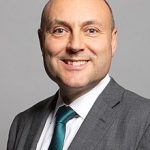
    Andrew Griffith – 2022 Speech at the TheCityUK’s National Conference

    The speech made by Andrew Griffith, the Economic Secretary to the Treasury, in Edinburgh on 1 December 2022.

    Introduction

    Good morning, everyone. And thank you, of course, to Miles and TheCityUK for the opportunity to be here.

    You don’t need me to remind you of the uniquely constructive role TheCityUK plays on behalf of this great industry.

    I want to thank you, among many other things, for your forward-looking research.

    And I note, for instance, your recent Six-point Plan for Growth for the Sector, and your statistics on financial services across the UK – which are invaluable for our understanding of the breadth and depth of this industry.

    That’s particularly relevant because of where we are today.

    Not too long ago we could have closed our eyes, taken a deep breath, and known for certain that we were in Auld Reekie.

    The geographical giveaway these days is the sound of clicking of computer mice echoing from the offices of RBS, Standard Life, Baillie Gifford, Abrdn and Scottish Widows. And Blackrock, JP Morgan Chase, HSBC and more.

    Because this city, as we all know, is a financial services powerhouse.

    The second largest financial services cluster in the UK after London. More than 50,000 people – one seventh of the entire workforce – employed in banking, insurance and pensions, asset management and FinTech. And an increasingly important centre of excellence for sustainable finance and investment.

    And to avoid accusations of favouritism, let me also praise Glasgow where recent growth in the sector has attracted global attention, and made it the third largest financial centre in the UK behind London and Edinburgh. While green finance credentials, the fintech cluster and a developed talent pool extend beyond Edinburgh and Glasgow to Perth, Stirling, Dundee and Aberdeen too.

    Of course, this is nothing new. Scots and Scotland have been pioneering financial services for centuries.

    Adam Smith gave us the intellectual framework. Nicknamed both ‘the Father of Economics’ and ‘the Father of Capitalism’, Smith is said to have expressed disappointment that he didn’t achieve more in life. Which seems a little bit harsh.

    John Law – an inveterate gambler and duellist – dreamt up paper money… claiming – and I quote – that ‘I have discovered the secret of the philosopher’s stone: it is to make gold out of paper’.

    Robert Wallace and Alexander Walker – presbyterian clergymen both, and founders, of course, of what became Scottish Widows – created the first insurance fund, based on actuarial and financial principles rather than mercantile gambling.

    Robert Fleming, of the eponymous bank, left school at 13 – not that I’m advocating that – and went on to become one of the world’s leading investors and pioneer of investment trusts.

    You get the point. For whatever reason – and I suspect there are many – Scotland has been at the leading edge of this intellectually and practically for a long time.

    Financial services and the Union

    The larger point here is that it’s no coincidence that Scotland and the UK’s financial services industry have evolved – and thrived – together over the last two centuries.

    That’s just one of the countless reasons why I’m a Unionist – and why this Government is utterly committed to bolstering the Union.

    And, by the way, the Autumn Statement of a fortnight ago made good on that commitment by boosting UK-wide devolved administration funding by £3.4 billion over 2023-4 and 2024-5.

    But I don’t want this to be a political speech. I want it to be a celebration of this extraordinary industry, and clear statement of intent regarding the future.

    If you can’t tell, I am determined to do everything I can to help this industry succeed. And I share that determination with the occupants of both Number Ten and Number Eleven Downing Street.

    And given the contribution you already make to the UK, why wouldn’t we feel that way?

    One pound of every ten of the UK’s economic output – a higher proportion than in France, Germany or the US. Hundreds of thousands of jobs. Billions in taxes supporting our vital public services.

    And while I may be the City Minister, that doesn’t just mean the City of London. Yes, it’s Edinburgh and Glasgow and Aberdeen. But it’s Manchester, Cardiff, Belfast, Newcastle and Birmingham too. Because two-thirds of financial services jobs are outside London, serving vast numbers of people who’ve never even set foot in the Square Mile.

    The government’s ambition

    As an industry, you are at the forefront of our minds.

    When we ask ourselves what, in a globally competitive marketplace, we want to be good at, you are a huge part of the answer.

    The big picture ambition is straightforward: financial stability, fiscal sustainability and growth.

    In the Autumn Statement, the Chancellor outlined five areas for growth: digital technology, life sciences, green industries, advanced manufacturing and financial services. And, when you think about it, even the first four of those rely on financial services – for their day-to-day operations as well as investment capital.

    On the bank surcharge, the Autumn Statement confirmed the position we announced last year, underlining the government’s commitment to maintaining competitiveness and encouraging growth within the banking market.

    We also published a consultation response setting out the final policy approach on Solvency II. This will deliver a more tailored, clearer and simpler regulatory regime, better suited to the unique features of the UK market.

    The reforms we’re making are as follows: cutting the risk margin significantly, with a 65% cut for long-term life insurers; maintaining the existing fundamental spread; increasing investment flexibility by overhauling matching adjustment eligibility rules; and slashing red tape.

    The ABI have said the reforms we have made could unlock over £100 billion from UK insurers for productive investment.

    On that note, we’ve also listened to industry’s proposals, and created the Long-Term Asset Fund to help unlock access to long-term illiquid assets.

    We believe that’ll mean a significant boost to the productive capacity of the UK economy – including much-needed infrastructure and decarbonisation products.

    Long-term investments in illiquid assets can be an incredibly important part of a portfolio. A regulatory environment that is too focused on short-term, liquid assets or low costs at the expense of quality is a problem.

    Another positive with that, of course, is helping pension savers to diversify their investments, and access higher long-term returns.

    I should also say that the work on LTAFs is best understood in the context of wider work on the UK funds regime review, which seeks to make the UK a more attractive location for funds domicile.

    I’ve been really keen for some time to see the launch of the first LTAFs. And am delighted to reveal today that the first firm has submitted an LTAF application to the Financial Conduct Authority.

    My personal view is that good decision-making is sometimes about appropriate risk-taking. In government we should take calculated risks – to get the very best outcomes for the people of this country. And I celebrate those who do the same in business.

    Refining ESG

    Another thing I’d flag is the fact that we’re introducing new sustainability disclosure requirements which take a climate-first approach to sustainability reporting, in turn helping people to make informed investment decisions. We will do this in a proportionate and UK-tailored manner while in step with international standards.

    The FSM Bill

    Part of the context for all our efforts to boost the sector is, of course, our departure from the European Union.

    And we’re seizing related opportunities there too.

    That’s the point of the Financial Services and Markets Bill which is making its way through Parliament more-or-less as I speak.

    The headline goals are tailoring financial services regulation to UK markets to bolster the competitiveness of the UK as a global financial centre, while delivering better outcomes for consumers and businesses.

    You’ll be pleased to know that I’m not going to take you through every sub-clause of the Bill – that’s available on Parliament TV if you’re interested – but let me at least sketch out the most salient points.

    First, the implementation of the Future Regulatory Framework Review – with new objectives for the regulators to facilitate growth and competitiveness, and the repeal of retained EU law to enable reforms to key areas of financial services regulation, including Solvency II and MiFID. The result will be a comprehensive, domestic model of regulation.

    Second, harnessing new technologies safely and responsibly. With an FMI Sandbox to facilitate experimentation and the development of best practice.

    Third, we’re implementing the outcomes of the Wholesale Markets Review – removing unnecessary restrictions on where and how trading can happen whilst maintaining high standards of regulation.

    I also want to take this opportunity to reiterate the government’s commitment to taking forward the recommendations from Mark Austin’s Secondary Capital Raising Review.

    The Treasury is working with BEIS on these recommendations and on reforms to corporate governance more broadly. This will help to enhance the international competitiveness of UK capital markets and support the growth ambitions of companies listed on them.

    In addition, you may have noticed that the PRA published their consultation yesterday on their proposals to implement the remaining post-financial crisis banking reforms known as Basel 3.1.

    In parallel, the government has also published its own consultation on the Basel 3.1 reforms… setting out the legal changes we’re considering, and seeking views on improving aspects of the Capital Requirements Regulation, particularly in terms of equivalence, resolution and overseas exchanges.

    This is a huge package of reforms, which we know will have far reaching impacts and so we ask you to please continue to engage with both the PRA and the Treasury on these important issues. As ever, we want your insights and your advice.

    Let me also just say a few words about the powers of the financial services regulators, who do a fantastic job.

    The government is absolutely committed to their operational independence.

    We were considering the introduction of a so-called ‘Intervention Power’ in the Financial Services and Markets Bill. But last week decided not to proceed with the Intervention Power.

    Our view, in short, is that existing provisions in the Bill are sufficient to allow the UK to seize the opportunities of Brexit, by tailoring financial services regulation to UK markets to bolster our competitiveness.

    We are also using the Bill to strengthen our already high standards for Central Counterparties – or CCPs – ensuring the Bank of England, have the powers they need to determine the regulatory standards for these firms and also upgrading our resolution regime.

    We are making changes to ensure that the UK remains an open, global financial centre for clearing. In fact, just yesterday a statutory instrument was laid in Parliament extending two transitional regimes for overseas central counterparties, or CCPs.

    Two years ago, the Prime Minister told a Mansion House audience that the UK already had “one of the world’s most robust regulatory regimes for central counterparties.”

    He also said that there was “no reason of substance why the UK cannot or should not continue to provide clearing services for countries in the EU and around the world”.

    And that is as true today as when he said it.

    The opportunity

    Ladies and Gentlemen,

    That’s a lot of hard graft done already – and I want to thank colleagues at the Treasury and across the industry for getting us this far.

    But let me be clear that we’re only just getting started.

    Our goal, plain and simple, is to be home to the most open, well-regulated and technologically advanced capital markets in the world.

    We want to reposition financial services for a time of great change so that they can contribute even more to this country’s long-term prospects.

    That’ll mean, for instance, a further package of reforms repealing EU law, and replacing it with rules tailor-made for how things are done here.

    It doesn’t mean deregulation for deregulation’s sake but it will mean selectively looking for ways we can use our freedoms to be more agile and competitive.

    I’m incredibly excited about what we can achieve.

    We think it is only by expanding our ties with markets around the world – from the most advanced to the fastest -growing – that we boost growth and productivity here at home.

    The UK has an abiding interest in a prosperous and productive Europe, with many shared interests, and we continue to have valuable relationships with our EU partners.

    But the success of Brexit has given us a clear opportunity to strengthen ties with advanced markets beyond Europe, from the US to Singapore, Japan to Australia.

    At the same time, we need to deepen links with the fastest growing markets across Asia, Africa and Latin America. Links that will have an important impact on the UK’s future prosperity.

    Our proposition is to increase the range of markets and consumers that benefit from the UK’s innovative financial services offering – including by looking to the markets of the future.

    Fintech and crypto

    The government is also committed to retaining the country’s global leadership position in fintech.

    In the first half of this year, investment in the sector was a record £7.8 billion, 24% up on the same period last year. Meaning, in turn, that fintechs in the UK attracted more funding than the rest of Europe combined.

    There’s also, of course, the opportunities presented by distributed ledger technology and blockchain.

    You may have heard my predecessor, John Glen, setting out our ambitions on crypto in April.

    He said this: “If crypto-technologies are going to be a big part of the future, then we – the UK – want to be in on the ground floor.”

    We’re driving forward this agenda and I continue to chair the crypto-engagement group to hear from industry and share progress.

    Yes, there are questions about the future of crypto – but we’d be foolish to ignore the potential of the underlying technology. For me, recent events in the crypto market reinforce the case for timely, clear and effective regulation.

    The Financial Services and Markets Bill already enables us to establish a framework for regulating cryptoassets and stablecoins in the UK, and we will be consulting on a world-leading regime for the rest of the cryptoasset market later this year.

    Financial education

    Another thing I wanted to touch on is financial education. It’s away from the everyday hustle and bustle of the financial markets, but an important element of the path to sustainable success.

    According to the Money and Pensions Services’ UK Strategy for Financial Wellbeing, more than five million children ‘do not get a meaningful financial education’. While ‘poor financial wellbeing, affecting tens of millions of people, is holding the UK back’.

    We’re already committed to increasing the number of children and young people receiving meaningful financial education, as MAPS’ five-point plan to improve the UK’s financial wellbeing by 2030.

    Our view is also that the better our young people understand finances early on, the more likely they are to be able to make a professional contribution to this industry later in life.

    Conclusion

    Ladies and Gentlemen,

    I hope you’ll agree with me that that’s a pretty full slate of activity – and a clear statement of our ambition for financial services.

    The story of UK financial services – so much of it written here in Scotland – is already dynamic and proud.

    We have everything we need to thrive long into the future: the talent, the experience and the ambition.

    I’m excited by that. And I am thrilled to be on this journey with you.

    Thank you very much.

  • Ian Blackford – 2022 Statement on Standing Down as SNP Leader at Westminster

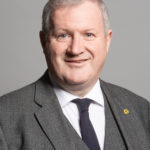
    Ian Blackford – 2022 Statement on Standing Down as SNP Leader at Westminster

    The statement made by Ian Blackford, the SNP Leader at Westminster, on 1 December 2022.

    I have today informed SNP MPs that I will not be restanding as leader of the Westminster parliamentary group at our AGM next week.

    After more than five years in the role, now is the right time for fresh leadership at Westminster as we head towards a general election and the next steps in winning Scotland’s independence.

    During my time as leader, the SNP won a landslide victory in the 2019 general election, with an increased share of the vote and MPs, and support for independence has continued to grow with polling this week showing a majority in favour.

    While I am stepping down as Westminster leader, I will continue in my role as the MP for Ross, Skye and Lochaber, and I have also accepted a new role at the centre of the SNP’s independence campaign, leading on business engagement.

    I would like to thank our MPs and staff for all their support over the past five years. Whoever replaces me as Westminster leader will have my full support as, together, we stand up for Scotland’s interests and democratic right to choose our future in an independence referendum.

  • PRESS RELEASE : Training for thousands to take advantage of green job opportunities [December 2022]

    PRESS RELEASE : Training for thousands to take advantage of green job opportunities [December 2022]

    The press release issued by the Department for Business, Energy and Industrial Strategy on 1 December 2022.

    Organisations have been awarded funding to deliver accredited training programmes to boost numbers of skilled retrofit, energy efficiency and heat pump installers.

    • Almost 9,000 training courses will be run across England for heat pump and energy efficiency installers thanks to £9.2 million government funding
    • courses will be free or heavily subsidised and provide retraining opportunities for people already working in or looking to start roles in the green energy sector
    • funding will let thousands take advantage of growth and jobs potential created by clean heating and push to reduce bills by improving energy efficiency of buildings

    Thousands of training courses will be rolled out across England to grow a skilled workforce of heat pump and energy efficiency installers, as the government announces winners of the Home Decarbonisation Skills Training competition.

    Shining a light on the huge scope for economic growth and job creation in the green energy sector, the £9.2 million funding will offer free and heavily subsidised training opportunities for installers of clean heating and energy efficiency measures.

    The funding will see training providers deliver 8,900 courses at accredited centres across England for prospective heat pump and energy efficiency installers.

    This will add to the rapidly growing number already saving households hundreds of pounds on their energy bills each year by delivering energy efficiency solutions, while helping the UK meet its ambitious carbon emissions commitments.

    Business and Energy Minister Lord Callanan said:

    The green energy sector is driving growth and creating jobs right across the country, and this funding will make sure we have enough tradespeople trained up and able to take advantage of these opportunities.

    We are making homes greener and cheaper to keep warm and training thousands more skilled installers will ensure we keep accelerating the pace of creating cleaner and more energy efficient buildings.

    The government is accelerating the pace of upgrading the energy efficiency of housing with £6 billion funding committed to 2028, in addition to £6.6 billion in this parliament. A further £4 billion has been committed through the ECO4 scheme, which is delivering home insulation measures to low income and more vulnerable households, and the £1 billion ECO+ scheme, which will install measures in households who have previously not been able to access support through the Energy Company Obligation scheme.

    Improving the energy efficiency of homes is the best long-term method of cutting household energy use and bringing down bills and this funding will be crucial in helping ensure there are enough trained installers to deliver upgrades across the country.

    The funding will provide training for people already working in the heating and plumbing sector who are looking to retrain or grow their existing skills, as well as for those looking to enter and work in the energy efficiency, building retrofit and low carbon heating sectors, building both the overall number and skill levels of trained installers across England.

    Training through the latest round of the Home Decarbonisation Skills Training competition will be delivered until 31 March 2023 and follows the success of the previous round of funding in 2021 when the government invested £6 million, resulting in almost 7,000 training opportunities.

    Organisations that have been successful in the latest funding round will provide appropriate installer training that leads to a recognised NVQ qualification or equivalent and Continuing Professional Development-style short courses.

    Training opportunities will be provided across England with courses being run at centres in towns and cities from Truro to Newcastle and the Isle of Wight to Cumbria.

  • PRESS RELEASE : New appointment made to the Animal Health and Welfare Board England [December 2022]

    PRESS RELEASE : New appointment made to the Animal Health and Welfare Board England [December 2022]

    The press release issued by the Department for Environment, Food and Rural Affairs on 1 December 2022.

    Defra Minister Lord Benyon has confirmed the appointment of Julia Wrathall as Non-Executive Director of the Animal Health & Welfare Board for England (AHWBE).

    Julia Wrathall has been appointed for three years from 1 December 2022 and will replace Emma Slawinski as a Non-Executive Director.

    The appointment has been made in accordance with the Ministerial Governance Code on Public Appointments. There is a requirement for appointees’ political activity (if significant) to be declared. Julia has declared that she has not taken part in any significant political activity in the past five years.

    The Animal Health & Welfare Board for England (AHWBE) is principal adviser to Defra on all strategic health and welfare matters relating to all kept animals in England. The Board’s role is to set the strategic policy framework, with responsibilities including developing and implementing animal health and welfare policy and ensuring value for money, assessing of the risk of animal disease threats and establishing surveillance and research priorities, monitoring the regulatory framework, approving the operational plans of the Animal and Plant Health Agency and other bodies, and reviewing contingency plans for dealing with new disease outbreaks.

    Biographical details

    Julia Wrathall

    • Julia is an independent animal welfare consultant with a background in applied welfare science and policy development across many species and areas of human-animal interaction.
    • She worked for the RSPCA for many years, where her roles included Chief Scientific Officer leading the work of the Society’s Science & Policy team, the development of the RSPCA’s farm animal welfare standards, and the Assurewel on-farm welfare outcome assessment programme.
    • She has served on a number of committees in the animal welfare, farming and academic sectors, including the Farm Animal Welfare Forum, Pig Health and Welfare Council, RUMA and Beak Trimming Action Group.
  • PRESS RELEASE : £15.4 million contract for first cutting-edge Navy crewless submarine [December 2022]

    PRESS RELEASE : £15.4 million contract for first cutting-edge Navy crewless submarine [December 2022]

    The press release issued by the Ministry of Defence on 1 December 2022.

    Project Cetus will deliver the largest and most complex crewless submarine operated by a European Navy.

    A £15.4 million contract for a cutting-edge crewless submarine has been awarded to Plymouth firm MSubs by the Royal Navy. The vessel will be delivered to the Navy in two years’ time and will further advance the UK’s ability to protect our critical national infrastructure and monitor sub-sea activity.

    Project Cetus – named after a mythological sea monster – enhances the Royal Navy’s experimentation with autonomous underwater systems. It is the first step in developing an operational autonomous submarine that will work side-by-side with crewed submarines – including the Astute-class hunter-killers and their successors – or independently.

    Its maximum operational depth will exceed that of the current submarine fleet, meaning Cetus will equip the Royal Navy with even greater reach into the oceans in support of UK defence. It will be able to cover up to 1,000 miles in a single mission.

    Cetus will be 12 metres long – the length of a double decker bus – 2.2 metres in diameter and weigh 17 tonnes. It will be the largest and most complex crewless submersible operated by a European navy. The bespoke vessel is being designed and built for the Royal Navy by Plymouth-based tech firm MSubs. This contract will create 10 and support 70 specialist jobs in the city.

    Defence Secretary Ben Wallace said:

    In order to meet the growing threats to our underwater infrastructure, the Royal Navy needs to be ahead of the competition with cutting edge capabilities. Project Cetus, alongside bringing forward the MROS ships, will help ensure we have the right equipment to protect the security of the UK and our Allies.

    Having the skills base and specialist knowledge to develop and build this vessel in the UK, is testament to the UKs leading reputation in building surface and sub-surface ships.

    The vessel’s size means that it will fit inside a shipping container and can therefore be transported around the world to wherever it is needed. It will be designed to operate with all of the ships from the Royal Navy fleet as well as those of our allies.

    Cetus will be a platform for the Royal Navy on which to experiment and build cutting edge technologies and capabilities around, encouraging innovation and developing best practice. The unarmed vessel is battery powered, meaning its effective range can be increased by installing additional batteries.

    It has also been designed to be modular, with an optional section that can be added to double the capacity of the vessel.

    The crewless submarine is the latest step taken by the Royal Navy into autonomous systems, and have been for over a decade. Crewless minehunting systems are already operating in Scotland, and driverless Pacific 24 sea boats are undergoing testing. Various aerial drones are used by ships for reconnaissance and intelligence gathering.

    The Navy has invested in a dedicated tech trials ship, XV Patrick Blackett, to assess and test new equipment and determine how it could be used or integrated into the fleet. Cetus is the equivalent for sub-sea experimentation.

    First Sea Lord Admiral Sir Ben Key said:

    This is a hugely exciting moment for Project Cetus as the Royal Navy surges ahead with the development of autonomous technology.

    This Extra Large Autonomous Underwater Vehicle is a capability step-change in our mission to dominate the underwater battlespace. And I am delighted that the project is able to support a small, innovative UK company which is at the cutting edge of this sector.

    The contract is funded by the Anti-Submarine Warfare Spearhead programme, run by the Royal Navy’s Develop Directorate, headquartered in Portsmouth. The vessel will be delivered through the Submarine Delivery Agency in Bristol and is the latest in a series of novel underwater technologies being brought to life to deal with the threats of the next decade.

    Brett Phaneuf, Chief Executive Officer at MSubs said:

    The faith the Royal Navy has shown in our small business is humbling and we look forward to working closely together in the future, as we have in the recent past, to develop and deploy Cetus, in the national interest.

  • Rosie Cooper – 2022 Statement Standing Down as MP for West Lancashire

    Rosie Cooper – 2022 Statement Standing Down as MP for West Lancashire

    The statement made by Rosie Cooper, the Labour MP for West Lancashire, on 30 November 2022.

    I have today stood down as MP for West Lancashire to take up the role as Chairman of Mersey Care NHS Foundation Trust.

    Representing West Lancashire in Parliament for the past 17 years has been the greatest honour of my lifetime. I am immensely grateful for the confidence that my constituents placed in me, across 5 elections, to be their voice in Westminster.

    I leave with a heavy heart, knowing that despite my efforts to distance myself from events in the past, the choice of broadcasters to re-tell this story is out of my control. I hope in the future, production companies will be more considerate of the effect that these programmes and the publicity campaign surrounding them, will have on the victims of crimes regardless of how public that crime was.

    I am, however, thrilled to be moving on to a new role within the NHS. Protecting and improving the health service has always been a great passion of mine. I am taking up this responsibility at a time when the challenges facing the NHS have never been more apparent.

  • PRESS RELEASE : The Chancellor of the Exchequer has this day appointed Rosemary Elizabeth Cooper to be Steward and Bailiff of the Three Hundreds of Chiltern [December 2022]

    PRESS RELEASE : The Chancellor of the Exchequer has this day appointed Rosemary Elizabeth Cooper to be Steward and Bailiff of the Three Hundreds of Chiltern [December 2022]

    The press release issued by the Treasury on 1 December 2022.

    The Chancellor of the Exchequer has this day appointed Rosemary Elizabeth Cooper to be Steward and Bailiff of the Three Hundreds of Chiltern.

  • PRESS RELEASE : Broadband beamed from space to isolated areas under plans to boost countryside internet connections [November 2022]

    PRESS RELEASE : Broadband beamed from space to isolated areas under plans to boost countryside internet connections [November 2022]

    The press release issued by the Department for Digital, Culture, Media and Sport on 30 November 2022.

    Work also begins on biggest ever £100 million Project Gigabit contract to connect 60,000 rural homes and businesses in Cumbria, delivered by Fibrus.

    • Mountain rescue base and 12th Century abbey to benefit in government tests of satellites to connect remote locations
    • Broadband voucher scheme to help people get better connections to be tripled in value to £4,500 –  funding gigabit connections in more rural communities

    Some of the UK’s most remote homes and businesses will be connected to better broadband, beamed to earth by satellite, as part of new government plans to ensure everyone can access fast and reliable coverage wherever they live or work.

    A trial officially launched today will see the extent to which satellites can be used to deliver high-speed connections to more than a dozen ‘very hard to reach’ locations – the less than one per cent of sites which are too difficult to upgrade via expensive physical cables in more extreme locations such as mountainous areas or small islands.

    A 12th century abbey in the North Yorkshire Moors National Park, a scout camping site in Snowdonia, a Lake District mountain rescue base and other remote premises will have equipment installed that allows them to link up to a satellite orbiting the globe and benefit from broadband up to ten times faster than is currently available to them.

    Following the trials, the government will consider the viability of using satellite technology to connect very hard to reach homes and businesses across the UK.

    It comes as the government signs its biggest contract under its £5 billion programme to roll out gigabit-capable connections to hard-to-reach areas, Project Gigabit. The £108 million contract, awarded to Northern Ireland-based provider Fibrus, will connect up to 60,000 rural homes and businesses in Cumbria which might have otherwise missed out on upgrades to faster gigabit speeds.

    Digital Secretary Michelle Donelan said:

    High-speed broadband beamed to earth from space could be the answer to the connectivity issues suffered by people in premises stuck in the digital slow lane.

    Ensuring everyone can get a quality internet connection is crucial to our levelling up plans and these trials aim to find a solution to the prohibitively high cost of rolling out cables to far-flung locations.

    We are also today kicking off plans for our biggest broadband build to date as we announce another £100 million is being spent as part of our Project Gigabit programme.

    The Cumbria contract is the latest in a flurry of deals signed under Project Gigabit in recent weeks to level up the north of England, with projects now underway to connect thousands of hard-to-reach premises in Northumberland and Teesdale.

    In a further broadband boost for rural areas, the government will triple the value of vouchers available under the Gigabit Broadband Voucher Scheme. From early next year, eligible homes and businesses will be able to apply for up to £4,500 to cover the costs of a gigabit-capable connection, up from £1,500 for homes and £3,500 for businesses previously, which will enable broadband providers to reach further into rural areas where the build costs are higher.

    ​​Gigabit-capable broadband networks are fast and fit for the future, allowing communities to work, stream and browse seamlessly with none of the disruptions associated with ageing copper networks.

    Entire families will be able stream movies, TV and video games in new high quality 4K and 8K definition onto multiple devices at the same time with no slowdowns in speed.

    It will pave the way for revolutionary new technologies such as Virtual and Augmented Reality and more internet-connected smart appliances in the home and the workplace to make our lives easier and more productive.

    And it will fuel our innovators and wealth creators, boosting growth, enabling anyone to start-up and run a business of any size from anywhere in the UK – from the Highlands, to the Norfolk Broads and the Welsh Valleys to the Lake District.

    More than 72 per cent of the UK can access gigabit connections, up from just 6 per cent in early 2019, thanks to the government’s plan to drive investment in rollout and bust the barriers holding back the industry from doing so at full pace.

    Satellite broadband trials

    The initial wave of trial sites announced today includes:

    • Rievaulx Abbey, founded in 1132, in North Yorkshire Moors National Park, is one of the most complete of England’s abbey ruins. The project will improve connectivity at the site and is expected to help visitors and researchers engage with educational content relating to the ancient monument.
    • Wasdale Head in the Lake District will be connected to explore how better broadband can improve operations in communication ‘blackspot’ zones for mountain rescue team radio and global positioning services.
    • Snowdonia National Park will see two sites connected: the base of the Ogwen Valley Mountain Rescue Organisation (Sefydliad Achub Mynydd Dyffryn Ogwen) to support their life-saving operations and Ty Cornel, an outdoor activity centre in Crafnant Valley managed by Scouts Cymru to help improve safety for wardens and the public traversing the isolated 25 acre site as well as enabling new educational resources for visiting school, university or scout groups.

    Other locations have been identified around the UK, and discussions for further trial sites are  ongoings, including small island locations in England, Scotland and Wales. As well as testing the technical capability of the satellites, the trial will assess what benefits faster connections will bring to these remote premises.

    Andrea Selley, Territory Director for the North at English Heritage said:

    We are so pleased to be part of this trial and want to thank the DCMS for their support. Rievaulx Abbey nestles within a beautiful but remote setting so this new satellite service will ensure better connectivity for our visitors and staff.

    The initial wave of sites are being supported by equipment supplied by Starlink, given the readiness and availability of its technology. DCMS continues to discuss the capability of other solutions and services with suppliers, including the use of other providers such as Oneweb at more complex sites..

    Low Earth Orbit (LEO) satellites are positioned around 550 – 1,000km above the earth’s surface and, in contrast to larger geostationary satellites, travel along their own orbit. The fact they are closer to earth than previous generations of satellites makes more applications possible, including video calls and real-time collaboration while also making activities like web browsing much smoother. The limited ground infrastructure required means they can provide additional resilience to critical networks in remote, often dangerous, environments.

    Recent tests have shown that in many locations these satellites can deliver speeds of up to 200 megabits per second, well above the speeds capable via copper cables commonly used in hard-to-reach areas today.

    Project Gigabit: Cumbria

    The £108 million contract awarded to Fibrus will cover rural towns, villages and hamlets across the region from Grasmere to Gilsland. Now the contract has been signed, Fibrus will begin construction of the network immediately with the first connections anticipated by the spring.

    The investment in Cumbria will also spark new apprenticeship and employment opportunities in the county. Following today’s announcement, Fibrus is set to create at least 90 apprenticeships over the next three years – covering a range of roles from underground and overhead cabling to surveying – and invest £50,000 to establish an apprentice training academy near Penrith.

    More areas including Cornwall, Hampshire, Shropshire & Telford, Cambridgeshire, Norfolk and Suffolk are all in line for contract awards by summer 2023.

    Dominic Kearns, CEO of Fibrus, said:

    Fibrus considers it a privilege to deliver a transformative project for Cumbria which will change the lives of people living in rural and regional areas. Fibrus is committed to supporting local communities, ensuring any work undertaken in our name supports apprenticeships and allows more people to reap the benefits of full fibre.

    This win helps us further our mission and commitment to bring fast, reliable and affordable broadband to all.

    Gigabit Broadband Voucher Scheme

    The Gigabit Broadband Voucher Scheme ensure rural communities and businesses, which commercial suppliers are not planning to reach, can get more immediate help with the costs of installing a gigabit-capable broadband connection.

    Businesses or residents that are eligible for gigabit vouchers can access the scheme through a  registered supplier. Suppliers can develop a project proposal to connect rural communities where there is demand for upgrades and then request vouchers on their behalf. Funding is only committed when a voucher requested has been approved by DCMS.

    Overall, more than 111,000 vouchers have been issued through the government’s vouchers schemes, and to date, more than 77,000 of these vouchers have been used to connect premises to gigabit-capable broadband.

    The announcement comes ahead of Small Business Saturday, which shines a light on the 5.5 million small businesses registered in the UK. The boost to the voucher scheme will directly support small businesses in rural areas across the country when it comes in early next year.

    Exchequer Secretary to the Treasury, James Cartlidge, said:

    Breaking barriers and driving competition in the telecoms sector will help deliver fast and reliable gigabit broadband to all corners of the UK.

    Using innovative methods to beam broadband to isolated areas, alongside this latest Project Gigabit deal to level up the north of England, will connect thousands more hard-to-reach premises, helping people get and stay connected”.