Tag: 2022

  • PRESS RELEASE : UK orders thousands more anti-tank weapons to bolster stockpiles [December 2022]

    PRESS RELEASE : UK orders thousands more anti-tank weapons to bolster stockpiles [December 2022]

    The press release issued by the Ministry of Defence on 7 December 2022.

    Thousands of new anti-tank weapons will be assembled in Northern Ireland and delivered to the British Army, Defence Secretary Ben Wallace announced today (7 December).

    A £223 million deal has been agreed with Swedish manufacturer Saab for Next Generation Light Anti-Tank Weapon (NLAW) systems, which are assembled at Thales’ facility in Belfast, Northern Ireland.

    The UK has provided thousands of NLAWs to Ukraine to support the defence of their nation following Russia’s unprovoked and illegal invasion. With NLAW, a single soldier can take out a heavily protected modern main battle tank from 20 to 800 metres away.

    Defence Secretary Ben Wallace said:
    These next generation light anti-tank weapons have played a decisive role in supporting Ukraine’s army to drive back Russia’s illegal invading forces.

    Working with our first-class industry partners, we are continuing to fulfil our commitment to NATO by ensuring our Armed Forces will receive a steady supply of these weapons over the coming years, whilst supporting UK jobs across the length and breadth of the country.

    Secured through Defence Equipment and Support – the MOD’s procurement arm – today’s agreement will see several thousand units delivered to UK Armed Forces across 2024-2026, in addition to around 500 being delivered in 2023 through a separate procurement.

    NLAW is a shoulder-launched missile system that attacks a tank from above. It combines the simplicity of light anti-armour weapons with the advantages of heavy, crew-operated guided missile systems.

    It is as a result of this agility, reliability and accuracy that the NLAW has been an important capability in Ukraine’s fight back against Russia’s illegal invasion, making up part of the 10,000 anti-tank weapons the UK has supplied to the Ukrainian armed forces.

    The UK continues to be actively engaged with industry, allies and partners to ensure we can equip Ukraine with vital military support while replacing, at pace, equipment and munitions granted in kind from UK stocks.


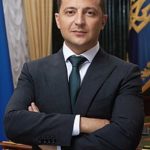
  • Volodymyr Zelenskyy – 2022 Statement on the Situation in Ukraine (20/11/2022)

    Volodymyr Zelenskyy – 2022 Statement on the Situation in Ukraine (20/11/2022)

    The statement made by Volodymyr Zelenskyy, the President of Ukraine, on 20 November 2022.

    Dear Ukrainians, I wish you health!

    I briefly report on the day, which started very early today, it was very active, and my schedule for this day is not yet exhausted.

    I just held another meeting of the Staff. The main issues are the front. The provision of our troops, the situation in particular sections of the front line and that we are planning to increase the number of Ukrainian flags in the cities in the south and east of the country.

    The battles in Donetsk region were discussed separately. Reports were presented. We are doing everything to help our heroes withstand Russian attacks.

    Of course, special attention was paid to energy.

    The composition of the participants of the Staff meeting is traditional. The Commander-in-Chief, commanders and all who work for our defense.

    An extremely important visit to Ukraine took place today – the visit of the new British Prime Minister, Rishi Sunak. A very meaningful visit. We managed to discuss all the key issues of our relations. There will be new results for both our countries – that’s for sure.

    Thank you, Rishi, Mr. Prime Minister, for your willingness to defend freedom even more strongly with us. We also have some very necessary decisions – we agreed on them today.

    As always, today I received reports on restoration work in the energy sector.

    We are working throughout the country to stabilize the situation.

    The most problems with electricity are in the city of Kyiv and Kyiv region, the city of Odesa and Odesa region, the city of Kharkiv and Kharkiv region. Vinnytsia, Ternopil, Cherkasy, Chernihiv and other regions – energy workers are doing everything possible to give people a normal life.

    Kherson – we are restoring transport connections. There is the first train from Kyiv. We create new opportunities for people every day.

    We are preparing important international events – they will be soon. We will provide everything that is needed for our protection.

    We involve everyone who can be involved in supporting our state.

    Thank you to everyone who works for Ukraine!

    Thank you to everyone who fights for Ukraine!

    Thanks to everyone in the world who helps!

    Glory to Ukraine!

  • Volodymyr Zelenskyy – 2022 Statement on the Situation in Ukraine (19/11/2022)

    Volodymyr Zelenskyy – 2022 Statement on the Situation in Ukraine (19/11/2022)

    The statement made by Volodymyr Zelenskyy, the President of Ukraine, on 19 November 2022.

    Good health to you, fellow Ukrainians!

    All day long, the energy staff worked to restore the normal technical possibility of electricity supply, as a result today there are already significantly fewer emergency shutdowns.

    As of the evening, in most regions where shutdowns continue, stabilization hourly schedules were in effect. Emergency shutdowns were used to a greater extent in the Odesa region and Kyiv.

    The difficult situation with energy supply persists in a total of 17 regions and in the capital. Kyiv region and Kyiv, it’s very difficult in the Odesa region, and also the Vinnytsia region and Ternopil region.

    Special “Points of Invincibility” were opened in Kherson today. The first two points. There will be more.

    While electricity is restored in the city, people can charge their phones, stay warm, drink tea and get help. We have provided communication service there, there are “Starlinks”, etc.

    We know that it is very difficult for people, because the occupiers destroyed everything before fleeing. But we will connect everything, restore everything.

    Vice-President of the European Commission Dombrovskis was in Kyiv today. We talked with him, in particular, about energy. Financial cooperation between Ukraine and the European Union, the financing needs of our country until the end of the year and in the next year were also discussed in detail.

    This year, we expect two tranches of macro-financial aid – EUR 2.5 billion in November and EUR 0.5 billion in early December.

    We also discussed new sanctions against Russia, which may be introduced at the European level.

    I spoke today with the student community of Ireland – a country that supports us fundamentally. Although it is a neutral country militarily, Ireland strongly defends European values and helps us politically and humanitarianly.

    I made two requests to the Irish. The first is to promote at the pan-European level the need to strengthen sanctions against Russia. The second is to help us spread the truth about the events in Ukraine and about Russian terror.

    I also addressed the participants of the security forum in Halifax, Canada, which is one of the world’s security forums. Once again, I presented the Ukrainian peace formula and invited Canada and our other partners to choose for themselves a component of the peace formula in which they can show their leadership as much as possible.

    This is the point of the way we present our proposals for restoring peace.

    We have broken them down into elements – what Russian aggression consists of. And we do everything to neutralize each of these elements and to neutralize the aggressor because of it.

    Every day, I receive very positive feedback from the world about this approach of ours – major leaders support Ukrainian constructiveness. And I believe that we will be able to implement our peace formula.

    The fierce fighting in the Donetsk region continues to this day, there has been no alleviation of hostilities or respite. About a hundred Russian attacks were repelled in the Donetsk region only yesterday. All our warriors who are holding out in Donbas are true heroes.

    Today, I would like to pay particular attention to the border guards of the Kharkiv and Sumy detachments, who are currently operating in the Donetsk region. Their mortars help a lot, giving the invaders no rest. Nice job, guys! Thank you!

    I also thank the warriors of the 4th operational brigade of the National Guard, which protects Ukraine in the direction of Bakhmut. Smart initiative and persistence are two things that produce extremely useful results.

    Nowhere on the frontline do we give in to the enemy. We respond everywhere, we hold positions everywhere. We are preparing future successes in certain areas.

    I spoke today with the President of Türkiye Erdoğan. Thanked him for the efforts to extend our grain export initiative.

    We also discussed the details of our new humanitarian initiative Grain from Ukraine. I hope that Türkiye will join its implementation.

    Of course, attention was paid to both security cooperation and energy situation.

    Tomorrow we will have a very active day, not a day off at all. We are expecting news and opportunities for Ukraine. And we are already preparing the appropriate soil for them.

    And today I want to say one more thing – congratulations. Congratulations to all sergeants of the Armed Forces of Ukraine on their professional day. Today, many kind words were said both in the army and in society.

    Sergeants are truly the people who ensure real unity and understanding between commanders and soldiers. The sergeant corps is the true backbone of the Army, and I thank all of our sergeants who live up to those words.

    Thank you to each and everyone who is currently serving in our defense forces!

    Thank you to everyone who made the defense of Ukraine a part of their personal destiny!

    Glory to our heroes!

    Eternal memory and honor to those who gave their lives for the freedom of Ukrainians!

    Glory to Ukraine!

  • Volodymyr Zelenskyy – 2022 Statement on the Situation in Ukraine (18/11/2022)

    Volodymyr Zelenskyy – 2022 Statement on the Situation in Ukraine (18/11/2022)

    The statement made by Volodymyr Zelenskyy, the President of Ukraine, on 18 November 2022.

    Good health to you, fellow Ukrainians!

    Today we have important international results.

    Our export grain initiative has been extended. Despite all the difficulties, despite various manipulations by Russia, we will continue to export agricultural products through our Black Sea ports.

    This is a very specific thing that makes the world see the importance of Ukraine. Since August 1, more than 450 ships have already left the ports of Great Odesa. The total amount of food is 11 million tons. The geography is very broad: Morocco, Algeria, Libya, Tunisia, Egypt, Sudan, Ethiopia, Somalia, Kenya, Yemen, Lebanon, Bangladesh, China, India, Indonesia, Türkiye, as well as the countries of the European Union.

    Tens of millions of people, primarily in African countries, have been saved from starvation, in particular by means of deliveries in the framework of the UN World Food Programme from our ports.

    We also managed to reduce the pressure on the global food market. And this means that food prices are significantly lower than they would be without our food exports.

    We have done everything to expand this work. And I thank all our partners who are helping: the UN and Secretary-General Guterres personally, Türkiye and President Erdoğan personally. Thanks to everyone in our team who is responsible for this direction. This is a truly important result.

    Today, a meeting was held in the Office regarding our Grain from Ukraine initiative. We have the consent of such countries as Germany, Poland, Belgium, Japan, Türkiye and the USA to join the work of the initiative. But these are the countries that have already made up their mind. There will be more participating countries.

    The meaning is very simple and as specific as possible. All the countries of the world, together with Ukraine, can ensure the supply of food for those in the world who suffer the most from food shortages. We will provide more details on how this will work shortly.

    I believe that this Russian aggression should lead the whole world to an obvious conclusion: never again should there be mass famine in the world. If the world works in unity, famine will be defeated.

    A very important decision was adopted today in the Netherlands. There is the first sentence for the murderers who destroyed the Malaysian Boeing in the sky over Donbas in 2014. Three men were sentenced to life imprisonment. And the day will surely come when they will begin to serve this punishment.

    But this decision is not just about three murderers. Russia lied a lot about this catastrophe, but nevertheless the key facts were established. Now the perpetrators have been convicted and the basis is provided to convict the culprits of a higher level, too. Those who bear full personal responsibility for the crime of aggression against Ukraine – the original crime that gave rise to all the others committed by the Russists since 2014.

    This is something without which it is impossible to protect the world from the repetition of such wars as Russian aggression against our state. When all the murderers and torturers are convicted, when their commanders and political “cover” face fair sentences, when Russia compensates for all the damage caused by Russian aggression, it will be a very solid foundation for a lasting peace.

    We have all the possibilities to ensure this. Every Russian war crime, every terrorist attack of theirs will receive its legal response. Today’s decision in The Hague proves it.

    The elimination of the consequences of another missile attack against Ukraine continues all day…

    Again, there are emergency shutdowns in addition to planned, stabilization ones. Currently, more than 10 million Ukrainians are without electricity. Most of them are in the Vinnytsia region, Odesa region, Sumy region and Kyiv. We are doing everything to normalize the supply.

    In Dnipro, dozens of people were injured as a result of a missile attack. Everyone is provided with aid.

    In Zaporizhzhia, the clearance of the rubble of a residential building, which was destroyed by Russian shelling at night, continues… The list of the dead includes seven people. Unfortunately, this number may increase.

    Only in the first half of today, our defense forces managed to shoot down six Russian cruise missiles and five Shaheds. Unfortunately, not all of those launched by terrorists.

    We repeat to our partners again and again that only full protection of the Ukrainian sky will protect both Ukraine and Europe from many possible escalations of Russian aggression and will definitely encourage Russia to truly end the war. Not to the kind of propaganda that now sounds from the Kremlin about the alleged readiness for negotiations in order to buy some time and gather forces for a new offensive, but to real peace.

    I would like to thank Finland and Sweden today for the decisions regarding the new defense assistance packages. This is very important. Each such decision of the states makes them co-creators of our victory and future peace.

    Today I signed several decrees on awarding our warriors. 402 servicemen of the Armed Forces of Ukraine were honored with state awards.

    In total, since February 24, more than 32,000 Ukrainian men and women have been awarded for bravery in battles. 4950 of them – posthumously.

    We must always remember how many people gave their lives to save Ukraine and freedom.

    Eternal memory to all those whose lives were taken by Russian aggression!

    Glory to all who gain victory for Ukraine!

    Gratitude to everyone who helps us and works for the state!

    Glory to Ukraine!

  • Volodymyr Zelenskyy – 2022 Statement on the Situation in Ukraine (17/11/2022)

    Volodymyr Zelenskyy – 2022 Statement on the Situation in Ukraine (17/11/2022)

    The statement made by Volodymyr Zelenskyy, the President of Ukraine, on 17 November 2022.

    Dear Ukrainians, I wish you health!

    Today was a long and hard day. And now, in the evening, it seems that the events of the morning happened at least yesterday or the day before yesterday…

    The summit in Indonesia. I took part in today’s work of the leaders.

    Then – another meeting of the Staff of the Supreme Commander-in-Chief, discussion in detail. The situation at the front. Also, the military presented all the available data on the missile hitting the territory of Poland. Everyone responsible for liquidating the consequences of Russian missile strikes on Ukraine reported on the recovery work.

    Recovery does not stop for a minute.

    Emergency blackouts and stabilization outages continue in 18 regions and the city of Kyiv. These are millions of consumers. We are doing everything to restore electricity – both generation and supply.

    Another meeting of the “Ramstein” defense group took place. The key issue is the strengthening of our anti-aircraft and anti-missile defense.

    I held negotiations with the vice president of the World Bank, who is responsible for our region. We discussed projects for the reconstruction of our infrastructure and social facilities, the work of the Recovery Fund of our country.

    The total cost of projects discussed today is billions of dollars. This is something that needs to be rebuilt now to guarantee a normal life for people.

    There were reports on the liberation of the territories of Kherson region – we are doing everything to provide people with electricity, water, communications, financial and social services, and normal medicine as soon as possible.

    Pharmacies are finally reopening in Kherson, the post office, banks are working. People are getting access to the Internet. There are already 30 humanitarian aid distribution points.

    Electricity was restored to more than 20 de-occupied settlements in Kherson region.

    Mykolaiv region is the same. We return everything necessary for a normal life.

    We are working to restore the water supply to Mykolaiv. Payment of pensions has started in Snihurivka.

    And I thank everyone who provides recovery. And especially our sappers and rescuers. Thanks to their work everyone else can work safely.

    Once again, I will repeat to everyone in the de-occupied territory: please be very careful!

    Russia wants to kill even after fleeing from our land. Therefore, you need to be very careful.

    If you see anything suspicious, report it to the emergency services and the police. If a building has not yet been checked by sappers, please do not enter it. If a road has not been checked yet, please skip it.

    Reports and messages from Donetsk region are unchanged. Fierce battles continue at the same points as before. We hold our positions despite dozens of attacks.

    Of course, there was a lot of international communication. Not everything can be talked about now. We protect the interests of Ukraine, as always.

    Today is the professional day of thousands of our people who perform one of the most important jobs. And this is not only the work to inform people.

    The Day of Radio, Television and Communication Workers is about those who strengthen democracy at all times. Who integrates society informationally, emotionally and politically. Who unites our interests, our pain and our joys, our hopes and aspirations, our problems.

    The stronger this sphere is in the country, the stronger the democracy is there.

    I sincerely congratulate everyone who works in this field – each one.

    Those who make a telethon and those who work on other information platforms. Presenters, reporters whom we see and hear, studio workers, producers, editorial staff, whom society usually does not see and hear, but without whom this industry simply would not exist. Thank you all for your work for Ukrainians!

    Today there was a rather long interview. I also held an “off the record” meeting for journalists – specifically for radio and television workers.

    And the day is not over yet…

    There is also a meeting of the UN Security Council regarding the new wave of Russian missile terror. We are monitoring statements, working with partners, and defending Ukrainian interests.

    Of course, one of the main issues at the Security Council meeting is the situation in Poland, the clarification of all the circumstances of how Russian aggression crossed the Polish border.

    The Ukrainian position is very transparent: we strive to establish all the details, every fact.

    That is why we need our specialists to join the work of the international investigation and to get access to all the data available to our partners and the site of the explosion.

    All our information is in full access, we have been giving it to our partners since the night, from those first hours when the world began to find out what happened.

    I spoke with President Duda last night and expressed my condolences to him – Russian aggression took the lives of two Polish citizens.

    And I want all of us to honor the memory of all those whose lives were taken by this Russian war with a minute of silence.

    Citizens of Ukraine, citizens of Poland…

  • Volodymyr Zelenskyy – 2022 Statement on the Situation in Ukraine (16/11/2022)

    Volodymyr Zelenskyy – 2022 Statement on the Situation in Ukraine (16/11/2022)

    The statement made by Volodymyr Zelenskyy, the President of Ukraine, on 16 November 2022.

    Fellow Ukrainians!

    Today, the enemy launched another massive missile attack on our country.

    A total of 90 missiles. Energy system, enterprises, and residential buildings were damaged.

    And when did it happen?

    As soon as the first day of the G20 summit ended in Indonesia, the most significant statements were made, the key meetings took place.

    Russia is told about peace, but it fires missiles in response. It is told about the global crises that Russia caused, and it launches Iranian drones in response.

    It is offered ten points to end the war, and it fires ten missiles per each point about peace.

    At half past three this morning I joined the summit to present our proposals for restoring international peace and order. The world heard Ukraine. G19 members made their statements…

    And then in Moscow they decided that they could try again to achieve with terror what they could not and would not be able to achieve for the ninth month.

    15:24 – rocket, Kyiv. And throughout the country… How we lived today…

    15:54 – rocket, Kropyvnytskyi.

    15:56 – two rockets, Kirovohrad region.

    15:56 – rocket, Zhytomyr region. And also – Ivano-Frankivsk region, Rivne region, Kharkiv region…

    16:29 – rocket, Kryvyi Rih.

    16:29 – rocket, Poltava region.

    16:35 – Zhytomyr region again. Kyiv region, Lviv region, Odesa region, Mykolaiv region. And also – Volyn, Khmelnytskyi, Ternopil region… And again Kyiv.

    Killed and wounded people. My condolences to the families!

    In many cities and regions of our country, there are again emergency blackouts. About ten million Ukrainians are without electricity. Most of them – as of this moment – in Kharkiv region, Zhytomyr region, Kyiv region and Lviv region. Lviv and some other cities suspended the supply of heat… All over the country there are problems with communication and the Internet.

    As a result of the strikes, automation today disabled several nuclear units at two stations – these are calculated consequences, and the enemy knew exactly what he was doing.

    This is the answer of Russia to Indonesia, India, China and all other countries that talked about the need to end the war. Russia is telling the world that it wants to continue. Now it is time for the world to answer.

    Moreover, what we warned about a long time ago happened today. We’ve been telling this. Terror is not limited to our national borders. It has already spread to the territory of Moldova. And today, Russian missiles hit Poland, the territory of our friendly country. People died. Please accept condolences from all Ukrainian brothers!

    How many times has Ukraine said that the terrorist state will not be limited to our country?

    Poland, the Baltic states… It’s only a matter of time before Russian terror goes further. We must put the terrorist in his place! The longer Russia feels impunity, the more threats there will be to everyone who can be reached by Russian missiles.

    Hitting NATO territory with missiles… This is a Russian missile attack on collective security! This is a really significant escalation. Action is needed.

    And I want to tell all our Polish brothers and sisters now… Ukraine will always support you! Terror will not break free people! Victory is possible when there is no fear! We don’t have it, neither do you.

    I want to thank all partners who help protect the sky. In particular, our NASAMS systems worked well today: ten hits out of ten launches.

    As of this hour, more than 70 missiles and 10 combat drones have been shot down.

    I thank all our American and European friends who help us ensure such a result.

    I am also grateful to all our warriors of the “South”, “Center”, “East” and “West” air commands, as well as air defense units of the Ground Forces.

    I am grateful to all our rescuers, our energy workers who will work round the clock to restore normal life for Ukrainians. Restoration work has begun across the country.

    We will get through this too. We will restore everything.

    Russia opposes itself to the world. Russia loses on the battlefield. Russia terrorizes us and everyone it can reach. Let’s do everything to stop it!

    Glory to all who defend freedom!

    Glory to all who work for our victory!

    Eternal memory to all those whose lives were taken by terrorists!

    Glory to Ukraine!

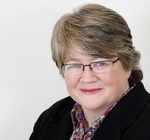
  • Therese Coffey – 2022 Speech at CBD COP15 Held at Natural History Museum

    Therese Coffey – 2022 Speech at CBD COP15 Held at Natural History Museum

    The speech made by Therese Coffey, the Secretary of State for Environment, Food and Rural Affairs, at the Natural History Museum in London on 7 December 2022.

    Thank you for joining us bright and early and thank you to the staff of the Natural History Museum for hosting us here before they open their doors to the public this morning as they have done for generations.

    We are proud to be backing your important work. And we are fortunate to have this cathedral of nature consecrated to 4.5 billion years of natural history to the pursuit of science and to the study and appreciation of the world’s flora and fauna right here, in our capital city.

    So it’s hard to think of a more inspiring place for us to meet as I call on all of you to help us come together to secure the future of life on earth and a better future for every generation to come.

    When I visited the Museum recently some of the scientists here reminded me that just five years ago, in Hintze Hall a diplodocus would have greeted us.

    But it is right that we are now dwarfed by the awesome, twenty-five-metre skeleton of a blue whale the largest animal that has ever existed bigger even than the biggest dinosaur.

    Forty years ago – following a coordinated campaign from schoolchildren and conservation experts alike – including many of the organisations you represent, sea-going nations from around the world came together at the Metropole Hotel in Brighton and agreed a moratorium on commercial whaling.

    In a global move to bring species back from the brink of extinction and find more peaceful ways of appreciating these wonderful creatures.

    As Environment Minister, a few years ago I had the privilege of watching humpback whales from a boat in Petite Passage, Nova Scotia and it was a profoundly moving experience.

    And while this work is ongoing, we should take heart from what we have achieved and our commitment to seeing it through. Because it seemed impossible until it was done.

    Because with blue whale populations now recovering Sir David Attenborough is right to say that ‘Hope’ is an important emblem of what we can achieve.

    And because sharing success is so important at a time when we need to steel our resolve to work together to solve so many challenges when we need to renew the trust between people and power around the world and when we must make the most of the UN nature conference, CBD COP15 in Montreal.

    For far too long the Cinderella of the story, it’s cinderellas time to shine but now rightly recognised by all of us here – as our best chance yet to secure the decade of action we need.

    I am proud that the UK laid the groundwork for success in Montreal through our presidency of COP26 – the climate COP – in Glasgow.

    Together, we brought nature – land and ocean – and effective, cost-effective nature-based solutions from the margins of the global debate into the heart of our collective response to the causes and impacts of climate change for the first time securing unprecedented investment in nature – land and ocean from all sources, public, private and philanthropic

    , including greater global backing for natural wonders on which the whole world depends from the Amazon to the Congo Basin and accelerating the economic shifts that are already underway to make sure every dollar in our economies takes us closer to our shared goals.

    At COP27 in Egypt, I saw the legacy of COP26 alive and kicking not least in the way countries and companies are now honouring their commitments – including on forests – and building on them as well.

    We are engaging the United Arab Emirates as hosts of COP28 next year to make sure we

    And in all of this, our ability to lead depends on our longstanding, ongoing commitment – across government to identify and then use every lever we have to leave the environment in a better state than we found it

    From the way we work with the private sector, including the financial sector

    – to secure the public good – to the way we use public money to support the production of food. Something I spoke to our famers about last week so we make the most of our newfound freedoms and our landmark legislation to make timely progress on meeting our domestic targets to reach net-zero by 2050 and halt the decline of nature by 2030.

    In support of that target I am delighted to announce that, this spring we will launch a new multi-million pound fund to create and restore wildlife-rich habitats, including on protected sites from scrub, to wetlands and grasslands where each investment will secure multiple benefits for nature, climate, and people and encourage opportunities for private funding by backing underfunded projects that give us the biggest bang for our buck.

    By making good on our commitment to double UK international climate finance to 11.6 billion pounds and to spend at least 3 billion on nature, including through our newly established 500 million pound Blue Planet Fund and our 100 million pound Biodiverse Landscapes Fund.

    We are building on decades of experience backing efforts to take on the whole host of threats that now face the world’s flora and fauna – well beyond climate change alone through the Blue Belt programme, protecting an area of ocean larger than India around our biodiverse Overseas Territories, our world-renowned 39 million pound Darwin Initiative and the Illegal Wildlife Trade Challenge Fund.

    And whether it’s taking on illegal, unregulated, and unreported fishing persuading countries to agree a new, legally-binding global treaty to end plastic pollution, by 2040 or supporting efforts to establish a global gold standard for taking nature into account across our economies on the world stage and behind the scenes the UK is leading, co-leading, and actively supporting the global coalitions that are committed to securing the maximum possible ambition and achieving the greatest possible impact.

    That includes our approach to the UN nature conference that kicked off yesterday.

    Our world-class UK negotiating team are in the hot-seat building on four years of talks with the support of our world-class scientists from a range of institutions, including Kew Gardens and JNCC.

    And later this week, I will lead a team of ministers from Defra, the FCDO and the Treasury, working as one to persuade our counterparts from around the world to give their negotiators the political backing they need to build consensus around a robust, ambitious global framework for action that will put nature on a road to recovery, this decade.

    That must include targets to protect at least 30% of the world’s land and at least 30% of the global ocean, by 2030 and to see natural systems restored, populations of species recovering, and extinctions halted by 2050 alongside strengthened reporting and review mechanisms that will hold all of us to account for the promises we make and commitments to work in partnership with indigenous peoples and local communities, who depend on nature most directly and understand it so deeply so we make sure everyone feels the benefit of seeing this through.

    And we know that demonstrating our collective willingness and ability to close the finance gap for nature is key to unlocking the ambition we need in Montreal.

    And that is why the UK has been working with our friends in Ecuador, Gabon, and the Maldives to develop a 10 Point Plan for Financing Biodiversity, an ambitious, credible blueprint for action that increases our chances of achieving consensus by making sure that any government approaching the negotiations in good faith will be able to see a potential solution to their concerns.

    Our Plan commands the confidence of developed and developing countries spanning five continents – and counting.

    We are doing all we can to persuade others to endorse it.

    And I hope that you too will help us to gather further support in this final furlong – and beyond.

    Ultimately, we all know that there is a long road between where we stand today, and where we need to be.

    In national parks in South Africa I have seen how the illegal wildlife trade pits people and wildlife against one another with devastating consequences for all.

    On visits to small island states I have heard what it means for communities when their homelands face an existential threat.

    And the evidence for why this is so urgent is now all around us in the wisdom of indigenous people and local communities, in the science and in events on every continent.

    But I genuinely believe that if we work together to make the road ahead a road to recovery, we stand not just to avoid the worst impacts but to save precious species by securing the diversity, abundance and connectivity of life on Earth that will also help to bolster the peace and prosperity we all want to see and fundamentally to improve the lives of people at home and around the world for generations to come as well.

    The UK is committed to playing our part and to continuing to work with all of you and our friends around the world to see this through.

    The action you take can have a massive impact and you have the power to inspire others to step up as well.

    So once again, I want to thank you for joining us and I urge you to keep up the good work.

    Thank you very much.

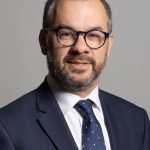
  • Paul Scully – 2022 Speech at the GambleAware Annual Conference

    Paul Scully – 2022 Speech at the GambleAware Annual Conference

    The speech made by Paul Scully, the Gambling Minister, on 7 December 2022.

    Good morning everyone.

    I would like to start by thanking GambleAware for the invitation to speak today.

    I am very pleased to be a part of your 10th conference and to talk about our collective efforts to protect people from gambling harms.

    I also want to talk about our Gambling Act Review, which as you know is a priority for the Department. Making sure we have the right protections in place is an essential part of that Review.

    I am aware that you’ve seen a few different faces in the role of gambling minister in the last six months. I am very pleased to have been appointed as Minister for Tech and the Digital Economy, including the lead for government on gambling.

    It is a challenging brief, but one that I have enjoyed getting stuck into and I look forward to the very important work that we will be doing.

    I think it is vital to get out and meet people who are directly involved in the issues that government is considering.

    In my first weeks, I have made it a priority to meet a very broad range of people, including clinicians, parliamentary groups, charities, the gambling industry and people with personal experience of gambling harm.

    They have given me extremely valuable insights, including on how serious and lasting the effects of gambling harm can be. Thank you to those who are with us here today.

    Now, you’ll all be aware that our Gambling Act Review is a wide ranging look at the evidence on gambling and our regulatory framework. The commitment we made was to make sure it is fit for the digital age.

    DCMS leads on all aspects of gambling policy and regulation, and we look at it through a variety of lenses.

    Harms, and addiction or problem gambling as a health issue, are essential considerations. Given the theme of the conference, they are what I will mostly speak about today.

    But we also have to make sure regulation is fair and proportionate, and works for the large number of people who gamble without experiencing harm.

    These aren’t incompatible aims – if gambling is to be a pastime that people can enjoy, it must not be dangerous or exploitative.

    We are in a good position in this country, in that most gambling is done in the licensed sector, where operators have to comply with Gambling Commission rules to keep their licence. We want that to remain the position.

    And within that licensed sector, we have to be continually alert to make sure we have the right protections and safety nets, and that they are working as they should.

    The gambling landscape today is very different to 2005.

    People can access the full range of products, from bingo to casino, whenever and wherever they are. So it is vital these protections are able to respond quickly.

    People who start experiencing difficulties must be spotted early, before lasting damage is done, and they must be helped. We need to get that right.

    And DCMS works closely with the Department of Health and Social Care, which of course is the lead in government for health and for public health.

    Be assured, I’m very aware that there are a number of people who are in the grip of an addiction or serious gambling problem.

    The last Health Survey for England found that 246,000 people were considered problem gamblers, with a further 1.6 million at risk of suffering harm.

    For people in the worst situations, their lives can be ruined – with bankruptcy, losing a home, relationship and family breakdown and even suicide.

    Our review of the Gambling Act will take action to help prevent these harms, with targeted, proportionate and effective reform.

    As I’m sure you’ll agree though, gambling harms cannot be tackled by working in isolation.

    The theme of today’s conference – “Taking action to tackle gambling harms as a public health issue” – requires collaboration, communication and consistency at different levels to ensure the right protections are in place.

    It’s an opportunity to share perspectives and experiences with others, and to collaborate in the prevention of gambling harms.

    The causes of gambling related harm are complex to unpick and address.

    Individual circumstances, environmental and other health factors play a role, but our approach also needs to look at the products and the practices.

    We also need to make sure anyone who is experiencing gambling-related harm can access the right support whenever and wherever they might need it.

    As you all know, we’ve been carrying out the most thorough review of gambling law since the 2005 Act. We want to publish it as soon as we can, but also we need to make sure we get it right.

    But it is absolutely right that gambling policy and regulation to make gambling safer and to prevent harm has not waited for the Review.

    There has been a lot of action to tighten protections in the last few years.

    The Gambling Commission has banned gambling on credit cards, to help stop a person gambling with money they don’t have which could cause serious harm to them and their loved ones.

    It has made online slots games safer by design, bringing in further protections on a product which is associated with higher levels of harmful gambling.

    It has strengthened rules on how operators must identify harm and interact with customers.

    And it has tightened restrictions on the provision of VIP schemes after seeing too many instances of irresponsible practices from operators.

    This has led to a significant reduction in the number of VIPs but we and the Commission will continue to monitor this nonetheless.

    We have also seen a step change in the Commission’s enforcement activity.

    In the past year alone we’ve seen a number of operators pay out over £45 million because of regulatory failures – two of the largest operators alone have paid £26m.

    By comparison, in the whole of the 2016/17 financial year, the Commission took action against 3 operators who paid £1.7m due to regulatory failures.

    The Review is an opportunity to build on these changes, and do more to make sure we have the right protections for the digital age.

    To tackle gambling harms effectively we must understand the problem and tailor our solutions.

    And we need to take both wide-ranging action, and targeted and proportionate action, where and when each is appropriate.

    That’s why gambling legislation and Gambling Commission rules operate at many different levels, like a classic public health approach.

    They put in place a wide range of protections for the population as a whole – like specific controls on addictive products and how businesses can operate. There are also specific rules for particular groups, like children.

    We recognise that, like alcohol, gambling carries an inherent risk, and it is right that most forms are restricted to adults.

    And for people suffering harm, who have greater needs, the rules require targeted interventions and particular support.

    This includes not just operators stepping in to prevent harm, but providing self-exclusion schemes and funding which goes towards treatment services.

    Communicating the risks of gambling has been identified as an essential public health intervention.

    I commend GambleAware for the work they continue to do to raise awareness of risks and the support available.

    We’re also looking at this in the Review, analysing what is most effective when it comes to communicating the potential harms of gambling.

    I am aware of the changes introduced in Australia which mandate specific taglines in advertising.

    We are considering these developments and others very closely and want a solution that works for our own country.

    But having a greater public awareness of the potential harms and equally the sources of support is so important.

    Closer to home, the Advertising Standards Authority rules to prevent gambling adverts having inappropriate appeal to children have now come into force.

    I know these were in response to landmark research commissioned by GambleAware and is a textbook example of what collaboration in tackling gambling harms can deliver.

    Secondly, I’m very aware that individual circumstances can vary widely and change in time.

    It is right that there is a wide range of requirements on operators to detect where individuals are vulnerable and take active steps to protect them.

    Of course, we all know about cases where checks and interventions have been happening too late or at the wrong levels.

    Making sure we have the right rules is a key consideration of the Review and part of our vision for the sector in the digital age.

    Finally, though our intention is always to prevent harm, it is also essential to provide the right treatment for those who do need it.

    I’m very aware of the invaluable role that GambleAware plays in treatment provision, commissioning the majority of specialist support for people experiencing problems with gambling.

    The commitment to establish up to 15 specialist NHS clinics by 23/24 is also progressing well.

    I understand that seven are now open in London, Leeds, Sunderland, Manchester, Southampton, Stoke-on-Trent and Telford, with a further gambling and gaming addiction clinic for young people in London.

    I had a great meeting with Henrietta and Matt of the London and Leeds clinics just yesterday.

    I fully support the work of GambleAware and GamCare to help integrate your services with those of the NHS, including in primary care settings.

    A coherent and robust treatment pathway will ensure that there is no wrong door when it comes to accessing support or treatment for gambling harms.

    We want anyone in the country experiencing gambling-related harm to have access to support and treatment whenever and wherever they need it.

    And as we publish our white paper, we want to continue to work with all of you in the room and to draw on your expertise.

    The Gambling Act review is an opportunity to put the right framework in place to meet the challenges and seize the opportunities which have come with the changes since the 2005 Gambling Act was passed.

    I would like to thank GambleAware and many of you in the audience for your responses to our call for evidence, and for being so active in your engagement with the department.

    I also want to thank all of you working in the sector for your ongoing efforts.

    We’re determined to make sure that the Review gets the right protections in place.

    We are committed to the Review and I am aware that delays to the white paper have been difficult.

    I am pleased to confirm that we are keen to publish it in the coming weeks.

    But I want to make clear that the white paper is not the end of our discussions on these matters.

    I look forward to further conversations about how we will bring its measures into effect.

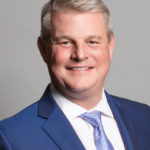
  • Stuart Andrew – 2022 Speech at the Age UK Christmas Parliamentary Reception

    Stuart Andrew – 2022 Speech at the Age UK Christmas Parliamentary Reception

    The speech made by Stuart Andrew, the Minister for Civil Society, on 5 December 2022.

    Thank you for having me here today.

    It is a privilege to be part of an event which recognises and celebrates the great work Age UK and its volunteers have carried out to support people in their communities.

    Having previously worked in the sector, I know how important charities are. As Minister for Civil Society, I now see the great work of local charities on a regular basis.

    Thousands of small and local charities up and down the country work to support millions in society every day.

    A key part of this support is helping to combat loneliness, particularly for older people.

    Tackling loneliness is a priority for the government.

    Over the past year, we have reached millions of people through our campaign activity, where we encourage people to ‘Lift Someone Out Of Loneliness’, to try and reduce the stigma around saying that you’re lonely.

    We have also published new research into loneliness and its impacts.

    We know that loneliness can be increased by certain life events, including retirement, decline in physical health and bereavement.

    People with disabilities and long term health conditions are three times more likely to experience chronic loneliness, so it’s important that we work to support them.

    This work is a cross-Government effort. I am bringing together ministers across government to continue to drive forward government action, and look forward to working together with the voluntary sector to promote social connection.

    Volunteers are also key to delivering this work. Volunteering is critical to a vibrant and resilient society.

    This Government is committed to enabling people to take part in all forms of social action, including volunteering.

    We know the profound benefit that volunteering has on the individual, on communities and on society.

    We recognise outstanding volunteers through the Points of Light Award and national honours.

    In doing so, we are shining a light on volunteers whose work will inspire others in their community and beyond.

    As households and communities face rising energy prices, local charities are seeing increased demand for their services while contending with the same price increases themselves.

    I understand the sector is facing huge pressures at the moment, including local charities that are often at the forefront of supporting their communities in times of need.

    My department will keep engaging constructively across the civil society sector and other government departments to monitor the impact of rising costs on the sector, and ensure DCMS is engaged on policy which concerns charities and civil society.

    We know how important partnerships are to the success of this work. Government cannot tackle loneliness alone.

    We are committed to building a more connected society, and are growing our Tackling Loneliness Network of organisations from across sectors to help us in this work.

    So again, I would like to take a moment to thank all of you for the part you have played in tackling loneliness in our communities.

  • John McNally – 2022 Speech on Burning Trees for Energy Generation

    John McNally – 2022 Speech on Burning Trees for Energy Generation

    The speech made by John McNally, the SNP MP for Falkirk, in Westminster Hall, the House of Commons, on 6 December 2022.

    As always, it is a pleasure to serve under your chairmanship, Mr Gray. I thank the hon. Member for North Devon (Selaine Saxby) for her role in securing today’s debate on the sustainability of burning trees for energy.

    It is good to see the climate Minister ready to explain the Government case. He is now some three months into the job, and I hope that he will explain to us, and to the public watching this debate, the remarks made by the former Secretary of State for Energy, the right hon. Member for Spelthorne (Kwasi Kwarteng), that have been mentioned and quoted by others. In August, after three years at BEIS, the right hon. Member said that the burning of imported wood in our power stations,

    “doesn’t make any sense to me.”

    He further said it “is not sustainable”, and that BEIS was close to saying that the burning of wood for energy

    “isn’t working, this doesn’t help carbon emission reduction and so we should end it”

    Those are damning words.

    The former Secretary of State is not the only Minister to be troubled by the burning of millions of trees in our power stations. A year ago, Lord Goldsmith conceded that there were “real problems” with ensuring the sustainability of the trees being chopped down around the world. It was for that reason that, in January, the Climate Change Committee told Parliament that the “vast majority” of trees should be home grown, not imported on diesel-belching freighters from across the Atlantic. The question is, how many of the 27 million trees burnt by the Drax power station last year were actually home grown? It was not the vast majority; it was not even a tiny fraction. It was zero. Let us be clear that the Government do not seem to agree with the Government on the burning of trees at Drax.

    What is actually going wrong, because properly run bioenergy has the capacity to make a real difference to carbon emissions? Why has Westminster made such a complete mess that Ministers are at war with one another? The fundamental problem is that it has become abundantly clear to academics, journalists and even Ministers that Drax is not burning genuine wood waste but trees with many other uses which, as Members have mentioned, include furniture and material for the construction industry, which lock the carbon away. Drax claims that it is only burning forest residues and for years Westminster has simply been lazily allowing it to mark its own homework.

    However, over the past year, reality has intruded. The Daily Telegraph has reported that forests in eastern Europe are being clear-cut for Drax; in the USA, CBS News has reported clear-cutting there; and two months ago, as has been said by many others, the BBC’s “Panorama” programme found even worse behaviour in Canada, as Drax was caught chopping down primary forests. Such ecosystems take centuries to create, but they are being destroyed by Drax within hours.

    I urge Members to dwell on that statement for just a second, and dwell on the huge loss in biodiversity. Chopping down primary forests is how species become extinct. Drax claims that it is not destroying primary forests, yet “Panorama” said in its broadcast:

    “That is a lie.”

    It is an extraordinary situation: the BBC’s flagship news programme has accused the Government’s biggest energy provider of telling a fundamental lie. I note that Drax has not sued “Panorama” for libel—not to my knowledge, anyway—and given that Drax does not think that the courts will believe it, why should Parliament believe Drax?

    It is clear how quickly trust in Drax is evaporating in this House. Over the last year, 84 MPs have signed letters to Ministers about Drax, calling this situation a scandal. Furthermore, Drax is just not trusted by the financial markets. I hope that the Minister has a contingency plan in place. However, if the likely failure of Drax is a problem, that problem is not to be feared as much as Drax’s possible success, because if other countries were to buy into the Drax model and copy us by burning trees in our power stations, the environmental disaster that the Drax model is already causing would simply become a catastrophe, as other Members have mentioned. Chatham House forecasts that there could be 30 times the current demand for wood pellets. There is already a shortfall of 400 million trees near the wood pellet plants in the USA. Imagine what happens when forests are stripped at 30 times the current rate—and that is just the forests.

    We also need to think about the carbon that is emitted as we burn trees. Drax is by far the biggest emitter of carbon in the UK. That is not surprising, because the IPCC says that burning wood creates 18% more carbon than burning coal—it is even worse than coal. However, of the CO2 produced by burning those 27 million trees, how much was recorded on our national carbon accounts? Zero. Nothing. That is because the Government pretend that all the trees immediately grow back, absorbing the same amount of carbon. That is a fiction, which undermines confidence in the Government’s claim to be reducing emissions. Scientists estimate that where felled trees are replanted, the amount of time it takes for the carbon that has gone up the chimney to be reabsorbed is between 44 and 104 years. We have only 27 years until 2050. Furthermore, the BBC’s “Panorama” disclosed that an official Canadian document showed that only 11% of Drax’s wood was genuine waste that had no other proper use.

    What will happen if other countries were to copy our tree-burning behaviour, creating a 30-fold increase in demand for wood pellets? The quality of wood being used for pellets would go up and up, which would push up timber prices and the price of land. The EU’s top think-tank, the European Academies’ Science Advisory Council—or EASAC—forecasts that 482 million hectares of land would be needed, which is an area bigger than India. The competition for land between the wood pellet industry and farming would make food price inflation even worse as a consequence. The global biomass industry would be just as thirsty for water. The IPCC says that the demand for water could push the planetary boundaries for freshwater use. Yorkshire Water already has enough problems supplying the region around Drax.

    Last year, 500 scientists signed a letter denouncing the burning of trees for energy. Those who believe that the practice is worsening climate change rather than helping in the battle against it now range from Greta Thunberg to the financial rating agency Standard and Poor’s. We had better take heed.

    What can be done? First, the Government need to put Drax’s wood-burning boilers at the top of their list of the next high-carbon power stations to mothball. Improvements in grid connectivity, storage technology and the growth of renewables will combine to give us the opportunity to end our dependence on high-carbon Drax. Secondly, as the right hon. Member for Spelthorne said in August, other technologies are advancing far faster and we should invest in them. Thirdly, when the Government’s paper on biomass comes out, there will be no hiding. The media now know that over the last 10 years BEIS has forced consumers to pay £6 billion of so-called renewable subsidies for energy, which the then Secretary of State said is simply “not sustainable”.

    The Drax tax is politically unsustainable. There will definitely be no patience for gifting Drax another £31 billion for the pipedream of BECCS. The UK Government’s experiment with burning trees has failed and has turned BEIS not into a global leader, but a global pariah because it destroys forests, is pouring untold amounts of carbon into the skies and pretends that it is emitting nothing.