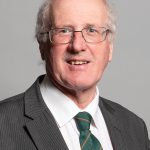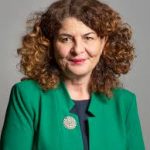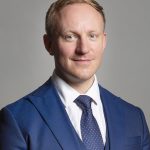
Tag: 2022

  • Sam Tarry – 2022 Speech on the NHS Workforce

    Sam Tarry – 2022 Speech on the NHS Workforce

    The speech made by Sam Tarry, the Labour MP for Ilford South, in the House of Commons on 6 December 2022.

    For the first time in its 106-year history, the Royal College of Nursing has taken the monumental decision to take strike action. They have not taken that decision lightly, because no worker does, but this Government have pushed them to the brink. Ministers have had weeks to find a resolution, but they have rejected all offers of formal negotiations. As the RCN said, all meetings with the Government have seen Ministers sidestep the serious issues of NHS pay and patient safety. Do not be mistaken: they have the power and the responsibility to address this dispute, but they choose not to for self-serving political gains. They have seen that workers in rail, the Royal Mail, BT, universities and across the public and private sectors are now prepared to fight back because they are so sick of what this Government have been doing. They know full well that these disputes will have to end in pay rises for the workers of this country.

    These are not the days of the miners’ strikes when the mines could just be closed because they were not needed any more. We are always going to need hospitals, we are always going to need railways, we are always going to need schools and we are always going to need universities. People are beginning to fight back and stand up, and it is time that the Government listened very carefully, especially in their so-called red wall seats.

    At the height of the pandemic, every Thursday night the Prime Minister, the Health Secretary and Members across the House clapped for our NHS heroes and praised their immense effort on the frontline of the pandemic, but clapping does not pay a single bill. This dispute has highlighted the total hypocrisy at the heart of this Government. Once praised as heroes, nurses are now treated dreadfully. Ministers have sought to ratchet up the rhetoric, with the right hon. Member for Stratford-on-Avon (Nadhim Zahawi) seemingly seeking to present NHS workers as hostile agents of a foreign power, ludicrously and disgracefully dismissing industrial action as “helping Putin.” Get real! These are nurses, not agents of a foreign power. The Health Secretary has said that pay demands are “neither reasonable nor affordable”, while utterly refusing to engage with nurses’ unions over their demands, only offering a paltry 3% pay rise when inflation is well above 11%. According to The Times, instead of looking for a resolution to this dispute,

    “Ministers plan to wait for public sentiment to turn against striking nurses as the toll of disruption mounts over the winter”.

    Anthony Browne (South Cambridgeshire) (Con)

    The hon. Gentleman talked about the difference between the pay offer and inflation. If all public sector workers were given a pay rise in line with inflation, it would cost the equivalent of a 4.5p rise in the basic rate of income tax. Does he support that, or would he pay for such big pay rises in other ways?

    Sam Tarry

    Our Front-Bench team have clearly set out a number of proposals, including taxing non-doms, which would seek to address the lack of funding in our NHS. I will not get into the specifics, but putting money into the pockets of ordinary people will clearly bring more revenue into the Treasury. The truth is that nurses have not had a real pay rise for more than a decade. The most experienced frontline nurses are now £10,000 a year worse off in real terms than in 2008, effectively meaning that they are working one day a week free of charge—how many days does the hon. Gentleman work free of charge?

    Carla Lockhart (Upper Bann) (DUP)

    The hon. Gentleman is making a powerful point about nurses. He will be aware that their role has evolved significantly and they are often now asked to do more training and more work on the same pay. Does he agree that it is unfair to demand more while paying the same?

    Sam Tarry

    Absolutely. My little sister is a nurse who works in palliative care in Southend, Essex. During the pandemic, her job was to help lots of people to experience the least suffering as they met the end of their life. The mental health of nurses has been broken, there is increased stress, and bank staff are being used—all as a result of nurses being so devalued that the Government have taken away their bursaries. We have a huge crisis, but one obvious fix would be to sort that out. Of course I agree that we have to listen and value our nurses.

    Paul Bristow

    Will the hon. Gentleman give way?

    Sam Tarry

    I will make some headway, because plenty of other hon. Members want to speak.

    It is not just about pay: workforce shortages are at unprecedented levels across the NHS. The latest figures reveal that there are now more than 133,000 vacancies in England alone—more than a third of which are in nursing—which is an all-time high and a record for this country under the Government. The vacancy rate in registered nursing is running at nearly 12%, which is an increase from 10.5% in the same period of the previous year. A key factor in the failure to attract and retain enough staff is the Government’s inability to provide workers with a decent pay rise. Some 68% of trusts report that staff are leaving for better terms and conditions elsewhere.

    Paul Bristow

    The hon. Gentleman spoke about nurses’ pay and how they deserve more. We would all like to give nurses more money, but how does he account for the fact that the Welsh Labour Government are giving exactly the same pay award as proposed by this Government?

    Sam Tarry

    I cannot speak for the Welsh Government, but if we look at their record—the times that they have been returned to office with a stonking majority, and the fact that there are no strikes on their railways, which they had the guts to take into public ownership; they called it what it was—I would much rather be living under them than the appalling Government we have.

    The impact of those shortages on existing staff is enormous. Reports by Unison have repeatedly highlighted the acute strain that understaffing has put on the workforce, with stress and burnout rife among NHS staff. That predates covid, which demonstrates the immense damage done by a decade or more of Conservative Governments and the failure of successive Governments and Prime Ministers to invest in the workforce or take workforce planning seriously. As the RCN has said, the dispute is about not just pay, but patient safety, which is key for all of us. Staffing levels are so low that patient care is being compromised; only paying nursing staff fairly will bring the NHS to a point where it can recruit and retain people to address those issues.

    I have visited my local hospital, King George Hospital, on many occasions and I have heard about the impact of staff shortages and pay cuts on staff and patients alike. Recently, for once, I went to open some new services in paediatric emergency and radiology—something positive after 20 years of campaigning for our local NHS in Ilford—yet the staff were still overstretched, run ragged and demoralised. They just want the support that they need to care for their patients, which means pay recognition and ensuring fair practices at work without undermining their working conditions.

    I spoke to staff who, during the worst of the pandemic, received food donations from the local community just to get by. That should never, ever be allowed to happen and makes it even more sickening to hear about the outright corruption on the other side of this House and the despicable corrupt PPE deals with people like Baroness Mone. People in Ilford are sick and tired of that because of the attacks on our local services. We even had to stand up and campaign for our local ambulance station not to be shut down under the Government’s measures.

    Conservative Members seek to present nurses’ demands as unreasonable and undeliverable, and have asked nurses to tighten their belts even further, while they have allowed the pay of the wealthy to explode. This year, FTSE 100 CEOs collected an average of 109 times the pay of ordinary workers—that is part of the answer to where we get the money to pay the people who actually keep our country off its knees. Where is the Government’s commitment to pay restraint when it comes to high pay and those sorts of people? How many Conservative Members have fat cat salaries and executive directorships, and coin it in left, right and centre?

    Anthony Mangnall (Totnes) (Con)

    You all have second jobs!

    Sam Tarry

    I do not think a single person sitting on the Opposition Benches has a second job.

    The truth is that NHS staff pay demands are reasonable and fair. Nurses’ pay is down by £4,300 and paramedics’ pay is down by £5,600. One in three nurses cannot afford to heat their homes or feed their families. NHS staff are at breaking point. When I met NHS Unite members from Guy’s and St Thomas’s Hospitals—I welcome any hon. Member to come with me and speak to them, because they are just across the river from this House—they were justifiably furious about the way that for too long, they and their colleagues have been exploited and abused by the Government, as they see it.

    Staff are the backbone of the NHS, and if they break, so does the NHS. As the RCN general secretary said:

    “Nursing staff have had enough of being taken for granted, enough of low pay and unsafe staffing levels, enough of not being able to give our patients the care they deserve.”

    Allowing the NHS to collapse will cost the country considerably more, financially and in national wellbeing—as we are already seeing on the Government’s watch—than the rightful pay demands of NHS staff. If our NHS is not providing the care that we need, the costs are far greater, as is economically demonstrable.

    Many hon. Members on both sides of the House believe that the NHS is our greatest institution. We cannot take it for granted and it is well worth fighting for. Conservative Members have the power to stop this dispute; to sit down with the trade unions; to face the nurses and NHS staff; and to negotiate a fair deal to prevent misery, ensure patient safety and save the NHS. If the Government will not do it, they should resign now, because a Labour Government will save the NHS and support NHS staff.
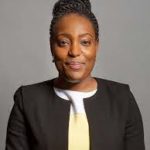
  • Taiwo Owatemi – 2022 Speech on the NHS Workforce

    Taiwo Owatemi – 2022 Speech on the NHS Workforce

    The speech made by Taiwo Owatemi, the Labour MP for Coventry North West, in the House of Commons on 6 December 2022.

    Many Members will remember that the Health and Social Care Committee recently published a report on the NHS workforce—a report that the Government frustratingly chose to ignore. As workforce shortages stand at unprecedented levels right across the NHS, with the latest figures revealing that there are more than 133,000 vacancies in England alone, I thought it might be useful to remind the Government of some of the report’s key recommendations.

    First, the Government are failing to provide our NHS nurses with the essentials that anyone would need to do their job properly. In short, they are serving up poor working conditions, year in, year out. At the bare minimum, all nurses across the NHS should have easy access to hot food and drink, free parking or easy access to work and spaces to rest, shower and change, but the Government cannot even get that right.

    I have repeatedly raised with the Department of Health and Social Care and the Prime Minister the fact that NHS staff at Coventry’s University Hospital are paying an astronomical £600 per year simply to park at work. In the middle of a cost of living crisis, it is outrageous that Coventry’s NHS heroes are out of pocket because the Government choose to do vanishingly little to improve their situation. I again call upon the Department of Health and Social Care to look closely at this situation and scrap these unfair parking charges for good.

    Is it really any surprise that the Government’s current target of recruiting 50,000 nurses has been woefully missed when they are treated so poorly? It is unacceptable that many NHS nurses are struggling to feed their families, pay their rent and heat their homes. Some nurses are even resorting to using food banks this winter. I urge the Government to look closely at how they can better pay and treat NHS staff this year and next, so that we can finally reverse this worrying trend.

    Our beloved NHS, which I had the honour of working for as a senior cancer pharmacist before being elected, is on its knees as a result of 12 years of Conservative neglect and mismanagement. Many services are crumbling. Pay has failed to keep up for years, and morale among nurses is in a truly terrible place. That is exactly why the Royal College of Nursing has been pushed into taking industrial action this month and why the Government must stop the mud-slinging and instead work with nurses to resolve this crisis.

    Secondly, the Government must take urgent action to improve maternity care. For over a decade, the Conservatives have failed midwives across my community, and now we are all paying the price. We need a robust, fully funded maternity workforce plan, and the Government must commit to recruiting and retaining the workforce at the level set out in the forthcoming report by the Royal College of Obstetricians and Gynaecologists. Labour has made it crystal clear that we would train at least 10,000 additional nurses and midwives each year to tackle the crisis that currently exists in maternity care. Labour has also committed to a historic expansion of the NHS workforce, to plug the gaps created by this Government.

    The Government must also improve diversity in the recruitment of midwives, to improve the standard of care that black, Asian, mixed-race and minority ethnic women receive throughout pregnancy, birth and the post-natal period. By increasing diversity across the NHS, we can guarantee better standards of care for everyone, regardless of their background or ethnicity. Labour’s women and equalities team has routinely pushed for reforms that would improve how everyone experiences healthcare in this country, so when will the Government catch up?

    Lastly, as the newly elected chair of the all-party parliamentary pharmacy group, I want to highlight an opportunity that the Government have failed to grasp: better use of community pharmacists. As a trained pharmacist, I know that the sector is crying out for more responsibilities to become the first port of call for patients who need advice and treatment. That would help to rebalance the workload across primary care, bring healthcare back into the community, reduce the pressures on GPs and hospitals and deliver healthcare that is much more prevention focused.

    Any plan for the future of pharmacy must ensure that all pharmacists have adequate access to supervision and training, along with clear structures for professional career development into advanced and consultant-level practice to help to deliver this. That way, community pharmacists can play a much larger and more effective role in delivering healthcare. Until this Government properly mobilise pharmacies, we will struggle to reduce waiting times, clear NHS backlogs or improve patient access to GPs, so I desperately want to see action here. Every Member here today understands that our NHS workforce faces a range of big challenges. Whether it is nurses, midwives or pharmacists, our NHS workforce are at breaking point.

    Paul Bristow

    I completely share the hon. Lady’s sentiments about making better use of community pharmacists. She talked about better support and resources being available for pharmacists to do just that, but what specific things does she think need to happen to get the ball rolling?

    Taiwo Owatemi

    That is an excellent question. I could be here for hours explaining what I would like to see, but essentially, what I and many in the profession would like to see is an understanding and full use of the various skills that pharmacists have. We talked about this in the Health and Social Care Committee today: I would like pharmacists to be involved in providing clinical care—for example, a diabetes workshop or a cardio blood pressure workshop. We have seen other countries do that. In Alberta, Canada, community pharmacists are involved in the whole of the hypertension management; it is taken away from GPs and brought into the community, because it is more accessible in a community pharmacy.

    Whether it is nurses, midwives or pharmacists, our NHS workforce are at breaking point, but the Government are seemingly ignoring that. I hope that the Government urgently sit up, take note and look at how they plan to address our workforce needs, to ensure that our beloved NHS staff are no longer ignored.

  • Paul Bristow – 2022 Speech on the NHS Workforce

    Paul Bristow – 2022 Speech on the NHS Workforce

    The speech made by Paul Bristow, the Conservative MP for Peterborough, in the House of Commons on 6 December 2022.

    I refer Members to my entry in the Register of Members’ Financial Interests. It is a great honour to follow the hon. Member for West Ham (Ms Brown), who I thought spoke very movingly about the challenges faced by communities in her constituency. West Ham is not a million miles away from Peterborough, and I recognise some of the challenges that she identified, especially the horrible disparity between black women giving birth and their white counterparts—that is a stark statistic. She spoke passionately about that, and I think we would all recognise it—especially me, as a father of two young daughters.

    In one of my first speeches as a Member of this House, I stood here and spoke about our NHS as someone who had worked in healthcare and public policy on and off for 20 years. I said that every two or three years, politicians stand up and say that the NHS needs more money, more capacity and a plan. When I made that speech—about three years ago now—I said that we cannot have another situation whereby we stand in the House asking again for more money, more capacity and a plan. Ultimately, that is exactly what we are doing. And so it goes on.

    I understand that we have had a covid pandemic in the meantime; I understand that we have to recover from something that was extraordinary. But we have to make sure that the NHS is able to make the most of the budgets that it has. We have listened to quite a few contributions from the Labour party, including that of the shadow Secretary of State, the hon. Member for Ilford North (Wes Streeting). I cannot quite be sure whether he was asking for more money or saying that the investment in our NHS was not enough. As a result of the covid pandemic, the Government are putting an extra £45.6 billion of investment into healthcare. That is an extraordinary amount of money.

    Indeed, the Institute for Fiscal Studies says that by 2024, healthcare will account for 44% of day-to-day Government spending. I understand that that does not include capital funding, but that 44% of day-to-day Government spending leaves just 56% for everything else—that is an extraordinary statistic. We have to make sure that we get value for money out of the money going in. Yes, we have the £44.6 billion that is going in, but another £3.7 billion is also being spent on capacity. What does that say to us? It says that we need to increase productivity in our NHS and get the most out of the money that we are putting in.

    The King’s Fund has found relatively recently that the annual average growth in productivity in our NHS increased from 0.7% in the 1980s to only 1.2% by 2012-13, and we need to do much better. When I say “we”, I am talking not about the individuals working for our NHS—doctors, nurses, allied health professionals; people on the ground—I am talking about the system as a whole. We need to do much better, and I want to suggest a few things that may help.

    The first is ensuring that clinicians and those working in our NHS operate and practise at the top of their licences, and that we make better use of other healthcare professionals, such as nurse practitioners, and of things that have been around for a long time, such as nurse-led prescribing. Why does my wife, if she does not want another child and she wants to take contraception seriously and go back on the pill, need to have that prescribed by a GP? That does not need to be done by a doctor; it could easily be done by a pharmacist or at least a nurse in a practice. That does not require a face-to-face GP appointment, especially when we have shortages of GP appointments.

    Some GP practices are doing fantastic work. I refer to the Thistlemoor surgery, which I have mentioned in this House on a number of occasions. I think that Dr Neil Modha and everyone who works there would be embarrassed by the number of occasions I talk about them in this place. That GP surgery serves up to 35,000 people in my constituency, of whom 80% do not have English as a first language. Those there pride themselves that if someone turns up who was unable to get a face-to-face appointment by ringing up, they will do everything they can to see that person on the day, and in the vast majority of cases that happens. How do they do it, with such a huge demographic challenge with the number of people who do not have English as a first language? They do it through effective use of admin staff. They have a number of people who work in the admin department in triaging who speak a variety of different languages from the communities that the surgery represents. By the time the patient is with the GP or relevant healthcare professional, they already know pretty much everything about the patient, what symptoms they are presenting with and what might be done to help them. It is an excellent surgery doing excellent things in my city.

    I also want to talk about surgical and cath lab capacity. Perhaps I am naive, but we seem to spend lots of money to create that capacity in our NHS, yet for a significant period of time, it is just not being used. We are increasing the productivity of those places by making sure that they operate throughout the day, and in certain cases throughout the night, but a consultant I spoke to relatively recently said that it was still very common for consultants to operate only one day a week in cath labs. I understand that they have lots of important things they need to be doing with their time, including training the people of tomorrow, and that being a surgical consultant is not just about surgery time, but goodness me we need to be doing a lot better than one day a week. We need them to be treating patients, powering through lists and doing what they need to do.

    A lot of this is about investing in innovation, too. Lots of procedures, such as nurse-led endoscopy, do not necessarily need to be done by a consultant at the top of their game. We need to be investing in systems and technologies that allow us to have more day cases, rather than more expensive in-patient services. This all seems like common sense, but the same debate about increasing productivity has been going on for about 20 years in the NHS, and these are some of the arguments I have been making for a number of years, not just inside this House, but outside it.

    I also want to talk about pharmacy. During the pandemic, pharmacy was often the only visible sign of the NHS on our high street. It is right that we make more effective use of pharmacy and pharmacists. I speak to pharmacists in my constituency, and they want to do more. They did so much during the pandemic, particularly with vaccinations, and they can do so much more. My plea is to use our pharmacies as much as we possibly can.

    Another issue I want to raise while I have the House’s attention is that we spend a lot of money on organisations such as the National Institute for Health and Care Excellence and Getting It Right First Time. We put a lot of responsibility in the hands of doctors, clinicians, patient organisations and all those involved in creating policies, commissioning policies, service specification and all the rest of it, but often we then go away and ignore them. I do not understand why we do that. GIRFT identifies sensible ways that the NHS can save money and get better outcomes for patients, but most of the time that is not replicated across the system, and I just do not understand why. Of course local decision making is important, but if something works in Peterborough, it will work in Torquay. We can certainly increase productivity, patient outcomes and save money by doing the things that those organisations tell us to do.

    Similarly, we do not quite have the 24/7, seven days a week NHS system that many of us would want. There are far too many elements of our NHS that only seem to operate between 9 and 5 on weekdays. Unfortunately, when someone presents with a serious episode, such as myocardial infarction, stroke or whatever, they will not wait until 9 o’clock on a Monday morning to get the most appropriate treatment. We need a system that is truly 24/7, 365 days a year.

    I pay tribute to what my hon. Friend the Member for Winchester (Steve Brine) said about prevention, which was spot on. A lot of the things I have talked about on increasing productivity relate to treatment within the NHS itself, whether in an acute or primary care setting, but if we are to make significant productivity or value for money savings in the NHS, we need to stop people presenting at hospital when they do not need to. A lot of that will be achieved by people looking after themselves and having the information available to them, through investment in public health. I asked today in the Health and Social Care Committee whether these integrated care systems looked like a true partnership among public health, primary care, acute care and social care. The jury is still out on that one, but we definitely need significant investment in prevention, and I am looking forward to taking part in that inquiry.

    I end with this. I have talked a little about what I think needs to happen, and I have done it rather constructively, I hope Members from all parts of the House agree. Despite the fact that there are probably severe differences between both sides of this House, all of us want a national health service and systems in place that are working as they should be, and all of us want to see a fully funded, appropriately funded and appropriately staffed national health service. Significant progress has been made: the Chancellor of the Exchequer, my right hon. Friend the Member for South West Surrey (Jeremy Hunt), who was previously Chair of the Health and Social Care Committee, has said that he will accept the idea of an official workforce target being put in place. That is a huge step forward.

    Some significant gains, and investment, have been made in our NHS. The number of people working in our NHS is going up. With a little consensus about the solutions we need for our national health service, such as those that I have suggested, we can ensure that it goes on and prospers.

  • Anne-Marie Trevelyan – 2022 Speech on International Human Rights Day

    Anne-Marie Trevelyan – 2022 Speech on International Human Rights Day

    The speech made by Anne-Marie Trevelyan, the Minister of State at the Foreign, Commonwealth and Development Office, in Westminster Hall, the House of Commons, on 8 December 2022.

    I thank the hon. Member for Rutherglen and Hamilton West (Margaret Ferrier) for securing this important debate. The shared passion across this House for protecting and promoting human rights is clear, warranted and, of course, warmly welcomed. Where I am not able to answer the questions raised by colleagues, I commit to writing to them with more detail as soon as possible.

    As the hon. Member for Glasgow North (Patrick Grady) noted, this weekend we mark International Human Rights Day just as the United Nations launches a year-long campaign to promote the 75th anniversary of the universal declaration of human rights. The UK has a long-standing commitment to the promotion and protection of human rights across the globe. My noble Friend Lord Ahmad, the Minister responsible for human rights at the FCDO, will host an event at the FCDO to shine a light on those issues. I pay tribute to him for his continuing commitment in this area.

    As the Prime Minister set out recently, our approach is anchored by our enduring belief in freedom, openness and the rule of law. We are committed to being a force for good in the world, with human rights, open societies, democracy and the international rule of law acting as our guiding lights. We put human rights at the heart of what we do, which is why we established the UK’s global human rights sanctions regime; why we led efforts to refer the shocking activities against human rights in Ukraine to the International Criminal Court; why we lead on UN Human Rights Council resolutions, including on the situation in Syria and South Sudan; and why we have made a joint statement on Xinjiang.

    We pursue three broad strands of work to promote and protect human rights globally. First, we work through multilateral bodies. Secondly, we work directly with states to encourage and support them in upholding their human rights obligations. Thirdly, we have concerted campaigns to drive forward action on issues of particular concern.

    I will speak first about our multilateral work. The international rules-based system is critical to protecting and realising the human rights and freedoms of people all over the world. We work through the multilateral system to encourage all states to uphold their international human rights obligations, and to hold to account those who violate human rights.

    In September, my noble Friend Lord Ahmad spoke at the United Nations and urged the international community to hold Iran accountable for systemically targeting members of minority communities; to press Afghanistan to protect minorities who are targeted for their beliefs; to challenge the discriminatory provisions in Myanmar’s citizenship laws; and to hold China to account for its egregious human rights violations in Xinjiang. In November, we supported a successful UN Human Rights Council resolution to establish a UN investigation of the Iranian regime’s appalling human rights violations during recent protests.

    Turning to our bilateral work, we are strengthening our economic, diplomatic and security ties, and building a network of partnerships with countries united by the values of freedom, human rights and the rule of law. The right hon. Member for Orkney and Shetland (Mr Carmichael) raised concerns about the FCDO Gulf strategy fund. I hope I can reassure him that projects in Bahrain focus on a variety of capacity-building programmes, including programmes supporting the implementation of juvenile justice law, and on human rights and diplomacy training.

    The hon. Member for Rutherglen and Hamilton West raised the issue of political representation in Bahrain. While challenges remain, there has been significant progress over a number of years. With UK support, recent elections saw some positive progress on female representation; eight out of 40 elected politicians are now female.

    FCDO Ministers and officials continue to raise concerns with Governments who have a poor track record on upholding human rights. Many colleagues raised concerns about Saudi Arabia’s death penalty policy. My noble Friend Lord Ahmad regularly raises our concerns with Saudi authorities, and he raised specific cases just two weeks ago with the ambassador. We have been clear that the appalling murder of Jamal Khashoggi was a terrible crime, and we have imposed sanctions on 20 Saudis involved in it.

    In Ukraine, harrowing reports of atrocities by Vladimir Putin’s forces continue to emerge. The Government will continue to stand with Ukraine in its fight for freedom, and will continue to hold Russia to account. We have committed £220 million of humanitarian support since February, which makes us the third largest bilateral donor. We have also created the Atrocity Crimes Advisory Group, alongside our allies from the European Union and the United States.

    Chris Bryant

    Obviously, I agree with a lot of what the Minister is saying, but several Members have asked when the next Government human rights annual report will be produced, because we have not had one for nearly 18 months.

    Anne-Marie Trevelyan

    The hon. Gentleman anticipates my speech. Shall I make him wait? I think I shall have to make him wait.

    Chris Bryant

    That’s not very nice.

    Anne-Marie Trevelyan

    It is character-building.

    Chris Bryant

    I was nice.

    Anne-Marie Trevelyan

    I do not disagree.

    In China, there are continuing reports of human rights violations against Uyghur Muslims and other minorities. There has also been increasing pressure on media freedom and growing assaults on Hong Kong’s autonomy and freedom. We raise our concerns at the highest levels with the Chinese Government. We have imposed sanctions, provided guidance to businesses, introduced enhanced export controls and announced penalties under the Modern Slavery Act 2015.

    Jim Shannon

    I referred to the aid that the UK gives China—£64.6 million in the past year. Why are we giving China aid when it totally ignores human rights and persecution issues? Forgive me for being so direct, but I think it is time we stopped it.

    Anne-Marie Trevelyan

    I do not have the data to hand, but I signed off a parliamentary question to another colleague that set out clearly that none of that funding goes to the Chinese Government. It is mostly for working with them on third-country issues and climate change, but I will ensure that the breakdown is sent to the hon. Gentleman, because it is important that we are clear that that is not how we are spending the money. We are working together where we can to tackle some of those wider issues. I will ensure that the detail is sent to him.

    We are also working in our international fora to continue to shine a spotlight on violations and to hold China to account. We are not shy of being a critical friend where we need to be. In October, our global diplomatic effort helped to secure the support of 50 countries for a further joint statement on Xinjiang at the UN General Assembly.

    Under the Magnitsky sanctions, the UK announced new sanctions against four Chinese Government officials and an entity responsible for enforcing the repressive security policies across Xinjiang. We will continue to act in concert with our likeminded partners to ensure that those responsible for gross human rights violations are brought to account.

    I hope that the right hon. Member for Orkney and Shetland will be reassured to hear that on 24 November, the Government announced that companies subject to the national intelligence law of the People’s Republic of China should not be able to supply surveillance systems to sensitive Government sites. The Procurement Bill will further strengthen the ability of public sector bodies to exclude suppliers where there is a concern about human rights.

    The Taliban continues to repress viciously the rights of Afghans, particularly women and girls and others from marginalised groups. The right hon. Member for Kingston upon Hull North (Dame Diana Johnson) set out vividly some of the appalling human rights abuses being inflicted by the Taliban.

    Jeremy Corbyn

    Obviously, I concur with the Minister’s view about the abuse of human rights in Afghanistan—I am sure we all agree about that—but the reality is that Afghanistan is desperately poor, and people are literally starving. What can the Government do to ensure that there is some kind of operation getting food into Afghanistan? Obviously, that would require some degree of co-operation, one way or another, with the de facto Government.

    Anne-Marie Trevelyan

    I do not have the exact figures to hand, but we work closely with international groups such as the World Food Programme to find tools to address those incredibly urgent and difficult issues. I will ensure that the right hon. Gentleman gets the details, which I do not have to hand.

    The challenge quite rightly set by many colleagues today is that it is difficult to have direct interventions with the Taliban at the moment. However, our UK officials, including the excellent chargé d’affaires of the UK mission to Afghanistan, regularly raise human rights concerns, alongside colleagues in the United Nations Assistance Mission in Afghanistan, with the Taliban. That includes concerns about breaches of women’s rights, particularly regarding girls’ education, where there is an appalling gap for the whole country that will have such a long tail. We also regularly raise the issue of freedom of expression for members of minority groups. The Government have repeatedly condemned the Taliban’s decision to restrict the rights of women and girls, including through our public statements, through the UN Security Council, and through Human Rights Council resolutions —most recently on 19 October.

    Let me respond to the question about Egypt and Alaa Abd El-Fattah raised by the shadow Minister, the hon. Member for Enfield, Southgate (Bambos Charalambous). The UK Government are providing consular support to Alaa Abd El-Fattah’s family, and the Foreign Secretary spoke to the family on 2 November. Lord Ahmad has met the family several times, most recently on 5 December. The embassy in Cairo and consular officials continue to engage regularly with the family, and we continue to urgently seek consular access to visit Mr El-Fattah. He is a British citizen. We are challenged by the Egyptians’ claim that their legal process for recognising dual nationality has not been completed, but we continue to press for consular access.

    The Government continue to advance a range of wider human rights priority issues. Our annual human rights and democracy reports are an important part of that work, and colleagues will be pleased to know that we will publish the 2021 report imminently.

    Chris Bryant

    Well, that could be forever.

    Anne-Marie Trevelyan

    Would you be happy with next week?

    Ian Paisley (in the Chair)

    Order.

    Anne-Marie Trevelyan

    I am sorry, Mr Paisley; it was just too tempting.

    At the end of November, the Foreign Secretary hosted an international ministerial conference on the preventing sexual violence in conflict initiative. We brought together survivors and representatives of civil society and countries to share learning and drive a stronger global response that will prevent and respond to sexual violence in conflict. We have also published a new three-year strategy, which is backed up by a £12.5 million funding pool.

    In October, the UK co-led a landmark joint statement at the UN that commits to protecting and promoting sexual and reproductive health, rights and bodily autonomy, and 71 countries signed the statement.

    Chris Bryant

    Now that we have had one victory this afternoon, will the Minister explain why the UK has sanctioned some people who ran the Evin prison in Iran but not others, and why we have yet to sanction the Iranian revolutionary guard corps?

    Anne-Marie Trevelyan

    As the hon. Gentleman knows, we do not discuss sanctions policy because it would risk reducing our ability to bring in the sanctions that we want, but his comments are noted. I am thankful to him for his continuing leadership on the issue across the House. He genuinely has been an important ally in helping us to move forwards.

    Earlier in the year, we hosted an international ministerial conference on freedom of religion or belief. I put on record my—and I am sure all colleagues’—thanks to my hon. Friend the Member for Congleton (Fiona Bruce), who speaks with such wisdom and care as the Prime Minister’s special envoy for freedom of religion or belief. The conference brought together over 800 faith and belief leaders with human rights experts and 100 Government delegations to agree action to promote and protect freedom of religion or belief. New funding has also been committed to provide legal expertise and support for defenders of freedom of religion or belief.

    Mr Paisley, you were not here earlier—Dame Maria was in the Chair—but I know that you would agree with the incredibly generous comments of the hon. Member for Rhondda (Chris Bryant), which were followed up by others, about the young women of Iran. They are standing up for a better future that is free of repression, and they deserve our unerring and loud support. On 14 November, we announced 24 new sanctions on leading political and security officials involved in the current crackdown. The bravery of the young women is genuinely humbling, and we will continue to do all that we can to support them. I take note of the hon. Member’s particular identification of the matter.

    As a long-standing champion of human rights and freedoms, the United Kingdom Government have not only a duty but a deep commitment to continuing to promote and defend our values of equality, inclusion and respect both at home and abroad. The passionate commitment of all colleagues who spoke today is a critical part of the UK’s leadership and determination to defend and champion human rights across the world, working with friends and like-minded Governments and alongside campaign groups and individuals. The UK Government will continue to work will all those voices to advocate for human rights everywhere.

  • Bambos Charalambous – 2022 Speech on International Human Rights Day

    Bambos Charalambous – 2022 Speech on International Human Rights Day

    The speech made by Bambos Charalambous, the Labour MP for Enfield Southgate, in Westminster Hall, the House of Commons, on 8 December 2022.

    It is a pleasure to serve under your chairmanship, Mr Paisley. I thank the hon. Member for Rutherglen and Hamilton West (Margaret Ferrier) for securing such an important debate to mark Human Rights Day. I think we would all agree that we have had an excellent, thoughtful and illuminating debate. On 10 December, we will mark 74 years since the introduction of the universal declaration of human rights in the aftermath of the horror of the second world war. The international community came together to declare that rights belong to each and every human being equally throughout the world—a point well made by the hon. Member for Glasgow North (Patrick Grady)—but, 74 years on, human rights are under attack across the world.

    As has been mentioned, parliamentary colleagues and I attended the Amnesty International UK drop-in on Tuesday, where we heard about four cases of individuals that highlighted human rights abuses. We heard about the case of Hong Kong human rights lawyer and activist Chow Hang-tung, who is serving 22 months in prison for daring to encourage people on social media to light candles to commemorate those who lost their lives in the Tiananmen crackdown in 1989. We heard about the case of Dorgelesse Nguessan, a hairdresser from Cameroon who was arrested on her first ever protest in September 2020 for voicing her concerns about the Cameroonian Government’s handling of the economy. Her peaceful protest resulted in her arrest and charges of insurrection, assembly, meetings and public demonstration, which resulted in a five-year sentence. My hon. Friend the Member for Rhondda (Chris Bryant) highlighted the other two cases: that of the Russian artist Sasha Skochilenko, who was arrested and is being held without charge for protesting Russia’s invasion of Ukraine, and that of the Cuban artist Luis Manuel Otero Alcántara, who was arrested for posting that he wanted to attend a big demonstration in Cuba.

    Chris Bryant

    There are two other Russians we ought to acknowledge—these are high-profile cases, and have regularly been spoken about in the House, although they can sometimes get ignored. One is Vladimir Kara-Murza, who is in prison in Russia, and the other is Alexei Navalny, who seems to have been imprisoned for being poisoned by the Russian state. These are people of phenomenal courage, and we should not forget them.

    Bambos Charalambous

    My hon. Friend is right to highlight those cases, and he is right that we should never forget them.

    My right hon. Friend the Member for Kingston upon Hull North (Dame Diana Johnson) highlighted the case of Zarifa Yaqoubi and her four colleagues, who were arrested at the inauguration of the Afghan Women’s Movement for Equality by the Taliban, which is obviously trying to suppress women’s freedom in Afghanistan. We would very much support their instant release from detention for protesting for women’s rights in Afghanistan.

    As the shadow Minister for the middle east and north Africa, I have raised numerous cases of concern about human rights abuses in the region, ranging from those of democracy advocates in Tunisia and Bahrain and those of people facing execution in Saudi Arabia, to those of Palestinians evicted from their homes in the occupied territories and facing attacks from settlers. I too attended the B’Tselem and Yachad event yesterday, where social media allowed us to witness what Palestinians facing settler violence experienced.

    Today I want to focus particularly on Iran, where none of us can fail to be moved by the bravery of the protesters—women and girls who are fighting back against the repressive regime that seeks to limit their basic freedoms in every aspect of their lives. Serious human rights violations at the hands of the Iranian authorities have been documented time and again. Unlawful killings following the unwarranted use of lethal force, as well as mass arbitrary arrests and detentions, forced disappearances, torture and sexual violence, have all been documented. The protesters have been extraordinary. Their courage in facing a regime that is willing to use extreme violence against protesters and that has sentenced some protesters to death is truly inspiring, and I was horrified to learn today that the first protester condemned to death has been executed, which is deeply worrying. We cannot just pay tribute to their courage; we must stand with them by supporting access to free media. BBC Persian Radio, which is under threat, must be able to continue reporting. True solidarity means supporting Iranian civil society. The UK Government must do more to speak up for those who stand up for human rights in Iran.

    Turning to Egypt, I have been privileged to meet the family of Alaa Abd el-Fattah. Alaa is a British-Egyptian human rights defender and an activist who has been in prison for his belief that all Egyptians deserve to have their human rights respected by their Government. Alaa is a prisoner of conscience and had until very recently been on hunger strike for over 200 days. His spirit and endless commitment to the values of freedom, human rights and democracy should inspire us all. Alaa needs our solidarity and the backing of our Government, yet his family have said that the UK Government have failed to act with sufficient urgency.

    The UK must ensure that all UK nationals have a right to consular assistance when detained abroad. I am proud that that is a Labour policy, but it is also something that the Government can and should deliver. It should not be a party political issue. The Prime Minister raised Alaa’s case directly with President Sisi, yet there has been no progress since. Consular access to a British citizen is still being denied, and Alaa is no closer to being released. Will the Minister tell me what meaningful steps the Government are taking to gain access to Alaa and to help secure his release?

    We live in a world where homosexuality is a criminal offence in 71 countries and is punishable by death in 11 of those, and where sex outside marriage and criticism of the king are criminal offences. We also live in a world where girls are banned from going to school in some countries. I wish to put on the record my support for the Education Cannot Wait campaign, which tries to get children in conflict zones into school, and it works incredibly hard to do that.

    We live in a world where gender-based violence still occurs and where freedom of expression and freedom of religious belief are curtailed. We heard from the hon. Members for Congleton (Fiona Bruce), for Strangford (Jim Shannon) and for Orkney and Shetland (Mr Carmichael) about where that has resulted in genocide on occasions. Again, that is truly appalling and something we need to stand up against and challenge.

    We have heard about how we live in a world where press freedom is curtailed and workers are exploited. Again, we need to stand up and speak up for the right to press freedom and workers’ rights, which are also part of the universal declaration of human rights.

    The universal declaration of human rights remains a document that inspires activists and human rights defenders across the world. It is a shining example of what the international community can achieve when we come together with a clear aspiration for a fairer future. More than ever, the simple idea of inviolable rights that allow each of us to live in decency and dignity must be at the forefront of our democracy. Human rights are violated across the world, yet the courage of human rights defenders reminds us that the ideal of the fundamental dignity of all human beings is not lost. We must always defend it.

    It is a shame that, even in the UK, there has been some curtailing of the long-standing fundamental right to protest. Protests can be inconvenient, but that is the point. We all have the right to freedom of expression and to freedom of assembly, and restricting those rights restricts citizens’ rights to express our discontent with the Government. The restriction of such fundamental liberties is of grave concern. The right hon. Member for Islington North said that we cannot lecture the world on human rights when the UK is watering down its own rights.

    We must not forget article 14: everyone has the right to seek and enjoy in other countries asylum from persecution. Seeking asylum is not a crime and must never be treated as such. We have a human duty to respect the fundamental human rights of asylum seekers, and all migrants, wherever they come from. Respect for human rights must be the fundamental starting point for any Government. I look forward to hearing from the Minister about the UK Government’s report on human rights, which many right hon. and hon. Members have mentioned. We need to know when that report will be published, because it is long overdue.

    We in the Labour party are clear in our commitments to respect human rights and international law. We should be proud of international institutions and NGOs that highlight the human rights abuses that still go on today. We need to ensure that the UK Government call out human rights abuses, wherever they occur, and that they hold to account those committing those abuses. The need to stand up for human rights is more important today than ever before.

  • PRESS RELEASE : The recent ceasefire is an opportunity to ensure peace prevails in the Democratic Republic of the Congo [December 2022]

    PRESS RELEASE : The recent ceasefire is an opportunity to ensure peace prevails in the Democratic Republic of the Congo [December 2022]

    The press release issued by the Foreign Office on 9 December 2022.

    Statement by Ambassador James Kariuki at the Security Council briefing on MONUSCO.

    Thank you President,

    Let me begin by thanking all our briefers today and I welcome Deputy Prime Minister and Foreign Minister Lutundula to our meeting.

    President, I will focus my intervention on the situation in eastern DRC, regional efforts, MONUSCO and sanctions.

    President, the UK remains deeply concerned by the security situation in eastern DRC, in particular increased armed group violence. We strongly condemn the attack by M23 in Kishishe that killed 131 civilians, as confirmed by the UN Joint Human Rights Office and MONUSCO.

    We take note of M23’s statement indicating their willingness to withdraw from their current positions. We call on them to do so immediately and to uphold the Luanda ceasefire.

    We also urge the Government, with the support of MONUSCO, to use all necessary measures, to prevent further M23 advances, including towards Goma.

    The humanitarian toll of this violence has been devastating, and in this regard, we urge all actors to ensure assistance reaches affected people, including the 1.29 million newly displaced this year.

    President, the UK reiterates our full support for the Nairobi and Luanda political processes. We are delighted to announce UK funding to support the East African Community led Nairobi Process.

    We encourage continued dialogue through this and for Congolese armed groups to participate in the Nairobi process. We welcome the recently agreed ceasefire in Luanda and urge all parties to uphold their commitments to ensure peace prevails.

    All support to armed groups must stop, including external support to M23. We call on countries in the region to use all means available to them to urge an immediate ceasefire of hostilities and immediate resumption of consultations on concrete steps to deescalate current tensions.

    President, I welcome the information shared by EAC Secretary-General Mathuki today. Both the EAC Force and DRC Armed Forces must substantively engage with MONUSCO on de-confliction of operations to ensure the protection of civilians, as well as the safety and security of peacekeepers and the effective implementation of MONUSCO’s mandate.

    The UK fully supports the work of MONUSCO and commends the Mission, and SRSG Keita, for their continued efforts in increasingly challenging circumstances.

    We remain deeply concerned by the widespread anti-MONUSCO sentiment in DRC, which undermines the mission’s ability to implement its mandate. We encourage the Government of DRC to engage in a structured dialogue with MONUSCO to clarify roles and responsibilities for a responsible, conditions-based drawdown of MONUSCO.

    Let me conclude by welcoming the cooperation extended by the DRC, Rwanda and Uganda to the DRC Sanctions Committee during its recent visit to the region. It is regrettable that Russia has blocked the SRSG for Sexual Violence in Conflict from briefing the DRC Sanctions Committee, particularly given that this a significant problem in the DRC and one that the Government is committed to working with the international community to tackle.

    Thank you.

  • Brendan O’Hara – 2022 Speech on International Human Rights Day

    Brendan O’Hara – 2022 Speech on International Human Rights Day

    The speech made by Brendan O’Hara, the SNP MP for Argyll and Bute, in Westminster Hall, the House of Commons, on 8 December 2022.

    It is a pleasure to see you in the Chair, Mr Paisley. This afternoon’s debate marks United Nations Human Rights Day, which, as we have heard, is on the theme of dignity, freedom and justice for all. I, too, congratulate the hon. Member for Rutherglen and Hamilton West (Margaret Ferrier) for securing the debate, and I congratulate all Members on their many thoughtful and challenging contributions.

    As we have heard, 10 December is the day each year that we celebrate the United Nations’ landmark document, the universal declaration of human rights, which I am told is the most translated document in the world—it is currently available in 500 languages. I just wish more people had read it, because, as we have heard so often today, the harsh and disturbing truth is that, while we may all take those fundamental rights of dignity, freedom and justice for all for granted, those of us across the world who believe passionately in human rights, dignity, freedom and justice are in a minority in 2022. By any measure, 2022 has not been a good year for human rights, as attacks based on race, skin colour, religion, sex, sexual orientation, ethnicity or whatever else continue to rise in just about every part of the world.

    The hon. Member for Rutherglen and Hamilton West opened the debate by encouraging us in this place to use our platform to help survivors of human rights abuses, and to ensure that we never adopt a two-tier system, turning a blind eye to what friends, allies or potential trade partners may do and treating them differently from countries or non-state actors that we regard as enemies or that regard us as hostile. She was absolutely right to do so.

    I was pleased that the hon. Member for Congleton (Fiona Bruce), who unfortunately is no longer in her place, reminded us—as we all knew she would—that freedom of religion or belief is a basic, fundamental human right that cannot, and must not, be separated from any discussions we have on human rights. I am also glad that she brought the issue of genocide to the debate; it is something we have talked about, and I will return to it later in my speech. I, too, thoroughly recommend Lord Alton and Dr Ewelina Ochab’s excellent book on the subject.

    The hon. Member for Rhondda (Chris Bryant) highlighted that the UK Government have yet to formally condemn the Saudi regime for the murder of Jamal Khashoggi, despite the overwhelming evidence that they committed it. The Government would do well to reflect on what the hon. Member said: no one will respect us when they know what we think but also that we are too afraid to say what we think.

    The right hon. Member for Orkney and Shetland (Mr Carmichael) talked about the human rights situation in Bahrain, and I join him in paying tribute to the work of the Bahrain Institute for Rights and Democracy, which campaigns tirelessly on behalf of political prisoners in that country. I share—and indeed have put on record alongside him—the serious concerns he expressed about UK taxpayers funding the Bahrain regime through the Gulf strategy fund.

    The right hon. Member for Islington North (Jeremy Corbyn) rightly asked why a debate as important as this is taking place in Westminster Hall on a Thursday afternoon. Why is it not on the Floor of the main Chamber, and why is it not in Government time? He was also right to ask where the Government’s human rights report is, and I thank him for his wise words on the plight of asylum seekers and the dismal response that we all too often have to that subject.

    The right hon. Member for Kingston upon Hull North (Dame Diana Johnson) raised the issue of women in Afghanistan—which I will come back to—and I met representatives of the Hazara community just yesterday. The right hon. Member is right that anyone who saw that awful video of a woman being beaten savagely by a man will know that—as we all suspected—the Taliban have not changed one iota. I am also pleased that she brought up the appalling sexual violence that we increasingly hear is being perpetrated by all sides in the conflict in Tigray.

    A moment of panic ran through the Chamber at 29 minutes past the hour, when the hon. Member for Strangford (Jim Shannon) was not in his place and we thought we would have to suspend proceedings and send out a search party, so I am happy that he is here. He is always in his place to amplify the message that human rights and freedom of religion or belief walk hand in hand, and he is right. I was privileged to join him on a visit to Nigeria earlier this year, and what we saw was an impoverished, fast-growing, young population coupled with a deeply corrupt federal Government, which is sowing the seeds for radical Islam. The UK Government must understand the powder keg that is Nigeria, as the hon. Gentleman described it, and I urge them to do everything they possibly can.

    The hon. Member for Glasgow North (Patrick Grady) was absolutely right to say that an attack on anyone’s human rights is an attack on everyone’s human rights. I was delighted that he raised the plight of the Palestinian communities and the suffering they face every single day. I also echo his words that Scotland welcomes refugees; I am pleased that our Government are doing their duty by those fleeing oppression and violence.

    It has been a depressing look back through my calendar over the last 12 months and at the people I have met. That tells me that the situation is getting worse and worse. I have met indigenous people from Colombia, whose land and rivers are being stolen by multinational companies. Human rights defenders there are also being killed at an appalling rate. As the chair of the all-party parliamentary group on the Yazidis, I speak frequently to the Yazidi community—yet, after the defeat of Daesh, 2,700 women and girls are still missing and have been sold into sexual slavery. I met representatives of Palestinian civic society, who are appalled at how the expansion of illegal settlements in the west bank is driving Palestinian communities from their homes.

    As the chair of the all-party parliamentary group on democracy and human rights in the Gulf, I am in constant contact with the FCDO about the situation in Bahrain and the widespread use of the death penalty in Saudi Arabia. Just yesterday, I met Dr May Homira Rezai, the chair of the Hazara Committee in UK, to hear about the situation of women at the hands of the Taliban. Along with many others, I have met representatives of the Hong Kong community to hear how the fundamental rights they were promised are being undermined and dismantled by the Chinese state. Just two weeks ago, I chaired a meeting with the Tigrayan community here to hear first-hand testimonies from survivors about unimaginable sexual violence. Yesterday I met the Ukrainian ambassador, who told us that 12,000 Ukrainian children had been kidnapped and transported out of the country and have now been adopted by Russian families. That is a heinous crime, reminiscent of what Daesh did to Yazidi children.

    Tomorrow, 9 December, is the International Day of Commemoration and Dignity of the Victims of the Crime of Genocide and of the Prevention of this Crime. The Genocide convention, which will be 75 years old next year, spells out the legal obligation that a state has to prevent genocide and punish the perpetrators. Some 74 years after it was introduced, who would have believed that genocide would be back on the continent of Europe? The Government want to be leaders in genocide prevention, but if they want to stop us being here again, saying, “Never again” to genocide, there must be a strategy. Hoping that it will not happen again is not a substitute for a real genocide prevention strategy. Next week, we will launch a new APPG on international law, justice and accountability with the support of colleagues in both Houses, including Baroness Helena Kennedy KC and Lord David Alton, and the International Bar Association. We hope to help fill that gap that exists in the Government’s genocide prevention strategy.

    I am running rapidly out of time, but I wish to again thank the hon. Member for Rutherglen and Hamilton West and all those who have made such valuable contributions to the debate. I hope the Government have listened to what has been said.

  • Patrick Grady – 2022 Speech on International Human Rights Day

    Patrick Grady – 2022 Speech on International Human Rights Day

    The speech made by Patrick Grady, the Independent MP for Glasgow North, in Westminster Hall, the House of Commons, on 8 December 2022.

    It is a pleasure to serve under your chairmanship, Mr Paisley. It is a real pleasure to follow the hon. Member for Strangford (Jim Shannon); not many people get to do that in this place, but it is my privilege today.

    I congratulate the hon. Member for Rutherglen and Hamilton West (Margaret Ferrier) on securing such an important and valuable debate, and on her long-standing commitment to these issues. I will probably end up echoing much of what others have already said, but that demonstrates the cross-party consensus that exists on these issues, and the importance of the Government paying attention to them. On the issue of ministerial corrections and the exchange on Saudi Arabia, the Procedure Committee is currently looking into how the record is corrected appropriately. We will make a point of drawing that particular correction to the attention of the inquiry.

    As others have said, Saturday marks Human Rights Day and the beginning of a year of activism and activity, culminating in the 75th anniversary of the universal declaration of human rights on 10 December 2023. The fundamental human rights set out in that declaration are just that: fundamental and intrinsic to every single human being. As we have heard throughout the debate, rights can be—and all too often are—denied, suppressed or not exercised. But they still exist at a fundamental level. Those rights belong to all of us, individually and collectively. In some senses, when they are denied to one person or one group of people, we are all diminished. We all have a responsibility to seek justice and restoration of those rights for all.

    This issue is of huge concern to constituents in Glasgow North. I am proud to represent one of the biggest and most active Amnesty International groups in the country, based in Glasgow’s west end. I congratulate the group on its ongoing work. Many of those constituents will be taking part in Amnesty’s “Write for Rights” campaign at this time of year. I have vivid memories of first attending an Amnesty talk as a young person. It was about prisoners of conscience and the significant impact that writing to detained people and Governments to support their freedom can have. In some ways, it is a real privilege to be able to put those points directly to the UK Government years later.

    I echo the cases highlighted by the hon. Member for Rhondda (Chris Bryant), particularly Aleksandra Skochilenko in Russia and Luis Manuel Otero Alcántara in Cuba. We heard about both of those significant cases in the Jubilee Room earlier this week. I echo the calls of my constituents and other Members here today for the UK Government to make representations to their counterparts in those countries, asking for justice and the release of those prisoners. Equally, I echo calls for efforts to secure the return of UK nationals arbitrarily detained abroad, including Morad Tahbaz and Mehran Raoof in Iran, Alaa Abd El-Fattah in Egypt and Jagtar Singh Johal in India.

    Another regular topic in my constituency inbox is the situation in Israel and the Occupied Palestinian Territories. Yesterday, some of us had the opportunity to witness some of the tragic acts of settler violence that take place there on a daily basis, using virtual reality technology brought to a room in Portcullis House by Yachad and B’Tselem, Both organisations should be congratulated for their efforts to work across communities in the Holy Land to bring about a peaceful political resolution to the conflict. It is interesting how this technology is being used to help us understand human rights abuses around the world. A few weeks ago, I, my hon. Friend the Member for Argyll and Bute (Brendan O’Hara) and no doubt many others also used it to better understand the experience of the Yazidis, who the hon. Member for Congleton (Fiona Bruce) spoke about so powerfully.

    I also hear from constituents, including some with direct personal experience, about the importance of supporting campaigners who support women, life and freedom in Iran. The decision of the Iranian regime to execute dozens or more protesters stands in contrast to the inspiring and determined action of the ordinary citizens standing up against brutality and dictatorship. I have already written to the Foreign Secretary about these matters on behalf of my constituents, but perhaps the Minister could say a bit more about how the Government are continuing to support the UN Human Rights Council’s fact-finding mission on human rights violations in Iran, and what steps they are taking to ensure that people associated with the actions of the Iranian regime here in the UK are not afforded any kind of sanctuary, protection or impunity.

    The Father of the House, the hon. Member for Worthing West (Sir Peter Bottomley), mentioned the exhibition in Upper Waiting Hall that has drawn attention this week to the journalists and activists in Eritrea who were rounded up by their country’s regime in 2001 and have never been heard from since. We were fortunate to welcome the UN special rapporteur on human rights in Eritrea, Dr Mohamed Abdelsalam Babiker, to the Jubilee Room earlier this week and to hear directly from him about the ongoing efforts to document the terrible human rights abuses in Eritrea and the steps being taken to hold that Government to account. Eritreans make up one of the largest populations of refugees in this country—indeed, that is the case in many countries—because their claims to asylum are so clear and so many of them have to flee for their lives.

    Jeremy Corbyn

    A recent Westminster Hall debate focused on Ethiopia, particularly the situation in Tigray. Does the hon. Gentleman agree that we need to keep the pressure up on the Ethiopian Government to ensure that human rights observers from the United Nations Human Rights Council have absolutely unfettered access to all parts of the country?

    Patrick Grady

    The right hon. Gentleman is absolutely right. Sadly, many of those observers do not have the access they require and to which they have a right under an international mandate.

    In Scotland, we welcome refugees and are proud to have them in our communities, but people should not have to flee oppression and brutality, so more must be done to call out the practices of the Eritrean regime and, indeed, other regimes in that part of the world. On top of all that, the horn of Africa in East Africa is undergoing a severe food crisis. Right now, more than 19 million people are directly affected by chronic food shortages, but the right to adequate food, water, sanitation and clothing is declared under article 25 of the universal declaration of human rights. Several of us have been to see Save the Children today, its Christmas jumper day, on which it is raising awareness of food insecurity overseas and, sadly, increasingly in the United Kingdom. Also, as the right hon. Member for Kingston upon Hull North (Dame Diana Johnson) has said, the UK Government’s massive cuts to the aid budget are sadly making it much more difficult to respond adequately to the food crisis in the horn of Africa, in a way that might have been possible in the past.

    As others have said, there is some irony in the fact that we are using these debates to ask the UK Government to take action on human rights abuses around the world at a time when the legal framework on human rights in this country seems to be under threat. I have heard from a significant number of constituents who are deeply concerned about the so-called Bill of Rights, which is technically before this House, although there is no clear timetable for Second Reading or any further stages. The Bill as published would diminish the rights of those seeking sanctuary here in the UK. It would remove obligations on some public authorities to respect existing rights and make it much more difficult to seek recourse from the courts when rights are threatened. The best thing the Government could do with this Bill is bin it, leave it in the legislative doldrums and let it disappear at the end of the Session.

    Constituents are also concerned that there might be attempts to change provisions and protections for certain minority groups in the Equality Act 2010, despite there being no particularly clear need for that to happen. I share the concerns about the ever-growing drumbeat on the Tory Back Benches, and even within the Cabinet, for withdrawal from the European convention on human rights, as the right hon. Member for Islington North (Jeremy Corbyn) said. Indeed, as the right hon. Member for Orkney and Shetland (Mr Carmichael) said, that may well have an impact on the ability of the devolved legislatures and Governments to exercise their statutory rights and obligations under the terms of their founding Acts. That leads me to the same question that the right hon. Member for Islington North asked: how can such actions by the UK Government lend them any kind of international credibility when they are attempting to speak out against human rights abuses elsewhere in the world?

    If the Government really want to legislate in the area of human rights, perhaps they could consider proposals for a new UK supply chain regulation: a business, human rights and environment Act that would require companies to take reasonable measures to identify, prevent, mitigate and account for the actual and potential impacts of their activities on people and the environment. In Brazil, Colombia, which the hon. Member for Rhondda referred to, the Democratic Republic of the Congo and many other resource and mineral-rich countries, too many people are forced to work in almost slave-like conditions or are having their land seized for mining and monocropping to provide consumer goods for those of us who already live in comfort and plenty.

    As other Members have said, many of the issues that we have discussed today are the focus of a range of all-party parliamentary groups, particularly the all-party parliamentary human rights group. Unlike some APPGs, these are often supported by volunteers, charitable groups and Members’ staff, who are effectively donating their time on a pro bono basis. They provide valuable information for debates such as this, and for those of us who are active members. We thank them sincerely for their work. They help us to hold the Government to account and to make sure, as I hope the Minister will confirm, that the Government will remain committed to protecting and enhancing fundamental human rights, both around the world and here at home.

  • Jim Shannon – 2022 Speech on International Human Rights Day

    Jim Shannon – 2022 Speech on International Human Rights Day

    The speech made by Jim Shannon, the DUP MP for Strangford, in Westminster Hall, the House of Commons, on 8 December 2022.

    I thank the hon. Member for Rutherglen and Hamilton West (Margaret Ferrier) for securing this important debate. I declare an interest as chair of the all-party parliamentary group for international freedom of religion or belief. The hon. Member for Congleton (Fiona Bruce) is not in her place at the moment, but I commend her on her contribution. Mine will have a similar focus. What a pleasure it is to follow the right hon. Member for Kingston upon Hull North (Dame Diana Johnson). I agree wholeheartedly with her comments. I asked a question in business questions today on Afghanistan and the very public, grotesque, violent, criminal and disturbing execution that was carried out, just yesterday. The right hon. Lady is absolutely right on that, and in highlighting the issue of women judges from Afghanistan.

    We welcome those judges to the UK. I commend them. They were at the forefront of pro-democracy efforts in Afghanistan, and were some of those most at risk from the Taliban. They have been in the UK now for more than a year and are still stuck in temporary hotel accommodation. They are professional people who will be able to make a massive contribution to society. I am quite disturbed that we have not yet moved them on. I am not sure whether that is the Minister’s direct responsibility, but I would be grateful if he would pass that issue to the right Minister for reply. These are people who have risked their lives. They are here, and we welcome them, and that is great news, but we have to give them some vision for the future and some hope that they can make a contribution in their new homeland, where they want to live. I commend the right hon. Lady on her comments; that issue was in my mind already before we came here today.

    Today, we mark International Human Rights Day. The theme this year is dignity, freedom and justice for all. All Members who have spoken have referred to that theme. Since the adoption of the universal declaration of human rights in 1948, it has served as a foundation for an expanding system of human rights protection across the globe. That is something that every country should aim for. However, the protections that human rights offer have never been under greater threat. The rise of authoritarianism, which the hon. Member for Rhondda (Chris Bryant) referred to—he is absolutely right—the global financial crisis, climate change, the covid-19 pandemic, the conflict in Ukraine, escalating attacks against minorities and restrictions in civil society have led to a sustained assault on those fundamental rights in recent years.

    For me it is clear—I have said it before, and will say it again. Human rights and freedom of religious belief walk hand in hand. They complement each other in the focus that they bring and the issues they target. When I think of Ukraine, I am minded from my chairmanship of the APPG of the 400 Baptist churches that have been destroyed across eastern Ukraine. I think of the pastors of those churches, who have gone missing, and in many cases have not been found—we do not know where they are at this time. Other people have referred to the displaced, and those pastors are some of the displaced. Their congregations were dispersed, probably to western Ukraine, but some elements are left in eastern Ukraine under Russian control. We think of them as well.

    As this year’s theme for the day is dignity, freedom and justice for all, I want to talk about a right that is often overlooked internationally but has been prioritised by this House and by this Government, and that is the fundamental right to freedom of religion or belief. That right is a cornerstone for many. Faith is deeply personal and impacts every area of a person’s life. Despite that, it is often overlooked in the greater sphere of life.

    Freedom of religion or belief was excluded from the sustainable development goals, which it should have been part of; it is seldom considered in humanitarian aid or international development. It should be, and must be, and we have asked for that in nearly every debate we have had on the subject. I hope the Minister can give us some indication of whether that would be the Government’s intention.

    Religious minorities are often disproportionately affected by the impact of climate change, poverty and terror attacks. I want to talk about Nigeria, a country where human rights and freedom of religion or belief are abused. The north-east and middle states of Nigeria have seen atrocities on a horrendous scale. It is the most populated country in all of Africa. It is potentially a powder keg for Africa. We hope that next year’s elections go well and that Nigeria can resume some sort of normality, although I am not entirely convinced that that is possible. In the north, Christians, Shi’a Muslims and members of traditional African religions have been targeted by Boko Haram and Daesh; and in the middle belt, Fulani herders have attacked primarily Christian communities. In the last 10 years, nearly 40,000 people have been killed in Nigeria. That is an incredible number. It is the population of my town of Newtownards back home, and I can just imagine what it would mean with nobody living in that town. What does it mean for other hon. Members here who can visualise what 40,000 deaths would mean in their constituency? In the last two years alone—I will cite the figure that is put about—at least 7,520 Christians have been killed in Nigeria.

    In addition to those deaths, Nigeria has more than 3 million internally displaced persons living in camps and informal settlements. In May of this year, we visited Nigeria through the APPG. The hon. Member for Argyll and Bute (Brendan O’Hara) and I were in the deputation together and we saw the situation at first hand. Some of those displaced people have been in camps for seven and a half years. It is depressing to know that they have been there for that length of time and have not moved on—they have not had the opportunity.

    There are things that perhaps Nigeria could do and the UN could do as well. Perhaps the UK could also be part of that. For example, there is some land available in Nigeria. There, these farmers—Christian farmers—could have land and cultivate it and play a physical, practical role in building a future and looking after their families. These are things that could happen.

    Religious minorities are often excluded from larger camps due to discrimination or fears of additional attacks. That leads to traumatised groups unable to access humanitarian aid and being denied access to development programmes. Much of the funding for those programmes comes from UK aid. We should have a responsibility to ensure that aid does not discriminate against Christian or Shi’a groups unable to access it through larger IDP camps.

    The figures for this situation are really disturbing. The scale of it is colossal and hard to picture, so let me share just two stories from our trip. The hon. Member for Argyll and Bute will remember these. He will remember many, because we all remember many, but I am going to give two examples, if I may, of the horror that Nigeria is for those people of ethnic and religious belief.

    In one village that was attacked, we heard a story of a young mother and her six-year-old daughter. They had tried to run away, and she was surrounded and caught by the attackers. The attackers then turned their machetes on the mother and said, “Your girl would like to suck your finger,” and proceeded to cut off her forefinger. Of course, the lady passed out through the pain and the horror, but once she came to some time later, she found that her six-year-old girl was dead beside her, with her mother’s fingers stuck in her mouth. That is the horror of Nigeria today for those of a Christian belief and those of another ethnic minority belief. In another attack, there was an elderly lady to whom the attackers said, “Oh grandma, you look cold,” and then they threw her into a burning home, where she died. This is the horrible brutality, violence and criminality of those in Nigeria.

    A few weeks ago, it was Red Wednesday and we had a photograph done. Mr Paisley, I think you were there; indeed, I know that many here were also there. I met Bishop Jude of Ondo. He visited Parliament and told the story of the attack on St Francis Xavier Catholic church in Ondo state on Pentecost this year in which terrorists killed 51 worshippers. Bishop Jude highlighted the fact that in the short term the effects of violence against Christian communities are the loss of life and the spreading of terror and displacement, and that in the medium to long term these attacks are devastating communities, who lose access to healthcare, education and jobs, all of which ultimately makes it impossible for many communities to survive.

    In 2019, the all-party group published a report that highlighted the issues, titled “Nigeria: Unfolding Genocide?” The question was important, as the report documented genocidal activities happening in the country—not just the deliberate killings of Christians and Shi’as but the vast scale of the killings, the destruction of settlements and places of worship, which forced those groups out of parts of Nigeria, and the targeting and abduction of children with the intent of transferring them out of those communities. More work is needed from the international community to fully investigate those crimes and to answer the important questions of intent, and whether it is a deliberate, systematic approach to eradicate certain communities from parts of Nigeria.

    We had opportunities to meet those in different Departments. The APPG believes that His Majesty’s Government need to put pressure on the Nigerian authorities to stop such attacks happening. They can do it. The hon. Member for Argyll and Bute and I well recall an attack that was carried out in a village in eastern Nigeria. The army camp was no more than a few hundred yards away. Those in the camp made no effort whatever to stop the killing, murder, violence and abuse of women and girls that took place, within shouting distance of them, which tells us that they could do better. We must do everything that we can to bring the perpetrators of terrorist violence and killings to account.

    Particular attention is needed to protect those who are most vulnerable to abduction, particularly women and girls. The right hon. Member for Kingston upon Hull North referred to that, and it is important that it is addressed. Provision also needs to be established to help to restore and rebuild those communities, and we need to ensure that UK aid does not indirectly discriminate against them. Aid must reach all those who need it the most. The hon. Members for Congleton and for Rhondda referred to China, which received £68.4 million in aid last year, yet is guilty of some of the worst human rights abuses in the world. I would not give it aid, and I encourage our Government not to do so. From 2016 to 2020, India received £1.9 billion in aid, yet its abuse and persecution of those in that country of the Christian or Muslim faith is outrageous. It is time that we looked at where aid goes and make countries accountable. Others referred to where aid could be better used. It could be used in countries where human rights mean something, and freedom of religious belief means something.

    Actions to prevent, protect, prosecute and restore, alongside ensuring that our foreign policy and international aid is FORB-literate, provide a model for protecting the rights of religious minorities. That is relevant to not just Nigeria but some of the worst human rights abusers across the world. We have heard about many of them. They include Afghanistan, China, Pakistan, Iran, North Korea and many others. Apart from being morally right, protecting FORB has many benefits. Countries that do so are more stable and have lower levels of corruption and higher levels of economic output. Conversely, countries that start scapegoating or attacking religious minorities are often taking their first steps to a more authoritarian Government, paving the way for broader human rights abuses against free speech, freedom of assembly and the fundamental rights of all our citizens.

    I am pleased to speak in the debate, and hope that the Minister will be able to give us some encouragement and succour on how aid can be better used. We are privileged and honoured to be Members of Parliament, but I believe, as I know others do, that we have to be a voice for the voiceless. Today, this House has been just that.

  • Diana Johnson – 2022 Speech on International Human Rights Day

    Diana Johnson – 2022 Speech on International Human Rights Day

    The speech made by Diana Johnson, the Labour MP for Kingston upon Hull North, in Westminster Hall, the House of Commons, on 8 December 2022.

    It is a pleasure to serve with you in the Chair, Dame Maria. I am pleased to be called in this debate to mark Human Rights Day 2022. I congratulate the hon. Member for Rutherglen and Hamilton West (Margaret Ferrier) on her excellent opening speech, and I thank other Members for their very powerful speeches.

    I am a co-chair of the all-party parliamentary human rights group, and I want to thank all the human rights defenders and organisations that it engages with. I also thank the Barrow Cadbury Trust for the support it gives to the APPG, and Nichole Piche for all her work and her excellent briefings to Members.

    I was prompted to speak in this debate after I saw a very disturbing post on social media last week. It was of a woman in Afghanistan who was fully covered. She was on the floor in the street, and she was being beaten by a Taliban man. I assume that there had been some infringement of the Taliban rules. It was sickening and brutal, and it was clearly a misogynistic attack.

    As the right hon. Member for Islington North (Jeremy Corbyn) just said, the situation in Afghanistan is alarming, and I am concerned that it appears to have largely fallen off the radar. The UN has deemed it one of the world’s worst humanitarian crises. The country is entering its third consecutive year of drought-like conditions and its second year of crippling economic decline, all the while still reeling from the after-effects of decades of conflict and recurrent natural disasters. The fast-approaching winter spells more hardship for the Afghan people, with food insecurity and malnutrition set to rise even further.

    The Taliban de facto authorities regularly and flagrantly violate the fundamental rights of women and girls in Afghanistan, and their actions possibly even amount to genocide persecution, which is a crime against humanity. In the images on social media and generally in the media, we see men with beards and guns terrorising women and girls on the streets of Afghanistan. Girls of secondary school age are denied schooling. It is the only country in the world where that is the case. Women are not allowed to go to the park or the gym, and women protesters and activists are being silenced. They are sometimes imprisoned and even disappeared.

    I want to highlight the case of the activist Zarifa Yaqoubi and the four men who were detained with her following a press conference in early November, which was disrupted. The arrest and detention in early November of the women’s human rights activists Farhat Popalzai and Humaira Yusuf have been highlighted, and I echo the calls for their immediate release.

    Although the pressing humanitarian needs of the Afghan people must be addressed as a matter of urgency, and the Taliban must be urged to allow unfettered access to humanitarian organisations to all those in need, we cannot forget that women and girls are among those suffering the most in the country. We need to find some way to help to alleviate that suffering, and I want to highlight something that the UK Government could do to provide more help.

    It has been reported that Afghan nationals promised resettlement in the UK, including women at risk, continue to await a response from the relevant officials, with not one person accepted and evacuated from Afghanistan under the Home Office’s Afghan citizen resettlement scheme. That scheme was apparently intended to help Afghans who assisted the UK efforts in Afghanistan and stood up for values such as democracy, women’s rights, freedom of speech and the rule of law, as well as vulnerable people, which obviously includes women and girls at risk.

    It has also been reported that only between five and eight members of staff in the Foreign, Commonwealth and Development Office—the Department administering the scheme—are working on it, compared with so many more who worked on the Ukraine schemes earlier this year. I ask the Minister to respond to those reports today, or to write to me with further details, to provide reassurance that the Government will ensure that more Afghans who are at risk, and at least the 20,000 who they have committed to resettle in the coming years, will benefit from the scheme.

    To carry on the theme of women, I will refer to Iran. I express my solidarity with the very brave women of Iran; the hon. Member for Rutherglen and Hamilton West talked passionately about those women who have been protesting after the death in September of 22-year-old Jina Mahsa Amini, following her arrest by Iran’s so-called morality police for not wearing her hijab properly. We have been told of the widespread scenes of women waving their headscarves in the air and setting them on fire, and their demand for the end of compulsory dress codes and other discrimination against them.

    A population law passed in Iran last November provides incentives for early marriage, such as an interest-free loan to those who marry at 25 or younger. The Iranian Government’s own reports show that child marriage is on the rise, and Iran’s civil code provides that girls can marry at 13 and boys at 15, and even at a younger age if authorised by a judge. After marriage, Iran’s laws grant husbands significant control over their wives’ lives, including where they can live and the jobs they can take. Even though the Iranian attorney general appeared to indicate that the morality police would be disbanded, he also stressed that the judiciary would continue to

    “monitor behavioural actions at the community level.”

    Courageous protesters remain hugely at risk.

    I also want to say something about Ethiopia, which has been raised with me by some of my constituents. It is, of course, good news that the African Union has recently brokered a cessation of hostilities agreement between the Ethiopian Government and the Tigray People’s Liberation Front; however, the many victims of serious human rights violations want and deserve to see justice done. I must emphasise that all parties to the armed conflict, including military forces from Eritrea, have been responsible for atrocities, and diverse communities have experienced—and may still be experiencing—serious violations that may even amount to war crimes and crimes against humanity.

    Specifically on the violation of the rights of women and girls, it has been noted that gender-based violence in Ethiopia was already endemic before the outbreak of war in 2020, but the conflict has exacerbated the problem. These women and girls need to be better supported and protected, and their perpetrators held to account. There is also concern that so far, women appear to be largely excluded from the peace process. That is something that has to be urgently remedied.

    Colombia has been mentioned many times in the Chamber this afternoon, and I know there is a great deal of experience and knowledge about Colombia among Members present. I have had the privilege of meeting many brave and highly effective human rights defenders from Colombia over the years, and have visited the country twice. Being a human rights defender in Colombia continues to be very dangerous: despite the signing of the peace accord between the Colombian Government and the FARC rebel group, at least 150 human rights defenders and social leaders have been killed in Colombia during the first nine months of this year. The truth commission published its report earlier this year, and the APPG was pleased to be able to host one of the truth commissioners with the support of the FCDO. That report’s recommendations need to be actioned, and the international community should provide the necessary support for that to be done.

    It is also vital that women whose rights were violated, including as victims of sexual violence, can hold their perpetrators to account. Many of them have been incredibly brave and have spoken out, and they are at the forefront of trying to ensure accountability. Although there is no amnesty for perpetrators of sexual violence, it is not something to which any of the parties to the conflict wish to admit. A lot of work has gone into preparing national cases, referred to as “macro-cases”, on sexual violence, but I understand that the judicial system needs more resources to move forward on them. That is something that the international community could assist with, and the United Kingdom Government has a special role to play, as they hold the pen on Colombia at the UN Security Council.

    I also want to highlight the ongoing serious violations in the Democratic Republic of the Congo, which have, again, been brought to my attention again by constituents—in this instance members of the Banyamulenge community. The situation in eastern DRC in particular continues to be very worrying for many communities; state security forces and the UN peacekeeping force MONUSCO—the United Nations Organization Stabilisation Mission in the Democratic Republic of the Congo—are finding it challenging to keep the peace between groups that are often competing for land, other natural resources and power, and nursing deep-seated grievances. Those communities can suffer from persecution, forced displacement and even targeted killings. Many also require ongoing humanitarian assistance. I am aware that the FCDO has provided some support to civilians at risk, but it would be helpful to know whether a joint analysis of conflict and stability, and an assessment through an atrocity prevention lens, has recently been carried out to identify specific groups at risk of further violations and atrocity crimes.

    I want to raise the issue of cuts to UK aid. The needs of people in the world appear to be increasing as a result of conflict, growing authoritarianism, ethnic and religious persecution, climate change and so on, yet our aid budget is decreasing. We obviously cannot do more with less. As a constituency MP for Hull, I understand that the needs of this country are also growing and acute, particularly given the cost of living crisis, which is badly affecting so many of our constituents.

    It is, however, short-sighted to believe that cutting the assistance provided to individuals and countries globally is a helpful response. We should push back against dictatorship, support human rights defenders and peacebuilders, prevent and promote accountability for atrocities and sexual violence, and uphold the international human rights framework at home and abroad, not only on moral grounds but because they are smart things to do—particularly in terms of our own security, better trading opportunities and enhanced international co-operation on terrorism, organised crime and climate change.

    As the Chair of the Home Affairs Committee, I know only too well that a failure to offer support upstream in countries means that problems will eventually come closer to home—as, for example, with the flow of small boats crossing the English channel with people from Eritrea, Syria, Afghanistan and many other places. There is more that the FCDO could do and should do, and that requires access to further resources.

    I started with my concerns about women’s human rights in Afghanistan, and have also spoken about women in other countries. I end by reminding hon. Members of a famous quote from Hillary Clinton that

    “human rights are women’s rights and women’s rights are human rights once and for all.”

    Human rights are hard won. They rise and fall together, and never must advances for some come at the expense of the human rights that others have struggled to win. That is true here in the UK and everywhere around the world where oppression holds back progress and freedom for all.