Tag: 2022

  • PRESS RELEASE : Ukraine needs an air shield and reliable security guarantees – Andriy Yermak at the meeting of the Ukraine-NATO Commission [November 2022]

    PRESS RELEASE : Ukraine needs an air shield and reliable security guarantees – Andriy Yermak at the meeting of the Ukraine-NATO Commission [November 2022]

    The press release issued by the President of Ukraine on 25 November 2022.

    A reliable and effective air and missile defense system of Ukraine can be integrated with NATO and European systems in the future. This was stated by Head of the President’s Office Andriy Yermak during the meeting of the Ukraine-NATO Commission, which was held in the format of a video conference.

    He recalled that at the end of September, President Volodymyr Zelenskyy, together with the Speaker of the Ukrainian Parliament and the Prime Minister, submitted an official application for Ukraine’s membership in NATO. This application means that our country once and for all rejected the option of neutrality or non-aligned status. This is also a demand of Ukrainian society, as about 90% of Ukrainians support joining the Alliance.

    “We believe that soon Ukraine will be ready to start the accession process, having passed the MAP in terms of compliance with Alliance standards and the level of interoperability. We believe that Ukraine, as a unique partner of the Alliance in a very special security situation, will have its own smart way to the NATO membership,” said Andriy Yermak.

    At the same time, the Head of the President’s Office noted that Ukraine’s joining NATO requires consensus by all the Member States. Until Ukraine reaches it, we need our partners’ consolidated efforts to create effective security guarantees for Ukraine.

    “Ukraine has presented the Kyiv Security Compact concept with our proposals on the security guarantees. Our proposals are aimed at mobilizing necessary political, financial, military, and diplomatic resources for Ukraine’s self-defense. These guarantees should protect Ukraine’s sovereignty and territorial integrity and prevent new aggression in the future,” the Head of the President’s Office noted.

    According to him, the guarantees’ working principle is simple: Ukraine’s security relies primarily on its ability to defend itself. Ukraine’s effective defense relies on contributions from its allies.

    “The Kyiv Security Compact provides that it should be a joint document on strategic partnership between Ukraine and the guarantor states. These commitments should be reliable, as we can’t accept a new set of non-binding assurances that we have according to the infamous Budapest memorandum,” Andriy Yermak explained.

    As stated by the Head of the President’s Office, an important component of such security guarantees is our sky effective protection.

    In addition, he emphasized the importance of creating a Special Tribunal regarding the crime of aggression against Ukraine committed by the leadership of Russia.

    “We are grateful to the NATO Parliamentary Assembly for supporting the establishment of the Special Tribunal. We call on our partners, in particular the Alliance and its member states, to engage into consultations regarding the international treaty on the issue of its creation. Ukraine has prepared relevant draft documents, which could be the basis for further work towards the establishment of the Special Tribunal,” Andriy Yermak informed.

    He reminded that the Peace Formula proposed by President of Ukraine Volodymyr Zelenskyy contains the following ten points:

    1. Radiation and nuclear safety.
    2. Food security.
    3. Energy security.
    4. Release of all prisoners and deportees.
    5. Restoration of Ukraine’s territorial integrity.
    6. Withdrawal of Russian troops and cessation of hostilities.
    7. Justice.
    8. Immediate protection of the environment from ecocide.
    9. Preventing escalation.
    10. Confirmation of the end of the war.

    “We don’t know what objects will be hit this time. What we know though, is that Ukraine needs an air shield. What we know is Ukraine needs reliable security guarantees,” the Head of the President’s Office concluded.

  • Volodymyr Zelenskyy – 2022 Speech at the OSCE PA

    Volodymyr Zelenskyy – 2022 Speech at the OSCE PA

    The speech made by Volodymyr Zelenskyy, the President of Ukraine, on 24 November 2022.

    Dear Madam President,

    Dear Speakers of the Sejm and Senate of Poland,

    Ladies and Gentlemen!

    Thank you for the opportunity to address you.

    Today is exactly 9 months from the day when Russia started a criminal and unprovoked full-scale war against Ukraine.

    Our country is showing unprecedented bravery by destroying the army of the occupier, who was bragging that he was allegedly the second most powerful in the world.

    Most of the countries of the world are showing strong solidarity, helping us free our land from occupation and protecting our people from Russia’s genocidal policy.

    We see various international platforms finding the necessary solutions to help stop Russian terror, isolate the terrorist state as much as possible, and find a way out of the brutal global crises created by Russia.

    But why is there still no OSCE among these platforms? Why, in particular, is a terrorist state even after 9 months of its continuous crimes still a member of your Parliamentary Assembly?

    If it was not for the Polish decision regarding visas for the Russian delegation, for which I am grateful to Poland, grateful to the representatives of the Polish Sejm, the government, and also the President, so if it was not for this, the representatives of the terrorist state could be among you today. This fact is an open mockery of all the principles on the basis of which the OSCE was created.

    Russia uses massive missile strikes against peaceful cities. It is trying to leave millions of people without electricity, communication, heat and water. It is trying to turn millions of Ukrainians into refugees who would seek refuge in other countries – in your countries. Every day and every night for nine months, Russia has been shelling the cities it can reach with artillery and MLRS…

    And you all know very well that the current owners of Russia would like to do the same thing they are doing with Ukraine with other neighboring countries, too. They would love to if they could.

    If Ukraine had not stopped their aggressive ambitions. If the world had not shown solidarity.

    But the world was not looking for a meaningless compromise – all minus one – to fight Russian terror. So why should you be looking for that kind of compromise here? If obsolete regulations are designed to protect only false ideas about security and cooperation in Europe and do not really protect life and people, one cannot remain hostage to such procedures and regulations. Determination is required to change them.

    I urge you not to wait for winter, spring or summer to finally remove even the hypothetical possibility for supporters of terror to participate in any activity of your parliamentary assembly.

    I urge you to do everything you can to ensure that the OSCE is among those who are truly able to stop terror and help bring Russian murderers and torturers to justice. If you can act effectively at the level of your national parliaments, then the parliamentary assemblies must be able to act too – and not only at the level of verbal condemnations.

    Russia’s war against Ukraine is a test for any international organization. Is it relevant or not? Is it capable of anything other than texts about what is happening, or not? Is it present among those who bring peace, or does it only care about how to preserve itself in its offices and halls?

    Russia does not read letters about peace and does not listen to statements about the Helsinki principles. Russia does not consider the presence of any Council in Europe as a value. Russia does not respect the Red Cross and will not obey just because some organization has been working for over a hundred years.

    You have to be where the greatest danger is, if your calling is to take care of safety. It is necessary to make effective decisions that have legal consequences for the enemies of a united Europe, if your task is to protect Europe. You have to fight for every person where a person is in the worst danger, you have to fight for access to such people, to really save them, if your task is to protect people.

    We see in Ukraine who really helps, and who perceives Russian terror as part of the television picture. We see who is trying for the sake of peace to break everything that stands in the way, and who is pretending that this is some kind of online genocide – watching and waiting for Russia to stop on its own at some point or for someone to somehow press the “pause” button. We see who shows humanity saving people, and who quietly thinks that Ukrainians can simply be sacrificed.

    We see it all. The world sees it. And there will definitely be conclusions.

    Conclusions about specific leaders who were afraid of true leadership. Conclusions regarding specific international organizations that opposed themselves to the movement of history. Conclusions about specific countries, which, unfortunately, were shackled by fear. Right now, and precisely on the basis of actions or lack of actions during the Russian terrorist war, the fate of many in the world is being determined.

    And I urge you to do everything possible so that the Organization for Security and Cooperation in Europe becomes a co-creator of the victory over Russian terror, and therefore a co-creator of peace on our continent.

    I am grateful for the principled Presidency of the Assembly and for the conscientious work in the committees and at the level of national delegations – for all that serves to protect our values and helps isolate Russia for terror. And I urge to extend this principledness and conscientiousness to the procedural architecture of the Assembly and to the OSCE in general. The time has come for this reform!

    And, of course, in order to finally stop counting months of war and start counting the years of peace, it is necessary to use all national and international opportunities to put pressure on the terrorist state. Be leaders in this – and you will be leaders of the movement towards peace.

    Thank you for your attention!

    Thank you to everyone for supporting Ukraine!

    I believe that we will restore peace!

    Glory to Ukraine!

  • Volodymyr Zelenskyy – 2022 Speech at the UN Security Council Meeting Following Russian Missile Strikes

    Volodymyr Zelenskyy – 2022 Speech at the UN Security Council Meeting Following Russian Missile Strikes

    The speech made by Volodymyr Zelenskyy, the President of Ukraine, on 24 November 2022.

    Mr. President, Ladies and Gentlemen!

    We expect a strong reaction from the world to today’s Russian terror. We expect the reaction of partners. We expect the reaction of friends – not just observers. We expect the reaction of all those who really recognize the UN Charter.

    We are doing everything possible. Ukraine presented the Peace Formula. The world heard it.

    10 points – how to restore the full power of the UN Charter violated by Russia, and guarantee the safety of Ukraine, the safety of Europe and all the peoples of the planet who suffer from the consequences of Russian aggression.

    In response to our Peace Formula, Russia is following the steps of its formula of terror.

    The very next day after I proposed the Ukrainian Peace Formula at the G19 summit in Indonesia, we received ten Russian missiles per each point of the Peace Formula.

    The strikes continued.

    We liberated Kherson – and as soon as the Russian army fled from there, it began to methodically destroy this city. Strikes every day.

    This night – another missile attack on the Zaporizhzhia region, on the hospital – on the buildings where the maternity ward was located. Russian terrorists took the life of a baby – the child was 2 days old when it was killed by a Russian missile!

    And then again – dead, dead, dozens of wounded. In the city of Vyshhorod this afternoon, a residential building was hit, 35 people were injured, 4 were killed.

    This is one of the main points of the Russian formula of terror – missiles.

    Only today – almost 70 missiles. Against our energy infrastructure.

    Unfortunately, a residential building was also hit.

    Hospitals, schools, transport, residential areas – everything was affected.

    Russian terror led to a blackout – and not only in Ukraine. The light also went out in neighboring Moldova.

    But the understanding of what Russia wants to achieve with such strikes should not disappear anywhere in the world.

    Energy terror is an analogue of the use of weapons of mass destruction.

    When the temperature is below zero outside, and tens of millions of people are left without electricity, heat and water as a result of Russian missiles hitting energy facilities, this is an obvious crime against humanity.

    Ladies and Gentlemen!

    Among you are representatives of a state that offers nothing to the world except terror, destabilization and disinformation. Any Russian formulas do not provide for anything else.

    And that’s why I emphasize once again – it’s time to support the Ukrainian Peace Formula!

    There must be no opportunity left for terror in the world!

    That is why we are turning to our partners for support to protect our skies. We need modern and effective air defense and missile defense systems, and I thank everyone who is already helping.

    What can a representative of a terrorist state tell you now? That civilians do not suffer from their missiles? Everything is obvious. It’s all too obvious.

    And I urge you to take concrete steps to protect humanity and life!

    Russia has long been trying to turn the UN Security Council into a platform for rhetoric. But the Security Council was created as the world’s most powerful platform for decisions and actions. This is what we can demonstrate.

    The Security Council should provide a clear assessment of the actions of the terrorist state in accordance with Chapter Seven of the UN Charter. Ukraine proposes that the Security Council adopt such a resolution condemning any forms of energy terror.

    Let’s see if anyone in the world will be able to say, along with Russia, that terror against civilians is supposedly a good thing.

    I confirm the invitation from Ukraine regarding the mission of UN experts to critical infrastructure facilities of our country that have been or may be hit by Russian missiles.

    It is necessary to give a proper assessment of damage and destruction. It should be stated that these are strikes against the very infrastructure that ensures the lives of tens of millions of people.

    And finally, justice must be restored within the UN structures themselves.

    The terrorist state should not participate in any voting on the issues of its aggression, its terror.

    It is a stalemate when the one who caused the war, the one responsible for the terror, blocks any attempt by the UN Security Council to fulfill its mandate.

    This is nonsense that the veto right is reserved for the one who is waging a criminal war.

    It is necessary to lead the world out of this impasse.

    It is absolutely possible.

    The world should not be held hostage by one international terrorist.

    Russia is doing everything to make the electric generator a more powerful and necessary tool than the UN Charter. We must and can return real meaning to all things – and above all to the UN Charter.

    Your decisions are needed!

    Thank you for the opportunity!

    Thank you for your attention!

    Glory to Ukraine!

  • PRESS RELEASE : The project of assistance from the European cities with the supply of generators is designed to help Ukrainians survive the most difficult winter in modern history – Andriy Yermak [November 2022]

    PRESS RELEASE : The project of assistance from the European cities with the supply of generators is designed to help Ukrainians survive the most difficult winter in modern history – Andriy Yermak [November 2022]

    The press release issued by the President of Ukraine on 23 November 2022.

    Head of the Office of the President of Ukraine Andriy Yermak together with President of the European Parliament Roberta Metsola and President of Eurocities and Mayor of Florence Dario Nardella took part in the video conference mode in the official launch in Strasbourg of the Eurocities project to help Ukrainian cities with the supply of generators.

    Andriy Yermak thanked Roberta Metsola for her unprecedented leadership and strong support for Ukraine from the European Parliament since the beginning of the full-scale invasion of Russia.

    “I would like to use this opportunity to commend today’s decision of the European Parliament on the well-deserved recognition of Russia as a terrorist regime,” he said.

    The Head of the Office of the President reminded that in recent months the Russian Federation started terror against the critical infrastructure of Ukraine. He emphasized that depriving civilians of water supply and drainage could trigger a humanitarian catastrophe.

    Andriy Yermak emphasized that the project presented today is designed to help Ukrainians survive the most difficult winter in the modern history of the country.

    “Generators are essential equipment that will provide people with basic needs: light, communication, access to reliable medical care in the event of a blackout caused by Russian strikes. We need them as a strategic reserve in the face of a complete and continuous blackout that may last for weeks,” he said.

    At the same time, the Head of the President’s Office emphasized that the main priority for Ukraine today is the immediate restoration of the power grid. According to him, our country needs high-voltage equipment: autotransformers, automatic transfer switches, relays, arresters.

    “The biggest war in Europe over the last half a century continues. However, Ukrainians are convinced: with the support of a united Europe, we will win, and Russia will be defeated,” Andriy Yermak emphasized.

    For her part, President of the European Parliament Roberta Metsola noted that the EU and its institutions stand in solidarity with Ukraine on the humanitarian, military and financial fronts.

    She added that the provision of generators should help ensure energy and water supply for the civilian population and hospitals in Ukraine.

    Roberta Metsola called on all European cities and regions to join this project of helping Ukrainians.

  • Jim Shannon – 2022 Speech on the Sovereignty of the British Indian Ocean Territory

    Jim Shannon – 2022 Speech on the Sovereignty of the British Indian Ocean Territory

    The speech made by Jim Shannon, the DUP MP for Strangford, in Westminster Hall, the House of Commons, on 7 December 2022.

    I congratulate the hon. Member for Shrewsbury and Atcham (Daniel Kawczynski) on leading today’s debate. It is good indeed to discuss the sovereignty of the British Indian Ocean Territory. I understand the hon. Member undertook a visit to the islands back in 2020—maybe even further back—after claims that the UK’s exit from the European Union could hinder the sovereignty of the British Indian Overseas Territory. The hon. Gentleman indicated his knowledge in how he delivered his speech today.

    We have maintained and created a stable relationship with our territories abroad and must ensure that we continue that, so it is good that we can be here to do just that. How do we do it? Some hon. Members have laid out their thoughts, while others are of a slightly different point of view, but we all wish to see the same delivery when it comes to solutions, because solutions are what it is all about. I always seek justice for those who have been wronged. The hon. Member for Peterborough (Paul Bristow) spoke about that earlier on. The first thing to do when something is wrong is apologise, recognise it and try to right it, and the hon. Gentleman has set out how to do that. Hopefully the Minister will be able to give us some help.

    The UK shares an extraordinary defence facility with the US at Naval Support Facility Diego Garcia. The base is crucial to Anglo-American power in the region and extends upon the order we created throughout and after world war two. There have been discussions on handing over the sovereignty of the islands to Mauritius, undermining the legitimacy that Britain has over the islands. Many Members here today have also raised concerns, which I will reiterate, about the potential for Chinese aggression across the world, especially in the Chagos archipelago. It is important to remember that international support must be built in order to retain the legitimate sovereignty that we already have.

    In 1982, Margaret Thatcher set a precedent that the United Kingdom would do everything necessary to defend our overseas territories, especially when it came to the Falkland Islands. We have a duty to honour that same commitment, which we had to the Falklands, and also to Gibraltar, to which the hon. Member for Peterborough referred. It is important that the current Prime Minister carries on those legacies and promises to protect the sovereignty of all British territory abroad. The risks of handing sovereignty to Mauritius, with its deepening economic ties to Beijing, offer no guarantee to anyone that China will not soon have its own defence base on that very island.

    The geography of Diego Garcia is also posing a problem, given its close proximity to China. It is only a few hundred miles south of the Chinese border, and it is the UK’s only defence base situated between Iran, Russia and China. We have to be honest for our own safety in the role that we have. We simply cannot allow the base to come under Chinese control. Any insinuations that that will be discussed are very concerning. The naval base serves as a logistics and support base for naval vessels, warplanes, and special forces. I understand it is the only one of its type in that location.

    The wildlife and environment of the British Indian Ocean Territory are exceptional. The territory has the greatest marine biodiversity—

    Henry Smith

    On that point about the environment, which is critical, a couple of years ago a Japanese oil tanker ran aground just off the Mauritian coast, and the Mauritian response was appalling. There are deep concerns that the pristine marine environment that we have around the British Indian Ocean Territory could be at risk. Will the hon. Gentleman join me in calling on the Government to ensure that that is not the case?

    Jim Shannon

    The hon. Gentleman anticipated my next sentence. The territory has the greatest marine biodiversity in the UK and its overseas territories. It is unique and has some of the cleanest seas. We always hear about how the oceans are full of plastics and so on, but it has the cleanest seas and the healthiest reef systems in the world, so we must protect the environment it surrounds.

    The territory also represents a nearly untouched ocean observatory, which provides researchers across the world, from all countries, with a place like no other for scientific research. It is a unique location for scientific study, and expeditions have contributed towards the development of the territory as an observatory for undisturbed ecosystems. The UK respects that, but we have to guarantee that there will be no further threat from China in relation to marine biodiversity.

    In conclusion, China poses a threat not only to the sovereignty of the islands, but to aspects of our world, too—particularly the environment that I referred to. Although the UK holds complete legitimate sovereignty over the islands, we must encourage our other colleagues to stop the calls for sovereignty going to Mauritius. The success of the relationship has been maintained so far, and we should do what we can to prolong that for our own safety and as a base for our defence. It is time, as Margaret Thatcher said in 1982, to honour the people and citizens of these islands in the same way.

  • Paul Bristow – 2022 Speech on the Sovereignty of the British Indian Ocean Territory

    Paul Bristow – 2022 Speech on the Sovereignty of the British Indian Ocean Territory

    The speech made by Paul Bristow, the Conservative MP for Peterborough, in Westminster Hall, the House of Commons, on 7 December 2022.

    It is a pleasure to serve under your chairmanship, Mrs Cummins. I congratulate my hon. Friend the Member for Shrewsbury and Atcham (Daniel Kawczynski) on securing this debate.

    What happened to the Chagossians between 1968 and 1973 was wrong. Britain pretended the Chagossians did not exist and that the islands were not permanently inhabited, and then we participated in forced mass deportation. These people were abandoned by Britain; in turn, in Mauritius, they faced poverty, disease and discrimination. The British Government made a mistake, but mistakes can be excellent learning opportunities. The first thing to do is to own the mistake and admit when we get it wrong. I think the British Government have tried to right that historical injustice. They have recognised the Chagossians as British subjects and there is now a thriving community here in the UK, but there is plenty more to do.

    Another lesson that comes from making a mistake is to look to the future, communicate and not repeat that mistake. On the issue of communication, I think all MPs received a letter from representatives of the British Indian Ocean Territory citizens here in the UK, also signed by representatives of the British Indian Ocean Territory citizens in Mauritius. They say:

    “We are aware of the negotiations discussing the future of the British Indian Ocean Territory and the Mauritian Government. We want to express our strong disagreement with this negotiation, which will have a negative impact on our ancestral islands.”

    There is still time for the British Government to act on this.

    A ban on resettlement of the Chagos islands in 2016 followed decades of unsuccessful legal challenges in the UK. The Government decided against resettlement of the Chagossian people to the British Indian Ocean Territory on the grounds of feasibility, defence, security issues and the cost to the British taxpayer, as well as the fact that there would be limited healthcare and education and a lack of jobs and economic opportunities. We all accept that it would not be easy, but I think that to try is the very least we owe the Chagossians. We have many successful overseas territories with small populations.

    It is worth pointing out, by the way, that Mauritius is not next door to the Chagos islands. It is 1,300 miles away. For context, if we look at the difference between the Falkland Islands and Patagonia, we are talking only about 300 miles.

    I had hoped we would right this historical wrong. Consultation with the Chagossians displayed 98% support for resettlement and a Government-commissioned feasibility study deemed resettlement practically feasible. However, to enter into negotiations on sovereignty of the islands with Mauritius without talking directly to the Chagossians is not right. When it comes to the Falkland Islands or Gibraltar, we do not accept that it is a bilateral issue between Argentina and the UK or Spain and the UK, respectively. No, we ensure the Falkland islanders and the Gibraltarians are of equal status.

    Self-determination is not something we can choose when it is convenient to recognise. It is either important or it is not. Will the Minister meet representatives of the British Chagossians? I am pleased to hear the report from the hon. Member for Wythenshawe and Sale East (Mike Kane) that that will happen.

    Will we allow the people who we removed decades ago to have a say on what happens to their homeland? They deserve representation. Let us not let history repeat itself because despite everything—and everything we have done to them—Chagossians are proud to be British. They deserve our respect, and they deserve self-determination. Let them have their say. We must not compound the error we made decades ago, because I do not think any of us want to be here in 30 years’ time, admitting another historical injustice.

  • Mike Kane – 2022 Speech on the Sovereignty of the British Indian Ocean Territory

    Mike Kane – 2022 Speech on the Sovereignty of the British Indian Ocean Territory

    The speech made by Mike Kane, the Labour MP for Wythenshawe and Sale East, in Westminster Hall, the House of Commons, on 7 December 2022.

    It is a pleasure to serve under your chairmanship, Mrs Cummins. I congratulate the hon. Member for Shrewsbury and Atcham (Daniel Kawczynski) on securing this debate. Since becoming a Member of Parliament, it has been my great pleasure to get thoroughly involved with the Chagos community in my constituency, which numbers 300 to 400 people. What a wonderful community it is! They celebrate their annual mass on Chagos Day at St Anthony’s in Woodhouse Park, to which I am invited. The food is fantastic as well.

    What a wonderful community, but what a horror story. I describe the Chagossians’ removal from those islands in that era as the mother of all injustices. I have about 13 constituents who still remember the days and weeks that it happened; they have told me about having their crops burned and their animals shot, being forcibly lined up on a boat to sail 800 nautical miles away to wherever—the Seychelles or Port Louis, Mauritius—and having their way of life ripped asunder. They are some of the most horrific stories I have heard in my eight years in this place. Then, to compound what I have called the mother of all injustices, there was then the injustice of their treatment in Mauritius.

    We have had 50 years of systemic failure—failing these people who live in systemic poverty. It is passed on from generation to generation. The reason why so many Chagossians live in the constituency of the hon. Member for Crawley (Henry Smith), I would say, is because they get jobs at the airport, as they do in my constituency. We have to do more. We have to go further and faster to begin to break down the systemic poverty that the Chagossians have suffered generation upon generation. I think we can do it.

    The UK is subject to the rule of international law. The hon. Member for Shrewsbury and Atcham is right. We see at first hand China’s tentacles everywhere in my constituency and in my city. There is no need to tell that to a Mancunian at the moment—we see what China is doing in its consulate in my city, where the consul general came out and dragged in Hong Kong protesters, beating them up. A foreign state in my city is perpetrating this. We had a wonderful relationship with that consulate for 60 years, but, in the last five or 10 years, we have seen the change in the authoritative tone of the Chinese Government.

    But we are subject to the rule of law. This International Court of Justice ruling against us at the UN has forced us into a position. The UK has to enter some form of negotiations, and we should carry those out in a way that, as the hon. Member for Glasgow North (Patrick Grady) said, achieves good outcomes for the Chagos communities. Good outcomes mean the Chagossians getting British passports—how many of us who represent Chagossian communities have struggled, following the treatment of the Windrush generation in the past few years, to get them ordinary British passports? It means getting the right to remain to do that, to allow them to get better jobs and bursaries for education and to enable them to send back the natives who came here if they want a burial on those islands.

    I have, for all sorts of reasons, taken over the chairmanship of the APPG, on which I have sat for eight years. We have campaigned religiously to highlight the plight of this community. Next week, I will meet with Chagossian Voices again to hear at first hand their thoughts on these negotiations. In my first act as chairman, I wrote to the Foreign Secretary, who has now kindly agreed to come and address the group early in the new year, so we will get first-hand information about the stage of these negotiations and what the intent of the British state is.

    Many of us present have campaigned for years on this subject. Let us make sure that we put the Chagossians, their rights and their dignity at the heart of everything we do going forward.

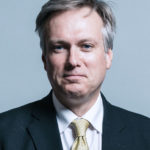
  • Henry Smith – 2022 Speech on the Sovereignty of the British Indian Ocean Territory

    Henry Smith – 2022 Speech on the Sovereignty of the British Indian Ocean Territory

    The speech made by Henry Smith, the Conservative MP for Crawley, in Westminster Hall, the House of Commons, on 7 December 2022.

    Thank you, Mrs Cummins, for calling me in this important debate on the future of the British Indian Ocean Territory. I congratulate my hon. Friend the Member for Shrewsbury and Atcham (Daniel Kawczynski) and thank him for securing the debate and for the very powerful comments that he made in his introduction.

    Injustice has been visited on the Chagos islanders for well over half a century. It was the Harold Wilson Administration that forcibly removed them from their homeland in the late 1960s, exiling them mainly to Mauritius, but also to some other locations such as the Seychelles. That was not a decision made by this democratic Parliament, but by Orders in Council. The way the Chagos islanders have been treated in Mauritius is really quite appalling: they have been treated as second-class citizens in that country, and the injustice upon injustice that they have suffered is intolerable.

    I believe that the Chagos islanders should have a right of return to their homeland. I am pleased that as a result of the Nationality and Borders Act passed earlier this year, they and further generations have a right to settle here in this country: they are British citizens, and should be so by right. I am pleased that that has been recognised. However, the future of the Chagos islanders should be determined by them. The prospect of their future being decided by London, Port Louis, the UN in New York, the International Court of Justice in The Hague or wherever else—as has happened throughout the past half century or more—is fundamentally wrong. The Chagos islanders must be able to determine their own future.

    Mention has been made by my hon. Friend the Member for Shrewsbury and Atcham of the strategic importance of the Chagos archipelago. Those islands were very strategically important during the cold war and during the actions in Afghanistan and Iraq, and they are very strategic again with a new cold war now seemingly having started as a result of Russian aggression. The point about the threat from China has already been made: the Chinese belt and road initiative has already resulted in Commonwealth countries in the Caribbean and the Pacific ocean coming under Chinese coercion and influence. There is a very real danger that if the British Indian Ocean Territory is ceded to Mauritius, there will be significant pressure to put Chinese military installations on those extremely strategic islands. That would be a major military and strategic error for the global community, and I wonder what discussions have been had with Washington regarding its views on defence and foreign policy should those islands be ceded to Mauritius. Perhaps the Minister could address that point.

    I will conclude my remarks by saying that as my constituent Frankie Bontemps of Chagossian Voices, who has already been referenced, has said, the vast majority of the Chagos community that I represent—I probably represent the largest Chagos community anywhere in the world—want to remain British, despite the appalling history that this country has visited on them. They must be consulted.

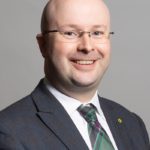
  • Patrick Grady – 2022 Speech on the Sovereignty of the British Indian Ocean Territory

    Patrick Grady – 2022 Speech on the Sovereignty of the British Indian Ocean Territory

    The speech made by Patrick Grady, the Independent MP for Glasgow North, in Westminster Hall, the House of Commons, on 7 December 2022.

    I am not entirely sure where to begin. I suppose I congratulate the hon. Member for Shrewsbury and Atcham (Daniel Kawczynski), and I welcome his interest in this issue. Many of us in the Chamber are members of the Chagos islands (British Indian Ocean Territory) all-party parliamentary group and have spoken frequently in Westminster Hall and the main Chamber on the question of sovereignty and the rights of the islanders and their descendants. I do not recall ever seeing the hon. Member for Shrewsbury and Atcham at those APPG meetings. I have not gone through the minutes of all 30 meetings that have taken place since I joined in 2016, so perhaps I missed him.

    Daniel Kawczynski

    Can I put on the record that I have attended some of those meetings? I suspect that he is getting wrong information. We can show him accounts of me attending those meetings.

    Patrick Grady

    I am happy to stand corrected on that. As far as I could tell from a search of Hansard, the hon. Gentleman has mentioned the British Indian Ocean Territory once in his career in this place, which was last year in a debate on AUKUS. His peroration probably gave us a sense of the real priorities behind this debate.

    At base level, I do not disagree. The Chagossian community should absolutely be involved and consulted in the negotiations on the future of the islands—many of us who have been involved in the all-party group have been campaigning on that for many years. I say “good luck” to him getting the United Kingdom Government to recognise the sovereignty of a people and that their democratic future should be decided in a referendum on the future of their territory, because the UK Government are very clearly against that kind of democratic process. It is important that we find a way to make sure that the community are properly consulted.

    I suspect that the issue will divert away from the specific question of sovereignty and to their rights and the future of their connection with the islands themselves. As the hon. Member recognises, the community is quite widely dispersed because of the historical actions of the United Kingdom Government. It is incredibly diverse as well, and different groups will have different views on exactly what a resolution should look like.

    A mechanism that can include the diaspora would be welcome. It might be impossible, as he alluded to, but there is no reason that the Governments that represent them cannot put their interests at the forefront when they are at the table. He is right that there is a Chagossian community represented by the United Kingdom Government. There is a Chagossian community represented by the Government of Mauritius and a Chagossian community represented by the Government of the Seychelles, and there will be smaller diasporas elsewhere in the world. That is what parliamentary democracies are for and what democratic representation is for. That is what many of us would want to see achieved.

    Human Rights Watch, which I am sure is an organisation that the hon. Gentleman engages with on a regular basis, has called for the inclusion of community voices, saying:

    “Righting the half century of wrongs to the Chagossian people means full reparations – their right to return in dignity and prosperity; full compensation for the harm they have suffered; and guarantees that such abuses never happen again.”

    That is where we ought to try to find some kind of consensus.

    I come from a political tradition where sovereignty lies with the people; not with a Crown, not with a Parliament and certainly not with a Government. In reality, sovereignty always ultimately lies with the people. People have the fundamental human rights to freedom of speech, thought and assembly. Those are manifested in the right to live under the rule of law. Those rights can be denied, as they have been in the case of the Chagossians, but they cannot be taken away. That is why among all the negotiations are questions about the future of the base on Diego Garcia, which, incidentally—I wanted to ask about this in an intervention— probably took quite a lot of concrete to establish.

    I am not sure if I completely understood the hon. Member’s argument. It appeared to be that in the 1960s it was okay for the United Kingdom to buy an island, militarise the south Indian ocean, pour lots of concrete on Diego Garcia and forcibly displace a population in doing so, but now it would be completely wrong for any other Government to consider such course of action.

    The notion that we should tell other countries to do what we say and not what we do is not always the most conducive to building world peace and stability. In among all those questions, we have to put the interests of the community first. We as Members have a duty to scrutinise the Government and speak out on behalf of our constituents, whether they are members of the Chagossian community or—like those who contact me—committed human rights activists who believe that everyone in the world should enjoy the rights we too often take for granted here in the United Kingdom. I hope the Government’s movements on this issue will at last lead to some kind of equitable status that resolves the question of sovereignty in international law, but more importantly, achieves justice at last for the people of the Chagos islands.

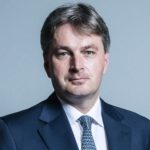
  • Daniel Kawczynski – 2022 Speech on the Sovereignty of the British Indian Ocean Territory

    Daniel Kawczynski – 2022 Speech on the Sovereignty of the British Indian Ocean Territory

    The speech made by Daniel Kawczynski, the Conservative MP for Shrewsbury and Atcham, in Westminster Hall, the House of Commons, on 7 December 2022.

    I beg to move,

    That this House has considered the sovereignty of the British Indian Ocean Territory.

    Before I start to talk about this British overseas territory, I would like to say that I returned last week from another British overseas territory—the Falkland Islands—with my hon. Friend the Member for Bracknell (James Sunderland) and the hon. Member for Cardiff South and Penarth (Stephen Doughty), who is the shadow Minister for the overseas territories. We have just spent nine days together in the Falkland Islands, inspecting the defences of the islands, meeting islanders and, most importantly, commemorating the 40th anniversary celebrations of the liberation of the islands in June 1982. I pay tribute to the shadow Minister. During our visit, he and I disagreed on almost everything: politically, culturally, socially—everything. But we were in unison and total agreement on the need to protect the Falkland Islands and their right to self-determination, a concept to which I will return over and again during my speech and this debate. It is the lesson we have learned from the conflict in the Falkland Islands.

    I recognise that the British Indian Ocean Territory is different from the Falkland Islands, and there are different perspectives, narratives and parameters, but one thing that is not divisible and is equally important in any British overseas territory is the concept of self-determination; we cannot negotiate sovereignty of a territory without the legitimacy of consultation with the islanders and the people originally from that territory.

    I mention the Falkland Islands because we have to learn from our mistakes and from the mistakes the Foreign Office has made in the past. Something I was told over and again during our visit to the Falkland Islands was that Lord Chalfont, a Labour Minister in the Foreign Office in the late ’60s, was sent to the Falkland Islands in 1968 by the Foreign Office to try to convince the islanders to abandon Great Britain, ditch their links with Britain and become Argentinian. The Falkland Islands’ people repeatedly referenced—and have written pamphlets and books about—that occasion, when a Labour Foreign Office Minister was sent to the Falkland Islands to try to entice, cajole and manoeuvre an entire people to abandon their cultural heritage, their links and their status as part of the British family. I am pleased that the Falkland Islanders sent Lord Chalfont back home with the unequivocal message, “We wish to remain British, we are British and we are determined to continue to be part of the British family.” I would argue that the poor handling of the Falkland Islands situation by the Foreign Office in the late ’60s and ’70s led and contributed to the war that then was instigated in 1982.

    Something I will not forget from my visit to the Falkland Islands is when my hon. Friend the Member for Bracknell, the hon. Member for Cardiff South and Penarth and I were taken to the top of Mount Tumbledown, and saw the horrendous situation our armed forces faced in trying to retake the islands. We paused on many occasions during our trip to lay wreaths and spend time quietly together, commemorating the lives of the British soldiers who gave up their lives to protect that British territory.

    When the Foreign Office makes mistakes and miscalculates, it is not civil servants or politicians who suffer, but British soldiers, who sometimes have to lay down their lives. Now I believe the Foreign Office is making the same mistakes with the British Indian Ocean Territory that it made with the Falkland Islands. I am deeply concerned that the former Prime Minister, my right hon. Friend the Member for South West Norfolk (Elizabeth Truss), made the decision in her extraordinarily brief premiership to start negotiations with Mauritius over the sovereignty of those 58 beautiful islands in the Indian ocean.

    I have debated this issue with many colleagues, and the message from some of them is this: we are in negotiations with Mauritius, due to rulings against us at the United Nations and at the International Court of Justice, so let us conclude those negotiations and then at some stage we will consult the Chagossians. Those are the responses I have received to many written parliamentary questions: “Do not interfere in the negotiations now. Let us conclude these sensitive negotiations—it is all rather discreet—and at some stage in future we will consult the Chagossians.” No, no, no. That puts the cart before the horse. If the Government have any intention to transfer even one of those 58 islands, they need to have a referendum of the Chagossian people. They need to make a decision themselves, rather than our Government even starting to negotiate with Mauritius.

    Right hon. and hon. Members will know that the Labour Government of the late 1960s expelled between 1,400 and 1,700 Chagossians. I am pleased that my hon. Friend the Member for Crawley (Henry Smith) is here, as he represents a large contingent of Chagossians who settled in his constituency when they arrived in the United Kingdom. I look forward to hearing what he has to say. The hon. Member for Wythenshawe and Sale East (Mike Kane) also represents 400 Chagossians. Between them, those two gentlemen represent the lion’s share of Chagossians who live in the United Kingdom.

    Sir James Duddridge (Rochford and Southend East) (Con)

    I thank my hon. Friend for giving way; he is making an excellent speech. Who would vote in that referendum—Mauritian Chagossians, Chagossians in the constituencies he just mentioned, second generation, third generation, people who have moved around the world? There is no one on the islands who is Chagossian. Who would the referendum be for?

    Daniel Kawczynski

    That is a pertinent, sensible and critical question, but not one I have an answer to in this debate. I want to raise the concept and the extraordinary need to ensure that Chagossians are consulted. In written answers, the Government have stated they will consult the Chagossians. If we secure a commitment to a referendum of the Chagossians, it is for the Government to work with legal minds far superior to mine to create the framework in which a referendum could take place.

    I want to apologise, as I am sure others will, to the Chagossian people. Those beautiful people were expelled from their islands in 1968 to make way for an American military base. Nothing can erase the shame we feel as British citizens that our ancestors treated the Chagossians in that way. To rip them away from their beautiful islands and cast them to the Seychelles, Maldives, Britain and Mauritius is unforgiveable. At this stage, we can only apologise for what happened to them.

    The military base was set up to counter growing Chinese and Soviet belligerence in the Indian ocean and beyond. Today we see a similar belligerence from Russia and especially China. That is the point I want to get across in this debate: we have to look at what is going on in that region.

    James Sunderland (Bracknell) (Con)

    I may be one of very few parliamentarians, if not the only one, who has been to the British Indian Ocean Territory on duty as a military person, so I have seen at first hand how important that base is to NATO and beyond. For me, it is clear; we have two submarine Z-berths there and a large airbase, which was directly involved with the operations in Afghanistan and Iraq. It is an American airbase that is owned by the British. To my mind, it would be pathological nonsense to concede access to that part of the world.

    Daniel Kawczynski

    I completely agree with my hon. Friend and I am grateful to him for his intervention. I will not give way again for a few minutes, because I have a lot to get through.

    Let me explain the key issue. I want to put it on the record and I want to criticise my own side. I am not prone to criticising the Conservative party, but I will enjoy myself this afternoon; I want to let rip.

    Seven years ago, I started to ask questions of the Conservative Government, including on the Government’s understanding of the situation in relation to another member of the UN Security Council. By the way, it is a situation peculiar to only five nations in the world to be a permanent member of the UN Security Council, and with that status comes a tremendous amount of responsibility. I asked the then Foreign Secretary, Mr Hammond, “What is this Government’s perception of the fact that China has hoovered up hundreds of atolls in the South China sea—stealing them from Vietnam, Malaysia, Brunei and the Philippines—poured concrete on them and turned them into giant military installations, which extends China’s reach by over 1,000 kilometres by stealing all those islands from all those countries?”

    I have met the ambassadors of Vietnam, the Philippines, Malaysia and others, who have expressed to me great concern about what the Chinese are doing. It is only because of British and American freedom of navigation exercises through the South China sea that this waterway, through which 65% of the world’s trade passes, is still open. Otherwise, the Chinese would have tried to turn it into a Chinese lake.

    The Government’s response was extraordinary. Mr Hammond said: “The British Government does not get involved, nor has any opinion, on the disputes about uninhabited atolls in the South China sea”. How regrettable that that answer came seven years ago, because I would argue that it was the Government’s lack of action in response to China stealing hundreds of atolls that was the thin end of the wedge; Britain’s inaction gave the brutal Communist dictatorship of China a green light: “Yes, it’s okay for us to steal other people’s territories. Yes, it’s okay for us to pour concrete on to these atolls and turn them into military installations, because the British aren’t going to do anything about it”.

    Sir James Duddridge

    I thank my hon. Friend for giving way; he is making very strong points about China and its influence on the atolls. Is it his impression that that is about China setting up military bases, or is it about telecoms—listening in and disrupting global communications—rather than establishing military bases? That would be even more worrying than the assertion he has made.

    Daniel Kawczynski

    I agree with my hon. Friend; of course, it is a combination of both factors, with the Chinese trying to extend the tentacles of their reach throughout the whole region in order to put smaller countries under pressure.

    The Chinese control Mauritius through their belt and road policy, as they do so many other small nations around the world. Guess which is the first African nation that received a free trade agreement with China? Mauritius. Guess which country—a tiny island, with a small economy—has received over $1 billion in investment from China over the last few years? Mauritius. The moment that we give Mauritius some of the outer islands, of which there are 58, it will lease one or some of them to the Chinese almost instantaneously. We do not know what conversations are taking place between Beijing and Port Louis, but we cannot discount what the financial statistics say about Chinese control of Mauritius.

    Certain politicians and colleagues have made a nuanced argument to me: “Do not rock the boat; these are very delicate negotiations. We have to maintain our control over Diego Garcia. If that means giving away some of the other islands and coming to a compromise, so be it.” No. If the mantra is to keep Diego Garcia while giving some of the other islands away, imagine what would happen to the viability and sustainability of UK and American bases on Diego Garcia. It would be absolutely intolerable for us. I have visited our military bases on Diego Garcia. I have spent days meeting with American officials on the islands; they briefed me and showed me around the naval vessels and installations. Having those huge military bases with the Chinese just a stone’s throw away from us on the other islands would be completely unacceptable.

    I visited Peros Banhos, one of the outer islands, after sailing overnight from Diego Garcia, which is where the military base is. Islanders on Peros Banhos were expelled in 1970 because the island was perceived to be too close to our military base. The Chinese have shown form. They are the world experts on turning atolls into military installations. There is an argument that Peros Banhos and the other islands are too small, too insignificant and too far below sea level for them to be viable. Well, the Chinese have proved that concept completely wrong; they have created installations successfully in the South China sea.

    There has been an appalling injustice, which we must now right. Rather than accommodating the spurious demands of Mauritius, we need to consult the indigenous people living in Britain, Mauritius, the Maldives and the Seychelles. I want to read a statement from Frankie Bontemps, who is a constituent of my hon. Friend the Member for Crawley. He is an NHS worker at the hospital in Crawley, and is from the Chagos islands. I had a long and somewhat emotional telephone conversation with him last night. He is a tremendous man, whom I look forward to meeting in the House of Commons. He writes:

    “I am a founding member of Chagossian Voices. I don’t agree that islands should go to Mauritius. Chagossians have never been consulted at any stage and Chagossians were never represented, either at the International Court or before. Chagossians have been used by the Mauritian government at ICJ to get sympathy by providing an account of suffering…Then they were dismissed…as ‘Mauritians of Chagossian origin’. They have erased our identity.”

    That is the allegation: “they have erased our identity”. The statement goes on:

    “The Mauritian Government was also complicit in the exile of Chagossians and the ‘sale’ of the islands in 1965.”

    That is a fascinating concept. Mauritius took £3 million of our taxpayers’ money in 1965. Think for a moment how much £3 million was in 1965. It took our money as final settlement for the islands. It was complicit in helping the removal of the Chagossians from Diego Garcia and the other islands, and now, 60 years on, it wants to overturn that agreement and take away from us islands that are more than 2,000 km away from it.

    Mr Bontemps goes on to say:

    “Chagossians do not feel they are Mauritians and Chagossians feel they are still being exploited by the Mauritian government. Mauritius wants sovereignty of the islands for financial gain and I do not think there will be resettlement of Chagossians”

    under Mauritian rule. He goes on to say this, which is very evocative, powerful and emotional:

    “It is wrong to describe Chagossians as Mauritians. Their origins are as slaves from Africa and Madagascar. The Chagossians have been there for 5 or 6 generations with their own language and culture, food and music traditions. It is a remote and unique culture different to Mauritius…The judgment of Lord Justice Laws & Mr. Justice Gibbs in November 2000 said Chagossians are the ‘belongers’ on the islands. As ‘belongers’ Chagossians should be their own deciders of their futures, not the Mauritian Government. Self-determination should have been for the Chagossians, not for Mauritians who have their own island more than 2,000 km away. So far only UK and Mauritius have been consulted. Chagossians have never been allowed to participate in decisions about their future, from exile until now. Chagossians should now be asked to decide the future of the islands. Chagossians should be around the table. It’s our human right.”

    Mr Bontemps then goes on to say that he has written a letter to the Foreign Secretary asking for those assurances, dated 11 November 2022, and he has not as yet received a reply.

    I would like to thank Rob Crilly, a reporter from The Daily Mail USA edition, who has written a story about this debate. As a result of it, I was contacted this week by Republican Congressman Mike Waltz, a ranking member of the military readiness sub-committee of the Congress of the United States of America. He is now likely to become chairman of that powerful and important group, as the Republicans recently won the congressional elections. US bases are under its jurisdiction. I had a long, fruitful discussion with Congressman Waltz’s team and highlighted my concerns about the negotiations that our Government have entered into with Mauritius. I briefed them about this debate, and they are extremely concerned by the news. They are worried about the ramifications for them and what will happen to their naval base if they have to share the archipelago with the Chinese.

    Even if we retain Diego Garcia, the other islands will be up for lease to the Chinese. We have seen what Mauritius is doing with Agaléga—

    Patrick Grady (Glasgow North) (Ind)

    Will the hon. Gentleman give way?

    Daniel Kawczynski

    In a second.

    Agaléga is one of the Mauritian islands, which it has leased to the Indians. The indigenous population of that atoll has been removed and massive destruction has taken place on it to accommodate an Indian military base, so the Mauritians have form. They understand the importance of the Indian ocean and how geographically significant it is. Mauritius is in the market to gain as many of these atolls as possible and ultimately to sell them to the Indians, the Chinese or whoever is the highest bidder. That is in stark contrast to the United Kingdom, which is seeking to protect the 58 islands. A massive conservation area twice the size of the United Kingdom has been created around the islands, which is protecting marine and wildlife. There is no fishing and no oil drilling—nothing takes place. Anybody interested in what Mauritius is doing with these atolls should google that information. Mauritius wants the islands to sell them to make money. Ultimately, if we allow it to do that, it will facilitate the militarisation of the Indian ocean.

    Patrick Grady rose—

    Daniel Kawczynski

    I am concluding my arguments—I will give way in a second—but what I would like to say is this. We have beaten the French to secure participation in AUKUS, which is one of the most important miliary agreements signed in the Government’s tenure in office, and we are re-entering the Indian ocean and the Pacific through our arrangement with the Americans and the Australians. AUKUS is essential.

    It was Lee Kuan Yew who remonstrated with the United Kingdom when we left Singapore in 1971. He understood the ramifications for that region were the United Kingdom to abandon her bases. In that period of retrenchment and lacking in self-confidence that we went through in the early ’70s, we left all those areas, and Lee Kuan Yew and others foresaw the difficulties that would ensue. Finally, we have the confidence to re-enter the Indian ocean and the Pacific. The AUKUS military agreement is essential, in conjunction with our membership of the comprehensive and progressive agreement for trans-Pacific partnership—the far east trading bloc—which we are entering next year.

    The islands are essential for our geopolitical strategy of supporting allies in the Indian ocean and the Pacific from growing Chinese belligerence. I speak as the only Member of Parliament to have been born in a communist country and the only British Member of Parliament who has lived under communist oppression and tyranny, so I know what the communists are capable of and I know how the Chinese communist Government threaten and bully many smaller countries in the region. As my hon. Friend the Member for Bracknell (James Sunderland) said, it would be madness to allow the Chinese to enter the Indian ocean through its puppet client state of Mauritius.

    I hope that the Chagossians following the debate across the United Kingdom, as well as those in Mauritius and the Seychelles, listen to us and hear the strength of feeling that many hon. Members have, demonstrating that we, as a former imperial power, recognise the mistakes we have made and that, in a new modern era, we will put the concepts of integrity and self-determination at the forefront. If any of the islands is to be abandoned, that can be done legitimately only through the acceptance of the Chagossian people, and the fascinating thing is that I do not think that that is there. I look forward to hearing from my hon. Friend the Member for Crawley (Henry Smith) and will stop shortly so that he can speak. However, in all my discussions with the Chagossians, I hear that they are up for this—they are up for remaining British. We can convince them to vote to remain British in a referendum. Will the Minister tell us why we are negotiating with the Mauritius Government before the Chagossians have been consulted?

    The last thing I will say—I will use parliamentary privilege for the first time in 17 years—is that British citizens, who I will not name, are actively conspiring to aid and abet Mauritius to take these islands from the United Kingdom. I will not begin to tell hon. Members what I think of those individuals, but I very much hope that they will be thwarted in their actions.