Tag: 2021

  • Priti Patel – 2021 Statement on the Nationality and Borders Bill

    Priti Patel – 2021 Statement on the Nationality and Borders Bill

    The statement made by Priti Patel, the Home Secretary, in the House of Commons on 6 July 2021.

    In March I published the new plan for immigration (NPI), setting out the overwhelming case for change to fix the broken asylum system, and deliver a system that is fair but firm. The Nationality and Borders Bill, introduced today, will deliver the most comprehensive reform of the asylum system in decades. The principle behind the Bill is simple: access to the United Kingdom’s asylum system should be based on need, not on the ability to pay people smugglers.

    The Bill—and the wider NPI—has three key objectives:

    Make the system fairer and more effective so that we can better protect and support those in genuine need of asylum.

    Deter illegal entry into the UK breaking the business model of criminal trafficking networks and saving lives.

    Removing from the UK those with no right to be here.

    The introduction of the Bill was preceded by a consultation on the NPI which the Government will provide a response to in due course.

    To support the parliamentary scrutiny of the Bill, we are publishing a gov.uk page. This can be found at: https://www.gov.uk/government/collections/the-nationality-and-borders-bill.

  • Oliver Dowden – 2021 Statement on the Future of Channel 4

    Oliver Dowden – 2021 Statement on the Future of Channel 4

    The statement made by Oliver Dowden, the Secretary of State for Digital, Culture, Media and Sport, in the House of Commons on 6 July 2021.

    Today, we are launching a consultation on the future ownership of Channel Four Television Corporation.

    Since its creation almost 40 years ago by a Conservative Government, Channel 4 has delivered on its remit, aims and objectives. But, in that time, the broadcasting landscape has changed beyond recognition, and continues to change apace.

    Increased global competition, changing audience habits, the decline of linear advertising revenue and a wave of consolidation in the sector all pose challenges.

    The consultation therefore asks for views and evidence on what ownership model and remit will best support Channel 4 to thrive for another 40 years and beyond.

    It is the Government’s current view, to be tested through the consultation, that a new ownership model would give Channel 4 the broadest range of tools to continue to thrive in the face of these new challenges.

    There are constraints that come with public ownership, and a new owner could bring access and benefits, including access to capital, new strategic partnerships and to the international markets.

    As we have set out before, we believe that the need for public service broadcasting in the UK is as strong as ever. We want to see Channel 4 keep its place at the heart of British broadcasting and continue to support the great creative economy in this country. We want to put it on a footing to flourish for decades to come. Now is therefore the time to test whether an alternative ownership model may be better for the broadcaster and better for the country.

    This consultation forms a key part of the Government’s wider strategic review of public service broadcasting, along- side Ofcom’s own reflection exercise. Together, our work will ensure that our public service broadcasters and the wider broadcasting framework are fit for the 21st century.

    The consultation can be accessed from today on gov.uk and will run for 10 weeks, closing on 14 September 2021 at 11.45 pm. A copy of the consultation will be placed in the Libraries of both Houses.


  • Rishi Sunak – 2021 Fiscal Risks Report Statement

    Rishi Sunak – 2021 Fiscal Risks Report Statement

    The statement made by Rishi Sunak, the Chancellor of the Exchequer, in the House of Commons on 6 July 2021.

    In accordance with the charter for budget responsibility, the OBR has today published its third fiscal risks report (FRR). FRR 2021 provides an update on the risks identified in previous reports, alongside focused coverage of three areas of fiscal risk: the coronavirus pandemic, climate change, and the cost of Government debt. I am grateful to the Budget Responsibility Committee, and staff of the OBR, for their work in preparing this report, which ensures that the UK continues to be at the forefront of fiscal transparency and management during these unprecedented times. The report was laid before Parliament earlier today and copies are available in the Vote Office. The Government will respond formally to FRR 2021 within the next year.

    The UK has experienced two “once-in-a-generation” economic shocks in just over a decade, and the challenges faced by the UK since the start of the pandemic have been substantial. Action taken over the last decade to restore the public finances to health enabled the Government to fund a comprehensive package of support for the economy when most needed. The report notes that our direct support to businesses helped keep many of our employers afloat, kept insolvencies in check and avoided the kind of credit crunch that occurred during the financial crisis. The Government have acted on a scale unmatched in recent history to protect people’s jobs and livelihoods and to support businesses and public services across the UK. Taking into account the significant support confirmed at spending review 2020 and Budget 2021, total announced support for the economy in response to covid-19 is £352 billion across 2020-21 and 2021-22.

    The report highlights the range of spending choices and risks we face, particularly relating to pandemic spending. These will be considered at the spending review. As the report notes, spending is increasing in cash terms, real terms, and as a share of GDP overall. Total managed expenditure is forecast to rise by 2.1% of GDP between 2019-20 and 2024-25. Core departmental spending is set to grow at an average of over 3% in real terms over this Parliament. Our plans will deliver the largest real-terms increase in departmental spending for any full Parliament this century.

    It is clear that unmitigated climate change is another significant fiscal risk and decarbonisation is essential for sustainable long-term growth and therefore also for the health of the public finances. The fiscal consequences of transition to net zero will need to be managed in line with the Government’s broader fiscal strategy. The Government will publish our net zero strategy later this year, which will set out more detail on how we will meet our net zero target.

    The pandemic and the Government’s necessary policy response has led to an unprecedented increase in Government borrowing and debt; FRR 2021 illustrates how this has made the public finances more sensitive to changes in interest rates. While borrowing costs are affordable now, interest rates and inflation may not stay low forever. The OBR’s latest forecast recognises that the Government’s current fiscal plans deliver a stable medium-term outlook for public sector net debt, but as I set out at that Budget, we need to pay close attention to the affordability of that debt.

    The risks discussed by the OBR in this report underline the importance of returning our public finances to a more sustainable path. The report finds that, in the face of many potential fiscal risks,

    “fiscal space may be the single most valuable risk management tool”.

    That is why the Government set out at Budget 2021 a plan for returning the public finances to a more sustainable path. It is vital that we rebuild fiscal space to ensure that the Government can maintain fiscal resilience to respond as future risks materialise, continue to invest in excellent public services and give businesses and citizens across the UK the certainty that comes with knowing we can and will support them.

  • Kwasi Kwarteng – 2021 Statement on Stellantis Investment at Ellesmere Port

    Kwasi Kwarteng – 2021 Statement on Stellantis Investment at Ellesmere Port

    The statement made by Kwasi Kwarteng, the Secretary of State for Business, Energy and Industrial Strategy, in the House of Commons on 6 July 2021.

    I am delighted to welcome the confirmation by Stellantis of a transformational investment at its Vauxhall plant in Ellesmere Port, which will see the site become the first mass volume, fully battery electric vehicle plant in the UK and Europe. Stellantis have committed to investing more than £100 million to transition the plant to produce a new generation of electric vehicles, safeguarding the future of the site and its supply chain for the next decade.

    This announcement demonstrates that our net zero ambitions are being welcomed and matched by business, as we work towards increasing the manufacture of electric vehicles in the UK. The Government are committed to ensuring we continue to be one of the best locations in the world for automotive manufacturing and are working closely with the sector to make sure it remains competitive, attracts investment, and protects and creates jobs.

    Just over six months ago we presented the Prime Minister’s 10-point plan for a green industrial revolution, setting an ambitious road map for transforming our economy, unlocking investment and levelling up the regions. The plan included a commitment to phase out the sale of new petrol and diesel cars and vans by 2030. The decision by Stellantis to invest in electrification in the UK, alongside recent announcements by Nissan and Envision in Sunderland, are excellent illustrations of business and the Government working together to achieve decarbonisation within the sector.

    I was pleased to inform the House in June of the strong consumer growth over the past year, which our strategy is helping to drive. As of March 2021, battery electric vehicle sales stood at 7.7% of the market, up 88% on a year earlier, while plug-in hybrid vehicles sales were 6.1%, an increase of 152%. Changing consumer habits such as the way we shop have also driven a strong increase in demand for light commercial vehicles, and this announcement will help transition the fleet with a new vehicle produced here in the UK. This investment will grow domestic production of electric commercial vehicles, help reduce our reliance on imports and play an important part in reducing emissions in towns and cities across the country.

    I am sure Members will agree that this is an important announcement for Cheshire, Merseyside and the north-west of England, which secures the continued presence of a key anchor for the local and regional economy. This significant investment has been secured thanks to a strong partnership approach between Stellantis and the Government, alongside Cheshire West and Chester Council, and the Cheshire and Warrington local enterprise partnership to maximise the benefits of the transformation of the plant to the wider local economy.

    This news will be welcomed by the workforce at Ellesmere Port and is a testament to their skills and hard work. The Ellesmere Port plant has been a crucial part of automotive manufacturing in the UK since it first opened nearly 60 years ago. This announcement means that that milestone will be marked next year with the production of its first all-electric vehicle—building a sound future on Vauxhall’s proud legacy.

    Today’s announcement is further proof that there is a bright future for automotive manufacturing in this country. The Government are committed to supporting this transition including £500 million to support the electrification of UK vehicles and their supply chains, as part of a wider commitment of up to £1 billion. As Secretary of State I will continue to champion the sector, ensuring that we make the most of the opportunities of the transition to zero-emission vehicles and attract further investment, boost innovation and sustain tens of thousands of jobs in manufacturing and the supply chain.

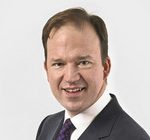
  • Jesse Norman – 2021 Statement on the Emissions Trading Scheme

    Jesse Norman – 2021 Statement on the Emissions Trading Scheme

    The statement made by Jesse Norman, the Financial Secretary to the Treasury, on 5 July 2021.

    The Government are announcing today that legislation will be introduced at the earliest opportunity to allow a VAT zero rate to apply to trades in UK emissions trading scheme allowances within the VAT Terminal Markets Order (S11973/173) (TMO).

    A UK Emissions Trading Scheme (UK ETS) replaced the UK’s participation in the EU ETS on 1 January 2021. The scheme has been established to increase the climate ambition of the UK’s carbon pricing policy, while mitigating the risk of carbon leakage through free allowances.

    Market participants can bid for UK ETS allowances on the UK auction platform or can acquire futures contracts in UK ETS allowances on the secondary market.

    The TMO permits VAT zero rating for transactions on terminal commodity markets. It is seen as an important VAT trade facilitation measure by those involved in trading commodity futures contracts, where often on these markets there are very substantial volumes of transactions over short periods of time. The zero-rating relief provided by the TMO avoids the administrative and cash flow burdens of accounting for VAT and should have no effect on the VAT amount collected at the final stage of consumption.

    I can confirm today the treatment will be provided from the time when these important trades commenced in May.

  • Nick Gibb – 2021 Comments on Boosting Core Skills of Pupils

    Nick Gibb – 2021 Comments on Boosting Core Skills of Pupils

    The comments made by Nick Gibb, the School Standards Minister, on 9 July 2021.

    Maths and English are the foundations for every child’s education. Being sure we are using the most effective teaching methods – phonics for reading and the maths mastery approach for teaching maths – is key to ensuring every child has the best start to their time at primary school and the best introduction to the challenges of secondary education.

    This programme is designed to support schools in using evidenced-based methods proven to give children the best start to their education.

  • Priti Patel – 2021 Comments on Removals Agreement with Albania

    Priti Patel – 2021 Comments on Removals Agreement with Albania

    The comments made by Priti Patel, the Home Secretary, on 9 July 2021.

    I am determined to fix our immigration system, clamp down on illegal entry, and remove those with no right to be in UK as swiftly as possible.

    Our New Plan for Immigration, coupled with this new agreement, will speed up the removal of Albanian nationals who have committed crimes in the UK and overstayed their welcome.

    I make no apology for removing dangerous foreign criminals to protect the British people and, so far this year, more than 1,000 foreign criminals have been deported, with more being removed every single week.

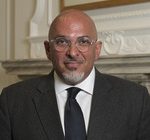
  • Nadhim Zahawi – 2021 Comments on Vaccine Uptake

    Nadhim Zahawi – 2021 Comments on Vaccine Uptake

    The comments made by Nadhim Zahawi, the Vaccines Minister, on 9 July 2021.

    This is an astonishing accomplishment – in around seven months the NHS in every corner of the country has administered 80 million vaccines.

    The success is down to the incredible dedication of NHS staff, GPs, pharmacists, volunteers, local authorities, civil servants and the armed forces – the country applauds your commitment to saving lives.

    As we begin to fully reopen society, it’s absolutely crucial everybody gets their first and second jabs so we can return to normality as quickly as possible.

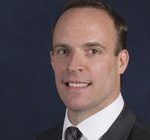
  • Dominic Raab – 2021 Statement on Bab Al-Hawa Crossing

    Dominic Raab – 2021 Statement on Bab Al-Hawa Crossing

    The statement made by Dominic Raab, the Foreign Secretary, on 9 July 2021.

    The United Nations Security Council has today adopted Resolution 2585, allowing the delivery of UN cross-border aid into Syria to continue through Bab Al-Hawa.

    This is a welcome step, but urgent work must be done by the international community to find a sustainable, long-term solution to deliver aid into northern Syria. The lives of more than 13 million vulnerable Syrians depend on it. The UK will continue to push for a credible political settlement, as the only way to bring an end to the conflict.

  • Jim McMahon – 2021 Letter to Grant Shapps on the Aviation Industry

    Jim McMahon – 2021 Letter to Grant Shapps on the Aviation Industry

    The letter written by Jim McMahon, the Shadow Transport Secretary, to Grant Shapps, the Transport Secretary, on 9 July 2021.

    Dear Grant,

    I am writing to you after your media appearances this morning, when you spoke of the challenges passengers would face going aboard this summer.

    On BBC Breakfast, you said:

    “The real backlog will be from the place you’re coming from” and that “People should expect more disruption than usual”

    While it’s right to manage expectations, Government ministers are not merely commentators on the situation – they are empowered to seek to address problems they foresee.

    The unlock date is still 10 days away. Ministers should be actively working with the industry and major UK tourist destination airports to create a process that is both safe, appropriate but also workable.

    So can I ask you whether you have met or spoken with every airline that flies into the UK from a Green or Amber list country, to talk them through the new processes and ensure that their staff will know how operate this new system as speedily as possible?

    Is the Government confident that all airlines flying from these destinations can read the UK’s NHS app and understand when to allow a traveller on board or when not to? Would these challenges not highlight the need for an international vaccine passport, or at least international agreement on how a Covid passport might work?

    As I asked you yesterday, whilst we have our own Covid passport via the NHS app there have been issues with other countries accepting this as sufficient proof entering into those countries. Do you know how many countries now accept the Covid passport of the NHS app as proof of someone’s Covid or vaccine status?

    Finally, you noted in your BBC interview that more UK Border Force staff will be stationed at UK airports to deal with the expecting increase in traveller numbers. How many more officers will there be and what is your target time for how long will a traveller should expect to have to wait to go through a major UK airport such as Heathrow?

    Yours sincerely,

    Jim