Tag: 2021

  • Leo Docherty – 2021 Statement on Recording and Reporting Suicides

    Leo Docherty – 2021 Statement on Recording and Reporting Suicides

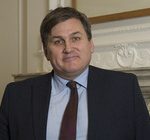
    The statement made by Leo Docherty, the Minister for Defence People and Veterans, in the House of Commons on 22 September 2021.

    As part of the Government’s work to make the UK the best place in the world to be a veteran, I am committed to ensuring that all veterans who may be struggling are able to access dedicated support. Achieving this depends on a good understanding of where support is needed, including a more comprehensive understanding of veterans who tragically take their own lives. I can announce today that the UK Government are working to develop a new method for recording and reporting cases of suicide within the veteran community. This will allow for the first publication of statistics of veterans who die by suicide each year in England and Wales, and we will continue to explore ways this can be replicated across the UK in the future.

    The new method is being developed by the Office for Veterans’ Affairs, the Office for National Statistics and the Ministry of Defence following consultation across HMG and our devolved Administrations to determine the best approach. As set out in the ONS census output and analysis consultation, in 2023, the ONS will undertake analysis to compare the health of the veteran population, including the number of veterans with long-term health conditions or disabilities, with the general population. This analysis will also include suicide-related deaths of veterans. In the interim, we will be working with the ONS and the MOD to conduct a 10-year look back at veteran deaths by suicide. This work will inform us about how many veterans have died through suicide and other causes including drug and alcohol misuse from 2011-21, and to estimate the number that died homeless. We anticipate publishing this look back in autumn 2022.

    In the strategy for our veterans, the Government committed to improve the collection and analysis of data on veterans to inform future policy. This new work will ensure we are meeting that commitment to better understand the tragic issue of suicide, understand its prevalence, and better inform future policy and interventions in support of the veteran community. This analysis will help the Government understand how many veterans die by suicide and using this data in combination with other research will enable us to better develop and target mental health and suicide prevention measures.

    We are collaborating with Departments across Government to develop this new robust method and to ensure that we can better provide for those who have protected our country. In addition, the MOD, OVA and NHSE have partnered with Manchester University to investigate the antecedents to suicide in both serving personnel and veterans focusing on the year prior to the death. The study will be using data supplied by MOD on military service, information collected as part of the confidential inquiry into suicides and coroners’ reports. The study will include all suicides between 1995-2017 and will complete in August 2022.

    Every suicide is a tragedy, and our thoughts are with those who have lost loved ones to suicide. We urge all who may be struggling to reach out and access the support available. Those struggling to cope should call Samaritans for free on 116 123 (UK and ROI) or contact other sources of support, such as those listed on the NHS’s help for suicidal thoughts webpage. Support is available round the clock, every single day of the year, providing a safe place for anyone struggling to cope, whoever they are, however they feel, whatever life has done to them.

  • Boris Johnson – 2021 Speech at the UN General Assembly

    Boris Johnson – 2021 Speech at the UN General Assembly

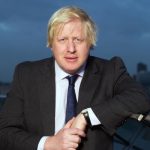
    The speech made by Boris Johnson, the Prime Minister, on 22 September 2021.

    Mr President, Your Excellencies, ladies and gentlemen.

    An inspection of the fossil record over the last 178 million years – since mammals first appeared – reveals that the average mammalian species exists for about a million years before it evolves into something else or vanishes into extinction.

    Of our allotted lifespan of a million, humanity has been around for about 200,000.

    In other words, we are still collectively a youngster.

    If you imagine that million years as the lifespan of an individual human being – about eighty years – then we are now sweet 16.

    We have come to that fateful age when we know roughly how to drive and we know how to unlock the drinks cabinet and to engage in all sorts of activity that is not only potentially embarrassing but also terminal.

    In the words of the Oxford philosopher Toby Ord “we are just old enough to get ourselves into serious trouble”.

    We still cling with part of our minds to the infantile belief that the world was made for our gratification and pleasure and we combine this narcissism with an assumption of our own immortality.

    We believe that someone else will clear up the mess we make, because that is what someone else has always done.

    We trash our habitats again and again with the inductive reasoning that we have got away with it so far, and therefore we will get away with it again.

    My friends the adolescence of humanity is coming to an end.

    We are approaching that critical turning point – in less than two months – when we must show that we are capable of learning, and maturing, and finally taking responsibility for the destruction we are inflicting, not just upon our planet but ourselves.

    It is time for humanity to grow up.

    It is time for us to listen to the warnings of the scientists – and look at Covid, if you want an example of gloomy scientists being proved right – and to understand who we are and what we are doing.

    The world – this precious blue sphere with its eggshell crust and wisp of an atmosphere – is not some indestructible toy, some bouncy plastic romper room against which we can hurl ourselves to our heart’s content.

    Daily, weekly, we are doing such irreversible damage that long before a million years are up, we will have made this beautiful planet effectively uninhabitable – not just for us but for many other species.

    And that is why the Glasgow COP26 summit is the turning point for humanity.

    We must limit the rise in temperatures – whose appalling effects were visible even this summer – to 1.5 degrees.

    We must come together in a collective coming of age.

    We must show we have the maturity and wisdom to act.

    And we can.

    Even in this feckless youth we have harnessed clean energy from wind and wave and sun.

    We have released energy from within the atom itself and from hydrogen, and we have found ways to store that energy in increasingly capacious batteries and even in molten salt.

    We have the tools for a green industrial revolution but time is desperately short.

    Two days ago, in New York we had a session in which we heard from the leaders of the nations most threatened by climate change: the Marshall Islands, the Maldives, Bangladesh and many others.

    And they spoke of the hurricanes and the flooding and the fires caused by the extreme meteorological conditions the world is already seeing.

    And the tragedy is that because of our past inaction, there are further rises in temperature that are already baked in – baked is the word.

    And if we keep on the current track then the temperatures will go up by 2.7 degrees or more by the end of the century.

    And never mind what that will do to the ice floes: we will see desertification, drought, crop failure, and mass movements of humanity on a scale not seen before, not because of some unforeseen natural event or disaster, but because of us, because of what we are doing now.

    And our grandchildren will know that we are the culprits and that we were warned and they will know that it was this generation that came centre stage to speak and act on behalf of posterity and that we missed our cue and they will ask what kind of people we were to be so selfish and so short-sighted.

    In just 40 days time we need the world to come to Glasgow to make the commitments necessary.

    And we are not talking about stopping the rise in temperatures – it is alas too late for that – but to restrain that growth, as I say, to 1.5 degrees.

    And that means we need to pledge collectively to achieve carbon neutrality – net zero – by the middle of the century.

    And that will be an amazing moment if we can do it because it will mean that for the first time in centuries humanity is no longer adding to the budget of carbon in the atmosphere, no longer thickening that invisible quilt that is warming the planet, and it is fantastic that we now have countries representing 70 per cent of the world’s GDP committed to this objective.

    But if we are to stave off these hikes in temperature we must go further and faster – we need all countries to step up and commit to very substantial reductions by 2030 – and I passionately believe that we can do it by making commitments in four areas – coal, cars, cash and trees.

    I am not one of those environmentalists who takes a moral pleasure in excoriating humanity for its excess.

    I don’t see the green movement as a pretext for a wholesale assault on capitalism.

    Far from it.

    The whole experience of the Covid pandemic is that the way to fix the problem is through science and innovation, the breakthroughs and the investment that are made possible by capitalism and by free markets, and it is through our Promethean faith in new green technology that we are cutting emissions in the UK.

    When I was a kid we produced almost 80 per cent of our electricity from coal; that is now down to two per cent or less and will be gone altogether by 2024.

    We have put in great forests of beautiful wind turbines on the drowned prairies of Doggerland beneath the North Sea.

    In fact we produce so much offshore wind that I am thinking of changing my name to Boreas Johnson in honour of the North Wind.

    And I know that we are ambitious in asking the developing world to end the use of coal power by 2040 and for the developed world to do so by 2030, but the experience of the UK shows that it can be done and I thank President Xi for what he has done to end China’s international financing of coal and I hope China will now go further and phase out the domestic use of coal as well, because the experience of the UK shows it can be done.

    And when I was elected mayor of London only 13 years ago, I was desperate to encourage more electric vehicles and we put in charging points around the city.

    And I am afraid that in those days they were not greatly patronised.

    But the market in EVs in the UK is now growing at an extraordinary pace – maybe two thirds every year – and Nissan is sufficiently confident to invest £1 billion in a new EV factory and a gigafactory for the batteries.

    And that is because we have set a hard deadline for the sale of new hydrocarbon ICEs of 2030 and again we call on the world to come together to drive this market so that by 2040 there are only zero emission vehicles on sale anywhere in the world.

    And you can make these cuts in pollution while driving jobs and growth: we have cut our greenhouse gas emissions by 44 per cent in the last 30 years while expanding our GDP by 78 per cent.

    And we will now go further by implementing one of the biggest nationally determined contributions – the NDC is the pledge we ask every country to make in cutting carbon – going down by 68 per cent by 2030, compared to where we were in 1990.

    We are making a huge bet on hydrogen, we are expanding nuclear, we are helping people to reduce their own household CO2.

    We are working towards Jet Zero – the first large carbon-free passenger plane.

    And we also recognise that this is not just about using technical fixes for CO2: we need to restore the natural balance, we need to halt and reverse the loss of trees and biodiversity by 2030, and that is why we in the UK are committed to beautifying the landscape, strengthening our protection against flooding, by planting millions more trees.

    We must also work towards the crucial Kunming summit in China and I call on all nations to follow the example of Imran Khan who has pledged to plant 10 billion trees in Pakistan alone.

    And we in the developed world must recognise our obligation to help.

    We started this industrial revolution in Britain: we were the first to send the great puffs of acrid smoke to the heavens on a scale to derange the natural order.

    And though we were setting in train a new era of technology that was itself to lead to a massive global reduction in poverty, emancipating billions around the world, we were also unwittingly beginning to quilt the great tea cosy of CO2 and so we understand when the developing world looks to us to help them and we take our responsibilities.

    And that’s why two years ago I committed that the UK would provide £11.6 billion to help the rest of the world to tackle climate change and in spite of all the pressures on finances caused by Covid, we have kept that promise to the letter.

    And I am so pleased and encouraged by some of the pledges we have heard here at UNGA, including from Denmark, and now a very substantial commitment from the US that brings us within touching distance of the $100 billion pledge.

    But we must go further, and we must be clear that government alone will not be able to do enough.

    We must work together so that the international financial institutions – the IMF, the World Bank – are working with governments around the world to leverage in the private sector, because it is the trillions of dollars of private sector cash that will enable developing nations – and the whole world – to make the changes necessary.

    It was the UK government that set the strike price for the private sector to come in and transform our country into the Saudi Arabia of wind, and only yesterday the UK’s first sovereign green bond raised £10 billion on the markets, from hard-headed investors who want to make money.

    And these investments will not only help the countries of the world to tackle climate change: they will produce millions and millions of high wage, high skill jobs, and today’s workforce and the next generation will have the extra satisfaction of knowing that they are not only doing something useful – such as providing clean energy – but helping to save the planet at the same time.

    And every day green start-ups are producing new ideas, from feeding seaweed to cows to restrain their traditional signs of digestive approval, to using AI and robotics to enhance food production.

    And it is these technological breakthroughs that will cut the cost for consumers, so that we have nothing to fear and everything to gain from this green industrial revolution.

    And when Kermit the frog sang It’s Not Easy Bein’ Green, I want you to know he was wrong – and he was also unnecessarily rude to Miss Piggy.

    We have the technology: we have the choice before us.

    Sophocles is often quoted as saying that there are many terrifying things in the world, but none is more terrifying than man, and it is certainly true that we are uniquely capable of our own destruction, and the destruction of everything around us.

    But what Sophocles actually said was that man is deinos and that means not just scary but awesome – and he was right.

    We are awesome in our power to change things and awesome in our power to save ourselves, and in the next 40 days we must choose what kind of awesome we are going to be.

    I hope that COP26 will be a 16th birthday for humanity in which we choose to grow up, to recognise the scale of the challenge we face, to do what posterity demands we must, and I invite you in November to celebrate what I hope will be a coming of age and to blow out the candles of a world on fire.

    See you in Glasgow.

  • Liz Truss – 2021 Statement on Nazanin Zaghari-Ratcliffe

    Liz Truss – 2021 Statement on Nazanin Zaghari-Ratcliffe

    The statement made by Liz Truss, the Foreign Secretary, on 23 September 2021.

    Today marks 2,000 days since Nazanin Zaghari-Ratcliffe’s cruel separation from her family.

    She is going through an appalling ordeal.

    We are working tirelessly to secure her return home to her family.

    I pressed the Iranian foreign minister on this yesterday and will continue to press until she returns home.

  • Keir Starmer – 2021 Comments on a Contribution Society

    Keir Starmer – 2021 Comments on a Contribution Society

    The comments made by Keir Starmer, the Leader of the Labour Party, on 22 September 2021.

    People want to emerge from lockdown into something better. Our country is now at a crossroads: down one path is the same inequality of opportunity and insecurity. The Labour path is about building a better future for working people.

    Labour will build a society that prizes the contributions people make, providing security and opportunity across Britain.

  • Angela Rayner – 2021 Comments on Flexible Work

    Angela Rayner – 2021 Comments on Flexible Work

    The comments made by Angela Rayner, the Deputy Leader of the Labour Party, on 22 September 2021.

    This is another broken manifesto promise from the Conservatives who promised to make flexible working the default. Once again the Conservatives have sold out working people.

    Labour will give workers the right to flexible working – not just the right to request it. Labour will make flexible working a force for good so that everyone is able to enjoy the benefits of flexible working, from a better work-life balance to less time commuting and more time with their family.

    Tory employment law leaves workers waiting up to two years to access some basic rights, including protection against some types of unfair dismissal. Labour will end this arbitrary system and scrap qualifying time for basic rights, such as unfair dismissal, sick pay, and parental leave.

    The ‘new normal’ after this pandemic must mean a new deal for all working people based on flexibility, security and strengthened rights at work.

  • Kit Malthouse – 2021 Statement on Injunction to Protect M25

    Kit Malthouse – 2021 Statement on Injunction to Protect M25

    The statement made by Kit Malthouse, the Policing Minister, in the House of Commons on 22 September 2021.

    With permission, Mr Speaker, I would like to make a statement about protests.

    There is widespread anger throughout the country about the disruption, danger and misery that so-called climate protesters have caused with their selfish actions. On 13, 15, and 17 September, a group called Insulate Britain staged co-ordinated sit-down protests on the M25, leading to major traffic delays. They also targeted the wider road network—namely, the M1, M3 and M11. Dealing with that involved Surrey police, Essex police, Thames Valley police, Hertfordshire constabulary, Kent police, and the Metropolitan police as the lead force. A total of 241 arrests were made across those three days.

    On Monday, those groups attempted to block the carriageway at junction 1A of the M25 in Kent, the M25 in Hertfordshire and junction 4 of the A1. Hertfordshire constabulary was present at both scenes and made 29 arrests. Yesterday, protesters blocked both M25 carriageways between junction 9 and junction 10. Surrey police arrived on the scene within three minutes and officers cleared the carriageway quickly. It is clear that police response times have improved significantly following the first two days of protests. The affected forces have dedicated significant resources to spotting protesters and removing them quickly.

    Protest is a right, but it must be balanced against the rights of others to go about their daily lives. The right to protest is not unqualified and does not include a right to endanger others, to intimidate people or to break the law. The events of recent days have crossed this line. As anyone should know, sitting in the road is extremely dangerous, both to themselves and to others. Delays caused by protests between 13 and 17 September have cost drivers in excess of £500,000. This figure does not take into account the knock-on effect for the local road network, for manufacturing businesses or for those who missed their connections at ports. Previous actions of Extinction Rebellion, of which I understand Insulate Britain is an offshoot, have cost the taxpayer £50 million and diverted valuable police resources. We have all heard the heart-breaking stories about people not getting the medical treatment they needed, and seen people standing by their cars crying in frustration at this appallingly stupid and selfish behaviour. We have all had enough.

    The Government have been working hard to address these concerns. The Home Secretary and I are in constant contact with the police, and we have been crystal clear in our support for their robust and swift enforcement of the law. There is absolutely no excuse for this selfish and disruptive behaviour. The irony is that it actually undermines the cause of climate change, as well as creating more traffic and pollution. These protesters live in a free country where they can lobby politicians, stand for election and boot us out of office if they do not like what we do. There is now widespread agreement in this House and across the political spectrum that climate change demands major action. In November, the UK will host a huge international conference where we will discuss and debate these very issues. But we do not change policies or make law in this country through mob rule or being held to ransom, and these people should not suppose for one moment that the public are with them.

    The Police, Crime, Sentencing and Courts Bill, which is under consideration in the other place, contains proportionate measures better to enable the police to deal with disruptive protests. By putting public nuisance on to a statutory footing, as recommended by the independent Law Commission, we will increase the powers available to the police for dealing with this sort of protest. However, the disruption to our transport network is now so harmful and dangerous that we need to take swift action. The Home Office and the Department for Transport have been working closely with National Highways to keep the situation under review and explore options for enabling the police to take a more robust approach.

    With our full support, National Highways has now won an interim injunction to prevent protesters from occupying the M25. As colleagues will know, an injunction is a judicial order, made in this case by the High Court, that can require someone either to do something or to refrain from doing something. This injunction prohibits people from blocking, endangering, slowing down, obstructing or otherwise preventing the free flow of traffic on the M25. If a person breaches the injunction, or if they encourage or help others to do so, they will be held in contempt of court and may be imprisoned or fined. The fine is unlimited. This should act as a major deterrent, and it recognises that this law breaking is serious, with consequences that match the offending.

    The police should be fighting crime in our neighbourhoods, not chasing activists across busy motorways. That is why we have taken this action now, and we are working with National Highways on obtaining a full injunction later this week.

    This is a free country but that freedom, particularly to assemble, to speak out and to protest, does not come without responsibilities to respect the rights of others and the democratic process. The British people expect us to make decisions in a civilised, democratic manner, and they expect that those who seek to bully or blackmail are sent packing, so it is with some pleasure that I commend this statement to the House.

  • Kate Green – 2021 Comments on School Absences

    Kate Green – 2021 Comments on School Absences

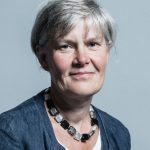
    The comments made by Kate Green, the Shadow Education Secretary, on 21 September 2021.

    The Conservatives’ chaotic failure to plan ahead or to listen to Labour, parents and teachers and get ventilation and mitigations in place saw over 122,000 children out of school again last week. This is not good enough. The Conservatives have left schools in a mess, the new Education Secretary urgently needs to set this right.

    With 158,000 more children out of school than anticipated due to Covid and standard absences, Ministers must urgently investigate what’s happening with these families and work with parents and schools to ensure all children can return to class.

  • Anneliese Dodds – 2021 Comments on Women and Equalities Appointment

    Anneliese Dodds – 2021 Comments on Women and Equalities Appointment

    The comments made by Anneliese Dodds, the new Shadow Women and Equalities Secretary, on 21 September 2021.

    I’m delighted to accept the position of Shadow Secretary of State for Women and Equalities and look forward to maintaining Labour’s proud record of promoting equality.

    I want to pay tribute to Marsha de Cordova and Charlotte Nichols for the fantastic work they did for those facing discrimination and prejudice, and to hold Liz Truss and the Conservative Government to account for their appalling failures.

    Labour is the party of equality – and only Labour in government can deliver a fairer, more equal future for the British people.

  • Emily Thornberry – 2021 Comments on US/Mexico/Canada Agreement U-Turn

    Emily Thornberry – 2021 Comments on US/Mexico/Canada Agreement U-Turn

    The comments made by Emily Thornberry, the Shadow International Trade Secretary, on 22 September 2021.

    Within the space of 24 hours, Boris Johnson has taken us from first in line to the back of the queue for a US trade deal, briefed reporters in Washington that we were seeking to join the USMCA instead, and now decided to ditch that idea as well, presumably after someone bothered to read the agreement and realised what it would mean for food standards and the NHS.

    It is an utterly farcical way for the Prime Minister to carry on when representing our country abroad, and a shambolic approach to running the UK’s trade policy.

    It all leaves the Government not a single step closer to its manifesto commitment to cover 80 per cent of UK trade with free trade deals by the end of next year, and not the slightest clue how it is going to get there.

  • Kit Malthouse – 2021 Comments on M25 Climate Protesters

    Kit Malthouse – 2021 Comments on M25 Climate Protesters

    The comments made by Kit Malthouse, the Policing Minister, on 22 September 2021.

    These protests have endangered the lives of road users and the police officers who have responded quickly and responsibly.

    The police should be fighting crime in our neighbourhoods, not chasing activists across busy motorways. This is why we are taking this action now and we’ll be working with National Highways on a full injunction.