Tag: 2021

  • Greg Hands – 2021 Statement on the Energy Default Tariff Cap

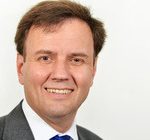
    Greg Hands – 2021 Statement on the Energy Default Tariff Cap

    The statement made by Greg Hands, the Minister of State at the Department for Business, Energy and Industrial Strategy, in the House of Commons on 29 October 2021.

    The Domestic Gas and Electricity (Tariff Cap) Act 2018 enables the default tariff (price cap) on standard variable and default energy tariffs to be extended on an annual basis up to end of 2023 at the latest. These annual extensions are dependent on an assessment and statement that I make every year, by 31 October, on whether the conditions for effective competition are in place for domestic supply contracts.

    I am confirming today that the price cap mechanism will remain in place for 2022 as the conditions for effective competition are not yet in place for domestic supply contracts.

    As required by legislation, the independent energy regulator, Ofgem, has carried out an assessment into whether the conditions are in place for effective competition in domestic supply contracts this year. Ofgem has been transparent in how it made its assessment, and its report is clear and thorough. Ofgem assesses that these conditions have not been met and recommends that the price cap mechanism should be extended.

    The level of the price cap is a separate matter for Ofgem to determine.

  • Sadiq Khan – 2021 Comments on London Climate Summit

    Sadiq Khan – 2021 Comments on London Climate Summit

    The comments made by Sadiq Khan, the Mayor of London, on 28 October 2021.

    Climate action is about building a greener, healthier, fairer and more resilient city and ensuring future generations can thrive. Making positive changes to our homes and streets will benefit everyone, particularly those Londoners who experience the worst effects of toxic air and climate change. We’ve already made great progress – from cleaning the air with the recently extended Ultra Low Emission Zone, to ensuring all new developments are net-zero carbon through the London Plan.

    Future Neighbourhoods is about communities and local government working together to accelerate ambitious climate action and to lower emissions, clean up their air and transform their homes, showing what a net zero carbon London will look and feel like now.

  • Sadiq Khan – 2021 Comments on Londoners Getting Covid Vaccine

    Sadiq Khan – 2021 Comments on Londoners Getting Covid Vaccine

    The comments made by Sadiq Khan, the Mayor of London, on 29 October 2021.

    I want to be very clear to all Londoners. This deadly virus has not gone away and this winter we’re facing both flu and Covid. The worst thing we can do is to lower our guard, be complacent and underestimate the risk these viruses pose to all of us.

    The situation with COVID-19 in the capital is so finely balanced that it needs all of us to act together to protect ourselves, our loved ones, the things we enjoy and our NHS this winter.

    That’s why I’m urging all eligible Londoners to have the booster vaccine and flu jab as soon as you are offered it, continue to wear a mask where you can and am calling on the government to put simple and effective steps, such as mandatory face coverings on public transport, in place to halt the spread of the virus now.

  • Rachel Reeves – 2021 Reply to Budget Statement

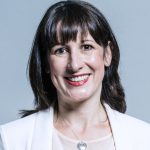
    Rachel Reeves – 2021 Reply to Budget Statement

    The speech made by Rachel Reeves, the Shadow Chancellor of the Exchequer, in the House of Commons on 27 October 2021.

    Thank you, Madam Deputy Speaker.

    Families struggling with the cost of living crisis, businesses hit by a supply chain crisis, those who rely on our schools and our hospitals and our police – they won’t recognise the world that the Chancellor is describing. They will think that he is living in a parallel universe.

    The Chancellor in this budget, has decided to cut taxes for banks. So, Madame Deputy Speaker, at least the bankers on short haul flights sipping champagne will be cheering this budget today.

    And the arrogance, after taking £6 billion out of the pockets of some of the poorest people in this country, expecting them to cheer today for £2 billion given to compensate.

    In the long story of this Parliament, never has a Chancellor asked the British people to pay so much for so little.

    Time and again today, the Chancellor compared the investments that he is making to the last decade. But who was in charge in this lost decade? They were.

    So, let’s just reflect on the choices the Chancellor has made today – the highest sustained tax burden in peacetime.

    And who is going to pay for it?

    It’s not international giants like Amazon – the Chancellor has found a tax deduction for them. It’s not property speculators – they’ve already pocketed a stamp duty cut. And it’s clearly not the banks – even though bankers’ bonuses are set to hit a record high this year.

    Instead, the Chancellor is loading the burden on working people. A National Insurance Tax rise – on working people. A Council Tax hike – on working people. And no support today for working people with VAT on their gas and electricity bills.

    And what are working people getting in return? A record NHS waiting list, with no plan to clear it, no way to see a GP and still having to sell their home to pay for social care.

    Community policing nowhere to be seen, a court backlog leaving victims without justice and almost every rape going unprosecuted.

    A growing gap in results and opportunities between children at private and state schools. Soaring number of pupils in supersize classes and no serious plan to catch up on learning stolen by the virus. £2 million announced today – a pale imitation of the £15 billion catch up fund that the Prime Minister’s own education tsar said was needed. No wonder, Madame Deputy Speaker, that he resigned.

    Now the Chancellor talks about world class public services. Tell that to a pensioner waiting for a hip operation. Tell that to a young woman waiting to go to court to get justice. Tell that to a mum and dad, waiting for their child the mental health support they need.

    And the Chancellor says today that he has realised what a difference early years spending makes. I would just say to the Chancellor, has he ever heard of the Sure Start programme that this Tory government has cut?

    And why are we in this position? Why are British businesses being stifled by debt while Amazon gets tax deductions?

    Why are working people being asked to pay more tax and put up with worse services?

    Why are billions of pounds in taxpayer money being funnelled to friends and donors of the Conservative party while millions of families are having £20 a week taken off them?

    Madam Deputy Speaker, why can’t Britain do better than this?

    The Government will always blame others. It’s business’ fault, it’s the EU’s fault, it’s the public’s fault.

    The global problems, the same old excuses. But the blunt reality is this – working people are being asked to pay more for less for three simple reasons:

    Economic mismanagement,

    An unfair tax system,

    And wasteful spending.

    Each of these problems is down to 11 years of Conservative failure and they shake their heads but the cuts to our public services have cut them to the bone. And while the Chancellor and the Prime Minister like to pretend they are different, the Budget they’ve delivered today will only make things worse.

    The solution starts with growth. The Government is caught in a bind of its own making. Low growth inexorably leads to less money for public services, unless taxes rise.

    Under the Conservatives, Britain has become a low growth economy. Let’s look at the last decade – the Tories have grown the economy at just 1.8 percent a year.

    If we had grown at the same rate as other advanced economies, we could have spent over £30bn to invest in public services without needing to raise taxes.

    Let’s compare this to the last Labour Government. Even taking into account the global financial crisis, Labour grew the economy much faster – 2.3 percent a year.

    If the Tories matched our record, we would have spent £30bn more on public services without needing to raise taxes.

    It could not be clearer. The Conservatives are now the party of high taxation, because the Conservatives are the party of low growth.

    The Office for Budget Responsibility confirmed this today – that we will be back to anaemic growth. The OBR said that by the end of this Parliament, the UK economy will be growing by just 1.3%. Which is hardly the plan for growth that the Chancellor boasted about today, hardly a ringing endorsement of his announcements.

    Under the Tory decade we have had ow growth and there’s not much growth to look forward to.

    The economy has been weakened by the pandemic but also by the Government’s mishandling of it.

    Responding to the virus has been a huge challenge. Governments around the world have taken on debt, but our situation is worse than other countries.

    Worse, because our economy was already fragile going into the crisis. Too much inequality, too much insecure work, too little resilience in our public services.

    And worse, because the Prime Minister dithered and delayed, against scientific advice – egged on by the Chancellor – we ended up facing harsher and longer restrictions than other countries.

    So, as well as having the highest death toll in Europe, Britain suffered the worst economic hit of any major economy.

    The Chancellor now boasts that we are growing faster than others, but that’s because we fell the furthest.

    And whilst the US and others have already bounced back to pre-pandemic levels, the UK hasn’t. Our economy is set to be permanently weaker.

    On top of all of that, the Government is now lurching from crisis to crisis. People avoiding journeys because they can’t fill up their petrol tank is not good for the economy. People spending less because the cost of the weekly shop has exploded is not good for the economy. And British exporters facing more barriers than their European competitors because of the deal that this government did is not good for the economy.

    If this were a plan, it would be economic sabotage. When the Prime Minister isn’t blagging that this chaos is part of his cunning plan, he says he’s “not worried about inflation.”

    Tell that to families struggling with rising gas and electricity bills, with rising prices of petrol at the pump and with rising food prices. He’s out of touch, he’s out of ideas and he’s left working people out of pocket.

    Madam Deputy Speaker, Conservative mismanagement has made the fiscal situation tight. And when times are tight it’s even more important to ensure that taxes are fair, that taxpayers get value for money. But the Government fails on both fronts.

    We have a grossly unfair tax system with the burden heaped on working people.

    Successive budgets have raised council tax, income tax and now National Insurance. But taxes on those with the broadest shoulders, those who earn their income from stocks, shares, and property portfolios have been left largely untouched.

    Businesses based on the high street are the lifeblood of our communities and often the first venture for entrepreneurs.

    But despite what the Chancellor has said today, businesses will still be held back by punitive and unfair business rates. The Government has failed to tax online giants and watered-down global efforts to create a level playing field.

    And just when we need every penny of public money to make a difference, we have a government that is the by-word for waste, cronyism and vanity projects.

    We’ve had £37 billion for a test and trace system that the spending watchdog says, ‘treats taxpayers like an ATM cash machine’. A yacht for ministers, a fancy paint job for the Prime Minister’s plane and a TV studio for Conservative Party broadcasts, which seems to have morphed into the world’s most expensive home cinema.

    £3.5bn of Government contracts awarded to friends and donors of the Conservative Party, a £190 million loan to a company employing the PMs former Chief of Staff, £30 million to the former Health Secretary’s pub landlord. And every single one of those cheques signed by the Chancellor.

    And now he comes to ordinary working people and asks them to pay more. More than they have ever been asked to pay before and at the same time, to put up with worse public services. All because of his economic mismanagement, his unfair tax system and his wasteful spending.

    There are of course some welcome measures in this budget today, as there are in any budget.

    Labour welcomes the increase in the National Minimum Wage, though the Government needs to go further and faster. If they had backed Labour’s position of an immediate rise to at least £10 an hour then a full-time worker on the minimum wage would be in line for an extra £1,000 a year.

    Ending the punitive public sector pay freeze is welcome, but we know how much this Chancellor likes his smoke and mirrors. So, we’ll be checking the books to make sure the money is there for a real terms pay rise.

    Labour also welcomes the Government’s decision to reduce the Universal Credit taper rate, as we have consistently called for. But the system has got so far out of whack that even after this reduction, working people on universal credit still face a higher marginal tax rate than the Prime Minister. And those unable to work – through no fault of their own – still face losing over £1000 a year. And for families who go out to work everyday but don’t get government benefits, on an average wage, who have to fill up their car with petrol to get to work, who do that weekly shop and who see their gas and electricity prices go up – this budget today does absolutely nothing for them.

    We have a cost-of-living crisis.

    The Government has no coherent plan to help families to cope with rising energy prices. Whilst we welcome the action taken today on Universal Credit, millions will struggle to pay the bills this winter.

    The Government has done nothing to help people with their gas and electricity bills with that cut in VAT receipts as Labour has called for. A cut that is possible because we are outside the European Union and can be funded by the extra VAT receipts that have been experienced in the last few months.

    Working people are left out in the cold while the Government hammers them with tax rises.

    National Insurance is a regressive tax on working people, it is a tax on jobs.

    Under the Chancellor’s plans, a landlord renting out dozens of properties won’t pay a penny more. But their tenants, in work, will face tax rises of hundreds of pounds a year. And he is failing to tackle another huge issue of the day. Adapting to climate change.

    Adapting to climate change presents opportunities – more Jobs, lower bills and cleaner air. But only if we act now and at scale. According to the OBR, failure to act will mean public sector debt explodes later, to nearly 300% of GDP.

    The only way to be a prudent and responsible Chancellor is to be a Green Chancellor. To invest in the transition to a zero-carbon economy and give British businesses a head-start in the industries of the future.

    But with no mention of climate in his conference speech and the most passing of references today, we are burdened with a Chancellor unwilling to meet the challenges we face.

    Homeowners are left to face the costs of insulation on their own, industries like steel and hydrogen are in a global race without the support they need and the Chancellor is promoting domestic flights over high speed rail int he week before COP26.

    It is because of this Chancellor that in the very week we try and persuade other countries to reduce emissions, this Government can’t even confirm it will meet its 2035 climate reduction target.

    Madam Deputy Speaker, everywhere working people look at the moment they see prices going up and shortages on the shelves. But this Budget did nothing to address their fears.

    Household budgets are being stretched thinner than ever but this Budget did nothing to deal with the spiralling cost of living. It is a shocking missed opportunity by a government that is completely out of touch.

    There is an alternative. Labour would scrap the business rates and replace it with something much better by ensuring online giants pay their fair share. That’s what being pro-business looks like.

    We wouldn’t put up National Insurance for working people, we would ensure those with the broadest shoulders pay their share. That’s what being on the side of working people looks like.

    We’d end the £1.7 billion subsidy the Government gives private schools and put it straight into local state schools. That’s what being on the side of working families looks like.

    We’d deliver a climate investment pledge – £28bn every year for the rest of the decade. That’s Giga-factories to build batteries for electric vehicles, a thriving hydrogen industry and retrofitting, so we keep homes warm and get energy bills down. That’s what real action on climate change looks like.

    This country deserves better but they’ll never get it under this Chancellor who gives with one hand but takes so much more with the other.

    The truth is this – what you get with these two is a classic con game. It’s like one of those pickpocketing operations you see in crowded places. The Prime Minister is the front man – distracting people with his wild promises. All the while, his Chancellor dips his hand in their pocket. It all seems like fun and games until you walk away and realise your purse has been lifted.

    But people are getting wise to them. Every month they feel the pinch. They are tired of the smoke and mirrors, of the bluster, of the false dawns, of the promises of jam tomorrow.

    Labour would put working people first. We’d use the power of government and the skill of business to ensure that the next generation of quality jobs are created right here, in Britain.

    We’d tax fairly, spend wisely and after a decade of faltering growth, we’d get Britain’s economy firing on all cylinders.

    That is what a Labour budget would have done today.
  • Greg Hands – 2021 Statement on Fees for Military Drivers During Fuel Crisis

    Greg Hands – 2021 Statement on Fees for Military Drivers During Fuel Crisis

    The statement made by Greg Hands, the Minister of State at the Department for Business, Energy and Industrial Strategy, in the House of Commons on 27 October 2021.

    The Secretary of State will be using powers under the Energy Act 2013 to increase the hourly rate for use of military drivers paid by hauliers in an ESCALIN deployment.

    In response to the disruption to the availability of fuel in late September, the Government deployed Operation ESCALIN, on the 27 September. ESCALIN is a long-standing fuel supply contingency measure jointly managed by my Department and the Ministry of Defence to make trained military drivers available to support fuel deliveries. A total of 222 drivers were deployed to civilian haulage companies that participate in the scheme.

    It has always been the intention that the hauliers who make use of Operation ESCALIN should be required to make a contribution to the costs that is in line with the costs of employing civilian drivers, although this is below the full cost to the taxpayer of the deployment. The current charge to hauliers for the use of a military driver in an ESCALIN deployment is set at £25 per hour, per driver. This price was set in 2013 and has remained unchanged since. During this nine-year period the cost of labour has increased and I would like the price to reflect this change.

    A direction under section 148(3)(b) of the Energy Act 2013 was made to increase the hourly price from £25 to £28.51. This will take effect on 28 October. I believe this direction is fair and proportionate as it will now take account of inflationary price increases from 2013 calculated using the consumer price inflation index. However, the Secretary of State reserves the right to make further changes to the charging regime if that becomes necessary.

    My Department will work with hauliers to ensure that use of military personnel is continued for only as long as absolutely necessary. The Secretary of State reserves the right to withdraw military support once we are confident that the fuel supply system as a whole is adequate to meet normal demand, irrespective of the position of individual companies.

  • Simon Hart – 2021 Comments on Budget Impact on Wales

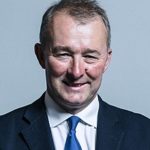
    Simon Hart – 2021 Comments on Budget Impact on Wales

    The comments made by Simon Hart, the Secretary of State for Wales, on 29 October 2021.

    This is a fantastic budget for Wales, delivering significant investment directly to people, businesses and communities across the country.

    The devolved administration in Wales will receive its largest-ever settlement so it can deliver its vital services like health, education and flood protection, while Wales will benefit fully from many of our UK-wide measures including freezes to fuel and alcohol duty, the increase in the minimum wage for thousands of workers and investment in parks and sports facilities.

    Levelling up communities across the UK is top of our agenda. Investing more than £120m in 10 projects including the regeneration of Aberystwyth seafront and improving transport links in Rhondda shows how we will achieve this ambition across Wales.

    Alongside the funding of a Welsh Veterans’ Commissioner, these measures and others in the Spending Review add up to an excellent package for Wales and its economy.

  • Rishi Sunak – 2021 Comments on Budget Impact on Wales

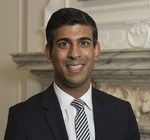
    Rishi Sunak – 2021 Comments on Budget Impact on Wales

    The comments made by Rishi Sunak, the Chancellor of the Exchequer, on 29 October 2021.

    This is a budget for the whole of the UK. We’re focused on what matters most to the British people – the health of their loved ones, access to world-class public services, jobs for the future and tackling climate change.

    An additional £2.5 billion per year in Barnett funding means the Welsh Government is well-funded to deliver all their devolved responsibilities while the people in Wales will also benefit from this Government’s commitment to levelling up opportunity and delivering for all parts of the UK.

    We are continuing to boost industry and jobs and improve infrastructure and public services throughout Wales.

  • Boris Johnson – 2021 Joint Statement on Iran’s Nuclear Programme

    Boris Johnson – 2021 Joint Statement on Iran’s Nuclear Programme

    The statement made by Boris Johnson, President Macron, Chancellor Merkel and President Biden on 30 October 2021.

    We, the President of France, Chancellor of Germany, Prime Minister of the United Kingdom, and President of the United States, met in Rome today to discuss the risks posed to international security by Iran’s escalating nuclear program. We expressed our determination to ensure that Iran can never develop or acquire a nuclear weapon and shared our grave and growing concern that, while Iran halted negotiations on a return to the Joint Comprehensive Plan of Action (JCPOA) since June, it has accelerated the pace of provocative nuclear steps, such as the production of highly enriched uranium and enriched uranium metal. Iran has no credible civilian need for either measure, but both are important to nuclear weapons programs.

    These steps have only been made more alarming by Iran’s simultaneously decreased cooperation and transparency with the International Atomic Energy Agency (IAEA). We agreed that continued Iranian nuclear advances and obstacles to the IAEA’s work will jeopardize the possibility of a return to the JCPOA.

    The current situation underscores the importance of a negotiated solution that provides for the return of Iran and the U.S. to full compliance with the JCPOA and provides the basis for continued diplomatic engagement to resolve remaining points of contention – both our concerns and Iran’s. In this spirit, we welcome President Biden’s clearly demonstrated commitment to return the U.S. to full compliance with the JCPOA and to stay in full compliance, so long as Iran does the same.

    We are convinced that it is possible to quickly reach and implement an understanding on return to full compliance and to ensure for the long term that Iran’s nuclear program is exclusively for peaceful purposes.

    Return to JCPOA compliance will provide sanctions lifting with long-lasting implications for Iran’s economic growth. This will only be possible if Iran changes course. We call upon President Raisi to seize this opportunity and return to a good faith effort to conclude our negotiations as a matter of urgency. That is the only sure way to avoid a dangerous escalation, which is not in any country’s interest.

    We welcome our Gulf partners’ regional diplomatic efforts to deescalate tensions and note that return to the JCPOA would result both in sanctions lifting allowing for enhanced regional partnerships and a reduced risk of a nuclear crisis that would derail regional diplomacy. We also affirm our shared determination to address broader security concerns raised by Iran’s actions in the region.

    We are committed to continuing to work closely with the Russian Federation, the People’s Republic of China, and the European Union High Representative, as Coordinator, in resolving this critical issue.

  • Robbie Moore – 2021 Speech on Child Sexual Exploitation in Bradford

    Robbie Moore – 2021 Speech on Child Sexual Exploitation in Bradford

    The speech made by Robbie Moore, the Conservative MP for Keighley, in the House of Commons on 26 October 2021.

    Madam Deputy Speaker, I thank you and Mr Speaker for granting this urgent debate on child sexual exploitation in Keighley and across the Bradford district.

    Child sexual exploitation is abhorrent, but I am afraid that the issue is being swept under the carpet. Local government leaders and people in positions of influence have a duty of care to protect the most vulnerable in society—our young children, women and girls. People need to open their eyes to this issue. We know that young children remain at risk. It is about time that we tackled these horrific, vile and criminal activities once and for all.

    In my mind, in order to move forward, it is vital that we call this issue out for what it is, hold those authorities that have failed our communities for far too long to account, grasp the scale of the problem, understand its complexities—the hierarchy, the methodology and the chain of command that sits behind these darkest and most vile acts—and get to grips with how and why communities such as the one that I proudly represent in Keighley have been allowed, under the watch of so many, to be haunted by gang-related child sexual exploitation for far too long. If we do not address these issues properly, openly and with a real willingness to deal with them, those at the centre of all this—our young children—will continue to be let down, to be targeted, and to be exploited and sexually abused by the worst individuals our society knows.

    It has now been more than 20 years since the former Member of Parliament for Keighley, Ann Cryer, first very publicly raised her concerns about grooming gangs and child sexual exploitation in the Pakistani community in my constituency. Ann deserves enormous credit for her work talking about this very difficult subject, but I am afraid that in that time, nothing has really changed. No real progress has been made in dealing with this issue across Keighley and the wider Bradford district.

    I am incredibly conscious of just how delicate this subject is, but we should not be frightened of talking about it. My view is that unless we talk openly, we are failing. So let us call this problem out for what it is: predominantly a small minority of largely Pakistani Muslim men in West Yorkshire—including, I am sad to say, in Keighley and across the Bradford district—who have been sexually exploiting young children for far too long. The Pakistani community are quite rightly outraged that the entire community is being branded with the same accusation. That is not fair and it is deeply offensive.

    Jackie Doyle-Price (Thurrock) (Con)

    My hon. Friend is making a very powerful speech and rightly shining a light on, frankly, an absolute abdication of responsibility by the authorities in his constituency. Does he agree that if the Government are serious about tackling male sexual violence against women and girls, it is absolutely imperative that we tackle cultural practices where we find them?

    Robbie Moore

    I absolutely agree with the points my hon. Friend makes so eloquently. Let us be absolutely clear: I have had to bring this debate to the Chamber because, as a representative of Keighley in the Bradford district, I am experiencing those points: failure by our local council and failure by our new West Yorkshire Mayor —who is lucky enough to be in a new position, in charge of West Yorkshire police—to tackle these issues head on.

    Mr Robert Goodwill (Scarborough and Whitby) (Con)

    This issue was first brought to light in Rotherham. At that time, many organisations such as the police and the council felt that they were maybe being racist by tackling it because it involved one particular community. Is that still a problem, or has that been cleared up?

    Robbie Moore

    This is a very delicate subject and I am acutely conscious of that. I must admit that I am nervous talking about it, but we have to address these issues. Every community across the country is different, including mine, but we have to look at the common denominator. I want to be very clear that this is not about race or pitching communities against each other. It is about looking at the facts, so we can address them head on and move forward.

    Philip Davies (Shipley) (Con)

    I am very grateful to my hon. Friend and parliamentary neighbour for giving way. I commend him for bringing forward this debate and for all the work he is doing locally to shine a light on this issue. Does he agree that this is about the victims and ensuring they get the justice they deserve, and ensuring there are no future victims of this terrible crime? Does he agree that if Bradford Council and the authorities there will not bring forward a much needed inquiry—partly because, presumably, it will expose huge amounts of wrongdoing on their part—the Government should make sure that we have an inquiry, so that we can get to the bottom of what has gone wrong and make sure it never, ever happens again?

    Robbie Moore

    I thank my hon. Friend and constituency neighbour for making those points. We must never forget who is at the centre of this debate and who is experiencing these horrific, vile acts. I will come on to some of the alarming and horrific cases experienced by many young girls across my constituency and the wider Bradford district. We need to be absolutely clear that local leaders, Bradford Council and our new West Yorkshire Mayor should be using their position to call this issue out for what it is; be clear about taking these issues forward; and be wanting to get behind resolving these issues. My view is very clear: we need a Rotherham-style inquiry to address these issues. Finally, on his point about influence from a national level going down to local leaders, I very much hope to use this opportunity to encourage the Government to use their weight to put pressure on Bradford Council and our new West Yorkshire Mayor to do the right thing.

    Lee Anderson (Ashfield) (Con)

    I thank my hon. Friend for bringing this subject to the Chamber. It is very, very important. Does he agree that the only way we will know the full scale of these vile crimes in Bradford is for a full Rotherham-type investigation? Does he also agree that certain local politicians on the council and the West Yorkshire Mayor should hang their heads in shame?

    Robbie Moore

    My hon. Friend makes a valid point. We need to understand the scale of the problem across the Bradford district, and I will come on to that later in my speech. Only this summer, in July, a light, limited, 50-page review was released, and Bradford Council and our new West Yorkshire Mayor feel that that is acceptable. We need a full Rotherham-style inquiry to look at this, so that we can get real learnings and provide reassurance for victims.

    Lucy Allan (Telford) (Con)

    I congratulate my hon. Friend on being brave enough to bring this matter forward with such passion and such force. May I suggest that he works closely with the hon. Member for Rotherham (Sarah Champion), who has been a huge support to me in tackling these issues? Local councils do not want to have inquiries. My local council vigorously opposed an inquiry, and when we eventually succeeded in getting one, with great help from the then Home Secretary, it ambushed the inquiry by deluging it with 1 million documents. Four years on, the victims in my constituency who came to me for a solution have not had their inquiry. I urge my hon. Friend the Minister to go for a Rotherham-style inquiry, which was effective and delivered what it needed to—justice for victims.

    Robbie Moore

    I thank my hon. Friend for that intervention, and I wholeheartedly agree with the points she makes. She kindly made reference to my hon. Friend—if I may say so—the Member for Rotherham (Sarah Champion). This is one of the most important debates that we must have in this House, but when I look at the Opposition Benches, I see that she is the only hon. Member who has turned up to the debate. That speaks volumes. I thank her for coming along; it is exceptionally kind. I agree that yes, we must have a full Rotherham-style inquiry to get to grips with the issue, because I certainly do not want it to continue to be swept under the carpet.

    I want to make the point that this is not about race or pitting communities against each other; it is about looking at the facts so that we can address them and move forward. Of course it is about looking at that common denominator, but it is no different from identifying other common denominators when looking at child sexual exploitation, such as we have seen in inquiries on similar subjects—regarding the Catholic church, for example. The reality is that we must understand the complexities that relate to a community so that we can move forward.

    The consequences of not acting are extremely serious. If we tiptoe around the edges or fail to talk openly about these challenges, we fail both the victims and the Pakistani community. Those victims, mainly young girls, are having their lives ruined at a young age by vile and disgusting sexual abuse, and it is all being done while authorities, including Bradford Council and West Yorkshire police, turn a blind eye and fail to take action year after year.

    Mr Goodwill

    Is it not the case that many of those girls will either be in the care of the local authorities, as looked-after children, or come from families that social workers are closely engaging with?

    Robbie Moore

    My right hon. Friend makes a worrying and accurate intervention, because that is absolutely the case. Most of the young girls we are talking about, as I will come on to later in my speech, are the very girls who are in protective care of the authorities that should be looking after them.

    Sarah Atherton (Wrexham) (Con)

    A mark of a good society is how we protect our most vulnerable. I trained as a social worker in Liverpool in 2000, and anecdotally we knew that institutional cover-ups were going on because people were too afraid to do anything. I urge my hon. Friend to go forth and continue with this campaign; I know he will see personal repercussions for it, but I am fully behind him.

    Robbie Moore

    I thank my hon. Friend for her kind intervention. As representatives, we are all elected to do the very best for our community and call out the difference between what is right and what is wrong. This is not a political issue; it is about doing the right thing to stand up for our communities.

    This summer, a limited review, which focused on just five children who had been sexually abused over the past 20 years in the Bradford district, was published. It makes horrifying reading. Let me tell the House about Anna—not her real name—who is mentioned in the review. She was repeatedly sexually abused by gangs of men while she was in care. The review says that when she was 15, she had an Islamic marriage with her abuser, and her social worker attended the ceremony.

    Ruby—not her real name—had a disrupted childhood, which included the death of her mother when Ruby was a very young child. At the age of 13, Ruby was identified as being at risk of child sexual abuse. Throughout her childhood, she experienced 14 different placements in looked-after care. She was sexually abused, and the report identifies that childcare services in Bradford

    “did not keep her safe.”

    The limited review published in the summer is only a 50-page document. To my mind, it reflects only the tip of the iceberg of what has been going on across the Bradford district. In 2016, a group of 12 men who committed serious sexual offences against two young girls from Keighley and Bradford were jailed for a collective 132 years. One of those girls was raped by five men in succession. Live cases involving grooming gangs are still working their way through the courts. Only last October, 21 men from Keighley and Bradford were arrested after being linked to offences that allegedly occurred against a young girl between 2001 and 2009.

    Decisive action is needed if we are to deal with the issue. That is why we need a full, independent Rotherham-style inquiry into child sexual exploitation in Keighley and the wider Bradford district.

    Philip Davies

    My hon. Friend is absolutely right; I commend him for everything he says. Is it not shocking that the leader of Bradford Council, Susan Hinchcliffe, has said that we should not have a Rotherham-style inquiry in Bradford because it “won’t find anything new”? Is that not shocking complacency on the part of the leader of Bradford Council? If the council has nothing to hide, it would have nothing to fear from such an inquiry; we could all know once and for all exactly what has happened, satisfy ourselves that there is nothing to hide, and make sure that nothing like this ever happens again. Is her attitude not terrible and complacent? Does it not show complete disregard for the victims?

    Robbie Moore

    I thank my hon. Friend and neighbour for his kind intervention. He eloquently makes a crucial point: the leader of Bradford Council is in a unique position to trigger a Rotherham-style inquiry. I do not understand what the council, or others such as our new West Yorkshire Mayor, should have to fear from being more open and transparent or from wanting to move things forward in the best interests of victims across our constituencies and the wider Bradford district.

    How do we get there? How do we instigate a full Rotherham-style inquiry? As happened in Rotherham, Bradford Council can and should appoint an independent chair such as Professor Alexis Jay to conduct an independent inquiry into its handling, and associated agencies’ handling, of child sexual exploitation over the past 20 years.

    We need to learn lessons locally to find out what has been going wrong with institutions such as Bradford Council, West Yorkshire police and Bradford’s child protection services. Believe me, they need addressing. Bradford’s children’s services department is in a state of chaos. In 2018 it was rated by Ofsted as inadequate, needing severe improvement. Only this summer the Government had to step in and put a commissioner in charge of the department to look at it, and only this week a further Ofsted report was released: it was incredibly damning, stating that no improvement was taking place at a sufficient pace.

    Philip Davies

    Is it not telling, given all these failings of children’s services at Bradford Council, that council leaders never take responsibility for those failings? There is a merry-go-round of children’s services directors being fired and hired, while the people at the top of the council never accept responsibility for the failings that occur on their watch.

    Robbie Moore

    Leaders of any organisation have a responsibility to do the right thing. It is unfortunate that Bradford’s children’s services department has been on the watch of not only the current council leader, but the same chief executive who has presided over those children’s services since 2015—yet here we are in 2021 with the Government having to step in and do the right thing.

    In August, as I have said, a damning report was produced, and that is why Bradford Council needs to stop sweeping this issue under the carpet and launch a full, independent, Rotherham-style inquiry. I will settle for nothing less. As Anna—one of the victims I talked about earlier—said:

    “What victims need is a full inquiry, if Rotherham had one, why are we denying it to the thousands of children here in Bradford.”

    I have received endless pieces of correspondence asking why so little has been done to tackle child sexual exploitation over the past 20-plus years across the Bradford district. Since I was elected, less than two years ago, I have raised this issue repeatedly, both locally and here in the House. I am raising it again today, and I will continue to raise it. I will not let this issue drop. I was even told that by continuing to raise it I was stoking racial tensions, but that is the nub of this issue. It is not being dealt with. This has nothing to do with stoking racial tensions. It is about the difference between right and wrong, and fundamentally it is about protecting young children.

    Those in positions of responsibility need to have the guts to take action. Too many people in positions of responsibility have ducked this issue for decades. Take my predecessor, John Grogan, who said: that an inquiry would not

    “be in the best interests of young people.”

    Our new West Yorkshire Mayor Tracy Brabin, the former Member of Parliament for Batley and Spen, is now in charge of policing in West Yorkshire. She is in a perfect position to show leadership and tackle this issue once and for all.

    Lee Anderson

    I thank my hon. Friend for giving way again: he is being very generous with his time. Does he agree that once the inquiry takes place and we get to the bottom of this, and the grooming gangs are put away—in prison, where they rightly belong—the next call will be these lazy politicians? They need locking up too.

    Robbie Moore

    I thank my hon. Friend for his intervention, and I sincerely share his frustration that local leaders are not taking this seriously.

    The person that our new West Yorkshire Mayor has put in charge of policing says that this is not a Bradford problem. Let us look across this House. Do most Members represent communities where the local council has missed “clear signs” of child sexual exploitation? Do most Members represent communities where the local children’s services department has just been taken over by the Government, who have stepped in and put a commissioner in charge, and has been the subject of two consecutive very damning Ofsted reports? Do most Members represent communities where children remain unprotected and continue to be sexually exploited? No, they do not. The Bradford district is haunted by these problems and we need to tackle them head on.

    This issue has gone on for many years, and of course the administrations at Bradford Council have changed. MPs have changed. However, those who are now in positions of responsibility need to take action. In my view, it is shocking that in responding to calls for a full, independent Rotherham-style inquiry, the leader of Bradford Council, Susan Hinchcliffe, said that an inquiry

    “would not be of additional value”

    and that she had been “personally hurt” by my comments. This is not personal. This is about calling on those who are in a position of responsibility to do the right thing. If we continue in limbo and fail to take action, the very worst of humanity will exploit this issue for their own gain. Sadly, this happened in my constituency in 2005 when the British National party made Keighley its No. 1 target seat in the parliamentary election. It came into our town, bombarded it with leaflets, held rallies and inflamed racial tensions.

    We need to think about the victims in all this: those who have been let down by the very organisations that should have been there to protect them. For Bradford Council, the police and our new West Yorkshire Mayor simply to hang their hat on a limited 50-page review that looked at only five children who had experienced these horrendous events is weak. We must never forget who is at the heart of these conversations. It is the children, the young victims, who have been let down for years by the very organisations that are there to protect them. All of us who are in positions of responsibility have a duty to do the right thing.

    In conclusion, here are the facts. Child sexual exploitation is, sadly, a big problem in Keighley and the Bradford district. It has been for many years. It is an abhorrent, disgusting and vile issue, and it needs addressing, especially in the light of the limited review published earlier this year that leaves us with far more questions than answers. Local leaders must stop sweeping this issue under the carpet and tackle it head on. They must open their eyes. I will not let this drop. We need an independent, Rotherham-style inquiry so that we can look at what has gone wrong in the past and ensure that these vile abuses come to an end. We need to reinstall trust in these authorities by the victims, their families and the wider public who have been let down by them. So let us get this done and let us make our community much safer for our children.

  • Eddie Hughes – 2021 Statement on the Homelessness Prevention Grant

    Eddie Hughes – 2021 Statement on the Homelessness Prevention Grant

    The statement made by Eddie Hughes, the Parliamentary Under-Secretary of State for Levelling Up, Housing and Communities, in the House of Commons on 25 October 2021.

    The Government have protected renters across the country throughout the pandemic, providing an unprecedented £400 billion support package for the economy, a six-month stay on possession proceedings to protect renters from eviction, and extended notice periods. Thanks to this support, the vast majority of private renters (93%) are up to date with their rent. We are spending almost £30 billion supporting people with their housing costs in 2020-21. With the UK economic recovery gathering pace, we are continuing to help people into work and increase their earning potential—the most sustainable route to financial security. We are investing billions through our plan for jobs and the lifetime skills guarantee.

    We recognise, however, that some private renters have rent arrears built up as a result of the pandemic and vulnerable households may need additional support.

    We have therefore announced an exceptional one-off payment of £65 million that will be made available to local authorities in 2021-22 through the homelessness prevention grant. The additional funding will support local authorities to help vulnerable households with rent arrears to reduce the risk of them being evicted and becoming homeless, including helping households to find a new home where necessary. Local authorities will target funding to those who need it most and help them to get back on their feet.

    The investment builds on the £310 million in funding already available to local authorities through the homelessness prevention grant—a £47 million uplift on last year to help fully enforce the Homelessness Reduction Act 2017—which is part of the overall investment of more than £750 million this year to tackle homelessness and rough sleeping.

    This announcement underlines the Government’s commitments to building back better from the pandemic, supporting renters and tackling homelessness and rough sleeping. The funding will ensure local authorities are given the resource they need to make this a reality in local areas. It will allow us to build upon the success we have had in tackling homelessness and rough sleeping with the number of families in temporary accommodation now at the lowest level since 2016 and a 37% decrease in rough sleeping recorded in the 2020 annual rough sleeping snapshot compared to 2019.

    The £65 million funding is in addition to the recently announced £421 million household support fund to help vulnerable families in England with essentials over the coming months, which will be distributed by councils to those who need it most, including for example through small grants to meet daily needs such as food, clothing, and utilities. Further support is also available to renters through the welfare system. This includes £140 million in discretionary housing payments funding, which is available for local authorities this financial year to distribute to support renters with housing costs.