Tag: 2021

  • Nigel Lawson – 1988 Autumn Statement

    Nigel Lawson – 1988 Autumn Statement

    The Autumn Statement read by Nigel Lawson, the then Chancellor of the Exchequer, in the House of Commons on 1 November 1988.

    With permission, Mr. Speaker, I should like to make a statement.

    Cabinet today agreed the Government’s public expenditure plans for the next three years. I am therefore taking the earliest opportunity of informing the House of the contents of the Autumn Statement: that is to say, the public expenditure plans for the next three years, and the expected outturn for this year; proposals for national insurance contributions for 1989–90; and the forecast of economic prospects for 1989 required by the Industry Act 1975.

    The main public expenditure figures, together with the full text of the economic forecast, will be available from the Vote Office as soon as I have sat down. They will also appear in the printed Autumn Statement, which will be published next Tuesday.

    I turn first to public expenditure. For the current financial year, 1988–89, the public expenditure planning total now looks likely to amount to some £153½ billion, or some £3¼ billion less than was allowed for in the last public expenditure White Paper. In other words, only around £¼ billion of the £3½ billion reserve I provided for is in fact likely to be needed.

    The main reasons for this shortfall are an extra £1 billion in privatisation proceeds, a reduction in social security spending of almost £1 billion as a direct result of the sharper than expected fall in unemployment and a saving of some £¾ billion largely due to extra housing receipts under the right-to-buy programme. Taken together with the strong growth in the economy this year, and the containment of debt interest now that the Budget is in surplus, this means that total public spending this year, even excluding privatisation proceeds, will be less than 40 per cent. of national income—the first time this has happened for over 20 years.

    Not so long ago, the share of national income spent by the state seemed to rise inexorably. Over the past six years, that trend has been decisively reversed. Since 1982–83, public expenditure, excluding privatisation proceeds, expressed as a share of national income has fallen by seven percentage points—the largest and longest sustained fall since the wartime economy was unwound. Over the whole decade since this Government first took office, from 1978–79 to 1988–89, public expenditure has grown by under 1½ per cent. a year in real terms. This is exactly half the rate at which it grew over the whole of the immediately preceding decade.

    Looking ahead, Cabinet agreed in July that public spending over the next three years should keep as close as possible to the existing planning totals, and should continue to fall as a share of national income. The plans I am about to announce meet both those objectives.

    For 1989–90, the planning total published in the last public expenditure White Paper was £167 billion. It will remain at £167 billion. This important outcome has been made possible, despite the many claims for increased public spending, by a rigorous reassessment of priorities, coupled with the continuation of two of the factors that have contributed to this year’s shortfall; that is to say, benefit savings from lower unemployment and increased receipts from council house sales.

    For 1990–91, however, though these two factors will persist, the planning total has been set at £179½ billion, some £3¼ billion more than the previously published figure. For 1991–92, the planning total has been set at £191½ billion. These totals all include the same level of reserves as in last year’s plans; that is to say, £3½ billion in the first year, £7 billion in the second year, and £10½ billion in the third. They also incorporate an unchanged estimate of privatisation proceeds of £5 billion a year.

    Over the three survey years as a whole, the real growth in spending on programmes will be over 3 per cent. a year. This can be afforded only because of the fall in the burden of debt interest brought about by the dramatic improvement in the Government’s finances from Budget deficit to Budget surplus. As a result, overall public spending, excluding privatisation proceeds, will rise by less than 2 per cent. a year, well within the prospective growth of the economy as a whole. In other words, total public spending, excluding privatisation proceeds, will continue to decline as a proportion of national income. At the same time, substantial additional funds have been made available for the Government’s most important public expenditure priorities.

    The figures which I am about to give all represent increases over the plans in the last public expenditure White Paper.

    First, health. An extra £1¼ billion—£1¾ billion—is—[Interruption.] An extra £1¼ billion—[Interruption.]

    Mr. Speaker

    Order. This is a very important statement, and I am sure that the House wishes to hear it.

    Mr. Lawson

    An extra £l¼ billion is being provided for the National Health Service in England in 1989–90—[Interruption.] The Opposition may not be interested in the National Health Service, but we on this side of the House are interested in it and are providing a lot more money for it.

    An extra £1¼ billion is being provided for the National Health Service in England in 1989–90, and an extra £1½ billion the following year. There will be corresponding increases in Scotland, Wales, and Northern Ireland. On top of that, health authorities are expected to receive an extra £100 million a year from sales of surplus land. Continuing the rate of cost improvement savings achieved in recent years will produce an extra £150 million in 1989–90 and an extra £300 million the following year.

    In addition, the Government are accepting the recommendation of the Government Actuary, in a report published today, that NHS employers’ superannuation contributions in England and Wales should be reduced, which will save the Health Service a further £300 million a year.

    In total, the increases for the Health Service in the United Kingdom as a whole will be over £2 billion in 1989–90 and over £2½ billion in 1990–91. These are by far the largest increases the Health Service has ever received. Comparing next year with this year, the increase in real resources for the NHS should amount to some 4½ per cent.

    Second, roads. An extra £220 million is being provided next year for building and repairing motorways and trunk roads, and for strengthening bridges, with a further £250 million the following year.

    Third, housing. Gross provision for public sector housing investment is being increased by around £440 million in 1989–90 and £340 million the following year. But thanks to the success of the Government’s right-to-buy policy, this is more than financed by extra receipts.

    Fourth, law and order. An extra £290 million has been made available in 1989–90 and £430 million in 1990–91, principally for a further expansion in the prison building programme. This will provide a further 3,000 places by 1991–92. Provision for local authority spending on the police has been increased by £240 million.

    Defence spending is to be increased by £150 million in 1989–90 and by £600 million in 1990–91. These significant increases are designed to provide a firm framework for the next three years within which our defence programme can be planned with confidence.

    So far as the massive social security budget is concerned, lower unemployment has saved more than £1½ billion in both 1989–90 and 1990–91. But substantial increases in planned spending on other benefits, particularly for the disabled, mean that the social security programme will be only marginally reduced in 1989–90 compared with previous plans, and some £1·7 billion higher in 1990–91.

    On science and technology, we have altered the balance of public support within an increased total. In particular, provision for spending by the Department of Education and Science has been increased by £120 million a year, with the DES science budget up by 16 per cent. in 1989–90 compared with 1988–89. This reflects the importance the Government attach to basic and strategic research.

    The new plans imply an overall increase of £2¼ billion in public sector capital spending in 1989–90. This includes extra investment in hospitals, housing, prisons, and roads. There is provision, too, for higher investment by the nationalised industries, including further anti-pollution investment by the water authorities.

    That the Government have been able to strengthen their priority programmes within an unchanged planning total for 1989–90 is, in large measure, a reflection of the success of their policies. The improved performance of the economy has eased pressures on a number of programmes, giving the Government more scope than ever before to shift resources where their own priorities, rather than circumstances, dictate. The details of these and other changes are provided in the material in the Vote Office and more details will be published in the printed Autumn Statement next week.

    I turn next to national insurance contributions. The Government have conducted the usual autumn review of contributions in the light of advice from the Government Actuary on the prospective income and expenditure of the national insurance fund, and taking account of the statement on benefits which my right hon. Friend the Secretary of State for Social Security made last week.

    The lower earnings limit will be increased next April to £43 a week, in line with the single person’s pension, and the upper earnings limit will be raised to £325 a week. The upper limits for the 5 per cent. and 7 per cent. reduced rate bands will also be increased, to £75 a week and £115 a week respectively. The upper limit for the 9 per cent. rate for employers will be raised to £165 a week.

    Over recent years, we have steadily reduced the Treasury supplement, the taxpayer’s contribution to the national insurance fund. From 18 per cent. in 1979, it now stands at 5 per cent. My right hon. Friend and I now propose to carry this policy to its logical conclusion and to abolish the supplement altogether. The necessary legislation will be introduced early in the new Session.

    However, because of the healthy state of the national insurance fund, this decision will not require any increase in contribution rates. Thus, the main class I contribution rates will remain unchanged at 9 per cent. for employees and 10·45 per cent. for employers.

    Finally, I turn to the Industry Act forecast. Growth this year looks to be turning out at 4½ per cent. compared with the 3 per cent. growth forecast at the time of the Budget. Investment is particularly strong, growing twice as fast as consumption, with manufacturing investment expected to show the biggest rise of all, at 18 per cent. Indeed, it is striking that total investment has grown almost twice as fast as total consumption over the whole of the past five years.

    The continuing vigour of the British economy is testimony to the transformation that has taken place in the supply side of the economy, a transformation which has enabled the seven years to 1988 to record a combination of strong and steady growth unmatched since the war.

    As a result, unemployment has been falling rapidly. Since the middle of 1986, it has fallen by very nearly 1 million—the largest fall on record.

    Over the past year, unemployment has fallen faster in the United Kingdom than in any other major country.

    Inflation, as measured by the retail prices index, is likely to be a little over 6 per cent. in the fourth quarter of this year. Part of the rise in recorded inflation reflects the impact on mortgage payments of the higher interest rates needed to tighten monetary policy and thus get inflation firmly back on a downward trend. Excluding mortgage interest payments, the RPI in the fourth quarter is likely to be around 5 per cent., compared with the 4 per cent. rise in the RPI forecast at the time of the Budget.

    Exports have continued to perform well, with manufactured exports up 7½ per cent. over the past year. Over the past seven years, the United Kingdom’s share of world trade in manufactured goods has remained steady after decades of decline. However, with investment booming, and consumer spending increasing fast, total imports have grown even faster than exports, rising by 13 per cent. in the year to the third quarter. This has led to a substantially greater current account deficit than forecast at the time of the Budget. For 1988 as a whole, this now looks like turning out at some £13 billion, equivalent to 2¾ per cent. of GDP. The stronger than expected economic growth this year means that total tax revenues are likely to exceed the Budget forecast by £3½ billion. Both income tax and VAT have been particularly buoyant.

    In the Budget, I set a public sector debt repayment—or PSDR—for 1988–89 of £3 billion, equivalent to around ¾ per cent. of GDP. With higher than expected Government revenues and lower than expected public expenditure, this year’s PSDR now looks likely to turn out at some £10 billion, equivalent to over 2 per cent. of GDP.

    This will be the second successive year of debt repayment, something that has not hitherto been achieved since records began in the early 1950s. Moreover, this year, the Budget would still be in surplus, by some £4 billion, even if there had been no privatisation proceeds at all. No other major economy has such sound public finances.

    Looking ahead to 1989, the economy is forecast to grow by a further 3 per cent., with domestic demand also up by 3 per cent. Once again, investment is expected to grow considerably faster than consumption, and once again unemployment is expected to fall.

    The slower growth forecast for 1989 inevitably implies a marked deceleration during the course of the year, particularly so far as domestic demand is concerned. Thus, comparing the second half of next year with the second half of this year, overall growth is forecast at 2½ per cent., and growth in domestic demand at only 1½ per cent.

    The current account deficit is likely to fall only slightly, to some £11 billion, or 2¼ per cent. of GDP.

    Inflation, while it will inevitably continue to edge up for some months to come, is forecast to peak at some point in the middle of next year before falling back again to 5 per cent. by the fourth quarter.

    In short, after two years of unexpectedly rapid expansion, growth next year is forecast to return to a sustainable level, and one which compares well with the economic performance of the 1970s, while inflation will resume its downward path.

    The public finances are in substantial surplus and will remain so, with public spending on priority programmes continuing to increase, while overall public spending continues to fall as a share of GDP, to a level in 1991–92 not seen for a quarter of a century.

    The prospect that lies before us is yet further testimony to the success of the policies we have been pursuing these past nine and a half years and will continue to pursue, and to the economic transformation that those policies have wrought.

  • Boris Johnson – 2021 Speech at the COP26 Action and Solidarity Session

    Boris Johnson – 2021 Speech at the COP26 Action and Solidarity Session

    The speech made by Boris Johnson, the Prime Minister, on 1 November 2021 at the SEC Conference Centre in Glasgow.

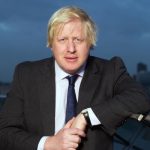
    Thank you everybody and welcome to this session on action and solidarity.

    I’m going to kick off with giving you my perspective because this is about all of us taking the concrete steps that will actually help the countries around the world that need it most.

    When it comes to tackling climate change, words without action, without deeds are absolutely pointless.

    And our record on deeds so far is not exactly stellar – we had a brilliant speech from Mia Mottley of Barbados making the point.

    Back in Paris, richer nations all signed the paper saying that by 2020 we’d be raising $100 billion of climate finance each year and there was no ambiguity, no wiggle room in that.

    But that deadline has come and gone and yet it’s going to be 2023 before we hit the target.

    So, that was one of our very first post-Paris tests and we’ve collectively flunked it.

    But of course getting there eventually is better than not getting there at all.

    But if we are late again with the 1.5 or with the rest of the 1.5c challenge then we will have left it far too late.

    And as anybody who was in that session at UNGA will remember, the testimony is of those that are on the front line, the countries that face cataclysmic inundations, the countries that face the hurricanes, they really will not forgive us.

    They are looking at what’s happening at this COP, and we need to think about them and take action now to prevent loss and damage on a truly catastrophic scale. We’ve got to take action on their behalf.

    So I’ve got to say to everybody who belongs to one of the richer and more developed nations, that as the host country for COP26 and with Alok on my right as the President of COP26…

    …If I’m forced to choose between those who speak up and who have spoken up passionately for more support urgently because they need it in the most vulnerable countries in the world…

    ….if I’m forced to choose between them and countries like my own, I’m backing the first group – I’m backing the most vulnerable.

    And I want you to know we have your back and we are going to support you.

    Because that is the only way to make the change that we need, and I hope that in the course of the next two weeks, the contributor nations will tell their negotiators to stick to that objective and to get to the conclusion we want.

    Finally, if anybody tries to row back on some of the commitments they have made and if we feel things aren’t going fast enough, then it’s a clear fact that I become Foreign Secretary nearly 6 years ago now, and in that time I’ve picked up a lot of mobile phone numbers which is stored in my iPhone…

    …And I will not hesitate to use that privilege and get on to you and urge you to do more.

    And if we’re going to make a success if the COP, if we’re going to deliver for the countries that need it If we’re going to tackle climate change then we must raise that finance and understand the position they’re in.

    Thank you all very much.

  • Iain Duncan Smith – 2021 Comments After Being Hit by Traffic Cone

    Iain Duncan Smith – 2021 Comments After Being Hit by Traffic Cone

    The comments made by Iain Duncan Smith, the former Leader of the Conservative Party, in October 2021 at the Conservative Party Conference.

    Well, interestingly, there were a bunch of what I would literally describe as morons outside the hall, banging drums and screaming obscenities, just about every obscenity you can imagine. We were on our way, my wife and a friend of hers, two women, on our way to, I was speaking at another engagement outside the secure zone, and they followed us banging drums and hurling abuse and I was quite concerned about the two women with me you know, given all that’s happened and everything else and three quarters of the way there I stopped for a second to cross the road and some bloke had picked up a great big heavy traffic cone, one of the ones that were there, and tried to smash it into my head.

    It knocked me forward and I held onto it, turned, lost my temper because I’ve stepped forward and I pointed at them like this and then they all backed away. I then dropped the cone and I said you’re just pathetic I said and walked off into the thing and then the police apparently arrested them and are doing them for assault. But you know, it was when you think about all that’s been going on, and particularly I had two women with me for goodness sake, the language and the abusive nature of it. There’s no place in politics for it.

  • Alok Sharma – 2021 Opening Statement at COP26

    Alok Sharma – 2021 Opening Statement at COP26

    The statement made by Alok Sharma, the President of COP26, on 31 October 2021.

    Friends, it is an honour to speak to you today for the first time as COP President.

    And I want to thank my dear friend Carolina for her really strong leadership over the past two years.

    Friends, I am very aware of the responsibility placed upon me in this role.

    And I do not underestimate the challenge.

    Let me start first by formally welcoming you to Glasgow.

    And I want to thank you for all your efforts in getting to the United Kingdom, which I know for some has been arduous due to the impacts of the pandemic.

    Indeed for almost two years now the pandemic has caused devastation and disruption, to lives and livelihoods across the world.

    And I know this has particularly affected the least developed countries and the small island developing states.

    And because of the pandemic, as you know, we postponed COP26 by a year. But during that year, climate change did not take time off.

    And the IPCC report in August was a wake-up call for all of us.

    It made clear that the lights are flashing red on the climate dashboard.

    That report, agreed by 195 Governments, makes clear that human activity is unequivocally the cause of global warming.

    And we know that the window to keep 1.5 degrees within reach is closing.

    I have been humbled to speak over this year with communities devastated by climate change.

    On a visit to Jomsom in Nepal, in the Hindu-Kush region I spoke to communities literally displaced from their homes from a combination of droughts and floods.

    In Barbuda I met communities still suffering from the ravages of Hurricane Irma four years ago.

    I have spoken with communities in East Africa fighting plagues of locusts spawned by climate change.

    And earlier this month I spoke to a group of women in Madagascar,

    Determinedly coping with what some describe, as the first climate induced famine in the world.

    Friends, in each of our countries we are seeing the devastating impact of a changing climate.

    Floods, cyclones, wildfires, record temperatures.

    We know that our shared planet is changing for the worse.

    And we can only address that together, through this international system.

    And we know what we need to do.

    Because six years ago, in Paris we agreed our shared goals.

    We said we would protect people and nature from the effects of climate change.

    We said we would get finance flowing to climate action.

    And we said we would limit the rise in global temperature to well below two degrees pursuing efforts towards 1.5.

    The rapidly changing climate is sounding an alarm to the world, to step up on adaptation, to address loss and damage, and to act now to keep 1.5 alive.

    We know that this COP, COP26, is our last best hope to keep 1.5 in reach.

    And I know that we have an unprecedented negotiations agenda ahead of us.

    But I believe this international system can deliver.

    It must deliver.

    And as COP President I am committed to promoting transparency and inclusivity.

    And I will lead this conference in accordance with the draft rules of procedure, and with the utmost respect for the party-driven nature of our process.

    In that spirit I believe that we can resolve the outstanding issues. We can move the negotiations forward. And we can launch a decade of every increasing ambition and action.

    And, together, we can seize the enormous opportunities for green growth, for good green jobs, for cheaper, cleaner power.

    But we need to hit the ground running to develop the solutions that we need.

    And that work, my friends, starts today.

    And we will succeed.

    Or fail.

    As one.

    Astronauts speak of the intense emotion they feel when looking back at Earth from space. Seeing it gleaming through the darkness of the cosmos.

    Incredible, improbable and infinitely precious.

    And if we act now, and we act together, we can protect our precious planet.

    So let’s come together over these two weeks.

    And ensure that where Paris promised, Glasgow delivers.

    Thank you.

  • Anne-Marie Trevelyan – 2021 Statement on US Position on Steel and Aluminium

    Anne-Marie Trevelyan – 2021 Statement on US Position on Steel and Aluminium

    The statement issued by the Department for International Trade on 31 October 2021.

    We welcome the Biden Administration’s willingness to work with us to address trade issues relating to steel and aluminium, and it is encouraging that the US is taking steps to de-escalate this issue.

    The International Trade Secretary recently held positive discussions with US Trade Representative Katherine Tai in London. The UK is committed to addressing both global steel overcapacity and decarbonisation, and we remain focused on agreeing a resolution that sees damaging tariffs removed to the benefit of businesses on both sides of the Atlantic.

  • Boris Johnson – 2021 Press Conference at the G20 Meeting in Rome

    Boris Johnson – 2021 Press Conference at the G20 Meeting in Rome

    The text of the press statement given by Boris Johnson, the Prime Minister, in Rome on 31 October 2021.

    Six years ago the Paris Agreement made an historic commitment to end the destruction and devastation caused by climate change.

    Together they agreed to limit global temperature increases to well below 2 degrees with a view to keeping that increase at 1.5 degrees.

    But hundreds of summits, speeches, press conferences like this later, those words and promises are starting to sound, frankly, hollow.

    The science is clear that we need to act now to halve emissions by 2030 and keep 1.5 degrees within reach.

    There are no compelling excuses for our procrastination.

    Not only have we acknowledged the problem, we are already seeing first-hand the devastation climate change causes: from heat waves and droughts to wildfires and hurricanes.

    And unlike many other global challenges, the solution to climate change is clear.

    It lies in consigning dirty fossil fuels like coal to history, in ditching gas guzzling modes of transport and recognising the role that nature plays in preserving life on this planet, and harnessing the power of nature through renewable energy rather than orchestrating its destruction.

    If we don’t act right know the Paris agreement will be looked at in the future not as the moment humanity opened its eyes to the problem, but the moment we flinched and turned away.

    We’ve seen some progress in the last few days and weeks.

    Saudi Arabia, Australia and Russia have all made net zero commitments – meaning 80% of the global economy will wipe out its contribution to climate change by the middle of the century, up from 30% thanks to the UK’s COP26 leadership.

    Countries such as the United States have doubled their spending on climate aid. Every nation at this weekend’s summit will end the financial support for

    international unabated coal projects by the end of this year.

    But these commitments, welcome as they are, are drops in a rapidly warming ocean when we consider the challenge we have all admitted is ahead of us.

    Just 12 G20 members have committed to reach net zero by 2050 or earlier. Barely half of us have submitted improved plans for how we will cut carbon emissions since the Paris Summit in 2015.

    And we have also failed to meet our commitment to provide $100bn a year to support developing countries to grow in a clean and sustainable way.

    The UN says emissions will rise by 15% by 2030, and they need to halve by then.

    The countries most responsible for historic and present-day emissions are not yet doing their fair share of the work.

    If we are going to Prevent COP26 from being a failure then that must change.

    And I must be clear, that if Glasgow fails, then the whole thing fails.

    The Paris Agreement will have crumpled at the first reckoning. The world’s only mechanism, viable mechanism, for dealing with climate change will be holed beneath the water line.

    Right now the Paris Agreement, and the hope that came with it, is just a piece of paper. We need to fill that piece of paper to populate it with real progress.

    And I know that humanity has in it the power to rise to the challenge.

    The UK has proved it can be done – we have lowered our greenhouse gas emissions by 44% in the last 30 years whilst increasing our GDP by 78%.

    And we’re cutting our contribution to climate change more and more every day.

    We have made some progress at this G20. We have had a reasonable G20, but there is a huge way still to go.

    We all know that we have the technology. What we need to do now is to raise the finance, but above all we need the political will, in Glasgow, to make those commitments.

    And to keep alive the hope of restraining the growth of our temperatures to 1.5 degrees.

    Thank you very much and see you in Glasgow.

  • Gillian Keegan – 2021 Speech on NHS Allergy Services

    Gillian Keegan – 2021 Speech on NHS Allergy Services

    The speech made by Gillian Keegan, the Minister for Care and Mental Health, in the House of Commons on 29 October 2021.

    I thank the hon. Member for Dagenham and Rainham (Jon Cruddas) not only for securing this debate on this important issue but for arranging for me to meet, on Wednesday, the wonderful APPG to receive a copy of its report in person.

    The Government recognise the challenges faced by people with allergies and are taking a number of actions to further support them. Allergies affect around 20 million people in the UK. For most, they are mild, but for some they are severe and can be fatal. That was the case for 15-year-old Natasha Ednan-Laperouse, who sadly passed away in 2016. Thanks to the tireless work by Natasha’s parents, Tanya and Nadim, and their charity, the Natasha Allergy Research Foundation, Natasha’s law came into force in October this year. That milestone legislation sets out the legal requirement for all food retailers and operators to display full ingredient and allergen labelling information on every food item they sell pre-packed for direct sale. This will give the millions throughout the UK who are living with food allergies and intolerances better protection and more confidence in the food they buy.

    We know how important it is that healthcare professionals, people with allergies and those close to them have the information that they need about the safe and effective use of adrenaline auto-injectors—AAIs—when they are administered in an emergency situation. That is why the Medicines and Healthcare Products Regulatory Agency is developing a communications campaign to convey key messages to improve the safe and effective use of AAIs, including the need to carry two AAIs at all times.

    People with allergies continue to be supported through locally commissioned services but, to support patients with more complex conditions, NHS England and NHS Improvement also directly commission some specialised services such as specialist allergy clinics.

    As with all conditions, we acknowledge that we need to have the right professional support in place for people living with allergies, including national clinical leadership. We have already established a clinical reference group for specialised allergy and immunology services, chaired by Dr Tomaz Garcez, a consultant immunologist. Membership includes clinicians, commissioners, public health experts, patients and carers. They use their combined knowledge and expertise to advise NHS England on the best ways to provide those specialist services. To support clinicians in the implementation of clear care pathways, the NICE website has guidance to support diagnosis and treatment of a range of allergy conditions, including how to identify allergies, when to refer to specialist care, and how to ensure allergies are recorded in people’s medical records.

    The importance of getting that right was emphasised to me when I had the privilege of meeting people on Wednesday, when the all-party group shared its report. In particular, I was personally touched by the story of the two young boys I met, Arlo and Monty, who suffer from serious allergies. The report rightly emphasises the need and the importance of having a highly skilled workforce educated in allergy diagnosis and treatment to ensure that they can appropriately support people in managing their conditions. I have agreed to meet the hon. Gentleman and other representatives from the group to discuss that important issue further. I also plan to arrange a roundtable meeting in due course, so we can understand what additional help is required.

    On ensuring we have the right workforce in place, there has been some encouraging progress. However, we know that more can be done. We are working with HEE to increase the uptake in available training places. The latest figures to June 2021 show that the number of doctors, and doctors in training, in specialist allergy and immunology has increased. I know there are already many dedicated medical professionals working in allergy and immunology specialisms.

    Relevant training is the responsibility of the Royal College of Physicians, with a certificate of completion of training in allergy and immunology available to support specialist allergy care. The RCP also runs an accreditation scheme, improving quality in allergy services. Currently, there are seven accredited NHS trusts in England: North Bristol NHS Trust; Nottingham University Hospitals NHS Trust; Royal Brompton and Harefield Hospital NHS Foundation Trust; University Hospitals of North Midlands NHS Trust; University Hospitals Birmingham NHS Foundation Trust; University Hospitals of Leicester NHS Trust; and University Hospitals Plymouth NHS Trust. A further 22 trusts across the UK are working towards accreditation. In addition, the British Society for Allergy and Clinical Immunology provides training for primary care staff across the country through workshops and education. The Royal College of General Practitioners has developed an allergy e-learning online resource to support CPD and revalidation, which aims to educate GPs about the various presentations of allergic disease, how to access an atopic patient, and when to investigate in primary care or refer to secondary care.

    Looking to the future, we continue to invest in research to improve the health outcomes of those living with allergies. Over the past five years, the Department of Health and Social Care has awarded the National Institute for Health Research over £2 million for research into food allergies. It is currently funding two trials investigating food allergy using oral immunotherapy, including one that compares two treatments for an allergy to cows’ milk in babies and another which seeks to overcome severe allergic reactions to peanuts in adults.

    This is a very important debate, and I genuinely thank the hon. Gentleman for bringing it forward. I look forward to working with him to improve services. The NHS works really hard to care for all its patients, including those suffering from allergies, mild or severe. I want to ensure that all adults and children, like Monty and Arlo, living with allergies continue to receive the best care possible and feel safe and confident in the care that they receive. We will continue to work with our delivery partners and stakeholders to ensure that we have the workforce, clinical leadership and expert guidance in place to best support those living with allergies.

    Finally, I want to say a special thank you to Arlo and Monty. On Wednesday, during half-term, they gave up their time and, when most other children were out and about enjoying activities, they got here early with their parents to present the report to me. They looked fantastic and spoke very wisely. That really brought home to me the maturity of young children who have to live with allergies, with all the things they need to know and all the personal responsibility they need to take. I will do all that I can to make life better for them and others like them.

  • Jon Cruddas – 2021 Speech on NHS Allergy Services

    Jon Cruddas – 2021 Speech on NHS Allergy Services

    The speech made by Jon Cruddas, the Labour MP for Dagenham and Rainham, in the House of Commons on 29 October 2021.

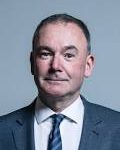
    I rise to make a series of points about improving allergy services in the UK and to speak in support of numerous recommendations made this week by the all-party parliamentary group on allergy and the National Allergy Strategy Group in their report, “Meeting the challenges of the National Allergy Crisis”. I will begin on a positive note and say how much the allergy community appreciated the fact that the Minister made time in her busy diary to receive the document at her Department on Wednesday morning. She spent time talking to children living with multiple allergies, as well as health professionals and charities. We hope that that will be the beginning of an ongoing dialogue.

    Allergy is a hypersensitivity reaction or an exaggerated sensitivity to substances—allergens—that are normally tolerated. Examples include peanuts, milk, shellfish, cats, medicines and grass pollens. They can trigger harmful antibodies and the release of inflammatory chemicals, causing symptoms such as sneezing, itches, rashes and falls in blood pressure, yet they may also cause airway narrowing, shortness of breath and wheezing, and swelling which, if in the mouth, throat or airway, causes severe difficulty in breathing and can be life-threatening.

    The simple truth is that there is a modern-day epidemic in allergy—one neglected by the NHS. Recent high-profile tragic cases of fatal anaphylaxis have brought shortcomings in NHS service provision, and a lack of wider public understanding of allergy, into sharp focus. This week’s report therefore calls for a new national strategy to help the millions of people across the UK affected by allergic disease. It also calls for an influential lead for allergy—some have labelled it an allergy tsar—to be appointed who can implement such a strategy.

    By way of background, we have been here before, and quite regularly. Over the past two decades, a series of reports have reviewed the prevalence of allergic diseases, consequent patient need and UK service provision. The list includes earlier reports from the all-party parliamentary group that I am fortunate to chair, plus two Royal College of Physicians reports in 2003 and 2010, the first titled, “Allergy: the unmet need”. The 2003 report was so scathing that in 2006, the Department of Health conducted “A review of services for allergy”. We have also had a 2004 Commons Health Committee report on “The Provision of Allergy Services”, as well as the 2007 House of Lords Science and Technology Committee report, “Allergy”. All have consistently highlighted how allergy remains poorly managed across the NHS due to a lack of training and expertise. All recommended significant improvements in specialist services, as well as improved knowledge and awareness in primary care.

    That is not to say nothing has changed. We have seen National Institute for Health and Care Excellence guidelines on allergy and care pathways for children with allergic disease, but very little has changed. Allergy remains under-resourced across the national health service, so once again this week’s document makes similar arguments and recommendations to earlier reports. We do not apologise for that, because so little has changed over the past 20 years. Actually that is not entirely the case. Something significant has changed over the past two decades: there has been a dramatic upsurge in the numbers of those affected by various allergic conditions across the country.

    The figures speak for themselves. Around one in three people, which is 20 million of our fellow citizens in the UK, have an allergy-related disorder. A significant amount of that is severe or complex, whereby one patient can suffer several disorders, each triggered by different allergens. Five million have conditions severe enough to require specialist care. Fatal and near-fatal reactions occur regularly due to foods, drugs and insect stings and have been increasing over recent years. Hospital admissions due to allergy rose by 52.5% in the six years to 2017-18. Admissions with anaphylaxis—rapid onset and often life-threatening reactions—rose by 29%. It is estimated that one in 1,333 of the population in England has experienced anaphylaxis at some point in their lives.

    Prevalence rates for allergy in the UK are among the highest in the world, especially among the young. Some 40% of children in the UK have been diagnosed with some form of allergy. Each year, new births add 43,000 cases of child allergy to the population in need, yet specialist services delivered by trained paediatric allergists are available to only a minority of those with serious disease. One in four adults and about one in eight children in the UK has allergic rhinitis, which includes hay fever and animal and house dust mite allergy. That is roughly 16 million people. They are four times more likely to suffer from asthma, eczema and food allergy. The percentage of people diagnosed with allergic rhinitis, asthma and eczema has trebled over the past four decades.

    The overall economic case for prevention-oriented allergy services is very strong. The estimated cost of allergy-related illness in 2004 was £1 billion. Since then, there has been a 200% to 300% increase in anaphylaxis-related admissions. The starkest figure is that primary care visits for allergy have increased to account for 8% of total GP consultations. Put simply, the complexity and severity of allergies have increased, as well as the number of patients affected, placing huge strains on the system. Those are the basic facts. Change is long overdue.

    Beyond the statistics, for the growing number of people in the UK living with allergic disease, their condition can have a significant negative impact on their lives and their families’ lives. It is frightening and restrictive to live with a condition that could cause a severe or life-threatening reaction at any time. Despite the shocking statistics, each of the reports that I have mentioned concludes that allergy has largely been ignored and is poorly managed across the NHS owing to a lack of training and a lack of expertise.

    The core problem is that there are a very small number of consultants in adult and paediatric allergy, while most GPs receive no training in allergy at all. The basic mismatch between rising demand and poor service supply needs correction. There are only 11 specialist allergy trainee posts for doctors in England, despite the 2004 report’s recommendation of a minimum of 40. Only two qualify each year—fewer than in Lithuania, which has a population of 3 million.

    The tiny number of allergy trainees is a bottleneck, stifling growth of the specialty. Shockingly, despite repeat submissions over 20 years to the workforce bodies responsible for trainee numbers, there has been very little increase. There are also too few consultants, only 40 adult allergists and a similar number of paediatric allergists working in a small number of allergy centres across the country.

    Most general practitioners receive no training in clinical allergy, either as medical students or in their specialist GP training. The consequences for NHS patients are that they face an extraordinary postcode lottery across the country; that they are hampered by wrong referrals and re-referrals, or get no referral; that they are denied choice and the benefits of improvements in allergy care; and that there is significant and enduring unmet need.

    The new training programme in allergy from August 2021 combines allergy with a different specialism in clinical immunology, but the danger is that that will further dilute and downgrade the quality of allergy specialist training. Meanwhile, on the ground, there is growing evidence of a reduction in some allergy services, with closures or restrictions, mainly among secondary care providers, because they are so overburdened.

    Paradoxically, the UK is world-leading in allergy research and UK allergy guidelines are highly regarded internationally, yet failure to invest in clinical services nationally means that NHS provision is inconsistent, is often poor and in many areas falls far below that in other developed countries. More generally, the covid-19 pandemic has highlighted a new need for allergists to support the vaccine roll-out. The major new workload that arose—investigating anaphylaxis and suspected allergic reactions to the covid-19 vaccines and providing advice on safe vaccinations—has been delivered by a small cadre of allergists, building on their drug allergy expertise.

    All these issues, and the resulting lack of effective allergy care, need to be recognised and corrected by NHS England and Health Education England. Basically, the report makes four recommendations for action. The first is a national plan for allergy, making allergy a priority, investing in a national plan led by a designated Department of Health and Social Care civil servant or NHS lead with sufficient authority to implement change—a national clinical director of allergy—and bringing together medical professionals and patient support organisations to develop the strategy and improve allergy services. The report details a list of organisations that might be involved in the delivery of training programmes to meet allergy need and provide the education across primary care that is needed for health visitors, dieticians and other healthcare professionals.

    The second recommendation is on specialist care: to expand the specialist workforce as a priority, and to ensure that training programmes prioritise allergy, so that specialists of the future are appropriately trained and can safely deliver care. It proposes a minimum of 40 additional training posts for allergy, and a minimum of four consultant allergists for adults and two paediatric allergists in every major teaching hospital and large conurbation.

    The third recommendation is on primary care: to ensure that all GPs and healthcare professionals in primary care have knowledge of allergic disease; to ensure allergy is included in the GP curriculum and exit examination; to improve allergy education for already qualified GPs in ongoing professional appraisal; and to appoint a health visitor and/or a practice nurse in each practice with sufficient training to be responsible for allergy. Again on a positive note, some of this is beginning to happen. The Royal College of General Practitioners has recently added allergy to new GP exams.

    The fourth recommendation is on commissioning: to ensure that local commissioners understand the allergy needs of their population. It says that it is not adequate to assume that other specialties can deliver specialist allergy care; that commissioners should ensure access to adult and paediatric allergy consultants, and allergy pathways; and that national commissioners should ensure national agreements on commissioning, including for immunotherapy, drug allergy investigation and so on.

    In conclusion, I hope that the Department will seriously consider the report and its recommendations. Supporting the growth of the allergy speciality would give more patients access to accurate diagnosis, which should surely be expected in a modern national health service. We can all agree that patient safety, the prevention of severe life-threatening reactions and the control of chronic disease are paramount. More specialist allergists are essential to support primary and secondary care, and to improve integrated care, keeping more patients out of hospitals. This would in turn tackle the geographical inequalities and lack of access to specialist allergy services. A relatively small investment would be an effective multiplier and deliver wider dividends.

    Such a model would result in better care for patients in line with the NHS long-term plan. The Government and the NHS should give allergy the priority it deserves and recognise the true burden that it can place on those affected, their families and wider communities. They should not have to wait any longer. This report offers the solutions to the problems and makes sensible, achievable recommendations for change. We look forward to them being implemented.
  • Liz Truss – 2021 Statement on Conversion Therapy

    Liz Truss – 2021 Statement on Conversion Therapy

    The statement made by Liz Truss, the Foreign Secretary, in the House of Commons on 29 October 2021.

    This Government are committed to building a society in which the abhorrent practice of so called “conversion therapy” no longer takes place. It is clear that, at present, gaps remain in the law that allow damaging practices to continue.

    Today we take another step towards ending that, as we launch a public consultation on how we plan to ban these practices. The consultation will be open for six weeks, closing on Friday 10 December, and we encourage as many people as possible to contribute their views.

    The consultation can be found at: https://www.gov.uk/government/consultations/banning-conversion-therapy

    Conversion therapy does not work and can cause long lasting damage. The Government are determined to protect LGBT people from this harm.

    I also want to reassure those who may have concerns about the impact of this ban on clinicians’ independence, as well as on freedom of speech. Core freedoms, such as freedom of choice, speech and belief, are central to these proposals. It is vitally important that no person is forced or coerced into conversion therapy, and that young people are supported in exploring their identity without being encouraged towards one particular path. We will continue to protect under-18s from being channelled into irreversible decisions. These proposals do not alter the existing clinical regulatory framework or the independence of regulated clinicians working within their professional obligations.

    Equality Ministers and our officials have already heard views from a wide range of stakeholders, including victims of conversion therapy, LGBT organisations, faith groups, psychiatric and counselling bodies. Their experiences and advice have helped shape our proposals, and we now welcome the views of stakeholders and the wider public on our next steps.

    The consultation seeks views on a comprehensive package of proposed measures. These include a new criminal offence as well as sentence uplifts for existing criminal offences. We will also introduce conversion therapy protection orders, remove revenue streams from organisations which offer these practices and restrict the promotion of conversion therapies online.

    It is also vital that those who have been subject to or are at risk of these abhorrent practices receive the support they need. This Administration are the first UK Government to commit to providing such support. We will therefore be launching a competitive tendering process in November for a new Government-funded support service for victims and those at risk of conversion therapy.

    After the consultation has closed, results will be analysed, for publication in due course, and will inform the Government’s next steps in preparing legislation for spring 2022.

    I am laying the consultation document as a Command Paper today and it will be available on gov.uk for people to respond to.

  • Julia Lopez – 2021 Statement on Project Gigabit

    Julia Lopez – 2021 Statement on Project Gigabit

    The statement made by Julia Lopez, the Minister for Media, Data and Digital Infrastructure, in the House of Commons on 29 October 2021.

    Today we have published the third Project Gigabit quarterly update and, thanks to the work of industry and our record £5 billion investment, we are making phenomenal progress delivering the biggest broadband roll-out in UK history.

    We are on track for 85% gigabit coverage by 2025 and we have now passed the connectivity milestone of more than 57% of UK homes and businesses that can now access the fastest broadband speeds available.

    In this Project Gigabit autumn update, we report on a significant further expansion in commercial plans, including more telecom providers focused on building in under-served rural areas. Greater commercial investment is positive for the UK and shows strong market confidence in customer demand for gigabit infrastructure.

    This delivery plan update also reports on:

    progress with, and changes to, phase 1 roll-outs and phase 2 procurements;

    sequencing and dates of English phase 3 rural projects, covering around 500,000 premises in Essex, Lincolnshire, Devon and Somerset, Herefordshire and Gloucestershire, Dorset, Cheshire, and North Yorkshire;

    an update on how we are utilising gigabit voucher subsidy as part of our roll-out plans;

    information on the evaluation of the benefits of our superfast broadband programme; and

    details of an additional £8 million to deliver full-fibre to 3,600 premises in Scotland, as part of the Scottish Government’s R100 project, and c.£22.6 million to connect rural and remote parts of Northern Ireland, and information on the Welsh Government’s open market review and scheduled next steps.

    Gigabit broadband will bring much faster and more reliable connectivity to rural and hard-to-reach communities. This will make them more attractive places for people to settle, raise families and start and grow businesses, improve education and healthcare services and increase accessibility.

    This is how we level up and strengthen our Union—ensuring rural communities in every part of the UK have the same chances and opportunities as our urban towns and cities. That is why this is at the top of the Government’s agenda, and as Secretary of State, I am fully committed to doing everything I can to make Project Gigabit a UK success story.

    I will place a copy of the “Project Gigabit Delivery Plan Autumn Update” in the Libraries of both Houses.