Tag: 2021

  • Keir Starmer – 2021 Article on the Personal Conduct of Owen Paterson

    Keir Starmer – 2021 Article on the Personal Conduct of Owen Paterson

    A section of the article written by Keir Starmer in the Guardian on 3 November 2021.

    I am sick of people skirting around calling this out for what it is: corruption. Paterson was receiving money from a private company to ask questions on its behalf. Roberts was found to have made repeated and unwanted sexual advances toward a young staffer. Both of them should be gone – neither are fit to serve as MPs. Their continued presence in the Tory party is scandalous. It will further undermine public faith in politics at a time when we should be trying to restore decency and honesty.

    But the rot starts at the top. We have a prime minister whose name is synonymous with sleaze, dodgy deals and hypocrisy. This is the man who allows his ministers to breach with impunity the codes that govern public life; who thinks it should be one rule for him and his chums, another for everyone else. With his every action he signals to his MPs: do what you like.

  • Nadine Dorries – 2021 Comments on Yorkshire Cricket Club

    Nadine Dorries – 2021 Comments on Yorkshire Cricket Club

    The comments made by Nadine Dorries, the Secretary of State for Digital, Culture, Media and Sport, on 3 November 2021.

    Azeem Rafiq’s treatment after the racism he faced was disgusting, and the investigation that followed only makes it even worse. The ECB Cricket investigation must be swift and fully transparent. Racism must be confronted, and NEVER written off as just “banter”.

  • Gary Ballance – 2021 Statement on Yorkshire Cricket Club

    Gary Ballance – 2021 Statement on Yorkshire Cricket Club

    The statement made by Gary Ballance from Yorkshire Cricket Club on 3 November 2021.

    My family and I are deeply saddened and upset by the allegations recently levelled at me in the press and by the misleading and selective nature of the reporting in the last few days. Azeem was not just a teammate of mine but he was my closest friend and supporter in cricket.

    Throughout this process I have cooperated with the independent investigation and I have been completely honest and transparent with the club and the investigators at all times. Information and allegations have been leaked and reported in the press which in my view give a misleading impression of the evidence which was heard in the investigation. I had not intended to make any public statement but, given the reports which have been published, and with journalists arriving at my house, I feel I have no choice but to provide a public response.

    To be clear – I deeply regret some of the language I used in my younger years. The independent enquiry, having heard all of the evidence, accepted that the context of some of the language used was in a “friendly verbal attack” between friends which was not intended to offend or hurt and that no malice was intended.

    Given my incredibly close relationship with Rafa over the years I am saddened that it has come to this. Rafa and I started playing for Yorkshire at a similar time and we quickly developed a very close bond. He encouraged me to play club cricket for his club Barnsley CC, which I did, we went on many tours together, with both Yorkshire and the England Performance Programme, and we always supported each other on and off the pitch. We socialised a lot together away from the game and would also drink and enjoy ourselves together.

    On the pitch we supported each other greatly. We both captained Yorkshire at various times and we backed each other when we filled these roles. Rafa has always been a huge supporter of mine and was always there for me in the highs and lows of my career with Yorkshire and England. When he was first released by Yorkshire I was there for him during that tough time and I was delighted when he earned a new contract and a second spell with the club. He was very pleased for me when I was selected for England and I was delighted to receive his supportive messages during my time with England. He was also always a big support to me at some difficult times in my career, and I have always been very grateful to him for that.

    Because we were such good friends and spent a lot of time together drinking and on nights out we both said things privately to each other which were not acceptable. It has been reported that I used a racial slur and, as I told the independent enquiry, I accept that I did so and I regret doing so. I do not wish to discredit Rafa by repeating the words and statements that he made about me and others but I have to be clear that this was a situation where best friends said offensive things to each other which, outside of that context, would be considered wholly inappropriate.

    I regret that these exchanges took place but at no time did I believe or understand that it had caused Rafa distress. If I had believed that then I would have stopped immediately. He was my best mate in cricket and I cared deeply for him. To my knowledge, it has never been alleged that I reduced Rafa to tears.

    That does not mean that what passed between us was right or appropriate. It was not. Rafa said things to me that were not acceptable and I did the same with Rafa. I never said anything with any intended malice or to upset Rafa.

    Rafa and I remained closest friends throughout the time we exchanged these inappropriate comments. One winter, I suggested that Rafa and his bowling coach travel to Zimbabwe to stay with my family, which they did. He lived in my family’s house in Zimbabwe and spent time with my parents and my brothers while he trained in Zimbabwe. He would later become very good friends with my brother and the two of them stayed together regularly when my brother was in the UK. Rafa was always very grateful for the support and love which my family gave him and he regularly expressed this to me. I was honoured to be invited to his wedding in Pakistan which I sadly could not attend.

    I am aware of how hurtful the racial slur is and I regret that I used this word in immature exchanges in my younger years and I am sure Rafa feels the same about some of the things he said to me as well.

    My intention, during this whole process, has been to be honest and cooperate with the independent investigation. In light of recent media reports it is only right, on behalf of me and my family, that I put my position in the public domain.

    I will not be making any further statement on this matter.

  • Peter Bottomley – 2021 Comments on the Personal Conduct of Owen Paterson

    Peter Bottomley – 2021 Comments on the Personal Conduct of Owen Paterson

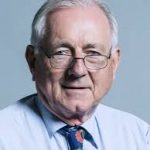
    The speech made by Sir Peter Bottomley, the Father of the House, in the Commons on 3 November 2021.

    I do not think anyone enjoys taking part in this debate. Were the Government’s motion to be considered unamended, I would vote for it. Had the second amendment been selected, I would vote for it. I will not vote for the first amendment.

    I was on the Standards Committee up to 2003, when I withdrew on a point of practice, rather than principle, that the House, the Speaker and the then Labour Government had not supported Elizabeth Filkin. I am not going to change my practice now. I am one of the people, probably like most people in this House, who has read the full report. I have read what the chief vet said about the milk allegation. I have read what my right hon. Friend the Member for North Shropshire (Mr Paterson) has said, and to whom I join in party sympathy for what has happened in his life. I recognise that the involvement of Randox with Aintree and with him, and his wife’s role at Aintree, meant that he would be close to a business, and I recognise that much of what he said is uncontested by the commissioner and by the Standards Committee.

    The issue is whether he would have done better, as I think was possibly indicated by my right hon. Friend the Prime Minister in Prime Minister’s questions, to have said that he held one view, the commissioner and the Committee held another, that he now recognises that what they felt was reasonable, and he is sorry to have a had a view that has caused this upset and these difficulties to all of us. I still hope that were I in that situation I would have had the sense, basically, to accept that there are views other than my own and that I should not always see things with my own justification rather than in the way people outside this House, and some inside this House, would see them.

    On the decision as to whether the contents of the amendment tabled by my right hon. Friend the Member for South Northamptonshire (Dame Andrea Leadsom) are correct, I do recognise that, as my hon. Friend the Member for Harwich and North Essex (Sir Bernard Jenkin) said, the 2003 recommendation of the Committee on Standards in Public Life is worth looking at. But that was 18 years ago, and this is a serious problem. It should have been brought back for consideration by the House or by senior Members of this House during the past 18 years. I am happy to bring it forward now as a way of changing what should be the normal process of upholding the Standards Committee’s endorsement of the standards commissioner’s advice to the Committee.

    I refer to the debate in 2010 when Jack Straw was the Justice Secretary and Sir George Young, as he then was, contributed for my party, as did I. We chose the system we are now using. If we want to consider changing it, we should do it in a proper way. I do not regard this as appropriate now.

  • Caroline Lucas – 2021 Comments on the Personal Conduct of Owen Paterson

    Caroline Lucas – 2021 Comments on the Personal Conduct of Owen Paterson

    The comments made by Caroline Lucas, the Green Party MP for Brighton Pavilion, on 3 November 2021.

    Imagine being convicted of an offence but instead of serving a sentence, your mates *arrange* a review of the justice system to let you off scot-free.

    That’s what Tories are trying to do. It’s a shameful undermining of an independent system of scrutiny to save one of their own.

  • Thangam Debbonaire – 2021 Comments on the Personal Conduct of Owen Paterson

    Thangam Debbonaire – 2021 Comments on the Personal Conduct of Owen Paterson

    The comments made by Thangam Debbonaire, the Labour MP for Bristol West, in the House of Commons on 3 November 2021.

    It gives me no pleasure to be standing here responding to a standards motion, although I now feel that what I am responding to is the Leader of the House moving the amendment, rather than the motion.

    I would like to place on record my sincere thanks to the standards commissioner and her team, not only for their diligent work in carrying out this inquiry, but for all the other work that they do to actively promote high standards across the House. I thank my hon. Friend the Member for Rhondda (Chris Bryant), who chairs the Standards Committee, and all the other Committee members who contributed to this thorough investigation.

    Since 1695, there have been rules on paid advocacy. A motion passed on 2 May 1695 said that

    “the offer of money or other advantage to any Member of Parliament for the promoting of any matter whatsoever…in Parliament, is a high crime and misdemeanour”.

    If, today, the amendment passes or the motion falls entirely, it sends the message—to paraphrase my right hon. Friend the Member for Ashton-under-Lyne (Angela Rayner), the deputy leader of the Labour party ,who said this better than me earlier today—that when we do not like the rules, we just break the rules; and when someone breaks the rules, we just change the rules. It turns the clock back to before 1695. Such actions were not acceptable then and they are not acceptable now.

    Dame Margaret Hodge

    Does my hon. Friend agree that the only logical explanation for the action by Government Ministers and Back Benchers today is not necessarily the recommendations of the report that we are considering today, but that there may be many others in line to come forward that will cause even greater embarrassment to those on the Government Benches?

    Thangam Debbonaire

    I thank my right hon. Friend, who is a distinguished Member of this House, for raising that point. It is hard to work out why this is happening. In fact, I am going to skip ahead to a later point in my speech. As you know, Mr Speaker, the Leader of the House stands up in front of us every week. If he wanted a debate on changing the rules and changing the system, he has had that opportunity every single week, but I have yet to hear him mention it until today, when we are considering a live case.

    In this case, the Committee concluded:

    “This is an egregious case of paid advocacy”.

    It said that the right hon. Member for North Shropshire (Mr Paterson)

    “repeatedly…used his privileged position…to secure benefits for two companies for whom he was a paid consultant”,

    and that this

    “has brought the House into disrepute.”

    A lot has been said in the media about the standards process over the last week, but since 1695 this House has only ever strengthened the system. The Library and the appendix to the code of conduct can provide a timeline and details for any Government Members who are interested. The introduction of a House of Commons Standards Commissioner in 1995 and the Standards Committee in 2013 were key features of strengthening the system. It has worked well and has gone a long way to restoring public trust in the House. It is vital that the integrity of the standards system is maintained. In fact, the Committee on Standards in Public Life recommended just this week that the system needs to be strengthened, not weakened. But no—Government Members seem to want to rip up the entire system. Our Committees, which are cross-party, carry out their inquiries independently of influence from this House and that must continue to be the case.

    Under the code of conduct, all of us are expected to adhere to the ethical standards of the seven principles of public life. It seems that some Government Members need a reminder that those principles are: selflessness, integrity, objectivity, accountability, openness, honesty and leadership. That expectation is good for us all. If someone in this place falls short, there has to be a system in place to hold MPs and other public officials to account. That is our standards system. It is a standards system that our Parliament voted on and approved. Just changing the system when somebody does not like a result is not acceptable.

    If the Government wish to debate the merits of the standards system, the Leader of the House can get up tomorrow and schedule time to do so. Some Government Members who have signed the amendment are Chairs of House Committees and could have initiated reviews or made proposals, but they did not. I hate to remind the Leader of the House, but today there is a motion before us about a report and its recommendations. It is absolutely in order for Back Benchers to table an amendment, but it is quite astonishing that the Government seem to have endorsed and whipped it.

    Shamefully, it seems that Tory MPs have been backed by their Government to hijack this debate, which should have been about endorsing a Committee report. The Government are sending the message that paid advocacy—MPs selling their offices and position as an elected representative—is fine. I am afraid that some, including Government Members from the Dispatch Box today, are claiming that this is a process without an appeal, but the commissioner reviews cases, makes recommendations and refers them to the Standards Committee, which is cross-party, with a majority of members from the Government Benches, as well as lay members with expertise; they decide whether to approve the recommendations, and we debate and vote on them.

    Correct me if I am wrong, but as I understand it, the right hon. Member for North Shropshire had access to legal representation. His character witness statements are in the report and were duly considered. As some of my colleagues have pointed out to me, if everybody who wanted to give oral evidence to a court of law was just accepted, where would that get us? Is that really what we are saying—that there should be a system whereby if I want to give evidence, I get to say what I like?

    The Committee process is, in effect, a process of appeal. The Committee upheld the commissioner’s report and recommendations, and so must this House. For the public to maintain their trust in us, it is crucial that our independent standards procedure is not undermined or, worse still, systematically dismantled all together, as I fear is happening now. Is that what the Leader of the House wants his political legacy to be—undermining Parliament and our MPs even further? Does he fully understand the potential consequences of doing this?

    Standards are important; they matter. The commissioner and the Committee took careful consideration of a very large amount of evidence. It took a long time to read, and I strongly suspect that some Members did not read it. The Committee recommended the sanction on the motion before us. It would be extraordinary for this House to overturn that independent, cross-party recommendation.

    I hate to remind the Leader of the House, but just last month Government Members said that they could not possibly support retrospective rule change; and yet, here we are. In the middle of a case, Tory MPs—yes, I am going to state that, because it is only Tory MPs who have signed this amendment—are trying to change the rules. It is a serious case of paid advocacy against the rules that are clearly set out. The public rightly expect us to abide by the rules and to be held to account. We must vote to do so today.

    We cannot have a return to the Tory sleaze of the 1990s. Members and the public will remember cash for questions and those Tory scandals of the 1990s. This Tory dilution of our standards procedures sends a terrible message to the public and our constituents that it is one rule for certain MPs and another for everyone else. The enduring damage that that would do to Parliament’s reputation is something that none of us should be prepared to consider.

  • Rishi Sunak – 2021 Speech at COP26 Finance Day

    Rishi Sunak – 2021 Speech at COP26 Finance Day

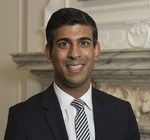
    The speech made by Rishi Sunak, the Chancellor of the Exchequer, on 3 November 2021.

    Good morning – and welcome to Cop26 finance day.

    It’s easy to feel daunted by the scale of the challenge that we face.

    By sea levels rising; droughts and wildfires spreading; people forced out of their homes.

    But I look around this hall and I feel optimism.

    Why?

    Because this is the first COP to bring together so many of the world’s finance ministers, businesses and investors with such a clear common purpose:

    To deliver the promise, made in Paris six years ago, to direct the world’s wealth to protect our planet.

    The good news is that the will is there:

    At least 80% of the global economy has committed to net zero or carbon neutrality targets.

    Our challenge now is to deploy the investment we need to deliver those targets around the world.

    To do so, we are accelerating three actions today.

    First, we need increased public investment.

    And I want to speak directly to the developing countries of the world:

    We know you’ve been devastated by the double tragedies of coronavirus and climate change.

    That’s why the G20 is stepping up to provide debt treatments more swiftly.

    It’s why the IMF are providing a new, $650bn allocation of special drawing rights – and Kristalina will say more on this later.

    And its why we are going to meet the target to provide $100bn of climate finance to developing countries.

    And while we know we are not yet meeting it soon enough, we will work closely with developing countries to do more and reach the target sooner.

    Over the next five years, we will deliver a total of $500bn investment to the countries that need it most.

    And we can do more today:

    I can announce that the United Kingdom will commit £100m to the Taskforce on Access to Climate Finance, making it quicker and easier for developing countries to finance they need.

    And we’re supporting a new Capital Markets Mechanism, which will issue billions of new green bonds here in the UK, to fund renewable energy in developing countries.

    Two tangible, practical examples of how we’re delivering our promise of $100bn.

    But public investment alone isn’t enough. Our second action is to mobilise private finance.

    Let me pay an enormous tribute to Mark Carney for his leadership – leadership that is delivering results.

    The Glasgow Financial Alliance for Net Zero has now brought together financial organisations with assets worth over $130 trillion of capital to be deployed.

    This is an historic wall of capital for the net zero transition around the world.

    What matters now is action: to invest that capital in our low carbon future.

    To do that, investors need to have as much clarity and confidence in the climate impact of their investments as they do in the traditional financial metrics of profit and loss.

    So our third action is to rewire the entire global financial system for Net Zero.

    Better and more consistent climate data.

    Sovereign green bonds.

    Mandatory sustainability disclosures.

    Proper climate risk surveillance.

    Stronger global reporting standards.

    All things we need to deliver and I’m proud that the UK is playing its part.

    We’ve already made it mandatory for businesses to disclose climate-related financial information.

    With 35 other countries signing up to do the same.

    Today I’m announcing that the UK will go further and become the first ever ‘Net Zero Aligned Financial Centre’.

    This means we are going to move towards making it mandatory for firms to publish a clear, deliverable plan…

    …setting out how they will decarbonise and transition to Net Zero – with an independent Taskforce to define what’s required.

    So: a renewed pledge to $100bn a year of public funding;

    Over $130 trillion of private capital waiting to be deployed;

    And a greener financial system, under way.

    Six years ago, Paris set the ambition.

    Today, in Glasgow, we’re providing the investment we need to deliver that ambition.

    Now I know that when people hear about global finance it can feel remote and abstract.

    But we’re not simply talking about numbers on a page.

    We’re talking about making a tangible difference to people’s lives.

    About cheap, reliable and clean electricity to power schools and hospitals in rural Africa.

    About better coastal defences in the Philippines and the pacific islands to protect people from storm surges.

    About everyone, everywhere having fresher water to drink…

    …cleaner air to breathe…

    …better insulated homes in which to live.

    That’s the vision we’re asking you to commit to.

    That’s the opportunity we’re asking you to invest in.

    And that’s the work we’re asking you to begin, today.

    Thank you.

  • James Heappey – 2021 Comments on Daesh Weapons Seized in Mali

    James Heappey – 2021 Comments on Daesh Weapons Seized in Mali

    The comments made by James Heappey, the Minister for the Armed Forces, on 3 November 2021.

    These operations are yet another example of how UK peacekeepers are making a real difference to the UN mission to protect civilians in Mali.

    Disrupting armed groups and taking valuable weapons and ammunition out of the hands of terrorists makes communities safer, while our presence in the region helps the UN mission to understand and counter threats to the local population.

  • Nicola Sturgeon – 2021 Comments on COP26

    Nicola Sturgeon – 2021 Comments on COP26

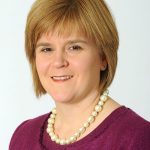
    The comments made by Nicola Sturgeon, the Scottish First Minister, on 28 October 2021.

    From 31 October to 12 November, Glasgow will host COP26, and welcome leaders, scientists and activists to my home city.

    As any Glaswegian can tell you, we are proud of the city’s role as a birthplace of the industrial revolution in the 18th and 19th centuries. I hope that we can see our city now usher in a net-zero revolution around the world.

    There’s no doubt that the stakes are high for COP26. It is the world’s best – and quite possibly its last – chance to limit the global temperature increase to 1.5°C above pre-industrial levels.

    Leaders must come to Glasgow committed to the objectives of the Paris Agreement and ready to turn promises into action.

    Climate change is the greatest challenge facing the planet. Global temperatures have already risen by more than 1°C on average since 1880. And people around the world are already living with the impact of that.

    Limiting global warming to 1.5°C won’t prevent all the potential effects of climate change. But every fraction of a degree above that threshold risks making those impacts more catastrophic. If we allow temperatures to continue to rise, life on this planet will become increasingly unrecognisable.

    Everyone who is meeting in Glasgow for the summit knows that. There is simply no excuse for inaction. But despite this, the world isn’t yet meeting the challenge.

    It is important to recognise that countries with rich industrial pasts have a special responsibility. We have contributed disproportionately to climate change, so we must now do more to help tackle it.

    Understanding that responsibility led Scotland to become one of the first nations to declare a climate emergency.

    We have cut our greenhouse gas emissions by more than half since 1990, and since 2008 we have decarbonised faster than any country in the G20. And we now have some of the world’s most ambitious targets for future cuts in emissions.

    We recognise that to have credibility we have to act as well as talk. We must meet targets, not just set them.

    That’s why, as part of the cooperation agreement between my government and the Scottish Greens, we committed to increase and accelerate our climate action, to go further, faster, and – as we have now set out – to begin work on improving the pace at which a just transition away from fossil fuels is delivered in industries such as oil and gas, so that we are living up to the Paris Agreement.

    Small countries such as Scotland can lead the way – and I am determined that we will – but in the coming days it is the countries that emit the most that most need to step up.

    They must make ambitious, credible pledges to achieve near-term emissions reductions and ultimately to reach net zero. COP26 must secure commitments that keep alive the chance of limiting global warming to 1.5°C.

    Global finance, too, needs to be part of the plan of action to help the communities facing the worst impacts of the climate crisis.

    In Copenhagen in 2009, developed countries promised to provide $100bn of climate aid every year from 2020. In Paris in 2015, that commitment was repeated. After Glasgow, it must be delivered.

    Action must be taken to support countries already living with the often devastating impact of climate change, particularly in the Global South. We must ensure that the nature-based and technological solutions that can help countries adapt to, mitigate and prevent global warming are available to all.

    The loss and damage caused by climate change is being discussed in the second week of the summit, but it can’t be merely discussed – we must see some real progress.

    This summit must be the first at which the world takes this issue seriously. Scotland has recently doubled our climate justice fund – an extremely small gesture compared with the scale of the problem, but one that at least acknowledges its significance.

    Leaders in Glasgow must also focus on fairness between generations, as well as fairness between nations. I’m acutely aware that young people will spend their lives living with the fallout from a climate crisis that preceding generations created.

    All leaders at COP26 need to understand younger generations’ anxiety and anger.

    To help ensure the voices of the young are heard, Scotland has funded the Conference of Youth, beginning on 28 October. During the conference, more than 400 young people from over 140 countries will gather to draw up their demands of world leaders.

    Scotland will do everything we can to ensure the summit’s success. We are not around the United Nations table as an independent state. But Scotland is the location for this year’s COP, and so it has a special role.

    In practical terms, we have offered all the help we can to the UN. And we will support the COP presidency of the UK government in any way we can to deliver the bold, progressive, fair and just outcome that is needed.

    After all, this summit could shape the future of the world we all live in. Absolutely nothing – and certainly not party politics – is more important than working together to make meaningful progress.

    Ultimately, however, the true test of COP26 will be whether the summit delivers the outcomes the world needs.

    Global leaders must agree to actions that will secure 1.5°C as a genuine prospect, not just as a slogan.

  • Boris Johnson – 2021 Speech at COP26 Build Back Better Meeting

    Boris Johnson – 2021 Speech at COP26 Build Back Better Meeting

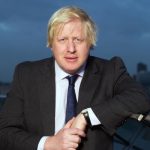
    The speech made by Boris Johnson, the Prime Minister, on 2 November 2021.

    Let me thank President Biden and President von der Leyen for hosting this meeting and you’re absolutely right that we began this idea with the Build Back Better partnership in Carbis Bay.

    To keep 1.5 degrees in sight, to reach global net zero

    and to protect vulnerable countries from the impacts of climate change

    requires the development of new clean and green infrastructure.

    And this presents a huge opportunity to turn our struggle against climate change into a global mission for jobs and growth.

    In the UK, through our net zero strategy, we’re pioneering a green industrial revolution,

    with public investment leveraging billions of pounds of private funding into whole new industries

    from offshore wind to carbon capture and storage

    allowing us in the UK to level up our whole country with thousands of new green jobs.

    And by partnering with developing and emerging economies to invest in climate-smart infrastructure,

    and meeting our $100 billion climate finance commitment

    we can go on to unlock trillions, when it’s tens of trillions or hundreds of trillions as Mark Carney would say, of private finance,

    to do something similar worldwide.

    So our pursuit of global net zero can drive global levelling up,

    helping developing economies fast track their way to a more prosperous, clean and green future.

    So the UK wholeheartedly supports the principles that President Biden has set out,

    working in partnership to create the highest standards of climate-resilient infrastructure,

    rooted in our shared democratic values of transparency, inclusivity and collaboration,

    and led by the host countries, responding to their needs.

    And I welcome the work of Mark Carney and others on creating what we call “country platforms” to help connect pipelines of green infrastructure projects with the vast private capital looking to invest in net zero.

    The UK is proud to contribute to these efforts today with our Clean Green Initiative.

    By taking our green industrial revolution global,

    we’re investing over £3 billion,

    and mobilising a similar amount of private finance

    to support technologies like drought-resistant agriculture where investors have been reluctant to take on the risks alone.

    We’re investing in green bonds for renewable energy in Vietnam,

    and solar power in Burkina Faso, Pakistan, Nepal and Chad.

    We’re offering guarantees to the World Bank and the African Development Bank,

    to unlock up to £2.2bn billion of new finance for green infrastructure across India and Africa.

    And we’re working with President Ramaphosa to deliver his ambitious vision for faster, greener growth,

    helping to lead an $8.5 billion partnership to decarbonise what is currently the most carbon intensive energy system in the world,

    and by choking off international finance for coal.

    I look forward to working with all of you as we take forward these investments in clean, green infrastructure

    And this is like one of those moments in the story of humanity when everybody is making the same intellectual breakthrough at the same time in seeing the way forward, in leveraging in private finance – we have the Global Gateway, we have the One Planet Initiative, we have our Clean Green Initiative, we have Build Back Better World, we have GFANZ- everybody is now on the same thing, it’s time to bring it all together so this can also become the moment we get real on levelling up the world,

    securing a cleaner, greener and more prosperous future for everyone.