Tag: 2021

  • Owen Paterson – 2021 Resignation Statement

    Owen Paterson – 2021 Resignation Statement

    The statement made by Owen Paterson, the Conservative MP for North Shropshire, on 4 November 2021.

    I have today, after consultation with my family, and with much sadness decided to resign as the MP for North Shropshire.

    The last two years have been an indescribable nightmare for my family and me.

    My integrity, which I hold very dear, has been repeatedly and publicly questioned.

    I maintain that I am totally innocent of what I have been accused of and I acted at all times in the interests of public health and safety.

    I, my family and those closest to me know the same. I am unable to clear my name under the current system.

    Far, far worse than having my honesty questioned was, of course, the suicide of my beloved and wonderful wife, Rose.

    She was everything to my children and me. We miss her everyday and the world will always be grey, sad and ultimately meaningless without her.

    The last few days have been intolerable for us.

    Worst of all was seeing people, including MPs, publicly mock and deride Rose’s death and belittle our pain.

    My children have therefore asked me to leave politics altogether, for my sake as well as theirs.

    I agree with them.

    I do not want my wife’s memory and reputation to become a political football. Above all, I always put my family first.

    This is a painful decision but I believe the right one.

    I have loved being the MP for North Shropshire and have considered it a privilege to have been elected to serve my constituents for 24 years.

    I would like to thank my staff who have worked for me so loyally over many years.

    I also want to thank those who have stood by me so staunchly.

    I wish them all the best in that difficult but vital job of being a Member of Parliament.

    I will remain a public servant but outside the cruel world of politics.

    I intend to devote myself to public service in whatever ways I can but especially in the world of suicide prevention.

    At this incredibly difficult time for my family, we ask that the media respects our privacy and lets us grieve my beloved Rose, the best person I ever met.

  • Nicola Sturgeon – 2021 Comments on Working With Sajid Javid on Green Investment

    Nicola Sturgeon – 2021 Comments on Working With Sajid Javid on Green Investment

    The comments made by Nicola Sturgeon, the Scottish First Minister, on 3 November 2021.

    COP26 provides what is possibly our best chance to advance the societal and economic change that is demanded by the climate emergency, delivering lasting action towards net zero and a climate-resilient future.

    By grasping the opportunities provided by green industries and supply chains, we can create the good green jobs of the future and secure a just transition away from fossil fuels.

    The role of private capital is fundamental to achieving this and governments must do what they can to channel investment into areas supporting transformational change.

    Through our Green Investment Portfolio, which is already valued at £2 billion, the Scottish Government highlights a range of exciting, commercially assessed investment propositions to investors and showcases businesses in Scotland as world leaders in innovative green industries of the future.

  • Sadiq Khan – 2021 Comments on Working With Nicola Sturgeon on Green Investment

    Sadiq Khan – 2021 Comments on Working With Nicola Sturgeon on Green Investment

    The comments made by Sadiq Khan, the Mayor of London, on 3 November 2021.

    COP26 is a landmark moment in the battle against climate change. We must take bold action now or face dire consequences – with catastrophic impacts on our environment, the climate and the air we breathe – further down the line. In London, we are determined to play our part.

    That is why I’ve committed to making London net zero by 2030, faster than any other comparable city, and it’s why we are delivering a climate action plan that is compatible with the highest ambitions of the Paris Agreement. I also want London to be a zero-pollution city and have expanded our Ultra Low Emission Zone to cover all of inner London so that far fewer children have to grow up breathing toxic air.

    I have been clear that climate action and our economic recovery must go hand in hand. This will require record investment and coordinated action from everyone – cities, businesses, national governments and communities – to truly turn the tide. That is why I am leading the way by committing more than £30 million to help unlock up to £150 million of private investment in low carbon projects and create the green jobs that will help make our target of a zero-carbon capital a reality by the end of this decade.

  • Ian Blackford – 2021 Speech on the G20 and COP26 World Leaders Summit

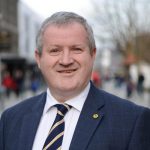
    Ian Blackford – 2021 Speech on the G20 and COP26 World Leaders Summit

    The speech made by Ian Blackford, the SNP MP for Ross, Skye and Lochaber, in the House of Commons on 3 November 2021.

    I thank the Prime Minister for advance sight of his statement.

    The G20 was an opportunity to build momentum ahead of the COP summit, but I think even the Prime Minister would admit that it largely failed to meet people’s demand and desire for increased global co-operation. If we are to meet the global challenges that all of humanity now faces, that needs to change, and change very quickly, with a meaningful agreement in Glasgow over the course of the coming week. All of us hope that that will be the case.

    On climate change, we know that the G20 is responsible for 80% of global greenhouse gas emissions, so it is right that the G20 members bear the biggest responsibility. Countries that have contributed the least to this climate crisis must not be left to pay the biggest price. That is why there has to be a commitment to climate justice and why that is so important.

    In Scotland, we recently doubled our climate justice fund to £6 million per year, providing £24 million over the Scottish Parliament Session. But the commitments from the largest nations in the G20 always seem to be heavily caveated. On Monday, the Prime Minister promised £1 billion in UK aid for climate finance, but—here is the catch—only if the UK economy grows as forecast. Exactly the same excuse is presented when it comes to the Government’s disgraceful policy of cuts to overseas aid. When will the UK Government stop caveating their commitment to climate justice, follow Scotland’s leadership and establish a climate justice fund?

    On Afghanistan, what concrete actions and timelines were agreed to help end the terrible famine that is ripping through that country? Finally, on covid, what specific targets and timelines were agreed to rapidly increase vaccine roll-out to those nations that are being left behind in the suppression of the virus?

  • Angela Rayner – 2021 Speech on the G20 and COP26 World Leaders Summit

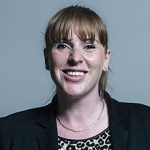
    Angela Rayner – 2021 Speech on the G20 and COP26 World Leaders Summit

    The speech made by Angela Rayner, the Deputy Leader of the Labour Party, in the House of Commons on 3 November 2021.

    I thank the Prime Minister for advance sight of this statement, and for updating the House on the G20 summit in Rome. It cannot be overstated how crucial the next week and a half is. I am pleased that there has been some progress as the Prime Minister outlined, but the next 10 days need to move beyond prepacked announcements. This is an opportunity for Britain, alongside our friends and allies around the world, to deliver historic change. By taking action to reduce emissions right now in this decade, we can avoid the worst effects of climate change. That cannot just be a political ambition; it is a necessity for humanity.

    As the G20 ends and COP26 continues, I assure the Prime Minister that all Labour Members are desperate for it to be a success. We hope that our negotiations can bring people together and deliver urgent solutions to the biggest challenge our world has ever faced. However, there is some cause for concern. The G20 needed to be a springboard to COP26, and a real opportunity to show Britain’s diplomatic strength in bringing people together and applying pressure where it is needed. We need to convince the big polluters to meet the commitment to 1.5°, to find solutions to phase out fossil fuels, to ensure a just transition for workers, and to create a fairer and greener economy. However, the G20 did not achieve that, and the Prime Minister is failing in his efforts to convince world leaders that more must be done. He has welcomed commitments for the distant future, and I accept that, but he knows all too well that we need to halve carbon emissions now, and at least by the end of this decade, if we are to keep global temperatures down. It is time for urgent climate action now, not more climate delay.

    We all know how difficult it is to convince the world to curtail carbon emissions, but it is our responsibility to do so. It is the Prime Minister’s responsibility to influence world leaders and lead by example. As we try to convince other countries to phase out coal, the Government are refusing to make their mind up about coalmines within their borders. They could have followed the lead of the Welsh Labour Government and changed planning policy to ensure that no new coalmines were developed, but they did not. As we try to convince big emitters to do more on reducing emissions, unfortunately this Government are agreeing a trade deal with Australia that removes key climate pledges. They are undermining our messages by giving a free pass to our friends. When Britain must convince the wealthiest nations in the world to pledge more money to help developing countries cut their emissions and adapt to climate change, what have this Government done? They cut development aid that would have funded vital climate projects. How does the Prime Minister expect to convince others to do more, when he is setting such a poor example?

    I also want to raise global vaccinations. Last week the G20 agreed a vague promise to explore ways to accelerate global vaccination against covid-19, yet in some of the world’s poorest countries, less than 3% of people have received even one dose of the vaccine. We all know that we live in a globalised world, where the more the virus spreads, the greater the threat of new variants. We are not safe from covid here until people are safe from covid everywhere. There is no more time for rhetoric; it is time for action. The Prime Minister mentioned our efforts on vaccines, but last week it was revealed that the UK is lagging behind all other G7 countries bar one in sharing surplus vaccines with poor countries. That is shameful. Our fantastic scientists who developed the Oxford AstraZeneca vaccine are being let down by our Prime Minister’s actions. We need booster jabs in Manchester, and vaccines shared with Madagascar. It is now time for actions, not words. As the world gathers over the next two weeks, we all hope for the breakthrough that we need. Britain has a proud history of building alliances and standing up for what is right, and I have no doubt we will be able to do that again. I wish the Prime Minister well in his efforts, and I ask him to pay attention and go for the detail on this. If he fails to deliver the change we need through this conference, we will all pay the price.

  • Boris Johnson – 2021 Statement on the G20 and COP26 World Leaders Summit

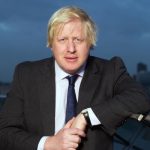
    Boris Johnson – 2021 Statement on the G20 and COP26 World Leaders Summit

    The statement made by Boris Johnson, the Prime Minister, in the House of Commons on 3 November 2021.

    With permission, Mr Speaker, I will make a statement about the G20 summit in Rome and update the House on COP26 in Glasgow.

    Almost 30 years ago, the world acknowledged the gathering danger of climate change and agreed to do what would once have been inconceivable: to regulate the atmosphere of the planet itself by curbing greenhouse gas emissions. One declaration succeeded another until, in Paris in 2015, we all agreed to seek to restrain the rise in world temperatures to 1.5° C.

    Now, after all the targets and promises, and after yet more warnings from our scientists about the peril staring us in the face, we come to the reckoning. This is the moment when we must turn words into action. If we fail, Paris will have failed, and every summit going back to Rio de Janeiro in 1992 will have failed, because we will have allowed our shared aim of 1.5° to escape our grasp.

    Even half a degree of extra warming would have tragic consequences. If global temperatures were to rise by 2°, our scientists forecast that we will lose virtually all the world’s coral reefs. The Great Barrier Reef and countless other living marvels would dissolve into an ever warmer and ever more acidic ocean, returning the terrible verdict that human beings lacked the will to preserve the wonders of the natural world.

    In the end, it is a question of will. We have the technology to do what is necessary; all that remains in question is our resolve. The G20 summit convened by our Italian friends and COP26 partner last weekend provided encouraging evidence that the political will exists, which is vital for the simple reason that the G20 accounts for 80% of the world economy and 75% of greenhouse gas emissions. Britain was the first G20 nation to promise in law to wipe out our contribution to climate change by achieving net zero; as recently as 2019, only one other member had made a comparable pledge.

    Today, 18 countries in the G20 have made specific commitments to achieve net zero and in the Rome declaration last Sunday every member acknowledged

    “the key relevance of achieving global net zero greenhouse gas emissions or carbon neutrality by or around mid-century”.

    To that end, the G20, including China, agreed to stop financing new international unabated coal projects by the end of this year—a vital step towards consigning coal to history—and every member repeated their commitment to the Paris target of 1.5°.

    In a spirit of co-operation, the summit reached other important agreements. The G20 will levy a minimum corporation tax rate of 15%, ensuring that multinational companies make a fair contribution wherever they operate. Over 130 countries and jurisdictions have now joined the arrangement, showing what we can achieve together when the will exists.

    The G20 adopted a target of vaccinating 70% of the world’s population against covid by the middle of next year, and the UK is on track to provide 100 million doses to that effort. By the end of the year, we will have donated over 30 million doses of the Oxford-AstraZeneca vaccine, and at least another 20 million will follow next year along with all 20 million doses of the Janssen vaccine ordered by the Government. The G20 also resolved to work together to ease the supply chain disruptions that have affected every member as demand recovers and the world economy gets back on its feet. I pay tribute to Prime Minister Mario Draghi for his expert handling of the summit.

    But everyone will accept that far more needs to be done to spare humanity from catastrophic climate change. In the meantime, global warming is already contributing to droughts, brushfires and hurricanes, summoning an awful vision of what lies ahead if we fail to act in the time that remains. So the biggest summit that the United Kingdom has ever hosted is now under way in Glasgow, bringing together 120 world leaders with the aim of translating aspirations into action to keep the ambition of 1.5° alive. I am grateful to Glasgow City Council, Police Scotland, police across the whole of the UK and our public health bodies for making the occasion possible and for all their hard work. For millions across the world, the outcome is literally a matter of life or death. For some island states in the Pacific and the Caribbean, it is a question of national survival.

    The negotiations in Glasgow have almost two weeks to run, but we can take heart from what has been achieved so far. Nations that together comprise 90% of the world economy are now committed to net zero, up from 30% when the UK took over the reins of COP. Yesterday alone, the United States and over 100 other countries agreed to cut their emissions of methane—one of the most destructive greenhouse gases—by 30% by 2030, and 122 countries with over 85% of the world’s forests agreed to end and reverse deforestation by the same deadline, backed by the greatest ever commitment of public funds to the cause. I hope that will trigger even more from the private sector.

    India has agreed to transform her energy system to derive half her power from renewable sources, keeping a billion tonnes of carbon out of the atmosphere. The UK has doubled our commitment to international climate finance to £11.6 billion, and we will contribute another £1 billion if the economy grows as is forecast. We have launched our clean green initiative, which will help the developing world to build new infrastructure in an environmentally friendly way, and we will invest £3 billion of public money to unlock billions more from the private sector.

    The UK has asked the world for action on coal, cars, cash and trees, and we have begun to make substantial, palpable progress on three out of the four, but the negotiations in Glasgow have a long way to go and far more must be done. Whether we can summon the collective wisdom and will to save ourselves from an avoidable disaster still hangs in the balance. We will press on with the hard work until the last hour.

  • Wendy Morton – 2021 Statement on Sanctions on Belarus

    Wendy Morton – 2021 Statement on Sanctions on Belarus

    The statement made by Wendy Morton, the Parliamentary Under-Secretary of State for Foreign, Commonwealth and Development Affairs, in the House of Commons on 4 November 2021.

    I beg to move,

    That the Republic of Belarus (Sanctions) (EU Exit) (Amendment) (No. 2) Regulations 2021 (SI, 2021, No. 1146), dated 11 October, a copy of which was laid before this House on 14 October, be approved.

    The instrument before us was laid on 14 October under the powers provided by the Sanctions and Anti-Money Laundering Act 2018, also known as the Sanctions Act. It amends the Republic of Belarus (Sanctions) (EU Exit) Regulations 2019 to introduce new measures in the financial, trade and aviation sectors. The regulations that we are debating today revoke and replace the Belarus sanctions regulations laid in August 2021, which contained an error that had the effect of deleting a prohibition on the transfer of restrictive technology to Belarus—that is, military and interception or monitoring technology and technology used for internal repression. These regulations correct that error. I can assure hon. and right hon. Members that there was no continuity gap between the effects of the two sets of regulations.

    The Government, along with international partners, decided to increase targeted sanctions because the situation in Belarus continues to deteriorate. On numerous occasions, Lukashenko and his regime have violated democratic principles and the rule of law and violently oppressed civil society, democratic opposition leaders and independent media. This includes the forced diversion of Ryanair flight FR4978 on 23 May in order to arrest the journalist Roman Protasevich and his partner Sofia Sapega. Lukashenko sent in a MiG fighter jet to force the Ryanair plane to land, endangering not only Protasevich and Sapega but everyone else on board. This also showed a flagrant disregard for international aviation law. The couple remain in the custody of the Belarusian authorities. The UK Government reiterate their call on the Belarusian regime to release them and to release all those held on political grounds. The regime has enforced the arbitrary detention of more than 35,000 people and imprisoned more than 800 people on political charges. The United Nations and the Organisation for Security and Co-operation in Europe have recorded many credible reports of physical mistreatment, including torture, by the penal and security forces in Belarus.

    Opposition figures have been harassed and forcefully expelled, and this year Belarus introduced new legislation to further suppress media freedoms and peaceful assembly. The UK supports all those working for a more democratic future for Belarus. We were delighted to welcome Sviatlana Tsikhanouskaya, leader of the Belarusian democratic opposition, to the UK on 3 August. I was pleased to be able to meet Ms Tsikhanouskaya during her visit, as did the Prime Minister and the former Foreign Secretary, and we reiterated our support. Ms Tsikhanouskaya emphasised the need for further sanctions on the Belarusian regime and commended the UK for taking action.

    This instrument enshrines in law our increased sanctions measures on the Belarusian regime, showing that we stand with the people of Belarus. Our sanctions are carefully targeted to build pressure on Lukashenko, state institutions, and those around him while minimising any unintended consequences for the ordinary of people of Belarus who are suffering under authoritarian rule. The measures that it introduces prevent any UK business from trading goods and services with Belarus in sectors that are key sources of revenue for the Lukashenko regime. They limit the regime’s access to items that could enable the internal repression of the Belarusian population, including potash, petroleum products, and interception and monitoring goods and technology. They also cover goods used in cigarette manufacturing, dual-use goods, and technology for military use. We have imposed a prohibition on technical assistance to aircraft where this would benefit persons designated for that purpose. This ensures that UK companies cannot provide services in relation to President Lukashenko’s fleet of luxury aircraft.

    Financial measures prohibit dealing with transferable securities and money market instruments issued by the Belarusian state and public bodies, as well as those issued by state-owned banks and the provision of loans. This puts additional pressure on the Belarusian regime, including by preventing future Belarusian Government bonds from being listed on the London stock exchange. This comprehensive response also includes prohibitions on the provision of insurance and reinsurance to Belarusian state bodies, and prohibits the export of biathlon rifles by removing a licensing ground under the arms embargo.

    The aviation measures prohibit Belarusian air carriers from overflying or landing in the UK, and that continues the temporary measures we put in place after the events of 23 May. Finally, the measures also give us the power to designate persons for providing support for or obtaining an economic benefit from the Government of Belarus. Since those measures came into force, we have made a further designation under the Belarus sanctions regime under this criterion. UK sanctions action, taken together with our allies, aims to encourage the Belarusian regime to respect democratic principles and institutions, the separation of powers and the rule of law in Belarus. The sanctions also aim to discourage the regime from actions, policies or activities that repress civil society in Belarus and to encourage it to comply with international human rights law.

    We regularly review our sanctions and would consider lifting them if we saw significant progress. However, in the case of Belarus, we have seen no progress and the situation continues to deteriorate. Sanctions are most effective when implemented in co-ordination with international partners, and our measures were co-ordinated in June with the EU, the US and Canada, and we will continue to work closely with them on Belarus. Similarly, actions work best when combined with other diplomatic and economic measures, and the UK has assisted independent media and civil society organisations in Belarus, which continue to face unparalleled levels of pressure from the regime. By the end of this financial year, our programme of support to Belarus will have almost tripled since 2019.

    The UK unequivocally condemns the appalling campaign of repression waged by the Belarusian regime against the rights and freedoms of the Belarusian people. The regime has oppressed civil society, rejected democratic principles and violated the rule of law. The regulations expand our sanctions in response to the situation on the ground. They demonstrate that we will not accept such egregious violations of human rights. They enable us to stand with our international partners and, most importantly, with the people of Belarus in working towards a peaceful, prosperous and democratic future. I welcome the opportunity to hear the views of Members on the regulations, and I commend them to the House.

  • Tobias Ellwood – 2021 Speech on the Inquiry on UK Involvement in Afghanistan

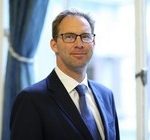
    Tobias Ellwood – 2021 Speech on the Inquiry on UK Involvement in Afghanistan

    The speech made by Tobias Ellwood, the Conservative MP for Bournemouth East, in the House of Commons on 4 November 2021.

    I beg to move,

    That this House has considered the proposal for an inquiry into the UK’s involvement in the NATO-led mission to Afghanistan.

    This could be a very short debate if the Minister intervened and said, “Yes, we are going to have an inquiry”; then we could all go home. However, I suspect we will have to work a little bit harder than that.

    I thank the Backbench Business Committee for granting this important debate on Afghanistan. This was one of the longest military campaigns in modern history. Over 100,000 armed forces personnel were deployed to Afghanistan, and 435 did not return alive. Thousands did return, but with life-changing injuries, and over 3,500 personnel from other NATO forces were also killed. About 70,000 Afghans lost their lives, although I do not think the true number will ever be known.

    The campaign cost the international community trillions, but after two decades we decided to exit before the job was done, handing back the country to the very insurgency we went in to defeat. The country is now run by the Taliban, but they are not in control. It is in freefall, and the freezing winter that is approaching is likely to cause the biggest humanitarian disaster in a generation. The list of challenges we faced, and the lessons to be learned, are huge, yet the Government stubbornly refuse to hold an independent inquiry. Do they think that there is nothing to learn, or—more importantly—to explain to those who served, and to the families of the bereaved? What was it all for?

    It is clear that our world is getting more dangerous, and global insecurity is increasing. Our decision to leave Afghanistan added to that. If we have any aspiration, as spelled out in the integrated review, to be a problem-solving, burden-sharing nation, we need to understand how the most powerful military alliance ever formed could not complete its mission after 20 years. If we do not analyse, appreciate and learn from our mistakes, we are likely to repeat them. More critically, this House of Commons is—let us be honest—not so versed in the details, and it will have no confidence in voting to send our troops into harm’s way, fearful of a similar outcome. We will become more risk-averse, and we will end up steering clear of overseas engagements and having no appetite to intervene. Our competitors will enjoy our self-inflicted weakness.

    The first rule of war is: know your enemy. That is a prerequisite for any engagement. On my various visits to Afghanistan over a decade, I was always taken aback by the limits of international forces’ local understanding. Yes, they knew their local mission, but how that fitted into the higher commander’s intent was not clear. There seemed to be a national plan to kill the enemy, but that did not knit together with any form of strategy relating to governance, or development programmes outside Kabul. Had we done our homework, checked the archives and visited that famous Foreign and Commonwealth Office map room, we would have reminded ourselves of what and who we were taking on. We would have been in a better position to advise our allies and offer alternative solutions to courses of action that it was, frankly, a schoolboy error to pursue.

    Afghanistan gained its independence from Great Britain. We learned the hard way, through three separate engagements over a century, that it is a deeply tribal country, where local loyalty trumps alliances to the centre. Policy cannot be shaped from outside the country. Since Ahmad Shah Durrani founded modern-day Afghanistan in the 1700s, it has not been run from the centre. Warlords enjoyed federated power; tribes and sub-tribes enjoyed autonomy. Why on earth did we, with all our experience of Afghanistan, believe we knew better?

    In 2001, in our haste to seek retribution for 9/11, we lost our way. We allowed other agendas to blinker both our historical experience and current military doctrine, and that made a tough mission all the tougher. We ignored Afghanistan’s history, which we helped to shape, and believed that we could once again impose a western model of governance from scratch. The objective of hunting down and destroying al-Qaeda after 9/11 was widely supported, and it triggered NATO’s article 5 for the first time. That morphed into taking on the Taliban, who harboured al-Qaeda. This brings us back to that first rule of war: know your enemy.

    To understand the Taliban and its origins, we must understand the mujaheddin; to understand the mujaheddin, we must understand the Soviet occupation; and to understand that occupation, we must understand that it was US foreign policy to remove the Soviets in the 1980s. That is wisdom not from history books, but from events in our lifetime. The last king, Zahir, was overthrown in 1973, and that triggered a power struggle between two diametrically opposed movements: the Communist party and the Islamist movement—the mujaheddin. Both grew in strength, with the former gaining the upper hand, but radical socialist changes sparked significant unrest, which the Soviets eventually sent in troops to try to quash. That prompted the United States, along with Inter-Services Intelligence in Pakistan, with support from China and indeed the United Kingdom, to support the mujaheddin—Charlie Wilson’s war.

    From 1980 to 1989, £3 billion of covert military assistance went into east Asia to back a radical insurgency based in the Pakistani mountains. It mobilised tens of thousands of holy warriors who were willing to die for their cause. Out of the disunity of the mujaheddin rose the Taliban. It was not some distant extremist group that we knew little about, but arguably a product of western making.

    Of course, the obstacles to success in Afghanistan were daunting: widespread corruption, intense grievances, Pakistani meddling and deep-rooted Afghan resistance to any foreign occupation. However, there was the colossal blanket of NATO security, and a huge development budget often described as an international aid juggernaut; US spending alone peaked in one year at $110 billion. Sadly, however, opportunities to secure long-term stability were squandered, and the west, especially the US, became over-confident following early victories.

    In simple terms, where did it go wrong? First, we created an over-centralised model of governance. Secondly, we denied the Taliban a seat at the table in December 2001 at the Bonn talks. How different life would have been had they been included. Thirdly, we made no real effort to start training an Afghan indigenous security force until 2006. Fourthly, we opened up another front in Iraq—an unnecessary and costly distraction. Fifthly, we had no real development strategy to improve livelihoods and leverage the country’s vast resources.

    I recall a visit to Afghanistan in 2008, when Mark Carleton-Smith, the current Chief of the General Staff, was in charge of 16 Air Assault Brigade. They took a turbine from Helmand—from Camp Bastion—to the Kajaki dam. A decade later, I flew into Kabul, and I looked out of the window and saw the same turbine lying next to the dam in its bubble wrap. That was analogous to the problems in that country.

    Finally, we lost our way. We forgot why we were fighting and who we were fighting for. How could we claim that our intervention was about defending and upholding international standards and the rule of law when we crafted methods to bypass international law, such as creating detention camps, including at Guantanamo Bay?

    For the first four years, Afghanistan was deceptively peaceful, as the Taliban retreated across the Pakistani border, but that time was squandered; the Taliban retrained, regrouped and rearmed. Slowly but progressively, they began their attacks, and by August 2009, General McChrystal observed, in his 60-page analysis, that we did not understand the people,

    “whose needs, identities and grievances”

    can differ “from valley to valley”; that the international security assistance force was “poorly configured” for counter-insurgency operations, designed instead for conventional warfare; that we were killing the enemy but not shielding the people; and that not enough was being done to train indigenous forces.

    By 2014, Afghan forces were finally taking on more responsibility, and most NATO combat operations had ended, but still no formal talks had begun with the Taliban. Negotiations began in earnest in 2018, but when a deal was finally signed in February 2020, the agreement was between the United States and the Taliban; this time, the Afghan Government were not at the table. However, a US election was fast approaching, and the President, Donald Trump, wanted an announcement: “Bring our troops home.” Candidate Biden did not disagree.

    The deal was done; all the Taliban had to do was wait for US troops to depart. The decision to withdraw was made, and we did not even have the courtesy to inform the Afghan forces when we departed camps such as Bagram air base. As the US forces withdrew, they took with them their contractors, who supported the Afghan forces. Of course, without ammunition, the Afghan army and the Afghan police cannot do their work. It did not take long for the Taliban to exploit the void and rout the country.

    It is now clear to see what an operational and strategic blunder it was to retreat at this time. The Taliban are not a Government in waiting; they are not a monolithic organisation, so local reprisal attacks are taking place, which the Taliban themselves cannot control. As societal norms are removed, the banking system collapses and international support flees the country, we are seeing a terrible humanitarian disaster unfold. Once again, Afghanistan is a potential breeding ground for terrorism.

    I noticed when I met the Taliban in Doha a couple of weeks ago just how frail they are. They say that because they are not enforcing such a ruthless interpretation of sharia law, many of them are leaving the ranks of the Taliban to join ISIS-K. That is what we have left behind. The decision to withdraw was absolutely the wrong call.

    I end by looking at the wider consequences of our departure. What is the US’s commitment and staying power to defend the international rule of law? What of NATO’s function, with or without US lead? Twenty years since 9/11, are we still no better at preventing the radicalisation of individuals who believe they will be rewarded if they kill westerners? What next for those 40 million Afghans that we left behind? How do we work with the Taliban to prevent a humanitarian crisis? Finally, after this humiliation and retreat by the west, should the UK seek to play a more active role on the international stage?

    I hope that our departure from Afghanistan is not the high tide mark of western post-world war two liberalism. We are seeing the erosion of western influence, the loss of faith in the idea of a liberal world order, and the rise of a rival superpower, China, which is advancing a competing ideology that could see the world splinter into two competing spheres of influence.

    I encourage the Government to see the bigger picture—how on the one hand our world is becoming increasingly unstable, but on the other, the west, including Britain, has become more risk averse. We are in for a dangerous decade, and Britain should have more confidence in itself, in what we stand for, what we believe in and what we are willing to defend. As the last century illustrated, it was once in our DNA to do just that. We have the means, the hard power, the connections to lead. What we require is the backbone, the courage, the leadership to step forward.

    I say directly to the Minister that cutting the defence budget last week sent the wrong signal about our commitment and our resolve. This is not the time to cut back on our troop numbers, our tank numbers and our plane and ship numbers, but that is exactly the consequence of what is happening. We have some serious questions to ask about our place in the world and what global Britain means, and that should begin with an inquiry into Afghanistan.
  • Chris Bryant – 2021 Speech on the Personal Conduct of Owen Paterson

    Chris Bryant – 2021 Speech on the Personal Conduct of Owen Paterson

    The speech made by Chris Bryant, the Labour MP for Rhondda, in the House of Commons on 3 November 2021.

    I have not done any radio or television interviews on this matter because, as Chair of the Committee, I am a servant of the House. I thank the Commissioner and the Committee. In particular, I wish the hon. Member for Ayr, Carrick and Cumnock (Allan Dorans) well, because he is very ill at the moment. I hope that he will be back with us soon. It is inappropriate for people to comment on absences from the Committee when they do not understand why members might be absent.

    I am painfully conscious that the right hon. Member for North Shropshire (Mr Paterson) lost his wife in tragic circumstances in June 2020. I wish to express my sincere condolences to him. I have known suicide in my family, as he knows, and I have performed many funerals for suicides. I know the grief, the anguish, and often the guilt that is associated. The last year must have been very distressing for him, and the Committee took those circumstances fully into account when considering his conduct.

    I will address the charges, the process, the sanction and the amendment. The charges are very serious. The Member repeatedly, over a sustained period, lobbied officials and Ministers on behalf of his paying clients, Randox and Lynn’s Country Foods, from whom he was receiving more than £9,000 a month, as he still is. He pursued their commercial interests. When they could not get meetings with officials and Ministers, he used his privileged position as a Member of Parliament to secure them. Providing privileged access is a valuable service.

    The Member promoted what he called “Randox’s superior technology”. He wanted the Government to use Randox’s calibration system. He repeatedly used his taxpayer-funded parliamentary office for commercial meetings. That is paid lobbying. In some shape or form, it has been banned since 1695 and expressly so since cash for questions, which brought this House into terrible disrepute in the 1990s. One Conservative Member described it to me as a “catalogue of bad behaviour”. I have yet to meet a Conservative MP who has not said to me, “He clearly broke the rules.” I think that includes the Leader of the House.

    The Member says that he was raising serious wrongs, but he did not say so at the time. If they were truly serious, one might have expected him to write articles or do media interviews, as he was perfectly entitled to do. He did not. He did the one thing that he was banned from doing: lobby Ministers time and again in a way that conferred a direct benefit on his paying clients. That is expressly forbidden. It is a corrupt practice.

    On the process, the Member has had a fair hearing. We had legal advice from Speaker’s Counsel throughout. As one former High Court judge said to me yesterday,

    “the procedure is consistent with natural justice and similar or identical to workplaces up and down the country.”

    We on the Committee spent many hours reviewing the evidence in this case without fear or favour. The Member had prior notice of the charges and the evidence against him at every stage. He had his legal advisers with him. The Committee invited him to make his appeal against the commissioner’s findings in writing and in person, and I hope he would confirm that we gave him every opportunity to make his case to us and that the session was conducted respectfully and fairly. I think he is nodding.

    The Member has said that his witnesses should have been interviewed. Natural justice requires that witnesses be heard, but that does not necessarily mean that they must be heard orally or cross-examined. We did what many courts and tribunals do every day of the week: we reviewed all the witness statements, took them into consideration and published them in full.

    The Member claims that the commissioner had made up her mind before she sent her memorandum. That is completely to misunderstand the process. As the commissioner has done in every other case, she started an investigation and invited the Member to meet her and/or to submit evidence. Once she had completed her investigation and, by definition, found on a preliminary basis that there had been a breach of the rules, she submitted a memorandum to him for his comments, and then to the Committee. That is when we heard his appeal, in writing and in person.

    I turn to the sanction. As the Committee says in the report:

    “Each of Mr Paterson’s several instances of paid advocacy would merit a suspension of several days, but the fact that he has repeatedly failed to perceive his conflict of interest and used his privileged position as a Member of Parliament to secure benefits for two companies for whom he was a paid consultant, is even more concerning. He has brought the House into disrepute.”

    A Conservative colleague whom I respect a great deal said to me on Monday that justice should always be tempered by mercy. I agree. But justice also demands no special favours.

    These are the precedents that we considered: Patrick Mercer was suspended for six months; the hon. Member for North Antrim (Ian Paisley) for 30 days; Jonathan Sayeed for 14 days; and George Galloway for 18 days. When Geoffrey Robinson failed to provide proper responses to the commissioner and Committee, he was suspended for a month. This case is just as serious because it involved at least 14 instances. It was a pattern of behaviour, and the Member has said time and again over the last week that he would do the same again tomorrow. If the House were therefore to vote down or water down the sanction, or to carry the amendment, it would be endorsing his action. We would be dismantling the rule on paid advocacy, which has been around in some shape or form since 1695. I am afraid that the public would think of us as the Parliament that licensed cash for questions.

    Let me turn to the amendment. I have worked with the right hon. Member for South Northamptonshire (Dame Andrea Leadsom) on many things; I think she is very wrong today. It is the very definition of injustice that one should change the rules or the process at the very last moment, and to do so for a named individual. That is what the amendment does. Retrospective legislation to favour or damage an individual because they are a friend or a foe is immoral and the polar opposite of the rule of law. That is why, as the Leader of the House knows, I spoke and voted with Conservative Members when we were considering a retrospective motion to subject the hon. Member for Delyn (Rob Roberts) to a recall petition. The amendment should fail on that basis alone—it is the opposite of due process.

    The amendment purports to set up an appeal process, but an appellate body must be independent and every single member of the body will be parti pris, by definition. They will have been whipped and taken a view today. They will almost certainly have voted. The proposed Chair, by agreeing to have his name put forward, is already not independent. I point out gently to the right hon. Member for South Northamptonshire that it was her motion as Leader of the House on 7 January 2019 that set up the Standards Committee in its present form. At that time, she said that

    “a greater element of independence was required, and that having seven lay members and seven parliamentary Members on the Standards Committee…provides the right balance—having the memory and the corporate understanding of being in this place, while at the same time ensuring that we can benefit from the experience and knowledge of independent lay members.”—[Official Report, 7 January 2019; Vol. 652, c. 128.]

    The body she proposes today will have no independent members—no independence.

    Dame Andrea Leadsom rose—

    Chris Bryant

    I will not take an intervention, if the right hon. Member does not mind. She must know that this is a retrograde step. She also said—I say this strongly to all hon. Members who have said many things about the parliamentary commissioner—that

    “ensuring that the PCS can operate independently…is vital and will better enable justice for those seeking recourse.”—[Official Report, 7 January 2019; Vol. 652, c. 127.]

    The amendment will drive a coach and horses through our standards system. We will have two rival Select Committees on standards at the same time, charged with the same piece of business. As many hon. Members may know, the Standards Committee is engaged in a review of the code of conduct, which we are required to do in every Parliament, and that will include review of the operation of the system. I am absolutely certain that there are things that we could do better. I am determined to make sure that we will do things better to ensure natural justice.

    Sir William Cash

    Will the hon. Gentleman give way?

    Chris Bryant

    I will not, if the hon. Member does not mind. I want to conclude my remarks; I am sorry. He has already caught Mr Speaker’s eye.

    We are close to agreeing a report on how we can improve the system. I would also say that the suggested process will keep this running for yet more months. I agree with the Leader of the House: I hate investigations that take a long time, but I will point this out gently. The commissioner was, I think, right to suspend her investigation on the right hon. Member for North Shropshire after his wife’s death. It was only once his lawyers said it was okay to restart that she initiated it again. All the delays in the process have been down to his seeking further extensions of deadlines, and we have always sought to meet those. I think it is inappropriate to keep it going any further.

    I also draw a distinction between an appeal on the facts, which we have heard, and an appeal on the sanction. It may be right that there should be an appeal process on the sanction. That is not the process that we have adopted with any other Member thus far, and that is why I think it is wrong to confuse changing the process with the case in hand. It is, as I said earlier, by definition wrong to change the process at the very last moment.

    The Committee also says in the report:

    “A Member is entitled to contest, even vigorously contest, the Commissioner’s interpretation of the rules and her findings. We do not mark down any Member for doing so.”

    The aggravating factor in this case was a lack of insight into a conflict of interest, not a lack of acceptance of breach. I will say this to the Member: this could have been very different if you had come to us and said, “I am sorry. I was trying to do the right thing, but I got it wrong. I want the House to uphold the highest standards, and I accept the reprimand and the sanction. I hope my constituents will deal kindly with me.” The danger is that, if the amendment is carried, his name will become a byword for bad behaviour.

    Let me end with this. I hope all Members know that I care passionately about Parliament. The vast majority of Members are here to do good. We make significant sacrifices, as our partners know. We make a big difference, often on campaigns that have no party issue in them—indeed, I hope the House will support my Acquired Brain Injury Bill on 3 December. [Interruption.] I think that was unanimous, Mr Speaker. But if the public believe that we are marking our own homework, our reputation, individually and collectively, will be tarnished. Independence is essential to protect us. A Conservative MP said to me yesterday:

    “There have been times when I have been ashamed of being a Member of this House, I don’t want to go back to that.”

    Of course, as Chairman of the Committee, I remain a servant of the House, but I also have to look at the public. They want the House to uphold the highest possible standards. Nobody can be above the rules. It is the public who should judge this, and I fear they will find us all wanting if the amendment is carried today. I warn colleagues, with all my heart: do not do something today that we will rue in the future.

  • Harriet Harman – 2021 Speech on the Personal Conduct of Owen Paterson

    Harriet Harman – 2021 Speech on the Personal Conduct of Owen Paterson

    The speech made by Harriet Harman, the Labour MP for Camberwell and Peckham, in the House of Commons on 3 November 2021.

    I am regretful at rising to speak in this debate. Although we have political adversaries in the House, we are also all colleagues who work together in the same place. I have the utmost sympathy for the family tragedy that hit the right hon. Member for North Shropshire (Mr Paterson) and the greatest admiration for how he then took up the campaign for the prevention of suicide to help others. In the more than 20 years that we have been in the House together, he has shown me nothing but kindness and courtesy.

    It is very much because we as MPs know and understand each other that the House recognised that we needed a complaints system that involved a strong measure of independence. We all recognise that the public want, and are entitled to, the highest standards from their elected representatives, and we are proud to claim that that is the case. We all recognise that the people who elect us want us to act in their interest and in the public interest, and that they want no conflict of interest to blur the issue of our private financial interest with our role as MPs.

    Trust in our democracy is all important, but it is fragile. The reputation of the House is easily damaged and, when damaged, hard to restore, as we discovered not only in the lobbying scandal, but in the expenses scandal. How we deal with this issue will reflect on the House as a whole and on each of us individually. I hope that Members on both sides are clear that this is House business, not Government business, and therefore the vote should not be whipped, much though the Whips will try.

    We made these rules on lobbying; we need to enforce them. No one foisted the process on us; we initiated it and decided it. Where there are criticisms about the rules that we decided on, changes can be proposed, but as the right hon. Member for Orkney and Shetland (Mr Carmichael) said, they must have an all-party basis to go forward with integrity. That is the way we should do things.

    What we must not do is make the rules and then decide to set them aside when we have misgivings about the outcome. I will oppose the amendment and support the motion, and I urge right hon. and hon. Members on both sides of the House to do the same.