Tag: 2021

  • Andrew Bowie – 2021 Statement on Resignation over Paterson Scandal

    Andrew Bowie – 2021 Statement on Resignation over Paterson Scandal

    The statement made by Andrew Bowie, the Conservative MP for West Aberdeenshire and Kincardine, on 10 November 2021.

    I was honoured to serve as Vice Chair of the Conservative & Unionist party. However, over the last few months, I have come to the decision that I need to take a step back from the demands of the role to focus on representing my constituents.

    I formally asked the party yesterday if I could step back from my position and I will remain in post until they have found a successor.

  • James Cleverly – 2021 Statement on Bosnia and Herzegovina

    James Cleverly – 2021 Statement on Bosnia and Herzegovina

    The statement made by James Cleverly, the Minister for the Middle East and North Africa, in the House of Commons on 9 November 2021.

    I thank my hon. Friend for his interest in the current situation in Bosnia and Herzegovina, and he is right to highlight it. The recent political violence is of significant concern to the UK Government. Milorad Dodik, the Bosnian Serb member of the presidency, has threatened to withdraw Republika Srpska—the entity—from a range of state institutions. That is an act that the High Representative calls a de facto secession. This is a dangerous and deliberate attempt to distract from a failure to improve standards of living and to tackle corruption. It is unacceptable.

    The UK fully supports the territorial integrity and sovereignty of Bosnia and Herzegovina. After the devastating conflict of the 1990s, the region has lived in peace for 26 years, and the Dayton political system, which should have been used to deliver progress and development for citizens, has been exploited by politicians who are focused on building and maintaining their own position.

    We recognise the important role that the EUFOR peace and stabilisation force has played, and we welcome the renewal of its mandate—an important deterrent against those malign actors who wish to see instability on Europe’s doorstep. We worked hard in the Security Council to ensure that it authorised EUFOR’s mandate for a further 12 months. The UK continues to play an active role. My hon. Friend the Europe Minster was in Bosnia and Herzegovina in the summer to support that work.

    The High Representative will visit the UK for meetings in December. The UK is in close contact with him to ensure that we work in co-operation and is giving him vocal support, including on the use of executive powers should the situation require it. That is a further check and balance on the destabilising actions in Bosnia and Herzegovina. At the upcoming NATO Foreign Ministers meeting, the Foreign Secretary will push for more focus and resource on Bosnia and Herzegovina, and on the need to rebuff Russia’s actions.

    The international community also has collective responsibility to ensure that there is no return to the conflict of the 1990s. Along with our international partners, we are ensuring that the High Representative’s position and work are secured, and we will continue to urge Russia to return to productive engagement with the peace implementation council’s steering board. Along with our international partners, we are working to tackle the divisive rhetoric and actions from some politicians in Bosnia and Herzegovina, including the threat to re-establish a Republika Srpska army and to pull out of other established state-level institutions.

    The UK is committed to helping the people of Bosnia and Herzegovina build a better future in a stable and prosperous state, with strong institutions. We support the NATO Headquarters Sarajevo, including through the secondment of UK staff officers who play an important role in building the capacity of the armed forces. We are providing capacity building and expertise to those actors who demonstrate genuine commitment to progress.

  • John Glen – 2021 Statement on Central Bank Digital Currency

    John Glen – 2021 Statement on Central Bank Digital Currency

    The statement made by John Glen, the Economic Secretary to the Treasury, on 9 November 2021.

    The UK, like many countries, is actively exploring the potential role of a retail central bank digital currency (CBDC) as a complement to cash and bank deposits. A retail CBDC would be a new form of digital money, denominated in sterling and issued by the Bank of England, for use by people and businesses for their everyday payments needs. Exploring the opportunities that a CBDC could offer is aligned with the Government’s wider agenda to remain at the forefront of innovation and technology in financial services.

    Earlier this year, the Chancellor of the Exchequer announced a taskforce jointly chaired by HM Treasury and the Bank of England to lead the UK’s exploration of a UK CBDC, along with forums to engage a broad range of stakeholders from across our economy and society, including consumer groups, think-tanks, businesses, academics, financial institutions and technology experts. The taskforce will ensure the UK authorities adopt a strategic and co-ordinated approach as they explore a CBDC, in line with their statutory objectives.

    No decision has been taken by the Government and Bank of England as to whether to issue a UK CBDC, which would be a major national infrastructure project. A decision will be based on a rigorous assessment of the overall case for a UK CBDC and will be informed by extensive stakeholder engagement and consultation.

    Exploring and delivering a UK CBDC, if there were a decision to proceed, would require carefully sequenced phases of work, which will span several years. I am today setting out the next steps for the exploration of a UK CBDC.

    The UK authorities are currently engaged in a process of research and exploration to examine the opportunities and implications of CBDC. As part of those explorations, HM Treasury and the Bank of England will publish a consultation in 2022 setting out their assessment of the case for a UK CBDC, including the merits of further work to develop an operational and technology model for a UK CBDC.

    If there is a decision to proceed following the consultation, a development phase would include the publication, by the Bank of England, of a technical specification to explain the proposed conceptual architecture for a UK CBDC. This development phase could involve in-depth testing of the optimal design for, and feasibility of, a UK CBDC.

    Following this, a decision would be taken on whether to move into a subsequent build and testing phase. Given the scale and national importance of such a project, this phase would likely take several years and could involve the development of large-scale prototypes and live pilots.

    Were the results of each of these phases to conclude that the case for CBDC were made, and that it were operationally and technologically robust, then the earliest date for launch of a UK CBDC would be in the second half of the decade.

    The Government are also committed to continuing to work closely with international partners on the cross-border implications of a potential CBDC. The UK, through its G7 presidency, has been leading the global conversation on the opportunities and implications of CBDC. G7 central banks and finance ministries have developed a set of public policy principles for CBDC, and a full report capturing these principles was published in October. These international principles for CBDC represent a step change in the global conversation and are intended to support and inform exploration of CBDCs in the G7 and beyond.

  • Angela Rayner – 2021 Comments on the Personal Conduct of Iain Duncan Smith

    Angela Rayner – 2021 Comments on the Personal Conduct of Iain Duncan Smith

    The comments made by Angela Rayner, the Deputy Leader of the Labour Party, on 9 November 2021.

    The prime minister needs to explain why he think it is justified for one of his MPs to be paid by a company that stands to benefit from a recommendation of a taskforce chaired by that same MP. This is exactly the kind of brazen conflict of interest that proves that the Conservatives think it is one rule for them and another for the rest of us.

  • Nigel Huddleston – 2021 Speech to the International Forum for Sports Integrity

    Nigel Huddleston – 2021 Speech to the International Forum for Sports Integrity

    The speech made by Nigel Huddleston, the Minister for Sport, Tourism, Heritage and Civil Society on 9 November 2021.

    Thank you to the President and to the International Olympic Committee for inviting me to speak here today.

    It is a pleasure to be here with you in Lausanne at the Olympic House, and to see so many of you tuned in to talk about integrity in sport from all across the world.

    As the UK’s Minister for Sport, fair and clean sport is of paramount importance to me, as it is for the wider UK government.

    Just two weeks ago, I had the privilege of addressing the eighth session of the Conference of Parties to UNESCO’s Anti-Doping Convention.

    There, I spoke about our commitment to clean sport, and the importance of international collaboration in the continued fight against doping.

    Just as the threats to sport from doping change and evolve over time, our efforts to tackle these challenges must also adapt.

    It is through continued close working with international partners, and our sustained domestic focus on doping, that we will meet these challenges.

    But we also recognise other threats to the integrity of sport, such as corruption and match-fixing.

    These are growing threats and tackling them requires absolute commitment from governments, inter-governmental organisations and sports bodies working together in unison.

    The fact that so many of you have joined today from across the world demonstrates our shared commitment to fighting corruption.

    The covid pandemic has shown how integral and valuable sport is to our lives.

    The Tokyo Games lifted our athletes and the nation’s spirits in the UK, and I commend the IOC, the International Paralympic Committee, and the Tokyo Organising Committee for hosting a wonderful games in such challenging circumstances.

    I was lucky enough to be in Tokyo to witness the extraordinary achievements of our Olympic and Paralympic athletes.

    The games have shown that even in the most challenging circumstances, sport and the Olympic Movement has the power to unite people and communities together, change lives and inspire the next generation. Indeed, as the Olympic motto now states: ‘Faster, Higher, Stronger – Together’.

    We now look forward to the Beijing Olympic and Paralympic games which begin in a few short months. 2022 is also a big year for sport in the UK with the Commonwealth Games, Rugby League World Cup and Women’s Euro Championships all being hosted in the UK.

    The UK Government recognises the wide ranging benefits that hosting major sports events can bring, from societal benefits in building stronger communities, improving mental and physical wellbeing to inspiring the next generation of sporting stars. As well as huge economic benefits.

    But, while the pandemic has focused efforts on the economic stability and recovery of sport, given the health of the entire sporting system has been weakened, it is more important than ever that we tackle integrity risks.

    Sport matters more than ever and all governments need sport to be resilient, sustainable, inclusive and well governed. That is why the UK Government are investing large amounts of money every year in grassroots, elite sport and major events.

    The nature of this forum replicates exactly what we need in the fight against corruption – collaboration at an international level to be able to respond to global threats and strengthen the credibility of sport at a national and international level.

    The threat to integrity often is, and will continue to be, cross-border, and so we can only tackle this if we work together internationally. And by working together internationally we can ensure our individual domestic efforts are strengthened.

    Back in 2016, the then British Prime Minister hosted an anti-corruption summit in London. At this summit, Governments committed to support the launch of an international partnership with a view to eliminate corruption from sport.

    Here we are, five years on from that summit, and four and a half years later from the launch of the International Partnership against Corruption in Sport. And we have made much progress.

    We are proud to be a founding partner of IPACS alongside the IOC, the UNODC, the OECD and Council of Europe with the mission to bring multi-agencies together to eliminate corruption and promote a culture of good governance.

    From our perspective, IPACS provides a unique and open platform for real interaction and dialogue with other governments on their approaches and challenges in the fight against corruption.

    IPACS provides concrete and tangible outputs to tackle and prevent corruption, such as the toolkit to ensure integrity in the selection of major events, to the development of a global benchmark for good governance.

    This is all thanks to the four taskforces of IPACS who provide the fruits of the partnership, and I want to pay particular thanks to the taskforce members, and the lead organisations for their work.

    One of the strengths of the partnership and the taskforces is its ability to evolve and adapt as the threats and landscape change, for example, with the creation of task force 4.

    We were delighted to join the Bureau of IPACS this time last year under the leadership of the Canadian Government and the IOC, and continue to be committed to the support and development of the partnership, working with others such as the Australian Government, CONI and ASOIF who are playing a key role in strengthening the governance of sports bodies at the international level.

    I know you will all be hearing more about IPACS from our Bureau colleagues at the next panel session today.

    Domestically, good governance is of huge importance to the UK.

    Our Code for Sports Governance, which was first published in 2016, sets out the standards all sporting organisations must meet in return for public funding.

    It has proved hugely successful in setting clear expectations around good governance and diversity.

    But standards in good governance also evolve, and our sporting agencies, UK Sport and Sport England, will be publishing an updated Code later this year.

    One of the key updates will be to ensure sporting bodies in receipt of substantial public funding each have clear ambitions and actions to drive diversity and inclusion reflective of our communities and society; and that good governance cascades from Boards to all levels of operations. The revised code will make even clearer the levels of transparency, diversity and inclusion, accountability and integrity required to ensure that sports bodies in receipt of public funding are well governed.

    Looking ahead, there is still more we can do collectively. We must continue to work together internationally on this agenda – tackling corruption and promoting good governance in sport.

    I would urge those governments who are not yet involved in IPACS to participate in the partnership – we can be stronger together in eradicating corruption in sport.

    The sports industry has a unique reach and power around the world. It is in everyone’s interest that governments, as well as international sports bodies and international organisations, work together to look at addressing these challenges.

    So as we look to 2022, and the exciting sports events in the UK, we remain committed to tackling corruption at all levels, as we build back better from the pandemic.

    Thank you.

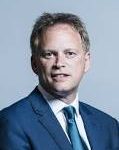
  • Grant Shapps – 2021 Comments on Electric Cars

    Grant Shapps – 2021 Comments on Electric Cars

    The comments made by Grant Shapps, the Secretary of State for Transport, on 10 November 2021.

    From our roads to the skies, the transition to zero emission transport has reached a tipping point. We know that transport plays a key role saving the planet from warming above 1.5°C, which is why this is the COP that will kick start our ambition for zero emission aviation and why I’m proud to be uniting world leaders to tackle climate change – creating new opportunities for clean growth, green jobs and improved air quality right across the globe.

    To support the transition to EVs, it’s integral that we have the infrastructure to support it. My vision is for the UK to have one of the best EV infrastructure networks in the world, with excellent British design at its heart.

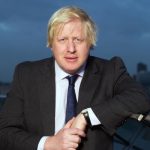
  • Boris Johnson – 2021 Comments on COP26 Conclusions

    Boris Johnson – 2021 Comments on COP26 Conclusions

    The comments made by Boris Johnson, the Prime Minister, on 10 November 2021.

    Negotiating teams are doing the hard yards in these final days of COP26 to turn promises into action on climate change.

    There’s still much to do. Today I’ll be meeting with ministers and negotiators to hear about where progress has been made and where the gaps must be bridged.

    This is bigger than any one country and it is time for nations to put aside differences and come together for our planet and our people.

    We need to pull out all the stops if we’re going to keep 1.5C within our grasp.

  • Chloe Smith – 2021 Apology Over Owen Paterson Vote

    Chloe Smith – 2021 Apology Over Owen Paterson Vote

    The comments made by Chloe Smith, the MP for Norwich North, on 9 November 2021.

    I am always prepared to justify my votes in Parliament and to be accountable to constituents for those. That is fundamental in this job. In this case, I recognise I got it wrong.

    I voted for the Leadsom amendment to the motion because I believe it contained some sensible points.

    It was designed to improve our standards system. I don’t think anyone thinks the current system is perfect, and there are some serious questions which need to be discussed.

    For example, under the present disciplinary system, the accused party has no right of appeal and few rights when it comes to presenting witnesses or other supporting evidence.

    However, reforms to the process should not be tied to a vote on a single case. Or, indeed, applied retrospectively. MPs should hold themselves to the highest standards in public life and must accept a rule book.

    The government recognises this too, and that they made a mistake.

  • Grant Shapps – 2021 Statement on Lorry Parking

    Grant Shapps – 2021 Statement on Lorry Parking

    The text of the statement made by Grant Shapps, the Secretary of State for Transport, in the House of Commons on 8 November 2021.

    I wish to update the House on the joint initiative between the Department for Transport and Department for Levelling Up, Housing and Communities on planning reforms for lorry parking, and to emphasise the critical importance of the freight and logistics sector to shops, households, assembly lines, hospitals and other public services across the country.

    The infrastructure that supports our hauliers is essential to the effective and resilient supply chains we need. This Government are committed to addressing the strategic national need for more lorry parking and better services in lorry parks in England and we must act now.
    To support our hauliers’ access to parking and services in the near term we are working with our partners to identify and deliver a number of temporary sites where short-term modular facilities can be installed to address some of our immediate need. We are encouraging National Highways to consider how their land holdings can be used to provide additional parking spaces nationwide, to give priority to the provision of lorry parking across the strategic road network and assist local authorities in identifying areas of lorry parking need.

    This Government are also determined that the planning system should play its part in meeting the needs of hauliers and addressing current deficiencies. Planning plays a critical part in the allocation of land for lorry parking.

    The national planning policy framework sets out that local planning policies and decisions should recognise the importance of providing adequate overnight lorry parking facilities, taking into account any local shortages, to reduce the risk of parking in locations that lack proper facilities or could cause a nuisance.

    In addition, the Government policy is clear that development proposals for new or expanded goods distribution centres should make provision for sufficient lorry parking to cater for their anticipated use. In preparing local plans and deciding planning applications, the specific locational requirements of different industrial sectors should be recognised and addressed. This should include making provision for storage and distribution operations at a variety of scales, and in suitably accessible locations.

    We have also published planning practice guidance setting out how local planning authorities can assess the need for and allocate land to logistics site uses and are accelerating work recommended by the National Infrastructure Commission to consider the appropriateness of current planning practice guidance. This includes taking forward a review of how the freight sector is currently represented in guidance.

    To ensure future decision making supports the needs of the sector, we are updating highways circular 02/2013 “The Strategic Road Network and the Delivery of Sustainable Development” fully to reflect the importance of providing logistics and freight, and are updating the national lorry parking survey to ensure strong evidence is available on the national picture in future. A programme of longer-term measures is under development supported by the £32.5 million in roadside facilities for hauliers announced in last week’s Budget, and we will publish a future of freight plan, a long-term strategic plan for the sector, in the coming months.

    The need for a reliable and efficient supply chain has recently come into sharp focus. It is therefore essential that we put in place mechanisms that deliver a supply chain network that is secure, reliable, efficient, and resilient, with no link in the chain overlooked.

    Taken together our planning policies and wider measures will support our logistics and freight sectors and the people that work in them. Working with industry and local authorities we will continue to monitor the situation closely and take further action when it is needed.

  • Nigel Huddleston – 2021 Statement on Standing in Football Stadiums

    Nigel Huddleston – 2021 Statement on Standing in Football Stadiums

    The statement made by Nigel Huddleston, the Parliamentary Under-Secretary of State at the Department for Digital, Culture, Media and Sport, in the House of Commons on 8 November 2021.

    On 22 September, the Department for Digital, Culture, Media and Sport and the Sports Grounds Safety Authority announced an early adopters programme for licensed standing in seated areas at football stadia. The programme will be implemented in the second half of this football season between 1 January 2022 and 31 July 2022. I can confirm today that the football clubs that will act as early adopters are Cardiff City, Chelsea, Manchester City, Manchester United and Tottenham Hotspur.

    The early adopters programme represents a significant step towards fulfilling the Government’s manifesto commitment to work with fans and clubs towards introducing licensed standing in seated areas at football grounds. It will enable the Government to evaluate how successful licensed standing areas could be as a strategy to manage persistent standing across five different football grounds with varying challenges, before it considers making any substantive policy changes or wider implementation. It will be subject to a formal independent evaluation.

    I have today laid a statutory instrument which directs the SGSA to amend the “all-seater condition”, which requires stadia to provide all-seated accommodation, in any licence to admit spectators issued to these five football clubs under the Football Spectators Act 1989 by the SGSA. This will allow the five specified clubs to admit spectators to their home grounds to watch designated football matches from a standing position, provided certain conditions are satisfied. This means doing so in areas of the ground where the seating accommodation has been adapted so there are seats incorporating a barrier or seats with an independent barrier. The SGSA has produced supplementary guidance (SG01) providing further information about the standards-requirements which must be met. This guidance is available online. These modern—non-terraced—stands or areas with seats therefore still allocate one person to one seat.

    The selection of these clubs followed an expression of interest process which was conducted by the SGSA between 22 September and 6 October 2021. The SGSA invited applications from football clubs in the top two tiers of professional football in England and Wales currently subject to the all-seater policy to become early adopters of licensed standing in seated areas. The SGSA analysed the applications against the published early adopter criteria, which are available online, before providing written recommendations to DCMS. This advice was carefully considered before receiving final ministerial approval.

    In addition, prior to their publication, the early adopter criteria and licence conditions for standing in seated areas were subject to a six-week consultation—28 July-6 September 2021—with key stakeholders. This included safety committee members—the Premier League, English Football League, Football Association, UK Football Policing Unit, Football Supporters’ Association, Football Safety Officers’ Association, Safety Advisory Group Regional Chairs Lead and the National Counter-Terrorism Security Office—local authorities, football governing bodies and licensed football clubs. DCMS worked closely with the SGSA to ensure that consultation responses were used to inform the final criteria clubs were required to meet to become early adopters, which are available online.

    The Government’s approach is driven by safety considerations. Given the wider context and background to the current all-seater policy, it is right that we carefully consider any wider change in policy, looking at all the evidence and assessing the potential safety impacts of any change. The Government are not complacent about spectator safety, nor are we complacent about the safety policies that have served spectators well for many years. We will continue to work closely with the SGSA, football clubs, the football governing bodies and local authorities to ensure that spectator safety remains paramount.