Tag: 2021

  • Boris Johnson – 2021 Comments on Remembrance Sunday

    Boris Johnson – 2021 Comments on Remembrance Sunday

    The comments made by Boris Johnson on 14 November 2021.

    Today we come together to remember those who sacrificed everything in service of our country, in the First World War and every conflict since, including recently in Iraq and Afghanistan.

    It’s a sacred ceremony that has endured for more than a century because we know the unpayable debt we owe those brave servicemen and women.

    We know that for our tomorrow they gave their today. And we know that here at home and around the world, thousands of men and women in uniform still stand ready to defend our unity and our way of life, our values, and at a cost few among us would be willing to pay.

    Today we come together. We wear our poppies with pride and stand as a nation in two minutes of silent tribute.

  • Kwasi Kwarteng – 2021 Comments on Neurodegenerative Conditions

    Kwasi Kwarteng – 2021 Comments on Neurodegenerative Conditions

    The comments made by Kwasi Kwarteng, the Business Secretary on 14 November 2021.

    The UK is home to some of the most transformative and innovative medical research in the world, and the availability of this research funding, alongside the work of our strong life science and pharmaceuticals sector, will make the most of that research to help those living with motor neurone disease.

    It is vital that we increase our understanding of this condition in pursuit of new treatments and better care, and I am pleased to see UK institutions at the forefront of that work.

  • Sajid Javid – 2021 Comments on Neurodegenerative Conditions

    Sajid Javid – 2021 Comments on Neurodegenerative Conditions

    The comments made by Sajid Javid, the Secretary of State for Health and Social Care, on 14 November 2021.

    Neurodegenerative conditions like MND can have a devastating impact on people’s lives and I’m committed to ensuring the government does everything we can to fight these diseases and support those affected.

    We’ve already invested millions in understanding and treating MND and our new funding commitment will back more research into this and other neurodegenerative diseases.

    The UK is a global leader in medical research. Our world-class research sector was central to the discovery of lifesaving treatments for COVID-19 like dexamethasone and Tocilizumab, as well as the development of the vaccine programme which has saved hundreds of thousands of lives.

    We will continue to harness this expertise and innovation to support pioneering projects to find better treatments for those living with motor neurone disease, like the excellent work underway at NIHR Sheffield Biomedical Research Centre where scientists are trialling new drugs to treat the condition.

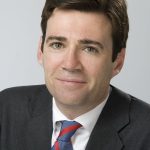
  • Andy Burnham – 2021 Comments on Anti-Spiking Partnership

    Andy Burnham – 2021 Comments on Anti-Spiking Partnership

    The comments made by Andy Burnham, the Mayor of Greater Manchester, on 10 November 2021.

    Sacha [Lord] and I met with members of the Manchester Night In campaign and agreed to look at launching an Anti-Spiking Partnership with key venues in the city-region. Sacha is working up the details of this and we will convene a further meeting in two weeks’ time, I am hoping we can move quickly.

    I want to thank the members of the Manchester Night In campaign for meeting with us. I saw the numbers of people participating in the protest and we are committed to taking tangible action.

  • Sadiq Khan – 2021 Comments Following Remembrance Service

    Sadiq Khan – 2021 Comments Following Remembrance Service

    The comments made by Sadiq Khan, the Mayor of London, on 12 November 2021.

    I am truly humbled by the brave sacrifices of our armed forces. Their heroism made the precious freedoms we enjoy every day possible.

    We are in their debt and it is a true privilege to come together, stop, remember and honour those who paid the ultimate price for our freedom.

    This Remembrance Day, we reflect on the incredible courage of the service men and women who have worked to keep us safe and remember to never take for granted those who continue to protect our way of life.

  • Nigel Huddleston – 2021 Speech on Creativity and Technology

    Nigel Huddleston – 2021 Speech on Creativity and Technology

    The speech made by Nigel Huddleston, the Minister for Sport, Technology, Heritage and Civil Society, in Dubai on 10 November 2021.

    Good afternoon everybody. I’m delighted to be invited today as the Minister for Sport, Tourism, Heritage and Civil Society, and as a representative from the Department of Digital, Culture, Media and Sport to support these important discussions on ‘How will we Create?’ and open today’s panel session on ‘How creativity and technology can be harnessed for ‘good’?’

    I am honoured to be invited by our friends here in the United Arab Emirates, and I wish to start by congratulating them on the fiftieth anniversary of its founding in 1971.

    The United Kingdom and the United Arab Emirates are committed to tackling global issues together, in friendship, and in recognition of the opportunity created by the depth of our relationship. Together, we have established a new, and ambitious ‘Partnership for the Future’ which will strengthen the deep and historic relations that our countries share.

    And in the same vein, the United Kingdom and United Arab Emirates are important trading partners. The UK Government is currently laying the foundation for an advanced trade deal between the United Kingdom and the Gulf Cooperation Council, of which of course the United Arab Emirates is a key member. The GCC and UK already enjoy very strong economic relationships, with £30.3 billion of overall trade in goods and services in 2020. We will build on this history to ensure that the United Arab Emirates and the United Kingdom are able to work closely together to promote prosperity and security for our citizens, tackle climate change, and expand the exchange of knowledge, skills and ideas.

    In this spirit, I am pleased to be here to support this thought-provoking panel session. Before we start, I would like to credit our Official Heritage Partner for the UK Pavilion, The Royal College of Art. The RCA’s contribution to the UK Pavilion at Expo 2020 will bring together a wide range of interdisciplinary projects from staff, current students and alumni. It showcases the strength and importance of art, design and innovation – highlighting the significant role creative education plays in ensuring that a global Britain can innovate for a sustainable future. Yesterday, the RCA brilliantly hosted a workshop, and guided students to imagine “A city in a day”.

    What do we mean by harnessing creativity and technology for ‘good’? I believe we mean championing “wellbeing”, in the very broad sense, for people and the planet that we live on. I believe we also mean creating economic growth and positive ecological change, which are not and must not be incompatible aims.

    Today, as we emerge from a global pandemic, and climate change forces us to rethink and re-evaluate the way we live our lives, humankind’s creative and technological talents will be key to demonstrate resilience and innovation, and shape the sustainable society of tomorrow.

    I am proud to belong to a Department, and a Government that consistently champions the immense benefits that our cultural and creative industries bring to UK and international audiences. I’m delighted to be joined this week by 27 of the UK’s leading creative companies. These companies with us today possess an impressive array of UK creative expertise, and a vast portfolio of successful project experience across a range of disciplines. They are keen to explore how they might help foster more collaboration with decision-makers across the Emirates, and build upon our strong commercial and cultural ties.

    Of course 2022 will be a year of celebration for the UK, with a year-round programme of major sporting and cultural events: the Birmingham 2022 Commonwealth Games will form one of three key pillars of landmark events, alongside Her Majesty The Queen’s Platinum Jubilee and the Unboxed programme: showcasing the nation’s talent in science, technology, engineering, arts and maths. As international travel reopens, we want to welcome the world to the UK so visitors can experience these exciting events for themselves.

    In the UK, the cultural and creative industries are an integral part of our economy, contributing over £115 billion in 2019 and accounting for almost 6% of GDP and nearly 12% of the UK’s international exports. And their influence goes way beyond these economic successes, as they contribute to enriching our communities’ wellbeing and inspiring future generations of innovators and artists in the UK and internationally.

    And that is why in response to the pandemic, the UK Government introduced an unprecedented set of measures to tackle the crisis facing our most loved cultural and creative organisations, and ensuring these sectors can continue to thrive at home and across the world. We introduced a Culture Recovery Fund totalling nearly £2 billion, along with a further six month extension to the £500 million Film and TV Production Restart Scheme, and extended pan-economy support for both individuals and businesses. The UK’s £800 million Live Events Reinsurance Scheme will give the events industry the confidence they need to plan for the future.

    As we emerge from the pandemic, our creative sectors will be key to support our resilience, growth and innovation potential. As they create opportunities and boost livelihoods across the country, our film, TV and video games industries are our great British success story, with production and development hubs spread right across the UK. At home and beyond, UK creative industries will play a crucial role in building a wealthier, innovative and highly skilled economy, sharing new content and ideas with international audiences. UK creative technologies, from immersive experiences to music streaming platforms, form part of a new generation of startups and scaleups. Sitting between creativity and technology, these businesses deliver impressive revenues, with the UK’s virtual reality industry alone growing at an annual rate of 34% and with an estimated £1.2bn in revenue by 2022.

    These businesses will play a key role in driving future economic growth. And this is why the UK Government invests in programmes such as Creative Scale-Up and Creative Careers, which have encouraged growth and talent development across the creative industries right across the country. Together with UK Research and Innovation, we continue to provide support for research and development across the UK through the Creative Clusters programme, and encourage these businesses to drive the ideas of tomorrow.

    Our creative sectors have demonstrated their resilience, innovation, and staying power over the last two years. Their adoption of digital technology has enabled worldwide online access to our great national and regional museums, concert halls and artists. More than 10 million people viewed the productions of our National Theatre in the first few months of lockdown, and hearteningly, the National Theatre says its streaming figures equate to its venues being completely filled for 11 years, which is a remarkable figure. Although these can never fully match the live experience, digital alternatives have enabled greater access to cultural productions and entertainment. We will continue to support digital solutions, through programmes such as the UK Research and Innovation’s ‘Audience of the Future’ programme, for the development of innovative content, and pioneering cutting-edge, immersive experiences that are accessible to the general public across the world.

    UK creative technologies have the potential to be leading on our response to climate change, through ambitious innovative sustainable practices, and contributing to our Net Zero target for 2050. This impressive site here at Expo 2022 is an example of the wonders innovative design and cutting-edge technology can bring to life. I want to commend the sustainability-themed pavilion, in particular its landscape design and visitor experience for “Terra”, which was co-led by the Eden project, the UK’s iconic environmental visitor attraction.

    The UK is already leading in sustainable fashion of course. From world-leading labels such as Stella McCartney to innovative small to medium organisations, the UK fashion industry is taking significant action on sustainability, which was showcased just last month, through our successful UK Expo 2020 ‘WEAR Breakthrough Moment’. Through the ‘Institute of Positive Fashion programme’ launched by the British Fashion Council, UK businesses are leading the way in driving change to transform the industry to a more circular, sustainable model, which will deliver significant environmental and economic impacts.

    Working in partnership, with our friends from the Gulf, is absolutely key to delivering these objectives ahead of us.

    I’m looking forward to today’s discussions, which will be a force of collective intelligence, and an opportunity to hear from thought leaders from a vast array of sectors. Including Design: with Priestman Goode, Film and Television: with the British Film Institute, Museums: with the V&A, and Digital arts and technologies: with the Biome collective and Disguise.

    So that’s enough from me, over to the panel, thank you very much.

  • Angela Rayner – 2021 Comments on the Deloitte Contract

    Angela Rayner – 2021 Comments on the Deloitte Contract

    The comments made by Angela Rayner, the Deputy Leader of the Labour Party, on 12 November 2021.

    This sends a clear message that the Government’s priority in the public inquiry will not be the openness, transparency and honesty that we need and that bereaved families deserve.

    The Conservatives have wasted tens of billions of pounds of taxpayers’ money on a failed Test and Trace system.

    Deloitte were paid hundreds of millions of pounds by Test and Trace so it is clearly completely wrong for the company to then be awarded a contract to mark their own homework and help prepare the strategy for dealing with the public inquiry into the government’s mishandling of the pandemic, including the failures of Test and Trace.

    Labour will end this gravy train and this racket that sees taxpayers’ money abused, wasted and lining the pockets of the bosses of outsourcing companies. Our public services should and will be run in the public interest, not private profit.

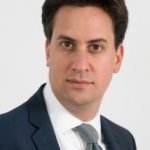
  • Ed Miliband – 2021 Comments on COP26 Draft Text

    Ed Miliband – 2021 Comments on COP26 Draft Text

    The comments made by Ed Miliband, the Shadow Business Secretary, on 12 November 2021.

    It’s clear that the aim of this summit to keep 1.5 alive is in mortal peril.

    There has been some welcome progress on strengthening the pathway out of Glasgow in the new draft. But there is still too much ambiguity about the responsibility of all countries to align their targets with 1.5 degrees and important language on keeping fossil fuels in the ground has been watered down.

    It is absolutely vital that there is no backsliding, no fudges, and no bending over backwards for the big emitters over the next crucial hours. It is also imperative that the developed world finally delivers the long-promised finance and support for developing countries.

    The Government has a vital role to play in fighting for ambition, strength and clarity in the last stages of this summit.

  • Lord Frost – 2021 Statement on EU/UK Relations

    Lord Frost – 2021 Statement on EU/UK Relations

    The statement made by Lord Frost in the House of Lords on 10 November 2021.

    My Lords, with the leave of the House, I will now make a Statement to update the House on various recent developments in our relationship with the European Union. The Statement will also be made in the other place in due course by my right honourable friend the Paymaster-General.

    As noble Lords will know well, we have two principal agreements with the EU: the trade and co-operation agreement and the withdrawal agreement. The first—the biggest and broadest bilateral trade agreement in the world, freely agreed by both parties—is working well. Teething problems have largely been dealt with, business has adjusted well to the new relationship, and trade is getting back to normal. Both parties have agreed data adequacy. We are reaching complementary agreements—for example, the 17 bilateral aviation agreements that we have reached. The substructure of specialised committees is functioning; almost all the committees have now met, the trade partnership committee will meet on 16 November, and we expect a further partnership council in December.

    There are, however, two problem areas within the TCA. The first is fisheries and the second is Union programmes, notably the Horizon science research programme. On fisheries, since we received the necessary applications in June, we have been engaged in technical discussions about licensing with the Commission, also involving the Governments of Guernsey and Jersey and the French Government. As is known, we have granted 98% of applications from EU vessels to fish in UK waters—nearly 1,800 licences in total. The remaining 2% have not provided the data needed to access our 6 to 12 nautical mile zone. As we have said consistently, we are ready to consider any new evidence to support the remaining licence applications. Indeed, we granted three more licences on 14 October because the Commission sent new evidence, then another on 26 October. We set out the full latest figures to Parliament on 3 November. Licences for Jersey and Guernsey waters are assessed by the relevant authorities in Jersey and Guernsey, not the UK Government. However, we support the approach they have been taking, which has been entirely in line with the provisions of the TCA.

    We have therefore been disappointed that, faced with these facts, the French Government felt it necessary to make threats which were disproportionate, unjustified and would have been a breach of the trade and co-operation agreement. I welcome France’s deferral of the implementation of these measures; I hope they will take them off the table permanently. I spoke yesterday to my friend Clément Beaune in the French Government following our talks in Paris on 4 November. We obviously have different views on the fisheries question, but it is certainly our intention to keep working to get to an outcome which is fair to those who are genuinely entitled to fish in our waters.

    The second difficulty I mentioned is that of the Horizon science research programme and some other related programmes. We agreed to participate in this in the TCA, and to pay a contribution, which is likely to be £15 billion over seven years. The TCA is clear that the UK “shall” participate, and the relevant protocol “shall” be adopted. That is an obligation. If it were to become clear that the EU did not intend to deliver on that obligation—and it has not done so so far—or simply to delay sine die, we would regard the EU as in breach of Article 710 of the TCA. We would of course put together a domestic research programme for our own scientists and universities in its place. But it is in neither ours nor the EU’s interests to get to that point, and much the best way forward is for the EU instead to finalise our participation as a matter of urgency.

    I now turn to the other agreement, the withdrawal agreement, which of course includes the Northern Ireland protocol. We have been in discussions with the Commission on the changes needed to that protocol since we published our Command Paper in July. Our position was set out then in full and remains unchanged. On 13 October, the EU published four non-papers with proposals on medicines, customs, sanitary and phytosanitary matters—or SPS—and the engagement of Northern Ireland stakeholders in the operation of the protocol. Around the same time, we transmitted a new legal text to it, operationalising the proposals set out in the Command Paper in legal form. Our immediate view of those non-papers was that, while the EU’s proposals did not go as far as our Command Paper, nor cover all the areas that we believed needed to be addressed—in particular, the protocol’s untenable governance arrangements—they were worth discussing. We were keen to see if its proposals would at least reduce trade friction in the way that it claimed.

    Since then, we have been in intense discussions with the European Commission. I have met Vice-President Šefčovič every week for the last three weeks in Brussels and London, and we will meet again on Friday as part of this week’s talks. The aim has been to assess whether it is possible to close the substantial gap between our positions and secure a consensual, negotiated resolution. So far that has not been possible. This is, at least in part, because the Commission’s proposals would not do enough to make the protocol sustainable for the future or even deliver what they have claimed. I have heard that view also expressed by many businesses I have spoken to in Northern Ireland and Great Britain.

    If the talks do in the end fail, we will of course publish in full our assessment of the EU’s proposals and set out why they fall short of a durable settlement, but we will not do that until we have exhausted all the negotiating possibilities. For now, I wish to preserve the integrity of the negotiations and to remain positive. Accordingly, we continue to work to see whether the EU position on these issues can yet develop further, and whether it is possible to find a way to deal with the other important matters necessary to put the protocol on a sustainable footing, such as the interlinked issues of the imposition of EU law and the Court of Justice, state aid, VAT, goods standards, and so on. That work will continue in the talks under way this week.

    In my view, this process of negotiations has not reached its end. Although we have been talking for nearly four weeks, there remain possibilities that the talks have not yet seriously examined, including many approaches suggested by the UK. So there is more to do and I certainly will not give up on this process unless and until it is abundantly clear that nothing more can be done. We are certainly not at that point yet. If, however, we do in due course reach that point, the Article 16 safeguards will be our only option.

    We have been abundantly clear about this since July, when we made it clear that the tests for using Article 16 were already passed. Nothing that has happened since has changed that. I can reassure noble Lords that, if Article 16 were to be used, we would set out our case with confidence and spell out why it was wholly consistent with our legal obligations. We would also be ready to explain that case to any interested party, not just the signatories to the treaty but those with a broader interest in relations with the EU and the UK.

    However, the EU seems to be arguing something different at the moment. It seems to be claiming that it would be entirely unreasonable for the British Government, uniquely, to use these wholly legitimate safeguard provisions within the treaty, designed precisely to deal with situations like the current one. It also suggests that we can only take that action at the price of massive and disproportionate retaliation.

    I gently suggest that our European friends should stay calm and keep things in proportion. They might remind themselves that no Government and no country have a greater interest in stability and security in Northern Ireland and in the Belfast/Good Friday agreement than this Government. We are hardly likely to proceed in a way that puts all that at risk. If the EU were to choose to react in a disproportionate way and decide to aggravate the problems in Northern Ireland, rather than reduce them, that is of course a matter for them. At that point, of course, we would be entitled to come to our own judgment about how much value we could attach to their commitment to supporting the peace process and the best interests of the people of Northern Ireland, as against protecting their own interests.

    This Government will always proceed in the best interests of Northern Ireland and, indeed, the whole of our country. That means, one way or another, working towards a balanced arrangement in Northern Ireland that supports the Belfast/Good Friday agreement rather than undermining it. We would much rather that others joined us on that journey, rather than making it more difficult. I hope that, in the short number of weeks before us, the Commission and the EU member states will look at what we have in common, look at our collective strategic interests as western countries and help us to find a stable and sustainable solution so that we can all move on. There is still a real opportunity to turn away from confrontation, move beyond these current difficulties and put in place a new and better equilibrium. I urge everyone to take that road—the road not of confrontation but of opportunity—for the sake of everyone in Northern Ireland and beyond.

  • Jonathan Ashworth – 2021 Comments on NHS Waiting Lists

    Jonathan Ashworth – 2021 Comments on NHS Waiting Lists

    The comments made by Jonathan Ashworth, the Shadow Secretary of State for Health and Social Care, on 11 November 2021.

    We’ve heard serious warnings from hospital chiefs about the unsustainable pressure the NHS is under. Today we’ve had confirmation of dangerously lengthy waiting times patients are forced to endure and the scale of pressure on overwhelmed A&Es.

    The coming winter weeks are set to be the most challenging in history for the NHS. It’s now urgent ministers fix the stalling vaccination programme, resolve the immediate crisis in social care and bring forward a long term plan to recruit the health care staff our NHS now desperately needs, which Rishi Sunak has failed to provide despite imposing a punishing tax rise on working people.