Tag: 2021

  • Geraint Davies – 2021 Speech on Global Britain

    Geraint Davies – 2021 Speech on Global Britain

    The speech made by Geraint Davies, the Labour MP for Swansea West, in the House of Commons on 11 January 2021.

    I speak tonight as the trade rapporteur of the Council of Europe, and as such I want to see democracy, the rule of law, human rights and environmental sustainability embedded in all our trade deals. We stand here tonight semi-detached from our closest and biggest marketplace—the single market—and our closest friends. Over there, when they are looking at deals, they are scrutinising and approving the negotiating mandate, looking at the negotiations, and approving individual deals before they are ratified, but here we have not seen and agreed the mandate, and we have not looked at the negotiations. These deals are already binding in international law because they have already been passed and ratified. The EU deal was dumped on us on Christmas eve in a half-filled sack marked, “Take it or leave it”, and we found that it did not even include any services, which are 80% of our economy. The Japan deal, worth £1.5 billion, would have been worth £2.6 billion via the EU. As regards the US, it is good to see the back of Trump and his isolationism and climate scepticism. We should now embrace President Biden in COP26 to ensure that environmental sustainability is central to all future trade agreements.

    As regards the Trans-Pacific Partnership, the US and India are standing back, and it is dominated by China, which has 18% of global GDP. China grew by 4.9% even last year through the pandemic. China is no friend of democracy, as we have seen in Hong Kong. It is no friend of human rights, as we have seen with the Uyghur Muslims. We have ended up moving from being a rule-maker in the EU, be it on the environment or financial rules, to a rule-taker from someone who does not share our values. That is why, if we do embrace the Trans-Pacific Partnership, we need to ensure that the UN human rights agreements are included and that, like New Zealand, we are one step removed and we do not agree investor-state dispute settlements. Otherwise those people from China who are building the nuclear power stations of the future, involved in HS2 and providing for 5G will end up being able to hit us, as we have seen in other examples like the nuclear provider Vattenfall in Germany. In a nutshell, with China we need to confront human rights, compete on trade, and co-operate on climate change and health. It is important that our COP26, G7 and Security Council chairpersonships embrace our fundamental values of democracy, the rule of law, human rights, fair trade and our environment.

  • Liam Fox – 2021 Speech on Global Britain

    Liam Fox – 2021 Speech on Global Britain

    The speech made by Liam Fox, the Conservative MP for North Somerset, in the House of Commons on 11 January 2021.

    Naturally, I am glad that we have finally left the European Union in all its manifestations, which I always believed was an unnatural berth for a United Kingdom that was outward-looking and sovereign. However, Brexit is not a panacea in itself. What Brexit does is bring choices and options and freedoms that would not otherwise be there. To make it succeed we have to have vision for our future, we have to have courage in policy and we have to have boldness in execution. Government structures must be re-oriented towards the task, funding not only those institutions we need inside the United Kingdom to make it succeed, but our elements abroad as well, something the Treasury will need to come to terms with.

    If I may, I would like to say two things about trade. First, Brexit allows us to have an independent trade policy, but that comes with one major drawback: we actually have to have more exporters to make it worthwhile. Unless we have more goods and services to sell—unless we have more trade—a free trade agreement is little more than another piece of paper. That is why I welcomed the push for an updated and extended transport strategy.

    Secondly, it allows us to deal with some global trade issues. Global trade was shrinking before we got to the covid crisis, not least because of the number of non-tariff barriers being loaded into the global economy by the world’s richest countries. We are making it more and more difficult for some of the world’s poorest countries to access our markets. If we continue that trend, our aid budget will become little more than conscience money while we stop people being able to trade their way sustainably out of poverty. We need to take a strong look at our own behaviour and what we are doing in terms of putting up barriers to some of the world’s poorest nations. It is wonderful that we are talking about reducing tariffs for some of the world’s poorest countries, but we need to take a good look at the non-tariff barriers that are making it so difficult for them to enter our markets. That problem is being made worse at the present time by the export restrictions on medicines and medical products. They will need to be reduced, otherwise they will accentuate the problems we are facing with covid.

    We have a World Trade Organisation that is, frankly, on the edge of collapse. That brings me to the final point I want to make about the institutions where Britain can play a bigger role. Multilateral institutions such as the UN, the Security Council, the OECD, IMF and the United Nations Conference on Trade and Development were all designed for the second half of the 20th century. They need to be brought up to date for the challenges of the 21st century. Those who have shown the way in the United Kingdom, both in politics and the civil service, can give a lead. There are our other partnerships, too. In NATO, our European partners must learn to step up to the plate on spending. The Five Eyes community has far more than just security potential for us. The Commonwealth—a third of the global population, most of whom are under the age of 30—shares many of our political institutions and our legal system.

    There are tremendous opportunities for the UK. We can choose to shape the global system around us or be shaped by it. I know what I want for my country.

  • Hywel Williams – 2021 Speech on Global Britain

    Hywel Williams – 2021 Speech on Global Britain

    The speech made by Hywel Williams, the Plaid Cymru MP for Arfon, in the House of Commons on 11 January 2021.

    Global Britain reimagines the past, ignores the present and, in its naivety, diminishes the future. It is a product of the exceptionalism that diminished the UK’s relationship with the EU. Global Britain captures the arrogance of the Westminster Government towards the non-England UK.

    The Foreign Secretary said that global Britain will be

    “the best possible allies, partners and friends with our European neighbours”.

    Those neighbours are bound together by a European vision of peace, protected by political, economic and social interaction. This was rejected by this Government. Delusion and nostalgia trump political reality, trump global interdependence and even trump geography itself. The delusion is obvious to all, save for the deluded. My party advocates a policy for Wales of proximity to Europe. We recognise our shared values, our diversity, our political and economic interests and the sheer fact of geography that draws us to our mainland.

    The Foreign Secretary said the UK will be an

    “energetic champion of free and open trade”—[Official Report, 3 February 2020; Vol. 671, c. 26.]

    having just struck the first trade deal ever that put up barriers to trade. Most distasteful is the claim that the UK will be a “stronger force for good”—this coming from a Government who have cut international aid, have supplied arms to autocrats and have lavished praise on demagogues like Donald Trump, and that is going well, is it not?

    This year, the Republic of Ireland has again taken its seat on the United Nations Security Council. This achievement for a small nation is an emphatic rebuttal of the Unionist contention that nations like Wales and Scotland are too small and too poor to be independent and successful. These past four years of failure have proved that one London-shaped national interest does not serve our four unique and diverging sets of interests. We have our own international priorities. For now, we must have equal powers to approve future trade deals. That is imperative.

    Global Britain’s withdrawal from Erasmus is a disgrace: curtailing the life opportunities of our best, and with no reciprocal arrangements for students from our neighbours. But not to worry, we will have, I am sure, a “world-beating” alternative, no doubt destined to join all the other world-beating triumphs of this Government. Finally, there is the Government’s stupidest self-damaging spasm: the little England denial of visas for performers, rejecting a reasonable and mutually beneficial EU offer of 90-day visas both ways.

    Wales can achieve great things as an independent sovereign nation, free to make a positive and honest contribution to address the global challenges of our times. Global Britain comes nowhere near that aspiration.

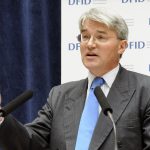
  • Andrew Mitchell – 2021 Speech on Global Britain

    Andrew Mitchell – 2021 Speech on Global Britain

    The speech made by Andrew Mitchell, the Conservative MP for Sutton Coldfield, in the House of Commons on 11 January 2021.

    I draw the House’s attention to my entry in the Register of Members’ Financial Interests. It is right that we should be debating global Britain this week, the 75th anniversary of the founding of the United Nations, and the House of Commons will want to mark with sadness the passing of Sir Brian Urquhart, one of the principal architects of the UN and a fine British civil servant. As my right hon. Friend the Member for Maidenhead (Mrs May) said, the power of a passionate, compelling vision for global Britain has the ability to unite the United Kingdom, all four parts of it, in one vision, at a time when that Union is under great pressure.

    I want to make two specific comments about global Britain. The first is about the what. As my right hon. Friend said, we await the report, because we have had the money but not yet the report of what global Britain is going to stand for, but it seems to me very important that global Britain should represent values, rather than geographers. This enables us from time to time to agree with China but to disagree with Donald Trump. The UK has been a very bright light in many difficult parts of the world, standing up for the rule of law and human rights against Islamic terror, standing against meddling Russians and Chinese human rights abuse, and standing in favour of women’s rights and the fight against starvation.

    When it comes to the how, I think that the international rules-based system is the key. The UK has real leverage on this: our seat in the United Nations; as a leading member of the Commonwealth, that important north-south organisation, which embraces so much of the world; our principled position in NATO; the fact that we are a European power, in or out of the European Union; our relationship with the United States; and, of course, the British language, which, in terms of commerce, trade and law, gives Britain such a pre-eminent position, quite apart from the City of London as an international centre. And as others have mentioned, we have development. Over the past two decades, Britain has become a development superpower—the ideas of British universities, the actions on the ground of Britain’s international non-governmental organisations and the policy formation of the thinktanks—which is why I ask the Government to think again on breaking the 0.7% promise, on which every single Member of this House of Commons was elected just one year ago. Remember that the 0.7% has already been reduced.

    Daniel Kawczynski

    Will my right hon. Friend give way?

    Mr Mitchell

    I am afraid that I cannot give way as I have so little time.

    Daniel Kawczynski

    He will get an extra minute.

    Mr Mitchell

    I give way to my hon. Friend.

    Daniel Kawczynski

    I am very grateful to my right hon. Friend. He is a champion for DFID spending, but does he agree that, now we are outside the European Union, our intention to lower tariffs for third world countries will, in the long term, result in much more support for them than just the DFID money?

    Mr Mitchell

    I am very grateful to my hon. Friend. Of course, he is right that trade is the key, but in order to get to a point where countries can trade, you need many of the very important services that DFID has been providing in some of the poorest parts of the world. Remember that the 0.7% has already been reduced, because it is connected with our gross national income, by nearly £3 billion. If this cut goes ahead, the development budget will be reduced by nearly 50%. That is the worst thing we could do in a pandemic, which we know will never be defeated here until it is defeated everywhere. It is the most terrible timing—when we approach the chair of the G7, when this year we will chair the United Nations Security Council and when we have the most important COP in Glasgow in November. It would be a terrible mistake. I urge the Treasury Bench to think again about this £4 billion reduction—just 1% of the borrowing this year. It should not be carried out in this way and it should not be carried out at this time.

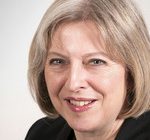
  • Theresa May – 2021 Speech on Global Britain

    Theresa May – 2021 Speech on Global Britain

    The speech made by Theresa May, the former Prime Minister, in the House of Commons on 11 January 2021.

    I refer Members to my declaration in the Register of Members’ Financial Interests. My right hon. Friend the Secretary of State is absolutely right that trade brings prosperity and jobs, but global Britain is about much, much more than trade. It is about our shared values—our respect for human dignity, human rights, equality, the rule of law, freedom and democracy. It is about how we work with others who share those values to establish and maintain a rules-based international order that protects those values.

    Sadly, what we saw last week in the United States shows us how fragile the value of democracy can be when it is under pressure from populism and nationalism, fuelled by messages disseminated on social media. At the current point for the United Kingdom, post Brexit, dealing with covid and yet to deal with the societal and economic impacts of that, it is absolutely imperative that we reject any push towards nationalism and isolationism and that we recognise the importance of global Britain. Indeed, it is more important today than it ever has been.

    If we are going to lead, as we can this year, in G7 and the COP26, we also need to see a change in world politics, where absolutism—“You are either 100% for me or 100% against me, and no compromise is allowed”—has taken hold. We need to move away from the world of strong men facing up to each other. We need to find more ways in which we can work with those who share our values, because those values are under threat, and we need to work together to protect them.

    Global Britain has the position this year to enable us to do that, but in order to do it, we need to live our values ourselves. I have to say to the Government that threatening to break an international treaty shortly after signing it, threatening to break international law and cutting our international aid does not enhance the impact of global Britain. In fact, it makes it harder for us as global Britain to get our message around the world. We have been respected because of our 0.7% and respected because of what we do, not just because we are British.

    In the few seconds available to me, I want to mention one issue that is a clear and present danger to global Britain: the break-up of the United Kingdom. We often talk in this Chamber about Scotland and how important being part of the UK is to the Scottish economy. The reality is that England needs the rest of the UK as well. The United Kingdom has a seat on the Security Council of the United Nations; I doubt that England would have a seat on the Security Council of the United Nations. We need to think about the impact of this, and I particularly want to mention my concern about Northern Ireland at the moment. We have seen the issue of empty supermarket shelves—not all due to the protocol, but certainly the protocol is playing its part, and the Government need to deal with that issue. Global Britain has a role to play on the world stage, but in order to do that, the Government need to ensure that we maintain the integrity of the United Kingdom.

  • Emily Thornberry – 2021 Speech on Global Britain

    Emily Thornberry – 2021 Speech on Global Britain

    The speech made by Emily Thornberry, the Shadow Secretary of State for International Trade, in the House of Commons on 11 January 2021.

    Let me thank the Secretary of State for holding this debate, albeit in the very strange circumstances we find ourselves in today. I said many months ago, when I came into this role, how important it was that we should have an open debate in Parliament and with the public about the challenges and opportunities that we will face after Brexit as an independent trading nation. Now, as 2020 is finally skulking away, those challenges and opportunities are upon us, and today’s debate is, if anything, long overdue, but no less welcome for that.

    However, I think it would be remiss of me, as I think it was remiss of the Secretary of State, not to start by acknowledging the severe and rising problems affecting businesses engaged in trade across the channel and the Irish sea today. Trade that flowed freely just a few weeks ago is now grinding to a halt because of the barriers and bureaucracy that the realities of Brexit require. Let me be clear: those problems are always to some extent inevitable—they could only have been mitigated, not avoided entirely, by the adoption of a different approach to our deal with the EU—but three things that were not inevitable, and indeed were totally avoidable, are the lack of time that businesses had to prepare, the lack of support that they have been given to prepare and the lack of help available to them now. I recognise that not all of that is down to the Department for International Trade, but I do have three questions that I hope the Minister of State will be able to address later.

    First, I asked the Secretary of State seven weeks ago if she would establish a dedicated helpline for companies facing problems with their exports after 1 January, and I was told in response that the Department already had a dedicated helpline for trade-related queries, which is the one it shares with the Department for Business, Energy and Industrial Strategy. That is all very welcome, except that if any businesses had called that number this weekend to ask for help with their problems at Dover or Holyhead, the automated response would have told them that the office was closed and that they should ring back at 9 o’clock on Monday.

    I hate to break this to DIT Ministers, but the import-export trade does not operate on office hours. That is why round-the-clock support was needed, especially during the period of transition, adaptation and confusion. I could see the clear need for that seven weeks ago; it is extraordinary that the Government still cannot see it now.

    That lack of foresight could be related to my second question, which falls squarely on the shoulders of the Secretary of State. Given all the problems that were inevitable on 1 January and the consultation and preparation that were required to mitigate those problems, does she regret her decision last July, which I warned her against at the time, to scrap the advisory groups her predecessor set up to deal with customs issues and continuity of trade post Brexit? Does she also regret her inexplicable decision to remove from the advisory group on transport issues the representatives of the Freight Transport Association, the Road Haulage Association and the British Ports Association? At exactly the time she should have been listening to the experts, she was shutting them out of the room.

    Thirdly, and finally, on the current issues affecting EU trade, will the Minister of State tell us at the end of the debate who in the Government is now in charge of that brief? Is it still the Minister for the Cabinet Office, his colleague the Secretary of State, the new Secretary of State for Business, Energy and Industrial Strategy, or the Chancellor, given his responsibility for Her Majesty’s Revenue and Customs? Looking at the chaos our exporters are facing today. I think we can all agree that someone in government has to get a grip and it would help if we all knew who is supposed to be doing the gripping.

    Speaking of getting a grip, I come to the flurry of continuity agreements secured by the Secretary of State in December. Welcome though they were, there is something strange about the process followed for those agreements in the past year. Whenever I asked why no progress was being made, why the agreements were taking so long and why no deals were signed in the first nine months of the year, I was repeatedly told that they were very difficult and detailed negotiations which we could not expect to be done quickly. But when we look at the final text that emerged in December of one agreement after another, we see that they are clause for clause, word for word, identical to the EU treaties that went before them, apart from the words “European Union” being replaced with “United Kingdom”. The question is, therefore, exactly what were they discussing all that time?

    Conor Burns (Bournemouth West) (Con)

    The right hon. Lady will remember from our discussions about this that they were continuity agreements, and although, understandably, many of the partners with which we were seeking agreements had the ambition to do more at that time, we were seeking continuity. We explained to them that we would do more in due course, but we needed continuity to protect the terms of trade as we left the European Union. As for why it took so long, many of our partners did not think that we were actually going to leave and realised only late in the day that they needed to sign the agreements with us to protect our mutual trading arrangements.

    Emily Thornberry

    I hear what the right hon. Gentleman says, but it looks to me a bit like two people meeting to play chess and the two of them sitting there looking at the board, not moving the pieces, and eventually deciding to shake hands and declare a draw. The Secretary of State might say that that is what continuity agreements are and the Government just kept things as they were, but if that is her argument I do not understand why the deals were left until the last minute and why a number were not done at all. Most fundamentally, what is the point of being an independent trading nation, what is the point of choosing to negotiate our own trade agreements, if we are happy to just replicate every deal that was done years ago by the European Commission, rather than include any new provisions of our own?

    Anthony Mangnall  (Totnes) (Con)

    Will the right hon. Lady give way?

    Emily Thornberry

    Let me make a little progress, then I will.

    In many areas, the failure to make these deals is particularly stark, including the total lack of progress on any of the aspects of future job growth the Secretary of State highlighted in her speech, on just two of which I shall focus now. First, it is amazing and deeply disappointing that in the 30-plus continuity agreements secured by the Government over the past two years there is not one single new provision that strengthens the global fight against climate change—not even in the enhanced agreement with Japan. Secondly, it is not just a missed opportunity but a failed responsibility that there is no sign in any of the 30-plus agreements of the Government giving even the slightest consideration to human rights.

    Egypt and Cameroon are by any standards among the most brutal regimes in the world today, yet the Government signed deals with both countries in December, with no apparent hesitation over their human rights records at all, and no apparent effort to strengthen human rights provisions in those agreements to gain some leverage over their behaviour. With Singapore, Vietnam and Turkey, the Government went one step further, signing new trade agreements which contain no substantive clauses on human rights at all, and not as much as a side-letter to address the issue. Is it any wonder that Members in the other place, with an increasing number in all parts of this House, believe that the only way to get Ministers to take human rights seriously when it comes to future trade deals is by obliging them to do so by law?

    Henry Smith (Crawley) (Con) rose—
    Daniel Kawczynski rose—

    Emily Thornberry

    I will take one more intervention and then I need to make some more progress.

    Henry Smith

    I am grateful to the right hon. Lady for giving way. What is her view of the recent agreement struck between the EU and China when it comes to human rights?

    Emily Thornberry

    Given the time that I have available, although I would be happy to sit and—[Interruption.] No, no, I would seriously be very happy to sit and talk to the hon. Gentleman about this issue and about the issue of China, because it is a challenge for all of us to work out exactly what the right way of proceeding is, and we need to ensure that we listen carefully to the variety of views, and we need to ensure that we make progress together on this.

    On the subject of amendments to the Trade Bill, we will also soon be considering proposals to ensure that Parliament is properly able to scrutinise, debate and approve new trade agreements before they become law, and if it was not already clear why those agreements are required then the absolute farce of the last few weeks surely makes that case. We saw 11 new trade agreements or memorandums of understanding take effect on 1 January: none of them have been debated or approved by this House; none of them have completed the ratification process; four of them were not even published until new year’s eve; and one of them, that with Cameroon, is still to be published. The whole process makes an absolute mockery of the current procedures for the scrutiny of trade deals, and when the Trade Bill comes back to this House, Ministers surely cannot tell their Back Benchers with a straight face that those procedures should stay as they are.

    As I said earlier, if any of this was a case of incredibly detailed treaty negotiations coming down to the wire in an effort to get the final text right, we might all accept it. But then we might have come back with something more than this—the agreement with Mexico, just five pages long with an eight-page annexe; then they really would have no excuse. But then there is the unfortunate reality of the 30-plus continuity agreements signed by the Government these last two years: no ambition, no improvements, no action on the environment, no progress on workers’ rights, no consideration of human rights, no time for parliamentary scrutiny, and not a single benefit in terms of trade that we did not already have. So I am grateful to hear all the talk from the Secretary of State regarding the new trade deals which she aims to sign this year and next, and I am sure that this is the first of many debates that we will have on those prospective deals.

    Mrs Theresa May  (Maidenhead) (Con)

    Yet again the right hon. Lady is raising the issue of continuity agreements, but may I just gently say to her, echoing the comments made by my right hon. Friend the Secretary of State, that many countries were not willing to go beyond the continuity agreement until we had actually left the European Union? What was important for business was that word “continuity”—signing those agreements, so that at the point at which we left they could carry on trading on the basis on which they had been. Excellent work was done, not just in the past year but in the year or two beforehand by the previous Secretary of State for International Trade as well.

    Emily Thornberry

    I understand entirely what the right hon. Lady is saying. It is interesting, is it not, that half of the agreements were done in six months by the previous Secretary of State for International Trade, and the other half have been done over an extended period of time under the current Secretary of State? Indeed, many of these agreements, as the right hon. Lady has said, were done on the basis that the European Union deal was likely to be quite different from the one that we actually have now. That is one reason that we had this condition, yet we end up with cut-and-paste agreements coming down to the absolute wire at the end of last year, without our being able to do any scrutiny. As the hon. Member for Crawley (Henry Smith) has said, there are many issues that Members would want to raise and would want to have considered before we make any trade agreements, but as things stand, there is very little time for us to debate these matters.

    Daniel Kawczynski

    Will the right hon. Lady give way?

    Emily Thornberry

    In the limited amount of time that I have left, I will not be taking any more interventions; let me just get to the end of my speech, because we already have only three minutes for each Back Bencher to make a speech in any event.

    I would like to talk about the Secretary of State’s plan—as she has called it—on CPTPP, and to make a plea to her with regard to it. She has spoken many times about this matter. She talks as if the only issue to consider is whether we can persuade Japan, Australia and Canada to get on board, but I respectfully say to her that before she can win the argument for accession with them, she needs to start by making the case in Britain first. We have been through five years of division and debate in this country over leaving a trade bloc with our closest neighbours. Are we going to do that just in order to go and join another trade bloc on the other side of the world, simply because Tony Abbott thinks that it is a good idea? He might well be right—it may offer tremendous benefits for our country—but we cannot even start to judge until we know the terms on which we would join, and whether those terms are right for us.

    There is a danger that the Government might even persuade themselves that this debate has already been had, thanks to the 14-week public consultation that was carried out back in 2018, but let me remind the Secretary of State of three things. First, only 81 business groups, non-governmental organisations and members of the public sat down and wrote formal responses to that consultation; in my book, that does not amount to proper engagement with stakeholders. Secondly, according to her Department’s own national survey conducted after that consultation, only 10% of the people of this country said that they knew what CPTPP was and supported joining it. That does not amount to a proper mandate in my book either. Thirdly, if she goes back to the consultation process responses, she will see that it is clear that many were based on very different assumptions about the outcome of our EU trade negotiations from the outcome that we have actually got. What is this about? In my view, it does not amount to a proper and reliable base of opinions.

    For all those reasons, my plea to the Secretary of State today is for her to open up the consultation process again and to give business, unions, civil society and the public a chance to voice their opinions about whether joining CPTPP is the right next step based on where we are now and what we want to achieve as a country. The reason why that is crucial brings me back to what I said at the outset, about the chaos that is building at our ports and the crisis that is growing for our exporters. This is not a partisan statement; it is a simple statement of fact. We are going through all this pain because of a fervent belief on the Government Benches that the gains to be had from doing our own free trade deals with the rest of the world will eventually outweigh the losses from damaging our trading relationship with our nearest neighbours in Europe. That is the Government’s leap of faith. Even if I and many of my colleagues have fervently disagreed with that argument in recent years, we are now in a position where, for the good of our country and the communities we serve, we have to hope that we are proved wrong and that the Government are proved right—but, as things stand, that is not the case.

    With every hour of delay that passes at Dover, every consignment that is turned away, and every product that is, after all, having to face tariffs because of rules of origin, British businesses are losing money. Meanwhile, in the rest of the world, we have not gained one single penny in extra trade from the Government’s leap of faith: not one single agreement that we did not have before, and not one single export facing lower tariffs than it did in December. Indeed, as we heard the last time we were here, according to the Government’s own figures, our country is forecast to be worse off and to make lower exports thanks to the Secretary of State’s enhanced deal with Japan compared with the deal that we had before.

    So it is understandable—perhaps inevitable—that when the Government resume their talks with Australia, New Zealand and America; when they start their talks with India, Brazil and the Gulf states; when they try to turn 14 pages of cut and paste into proper treaties with Mexico, Turkey or Canada; and most of all, when they make their formal bid for accession to CPTPP, they will be desperate to do these new trade deals at any price, to make up for our losses with Europe.

    But no matter how desperate the Government get, they should not be allowed to do these deals at any price. These deals must not come at the cost of domestic British jobs and business. They must not come at the cost of our farmers and our food standards. They must not come at the cost of our ability to protect the NHS from marketisation or put environmental protection before corporate profits. They must not come at the cost of our principles when it comes to human rights, democratic freedoms and the future of the planet. To guard against all those things, every one of us should make clear that they will not be allowed to come at the cost of proper scrutiny and debate by this House.


  • Liz Truss – 2021 Statement on Global Britain

    Liz Truss – 2021 Statement on Global Britain

    The statement made by Liz Truss, the Secretary of State for International Trade, in the House of Commons on 11 January 2021.

    I beg to move,

    That this House has considered Global Britain.

    I am delighted to open this debate on global Britain when, for the first time in 48 years, we now have full control of our trade policy. Back in 1846, Richard Cobden inspired people in Manchester with his belief that free trade would be

    “the greatest revolution that ever happened in the world’s history…drawing men together, thrusting aside…antagonism…and uniting us in the bonds of eternal peace.”

    That revolution continues today, as for the first time in nearly half a century we are a sovereign trading nation free to pursue British interests while promoting British values. Our newly independent trade policy will create jobs, grow our slice of the global pie, and unlock great swathes of the world to the best of Britain.

    As we recover from covid-19, we need to think radically about how we generate economic growth and how we are going to use our new global platform in 2021 to promote free and fair trade—how we are going to take on those countries that try to cheat and to undermine free enterprise. In 2020, we negotiated trade agreements covering 63 nations and the European Union, and in 2021 we will use this year, including our presidency of the G7, to champion free and fair trade in an era rife with pernicious practices.

    We will promote modern rules that are relevant to people’s lives for digital and data trade. We will champion high environmental and animal welfare standards in a science-led approach, and we will push for modernisation of the World Trade Organisation and trade agreements to reflect our values of free enterprise and fair play. We will also build an advanced network of trade deals, from the Americas to the Indo-Pacific, with the UK at its heart as a global services and technology hub. We have already reached deals covering 63% of UK trade, well on our way to our manifesto target of 80% in three years. We want to hit that target and to deepen our existing relationships in areas such as services and technology.

    Exports are equivalent to nearly a third of our national income. Trade equals jobs. A job means independence and security, the realisation of our dreams, funding public services and the future prospects of our country. The deals we have done with the EU and our partners across the world, from South Africa to South Korea, mean that our traders continue to enjoy preferential access to world markets.

    We have secured arrangements with Turkey that mean that Ford in Dagenham can continue to export its engines tariff-free. We have secured access to the Canadian market for our beef producers, such as the Foyle Food Group in Northern Ireland. We have secured tariff-free access into Mexico for our car exporters such as Jaguar Land Rover, while Scotch whisky—one of our biggest exports—continues to enter markets such as Singapore tariff-free and stays recognised.

    All in all, this adds up to £885 billion of trade that we have secured. In addition, we have been able to go further and faster in our deal with Japan, protecting the free flow of data, which benefits industries such as FinTech and computer gaming, regulatory dialogue on financial services and improved mobility provisions, including allowing spouses to travel with businesspeople. We have secured additional protections for our fantastic creative industries, from music to TV, and recognition for geographical indications across the UK, from Welsh lamb to Scotch beef, from Armagh Bramley apples to English sparkling wine, subject to Japanese domestic processes.

    This platform allows us to step up this year to show our full potential as president of the G7 and as an independent trading nation. At the G7, we will work to reform the World Trade Organisation, make progress on data and digital trade and promote greener trade. Our new UK global tariff will see around 57% of our imports entering our market tariff-free—more than the 44% that we had under the EU.

    Mr Tobias Ellwood (Bournemouth East) (Con)

    My right hon. Friend is making a powerful start to promoting global Britain. She speaks of the G7 and the opportunity for us to make our mark in the world. Does she believe that now is the right time to move from the G7 to the G10, and to include Korea, India, and Australia? That would represent over half the world’s GDP in order for us to start looking at the challenges that we face of updating the United Nations, NATO and the WTO, and to make sure that we are in a position to offer a counterweight to China.

    Elizabeth Truss

    My right hon. Friend makes a very powerful point. Allies such as Australia, South Korea and India will be key to forging that group of democratic nations who can stand up for democracy, human rights and fair and free trade, and, of course, we are very committed to working with them this year.

    Our new global tariff, as I said, will eliminate tariffs on more than 57% of imports. In particular, it will eliminate tariffs on 100 environmental goods. In short, our new tariff regime is lower, simpler and greener.

    Furthermore, we will be working with our friends and family across the world to drive forward free and fair trade, setting the global standard for trade in the 21st century. We are already in deep negotiations with the United States, Australia and New Zealand, and, this year, we will apply to one of the most dynamic trading areas on earth—the Comprehensive and Progressive Agreement for Trans-Pacific Partnership. Joining is part of our plan to grow our economy by making it far easier for British goods to reach our friends in Asia and the Americas. This high standards agreement would align the UK with some of the world’s fastest growing economies in a free trade area covering nearly £9 trillion of GDP. We will also deepen our relationships with countries such as Canada, Mexico, South Korea and Israel. As well as this, we are working closely with India, the world’s largest democracy, on an enhanced trade partnership, reflecting our mutual interest in technology and innovation. We are also in talks with Brazil and our allies in the Gulf.

    Christian Wakeford  (Bury South) (Con)

    While we are talking about the real opportunities for growing Britain’s trade power across the globe and while my right hon. Friend has touched on the aspect of Israel and the Gulf, let me say that we have rightfully been world leaders in soft power and aid during many generations and this should continue, but that we also need to lead in terms of diplomacy. Will she look at taking this back to the Cabinet to consider what we can be doing to expand the Abraham accords to bring not only peace to the middle east, but further trade and aid to that location as well?

    Elizabeth Truss

    My hon. Friend makes an excellent point. He is right that trade is the key not just to prosperity, but to peace and co-operation between nations. I want to reassure the House that we will ensure that no country is left behind without the benefits of free and fair trade with the United Kingdom. Later this year, we will be launching an emerging markets trade scheme, which will offer the lowest-income countries a better deal when they are trading with the UK. It will be more generous than the EU scheme and it will help those countries on to the ladder towards prosperity through the enterprise and ingenuity of their people.

    We want to encourage British businesses to take advantage of all the opportunities that we have either negotiated or are negotiating. Therefore, we will be loudly and proudly championing exports in key industries from food and drink to services in technology trade. We have a network of trade advisers across the country ready to help our businesses go global and they can be proud to put the Union Jack on their pack, which is one of the most recognised symbols in the world. With our great campaign, we are showing partners worldwide that Britain is ready to trade. In December, the Prime Minister launched our new Office for Investment under the leadership of Lord Grimstone. It will work tirelessly to secure investment in every nation and region across Britain, backing jobs and livelihoods. More than 56,000 new jobs were created last year through foreign investment in the UK, with a further 9,000 others secured. We will also be founding our first new free ports, which will drive enterprising growth in port cities and towns across the country as we turbo-charge trade across the world.

    Of course, many are sceptical about globalisation and the benefits of trade. One reason why they are sceptical is that too many unfair practices and cheating have been allowed to undermine real free trade. That is why we are establishing the Trade Remedies Authority, headed by Oliver Griffiths, to protect UK industries from unfair practices. It is not right, for example, that ceramics manufacturers in Stoke-on-Trent can be undercut by goods subsidised by state-owned enterprises, that our innovators can have the fruits of their work taken under forced technology transfer, and that goods can come into this country that have been produced through forced labour in abhorrent conditions. That is why we are pushing the World Trade Organisation for greater transparency and reform of the rules, and by joining CPTPP, with its ambitious digital and data provisions and clear rules, we will pile further pressure on the WTO to reform.

    As an independent trading nation, we are setting our own path and rejecting the twin errors of values-free globalisation and protectionism.

    Daniel Kawczynski (Shrewsbury and Atcham) (Con)

    One thing that incentivises and encourages younger people in our country is their determination to help third world countries that are not as well off as we are. The spending of the Department for International Development has historically been very important, but I very much hope that the Minister will start to explain to the electorate the huge advantages that third world countries will now have as a result of our lowering tariffs on the sort of products that we cannot produce here in the United Kingdom.

    Elizabeth Truss

    My hon. Friend is right that, of course, the UK global tariff has lower import tariffs than the common external tariff of the EU, but we are going to go even further than that with our new emerging markets trade scheme, which will offer more preferential rates for the lowest-income countries in the world to help their populations trade their way out of poverty, and I agree with him that that is a really important way in which we can bring more prosperity to the world.

    As I was saying, we now have the opportunity to set our own path by rejecting the twin errors of values-free globalisation and protectionism. Instead, as the United Kingdom, we are rooting our approach in the fundamental values of sovereignty, democracy, the rule of law and a fierce commitment to high standards. That is why we are bringing together a coalition of like-minded nations to advance high standards worldwide—from food and animal welfare to the environment and data. With fellow democracies such as Japan and Canada, we are championing innovation, a cleaner planet, women’s economic empowerment and much more. We have demonstrated this through the fantastic deal we have struck with the EU to ensure we can keep trading freely with zero tariffs and zero quotas, alongside deals covering 63 countries. No other nation has ever negotiated so many trade deals simultaneously, and I am proud of the results we have achieved.

    At this tough time, we need to embrace our future as a confident, optimistic and outward-looking global Britain, delivering jobs and prosperity at home while helping lead the fight for free and fair trade abroad. My hope is that all sides of this House can join me in celebrating how far we have come and the huge opportunity we have in 2021, striking deal after deal with our friends and family worldwide to support our values and full economic potential. This is global Britain in action.

  • Alex Norris – 2021 Speech on Vaccinations

    Alex Norris – 2021 Speech on Vaccinations

    The speech made by Alex Norris, the Shadow Health and Social Care Minister, on 11 January 2021.

    I am grateful to the Minister for advance sight of his statement.

    We meet today at a challenging moment in the handling of the pandemic. We have growing infection rates, we are in lockdown, businesses are shut and schools are closed, and tragically more than 80,000 people have already lost their lives to this awful virus. The vaccine provides us with a light, a glimmer of hope, and a way to beat the virus, saving lives and getting us back to normal.

    The Government succeeded in the development of a vaccine—investing in multiple candidates has paid off handsomely—but a vaccine alone does not make a vaccination programme. Given the Government’s failures with the test and trace system and the procurement of personal protective equipment, it is right that we scrutinise the plans carefully.

    The plan is quite conventional: aside from the new big vaccination centres, it uses traditional delivery mechanisms operating within traditional opening and access times. The Opposition have some concerns about that, as we believe that exceptional circumstances call for an exceptional response. At the No. 10 briefing earlier today, 24/7 access was said to be something that people would not be interested in, which surprised me; I would like to hear from the Minister the basis for that view.

    Similarly, there is the mass deployment of community spaces and volunteer mobilisation unprecedented in peacetime. It is the Government’s prerogative to choose their approach, but I am keen to hear from the Minister assurance that the plan as written and set out today will deliver on what has been promised: the top four priority categories covered by the middle of next month.

    On a recent call, the Minister said that the only limiting factor on the immunisation programme would be the speed of supply. Will he publicly reaffirm that and confirm that this plan will make maximum use of the supply as he expects to get it?

    I think we would all agree that our frontline NHS and social care heroes deserve to be protected. At the beginning of the pandemic, our staff were left for too long without adequate personal protective equipment, and we must not repeat that with the vaccine. Protecting them is the right thing to do, reflecting the risks that they face, but it is also pragmatically a point of emphasis for us, because we need them to be well in order to keep doing the incredible job that they are doing.

    We are currently missing about 46,000 NHS staff for covid reasons. The health and social care workforce are in category 2 in the plan, but there does not seem to be a national-level emphasis on inoculating them immediately. There seems to be significant variation between trust areas. Will the Minister commit today to meeting our demand that they all get their vaccines within the next fortnight? We very much welcome the clear and simple metrics that he is going to publish each day so that we can follow the successes of the programme, but as part of that, will he commit to publicising the daily total of health and care staff vaccinated, so that we can see the progress being made against that vital metric, too?

    It was reassuring to see pharmacies included in the plan. They are at the heart of all the communities in our country, they are trusted and they already deliver mass vaccinations. It was disappointing and surprising to see them having to take to the front pages of national newspapers last week to get the Government’s attention, but now, with them in the plan, will the Minister reassure the House that he is fully engaged with their representative bodies and that they are satisfied that they are being used properly? The number that has been trailed publicly is of 200 participating pharmacies, but given that there are 11,500 community pharmacies in England, can that really be right? Why are there not more involved, or is that number wrong? If so, could the Minister share with us what the number is? On social care, 23% of elderly care home residents have been vaccinated, compared with 40% of the over-80s more generally. Given their top prioritisation, is there a reason for this lag? What plans are there to close the gap? Is the Minister confident that all care home residents will be vaccinated by the end of the month, as promised?

    Finally, there has been a high level of consensus across this place, and certainly between the Minister and me, on misinformation, and we will support the Government in whatever they think they need to do to tackle it. We will have a real sense of the impacts of misinformation as the programme rolls along, particularly as we look at who is and is not declining the vaccine. Will the Minister tell us what he will be monitoring in that regard, and what the early feedback is, perhaps from our own care staff, on who has been saying yes and who has been saying no and what that might mean for the future?

    We welcome the fact that the Government have published this plan. We will back them when we think they are right but we will continue to offer constructive ways to improve the process, as I hope I have just done. I hope that the Minister can address the points that I have raised.

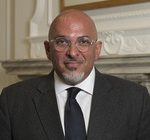
  • Nadhim Zahawi – 2021 Statement on Vaccinations

    Nadhim Zahawi – 2021 Statement on Vaccinations

    The statement made by Nadhim Zahawi, the Parliamentary Under-Secretary of State for Health and Social Care, in the House of Commons on 11 January 2021.

    With permission, Madam Deputy Speaker, I would like to make a statement on the covid-19 vaccine delivery plan. The plan, published today, sets out the strategies that underpin the development, manufacture and deployment of our vaccines against covid-19. It represents a staging post in our national mission to vaccinate against the coronavirus, and a culmination of many months of hard work from the NHS, our armed forces, Public Health England, and every level of local government in our Union. There are many miles to go on this journey, but, armed with this plan, our direction of travel is clear.

    We should be buoyed by the progress that we are already making. As of today, in England, 2.33 million vaccinations have been given, with 1.96 million receiving their first dose and 374,613 having already received both doses. We are on track to deliver our commitment of offering a first vaccine to everyone in the most vulnerable groups by the middle of next month. These are groups, it is worth reminding ourselves, that account for more than four out of every five fatalities from the covid virus, or some 88% of deaths. But of course this is a delivery plan for everyone—a plan that will see us vaccinate all adults by the autumn in what is the largest programme of vaccination of its kind in British history.

    The UK vaccines delivery plan sets out how we can achieve that noble, necessary and urgent goal. The plan rests on four key pillars: supply, prioritisation, places and people. On supply, our approach to vaccines has been to move fast and to move early. We had already been heavily investing in the development of new vaccines since 2016, including funding a vaccine against another coronavirus: middle east respiratory syndrome. At the start of this year, this technology was rapidly repurposed to develop a vaccine for covid-19, and in April we provided £20 million of further funding so that the Oxford clinical trials could commence immediately. Today, we are the first country to buy, authorise and use that vaccine.

    Also in April, we established the UK Government’s Vaccine Task Force, or VTF for short, and since then it has worked relentlessly to build a wide portfolio of different types of vaccine, signing early deals with the most promising prospects. It is a strategy that has really paid off. As of today, we have secured access to 367 million doses from seven vaccine developers with four different vaccine types, including the Pfizer-BioNTech vaccine, which we were also the first in the world to buy, authorise and use. The VTF has also worked on our homegrown manufacturing capability, including what is referred to as the “fill and finish” process, in collaboration with Wockhardt in Wrexham. Anticipating a potential global shortage early on, we reserved manufacturing capacity to allow for the supply of multiple vaccines to the United Kingdom. Like many capabilities in this pandemic, it is one that we have never had before, but one that we can draw on today. So much of that critical work undertaken early has placed us in a strong position for the weeks and months ahead.

    The second pillar of our plan is prioritisation. As I set out earlier, essential work to protect those at the greatest clinical risk is already well under way. The basic principle that sits behind all of this is to save as many lives as possible as quickly as possible. In addition, we are working at speed to protect staff in our health and social care system. All four UK chief medical officers agree with the recommendation of the Joint Committee on Vaccination and Immunisation to prioritise the first doses for as many people on the priority list as possible and administer second doses towards the end of the recommended vaccine dosing schedule of 12 weeks. That step will ensure the protection of the greatest number of at-risk people in the shortest possible time.

    The third pillar of our plan is places. As of yesterday, across the United Kingdom, we have more than 2,700 vaccination sites up and running. There are three types of site. First, we have large vaccination centres that use big venues such as football stadiums; we saw many of those launched today. At these, people will be able to get appointments using our national booking service. The second type is our hospital hubs, working with NHS trusts across the country. The third is our local vaccination services, which are made up of sites led by GPs working in partnership with primary care trusts and, importantly, with community pharmacists.

    This mix of different types of site offers the flexibility that we need to reach many different and diverse groups and, importantly, to be able to target as accurately as we can. By the end of January, everyone will be within 10 miles of a vaccination site. In a small number of highly rural areas, the vaccination centre will be a mobile unit. It bears repeating that, when it is their turn, we want as many people as possible to take up the offer of a vaccine against covid-19.

    The fourth and final pillar is, of course, our people. I am grateful to the many thousands who have joined this mission—this national mission. We now have a workforce of some 80,000 people ready to be deployed across the country. This includes staff currently working within the NHS of course, but also volunteers through the NHS Bring Back Staff scheme, such as St John Ambulance personnel, independent nurses and occupational health service providers. There are similar schemes across the devolved Administrations.

    Trained vaccinators, non-clinical support staff such as stewards, first aiders, administrators and logistics support will also play their part. We are also drawing on the expertise of our UK armed forces, whose operational techniques—brought to life by Brigadier Phil Prosser at the press conference with the Prime Minister a few days ago—have been tried and tested in some of the toughest conditions imaginable. I am sure the whole House will join me in thanking everyone who has played their part in getting us to this point, and all those who will play an important role in the weeks and months ahead.

    We recognise that transparency about our vaccine plan will be central to maintaining public trust, and we are committed to publishing clear and simple updates. Since 24 December, we have published weekly UK-wide data on the total number of vaccinations and the breakdown of over and under-80s for England. From today, we are publishing daily data for England showing the total number vaccinated to date. The first daily publication was this afternoon. From Thursday, and then weekly, NHS England will publish a more detailed breakdown of vaccinations in England, including by region.

    This continues to be a difficult time for our country, for our NHS and for everyone as we continue to live under tough restrictions, but we have always known that a vaccine would be our best way out of this evil pandemic, and that is the road we are now taking. We are under no illusion as to the scale of the challenge ahead and the distance we still have to travel. In more normal times, the largest vaccination programme in British history would be an epic feat, but against the backdrop of a global pandemic and a new, more transmissible variant, it is a huge challenge. With this House and indeed the whole nation behind this national mission, I have every confidence that it will be a national success. I commend this statement to the House.

  • Anneliese Dodds – 2021 Economic Update Speech

    Anneliese Dodds – 2021 Economic Update Speech

    The speech made by Anneliese Dodds, the Shadow Chancellor of the Exchequer, in the House of Commons on 11 January 2021.

    I start by joining the Chancellor in sending my very best wishes to the right hon. Member for Old Bexley and Sidcup (James Brokenshire). I know I speak for everyone on the Opposition side of the House in wishing him a speedy recovery.

    Six weeks have passed since the Chancellor last addressed this House. In that time, the Prime Minister scrapped his proposed relaxation of public health rules, introduced a new tier 4 level of restrictions for London and large parts of the south-east, and then superseded all of that with the imposition of a third national lockdown. After the Prime Minister’s most recent announcement, Parliament was, of course, recalled, and Members were given the opportunity to ask questions of the Prime Minister, the Health Secretary and the Education Secretary—but the Chancellor was nowhere to be seen. His sole contribution to a set of announcements that had profound implications for our economy was a 90-second video on Twitter, which begged as many questions as it answered.

    There was no indication of how long the new grants are expected to cover and no clarity on how the discretionary funding for local councils has been calculated, nor of how it will be allocated. Funds being provided to the devolved nations were badged as new money, before the Treasury hastily amended its website to reflect that that money had already been committed to in December. We heard nothing about what would happen to those people who had started a new job since the beginning of November and are now ineligible for furlough. We heard nothing about what level the fourth grant for self-employed people would be set at, nor when that grant would be made available. We heard nothing for those people who have been excluded from Government schemes right from the very start, and we heard nothing about what the Chancellor would do to fix the broken system of support for self-isolation.

    I was relieved to hear this morning that the Chancellor had undertaken to address the House today, but I deeply regret that, having last year blocked measures that would have helped to protect the NHS and secure our economy, today he appears to be out of ideas, urging us to look towards the sunny uplands but providing nothing new. The purpose of an update is to provide us with new information, not to repeat what we already know.

    In addition, the Chancellor just now gave a highly partial picture of the state of our economy, talking of a rise in savings but not mentioning that over 5 million people are estimated to have taken on over £10 billion in debt just to get through the last year. He talked of corporate cash buffers, but did not mention that City experts have predicted that there will be over £100 billion in unsustainable corporate debt by the end of March.

    The Chancellor needs to acknowledge the reality of the crisis we face—a crisis made worse by his Government’s irresponsibility, with our economy having suffered the worst recession of any major economy. He needs to act accordingly. I therefore ask him to respond to the questions that businesses and workers desperately need answered. Will he update the furlough scheme to reflect the dates of the current lockdown? When will he set out the new incentive scheme he promised to provide for businesses that will now not receive the job retention bonus? When will he provide details on the next self-employment income support scheme? What does he say to people who have been excluded from Government support schemes from the very beginning and who still are not helped by today’s announcement? How long will businesses have to make the new one-off grants last for? When will councils find out how the new discretionary funding will be allocated and on what basis it has been calculated?

    Does the Chancellor believe that those who are classified as clinically extremely vulnerable should be automatically eligible for furlough if they cannot work from home? When will he fix support for those self-isolating, when the evidence for change is overwhelming? When will his much vaunted Project Birch actually start to deliver for struggling manufacturers? Will we have to wait until the Budget for recognition of all these problems and solutions to them, as was suggested by his social media account?

    We had all hoped for a more optimistic start to 2021 than a new national lockdown and yet more uncertainty about the future, but the people of Britain understand that they have to make sacrifices. They are doing their bit for the national effort while the vaccine is rolled out. They are fulfilling their side of the bargain. The Chancellor must fulfil his.