
Tag: 2021

  • Fleur Anderson – 2021 Speech on Dental Services

    Fleur Anderson – 2021 Speech on Dental Services

    The speech made by Fleur Anderson, the Labour MP for Putney, in the House of Commons on 14 January 2021.

    I beg to move,

    That this House has considered the effect of the covid-19 outbreak on dental services.

    I thank my hon. Friend the Member for Brent North (Barry Gardiner) who co-sponsored the application for this debate, and the Backbench Business Committee for granting it. I also thank many MPs from across the House for their support for this important and timely debate.

    I am speaking on behalf of everyone who has suffered toothache under lockdown, or who will suffer it this year, for all the children whose orthodontal treatment has been delayed or is in disarray—that includes two children in my own house—and for all those whose more serious dental problems would have been spotted in routine check-ups, but who have not yet had them spotted. I speak also on behalf of dental practitioners and laboratories in my constituency and across the country who have felt ignored during the pandemic, and not treated as the frontline health workers they are.

    During the pandemic, one constituent told me that he had to pull out his own tooth, and a local dentist told me of an elderly lady whose dental pain meant that she could not eat solid food throughout the lockdown, and had lost weight as a result. There are serious consequences to the implications of covid-19 on dental practices. I would like to thank the dentists in my constituency and across the country, who have kept going in very difficult and stressful times, and often against all the odds.

    My message today is simple: we are sleepwalking into the biggest oral health crisis since the creation of the NHS. Unless the Government begin to recognise that dentistry is an essential health service, the sector will collapse. For now, the current activity targets are unattainable and need to be scrapped—I am sure other Members will be talking about them today. In the longer term, we also need better targeted financial support to save the sector. Overall, we need a national dentistry recovery plan to provide safety for dentists and patients, funding to stop closures, and ways to address the huge backlog of dental appointments. There is an NHS England phased recovery plan, but it does not address the whole dental sector. Dental care is not a middle-class luxury, but it is moving that way. It is a fundamental aspect of good health and a key indicator of health equality. We neglect it at our peril.

    From March to June last year, all routine dental care in England was paused and according to the British Dental Association over 20 million appointments were lost between March and November. That has created a huge backlog that will take years to clear unless it is addressed now. In my own borough of Wandsworth, nearly 6,000 fewer courses of treatment took place in the final quarter of 2020. It did not have to be this way. For example, in Germany, personal protective equipment and guidance was put in place straightaway and dentists were not shut. Funding of PPE and ventilators remains a major issue for enabling dentists to function and see patients even during the pandemic.

    Dentists have faced acute financial problems. They are both frontline health services and important high street businesses in all our communities, yet they did not receive the same funding as other frontline health services or high street businesses. Financial support remains either absent or uneven. As many as 53% of dental practices estimate that they can only maintain their financial stability for 12 months or less in the face of lower patient numbers and higher overheads. Beyond access to the furlough scheme and Government credit, support for private practice has been close to non-existent. There has been a failure to recognise the mixed economy on which dentistry is based. Dentists are among the only businesses on the high street that continue to pay business rates. That is totally unfair. Many of my local practices have not received any financial support, such as business grants, and this must be renewed.

    Now, on top of that, there are targets. In December, NHS dental practices were instructed by the Government to deliver 45% of all their targets, based on pre-covid levels, to earn their contract value from January to April. This was a hasty, not negotiated and widely discredited target-based dental contract, and it is incompatible with providing safe and sustainable services for patients during the pandemic. I understand that the targets were set before lockdown, but now is the time for the Minister to tell us that they will be reconsidered, they are not achievable and there will be a change of policy. The targets need to be scrapped.

    Most dental practices are small high street buildings and they cannot expand to meet the guidelines on social distancing and fallow time as well as meeting the targets. The British Dental Association found in a recent practice poll that 40% of practices in London alone have seen more than half their capacity wiped out by cancellations, staff sickness, self-isolation and difficulties accessing childcare. If there was ever an excuse not to visit the dentist, we have one now. We have told everyone to stay at home, so they are staying at home and they are not going to the dentist, but that is just building up huge problems for us in the future. Dentists cannot be financially penalised because of that.

    The latest UK data show high levels of cancellation and non-attendance during lockdown. One local dentist told me that at absolutely full stretch before Christmas he was able to meet 30% of pre-covid activity levels. He cannot meet them now, and he is worried about being penalised and losing money retrospectively, because he is obviously having to pay out for those contracts during these months. We would all like more people to be able to see dentists. We would like them to reach 100% of the targets and to clear the backlog, but the targets are simply unachievable at the moment and will put the future of dental practices at risk. By implementing this target, the Government are effectively removing the safety net from NHS dentistry at a time when covid-19 rates are surging. It is important to note as well that the target is set not by the chief dental officer, but by the Government. The wider implications of these issues extend beyond just bad oral health or a bit of toothache. It is predicted that it will increase emergency attendances at hospital A&E, increase antibiotic prescribing, increase admission to hospitals and longer stays, and increase missed oral cancer diagnoses, which is really worrying. The Oral Health Foundation found that mouth cancer referrals fell by 56% during the lockdown.

    In my constituency, the waiting list for tooth extractions by children’s tertiary care is now two years and growing —that is an almost emergency treatment. I met with dentists in my own constituency in the lead-up to this debate, and they made it clear that the 45% target is just unacceptable. One said to me:

    “How can the dental profession be expected to transition to this flawed quota system? Practices that fail to reach targets, through no fault of their own, will face penalties and clawbacks which will result in mass closure of dental practices as the funding to provide dental care will not make it viable to stay open. This is a reckless and unsafe decision”.

    Today, the Faculty of General Dental Practice UK, the College of General Dentistry and the Royal College of Surgeons Of England issued a joint statement saying that

    “safety must take a clear priority over dental activity levels during the…lockdown.”

    There is a universal call to scrap the targets, and I hope that we will hear about that from the Minister later.

    To wrap up, I have five demands of the Minister. First, we need a national plan for dentistry following the pandemic and a way that the backlog of appointments will be addressed, created in full consultation with the national professional dental bodies. Secondly, the activity levels for January to April must be scrapped. The 45% target will undermine patient care and safety. Thirdly, we must provide urgent support to practices to enable them to increase the number of patients that they can see. That means supplies of PPE and ventilation equipment to keep fallow time down. Fourthly, we need to be clear that all dental teams, including receptionists, must be given priority access to covid vaccines alongside other healthcare professionals. Fifthly, we need to maintain and expand the business rates holiday to dental practices and backdate it to late March.

    In conclusion, many parts of the country already had poor access to dental care before the pandemic. Current levels of capacity across the service mean that, unless something is done now, problems are likely to reach an unprecedented scale in every community up and down the country, and we will see a whole generation growing up with poor dental health. Let us recognise the dental sector as the essential frontline health care service that it is and do everything in our power to support it through this crisis and for our future.

  • Jess Phillips – 2021 Speech on Domestic Abuse

    Jess Phillips – 2021 Speech on Domestic Abuse

    The speech made by Jess Phillips, the Labour MP for Birmingham Yardley, in the House of Commons on 14 January 2021.

    I thank the Minister for advance sight of her statement. We in the Labour party are really pleased to hear about the launch of the Ask for ANI scheme today, which will be a real innovation in helping victims come forward. Can the Minister tell the House what work her Department has done to ensure that in launching this brilliant scheme, when a victim comes forward there will be support beyond an initial phone call available, especially in cases where victims are not ready to inform the police?

    We are now eight days into a third national lockdown, with a “Stay at home” message that we have become incredibly familiar with. It was welcome in this third lockdown that the Prime Minister clarified that individuals who wish to leave their homes to escape domestic abuse could do so. That message was not given back in March, and I welcome that being rectified and that the right thing has now been said.

    We on the Opposition Benches welcome what the Minister has said today about the measures being taken to tackle domestic abuse and hidden harms. Back in April, the shadow Home Secretary, my hon. Friend the Member for Torfaen (Nick Thomas-Symonds) wrote to the Home Secretary urging her to act on this important issue. He also raised concerns from the sector, including the need to bring forward urgently a package of emergency financial support for organisations doing the vital work on the frontline which the Minister has talked about.

    It was the Labour party that urged the Government to put in place £75 million of financial support for the sector. When the Government announced that they would do that, we welcomed the support, but the Home Secretary confirmed back in June, months into the crisis, that only a staggering £1.2 million had been spent. Today, the Minister’s statement tells us that 11 months into this crisis, still only a third of that funding has reached the frontline. Can she explain that? Will she tell us when the £51 million unspent will be allocated? Will she confirm that the £11 million extra that she has announced today is in excess of the £75 million already announced?

    The Minister has also mentioned refuge capacity, and we thank all those who struggled very hard under very difficult circumstances to create urgently needed beds that should never have been missing. We must now ask: is that still enough? I have myself this week tried to get a refuge bed and not been able to find one. Will the Minister tell us today and in the coming weeks what contact she has had with refuges about capacity? Can she today say that she is confident that there is capacity to meet the demand? Can she tell the House what specific provisions have been made for specialised services for those victims who are black, Asian and minority ethnic, migrants, LGBTQ, male or disabled?

    As the Minister has mentioned, children are often the hidden victims of domestic and sexual abuse in the home. Can she tell us what work her Department is doing to ensure that vulnerable children who are out of school are safe? What, if any, detached youth work and proactive targeting of children—at the very least, those on child protection plans—has she asked for in order to reach children living in dangerous and violent homes?

    The Minister mentioned the £11 million of funding to the brilliant “See, Hear, Respond” scheme, but as she said herself, it will target 50,000 children, not the three-quarters of a million children today living in dangerous homes. Can she tell us whether any of the schemes that she has announced for children cover every child in our country, so that all child victims can benefit, not just those in some areas, where a postcode lottery determines whether we fund a child’s safety?

    To continue on a theme, the Minister mentioned the support of independent child trafficking guardians—a brilliant scheme that we welcome. Can she confirm that that scheme is available to all children trafficked in our country, as was promised some years ago by this Government, or is it still, as I understand, just a pilot for some areas, leaving some trafficked children without support?

    Domestic abuse and community support services are currently planning for redundancies in March—quite unbelievable in the middle of a global pandemic and a national lockdown. The sector, the Labour party, the Domestic Abuse Commissioner and the Victims’ Commissioner have all called repeatedly for sustainable funding for at least the next year. The staff being made redundant are the very people the Minister needs for Ask for ANI to have any chance of success. Can the Minister confirm whether there have been any discussions with the sector or the Treasury about multi-year funding, and an end to the dangerous year-on-year short-termism in community services for adults and children?

    The Government were too slow to act in the first and second lockdowns. I am very pleased that now, in the third lockdown, they are more alert to this issue. Labour, the shadow Home Secretary and I have been saying to the Government since April that they need to do more to protect those who cannot leave home. It is not enough to say that victims should reach out; we in this House, especially the Government, have a responsibility to ensure that when they do that there is help for them. If there is not, we risk losing them for good.

    With the thought of the lockdown carrying on until March, it is imperative that the Government act, and act fast. All Members across this House need to assure their constituents that all, not just some, victims suffering from domestic abuse and other hidden harms can leave that abuse and access safety. There are people waiting and willing to help. That is the message that we need to send, and it is on all of us to ensure that that is the case.

  • Victoria Atkins – 2021 Statement on Domestic Abuse

    Victoria Atkins – 2021 Statement on Domestic Abuse

    The statement made by Victoria Atkins, the Parliamentary Under-Secretary of State for the Home Department, in the House of Commons on 14 January 2021.

    With permission, Madam Deputy Speaker, I would like to make a statement. The coronavirus pandemic has presented this country with enormous and unprecedented challenges. In order to control the spread of the virus, we have had to ask the public to follow a simple but crucial instruction: stay at home. Earlier this month we entered a new national lockdown, and while we are absolutely clear that these measures are necessary, it is also important to recognise the potential impact on what we refer to as hidden harm crimes, which include domestic abuse, child sexual exploitation and modern slavery. These are some of the most pernicious, harmful types of offending in society, and they often occur behind closed doors. Given that fact, let me reiterate a crucial message that the Prime Minister delivered to the public last week: notwithstanding the restrictions in place, those at risk of abuse can leave home to seek safety and avoid the risk of harm.

    Protecting those at risk of abuse and exploitation remains a priority for this Government, which is why I am so pleased that today I can announce the launch of a new codeword scheme for victims of domestic abuse called Ask for ANI. From today, thousands of pharmacies across the UK will provide this service, enabling victims to seek help discreetly. Through a signal to a pharmacist, a victim will be provided with a safe space in the pharmacy, and taken through the support available to them, whether that is a call to the police or a domestic abuse helpline service. The codeword scheme will offer a vital lifeline to all victims, ensuring that they get help in a safe and discreet way.

    Let me set out more of the steps that we have taken to ensure that victims and those at risk can continue to access critical advice and support. We have provided unprecedented levels of additional funding to critical frontline services helping victims of domestic abuse. As part of wider charitable funding, the Home Office, the Ministry of Justice and the Ministry of Housing, Communities and Local Government have between them distributed more than £25 million in emergency covid-19 funding for domestic abuse organisations. That has provided almost 1,900 bed spaces in safe accommodation, and enabled domestic abuse organisations of all sizes to provide advice and support to victims. For example, Home Office funding allowed the charity Safelives to train hundreds of frontline workers online, including new independent domestic violence advisers. To help sustain those charities through the second part of the year, we are providing further funding of nearly £11 million from the Ministry of Justice and the Home Office.

    Although funding forms an important strand of our response, it is also vital that victims of domestic abuse, and those worried about them, know how to access help and advice. In April, the Home Secretary launched the #YouAreNotAlone communications campaign to do precisely that. The campaign has reached almost 25 million people through paid advertising, and has been supported by a range of celebrities and influencers who have shared its messages with more than 130 million followers on social media. Materials have been translated into 16 languages. The campaign directs victims to sources of specialist help and support. It also makes clear that the “stay at home” restrictions do not apply to those at risk of abuse who need to leave home to seek help or refuge. We have relaunched the campaign over the winter to reaffirm those messages, and I ask hon. Members across the House to do everything they can to highlight that campaign, and make clear to victims that help continues to be at hand, should they need it.

    The police have been, and will continue to be proactive in tackling domestic abuse during this period. Courts have continued to prioritise domestic and child abuse cases throughout, as well as civil protection orders relating to domestic abuse, stalking, forced marriage and female genital mutilation. We have seen many innovative police responses to domestic abuse during the pandemic. The Metropolitan police has developed an online function for the domestic violence disclosure scheme, whereby police can disclose previous domestic violence history to new partners. Nottinghamshire police is applying the disclosure scheme in every domestic abuse occurrence. Other forces are able to use discreet technology to take witness statements remotely, without leaving any trace on the victim’s phone. Some forces, such as Gloucestershire police, have used spare capacity to instigate dedicated domestic violence response vehicles, while independent domestic violence advisers are helping to support victims.

    There are, sadly, other forms of hidden harms within domestic abuse, and we are acutely aware that the pandemic has increased risks to some children and young people, and reduced their contact with trusted professionals and adults. The Government are committed to doing everything they can to continue to support and protect children at risk, and they have provided more than £11 million since last June to Barnardo’s See, Hear, Respond service, to support more than 50,000 vulnerable or hidden children, whose usual support networks have been affected by national and local pandemic restrictions.

    The Home Office has also launched a national communications campaign, Something’s Not Right, to help children who have been exposed to a range of harms, reaching millions of secondary school children in England. At this time, we are particularly concerned about online harms. With children spending more time on the internet, parents have been signposted to materials for staying safe online, including from the National Crime Agency’s Thinkuknow campaign.

    A record number of reports of online child sexual abuse have been processed by the UK’s Internet Watch Foundation, including a large increase in self-generated indecent images of children. The Home Office is providing £80,000 to support the development of the IWF’s campaign to support parents in starting conversations with their children around keeping safe online, and to help young people to identify the signs of coercion and to report abuse. In December, we published the full Government response to the online harms White Paper, which sets out our expectations on companies to keep their users safe, especially children. At the same time, we published the interim code of practice on online child sexual exploitation and abuse, which sets out steps that companies can take now to tackle these crimes on a voluntary basis, ahead of any regulatory system being introduced.

    Another form of hidden harm is modern slavery. The Government are committed to the safety and security of victims of modern slavery, particularly during the pandemic, by ensuring that victims are provided with the support they need and that those responsible for these crimes are prosecuted. Last year, we made an additional £1.73 million available for modern slavery services in England and Wales. The funding has enabled providers to adapt the ways in which they provide support during the pandemic, including by reducing face-to-face contact where appropriate and ensuring that support can be accessed remotely. The new Victim Care Contract came into force last week and will help to ensure that victims receive the care they need. In early adopter sites, child victims of modern slavery continue to be supported by the Independent Child Trafficking Guardian scheme which is working flexibly to continue to provide effective and responsive support remotely, both to trafficked children directly and to other professionals. Law enforcement agencies continue to pursue high-risk modern slavery cases where there is a risk of harm or detriment to individuals.

    Throughout the coronavirus pandemic, we have remained resolute in our commitment to tackling abuse that takes place behind closed doors and out of sight. We continue to work across Government to monitor, assess and respond to the ongoing situation, but I ask all hon. Members to consider ways in which they can point victims in their constituencies to support. We will continue to prioritise domestic abuse during and after the pandemic. To do this, we remain committed to delivering our landmark Domestic Abuse Bill to further strengthen protections for victims and bring perpetrators to justice.

    In addition, this year we will publish the new Tackling Violence against Women and Girls strategy, which will help us to better target perpetrators and support victims of these abhorrent crimes. We are currently running a call for evidence to inform the new strategy, and I urge hon. Members to share this via their networks within their constituencies to help us reach as wide an audience as possible. This will be followed by a dedicated and complementary domestic abuse strategy that will ensure progress following the passage of the landmark Domestic Abuse Bill. We will soon publish the first-of-its-kind strategy on tackling all forms of child sexual abuse, outlining our long-term ambition to drive a whole-system response in tackling this heinous crime.

    In conclusion, I would like to thank everyone involved in helping victims of hidden crimes in this pandemic and beyond, from those working in domestic abuse refuges and community services and in modern slavery safe accommodation, to those scouring the internet to remove images of children being raped, as well as our police officers, our National Crime Agency officers, our Border Force officers and those working in the security services to support this work. I thank them all for what they are doing to help support victims and to stop perpetrators of these terrible crimes. I would like to finish by reassuring all victims of hidden harms that they are not alone, their voices are heard and help will continue to be there for them. I commend this statement to the House.

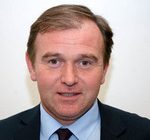
  • George Eustice – 2021 Statement on the Fishing Industry

    George Eustice – 2021 Statement on the Fishing Industry

    The statement made by George Eustice, the Secretary of State for Environment, Food and Rural Affairs, in the House of Commons on 14 January 2021.

    As hon. Members will know, before Christmas the UK and the EU concluded a new trade and co-operation agreement, which established tariff-free trade in all goods and, among other things, sets a new relationship with the EU on fisheries. Before turning to the specifics of that agreement, I should briefly set the wider context.

    The withdrawal agreement that was agreed by this House in January last year established the United Kingdom as an independent coastal state. Over the course of the last year we have taken our independent seat at the regional fisheries management organisations, including the North East Atlantic Fisheries Commission and the North Atlantic Fisheries Organisation. In September, we reached a partnership agreement with Norway—our most important partner on fishing interests, and with whom we have responsibility for shared stocks in the North sea.

    We have also developed new bilateral arrangements with our other north-east Atlantic neighbours, including the Faroes, Greenland and Iceland. We have recently commenced annual bilateral fisheries negotiations with the Faroes in relation to access to one another’s waters, and a UK-Norway-EU trilateral is about to begin to agree fishing opportunities on shared stocks in the North sea. There will also be a UK-EU bilateral negotiation on fishing opportunities for the current year in remaining areas. For the first time in almost 50 years, the UK has a seat at the table and represents its own interests in those important negotiations.

    The trade and co-operation agreement establishes an initial multi-annual agreement on quota, sharing and access, covering five and a half years. It ends relative stability as the basis for sharing stocks. Under the agreement, we have given an undertaking to give the EU access to our waters on similar terms as now and, in return, it has agreed to relinquish approximately 25% of the quota that it previously caught in our waters under the EU’s relative stability arrangement. That means that we move from being able to catch somewhat over half the fish in our waters to two thirds of the fish in our waters at the end of the multi-annual agreement. The transfer of quota is front-loaded, with the EU giving up 15% in year 1. On North sea cod, we have an increase from 47% to 57%. On Celtic sea haddock, our share has moved from 10% to 20%. On North sea hake, we secured an uplift from 18% to 54%, and on West of Scotland anglerfish, we have an increase from 31% to 45%. After the five-and-a-half-year agreement, we are able to change access and sharing arrangements further. The EU, for its part, will also be able to apply tariffs on fish exports in proportion to any withdrawal of access.

    Although we recognise that some sectors of the fishing industry had hoped for a larger uplift, and, indeed, the Government argued throughout for a settlement that would have been closer to zonal attachment, the agreement does, nevertheless, mark a significant step in the right direction. To support the UK industry through this initial five and a half years, the Prime Minister announced, just before Christmas, that we will invest £100 million in the UK fishing industry, and I will be bringing forward proposals for this investment in due course.

    Finally, although it is not a consequence of the trade and co-operation agreement, the end of the transition period and the fact that we have left both the customs union and the single market does mean that there is some additional administration accompanying exports to the EU. I am aware that there have been some teething issues as businesses get used to these new processes. Authorities in the EU countries are also adjusting to new procedures. We are working closely with both industry and authorities in the EU to iron out these issues and to ensure that goods flow smoothly to market.

    Mr Carmichael

    For years, this Government have promised our fishing industry a sea of opportunity, but, today, our boats are tied up in harbour, their propellers fouled with red tape manufactured in Whitehall. Boats that are able to go to sea are landing their catches in Denmark—an expensive round trip of at least 72 hours, which takes work away from processors and other shoreside businesses in this country. Our Fisheries Minister describes promises made by Ministers as “dreams” and apparently did not think it was worth reading the agreement as soon as it was made, even though every second counted. How on earth was it allowed to come to this? The EU trade agreement allows a grace period on customs checks for EU businesses. Why was there no grace period allowed for our exporters, and will the Government engage with the EU as a matter of urgency to make good that most fundamental of errors?

    Yesterday, the Prime Minister told the Liaison Committee that compensation is being considered for our fishing industry. Who will be compensated, for what, and by how much? When will our scheme be published and what steps will be taken to help processors, catchers and traders in the meantime? On the loss of quota swaps and other mechanisms, as the Fisheries Minister said yesterday, this could be done Government to Government in-year. Can the Secretary of State explain today how the literally hundreds of producer organisation to producer organisation swaps done every year will be done on a Government-to-Government basis?

    Finally, what will happen at the end of a five-and-a-half year transition period? A transition normally takes us from point A to point B. This transition takes us from point A to point A with a new negotiation. Is zonal attachment still the Government’s policy on quota shares?

    This is a shambles of the Government’s own making; there is no one else to blame now. When will the Minister start listening to the industry? I make him this offer: I can convene a virtual roundtable of all the affected sectors today or tomorrow. Will he meet with me and them to sort this out? The time for complacency has passed.

    George Eustice

    May I begin where the right hon. Gentleman ended and say that we are looking and working very closely with industry on this matter? We are having twice-a-week meetings with all the key stakeholders and all the key sectors to help them understand these issues. Yesterday, we had a meeting with the Dutch officials; earlier this week, we had a meeting with the French; and, on Friday, we had a meeting with the Irish to try to iron out some of these teething problems. They are only teething problems. When people get used to using the paperwork, goods will flow normally. Of course, it would have been open to the EU to offer us a grace period, just as we have had a grace period for its goods coming to us. For reasons known only to the EU and the way that it approaches its particular regulations, that was not something that it was willing to do, so we have had to work with these arrangements from a standing start and, clearly, that causes certain issues.

    The right hon. Gentleman asked what happens after five and a half years. As I said in my opening statement, after that period, we are free to change access arrangements and change sharing arrangements, and we will do so. He asked specifically about swaps. It is important to note that the Department for Environment, Food and Rural Affairs has all of the information on all of the swaps that have taken place in recent years, since each of those producer organisation to producer organisation swaps requires the Government to agree them. It is, therefore, quite possible for us to build those swaps into the annual exchanges. Annual exchanges of fishing opportunities are a normal feature of annual negotiations, and we have also retained the ability to do in-year swaps on behalf of those POs.

    The right hon. Gentleman has raised the issue of what the fisheries Minister said yesterday. I think the record will show that she did not say she did not have time to read the agreement; what she actually said was that her jaw did not drop when she was told what was in the agreement. There may be a reason for that, which is that she knew what was likely to be in the agreement for at least a week, since I had been discussing it with her and we were both in regular contact with our negotiators.

    Finally, I am aware that the Prime Minister mentioned yesterday that the Government remain open to considering compensation for sectors that might have been affected through no fault of their own. We will look closely at this issue, but in the meantime, we are going to work very closely with the industry to ensure that we can iron out these difficulties.

  • Paul Scully – 2021 Comments on the Prompt Payment Code

    Paul Scully – 2021 Comments on the Prompt Payment Code

    The comments made by Paul Scully, the Small Business Minister, on 19 January 2021.

    Our incredible small businesses will be vital to our recovery from the coronavirus pandemic, supporting millions of livelihoods across the UK.

    Today, we are relieving some of the pressure on small business owners by introducing significant reforms to the UK payments regime – pushing big businesses to pay their suppliers on time.

    By signing up to the Prompt Payment Code and sticking to its rules, large firms can help Britain to build back better, protecting the jobs, innovation and growth which small businesses drive right across the UK.

  • Keir Starmer – 2021 Comments on Universal Credit

    Keir Starmer – 2021 Comments on Universal Credit

    The comments made by Keir Starmer, the Leader of the Opposition, on 18 January 2021.

    Families across the UK have spent the past year worried for their loved ones, their jobs and their family’s security.

    Millions of people have had to juggle childcare with working from home, have seen jobs or incomes cut or been excluded from self-employed support. If we don’t give a helping hand to families through this pandemic, then we are going to slow our economic recovery as we come out it.

    We began 2021 with one of the worst death tolls in Europe and the deepest recession of any major economy. Without action from Government, millions of families face a £1,000 per year shortfall in the midst of a historic crisis.

    We urge Boris Johnson to change course and give families certainty today that their incomes will be protected.

  • Kate Green – 2021 Comments on Free School Meals

    Kate Green – 2021 Comments on Free School Meals

    The comments made by Kate Green, the Shadow Secretary of State for Education, on 18 January 2021.

    Gavin Williamson has created a catalogue of chaos on free school meals. Time and time again he has let down the parents desperately trying to put food on the table and the children who have gone hungry through his incompetence.

    He must guarantee that children will get free school meals over the February half term and put trust in parents by give them the money for free school meals to ensure their children do not go hungry.

    Conservative MPs will have the opportunity to vote with Labour today to finally give families the support they need to get through this crisis.

  • Nick Thomas-Symonds – 2021 Comments on Priti Patel Refusing to Appear in Commons

    Nick Thomas-Symonds – 2021 Comments on Priti Patel Refusing to Appear in Commons

    The comments made by Nick Thomas-Symonds, the Shadow Home Secretary, on 18 January 2021.

    It’s shameful – and, frankly, embarrassing – for the Home Secretary not to come to Parliament today.

    It’s an abject failure of leadership and dereliction of duty not to grip a crisis that has seen 400,000 records deleted and criminals set to walk free.

  • Robert Jenrick – 2021 Statement on Legal Protections for England’s Heritage

    Robert Jenrick – 2021 Statement on Legal Protections for England’s Heritage

    The statement made by Robert Jenrick, the Secretary of State for Housing, Communities and Local Government, on 15 January 2021.

    For hundreds of years, public statues and monuments have been erected across the country to celebrate individuals and great moments in British history.

    They reflected the people’s preferences at the time, not a single, official narrative or doctrine. They are hugely varied, some loved, some reviled, but all part of the weft and weave of our uniquely rich history and built environment.

    We cannot – and should not – now try to edit or censor our past. That’s why I am changing the law to protect historic monuments and ensure we don’t repeat the errors of previous generations, losing our inheritance of the past without proper care.

    What has stood for generations should be considered thoughtfully, not removed on a whim, any removal should require planning permission and local people should have the chance to be properly consulted. Our policy in law will be clear, that we believe in explaining and retaining heritage, not tearing it down.

  • Dominic Raab – 2021 Comments on Alexey Navalny

    Dominic Raab – 2021 Comments on Alexey Navalny

    The comments made by Dominic Raab, the Foreign Secretary, on 18 January 2021.

    It is appalling that Alexey Navalny, the victim of a despicable crime, has been detained by Russian authorities. He must be immediately released. Rather than persecuting Mr Navalny Russia should explain how a chemical weapon came to be used on Russian soil.