Tag: 2021

  • Kit Malthouse – 2021 Statement on Data Loss at the Home Office

    Kit Malthouse – 2021 Statement on Data Loss at the Home Office

    The statement made by Kit Malthouse, the Policing Minister, in the House of Commons on 18 January 2021.

    With permission, Mr Speaker, I would like to make a statement about the technical issues that we have experienced with the police national computer over the past week.

    The records and information held by the police help to keep us safe, but they, like many other public bodies, have an obligation to ensure that the information they hold is properly managed. As I am sure you are aware, Mr Speaker, not all information and records held by the police can be held indefinitely. To ensure that the police are complying with their legal obligations in respect of the records they hold, a regular housekeeping process is undertaken to delete personal data and records from the police national computer and linked databases: in this case, data relating to individuals who were investigated by the police but where no further action was taken. This is undertaken for a variety of reasons, but chiefly to abide by legal obligations.

    With such a large database, holding some 13 million records, an automated process is used to remove records that the police national computer has no legal right to hold. A weekly update was designed by engineers and applied to the police national computer, which then automatically triggers deletions across the PNC, and other linked databases. Last week, the Home Office became aware that, as a result of human error, the software that triggers these automatic deletions contained defective coding and had inadvertently deleted records that it should not have, and indeed had not deleted some records that should have been deleted. An estimated 213,000 offence records, 175,000 arrest records and 15,000 person records are being investigated as potentially having been deleted. It is worth the House noting that multiple records can be held against the same individual, so the number of individuals affected by this incident is likely to be lower. Operational partners are still able to access the police national computer, which holds, as I say, over 13 million records. Clearly this situation is very serious, and I understand that colleagues across this House will have concerns, which of course I share.

    By your leave, Mr Speaker, I want to set out for the House the steps that we have taken to deal with this complex incident. On the evening of 10 January—the same day the Home Office became aware of the incident—engineers put a stop on the automated process to ensure that no further deletions took place. All similar automated processes have also been suspended. Early last week, Home Office civil servants and engineers worked quickly to alert the police and other operational colleagues, and established a bronze, silver and gold command to manage the incident and co-ordinate a rapid response. The gold command provided rapid guidance for police forces and other partners to ensure that they were kept abreast of the situation.

    Secondly, Home Office officials and engineers, working closely with the National Police Chiefs Council, police forces and other partners, immediately initiated rapid work, through the gold command, to assess the full scale and impact of the incident. This included undertaking a robust and detailed assessment and verification of all affected records, followed by developing and implementing a plan to recover as much of the data and records as is possible, and to develop plans to mitigate the impacts of any lost data. This is being done in four phases. Phase 1 involves writing and testing a code to bring back accurate lists of what has been deleted as a result of the incident. Phase 2 will involve running that code and then doing detailed analysis on the return to fully analyse the records that have been lost and establish the full impact. Phase 3 will be to begin the recovery of the data from the police national computer and other linked systems. Phase 4 will involve work to ensure that we are deleting any data that should have been deleted as usual when this incident first began. Phase 1 of the process has taken place over the weekend, and I am assured that it has gone well. The second phase is now under way, and I will hopefully have an update in the next few days.

    While any loss of data is unacceptable, other tried-and-tested law enforcement systems are in place that contain linked data and reports to support policing partners in their day-to-day efforts to keep us safe: for example, the police national database or other local systems. The police are able to use these systems to do simultaneous checks.

    I urge patience while we continue our rapid internal investigation and begin the recovery. I hope the House will appreciate that the task in front of us is a complex one. Public safety is the top priority of everyone working at the Home Office, and I have full faith that Home Office engineers, our partners in the National Police Chiefs Council and police forces throughout the country, with whom we are working, are doing all they can to restore the data. Although that is rightly our immediate priority, the Home Secretary and I have commissioned an internal review as to the circumstances that led to this incident, so that lessons can be learned. I will update the House regularly on the process. I commend this statement to the House.

  • Chi Onwurah – 2021 Comments on Digital Surveillance at Work

    Chi Onwurah – 2021 Comments on Digital Surveillance at Work

    The comments made by Chi Onwurah, the Shadow Digital Minister, on 19 January 2021.

    Guidance and regulation to protect workers are woefully outdated in light of the accelerated move to remote working and rapid advancements in technology.

    The bottom line is that workers should not be digitally monitored without their informed consent, and there should be clear rules, rights and expectations for both businesses and workers.

    Ministers must urgently provide better regulatory oversight of online surveillance software to ensure people have the right to privacy whether in their workplace or home – which are increasingly one and the same.

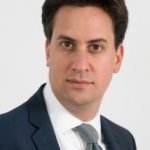
  • Ed Miliband – 2021 Comments on Employment Rights

    Ed Miliband – 2021 Comments on Employment Rights

    The speech made by Ed Miliband, the Shadow Secretary of State for Business, on 19 January 2021.

    After dismissing media reports and promising the Government has no plans to rip up workers’ rights, Kwasi Kwarteng has now let the cat out of the bag and admitted that they are conducting a review of those rights – including opting out of the 48 hour week which protects workers in key sectors like the NHS, road haulage and airlines from working excessive hours.

    A government committed to maintaining existing protections would not be reviewing whether they should be unpicked. This exposes that the Government’s priorities for Britain are totally wrong.

    Neither workers nor business want Ministers to take a wrecking ball to the hard-won rights of working people and families.

  • Thangam Debbonaire – 2021 Speech on the Government’s Future Homes Standard Announcement

    Thangam Debbonaire – 2021 Speech on the Government’s Future Homes Standard Announcement

    The speech made by Thangam Debbonaire, the Shadow Housing Secretary, on 19 January 2021.

    This is a real disappointment, given the Conservatives had suggested they would be accelerating the Future Homes Standard.

    The Government is already seriously behind on our climate targets. Cancelling Labour’s Zero Carbon Homes policy in 2015 wasted years of progress.

    To rebuild our country from Covid, we should be building homes now that are affordable to heat and durable for the future. This announcement sets out four more years of delay, which isn’t good for families, builders or the environment.

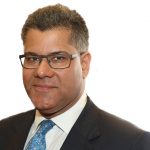
  • Alok Sharma – 2021 Speech at Abu Dhabi Sustainability Week

    Alok Sharma – 2021 Speech at Abu Dhabi Sustainability Week

    The speech made by Alok Sharma, the COP26 President, on 19 January 2021.

    Good afternoon.

    It is an absolute pleasure to join you today. At the beginning of what is a momentous year for our planet.

    Together we must make 2021 the year of climate action.

    And we have just ten years to bring our emissions under control. A decade to limit global temperature rises, to the levels set out in the Paris Agreement.

    The choices we make today will determine whether we or not we achieve it.

    The science is clear on the destruction we will unleash if we do not.

    Water supplies strained. Nature devastated. Human health increasingly stunted by the air we breath.

    So it is vital that we act now.

    As President of the next UN climate conference, COP26, I want this to be the year that all of us unite around the aims of the Paris Agreement.

    From governments, cities, and civil society. To businesses, investors, and development banks.

    So it is great to see Clover Hogan on today’s panel. Who is working to empower young people.

    And of course, my friend Laurent Fabius, who delivered the historic Paris Agreement.

    And Francesco La Camera. Under whose leadership, IRENA is supporting the clean energy transition around the world.

    I have four key goals.

    One, to strengthen adaptation – to respond to the realities of a changing climate.

    Two, to enhance international collaboration among governments, business and civil society.

    Of course, the UK works with the UAE on Mission Innovation, for example. Speeding up innovation in clean energy technologies.

    Three, I want to get finance flowing to climate action – both public and private.

    And I am calling on developed countries to honour their commitments on international climate finance and raise that $100 billion a year.

    And I am urging investors to take climate risk into account, and capitalise on the shift to clean, resilient growth across the world.

    I thank our hosts, Masdar, for their work on the global energy transition,

    including their support for UK offshore wind, which is powering British homes and businesses as we speak.

    The fourth, incredibly important, goal I want us to work towards is reducing emissions.

    I am calling on world leaders to come forward with ambitious Nationally Determined Contributions.

    To set out net zero targets, and long-term plans to achieve them.

    And to introduce policies to make these targets a reality.

    Phasing out fossil fuel subsidies.

    Deploying renewables faster.

    And moving to clean transport.

    I welcome the leadership the UAE has shown amongst the Gulf states.

    Its new NDC last December, setting a target that covers the whole economy,

    and some of the lowest solar power prices in the world.

    I am also urging business, cities and regions to take actions.

    To sign up to the Race to Zero campaign.

    And work to reach net zero emissions by 2050 at the latest.

    By signing up you will be joining over 450 cities, and 1400 firms which have already done so.

    Including the likes of the UAE’s Globesight, Microsoft and EDF.

    This is not just the right thing to do.

    It also helps to drive shareholder value.

    Whether it is finance, business, or our national economies, the opportunities presented by the move to clean growth are enormous.

    Once pre-election commitments made by President-elect Joe Biden are enacted, almost two-thirds of the world’s emissions will be covered by net zero commitments. A club that is growing all the time.

    Global trade in low-carbon goods and services is expected to grow up to 34 times between 2015 and 2050.

    By investing in clean sectors today, as we recover from the coronavirus pandemic, we can build clean growth into the heart of our economies.

    Creating jobs and prosperity.

    Here in the UK for example, our Ten Point Plan for a green industrial revolution will support and create a quarter of a million green jobs.

    Government investment in wind power, hydrogen, carbon capture usage and storage, electric vehicles and much more, will help to leverage in three times the amount from the private sector.

    The opportunities are there for the taking.

    So, friends, in this vital year for our planet, let’s come together.

    Let’s increase our ambition.

    And take action.

    To put the world on course for a clean and prosperous future.

  • Alok Sharma – 2021 Speech at the 11th International Renewable Energy Agency Conference

    Alok Sharma – 2021 Speech at the 11th International Renewable Energy Agency Conference

    The speech made by Alok Sharma, the COP26 President, on 19 January 2021.

    Excellencies, ladies, and gentlemen. It is an absolute pleasure to join you today.

    And I would like to thank Mr Francesco La Camera for the fantastic work IRENA is doing under his leadership.

    Friends, we all know that we must act now on climate change.

    If we do not, the consequences will be almost unimaginable:

    With crops failing.

    Nature devastated.

    And hundreds of millions threatened by rising seas.

    To avoid this, it is vital to decarbonise the energy sector, which accounts for around two-thirds of global emissions.

    And so I am asking governments around the world to do three key things to achieve it.

    First, raise ambition and action at home.

    Second, invest in clean recoveries in response to the COVID pandemic.

    And, third, work together to make progress on our climate ambitions.

    I am urging all countries to come forward with new Nationally Determined Contributions, and long-term strategies.

    And to put clear policies in place to achieve them.

    Policies like improving product efficiency standards.

    Phasing out coal power.

    Encouraging decarbonisation in those sectors where it is a challenge.

    And creating the policy environment to attract private finance.

    Getting finance flowing, both public and private, is one of my key COP26 priorities.

    Including urging developed countries to honour the commitment they have made to raise $100 billion a year in international climate finance.

    I am grateful to IRENA for its work on NDCs and long-term planning. And its support for countries on the clean energy transition.

    And I am pleased to say that here in the UK, we are acting.

    We announced a new NDC, consistent with our target to reach net zero by 2050.

    And last year, Prime Minister Boris Johnson announced our ten-point plan for a green industrial revolution.

    A plan to mobilise £12 billion of government investment.

    That spurs three times as much from the private sector.

    A plan to power every home in the country from offshore wind within a decade.

    And invest in nuclear, hydrogen technologies and Carbon Capture Usage and Storage.

    A plan which will support and create a quarter of a million jobs.

    This shows how investment in clean technology can drive our recovery from COVID-19.

    Which I know has been a focus of IRENA’s work.

    By aligning our recovery packages with the Paris Agreement, we can help to build clean growth into the heart of our economies.

    And of course many countries are doing fantastic work to invest in green recoveries. And now we need all leaders to follow suit.

    We are confident in this approach because we have seen that clean growth is absolutely possible.

    Over the past thirty years in the UK, we have seen our economy grow by 75 per cent while reducing our emissions by 43 per cent.

    We have also seen how, by working together, we can make progress faster.

    By increasing incentives for investment.

    Creating economies of scale.

    And accelerating innovation.

    Solar and wind power costs have fallen by 28% and 15% respectively, each time global deployment has doubled.

    But we only realise these benefits if we tailor our response to each challenge and sector.

    That is why international collaboration is one of the key goals of my COP Presidency.

    Our COP26 campaigns are bringing government, industry, investors, development banks, and civil society together, around five critical areas:

    Finance, nature, adaptation and resilience, clean transport, and, of course, clean energy.

    And we have created new forums for collaboration, like the Zero Emission Vehicle Transition Council, and the Energy Transition Council.

    And I would like to thank everyone involved with this work. Including IRENA, as a member of the COP26 Energy Transition Council.

    The work of this council includes improving the international support to developing countries to move away from coal.

    Friends, together, through ambition, collaboration, and investment in green recoveries, we can transform the global energy sector.

    So let’s take action now, to put the world on track for a clean and prosperous future.
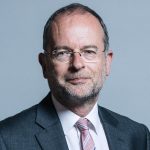
  • Paul Blomfield – 2021 Speech on Dental Services

    Paul Blomfield – 2021 Speech on Dental Services

    The speech made by Paul Blomfield, the Labour MP for Sheffield Central, in the House of Commons on 14 January 2021.

    Can I, too, express my gratitude to my hon. Friend the Member for Putney (Fleur Anderson) for securing this debate? Dentistry often does not get the attention it deserves when we are looking at health provision for the country, and today is an opportunity to address that.

    Clearly, the pressure on dental services preceded covid-19, but the pandemic has exacerbated it. In normal times—if we can remember them—the demand for NHS dentistry in Sheffield was huge, with unmet need amounting to more than 35,000 patients. That clearly has a long-term impact on oral health, and one that is particularly worrying for children.

    Then came covid-19, which has hit the sector hard. Frankly, to choose this time to impose new targets, without warning or consultation, shows either a lack of understanding or a lack of regard for the consequences. The 45% target will disrupt the priorities of dentists by imposing penalties for failing to hit levels of what are described as normal NHS activity in what are blatantly abnormal times. It will threaten the viability of practices, and worsen access to dental care across Sheffield and the rest of England.

    Dental practices have made huge efforts to be covid-secure, with cleaning and air-clearing procedures that mean they cannot see as many patients as usual. Many have therefore prioritised emergency and urgent care, and this normal activity target will skew their priorities away from those patients most in need. As one dentist explained it to me, they will be

    “forced to stop seeing emergency patients…and to push the limits of the sound infection control procedures brought in to protect patients and staff”.

    Another simply said:

    “These targets are the wrong choice at the wrong time”.

    This is not scaremongering, as has been suggested, but a real and genuine concern from dental professionals who care about the services they provide.

    Sheffield Central is in the top 10% of areas where NHS dental care was most impacted by the pandemic, according to a survey, and the Association of Dental Groups says that problems are particularly acute in the most deprived urban, coastal and rural areas. Imposing this target will hit those most in need—levelling down, not levelling up. We need to be growing our dental services, not threatening them with damaging targets.

    I have great regard for the Minister—we have worked together on other issues, and I know she takes her responsibilities seriously—so I do hope that she will listen to the concerns she has heard today from both sides of the House, talk to colleagues and review this contract.

  • Anthony Mangnall – 2021 Speech on Dental Services

    Anthony Mangnall – 2021 Speech on Dental Services

    The speech made by Anthony Mangnall, the Conservative MP for Totnes, in the House of Commons on 14 January 2021.

    I congratulate the hon. Member for Putney (Fleur Anderson) on securing this debate.

    The impact of covid on the dental sector has been profound, from the sector’s closure in March to the 20 million lost appointments, the 15 million-appointment backlog and the year-on-year decrease in those who visit the dentist. In previous years, being able to avoid the dentist may have seemed an art form, but it is rapidly becoming a significant and desperately serious problem, with mouth cancer diagnoses significantly down and major operations being put on hold or just avoided due to lack of access.

    It is right that we have to clear the significant backlog. While I do not oppose the concept of a UDA target, I do oppose the mechanism that penalises dentists who do not meet that target. I respectfully ask the Minister to consider whether the target could be rejigged so that people have the security and understanding that if they are unable to meet it, they will not see a loss of salary or any penalisation from the Government. Of course, we have already heard that 50% of dental practices are meeting that target, so we have seen an ability to deliver.

    The intent is right, but the mechanism is wrong and only adds to the extra stress that those who work in dental practices are already suffering. I do not deny that dental practices in my constituency are safe, but the individual set-up of each is very different; things such as the air purification systems that they implement will mean that they have different fallow times and will therefore also impact the UDA issue. There is a result here whereby different circumstances will mean that the overall target is unable to be met.

    I ask the Government to consider taking away the penalisation mechanism of UDAs, reimbursing the VAT costs faced by dentists on PPE, and ensuring that our dentists are treated as part of the primary healthcare network. We hope to encourage people to stay in this sector. We want them to do so—we do not want them to go towards private alone—so I hope that the Minister will be able to reassure me and many of the dental practices in my constituency.

    Dentists are not asking for any more than anyone else, but they have received significantly less than many of those out there. All that we ask the Government today is to treat our dental sector with the respect that it deserves and to help it deliver for those who most need it across the whole United Kingdom.

  • Sarah Owen – 2021 Speech on Dental Services

    Sarah Owen – 2021 Speech on Dental Services

    The speech made by Sarah Owen, the Labour MP for Luton North, in the House of Commons on 14 January 2021.

    Like so many aspects of our lives over the last year, the pandemic has meant changes for dentists and for our constituents as patients. During the first lockdown last year, dental care was paused and emergency dental hubs were set up as back-up, naturally creating a backlog of patients in the system. Already in this new lockdown, practices are facing patient cancellations and staff sickness and self-isolation. It is clear that Government support is needed. No patient or dental practice should be put out for doing the right thing during the pandemic.

    Over the last year, I have met dentists and heard from practice managers across Luton North, who have told me about the challenges of keeping people’s mouths healthy during a global pandemic. One Luton North practice got in touch this week to tell me that dentists have been told that they must still hit their targets of 45% for dentistry and 70% for orthodontics, even in this new lockdown. That seems grossly unfair.

    Across all health services right now, patients are reluctant to attend appointments for non-emergency treatment. Many GPs are not seeing patients face to face unless absolutely necessary, but the Government and the NHS are asking dental staff to put themselves at risk. The new obstacles that covid has brought are preventing dentists from being able to do their best for their patients. Will the Minister take these issues away and consult dentists?

    I was shocked to find that dentists are not recognised as key workers, so they will not be in the highest priority groups for the covid-19 vaccine. I understand that priority must be given to those most at risk of serious illness or loss of life, but dentists are healthcare workers. Dentists are essential, and they are put in high-risk situations with respect to covid on a daily basis. Will the Minister please lobby her colleagues and NHS England to put dental workers on the same level as healthcare workers when it comes to vaccinations?

    Let me finish with an even bigger ask. We know that dental health is a determinant of other health and public health issues and matches up with other health inequalities that are caused by or can lead to poverty and other kinds of ill health. I therefore want to see the Government listen and rise to the challenge that dentists in Luton North have put to me over the last year.

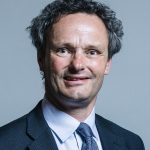
  • Peter Aldous – 2021 Speech on Dental Services

    Peter Aldous – 2021 Speech on Dental Services

    The speech made by Peter Aldous, the Conservative MP for Waveney, in the House of Commons on 14 January 2021.

    I congratulate the hon. Member for Putney (Fleur Anderson) on securing the debate.

    Before the pandemic, my engagement with the dental sector led me to form a number of views on how it served our communities. Those who work in dentistry are highly competent and well qualified professionals, but there are problems in recruitment, and it is increasingly difficult to find an NHS dentist. When good and highly respected dentists retire, they are hard to replace. There is a lack of accountability in NHS England and NHS Improvement, and the world of UDAs—units of dental activity—is opaque and difficult to understand.

    One readily reaches the conclusion that in normal times, the system does not work in the best interests of local communities and public health. Covid-19 presents those working in dentistry with enormous challenges. They are placed in a position of significant health risk, there is a dramatic reduction in capacity, and there have been some problems with those working in the sector being recognised as key workers.

    The Government were right to set up a network of urgent dental centres, and in many respects this has worked well, although I have received a lot of complaints about where and how to find them, being kept waiting on the phone for seemingly hours on end, and then difficulties getting an appointment. Not only is there the challenge of getting through the current lockdown, but the shadow of covid will hang over the sector for a very long time. There is an enormous backlog of work, and yes, although some of that may be classed as non-emergency, it is important to bear in mind that it is often a routine visit to the dentist that picks up cancer at an early stage.

    The position has been exacerbated by the Government writing to dentists before Christmas seeking to impose a 45% target of UDAs for January, February and March. The proposal has been described to me by dentists in my constituency as “completely irresponsible”, “disrespectful”, “neglectful”, “unsafe” and “inconsiderate”. It should be dropped. The Government need to work with dentists to come up with, first, a short-term plan to get through the immediate crisis, and then a long-term plan that is easy to understand, provides proper accountability and full national coverage of NHS dentistry, and ensures the recruitment and retention of highly trained professional staff.