Tag: 2021

  • Lisa Nandy – 2021 Speech on Yemen

    Lisa Nandy – 2021 Speech on Yemen

    The speech made by Lisa Nandy, the Shadow Foreign Secretary, in the House of Commons on 8 February 2021.

    We are not a bystander to this conflict—UK arms, training and technical support sustains the war in Yemen and the worst humanitarian disaster in the world. More than 80% of Saudi’s arms imports come from the US and the UK. The US’s decision to end all support for offensive operations, including relevant arms sales, is welcome, but it leaves the UK dangerously out of step with our allies and increasingly isolated. What is worse is that the UK is the penholder for Yemen at the UN. We cannot be both peacemaker and arms dealer in this conflict.

    It was the Foreign Secretary who said:

    “human rights will be at the forefront of our leadership this year”—[Official Report, 12 January 2021; Vol. 687, c. 178.]

    This is the first test since that statement just four weeks ago, and he has failed it. It is surprising, given the obvious panic in Downing Street about relations with the Biden Administration, that the Government were so reluctant to challenge President Trump’s decision to change the designation of the Houthis and are now determined to continue to be an outlier in arming Saudi Arabia. It puts us out of step with our US and EU allies, despite the compelling moral and diplomatic case to change course.

    When the Foreign Secretary re-emerges, perhaps he could confirm that he will now take long overdue action to end arms sales and support to Saudi Arabia and explain what possible reason there could be for not doing so earlier. Can he tell us whether he spoke with Secretary Blinken about this announcement before it was made and whether the US Government have asked for UK support in this matter? Will he tell us what he will do to live up to our responsibilities to reinvigorate the peace process and help bring this appalling conflict to an end?

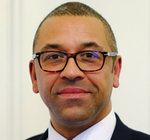
  • James Cleverly – 2021 Statement on Yemen

    James Cleverly – 2021 Statement on Yemen

    The statement made by James Cleverly, the Minister for the Middle East and North Africa, in the House of Commons on 8 February 2021.

    I thank my right hon. Friend the Member for Bournemouth East (Mr Ellwood) for asking a question on this important matter. The ongoing conflict and humanitarian situation in Yemen remain a challenge for the international community. The new Houthi offensive in Marib has only made our efforts to bring peace and stability even more difficult. Nevertheless, we continue to work with the international community to find a peaceful resolution, with an emphasis on the political process.

    The UK is playing a leading role in responding to the crisis in Yemen through both our humanitarian response and our diplomatic influence. We actively support the UN special envoy, Martin Griffiths, in his work to reach a political solution, and we pay tribute to his tireless efforts to bring about peace. The UK has pledged over £1 billion in aid to the humanitarian response since the conflict began.

    My right hon. Friend the Foreign Secretary and I have regular calls with partners on Yemen. Recently, the Foreign Secretary spoke to Secretary Blinken in the new United States Administration and to the Saudi Foreign Minister. Last month, I spoke with the Yemeni Foreign Minister to offer my condolences after the attacks at Aden airport. The UK has also used its role as the penholder at the UN Security Council to help move the Yemen peace process forward, working with our partners and allies at the United Nations to ensure that Yemen continues to be a top priority for the international community.

    We welcome the recent statement by President Biden to instigate a review of US foreign policy towards Yemen. Our ambassador in Washington has already spoken with the new US envoy to Yemen. I also welcome reports that the US may reverse the previous Administration’s designation of the Houthis as foreign terrorist fighters. The UK has engaged closely with the US Administration on that very matter.

    However, we cannot—we must not—ignore the Houthi actions. Those include the use of children and sexual violence as tools of war, the persecution of religious minorities and attacks on civilians. On 30 December, the Houthis attacked Aden airport, killing 27 civilians and injuring more than 100 others. We must address the Houthi sense of impunity, to make the peace process meaningful, and that must extend to other actors in the region, notably Iran. I note the US decision to pause its arms exports while it reviews its policy towards Yemen. I reassure the House that the Government take their own export responsibilities extremely seriously and assess all export licences in accordance with strict licensing criteria.

    The political settlement is the only way to bring about long-term peace and stability in Yemen and to address the worsening humanitarian situation. The Government remain committed to bringing an end to the conflict.

    Mr Ellwood

    Last week, President Biden gave his first foreign policy speech, reversing many of the isolationist policies of his predecessor and seeking to re-engage with like-minded allies in order to revisit major global hotspots neglected by the west. The complex civil war in Yemen, now entering its seventh year, was named specifically. Today, it is the largest humanitarian catastrophe in the world. The US President has appointed a new envoy, as we have just heard, and will end support for the offensive operations and connected arms sales, seeking to establish the conditions for a ceasefire and fresh peace talks.

    The war in Yemen is complicated. The country never properly stabilised following unification in 1990, and President Hadi has struggled to handle corruption, unemployment, tribal disputes and, most critically, separatist and extremist agendas pursued by the Houthis and al-Qaeda respectively. The Houthi advance into the capital in 2014 led to UN Security Council resolutions that legitimised a Saudi-led military coalition to support President Hadi. Despite many rounds of talks—some of which I was involved with, as a Minister—six years on, we are no closer to peace. Indeed, the conflict has spilled out into a wider proxy war.

    The US reset is to be welcomed, and this poses our first big test of what global Britain means in practice. In that spirit, I encourage the UK to fully align ourselves with our closest security ally by ending arms exports connected to the war and to reverse the cuts to our overseas aid budget. I recommend that, as the UN Security Council penholder on Yemen, the UK offers to host a UN summit that looks at political options for peace and that the UK is willing to commit British forces to any UN stabilisation effort that may be required once a political settlement is reached. This is a real opportunity for Yemen to end the war. I hope the Minister can confirm today Britain’s resolve to play a leading role.

    James Cleverly

    I thank my right hon. Friend for his thoughtful contribution and the work he did as Minister on this portfolio. I can absolutely confirm that the United Kingdom’s desire to bring about a peaceful settlement in Yemen is unwavering. We will continue to work with our international partners—both the United States and regional partners—to bring that about.

    My right hon. Friend made a number of specific points. The UK has—indeed, I have on a regular basis—spoken with the UN envoy to Yemen, Martin Griffiths, and we fully support his work. We will look at ways to bring together the various parties around the negotiating table. I note my right hon. Friend’s idea about a UK-hosted summit. He will understand that I cannot commit to something like that at the moment, but I welcome his thoughtful contribution. Similarly, he will completely understand that it would be inappropriate for me to speculate about what a military intervention might look like. The Saudi-led coalition was mandated at the UN Security Council; as he said, this is something he worked on during his tenure. We also note that the Kingdom of Saudi Arabia has a legitimate right to defend itself against attacks, and we completely condemn the attacks both within Yemen, at Aden airport, and cross-border, into the Kingdom of Saudi Arabia.
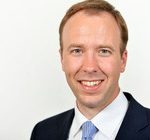

  • Matt Hancock – 2021 Comments on NHS Covid-19 App

    Matt Hancock – 2021 Comments on NHS Covid-19 App

    The comments made by Matt Hancock, the Secretary of State for Health and Social Care, on 9 February 2021.

    The NHS COVID-19 app is an important tool in our pandemic response. We know it has instructed hundreds of thousands of at-risk people to self-isolate since it launched in September – including me – and this analysis shows it has been hugely effective at breaking chains of transmission, preventing an estimated 600,000 cases.

    Isolating and knowing when you have been at risk of catching coronavirus is essential to stopping the spread of this virus, and the app is the quickest way to notify you if you are at risk.

    I want to thank all those who have played their part by downloading and using the app, and urge those who haven’t to take the simple step to protect your communities and loved ones and download it.

  • Nick Thomas-Symonds – 2021 Comments on Police Data Loss

    Nick Thomas-Symonds – 2021 Comments on Police Data Loss

    The comments made by Nick Thomas-Symonds, the Shadow Home Secretary, on 8 February 2021.

    This statement confirms many of the worst fears about the impact of this catastrophic data loss.

    It comes with no guarantees that the deleted data can be restored, whilst, even in the best case scenario, there will be 3 months during which criminals could walk free due to a dangerous lack of police records. A recent Ministerial letter also confirmed this could impact on international investigations.

    We do not trust a Government with this appalling lack of leadership and grip will be able to rectify these huge errors. An independent review is welcome, but Ministers need to take personal responsibility for this huge security breach.

  • Toby Perkins – 2021 Comments on Government’s Plan for Jobs

    Toby Perkins – 2021 Comments on Government’s Plan for Jobs

    The comments made by Toby Perkins, the Shadow Further Education and Skills Minister, on 8 February 2021.

    Young people are being let down by the Government’s irresponsible handling of this crisis which has led to soaring unemployment rates and the worst recession of any major economy.

    The Government should adopt Labour’s proposal for a structured wage subsidy instead of their failing cash incentives and create the apprenticeship opportunities young people need to gain productive skills and long-term employment.

  • Kate Green – 2021 Comments on Government’s Plan for Jobs

    Kate Green – 2021 Comments on Government’s Plan for Jobs

    The comments made by Kate Green, the Shadow Education Secretary, on 8 February 2021.

    The Government is trying to get away with quick fixes, which are selling young people short and failing to create the training and employment opportunities they need.

    The Chancellor’s failure to secure our economy means the pandemic is wreaking havoc with the jobs market and now more than ever people need access to training and the chance to learn new skills.

    Labour has repeatedly called for a plan to rebuild businesses, investing in local communities to create the jobs people need after this pandemic.

  • Lucy Powell – 2021 Comments on End of Financial Support to Business

    Lucy Powell – 2021 Comments on End of Financial Support to Business

    The comments made by Lucy Powell, the Shadow Business and Consumers Minister, on 9 February 2021.

    The Government’s failure to ensure economic support is adequate and goes hand in hand with public health measures has meant we’ve seen the worst recession of any major economy and the worst growth.

    The £50 billion business bombshell firms face must be defused before it blows a hole in our economy. We need a smarter furlough scheme, and better support for businesses, to secure jobs and get Britain on the road to recovery.

  • Gillian Keegan – 2021 Comments on National Apprenticeship Week

    Gillian Keegan – 2021 Comments on National Apprenticeship Week

    The comments made by Gillian Keegan, the Apprenticeship and Skills Minister, on 8 February 2021.

    Coronavirus has had a huge impact on lives and livelihoods. As we build back better from the pandemic, we need to make sure people are able to take advantage of the opportunities apprenticeships provide.

    Whether it’s the benefits to the individual – the chance to earn while you learn, opening up new career paths that can transform lives. Or the benefits to business giving access new talent from all backgrounds.

    This National Apprenticeship Week we should celebrate the apprentices up and down the country who have been stepping up throughout the pandemic to support the national effort. I am calling on everyone to get involved in to raise awareness of all the fantastic opportunities that are out there and share their inspiring stories.

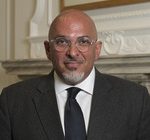
  • Nadhim Zahawi – 2021 Statement on the Vaccine Rollout

    Nadhim Zahawi – 2021 Statement on the Vaccine Rollout

    The statement made by Nadhim Zahawi, the Secretary of State for Health and Social Care, on 8 February 2021.

    Earlier this week, we saw one of the greatest milestones in our fightback against this virus, as the number of people who received their first dose ticked over 10 million, and has now surpassed 12 million.

    We’re now vaccinating at an incredible pace, and during one hour on Saturday we delivered nearly 1,000 jabs a minute across the United Kingdom.

    The vaccine is our way out of this pandemic, and it is thanks to the hard work of everyone involved that we have vaccinated over 90% of over 75s and visited every eligible care home possible with older residents in England.

    From the moment COVID-19 was identified over a year ago, the global community of researchers, scientists and manufacturers have concentrated all their expertise and their efforts into vaccines and treatments so we can beat this virus.

    The emergence of other variants is yet another challenge they are rising to meet.

    Our world-leading genomics capacity has allowed us to identify these different strains when they have appeared in the UK. Where we have seen evidence of the South African variant or other worrying mutations, we have moved to deploy surge testing to try and stop it spreading any further.

    It is a timely reminder that currently, even with the vaccine rollout going well, we all need to live by the national restrictions and act as if we might have the virus to stop us spreading it.

    We have also taken stringent measures to stop new variant cases coming into the country, with travel bans for over 30 countries identified as having the highest risk of importing these variants. This is in addition to the negative test you need to arrive in the country, and the 10-day quarantine you must undertake once you are here.

    I know the government is working at speed to introduce a further measure of enforced hotel quarantine for arrivals from high-risk countries to introduce yet another barrier against these variants coming into the UK.

    Our brilliant scientists and medical advisers are now working on the potential for new versions of existing vaccines to offer further protections against COVID variants. Last week we announced an agreement with the manufacture CureVac to allow new varieties of vaccines based on messenger RNA technology to be developed quickly and to procure 50 million doses of a new version of a vaccine, if it is required.

    But we should bear in mind that recent studies show the vaccines being deployed right now across the UK appear to work well against the COVID-19 variants currently dominant in the UK. In terms of other variants, not in the UK, we need to be aware that even where a vaccine has reduced efficacy in preventing infection there may still be good efficacy against severe disease, hospitalisation, and death. This is vitally important for protecting the healthcare system.

    While it is right and necessary to prepare for the deployment of an updated vaccine, we can take confidence from the current roll out and the protection it will provide all of us against this terrible disease.

    We are ready to protect our most vulnerable and stay a step ahead of the virus, whatever it throws at us.

    Thanks to the work you’re doing, we’re getting safer every day. But even though this programme is accelerating rapidly, this is still a lethal virus that is capable of causing devastation and disruption.

    So while the vaccinators do their work, we must all keep following the steps that we know make a big difference: hands, face, space, and if you have symptoms get a test.

  • Kwasi Kwarteng – 2021 Comments on Pay as You Grow Repayments

    Kwasi Kwarteng – 2021 Comments on Pay as You Grow Repayments

    The comments made by Kwasi Kwarteng, the Business Secretary, on 8 February 2021.

    The comprehensive and generous financial support package we have delivered across the UK has protected jobs, saved businesses and kept local economies on the move.

    While our vaccine rollout is moving at an incredible pace and the end is in sight, we know times are still tough for many companies and extra support is needed.

    These flexible repayment options will give businesses the time they need to recover from the pandemic before paying back loans, giving them the breathing space and confidence to build back better.