Tag: 2021

  • Bob Stewart – 2021 Speech on PC Yvonne Fletcher

    Bob Stewart – 2021 Speech on PC Yvonne Fletcher

    The speech made by Bob Stewart, the Conservative MP for Beckenham, in the House of Commons on 23 February 2021.

    On 17 April 1984, Woman Police Constable Yvonne Fletcher of the Metropolitan police was fatally wounded by a gunman. He was hiding in the Libyan People’s Bureau, which was in St James’s Square in London. In this debate, I want to remember her by talking about her life and her tragic death, as well as making a request that she, even now, be considered for a posthumous gallantry award. I do not intend to speculate about who was responsible for pulling the trigger, as I believe there is now very little chance of bringing the murderers to justice, much as I would dearly like to see that happen.

    Yvonne Fletcher was born on 15 June 1958. Her parents, Michael and Queenie Fletcher, lived in Semley, Wiltshire. Yvonne was the oldest of four daughters, and from the age of three, she told her parents that she wanted to join the police. It was her primary ambition in life. By the time she was 18 and a half, she tried, but she was 1½ inches too short to reach the height required; she needed to be 5 feet 4 inches, and she was 5 feet 2½ inches. Disappointedly, she applied for any police service that she could get into, which included the Royal Hong Kong police. Yvonne’s persistence paid off, and the Metropolitan police waived the height requirement in her case. She must have been very special for them to do that.

    After training and a two-year probationary period, she was confirmed as a regular woman police constable. After being given her warrant, she spent most of her police service working from Bow Street police station. It was there that she became engaged to another police officer, Police Constable Michael Liddle. For some six years, Yvonne was based at Bow Street, where she was hugely respected and liked by her fellow officers. I gather she was called “Super Fletch”, and that was because, first, they liked her, and secondly, she was very good at her job.

    On 17 April 1984, Yvonne was asked to reinforce a police operation monitoring a demonstration of mainly Libyan students who were protesting about the regime of Colonel Gaddafi. The main part of that demonstration was occurring in St James’s Square. A detachment of about 30 police officers was sent to St James’s Square, including Yvonne Fletcher, her fiancé Michael Liddle, and members of the police diplomatic protection group. The anti-Gaddafi protesters consisted of about 75 people, and their demonstration started at about 10 am. Many of the demonstrators were wearing masks to make sure that they could not be identified by photographers standing at the windows of the Libyan People’s Bureau. Gaddafi’s regime had a habit of murdering opponents, wherever they were in the world, so this precaution was very sensible.

    The police had erected barriers. The demonstrators were behind them, and Yvonne and her colleagues were in front. The demonstrators carried anti-Gaddafi banners and chanted slogans against the dictator. I think that there was actually a pro-Gaddafi protest there as well. Suddenly, at 18 minutes past 10, automatic gunfire was discharged from two windows of the People’s Bureau. It was presumably directed at the anti-Gaddafi demonstration, but a round hit Yvonne Fletcher. I suspect that the gunman simply sprayed the area and did so without really looking out of the window, with their hands up so that they could not be identified. The bullet entered Yvonne’s back and tore through her body. She collapsed on the road. Several other people were wounded, although none was as badly hurt as Yvonne.

    The police shepherded the demonstrators into Charles II Street, while several of Yvonne’s police colleagues tried to save her. I quote from an email that I received from PC John Murray, who was with her at the time. Forgive me for quoting directly, but he did email me last week. He said:

    “Yvonne was shot from the bureau, and fell to the ground. I went over to her. I was only feet from her and cradled her head. The square quickly emptied, leaving three of us with Yvonne. We carried her into a nearby street and I went with her in the ambulance to hospital. In the ambulance there were other Libyan students who were bleeding from their wounds, but she seemed more concerned about them. ‘Keep safe. Be calm,’ she said.”

    What incredible courage and conduct for a young woman of 24 or 25. What an example—to the Metropolitan police themselves and to every one of us. I am in awe of that, and I suspect that anyone listening is too.

    At 10.40 am, Yvonne had been taken to Westminster Hospital. For some of the time going there, she was conscious but in huge pain. As she was being transferred from the ambulance on to the trolley in the hospital, the spent bullet that had travelled through her body fell out of her uniform. Yvonne was taken straight into the operating theatre, but it was too late; she died on the operating table at about midday.

    Yvonne’s hat and four other officers’ helmets were left lying in the square during the ensuing siege of the bureau. At the time, I was a staff officer in the Ministry of Defence. In the days that followed, I remember—I suspect others do too—the images of the hats and helmets in St James’s Square being shown repeatedly in the media, on the television and in newspapers.

    Ten days later, on 27 April, a police officer called Clive Mabry, acting against specific orders, ran in and retrieved Yvonne’s hat from in front of the bureau. Getting that hat back was hugely symbolic and doing that meant one heck of a lot to the policemen and policewomen. Typically for any uniformed organisation—I have been in one myself—Mabry was admonished, but praised too. He was fined seven days’ pay by the police for his indiscipline, as well as being given the freedom of the City of London for doing the right thing. The hat was placed on Yvonne’s coffin for her funeral, which took place later the same day in Salisbury Cathedral. Six hundred policemen attended that funeral.

    Yvonne’s conduct exemplified the very highest standards of the Metropolitan police service. When she was mortally wounded, she seemed to care more about others who were with her in the ambulance than herself. What courage she displayed by saying to those trying to look after her that they should keep safe and stay calm. That was within minutes of her death. She did that when she must have been in the gravest of agony.

    From my own experience of writing citations, may I suggest that a posthumous award of the George Medal could be considered, despite the passage of years, and because of Yvonne’s calm, courageous demeanour while she was grievously wounded, and dying? As so many of us remember, Police Constable Keith Palmer was murdered near here, in New Palace Yard, on 22 March 2017. He was awarded the George Medal posthumously. I believe there should be such an award for Yvonne Fletcher, who showed valour of a similar nature to that of Keith. Keith tried to stop the madman, although he was unarmed; it cost him his life. Yvonne was saying things and showing, in the way she behaved, how courageous she was.

    Mr Mark Francois (Rayleigh and Wickford) (Con)

    In view of my right hon. Friend’s elevation to the Privy Council, on which I congratulate him, I believe his recommendation carries even more weight. Some years ago, I was Veterans Minister at the Ministry of Defence. I was never a Minister in the Home Office; nevertheless, I pay tribute to Keith Palmer, and also to Yvonne Fletcher. For what it is worth, may I wholeheartedly endorse my right hon. Friend’s recommendation that her valour and conduct is wholly worthy of the award of the George Medal?

    Bob Stewart

    Thank you, on behalf of everyone who is campaigning. The more of us who say it, the better.

    Jim Shannon (Strangford) (DUP)

    Will the right hon. Gentleman give way?

    Bob Stewart

    I give way to my honourable friend—he is my hon. Friend, even though he is in the Opposition.

    Jim Shannon

    The right hon. Member for Beckenham (Bob Stewart) has a great part in every one of our hearts. I salute him, as an honourable and gallant Member.

    I remind him as well that we in Northern Ireland have felt all too often the devastation of the death of our serving police officers. I know that the right hon. and gallant Gentleman will have known some of those officers who served and died for Queen and country. Does he agree that the message must be clear in every part of the United Kingdom of Great Britain and Northern Ireland that every life is precious, that there will be no tolerance of the murder of those who served, and that the maximum penalty can and will be applied on every occasion? I support entirely the campaign on behalf of Yvonne Fletcher. I wish the hon. Member well, and I hope that the Minister will respond in a positive fashion.

    Bob Stewart

    I thank the hon. Member. All I can say to that is that I entirely agree with him on the Police Service of Northern Ireland and its predecessor, the Royal Ulster Constabulary.

    To make a little aside, when someone is killed in the military, they give out the Elizabeth Cross to the next of kin. I would have thought that that is quite a nice thing to consider doing for the police. It is just a thought, which has only just come into my brain at this moment, but the Elizabeth Cross really means something to the next of kin of people who have lost their lives serving in the military. I would have thought that for the police that would be quite a good idea, too.

    The hon. Member for Ayr, Carrick and Cumnock (Allan Dorans), who was a serving officer in the Metropolitan police on the day that Yvonne was murdered, cannot be with us today. He has told me that he did not know Yvonne personally, but he did know that she was an exceptionally talented, passionate and caring young police officer who loved her job and the opportunity to help people—she was really good at that. He told me that he would provide full support for the posthumous award of a George medal.

    As I prepared for this debate, I have personally spoken to 59 past and present members of the Metropolitan police about Yvonne Fletcher. Only one or two of those officers needed to be reminded who she was, and that is because they were not even born when this incident happened, but to a man and to a woman they were utterly supportive that such recognition should be given to their incredibly gallant late colleague. I entirely agree with them. Thank you, Madam Deputy Speaker—over to my friend the Minister.

  • Robert Jenrick – 2021 Speech to the Centre for Social Justice

    Robert Jenrick – 2021 Speech to the Centre for Social Justice

    The speech made by Robert Jenrick, the Secretary of State for Housing, Communities and Local Government, on 25 February 2021.

    Thank you for that kind introduction.

    It’s a pleasure to join you and the Centre for Social Justice at the launch of your ‘Close to Home’ report which makes a really powerful contribution to the debate around how we can end rough sleeping.

    In particular, I want to thank Andy Cook and Joe Shalam who are tireless campaigners; the work that the CSJ publishes is both inspirational and integral to our plans for the future.

    What guides you is what guides this government: a belief that opportunities should be more equal and background no barrier to success. And a commitment to helping those who have been held back by accident, circumstance or misstep, to achieve the fulfilment and happiness of rewarding work, security at home and nourishing relationships.

    The pandemic has reminded us as Robert Kennedy said, that those who live with us are our brothers and sisters, that they share with us the same short moment of life, that they seek, as we do, nothing but the chance to live out their lives in purpose and in happiness.

    Which is why our goal to reduce rough sleeping is more important than ever.

    An extraordinary thing has happened over the course of the past year: the pandemic has accelerated and magnified many forces like never before, upending people’s lives, businesses and communities. But it is rare that something entirely positive has happened, and that is the manner in which we as a country have supported rough sleepers throughout the pandemic.

    Our priority is to ensure that the 37,000 vulnerable people and rough sleepers ‘Everyone In’ has helped never return to a life on the streets. We have made good progress so far with at least 26,000 of those supported by the programme now in long term accommodation, and new figures published today paint a picture of a country that is changing.

    I am pleased to tell you that the number of people sleeping rough has fallen for the third year in a row. Across England, the numbers have fallen by 37% to 2,688. And since Boris Johnson became Prime Minister, the number of people rough sleeping has reduced by over 40%.

    We have also published, alongside the snapshot this year, additional management information indicating that the number of people on the streets reported by local authorities fell to 1,743 in December and 1,461 in January.

    For the first time in many years London has seen a significant fall as well, mirroring the rest of the country with a 37% decrease. And again, that achievement has been built upon in the months that have passed since.

    I want to say thank you to the hard work of Rachael Robathan and Georgia Gould – the leaders of Westminster and Camden councils and their respective teams in the West End. The London figures published today, which show the largest decrease since these statistics began, highlight the impact of their work and the dedication of the staff.

    We’ve seen a number of areas that have reached 0 rough sleepers at the snapshot – including Ashford and Basingstoke – among many others. And major cities have seen quite exceptional improvement, like Birmingham where numbers have fallen to just 17 people.

    Having, I hope, praised the many great achievements, in all types of places and by councils of all political colours, it is worth noting that there are wide variations, which shows that whilst some local authorities have achieved truly exceptional things this year, there are others somewhat less so. There are differences of approach and of commitment. Those yet to conquer this issue must learn from those that have or are on the way.

    It is almost a year since I phoned Dame Louise Casey and discussed how the pandemic would impact rough sleepers. Not then a reality in this country, a distant threat, but one whose drumbeat was drawing inexorably closer and louder. Louise was in Australia, struggling to get a flight home. We agreed immediately that the right approach was to emphasise protecting the most vulnerable people among us. And upon her return she came to Marsham Street and in her characteristic way, gave herself fully to the task ahead. I’m immensely grateful to Louise for her energy, commitment and friendship.

    That conversation, and the meetings that took place in the following weeks led to the birth of the Everyone In programme, and later the next phase, our Protect Programme. A programme that has saved many lives.

    TS Eliot said that sometimes things become possible if we want them badly enough. That describes Everyone In. But you also need exceptional people. The work of staff in shelters, of council support workers, of outreach workers, of volunteers at soup kitchens and to so many others – whose work is unglamorous and often unnoticed, but is vital and noble.

    I should also like to place on record my gratitude for the commitment and dedication of the civil servants at the Ministry of Housing with whom I work. Under the superb leadership of Penny Hobman and Catherine Bennion, who demonstrate every day a real passion and idealism for this cause.

    We know that the community, charity and faith sectors are instrumental to this effort. Importantly, nobody comes off the streets because of the work of one agency. A critical element of the success of Everyone In was due to the quality of our partnerships: so I must extend thanks and gratitude to those charities that have paved the way on this issue, especially to the inspirational Jon Sparkes from Crisis and Petra Salva from St Mungo’s.

    And I need to thank my two immediate predecessors in this role, Sajid Javid and James Brokenshire. It would be wrong to see Everyone In as some kind of remarkable start-up. Its success was built on the foundations they had laid. Both cared passionately about this issue, and indeed do still.

    Sajid started the Housing First pilot – work that as we will hear today, the CSJ has proved so vital in spearheading. The Homelessness Reduction Act happened under his leadership. James oversaw the reinvigoration of the Rough Sleepers Initiative, whose impact is well evidenced and had driven the two prior years of reductions, in 2018 and 2019.

    As our vaccination programme gathers speed and we begin to turn the tide on COVID-19, it is right that we cement the incredible gains we have made over the last twelve months, acknowledging the seriousness and the weight of the challenges we have yet to face.

    The late Lord Ashdown, in a notable speech on homelessness, once compared tackling rough sleeping at times of economic disruption to “leaves in a gale” – the faster you collect the leaves, the faster they gust away again, and all the time more fall around you in the headwind. And there will be headwinds to come as we exit lockdown and move beyond the pandemic.

    The truth is, we cannot begin to tackle this issue until we begin to tackle its causes: which are multi-faceted and complex. Unemployment, family breakdown, domestic abuse, insecure housing, criminal justice policy, failures in our immigration system, and above all else – substance misuse and mental health. So we’re utilising the expertise of all government departments from the Ministry of Justice and the Home Office to the Departments of Health and of Work and Pensions, investing over £750 million next year to continue to reduce homelessness and rough sleeping and invest in preventative programmes which tackle the underlying issues early.

    It is vital that we bring together health and housing to tackle rough sleeping. The marriage of health and housing will be the heart of our strategy.

    That is why we have brought forward an investment of £150 million in long-term housing through our Rough Sleeping Accommodation Programme, delivering 3,000 new homes.

    And a further £272 million will be invested over the course of this Parliament providing 6,000 vital new homes for rough sleepers – the largest ever investment of this kind. These will be a national asset – symbols of hope and opportunity for those looking to turn their lives around.

    Thanks to the hard work and perseverance of Robert Buckland and Lucy Frazer at the Ministry of Justice, we are tackling reoffending, ensuring more prison leavers are offered accommodation at release and building a criminal justice system based on second chances and redemption. That takes inspiration from, amongst others, the direction set by Michael Gove when he was Justice Secretary – and I his bag-carrying PPS. It has always stayed with me that more than 50% of rough sleepers have spent time in prison. This must be at the front of our minds as we frame our strategy.

    At the Home Office, Priti Patel shares my commitment to supporting victims of domestic abuse and together we have seen the Domestic Abuse Act implemented and fully funded with £120 million of financial support for local councils next year. And together we will use the new freedoms we have as a sovereign country, to create a better and fairer immigration system, so that fewer foreign nationals end up on our streets and those that do can be compassionately and considerately returned to their home countries.

    On health and housing, almost two thirds of homeless people cite addiction to drugs and alcohol as both a cause and consequence of rough sleeping. We know the toll that substance misuse takes on individuals and on families – and drug addiction is a global human crisis, at the very heart of this issue, more important than ever as we come out of the pandemic; which emerging evidence suggests has amplified substance misuse through unemployment, isolation and anxiety.

    The homeless will not be forgotten when it comes to the vaccination. Last night we asked all local authorities to redouble their efforts to safely accommodate as many rough sleepers as they can and to register them with a GP, as a good in itself, but also as a precursor to vaccination. At this crucial stage in our vaccination programme, there really is no time to waste. So we have also allocated a further £10 million of funding to help protect people rough sleeping this winter and ensure their wider health needs are met.

    We need to follow in the footsteps of my now somewhat distant predecessor Sir George Young who worked hand-in-hand with homelessness charities in pioneering the first Rough Sleeping Initiative.

    That same sense of urgency and resolve is needed again today.

    I want to be unequivocal in stating that we will use every mechanism at our disposal to achieve our goal.

    And yes, Housing First is an integral part of that mission. I’m grateful to Brooks Newmark for his role in establishing Housing First. As a former Treasury Minister under Philip Hammond I can say it was no mean feat of Brooks and Sajid to persuade him to back it.

    Our £28 million Housing First pilots in Greater Manchester, Liverpool and West Midlands are already supporting around 800 of our most vulnerable people off the streets and into secure homes. 600 are now in permanent accommodation. Over 2,000 other Housing First places have been created, many funded through the Rough Sleeping Initiative and our new accommodation programme draws inspiration from it.

    I have seen it in action myself. Last Christmas Eve I met a woman in Walsall and Housing First was helping to turn her life around after several years of sleeping rough in local parks and of drug addiction. It was working and she was re-entering society and re-establishing herself as a productive member of it. As I left her flat to drive home to my family, I turned around and watched her welcome her children to her home for the first time in many years. For their first Christmas together in many years. I couldn’t help, but cry.

    Rough sleeping a terrible waste of lives. To see dignity and purpose and the love of family and friends restored is a wonderful thing to behold.

    So I will champion Housing First. One solution – it goes without saying – will not fit all. This must be multi-targeted and multi-focus. But the principle that everything begins with a home will be our guiding star.

    Our strategy will be refined, with the guidance and support of all those willing to offer it to us, but our objective is clear, that no one should have to sleep rough in this country. That is a litmus test of a civilised society. And we will raise the safety net from the street, but addressing the causes as well as the consequences. Not so much no second night out, but no first night out.

    As we come out of the pandemic, and as the Prime Minister has said, we must aspire to build back better. This means not merely mending, or simply restoring a status quo. Nor even more improvement.

    It is not like teaching a horse to jump better, but like turning a horse into a winged creature that will soar over fences which could never have been jumped, said CS Lewis. It is in that spirit we will work, together, to resign rough sleeping to the history books once and for all.
  • Grant Shapps – 2021 Comments on Ghost Flights

    Grant Shapps – 2021 Comments on Ghost Flights

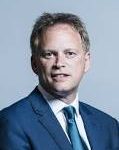
    The comments made by Grant Shapps, the Secretary of State for Transport, on 26 February 2021.

    I want to restart international travel as soon as it is safe and the slots waiver is a critical part of making that happen.

    With airlines flying a smaller proportion of their usual schedules, the waiver means carriers can reserve their finances, reduce the need for environmentally damaging ‘ghost flights’ and allow normal services to immediately restart when the pandemic allows.

  • Luke Pollard – 2021 Comments on Amazon Rainforest Plots Being Sold on Facebook

    Luke Pollard – 2021 Comments on Amazon Rainforest Plots Being Sold on Facebook

    The comments made by Luke Pollard, the Shadow Environment Secretary, on 26 February 2021.

    The Amazon is our planet’s green lung and it’s vital we protect it from destruction. Social media companies have a moral duty to ensure their operations are not enabling deforestation and illegal sales of forest.

    The Government must urgently act to make sure that UK companies do not trade on the back of rainforest destruction.

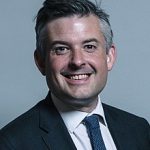
  • Jonathan Ashworth – 2021 Comments on NHS Staff Pay

    Jonathan Ashworth – 2021 Comments on NHS Staff Pay

    The comments made by Jonathan Ashworth, the Shadow Secretary of State for Health and Social Care, on 25 February 2021.

    Our NHS staff deserve a fair pay rise. If Rishi Sunak next week refuses it will be kick in the teeth to our brave hardworking NHS heroes.

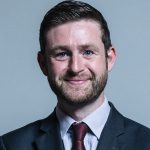
  • Jim McMahon – 2021 Comments on Smart Motorways

    Jim McMahon – 2021 Comments on Smart Motorways

    The comments made by Jim McMahon, the Shadow Transport Secretary, on 26 February 2021.

    Dozens of people have lost their lives on smart motorways, so this investigation is welcome. Ministers must act now and do what Labour has called for – reinstate the hard shoulder while a full review is carried out and the results brought back to the Commons.

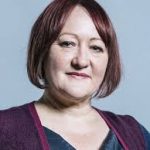
  • Kerry McCarthy – 2021 Comments on Net Zero Emissions from Cars

    Kerry McCarthy – 2021 Comments on Net Zero Emissions from Cars

    The comments made by Kerry McCarthy, the Shadow Minister for Green Transport, on 26 February 2021.

    The NAO is absolutely right to call for a clear plan from the Government in reaching net zero emissions from cars.

    Transport is the largest contributor to UK emissions, yet the Government doesn’t even have a plan to ensure that we will be ready for the ban on the sale of new petrol and diesel cars in 2030, let alone zero emissions by 2050.

    Labour’s Green Recovery plan would prioritise building zero emission vehicles in the UK and rapidly rolling out the charging infrastructure required for a smooth transition to cleaner transport.

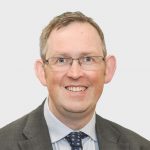
  • Paul Maynard – 2021 Speech on the Government’s Management of the Economy

    Paul Maynard – 2021 Speech on the Government’s Management of the Economy

    The speech made by Paul Maynard, the Conservative MP for Blackpool North and Cleveleys, in the House of Commons on 23 February 2021.

    Let us be clear about this debate: it was Labour who failed to fix the roof while the sun was shining, so that when the financial crisis struck, we lacked the resilience we needed as a nation to do what was necessary. Labour spent a decade pretending that it never happened—that it was a global crisis that did not affect us here and was nothing to do with them. But there was no money left, as that famous letter said. Despite having spent the last few weeks campaigning to regulate the “Buy now, pay later” sector, it is clear that Gordon Brown was the founder of the Klarna approach: he spent now and bought now, expecting the British people to be the ones to pay later.

    After 2010, the Conservatives did fix the roof, and we now have the financial resilience we need to do what we have had to do to protect jobs and livelihoods as the coronavirus wave broke across our shores. Labour harp on about those they claim have not benefited from a Conservative Government, both before and during the pandemic. However, it would be remiss of me, representing a constituency with so much deprivation, not to observe that it is this Conservative Government who cut income tax by around £1,200 for the average basic rate taxpayer, by lifting the income tax threshold to £12,500. Labour’s approach, of course, was to abolish the 10p rate of income tax. Income inequality, however we measure it, is lower than it was in 2009-10, and a third fewer children live in a workless household. Although there is more to do to tackle in-work poverty, I find it hard to credit that some see this reduction still as a bad thing.

    We introduced a national living wage, which raised incomes in areas of low average incomes such as my constituency, and universal credit to address the challenges of seasonal unemployment, which were such a scourge in seaside resorts, and let us not forget that the top 1% in this country pay a greater share of income tax than they did when Labour was in power.

    To be fair to the shadow Chancellor, who I believe is that rare thing, a thoughtful politician, I do not think she would deliberately seek to drive the economy over the cliff. However, I fear that she would be too busy rummaging in the glove box for a Labour road map to see what was fast approaching. In her Mais lecture in January, she quoted Gordon Richardson’s 1978 Mais lecture, in which he said:

    “We are now at an historical juncture when the conventional methods of economic policy are being tested.”

    In trying to apply that to now, she seemed to miss the irony that it was a criticism of precisely the statist solutions that Labour offered in the 1970s and is reheating now.

    Like every Opposition day debate so far in this Parliament, this debate has had an air of unreality about it. It is only thanks to Conservative policies that we are in the position we are in to deal with the crisis we face now.

  • Christina Rees – 2021 Speech on the Government’s Management of the Economy

    Christina Rees – 2021 Speech on the Government’s Management of the Economy

    The speech made by Christina Rees, the Labour MP for Neath, in the House of Commons on 23 February 2021.

    There is no starker contrast of how flawed the UK Government’s economic model has been than when compared with the approach of the Welsh Labour Government. More than a decade of Tory austerity has left the UK completely unprepared to deal with the global pandemic. Despite UK Government cuts and austerity across Wales, our wonderful NHS staff, council workers, emergency services and many more work tirelessly to keep us safe and keep Wales running.

    The Welsh Labour Government have provided extra support for local authorities: £500 million to deliver key services such as social care and test, trace, protect; and to make sure that businesses receive vital support grants. In Wales, nine out of 10 people who test positive for coronavirus provide details of their close contacts, and almost 90% are successfully contacted and advised. The Welsh system is working because it is a public service run locally. The Welsh Labour Government have made a special £500 payment to more than 67,000 social care staff working in people’s houses and in care homes, including for domestic and personal assistance. They continued their commitment to free school meals when Wales became the first UK nation to guarantee provision throughout school holidays, and they have now extended this to Easter 2022, feeding over 105,000 children in Wales. At the beginning of the pandemic, the Welsh Labour Government helped homeless people into accommodation, and more than 3,200 people are now in temporary accommodation.

    Businesses in Wales have had access to the most generous support package in the UK. The £2 billion economic resilience fund alone has secured 141,000 jobs. At the 2016 Senedd elections, the Welsh Labour manifesto set out six key pledges, and it has delivered on every pledge: an additional £100 million for schools; 100,000 all-age apprenticeships; a cut to business rates for local businesses; a new £80 million treatment fund; doubling the capital limit for older people going into residential care; and 30 hours’ free childcare for 48 weeks for parents of three and four-year-olds. Today, the Welsh Labour Government have announced their strategy to rebuild the post-pandemic Welsh economy, taking the opportunity to look to the future, with a long-term focus on wellbeing, dignity and fairness for people, and supporting workers, businesses and communities to succeed and prosper.

  • Andrew Mitchell – 2021 Speech on the Government’s Management of the Economy

    Andrew Mitchell – 2021 Speech on the Government’s Management of the Economy

    The speech made by Andrew Mitchell, the Conservative MP for Sutton Coldfield, in the House of Commons on 23 February 2021.

    I draw the House’s attention to my entry in the Register of Member’s Financial Interests.

    The background to today’s debate is that no other Government in the western world have given such trenchant taxpayer support to their citizens. I read, as I am sure my colleagues did, the relaunch speech by the Leader of the Opposition, but it seemed to me that his guiding theme merely followed the defining levelling-up agenda of this Conservative Government.

    I have no doubt that many speakers today will look at the last five years of this Government, but I would like to look at the first five years referred to in the motion, from 2010. When the coalition assembled in 2010, one in every three pounds of public expenditure was borrowed, and as a result of that difficult and dangerous financial position, tough decisions were taken about reductions in expenditure. Incidentally, the same fiscal tightening took place in Britain as took place in Obama’s America. As a result of those courageous decisions, six things happened, many of which were down to the skilful stewardship of George Osborne.

    First, the UK had the strongest recovery among the G7 countries. More British jobs were created than under any other Government in history. By 2015, we had the fastest income growth among the lowest-paid 20% in the country. We had the most sustained and consistent fall in our deficit among the G7, and we introduced the national living wage. Meanwhile, the NHS performed more operations than ever before and crime fell in every year. The UK was the No. 1 recipient of inward investment in the G20.

    Like many of us, but especially me, I am incredibly proud to have served in a Government who, in spite of the economic difficulties, refused to balance the books on the backs of the poorest people in the world and implemented our 0.7% promise on international development. I am proud it was a Conservative Government who finally implemented the promise to the world’s poorest to spend 0.7% of our gross national income on international development. I know that the Government are considering breaking this promise, a manifesto commitment that all of us entered into just over a year ago, but I urge them not to do so. We would be the only G7 country to take this action, while America is increasing its development spending by $15 million. Although it is £4 billion, which is a great deal of money, it is just 1% of what we have borrowed in the last year. It will result in hundreds of thousands of avoidable deaths, mainly among children, and it will destroy a key and respected aspect of post-Brexit global Britain. I urge the Government, on this point, to think again.