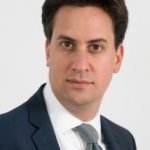
The speech made by Anneliese Dodds, the Shadow Chancellor of the Exchequer, on 1 March 2021.
This is a critical moment in the crisis.
We can clearly see our way out. Over 20 million people vaccinated so far, thanks to the extraordinary effort of our NHS and GP staff, scientists, lab technicians, nurses and volunteers.
As spring is returning, so too is the hope of an end to restrictions.
But we cannot be complacent. It will still require a huge collective effort to make sure we emerge from this crisis as quickly as possible.
The open question is how we emerge, and what kind of economy – what kind of country – we emerge into.
Wednesday’s Budget is a test of character for Rishi Sunak. The choices he makes will be critical in determining that future.
He can set out a responsible plan that puts us on the path to a better, more secure future.
A plan to mend the foundations of an economy that for the last decade has simply not been working for too many people in this country.
A plan to give people the security and prosperity they deserve, to take us forward into a better future beyond the pandemic.
Or he can stay true to recent form.
A rolling cycle of chopping and changing, leaving businesses and families scratching their heads and anxious about what’s coming next.
Headline-grabbing announcements that don’t last a fortnight, let alone the long months of winter.
Last-minute U-turns that have cost jobs and livelihoods.
All because the Chancellor has wanted to get out of the business of supporting the economy at the earliest available opportunity, in the face of all the evidence.
He hasn’t had a plan. He’s just been looking for the escape hatch.
This Wednesday is his last chance to put that right, and to make amends.
To learn the mistakes of a year of short-termism – and a decade of his party weakening our economic foundations – and set out a long-term, responsible strategy to take the country forward.
To do that requires the Chancellor to understand the link between the health crisis and the economic crisis. Something he has signally failed to do so far.
In the false belief that it was protecting the economy, the Government was too slow to lock down last spring.
That meant the lockdown lasted longer and was more severe, doing more damage to businesses and jobs.
Then, in autumn, infection rates were rising again. Labour, heeding the advice of SAGE, proposed a circuit break, to coincide with half term and get the virus under control.
But the Chancellor reportedly convinced the Prime Minister to overrule SAGE.
The second lockdown, when it came, lasted four weeks and missed that half term window. Another unnecessarily large hit to our economy.
In December, the Coronavirus outlook darkened further. Yet instead of acting to protect the economy, the Government pushed the Brexit negotiations to the wire with no heed to the impact this uncertainty caused for business.
At that point, the Chancellor disappeared. Six weeks without a single appearance in Parliament. No comment when Christmas plans were cancelled. And then just a 90-second video on Twitter 24 hours after the third national lockdown was announced.
Businesses and workers left in the lurch again.
Throughout the whole crisis, the Chancellor has failed to make that link between health and our economy.
He can’t see that targeted, effective funding to support self-isolation would constitute a net gain for our economy, not a net cost.
If people who have Coronavirus don’t stay at home, transmission increases and the economy is subject to restrictions for longer.
Yet right now only three in ten people who should self-isolate are doing so.
A year ago today, the TUC launched a campaign to improve statutory sick pay with the full backing of the trade union movement. A year later it is still just £95.85 a week – just £1.60 more than it was that day. That’s one of the lowest rates in Europe – the Health Secretary himself has admitted he could not live on it – and two million workers are not covered at all. It’s simply not good enough.
It took months for the Chancellor to come up with a scheme to support some of those affected. When he did, only one worker in eight was automatically eligible.
Changes made last week, months after the scheme was first launched, are a step in the right direction – but it’s still not clear if it will be enough. And the Chancellor has refused to even contemplate long-term changes to Statutory Sick Pay.
Where Rishi Sunak has introduced broader economic support, it has not been part of a coherent, long-term plan – but has involved endless chopping and changing.
The impact of this irresponsible approach can be counted, in lost jobs and lost livelihoods.
In the run-up to the Chancellor’s summer statement, as the costs to business of the furlough scheme were about to ratchet up, planned redundancies doubled.
In September, as he proposed the ill-fated Job Support Scheme, redundancies jumped again – by another 40 per cent.
In the three months from September to November – when the Chancellor was announcing a new version of his Winter Economic Plan every other week, before we finally got a screeching U-turn just hours before the furlough scheme was due to end – redundancies hit almost 400,000, an all-time record.
Unemployment kept increasing in the UK, while in other countries it was finally stabilising.
That is the Sunak effect. While he dithers and delays, people right across the country lose their jobs.
Coronavirus may have closed large parts of our economy. But this Government crashed it.
We’ve ended up with the worst economic crisis of any major economy. The Chancellor must take responsibility for that.
And he must learn from it. Because now he is making exactly the same mistakes again.
1.7 million people are unemployed. 4.7 million are still on furlough. 850,000 businesses are at risk of closure in the next three months.
And last week the Prime Minister announced that restrictions will still be in place, in some form, until at least 21 June.
Yet the furlough scheme is due to end on 30 April with no clarity on what happens next.
Hard-hit businesses face a business rates bill landing on the doormat this month while the door is still closed to customers.
And VAT is set to spike in just a few weeks’ time for hospitality, culture and tourism businesses that are already teetering on the brink.
The Chancellor could have set out a plan to address these cliff-edges at the beginning of the year, when it was obvious that new variants of the virus meant we would sadly be living with restrictions for longer.
At the very latest, he could have set out a plan alongside the Prime Minister’s statement last Monday.
He could have done what Labour has repeatedly called for, and ensured that economic support went hand in hand with health restrictions.
But once again, there was no plan from Rishi Sunak.
He left families and businesses across the country in limbo, all so he could wait for the political theatre of his big Budget moment.
An irresponsible approach from an out of touch Chancellor.
Not only is there no plan for the short-term, for the next few months as the vaccine is rolled out.
There is also no plan for what comes after that.
The Chancellor should have been doing everything he could to make sure that when lockdown was lifted the economy could be firing on all cylinders again.
In July last year, I urged him to set out a full Back to Work Budget focused on jobs, jobs, jobs.
Instead, we got a short economic statement and what the Chancellor reassured me was a ‘Plan for Jobs.’
His so-called plan had three key elements.
First, a bonus to every company that kept on a furloughed worker after the end of the scheme. That would have meant over £2.5 billion of public money going to firms who were going to bring staff back anyway. In the end, that didn’t matter because he scrapped the scheme. And we still have no word on its replacement.
Second, the Kickstart programme was meant to help young unemployed people back into work. Nine months on, just one in every hundred eligible young people have been helped by the scheme. For every job supported by the scheme, 22 have been lost.
Third, the Green Homes Grant scheme was going to create new jobs retrofitting people’s homes. This has been so badly run that most of the money will never be spent and it’s actually costing jobs.
With the prospect of a million more people losing their jobs in the months to come, this is simply not good enough.
And now he’s choosing a course that will actively make the situation worse.
Families across the country have sacrificed so much throughout this crisis, and yet Rishi Sunak’s reward is to hit them with a triple hammer blow of council tax rises, social security cuts and pay freezes.
The Chancellor’s message to our key workers – our teachers, our police officers, our armed forces personnel – at the end of one of the hardest years in living memory is to say: you deserve a real-terms pay cut.
That is spectacularly unjust. It’s also economically illiterate.
If you take money out of people’s pockets, they’ll tighten their belts and spend less. Our high street shops and small businesses will have fewer customers.
The economy will take longer to recover, more businesses will fail and more jobs will be lost.
From the IMF and the World Bank to the OECD, every major international economic organisation is in agreement: now is not the time for tax rises on struggling businesses or families.
In private, it seems Rishi Sunak is clear about his rationale for this: to get tax rises out of the way now, well ahead of the next election. In other words, a Chancellor who is putting the interests of the Conservative Party ahead of those of the country.
In public, the Chancellor might couch his decisions in the language of fiscal responsibility, but that’s hard to take from a Government that has wasted and mismanaged billions over the course of this last year.
£22 billion on a Test and Trace system that for months wasn’t delivering.
£150 million on PPE that wasn’t safe and so couldn’t be used.
Almost £2 billion in contracts to businesses with clear links to the Conservative party, with no tender at all.
£7,000 a day to management consultants while families across the country wondered how they were going to make ends meet.
We’ll take no lectures from this Government on how to manage public money.
After a year of last-minute scrambles, of U-turns, waste and mismanagement, what families and businesses need from the Chancellor is a clear plan.
A plan to protect jobs and businesses through the last stages of the crisis while the vaccine is being rolled out.
A plan to secure the recovery in those critical first months as we emerge from the crisis and reopen the economy.
A plan to lay the foundations so we can rebuild our economy, stronger and more prosperous than before.
To protect jobs and businesses right now, the Chancellor must heed Labour’s call to extend the furlough scheme beyond the end of April, maintaining it for as long as health restrictions are in place and demand remains low. He should make it smarter, so furloughed staff can train for the future; and so abuses are stamped out.
He should right the wrong of always treating self-employed people as second class citizens, clarifying the future of Self-Employment Income Support Scheme and expanding its scope. He should act urgently to fix the gaps that have seen millions excluded altogether since the crisis began.
The Chancellor should also extend business rates relief for at least six months, while learning from the Labour Government in Wales and introducing a cap for the biggest essential retailers so that support is targeted to the hardest-hit businesses.
He should extend the reduced rate of VAT for the hospitality, tourism and culture sectors for at least six months, providing a vital boost to demand as we gradually unlock.
And he should extend eligibility for the £500 Test and Trace Support Payment, helping to ensure this is absolutely the last lockdown. We cannot afford to go backwards.
The second part of this long-overdue plan should focus on securing the recovery.
That means transforming his stuttering and slow employment programmes to deliver a ‘Jobs Promise’ for unemployed young people to get them into work, education or training within six months and to end the scourge of long-term unemployment – simplifying his complicated, failing initiatives to deliver the support that people need now, not in 18 months when the peak of unemployment should be reducing.
It means accelerating £30bn of planned investment into the next 18 months to support the creation of up to 400,000 new, green jobs. It is incredible that in November, in the midst of an economic crisis, the Chancellor actually chose to cut £300m of planned capital spend.
And it means taking decisive action now to help those businesses who took out Government-backed loans last year and are likely to struggle with repayments. We need those businesses focused on growing, expanding and hiring – so small businesses should only start paying loans back when they are profitable.
And crucially, if we are to secure our recovery, the Chancellor must reverse his irresponsible plan to hit households with a triple blow of council tax rises, social security cuts and pay freezes.
The final part of the plan must be to rebuild the foundations of our economy for a better, more secure future.
We cannot go back to the way that things were before the crisis, where ten years of Conservative rule had left us one of the most unequal countries in Europe. Where one in four families had less than £100 in savings. Where 3.6 million people were in insecure work.
Coronavirus has brutally exposed the weaknesses of ten years of Conservative mismanagement of our economy. This crisis has to act as a wake-up call for this Conservative Chancellor to fix them.
Where he promises to invest, he must follow through. The country can’t afford a repeat of the priority school building programme, with less than half of the planned schools built, and the project running three years late and £300m over budget. Nor still be waiting for new infrastructure nearly seven years on, as people in the North of England are for the long-promised Northern Rail. Nor wondering when their new hospital will be ready, like those in the West Midlands who will need to wait four years longer than planned.
That is the Conservative track record: of overpromising and under delivering, of always going for the short-term fix rather than taking the difficult decisions for the long term. It is irresponsible at the best of times. In the midst of an economic crisis, it’s unforgiveable.
And yet it is precisely where we seem to be again. Take housing. We know that young people in this country face a seemingly insurmountable challenge in getting their first home. Home ownership has fallen on the Conservatives’ watch. Six years ago they promised 200,000 starter homes, and not a single one was ever built.
The Chancellor’s plans this weekend will do little to help more than a tiny proportion of ‘Generation Rent’- and look set to raise house prices even further beyond the reach of the rest.
Instead, we need to see investment working for every part of our country.
An expansion of the Start Up Loans scheme getting 100,000 new businesses up and running in the next five years.
The new National Infrastructure Bank – re-announced this weekend to great fanfare – needs to have a mandate that ensures it backs projects that will make a real difference to communities, with savers given a stake in the recovery through British Recovery Bonds.
An end to the plan to sell off our high streets to the highest bidder, with local councils instead giving the powers to bring empty shops back to life and make town centres the beating hearts of our communities again.
The Chancellor may have finally heeded Labour this weekend and announced new short-term funding for our high streets, but that will be totally undermined if planning reforms come into effect this summer and our town centres are gutted as a result.
We need an approach to investment that brings local people together, offering them opportunities and better prospects – not pitting town against town and region against region in a scramble for funding handed down from on high by Conservative ministers.
This is a moment for the Chancellor to set out a responsible plan for our country’s future.
Over the last year he has compounded a decade of Conservative economic mismanagement with twelve months of irresponsible decision making – leading to the worst economic crisis of any major economy.
On Wednesday he can face up to those failures, learn from them and put the country back on the right path.
I’m clear on what we need.
A plan to protect jobs and businesses while the vaccine is being rolled out.
A plan to secure the recovery as we emerge from the crisis.
A plan to rebuild the foundations of our economy so that we can look ahead to a better, more secure future.
That’s what a Labour Budget would deliver.
It’s what the people of Britain deserve.
And it’s how we should all judge the Chancellor.
Thank you.