Tag: 2021

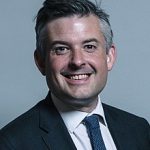
  • Jonathan Ashworth – 2021 Speech on NHS Staff Pay

    Jonathan Ashworth – 2021 Speech on NHS Staff Pay

    The speech made by Jonathan Ashworth, the Shadow Secretary of State for Health and Social Care, in the House of Commons on 8 March 2021.

    I am grateful to the Minister, but where is the Secretary of State? Why is the Secretary of State not here to defend a Budget that puts up tax for hard-working families and cuts pay for hard-working nurses? The Secretary of State has stood at that Dispatch Box repeatedly, waxing lyrical, describing NHS staff as heroes, saying they are the very best of us, and now he is cutting nurses’ pay.

    Last summer, when asked by Andrew Marr if nurses deserved a real-terms pay rise, the Secretary of State replied:

    “Well, of course I want to see people properly rewarded, absolutely.”

    Yet now he is cutting nurses’ pay.

    Last year, the Secretary of State brought to this House legislation to put into law the NHS long-term plan. He said from that Dispatch Box that his legislation represented

    “certainty for the NHS about a minimum funding level over the next four years and certainty for the 1.4 million colleagues who work in our health service”.—[Official Report, 27 January 2020; Vol. 670, c. 571.]

    That long-term plan was based on a 2.1% pay increase for all NHS staff. Every Tory MP voted for it, the Minister voted for it, and now every Tory MP is cutting nurses’ pay.

    The Minister talked about the Budget. Where is the Chancellor? Where are his glossy tweets? Where is his video? Why did he not mention in the Budget that he was cutting nurses’ pay? Why did he sneak it out the day before in the small print?

    This is happening at a time when our NHS staff are more pressured than ever before. In the midst of the biggest health crisis for a century, when there are 100,000 shortages, what does the Minister think cutting the pay of NHS staff will do the vacancy rates? Perhaps she can tell us.

    The Minister talked about the pay review body, but she did not guarantee that the Government will implement any real-terms pay rise that the pay review body recommends. Why is that? It is because Ministers have already made up their minds to cut, in real terms, NHS pay in a pandemic. Our NHS staff deserve so much better. If this Government do not deliver a pay rise, it shows once again that you simply can’t trust the Tories with the NHS.

  • Helen Whately – 2021 Statement on NHS Staff Pay

    Helen Whately – 2021 Statement on NHS Staff Pay

    The statement made by Helen Whately, the Minister for Care, in the House of Commons on 8 March 2021.

    This pandemic has asked so much of our health and care system. The whole country recognises how our NHS workforce have performed with distinction and gone the extra mile throughout this crisis, which has also had a huge impact on our economy. It has been and still is a tough time for businesses and all those who work in them.

    As hon. Members will be aware, most of the public sector is having a pay freeze. However, even against that backdrop, we will continue to provide pay rises for NHS workers, as the Chancellor set out at the spending review. This follows a multi-year pay deal, which over a million NHS staff have benefited from and which includes a pay rise of over 12% for newly qualified nurses. We are also ramping up our investment in our NHS, with a £6.2 billion increase for 2021-22, as part of our £34 billion commitment by 2024-25, and £3 billion for supporting recovery and reducing waiting lists. As part of that, we are increasing the number of staff in the NHS, with over 6,500 more doctors, almost 10,600 more nurses, and over 18,700 more health support workers in the NHS now than a year ago. We are also on track to have 50,000 more nurses in the NHS by the end of the Parliament.

    Last week, we submitted our evidence to the NHS pay review bodies, which are independent advisory bodies made up of industry experts. Their recommendations are based on an assessment of evidence from a range of stakeholders, including trade unions. They will report their recommendations in late spring, and we will carefully consider their recommendations when we receive them.

    I can assure the House that we are committed to the NHS and to the amazing people who work in it. Just as they have been so vital throughout this pandemic, they will continue to be the very essence of our health service, together with all those who work in social care, as we come through this pandemic and build a health and care system for the future.

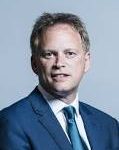
  • Grant Shapps – 2021 Comments on Zero Emission Vehicles

    Grant Shapps – 2021 Comments on Zero Emission Vehicles

    The comments made by Grant Shapps, the Secretary of State for Transport, on 10 March 2021.

    Investing in innovation is crucial in decarbonising transport, which is why I’m delighted to see creative zero-emission projects across the UK come to life.

    The funding announced today will help harness some of the brightest talent in the UK tech industry, encouraging businesses to become global leaders in EV innovation, creating jobs and accelerating us towards our net-zero ambitions.

  • Jonathan Ashworth – 2021 Comments on NHS Pay Rises

    Jonathan Ashworth – 2021 Comments on NHS Pay Rises

    The comments made by Jonathan Ashworth, the Shadow Secretary of State for Health and Social Care, on 9 March 2021.

    The head of the NHS has confirmed what we already knew: the Conservatives have broken their promise to the NHS and are cutting nurses’ pay.

  • Kate Green – 2021 Comments on Overcrowded Classrooms

    Kate Green – 2021 Comments on Overcrowded Classrooms

    The comments made by Kate Green, the Shadow Secretary of State for Education, on 9 March 2021.

    The Conservatives have turned back the clock on education, reversing twenty years of progress to reduce class sizes and ensure every child gets the dedicated teacher attention they need.

    Under the Conservatives the gap in learning between disadvantaged pupils and their peers had not narrowed for five years even before the pandemic. These Conservative choices are holding back children’s education.

    Labour has launched our Bright Future Taskforce to tackle the damage done by these policies ensuring every child can recover from the pandemic and achieve their potential.

  • Rachel Reeves – 2021 Comments on Public Accounts Committee Report on Test and Trace

    Rachel Reeves – 2021 Comments on Public Accounts Committee Report on Test and Trace

    The comments made by Rachel Reeves, the Shadow Chancellor of the Duchy of Lancaster, on 10 March 2021.

    This report reveals how this Government’s outsourced, Serco-led Test and Trace system failed the British people and led our country into restrictive lockdown after lockdown.

    It underlines the epic amounts of waste and incompetence, an overreliance on management consultants, taxpayers’ cash splashed on crony contracts, all while ministers insist our NHS heroes deserve nothing more than a clap and a pay cut.

    The Conservatives’ wasteful obsession with outsourcing must end and contact tracing should be run by our public health teams.

  • Anneliese Dodds – 2021 Comments on £95 Billion of Tax Cuts

    Anneliese Dodds – 2021 Comments on £95 Billion of Tax Cuts

    The comments made by Anneliese Dodds, the Shadow Chancellor of the Exchequer, on 9 March 2021.

    Labour has argued for over a decade that cuts to corporation tax don’t boost investment or raise extra revenue – they just cost the Treasury billions that could have been put to better use.

    We welcome the Chancellor’s conversion to our point of view, but we can never get back the £95 billion lost to the Treasury over the last few years from this economically illiterate tax cut.

    That money could have been used to strengthen our economy going into this crisis. Instead the Conservatives slashed salaries for key workers, ran down our schools and hospitals, and cut 21,000 police officers from our streets.

    Never again should any Conservative government be allowed to use such a discredited economic argument to weaken the foundations of our country.

  • Andrew Adonis – 2021 Comments Following Appointment as Chair of the European Movement

    Andrew Adonis – 2021 Comments Following Appointment as Chair of the European Movement

    The comments made by Andrew Adonis on 8 March 2021.

    It is an honour and a challenge to become chair of the European Movement at this time of crisis in Britain’s relations with Europe. Churchill founded the European Movement to bring Britain and continental Europe closer together – socially, economically and politically – after the horrors of the Second World War and the Holocaust. We have a duty to seek to do the same again after the experience of COVID19 and Brexit, faced with the twin emergencies of climate change and a global slump.

    We will campaign strongly to put right the immediate failings of Boris Johnson’s Brexit deal, including the lack of automatic EU work visas for artists, musicians, engineers and architects; the absence of EU market access for our huge financial and business services industries; and the end of our membership of the Erasmus scheme for student exchanges. Millions are affected and we need to change these damaging policies as soon as possible, which almost no one voted for as part of Brexit.

  • Douglas Ross – 2021 Speech on the Budget

    Douglas Ross – 2021 Speech on the Budget

    The speech made by Douglas Ross, the Conservative MP for Moray, in the House of Commons on 3 March 2021.

    I want to welcome the Budget on behalf of my constituents in Moray and of people across Scotland. There is a lot of good news in what the Chancellor had to say today. First, however, I want to pick up on a few remarks in the speech made by the leader of the Scottish National party, the right hon. Member for Ross, Skye and Lochaber (Ian Blackford). He accused members of this Government of not understanding what it was like to be poor. That is quite an incredible statement from someone who earned his fortune as an investment banker in the City of London before he rediscovered himself as a humble crofter.

    The right hon. Gentleman went on to say that this Budget lacked ambition, but I thought there was ambition weaved throughout the Chancellor’s statement. It has ambition for individuals, families and businesses in the weeks and months ahead, and ambition for our country in the years ahead. If the leader of the SNP at Westminster wanted to see a statement that lacked ambition, he should have looked at Nicola Sturgeon’s statement last week on her partial route map out of lockdown restrictions for Scotland. That was a document and a statement that lacked ambition, hope and clarity and one that we are seeing unravel at the moment as people in Scotland expect more from their Government.

    The final point I want to focus on from the right hon. Gentleman’s speech is his comment about how in Scotland there has been an extension to the freeze on business rates for a further year. That is true, but that further freeze, for another 12 months, was made possible and accepted by the SNP Finance Minister only because of an additional £1.1 billion of support from the UK Government to the Scottish Government. Kate Forbes stood up in Holyrood and said that she was able to do this only because of additional support coming from the UK Government to Holyrood, to the Scottish Government, so that is why we have the extension for a full year of business rates in Scotland.

    The right hon. Gentleman mentioned that newspapers were also covered. Of course, the SNP had to be forced to include newspapers in the business rates relief. A vote by the Scottish Conservatives in Holyrood, which the SNP was against to begin with, forced a U-turn. I will leave it to others to speculate why the SNP at this time would not want to support the newspaper industry in Scotland.

    Throughout the last year, in dealing with this pandemic, the UK Government have delivered unprecedented support for Scottish families and businesses: the furlough scheme and the self-employed income support, protecting 930,000 Scottish jobs; loans to over 90,000 Scottish businesses and an extension of the reduced rate of VAT for hospitality, leisure and tourism; the £20 a week uplift for universal credit to help those in our society who need it most, which is something I have been calling for since October last year; and £9.7 billion of additional funding for Scottish public services. With this Budget, the Chancellor is continuing those vital lifelines, extending furlough and the self-employed income support until September.

    Just as this pandemic has gone on longer than any of us could have imagined back in March last year, so, too, has the broad support delivered by the UK Treasury to the people of Scotland. Yet this is not just a Budget to help the Scottish economy to survive the pandemic. It is also a Budget for our recovery, with investments to support the economy in the north-east in its transition towards green energy, an acceleration of the transformative funding for Scottish growth deals to bolster the local economies in Ayrshire, Argyll and Bute, and Falkirk, and a freeze on the fuel duty to back Scottish drivers, which is crucial to our remote and rural areas. Just look at how that contrasts with the SNP Scottish Government lobbying for an increase in fuel duty. It has gone widely unreported that the SNP is calling for an increase. When we look at the options for fuel duty, how will that go down with voters in rural Scotland in a few weeks’ time? And, of course, as the MP for Moray, representing more Scotch whisky distilleries than any other MP in this place, I warmly welcome the freeze on spirits duty. That is hugely important to the distilleries in my constituency and alcohol producers more widely in Scotland and across the UK.

    The Budget shows that the UK Government have a plan to rebuild Scotland’s economy after the immediate health crisis is over, to create jobs and opportunity in every part of our country as we pull together to deliver our recovery. The Chancellor said that the majority of these measures apply across the United Kingdom. We have a further £1.2 billion of spending going to the Scottish Government. We need to see the Scottish Government ensuring that that gets to the services and businesses that need it most. On the stamp duty freeze, we now see that holiday continuing in England until September, but in Scotland it has now ended. We need to see action on that in Scotland as well.

    Yet SNP Members cannot welcome this plan—they could not support the Budget because they would rather focus on another divisive independence referendum than our recovery from coronavirus. They say that they want to bring this referendum forward at the earliest opportunity, just when people are renewing their ties with friends and families and businesses are beginning to reopen. Their plan would damage not only our Scottish recovery, but that of the whole of the United Kingdom. That is the last thing we need right now. What families and businesses across Scotland want to hear from the Scottish Government is a full route map for ending restrictions, not a route map for separation. As I said earlier, they are looking for certainty and for hope. This Budget has delivered that by extending the vital lifelines that Scottish families and businesses are relying on. It is now time for the Scottish Government to do the same.

    The Chancellor has set out an ambitious programme that will not only secure the survival of many jobs and businesses in Scotland, but provide the basis for our economic recovery in the future. There was just one point that I agreed with the leader of the SNP on. He said that Scotland has a choice of two futures—we do. In the coming Scottish Parliament election, voters will decide whether they want the focus of all the politicians and all the parties within the Scottish Parliament to be on another independence referendum or on rebuilding Scotland from coronavirus. Let us not choose more damaging division. Let us instead rebuild Scotland and the whole of the UK together. Today’s Budget will help us do that.

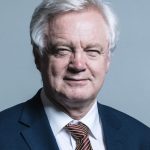
  • David Davis – 2021 Speech on the Budget

    David Davis – 2021 Speech on the Budget

    The speech made by David Davis, the Conservative MP for Haltemprice and Howden, in the House of Commons on 3 March 2021.

    May I start by associating myself with the comments of the Father of the House, my hon. Friend the Member for Worthing West (Sir Peter Bottomley), on ExcludedUK and helping them, and on the leaseholder issue, which also requires help? I also associate myself with those on both sides of the House who have called for the uplift in universal credit to be rendered permanent, which I think in due course will prove sensible.

    When I applied to speak in this debate a few days ago, given the headlines in the press I thought that I might be challenging head-on the Chancellor’s strategy, in view of my concern that sudden tax increases would crush any recovery. It is therefore a pleasure today to find that that is not the case, and that I can be much more supportive of my right hon. Friend.

    Obviously covid-19 has led to incredibly difficult economic circumstances. The country has suffered the worst peacetime economic shock ever. Indeed, we have the worst outcome in the G7, and the deficit is the worst since 1944—a date that I will come back to—which, in and of itself, is extraordinary. The Chancellor faces quite remarkable economic problems that are worse than any Chancellor has faced in peacetime history, and he has handled it with remarkable sensitivity in the way he has put his policies together. I have a question about one or two, but broadly speaking, he has met this economic challenge of enormous magnitude with great skill.

    What do these numbers mean? These billions and trillions that are casually thrown about by supposedly expert commentators are incredibly difficult for ordinary people to understand. In my view, they are best understood when looked at in terms of the impact by household or by wage earner, because that gives a better idea of what they mean. For example, the latest deficit figures published before today were £394 billion a year. That is £14,000 per household—that is the size of the black hole we have to fill. Just looking at the size of the number tells us that no tax policy can solve it. The idea of imposing £14,000 per household of taxes is nonsense; it would be designed to destroy any economic recovery. Only a recovery policy designed to restore the tax base and remove the need for subsidies will close that gap, and I am pleased to see that the Chancellor has essentially adopted that strategy.

    The most recent estimate of the debt is well over £2 trillion and may be £3 trillion. Some £2 trillion or thereabouts amounts to £77,000 per household. I remember only a few days ago a BBC commentator talking about paying off the overdraft. I do not have an overdraft of £77,000. This is a big mortgage that is not paid off in one year. To pay off such a debt rapidly would be crippling. Again, the size says it all. It has to be paid off in the very long term—as the Chancellor said, over decades.

    Since this is the worst debt and deficit combination since 1944, we should treat it in the same way as they did then: with a 50-year time horizon on the loan—a war loan, if you like. Both the world war one and world war two debts were paid off this century, within the last 20 years, so that gives us an indication of what needs to be done. I have heard a number of people say, “The interest rates might go up.” To a large extent, two things are happening here. Every single country in the world has this issue, and therefore every single Government in the world has an incentive to hold interest rates down, and they now have the mechanisms to do it—they have done it time and again with quantitative easing, even before today.

    To close that £14,000 per household deficit, we need to increase growth, increase employment and increase wages. All those things will increase the tax base. The Chancellor said—and I am glad to hear him say it—that his first priority is employment. That is the centre of those aims, and that is exactly right. That requires higher domestic investment to achieve it. It requires higher foreign inward investment to achieve it. It requires higher new company formation and higher research and development, and it will, in turn, generate higher aggregate demand. Tax increases help none of those things.

    The issue of tax increases is not a Tory ideological issue; it is about what delivers the recovery. Income tax increases, whether direct or stealthy, reduce aggregate demand; they reduce the amount of money people can spend. Corporation tax increases suppress investment. Capital gains tax increases deter both domestic investment and foreign investment. The one thing I am worried about in this Budget is the proposal to go to 25% corporation tax in a couple of years. That will have precisely the deterrent effect I worry about with respect to inward investment. I am looking at my Northern Irish friend the right hon. Member for East Antrim (Sammy Wilson), who is nodding at me, because of course in the Province that is absolutely a central issue for us all. We have to worry about tax increases from that point of view.

    I was very pleased to hear the Chancellor’s emphasis on what he called the science superpower strategy, and, as he said, it is not hubristic; we are the country with the highest number of Nobel prizes per capita in the world and should be able to marshal something out of that. We have already had an announcement on setting up our equivalent of the Defense Advanced Research Projects Agency—the Advanced Research and Invention Agency; we have new strategies and new funding for science, and new tech visas. All those things will help as all—the whole kingdom—in improving our growth rate.

    What is a growth strategy worth? It is very difficult sometimes, particularly dealing with the Treasury, which is very difficult about dynamic taxation and indeed does not seem to understand it, despite the fact that the British Treasury under Nigel Lawson created the best dynamic tax demonstrator in history.