Tag: 2021

  • Caroline Nokes – 2021 Speech on International Women’s Day

    Caroline Nokes – 2021 Speech on International Women’s Day

    The speech made by Caroline Nokes, the Conservative MP for Romsey and Southampton North, in the House of Commons on 11 March 2021.

    It is a pleasure to follow the right hon. and learned Member for Camberwell and Peckham (Ms Harman), who does so much in this place to champion women.

    Last year in this debate, we were not learning how to run a Parliament remotely, and none of us had ever considered being able to contribute to a debate while admiring the cobwebs on our own light fittings. In the spirit of celebration, I am going to think of uplifting things to start with, such as the sheer fact that this centuries-old institution has learned to flex and change—to adapt to Zoom and remote voting.

    I thank the Chair of the Procedure Committee, my right hon. Friend the Member for Staffordshire Moorlands (Karen Bradley), for having driven that agenda forward. We have seen more women contributing more often in Commons debates—more female voices in our Chamber, whether physically present or not—and that I celebrate. We have seen stunning contributions and campaigns from women right across the House and across Parliament, making desperately needed amendments and improvements to the Domestic Abuse Bill. We have seen women outside Parliament, such as Kate Bingham, who ran the vaccine taskforce determinedly, making sure that we got that roll-out.

    We have heard from the Secretary of State for International Trade and Minister for Women and Equalities, my right hon. Friend the Member for South West Norfolk (Elizabeth Truss), about her support for the normalisation of flexible working. That could mean so much to women, and I look forward to an employment Bill coming forward that champions that.

    But it is impossible for me to turn my contribution today into an unabashed celebration. It is not going brilliantly for all women—not here, not anywhere. The hon. Member for Birmingham, Yardley (Jess Phillips) will speak later, and I know that she will have had to update that hideous, depressing list she is going to read out to add the name of Sarah Everard, so tragically killed while just walking home. Overnight, we saw an outpouring of stories from women about keys, headphones, clothes and sticking to lit streets. We all know the reality is you will probably not be attacked by a stranger, but the fear is there and the fear is real.

    On this International Women’s Day, let us champion all women—gay women, who do not need conversion therapy; trans women, who want to be treated with respect and fairness. Remember, they are the ones most likely to suffer domestic abuse.

    I wish to reference the work of the Women and Equalities Committee and its report on the gendered economic impact of covid. That was reinforced yesterday by the publication from the Office for National Statistics confirming that women have indeed suffered a greater economic impact from the pandemic—more likely to be furloughed than their male colleagues; more likely to be employed on a part-time contract and not entitled to statutory sick pay; less confident that they will not be made redundant.

    We no longer have to look at health policy in the round because of the announcement this week of the women’s health strategy and the call for evidence, but apparently we still have to look at economic policy in the round and cannot accept data from the ONS that women have been harder hit economically. We will not get a female employment strategy, and I do not celebrate that.

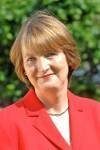
  • Harriet Harman – 2021 Speech on International Women’s Day

    Harriet Harman – 2021 Speech on International Women’s Day

    The speech made by Harriet Harman, the Labour MP for Camberwell and Peckham, in the House of Commons on 11 March 2021.

    I thank the right hon. Member for Basingstoke (Mrs Miller) for securing the debate, and I agree with every single word that she said in her excellent speech.

    This International Women’s Day debate comes in the shadow of the menace of male violence against women. I am sure we all feel the same as the Home Secretary, who said that she is “deeply saddened” by the developments in the Sarah Everard investigation, and we all hope against hope that we will not hear the news that we all dread. But at the same time as the sadness, there is real anger among women at the threat that they face on a daily basis. That is not to spread alarm; it is to spell out the reality.

    Here we are, in the 21st century, in a country where women and men expect to be equal, but we are not. Women, particularly young women, are terrified of the threat of male violence on the streets—men who try to get them to get in their car, who try to get their number, who follow them, who film them, who will not take no for an answer. Every young woman, every day, walks under this threat, so they adopt myriad strategies just to get home from work in the dark—choosing the busiest route, even if it is longer; keeping their keys in their hand; trying to go with someone rather than alone; getting a friend or their partner to map their location on a phone app; phoning on the way home so that they know they are expected.

    Women will find no reassurance at all in the Metropolitan Police Commissioner’s statement that it is

    “incredibly rare for a woman to be abducted from our streets.”

    Women know that abduction and murder is just the worst end of a spectrum of everyday male threat to women. When the police advise women not to go out at night on their own, women ask why they have to be subjected to an informal curfew. It is not women who are the problem here; it is men.

    The criminal justice system fails women and lets men off the hook. Whether it is rape or domestic homicide, women are judged and blamed—“Why was she on a dating app?” “Why was she out late at night?” “Why had she been drinking?” “What are those flirty messages on her phone?”—and men find excuses, raking up her previous sexual history in court to try to tarnish her character and prejudice the jury. Let us hear no more false reassurances; let us have action.

    Next Monday, we will be debating in this House the Police, Crime, Sentencing and Courts Bill. That is the chance for the Government to banish the culture of male excuses from the criminal justice system and, instead of blaming women, start protecting them.

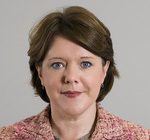
  • Maria Miller – 2021 Speech on International Women’s Day

    Maria Miller – 2021 Speech on International Women’s Day

    The speech made by Maria Miller, the Conservative MP for Basingstoke, in the House of Commons on 11 March 2021.

    I beg to move,

    That this House has considered International Women’s Day.

    It is a privilege to lead this International Women’s Day debate on behalf of members of the all-party parliamentary group on women in Parliament, who put forward the application. I thank the Backbench Business Committee for its continued strong support for this debate as an annual event.

    I want to start by sending my thoughts and prayers to the family and friends of Sarah Everard, who are going through such a painful time. Her abduction has sent shockwaves across the UK. Sarah did everything to avoid danger. Let us be very clear: women are not the problem here. For many women, this news story will bring back memories of threatening situations they found themselves in through no fault of their own, sexually harassed on the streets when walking home from meeting friends, receiving anonymous threats of physical violence on social media, or sexually assaulted in plain sight in rush hour on public transport on the way to work. Many choose not to talk about this and not to report it for fear of not being believed or taken seriously. But the research shows that these sorts of events are part of women’s everyday lives, and that is why what happened to Sarah Everard feels so very close to home.

    The shocking findings of the report published yesterday by the APPG on United Nations women show that virtually all young women have experienced the threat of sexual violence in public spaces and, indeed, that three in four women of all ages have experienced sexual harassment. Although the raw facts may show that it is rare for a woman to be abducted, the experience of young women is that the fear of sexual harassment, or worse, is ever in their mind, whether on a night out at the pub or after threats to their physical safety on social media, while for the one in six women who will be stalked in their lifetime, the fear of attack is very real.

    So rather than telling women not to worry, listen to our experience. Understand why so many women relentlessly campaigned in this Chamber for change to make women feel safer by stopping the harassment and threats of violence in the first place. We should not accept a culture of violence towards women, we should not be complicit in covering it up, and we need to give women effective mechanisms to report what happens in order to expose the scale of the problem, call it out publicly, and punish those who perpetrate this culture of fear.

    Reflecting on the past 12 months women have gone through in terms of their response to the challenges presented by coronavirus, at home women have been prominent in delivering on the frontline of health and social care, with two women professors, Sarah Gilbert and Catherine Green, helping to pioneer a global solution to the pandemic. In the US, Kamala Harris has become the first woman to be elected Vice-President of the United States, shattering another glass ceiling in the political world. Even closer to home, you, Madam Deputy Speaker, became the first woman ever to hold the role of Chairman of Ways and Means, bringing your infinite wit and wisdom to that important role.

    While we acknowledge these significant milestones, the pandemic has brought existing inequalities into sharp focus too. Women have faced pressures in balancing work with home schooling and childcare. Domestic abuse cases have spiralled—up by 83%. When it comes to job losses, women have faced a heavy toll, with those aged 25 to 34 facing the highest unemployment rise. The Government’s mission of levelling up is very relevant to women. To mark International Women’s Day 2021, my message and hope is that a focus on levelling up for women is in place now more than ever before, both here in the UK and across the world.

    We have record numbers of female MPs, yet still men outnumber women two to one in positions of power. A 50:50 Cabinet would help to ensure that women’s voices are heard where they need to be—right at the heart of Government. This week, as part of a whole host of International Women’s Day celebrations, we heard from the parliamentary archivist, Mari Takayanagi, about the remarkable contributions of early women MPs and the huge impact they had on law-making—how they spoke out 100 years ago in this place about the most sensitive of crimes against women, like FGM. These stories of courage can be seen in the work of women elected to this House today—women like my right hon. Friend the Member for Maidenhead (Mrs May), whose courage means that we have world-leading domestic abuse legislation and the Modern Slavery Act 2015, a blueprint for others across the world.

    We need more women aspiring to become Members of Parliament, so I warmly welcome the Women and Equalities Committee’s inquiry looking at the actions taken on gender equality in the House of Commons. I hope that we can conduct a second gender-sensitive audit as soon as possible, with a body identified as being responsible for putting its recommendations into practice.

    Above all, we need 2021 to be the year that we finally grasp the nettle of online abuse, which so badly affects women, particularly those in public life. We need the forthcoming online harms Bill to be more than a set of regulatory guidelines. We need laws that make it clear that online abuse is a crime, particularly with regard to posting intimate images online without consent. A safer, more respectful environment online will also lead to a kinder politics; I really believe that. In the meantime, let us stand up to those who gratuitously abuse women online—particularly women MPs and journalists—to help make sure that more women choose to stand for election and be leaders in our media too.

    Women face barriers here in Westminster, but the same is still true of other sectors—in healthcare, for instance, where women account for more than three quarters of the workforce yet fewer than half have leadership positions. An out-of-date workplace with a presenteeism culture does little to support women, particularly when they have had children, so it was helpful to see the Birmingham Business School conduct research through the pandemic to show that flexible working can improve productivity. We need as a nation to adopt flexible working as standard, as part of levelling up for women and delivering a truly modern British workplace shaped around the whole workforce. We need to look closely at what Parliament should retain from the last 12 months of changed ways of working, so that we can play our part in modernising our workplace too.

    In levelling up, we need to provide pregnant women and new mothers with better protections to stop them being pushed out of work simply for being pregnant. The Institute for Fiscal Studies has shown that one in four pregnant women felt discriminated against in the last year. Outlawing pregnant women from being made redundant, as Germany has done, would help to stop so many women falling out of the labour market into low-paid work when they have children.

    In this mission of levelling up for women, our voice on the global stage will be just as important. The Prime Minister has been a long-time advocate for girls’ education as central to levelling up for women across the globe. As the Foreign, Commonwealth and Development Office considers its new role, including championing international development through open societies, we need to continue to take forward this principled commitment to girls’ education, alongside the UK’s internationally acknowledged role in outlawing the other inequalities and abuses that women face—for example, abuse in conflict zones, forced marriage and the lack of a host of other basic human rights.

    With the UK leading the G7 this year, there is a truly unique opportunity for our country to show leadership on the global stage in promoting gender equality. The UK Government ratifying the International Labour Organisation convention on violence and harassment—the first international labour instrument that recognises the right of everybody to work free from violence and harassment—would be an act of leadership and an appropriate start. Let us celebrate an astonishing year for women and call for a commitment to level up for women across the UK and across the globe, for a fairer society for everybody.

  • Jenny Jones – 2021 Speech During the Domestic Abuse Bill

    Jenny Jones – 2021 Speech During the Domestic Abuse Bill

    The speech made by Jenny Jones (Baroness Jones of Moulsecoomb) in the House of Lords on 10 March 2021.

    My Lords, I agree with every word that we have heard so far, and I have signed all three of these amendments—I think that they are superb and have been carefully and expertly drafted. It is deeply unfortunate that the Government have not adopted them as part of their unusually co-operative approach in this Bill.

    The need is very clear: the deeply sad Sally Challen case was only one proof point of the lack of legal protection available for survivors of domestic abuse. Women get a terrible deal in the criminal justice system. Most are there for non-violent offences, and many are there for really minor things like not paying their TV licence. However, sometimes, violence does happen, and, where that is related to domestic abuse, there needs to be a sufficient legal defence to recognise the reduced culpability.

    It is obvious that judges and, sometimes, lawyers do not understand coercive control and other abuses. The excellent report from the Centre for Women’s Justice, which the noble Baroness, Lady Kennedy of The Shaws, referred to, is called Women Who Kill—I will give a copy of the executive summary to the Minister afterwards to make sure that he reads it. It lays out the response of the criminal justice system to women who kill abusive partners and the way the law itself, and the way it is applied, prevent women from accessing justice.

    Women who have been abused by the man they kill are unlikely to be acquitted on the basis of self-defence. Of the 92 cases included in the research for the report, 40—that is 43%—were convicted of murder. Some 42—that is 46%—were convicted of manslaughter, and just six, which is only 7%, were acquitted. The use of weapons is an aggravating factor in determining the sentence, and the report found that, in 73 cases—that is 79%—the women used a weapon to kill their partner. This is fairly unsurprising, given women’s relative size and physical strength and their knowledge of their partner’s capacity to be violent.

    However, as other noble Lords have pointed out, this contrasts with the legal leeway given to householders if they kill or injure a burglar. Therefore, we need legislative reform to extend provisions of householder defence to women who use force against their abuser. It is discriminatory to have a defence available to householders defending themselves but not to women in abusive relationships defending themselves against someone who they know can be dangerous and violent towards them.

    In the week that Sarah Everard was abducted and, we suppose, killed—because remains have been found in a woodland in Kent—I argue that, at the next opportunity for any Bill that is appropriate, I might put in an amendment to create a curfew for men on the streets after 6 pm. I feel this would make women a lot safer, and discrimination of all kinds would be lessened.

    However, once convicted, women’s chances of successful appeal are extremely slim. Society’s understanding of domestic abuse has come such a long way, even in the last few years, yet a jury is forced to apply outdated ideas of self-defence, such as responding to a threat of imminent harm, which have no relation to the realities of domestic abuse.

    The Government have said that they are persuaded on the issue but will

    “monitor the use of the existing defences and keep under review the need for any statutory changes.”

    I simply do not believe that that is true. It is not appropriate for the sort of crimes that we are talking about. As such, can the Minister please tell me which Minister is charged with this review, how many civil servants are involved and when will they report?

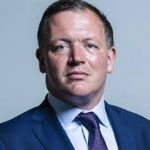
  • Damian Collins – 2021 Speech on the Department for Digital, Culture, Media and Sport

    Damian Collins – 2021 Speech on the Department for Digital, Culture, Media and Sport

    The speech made by Damian Collins, the Conservative MP for Folkestone and Hythe, in the House of Commons on 10 March 2021.

    The Government have provided substantial support for the cultural, sporting and creative sectors since the start of the covid pandemic. This has been welcome but also essential, as many organisations within these sectors rely on revenue from tickets and events to survive. Through no fault of their own, they have been required to close, and the cultural recovery fund, in addition to the funding to support sports and TV and film production, has helped many important bodies to keep going that otherwise might have closed for good.

    However, we now need to focus on the road ahead, through to the lifting of the covid social contact restrictions on 21 June and beyond. The coronavirus has challenged the whole of our society, but it has also exposed further weaknesses in sectors that in some cases we already knew about. The point has been well made about the need for pandemic insurance for the events industry. Events and live performances have already become incredibly important to the music sector, because the remuneration that artists get from on-demand streaming services is relatively low, but these events will not take place unless an insurance scheme can be put in place.

    This is not just about events that could be held this summer; it needs to be done on an ongoing basis. It could be some time before the industry has any certainty, because new variants of covid might require further restrictions on the capacity of audiences and therefore restrict the viability of the event itself. Just as, several years ago, the Government partnered with the insurance industry to create Flood Re to minimise the risk of flood insurance and reduce the costs, we need a similar scheme to help to make insuring live events viable and reduce the cost to people putting on those events.

    In football, the lack of a strong national governing body for the sport that is able to ensure fair dealing in financial matters has been badly exposed. Many football clubs were in great distress before the pandemic struck. Clubs in the championship division of the English football league were routinely spending more than they earned each year on players’ salaries alone, and were running a financially unsustainable model. There has been no real recognition of the impact of the covid restrictions on professional football. The money within the game has not been enough to solve all the problems, and the support that has been given is minimal. Many clubs continue to rack up large debts. At the moment, a lot of the football league is being run on unpaid taxes. It is believed that the amount of unpaid taxes owed to HMRC by football clubs could be in the hundreds of millions of pounds. We need a proper financial regulator for football to ensure that clubs are run on a sustainable basis for the long term, but in the short term we may need to look at how some sort of financial assistance can be given to those most in distress. Clubs outside the premier league are largely community assets, and they need to be run in a sustainable way.

    I want to make two other points briefly. The last 12 months have exposed just how influential disinformation and hate speech on social media can be, particularly in relation to anti-vaccine campaigns to undermine confidence in the vaccine and spread conspiracy theories about the pandemic. It makes the bringing forward of the online harms Bill this year so important for the Department, and we must also ensure that there are proper resources for Ofcom, as the regulator, to ensure that there can be proper auditing and inspection of the way social media companies respond to campaigns of disinformation and hate speech, and other speech that can cause harm through social media networks. We have been talking about this for many years and I am glad that the Bill is coming, but it is also an imperative.

    Finally, the pandemic has also had a big impact on the advertising industry and broadcasting revenues from advertising, just as other media have struggled with revenue from advertising. There is no guarantee that this money will bounce back, particularly as audiences are increasingly diverting their attention to online services—social media to receive news and on-demand platforms to view content. Increasingly, many people spend time not watching broadcast material at all, but playing games and doing other things online. This potentially undermines the public service broadcasting model in this country. I welcome the fact that we have the PSB review, but we need to understand that the long-term impacts of rising production costs for television due to the impact of Netflix and Amazon Prime and of declining advertising revenues because of switching audience attention are fundamentally changing the market, and if we have media that—

    Madam Deputy Speaker (Dame Rosie Winterton)

    Order. I am afraid we do have to move on.

  • Kevin Brennan – 2021 Speech on the Department for Digital, Culture, Media and Sport

    Kevin Brennan – 2021 Speech on the Department for Digital, Culture, Media and Sport

    The speech made by Kevin Brennan, the Labour MP for Cardiff West, in the House of Commons on 10 March 2021.

    It is a pleasure to follow the Chair of the Select Committee, the hon. Member for Solihull (Julian Knight). Although we are on different political sides, those of us who serve on the Committee are in complete agreement on these issues.

    Last week, when we debated the cultural and entertainment sectors, I made a few points on which I thought the Government could act in the Budget. The first related to the plight of freelance musicians, artists and others who have been excluded from the Chancellor’s criteria for support. I pointed out that in Wales some funds have been set aside for support, but that what we really needed was cross-UK action from the Chancellor. The Chancellor has done the very minimum in his Budget, by simply recognising that it has been so long for some of the excluded—that is, the newer self-employed—that they have now become eligible for the self-employment income support scheme. He has done nothing to support those excluded by his arbitrary criteria. He has decided that they are to be treated as second-class citizens. It is deliberate and unjust, and it will not be forgotten by musicians, artists and others who have been snubbed.

    My second point was on the need to help to restart the live music sector with, as the Select Committee Chair said, a Government-backed insurance scheme. Our Committee wrote to the Chancellor to call for such a scheme and the response from the Government was a classic example of blinkered Treasury thinking. The insurance market cannot provide the cover needed for festivals because of covid uncertainty. The Government say that they have an irreversible plan for reopening; were they to underwrite a scheme, that would show confidence in not only live music but their own pronouncements. If their own words turned out to be true, they would never have to pay out anything.

    Other countries have taken similar action, with much lower vaccine roll-out rates, and of course it is being done for film and television. For the want of a tent peg, many festivals will have to be collapsed this summer. That is the Chancellor’s second failure of policy and action. As the Select Committee Chair pointed out, there are now opportunities for the scammers and outlaw companies such as Viagogo to take advantage by once again ripping off people who want to buy tickets for events that might never happen and might never exist.

    Thirdly, the Chancellor should have announced a scheme to ensure that musicians and artists could resume touring in EU countries. I note the launch of the “Carry on Touring” campaign’s website today. On social media today I saw the case of someone called Ed Lyon, a classical musician who has just spent six weeks and £945 to obtain a work permit for Belgium. Previously, in normal times, he could have just hopped on a train. The Chancellor is utterly complacent about the loss of export earnings to UK that this continuing fiasco will bring. Lord Frost is now his Cabinet colleague. Why has he not been told to do the job that he so abjectly failed to do in December when he delivered a no-deal Brexit for artists, musicians and their ancillary support industries?

    This Budget, despite some investment, did not do nearly enough to save jobs and support growth in the creative industries—the sectors with the fastest growth potential. It has left freelance workers out in the cold, it has thrown a summer of music into a muddy field of uncertainty and it has closed the gate on touring for our creative artists and musicians. Far from doing “whatever it takes”, it has taken away the opportunity to create.

  • Julian Knight – 2021 Speech on the Department for Digital, Culture, Media and Sport

    Julian Knight – 2021 Speech on the Department for Digital, Culture, Media and Sport

    The speech made by Julian Knight, the Conservative MP for Solihull, in the House of Commons on 10 March 2021.

    This pandemic has highlighted just how widespread the responsibilities of the Department are: from our rich coastal communities that rely on tourism, to the world-renowned theatres, galleries and museums of our cities, our festivals and music events. They are all significant drivers not just of tourism spending, but of domestic spending. DCMS also has oversight of the charity sector, which has been ravaged by this pandemic.

    Across the DCMS space, this has been the hardest hit of any sector in the economy. It was among the first to close and is likely to be the last to reopen. Covid is almost designed to damage the sector because it relies on the close interaction of people.

    Many DCMS businesses are incredibly complex and, in the past, have not relied heavily on Government support; they have just got on making money and employing millions of people. This means, though, that the Treasury is perhaps less familiar with the intricacies of their work than with other more regulated businesses and industries such as financial services. It also means, to be frank, that there is less knowledge about how best to support them as we recover.

    Before the pandemic, Britain’s DCMS sectors were some of the fastest growing, with the creative industries growing at three times the rate of the UK economy as a whole. The creative industries alone contributed over £115 billion to the UK in 2019. That is equivalent to £315 million almost every day, which is a phenomenal contribution. We have world leadership in many of the sectors, including games, music—we have 9% of global music sales—and, as I will return to shortly, festivals and live music events. Covid-19 has meant that most of those sectors have been shuttered for almost a year, with several months yet before they are able to reopen under the Government’s road map. The Prime Minister’s road map set out dates that can now be the target for entertainers, producers, technical staff and audiences alike to get their shows back on the road, so to speak.

    The DCMS sectors are estimated to account for over a fifth of the UK economy. Without the growth from those sectors, the UK economy would have been in recession for three of the last four years; yet DCMS spends less than 1% of total Government spending. Although it has some very fine Ministers and officials, it is still seen as somewhat of a Cinderella Department within Westminster. That should not be the case, because those sectors are crucial to our aspirations for global Britain.

    Approximately one third of our creatives have been unable to access any Government support during the pandemic, apart from universal credit. It has been difficult for them to meet the rules of the Treasury support schemes due to the fact that they may not have enough evidence of past income to prove what they need. Those excluded are still excluded, and I have to say that many of them are in a very desperate state indeed today.

    The culture recovery fund, which the Minister will no doubt refer to, was incredibly welcome, with its £1.57 billion for the arts, but that money was less than half what the sector said that it needed. The second tranche of money is coming to the end of its allocation while thousands of creative businesses remain unable to operate, whereas the tranche of money announced in December still has not been fully distributed. There are question marks over the pattern of distribution, which my Committee will raise with the Arts Council on 12 April. There is a feeling that perhaps those with the sharpest elbows—those with the biggest names—have benefited the most.

    I am hopeful, though, that the welcome extra £300 million of investment into the culture recovery fund that was announced in the Budget will mean, effectively, that some of the harder-to-reach community organisations that may not have benefited from the first tranche of cash will be able to benefit in the months ahead. They will help to rebuild our cultural recovery from the ground floor up. It is, however, probably still not enough to see our world-leading arts through the pandemic and post-pandemic period. It is therefore vital that the Department for Digital, Culture, Media and Sport gets the recovery right, and continues to provide sector-specific tailored support to those industries, which must be given the support and certainty to reopen as it becomes safe to do so.

    There are questions to be asked about the support that those sectors are getting from DCMS, and how best it ought to be directed. For many months the Digital, Culture, Media and Sport Committee has been arguing for a number of measures, be it an extension of VAT relief so that companies are in a position to sell tickets and benefit from it, to the expansion of reinsurance schemes to cover live events, live performances and the music festival season.

    It was a relief to see in the Budget last week that the Chancellor listened, and that an extension of the VAT cut has been announced. Undoubtedly, that will be the push needed over the summer for many of our hospitality and tourism businesses, which have suffered so greatly, but for cultural events and exhibitions alike that may not be enough. To benefit from the reduced rate, they must be able to sell tickets and, up to this point, events have not been happening.

    For live events truly to survive this season, the reassurance of a Government-backed insurance scheme is key. It is estimated that a £650 million insurance scheme for live events would allow more than £2 billion of activity to go ahead. That is thousands of jobs across the country— 975 festivals. I know that everyone thinks of them as basically a bunch of kids in a muddy field in Glastonbury, but that is an outlier; we are talking about festivals of small, medium and large scale in all our constituencies across the country. We all know people who appreciate these cultural events—the way they feed into our cultural bloodstream and their vital importance to our way of life.

    While there is any possibility of events being cancelled, the industry relies on Government-backed insurance. There is market failure; no one in the private sector is covering covid. The industry cannot survive without a second summer season in a row. It must be said that the live events sector, in which we are world leaders, is near vanishing point. I was pleased to see the extension of the film and TV production restart scheme, giving producers the confidence to return to production, yet the same confidence is key for live events to be able to survive.

    At this juncture, I want to flag to the House an important matter that is increasingly coming to my attention. The uncertainty surrounding the live events sector and the increasing desperation of consumers to enjoy themselves once again is leading to the potential for real consumer detriment, with the sale of tickets for events that will not take place or have no possibility of taking place at full capacity.

    I am increasingly getting reports of individuals who say that they are hosting a festival but have no permission to do so yet, yet they are selling tickets on the promise of live entertainment in the future. Even if they later have to cancel that festival, there is every chance that they will still make some money, because many people may not ask for their money back as a refund. I alert the House that, without the surety of an insurance scheme and getting everything in black and white, there is an opportunity for potentially less scrupulous individuals to make money out of our hopes and ambitions for a great summer.

    That is without even looking into the tremendous knock-on effects on the local economies of places that play host to live events. As I referenced earlier, Glastonbury generates over £100 million for the south-west, but more generally, in all our constituencies, for every £10 spent on a live music ticket, £17 is spent in the local economy. Essentially, without the creative industries and live events, there will be no economic recovery from the pandemic.

    The UK is poised to host COP26 later this year. The world will be watching on as we host that great event. It is key that we get the pilots up and running. The National Exhibition Centre, one of the largest organisers and hosts of events in the country, tells me that without the pilots—without ways of testing covid-security, access into events and the way they are organised, and without trying to get individuals re-involved in the supply chain—there is every chance that COP26 will be like the austerity games, the Olympic games post the second world war; they will not be the jamboree that the Prime Minister hopes for, because we do not have the wherewithal. We are losing muscle from these sectors, and we need to replenish it in short order. I therefore urge the Government to get a handle on this and to ensure that the pilots go ahead as quickly as possible—a date of May is mentioned to me as essential—to ensure success at the back end of the year.

    The cultural and creative sectors are one of the UK’s greatest exports, but they do vital work in our communities too. Even among those institutions that will survive the pandemic, such as the Royal Shakespeare Company, there is likely to be a reduction in outreach programmes. Similarly, with another significant underspend in the National Citizen Service, poor and minority ethnic children, already worst affected by the prolonged closure of schools, will be those worst affected by a lack of outreach programmes and access.

    Social mobility stands to suffer significantly as the arts and performance struggle. In normal times, Britain’s cultural and creative sectors are world-beating, thriving growth sectors; without significant support in the recovery, the damage of covid-19 will scar these industries for years to come.

    Finally, I wish to touch on EU visas. Creatives and those in all the parts of the sectors covered by DCMS, including the games industry, performance, music, theatre and cultural events, are frankly bemused at the current arrangement—or lack thereof—with our partners in the EU. In effect, the industry has had a no-deal Brexit. Many Members represent fishing constituencies and we have spent a lot of time and bandwidth talking about that; however, we did not settle the issue of access for our creative people, in respect of whom we had an economic advantage over the EU and with the EU prior to departure. That is a major oversight.

    We now face the prospect of having to go to each country in turn to negotiate visa arrangements individually. As yet, we do not know precisely what our asks are, which I find quite incredible considering our huge balance of trade surplus in the creative sectors. We really must ensure that individuals are able to travel as freely as possible and to take their equipment with them through cabotage. After all, the sector is all about people. It is about some of our most creative people—people who represent Britain on the world stage and make our lives better. Although the Government have offered a lot of support over the past 12 months—I acknowledge that—we cannot take our eye off the ball now. More work needs to be done and we all need to put our shoulders to the wheel.

  • Nigel Adams – 2021 Statement on Electoral Reforms in Hong Kong

    Nigel Adams – 2021 Statement on Electoral Reforms in Hong Kong

    The statement made by Nigel Adams, the Minister for Asia, in the House of Commons on 10 March 2021.

    The United Kingdom is deeply concerned about the situation in Hong Kong and the erosion of rights enshrined under the Sino-British joint declaration. In response to these worrying developments, the United Kingdom has already taken decisive action. This includes offering a bespoke immigration path for British nationals overseas, suspending our extradition treaty with Hong Kong indefinitely and extending our arms embargo on mainland China to Hong Kong. The United Kingdom has led international action to hold China to account. As recently as 22 February, the Foreign Secretary addressed the UN Human Rights Council to call out the systematic violation of the rights of the people of Hong Kong, making it clear that free and fair legislative elections must take place with a range of opposition voices allowed to take part.

    On the question raised by the hon. Member for Oxford West and Abingdon (Layla Moran), this week meetings of China’s National People’s Congress are taking place behind closed doors. We understand that the agenda includes proposals for changes to Hong Kong’s election processes. Although the detail is yet to be revealed, these measures might include changes to the election of the Chief Executive, the removal of district councillors from the Chief Executive election committee and the possible introduction of vetting for those standing for public office to ensure that they are described as patriots who govern Hong Kong. Such measures, if introduced, would be a further attack on Hong Kong’s rights and freedoms.

    Ahead of possible developments this week, the United Kingdom has raised our concerns, including with the Chinese Ministry of Foreign Affairs, the Hong Kong Government and the Chinese embassy in London, as have many of our international partners. The Chinese and Hong Kong authorities can be in no doubt about the seriousness of our concerns. Given recent developments, including the imposition of the national security law last year, the imposition of new rules to disqualify elected legislators in November and the mass arrests of activists in January, we are right to be deeply concerned. We are seeing concerted action to stifle democracy and the voices of those who are fighting for it.

    There is still time for the Chinese and Hong Kong authorities to step back from further action to restrict the rights and freedoms of Hongkongers, and to respect Hong Kong’s high degree of autonomy. We will continue working with our partners to stand up for the people of Hong Kong and hold China to its international obligations, freely assumed under international law, including through the legally binding Sino-British joint declaration.

  • Daniel Kawczynski – 2021 Speech on the Nord Stream 2 Pipeline

    Daniel Kawczynski – 2021 Speech on the Nord Stream 2 Pipeline

    The speech made by Daniel Kawczynski, the Conservative MP for Shrewsbury and Atcham, in the House of Commons on 10 March 2021.

    The Nord Stream 2 pipeline is a gas pipeline being constructed on the bottom of the Baltic sea between Russia and Germany. It is bypassing all of our allies in central and eastern Europe, fellow NATO partners that have in the past been put under the most extraordinary pressure by the Russians over energy supplies. That is why I am so concerned about this project for the security of NATO and our responsibilities to our allies in central and eastern Europe.

    Although it is not possible for many Members of Parliament to be in the Chamber this evening, we have written to the Prime Minister in the past. Over 35 Conservative Members of Parliament have co-signed a letter on this issue to the Prime Minister, and there are many more in other parties who also have grave concerns about this project.

    I can understand why, during the Brexit negotiations and indeed when we were negotiating a trade agreement with the European Union, this Government may have expressed a certain amount of caution on this issue. Taking into consideration the extraordinary power of Germany within the European Union and the extraordinary power that Germany has over the European Commission, it may not have been wise for the United Kingdom at that juncture to follow our American partners and others in agitating on this issue.

    Nevertheless, that time has now passed, and we are now an independent sovereign nation state. We are also a permanent member of the UN Security Council—a privilege peculiar to only five countries in the world—as well as the fifth largest economy in the world and arguably the strongest military power on our continent. With those extraordinary privileges and attributes for Britain come extraordinary responsibility, and that is why I believe this Government must now take a lead on our continent in having this project stopped.

    The project is a threat to NATO security and cohesion. Now, with North Macedonia joining our alliance, we have 30 members of this most successful military alliance. I think it is like being a member of a special club with a gold American Express card. This is one of the most successful military alliances in the world, but we do not just have responsibility in protecting our fellow NATO members from invasion; we also have a duty of care, in the letter and the spirit of our obligations under NATO, to ensure that our NATO partners in central and eastern Europe are not blackmailed and intimidated by the Russians over energy supplies. The Americans understand this. They understand the great threat to NATO, but also to the continent of Europe, in allowing this project to come to fruition. It is very close to completion, but it still can be stopped.

    I know there are many here who do not particularly respect former President Trump, but he said the wisest thing that I have heard so far when he sat at a table with the Secretary-General of NATO, Jens Stoltenberg, and said to them, “You expect us to send troops to Poland and the Baltic states, and to protect you. You expect us to spend hundreds of billions of pounds every decade in protecting your continent, yet you—the Secretary-General of NATO—are allowing one NATO partner,” namely Germany, “to, for its own reasons, create this direct link with Russia, giving the Russians an umbilical cord for the export of their gas.” We have all heard about the terrible trouble the Russian economy is in already. This is an umbilical cord from the heart of Europe to Russia, giving it the extraordinary opportunity of not only exporting to Europe, but putting our NATO allies under threat.

    Several hon. Members rose—

    Daniel Kawczynski

    I will just make a couple of extra points, and then I will give way.

    Following President Trump, we now have President Biden, who has appointed as his deputy Secretary of State —one of the most powerful positions in Washington—a lady called Wendy Sherman. In the Senate nomination hearings, when she was being assessed by the other Senators, she said that the Biden Administration would do

    “whatever is lawful to stop the pipeline”.

    The Americans are our closest security and military partners, and as a fellow permanent member of the UN Security Council, if they are prepared to take the lead on our continent on this hugely strategically important issue, we must join them. I have written to Senator Ted Cruz from Texas this week, who is the leading proponent in the American Senate of stopping this project. He and 40 other Republican Senators have written to the President, calling for the Americans to implement sanctions against any company and any individual involved in this project. The chairman of the Foreign Relations Committee in the Senate, Bob Menendez, a Democrat, has also spoken against this project.

    I just want to say one thing before I take interventions. As an independent sovereign nation with an ability to influence our continent now in an unprecedented way, unfettered by the communal constraints of the European Union, if we now join the Americans as two permanent members of the UN Security Council, I think we could possibly stop this project. So many companies involved in the construction of this pipeline, whether Swiss companies or others, are so frightened of the prospect of sanctions against them that they are likely to pull out of the project, and this project will be stopped. Britain is at the forefront in this see-saw between Germany and Russia, and many of our NATO partners in central and eastern Europe and the Americans. It will be Britain that ultimately decides which side of this extraordinary debate wins out and guarantees the security of our NATO partners.

    Jim Shannon (Strangford) (DUP)

    I congratulate the hon. Gentleman on having brought this issue forward: this is the place for these decisions to be debated. The foreign policy issues surrounding Nord Stream are deep and complex, as he has referred to. I fully agree that we must be wary of reliance on unreliable states. Does the hon. Gentleman agree that the recent reports of state-sponsored attacks on protesters in Russia are a sobering reminder, if one is needed, that there is more of a cost to be paid from being in thrall to Russia than money?

    Daniel Kawczynski

    I could not agree more with the hon. Gentleman, and will talk about some of the extraordinary behaviour of Russia in its own neighbourhood and domestically within its own jurisdiction, and how it is undermining and subverting democracy in its own country.

    When I was on the Foreign Affairs Committee I called for dialogue with the Russians. I still stand by that. I think we have to talk to these people, but we have to do so from a position of strength. Giving them this umbilical cord to the heart of Europe undermines that negotiating position. One thing we know about the Russians was taught to us by Reagan and Thatcher—Thatcher invited Gorbachev to Chequers in December 1984, the first western leader to invite him for discussions. They taught us that we can only negotiate with those people from a position of strength. Divided among us, they will eat us for breakfast.

    Chris Bryant (Rhondda) (Lab)

    I agree with every word the hon. Gentleman has said in the debate and I congratulate him on securing it. It is a geostrategic mistake for Germany to encourage this, and we need to get the French on board. If we have three out of the five Security Council members, that is an even stronger position. I am anxious that the UK Government seem to be going a bit quiet on this issue, as they have on the imprisonment of Alexei Navalny, which is yet another flagrant abuse of human rights in Russia.

    Daniel Kawczynski

    I am grateful to the hon. Gentleman for that intervention and agree with every word that he has said. Later in my speech, I will chide my own Government. They have been almost mute on this issue, and that position does not reflect the urgency of the situation and the responsibility that our country has.

    Countries in central and eastern Europe are not just leaving this all to us to deal with. They have created the Three Seas initiative; 12 countries, all of whom are members of the European Union, and all of whom are members of NATO—apart from Austria. It is a regional, relatively homogeneous bloc. The 12 member countries are on the frontline with Russia. My office and I have spent the past few weeks interviewing all the ambassadors from these 12 countries. We have interviewed 10 out of 12 so far, and we will be writing a report for Members of Parliament about the initiative. These countries are trying to create strategic investments across the whole bloc to safeguard individual members from undue Russian pressure.

    Bob Stewart (Beckenham) (Con)

    The strategic problem is this, is it not? By putting the Nord Stream 2 pipeline straight into Germany, Germany can guarantee its gas supplies from Russia. On the other hand, these countries in eastern Europe—the Three Seas, as it were—could be blackmailed by Russia and picked off from the rest of NATO. That is the strategic problem with Nord Stream 2.

    Daniel Kawczynski

    My hon. Friend, who is such an excellent speaker with so much experience in military matters, has managed in a few words to sum up the whole situation more succinctly than I could in half an hour. I am grateful to him.

    Poland and Croatia have been the instigators of the Three Seas initiative. Both countries have built liquified gas terminals on their coastlines. The whole thing about the Three Seas initiative is that the investments seek to create additional pipelines so that more of this liquified gas can be sent inland to landlocked neighbours and NATO partners. Poland is also buying a huge amount of liquified gas from America and from Norway, and has invested billions of dollars in its liquified gas terminal at Świnoujście on the Baltic coast—I would like to see Hansard deal with the spelling of that. I shall help them with the spelling of Świnoujście. Is that not an amazing example, Mr Deputy Speaker? If a country is a member of NATO, that exclusive club or organisation that has not lost a square inch of territory since its inception 70 years ago, surely the next step should be to do as Poland is doing, which is to buy gas from America or Norway, even if it costs a little bit more, so that it is not dependent on Russian gas supplies.

    I would like the Minister to give me an assurance that the Foreign Office is working hand in glove with the Department for International Trade to assess what opportunities there are for British companies to participate in the construction of these pipelines within the Three Seas jurisdiction, and to assist and invest in these liquified gas terminals on the coastlines of the Adriatic sea, the Black Sea and the Baltic sea so that we have some of the greatest energy companies in the world. That is important not only for British strategic and financial interests, but in helping our fellow NATO partners in central and eastern Europe.

    Dr Julian Lewis (New Forest East) (Con) rose—

    Daniel Kawczynski

    I give way to the Chairman of the Intelligence and Security Committee.

    Dr Lewis

    I wonder what reasons Germany has given, at least publicly, for its behaviour, given the overwhelming case against Nord Stream 2 outlined by my hon. Friend. I cannot help being put in mind of that famous quotation, which may or may not have correctly been attributed to Lenin, that the west and the capitalists

    “will sell us the rope with which we will hang them.”

    Daniel Kawczynski

    I could not have put the situation better. Germany, in a rather peculiar statement the other day, did not really explain why it is building this pipeline. Clearly, it is a stitch-up between the Russians and the Germans. They do not want to rely on the transportation of gas through Belarus, Ukraine or Poland—countries that the Russians have problems with. Russia does not want to rely on exporting its main commodity through those countries; it wants to have a direct link under the sea, so that Germany, irrespective of its obligations to NATO, can have that direct access to Russian gas.

    Bob Stewart

    Will my hon. Friend give way?

    Daniel Kawczynski

    I will not give way for the moment.

    It is a very selfish act on Germany’s part and inconsistent with NATO membership. The Germans have also said that it is something to do with their obligations to Russia in terms of reparations from the second world war. They need to help the Russians with the construction of this pipeline out of some sense of duty over war reparations. If that is the case, Poland is still waiting for its war reparations 80 years on.

    I am very grateful to have secured this Adjournment debate, but it should not be for me, a Back-Bench Tory MP, to raise this issue. It should be the Prime Minister and Foreign Secretary explaining the threat of this project to our electorate. I suspect that, if most of us went back to our constituencies and started talking about the Nord Stream 2 pipeline, not many people would be cognisant of it. It should be the Prime Minister and Foreign Secretary who are leading the way in explaining to our citizens the threat that this project poses to our allies and, ultimately, to us. One thing that we have learned from history is that if there is instability in central and eastern Europe—if these countries are threatened, blackmailed or invaded—which country always get sucked into it? It is the United Kingdom. We have seen too much instability on our continent to allow Britain to be sucked into that. We need a statement from the British Government that we will implement sanctions on every company and individual involved in this project and it must start with the former German Chancellor, Gerhard Schröder, who was earning an eye-watering salary at the very pinnacle of this organisation—

    Dr Lewis

    Gazprom.

    Daniel Kawczynski

    Yes, Gazprom, as my right hon. Friend says.

    Germany is behaving in a selfish and dangerous way and in a way that is incompatible with its responsibilities to NATO. As I have also said, let us talk to the Russians, but let us do it from a position of strength.

    We have all seen—the hon. Member for Rhondda (Chris Bryant) has been one of the most vocal on this—the outrageous behaviour of the Russians within the neighbourhood, whether in Georgia, the butchery that took place in South Ossetia, in Ukraine, or the ongoing deliberate violation of the Baltic states’ maritime and airspace. I went to Ukraine when I was on the Foreign Affairs Committee. We went to Donetsk and Luhansk in eastern Ukraine. I have never seen anything like it in my 15 years as a Member of Parliament. It was like being on the face of the moon. Everything was destroyed. Nothing was left standing. It was a wasteland. We on the Foreign Affairs Committee saw what the Russians are capable of in Ukraine.

    The two countries that this pipeline will violate most are indeed Ukraine and Belarus. The Government are trumpeting their agreement with the Ukrainians on the Government website, saying just this month,

    “UK and Ukraine sign Political, Free Trade and Strategic Partnership”.

    “A strategic partnership” with Ukraine—there is a photograph of the Prime Minister with the President of Ukraine signing the agreement, and it says:

    “UK cooperation in political, security and foreign matters with Ukraine”.

    How can we sign a strategic partnership with the Ukrainians while at the same time kicking the chair from underneath them, by allowing the one last power that they have over the Russians—the fact that they have to export their gas from Ukraine—not to happen? This agreement it is not going to be worth the paper it is written on, if this project is allowed to come to a conclusion.

    Bob Stewart

    Will my hon. Friend give way?

    Daniel Kawczynski

    In a second.

    Let me turn to Belarus. We have all seen on our television screens the brave young men and women fighting against the brutal dictator in Minsk. A few years ago, I went on a parliamentary delegation to Minsk, where I saw at first hand how this brutal authoritarian regime suppresses its own people. But one day, Lukashenko will be gone and this will be a new, independent, sovereign fledgling state. Can hon. Members imagine in two, three, four or five years’ time—whenever it is—when the democratic Government of Belarus are seeking finally to join the rest of Europe as a sovereign state, what position they will be in if this gas does not have to go through their country and just goes straight to Germany under the sea? It will be the greatest impediment to the democratisation of Belarus, and we have a duty and responsibility to that country as a fellow European partner.

    I must now conclude. By allowing this pipeline, we not only betray our NATO allies; we empower Russia in an unprecedented way to manipulate Belarus and Ukraine. I look forward to the Minister’s response to my genuine fears and the fears of many colleagues from across the House.

  • Chloe Smith – 2021 Statement on Tackling Intimidation in Public Life

    Chloe Smith – 2021 Statement on Tackling Intimidation in Public Life

    The statement made by Chloe Smith, the Minister for the Constitution and Devolution, in the House of Commons on 9 March 2021.

    I wish to update hon. Members on the steps that the Government are taking to tackle intimidation in public life.

    In July 2017, the then Prime Minister commissioned the Committee on Standards in Public Life to undertake a review into abuse and intimidation in elections. This followed concerning evidence from many parliamentary candidates across the political spectrum on their experiences during the 2017 general election. The Government’s response to that report in March 2018 outlined the Government’s planned programme of work in the area, and the Committee has published its own follow-up to its report in December 2020.

    Tackling intimidation in public life also forms an important part of the defending democracy programme, a cross-Government initiative led by the Cabinet Office.

    Protecting free speech within the law

    It is important to distinguish between strongly felt political debate on the one hand, and unacceptable acts of abuse, intimidation and violence on the other. British democracy has always been robust and oppositional.

    Free speech within the law can sometimes involve the expression of political views that some may find offensive: a point that the Government have recognised in the Department for Education’s policy paper, “Higher education: free speech and academic freedom”, published last month. But a line is crossed when disagreement mutates into intimidation, which refuses to tolerate other opinions and seeks to deprive others from exercising their free speech and freedom of association.

    Tackling threats to MPs

    The Home Office is responding today, on behalf of Government, to the Joint Committee on Human Rights report, “Democracy, freedom of expression and freedom of association: Threats to MPs”.

    This outlines how the Government are addressing the concerns raised in the report on:

    The need for collaboration to tackle the issue of threats to MPs;

    The national approach to prosecuting offences against MPs;

    The online abuse and harassment faced by MPs; and

    Policing around Parliament and beyond.

    Ensuring safety of journalists

    Also today, the Department for Digital, Culture, Media and Sport is publishing the first National Action Plan for the Safety of Journalists.

    The Government’s aim is to ensure that journalists operating in the UK are as safe as possible; reduce the number of attacks on and threats issued to journalists; and ensure those that are responsible for such are brought to justice. In order to support this goal, it outlines how the Government are taking steps to:

    Increase our understanding of the problem;

    Enhance the criminal justice system response in tackling crimes against journalists;

    Support journalists and their employers to build the resources they need to protect personal safety;

    Help online platforms to tackle the wider issue of abuse online; and

    Improve public recognition of the value of journalists.

    Preventing intimidation in elections

    In due course, the Government will legislate to introduce a new electoral sanction of intimidation against those who participate in elections and contribute to the political debate, including candidates and campaigners. This new sanction complements the existing offence of undue influence against electors.

    Under this new electoral sanction, someone convicted of intimidating a candidate, future candidate, campaigner or elected representative will face a ban on standing for and holding elective office for five years. This five-year disqualification is in addition to the substantive punishment for the underlying existing criminal offences of an intimidatory nature. It is simply not right that those who seek to damage free, fair and vibrant political participation should then be allowed to participate in the very same process they sought to undermine.

    We have already updated electoral law to ensure local candidates can choose for their home address to not be made public; the local authority area in which they live can appear on the ballot paper instead.

    The Government will also be legislating to require imprints on digital campaigning material. While this will increase transparency in modern campaigning, it will also ensure greater scrutiny and accountability of those who promote material, including third party campaigners. The Cabinet Office has undertaken two separate consultations on this area, as it is complex. We need to be mindful not to impose excessive regulation of free speech by individuals, nor force campaigners to publish their home addresses as part of the imprint requirement.

    The Government will also legislate to clarify and improve the offence of undue influence of a voter. We want to ensure that the offence offers adequate protection for electors to be free from undue influence and that the offence is effective for enforcement agencies. This reflects recommendations made by the Pickles review into electoral fraud, following the 2015 election court relating to elections in Tower Hamlets.

    Parties leading on codes of conduct and support

    The Government response to the Committee on Standards in Public Life report asserted that all political parties should put in place their own individual, tailored, code of conduct which sets out the standards of behaviour expected of their party members and representatives. All of the political parties represented in the House of Commons now have in place their own code of conduct.

    The Government did not, and does not, support a joint code. This is impractical given there are over 300 registered political parties, and since joint codes may fuel and encourage the issuing of politically vexatious and unfounded complaints.

    Many parties have significantly increased their support for elected representatives who face abuse.

    Providing guidance for MPs

    The Government have worked with the Law Officers to publish new guidance from the Crown Prosecution Service (CPS) on the laws on intimidation, and the wide range of areas in which intimidation can be prosecuted under existing laws. This has been complemented by police guidance from the National Police Chiefs’ Council (NPCC).

    For hon. Members who have not previously read the CPS guidance, it can be found at:

    Responding to intimidating behaviour: Information for Parliamentarians:

    https://www.cps.gov.uk/sites/default/files/documents/publications/responding-to-intimidating-behaviour-04-2019.

    The NPCC, CPS, College of Policing and Electoral Commission have also issued Joint Guidance for Candidates in Elections, which is distributed by the Electoral Commission:

    https://www.electoraslcommission.org.uk/sites/default/files/pdf_file/Joint-Guidance-for-Candidates-in-Elections.

    Action on online communications

    The Government have published their full response to the Online Harms White Paper consultation. The response confirms that Ofcom will be named as the independent regulator, who will oversee the regulatory framework, setting clear safety standards, backed up by mandatory reporting requirements and strong enforcement powers to deal with non-compliance. Legislation will follow in due course.

    We expect companies to take action now, ahead of the regulatory framework coming into force. We have set out steps that we expect companies to take across a range of harms on a voluntary basis ahead of legislation being finalised. These include ensuring products and services are safe by design and that users who have experienced harm are directed to, and are able to receive, adequate support. While it is not for the Government to dictate how companies allocate resources internally, we have been clear that platforms need to do significantly more to address online abuse.

    We are also ensuring that the criminal law is fit for purpose to deal with online abuse. The Department for Digital, Culture, Media and Sport and the Ministry of Justice engaged the Law Commission on a second phase of its review of abusive and offensive online communications. This included considering whether co-ordinated harassment by groups of people online could be more effectively dealt with by the criminal law. The Law Commission has now consulted on proposed recommendations for reform. It will provide final recommendations in 2021, which we will carefully consider.

    The Government are engaging with international partners to promote international consensus on what constitutes hate crime and intimidation online. The Government are currently working with international partners on this issue in the Council of Europe.

    I hope this outlines how the Government are continuing to work to deliver their commitments to tackle intimidation in public life. The Government are open and receptive to ideas from hon. Members and other elected representatives on what further steps can be taken to protect the exercise of free speech and democratic representation across the United Kingdom.