Tag: 2021

  • Siobhain McDonagh – 2021 Speech on Sri Lanka

    Siobhain McDonagh – 2021 Speech on Sri Lanka

    The speech made by Siobhain McDonagh, the Labour MP for Mitcham and Morden, in the House of Commons on 18 March 2021.

    I beg to move,

    That this House notes with concern the reports of a systematic attack in Sri Lanka on democratic governance, the rule of law and human rights including renewed discrimination against the Tamil and Muslim communities; is profoundly concerned that the Sri Lankan Government has refused to investigate accusations of war crimes including by key members of the current government and has withdrawn from the UN Human Rights Council Resolution 30/1; welcomes the significant leadership role played by successive UK Governments at the Human Rights Council and urges the Government to provide clear policy direction and leadership to ensure a new substantive resolution is passed at the upcoming Council session in March 2021 that will enable continued monitoring by the Office of the High Commissioner for Human Rights and mandate a mechanism to gather, preserve and analyse evidence of violations for future investigations and prosecutions; and calls upon the Government to develop a consistent and coherent policy to assist the Sri Lankan people through its trade, investment and aid programmes, and in its diplomatic and military relations.

    I begin by thanking the Backbench Business Committee for approving this debate and the right hon. Member for Kingston and Surbiton (Ed Davey) and the hon. Member for Carshalton and Wallington (Elliot Colburn) for co-sponsoring it. I proudly declare my interest as the vice-chair of the all-party parliamentary group for Tamils. For 12 long years since the end of the Sri Lankan civil war, I have stood alongside my Tamil constituents on the road to truth, justice and accountability. Those 12 years have presented them with so many challenges, so little progress and so much pain. The images of the final days of the civil war are scarred on my memory. No one who saw them could possibly forget them, and the mass violation of human rights left a stain of injustice on Sri Lanka. The world looked away, but today we will not.

    I shall introduce today’s debate by running through a decade-long quest for justice. I will continue with the last UN Human Rights Council resolution on Sri Lanka—a resolution that the country itself disappointingly withdrew from—and I will finish by highlighting the urgent need to strengthen the new resolution on the table in Geneva, because the measure of success for global Britain comes not just in rhetoric but in the actions that we take on the international stage, particularly in the face of international justice.

    But first, the history. In 2009, in the final few months of Sri Lanka’s civil war, tens of thousands of civilians lost their lives. We all remember the horror of the Mullivaikkal massacre, the most recent peak of genocidal killings against the Tamil people committed by the Sri Lankan state. The current Prime Minister, Mahinda Rajapaksa, was President and his brother Gotabaya, the current President, was Defence Secretary. They are the present-day link to the atrocities of the past. The bombing of the Government-designated no-fire zone, where Tamil civilians took refuge, is as utterly horrifying today as it was 12 years ago, as are the findings of experts that Government forces even systematically shelled hospitals.

    Amnesty International estimates that, since the 1980s, there have been at least 60,000 and as many as 100,000 cases of enforced disappearance in Sri Lanka, the vast majority from the Tamil community. These figures illustrate the scale of the suffering, the uncertainty surrounding the facts and the urgent need for resolution. Members will have heard of the horror of rape, torture and murder used during the civil war, the stories of the mass violation of women’s rights—stories that brought the UN Committee on the Elimination of Discrimination against Women to urge investigations into sexual violence. They are stories we could never forget, but, to this day, no one has been held accountable for international crimes that have led many to accuse the Sri Lankan Government of genocide against the Tamil community.

    The pursuit of justice must now move decisively forward with more sincerity from the international community. The Human Rights Council meeting happening now provides the perfect opportunity. Before turning to today’s resolution, it is important to consider the resolution that came before. Passed in 2015, with the consensus of Sri Lanka, it promised the establishment of a process of justice, accountability, reform and reconciliation, but six years on, Sri Lanka has made it clear that it has absolutely no intention of pursuing prosecutions or legal redress for war crimes. Its withdrawal from the process altogether could not have spelled this out more clearly. The little progress made has been rolled right back. The ongoing Human Rights Council meeting is our chance to finally secure progress, making it clear that a country cannot fail to fulfil international commitments. To do so risks undermining the credibility of the council as a mechanism of accountability.

    I turn to the current resolution, to which the UK is a penholder. Disappointingly, it falls short. First, there is no recommendation to pursue criminal accountability by referral to the International Criminal Court. I could barely believe my eyes reading the Government’s reasoning, citing “insufficient…Security Council support”. Who are we to cast the veto for China or Russia before they have done so themselves? Our role on the international stage must be to send the loudest message that impunity will not be tolerated, not to pre-empt the inaction of other nations.

    Secondly, there is a clear need for an international, impartial and independent mechanism to investigate the most serious international crimes. The Minister may point to resolution operative paragraph 6, but can he confirm whether preparation of files to facilitate criminal proceedings will be carried out in accordance with international criminal law standards? The resolution must be absolutely clear about the requirement to establish a IIIM to investigate allegations of war crimes, secure evidence, identify perpetrators and prosecute those responsible. The High Commissioner for Human Rights should continue to monitor and report on human rights in Sri Lanka, providing recommendations to ensure justice for victims and accountability for perpetrators. To rely, as the Foreign Office argues, on the Sri Lankan Government to investigate and prosecute all allegations of gross human rights violations is simply unrealistic, falling far short of our moral responsibility.

    Thirdly, why have we not applied sanctions against those credibly accused of gross human rights violations? The US has designated General Silva and his immediate family over his role in extrajudicial killing of Tamils. It is an immediate step that we could take and the Minister cannot point to a veto as an excuse for our inaction. We must ensure a coherent approach to aid, trade and diplomatic and military engagement with Sri Lanka, consistent with the international obligations to human rights. That is long overdue.

    Let me turn to the present day. Human rights are under attack in Sri Lanka again, with President Rajapaksa waging a campaign of war. Many of those who face serious wartime abuse allegations have been appointed to senior Government positions. Members of the Rajapaksa family hold nine ministerial roles, including seven Cabinet posts, and manage almost a quarter of the budget. It is total control. President Rajapaksa even pardoned one of the few members of the security forces to be convicted of human rights violations, Sergeant Sunil Ratnayake. That was unsurprising, given his stated determination to protect so-called war heroes during the presidential campaign.

    The intimidation is perhaps best demonstrated by the demolition of the Mullivaikkal memorial at Jaffna University in January. That same month, the damning report of the UN High Commissioner for Human Rights warned that Sri Lanka was on an

    “alarming path towards recurrence of grave human rights violations”,

    and called on the UN Human Rights Council to take strong action to promote accountability and reconciliation.

    This is not just about the human rights of Tamils: the Rajapaksa Government even insisted on the forced cremation of those who died from coronavirus, thereby disregarding the religious beliefs of the Christian and Muslim communities in the country. The ongoing attack on human rights is undeniable. As we are a penholder to the UN resolution, the world will watch closely the strength of our response.

    I look around the Chamber and, unless I am mistaken, I cannot see the Foreign Secretary. Perhaps I should not be surprised; he repeatedly declined to meet the APPG for Tamils in the build-up to the UN Human Rights Council meeting. I ask the Minister, with all due respect: where is the Foreign Secretary? The Foreign Secretary under the Labour Government personally flew to Sri Lanka at the end of the civil war to press for a ceasefire. The Foreign Secretary’s absence not only today but in the months leading up to the Human Rights Council meeting will be felt strongly by the Tamil community.

    Before I conclude, let me turn to the Tamil community. There are half a million Tamils throughout the UK. They are a hard-working, respectful and dedicated community who have my utmost respect. We owe a debt of thanks to the huge number of Tamils who are working tirelessly on the frontline of our NHS. I sincerely thank them and say loud and clear that however long the road to reconciliation may still be, we will keep fighting for justice and human rights until they are achieved.

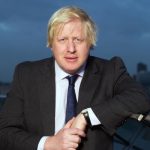
  • Boris Johnson – 2021 Comments to Hong Kong Residents Moving to UK

    Boris Johnson – 2021 Comments to Hong Kong Residents Moving to UK

    The comments made by Boris Johnson, the Prime Minister, on 19 March 2021.

    On behalf of the whole country I want to say how glad we are to have you here and how proud we are that you have chosen the UK to live.

    I believe strongly in the prospects the UK can offer for those who want to make their lives here and I have no doubt that you are going to feel very much at home.

    The UK has a long and proud history of embracing those who arrive on our shores seeking the inalienable rights and freedoms denied to them in their homeland. I am very proud that we have been able to make this offer to you and other British Nationals (Overseas).

  • Nigel Huddleston – 2021 Comments on Women’s Football

    Nigel Huddleston – 2021 Comments on Women’s Football

    The comments made by Nigel Huddleston, the Sports Minister, on 19 March 2021.

    Women’s football continues to go from strength to strength. The last World Cup captured the hearts and minds of the nation.

    With more terrestrial broadcast coverage and Euro 2022 on the horizon, we must do all we can to give it the visibility it deserves. This funding will provide vital support to allow these six clubs to continue, to inspire our stars of the future.

  • Robert Jenrick – 2021 Comments on the Welcome Back Fund

    Robert Jenrick – 2021 Comments on the Welcome Back Fund

    The comments made by Robert Jenrick, the Secretary of State for Housing, Communities and Local Government, on 20 March 2021.

    As we move to the next stage on the roadmap out of lockdown we are all looking forward to being reunited with friends and family outdoors and making a safe and happy return to our favourite shops, cafes, pubs and restaurants.

    Our Welcome Back Fund gives every city, town and high street support to prepare for a great summer. This funding will help councils and businesses to welcome shoppers, diners and tourists back safely.

    As soon as the roadmap allows, we need to get behind our local businesses and enjoy all that this country has to offer and that we’ve been missing so much.

    I’m allowing every pub in the country to erect a marquee in their garden for the whole summer as a one-off power to support our locals.

  • Iain Stewart – 2021 Comments on Scottish Distilleries

    Iain Stewart – 2021 Comments on Scottish Distilleries

    The comments made by Iain Stewart, the UK Government Minister for Scotland, on 20 March 2021.

    Right across Scotland, from Edinburgh to Orkney, it’s wonderful to see so many distilleries moving forward to the next stage of this competition, allowing them to bid for a share of £8.9 million UK Government funding.

    This funding will support local businesses to cut carbon emissions and create sustainable jobs, helping us build back greener as we prepare to host COP26 in Scotland later this year.

  • Priti Patel – 2021 Comments on Modern Slavery

    Priti Patel – 2021 Comments on Modern Slavery

    The comments made by Priti Patel, the Home Secretary, on 20 March 2021.

    Our generous safeguards for victims are being rampantly abused by child rapists, people who pose a threat to national security and failed asylum seekers with no right to be here.

    They are diverting resources away from genuine victims of trafficking, persecution and serious harm – which is completely unacceptable.

    The UK has led the world in protecting the victims of modern slavery and we will continue to support those who have suffered intolerable abuse at the hands of criminals and traffickers so they can rebuild their lives.

  • Anneliese Dodds – 2021 Comments on David Cameron and Greensill

    Anneliese Dodds – 2021 Comments on David Cameron and Greensill

    The comments made by Anneliese Dodds, the Shadow Chancellor of the Exchequer, on 18 March 2021.

    These revelations raise extremely serious questions about the Chancellor’s priorities in the middle of a pandemic. The Government must leave no stone unturned with a full and thorough investigation into this.

    Taxpayers and businesses deserve answers about why it appears Greensill was given so much access to the Treasury at a time when the Chancellor was refusing to engage with groups representing the millions of people he excluded from wage support.

    The Chancellor must urgently set the record straight.

  • Tulip Siddiq – 2021 Comments on Education Policy Institute’s Report

    Tulip Siddiq – 2021 Comments on Education Policy Institute’s Report

    The comments made by Tulip Siddiq, the Shadow Minister for Children and Early Years, on 19 March 2021.

    The Government is clearly failing children with special educational needs and disabilities. Families are facing a postcode lottery, with inconsistent support that is determined by geography and resources rather than the needs of children.

    This is unacceptable. Children have been neglected by this Government and action is urgently needed to ensure that every child with SEND receives the individual support they need to succeed at school.

  • Sam Tarry – 2021 Comments on TFL Funding Agreement

    Sam Tarry – 2021 Comments on TFL Funding Agreement

    The comments made by Sam Tarry, the Shadow Transport Minister, on 19 March 2021.

    The Government’s offer falls far short of what TfL and Londoners need.

    When ridership numbers are at a record low with the Covid crisis keeping commuters away, yet another piecemeal funding deal only serves to kick the can down the road for a few more weeks.

    The Government needs to get a grip and finally deliver a long-term funding package that secures the future of our urban transport networks.

  • Steve Reed – 2021 Comments on Government’s Announcement on High Streets and Seaside Resorts

    Steve Reed – 2021 Comments on Government’s Announcement on High Streets and Seaside Resorts

    The comments made by Steve Reed, the Shadow Communities Secretary, on 20 March 2021.

    This is just a drop in the ocean compared to how much the Conservatives took away over a decade when they pushed our high streets and seaside towns into deep decline and it’s not clear which areas will benefit.

    The Conservatives have done nothing to level the playing field between high street shops and online retailers. Now they want to hollow high streets out by selling off temporarily closed shops to wealthy developers so they can never reopen as shops again.

    Our high streets are dying under the Conservatives, it’s only Labour that’s promised to put back what the Conservatives stripped out so we can guarantee our high streets a brighter future.