Tag: 2021

  • Nigel Adams – 2021 Speech on Sri Lanka

    Nigel Adams – 2021 Speech on Sri Lanka

    The speech made by Nigel Adams, the Minister for Asia, in the House of Commons on 18 March 2021.

    I am particularly grateful to the hon. Member for Mitcham and Morden (Siobhain McDonagh) for securing this debate. I pay tribute to her for her work with the APPG. I also pay tribute to the many other Members across the House for their work on this important issue and for the many informed and passionate contributions that we have heard this afternoon. I will try to respond to as many of them as possible in the time I have, but I am conscious that I have to give the hon. Lady a couple of minutes at the end of the debate. The Minister for South Asia—the Minister that the hon. Member for Aberavon (Stephen Kinnock) wrote to—would have been delighted to take part in this debate, but obviously he sits in the other place so it is my pleasure to respond on his behalf and on behalf of the Government.

    Human rights in Sri Lanka are an important issue and a long-standing priority both for the UK Government and for many fellow Members. This debate is timely, coming during the 46th session of the UN Human Rights Council, which began on 22 February. The human rights situation in Sri Lanka and the limited progress on reconciliation and accountability raised by many right hon. and hon. Members are deeply concerning. As the Opposition spokesman, the hon. Member for Aberavon, pointed out, in February last year the Government of Sri Lanka withdrew their support for the UK-led UN Human Rights Council resolution 30/1 and its successor resolutions 34/1 and 40/1. Those resolutions concerned reconciliation, transitional justice and accountability.

    The Sri Lankan Government then announced a domestic mechanism on accountability. As with previous domestic initiatives, however, meaningful progress has yet to be delivered. There have also been a number of setbacks on accountability, including the appointment into Government positions of military figures accused of war crimes, as referenced by hon. Members this afternoon. As the right hon. Member for East Ham (Stephen Timms) pointed out, they also include the presidential pardon of former army sergeant, Sunil Ratnayake, one of the few perpetrators of war crime atrocities to have been convicted in Sri Lanka.

    Other worrying human rights developments include the continued harassment and surveillance of minorities and civil society groups, as was pointed out by the hon. Member for Strangford (Jim Shannon), the increasing role of the military in civilian governance, and a constitutional amendment that has extended Executive control over the judiciary and the independent institutions. As the hon. Member for Slough (Mr Dhesi) pointed out, the Government’s policy of forcibly cremating those deceased due to covid, which has only recently been reversed, has particularly affected the Muslim and Christian communities. Even now, our understanding is that families face significant restrictions on where and how burials can take place.

    The UK Government are deeply concerned by these developments. We have long stood by all the victims of the conflict in Sri Lanka. I was particularly taken by the comments made by the hon. Member for Glasgow North East (Anne McLaughlin), who had very personal recollections of that time. We have condemned LTTE terrorism and worked over many years to achieve post-conflict truth, accountability and transitional justice. Together with our international partners in the Core Group on Sri Lanka, the UK has led successive UN Human Rights Council resolutions on Sri Lanka in 2014, 2015, 2017 and 2019. In February, June and September of last year, we set out our continued support for the UN Human Rights Council framework and our growing concerns about the human rights situation in Core Group statements to the HRC.

    Sri Lanka is a human rights priority country for the Foreign, Commonwealth and Development Office. In our annual reports, and in Lord Ahmad’s autumn ministerial statement, the Government have highlighted a number of important concerns, which have been highlighted here this afternoon. Accountability and human rights have also been integral to any bilateral discussions we have had with the Government of Sri Lanka. The Foreign Secretary underlined the importance of accountability when he spoke to the Sri Lankan Foreign Minister in May. Lord Ahmad, the Minister for South Asia and the Commonwealth, has also had numerous discussions with the Foreign Minister, most recently in January, and with the Sri Lankan high commissioner here in London.

    We welcome the recent reports on Sri Lanka by the UN’s Office of the High Commissioner for Human Rights. We agree with the high commissioner that the Human Rights Council must continue to monitor the situation in Sri Lanka very closely and we must continue to press for accountability and reconciliation. Along with our Core Group partners, the UK, as penholder, has presented a new draft resolution on Sri Lanka at the UN Human Rights Council. The resolution aims to provide a continued framework for international engagement on human rights in Sri Lanka. The draft calls on the Government of Sri Lanka to make progress on accountability and human rights, and stresses the importance of a comprehensive accountability process for all violations and abuses committed in Sri Lanka. It aims to keep Sri Lanka firmly on the HRC agenda and requests OHCHR reporting on the human rights situation and, importantly, on accountability.

    A number of right hon. and hon. Members, including the hon. Member for Mitcham and Morden and the right hon. Member for Kingston and Surbiton (Ed Davey), have called for an international accountability mechanism —a mechanism to collect and preserve evidence of human rights violations—as part of the resolution. I can confirm that our resolution strengthens the capacity of the OHCHR to collect, consolidate, preserve and analyse evidence. The resolution supports future accountability processes and builds on the investigations conducted under previous HRC resolutions. We are now working hard to build support for our draft, which we hope will be adopted next week.

    Regrettably, the Sri Lankan Government have made clear their opposition to further substantive action by the HRC. None the less, we will continue to seek to work constructively with them on these issues. We will underline the importance of accountability and human rights in our dialogue with the Government of Sri Lanka. My right hon. Friend the Member for Epsom and Ewell (Chris Grayling), my hon. Friend the Member for Harrow East (Bob Blackman) and the hon. Members for Brent Central (Dawn Butler) and for Coventry North West (Taiwo Owatemi) raised the issue of the hunger strike carried out by Ambihai Selvakumar. We understand that, as has been pointed out, she was able to conclude her hunger strike two days ago. We absolutely recognise the concerns she has raised about the issues faced by the Tamil community in Sri Lanka. We have highlighted these concerns about the lack of progress towards post-conflict accountability and the wider human rights situation.

    A number of hon. and right hon. Members raised the question of sanctions. We established the global human rights sanctions regime in July 2020, and in a statement to Parliament, the Foreign Secretary set out the full scope of the new regime without speculating, importantly, on future designations. We continue to consider further designations under this global human rights sanctions regime, and we keep all evidence and potential listings under close review.

    I acknowledge and welcome the strength of feeling in the House. We are right to be concerned. We will continue to prioritise international efforts to support accountability and reconsideration at this current session of the Human Rights Council, and we are pushing very hard for our resolution to be adopted next week. I must reiterate that we cannot speculate on future designations under the global human rights sanctions regime.

    Finally, I make it clear that we want a positive relationship with Sri Lanka. We share deep historical ties. We work well together on a number of common interests, such as climate change and covid recovery, and we value that partnership, but accountability and human rights must remain high on the agenda—accountability and human rights to provide justice for all the victims of the conflict and the lasting reconciliation and stability that will allow the people of Sri Lanka to prosper.

  • Stephen Kinnock – 2021 Speech on Sri Lanka

    Stephen Kinnock – 2021 Speech on Sri Lanka

    The speech made by Stephen Kinnock, the Labour MP for Aberavon, in the House of Commons on 18 March 2021.

    I congratulate my hon. Friend the Member for Mitcham and Morden (Siobhain McDonagh) on securing this vital debate. I pay tribute to my hon. Friends the Members for Brent Central (Dawn Butler), for Slough (Mr Dhesi), for Ilford South (Sam Tarry) and for Ilford North (Wes Streeting), my right hon. Friend the Member for Hayes and Harlington (John McDonnell) and my hon. Friend the Member for Coventry North West (Taiwo Owatemi), who made truly powerful, moving contributions to the debate. The really strong showing from the Labour Benches shows the central importance of this issue to our party.

    The Labour party puts the rule of law, democracy and universal human rights at the very heart of our foreign policy. We expect those principles to be upheld consistently in every country throughout the world, including Sri Lanka. We will always stand up for the universal rights and freedoms of all citizens when national Governments refuse to live up to their international obligations.

    In 2009, in the final few months of Sri Lanka’s long, brutal civil war, tens of thousands of civilians, mostly from the Tamil community, lost their lives. It is a scar on the conscience of the world that no one has been held accountable for those crimes, which include the deliberate shelling of civilian targets, sexual violence, and extrajudicial executions. The shocking lack of accountability for past atrocities is compounded by the fact that the human rights violations in Sri Lanka continue to this day. Respected non-governmental organisation Freedom from Torture has forensically documented more than 300 cases of torture by the Sri Lankan state since the war ended, and it continues to receive referrals for Sri Lankan individuals today.

    The people of Sri Lanka, regardless of their ethnicity or religion, deserve justice. Those responsible must be held accountable, and peace and freedom must be secured for future generations. The Labour party is therefore deeply troubled by what has been taking place in Sri Lanka since the election of Gotabaya Rajapaksa in December 2019.

    First, he has militarised his Government by appointing former soldiers such as Shavendra Silva and Kamal Gunaratne, who both stand accused of crimes against humanity, to key positions in his Cabinet. Secondly, he has done huge damage to his Government’s credibility in the eyes of the international community by withdrawing from UN Human Rights Council resolution 30/1, which sets out a process for delivering accountability for war crimes. Thirdly, we are profoundly concerned by reports of the forced cremation of victims of covid-19, including those of Muslim and Christian faith, for whom burial rituals and traditions are sacred. The World Health Organisation has issued guidance stating that the burial of covid-19 dead poses no danger to public health.

    On the UNHRC resolution, in recent weeks and months I have written to the Minister twice about these issues and made it clear that, as the penholder on Sri Lanka at the UN Human Rights Council, the UK has a crucial and unique responsibility to show moral and political leadership in its approach to co-ordinating the international response. The final version of the draft resolution, which is set to replace 30/1, is certainly an improvement on the zero draft. However, we continue to have real concerns about key aspects of it. Therefore, I have the following questions for the Minister.

    First, the draft resolution fails to incorporate the recommendations made by the high commissioner in her report of 27 January regarding universal or extraterritorial jurisdiction. We should be supporting the high commissioner’s view that the principles of universal or extraterritorial jurisdiction should apply, and that states should pursue investigations and prosecutions in their national courts. Why have the Government failed to include an explicit commitment to that in the resolution?

    Secondly, the suggested evidence-gathering mechanism is clearly a step in the right direction, but it stops short of recommending the establishment of a fully fledged international, independent investigative mechanism. Why have the Government failed to include in their final draft a commitment to IIIM?

    Thirdly, it is clear that there is a strong basis for referring a number of senior members of the Sri Lankan military and Government to the International Criminal Court. Why have the Government failed to include such a recommendation in the resolution? We know that two of the permanent members of the UN will likely block such action, but should the position of the Government really be shaped by the veto-wielding intentions of China and Russia?

    Fourthly, there is nothing in the resolution about prevention. Why does not the resolution include explicit reference to protecting human rights defenders? Are British diplomats travelling regularly to the north and east of Sri Lanka to assess the situation on the ground?

    Fifthly, the draft resolution requests a report on accountability options in 18 months. This is an unacceptably long timeline, given the evidence already available, and it will give the Sri Lankan Government yet more time to obstruct and obfuscate. Why have the Government failed to ensure that the resolution is based on a far shorter report-back timeline of six months, as I recommended in my recent letter to the Minister?

    Moving beyond the UN resolution, there are a number of bilateral steps that the Government should be taking. In my 11 December letter to the Minister, I suggested that a number of Sri Lankan officials should be sanctioned under the Government’s global human rights sanctions regime, yet not a single Sri Lankan Government Minister, official or military officer has been designated. Could the Minister please explain why it is taking so long when the evidence is already widely available?

    In my letter, I also raised the issue of the UK defence adviser’s engagement with the Sri Lankan military. Since arriving in Colombo in January 2020, he has met at least four senior commanders of the Sri Lankan military who stand accused of gross human rights violations. Could the Minister please explain how the activities of the defence adviser will lead to greater accountability for the Sri Lankan military? Are the UK Government vetting who the adviser meets? Is the adviser’s defence engagement delivering tangible results, or is it simply lending a veneer of legitimacy to a military that is committing human rights abuses?

    Thanks to the recent leaking of comments made by the Foreign Secretary, we know that he is perfectly happy to pursue trade deals with Governments who are committing human rights abuses. Are the UK Government pursuing a trade deal with Sri Lanka? Will human rights conditions be applied? As an EU member state, the UK was party to trading arrangements that offered a preferential tariff to Sri Lanka under the general scheme of preferences enhanced framework known as GSP+ because the Sri Lankan Government were supposedly living up to their human rights obligations. Now that the UK has left the EU, will the Government be reassessing their trading relationship with Sri Lanka?

    Here’s one for the SNP spokesperson—to be answered at another time, I guess—if she is still tuned in. Police Scotland has made 90 deployments of officers to Sri Lanka over the past 15 years. Have these deployments achieved tangible results, or are they just lending a veneer of credibility? Finally, what assessment has the Minister made of Sri Lankan soldiers continuing to be deployed in UN peacekeeping missions despite the human rights record of the Sri Lankan military?

    The integrated review is full of snappy slogans and rhetoric, but all it really achieved was to expose the chasm between the stated ambitions and the actual, tangible actions of this Government. If global Britain is to mean anything, it must surely mean consistently standing up for democracy, for the rule of law and for universal rights and values—not just with words, but with deeds. That must start today, and it must start with Sri Lanka.


  • Nick Thomas-Symonds – 2021 Comments on UK Hotel Quarantine System

    Nick Thomas-Symonds – 2021 Comments on UK Hotel Quarantine System

    The comments made by Nick Thomas-Symonds, the Shadow Home Secretary, on 20 March 2021.

    The renewed surges of Covid across Europe are really worrying. The UK’s first priority has to be to protect the progress made by the vaccine – that means we need a comprehensive hotel quarantine system without further delay.

    Of course we all want international travel to resume, but safety has to come first. It is too early to say if there can be any changes to travel advice on 17 May, as numbers in many European countries are increasing so sharply. We have to be led by the science, not arbitrary dates.

  • Angela Rayner – 2021 Comments on Downing Street Flat Refurbishment

    Angela Rayner – 2021 Comments on Downing Street Flat Refurbishment

    The comments made by Angela Rayner, the Deputy Leader of the Labour Party, on 20 March 2021.

    The Prime Minister cannot keep on dodging questions about the redecoration of his flat in Downing Street.

    The British people have a right to know how much money has been spent and where that money came from.

    Given the Government’s track record of handing out contracts to Conservative Party donors and cronies, if the money to pay for this work has indeed come from donors then the public will rightly be demanding answers over what access and special favours these donors may well be expecting in return.

  • Theresa Villiers – 2021 Speech on Sri Lanka

    Theresa Villiers – 2021 Speech on Sri Lanka

    The speech made by Theresa Villiers, the Conservative MP for Chipping Barnet, in the House of Commons on 18 March 2021.

    I draw attention to my entry in the Register of Members’ Financial Interests regarding a visit I made almost exactly a year ago to the United Nations Human Rights Council in Geneva to make the case for justice for the Tamil people.

    Terrible crimes were committed during the conflict in Sri Lanka. Over a decade later, as we have heard today, human rights abuses against Tamils persist. In a deeply worrying report in January, the UN High Commissioner for Human Rights, Michelle Bachelet, highlights

    “the accelerating militarisation of civilian governmental functions, reversal of important constitutional safeguards, political obstruction of accountability, exclusionary rhetoric, intimidation of civil society”.

    Domestic initiatives to secure accountability for war crimes have failed to produce results, and Ms Bachelet fears that this entrenched impunity could contribute to past crimes being repeated. Not one of the individual cases identified by the UN as emblematic has led to a successful prosecution. In one of the few cases where a member of the military was convicted for murdering a Tamil, President Rajapaksa chose to issue a pardon. Some of those implicated in war crimes have even been appointed to senior positions. More than 40 civil society institutions have reported harassment and surveillance. Reporters Without Borders points to “an alarming resurgence” in attacks on Tamil journalists. The Office of the UN High Commissioner for Human Rights continues to receive credible allegations of abductions, torture and gender-based violence by security forces. The Prevention of Terrorism Act is still used to detain people, years after the Sri Lankan state promised to repeal it.

    Driven forward by David Cameron’s Government after his historic visit to Jaffna—the first by a major world leader—much hope centred on UNHRC resolutions 30/1 and 40/1. That Conservative-led Government played a crucial role in securing those very significant resolutions. Ministers and officials under this present Conservative Government continue to lead efforts to secure a tough new resolution at the UNHRC session under way as we speak in Geneva. Welcome progress has been made on that resolution, but the international community needs to match words with deeds. If it does not, this new resolution could run into the sand, like the previous ones.

    I call on the Minister today; it is time for the UK Government to use their Magnitsky sanctions regime to target the men the UN believes are culpable for the atrocities that took place during the Sri Lankan civil war. That is one of the key asks of my British Tamil constituents. I believe that could finally help break the deadlock and open the way for justice for Tamils and a better future for Sri Lanka.

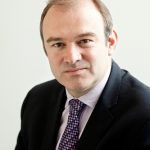
  • Ed Davey – 2021 Speech on Sri Lanka

    Ed Davey – 2021 Speech on Sri Lanka

    The speech made by Ed Davey, the Leader of the Liberal Democrats, in the House of Commons on 18 March 2021.

    I thank the hon. Member for Mitcham and Morden (Siobhain McDonagh) for leading this debate. I am proud to have worked with her for many years on the APPG, standing up for justice and human rights for Tamil people. Over those years, we witnessed time and again Tamil people being harmed by the Sri Lankan Government and let down by the international community.

    Human rights are again under attack in Sri Lanka. Recent reports from numerous human rights organisations, as well as the UN High Commissioner for Human Rights, paint a disturbing picture. From the appalling treatment of Sri Lanka’s Muslim and Christian communities during covid, when the Sri Lankan Government for months prevented burials of their dead in the traditional manner, to the continuing human rights abuses against the Tamil population across the island, things are getting worse, as the international community wrings its hands.

    It is clear that domestic mechanisms for accountability in Sri Lanka have failed again in recent years; they cannot be relied on. An international mechanism has always been needed to enable allegations of genocide, war crimes and human rights abuses to be properly examined and investigated. Many of us had campaigned for such a mechanism for nearly 12 years since the end of the civil war. Eventually, at the United Nations Human Rights Council, the Sri Lankan Government signed up to a mechanism, albeit one involving significant compromise by those of us who felt it did not go far enough, and who did not trust the Sri Lankan Government to deliver.

    Sadly, time has proven us right. The Sri Lankans did not deliver on any of the promises made to the international community and then, last March, walked away totally. It is clear that the Sri Lankan Government will continue to deny, to delay and to evade. That is why we urgently need a new international solution.

    The 46th session of the UN Human Rights Council is currently under way, giving the UK the opportunity to demand accountability in Sri Lanka, but regrettably the draft resolution on Sri Lanka totally fails to rise to the challenge, even though the UK is a leader of the core group. As it stands, the draft resolution is too vague and lacks a robust commitment to international accountability mechanisms. Section 6 is simply far too weak. That is why Liberal Democrats continue to call on the UK Government to work with international partners to ensure a proper international, independent investigative mechanism to establish what is happening in Sri Lanka. There must be a robust international mechanism that ensures that evidence can be collected and files can be prepared for prosecution.

    The British Tamil community is growing frustrated at the lack of meaningful progress in finding justice, and I share that frustration. It is time for the UK to undertake bilateral actions to push for accountability. I have long called for an end to arms exports to Sri Lanka. For Sri Lanka to be listed as a human rights priority country in the Foreign Office’s own recent annual human rights report is preposterous, and arms exports are still not banned. The Government should look at Magnitsky-style sanctions against individuals involved in perpetrating human rights abuses.

    The truth is that Sri Lanka is part of the global struggle between the US and China. It is part of the geopolitics of our world, and it is time that democratic countries worked together to support the democratic and human rights of the Tamil people and stopped allowing the Sri Lankan Government to become increasingly under the influence of Beijing. It is time we stood up for the human rights of the Tamil people.

  • Robert Halfon – 2021 Speech on Sri Lanka

    Robert Halfon – 2021 Speech on Sri Lanka

    The speech made by Robert Halfon, the Conservative MP for Harlow, in the House of Commons on 18 March 2021.

    I declare an interest: in October 2020, the British Tamil Conservatives made a donation to the Harlow Constituency Conservative Association.

    It is estimated that between 40,000 and 70,000 civilians were killed in the final five months of the Sri Lankan conflict. At the end of the war, in 2009, some 280,000 Tamils remained incarcerated for years in camps surrounded by barbed wire, with thousands of enforced or involuntarily disappearances. Their relatives continue to search for their whereabouts and for justice. Twelve years on from the end of the armed conflict in Sri Lanka, little progress has been made to secure justice and autonomy for the Tamil community. Still there is no real accountability.

    The Sri Lankan state continues to target the Tamil people in all aspects of their lives through surveillance, denying them their livelihoods, physical security, education, economic security, culture, healthcare, freedom of expression and freedom of worship. In February, the United Nations High Commissioner for Human Rights, Michelle Bachelet, issued a report expressing deep concern at the situation in Sri Lanka. She said that there are

    “clear early warning signs of a deteriorating human rights situation and a significantly heightened risk of future violations”.

    What action are the Government taking to prevent future cycles of violence and to promote autonomy for the Tamil community in Sri Lanka, as forecast in the latest UN report? In 2014, the UK led the international efforts that successfully passed a key resolution in the UN Human Rights Council to promote accountability, justice and reconciliation. In 2015, Sri Lanka agreed to co-sponsor a resolution to promote accountability, justice and reconciliation, but despite that pledge and repeated extensions to their deadlines by the UN Human Rights Council members, successive Sri Lankan Governments have delayed and obfuscated at every turn. In 2019 Sri Lanka unilaterally withdrew from the resolution, walking away from its international obligations. The Sri Lankan Government have repeatedly reneged on their pledges to investigate and prosecute wartime atrocity crimes.

    Now is the time for strong international action, led by the UK once again, to secure justice for the Tamil community, recognition of the genocide and a proper accountability mechanism. In February, tens of thousands of people joined one of the largest rallies in the Tamil homeland since the end of armed conflict in 2009. They marched for five days, from the east to the north of the island, calling for justice. That same month, 500 British Tamil organisations wrote to our Secretary of State for Foreign, Commonwealth and Development Affairs, seeking an independent mechanism for evidence collection and the referral of Sri Lanka to the International Criminal Court.

    Twelve long years have passed. I urge the Minister to listen to the Tamil community here in the UK and in Sri Lanka, to recognise the genocide, secure justice for the Tamil community by taking on board the recommendation of the UN High Commissioner for Human Rights, and refer Sri Lanka to the International Criminal Court.

  • Dawn Butler – 2021 Speech on Sri Lanka

    Dawn Butler – 2021 Speech on Sri Lanka

    The speech made by Dawn Butler, the Labour MP for Brent Central, in the House of Commons on 18 March 2021.

    I thank my hon. Friend the Member for Mitcham and Morden (Siobhain McDonagh) for her warm and powerful opening of the debate, and for securing it along with the hon. Member for Carshalton and Wallington (Elliot Colburn) and the right hon. Member for Kingston and Surbiton (Ed Davey).

    Ambihai Selvakumar, also known lovingly as Ambi, is a director of the International Centre for the Prevention of Genocide. Ambi was on hunger strike recently in Kenton in Brent, in order to highlight the current injustices in Sri Lanka. In her own words, Ambi’s campaign is a demand for

    “justice for the genocide of Tamils carried out by the Sri Lankan state.”

    Ambi’s protest sparked a number of solidarity hunger strikes across the north-east.

    When he gets to his feet, I hope the Minister will address Ambi’s four demands. The first is to recommend to the United Nations Security Council and the UN General Assembly that Sri Lanka be referred to the International Criminal Court and to take steps to effectively investigate charges of war crimes, crimes against humanity and genocide. The second is to establish an international independent investigative mechanism akin to those established for Syria and Myanmar, which mandate that the evidence of international crimes and human rights violations be collected and prepared for criminal prosecutions. She also states that a meaningful independent investigation must also have a strict timeframe.

    The third recommendation is to mandate the Office of the United Nations High Commissioner for Human Rights to appoint a special rapporteur to continue to monitor Sri Lanka for ongoing violations and to have an on-field presence in Sri Lanka. The last recommendation is for a UN-monitored referendum to determine the aspirations of the Tamil people in Sri Lanka, on the basis that the north-east of Sri Lanka is the traditional Tamil homeland, and the Tamils have a right to self-determination. I hope that the Minister will address Ambi’s demands when he gets to his feet.

  • Matthew Offord – 2021 Speech on Sri Lanka

    Matthew Offord – 2021 Speech on Sri Lanka

    The speech made by Matthew Offord, the Conservative MP for Hendon, in the House of Commons on 18 March 2021.

    I start by highlighting my chairmanship of the all-party parliamentary group on Sri Lanka. Sri Lanka’s relationship with the rest of the world has been strongly shaped since the end of the conflict by allegations that the army committed war crimes and crimes against humanity during the final phase of the civil war.

    A UN panel of experts reported in April 2011 that there were credible allegations of those crimes by both Government and Tamil Tiger forces. It remains my opinion that both sides were at fault. However, I regret the Government of Sri Lanka’s decision to withdraw support for UNHRC resolution 30/1 and note that previous domestic initiatives have failed to deliver meaningful accountability. I therefore urge the Sri Lankan Government to engage in a process that has the confidence of all on the island.

    But it would be remiss to state that the current Sri Lankan Government have failed to act. The Office on Missing Persons and the Office for Reparations are to be retained and strengthened, so that communities may build trust. It will be good to see reform of the Prevention of Terrorism Act and progress on the release of political prisoners. We must act as a critical friend to the country. We need to help strengthen democratic institutions, and we must trust Sri Lanka to develop its own judicial and non-judicial mechanisms.

    Since the end of the conflict, reconciliation has occurred between Sinhala, Tamil and Muslim communities. People are able to live wherever they wish. They benefit from state resources, such as free education and health services. Private land that was occupied by the military has been returned, former conflict areas have been de-mined with assistance from the United Kingdom, and more than 12,000 ex-LTTE— Liberation Tigers of Tamil Eelam—cadres have been rehabilitated. There is a greater connectivity throughout the island and globally, and all of this has transformed the business sector and the lives of everyone in the country.

    But we should remember that resolution and accountability are not a panacea for addressing underlying tensions. Questions about how to address the legacy of the Sri Lankan conflict must be answered: what kind of justice is attainable? How should the victims of violations be treated in the process? What might punishment look like, and how can justice play a constructive role in forging a lasting peace?

    Draft legislation for a truth and reconciliation commission had been prepared under the previous Sri Lankan Government, and that could be revisited. If it gains universal support in Sri Lanka, truth seeking among all stakeholders, including the diaspora in many of our communities and constituencies, could make a lasting difference. When these issues have been resolved, a sustainable and acceptable peace will endure. Given the good will between our two countries, I ask the Minister: how can the UK help to facilitate a TRC mechanism that is unique to the needs of Sri Lanka?

  • Elliot Colburn – 2021 Speech on Sri Lanka

    Elliot Colburn – 2021 Speech on Sri Lanka

    The speech made by Elliot Colburn, the Conservative MP for Carshalton and Wallington, in the House of Commons on 18 March 2021.

    I thank the Backbench Business Committee for scheduling this debate and my constituency neighbour, the hon. Member for Mitcham and Morden (Siobhain McDonagh), for opening it so well.

    As chair of the APPG for Tamils, who are the largest ethnic minority group in Carshalton and Wallington, I am especially pleased to speak in this debate to urge the Government to do all they can to secure peace and accountability in Sri Lanka. I thank colleagues from all parties who have worked with me on the APPG this past year, and the Tamils from Carshalton and Wallington, the United Kingdom and around the world who have been in touch with us and shared their stories.

    In the short time I have, which is not nearly enough to cover everything, I will try to get straight to the point. Six years ago, the UK Government paved the way in addressing human rights abuses in Sri Lanka and successfully pushed for UN resolutions to pursue accountability and reconciliation on the island. The Sri Lankan Government at the time signed up to those UN resolutions, but since then Sri Lanka has sadly withdrawn its support for them, and the evidence collected by the APPG in its many evidence sessions this past year have painted a very worrying picture of the situation on the ground.

    As the hon. Member for Mitcham and Morden outlined, recent infringements on human rights have been on the rise. Those have included the forced cremations of covid-19 victims, regardless of their religious beliefs, causing grief and anguish to Sri Lankan Christians, Muslims and others. The police criminal investigation department has been repeatedly visiting members of advocacy groups on the island who are campaigning for justice following the disappearance of their family members during the war.

    The terrorism investigation department has been increasing state surveillance culture, especially in the north, Tamil-populated part of the island. The state-supported demolition of a Tamil memorial monument at Jaffna University and attempts to prevent Tamil memorial events from taking place at all have been causing anguish among the community, occupying private land in the name of security and so much more.

    It is clear that there is no scope at the present time for a domestic accountability mechanism in Sri Lanka, so the UK must once again demonstrate its global leadership on this issue and support an international accountability mechanism. The initial zero draft resolution published by the UK in February and presented to the UN Human Rights Council fell well short of providing the action that was needed.

    After efforts from Tamils in the UK and abroad, campaign groups and the APPG, subsequent drafts of the resolution have included a requirement to collect evidence on human rights abuses, rather than just looking at what is already there, and acknowledged for the first time that Tamils have been particularly victim to worsening human rights abuses on the island. I welcome those changes, but I urge the FCDO to listen to the calls we are making today.

    So much more needs to be done, so we must act now, before the conclusion of the UNHRC session at the end of the month, to ensure that there is a true international accountability mechanism in place. Only then can we hope to bring about truth, justice, reconciliation and accountability for all in Sri Lanka, as well as for the Tamil diaspora—not just in Carshalton and Wallington, but across the world.